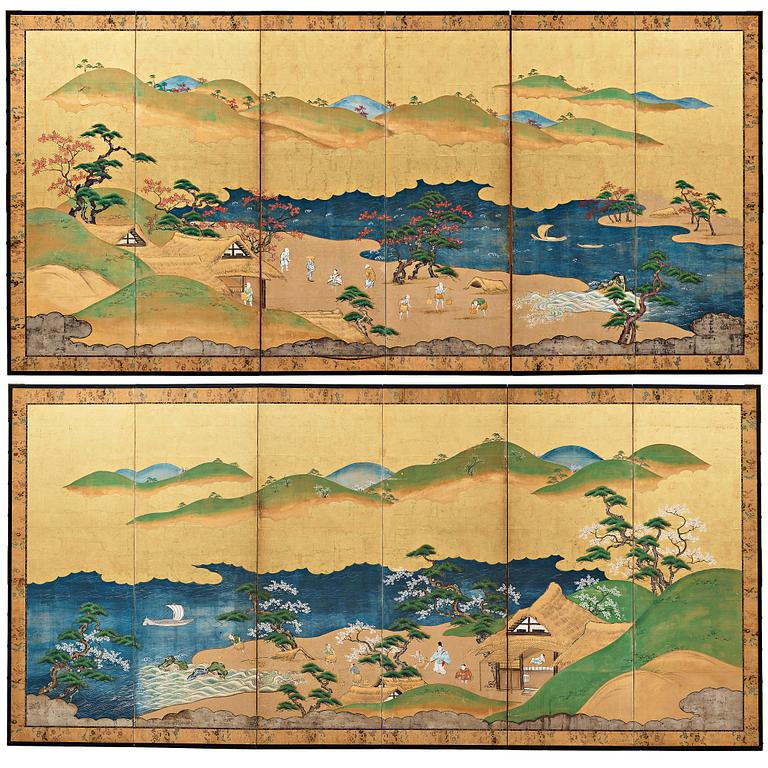
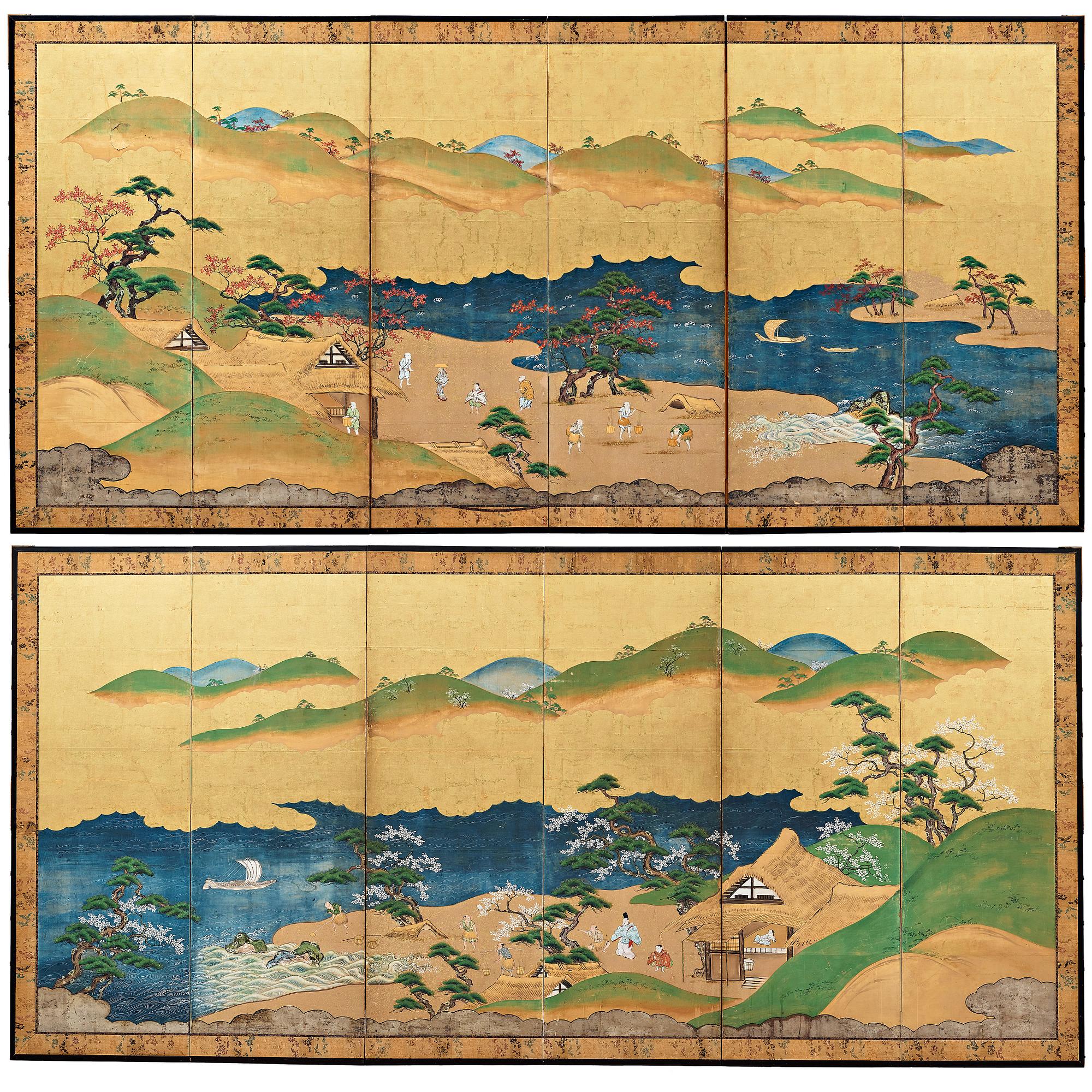
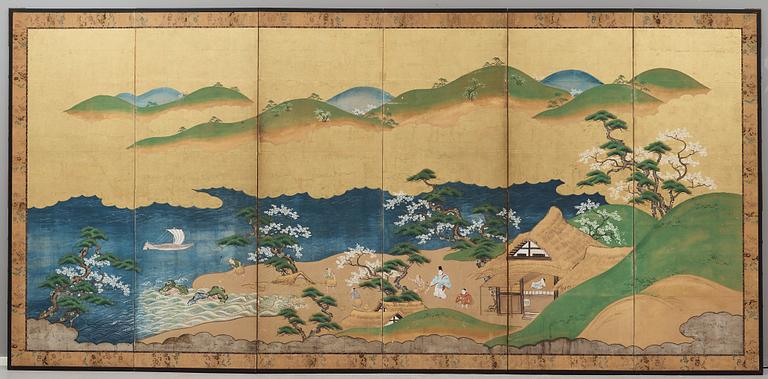
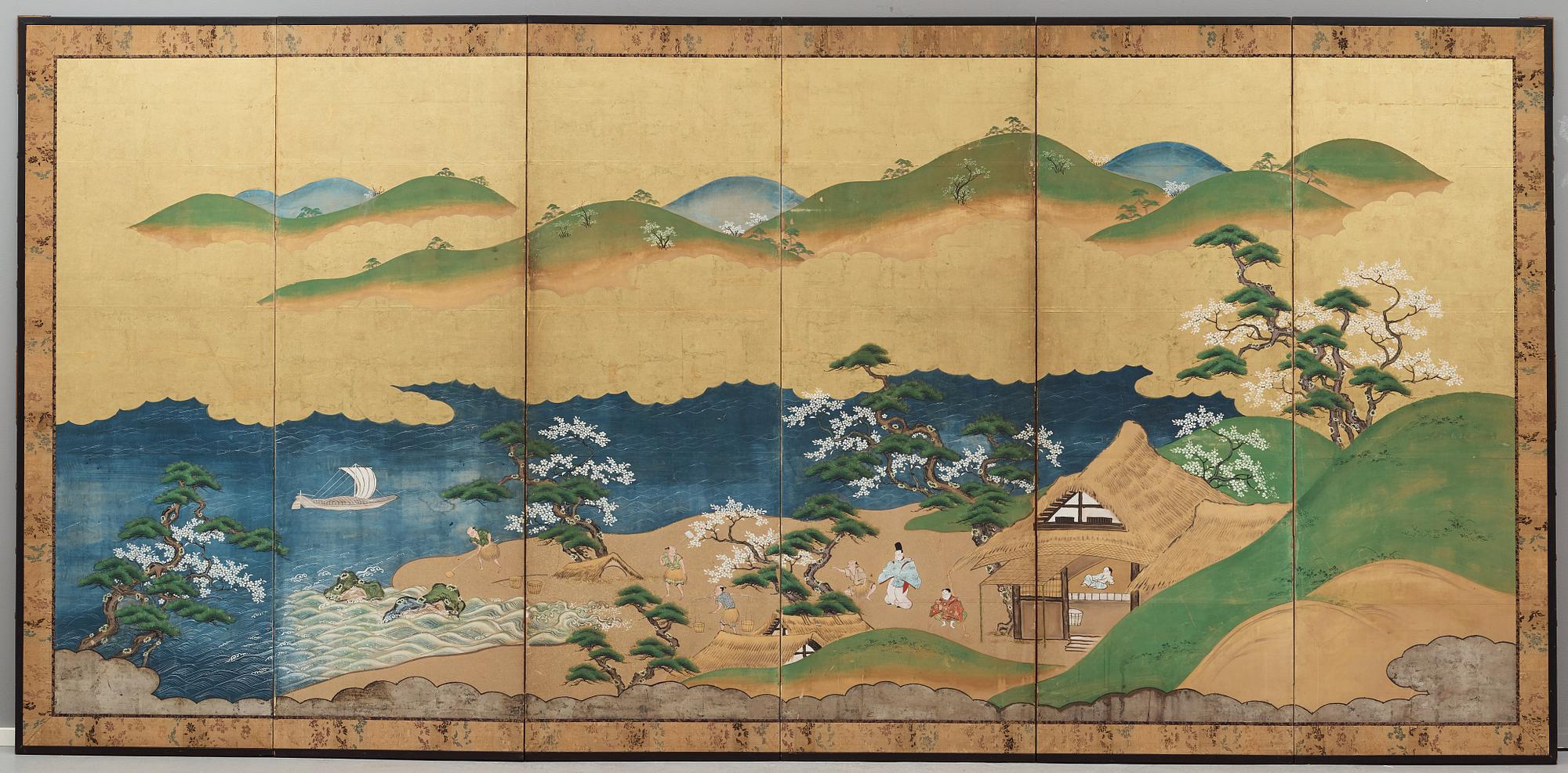
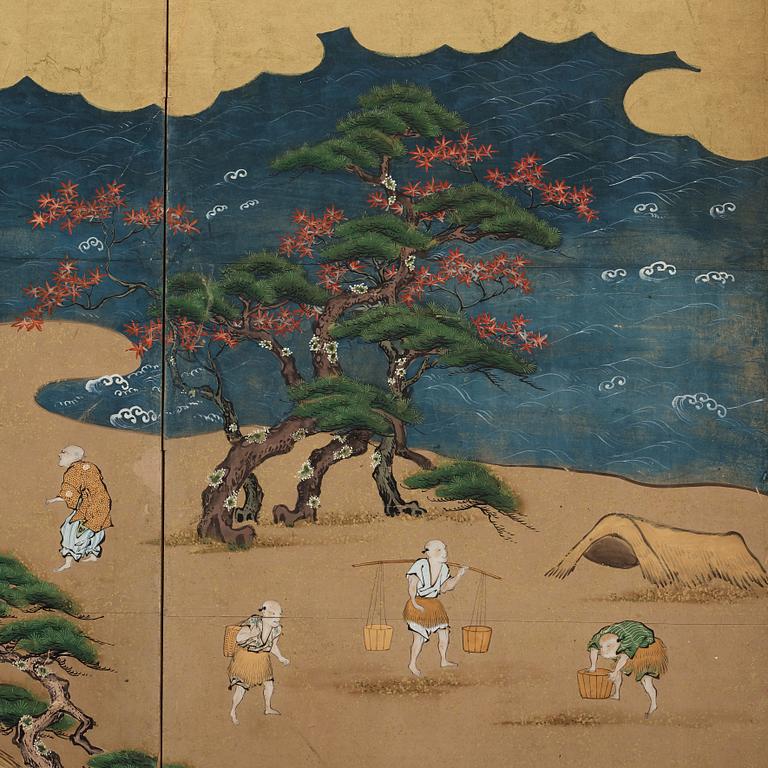
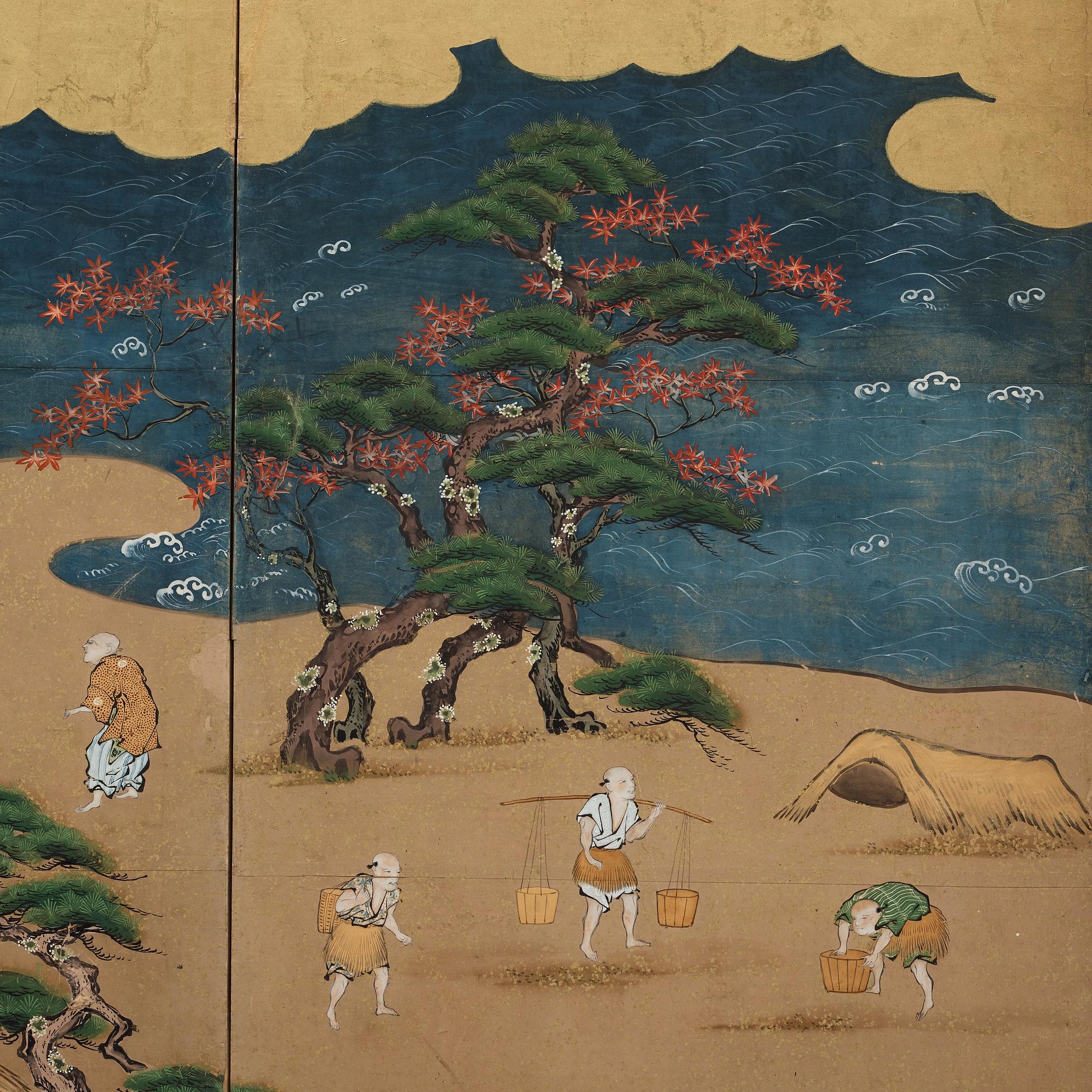
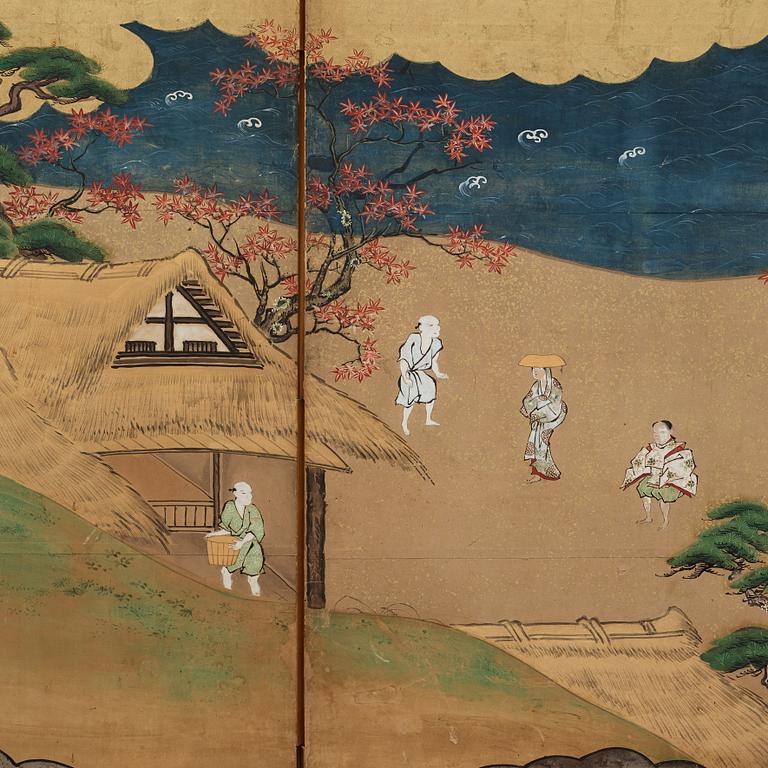
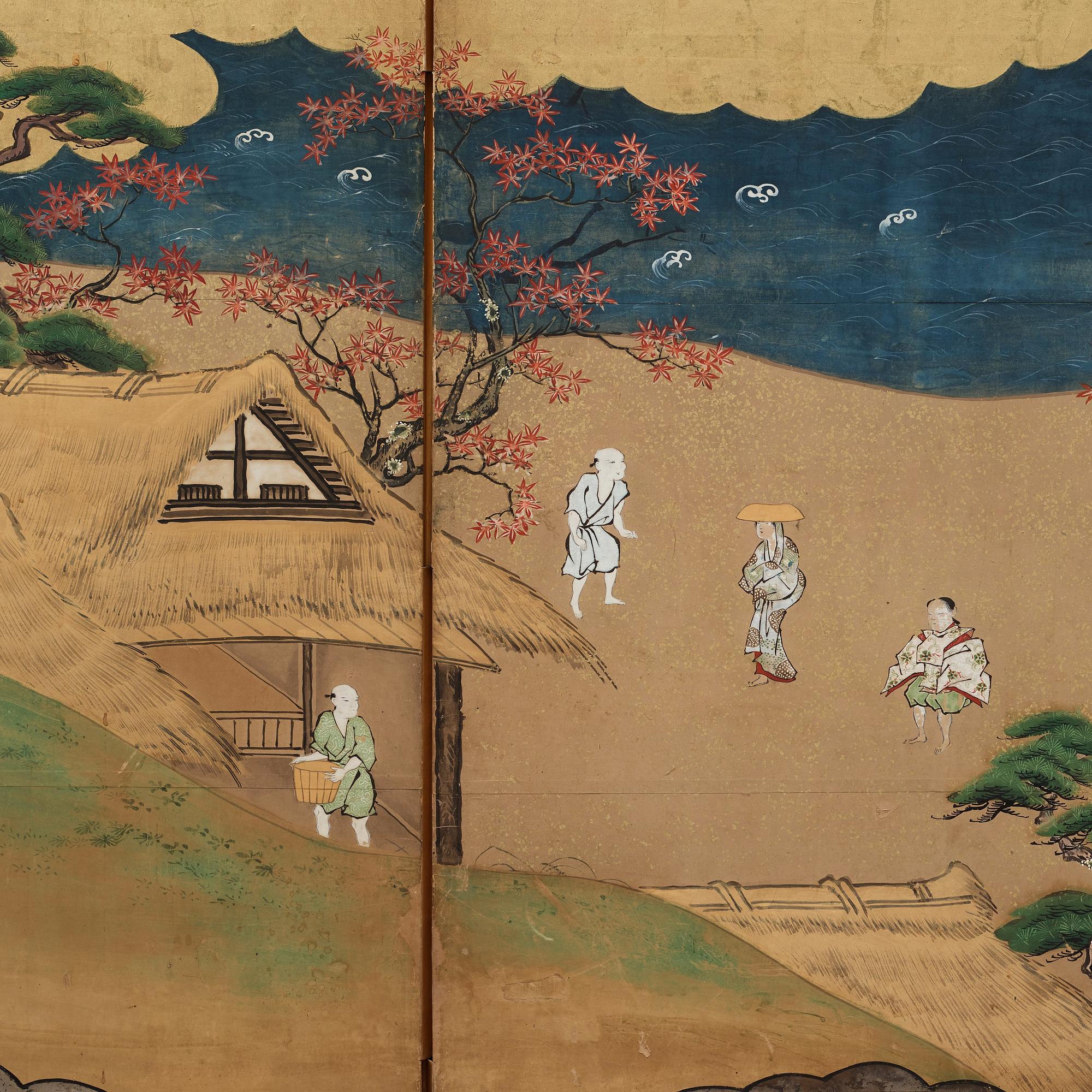
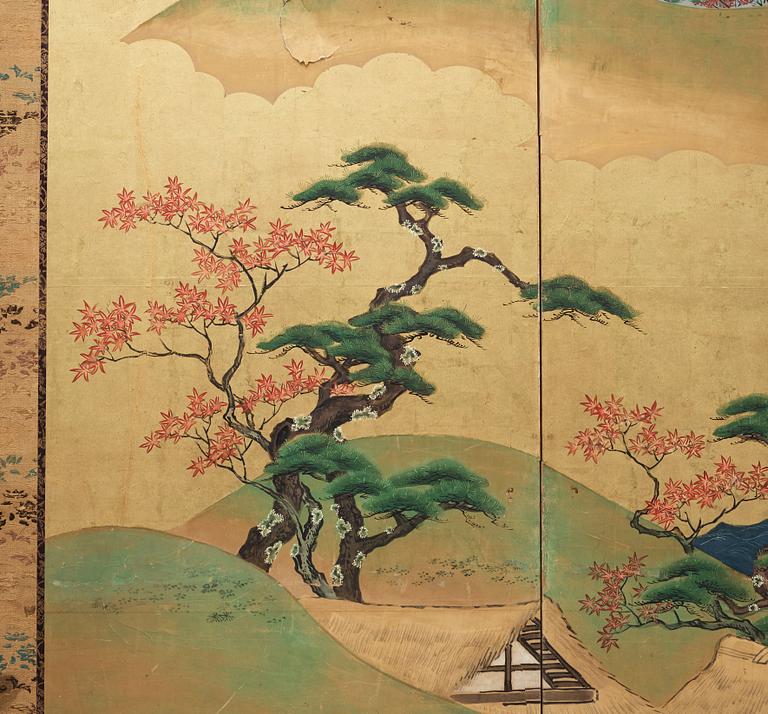
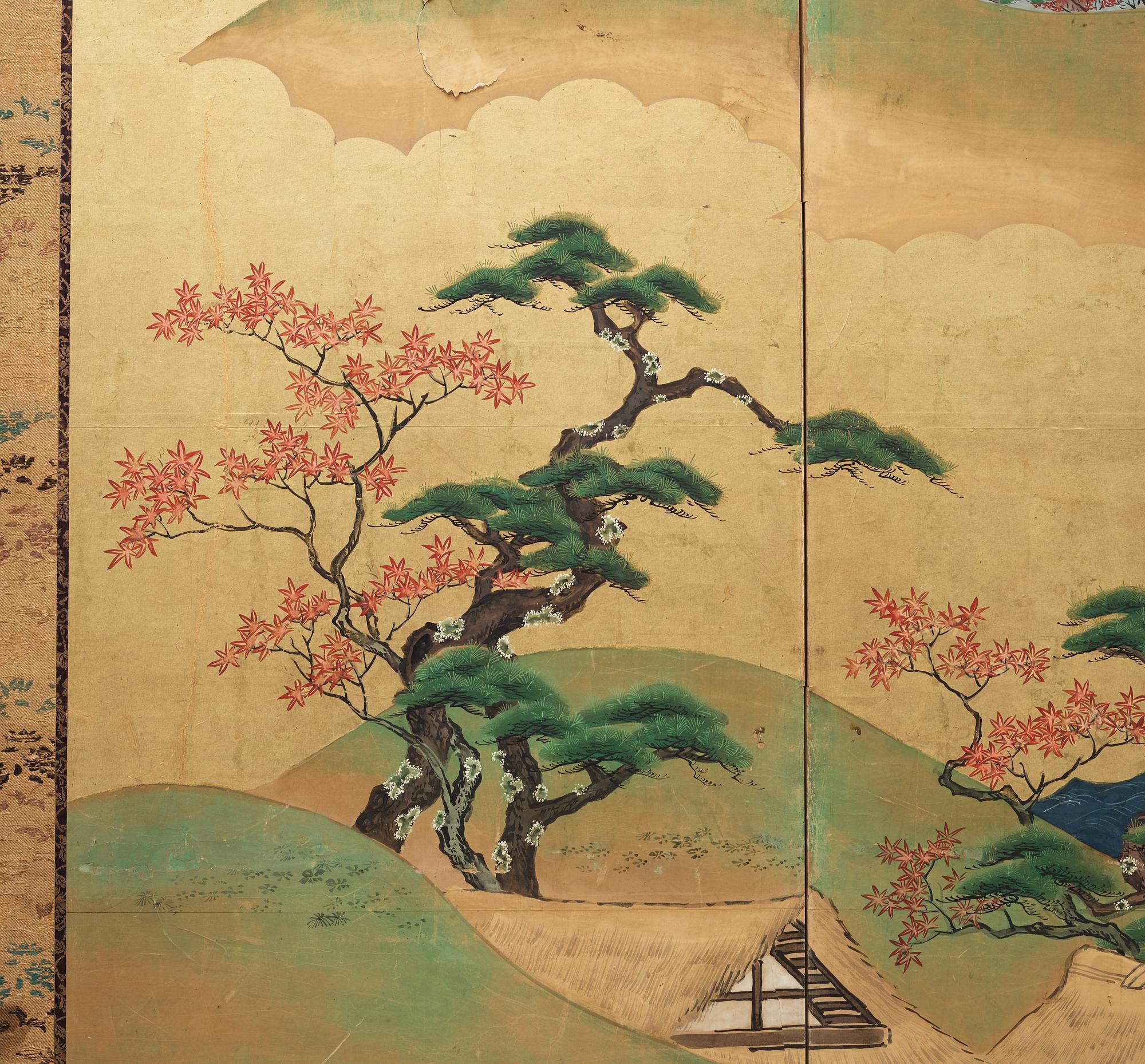
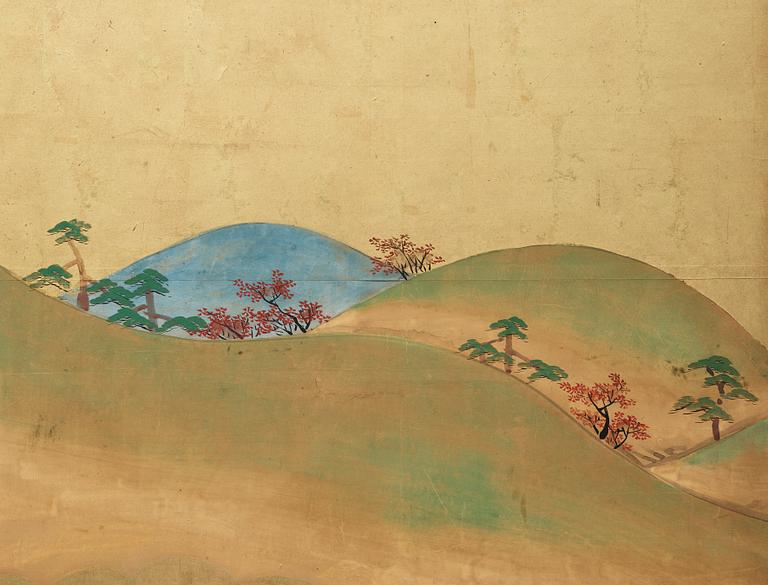
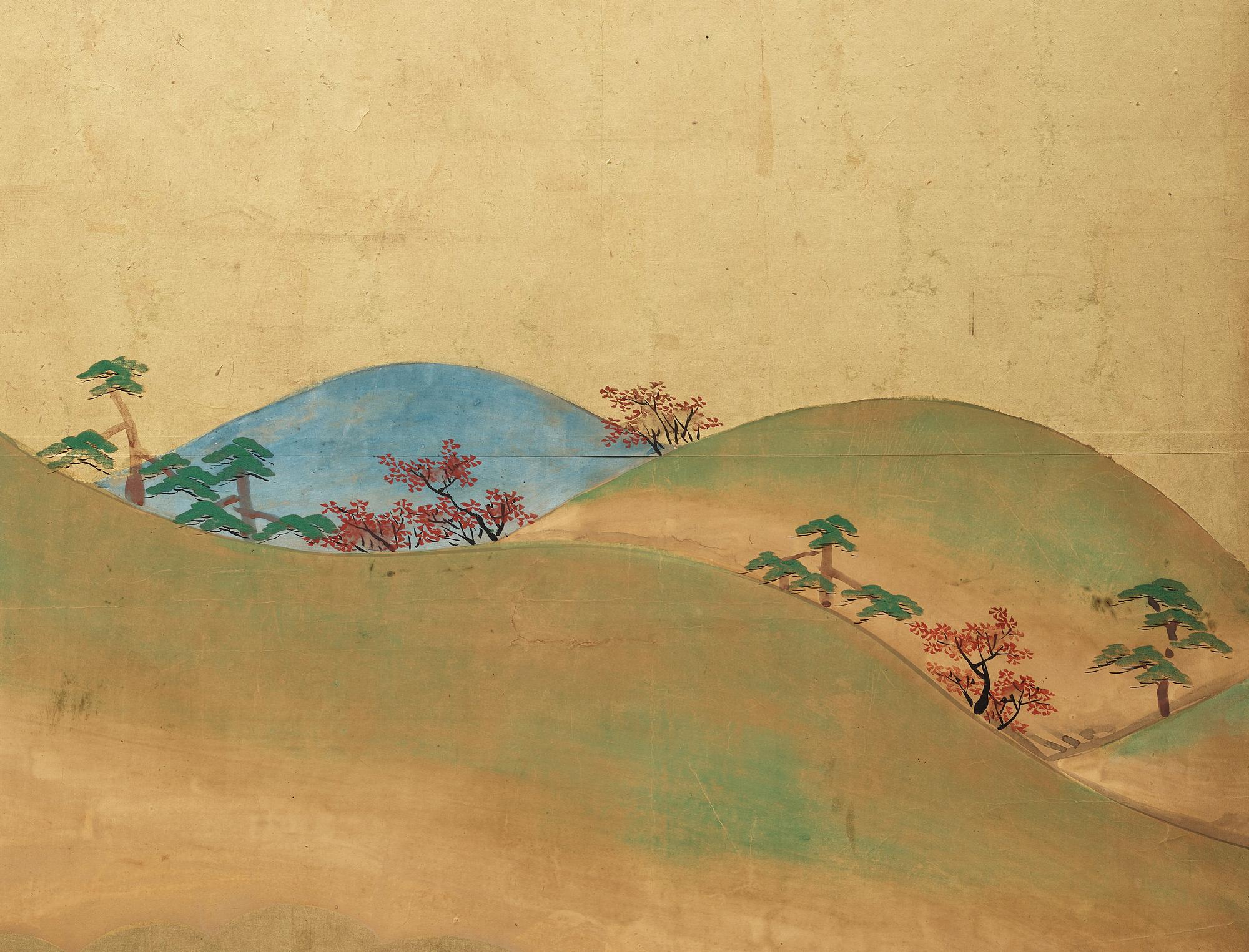
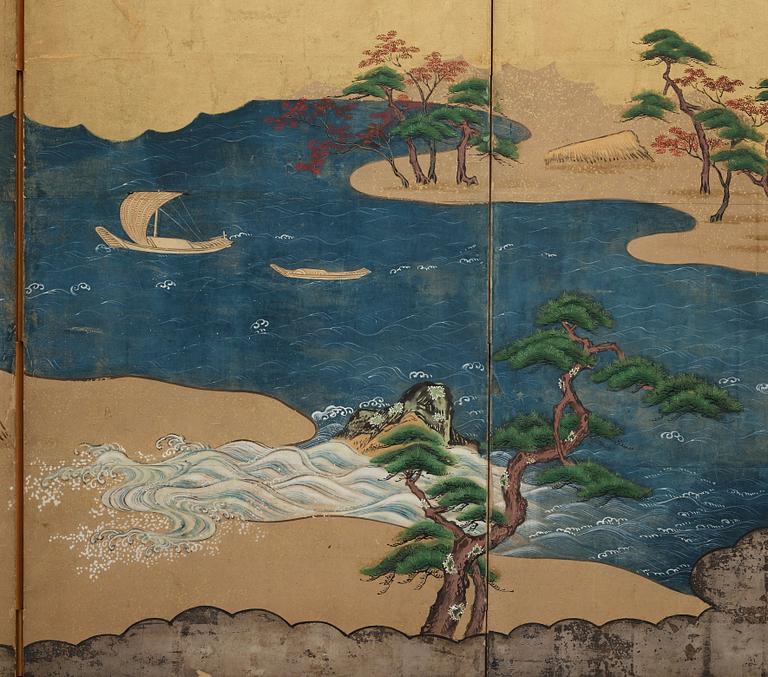
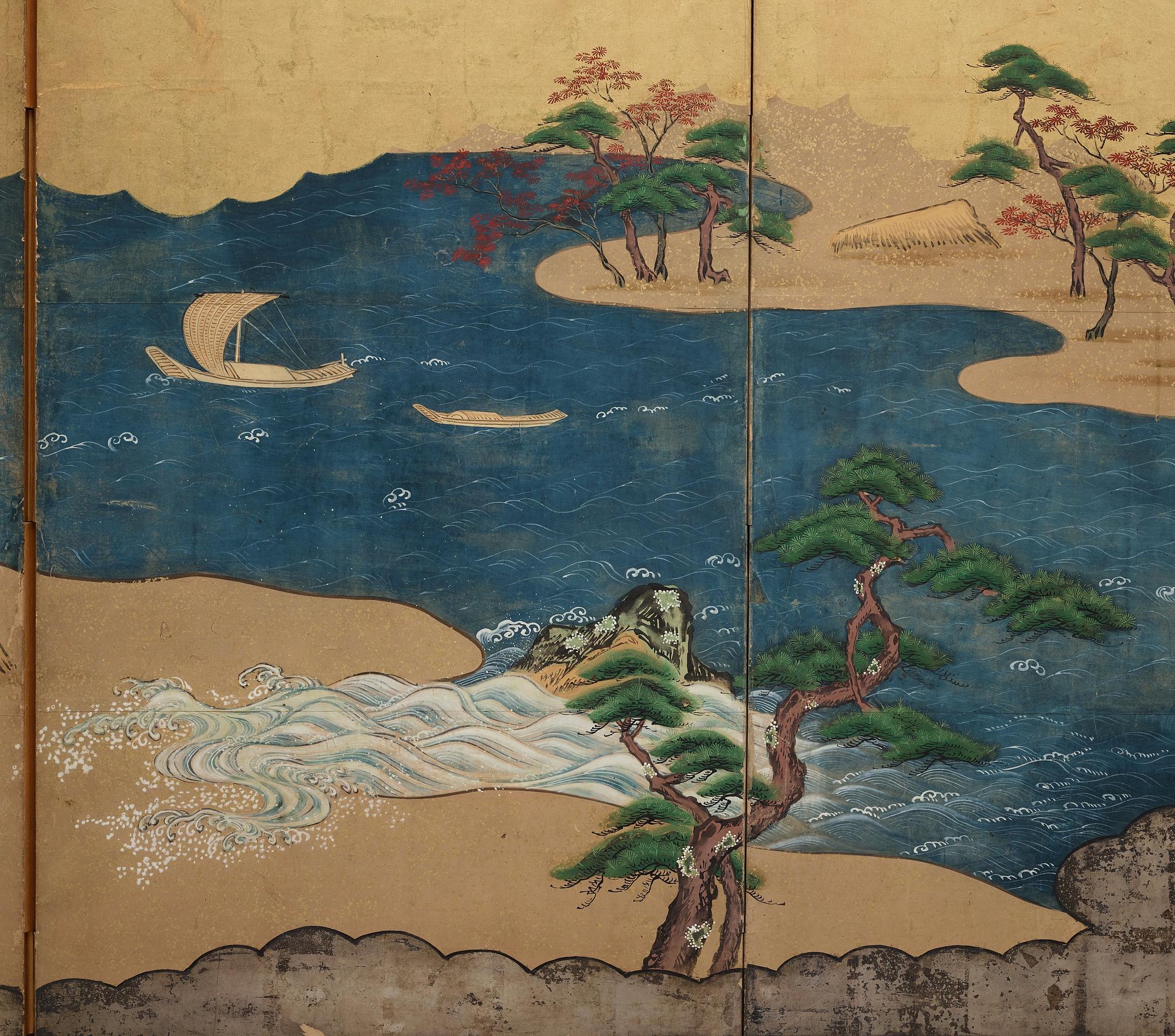
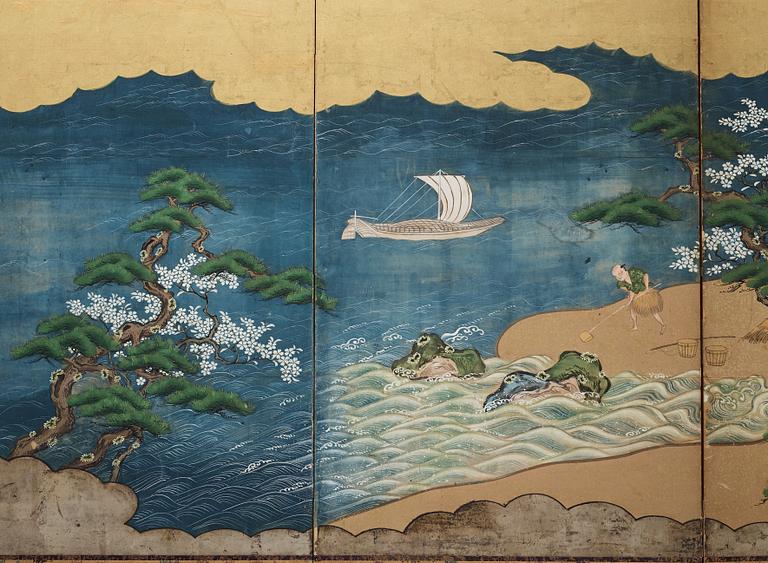
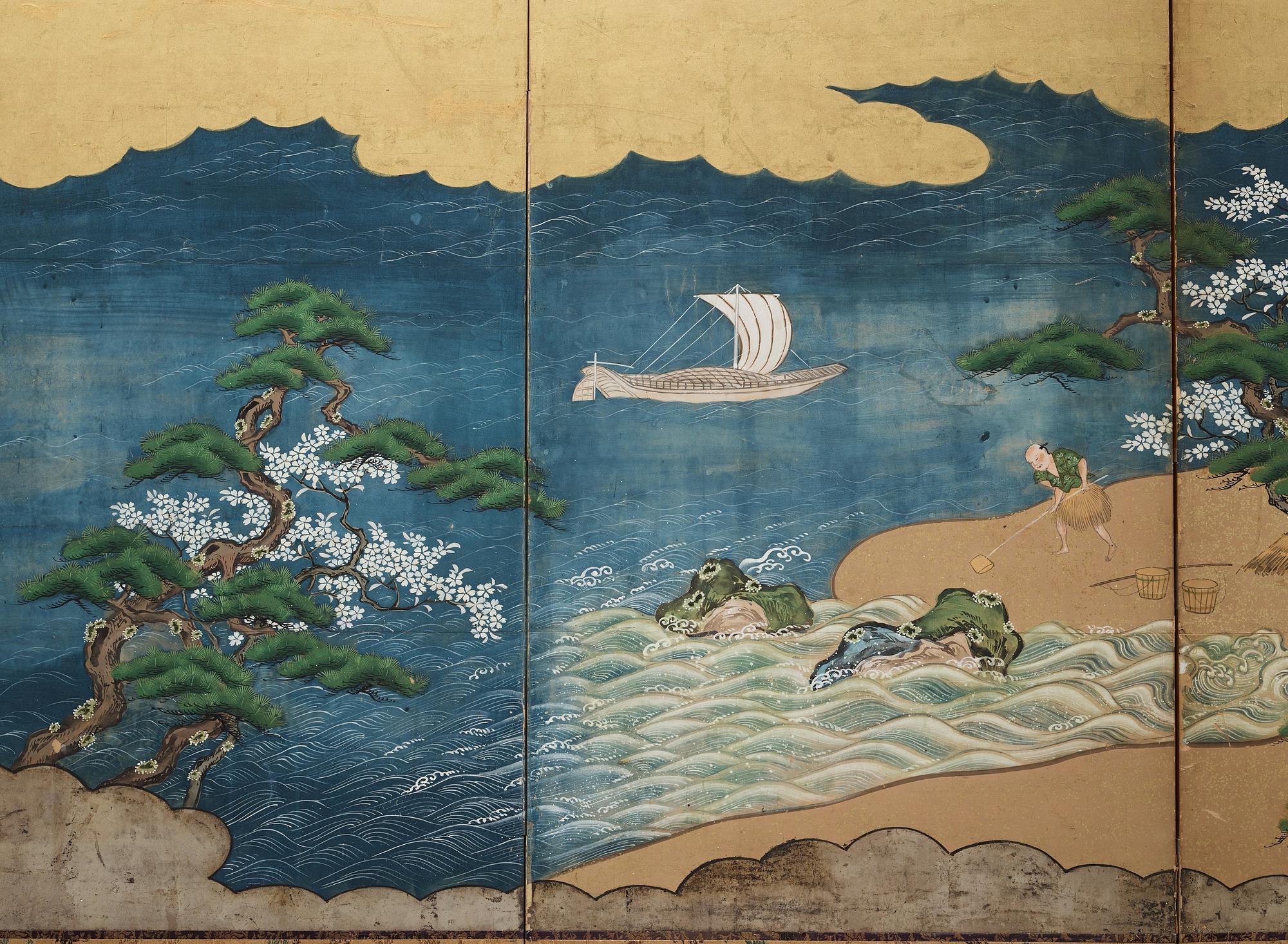
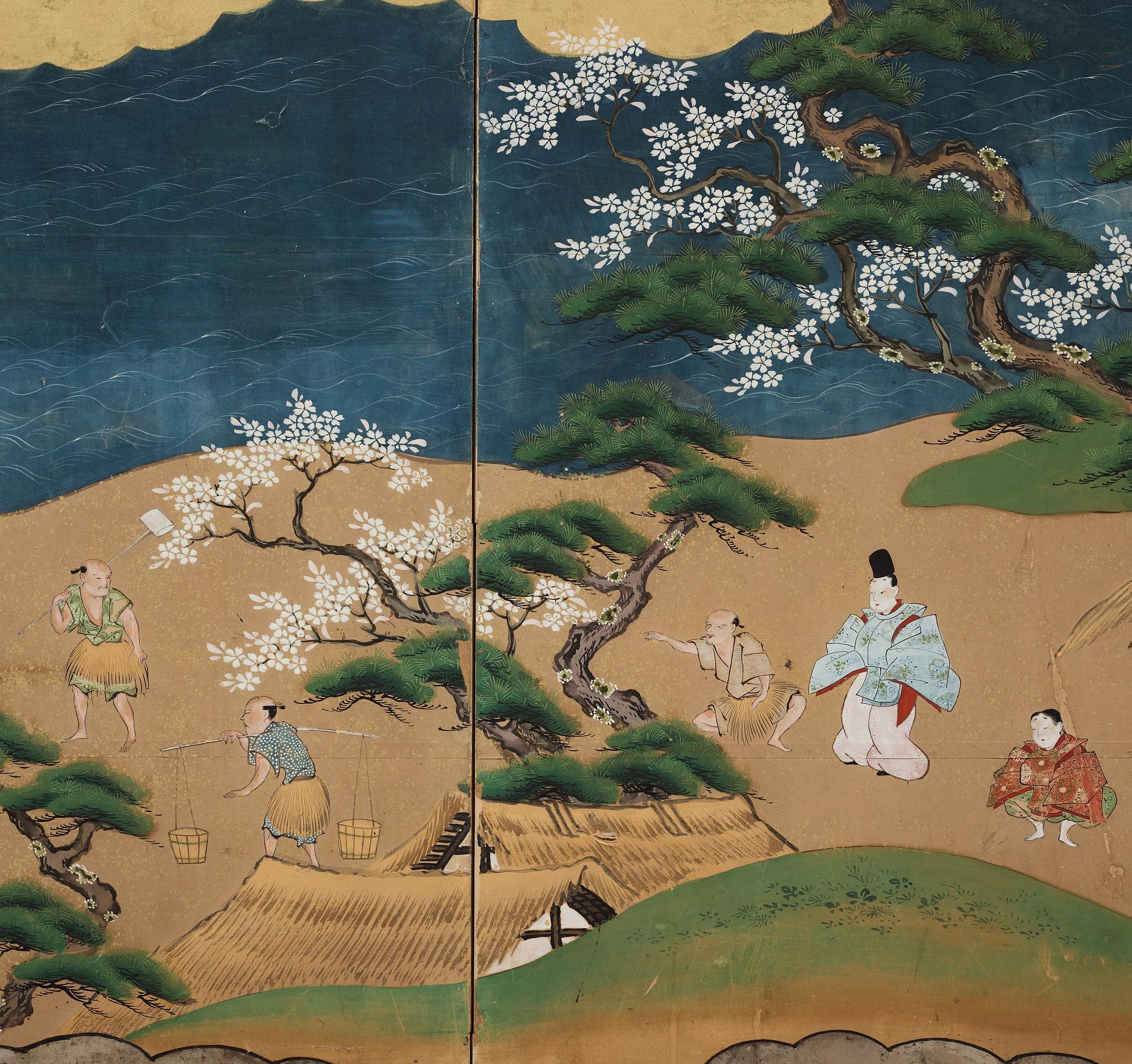
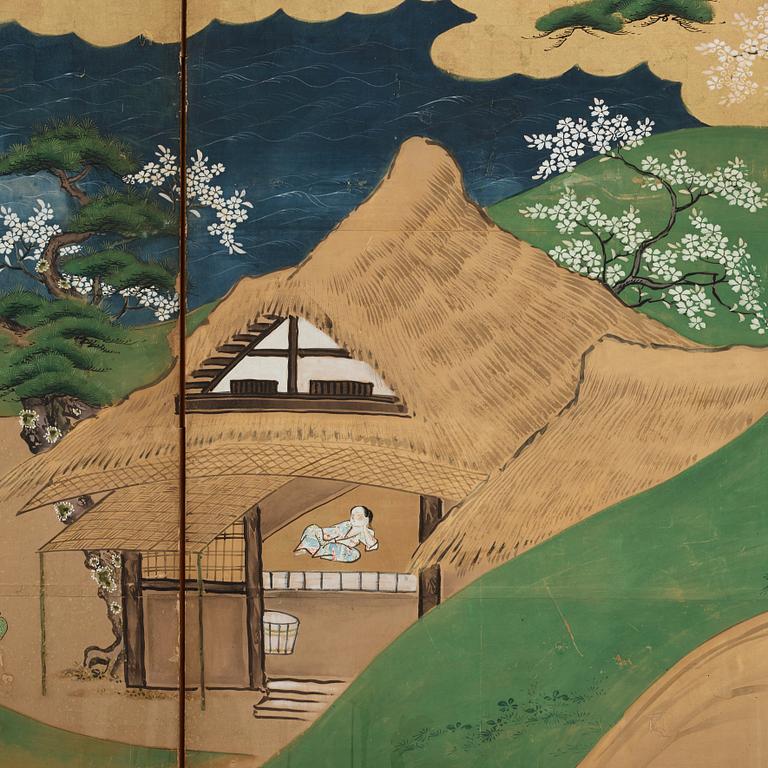
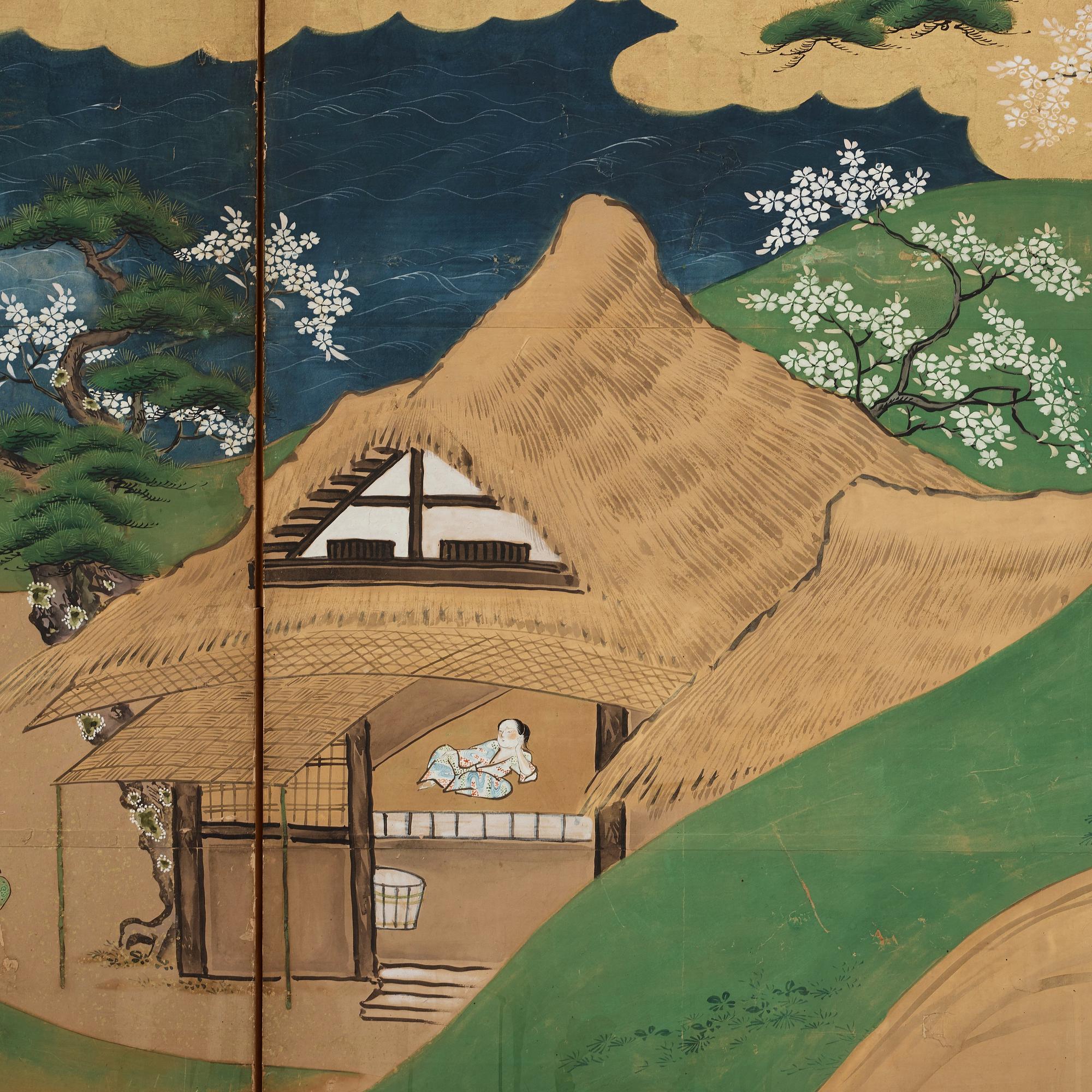
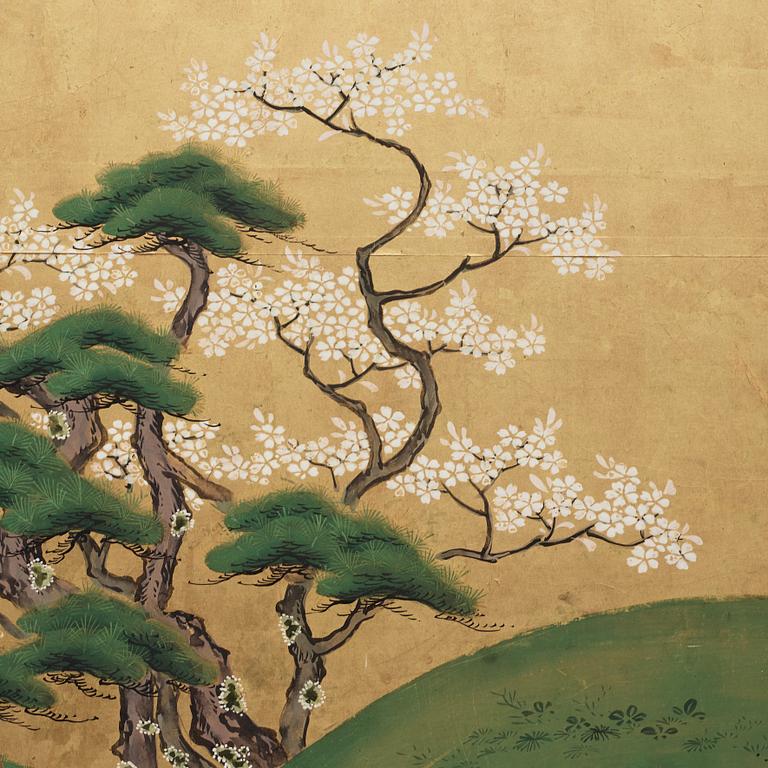
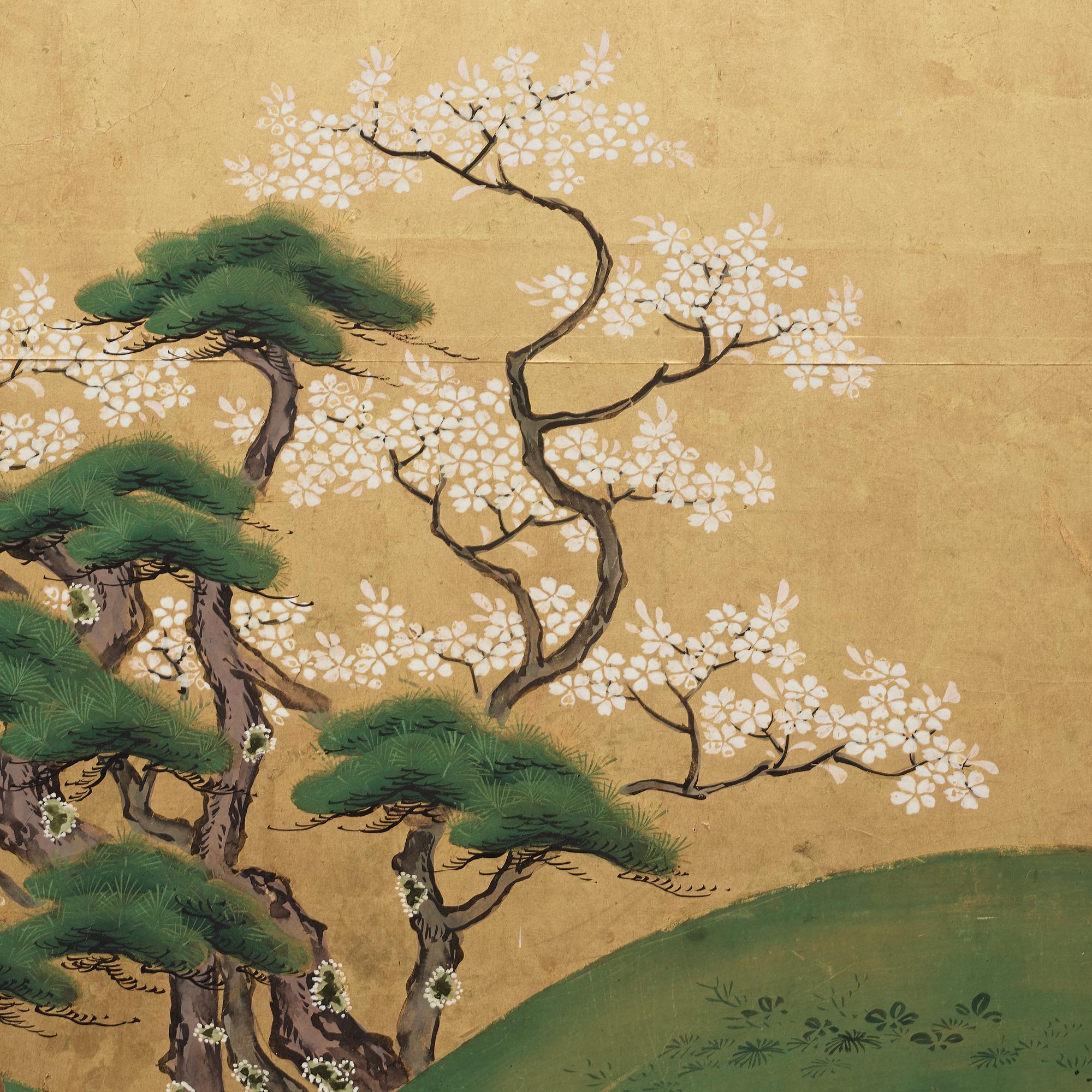
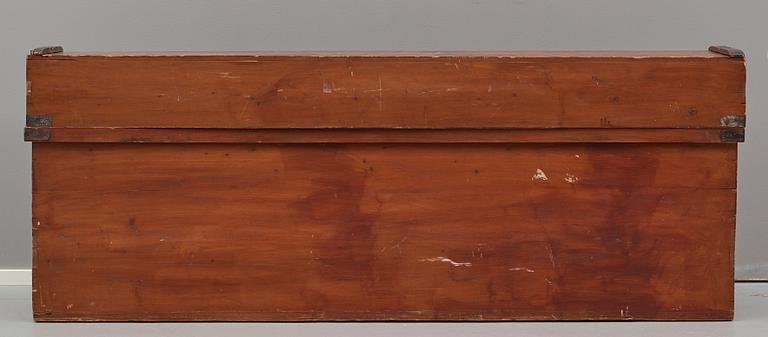
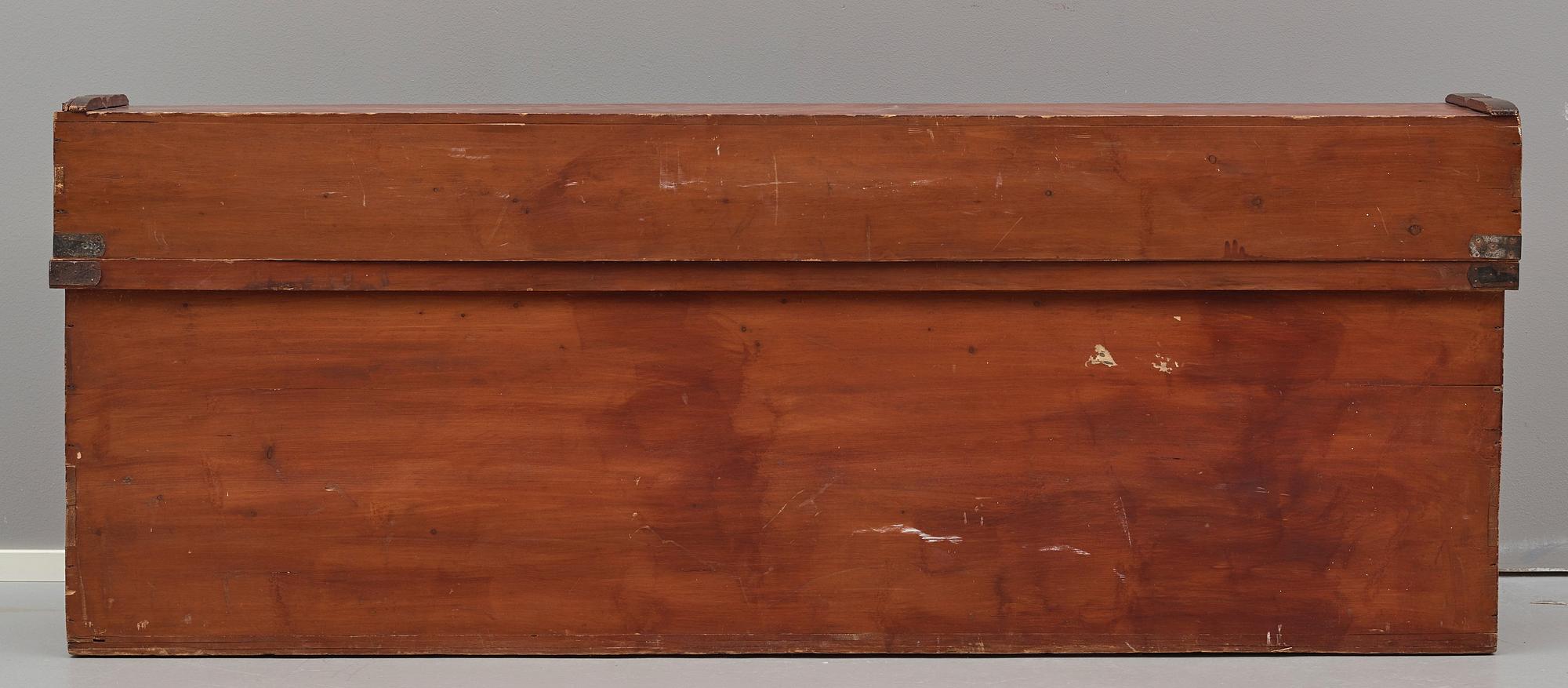
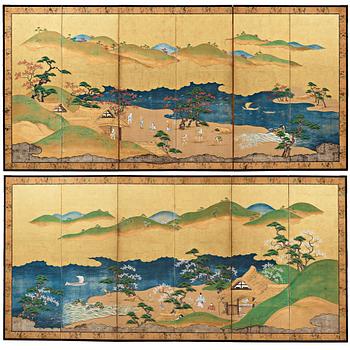
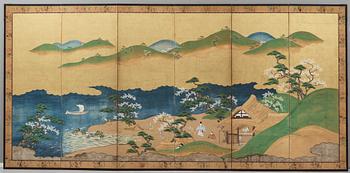
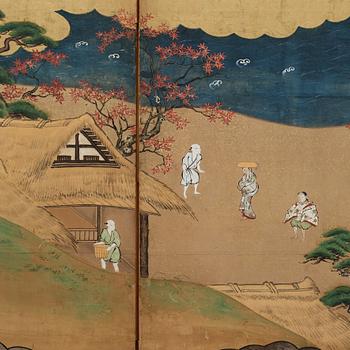
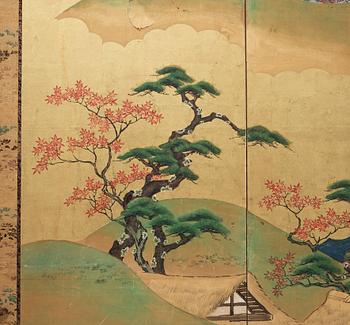
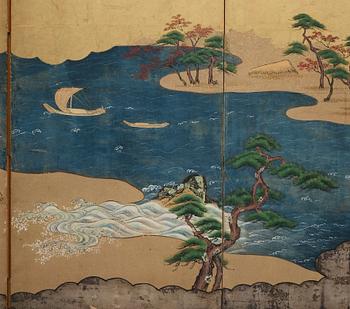
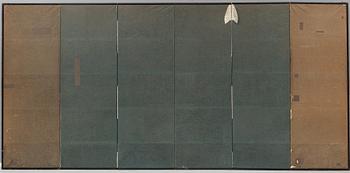
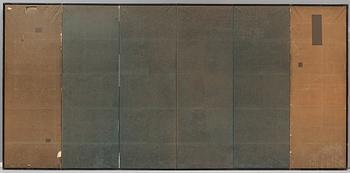
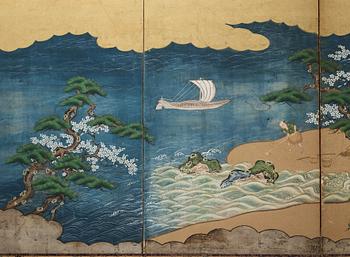
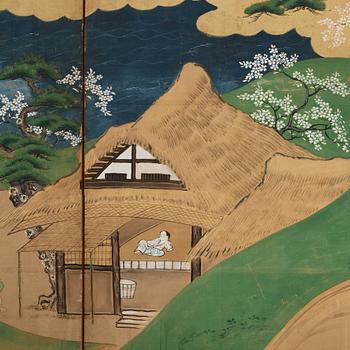
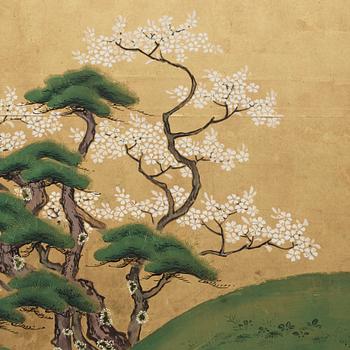
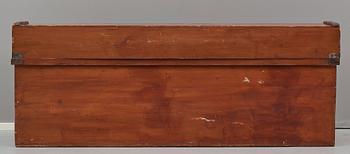
Representing the different seasons. Measurement 176,5x365 cm. Japanese wooden crate accompanies the two screens. Measurement crate/box 28,5x70x184 cm.
Damages, repairs.
Alkuperä - Provenienssi
Purchased in Japan by a Swedish family who lived and worked there for many years.
Muut tiedot
There is a long tradition in Asia of screens. The earliest screen paintings in East Asia are examples in lacquer on wood from Six Dynasties China (220-589 AD). Screens were used as diplomatic gifts. ‘From the late medieval period onward. Could also be commissioned by a patron and donated to a temple. Given as gifts to celebrate births, as dowry or to honour someone at a funeral. Many of the screens are unsigned.
There was a marked difference in materials from commission to commission. In the 16th century and onwards, for example, we see a growing preference for extensive application of metal foils, particularly gold.
The first known Japanese folding screen to have been sent to the West was part of a Japanese diplomatic mission to Spain, Portugal and eventually to Rome in the 1580s. As they began to be acquired by museums and major collections in the 19th century, Japanese screens appeared in the work of artists such as Whistler and Manet and have since found their ways in to many homes in the West.
Lisätietoja ja kuntoraportit

Tietoa ostamisesta




Muiden katsomia kohteita