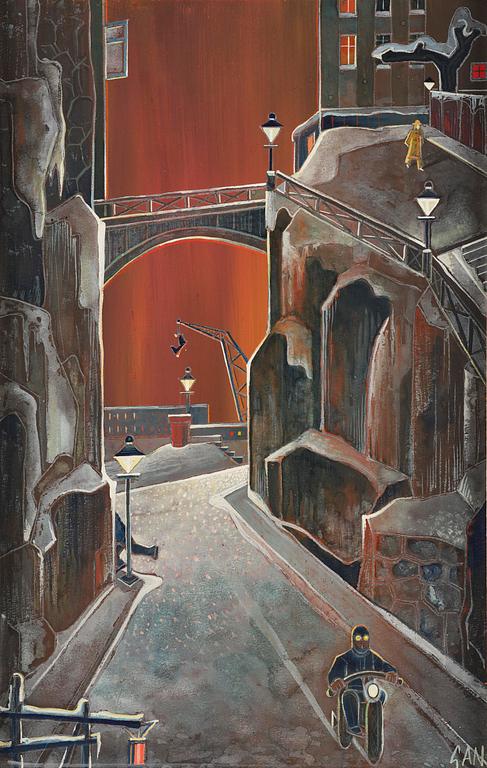
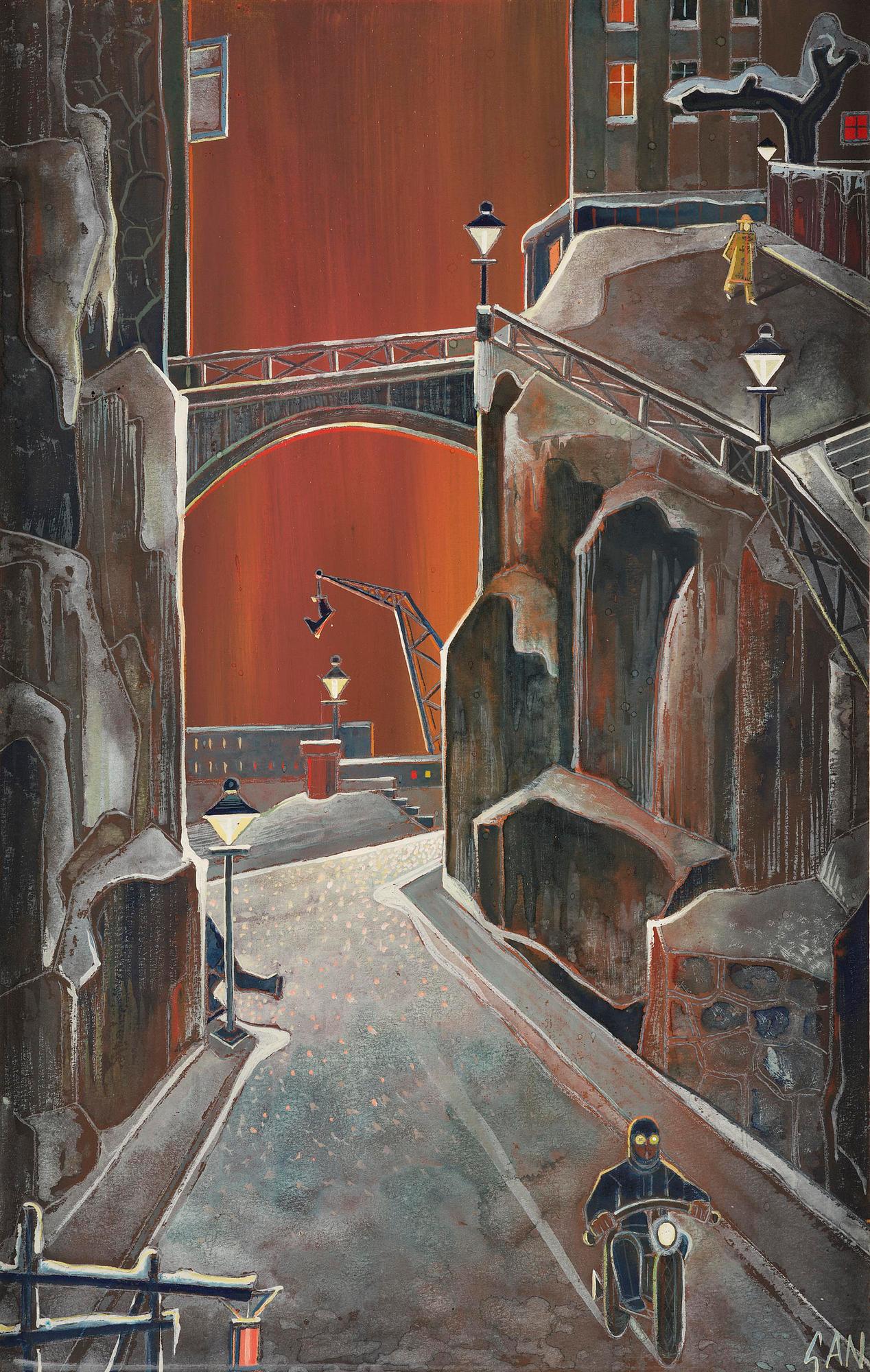
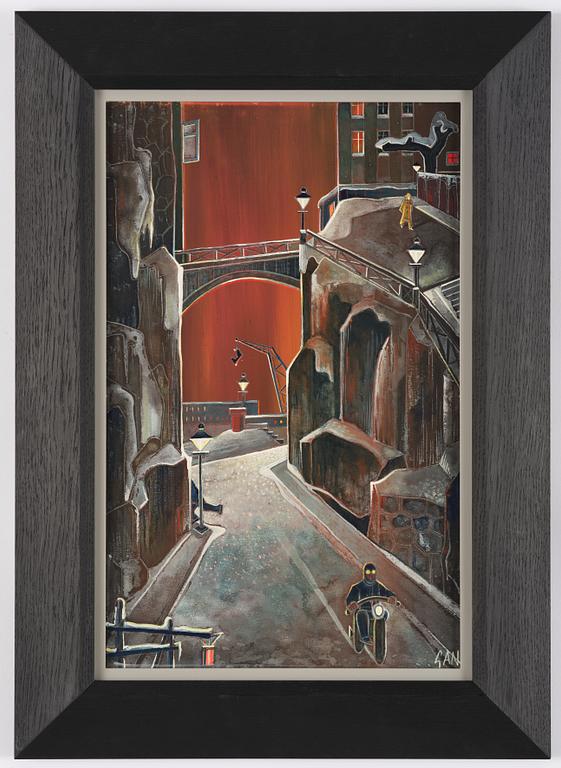
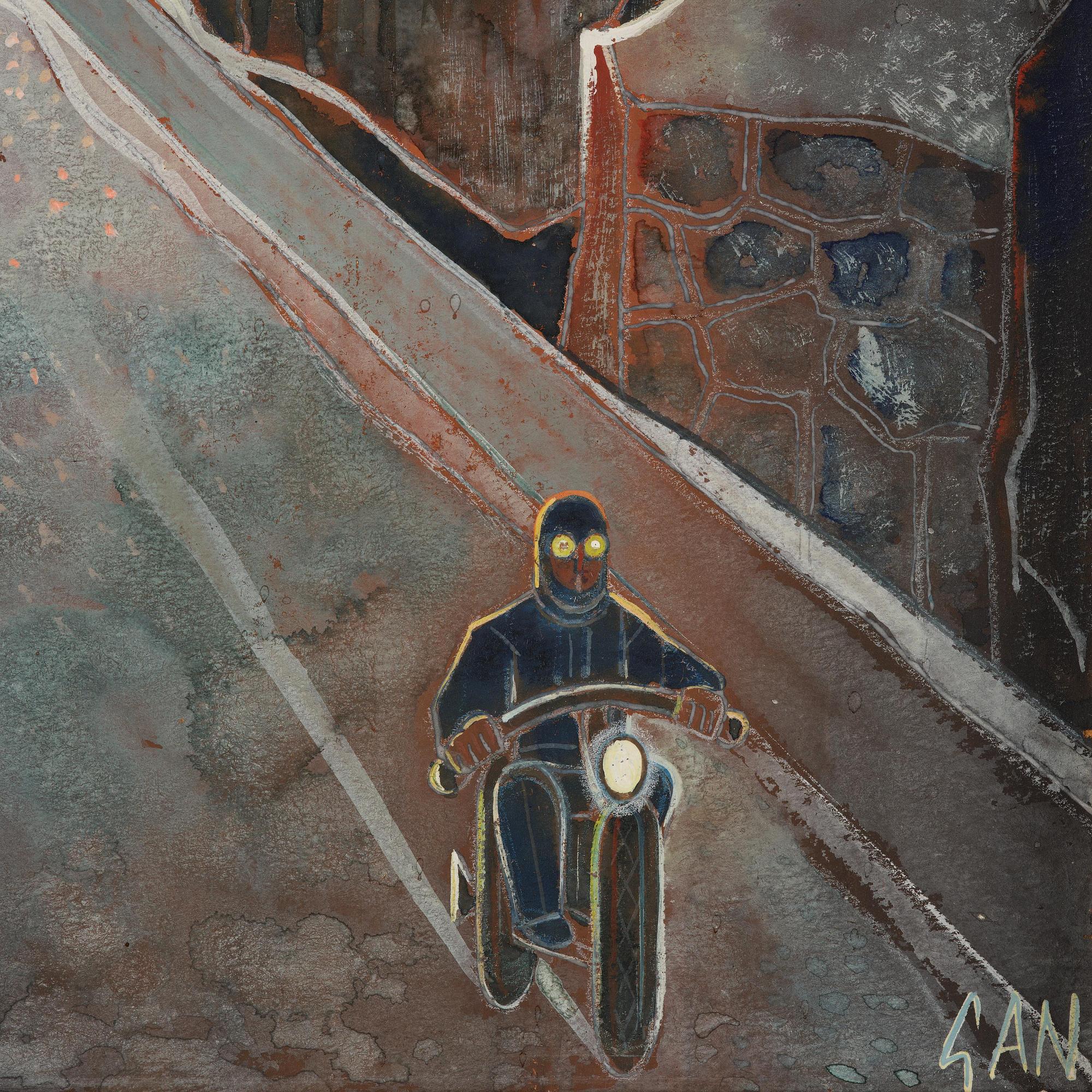
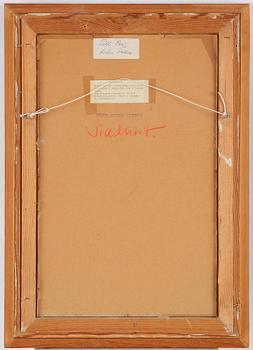
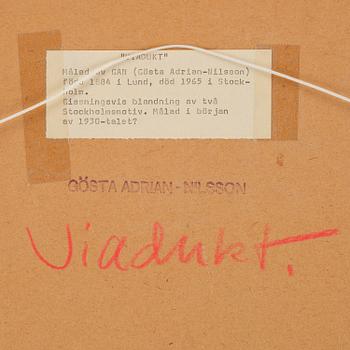
"Viadukt"
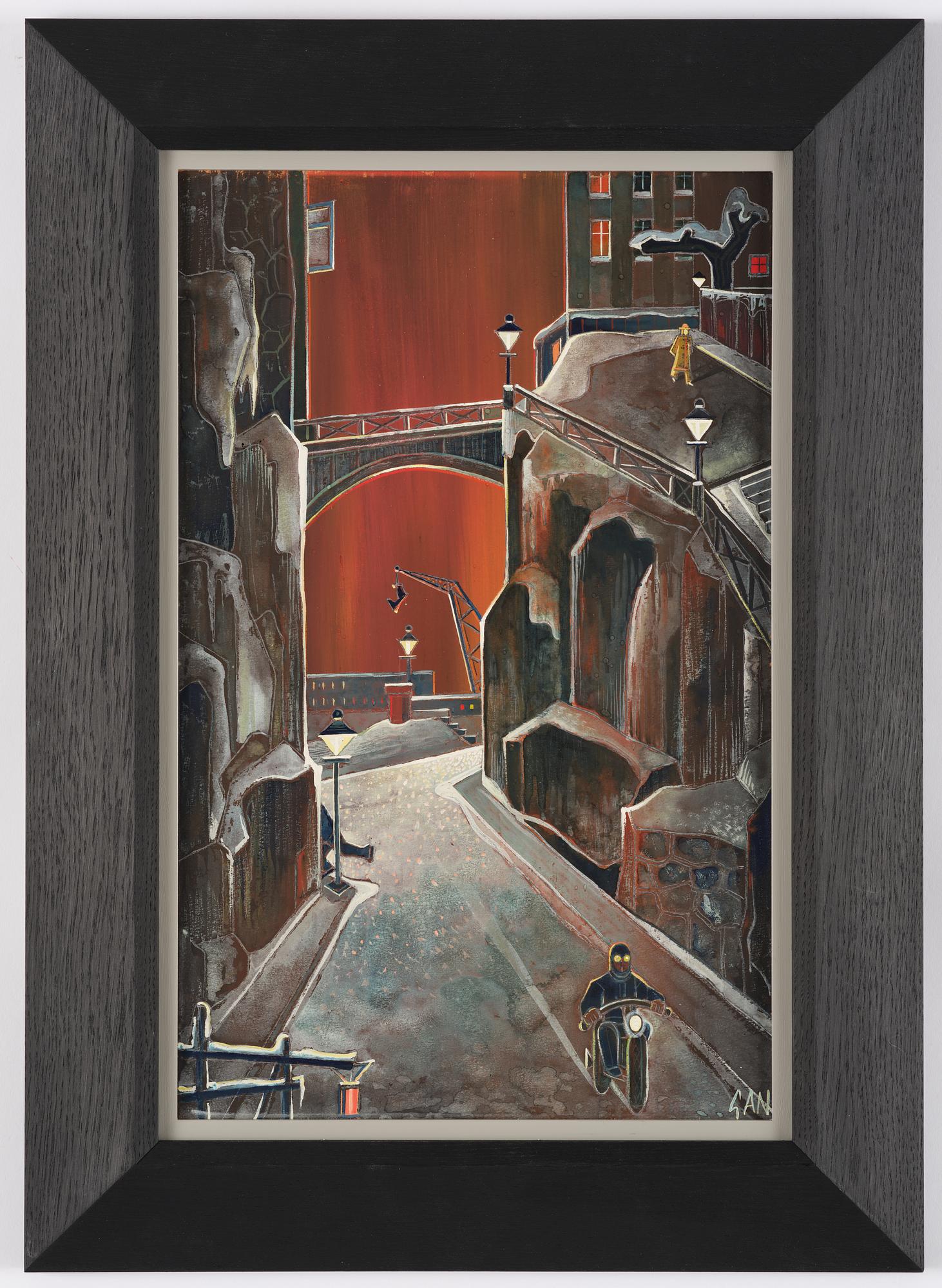
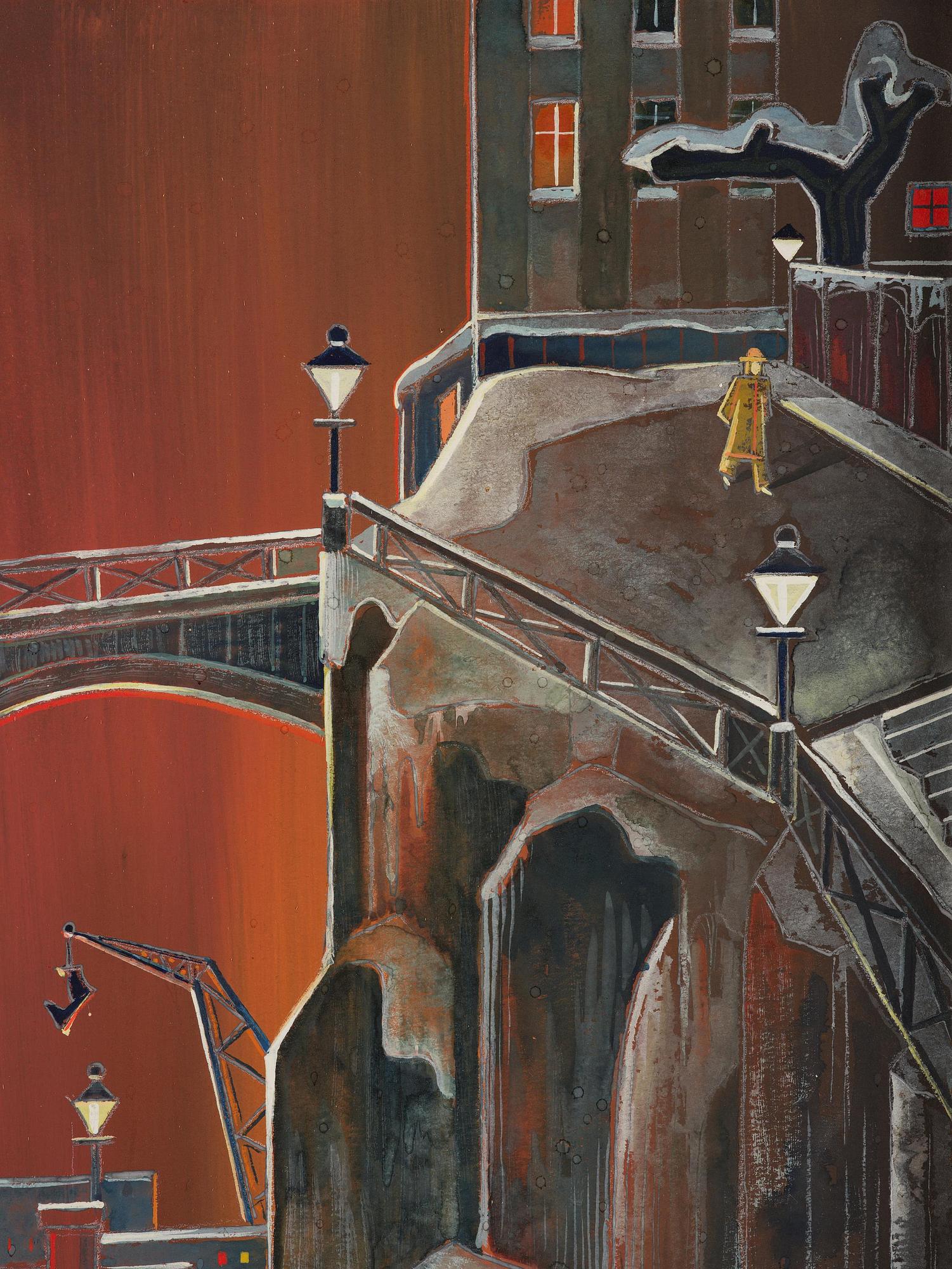
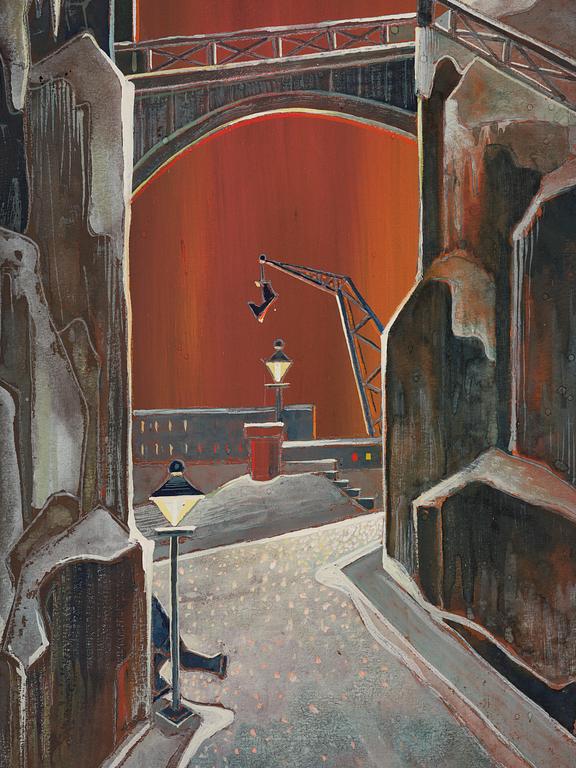
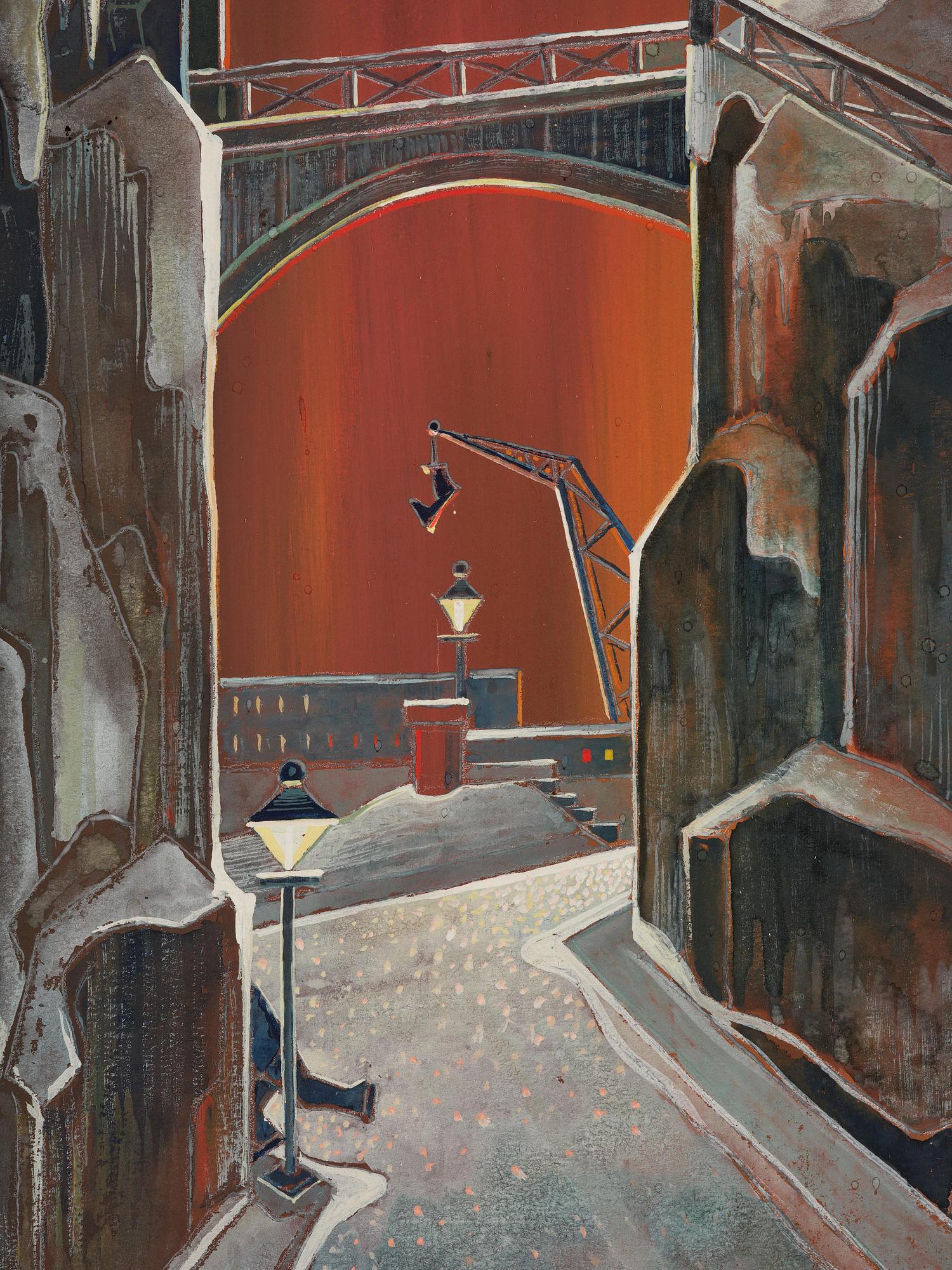
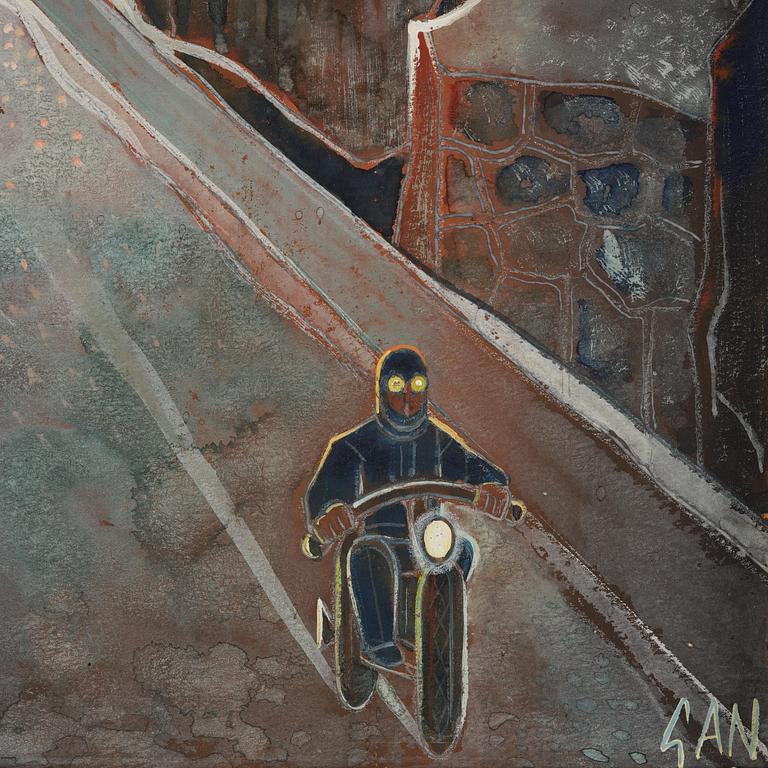
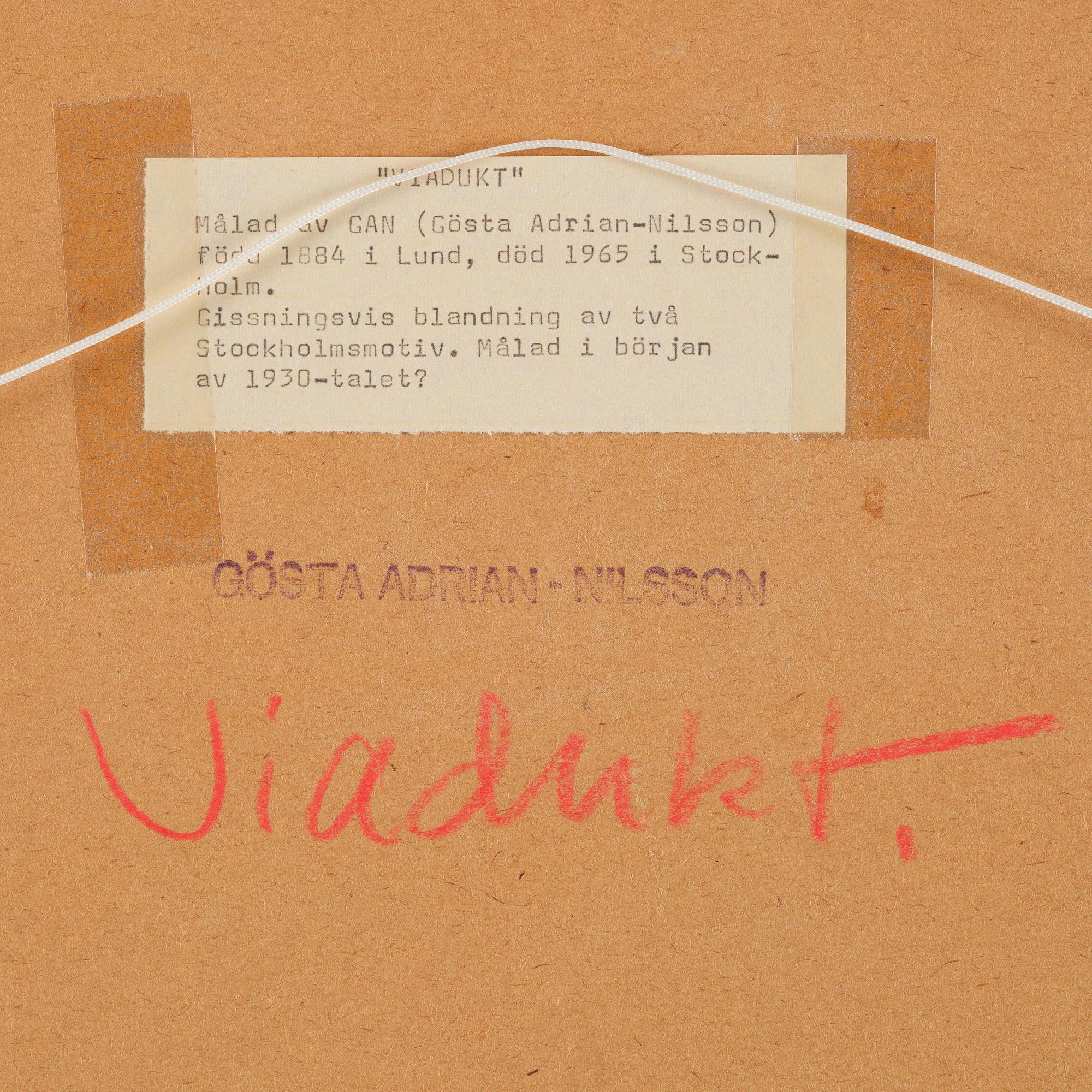
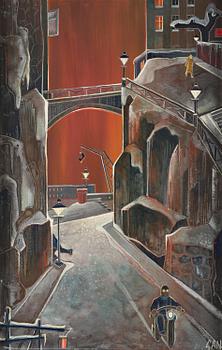
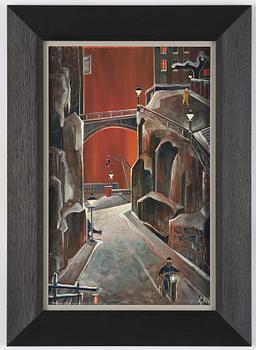
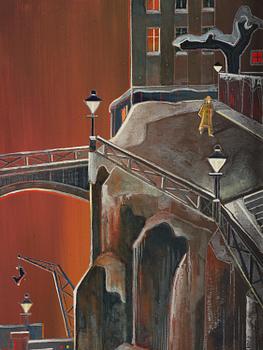
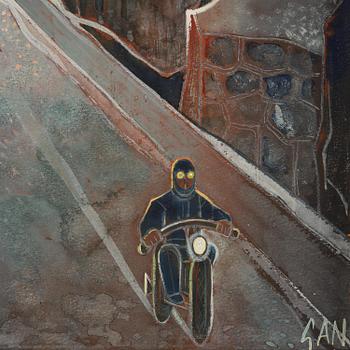
Signed with monogram GAN. Tempera and watercolour on cardboard panel, image 45.5 x 29 cm.
Alkuperä - Provenienssi
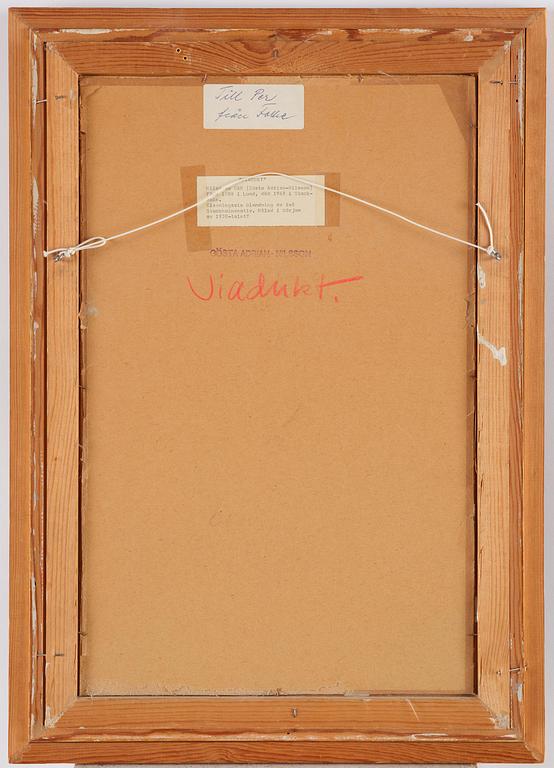
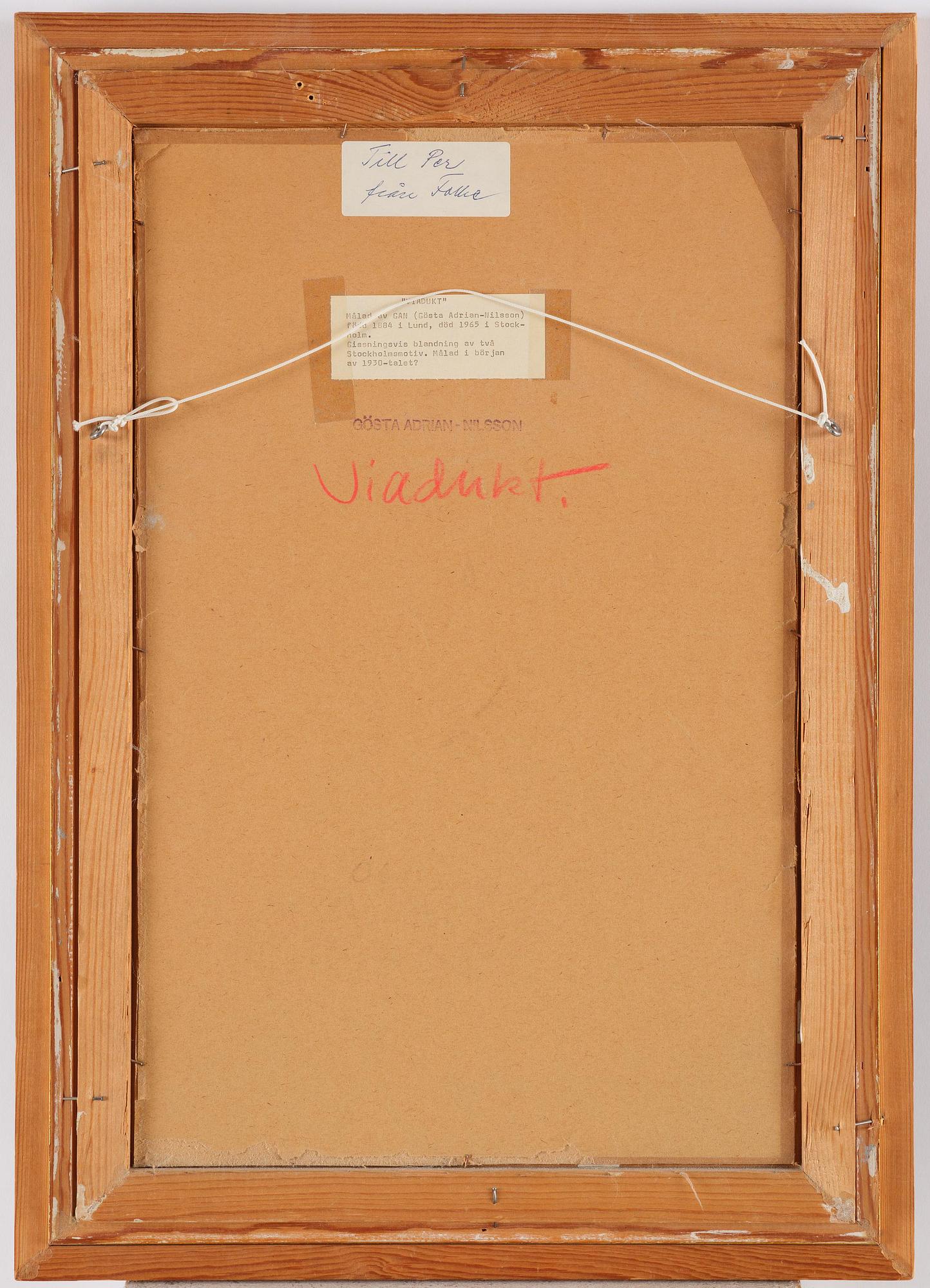
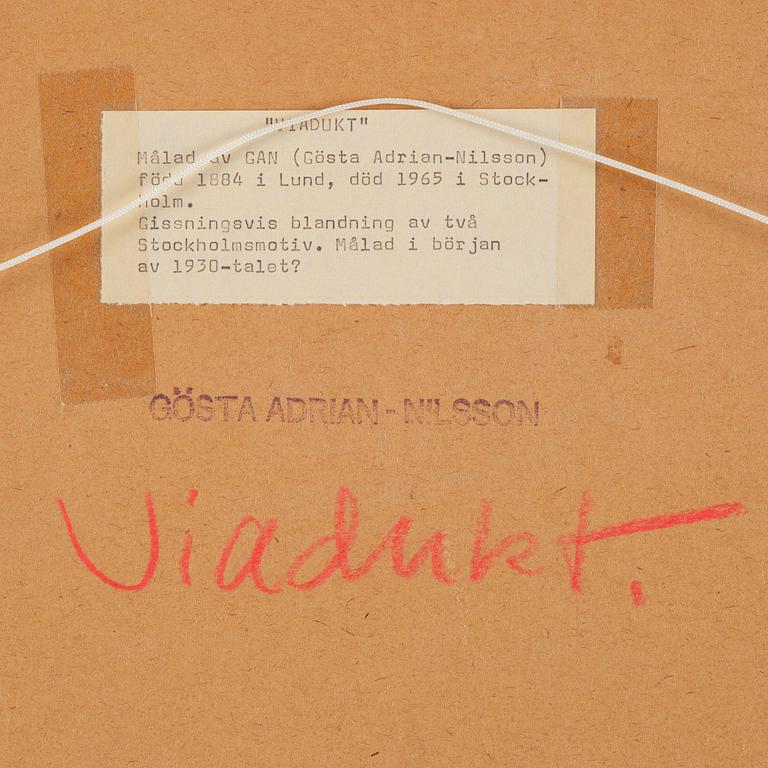
The chess player Folke Ekström (1906-2000), received as second prize in a chess competition in the beginning of the 1930s.
Thereafter inherited by the current owner.
Muut tiedot
Gösta Adrian-Nilsson (GAN) occupies a central position within Swedish modernism and stands out as one of its early pioneering figures. His artistic career is characterised by a remarkable versatility, both in expression and in technical and stylistic development. His debut took place in 1907 with a self-illustrated collection of poems, whose vignettes testify to an already developed sensitivity to the prevailing Jugendstil aesthetics. However, during the following decade, Adrian-Nilsson completely transitioned to painting. After initial studies in Copenhagen, he travelled to Berlin in 1913, where his encounter with the circle around Herwarth Walden and the gallery Der Sturm proved decisive. Here, he was exposed to contemporary avant-garde movements, not least Wassily Kandinsky's abstraction and the dynamic imagery of Italian Futurism, both of which would exert a lasting influence.
Like the Futurists, GAN embraced a fascination with the technological advancements of modernity. His painting from this period is characterised by a striving to articulate movement, energy, and rhythm, resulting in powerfully expressive compositions with an almost kaleidoscopic structure. The motifs encompass both urban and mechanical elements—buildings, vehicles, and machines—as well as human figures, particularly young, vital men who emerge as recurring subjects.
In 1920, GAN established himself in Paris, where he participated in the discourse of the international avant-garde for a five-year period. During this time, he published the Kandinsky-influenced manifesto The Divine Geometry, in which he emphatically argued for non-representational art. Concurrently, his own painting underwent a shift towards a more purely geometric-abstract idiom, characterised by static, highly reduced forms and an iconographic austerity that can partly be traced back to medieval pictorial traditions.
This reduction culminated around 1930 in a consistently concrete and planar geometric expression. During his years in Paris, Adrian-Nilsson also came into contact with the members of the Halmstad Group, whose early development within geometric painting he would significantly influence. The relationship later became mutual; in the latter part of the 1930s, surrealist elements can also be traced in his own work.
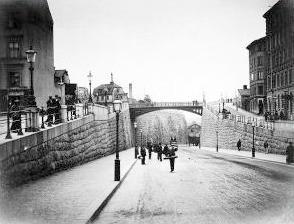
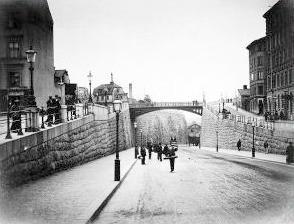
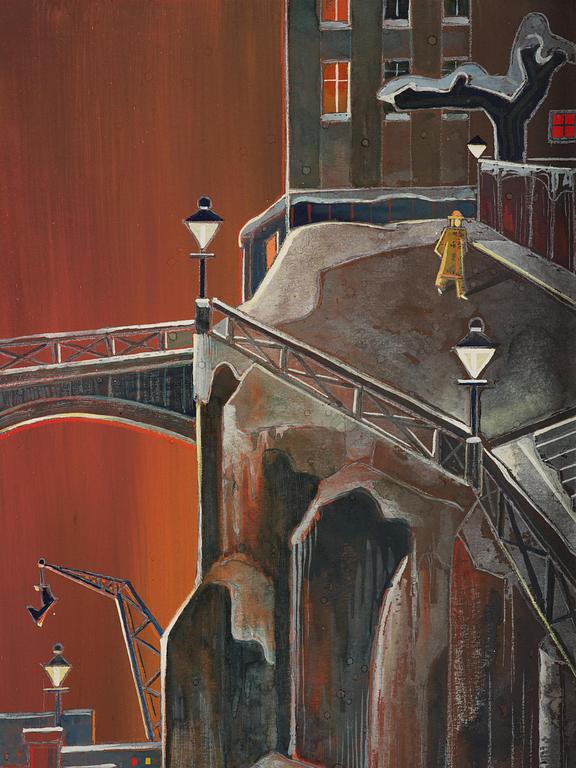
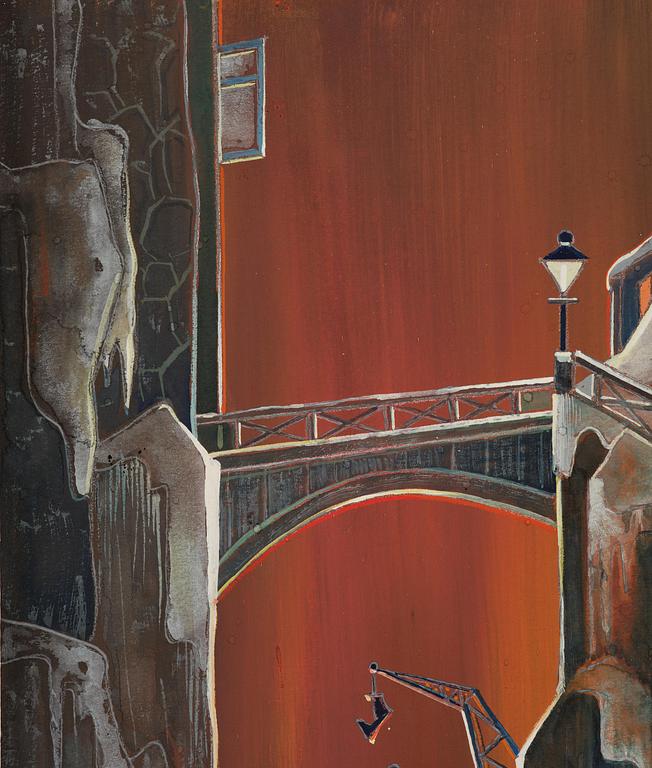
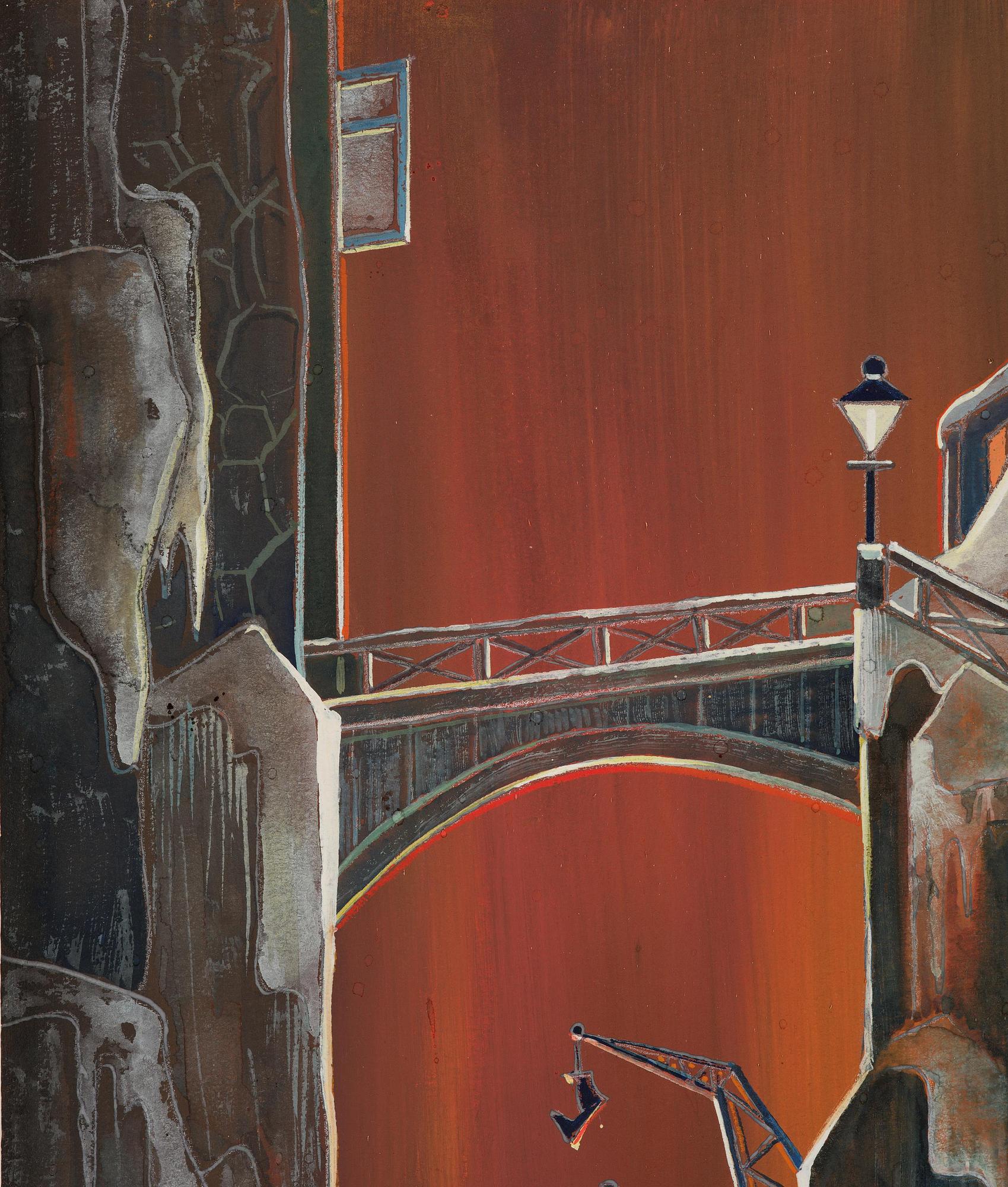
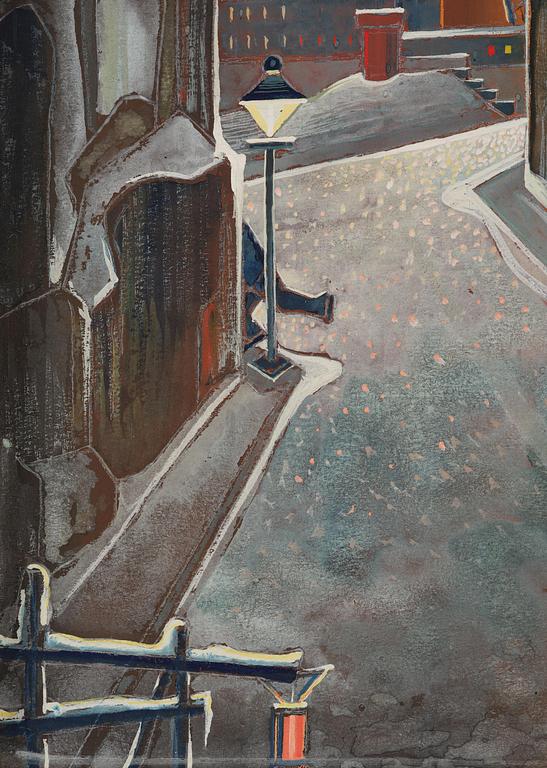
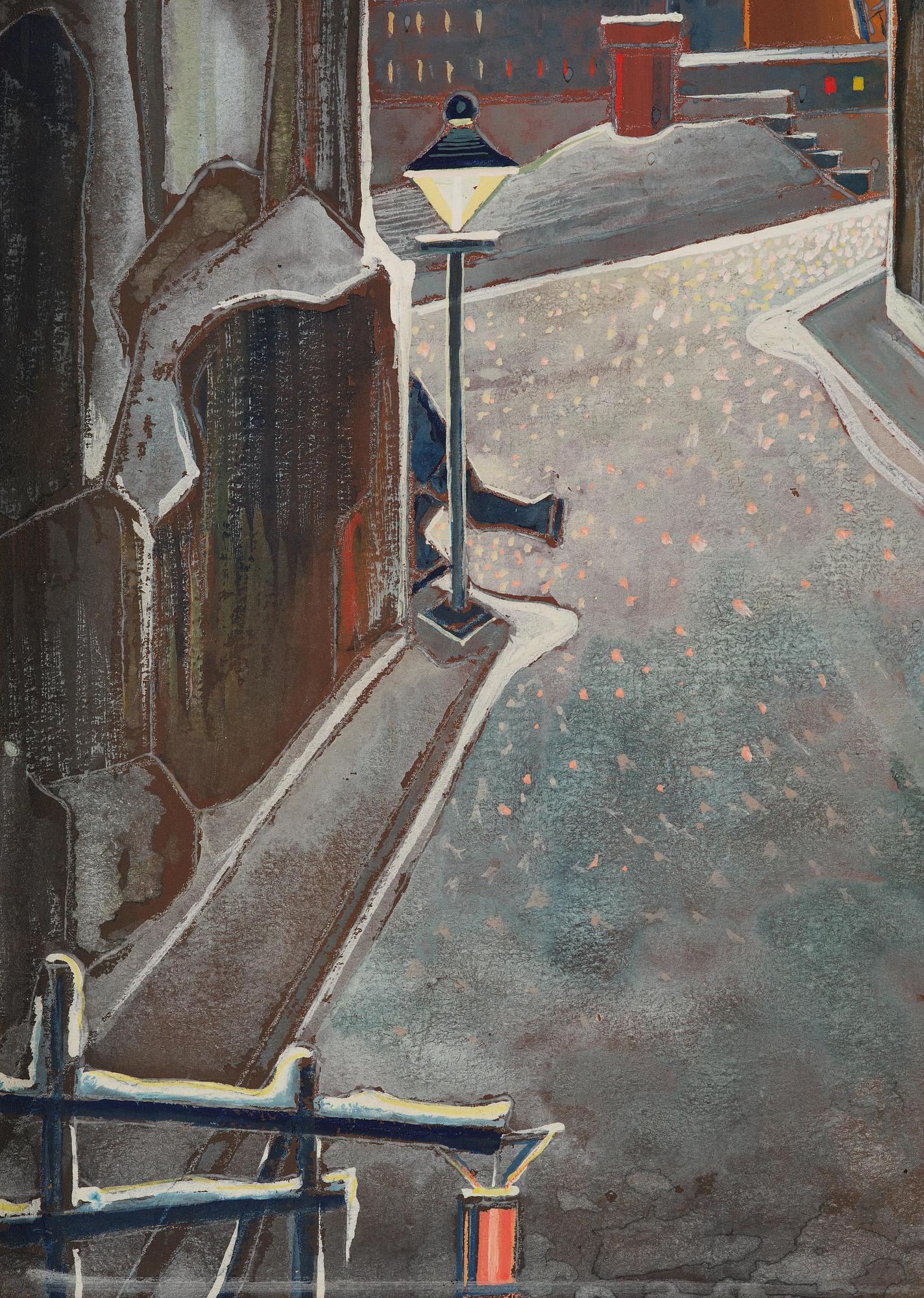
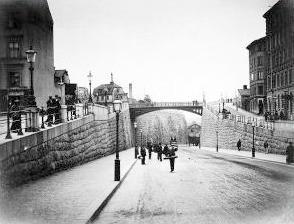
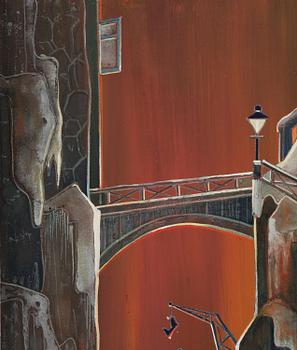
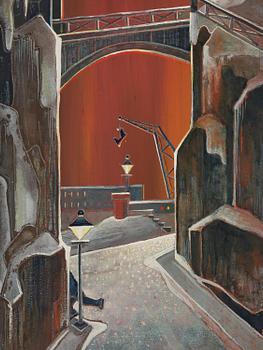
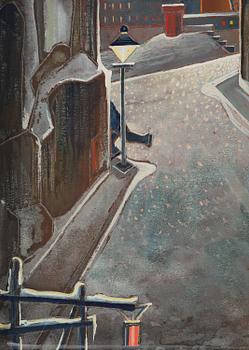
In the auction's "Viaduct," GAN takes us to a fanciful and scenic depiction of Torkel Knutssonsgatan in Södermalm, Stockholm. The painting, with its burnt palette, is held together by the geometry of the composition, where sharp angles meet taut curves. In the centre, we see the Lundabron, a footbridge leading from Gamla Lundagatan across Torkel Knutssonsgatan. A motorcyclist speeds down the hill, a figure mysteriously disappears behind a corner, and another figure dressed in a monochrome yellow outfit and hat strolls in the upper right on Bastugatan, GAN's home address from 1932 until his death in 1965.
Lisätietoja ja kuntoraportit

Kuuluu jälleenmyyntikorvauksen piiriin
Tietoa ostamisesta
Kuvan käyttöoikeudet
Tämän tietokannan taideteokset ovat tekijänoikeudella suojattuja, eikä niitä saa kopioida ilman oikeudenhaltijoiden lupaa. Teokset kopioidaan tässä tietokannassa Bildupphovsrättin lisenssillä.
Muiden katsomia kohteita