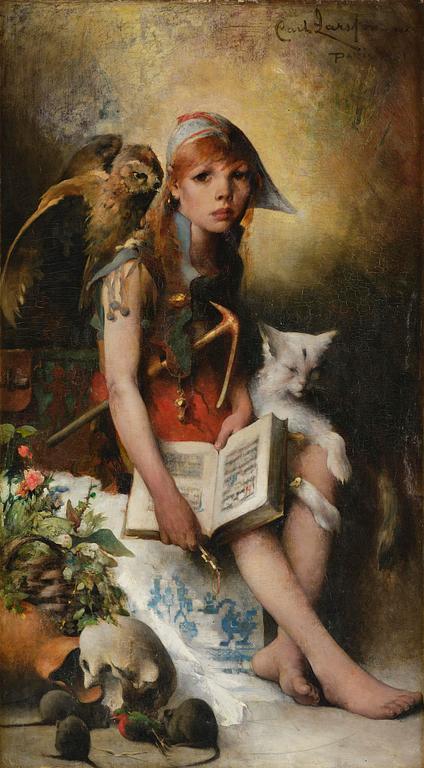
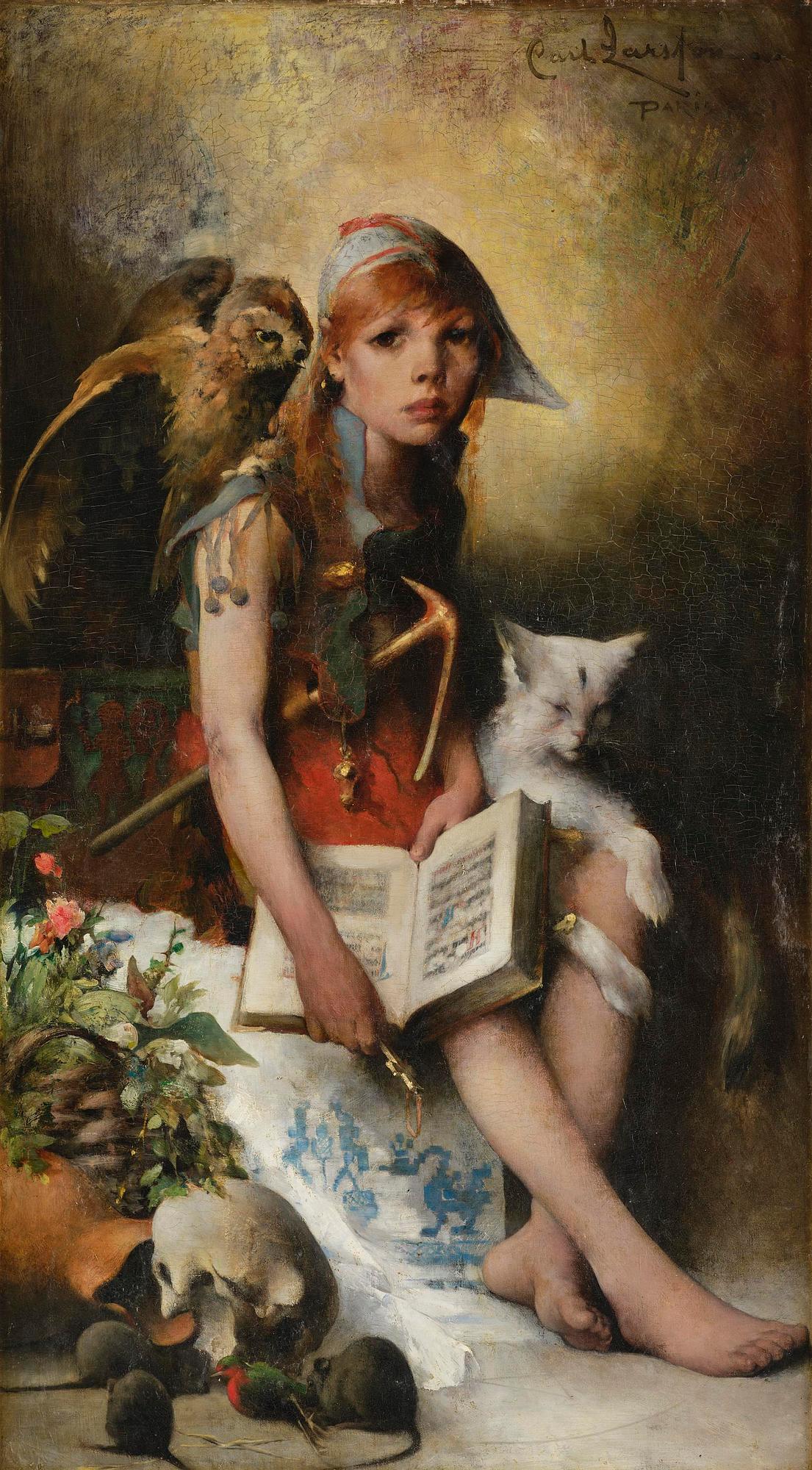
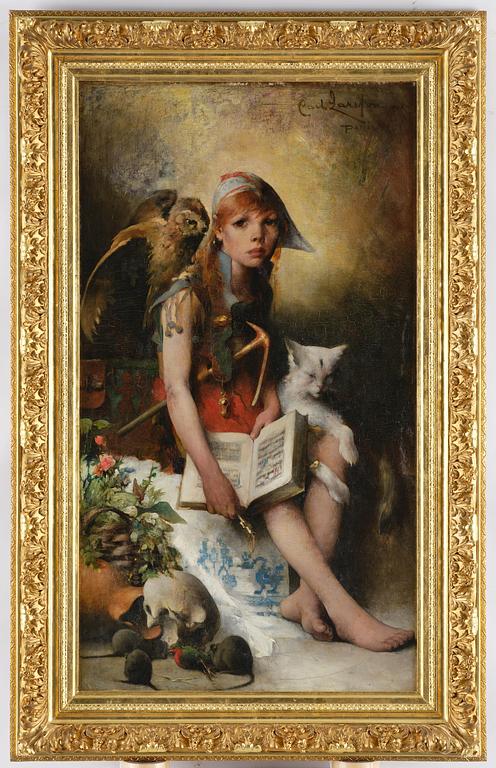
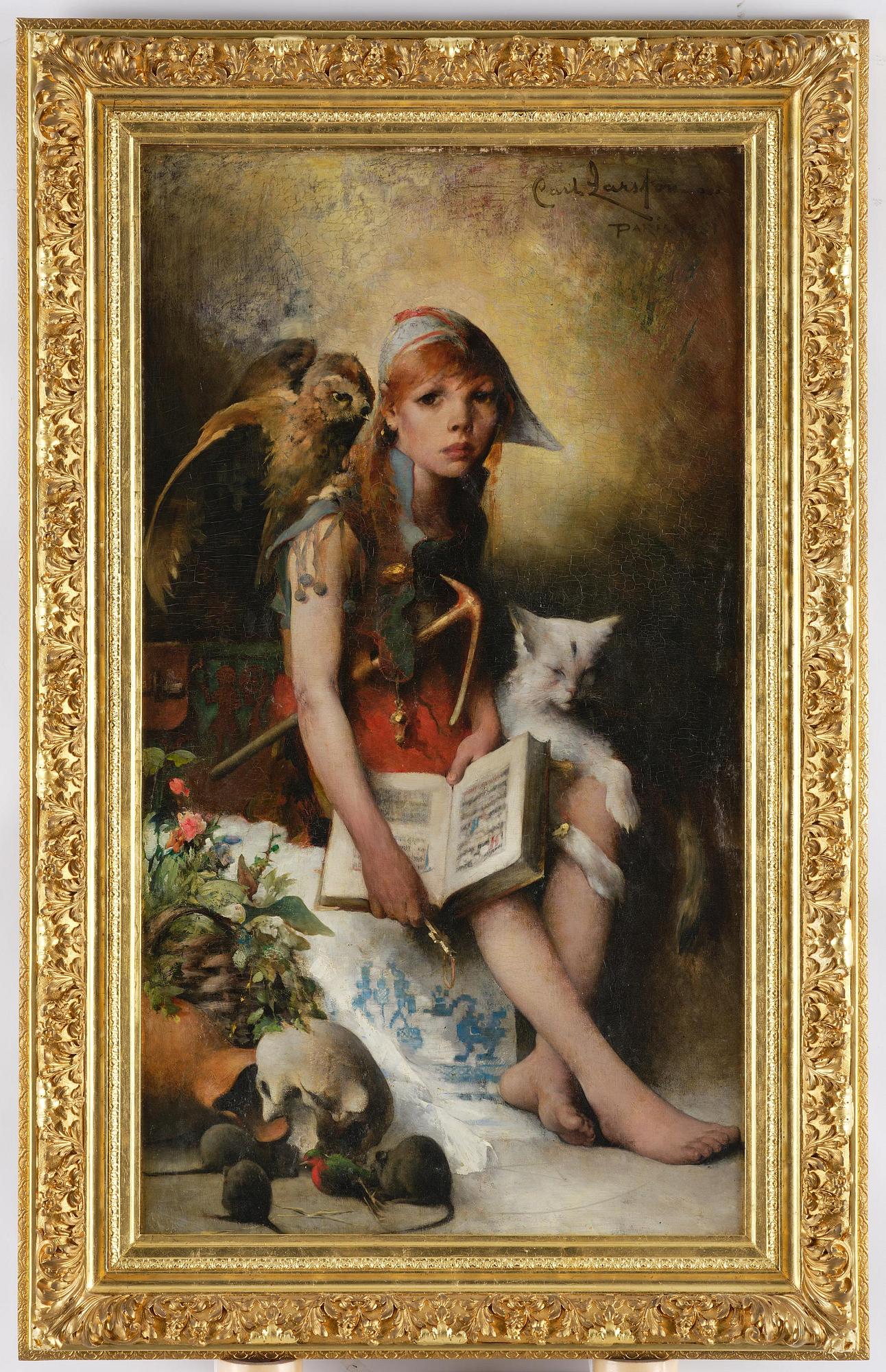
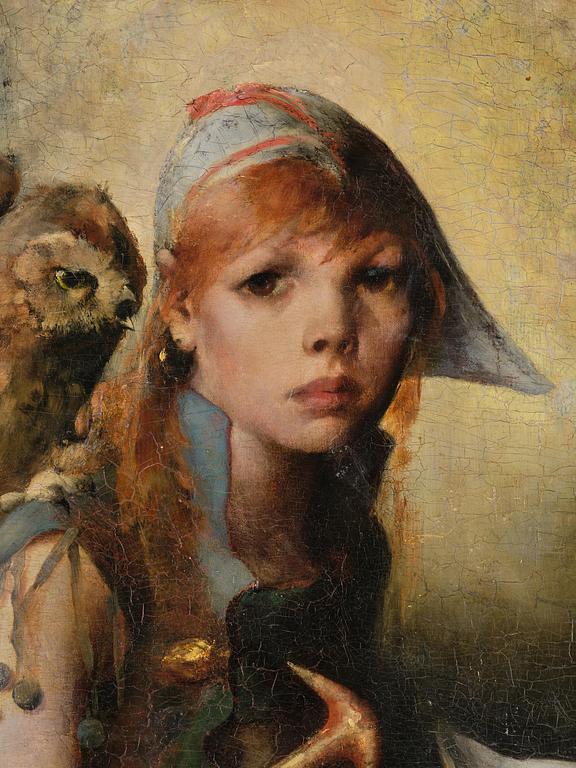
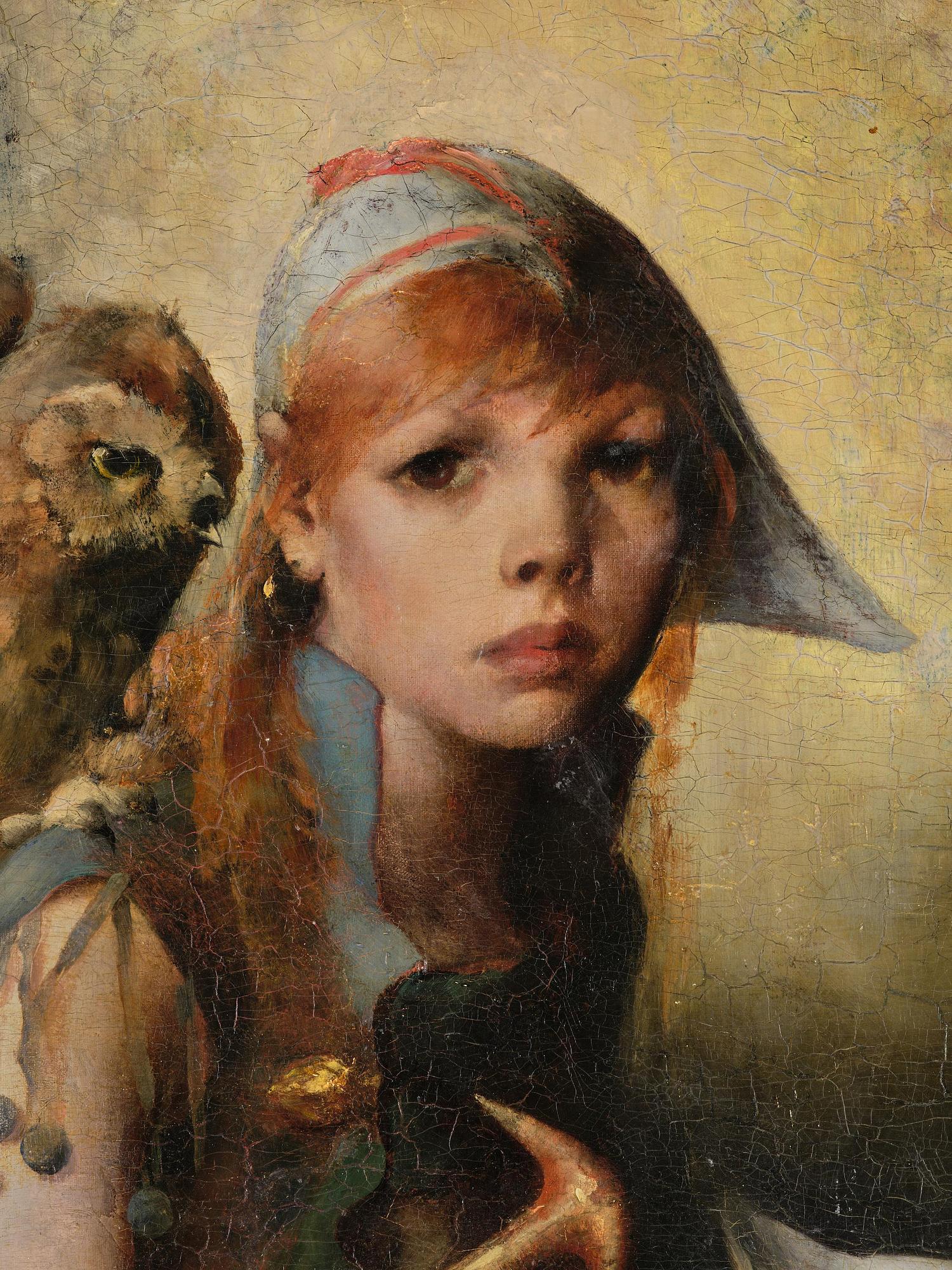
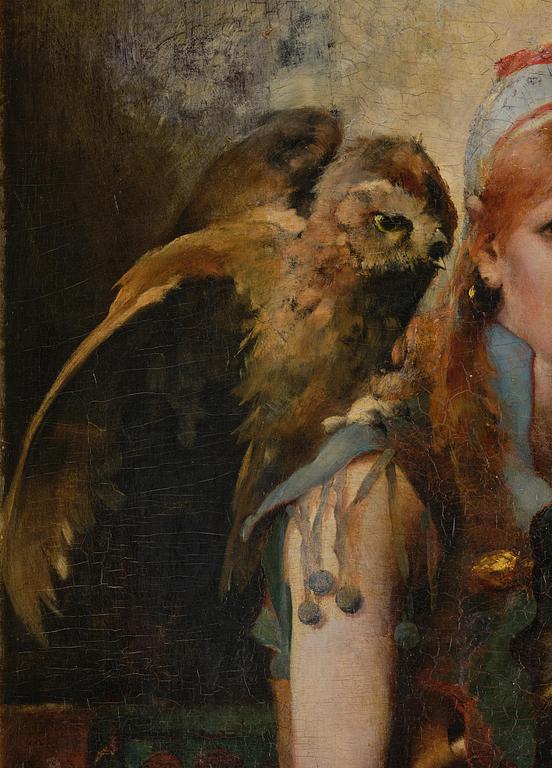
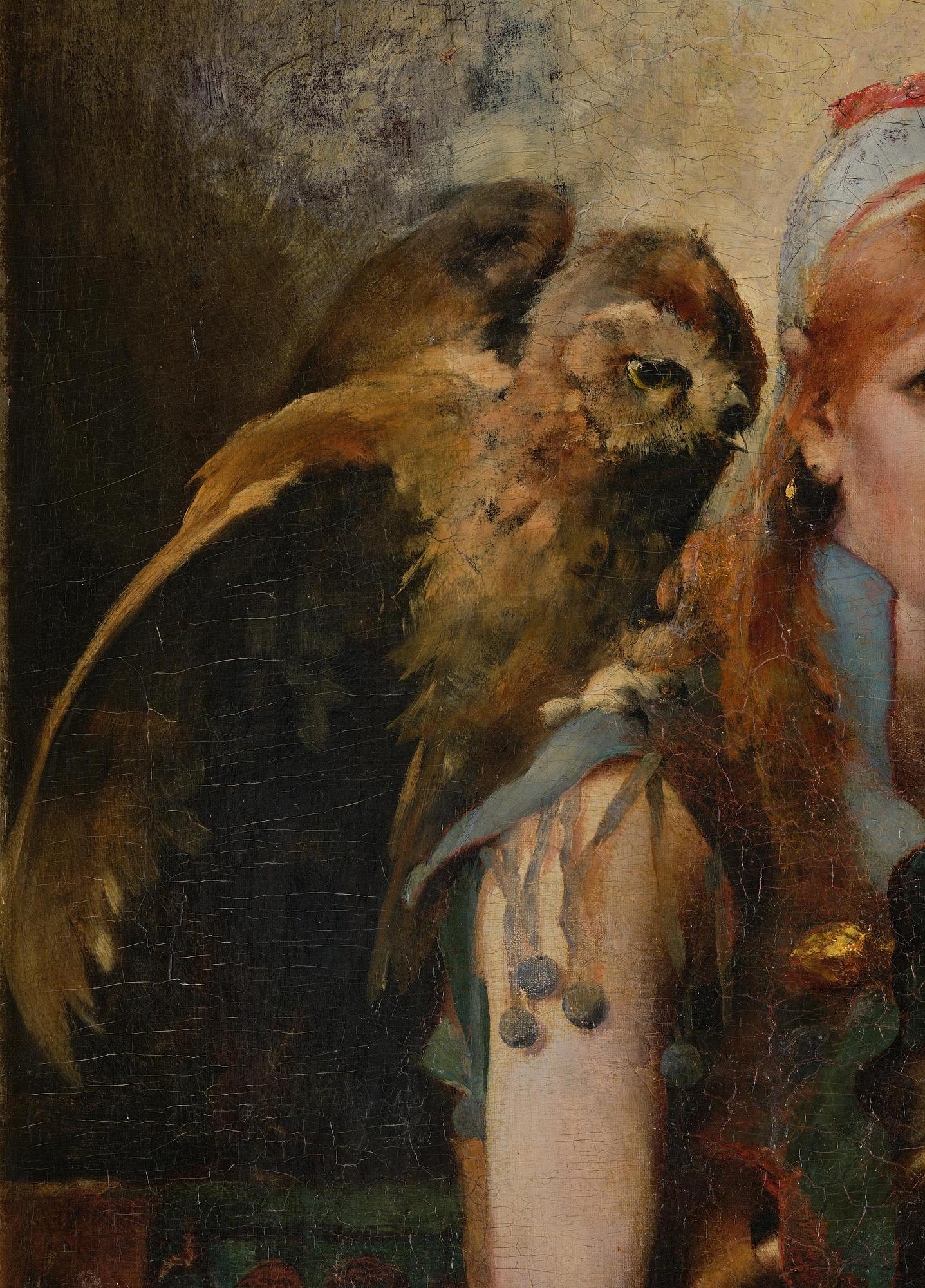
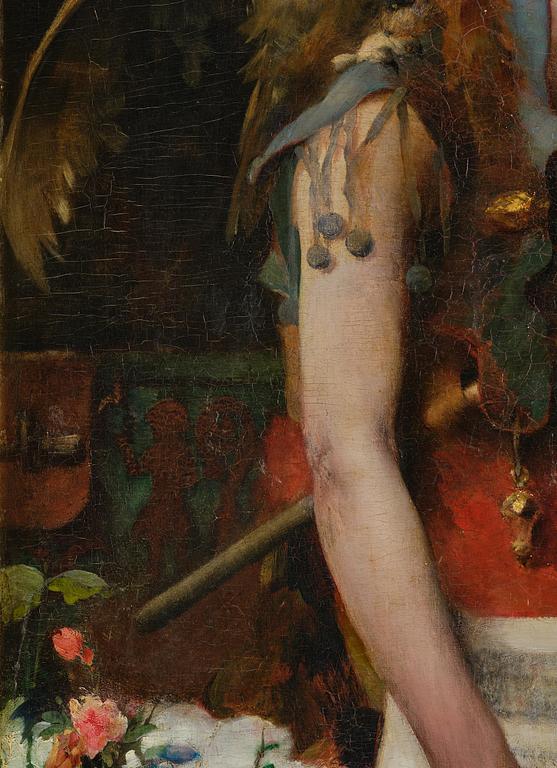
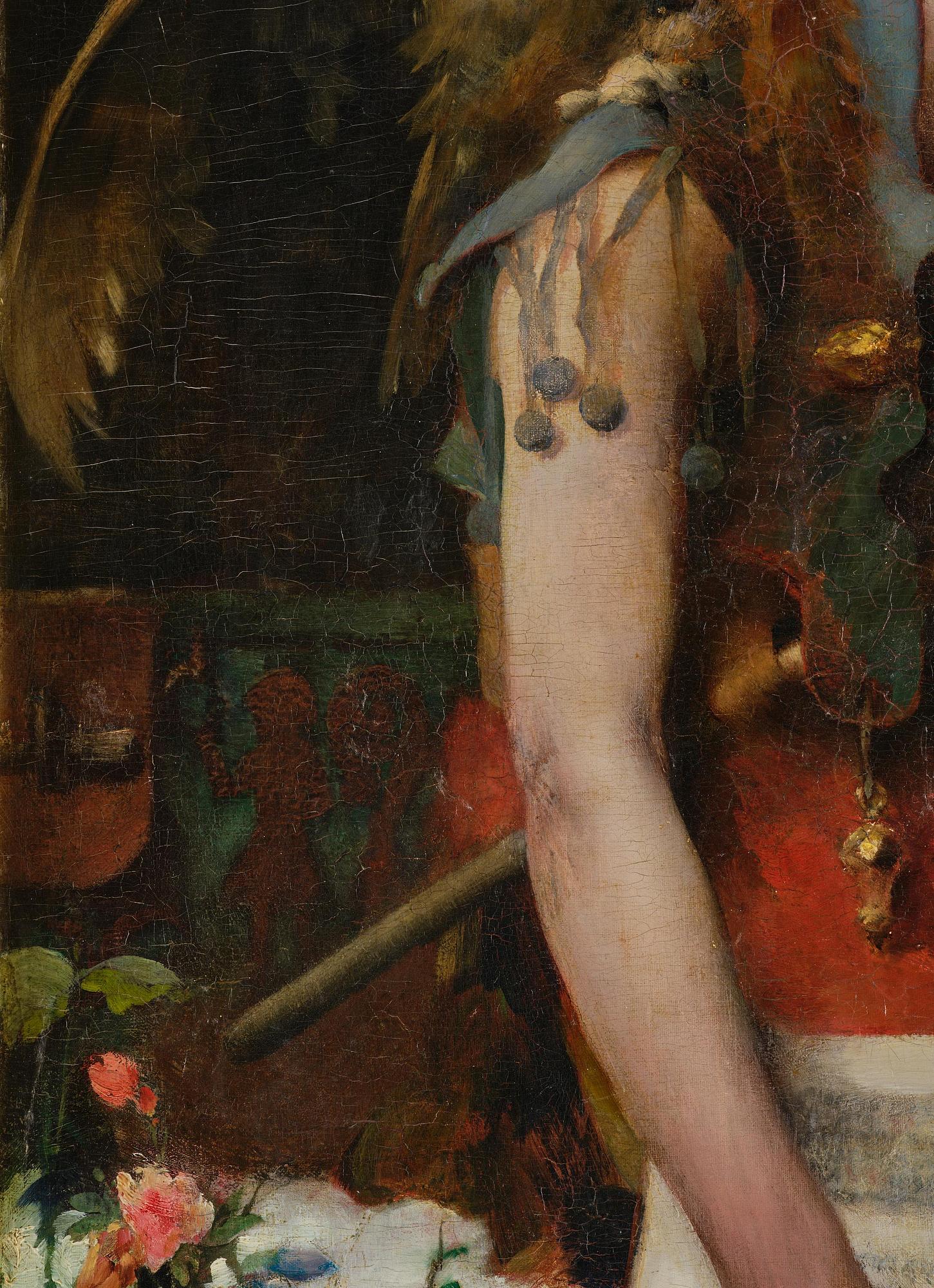
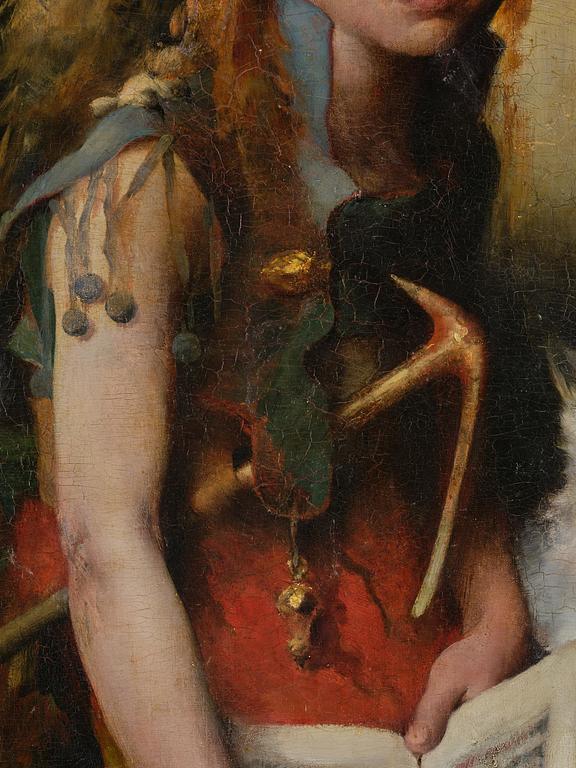
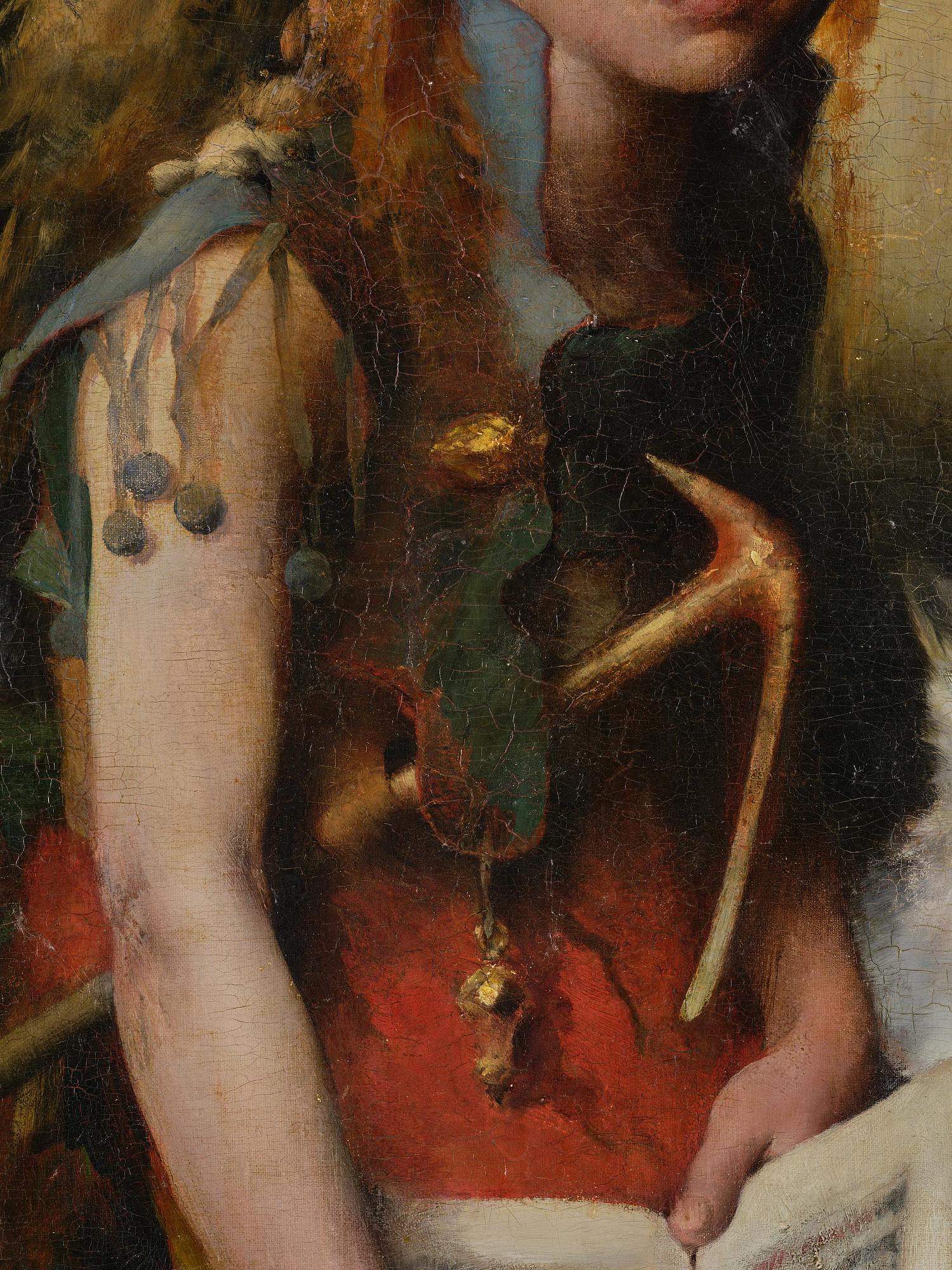
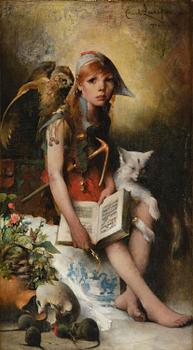
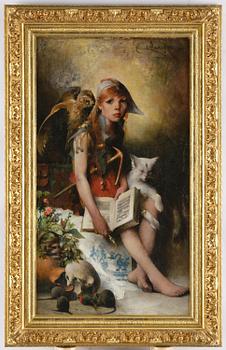
"Häxans dotter" ("The Witches daughter")
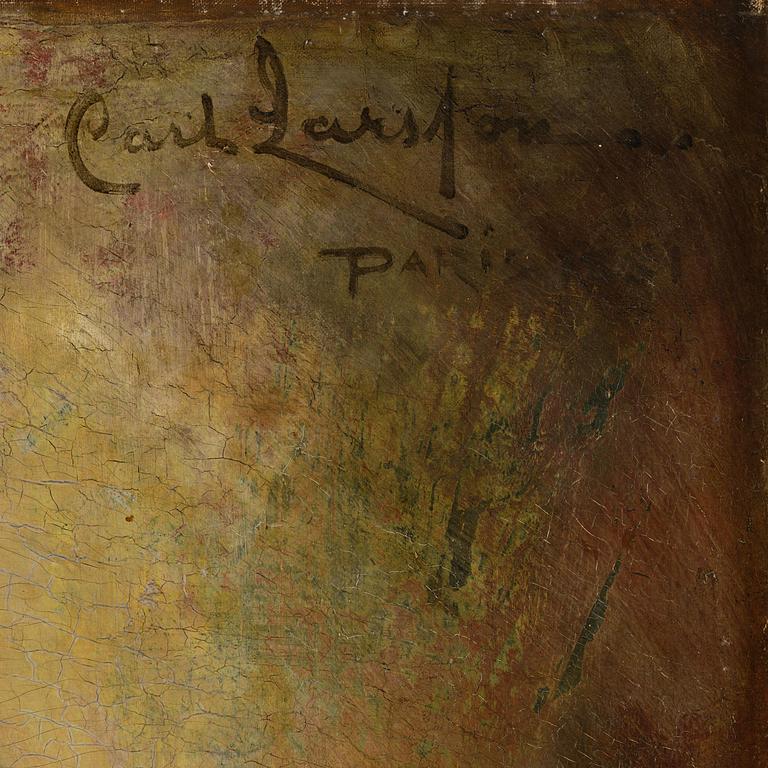
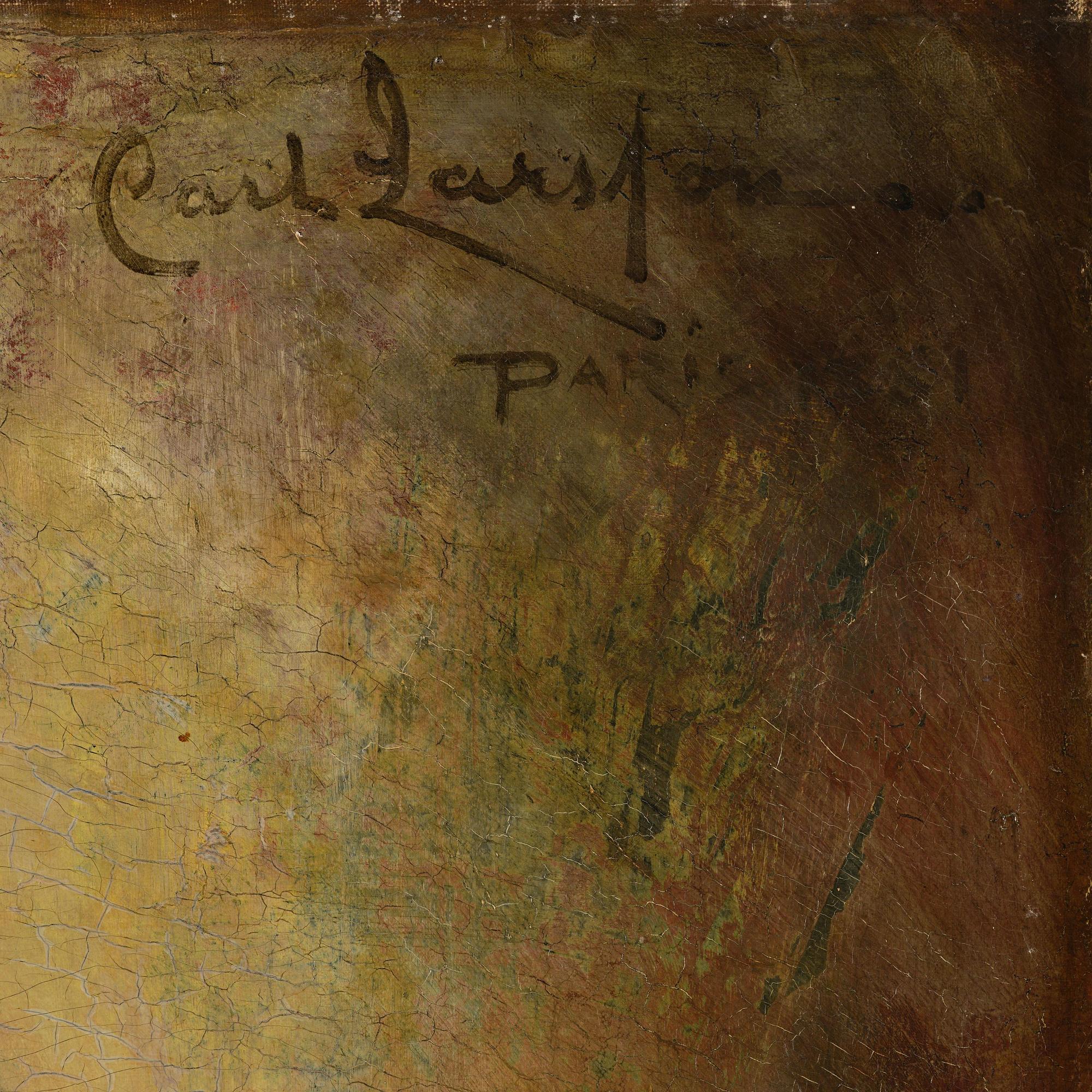
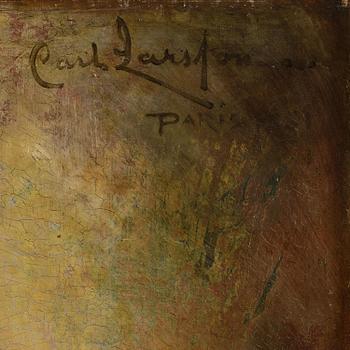
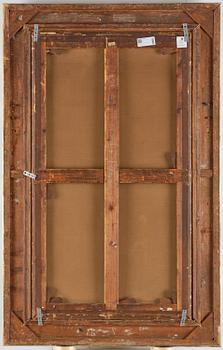
Signed Carl Larsson Paris and dated 1881. Oil on relined canvas 144 x 80 cm.
Alkuperä - Provenienssi
Monsieur Aprin, Paris, presented as a gift.
Edvard Berg, Paris, efter 1912.
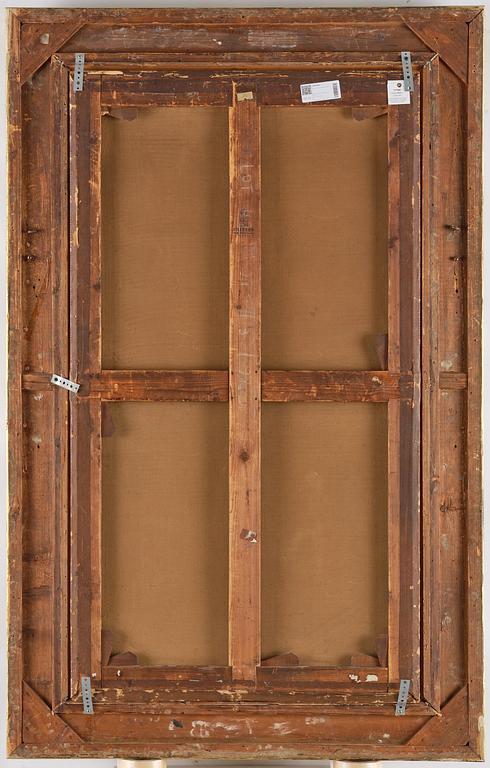
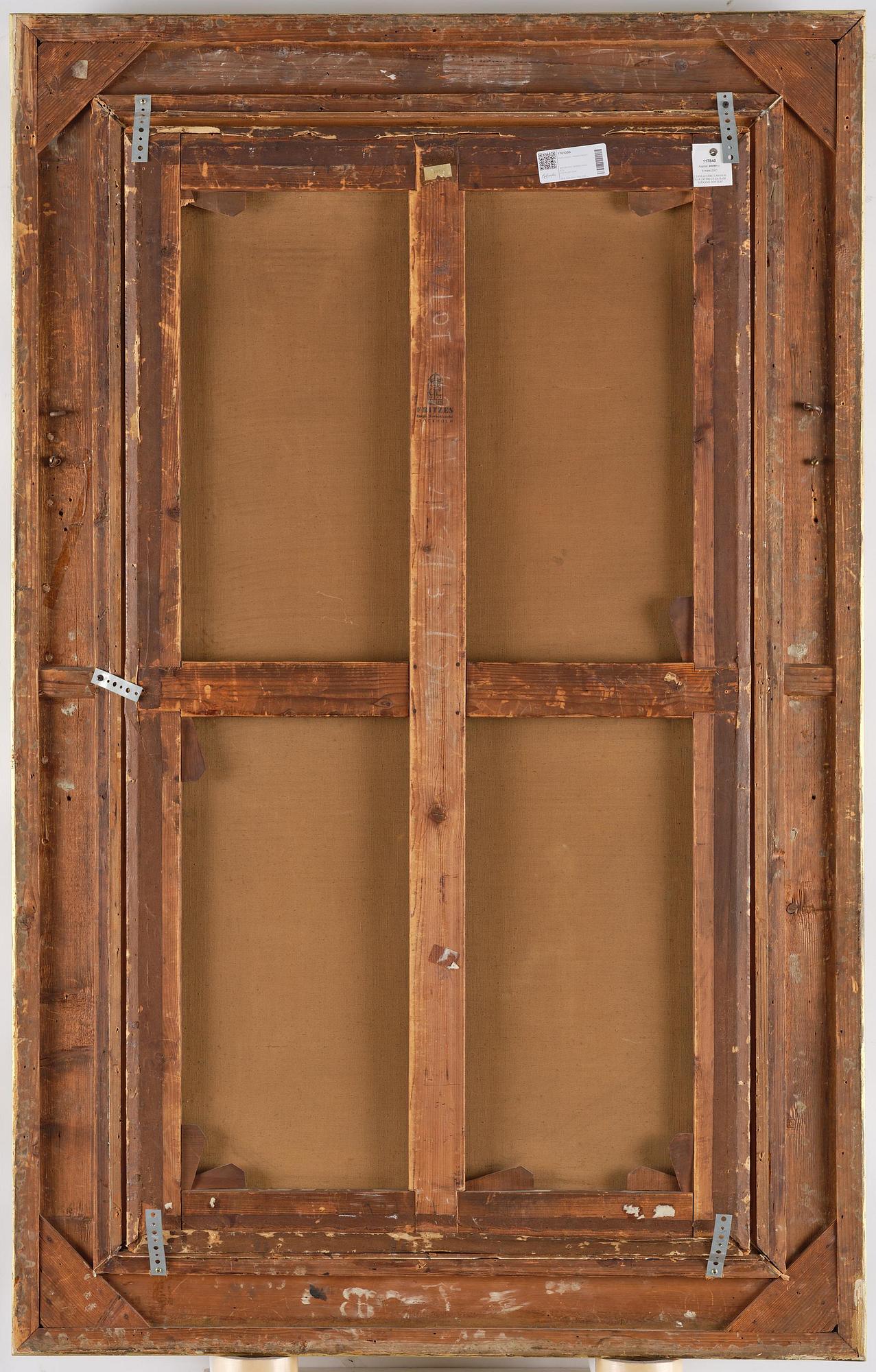
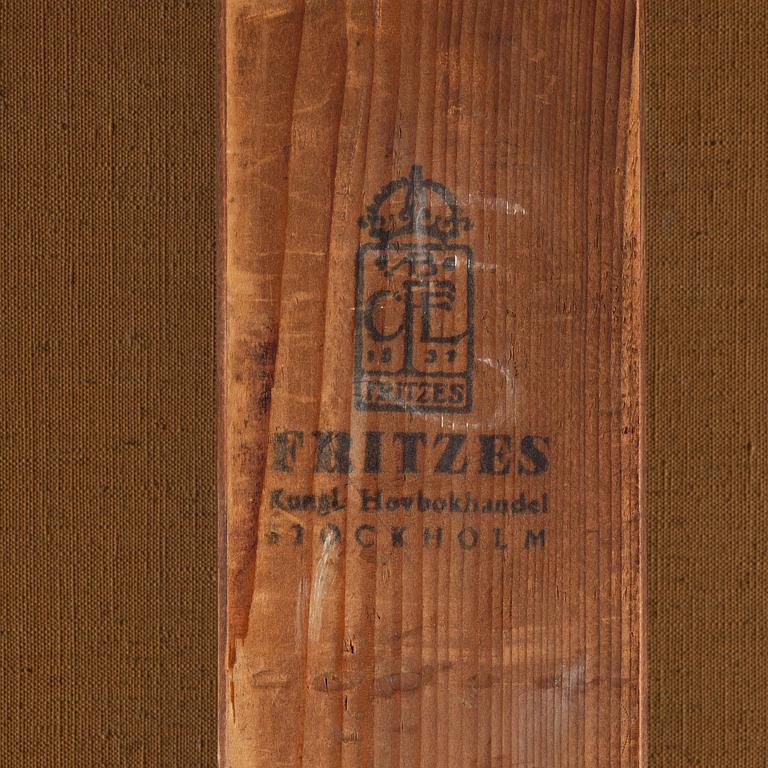
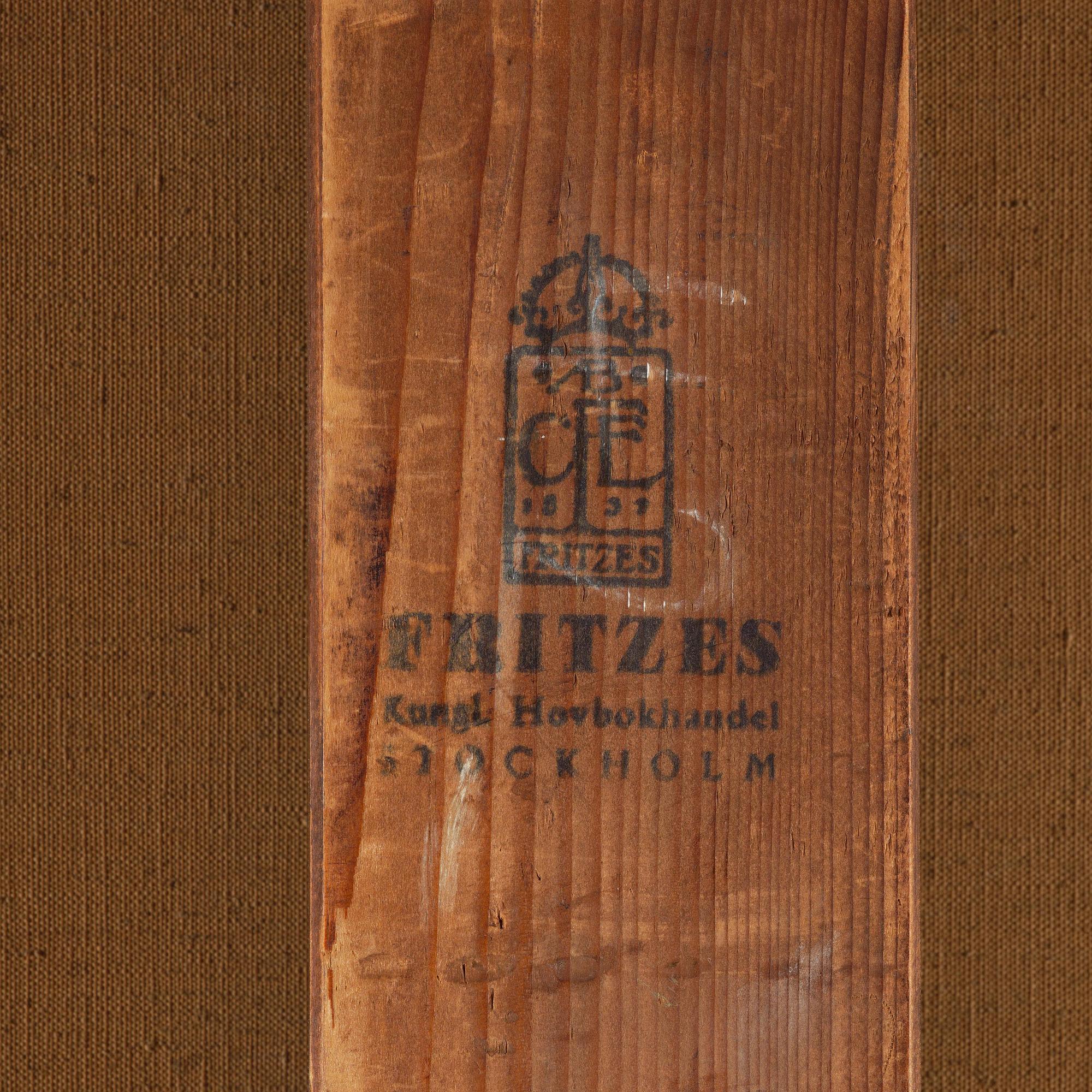
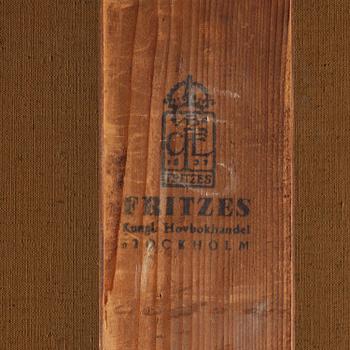
Fritzes kungliga hovbokhandel, Stockholm.
Christie's, London, 21 March 1997, lot 42.
Kunsthallen, Copenhagen, 4 December 1997, lot 238.
Kirjallisuus
Georg Nordensvan, "Carl Larsson I", 1920, p. 69, illustrated p. 70.
Georg Nordensvan, "Carl Larsson II", 1921, p. 222.
Axel L. Romdahl, "Romantiken i Carl Larssons konst", in "Ord och Bild", 1921, p. 563-564, illustrated p. 561.
Carl Larsson, "Jag", 1931, p. 168.
Carl Larsson, Harriet and Sven Alfons, "Carl Larsson - skildrad av honom själv i text och bilder", 1952, p. 57-58, illustrated p. 56.
Torsten Gunnarsson (ed.), "Carl Larsson", 1992, p. 37.
Carl Larsson, "I Myself", 1992, p. 93.
Ulwa Neergaard, "Carl Larsson. Signerat med pensel och penna", 1999, illustrated p. 36, mentionned in the catalogue from year 1881, p. 16 as no. 75.
Muut tiedot
The artist Carl Larsson has forever inscribed himself in our Swedish art history, best known as the interpreter of family and home at the turn of the century through his watercolours executed in Sundborn, as well as for the vibrant plein air paintings from his time at the artists' colony in Grèz-sur-Loing and the many portraits of family members, friends, and children. Less known is the interesting and exploratory painting that foreshadowed this shift in style and artistic development.
Strongly influenced by his education at the Royal Academy of Fine Arts in Stockholm and the French salon painting, the young artist worked in a traditional and often symbol-laden and literary style. After his first stay in Paris in 1877, where the determined aspirant focused on academic painting to conquer the Salon, he had to support himself back home in Stockholm with various illustration assignments. In November 1879, Larsson returned to Paris accompanied by Ernst Josephson. Troubled by setbacks and a dark disposition, he turned to his old academy professor Fredrik Wilhelm Scholander for advice. Scholander advised him to orient himself in a more realistic direction, but Carl Larsson chose his own path and continued with paintings of historical or anecdotal content and costume pieces. One example of this is "Häxans dotter" – a characteristically typical image for Larsson at this time, filled with symbols, which he began in Stockholm.
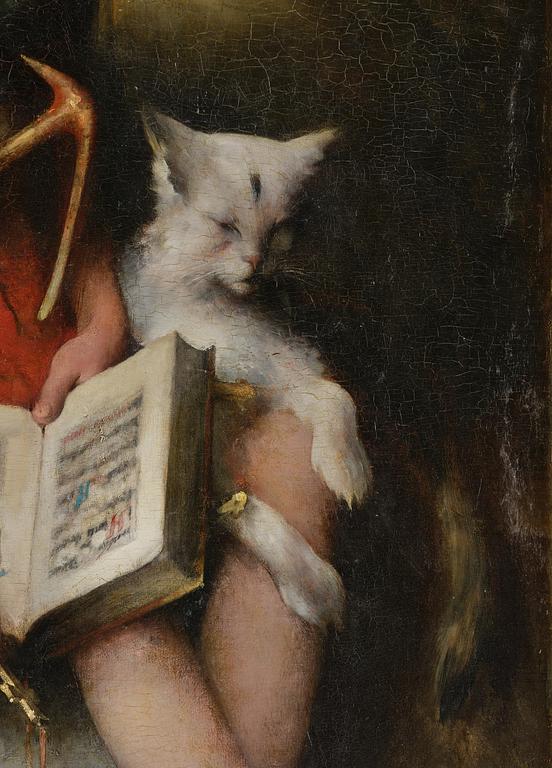
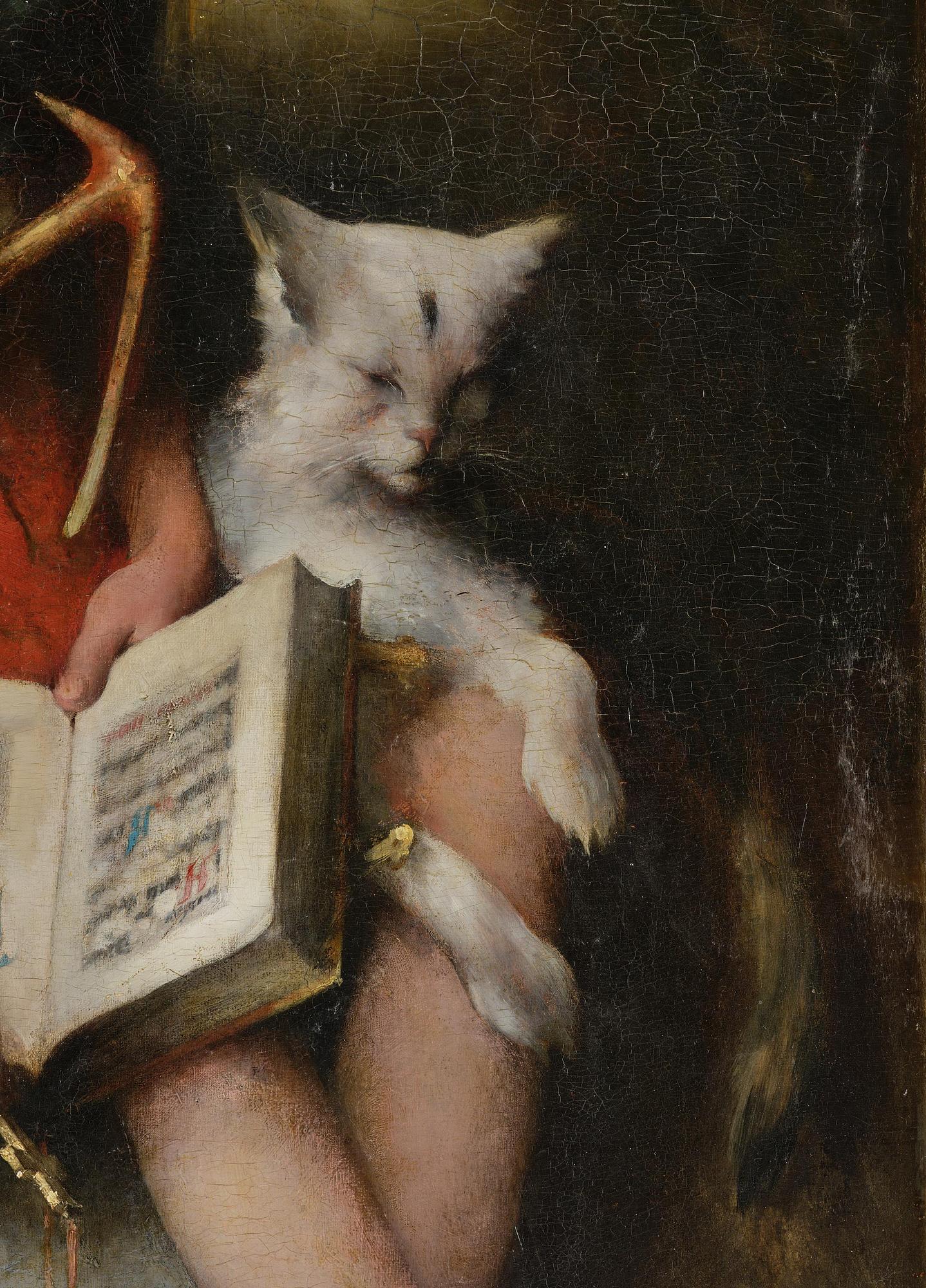
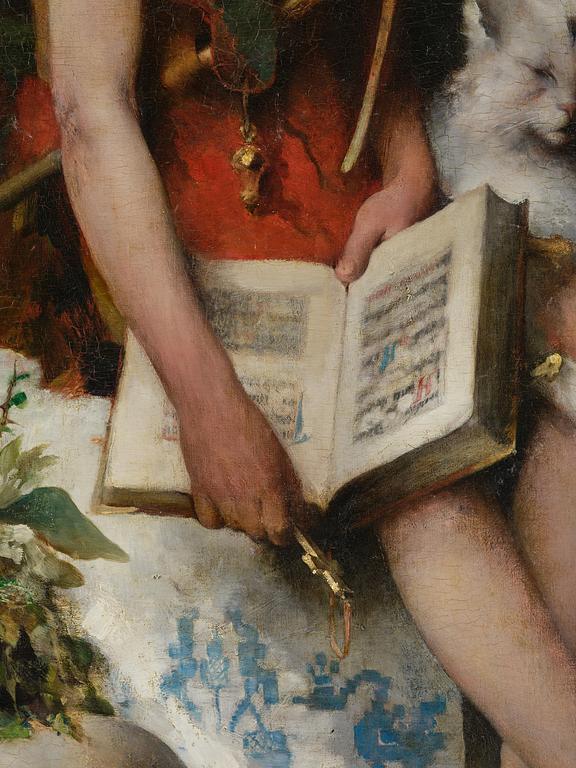
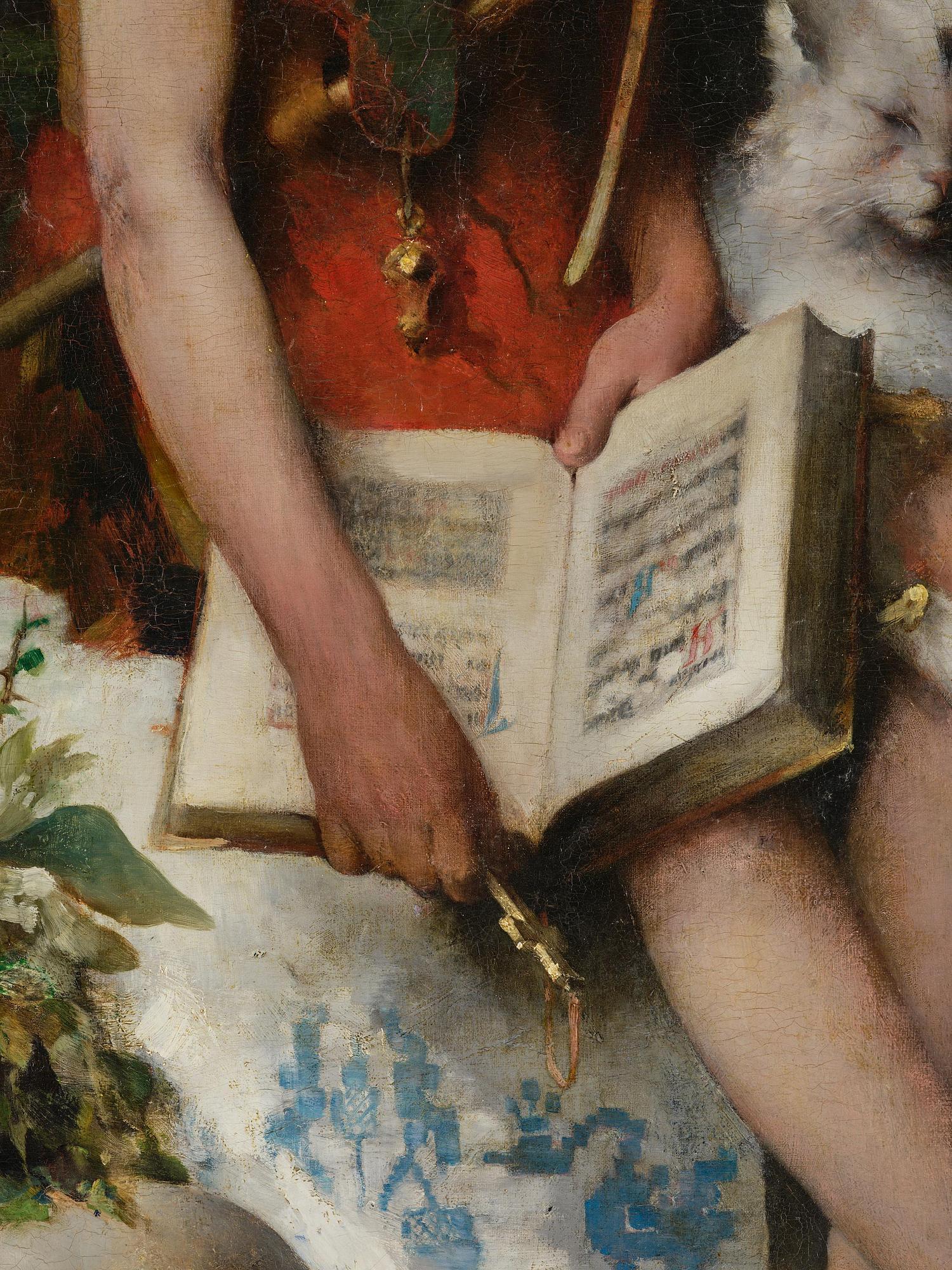
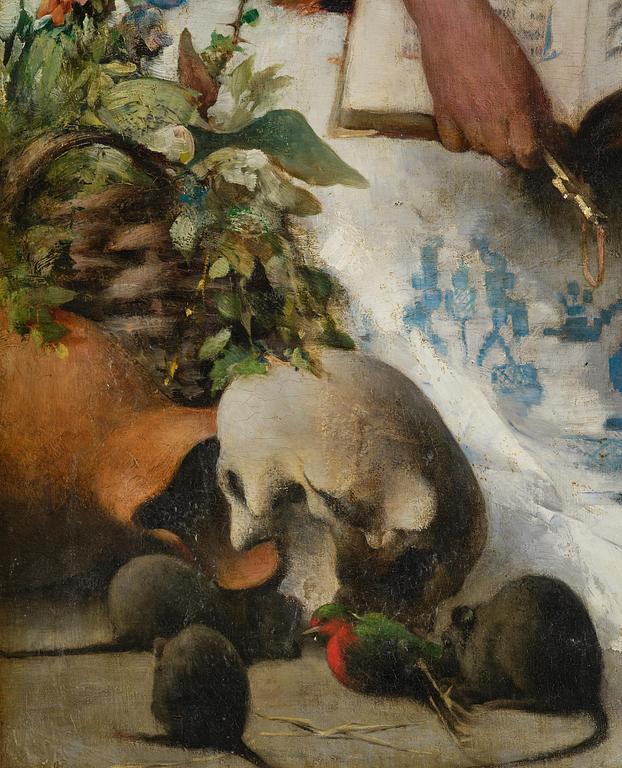
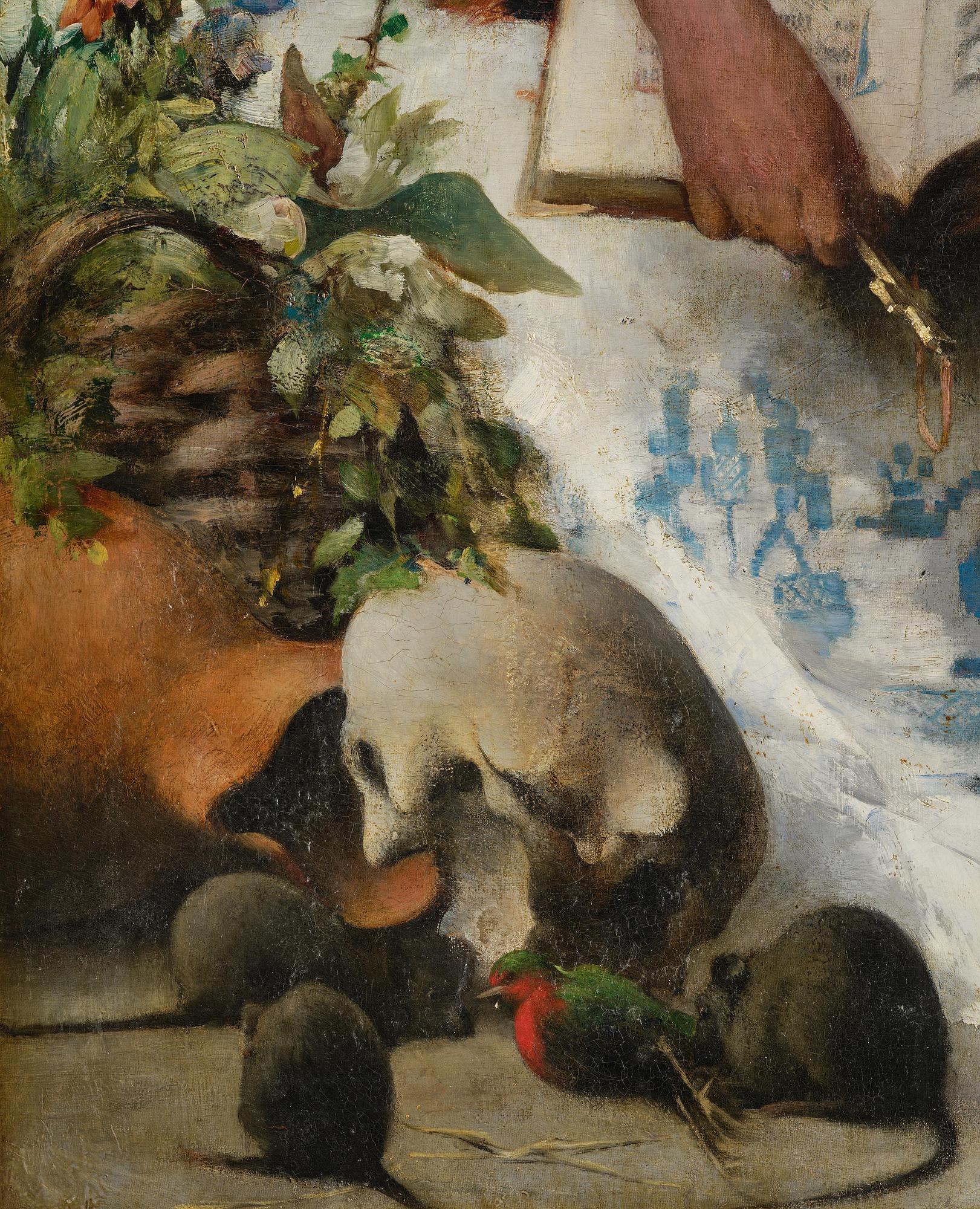
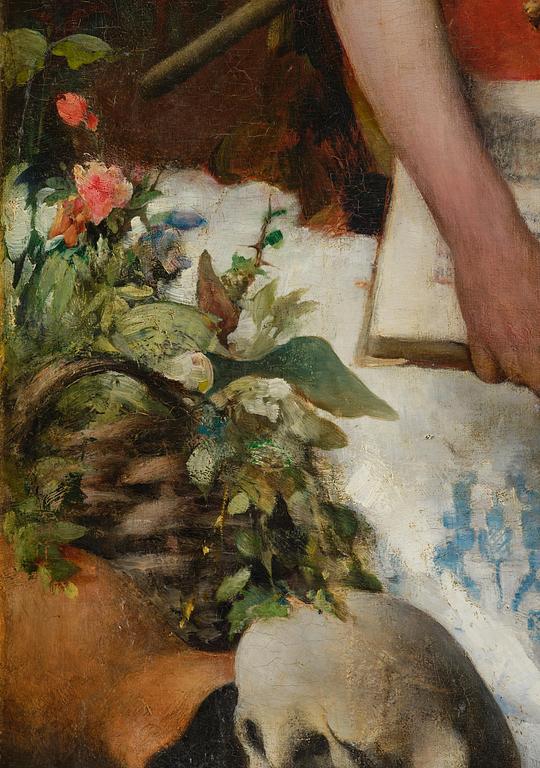
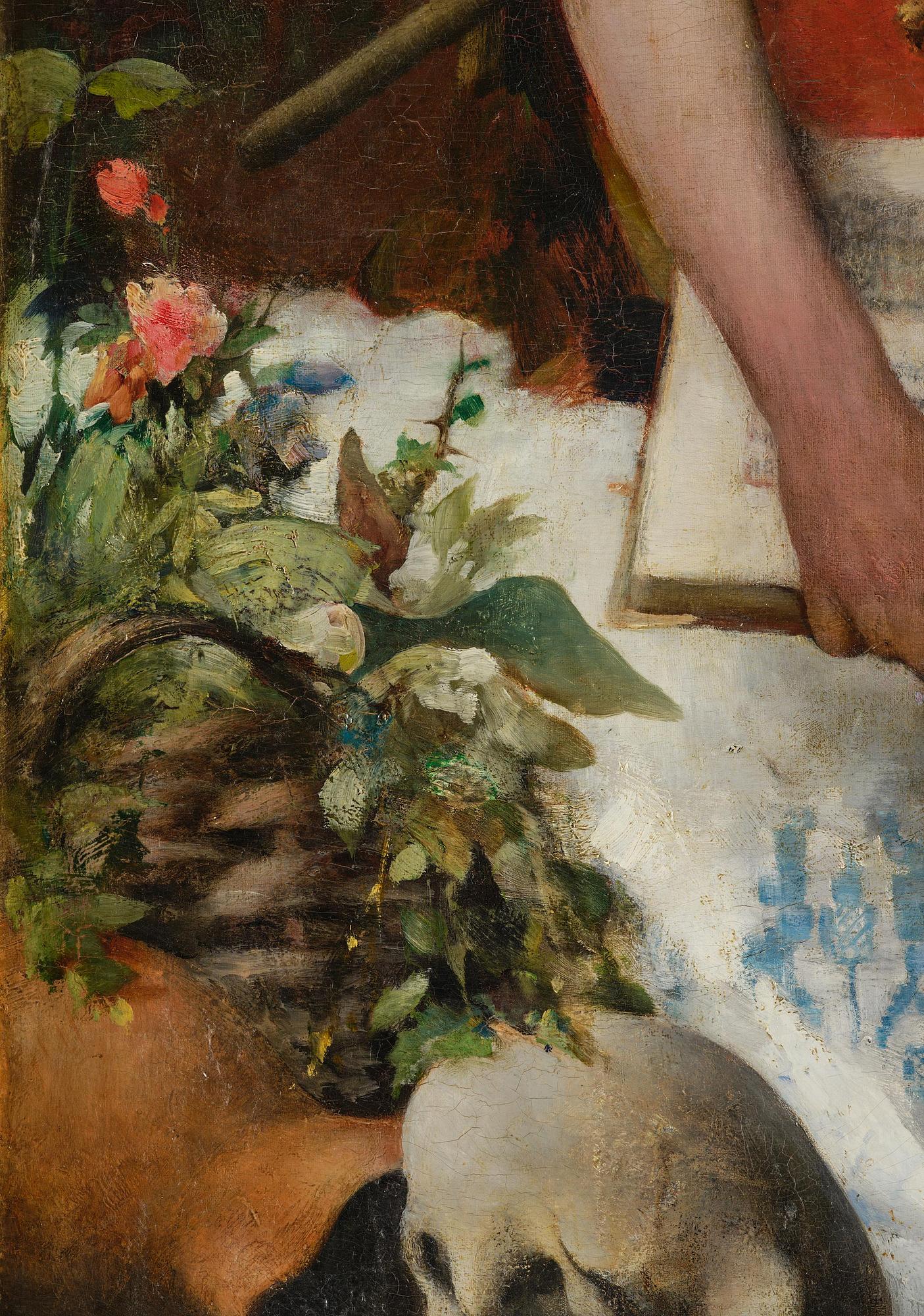
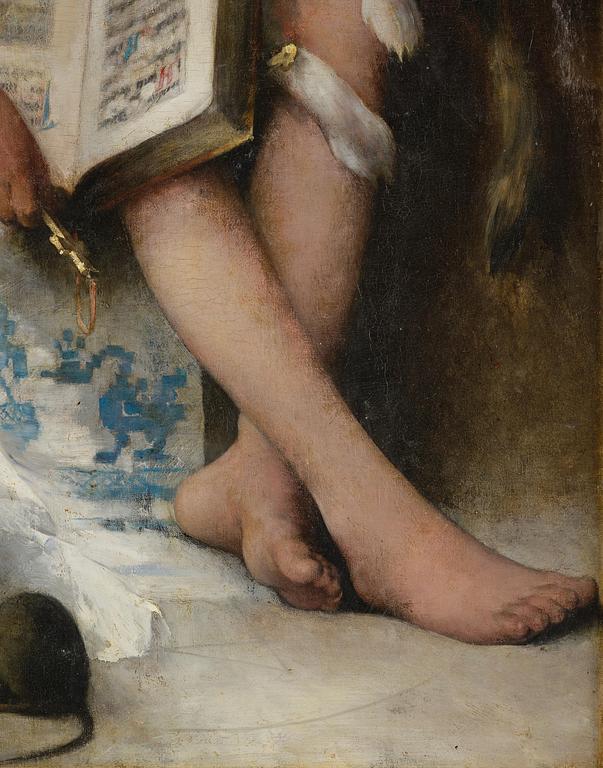
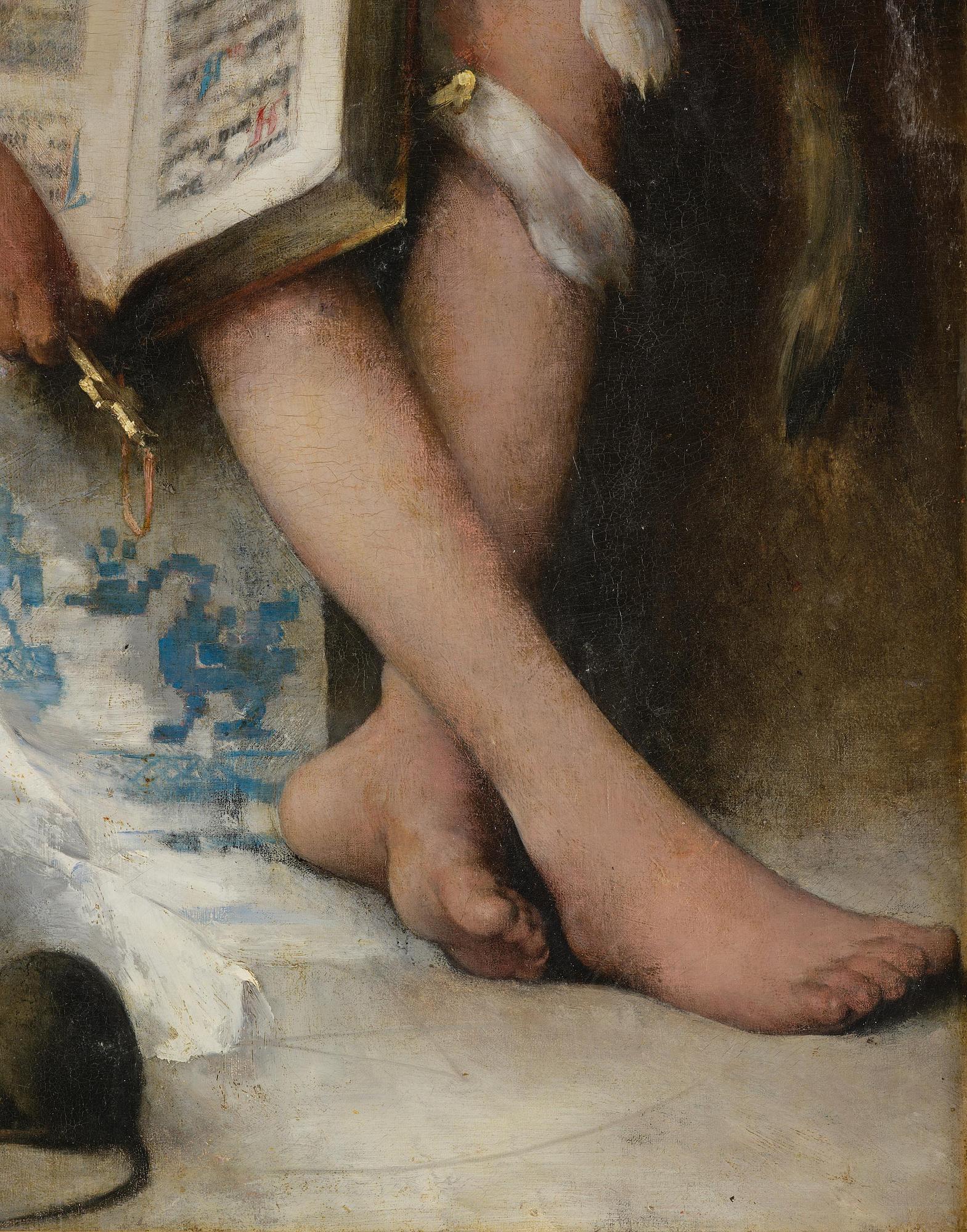
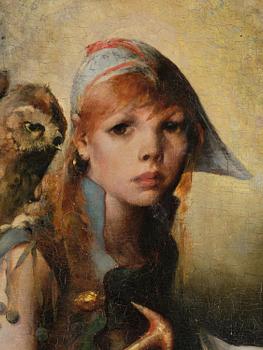
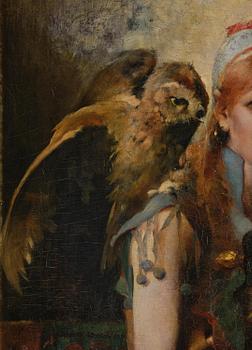
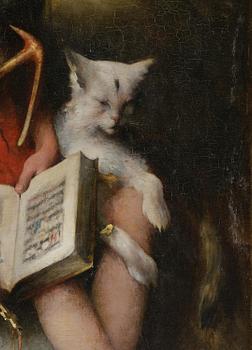
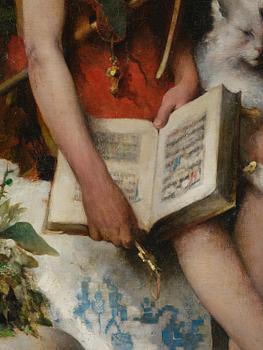
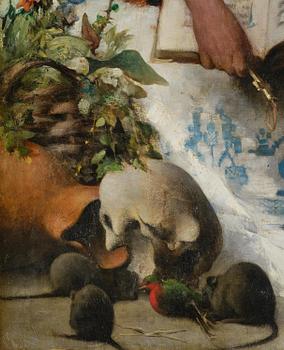
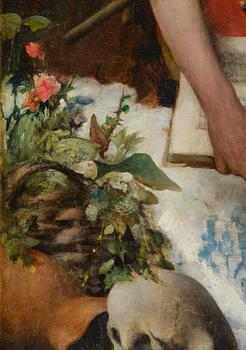
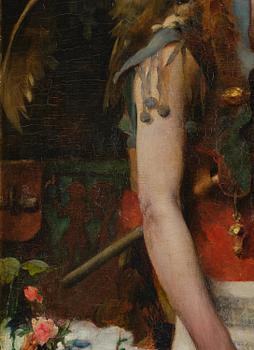
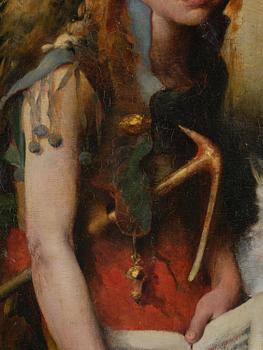
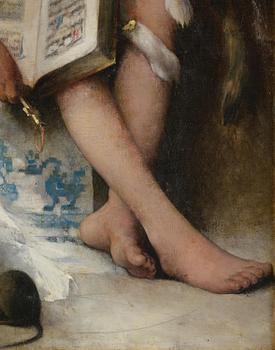
The witch's daughter is seen sitting with an open book in her lap, a pen in her hand, and a squinting white cat by her side. On her shoulder sits an owl, and below her is a skull along with some mice. This vanitas theme is also evident in the painting "Résignation, c’est la dernière religion". The auction's large canvas, executed in a kind of personal sfumato technique, is an exceptionally rare, interesting, and discussed painting.
Axel L. Romdahl in Ord och Bild 1921 writes in an article about ”Romantiken i Carl Larssons konst”. He refers to "Häxans dotter" as a kind of accusation against the injustices of society. "Carl Larsson transforms it into something romantically adventurous, turning the odious reality into poetry, without, however, achieving a genuine liberation from it. The stench of the streets lingers too much and cannot be chased away by the purifying breezes of poetry."
Once again, his work was rejected by the Salon jury, but in his own words in a letter to Albert Bonnier, he describes how the jury "gave me a healthy push for my bizarre ideas." Here, his inserted artistic path comes to an end, and instead, he will henceforth walk another way. He donates the painting to his colour merchant Monsieur Aprin, and later it hangs with the gymnastics director Berg on the Champs Élysées in Paris. It is a dejected Carl Larsson who, thanks to the advice of his friend Karl Nordström, boards a train south to Grèz, where his darkness will lift as he finds new joy in painting and returns home to his heart's Karin in the French countryside.
Lisätietoja ja kuntoraportit

Tietoa ostamisesta
Muiden katsomia kohteita