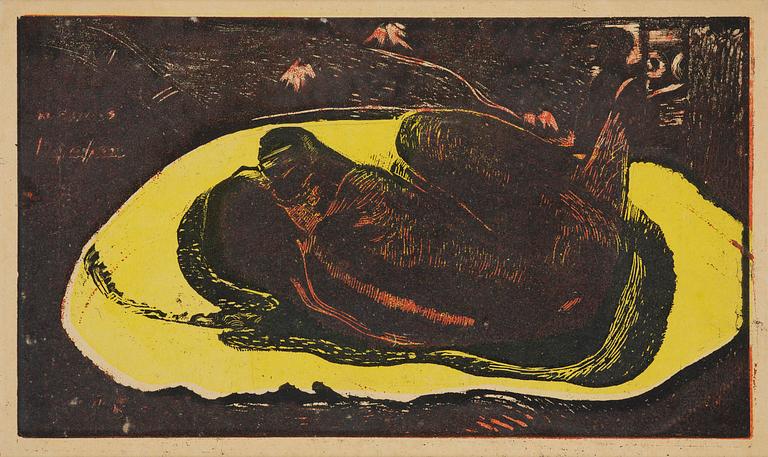
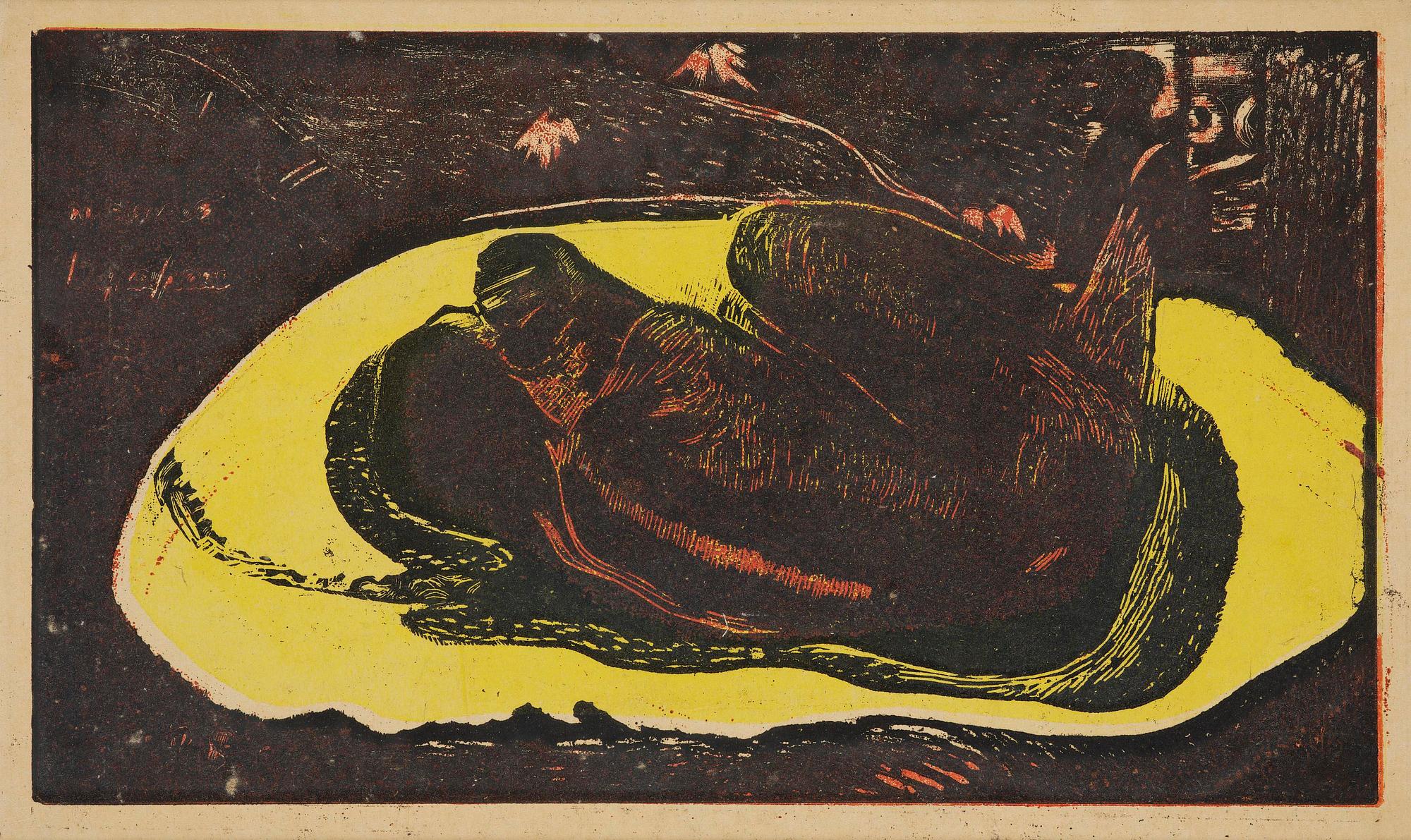
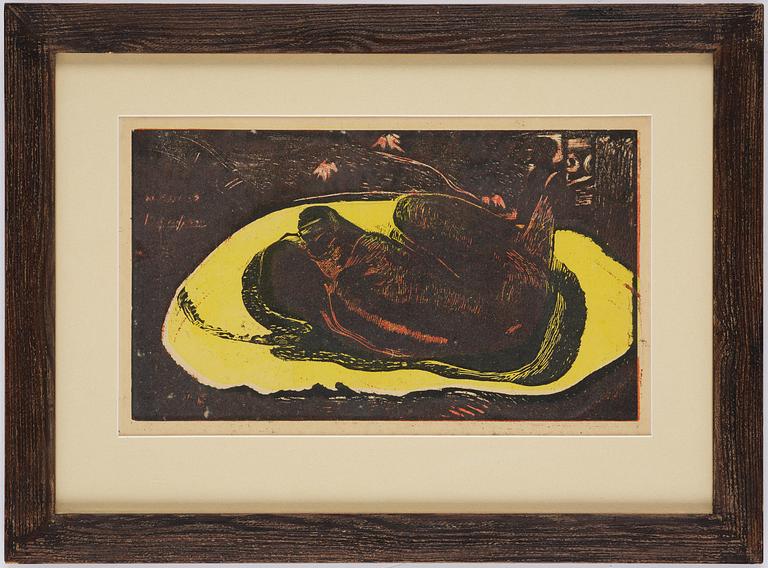
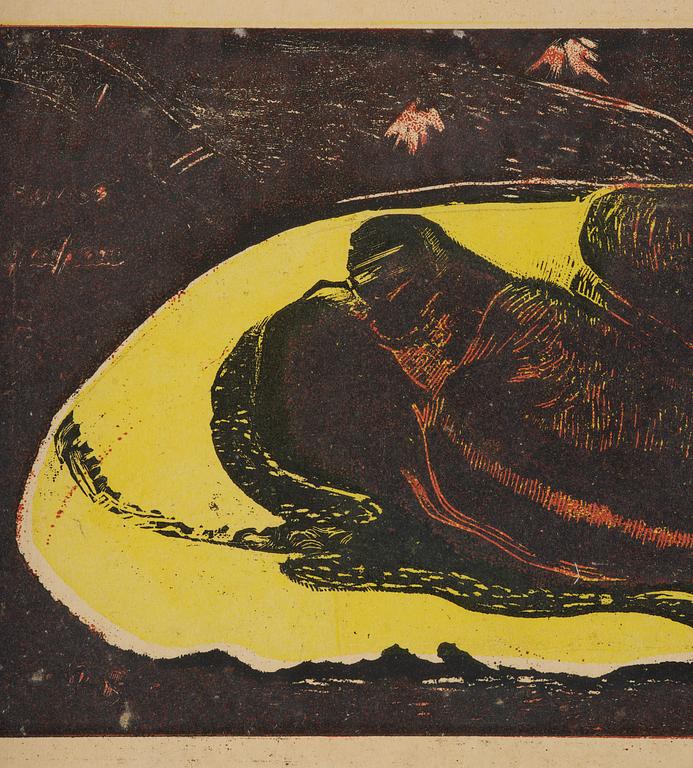
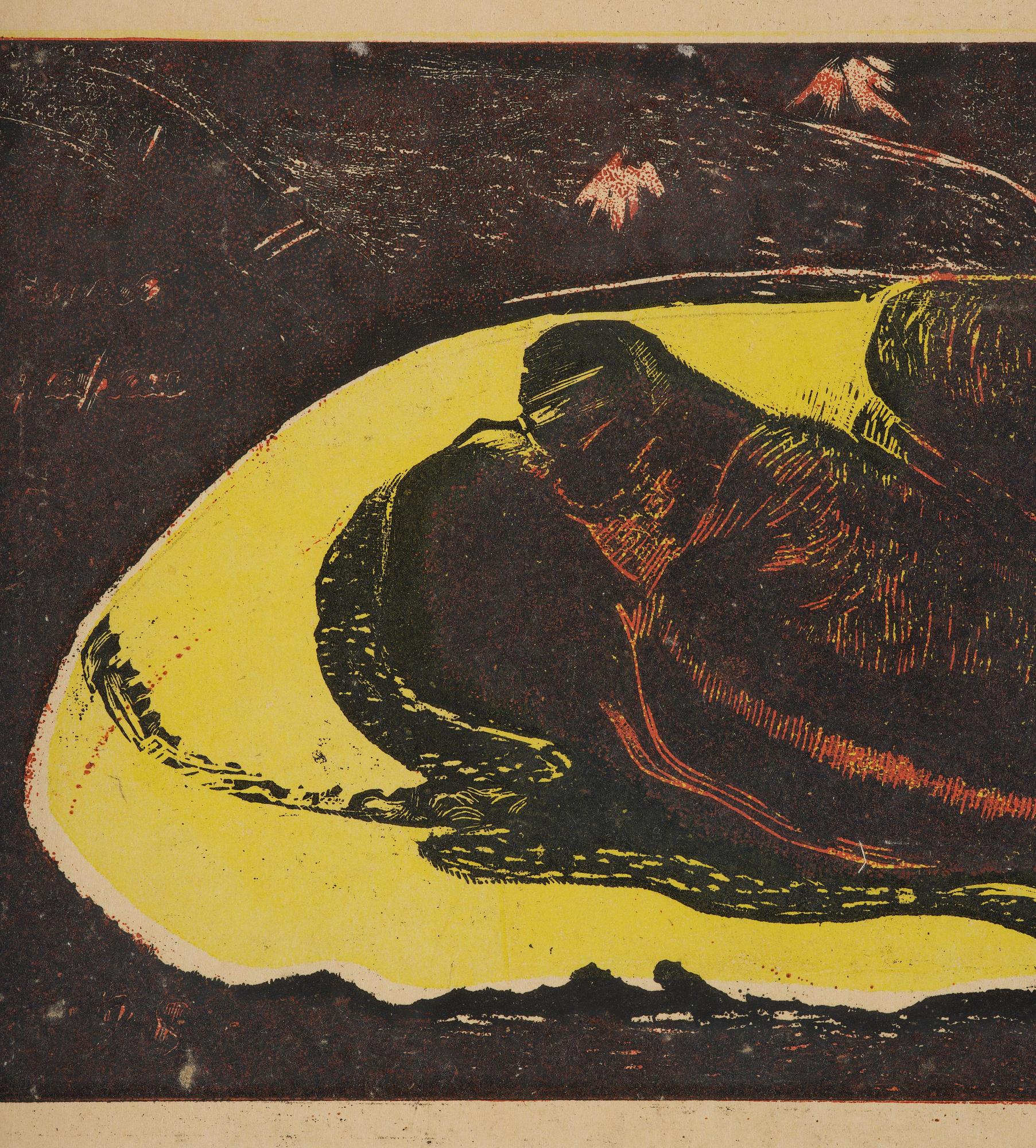
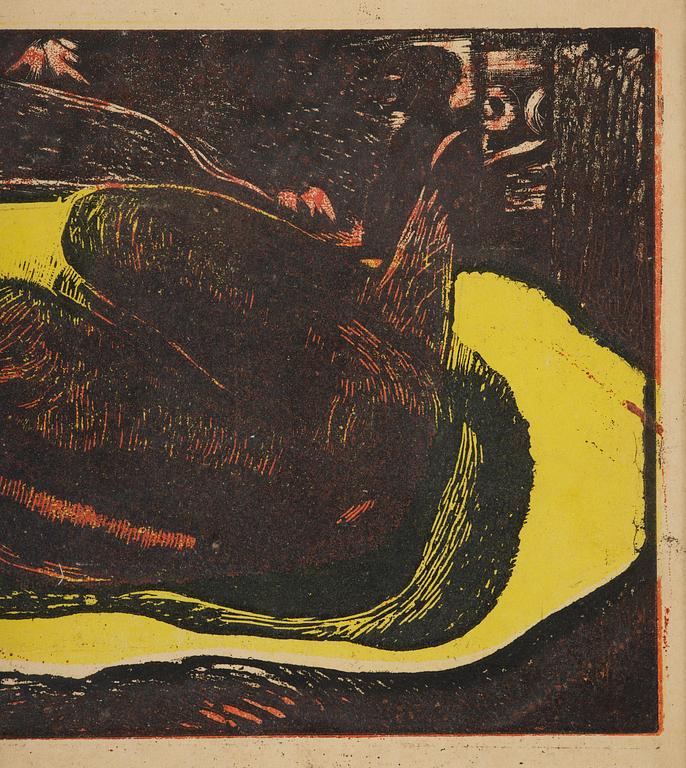
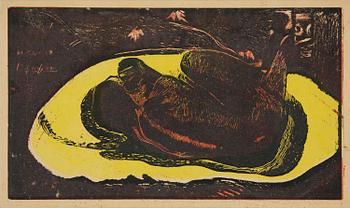
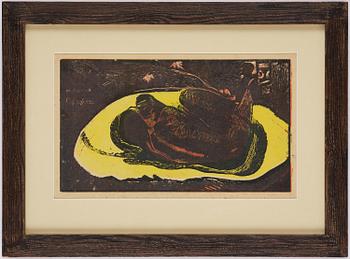
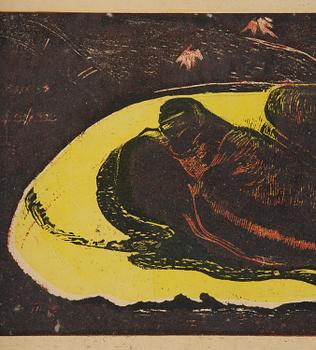
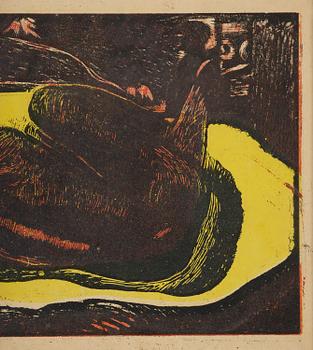
Manao Tupapau (Watched by the Spirits of the Dead), from: Noa Noa
Woodcut in black, dark orange, and yellow, 1894. State IV, printed by Louis Roy, Paris in approximately 25-30 copies on thick Japan paper. 20.5 x 35.5 cm, sheet size 25 x 39.5 cm.
Alkuperä - Provenienssi
Jan Gottfarb, acquired in Paris in the 1990s.
Acquired from the above in the late 1990s.
Kirjallisuus
Guérin, Kornfeld 20 D.
Muut tiedot
Driven by his strong desire to travel, Paul Gauguin sought to leave what he perceived as Europe's artificial life for a more natural and free existence. In 1891, he travelled to Tahiti in search of a simpler and more authentic way of living. The island turned out not to be the untouched paradise he had imagined, but the encounter with the people, culture, and nature became a profound source of inspiration that strongly influenced his art.
After his return to Europe in 1893, he began working on Noa Noa ("fragrance" in Tahitian), a book about his experiences, illustrated with woodcuts. These works reveal why Gauguin was drawn to printmaking: the woodcut technique provided him with a direct connection to the material and the opportunity to combine the form of sculpture with the colour of painting. He experimented with colours, paper, and printing techniques to create dreamlike images. The Noa Noa woodcuts were printed both by himself, by the printer Louis Roy during his lifetime, and later by his son Pola.
Lisätietoja ja kuntoraportit

Tietoa ostamisesta


Muiden katsomia kohteita