
Modern Art & Design presents Swedish Grace to Modernism | May 20–22
Property from a Swedish Private Collection
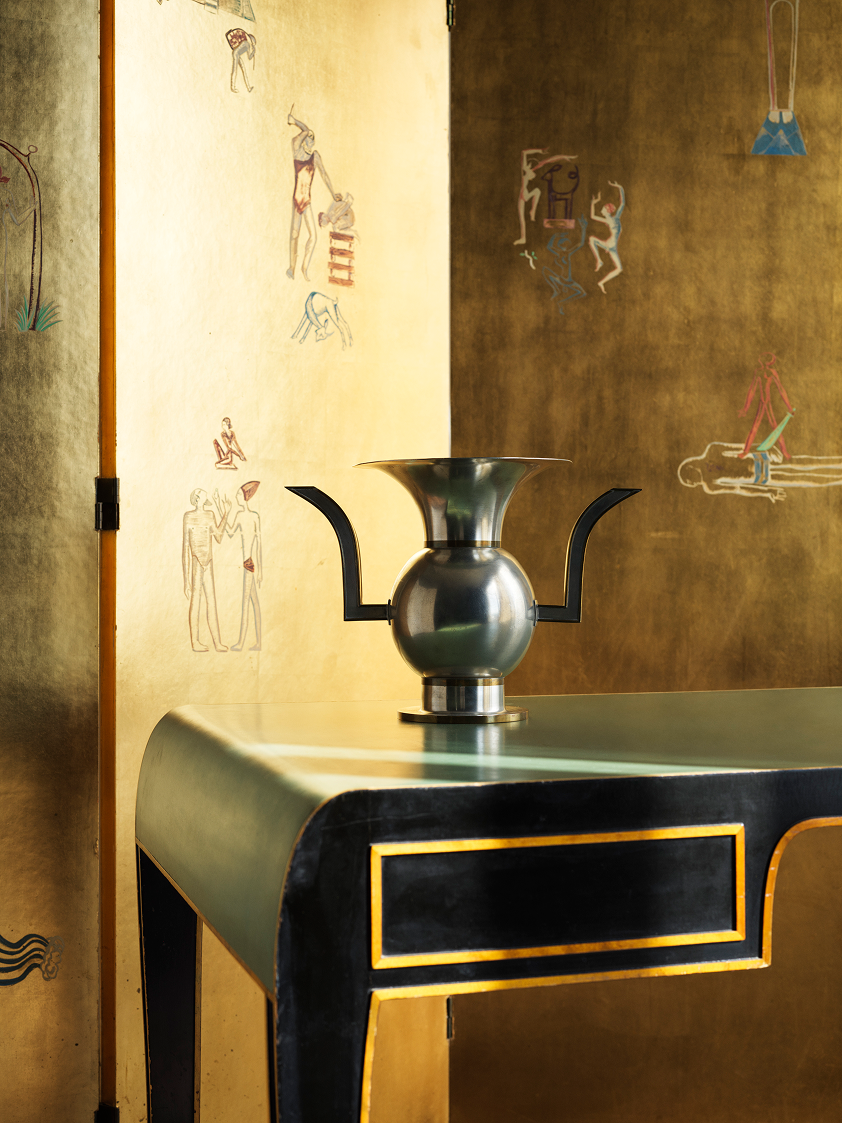
Bukowskis presents an important collection of design from the 1920s to the 1940s – a defining era in Swedish design.
The collection offers an insight into the stylistic period that marked the transition from Swedish Grace to functionalism and further into Swedish Modern. The collection reflects a time of aesthetic refinement and a gradual shift towards the more stripped-down and rational, where craftsmanship meets industrial production.
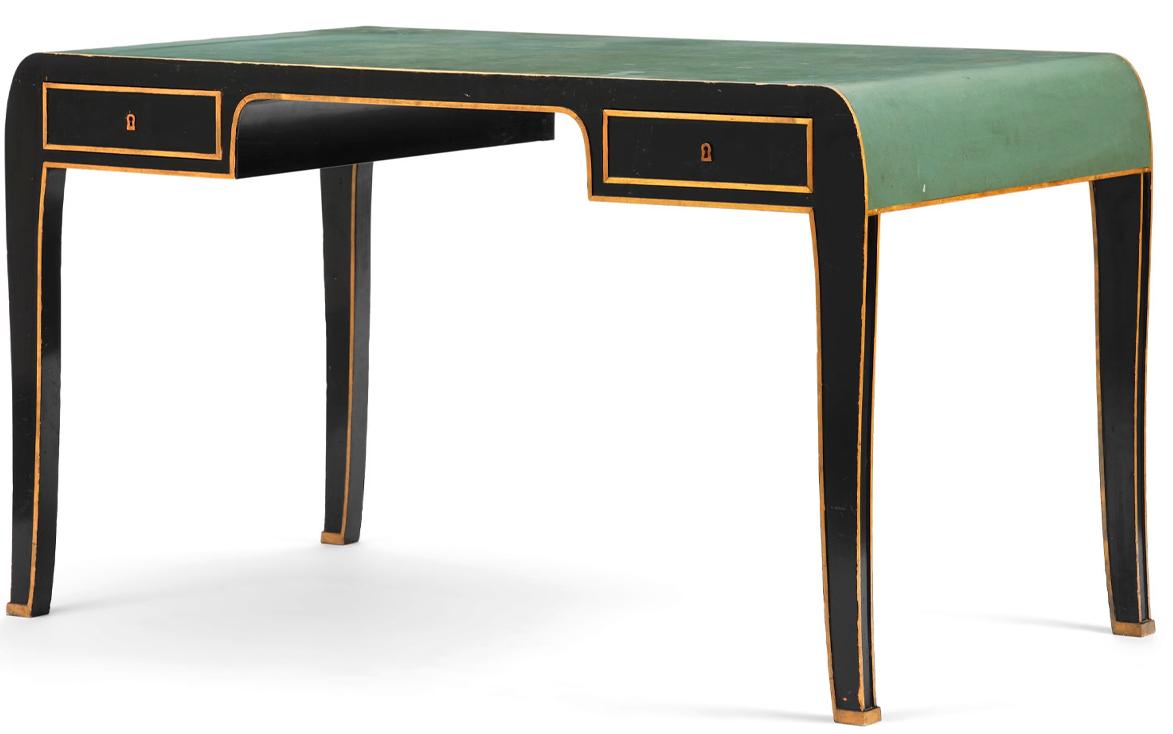
In the present collection, elegant objects with classical proportions and decorative elements from the 1920s coexist with clean, more functional forms from the breakthrough of functionalism in the 1930s. The collection shows how ideals have changed but at the same time carried with them a consistent sense of quality and form. Highlights include a gilded folding screen hand painted by ceramist Einar Luterkort, a desk designed by architect Carl Hörvik for the Nordiska Kompaniet store in Paris in 1928, a pewter mirror by Björn Trägårdh for Firma Svenskt Tenn, and an elm cabinet by ditto exhibited at the Röhsska Museum in Gothenburg, 1932. In addition, a rare armchair model “Estelle” by Gustaf Axel Berg should be mentioned.
The collection’s 48 objects, acquired with care and passion over five decades, reflect an era that came to shape Swedish design identity.
Weekdays 11 AM – 6 PM
Weekends 11 AM – 4 PM
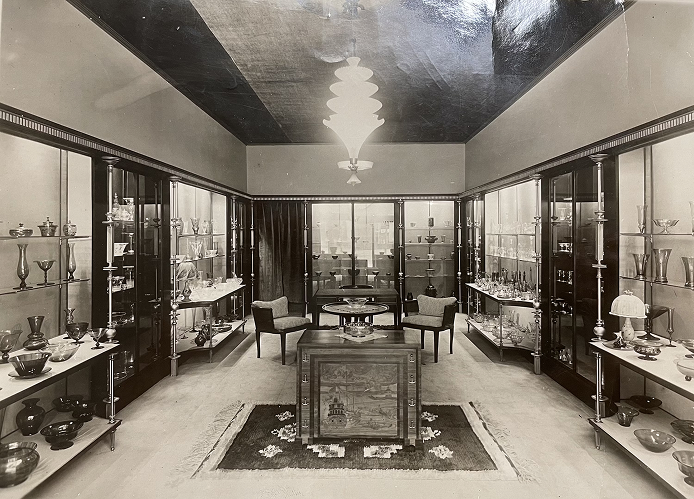
Les Arts Décoratifs Suédois
The 1925 Exposition Internationale des Arts Décoratifs et Industriels Modernes in Paris was a great success for Sweden, where the style that came to be known as Swedish Grace gained international recognition and established the country as a leading design nation at the time. The Swedish pavilion, designed by architect Carl Bergsten, showcased high-quality decorative arts and furniture.
In the aftermath of the Paris exhibition, the demand for Swedish design remained high in the French capital. In December 1928, an exclusive store named Les Arts Décoratifs Suédois opened in Paris on Boulevard Malesherbes, under the management of Nordiska Kompaniet in Stockholm. Among the represented items were NK's furniture, Orrefors glass, Gustavsberg and Gefle porcelain factories, Firma Svenskt Tenn, silver from Atelier Borgila, and bronzes from Herman Bergman's foundry. The permanent interior was designed by NK's chief architect Axel Einar Hjorth and was manufactured in Nyköping, from where it was sent to be assembled on-site by French workers.
For the store in Paris, Nordiska Kompaniet once again engaged architect Carl Hörvik to design a series of furniture, seven in total, whose acclaimed works at the 1925 exhibition had garnered significant attention. The present desk should be seen as a particularly well-executed representative of the highly regarded Swedish design movement of the time, intended for the exclusive Parisian market.
The Entire Collection at Modern Art & Design
Enquiries and Condition Reports