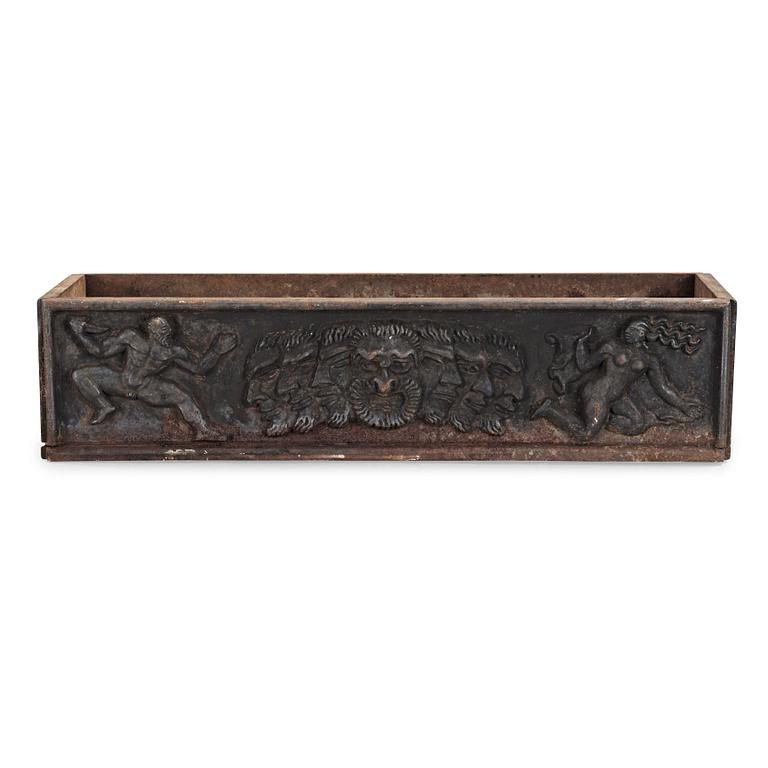
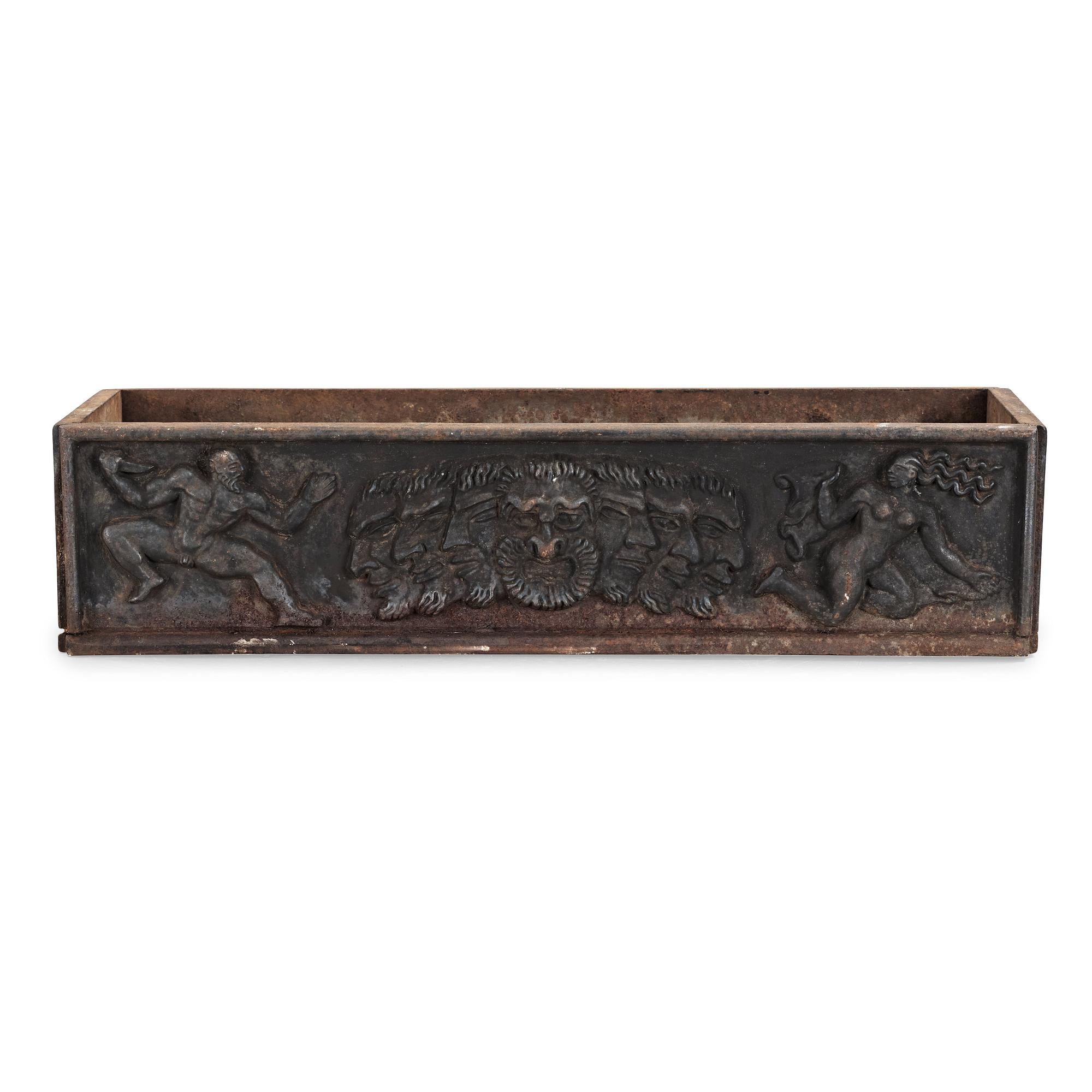
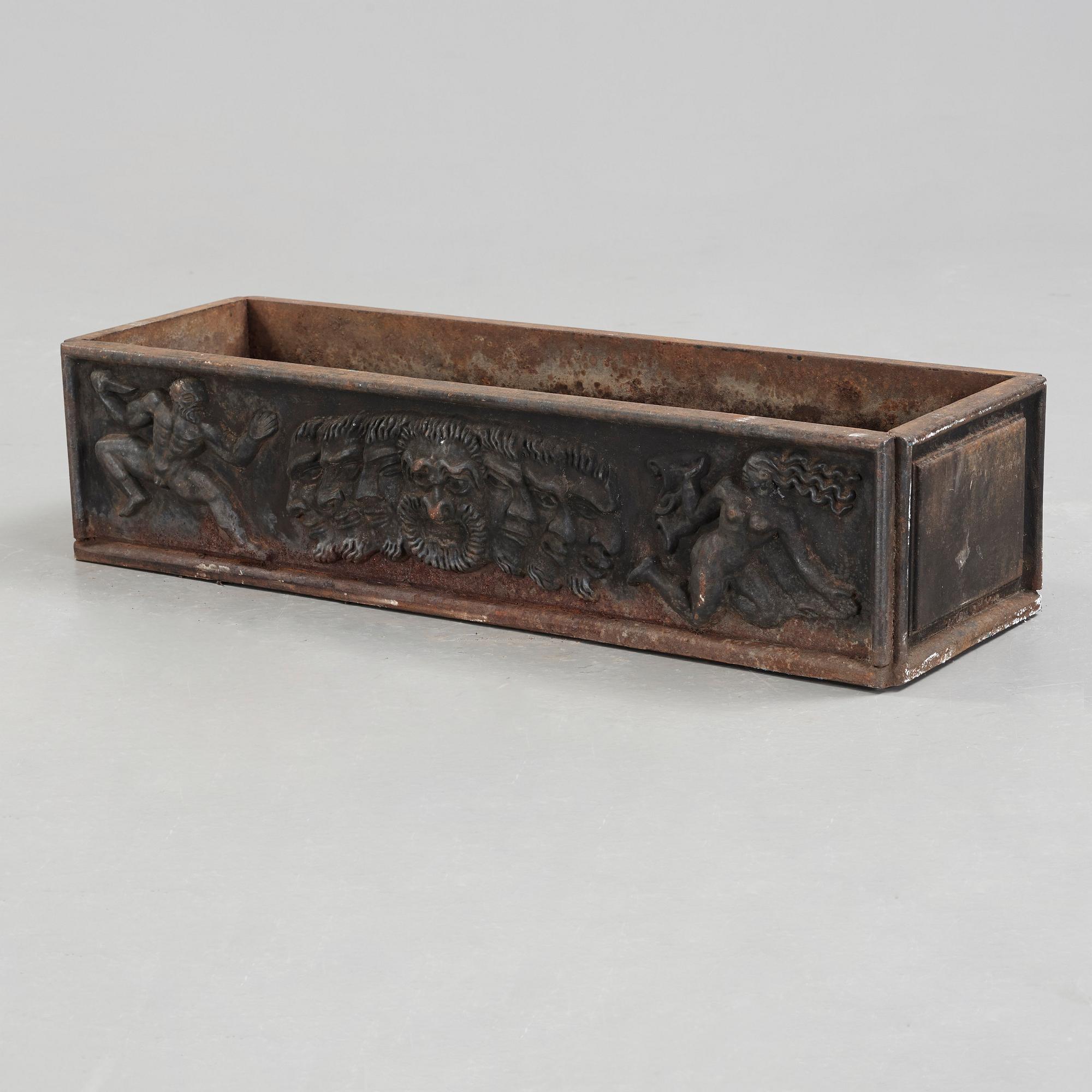
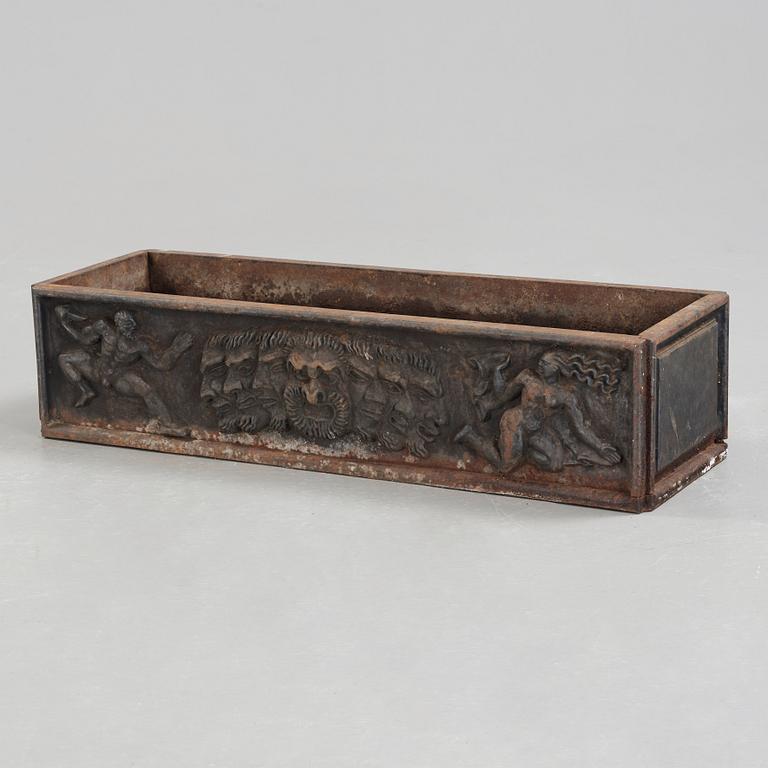
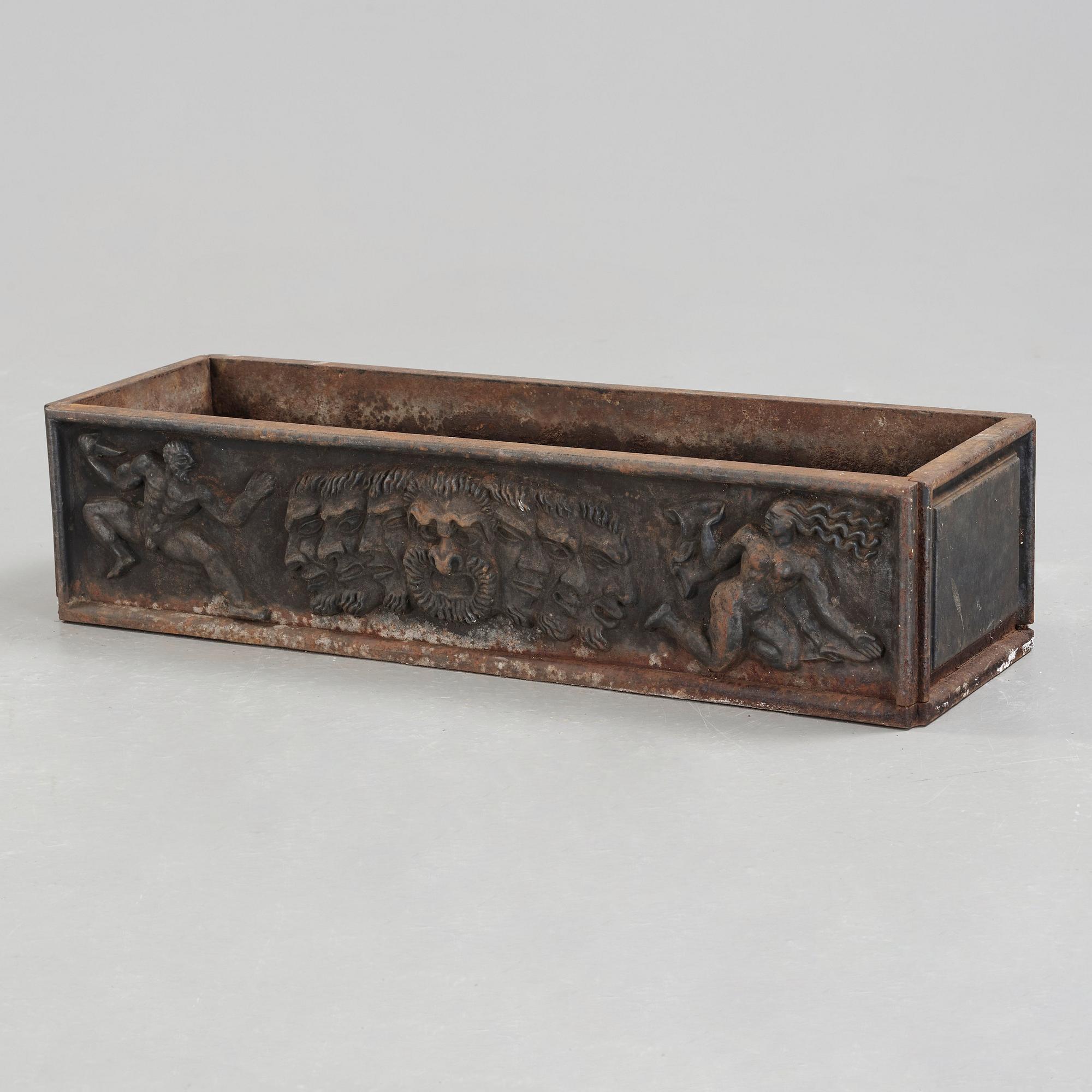
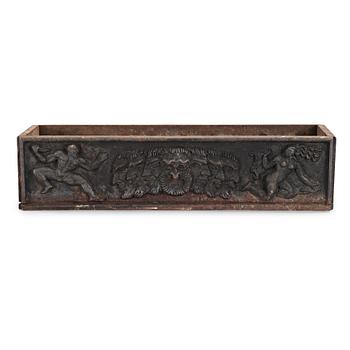
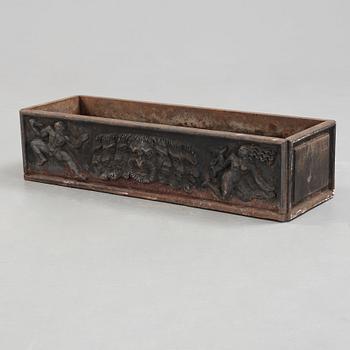
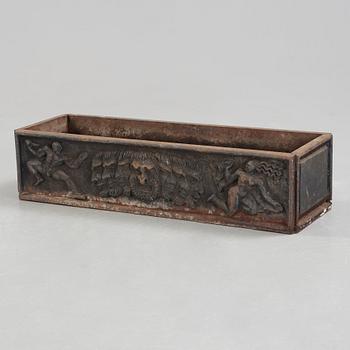
A Swedish Grace cast iron 'Blomlåda Nr 1' jardinière, Näfveqvarns Bruk, Sweden.
Length 85, width 28,5 cm, height 20 cm.
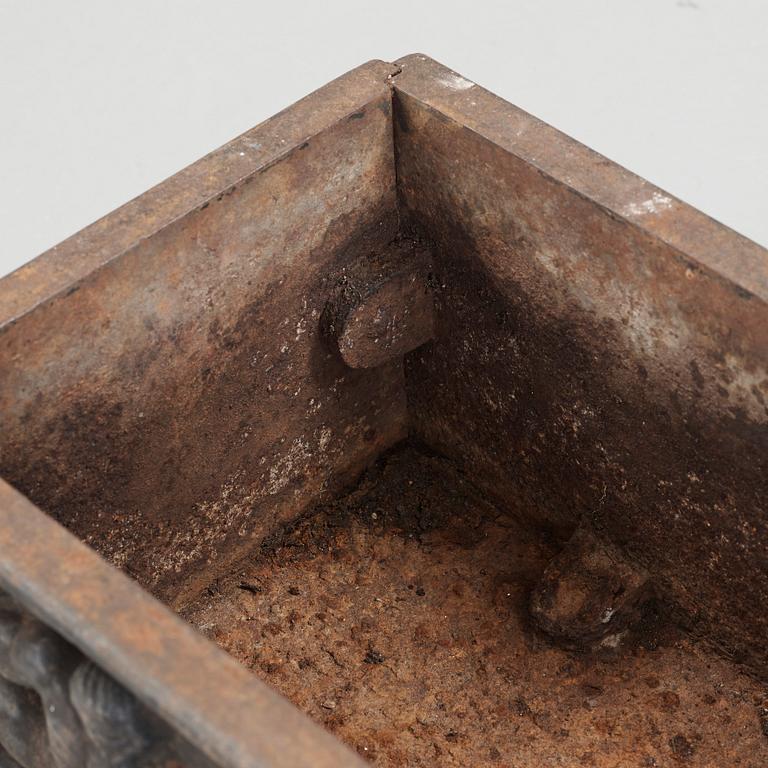
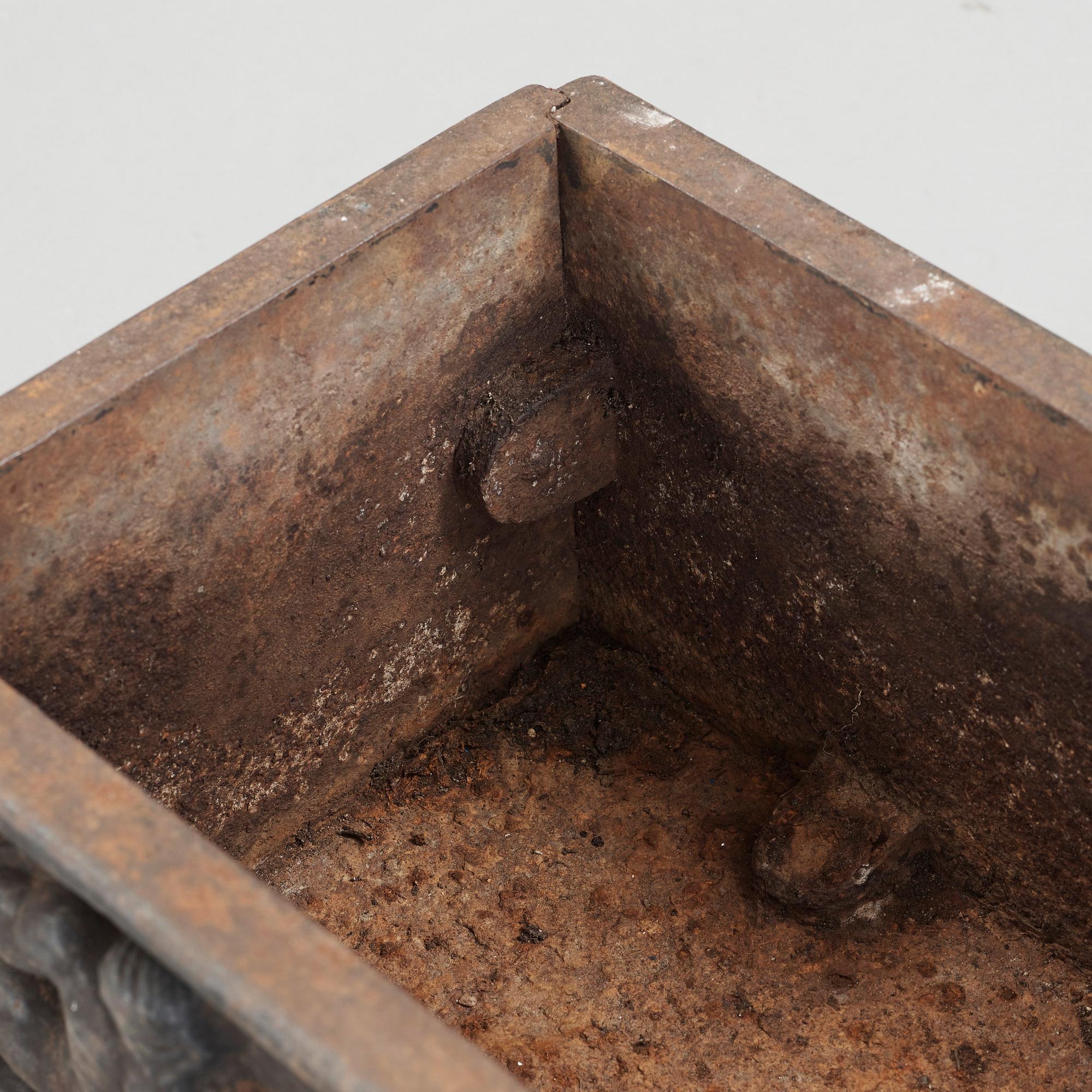
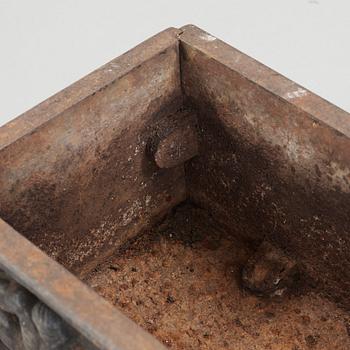
Rust.
Literature
Marie Rehnberg, "Anna Petrus Skulptör och Industrikonstnär", Signum 2009, the the model depicted p 132.
More information
This model was shown at the Paris World Fair in 1925. The jardinière is meant to be shown at terraces.
More about Anna Petrus
Anna Petrus was a sculptor, industrial designer, and artist active in the early 20th century. She was born as Anna Petersson, the daughter of a professor of medicine and a countess, and adopted her surname while studying at the Royal Academy of Fine Arts. She inherited a modest fortune at the age of 11 when her mother passed away, which allowed her to pursue her education in London and travel to Italy and France.
Anna Petrus's major international breakthrough came with the Exposition Internationale des Arts Décoratifs et Industriels Modernes in Paris in 1925, where she showcased items in pewter and cast iron, in the Swedish Grace style. Pewter was considered an outdated material at the time, but its popularity grew as designers like Petrus recognised its advantages. In 1924, she began a collaboration with the then newly established Firma Svenskt Tenn. The lion became a recurring motif in Anna Petrus's work, both as sculptures and as stylised decorations.
Read moreFor condition report contact specialist

Others have also viewed