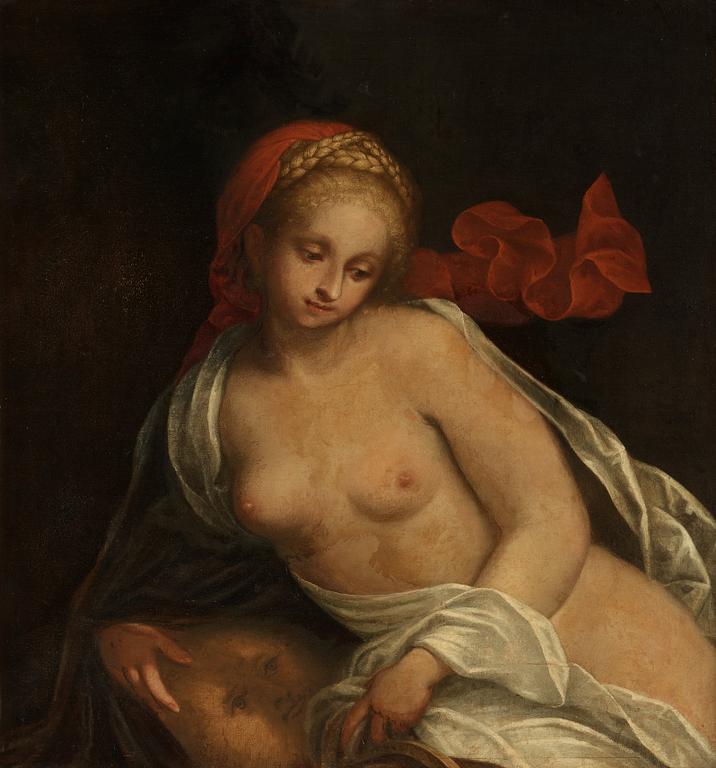
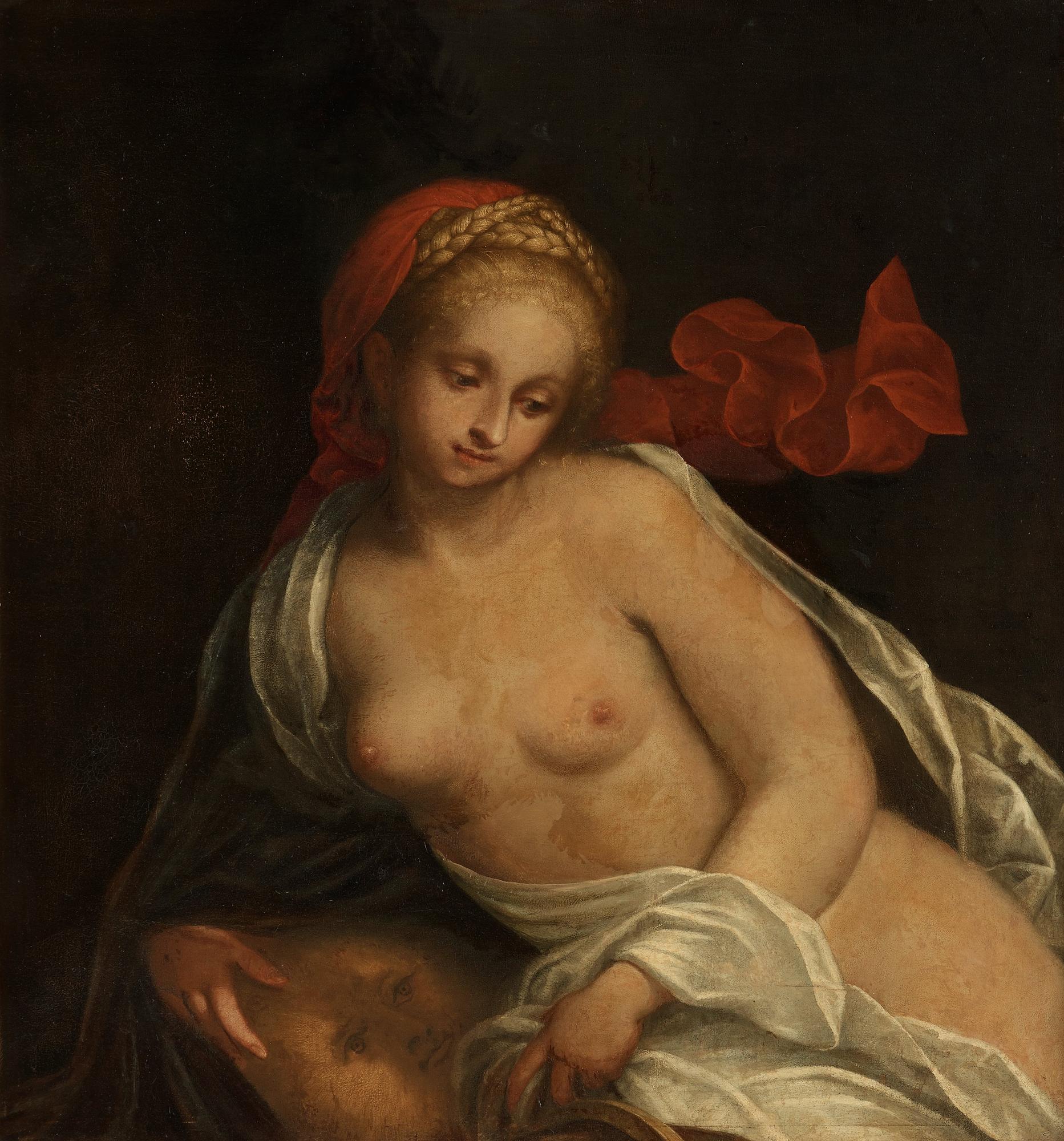
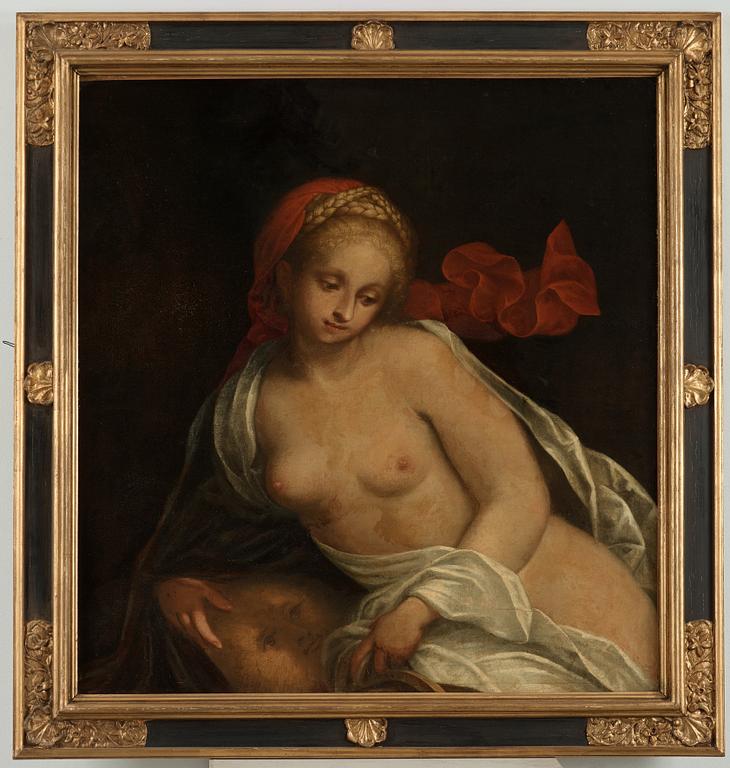
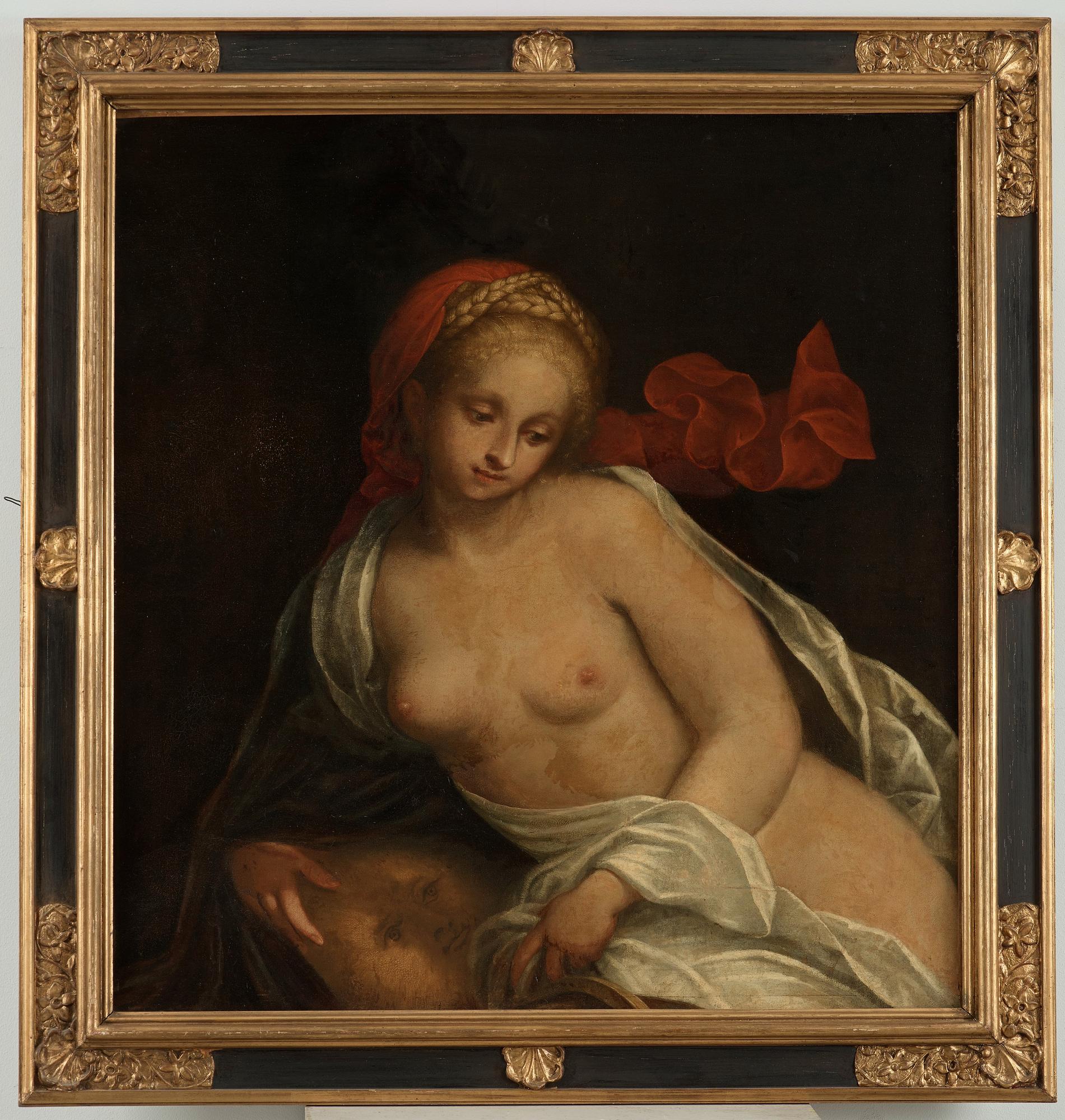
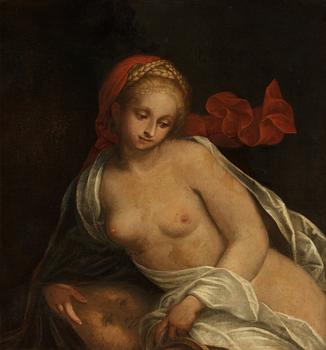
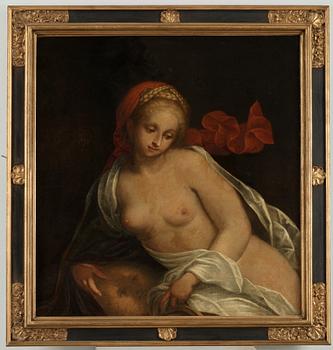
Clytie. Relined canvas 109 x 103.5 cm.
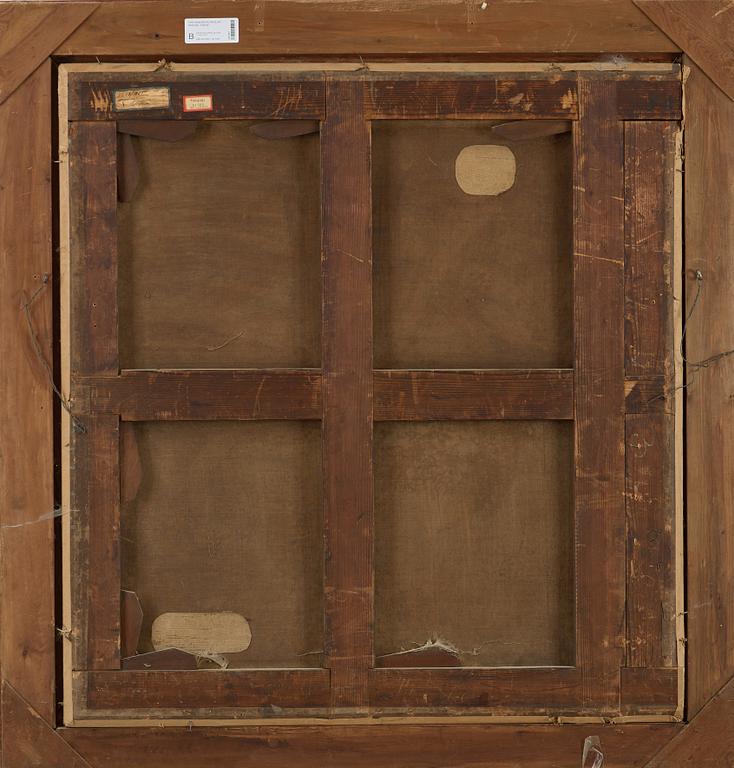
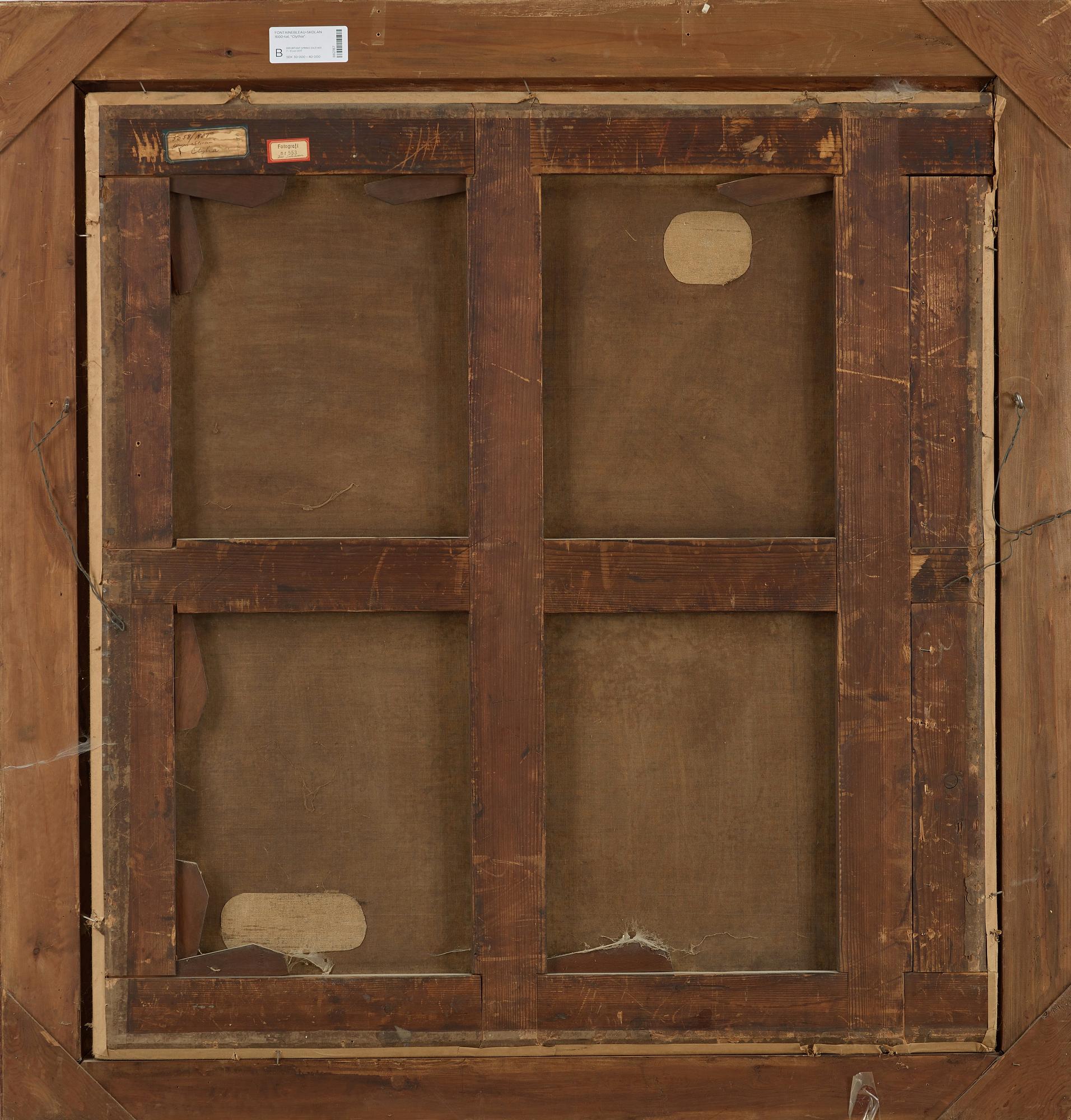
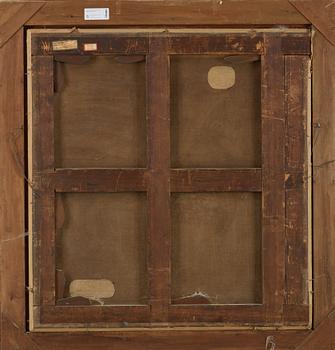
Relined canvas. Repairs. Yellowed varnish. Retouches. Crazing. Minor scratch marks to the edges of the frame. Heavily washed.
Provenance
Rapps Konsthandel, Stockholm, Sweden.
More information
There are several figures in Greek mythology that bear the name Clytie but the most famous is the sea nymph or oceanide Clytie, daughter of Oceanus and Tethys. Clytie was a mistress of the sun god Helios who later abandoned her to seduce Leukothea who was the daughter of Orchamus. Clytie became furious and announced Leukothea's father about the love affair and the father buried her daughter Leukothea alive. Clytie believed that Leukothea's death would mean Helios coming back to her, but he liked her even less. This drove made Clytie lay down on the rocks for nine days without drinking or eating. On the ninth day, she turned into a flower, according to tradition, a sunflower or heliotrope, a flower that always faces the sun.
The Fontainebleau school refers to two periods during the late Renaissance centered on the royal Château de Fontainebleau. The first lasted 1530-1560 and the other approximately 1590-1610. The current painting is performed during the second period. The Fontainebleau school was of great importance in the creation of the French version of Northern Mannerism.
For condition report contact specialist

Others have also viewed