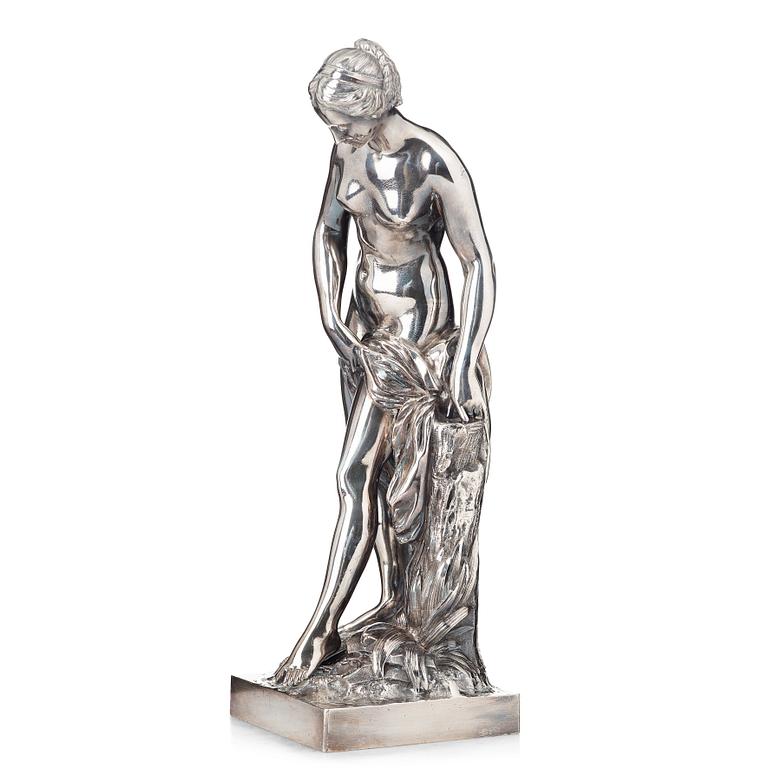
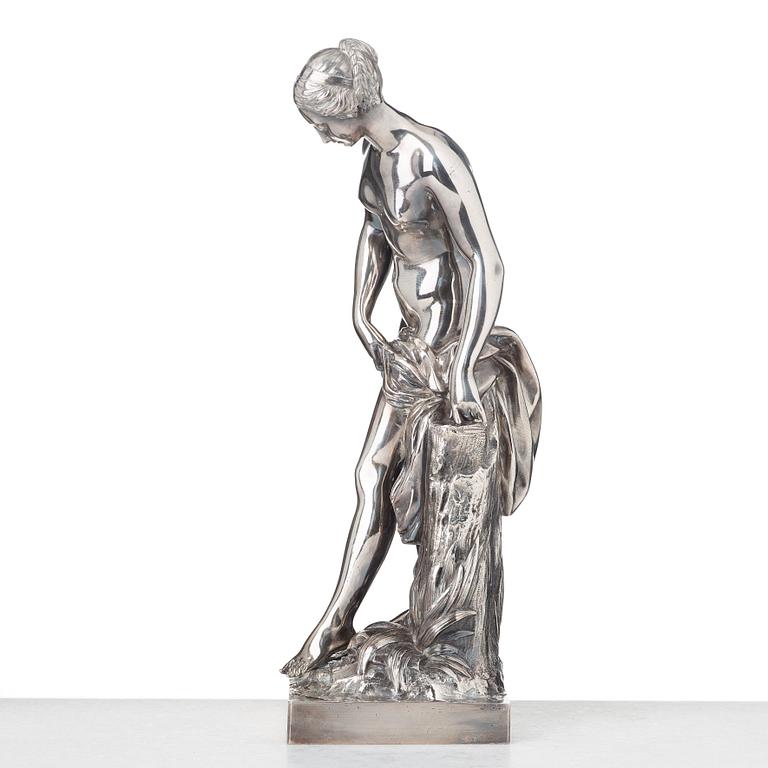
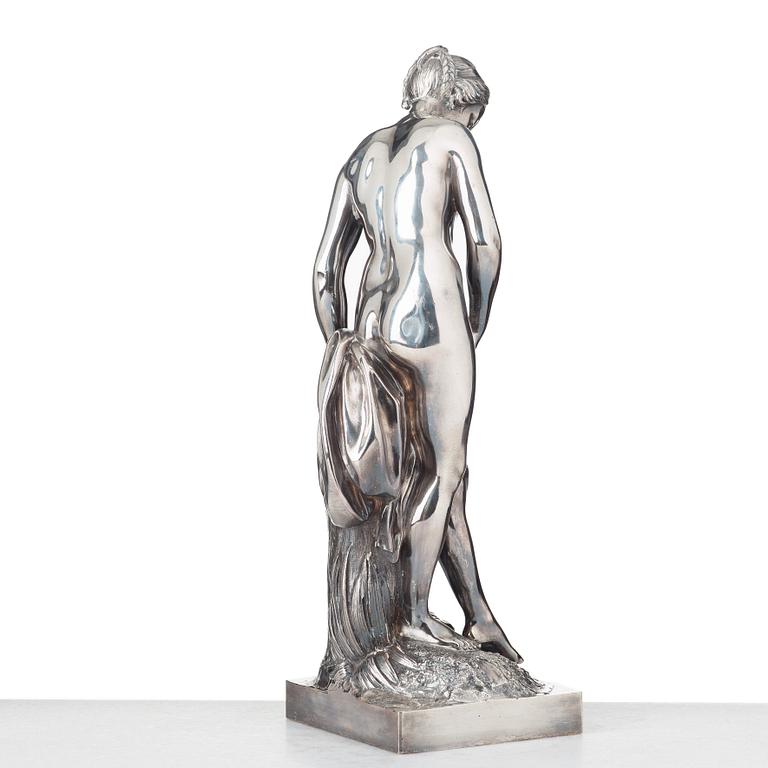
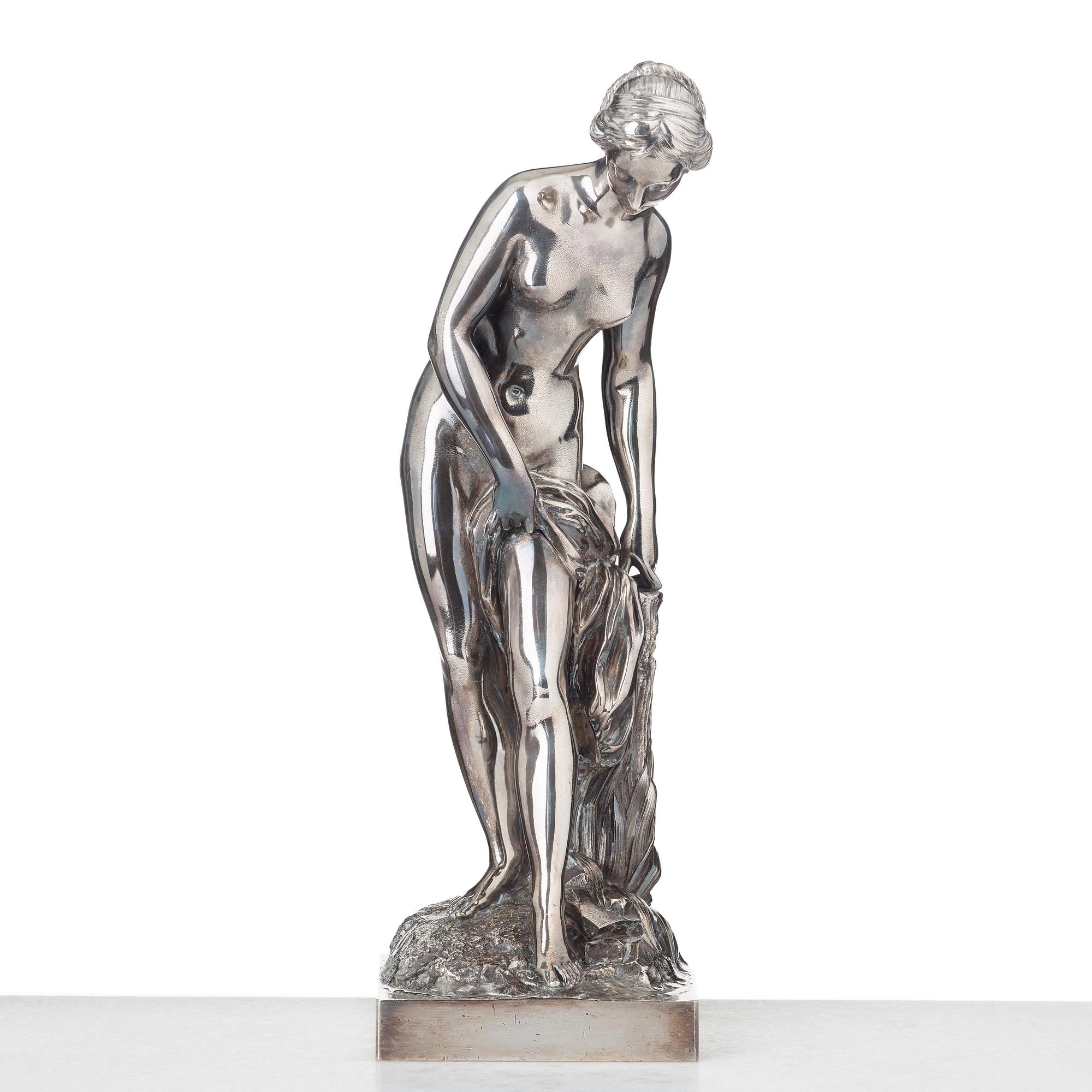
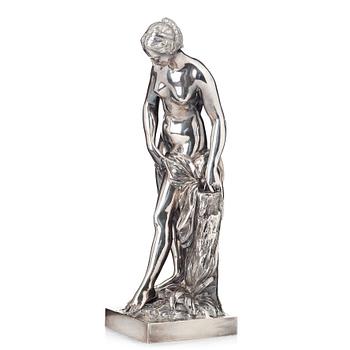
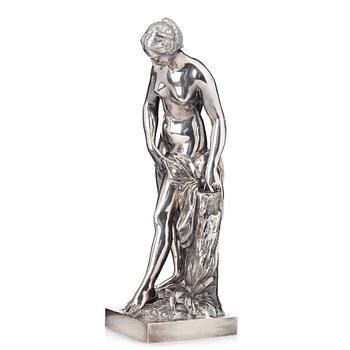
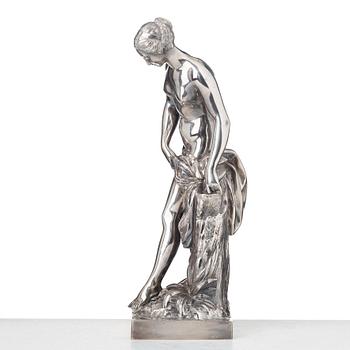
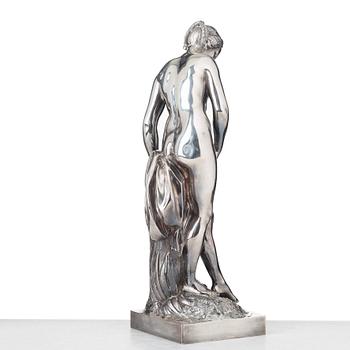
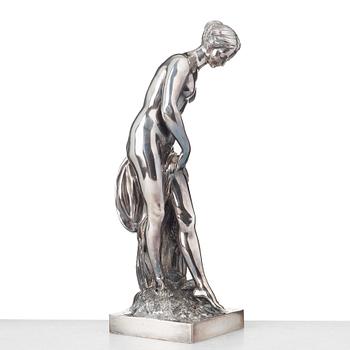
ÉTIENNE MAURICE FALCONET, after, sculpture, "Baigneuse" (=The bather)
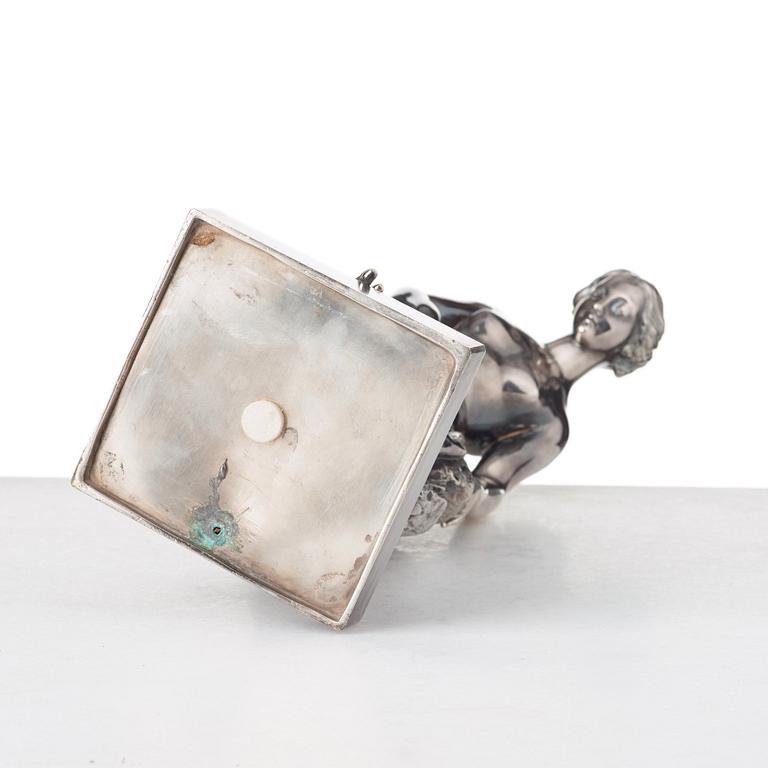
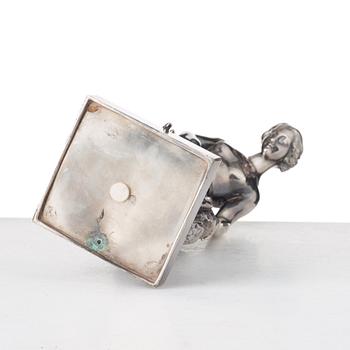
Silverpatinated bronze. Height 42 cm.
Minor scratchmarks.
Exhibitions
The original exhibited at the Salon in Paris 1757.
Literature
Bibliography: Levitine, George, The Sculpture of Falconet, New York, 1972, pp. 31-33; Falconet à Sèvres ou l'art de plaire, 1757-1766, Sèvres, Musée national de la Céramique, Éditions de la Réunion des musées nationaux, 2001, pp. 92-93.
More information
A bronze statue after the Nymph going in the bath or Bather by Etienne Maurice Falconet (1716-1791), the original marble is at the Louvre. Inspired by the Bather painted in 1724 by François Lemoyne, Falconet captures the moment just before the bath: naked, the young girl advances timidly her foot to feel the freshness of the water. The pure lines of her slender body, her downcast eyes, the graceful movement of the foot reveal the shyness and innocence of the bather.
The Nymph was exhibited at the Salon of 1757, when Falconet was responsible for directing the sculpture at the Sevres Manufactory. She knew a great success and it was duplicated by Falconet himself and copied by many others sculptors.
For condition report contact specialist











Others have also viewed