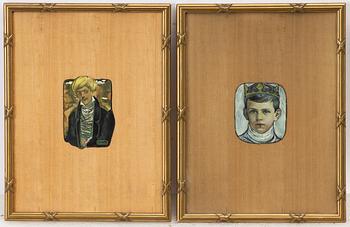
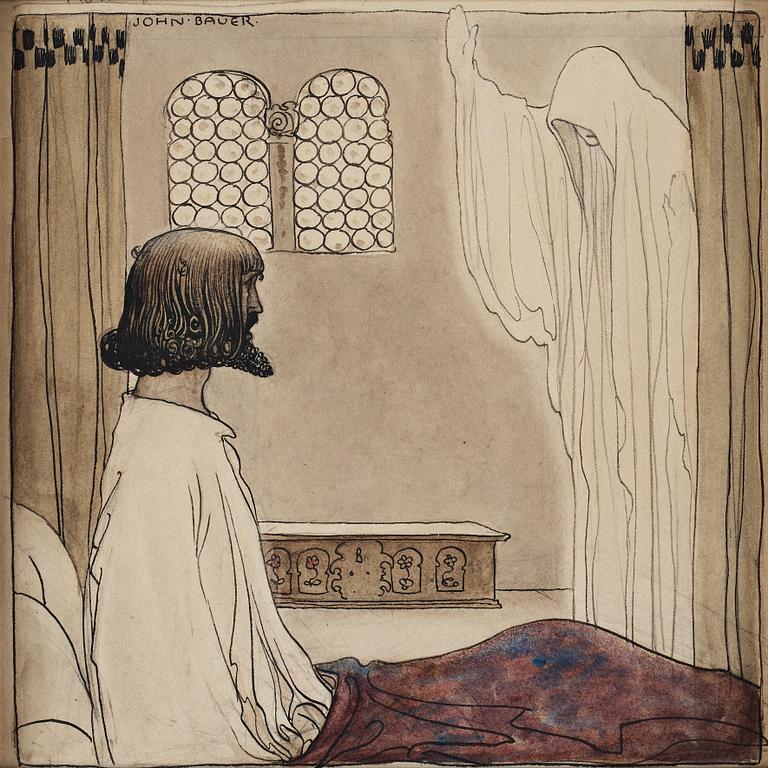
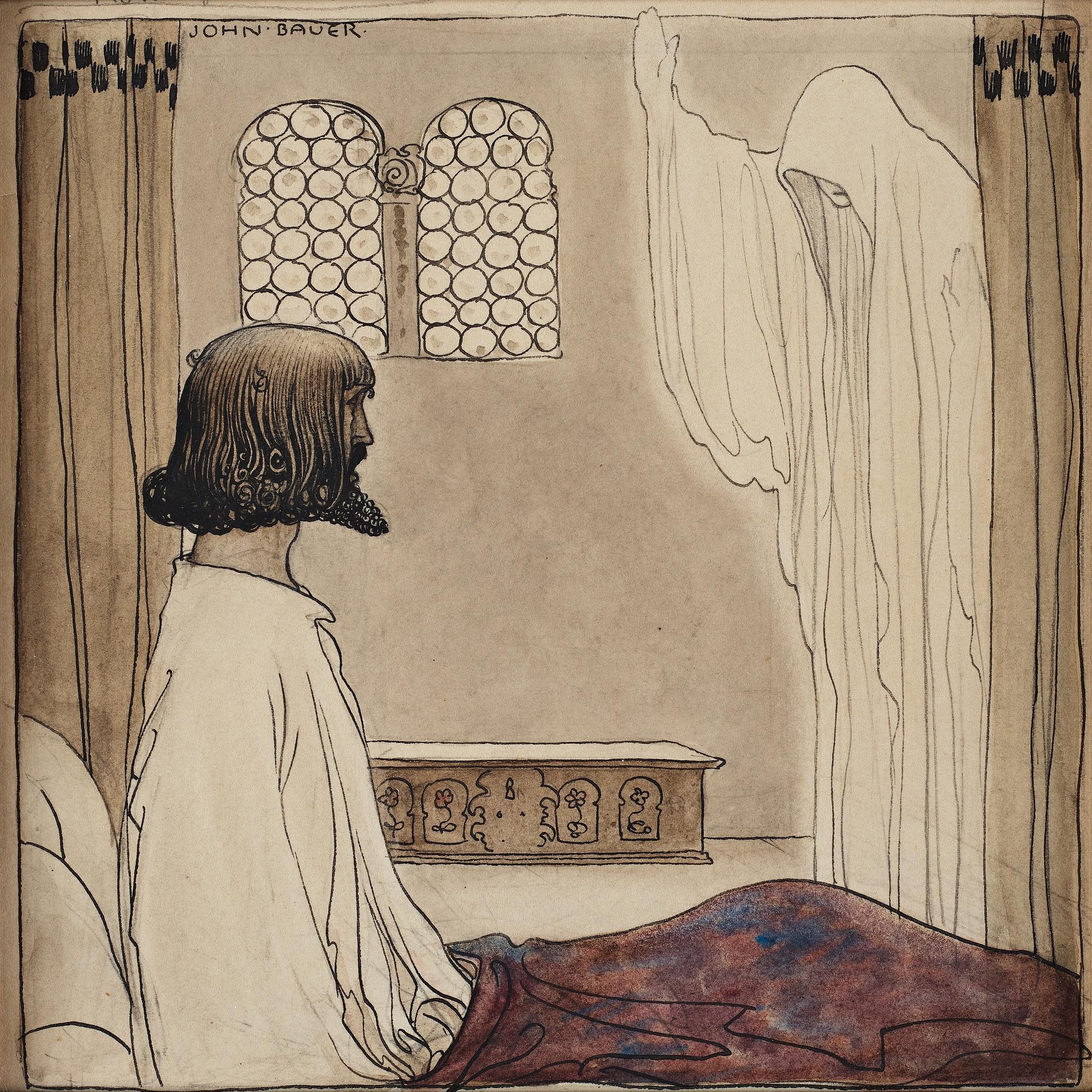
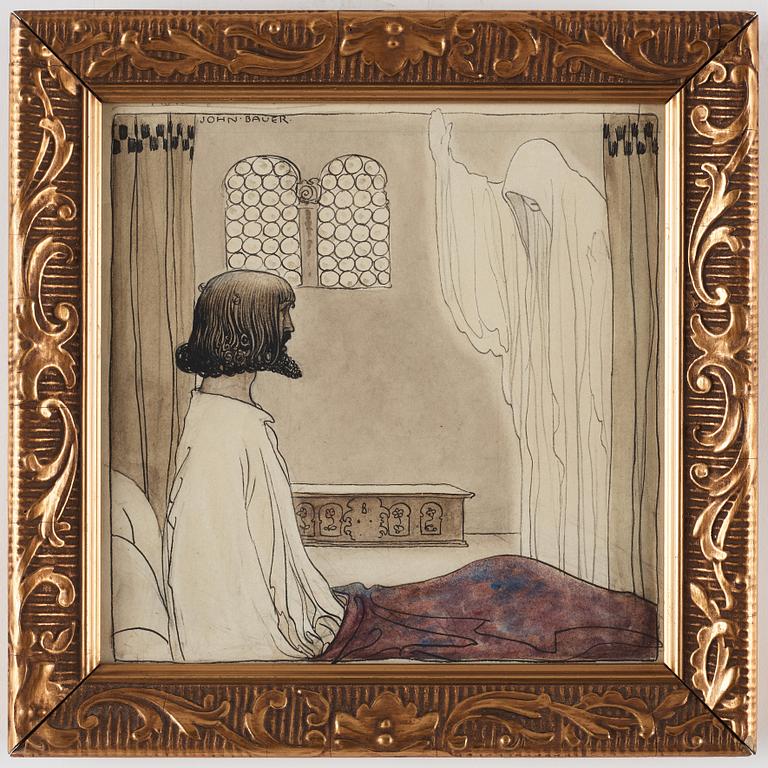
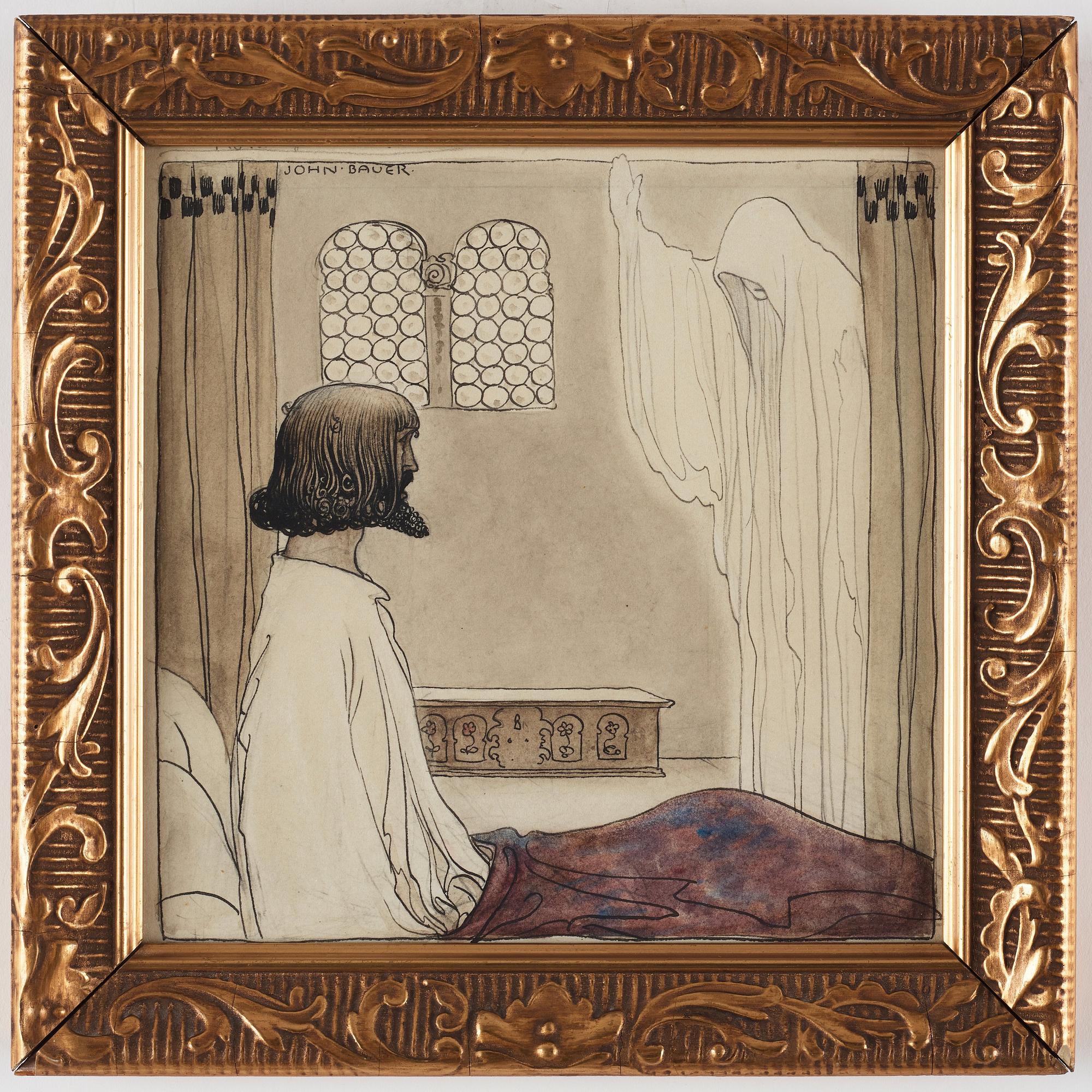
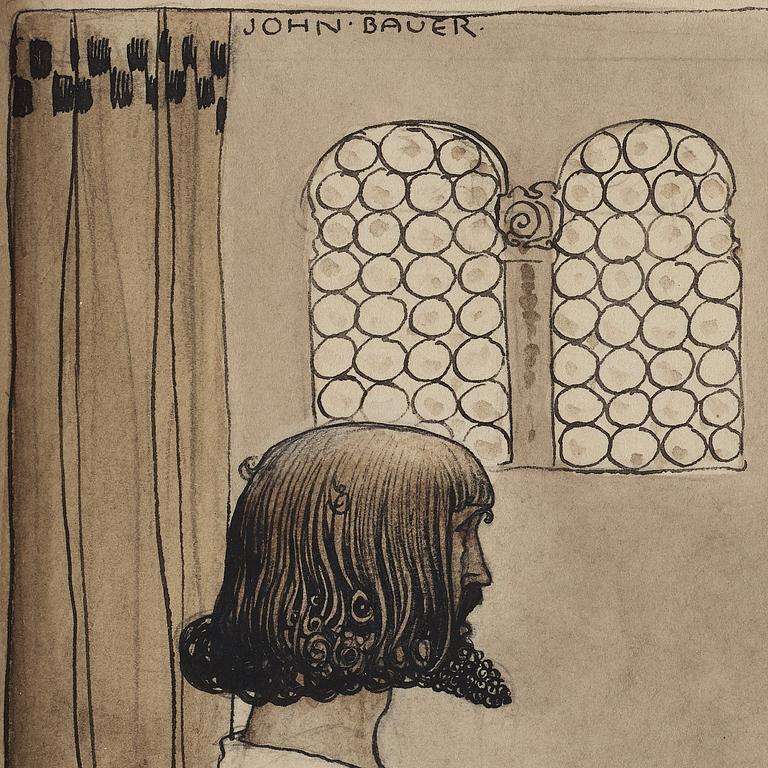
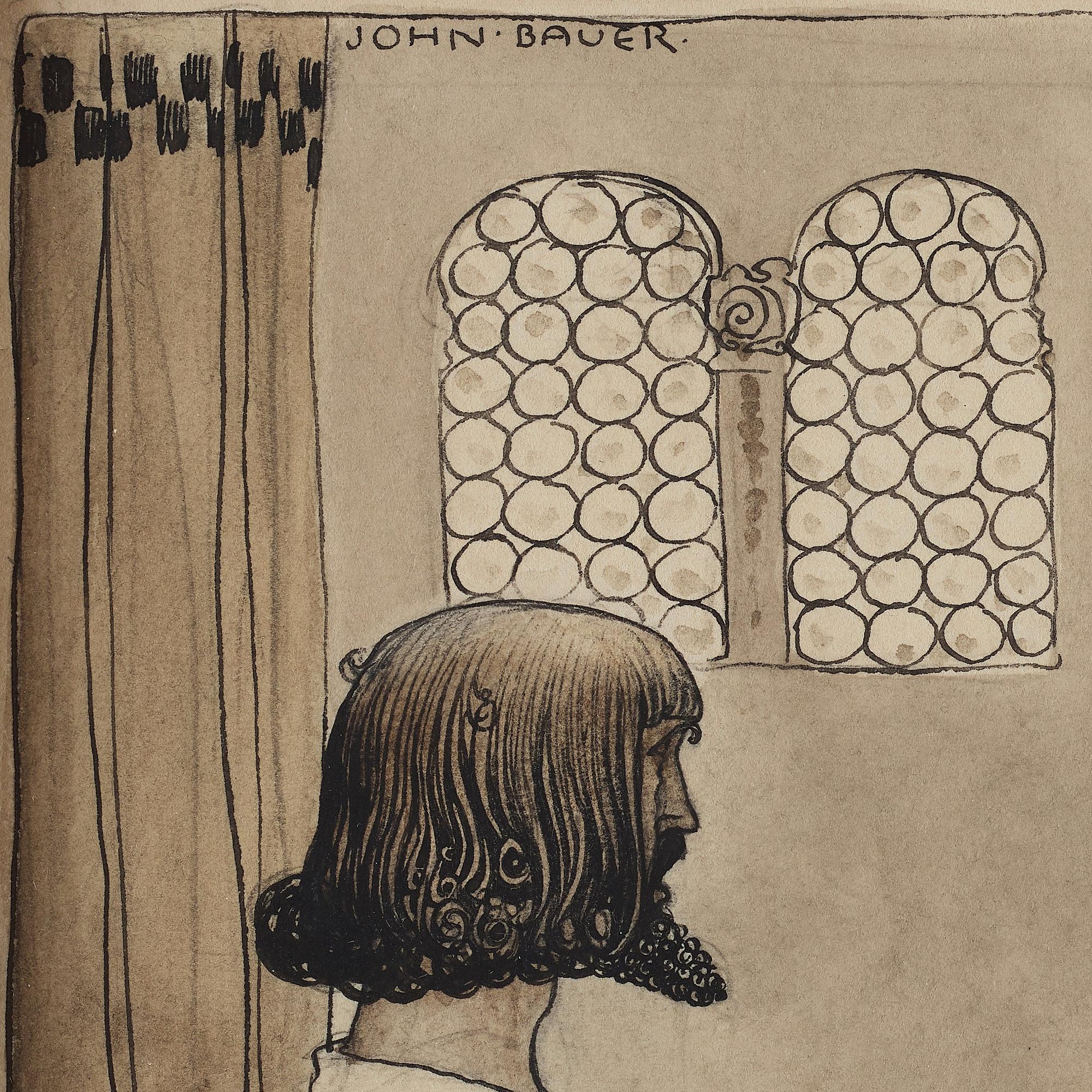
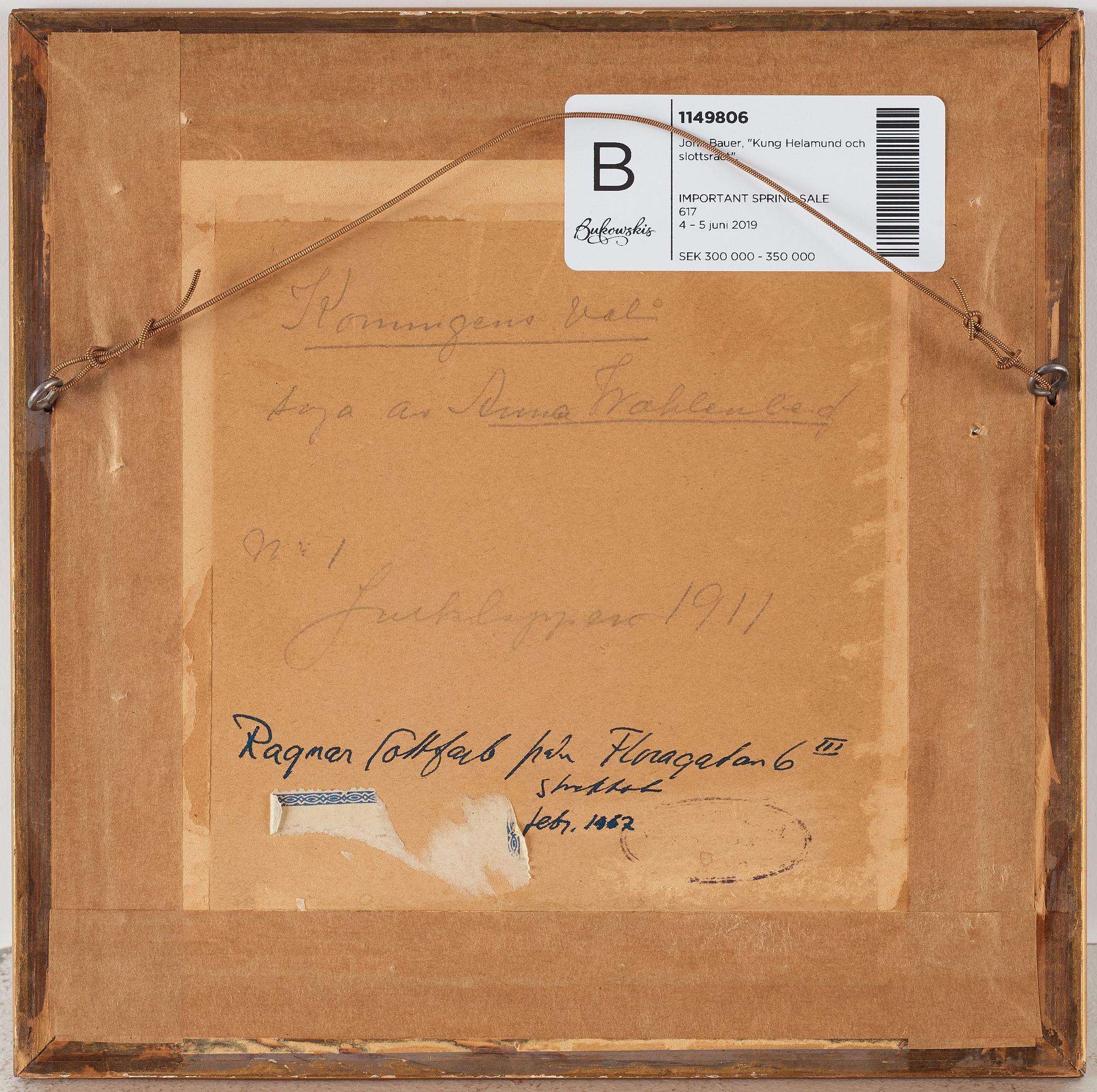
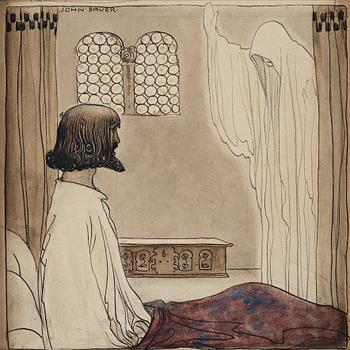
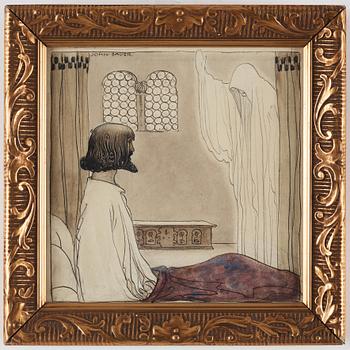
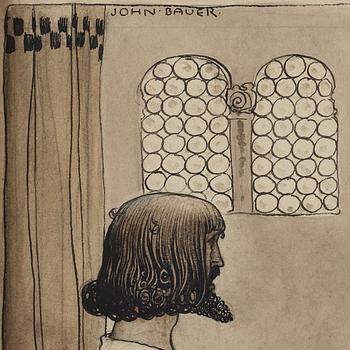
"Kung Helamund och slottsrået"
Signed John Bauer. Executed in 1911. Watercolour, indian ink and pencil on paper 19 x 19 cm.
Provenance
Private collection; by descent.
Exhibitions
Nationalmuseum, Stockholm, "John Bauer. En konstnär och hans sagovärld", 1982.
Literature
Per Bjurström, Gunnar Lindqvist, Agneta Börtz-Laine and Hans Holmberg, "John Bauer. En konstnär och hans sagovärld", 1982, mentioned and illustrated full page in colour, p. 129.
More information
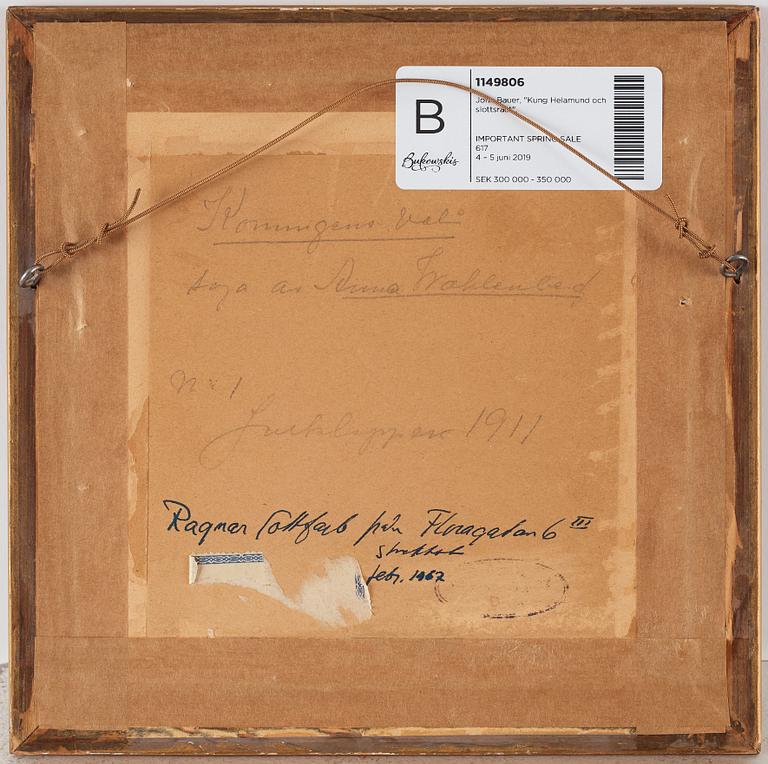
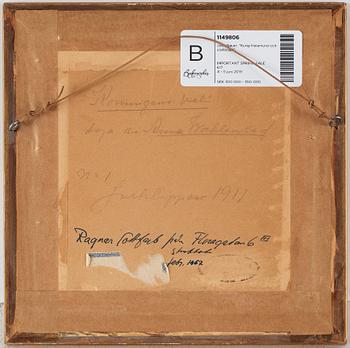
Original illustration for Anna Wahlenberg's fairy tale "Konungens val" published in "Julklappen", 1911.
More about John Bauer
John Bauer was born in 1882 and was a Swedish artist, primarily renowned for his paintings and illustrations in the early editions of the fairy tale collection "Bland tomtar och troll”. Thanks to his magical illustrations of princesses, trolls, and giants, Bauer has significantly influenced our perception of creatures and mythical figures in traditional Swedish stories and Nordic folklore.
Bauer grew up in Jönköping, and a large part of his artistry was inspired by the mystical forests of Småland, where trolls and other beings seemed to emerge from the rocky outcrops. During his years of study, he was fascinated by early German and Italian painting but soon returned to the Swedish fairytale forest. At the Royal Swedish Academy of Fine Arts, he met his future wife, Esther Ellqvist, who often posed as a model and served as inspiration for the princess Tuvstarr in Bauer's works.
Most of Bauer's paintings are created using watercolors, although he has also produced some using oil. By the 1910s, thanks to his fairy tale paintings, Bauer was already an established and beloved artist when he chose to conclude his role as a fairy tale illustrator. In his final years, he explored other imaginative expressions that would shape Bauer's last works, such as "The Dancing Nymphs" and "Blue Eva". John Bauer's final significant painting was created for the auditorium at Karlskrona Girls' School in 1917, an oil painting depicting the goddess Freja, with his wife Esther as a model.
The entire Bauer-Ellqvist family died in a boat accident when the steamer Per Brahe sank during an autumn storm on Vättern on November 20, 1918.
Others have also viewed