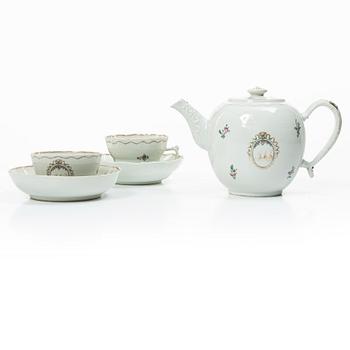
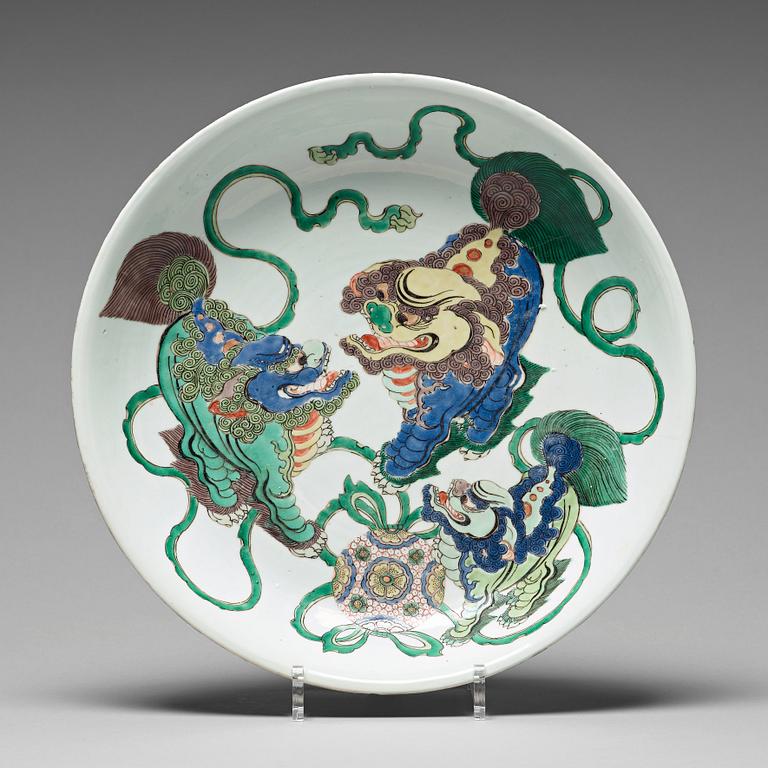
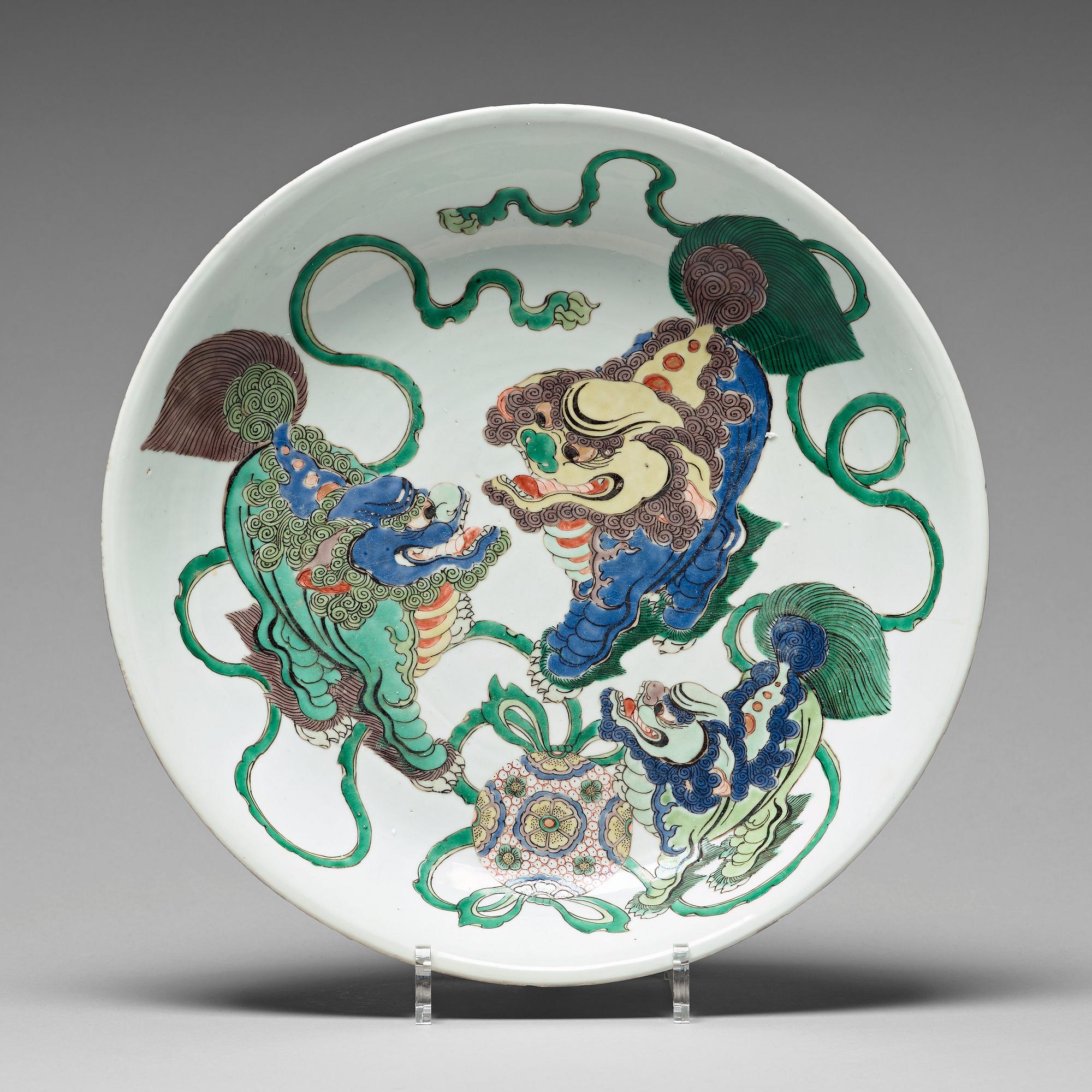
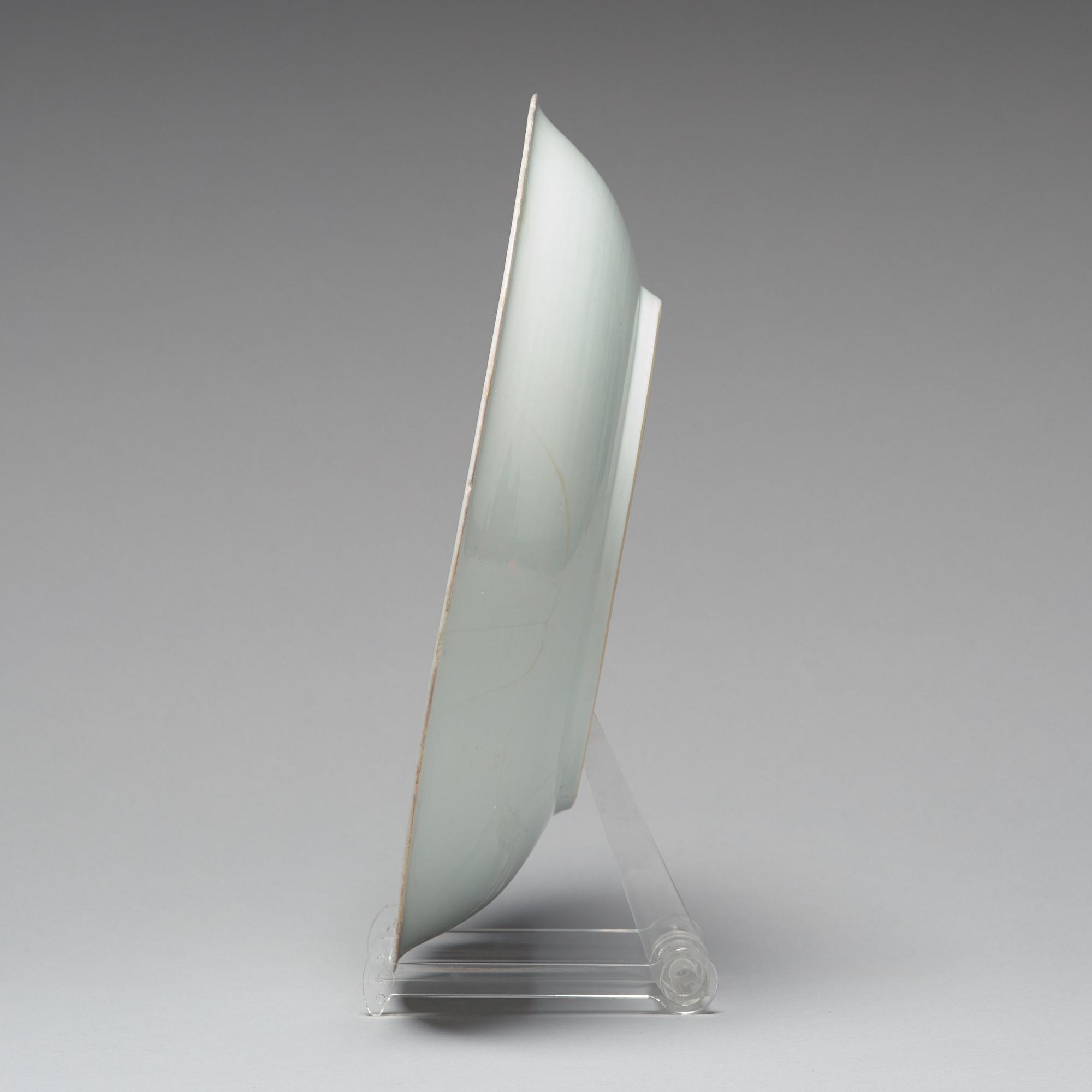
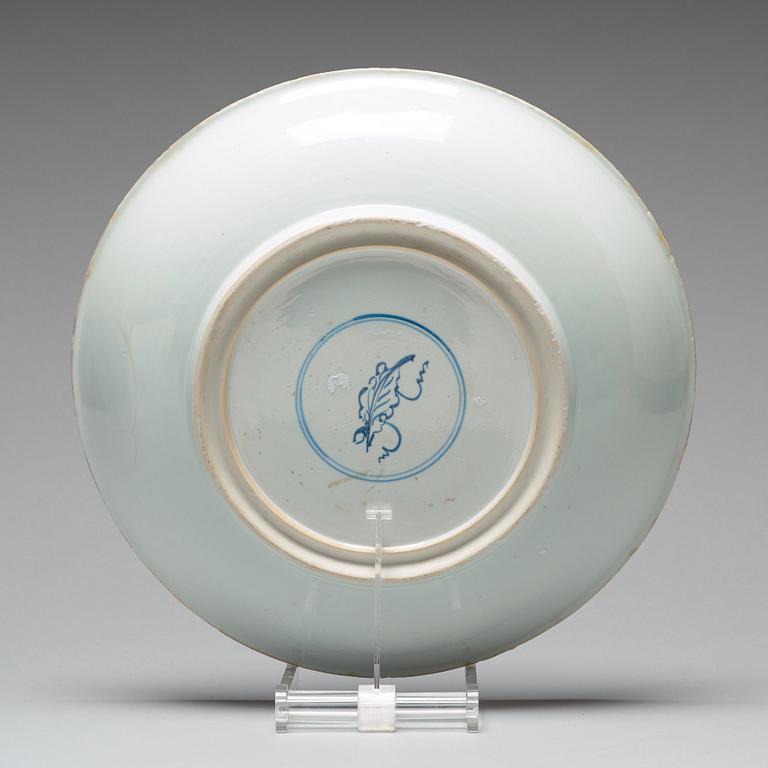
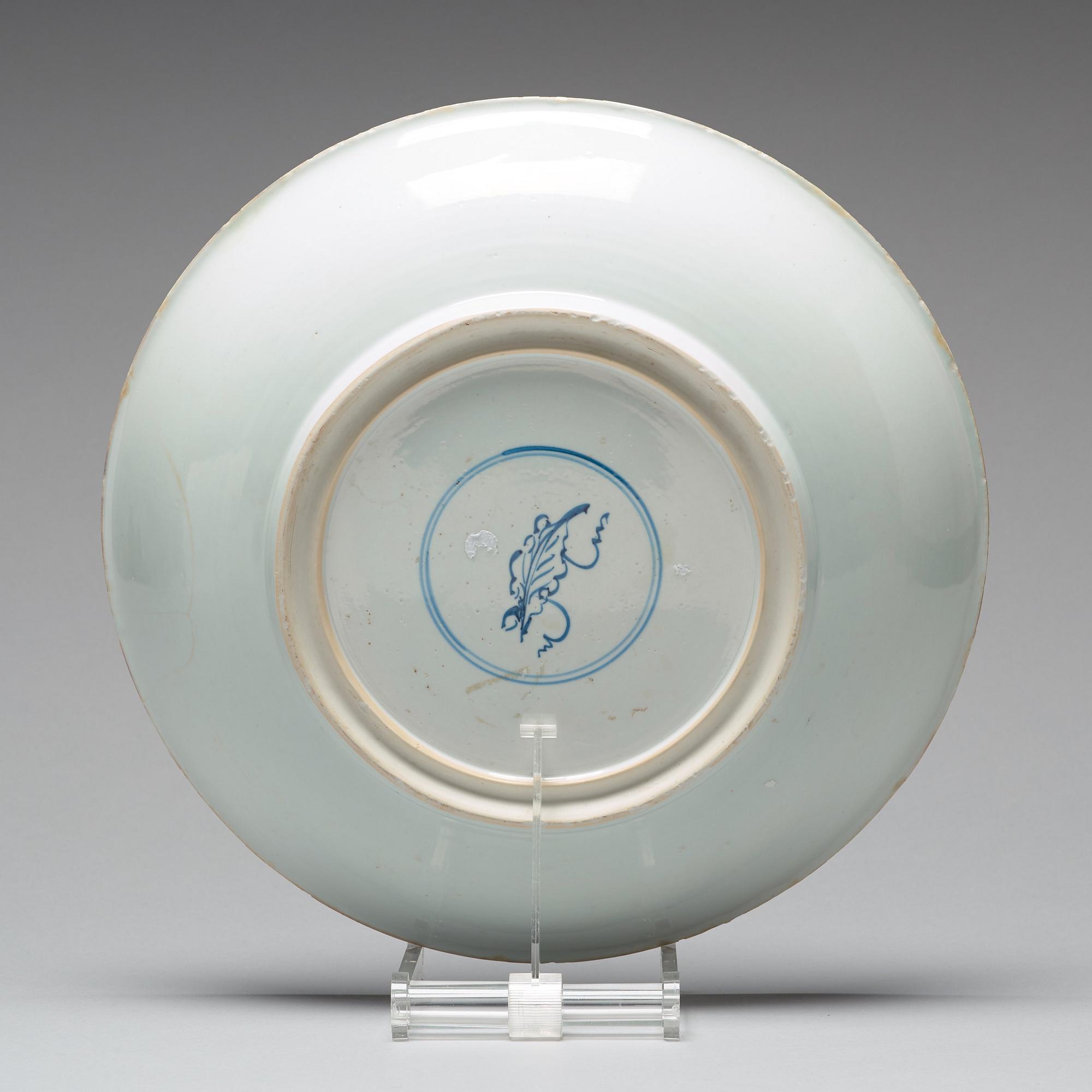
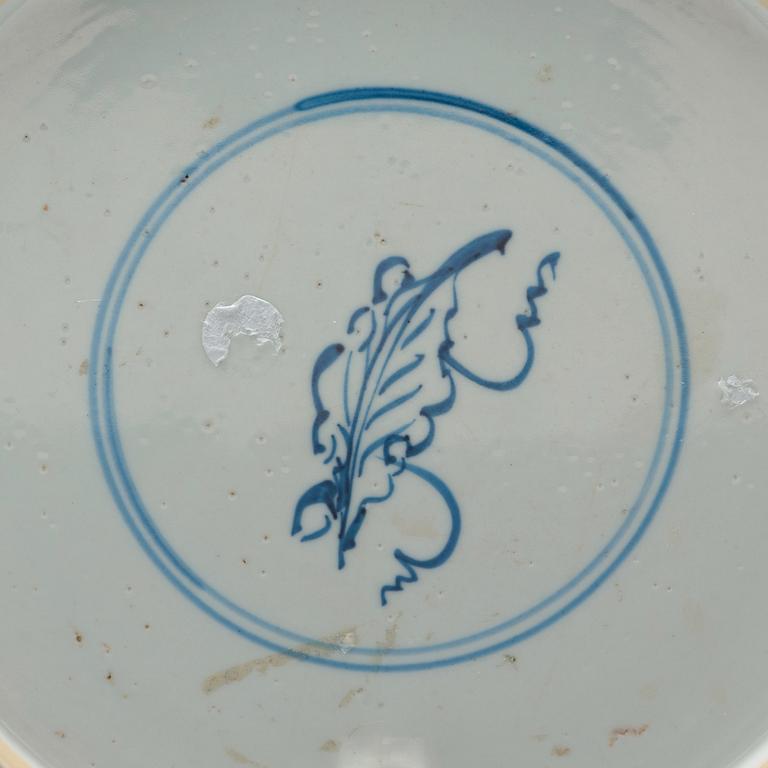
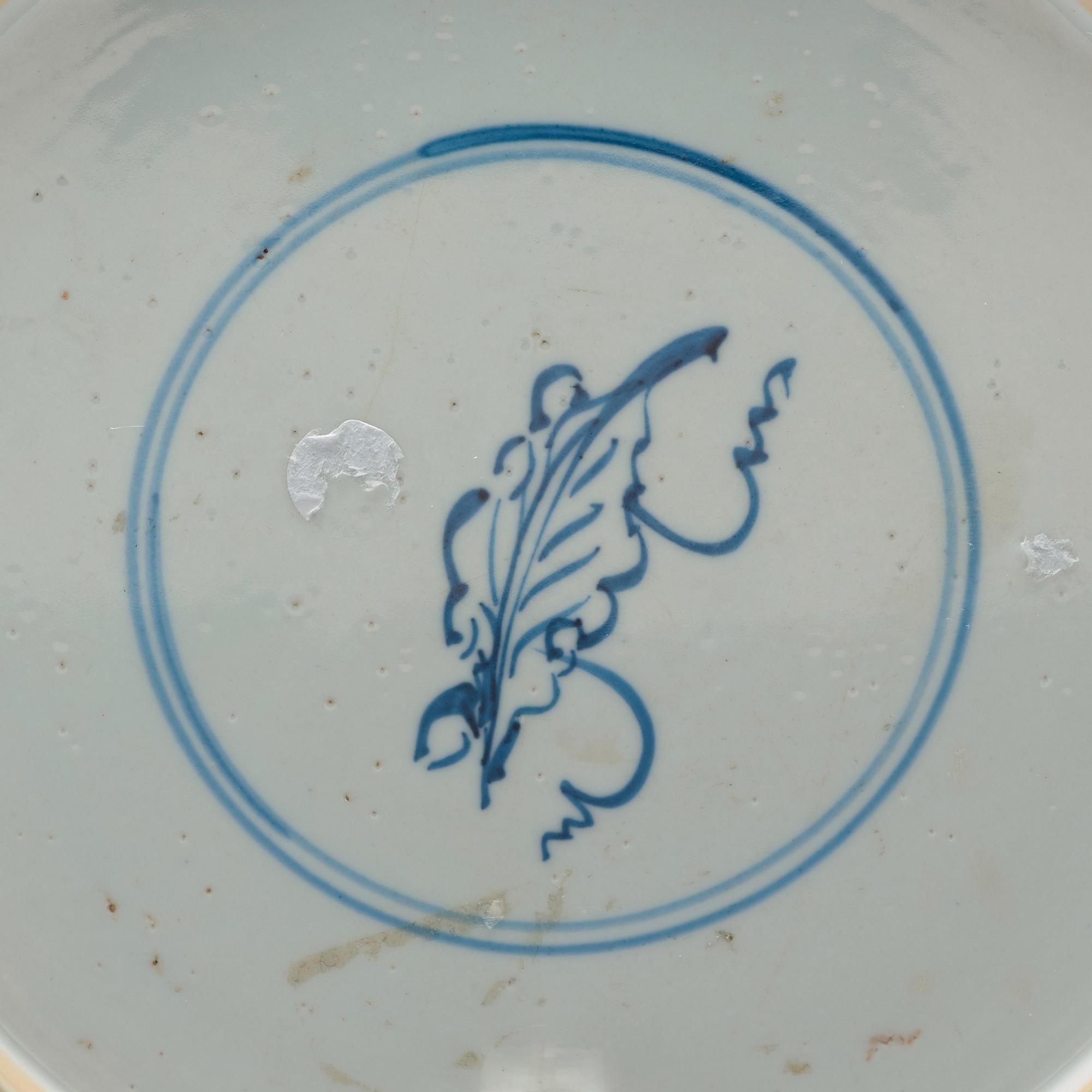
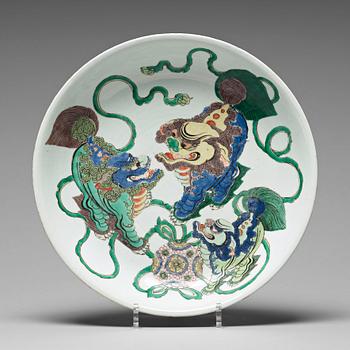
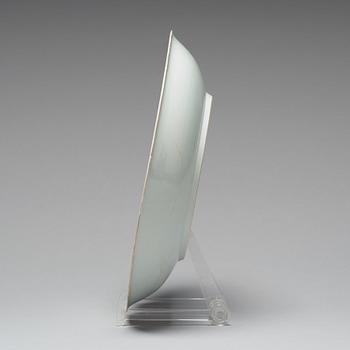
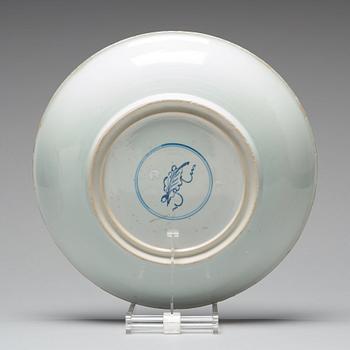
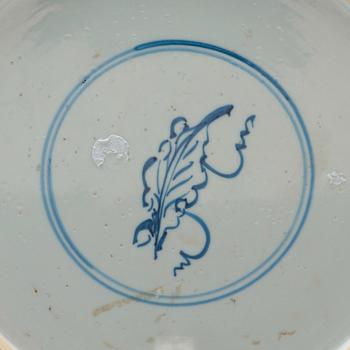
Decorated with three Foo dogs playing with a ball. To the base a channel footrim and a lozenge within a double circle. Diameter 34,5 cm.
Restored. Fritting to rim
Provenance
Purchased from Guest & Gray, London, March 2004.
The Avalon Collection.
This collection, which in the main focuses on the Interregnum and Kangxi periods has been both carefully and sensitively formed over the last twenty-five years. The collector, a member of the English Oriental Ceramic Society, has assembled the collection with an eye for provenance whilst purchasing from old European collections, well-established antique dealers and at auction.
Academically, the pieces have been well researched both in terms of their symbolism and narrative themes. In many instances the imagery on the pieces has been referenced to episodes in the romantic and historic novels of Chinese mythology, which were used extensively in the decoration of seventeenth century Chinese porcelain.
Exhibitions
A very similar famille verte dish donated by Sir Augustus Wollaston Franks can be seen in the collection of The British Museum, London, ref. Franks.384.
For condition report contact specialist

Others have also viewed