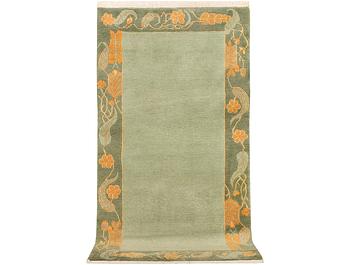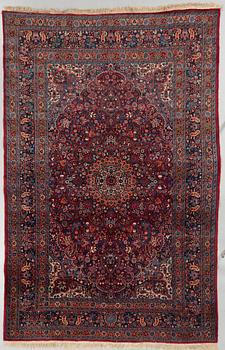
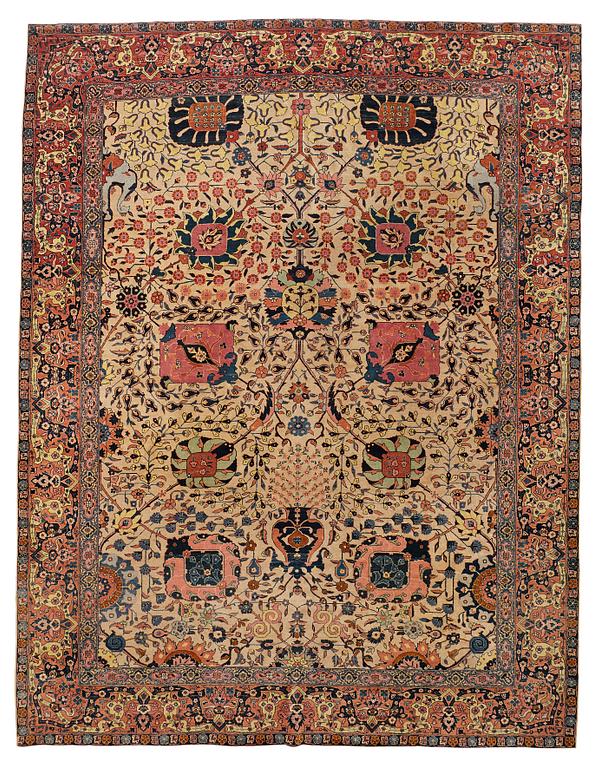
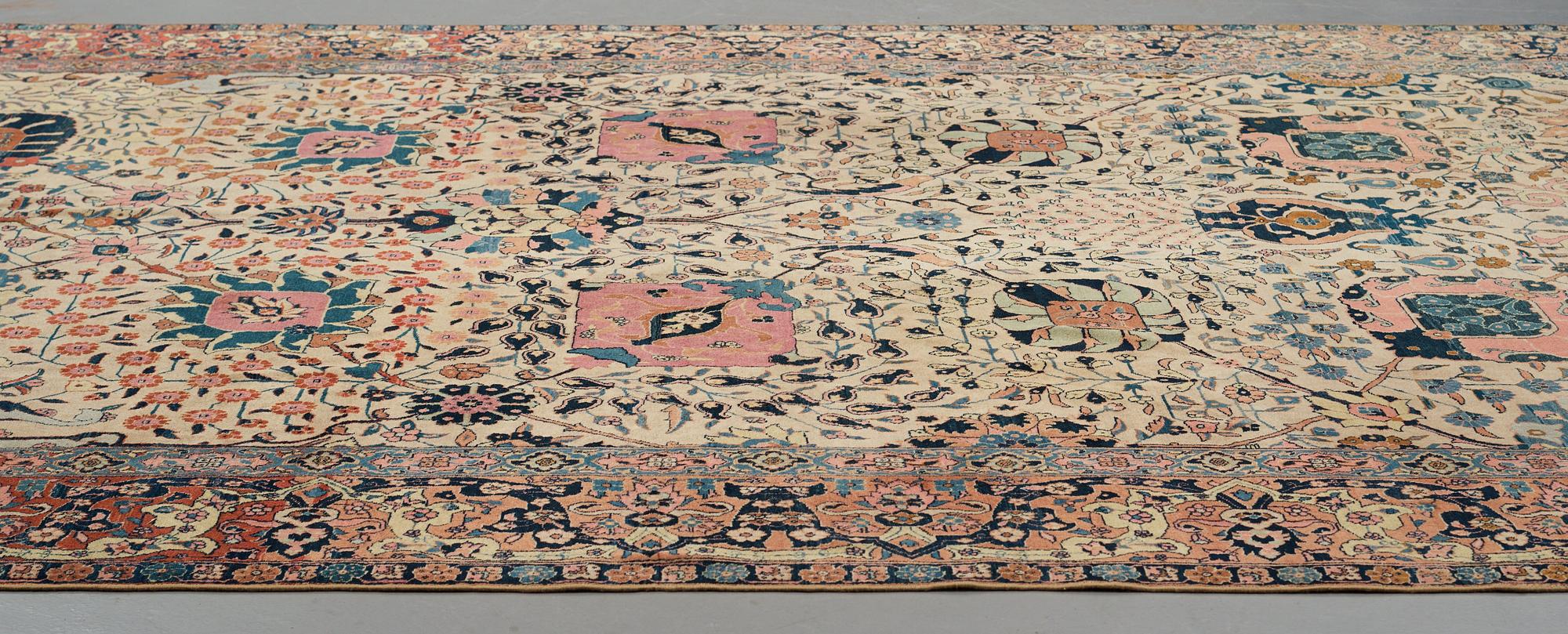
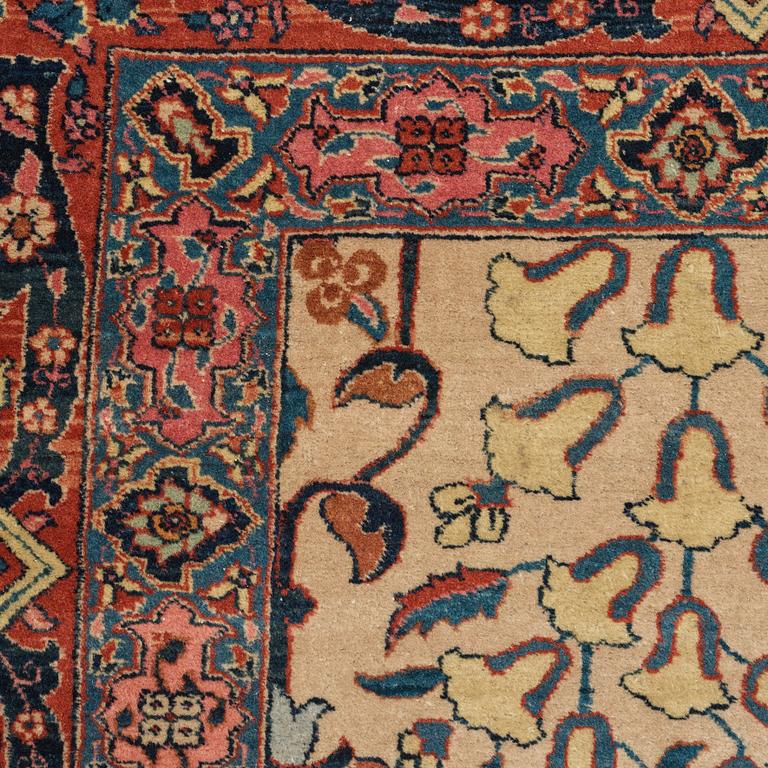
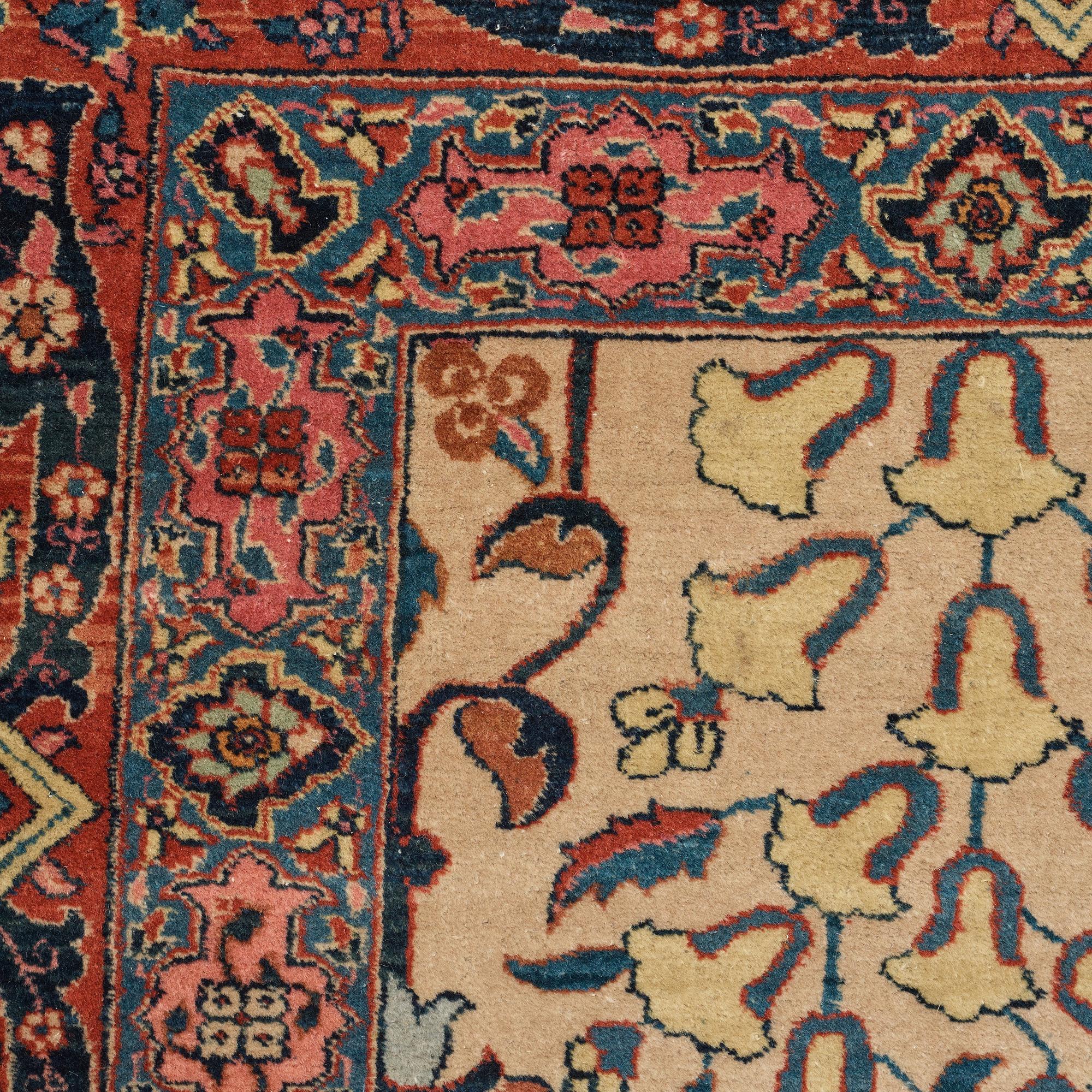
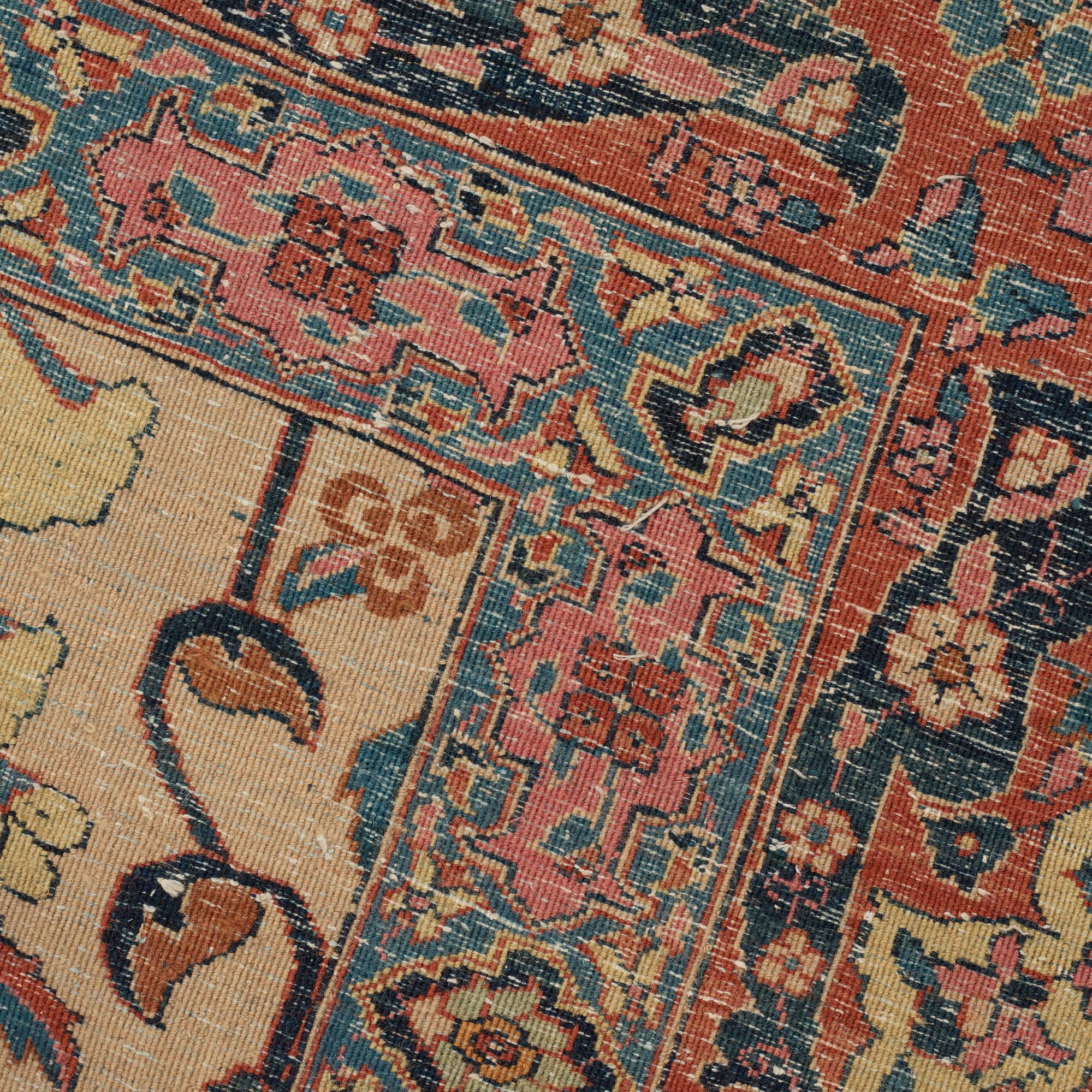
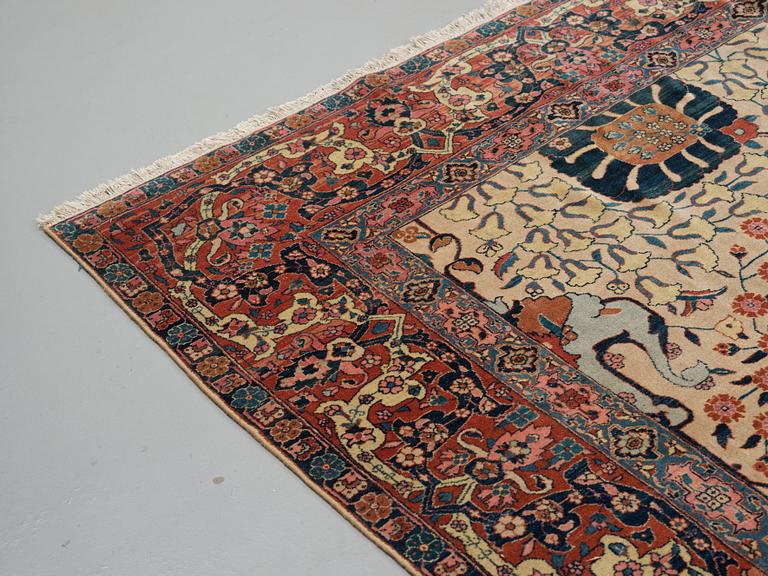
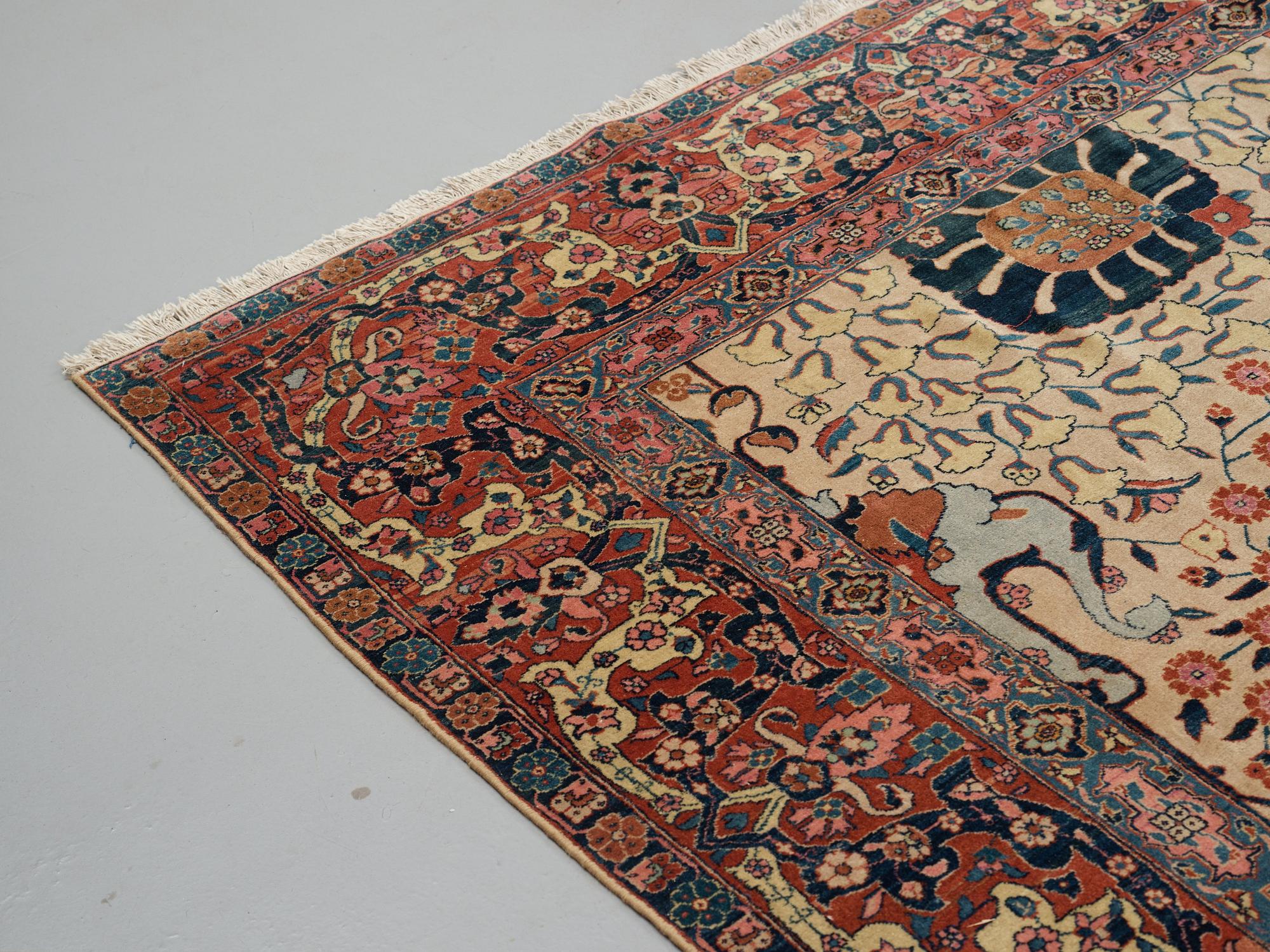
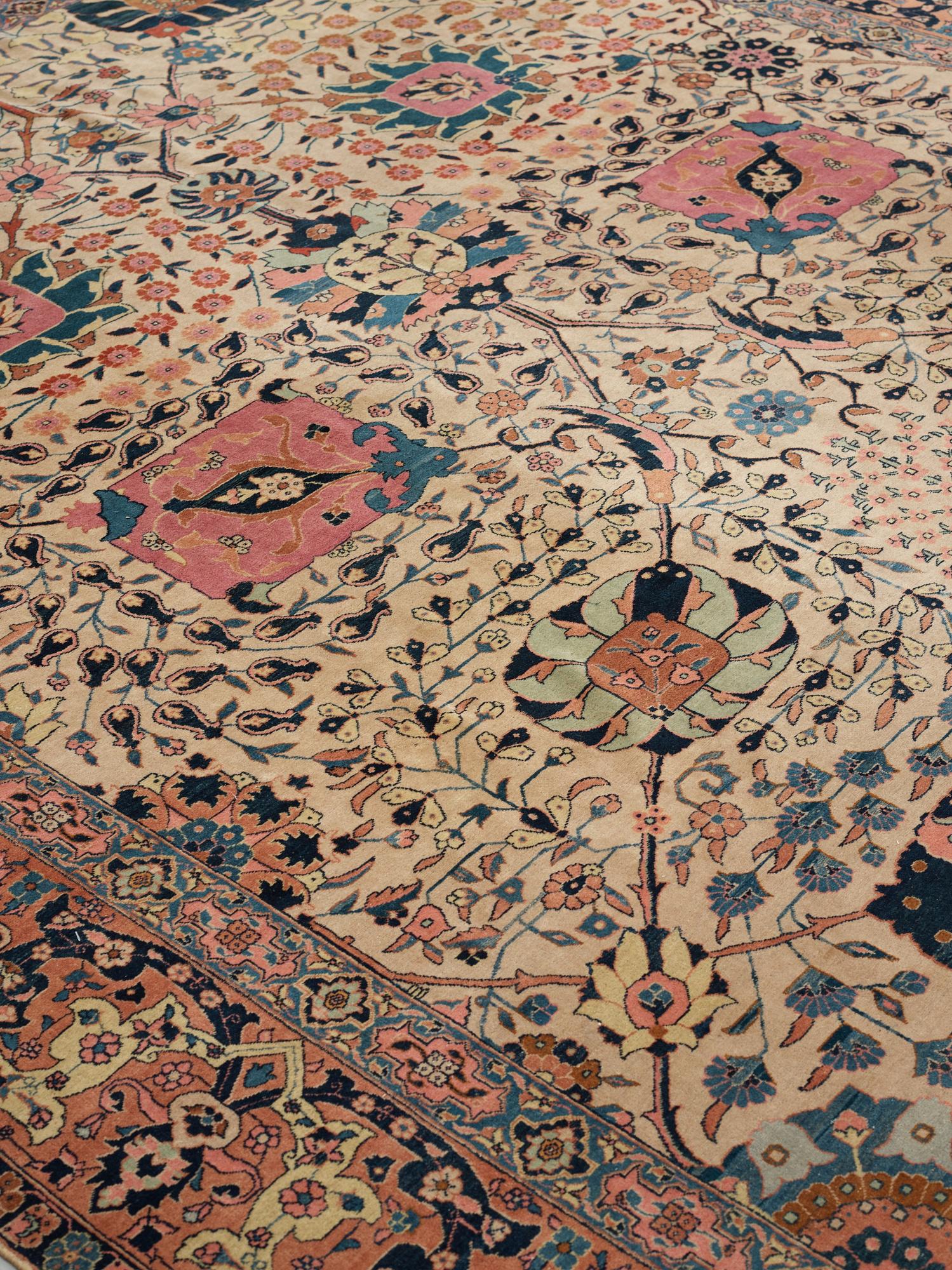
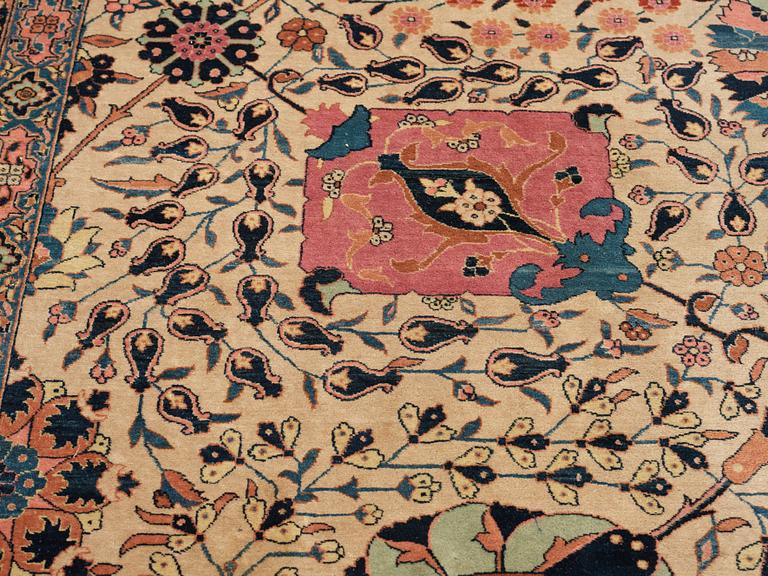
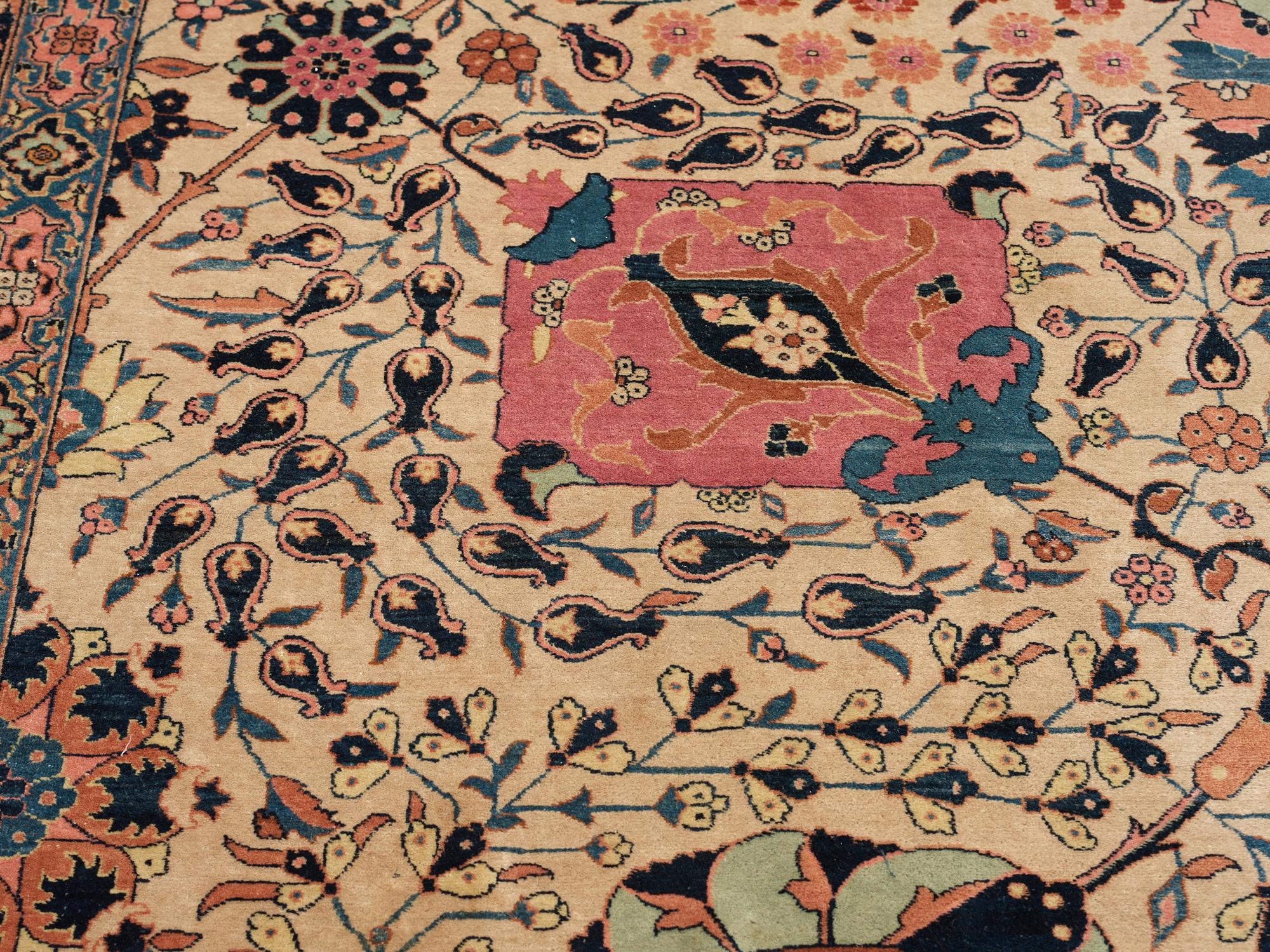
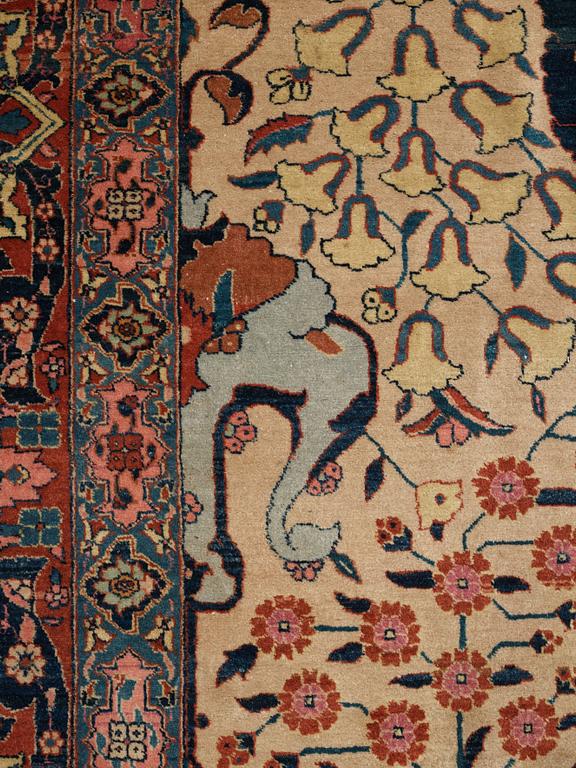
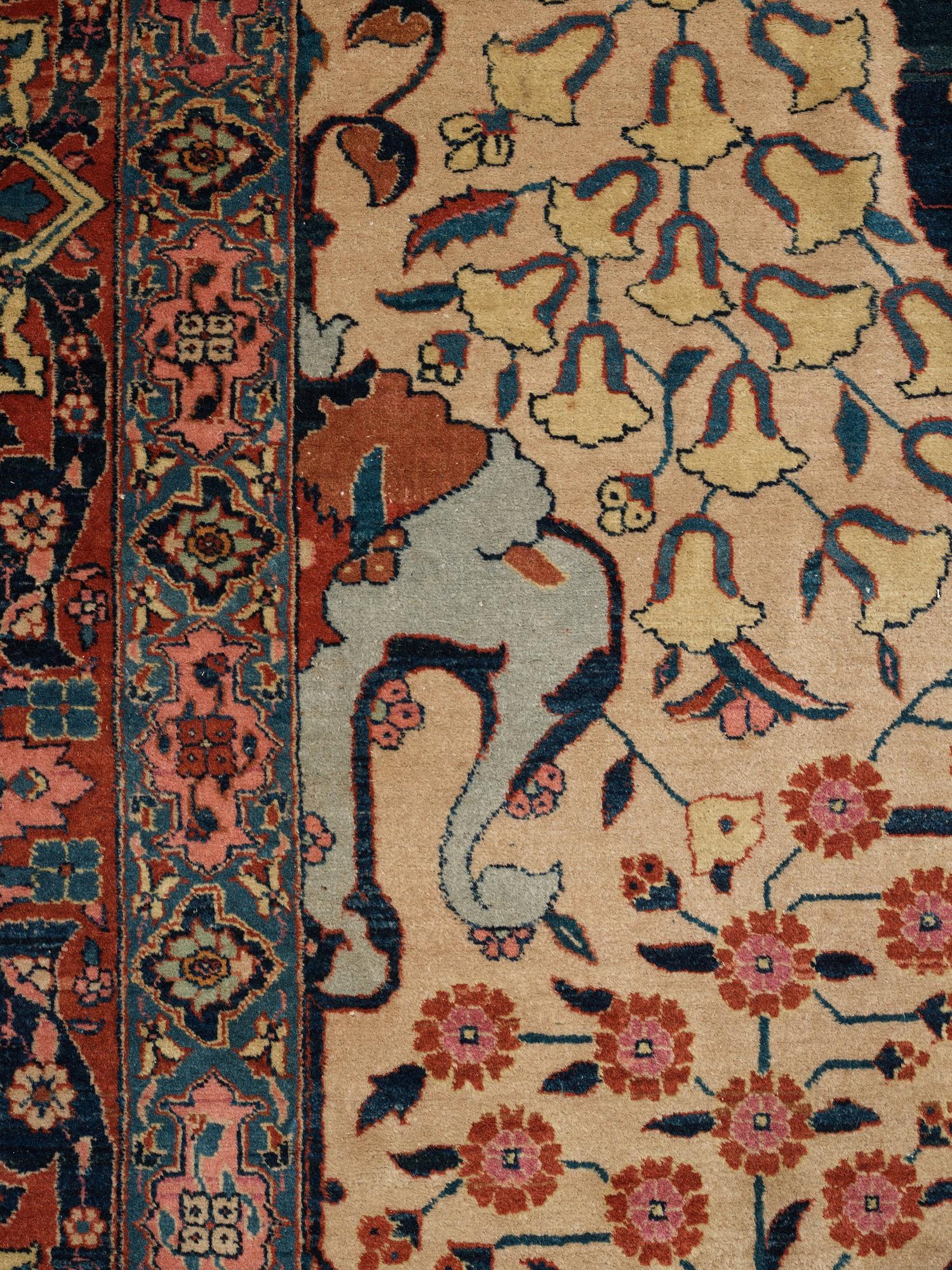
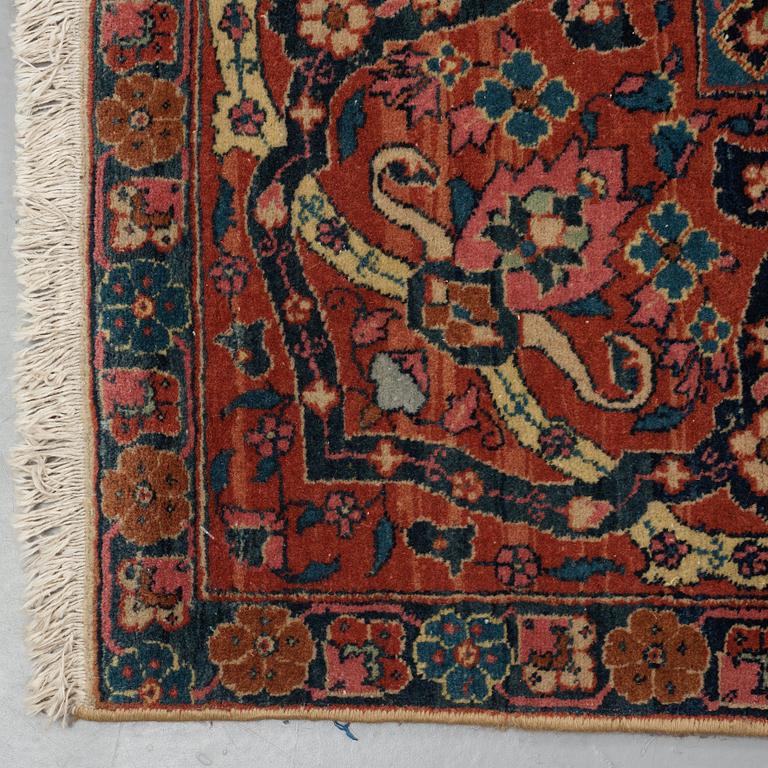
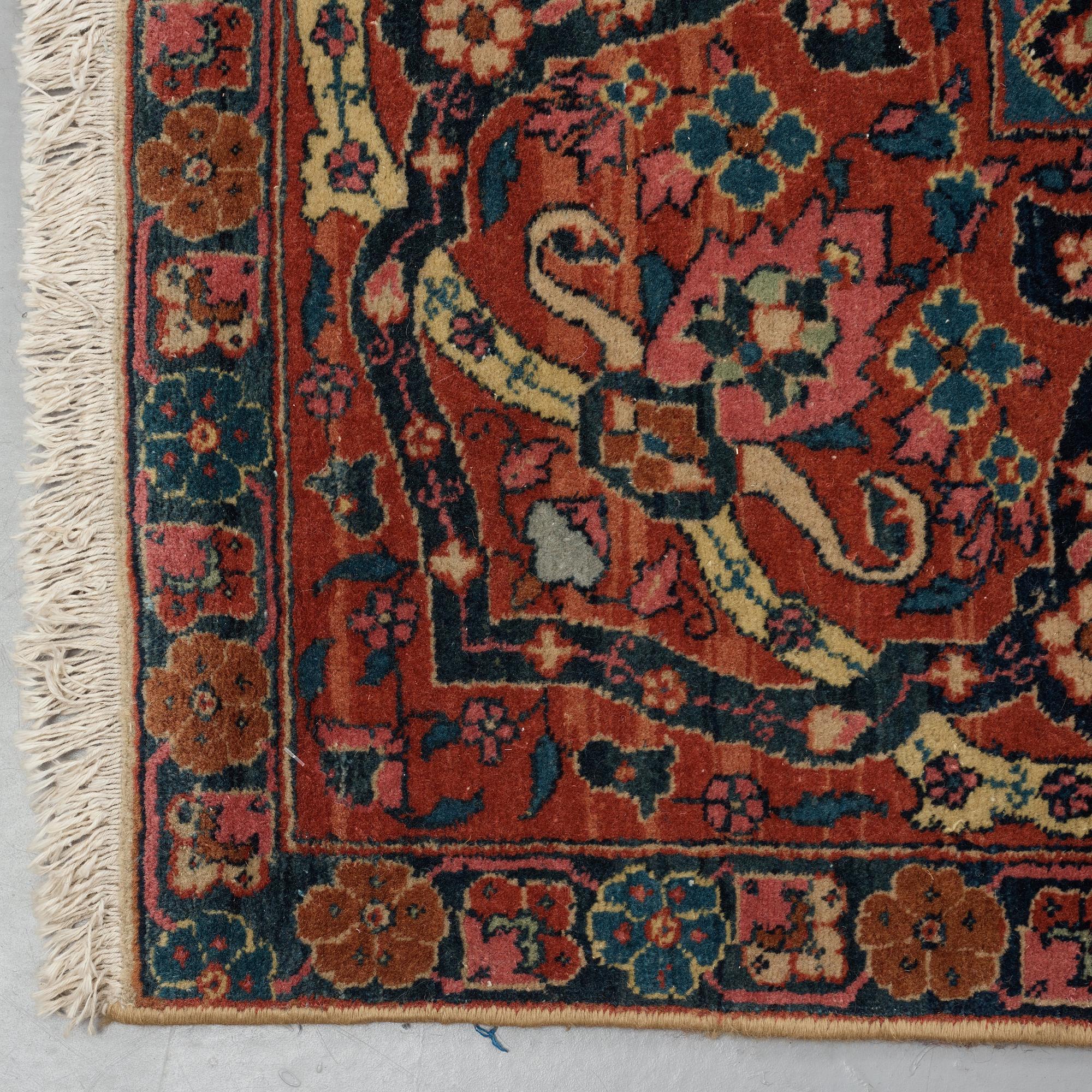
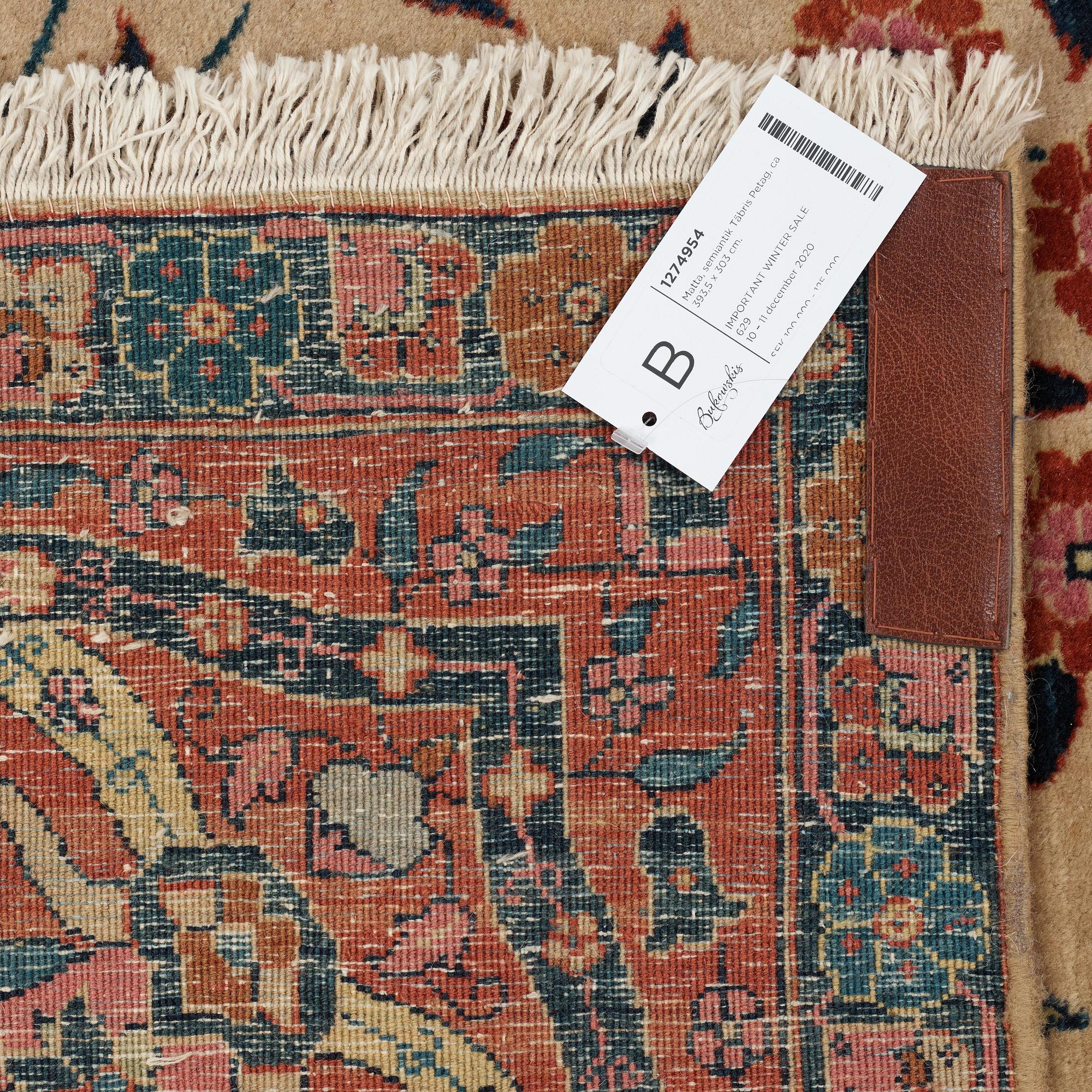
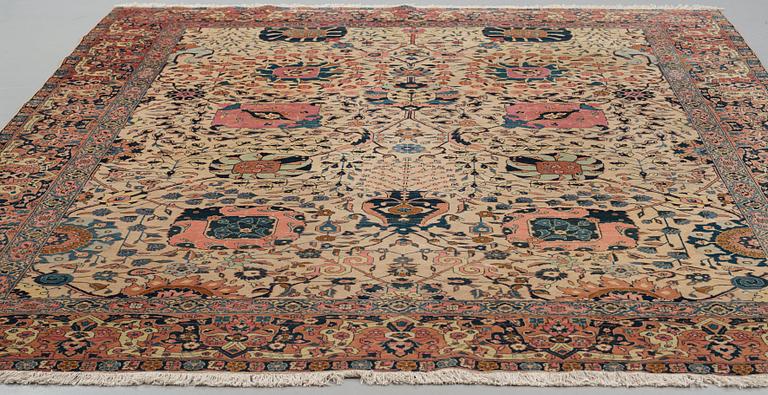
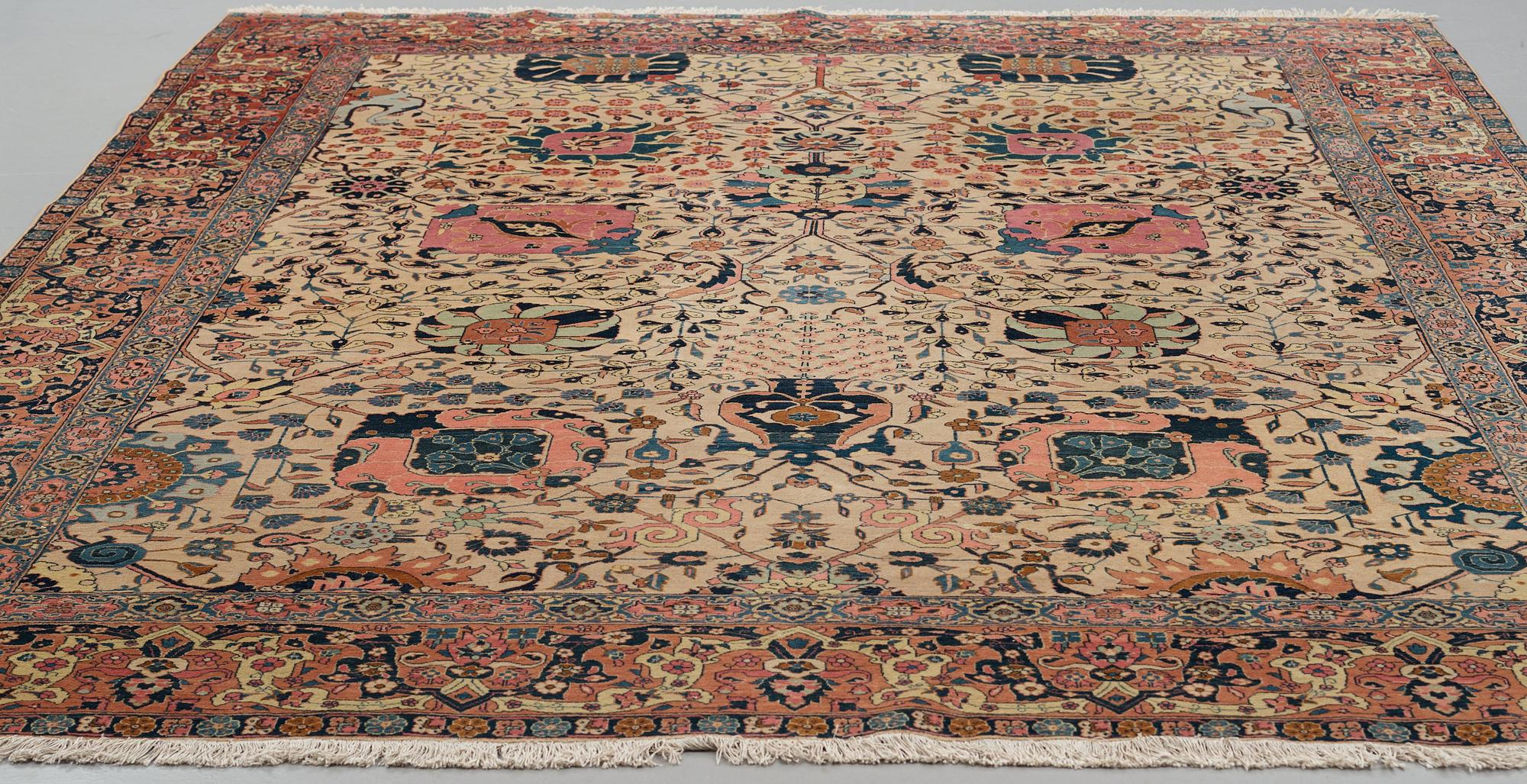
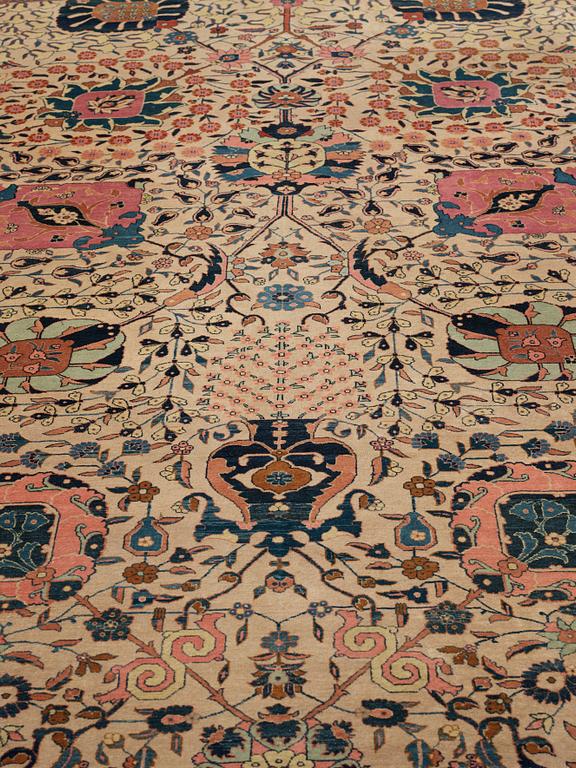
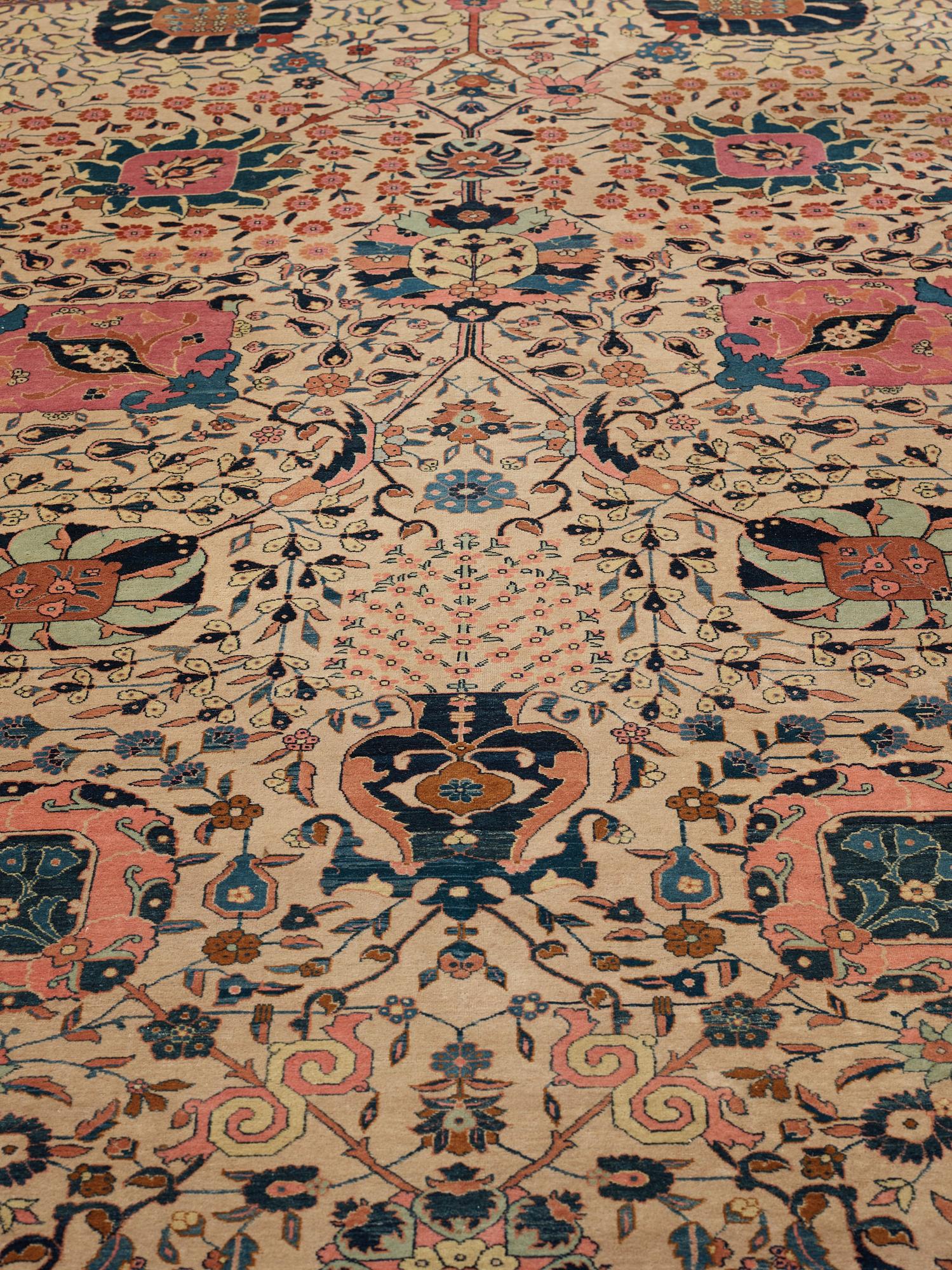
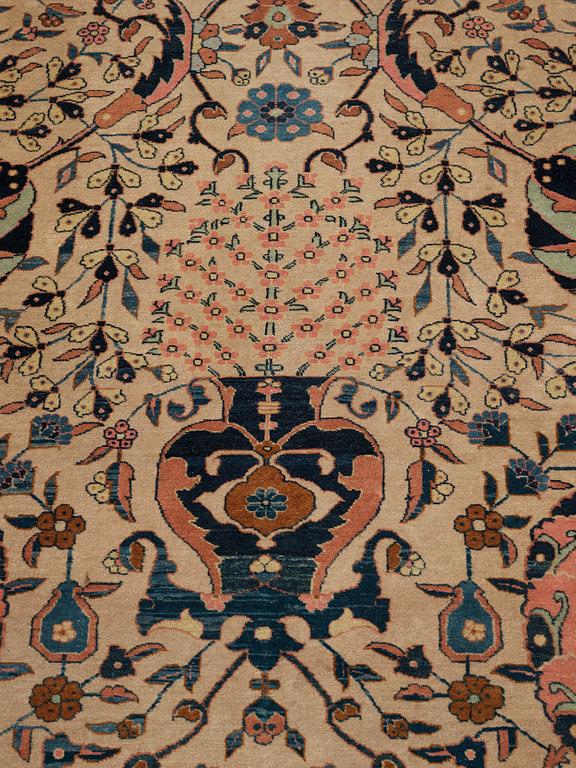
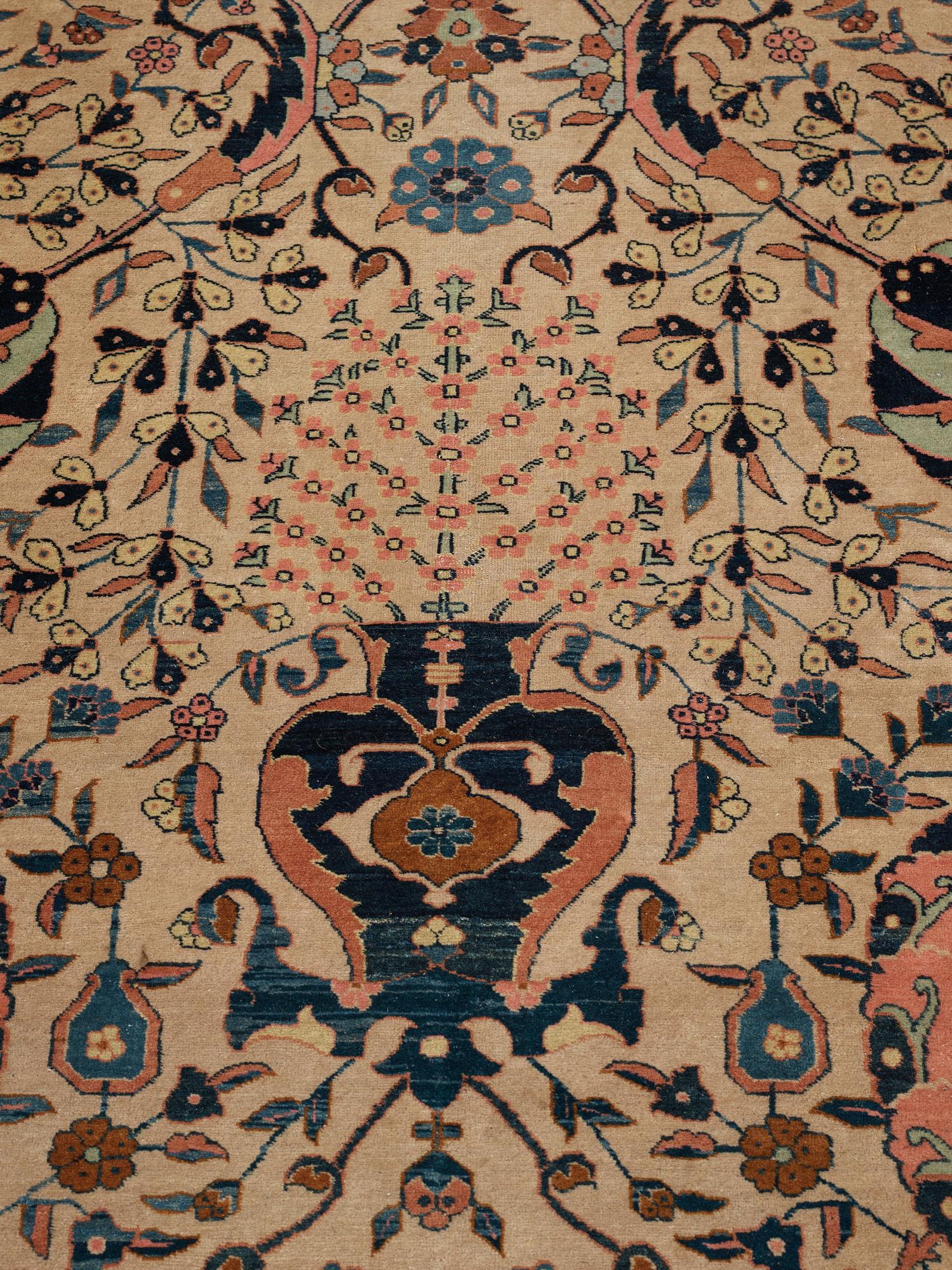
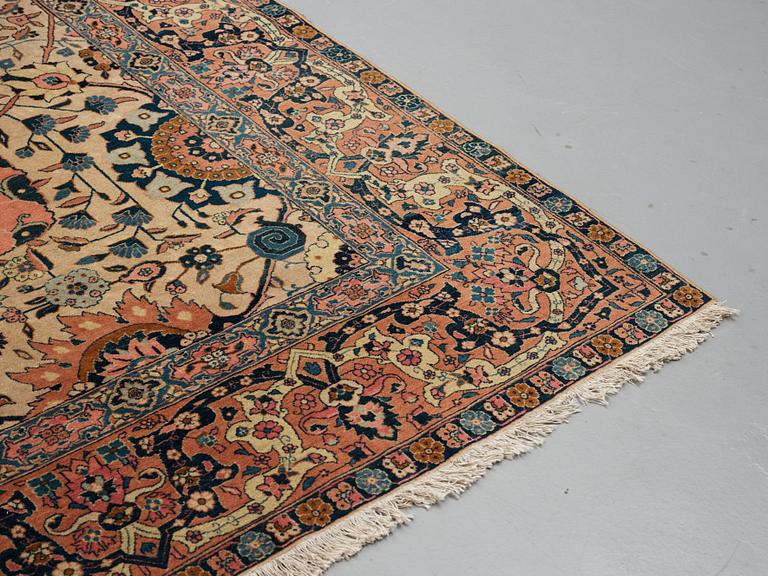
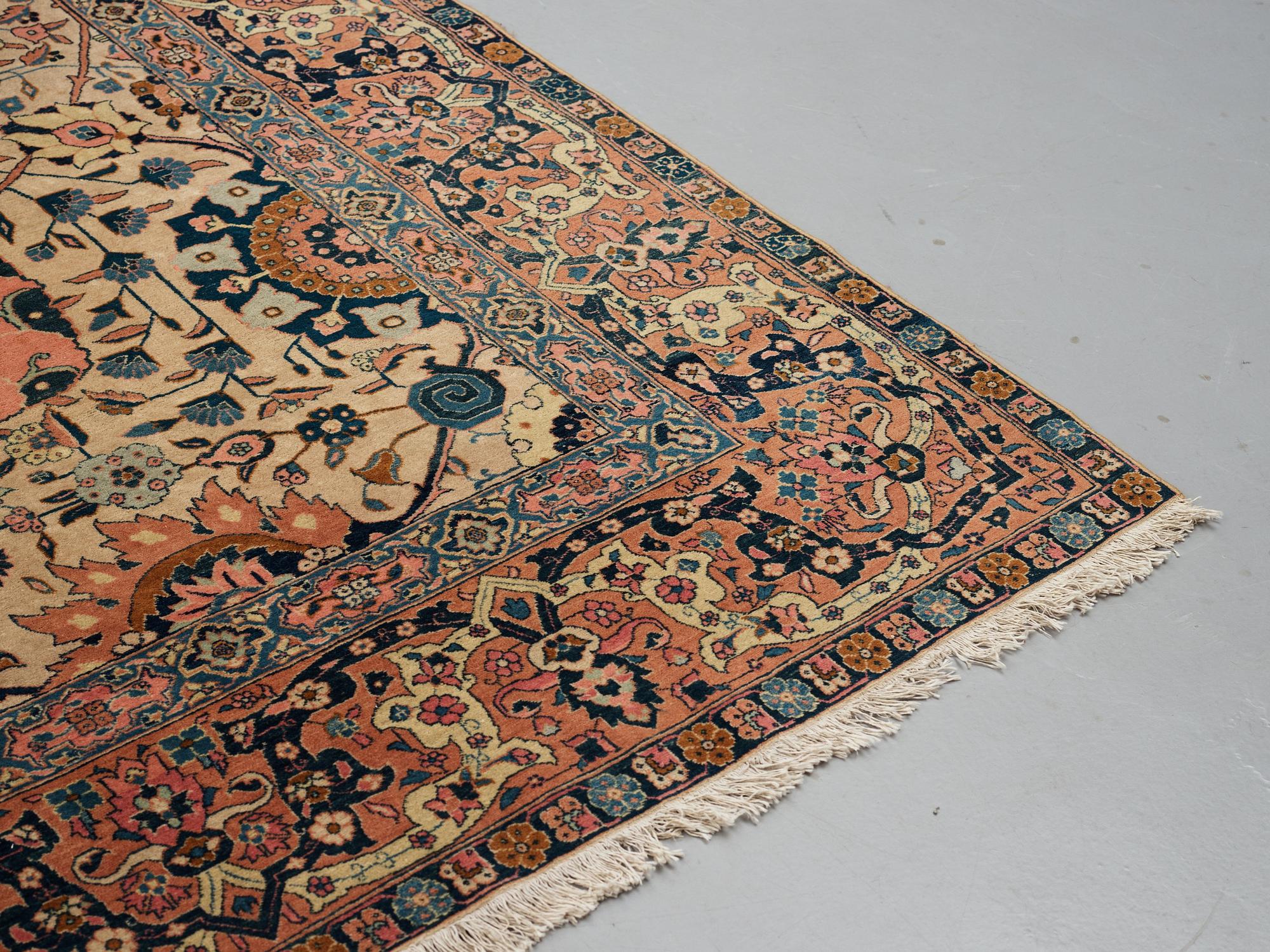
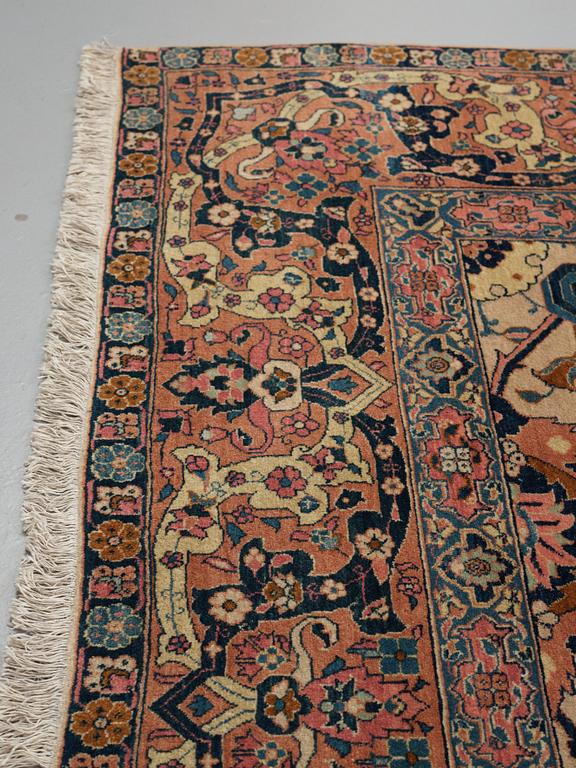
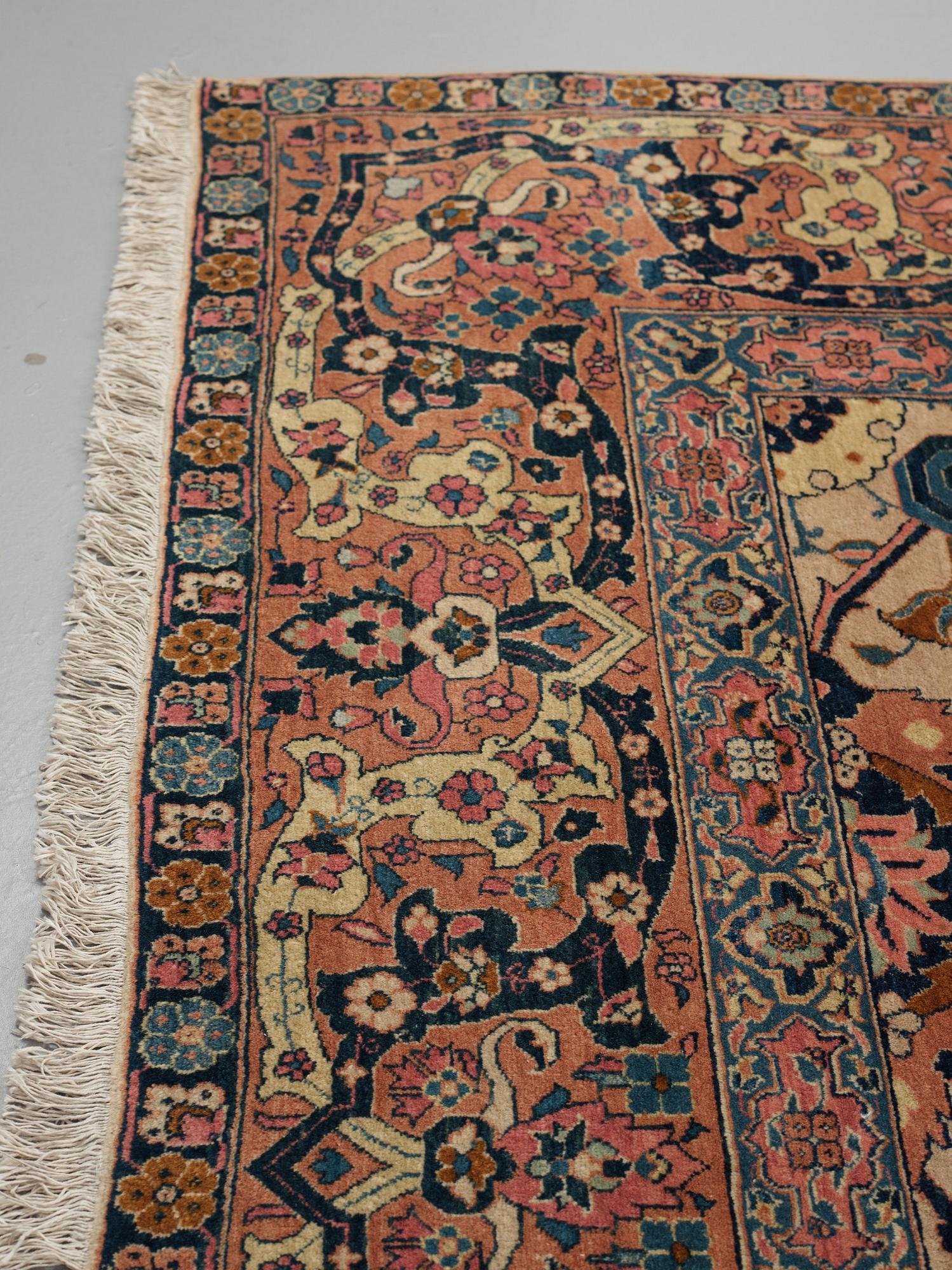
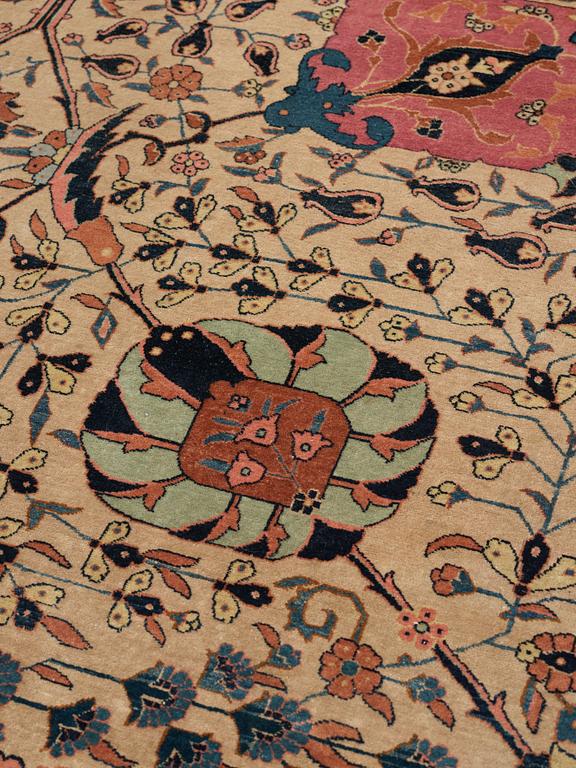
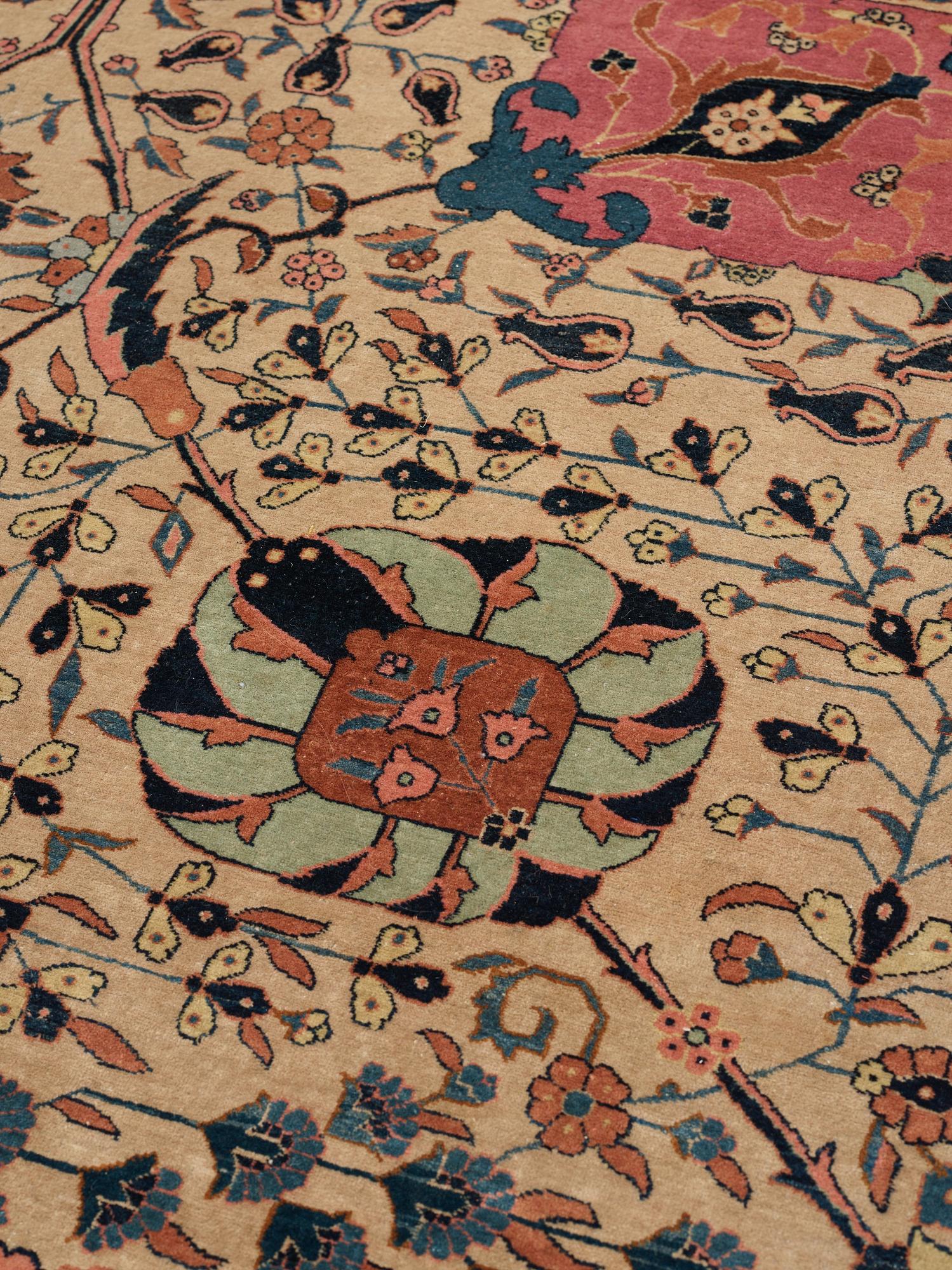
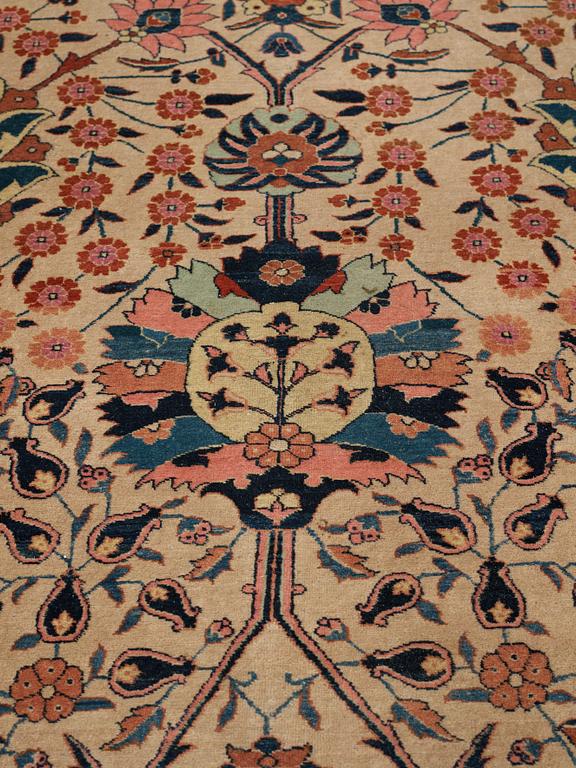
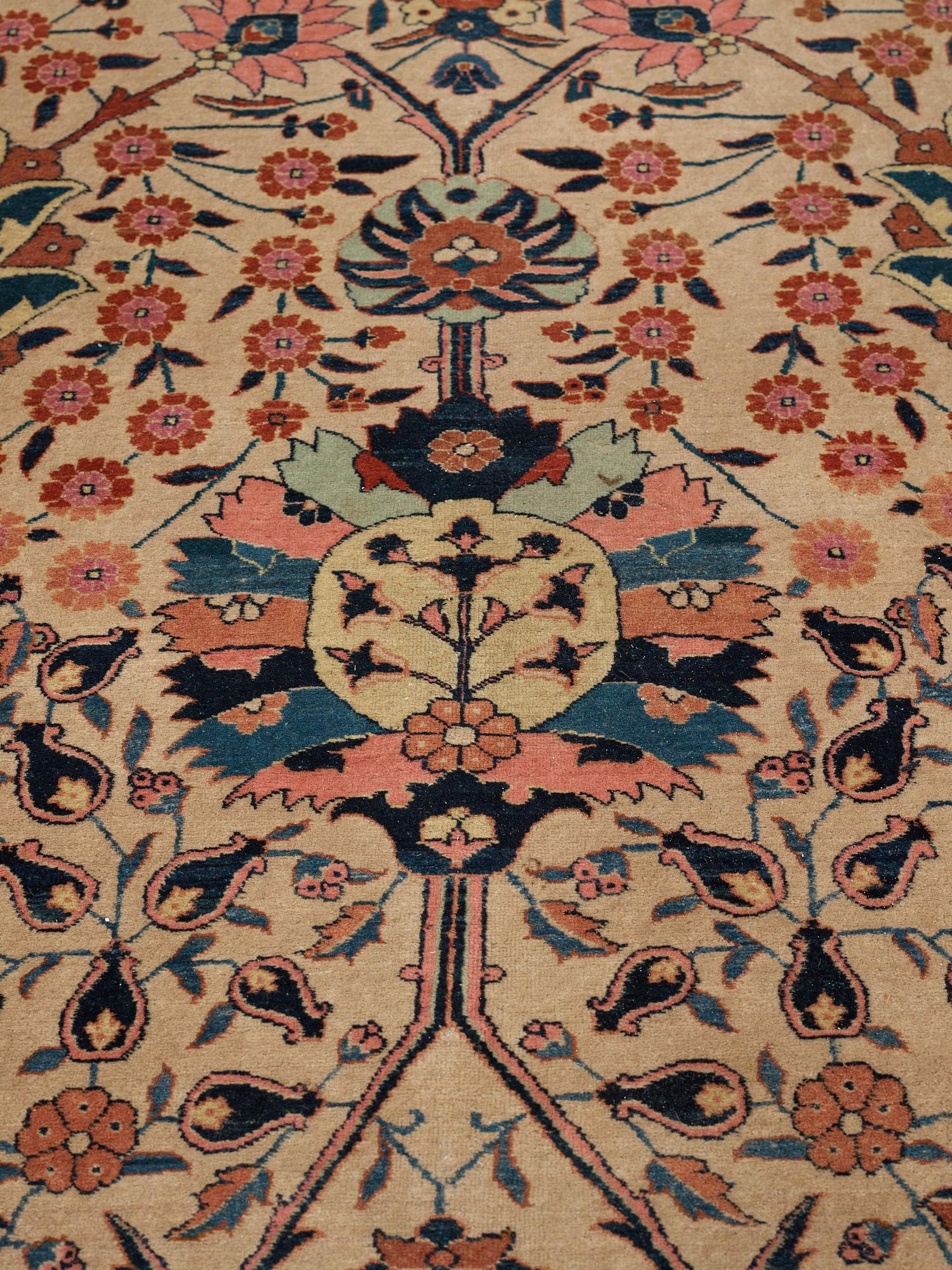
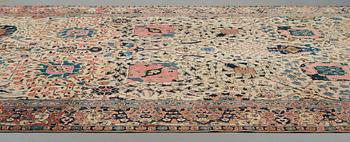
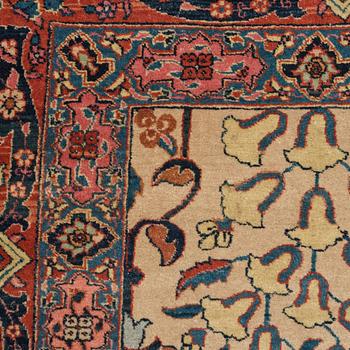
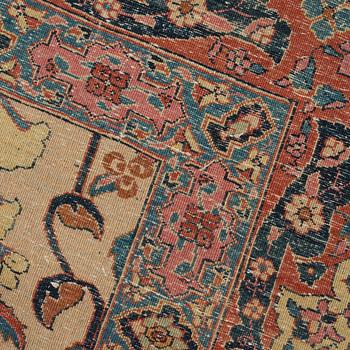
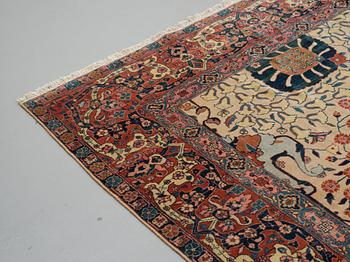
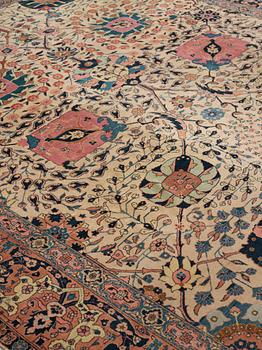
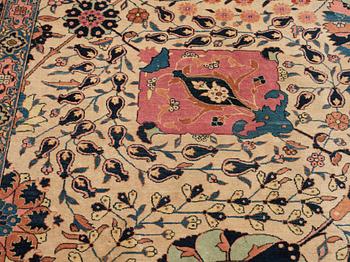
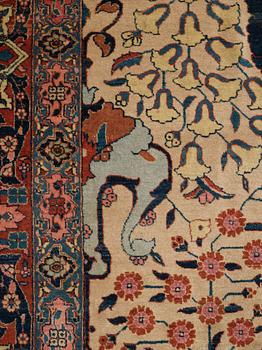
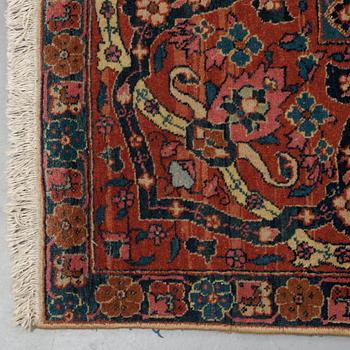
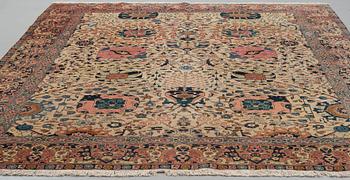
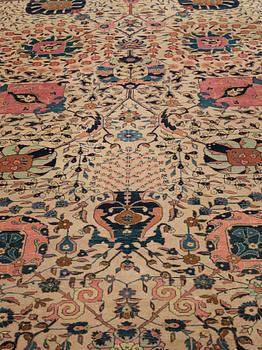
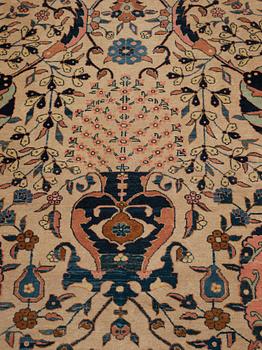
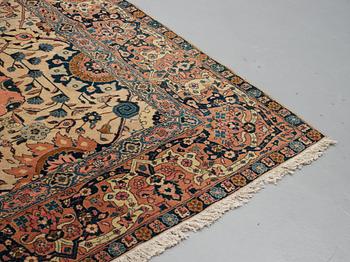
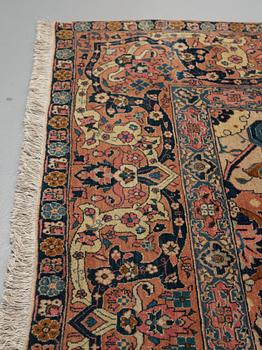
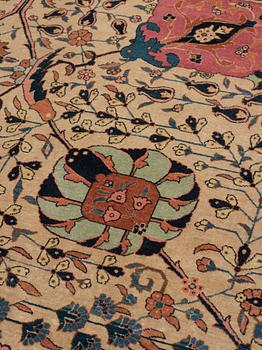
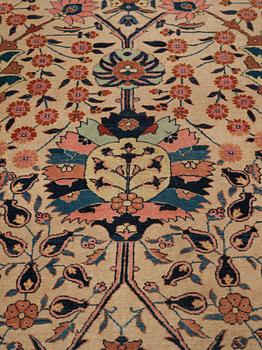
An ivory ground a with polychrome flower vase, blooming branches as well as large palmette and flower festoons. A wide red melange main border with large flower vines. Signed with Petag's chintamani-sign. (Petag = Persische Teppich AG).
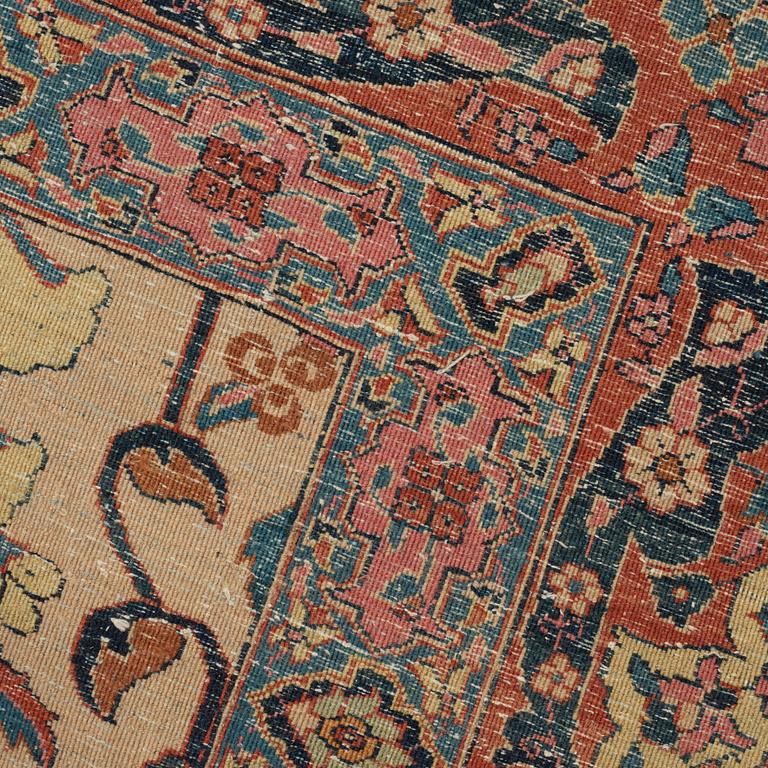
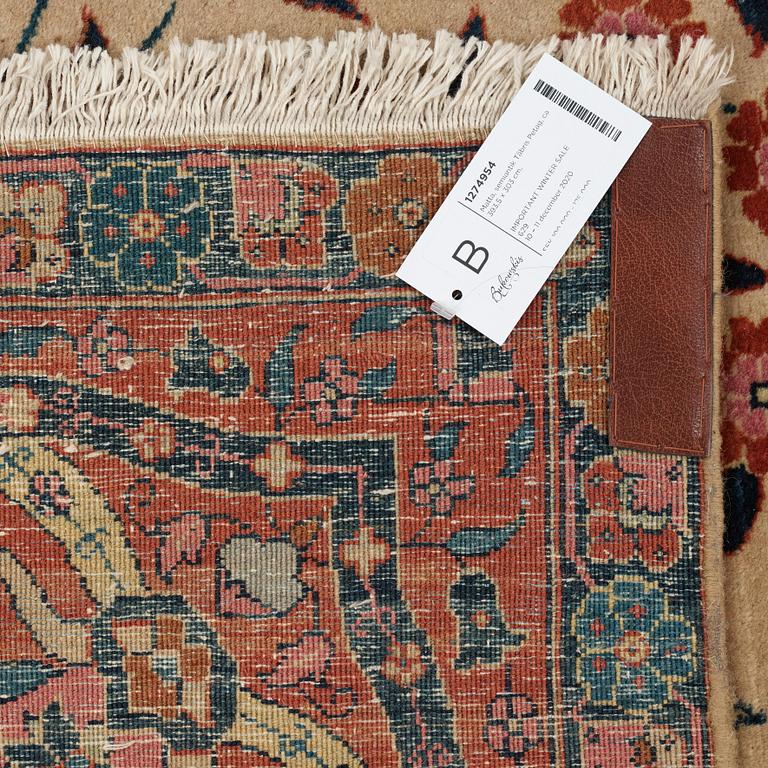
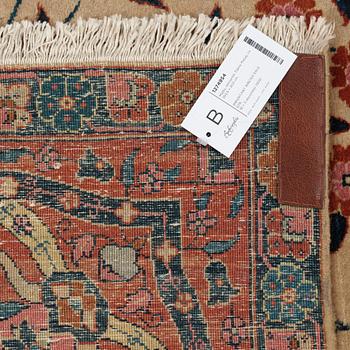
Abrashes. Partly some wear, slightly dirty, minor stains, repairs, fold wear. The sides have minor fold wear.
Literature
About Petag in CarpetCollector: The German firm Petag, short for Persische Teppich AG, was founded in Berlin in 1911. Under the inspiring leadership of Heinrich Jacoby a large workshop opened up in Tabriz (North-West Iran). The idea was to fight the decline in quality resulting from high commercialisation in production responding Western demand. The result was excellent: thanks to the use of extremely good wool and skilfully made vegetal dyes the company succeeded in reviving old and elegant designs from the 16th and 17th century. The different qualities derived their names from the density of knots: Pertovi, Hamajun, Teimuri, Rustem and Cyrus. The workshop shut down in the forties. The Petag-carpets can easily be recognized by the chintamani-sign that is knotted in each piece.
For condition report contact specialist

Others have also viewed