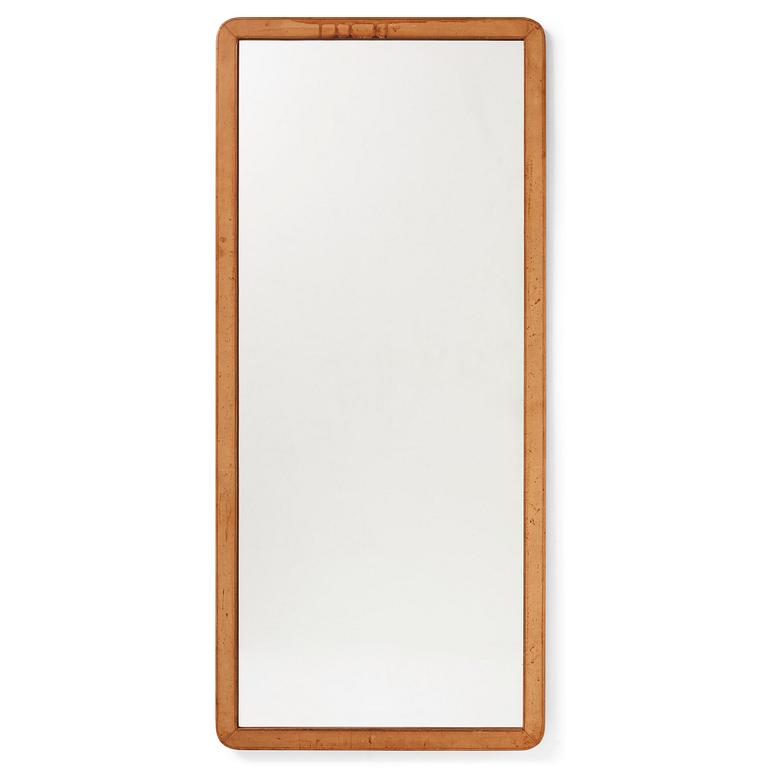
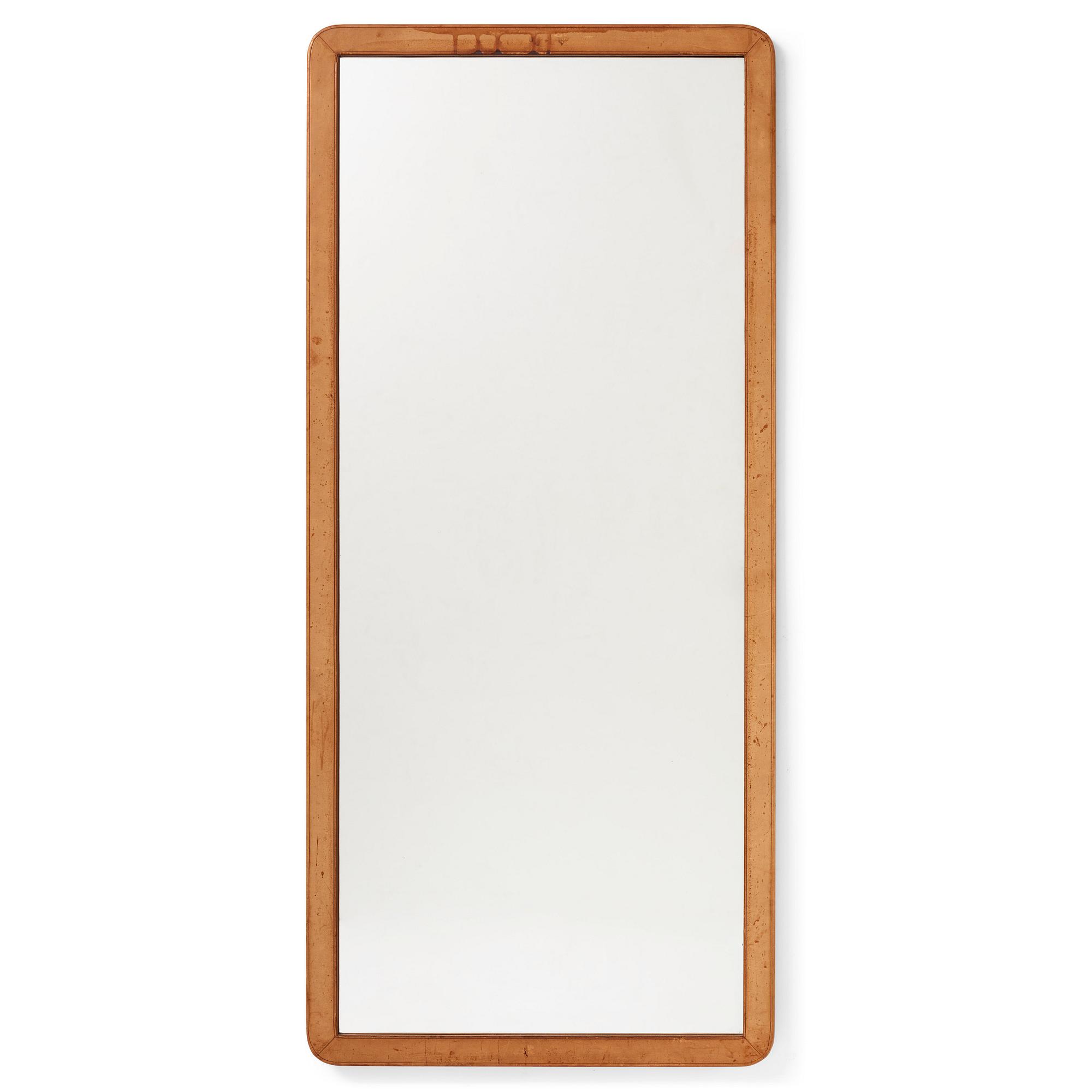
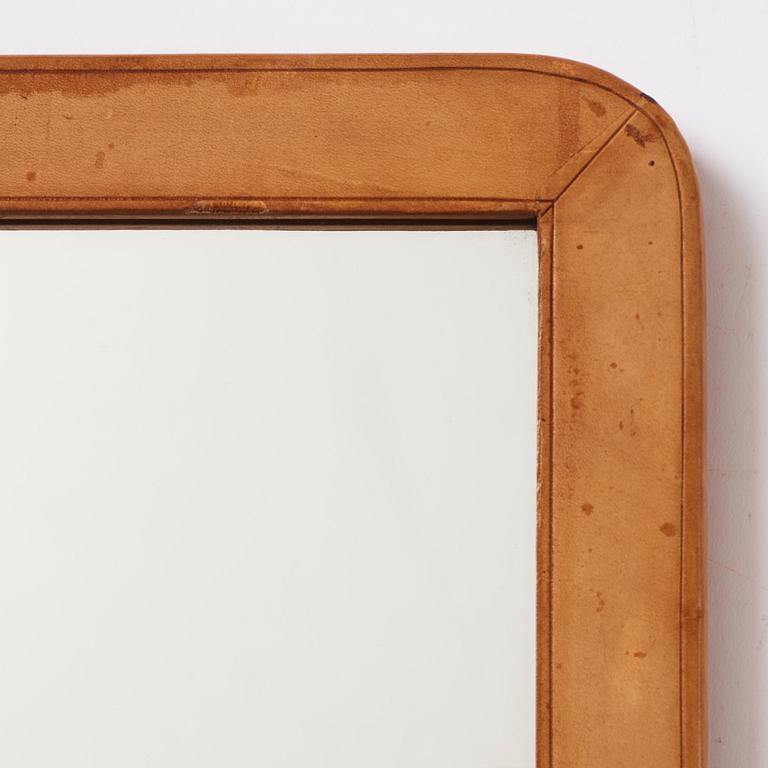
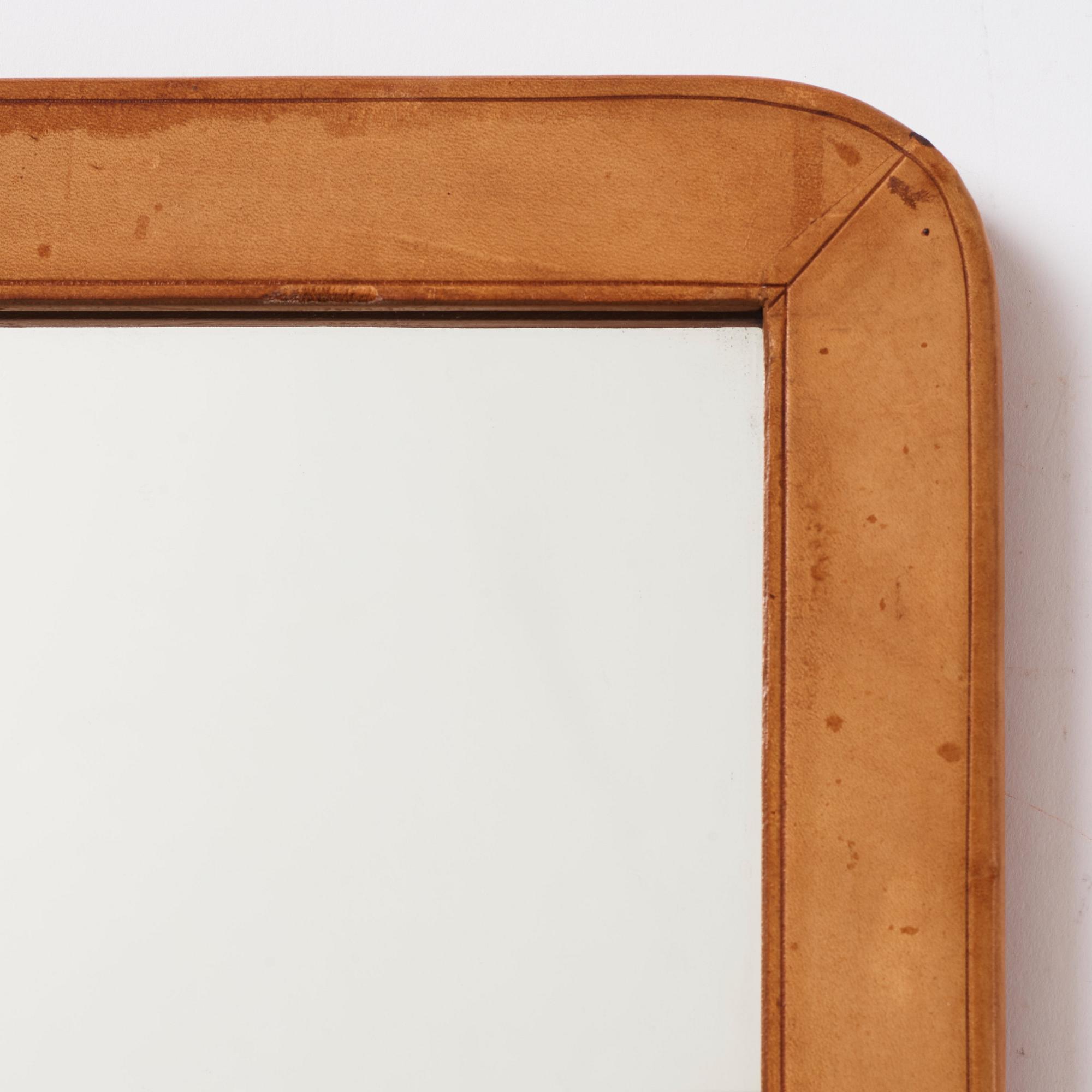
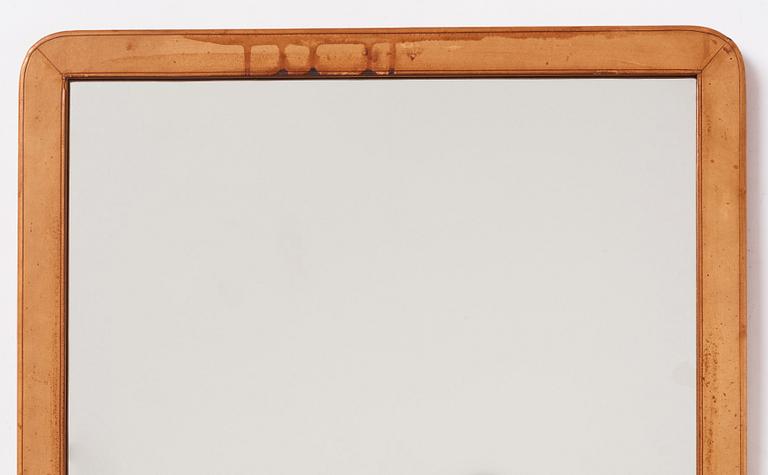
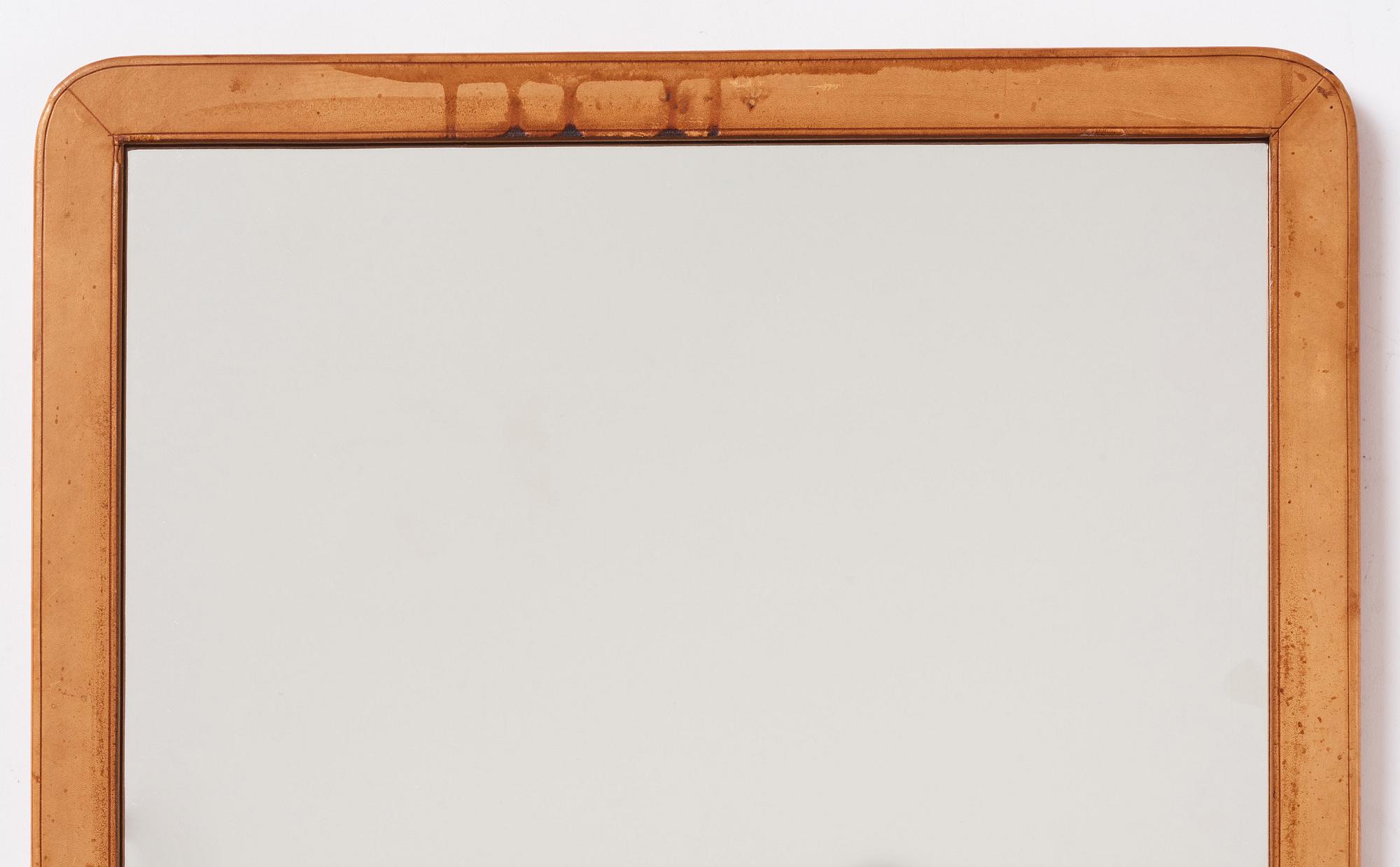
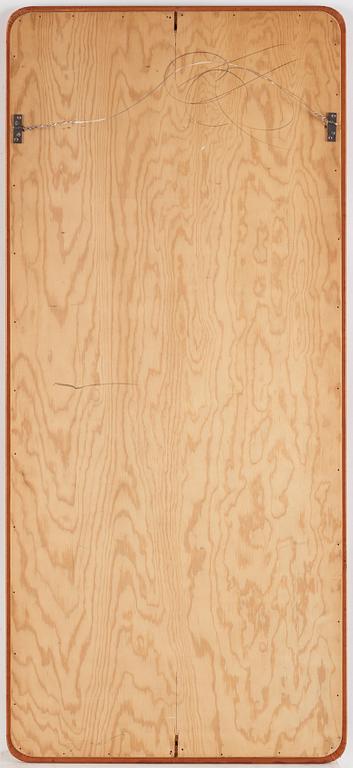
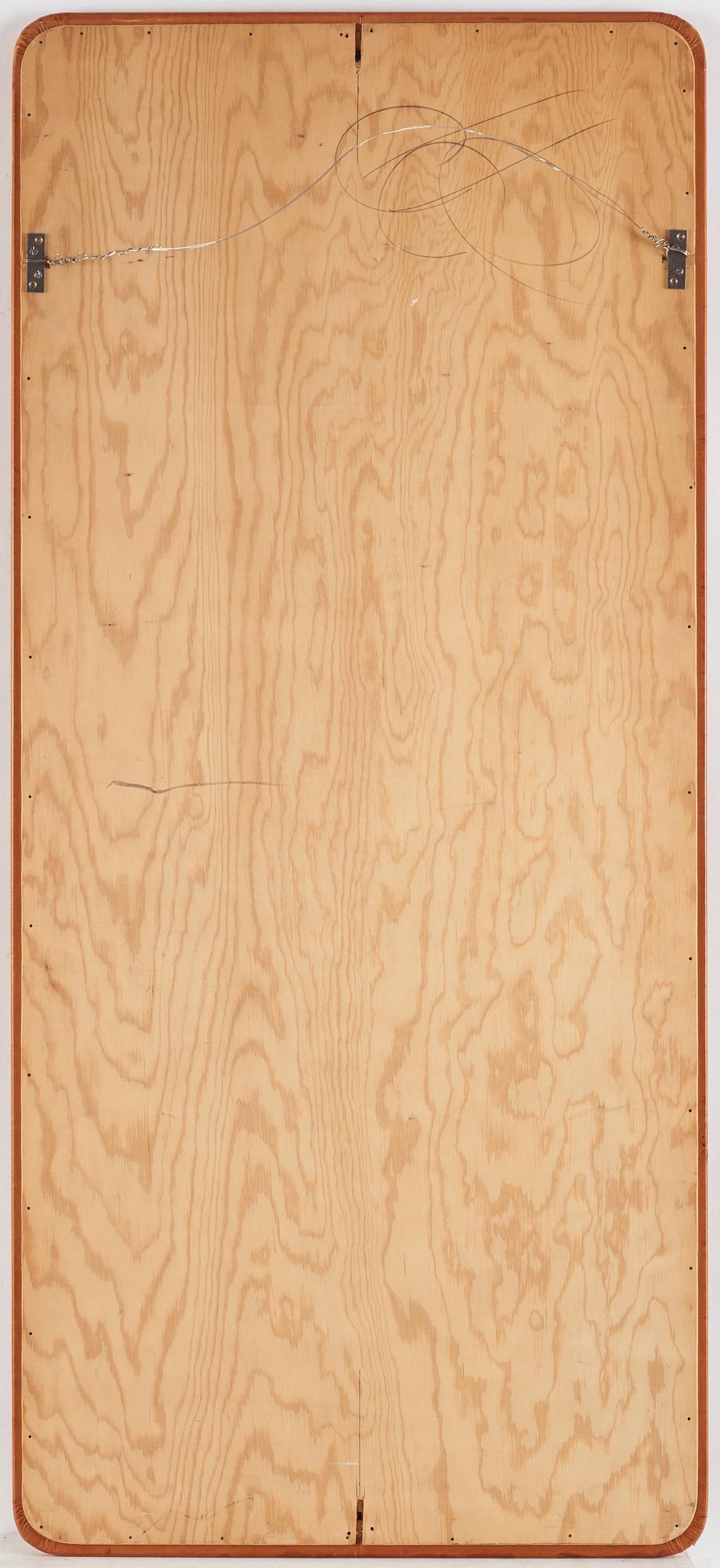
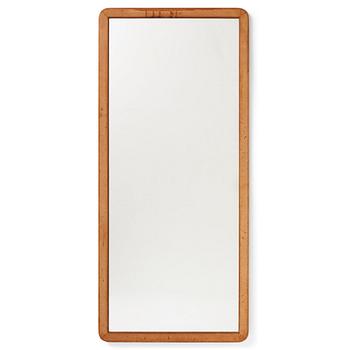
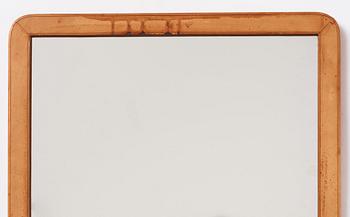
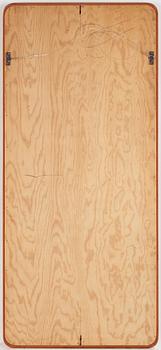
A leather framed mirror, Bredenberg's Department Store, Stockholm, built in 1934-35.
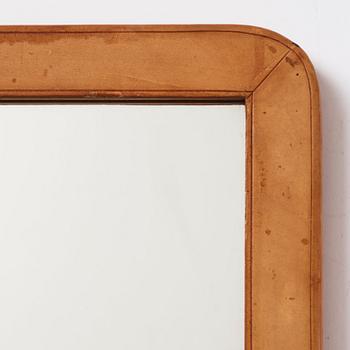
Rectangular, with rounded corners, covered with natural brown leather. 131 x 59 cm.
Minor wear.
Literature
Caldenby, Hultin (ed), "Asplund", Stockholm 1985, p 102 (map over the flooring and the interior).
Ahlberg, "Gunnar Asplund, architect" , Stockholm 1943, pp 148-149.
More information
Gunnar Asplund made the designs for the building and the interiors for the Bredenberg's Department store in 1933-1935. According to the drawings there were eight fitting rooms, each containing some mirrors. Compare drawing in the ArkDes archives: ARKM.1988-02-8928.
More about Gunnar Asplund
Gunnar Asplund is considered one of the most significant and leading architects during the interwar period, both in Sweden and internationally. Asplund is seen as one of the foremost representatives of 1920s Nordic classicism, with the Skandia Theatre (1922) and the Stockholm Public Library (1928) as prominent examples. He was also one of the pioneers of functionalism, which he introduced in Sweden with the Stockholm Exhibition in 1930, where he was the chief architect.
Read moreFor condition report contact specialist

Others have also viewed