No connection to server
Theme auctions online
Selected Modern Silver F764
Auction:
Selected Fashion – A Private Collection F771
Auction:
Arts of Asia – In the year of the Fire Horse F707
Auction:
Selected Jewellery – Valentine F766
Auction:
Islamic Works of Art and Oriental Carpets  E1310
Auction:
Kitchen Stories E1284
Auction:
Modern Design, Timeless Weave E1292
Auction:
A Token of Love E1285
Auction:
Live auctions
Contemporary Art & Design 670
Auction: April 21−22, 2026
Important Timepieces 671
Auction: April 21, 2026
Modern Art & Design 672
Auction: May 20−21, 2026
Important Spring Sale 673
Auction: June 10−12, 2026
1286
1475652

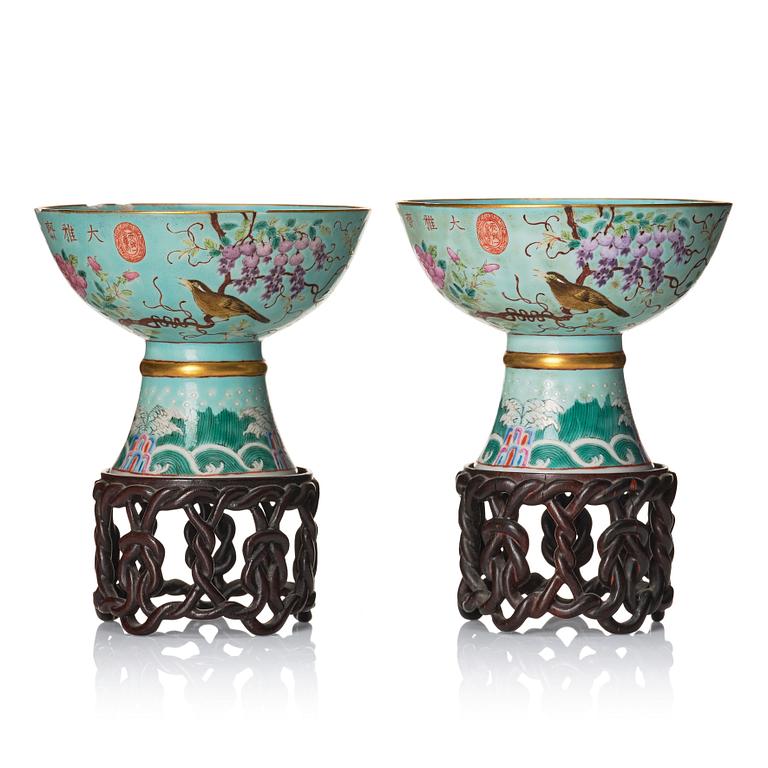
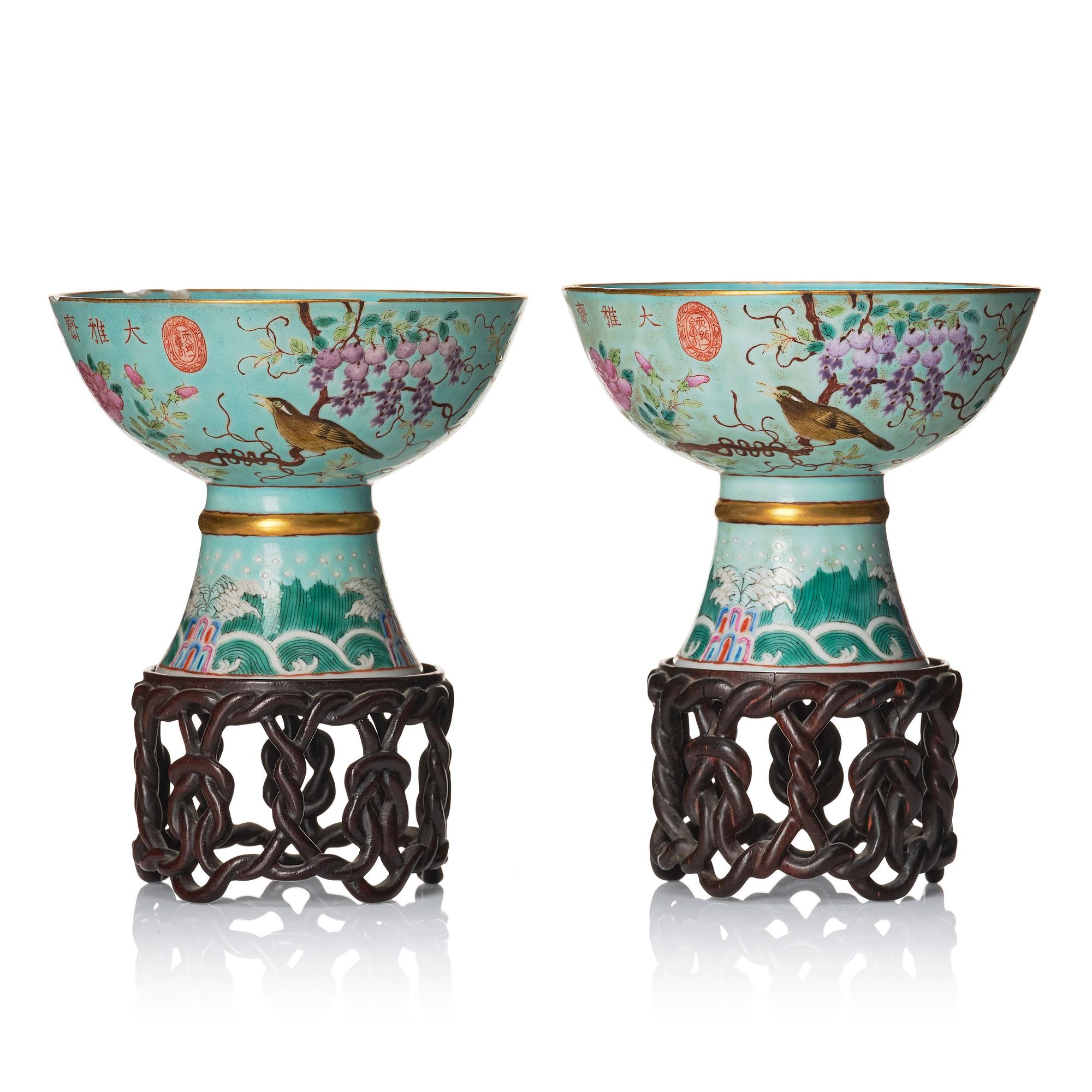
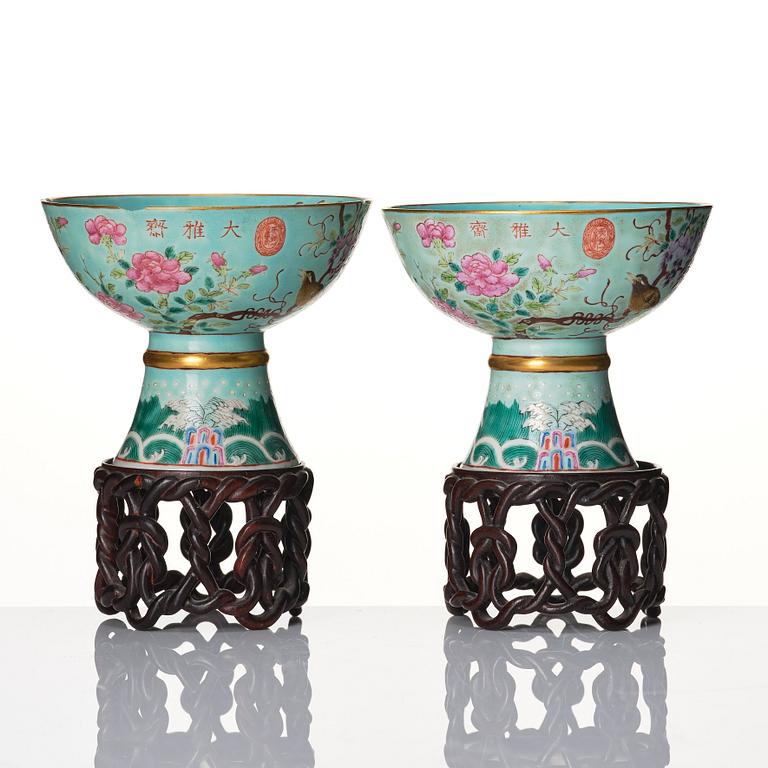
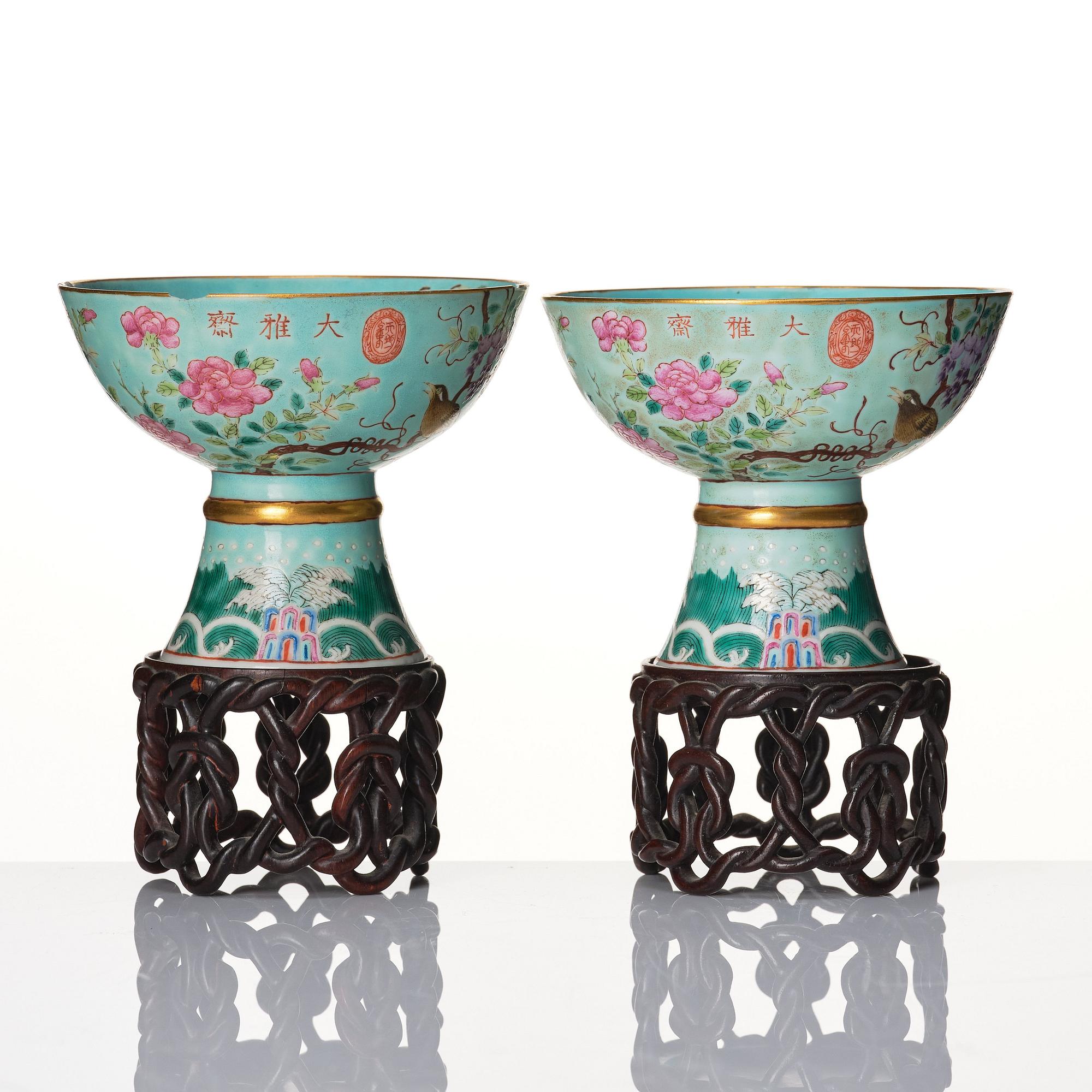
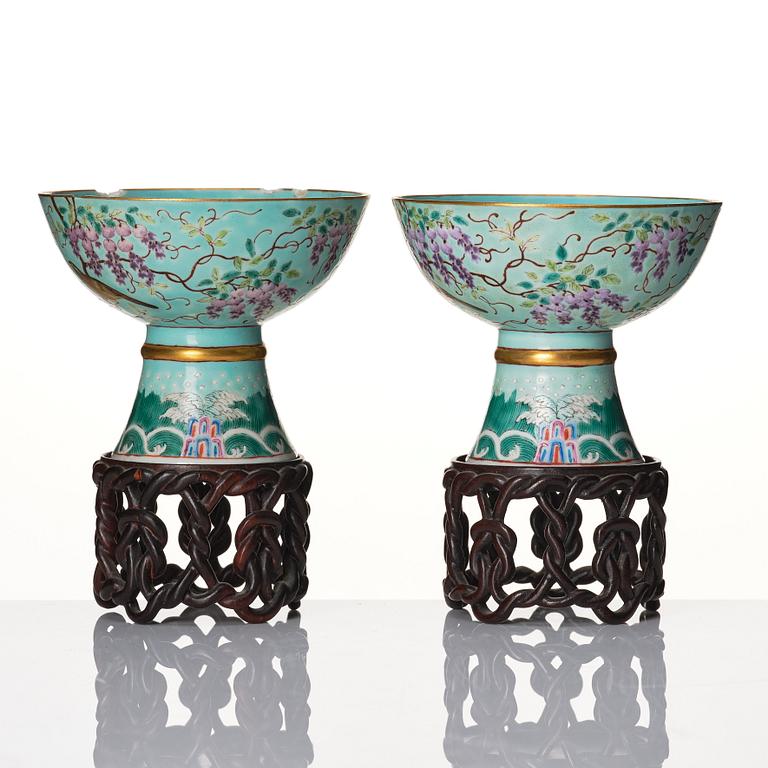
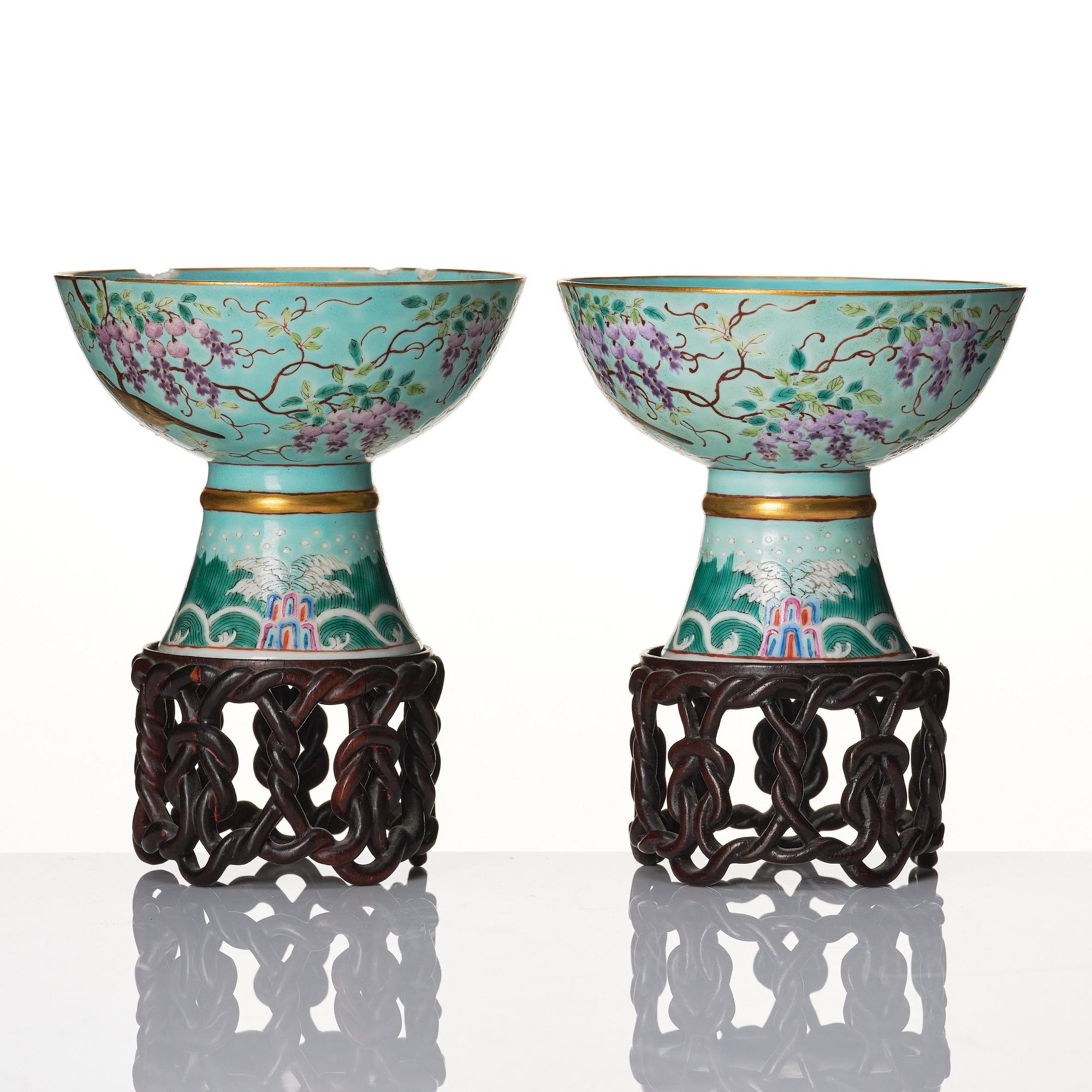
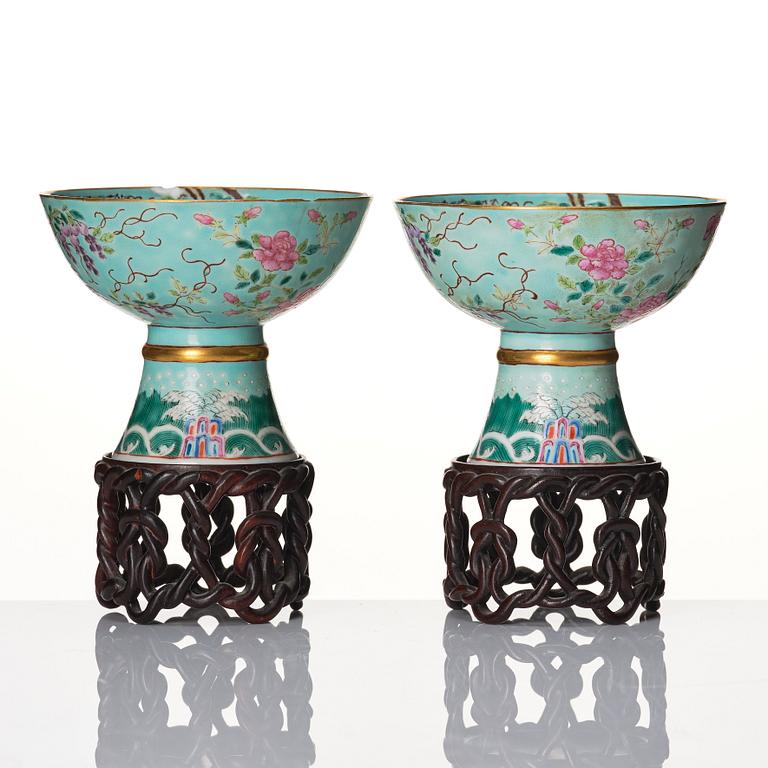
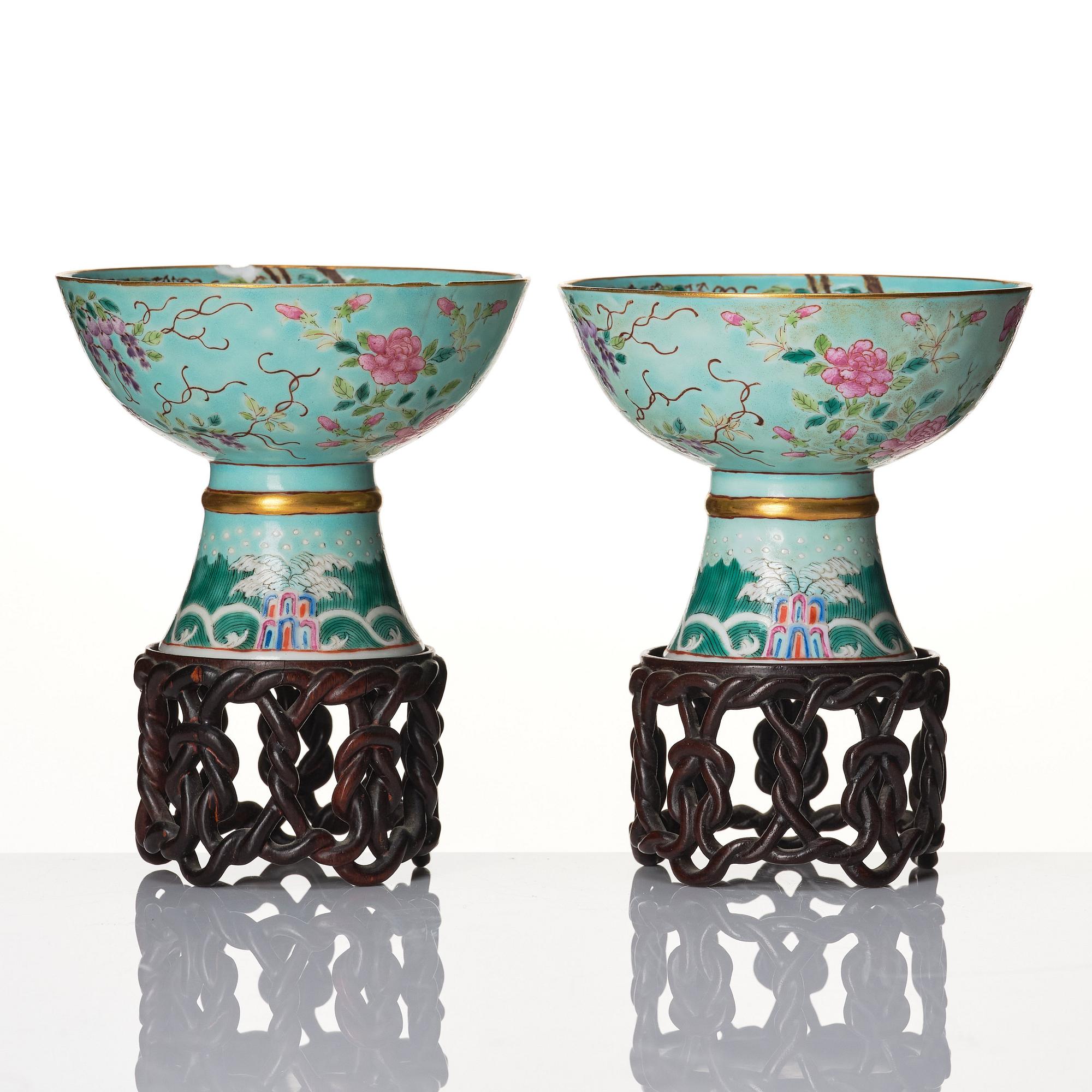
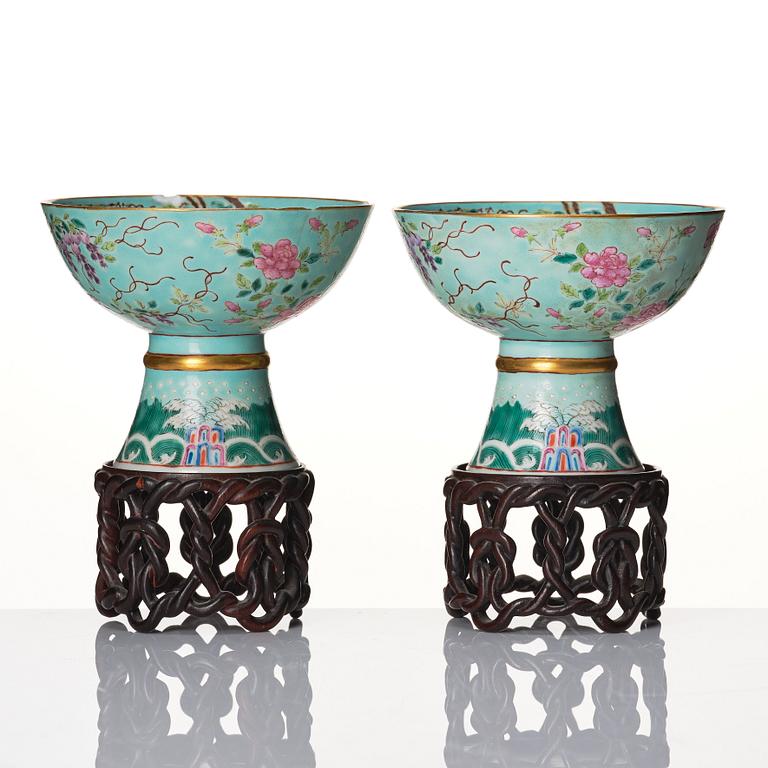
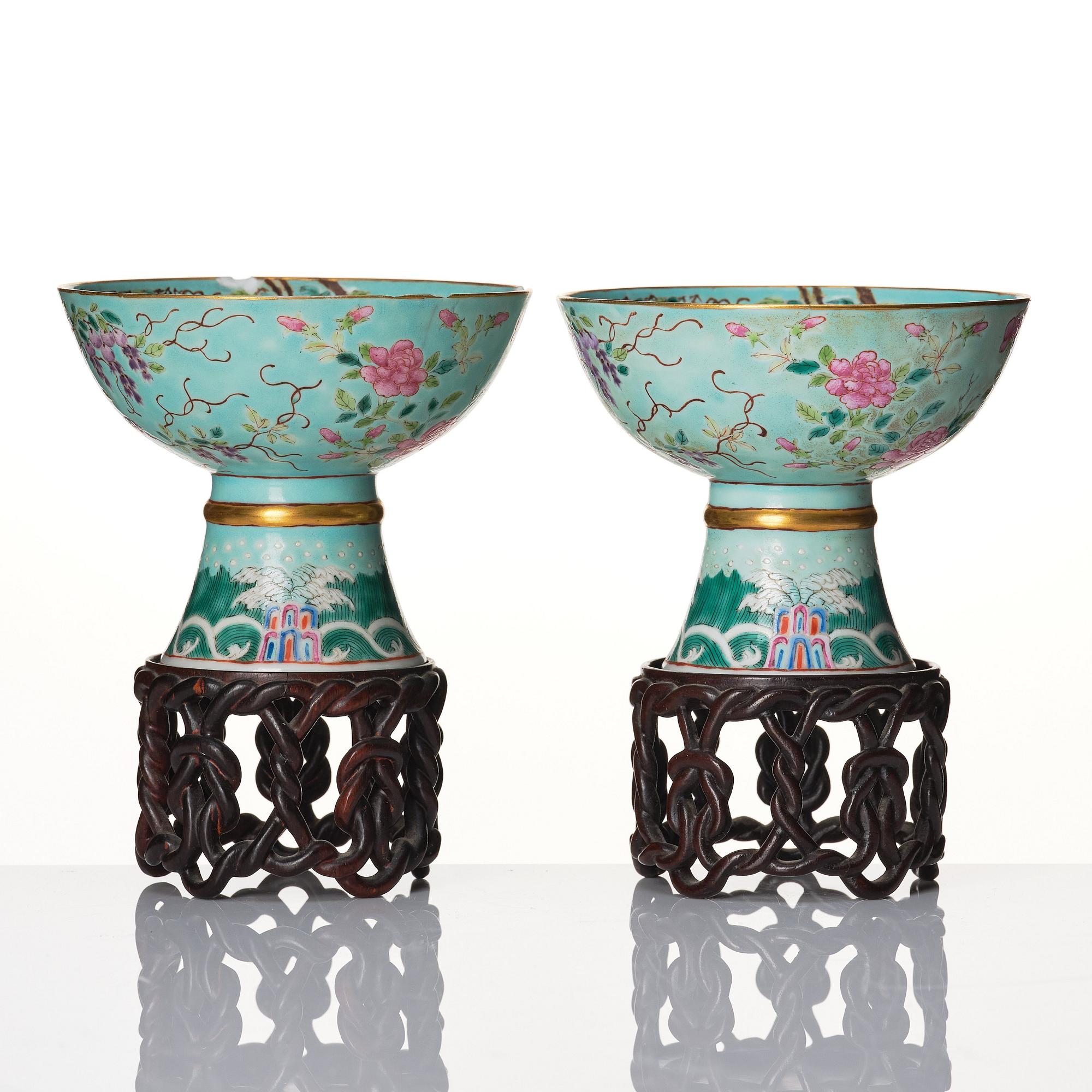
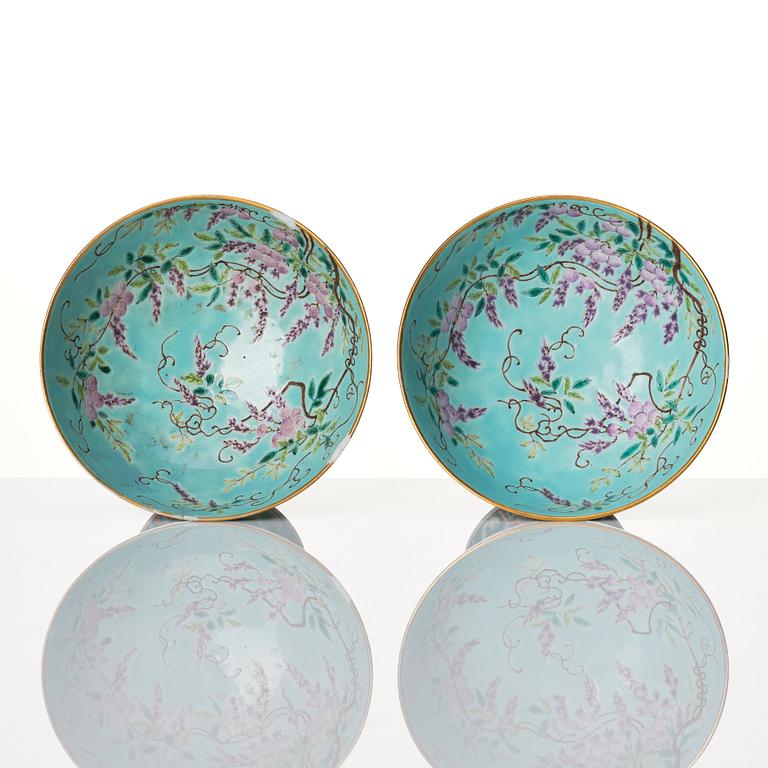
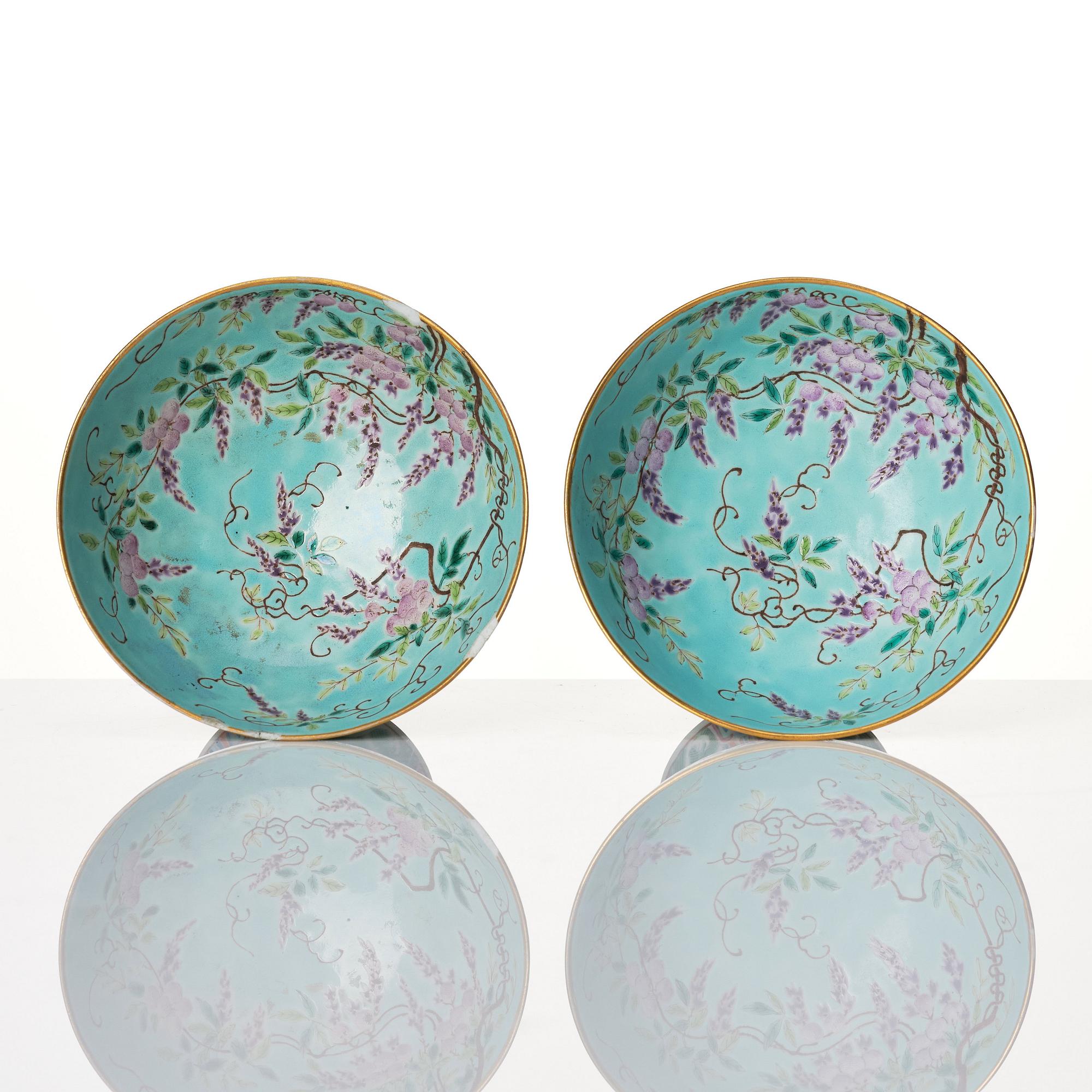
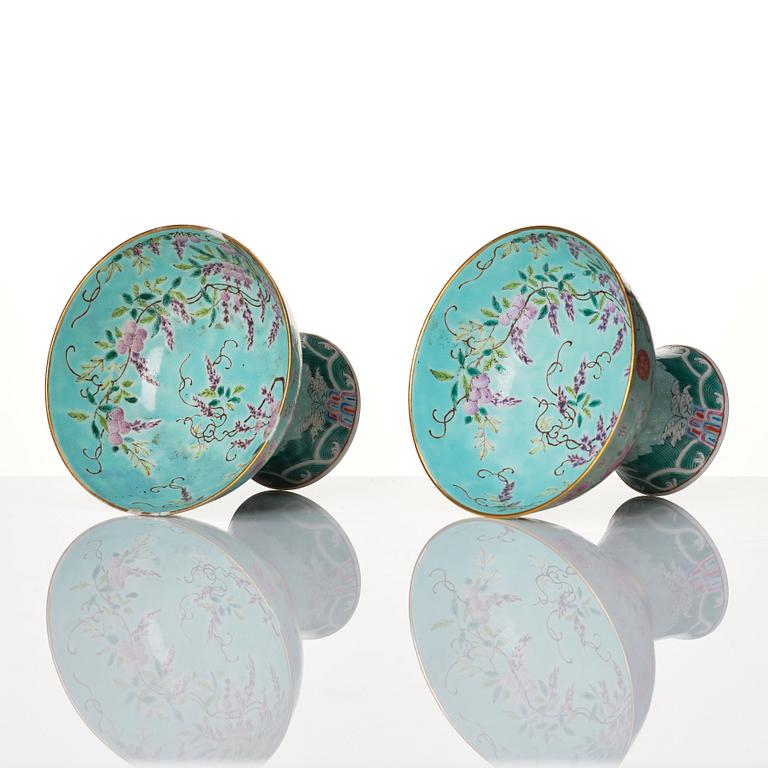
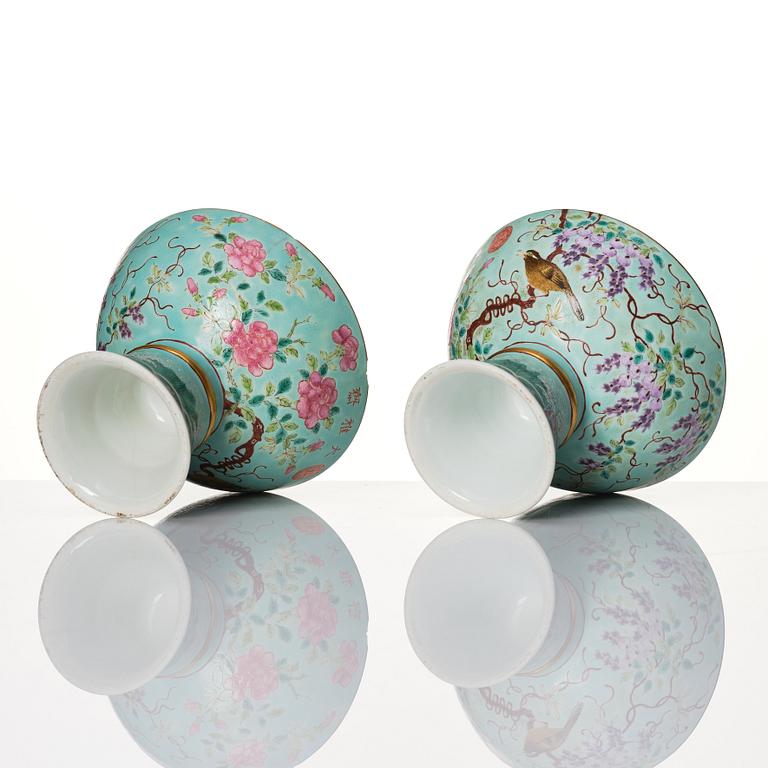
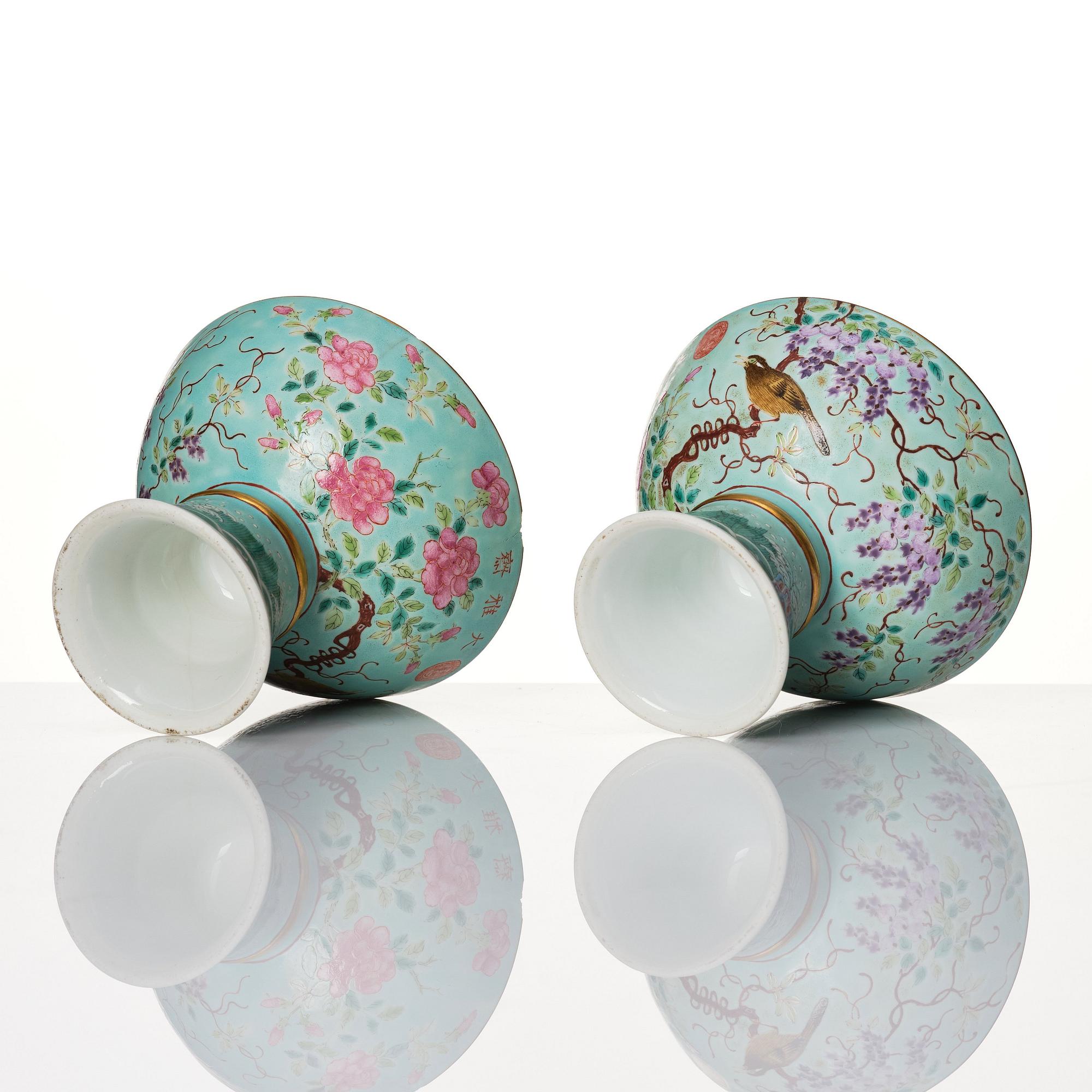
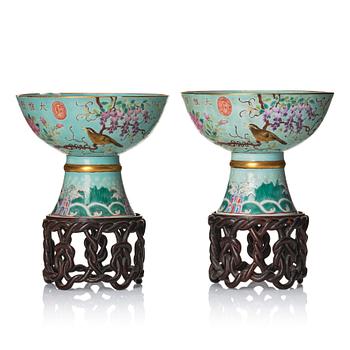
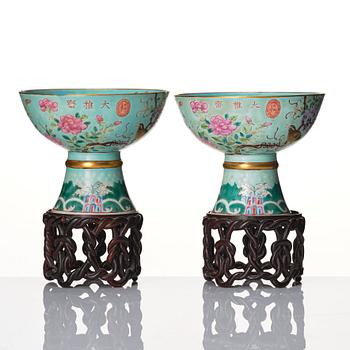
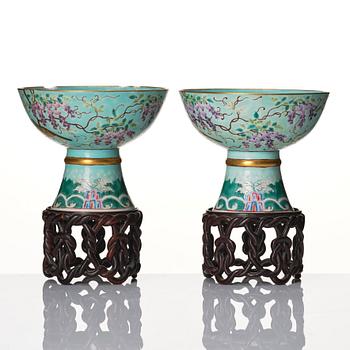
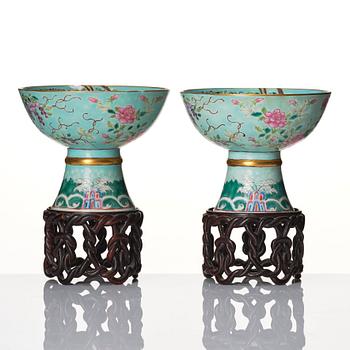
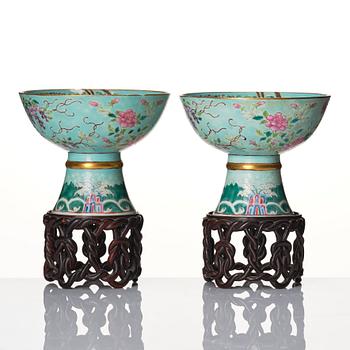
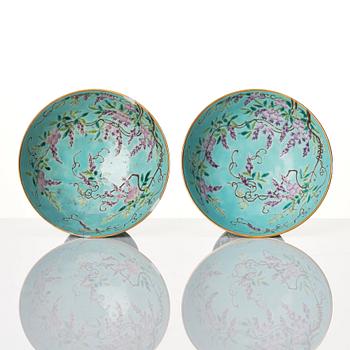
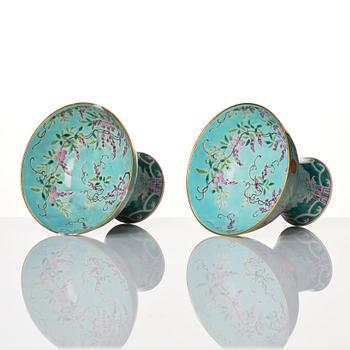
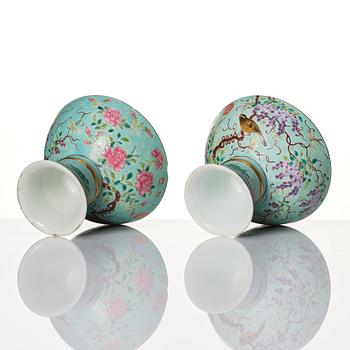
A pair of Chinese stemcups, with the mark of dowager empress Ci Xi, Dayazhai, late Qing dynasty.

Estimate
50 000 - 75 000 SEK
4 850 - 7 270 EUR
5 540 - 8 320 USD
Hammer price
95 000 SEK
Bidding requires special pre approval.
Purchasing info
For condition report contact specialist

Cecilia Nordström
Stockholm
Cecilia Nordström
Senior specialist Asian Ceramics and Works of Art, European Ceramics and Glass
+46 (0)739 40 08 02
A pair of Chinese stemcups, with the mark of dowager empress Ci Xi, Dayazhai, late Qing dynasty.

Decorated in enamelss with peonies and wisteria in bloom all against a turquoise ground. The foot decorated with wave formations. With the Dayazhiang mark of dowager empress Ci Xi. Height 9 cm, diameter 11 cm. On two wooden bases with carved decor, the bases height 5 cm.

Wear. One with damages.

Literature

Dayazhai ceramic works have mainly three inscriptions, namely “Dayazhai”, “Tiandi Yijia Chun” and “Yongqing Changchun”. “Tiandi Yijia Chun” is where Empress Dowager Cixi lived in the Old Summer Palace when she was new in the palace, where “Dayazhai” was one of the rooms. Emperor Xianfeng Emperor also wrote down “Dayazhai” on a horizontal inscribed board as a gift to Cixi. These two inscriptions both meant something special for Cixi. Therefore, when Cixi’s residence in the Old Summer Palace was rebuilt in the 12th year under Tongzhong’s reign (1873), both the building and the wares in it were marked with these two inscriptions.