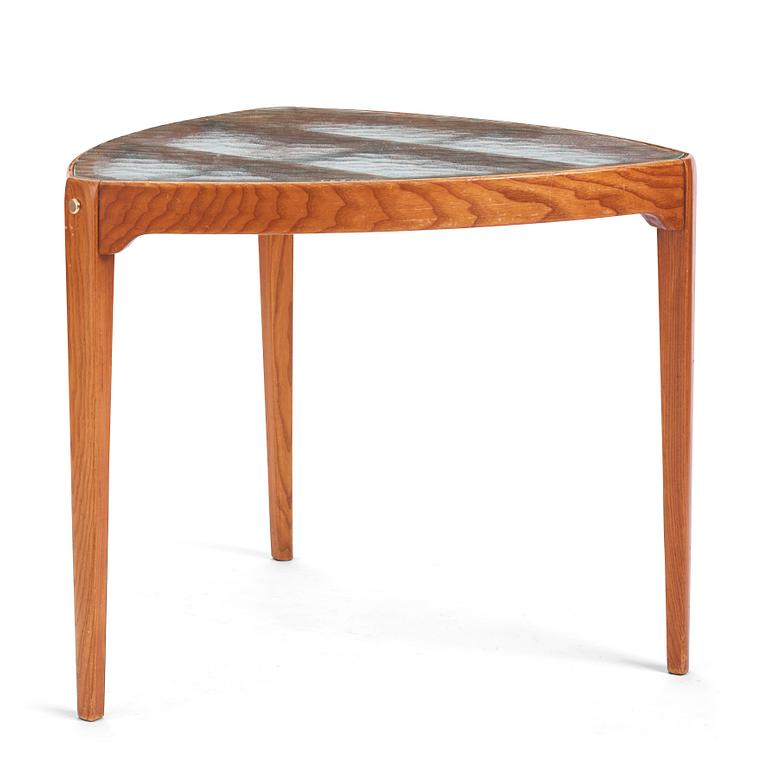
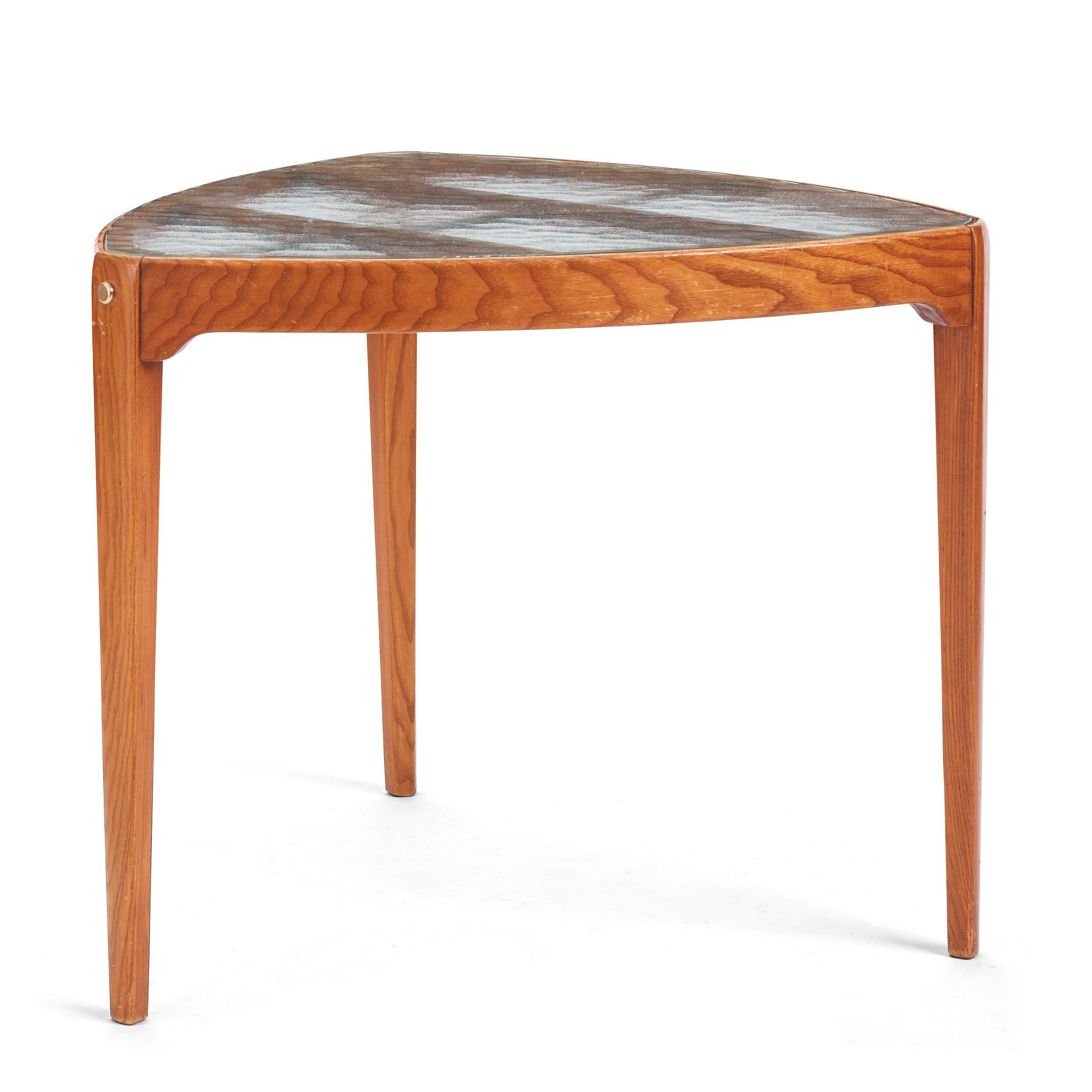
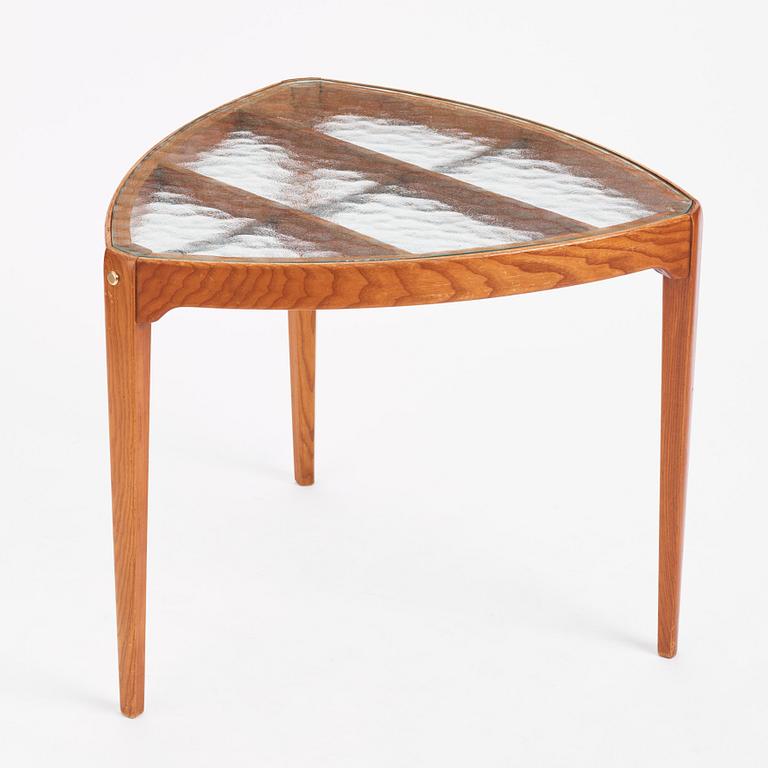
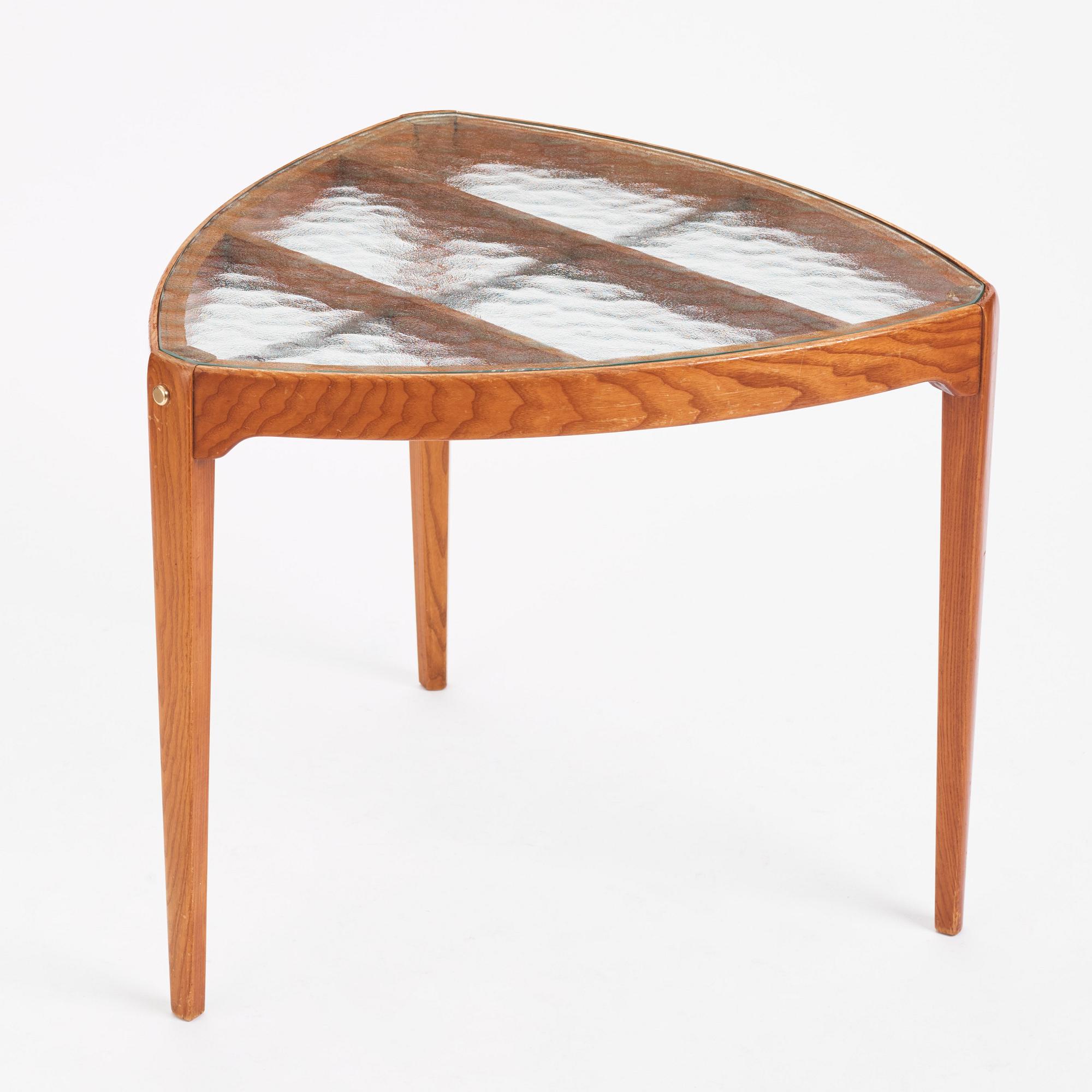
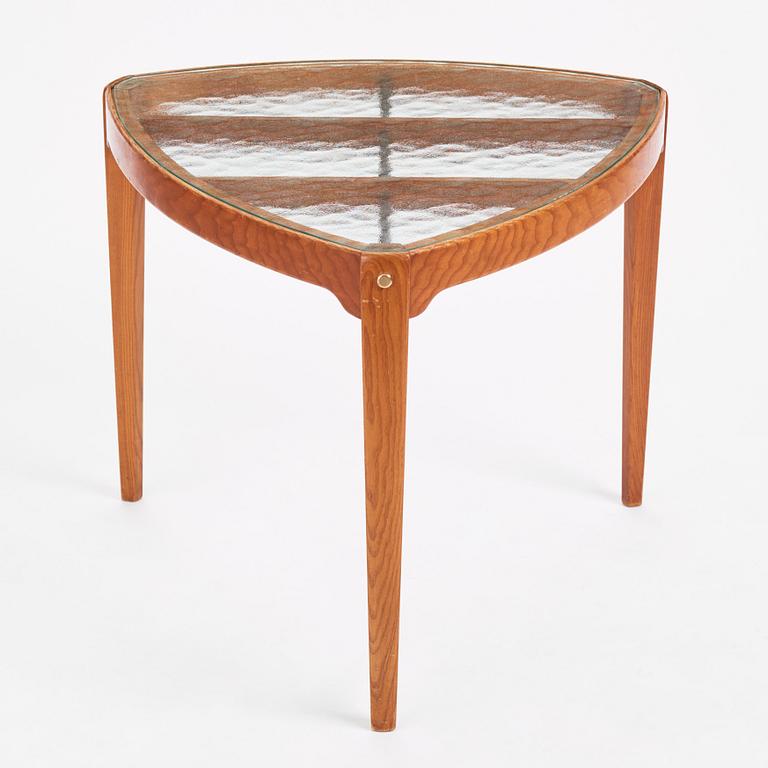
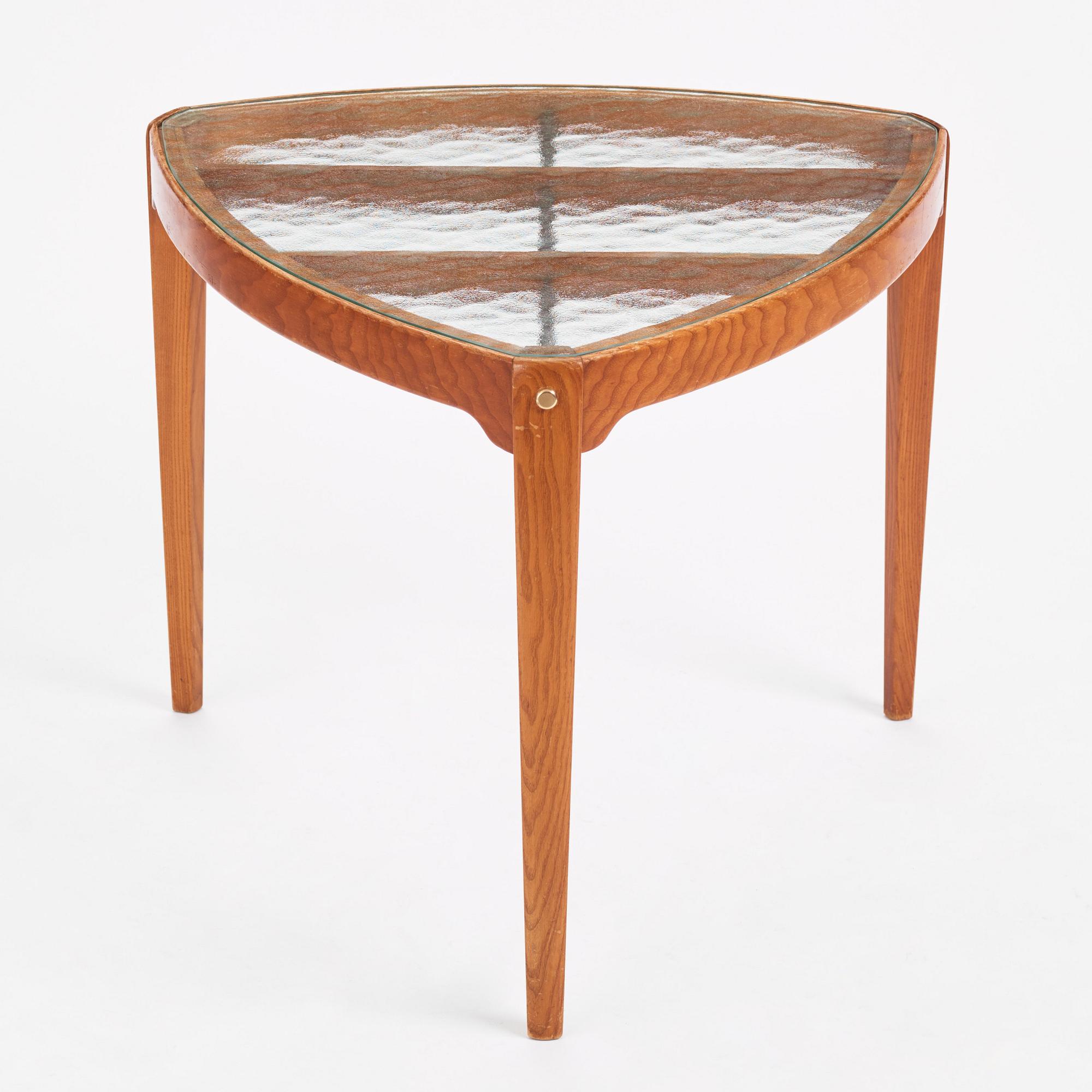
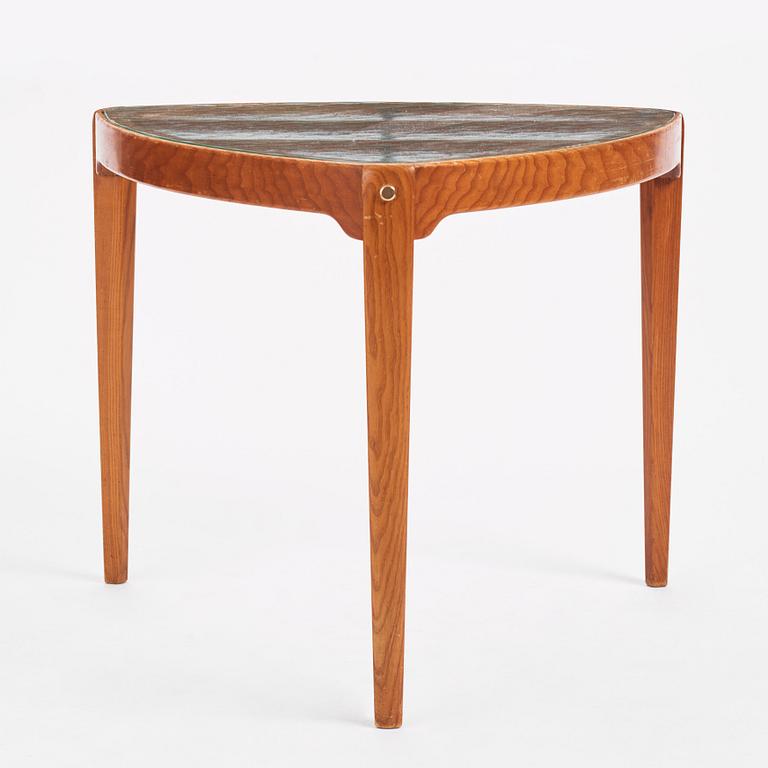
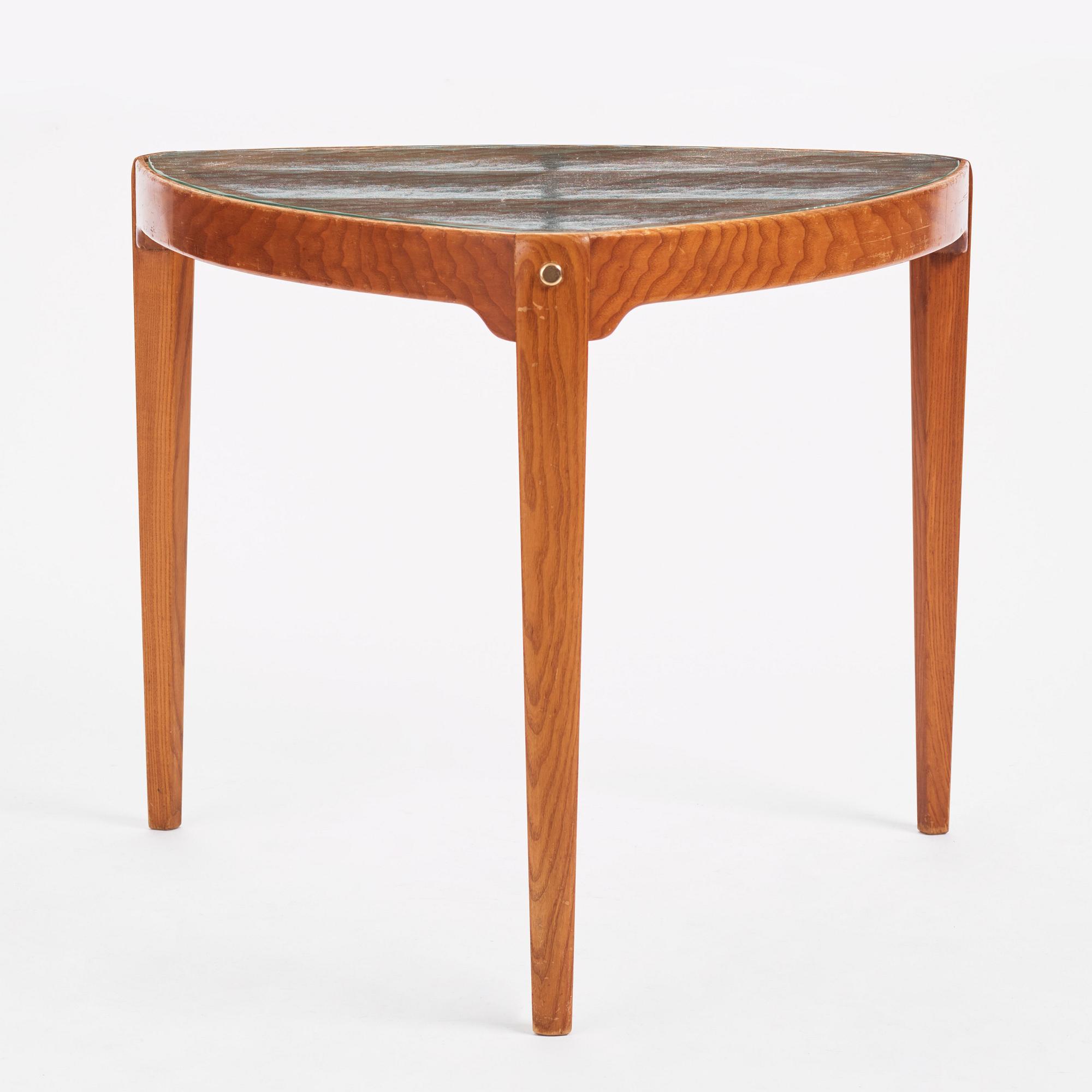
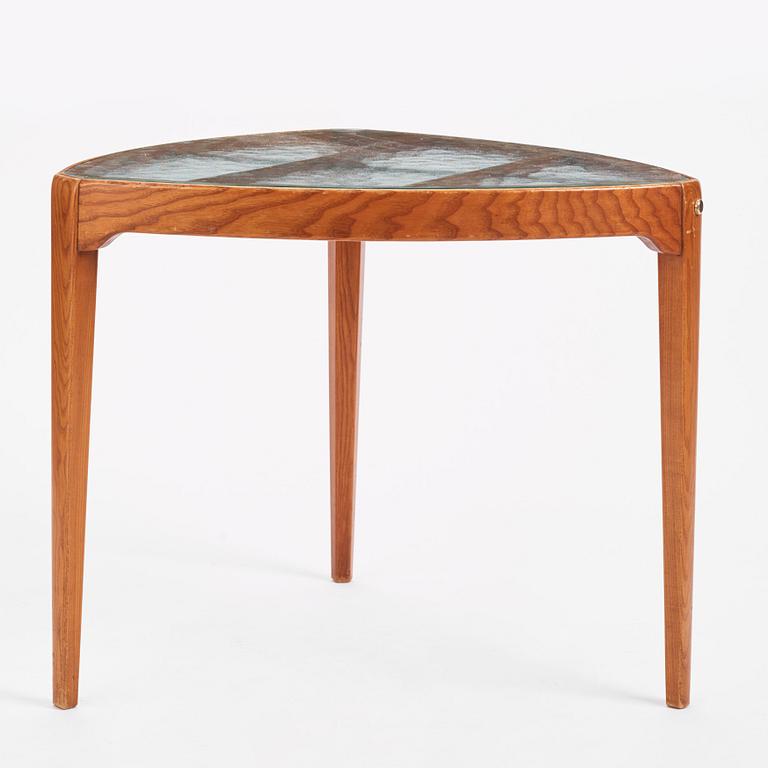
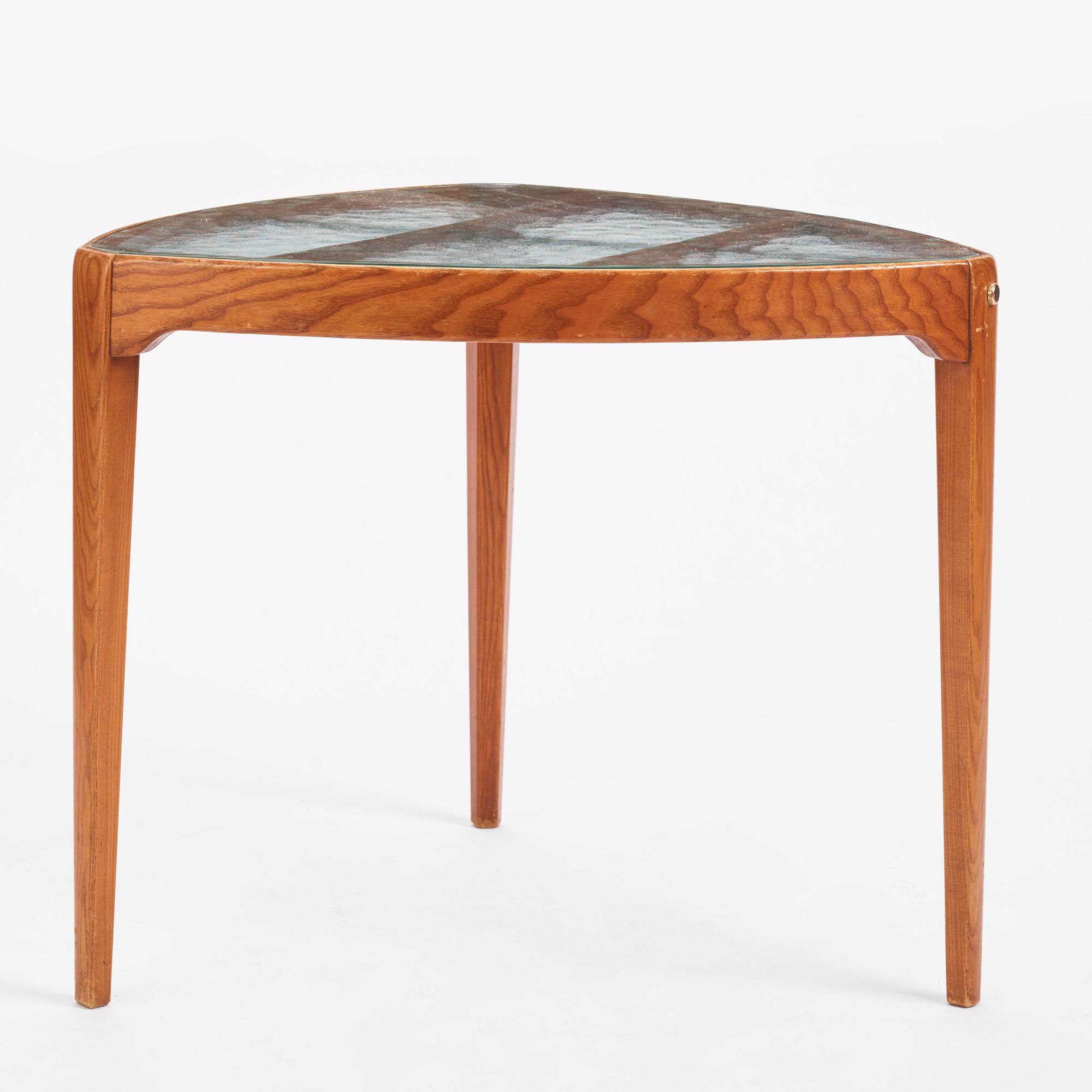
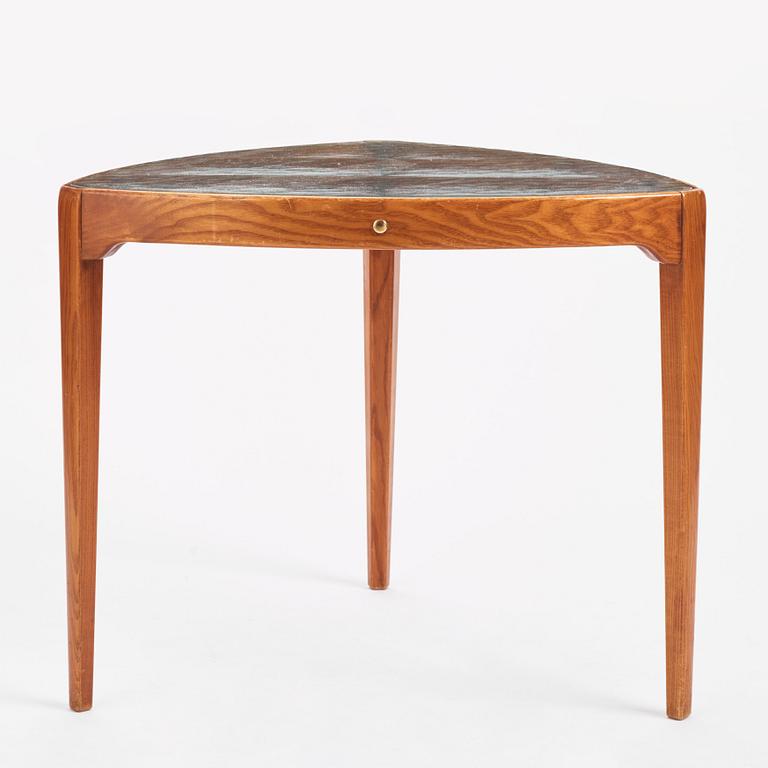
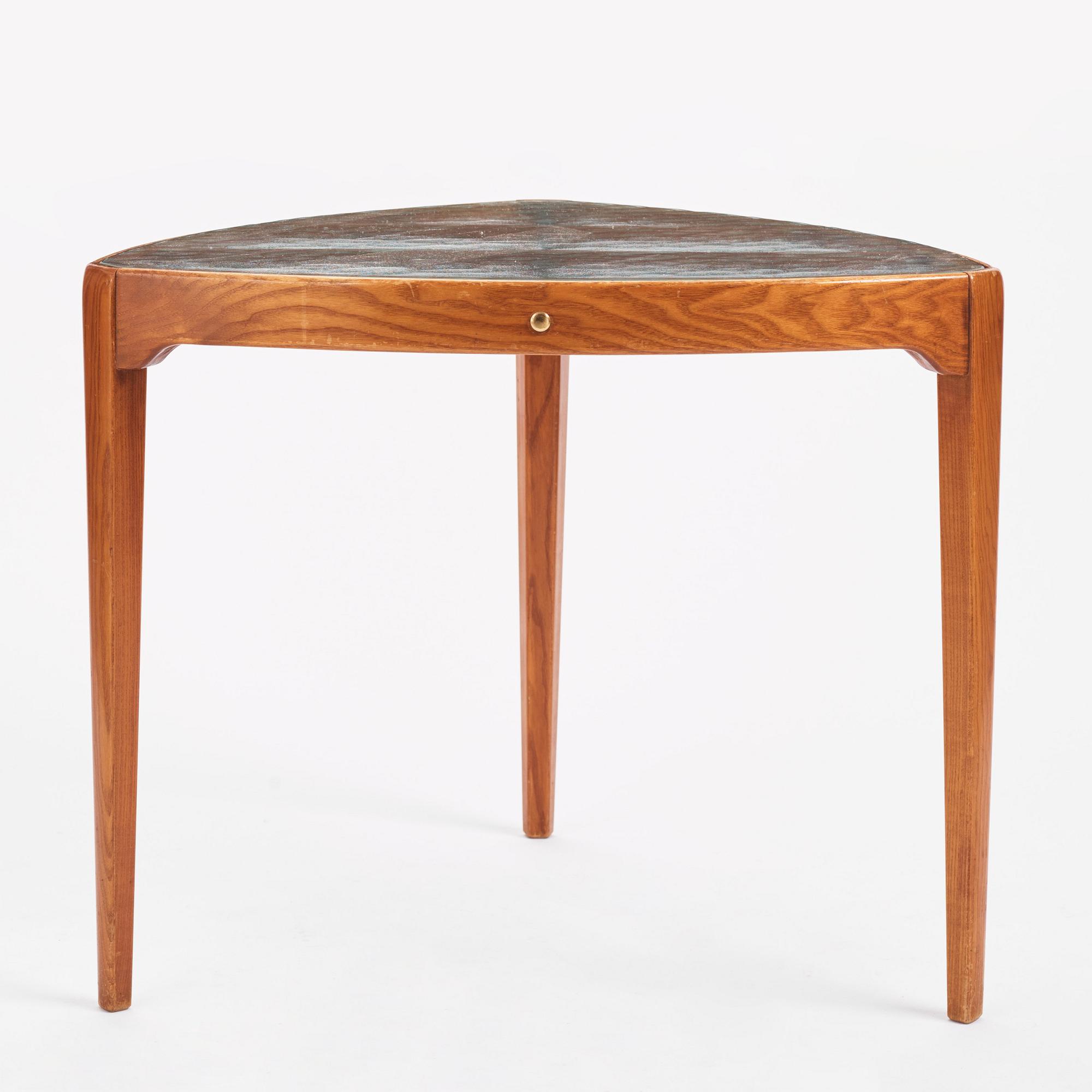
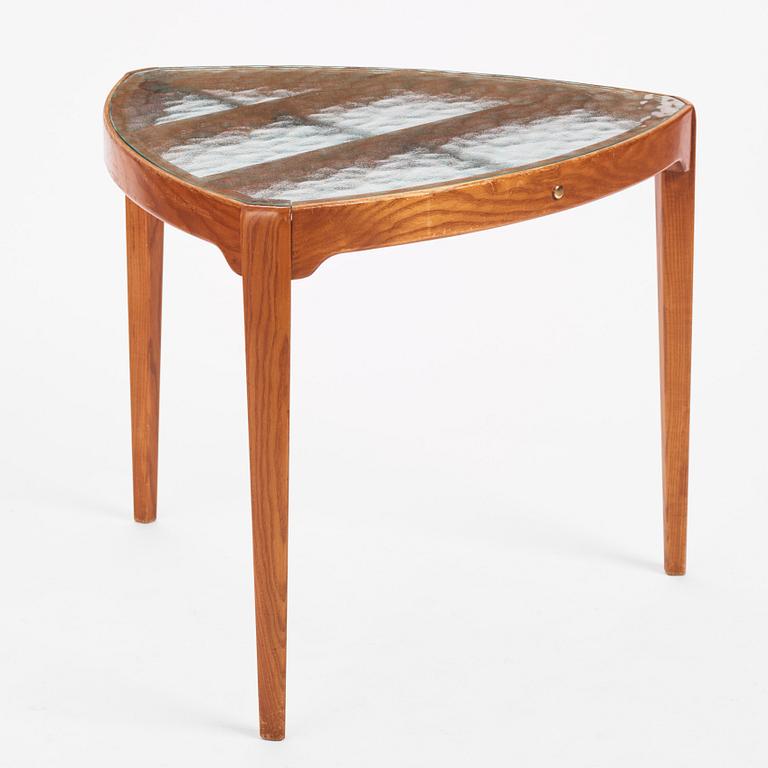
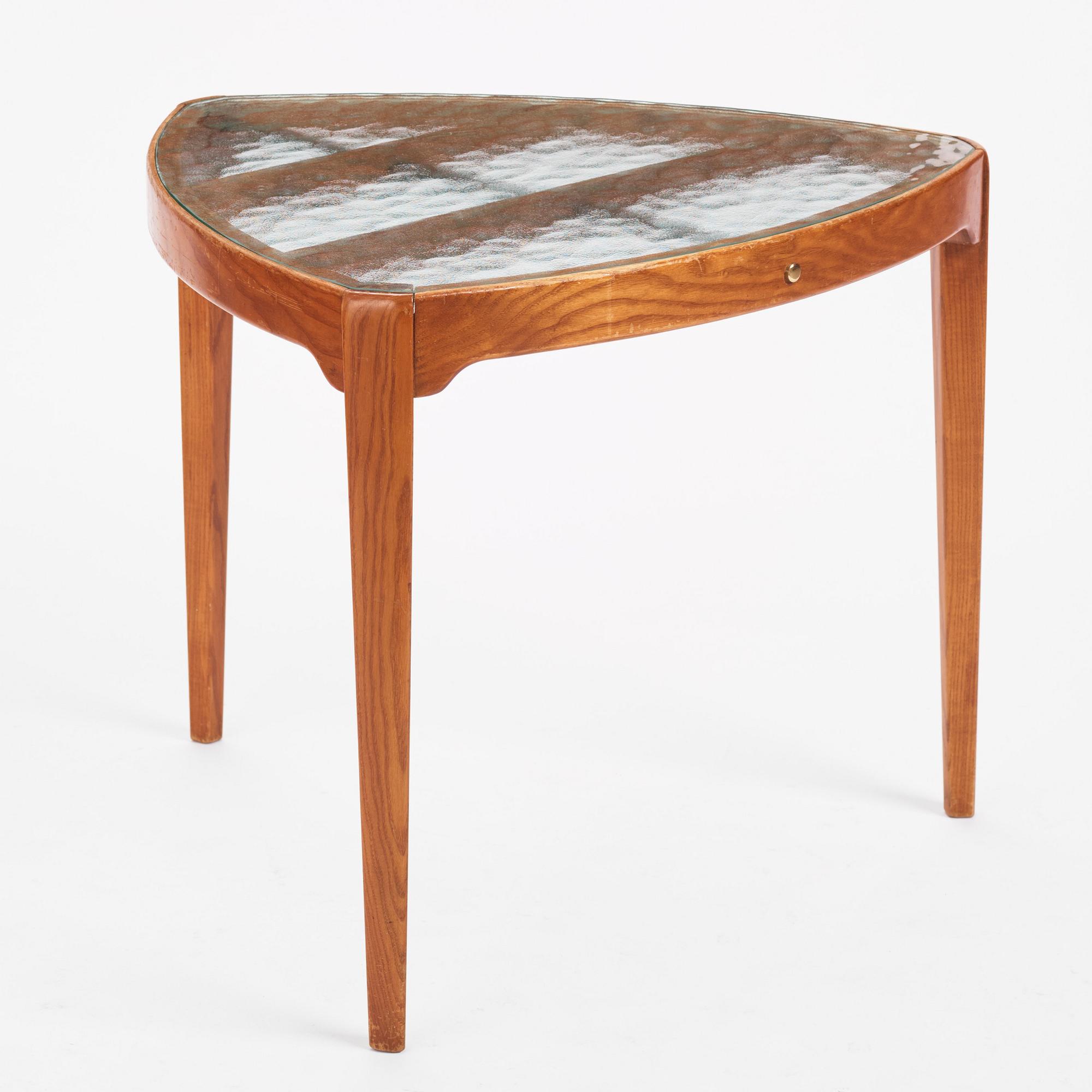
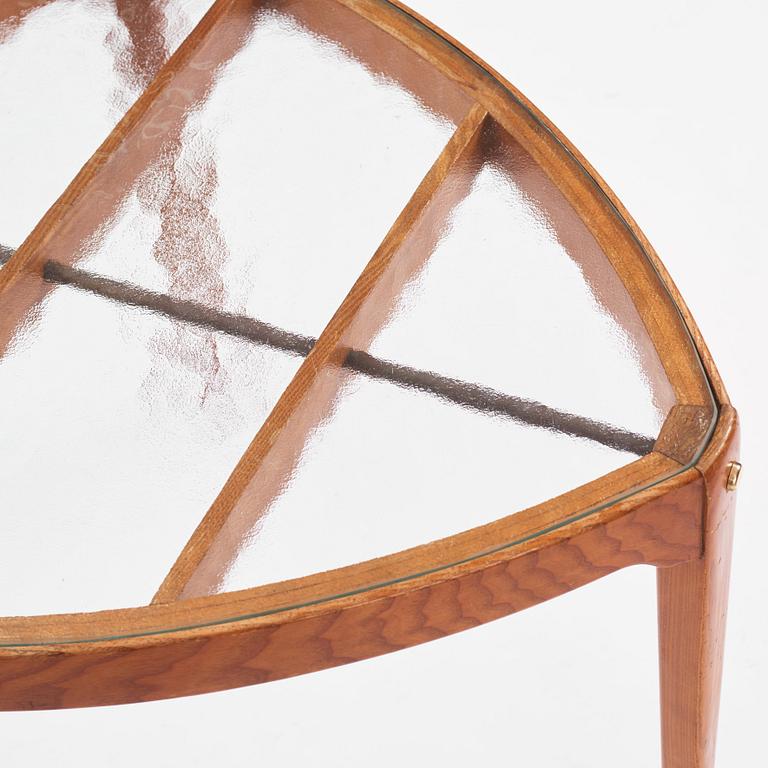
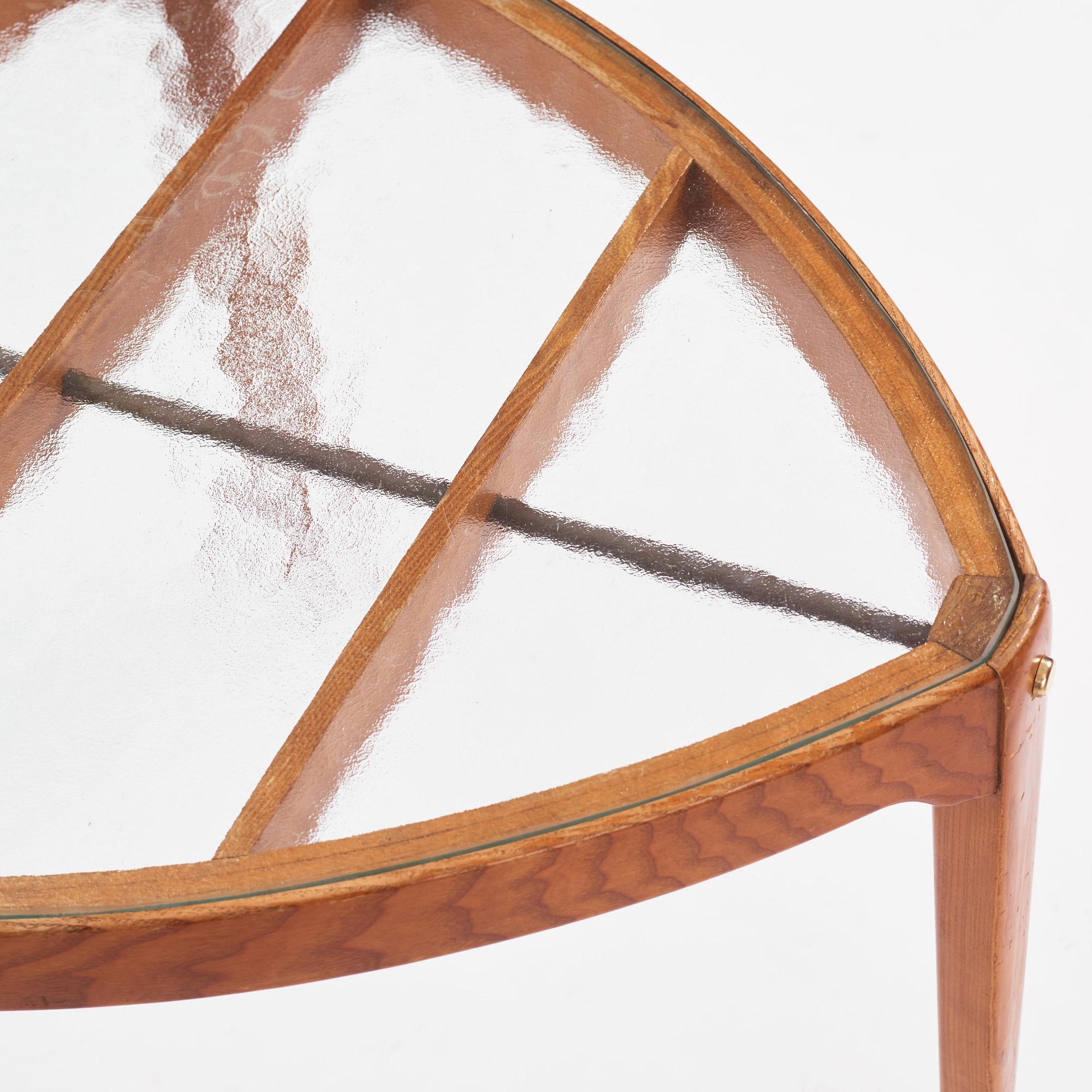
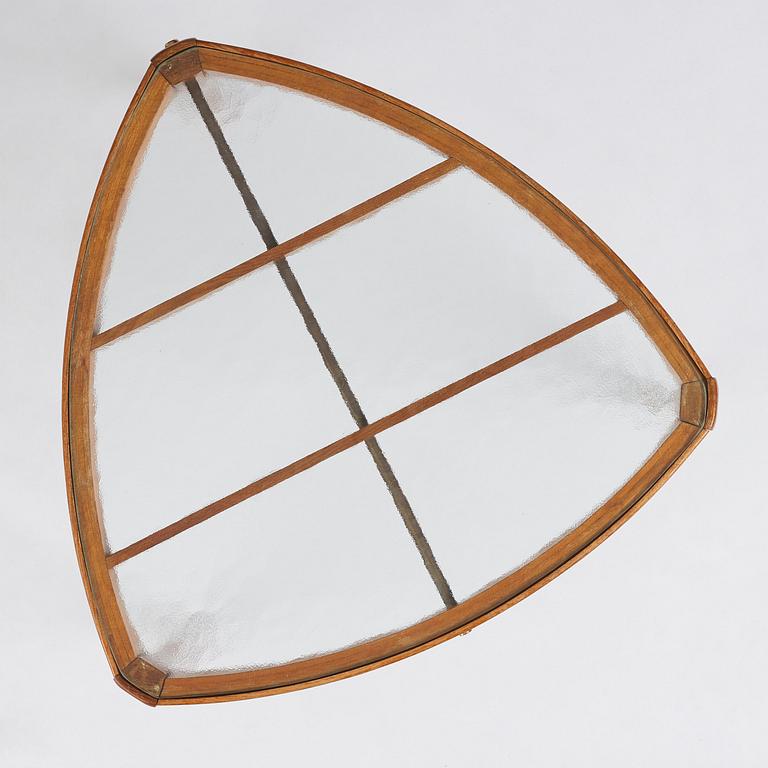
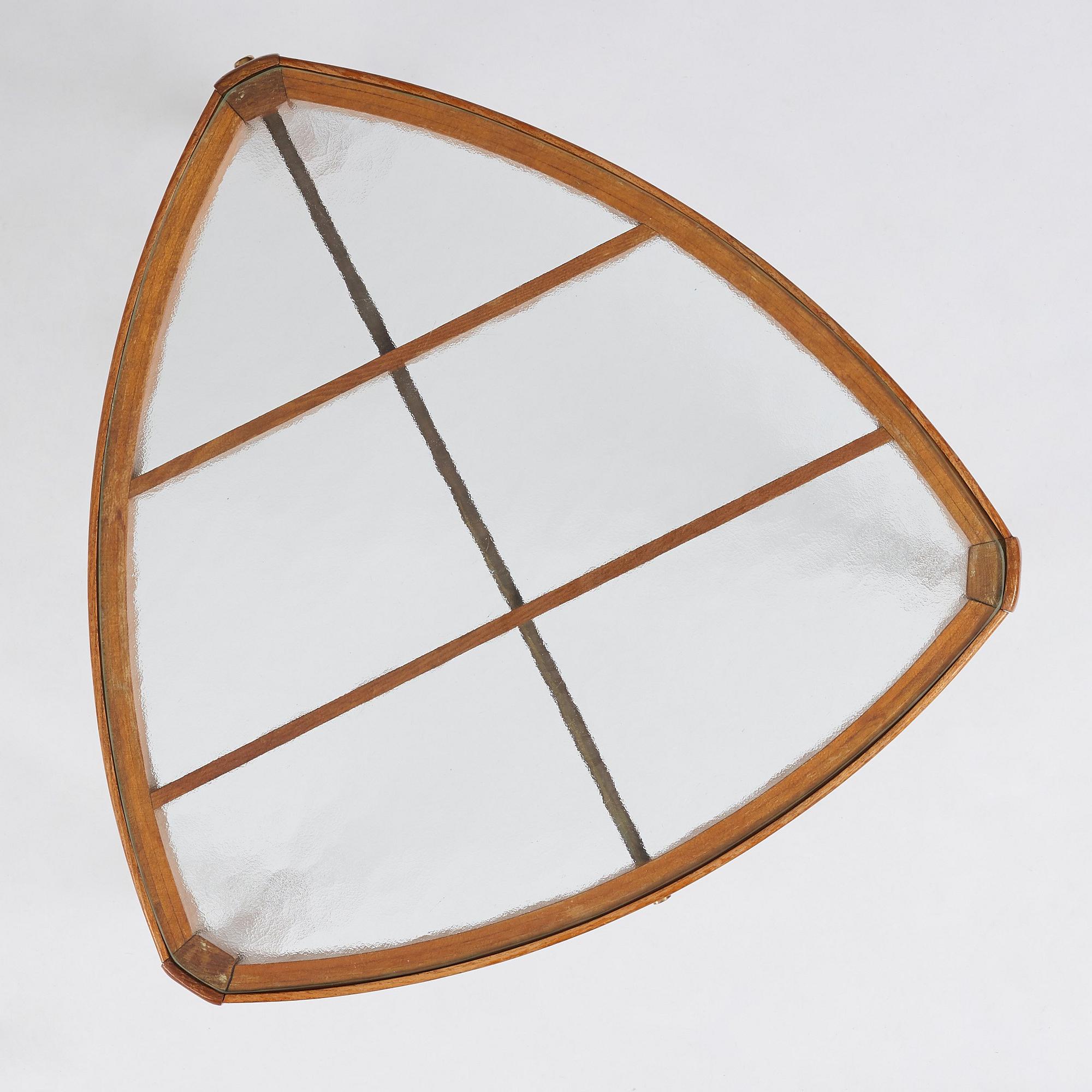
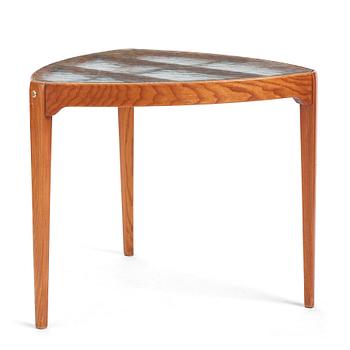
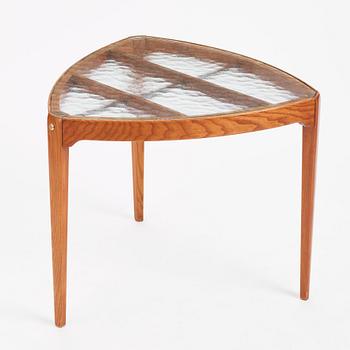
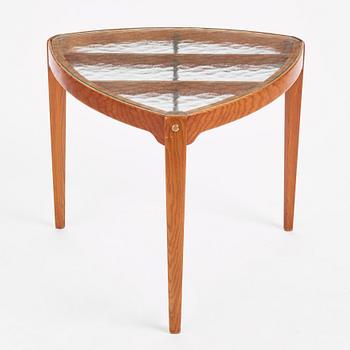
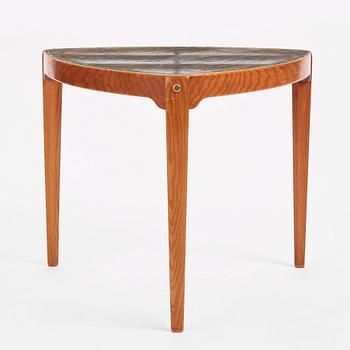
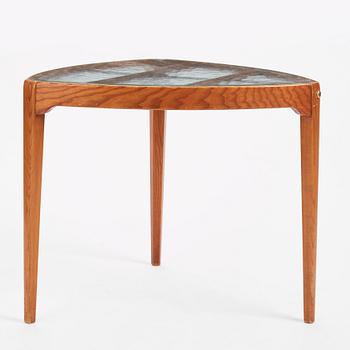
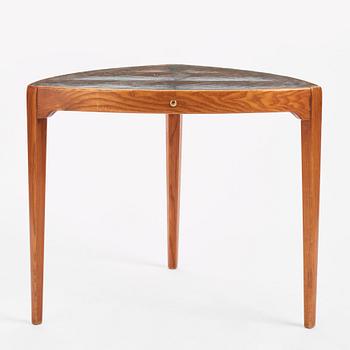
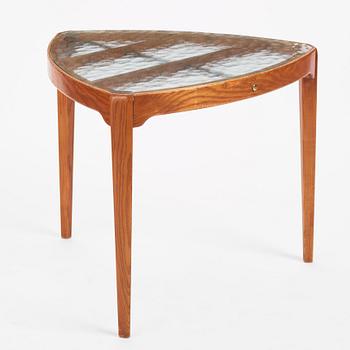
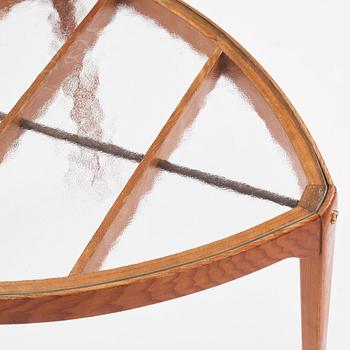
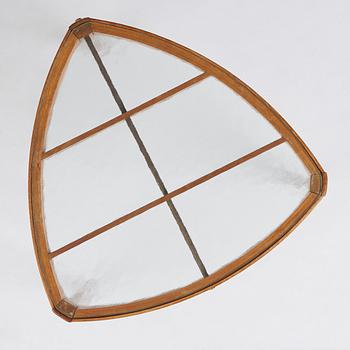
A Swedish Modern coffee table, Boet, Gothenburg 1940s.
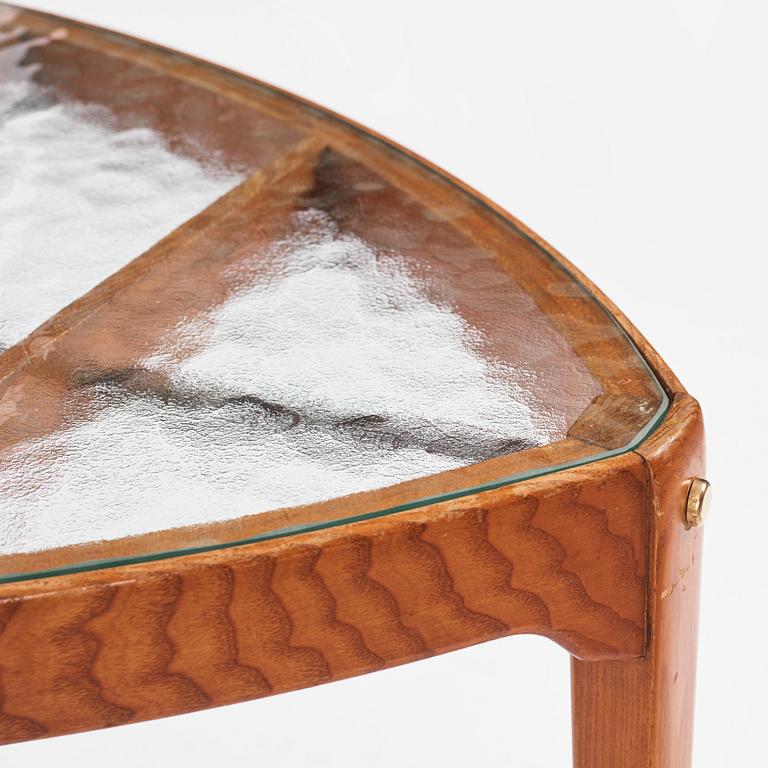
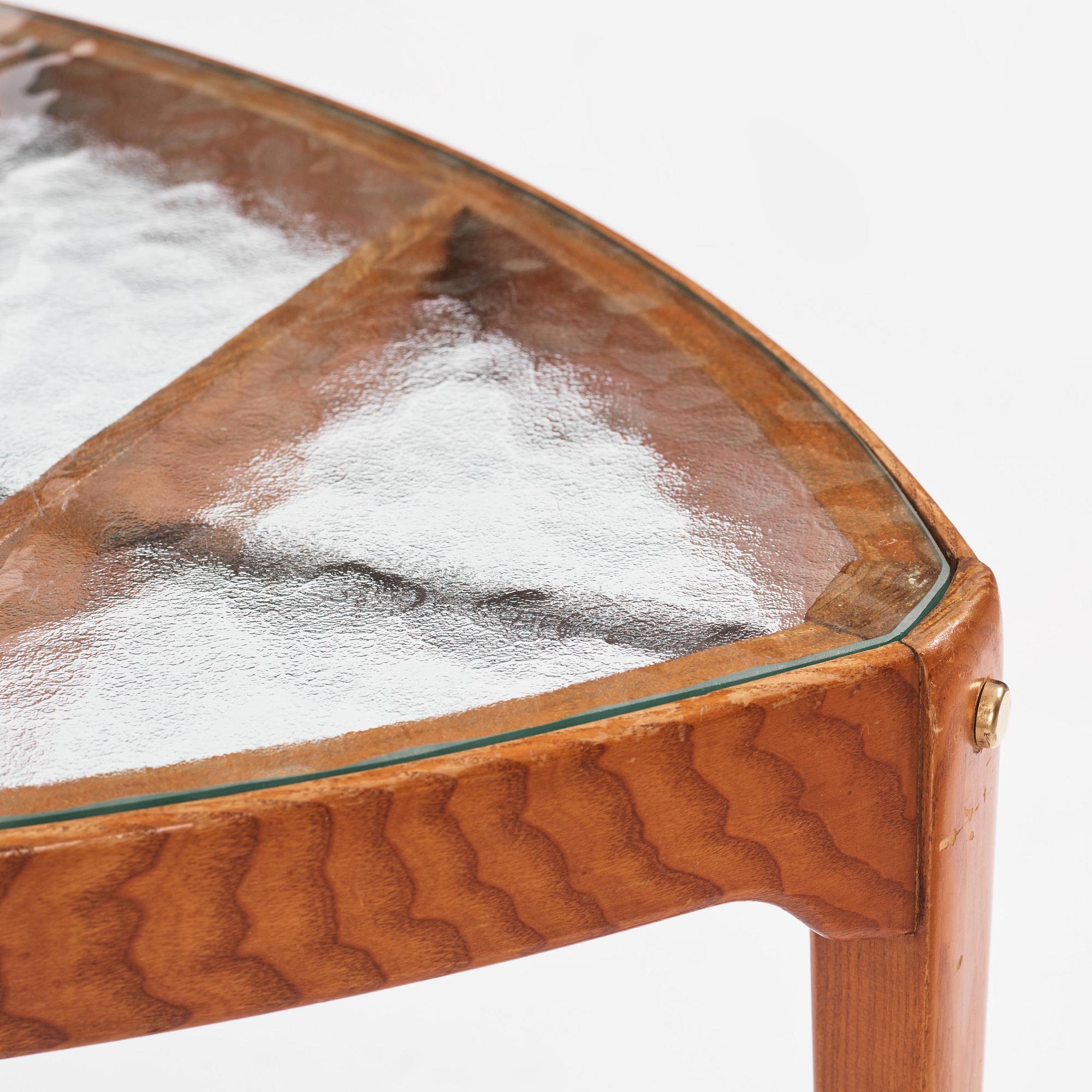
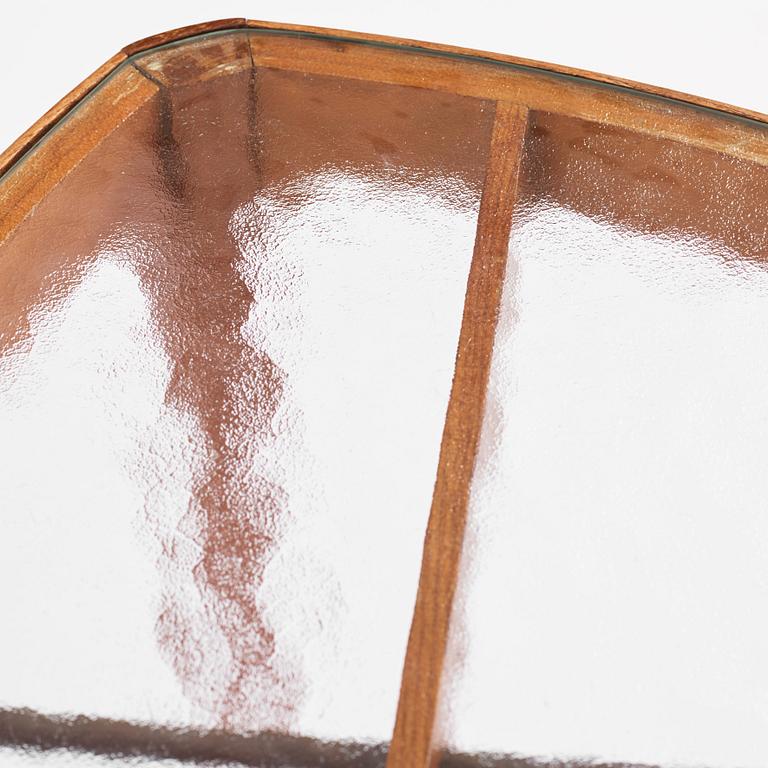
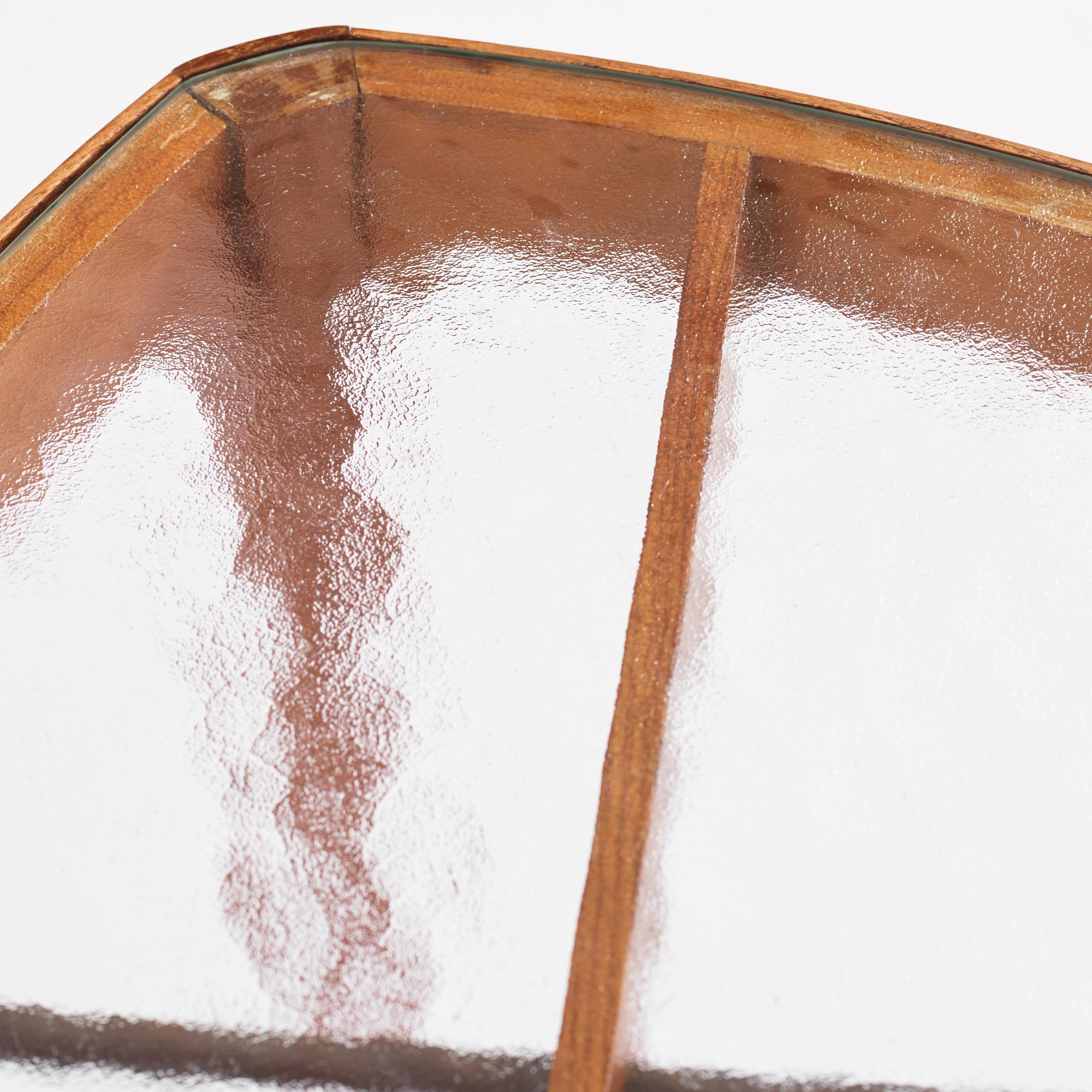
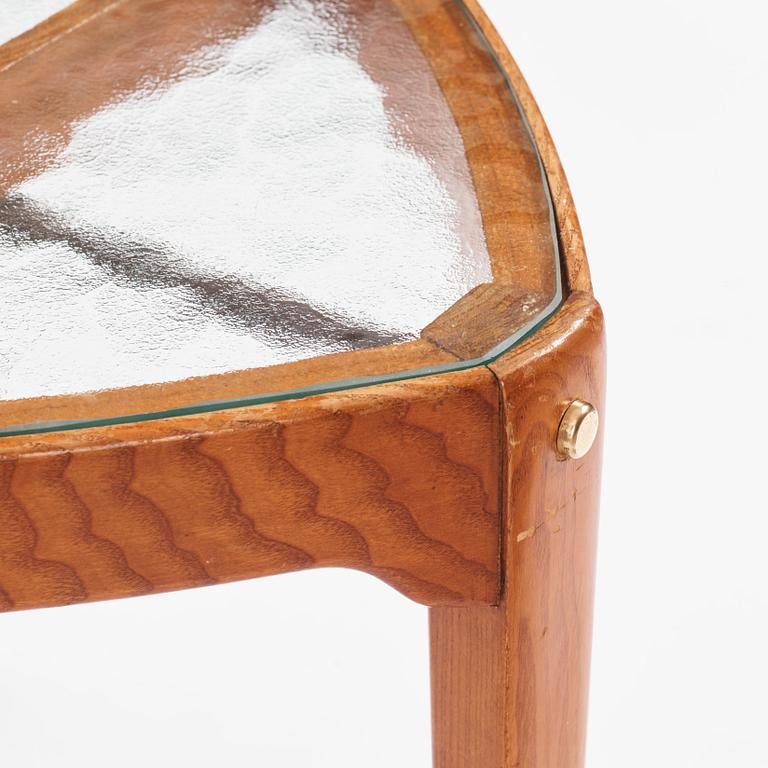
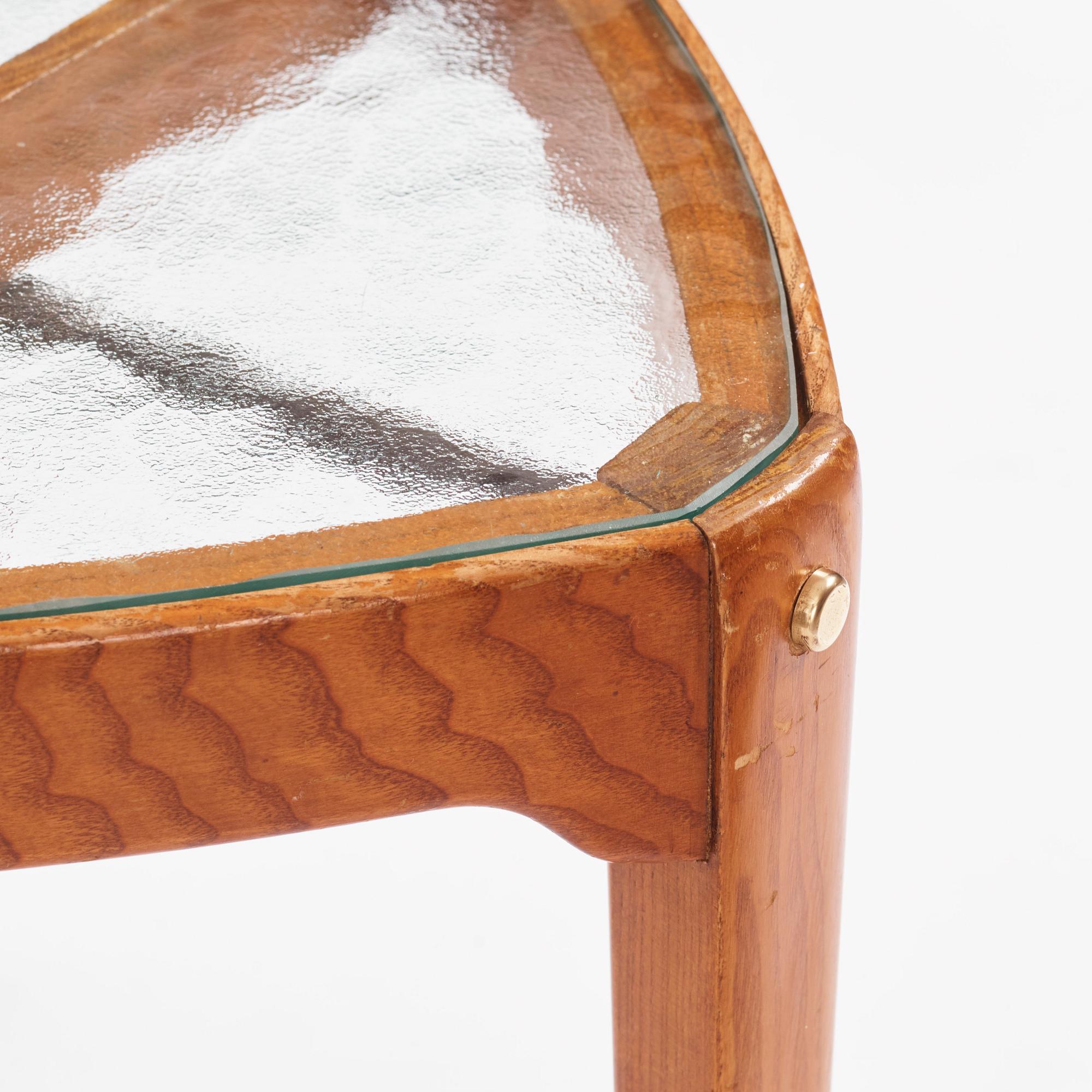
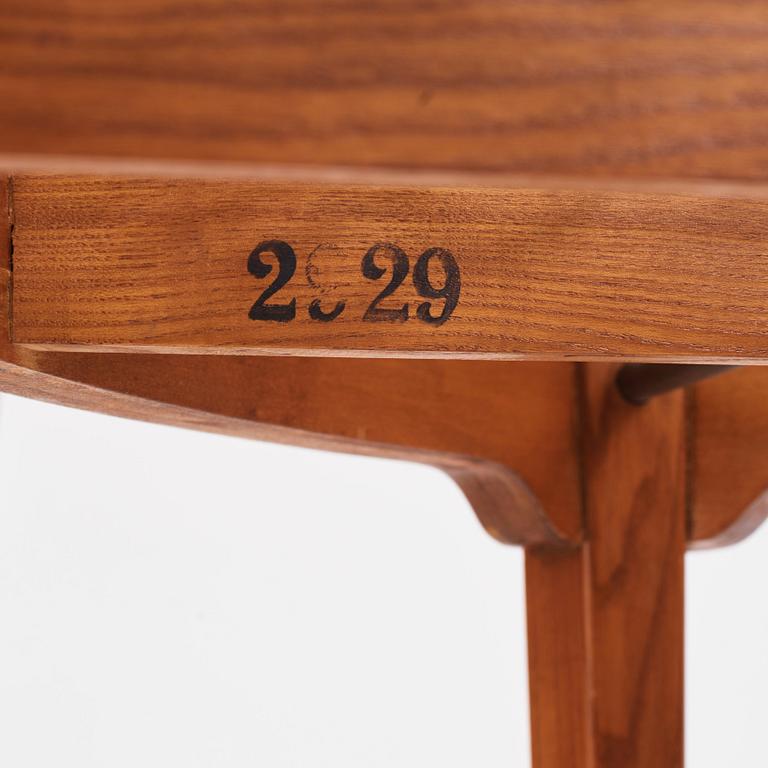
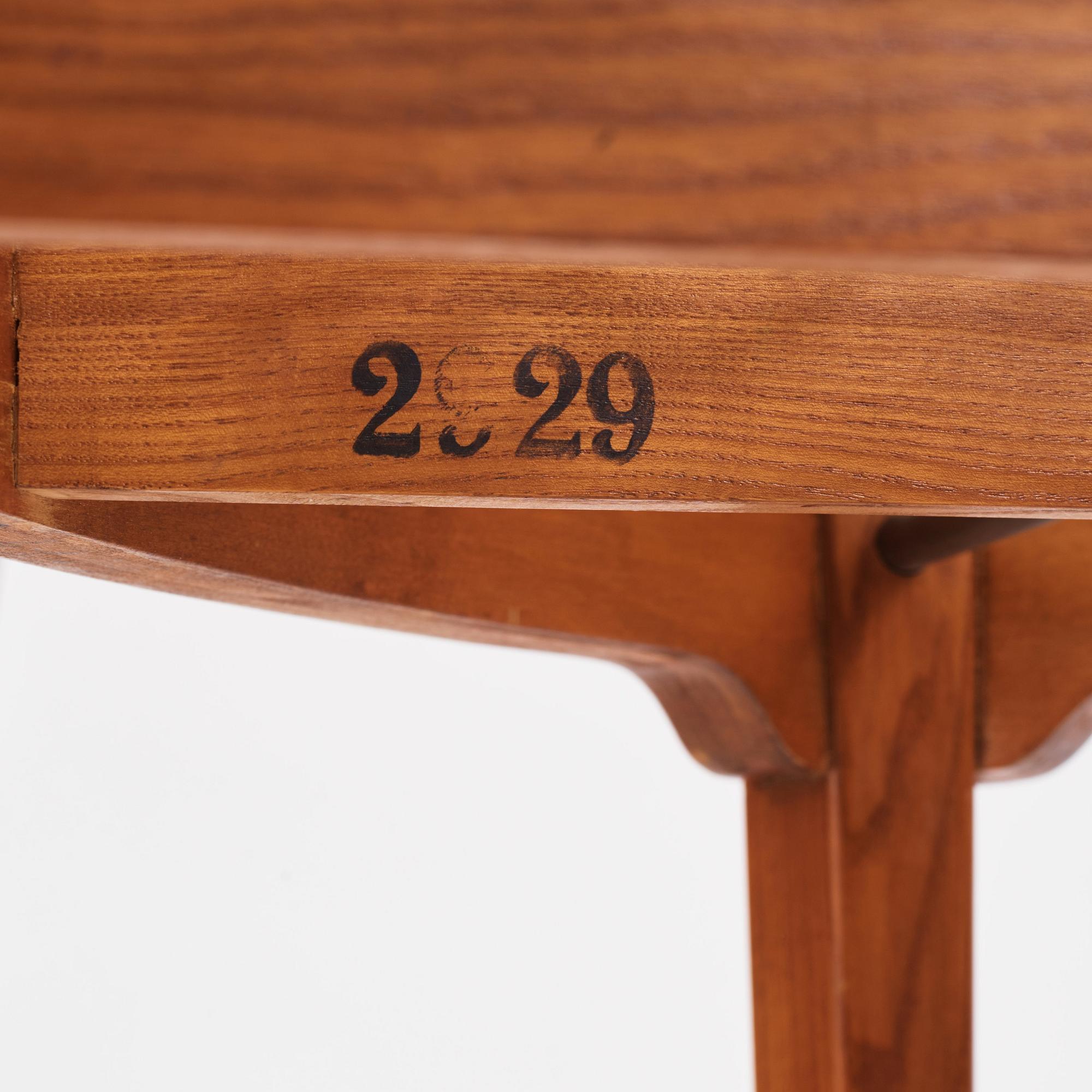
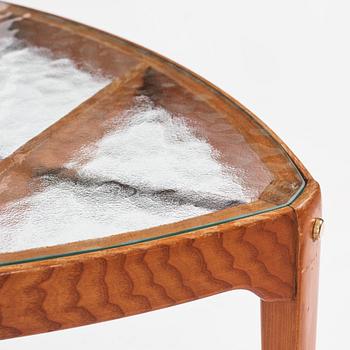
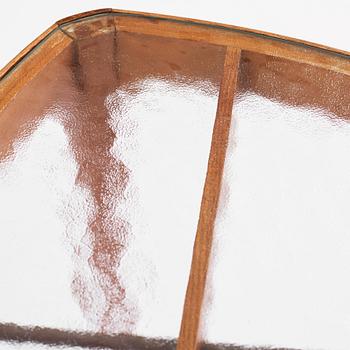
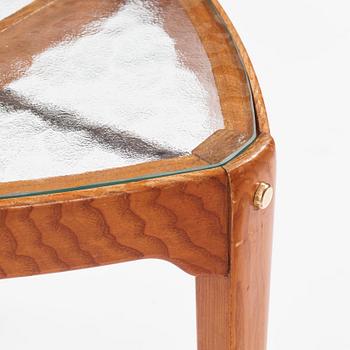
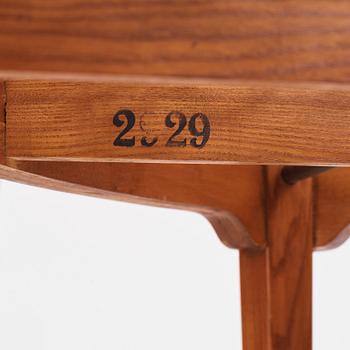
Triangular table in elm with a raw glass top, numbered 233 2929. 72 x 70, height 60 cm.
Wear. Marks.
Literature
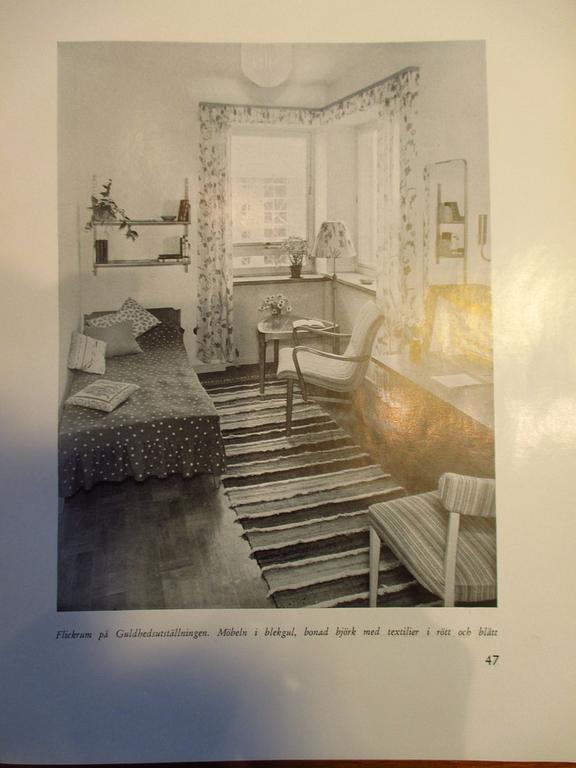
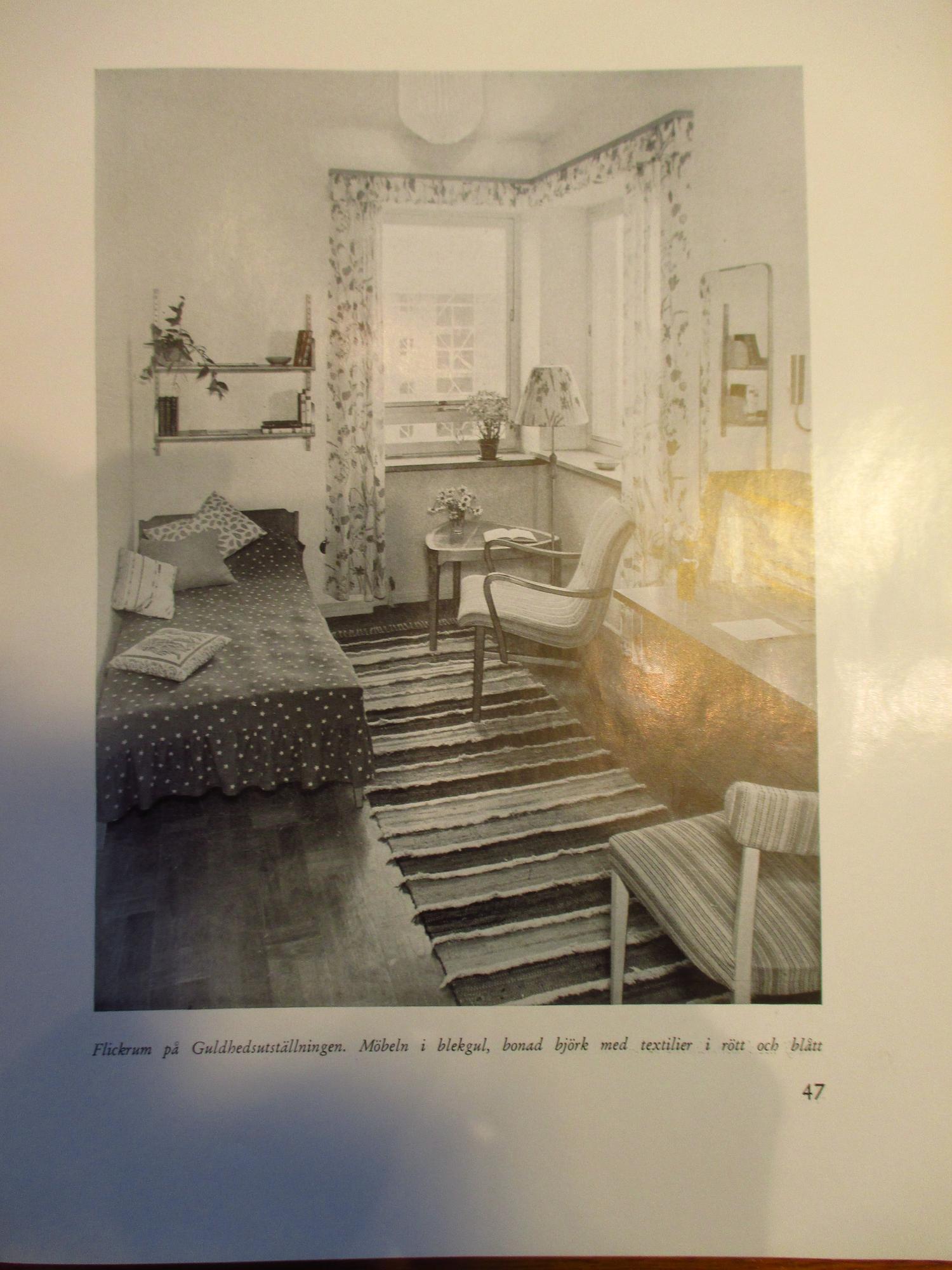
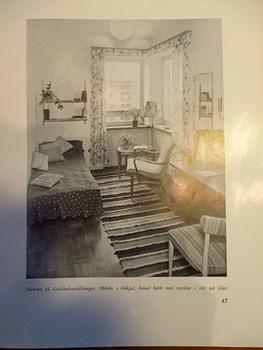
Arvid Berghman (ed.), "Boet: 1945", Gothenburg 1945, model illustrated p. 47.
More about Otto Schulz
Otto Schulz was a German-born designer and architect who spent the majority of his life working in Gothenburg, Sweden. In 1920, Schulz founded the company Boet together with Adolf Nordenberg, which became a highly influential interior and furniture manufacturer. Schulz's daring aesthetics have a multifaceted character that has contributed to important elements in both the Swedish Grace and Swedish Modern concepts. Schulz also published the magazine Boet, which, along with the store and business, helped to cement his role as central in interior design contexts. Some of Schulz's characteristics included developing techniques for which he took out patents, such as Bopoint, Bosaik, and Botarsia, all of which contributed to the furniture's distinctive aesthetics and quality.
Read moreFor condition report contact specialist

Image rights
The artworks in this database are protected by copyright and may not be reproduced without the permission of the rights holders. The artworks are reproduced in this database with a license from Bildupphovsrätt.
Others have also viewed