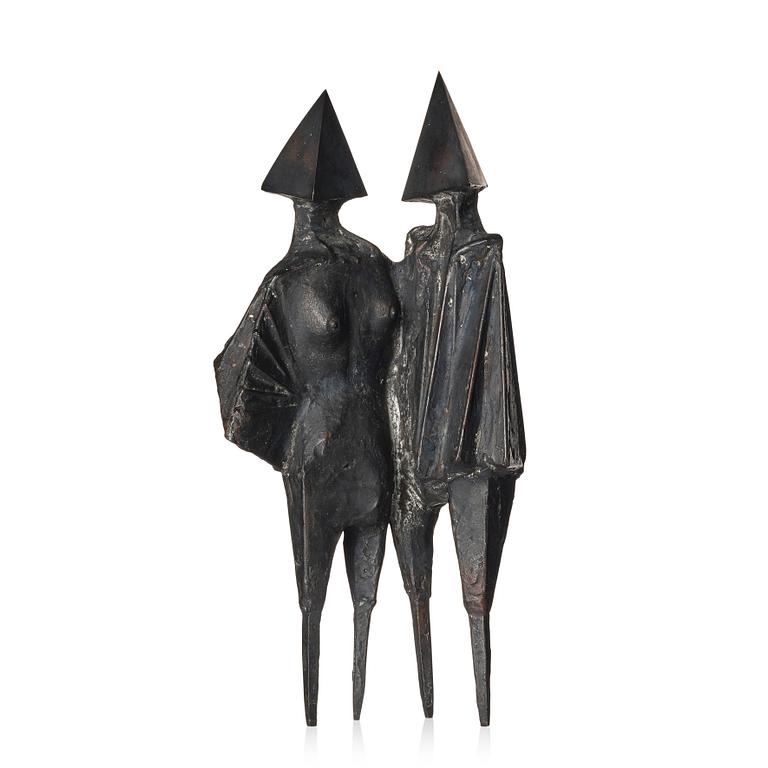
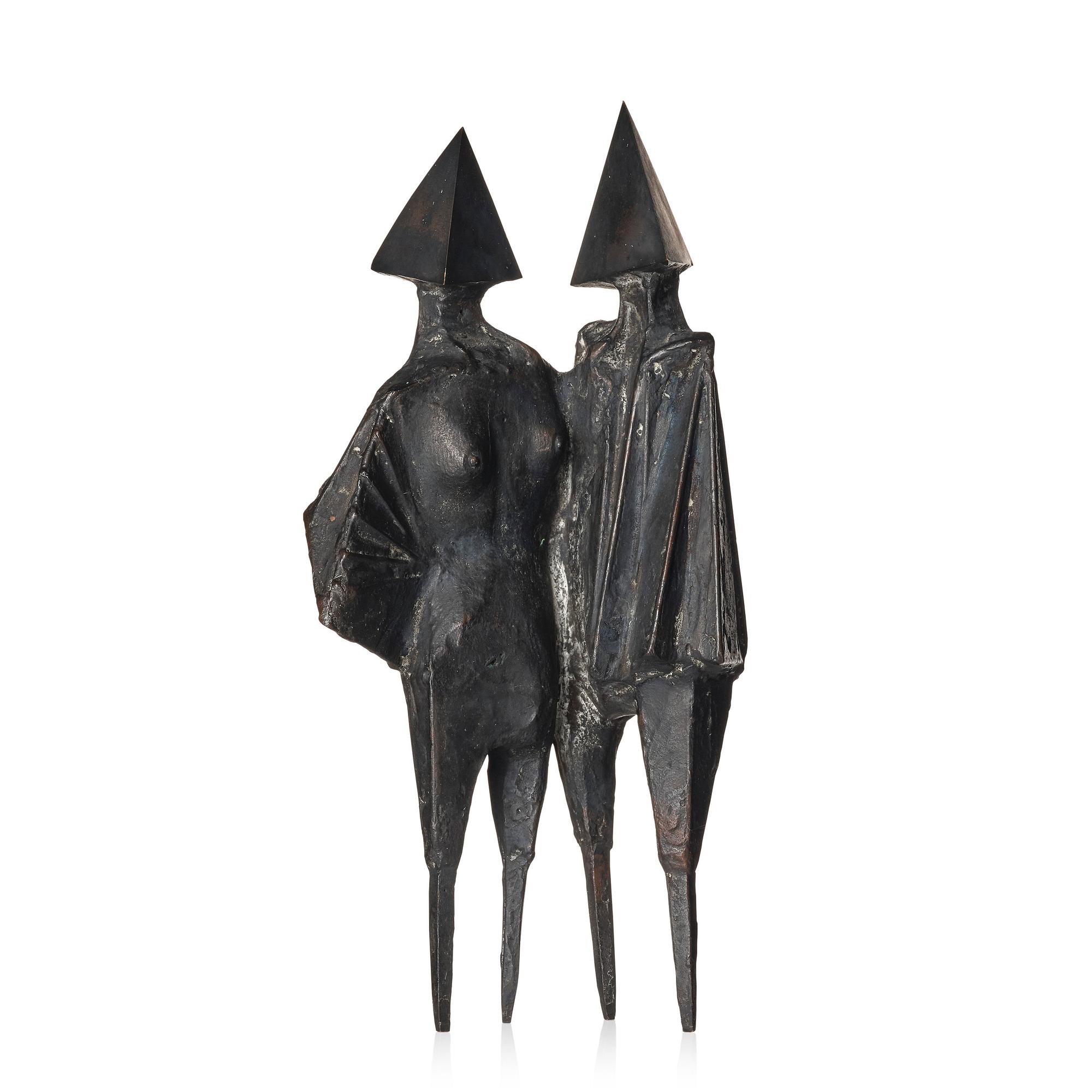
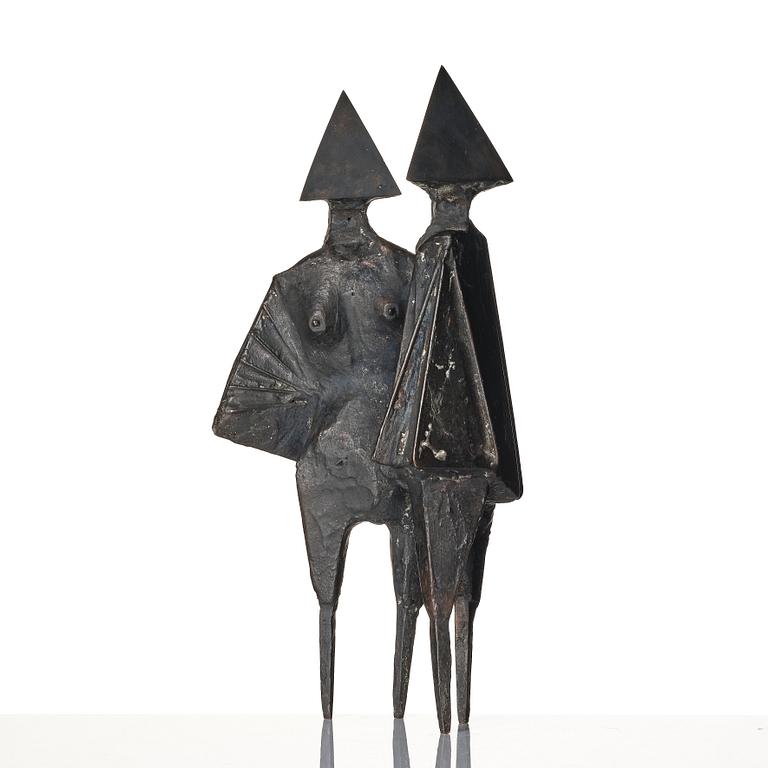
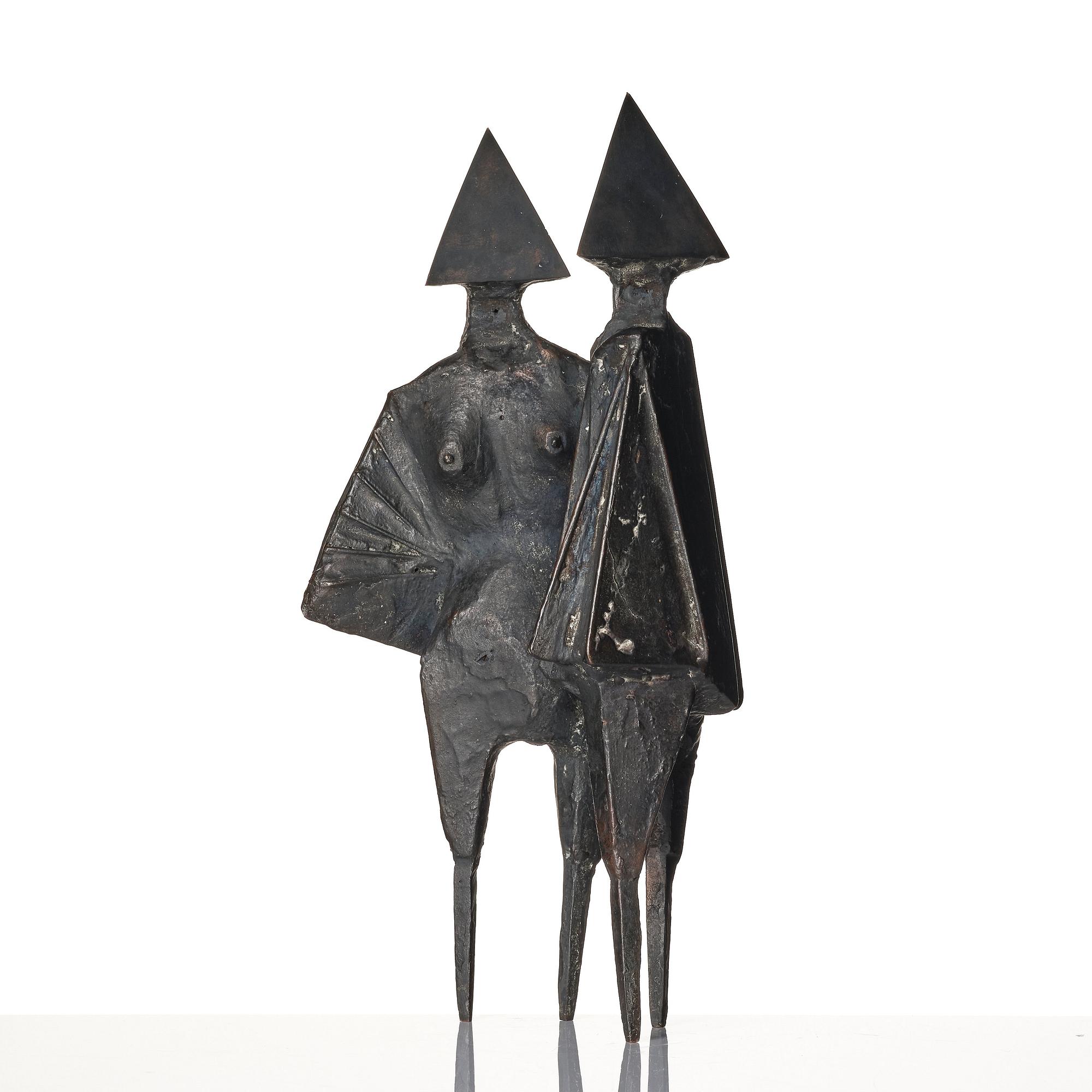
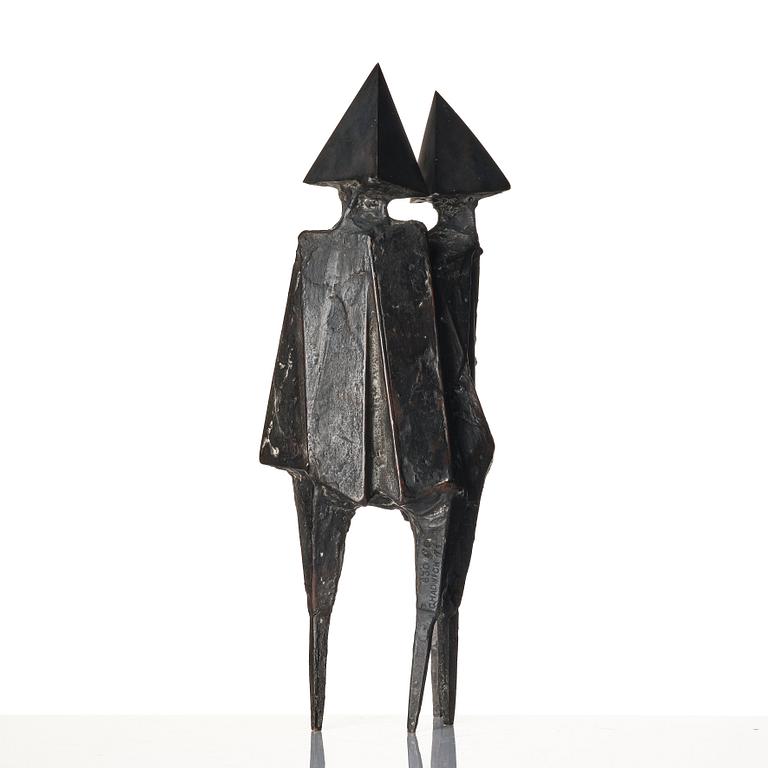
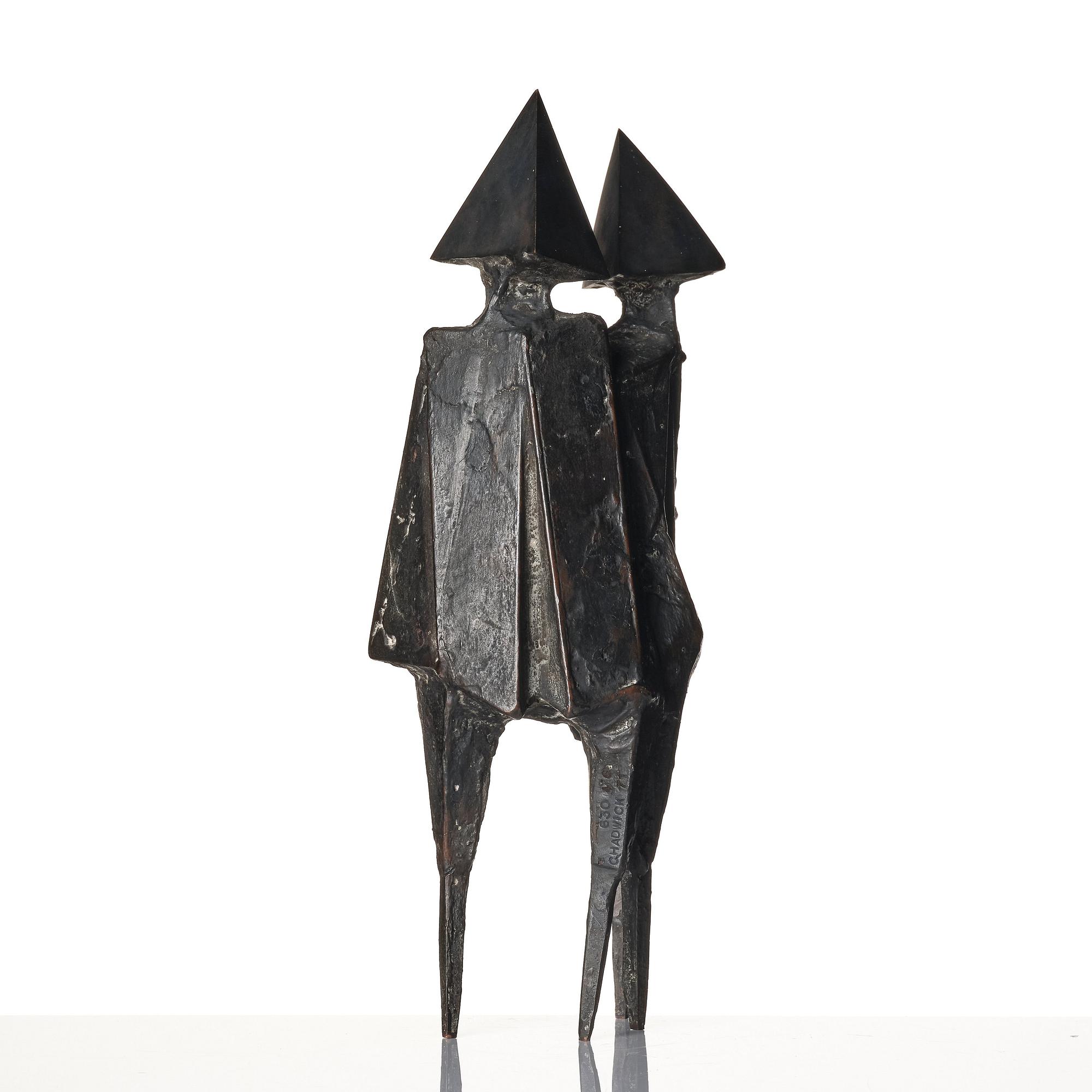
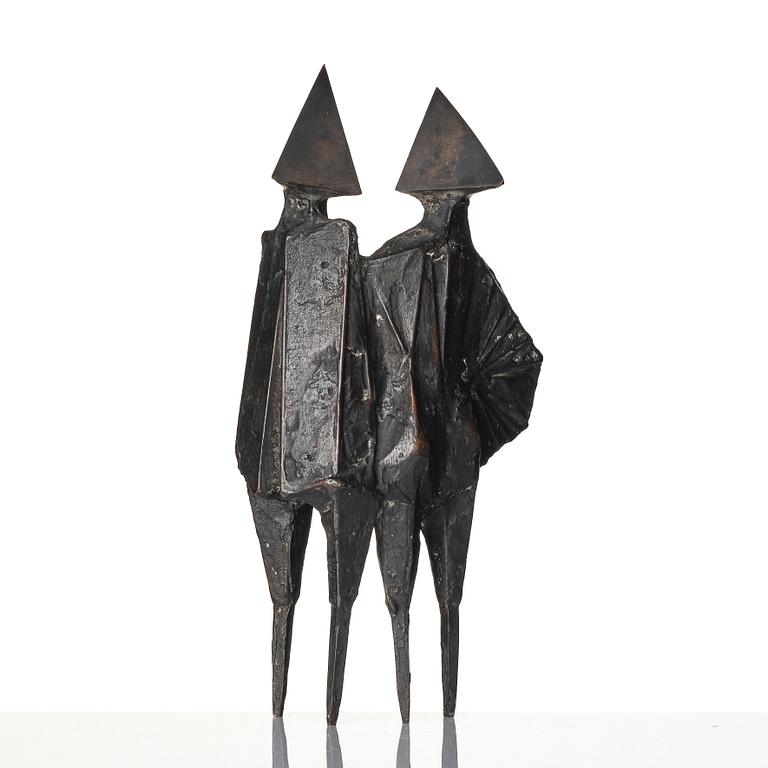
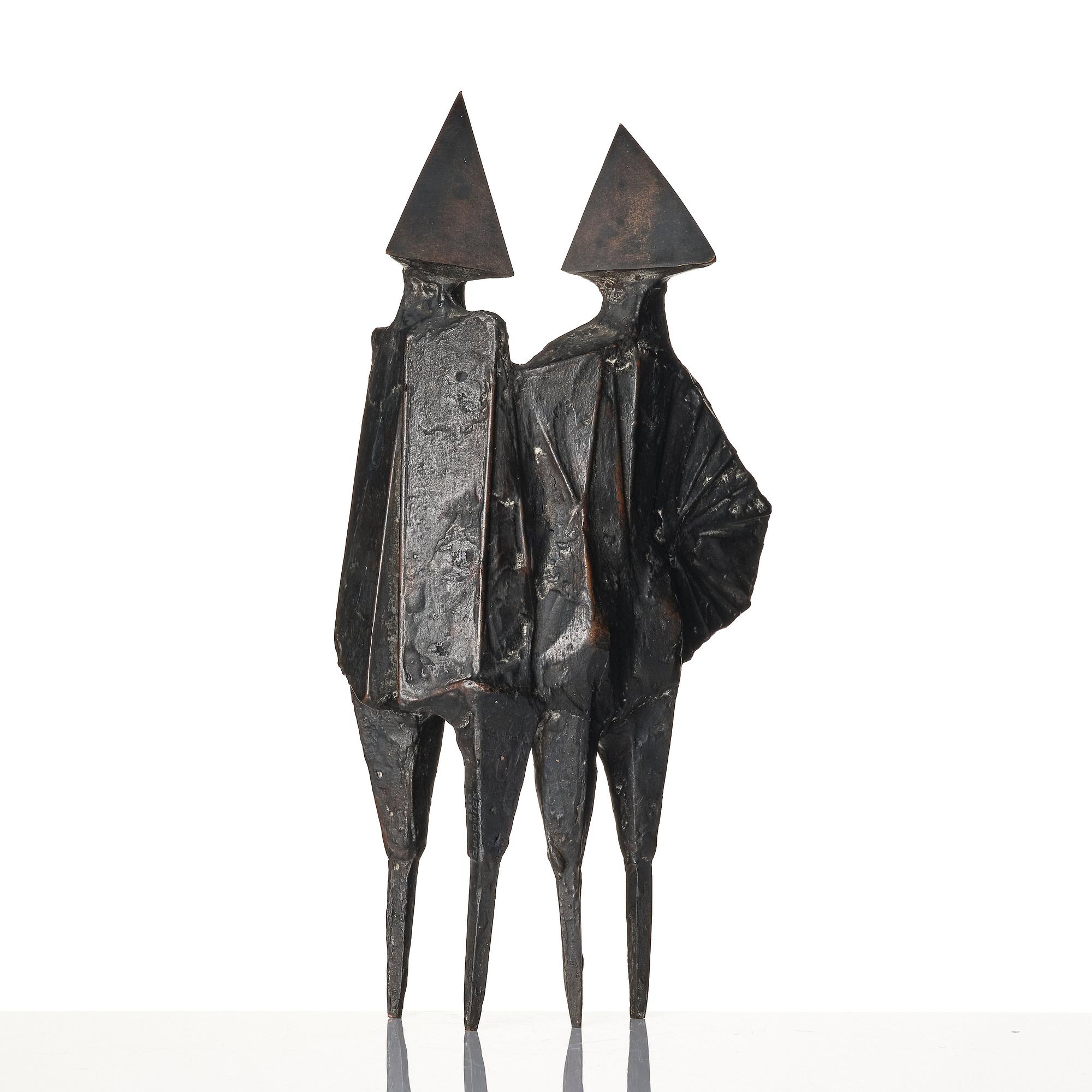
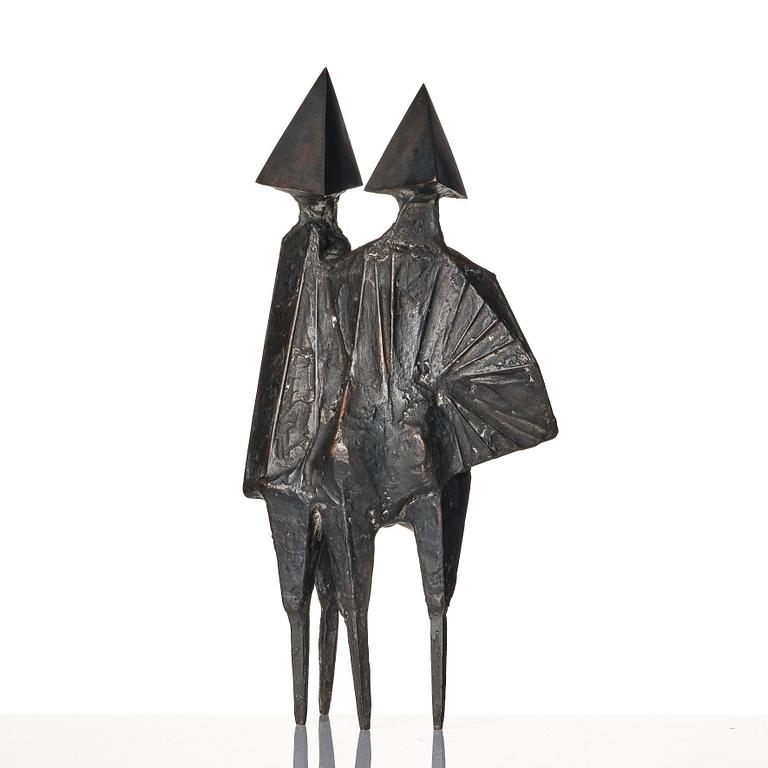
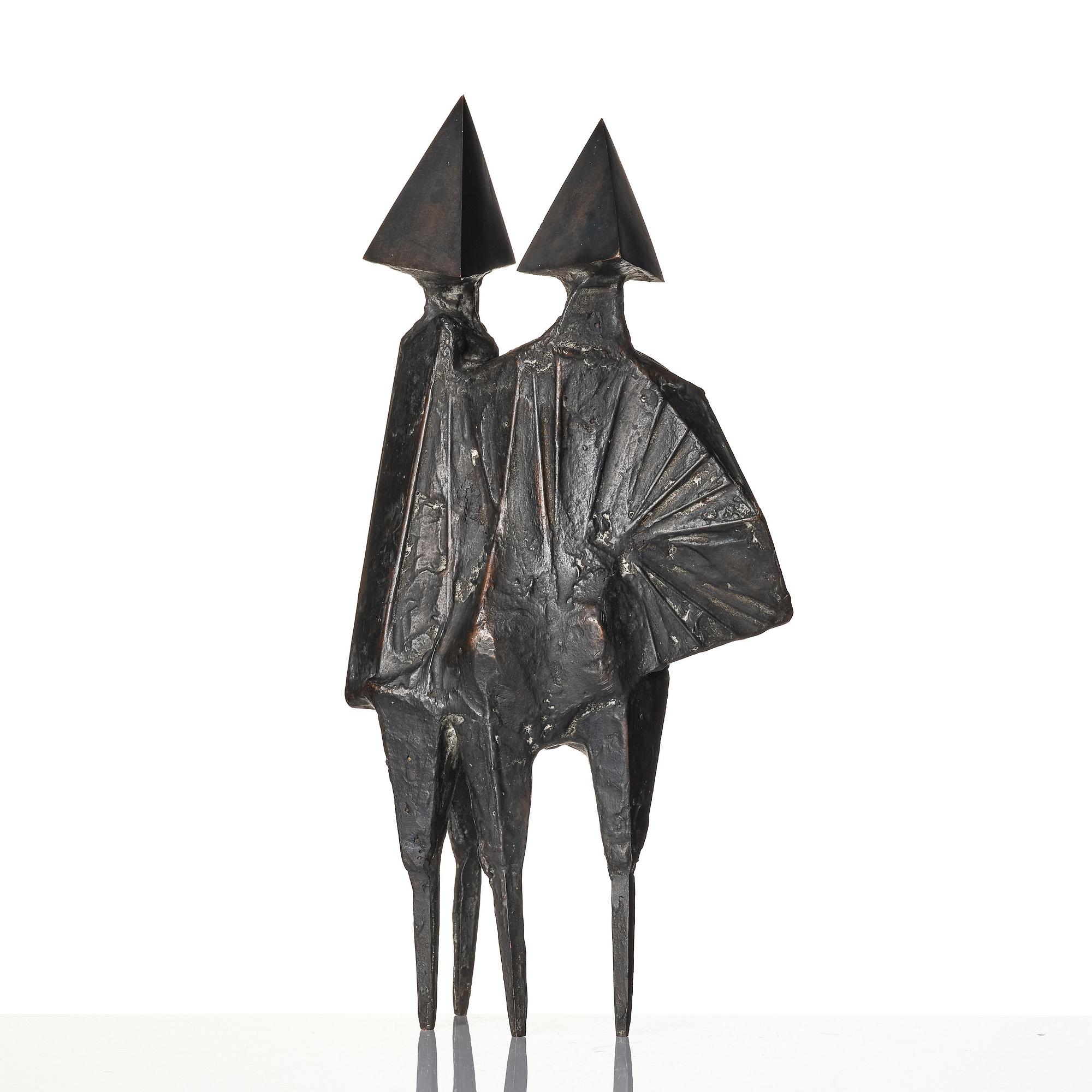
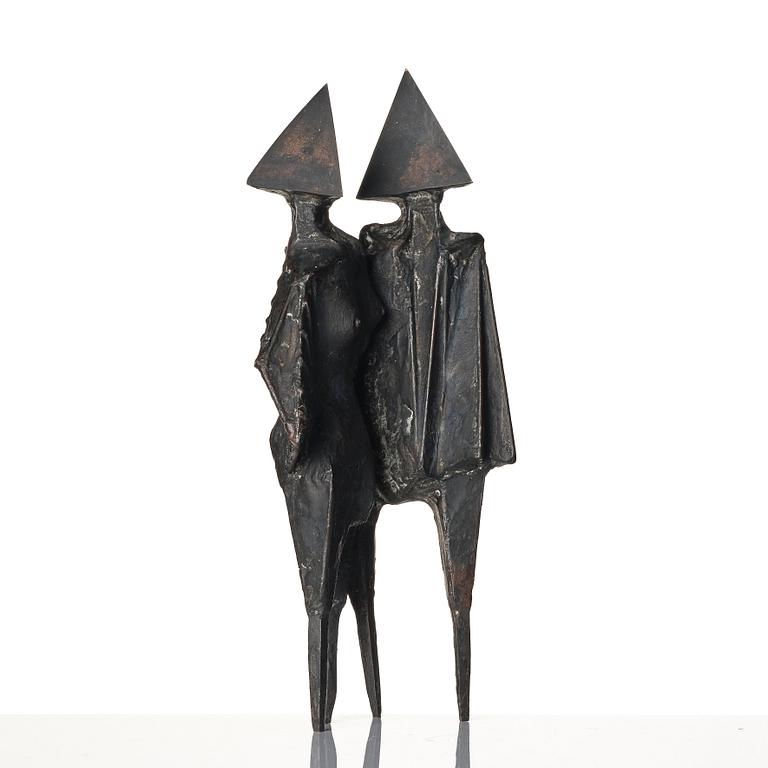
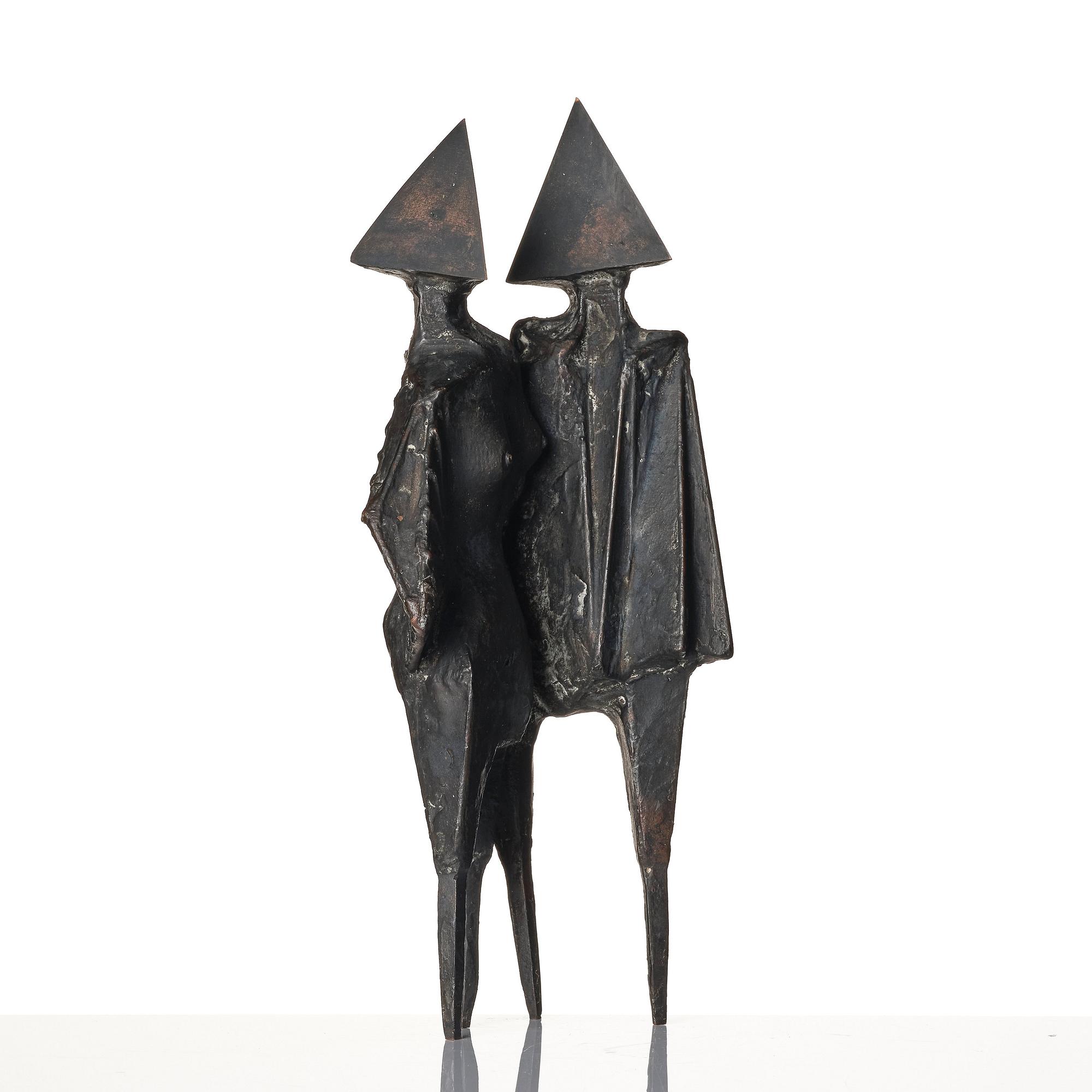
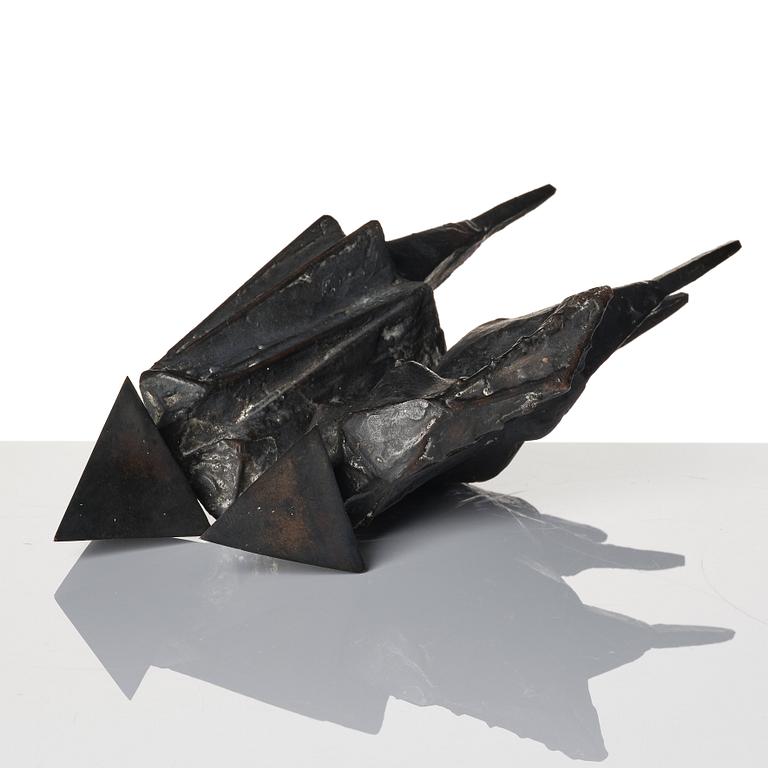
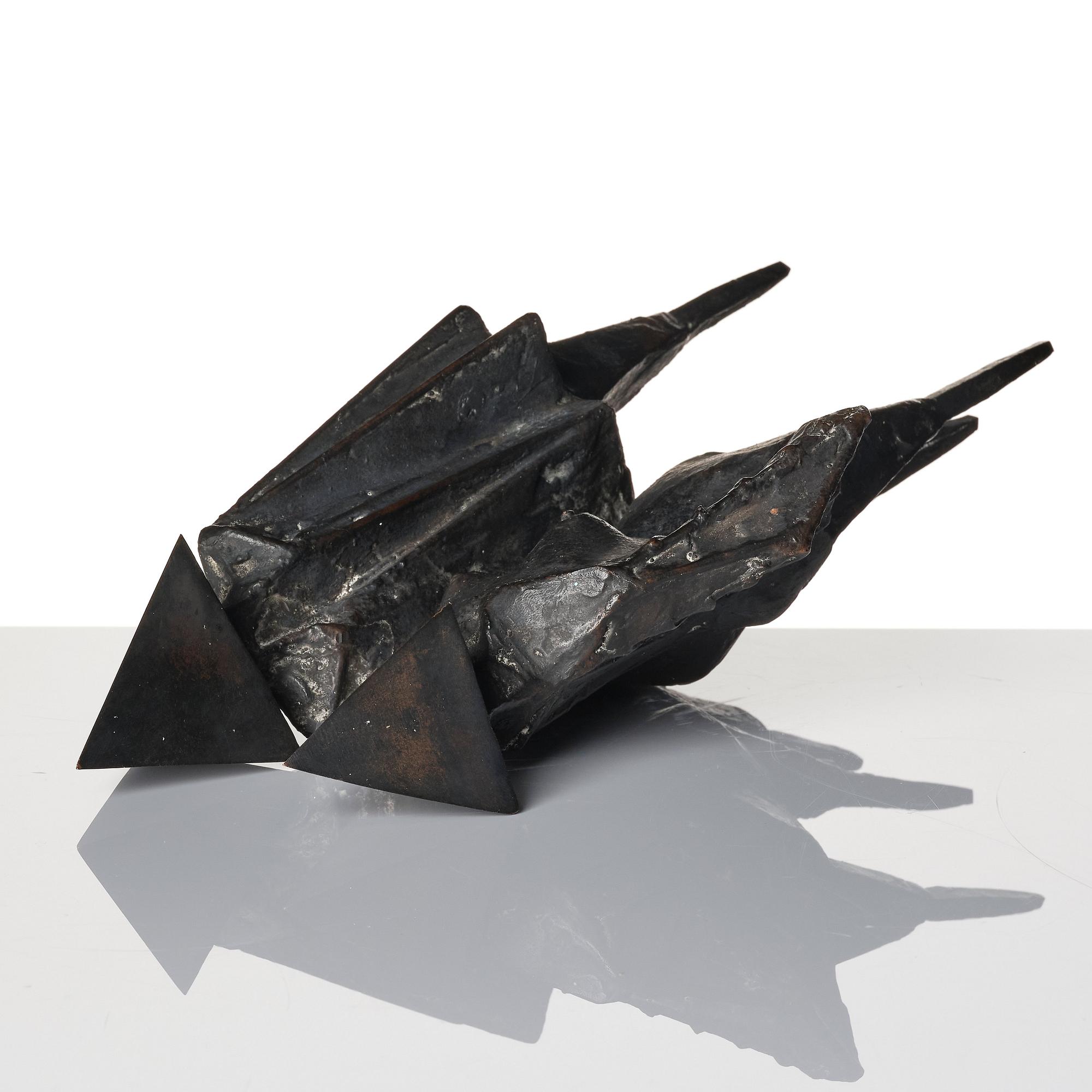
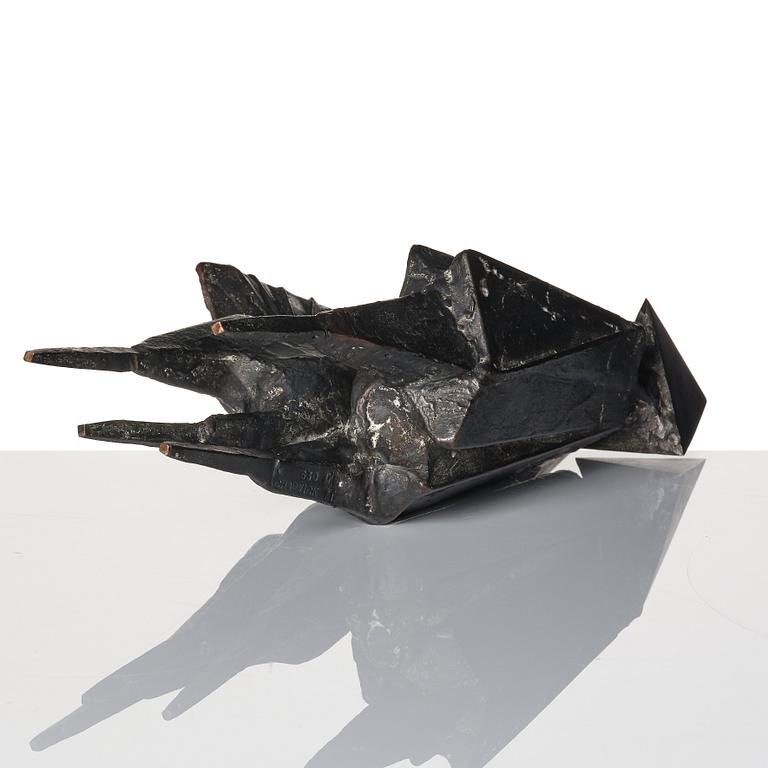
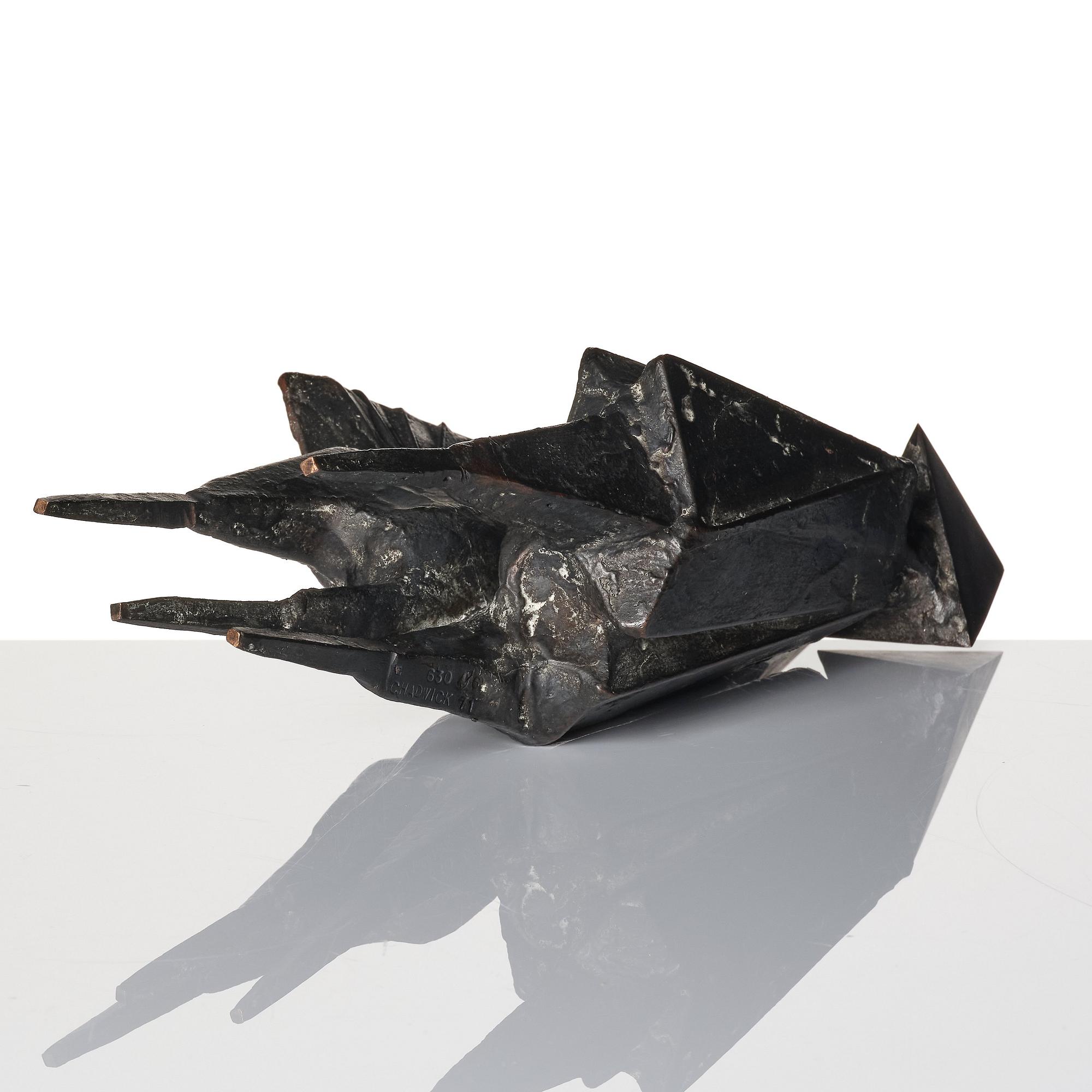
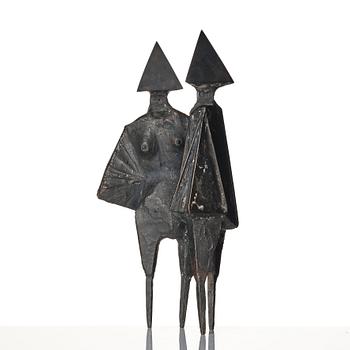
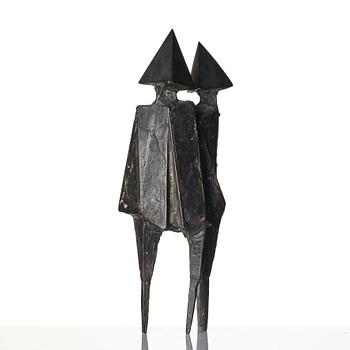
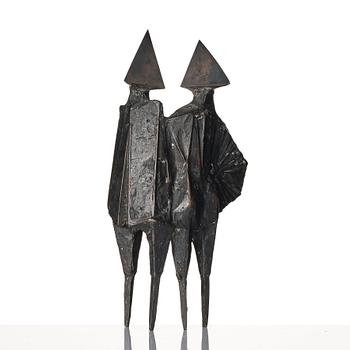
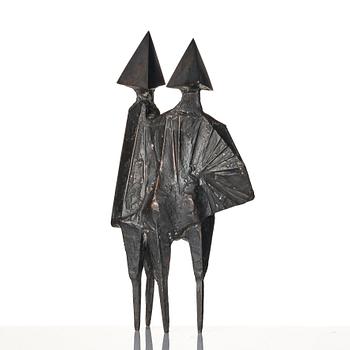
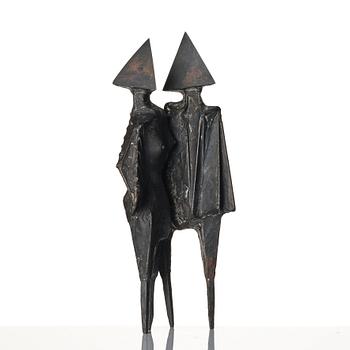
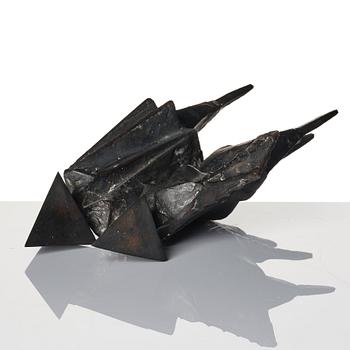
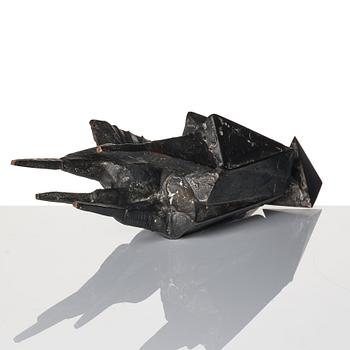
”Winged Figures "
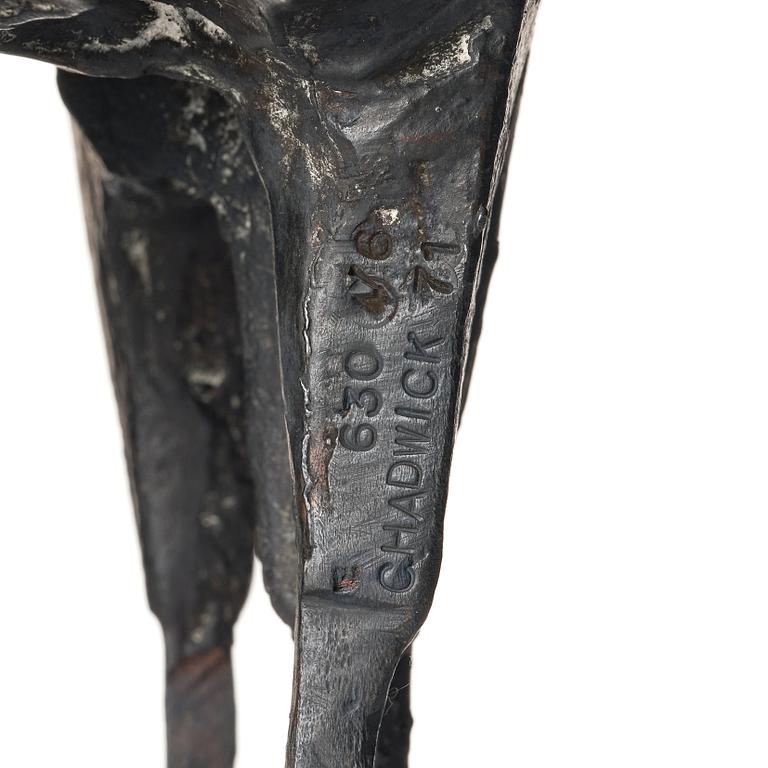
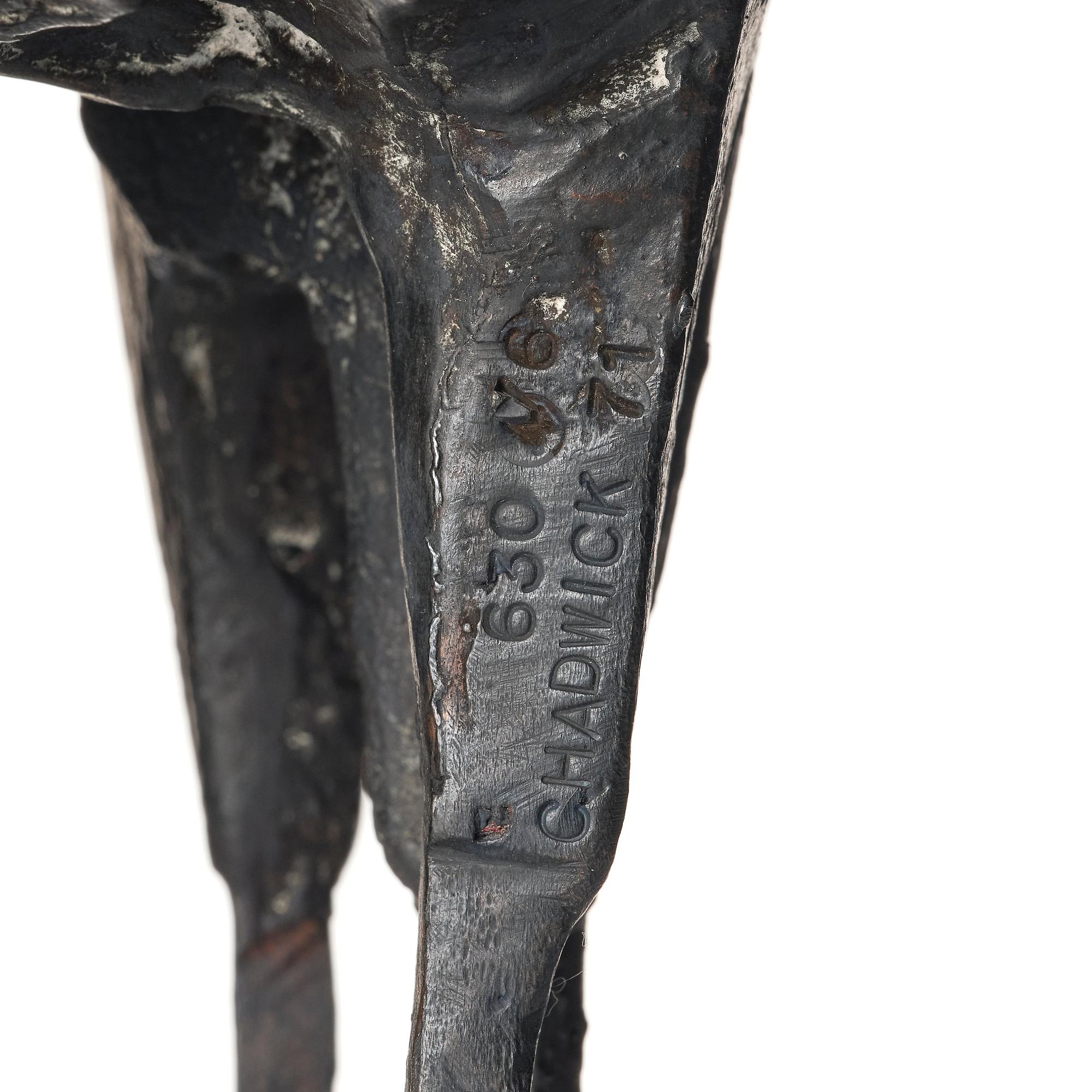
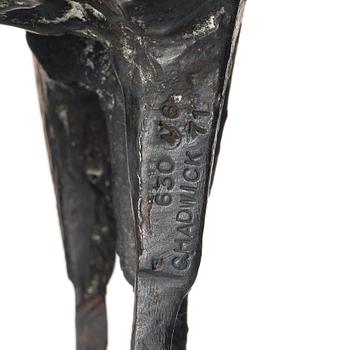
Signed Chadwick and dated -71, no. 630, numbered 4/6. Dark patinated bronze. Height 39 cm.
Provenance
Anders Pehrson, (1912-1982). Born in Gothenburg, educated as an engineer. Design chief at Philips AB from 1952 to 1963. From 1963 to 1978, he was the owner and designer in charge of Ateljé Lyktan.
Subsequently by inheritance.
Exhibitions
Gallery Moos, Toronto, Ontario, April-May 1972, another cast exhibited.
Literature
Dennis Farr & Eva Chadwick, "Lynn Chadwick Sculpture: With a Complete Illustrated Catalogue 1947-1996", 2014, cat. no. 630, another cast illustrated in black and white on page 286.
More information
Anders Pehrson, (1912-1982). Born in Gothenburg, educated as an engineer. Design chief at Philips AB from 1952 to 1963. From 1963 to 1978, he was the owner and designer in charge of Ateljé Lyktan.His guiding principles were form, function, color, and family. Pehrson became known not only as a skilled designer but also as a proficient marketer. The model Pehrson is most famous for today is likely his design of the "Bumlingen" lamp. It was produced in countless variations and colors.
More about Lynn Chadwick
One immediately recognises Lynn Chadwick’s distinctive figures. They have their own visual language, with their formal language resembling no other. These majestic beings appear enigmatic, hardly at rest – rather vigilant. With figures which draw upon simplified geometric forms with sharply draped cloaks, these sculptures evoke associations and fascination.
Chadwick joined a new generation of artists which all debuted on the British art scene shortly after the World War. Europe was in ruin, and the world was arrested in great shock after having experienced the trials and tribulations of war. Chadwick himself was an active participant, having worked as a pilot in R.A.F. Already in his younger years Chadwick was sure that he wanted to direct his career into the world of art, yet his parents disapproved, and thus he was forced to compromise and thus began to study architecture. This is why Chadwick found himself working at an architectural firm before the onset of the war. It can therefore be argued that it is thanks to his architectural training that his sculptures exhibit such a strong geometrical aura. The aftermath of the war left Chadwich longing to create and to achieve something new. Yet it took a while for him to find the courage to fully commit, and thus he continued to have a successful career as a interior designer. In the 1940s Chadwich made a living by designing exhibition stands, furniture, wallpaper simultaneously as he began his career as an artist.
It was thanks to the Venice Biennale of 1952 and 1956 that Chadwick gained international recognition and has since then been thought to be one of the most important artists within the British post-war era. The expression in Lynn Chadwick's sculptures is deeply linked to his methods. For the most part Chadwick is solely self-taught, with his technique having been described as a three-dimensional metal drawing. Chadwick would bend and shape of rods into desired forms, then weld them together, after which he filled in the areas that were to be solid. For various sculptures he utilised metal plates, giving the impression of a “metal skin”. In the 1950s Chadwick began experimenting with bronze. Chadwick placed great emphasis on the patination of his sculptures, meticulously working on surface texture and color nuances.
The triangle is the overarching form in Chadwick’s art, which is sometimes combined with the rectangle. This form, often placed vertically or diagonally (never horizontally), forms the backbone of the sculpture and establishes the formal tension. The artist himself has declared that the triangle is the most stripped-down, basic form of the human body, and it is from this shape people are constructed. He had always clearly expressed how his primary inspiration lay always with the human form.
In contrast to many of his contemporaries who were inspired by ethnographic or classical art, Chadwick found inspiration from modern architecture. The artist never explained the symbolism or meaning behind his sculptures, rather he has left his blank to allow the viewer to form their own interpretations as to the reasonings behind these powerful, enigmatic figures.
For condition report contact specialist
Covered by droit de suite
Image rights
The artworks in this database are protected by copyright and may not be reproduced without the permission of the rights holders. The artworks are reproduced in this database with a license from Bildupphovsrätt.

Others have also viewed