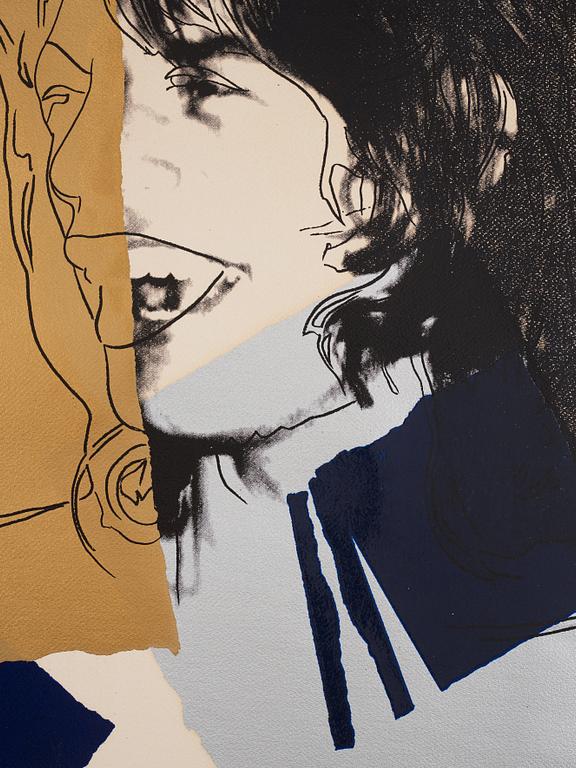
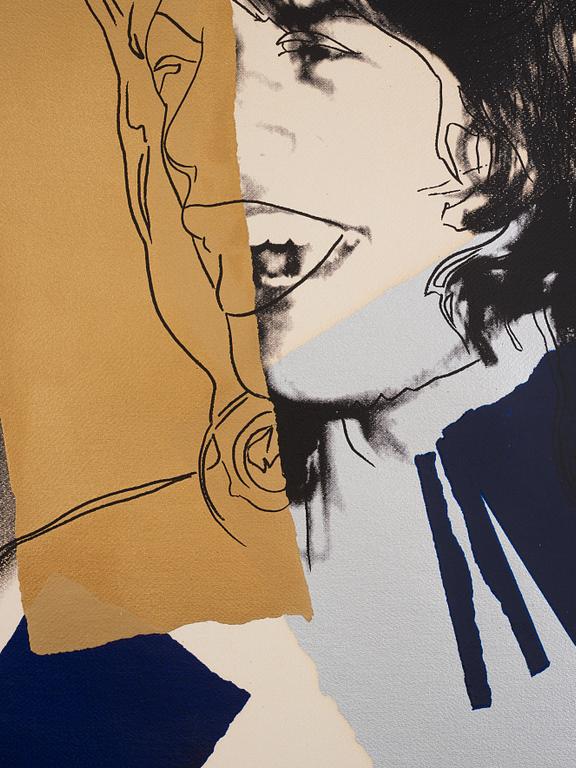
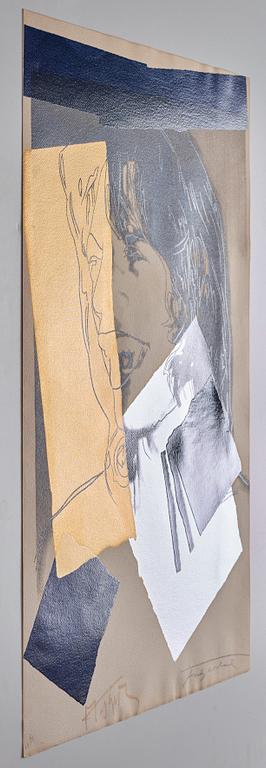
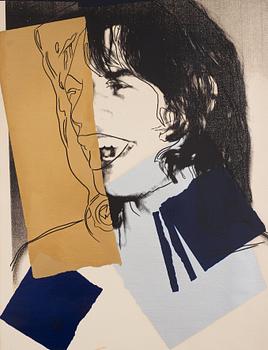
"Mick Jagger".
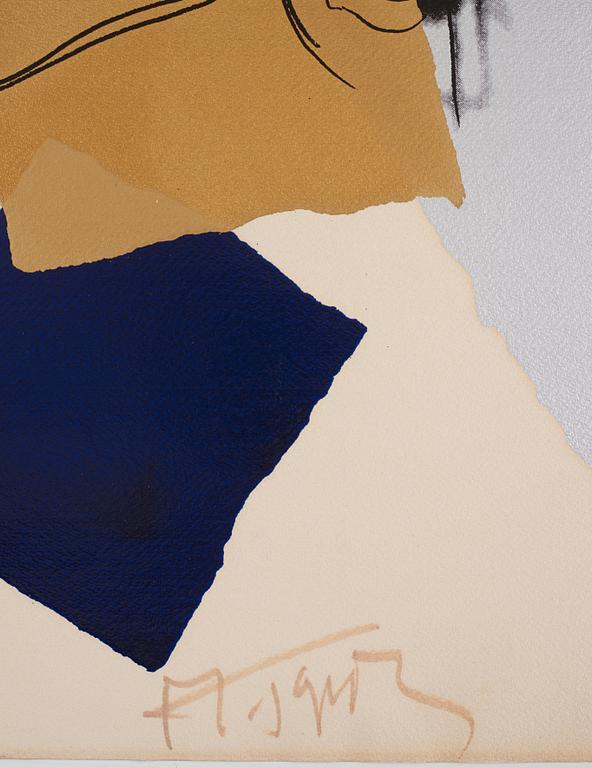
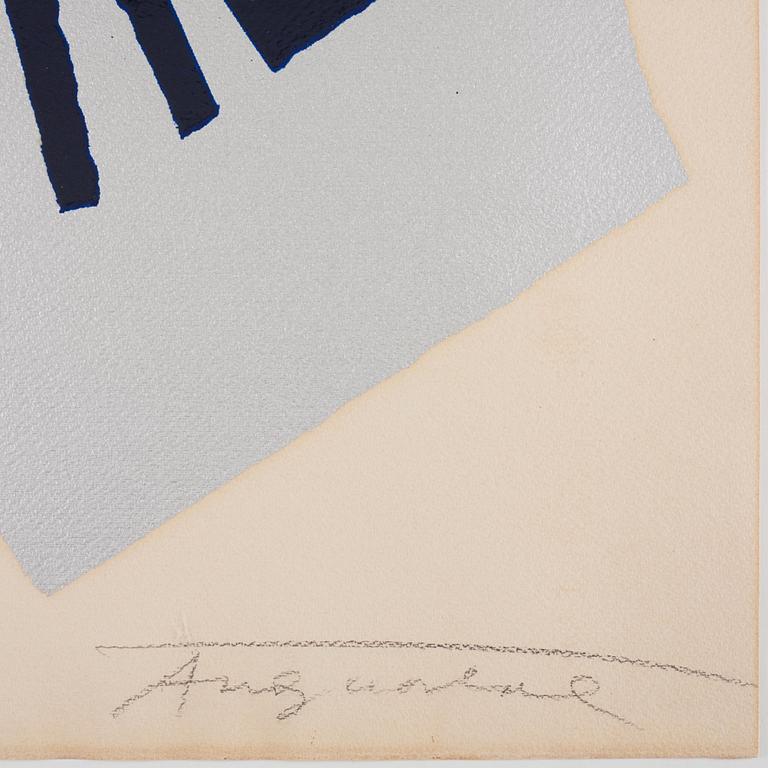
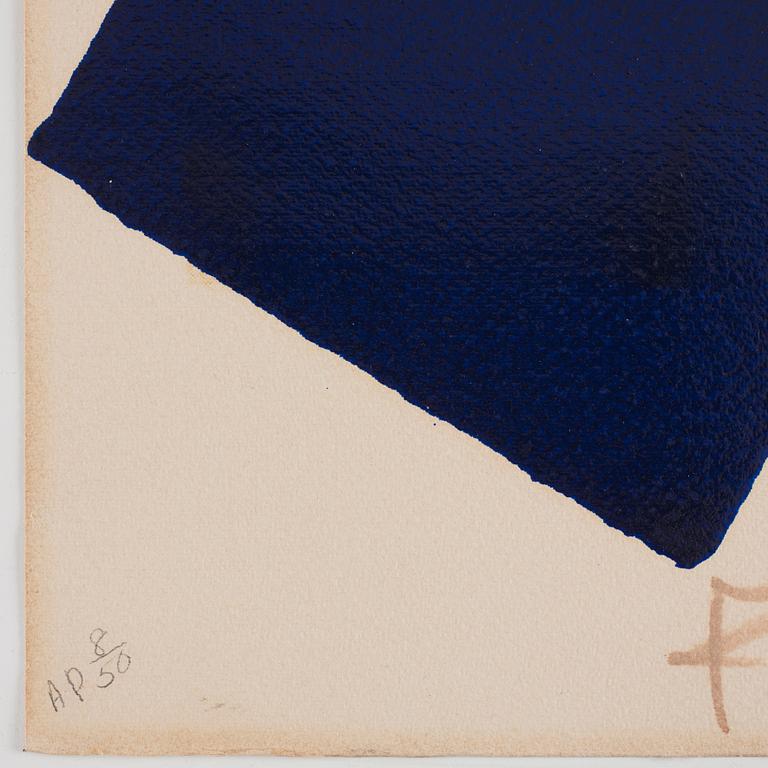
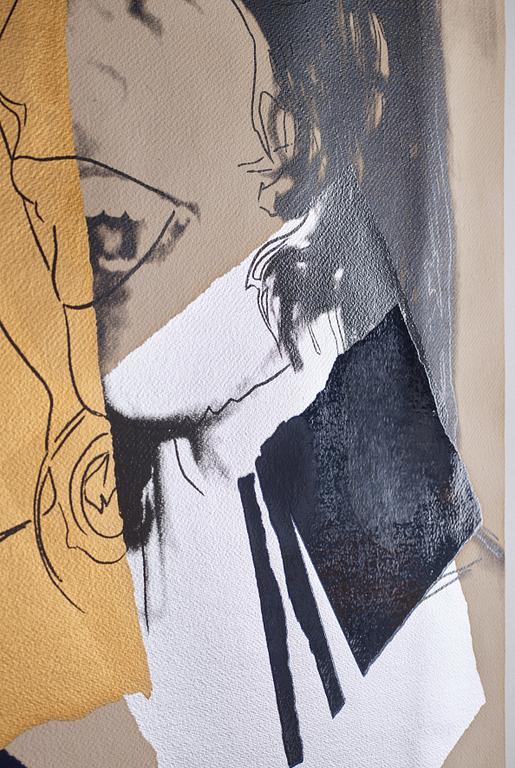
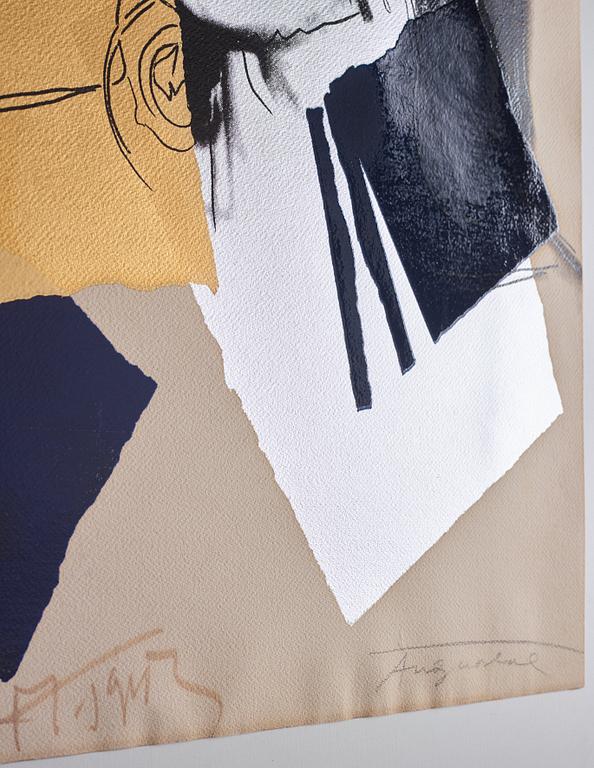
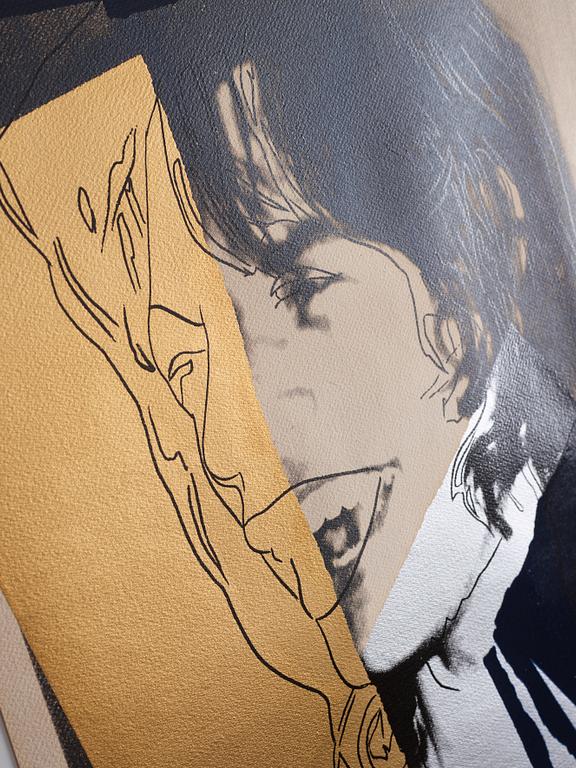
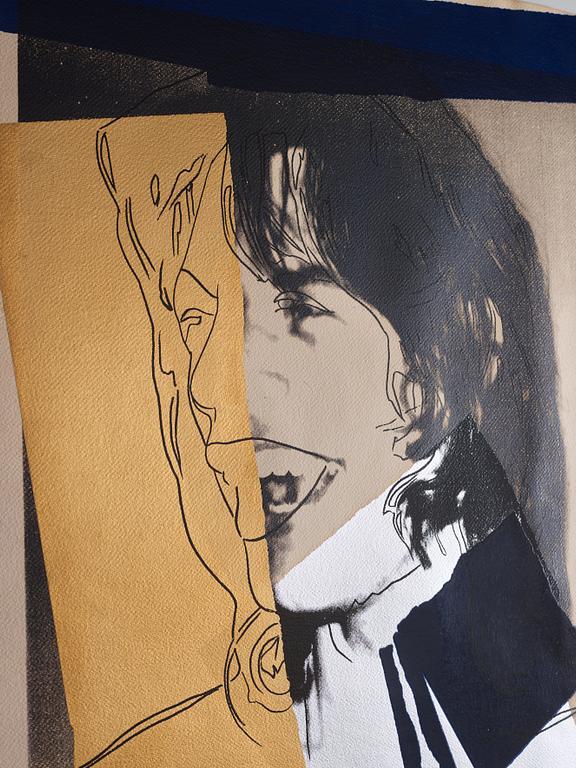
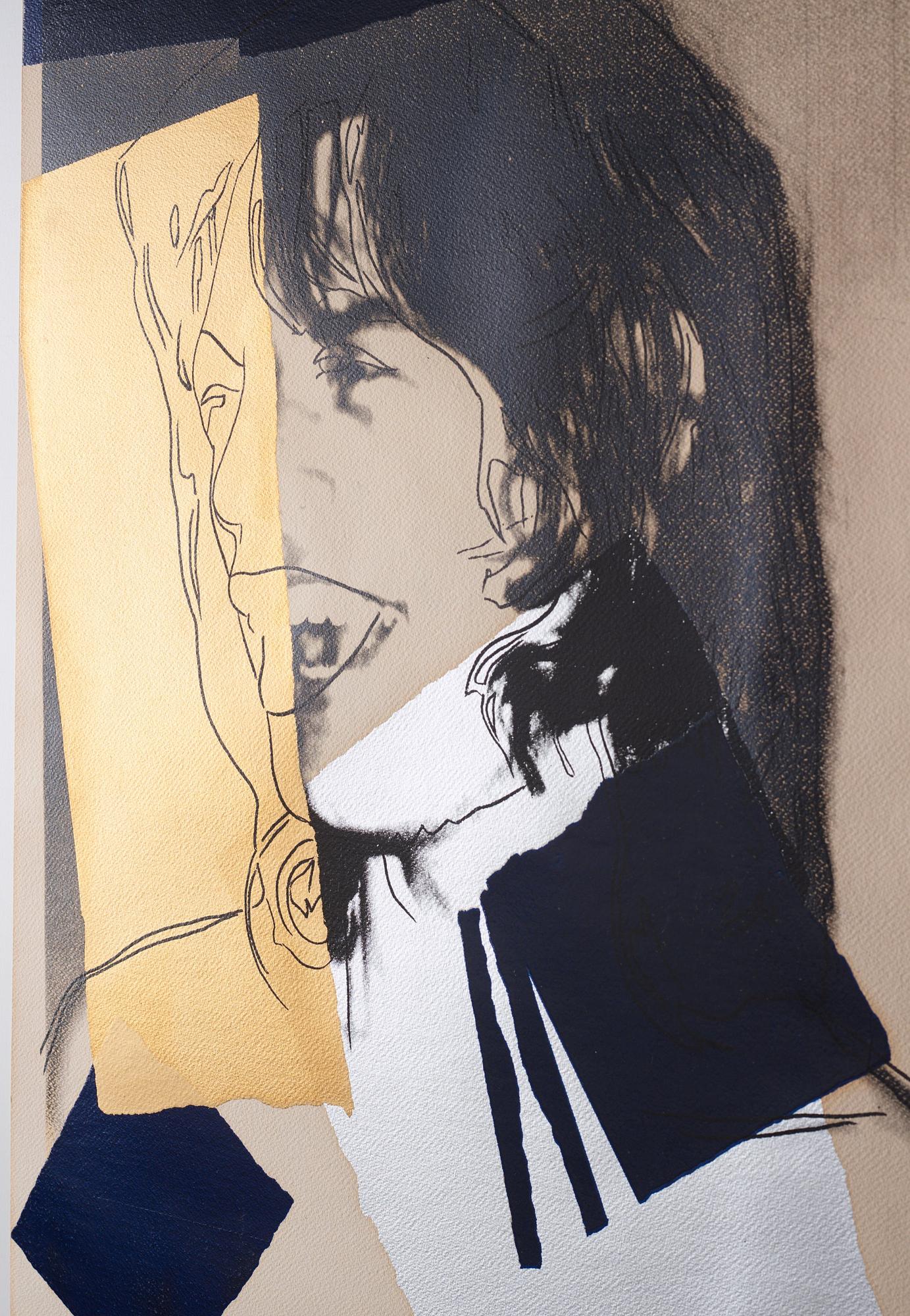
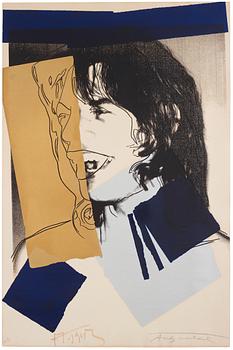
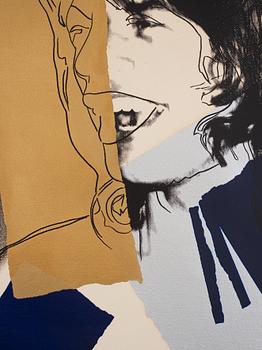
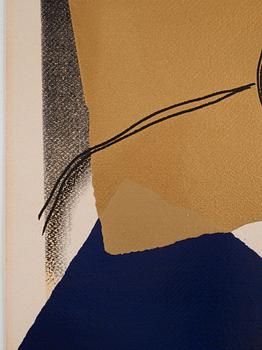
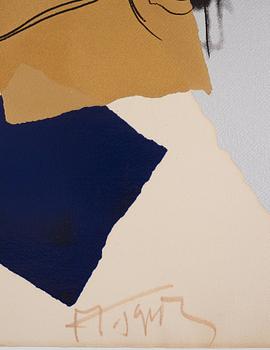
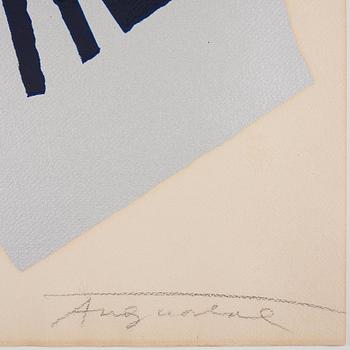
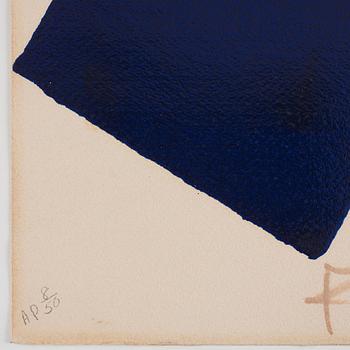
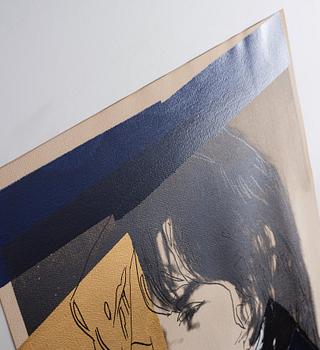
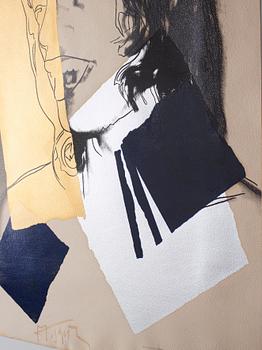
Signed in pencil Andy Warhol and in felt-tip pen by Mick Jagger, numbered AP 8/50. Silkscreen in color, 1975. Printed by Alexander Henrici, New York, published by Seabirds Editions, London. Sheet size 109 x 73 cm.
Provenance
Purchased in the USA in the 1970s.
Thence by descent to the present owner.
Literature
Feldman & Schellmann II. 142.
More information
Warhol's fascination with fame and celebrity shines through not only in his art but also in his lifestyle. He was part of New York's innermost celebrity circles from the 1960s onwards, mixing with stars from Bill Murray to John Lennon. Of particular note was Warhol's friendship with Mick Jagger.
Andy Warhol spent much time with Mick Jagger and his then-wife, Bianca. Their relationship, chronicled in Warhol biographies and articles, was highly publicised and, in many ways, symbolised the mythical jet-set icons of the 1970s. When Jagger hired Warhol to design Rolling Stone's legendary Sticky Fingers album in 1971, Warhol was given total artistic freedom. The result was a close-up of Joe Dallesandro's crotch in jeans. This image defined the Rolling Stones' sizzling sex appeal and willingness to break boundaries.
Mick Jagger and Andy Warhol continued their artistic collaboration, and four years later, in 1975, Warhol released a portfolio of 10 silkscreens based on personal photos Warhol had taken of his friend. The Mick Jagger images remain one of Warhol's most famous silkscreen series of celebrities. As on the cover of 'Sticky Fingers', the Mick Jagger suite symbolises the unforgettable personalities of two of the most famous and prolific artists of all time.
More about Andy Warhol
American artist, printmaker, and filmmaker. He studied at the Carnegie Institute of Technology from 1945 to 1949 and began his career as an art director for the magazines Vogue and Harper’s Bazaar. His success in the advertising industry led to the Art Directors Club Medal in 1957.
Warhol is considered one of the leading figures of Pop Art. His artistic practice consists largely of portraits, often of well-known individuals, executed in silkscreen technique. He also worked with reproduced documentary images as well as installations in which everyday consumer objects, such as packaging, were given a central role. The underlying idea was that beauty and energy can be found everywhere in modern society, even in things often regarded as banal. As a result, detergent boxes and soup cans became artistic motifs. Campbell’s soup cans and Brillo boxes were transformed through his work into some of the most iconic artworks of the 20th century.
From 1963 onward, he produced and participated in a large number of films in his own studio, The Factory, which simultaneously developed into an important meeting place for New York’s artistic and bohemian scene. Warhol continuously documented his surroundings with a film camera and later also a Polaroid camera. In his so-called Screen Tests, he filmed a number of internationally known figures, including Mick Jagger, Bob Dylan, Marcel Duchamp, and Salvador Dalí. According to his will, The Andy Warhol Foundation for the Visual Arts was established in New York in 1987, and in 1994 The Andy Warhol Museum opened in Pittsburgh.
Read moreFor condition report contact specialist

Image rights
The artworks in this database are protected by copyright and may not be reproduced without the permission of the rights holders. The artworks are reproduced in this database with a license from Bildupphovsrätt.
























Others have also viewed