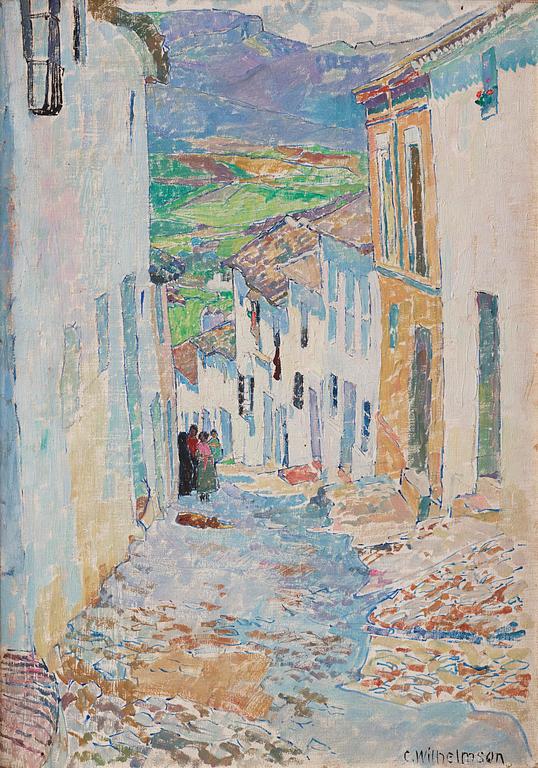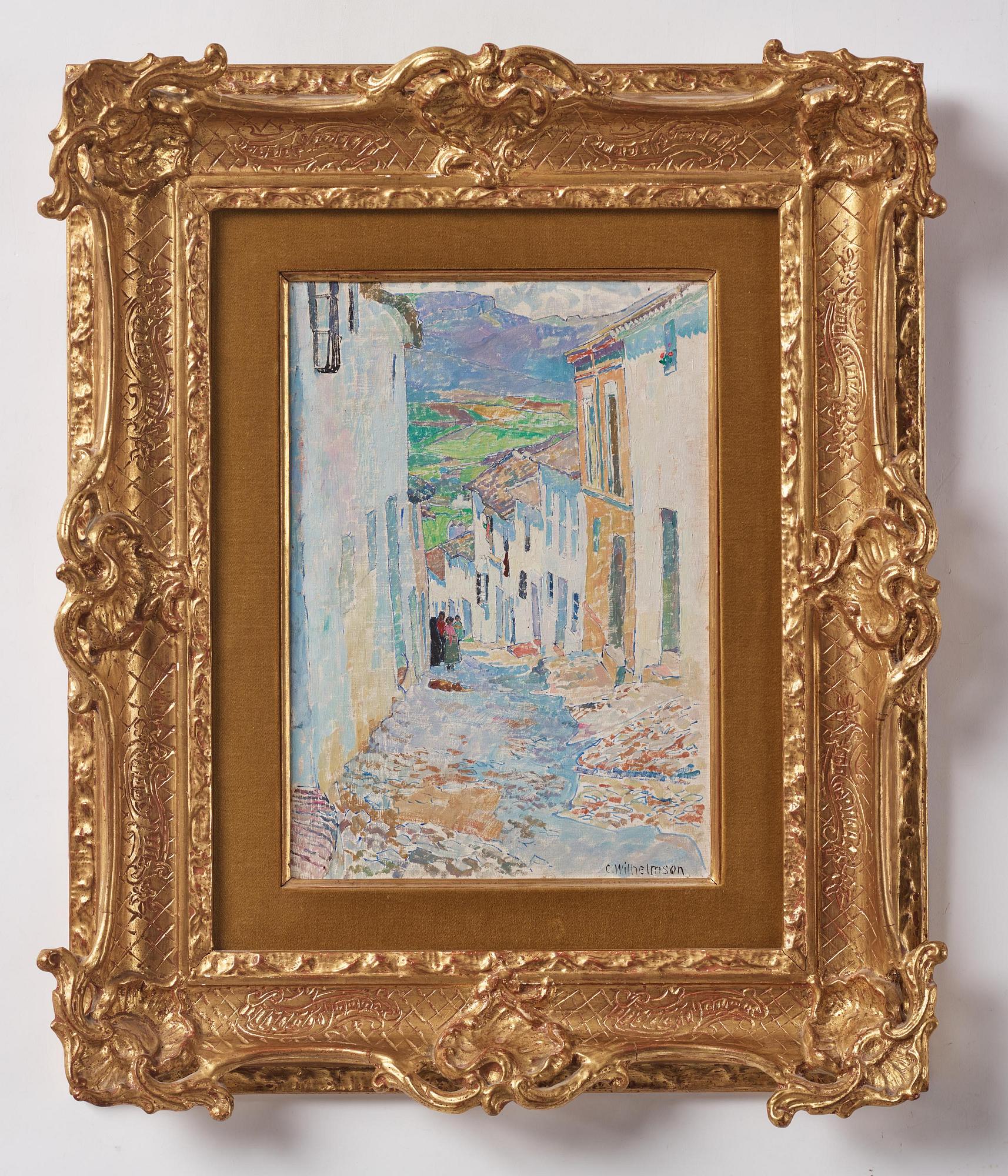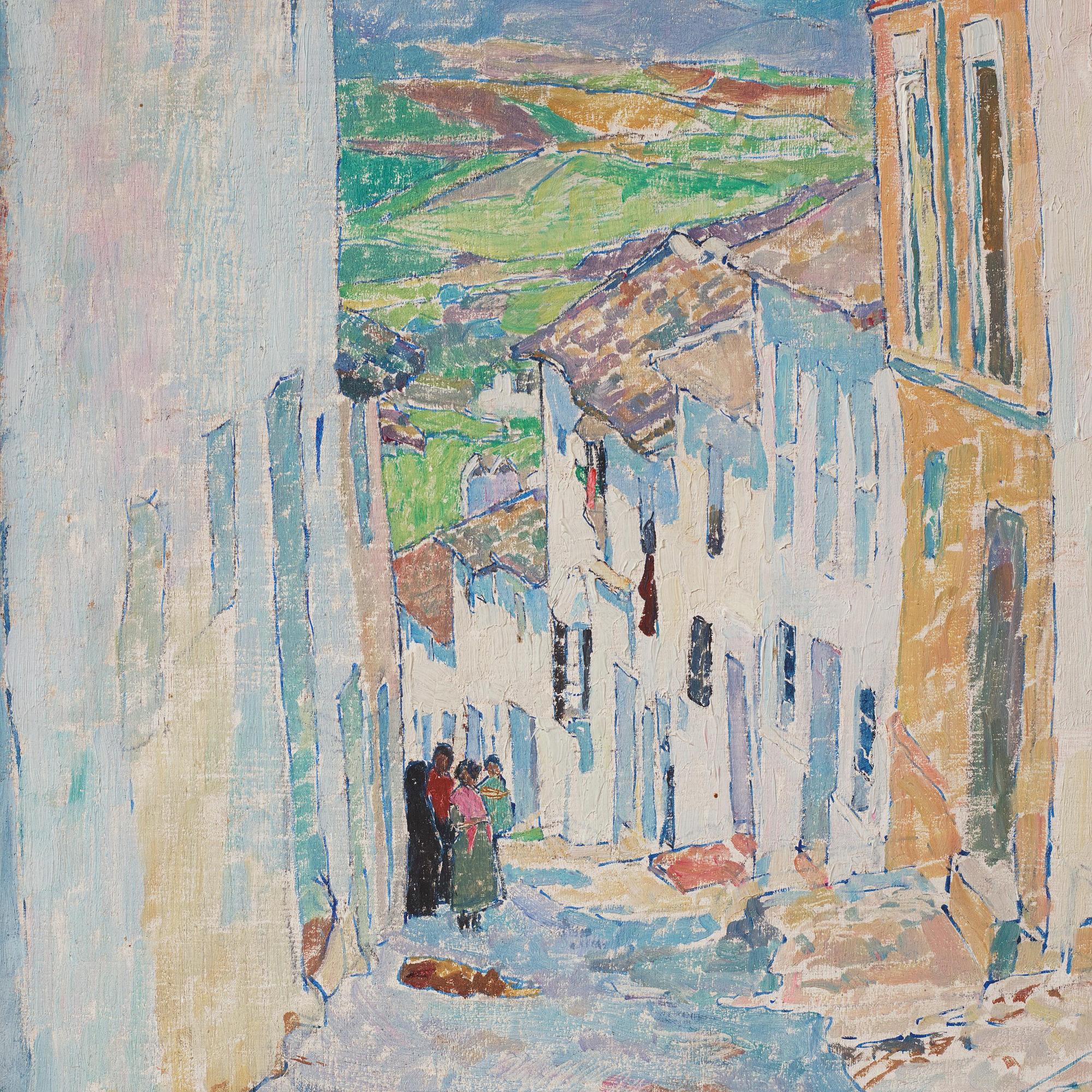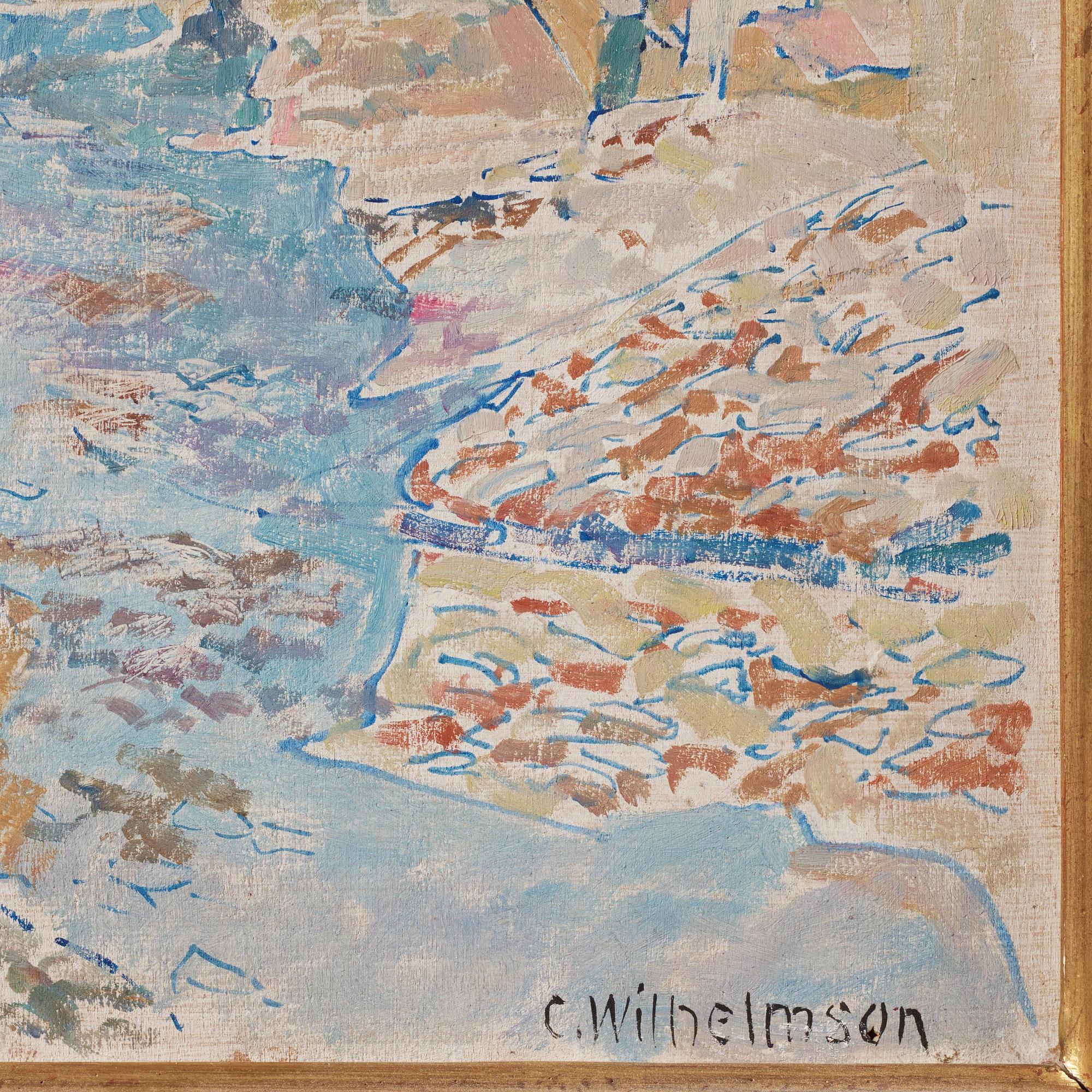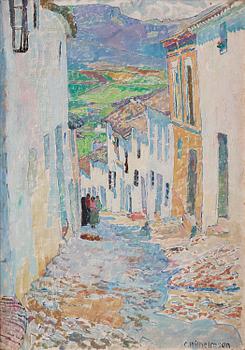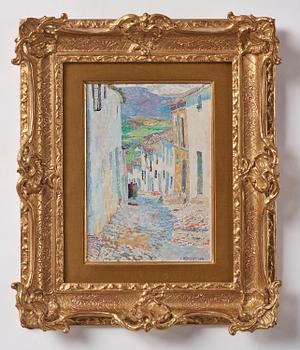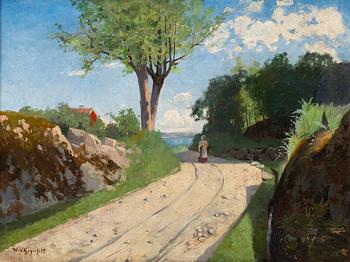
"Gata i Ronda" (A street in Ronda)
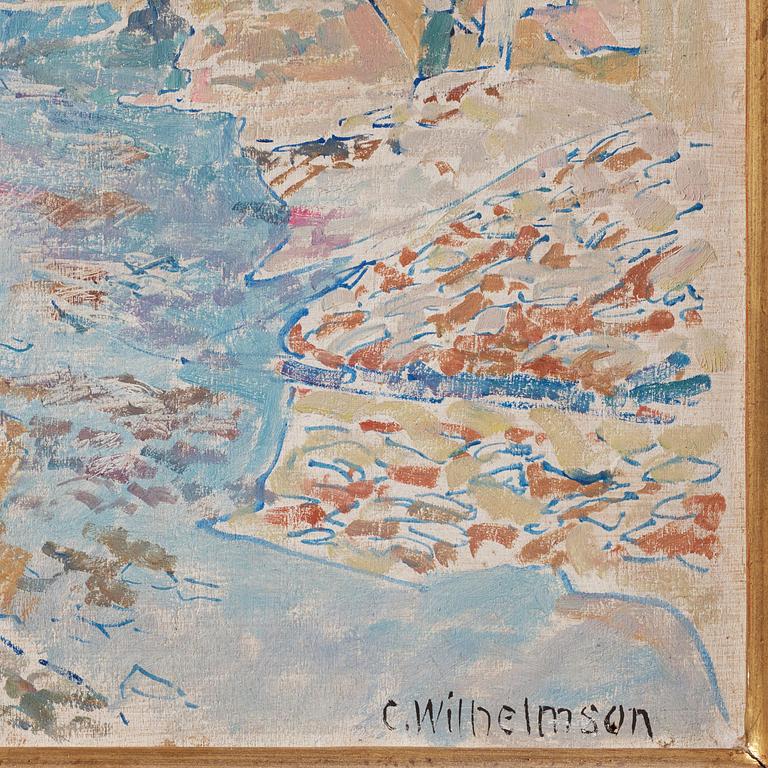
Signed C. Wilhelmson. Executed 1913. Oil on panel 36 x 25 cm.
Provenance
Hjalmar Wijk (1877 - 1965), industrialist and philantropist, Gothenburg, Sweden.
Exhibitions
Göteborgs Konstförening, Gothenburg, 1921.
Gustavianum, Uppsala, Sweden, 1924.
Liljevalchs konsthall, Stockholm, "Carl Wilhelmson. Retrospektiv utställning", 3 - 25 February 1934, cat. no. 270
Literature
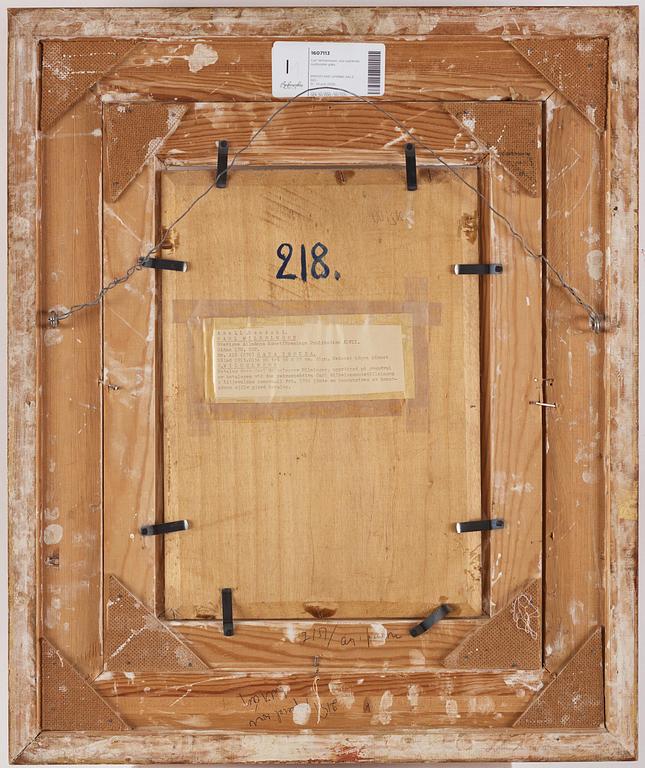
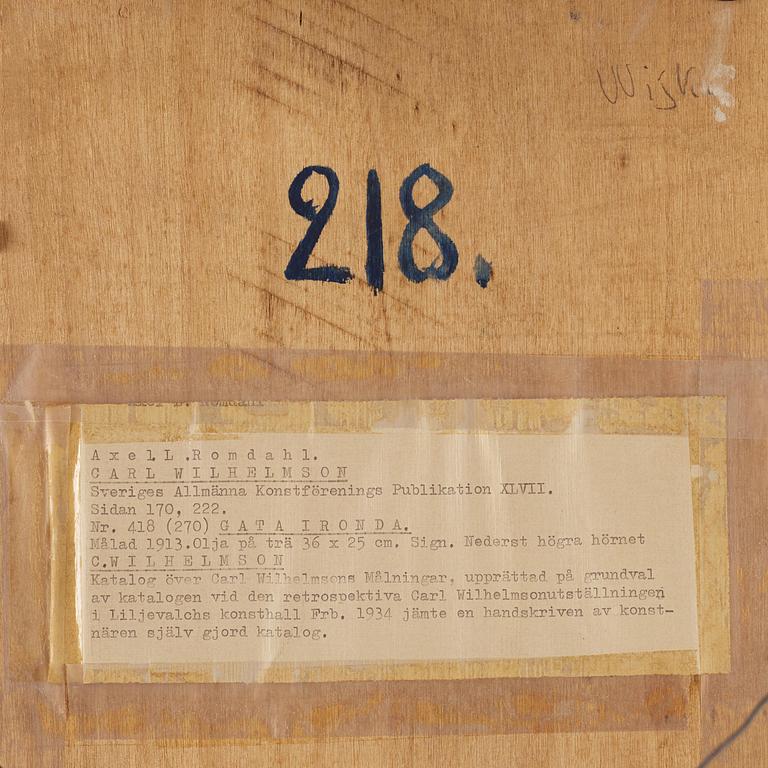
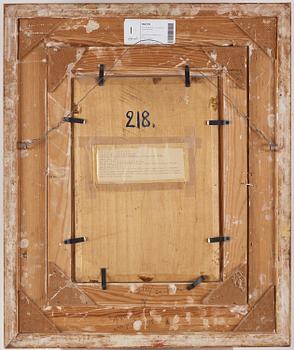
Recorded in the artist's own registry, under the year 1913, as no. 218 (sold to Hjalmar Wijk).
Axel Romdahl, "Carl Wilhelmson", Sveriges Allmänna Konstförening 1938, listed in the list of works under the year 1913, cat. no 418 (270).
More information
"A Street in Ronda was painted during Carl Wilhelmson's second trip to Spain in 1913. Wilhelmson travelled in the company of his artist friend Yngve Berg. Axel Romdahl comments on Berg's travel account:
"In Berg's book, one learns about the travel route and various other points of interest. We find out quite a bit about what the two artist companions saw, the Alhambra's Moorish architecture and the mosque of Córdoba, the gypsy life for tourists in the Albaicín of Granada, bullfights, cockfights, the Prado Museum, and the famous dancer Argentinita. This is of interest primarily because it is of interest to know what Carl Wilhelmson saw and experienced and left unused as motifs. He did not dare to engage with the bulls nor the exciting popular amusement of cockfighting. For the Moors' splendours or the old masters in the museums, he had not travelled to Spain. He once again found his way to the unspoiled folk culture. This time, he chose the small Andalusian mountain town of Ronda. The townscape provided the artist with motifs for sketches and paintings, the most beautiful perhaps being the ones where we see the city with its walls and gates climbing upwards in terraces."
For condition report contact specialist