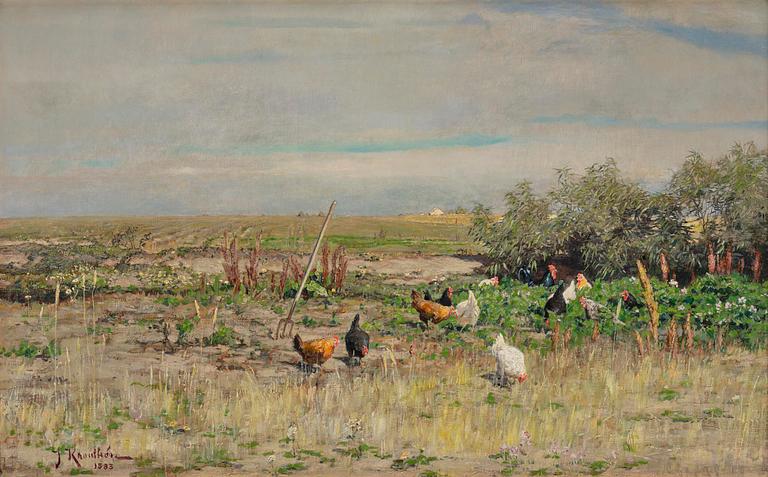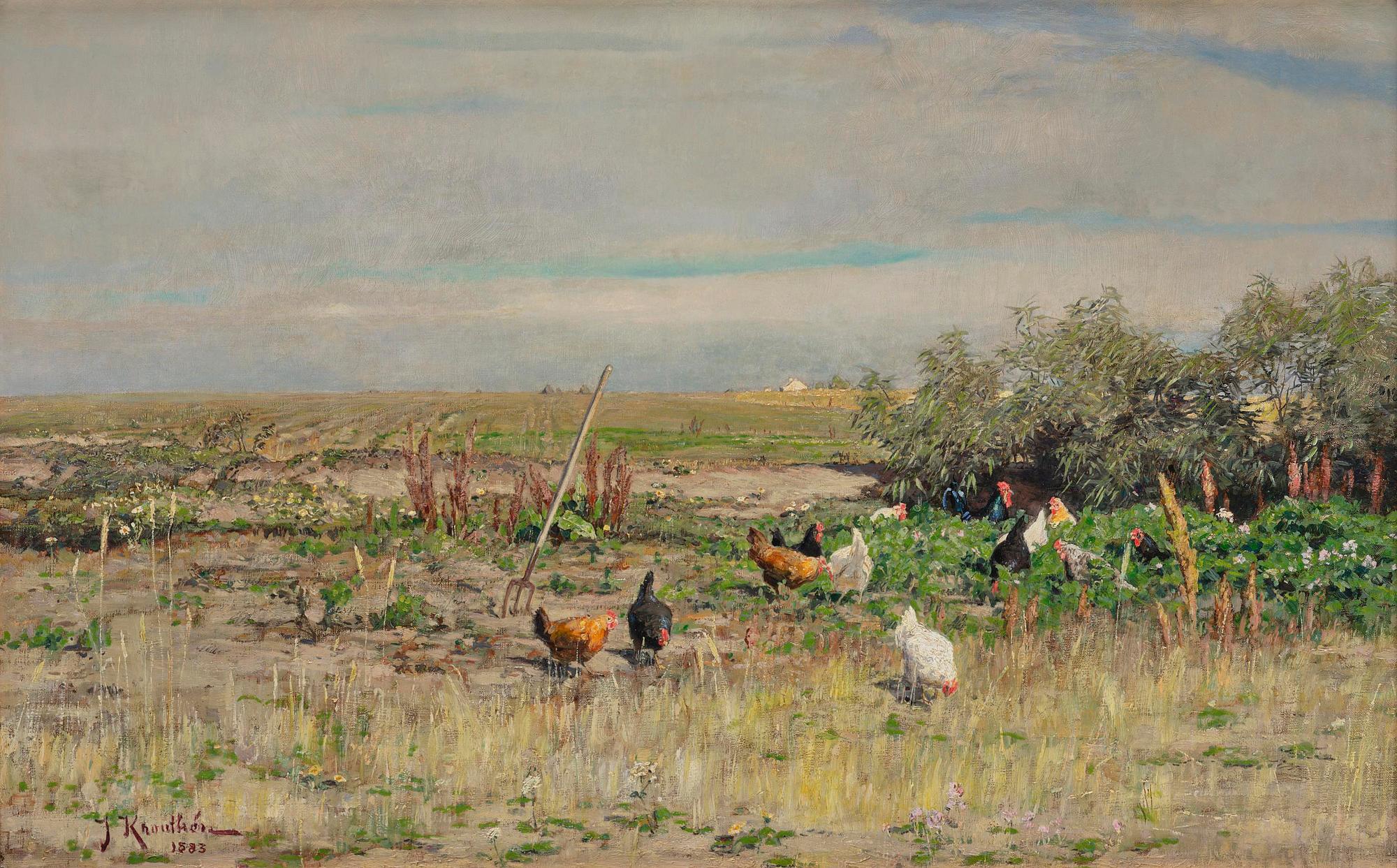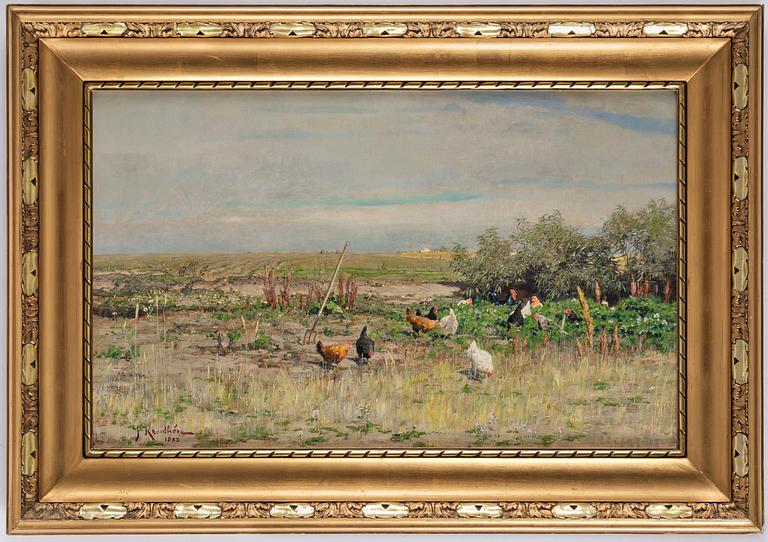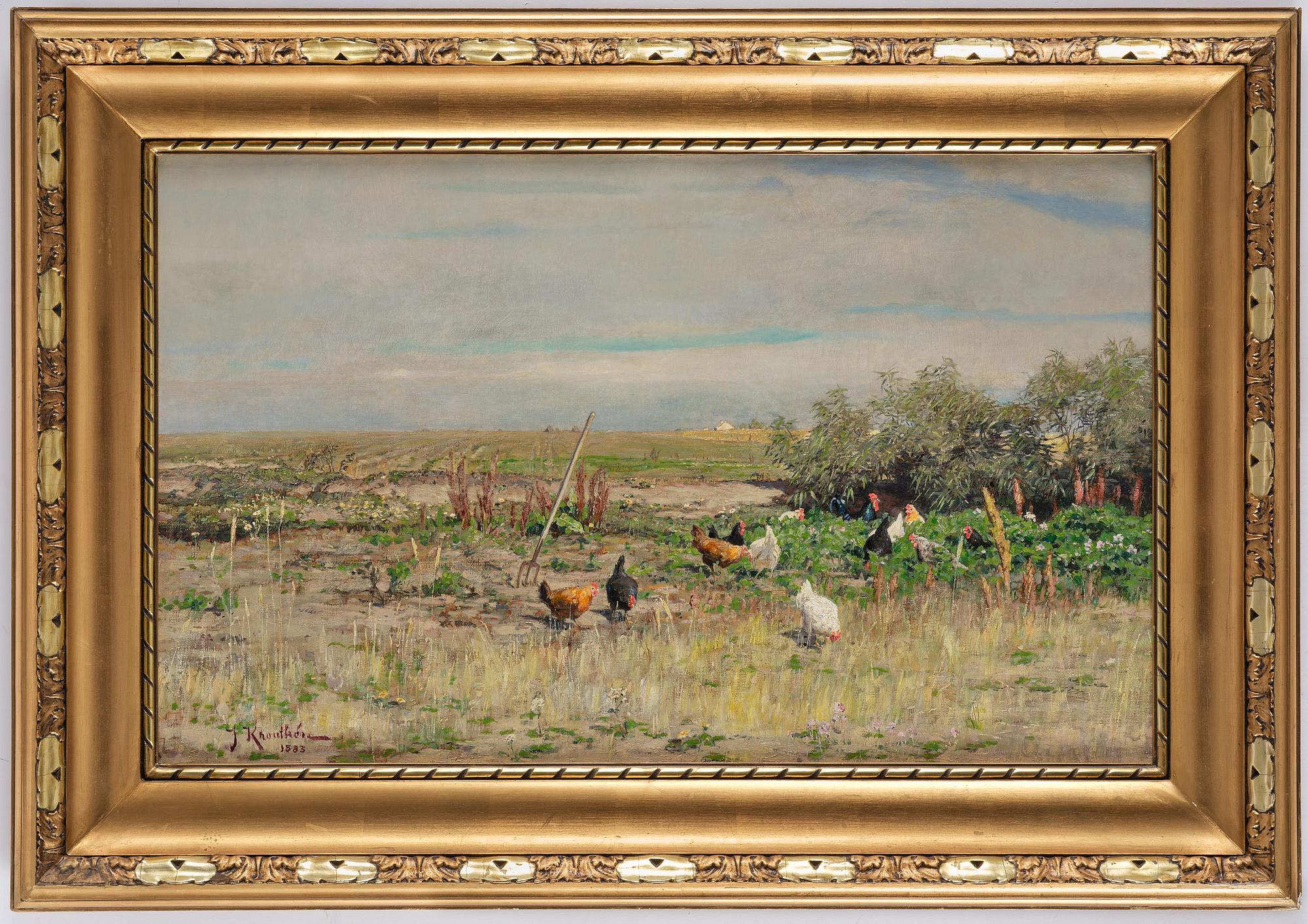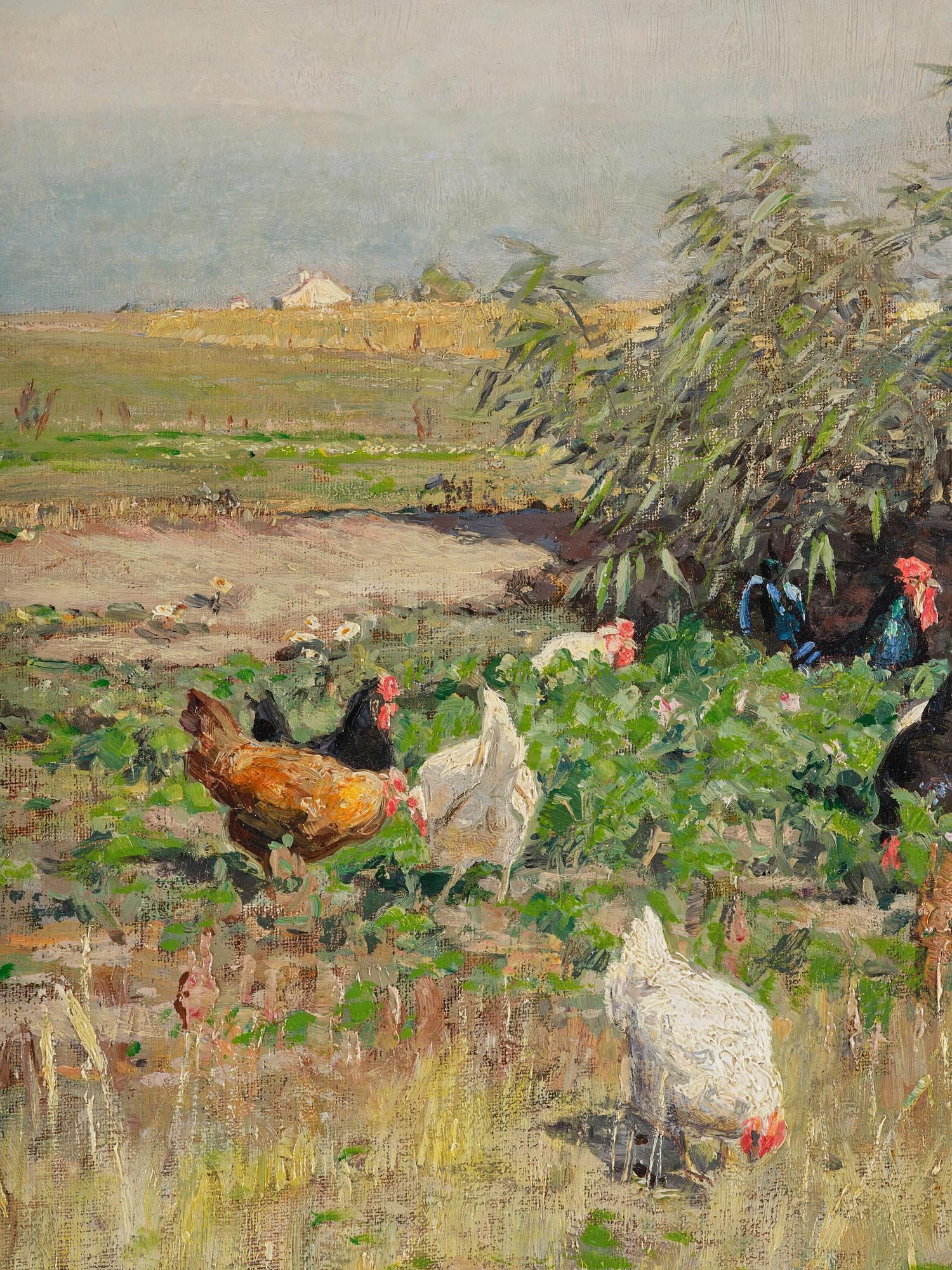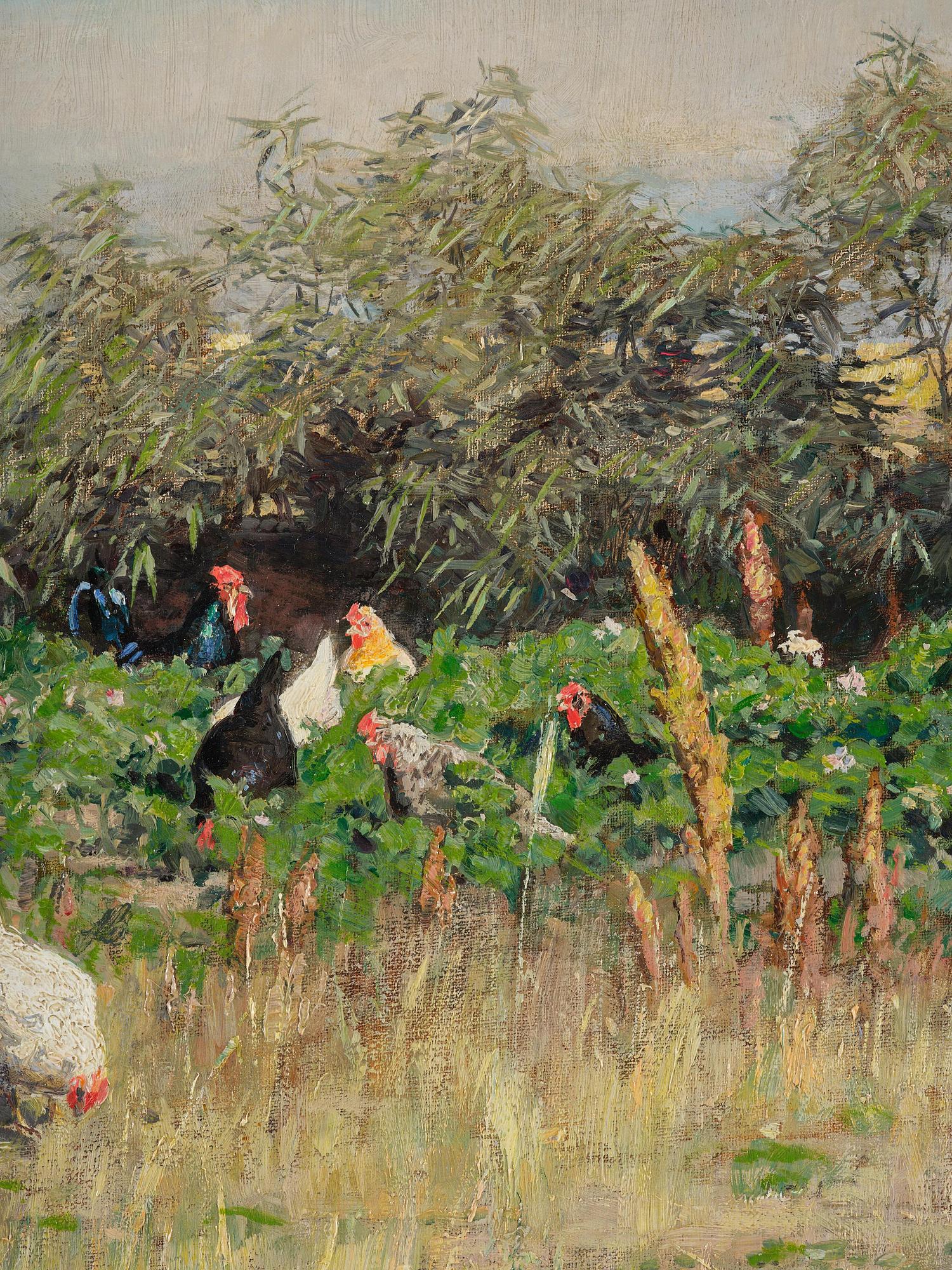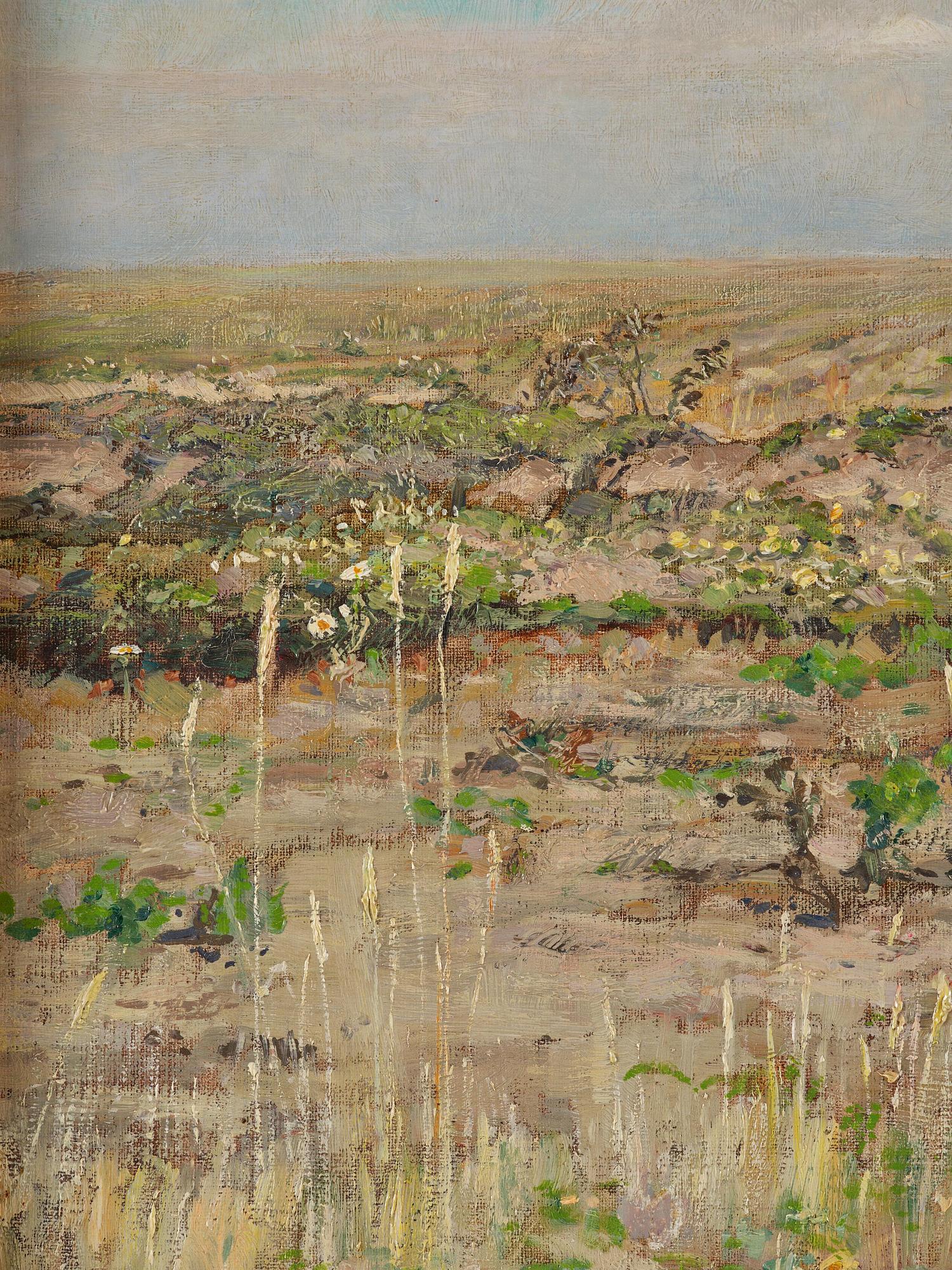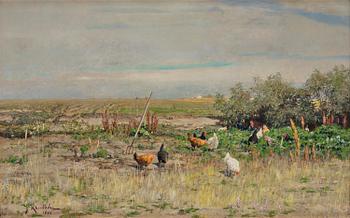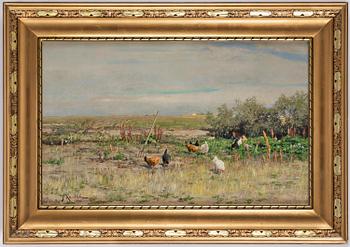
"Höns i trädgårdslandet"
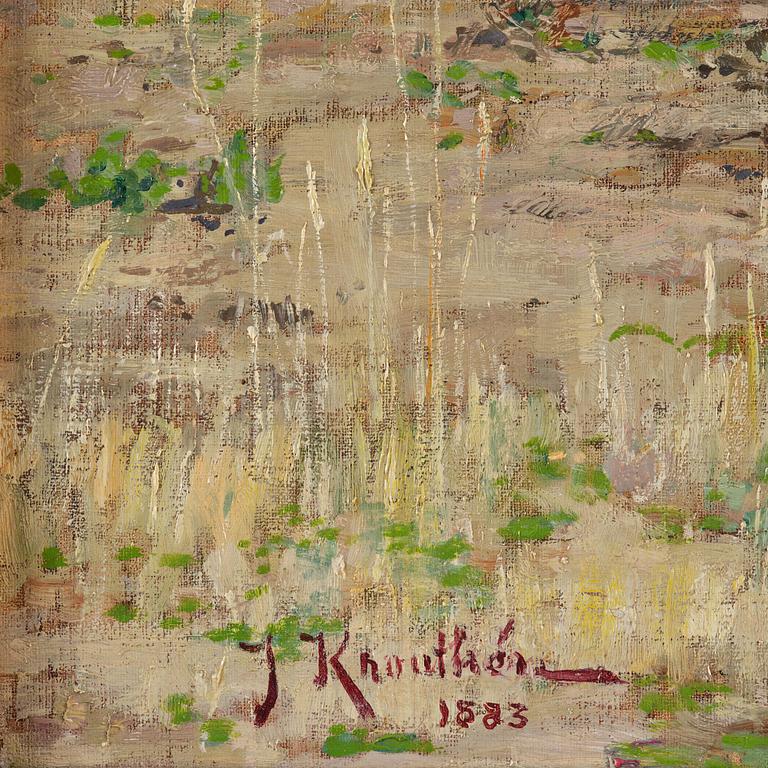
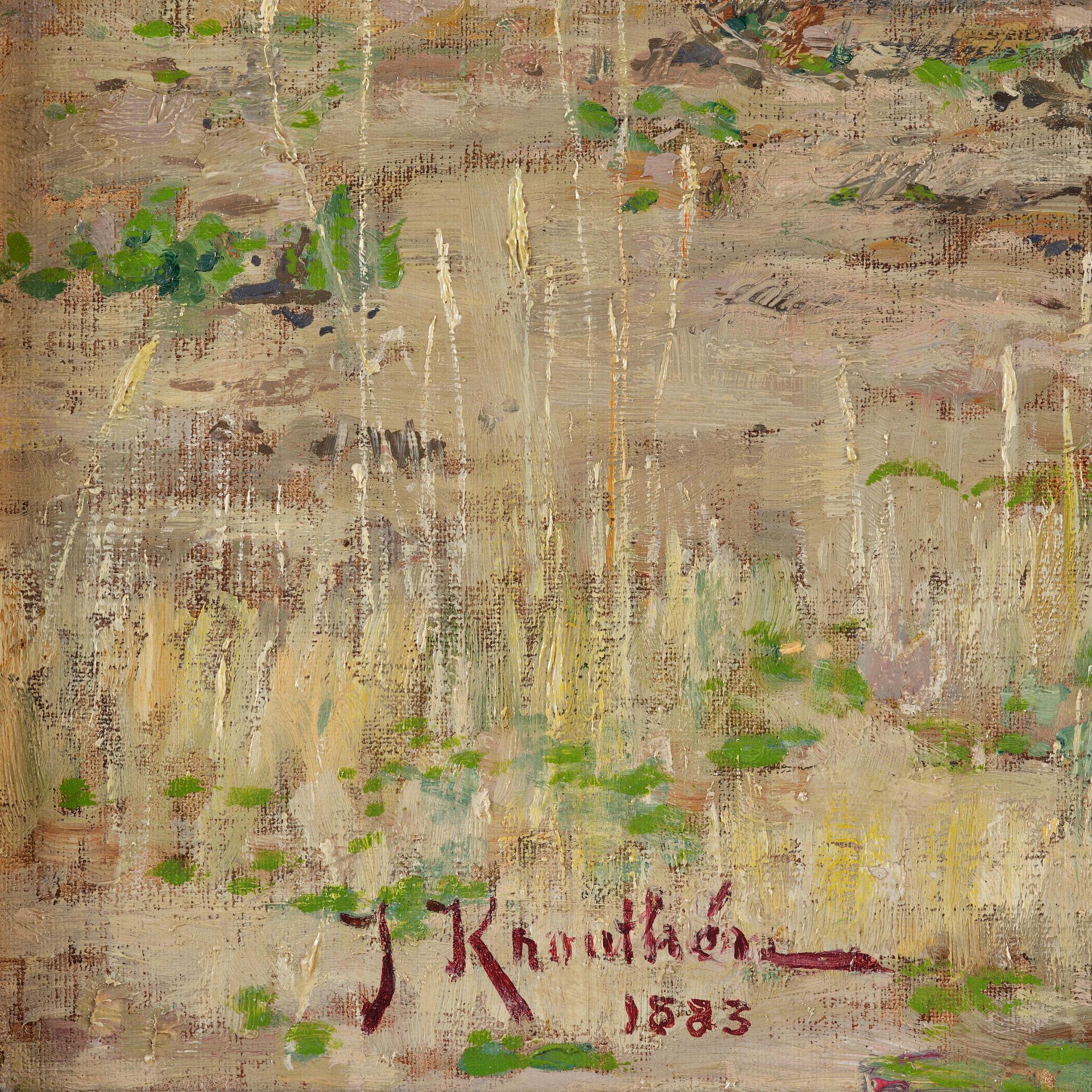
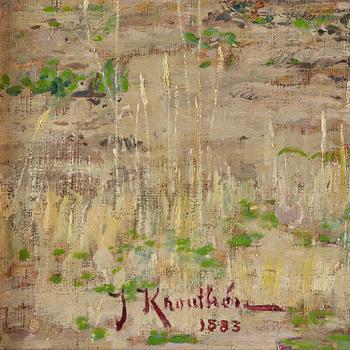
Signed J. Krouthén and dated 1883. Likely executed in Skagen, in the summer of 1883. Oil on canvas 60 x 98 cm.
Provenance
Lions Club art lottery, "Konst från fem århundraden i Linköpingshem", Linköping, 3 December 1952, cat. no 48 (Slättlandskap).
Exhibitions
Östergötland and Linköping City Museum, Linköping, lent in 1981 according to the accompanying letter from Olle Ankarberg, curator.
More information
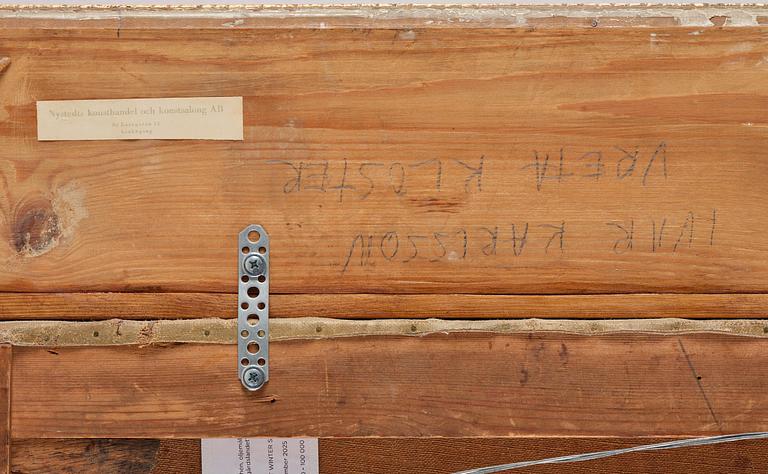
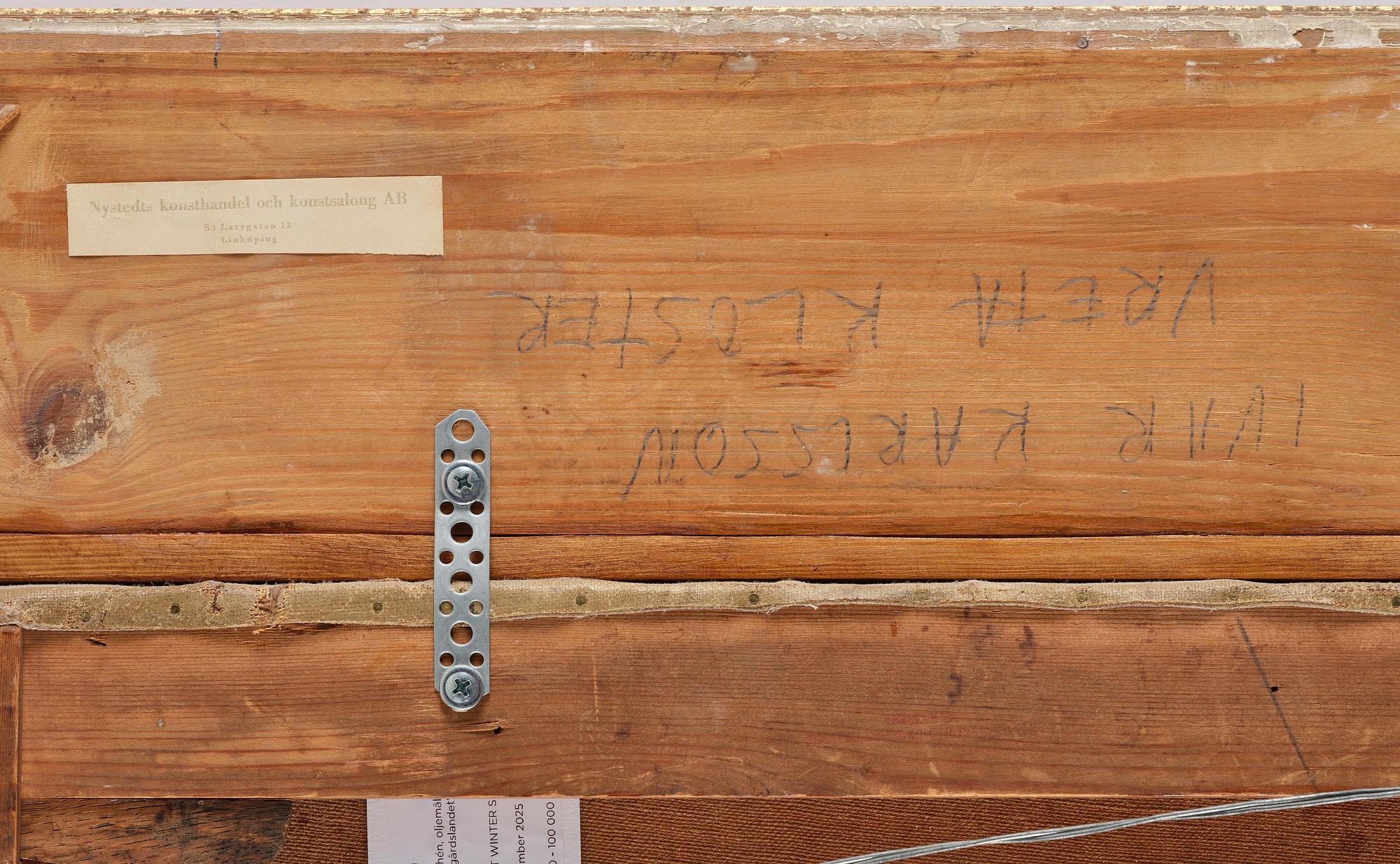
From the accompanying valuation Certificate, Nystedts konsthandel och konstsalong AB, Linköping, 6 August 1953:
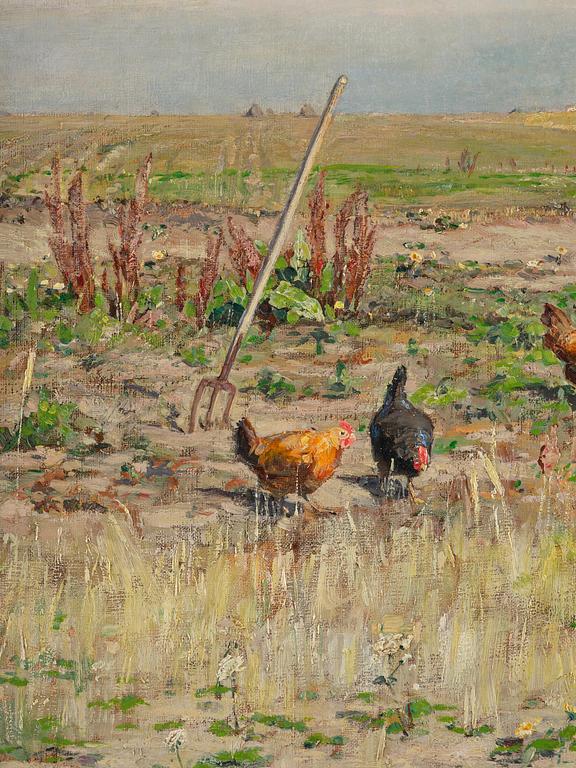
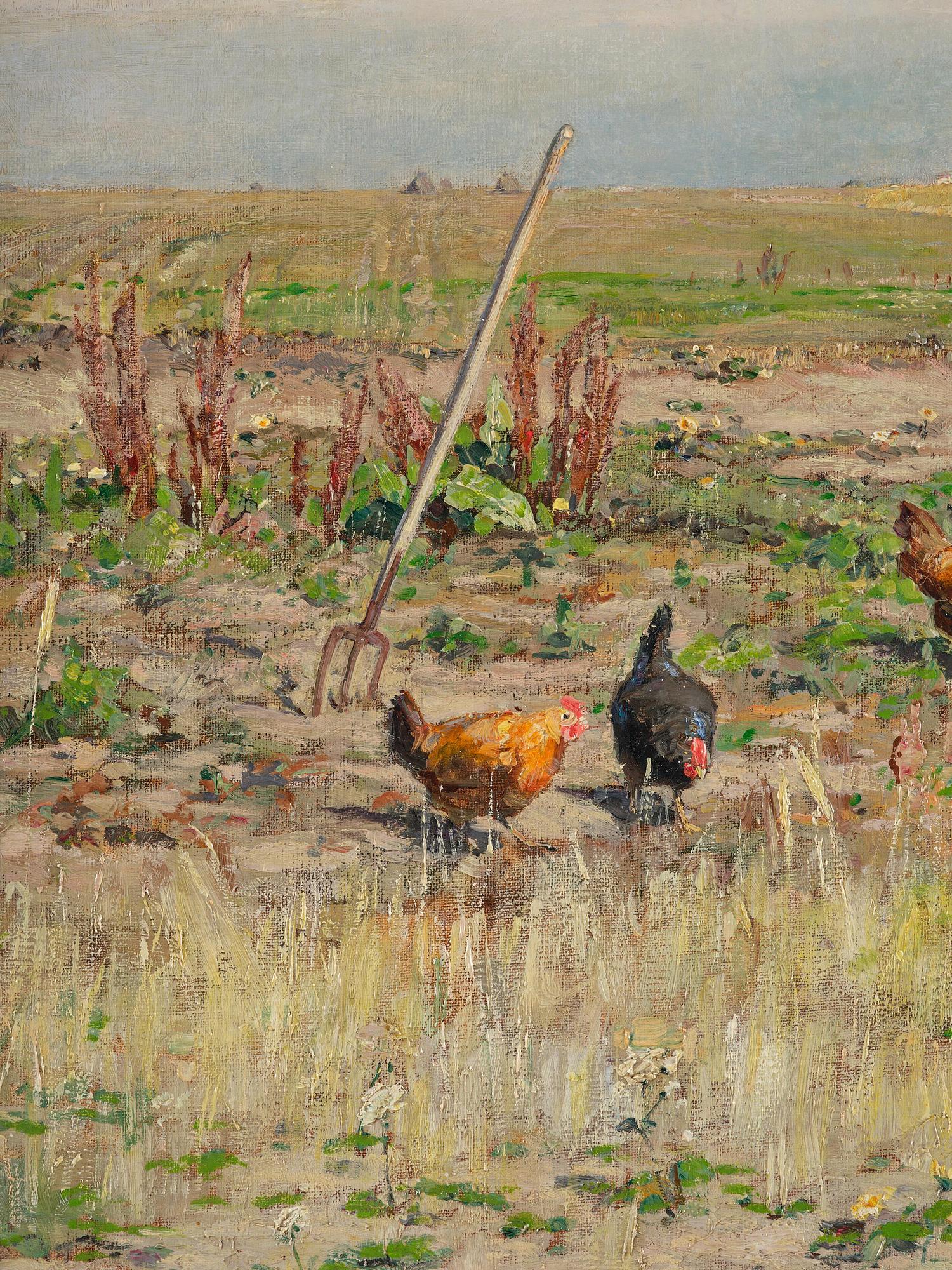
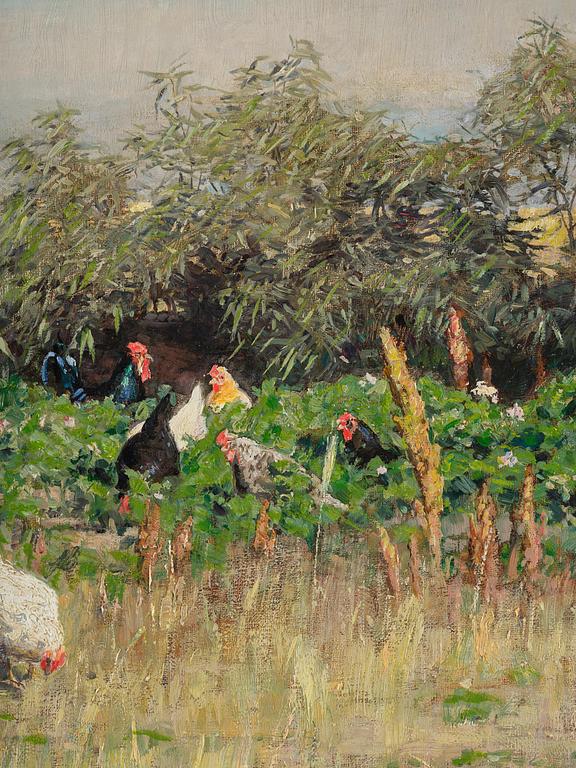
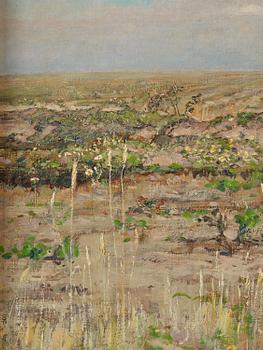
"The painting, depicting a flat landscape, has on the right side of the central plane a bushy clump in lush greenery in front of which a potato field is animated by a flock of hens moving about, pecking and scratching. In the left part of the painting, one can see the landscape between some tall reeds in the foreground fading into a tranquil, infinitely distant view under a softly glowing grey sky with streaks of gently and subtly inserted blue patches. The composition is anchored by a fork or pitchfork, which is thrust diagonally into the ground at the centre of the landscape, drawing the viewer's gaze towards the central axis, enhancing the impression of the landscape's grandeur and preventing the right side of the painting, with its figures, from dominating.
The painting, executed shortly after (or during, ed. note) the artist's return from abroad and near Skagen, is a brilliant example of how high our so-called plein air painters could reach when they were at their best."
For condition report contact specialist