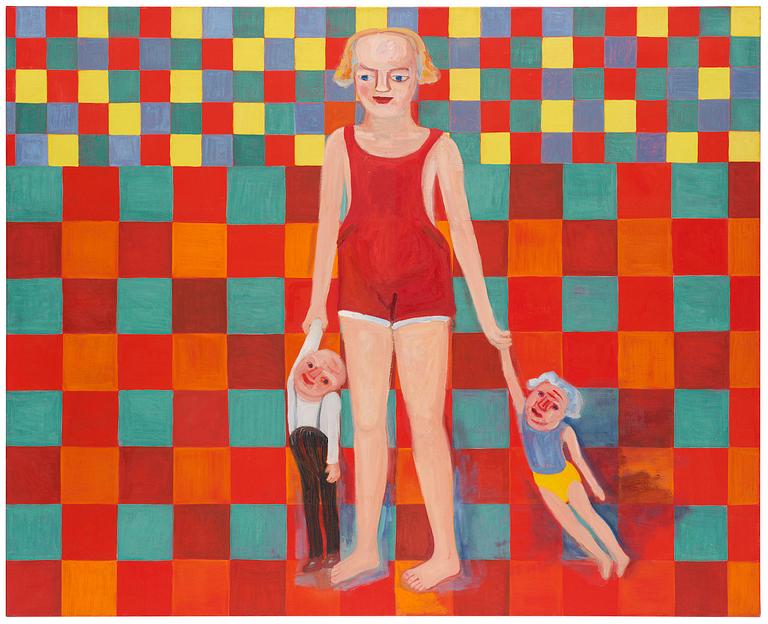
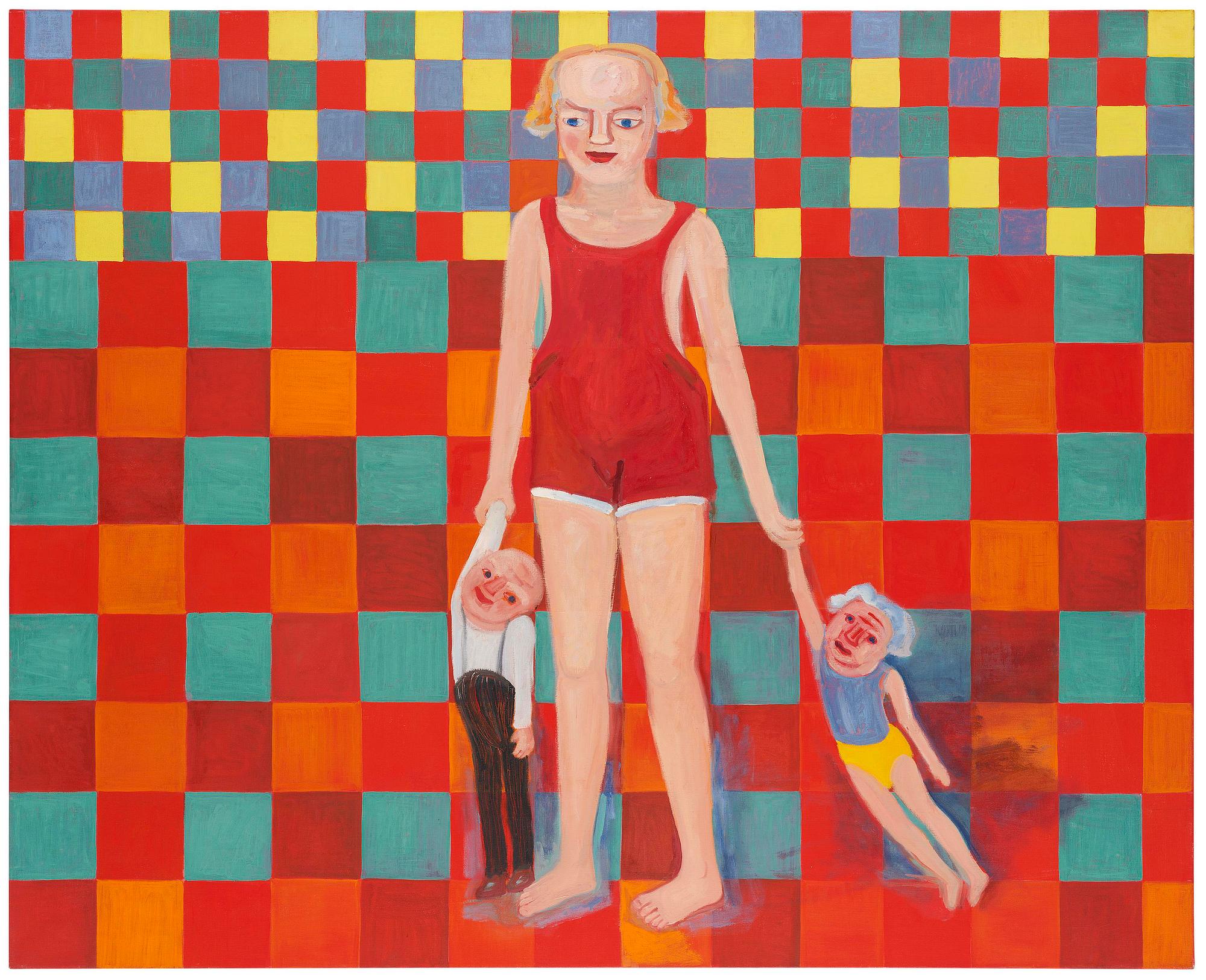
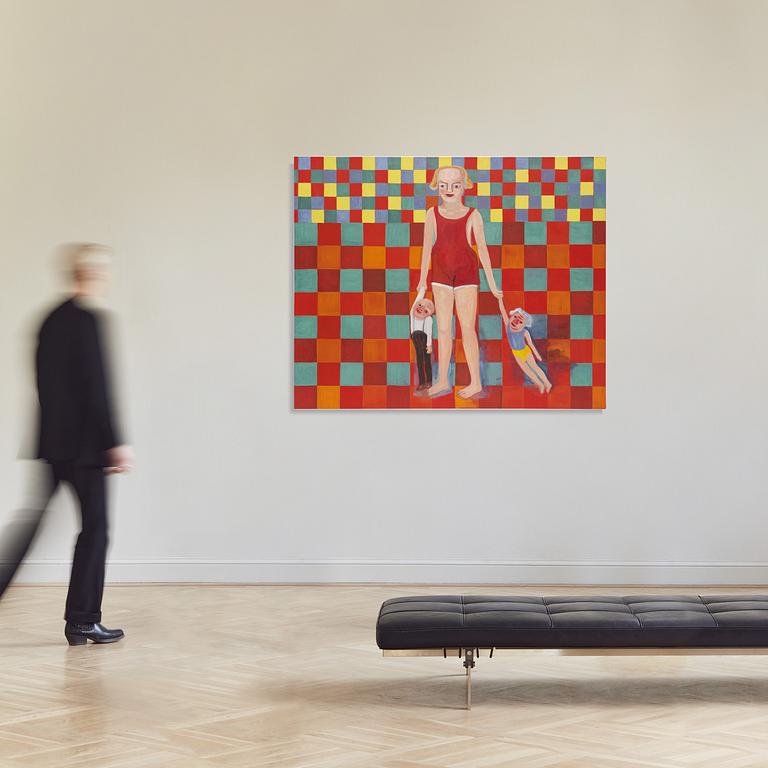
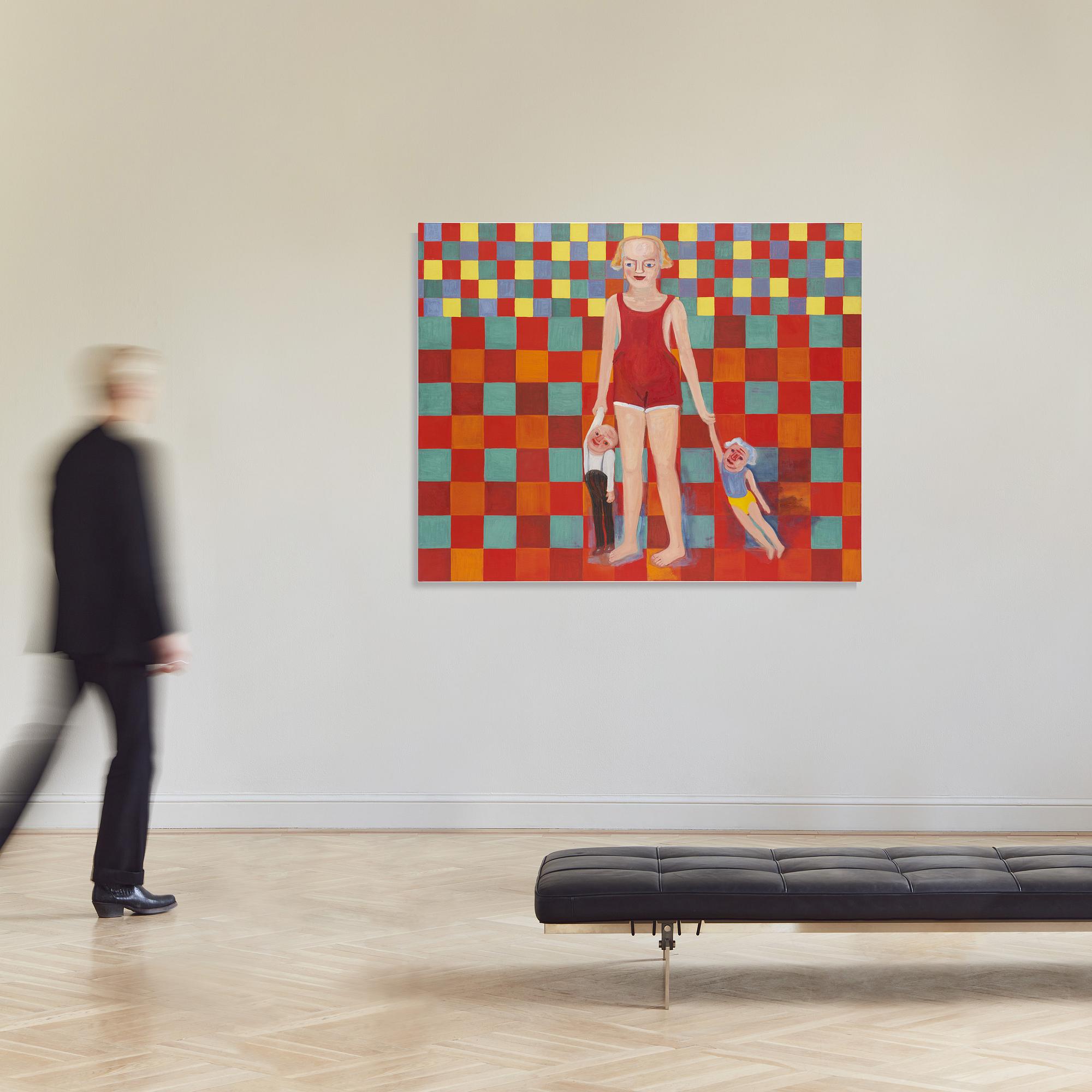
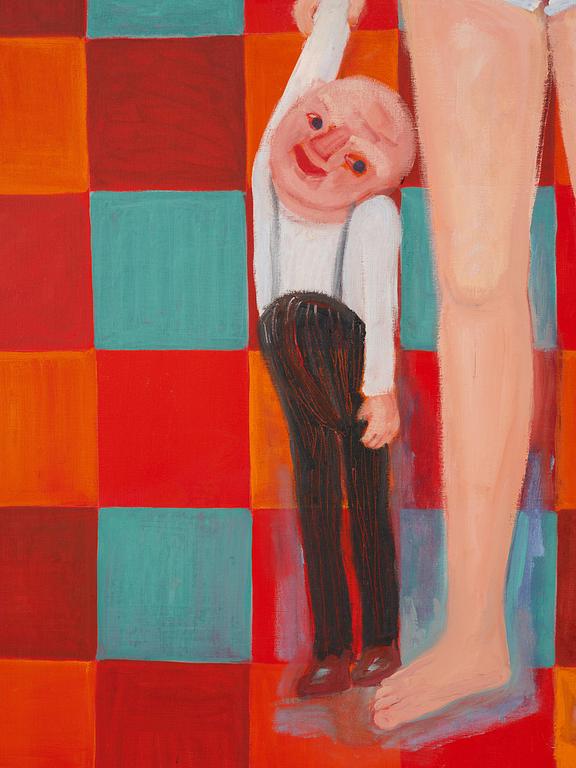
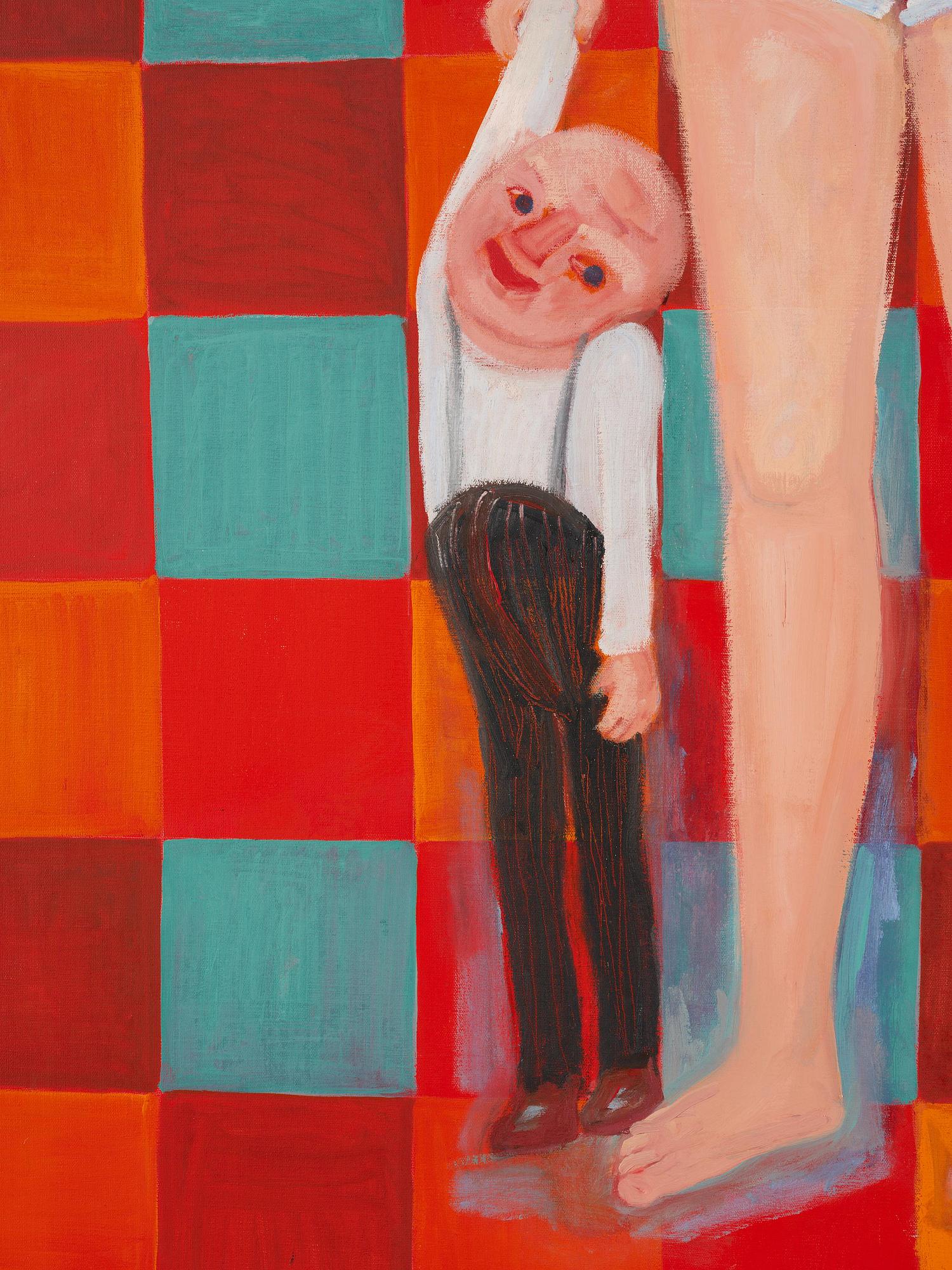
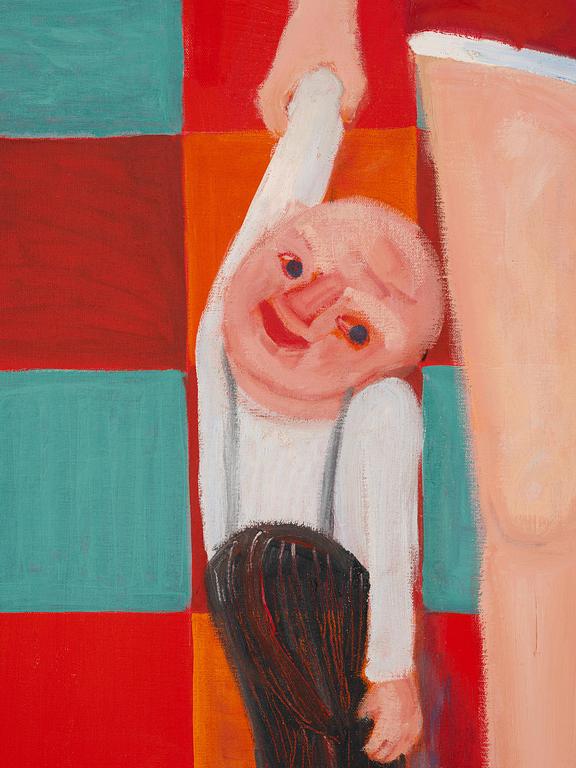
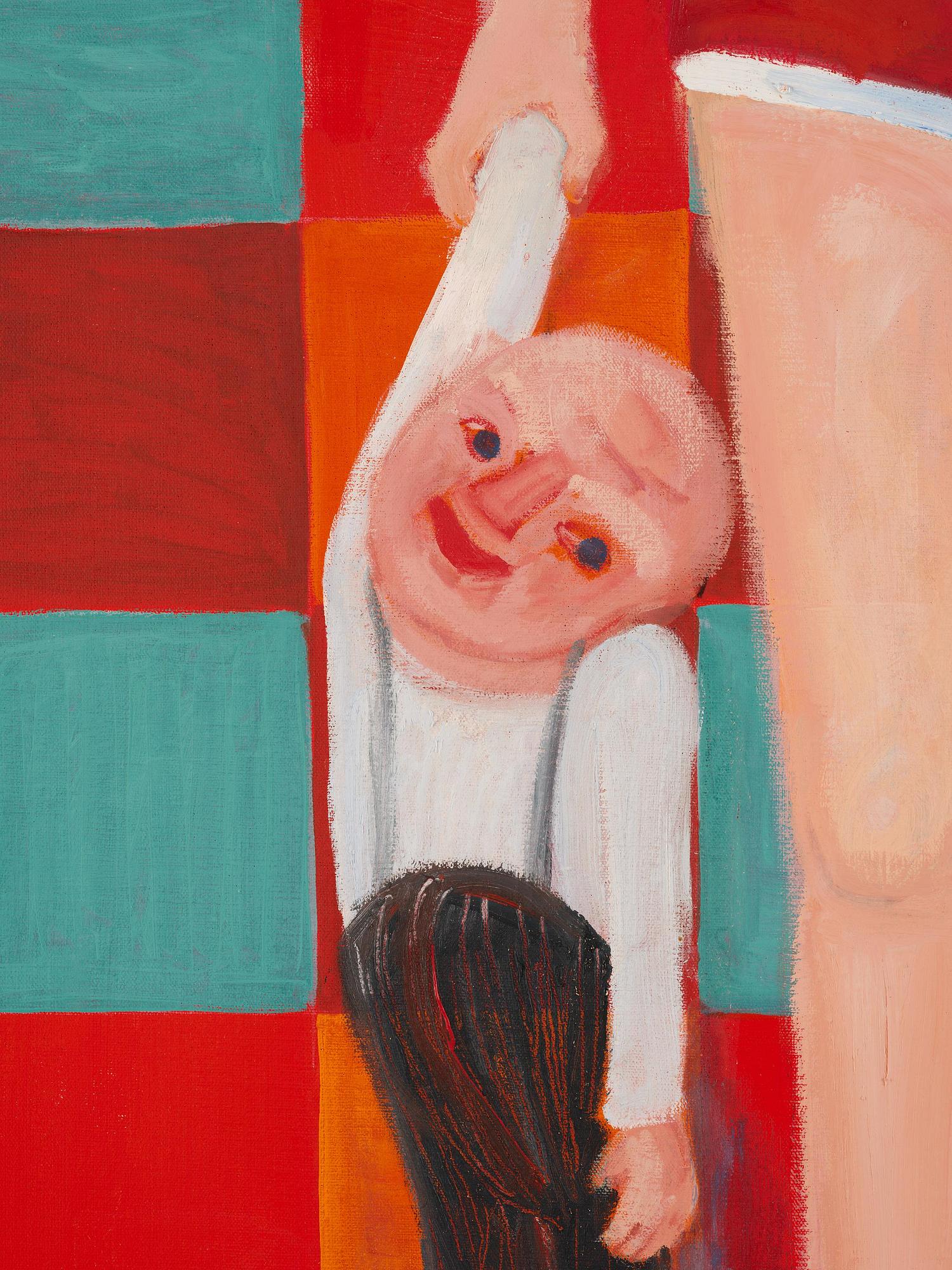
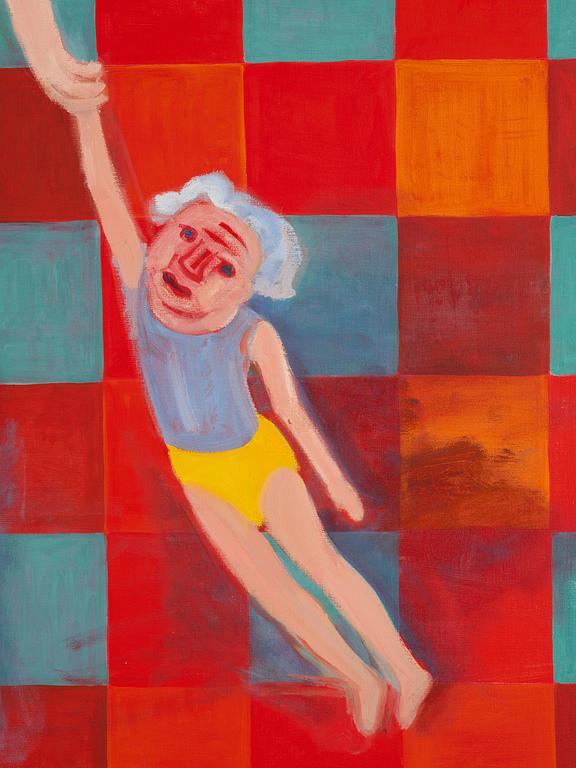
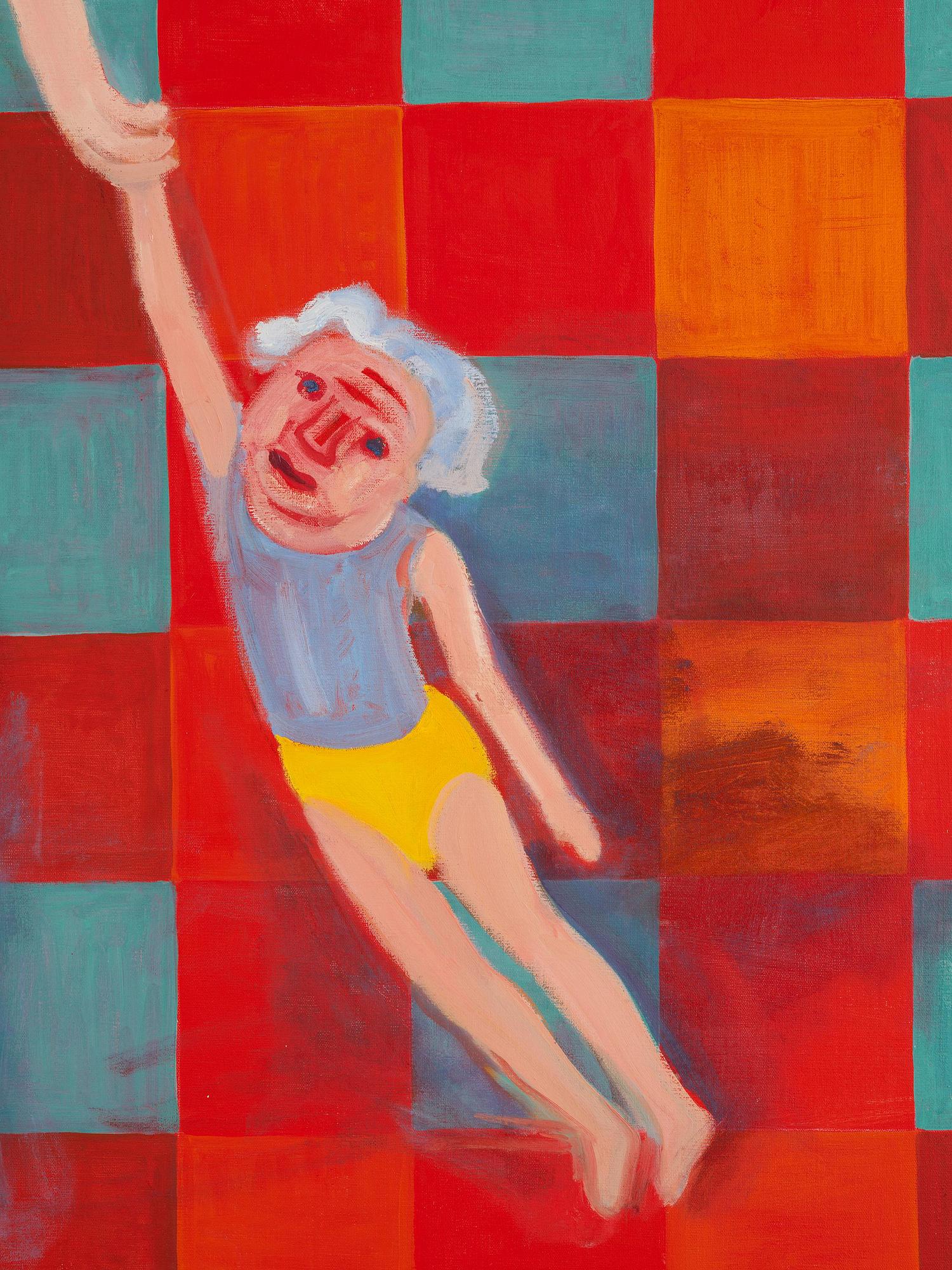
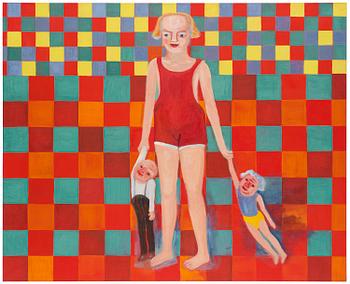
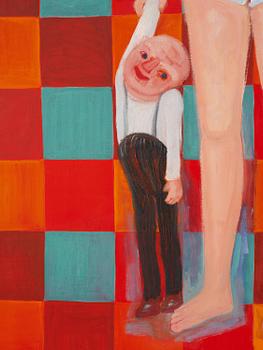
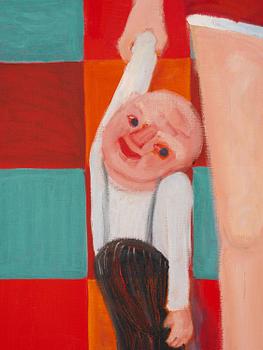
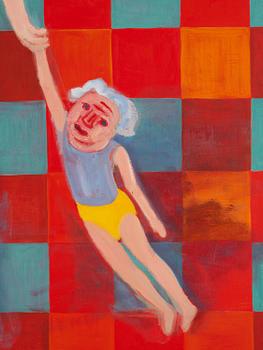
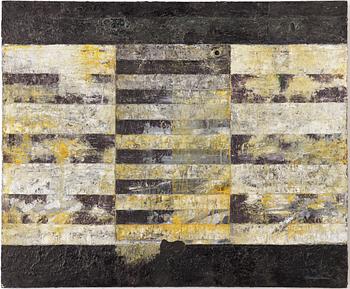
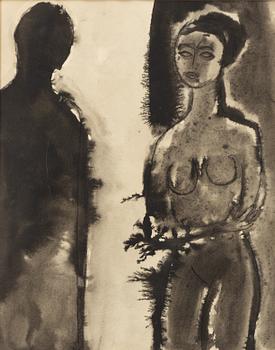
"Flicka med dockor".
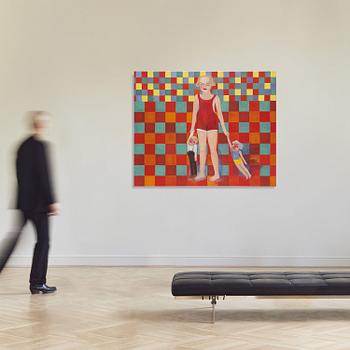
Stamped signature verso. Executed in 1995. Tempera and oil on canvas 162.2 x 200 cm.
Provenance
Galleri Lars Bohman, Stockholm.
Private Collection, Stockholm.
Literature
Galleri Lars Bohman, Stockholm, "Lena Cronqvist - Flickor i New York", exhibition catalogue, 28 October - 28 November, 1995, see image p. 9.
More information
Ingela Lind writes in the book "Lena Cronqvist – Paintings 1964-1994" about Cronqvist's thematic circle, how she has questioned the artist as a unified creative subject and constantly dared to explore the conditions of family, societal, and gender roles. "On canvas, through oil and tempera, she experiments with choreography and absurdist stage settings. Her art is akin to ritual theatre. She goes in and out of the scene, directing, designing the stage, and often playing both clown and tragic roles herself. She builds podiums, sets lights, changes backdrops, tries costumes, gestures, masks, and effects of empathy and distancing. […] It is also a question of power. The canvas is a playing field where she depicts the existential conditions of humanity."
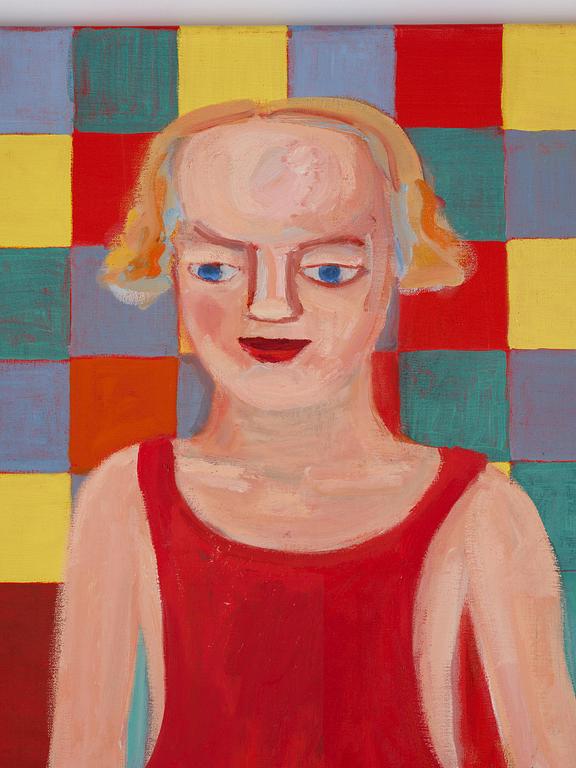
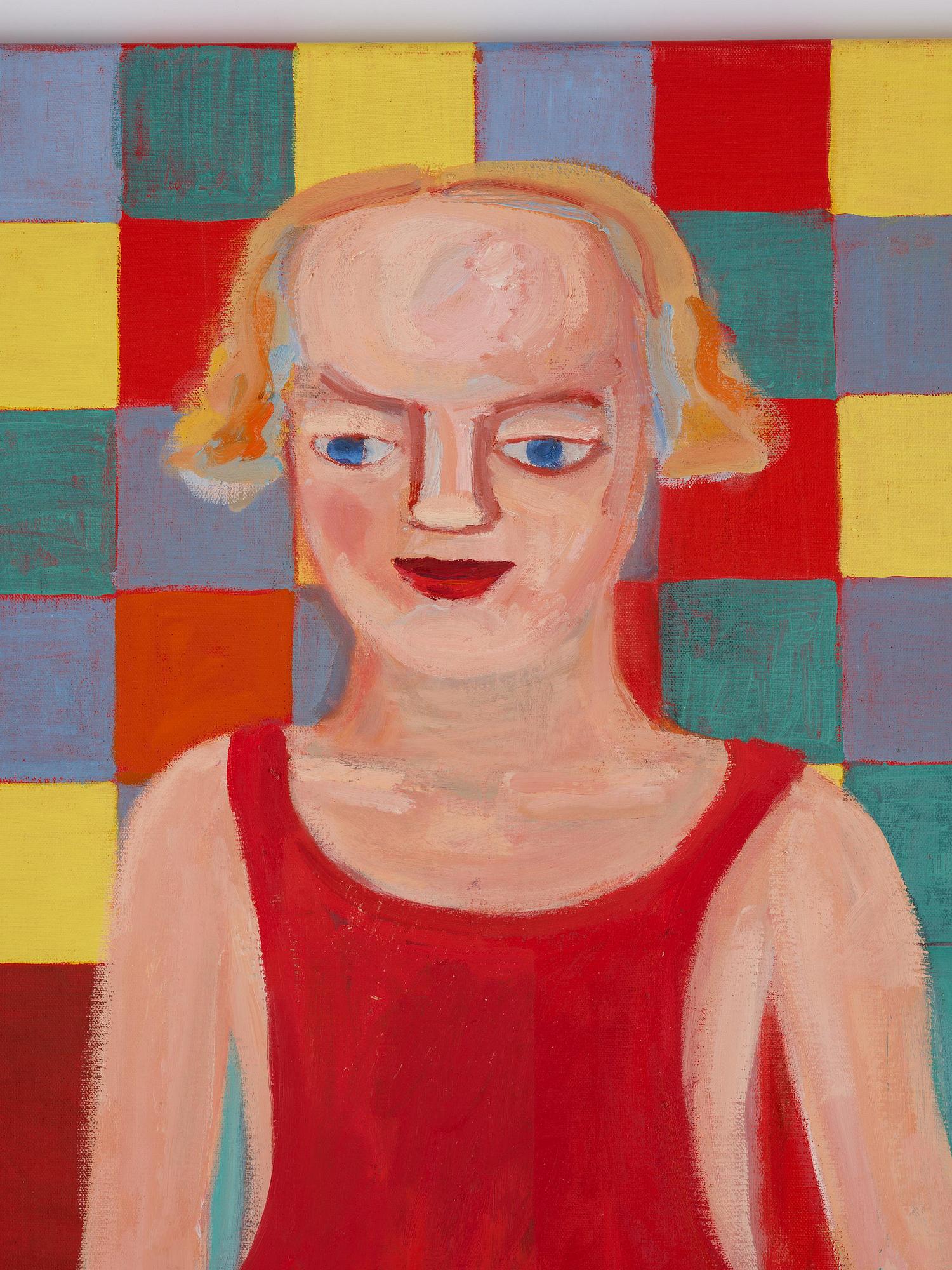
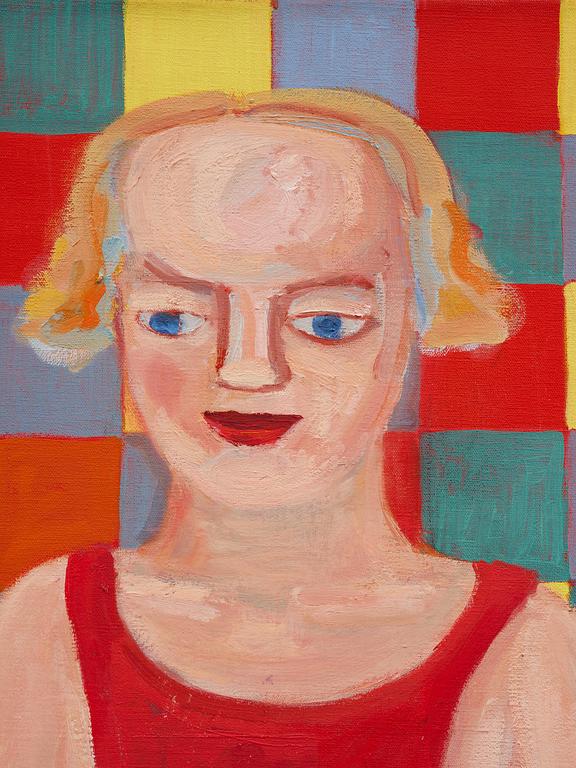
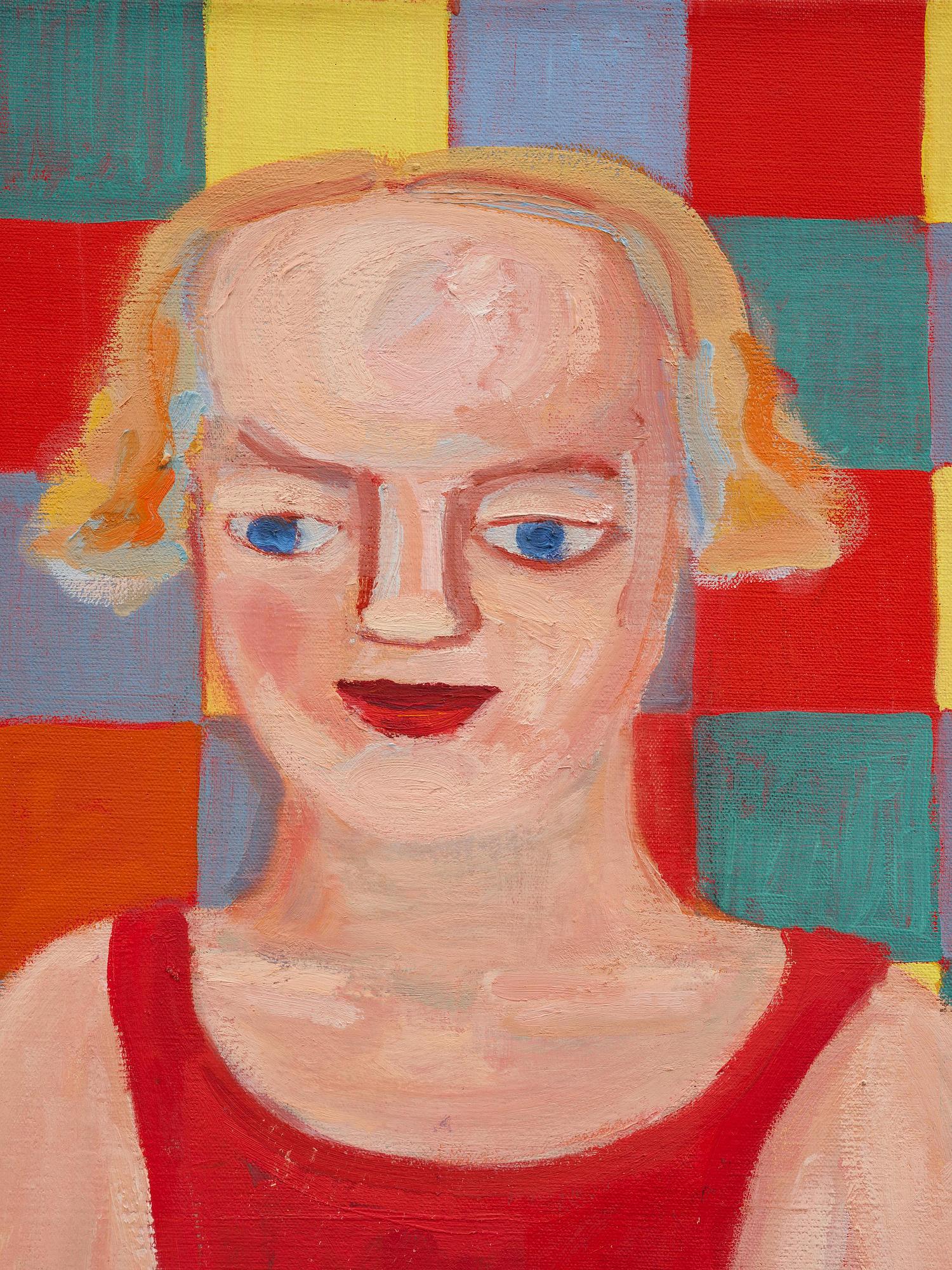
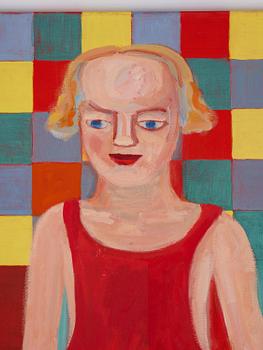
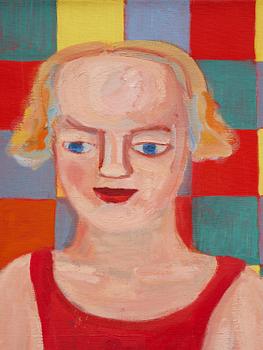
In the painting at auction, Cronqvist's, at this time, so characteristic grid patterns form the backdrop of the scene. In front of it stands the girl, Cronqvist's alter ego, holding a Mummy-doll and a Daddy-doll in each hand. The child has taken control in the family, contrary to how conventional roles are usually played. The child now has power over the parents and can decide the rules of the game regarding how Mummy-Daddy-Child will continue to be played. Lena Cronqvist has said that "It is not enough to paint a girl with two parents. They must be my parents for me to be able to go there." For magic to arise during the process of creation, the figures and situations must be something she has personally experienced; this is crucial for the painting. Her honesty is conveyed to the viewer, who captures the emotional states of the painting in their own interpretations. In this way, Cronqvist's works always manage to touch. She sets something in motion within us; we have all been small and experienced feelings of powerlessness, strength, anger, and tenderness.
Cronqvist's raw painting has given her a special place in Swedish art history; she has been one of our time's most prominent artists since the 1970s. In the early 1980s, girls enter as motifs in Lena Cronqvist's pictorial world, but it is primarily during the years 1990-1995 that they dominate the themes. She is represented with works from that thematic circle in most Swedish museum collections, as well as with public works in cities such as Stockholm and Karlstad.
More about Lena Cronqvist
Lena Cronqvist was one of Sweden’s most significant and influential artists, with a career spanning more than five decades. Born in Karlstad and educated at the Bristol School of Art in England as well as the Royal Institute of Art in Stockholm, she developed a style of painting where technical precision met intense emotional depth. Through her raw and emotionally charged imagery, she explored the paradoxes of motherhood, the shadows of childhood, and the relentless flow of time. Inspired by modernism and Edvard Munch, she transformed the personal into universal stories filled with deep psychological presence and power. As a painter, printmaker, and sculptor, she moved effortlessly between artistic forms, with each work marked by strong emotion and meticulous craftsmanship. Her interpretation of Jan van Eyck’s "The Arnolfini Portrait" in "Trolovningen"(1974/75) became a milestone when it sold at Bukowski's auction Vår Contemporary 2016 for over 11 million SEK - the highest amount ever paid for a work by a living Swedish artist at the time. Lena Cronqvist’s art is a bold and powerful voice that continues to move, challenge, and inspire. Her legacy lives on - boundless and timeless - reminding us of art’s ability to reach into the depths of the human experience.
Read moreFor condition report contact specialist

Covered by droit de suite
Image rights
The artworks in this database are protected by copyright and may not be reproduced without the permission of the rights holders. The artworks are reproduced in this database with a license from Bildupphovsrätt.