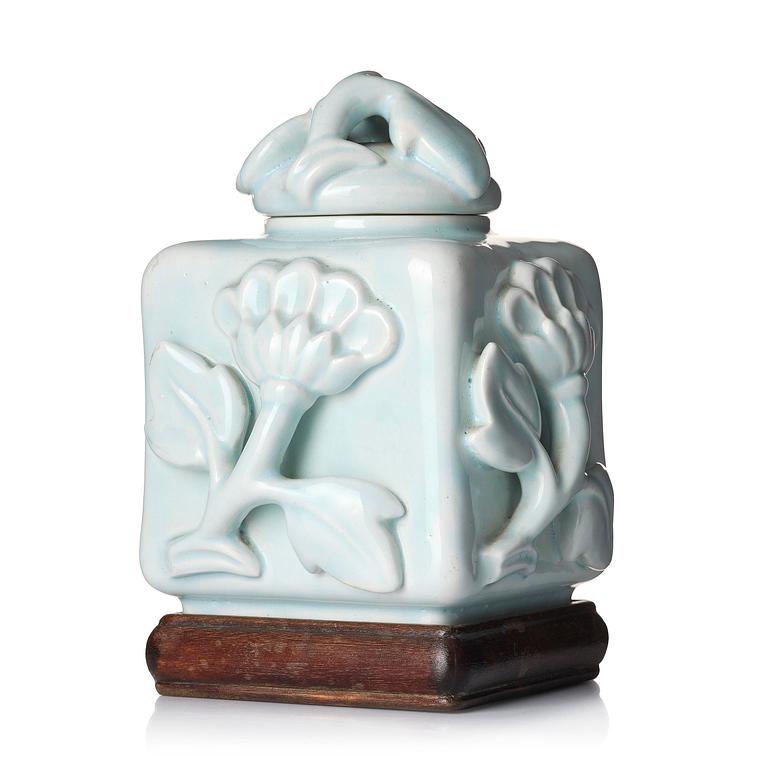
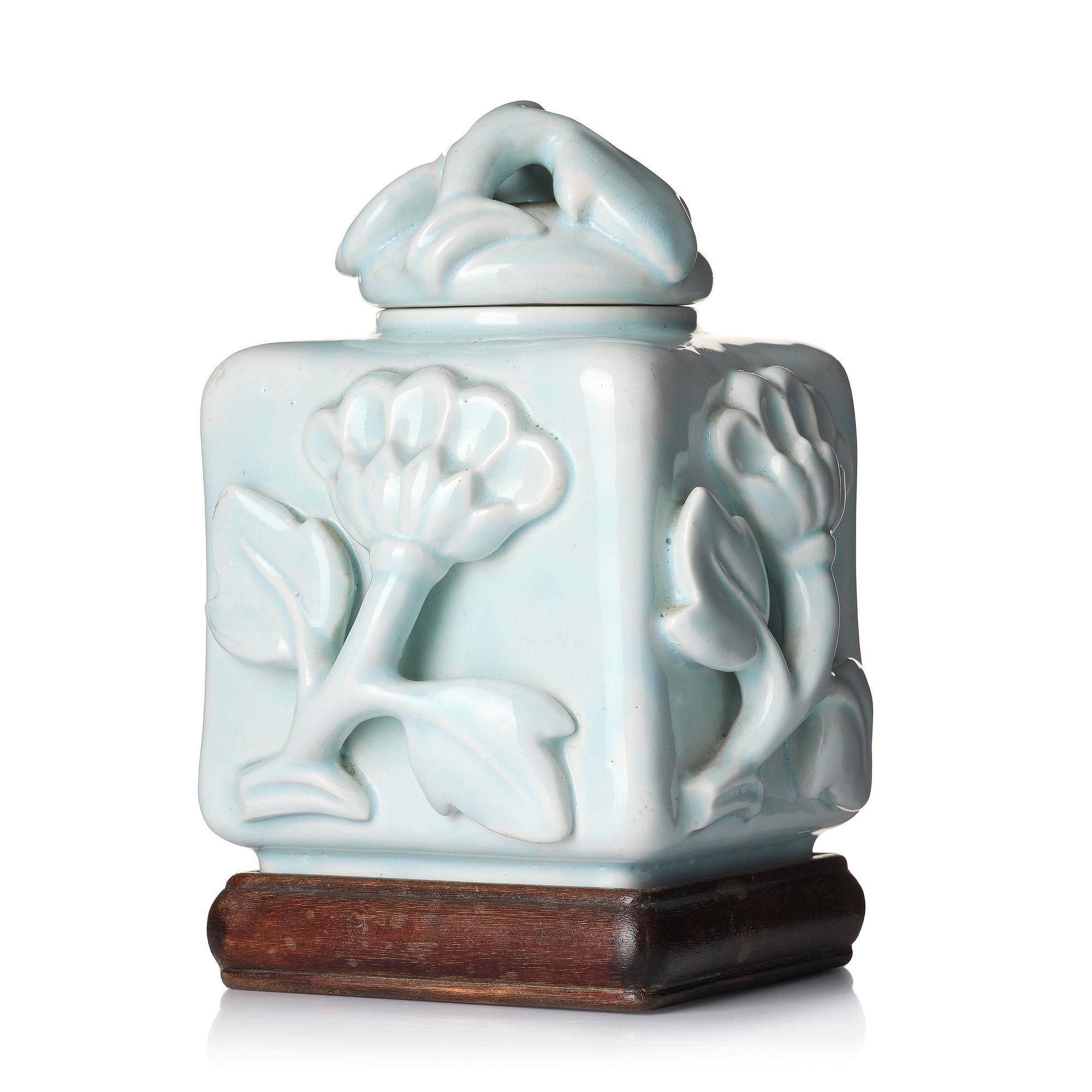
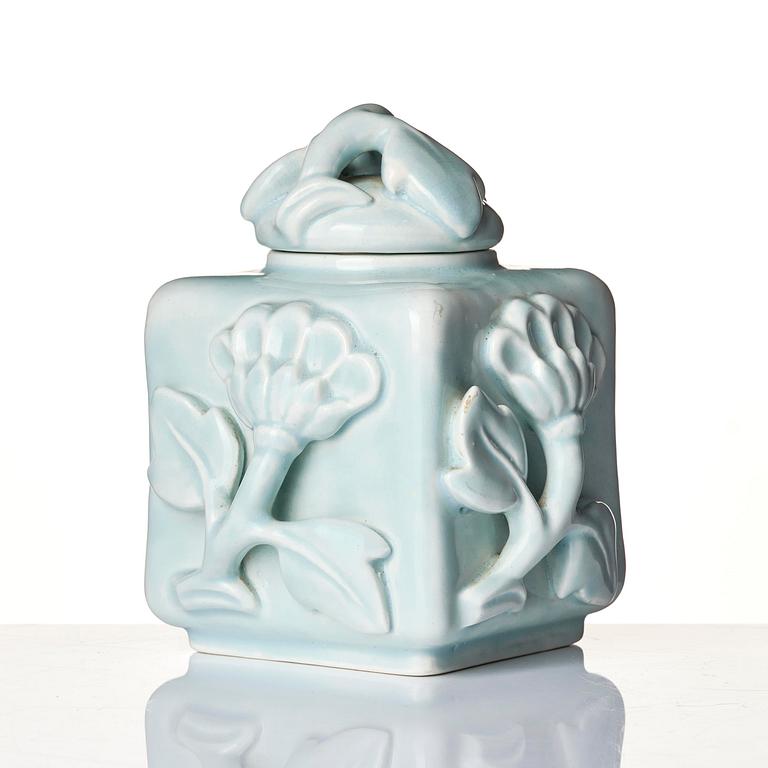
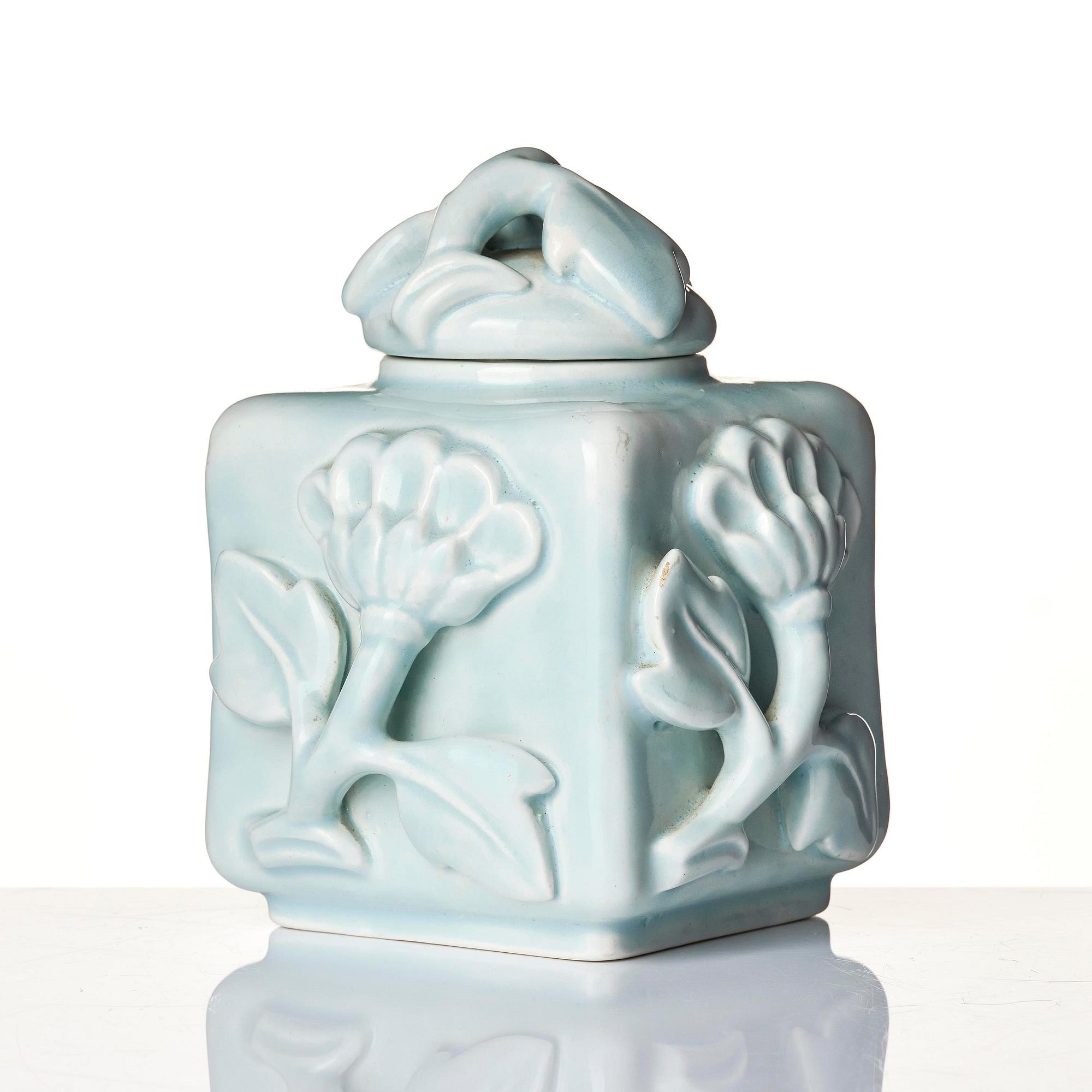
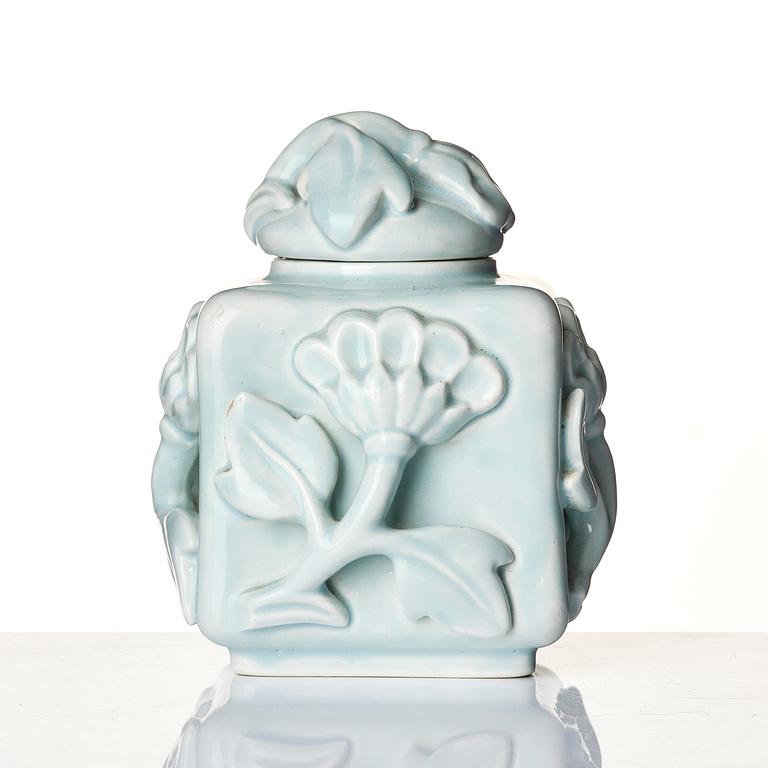
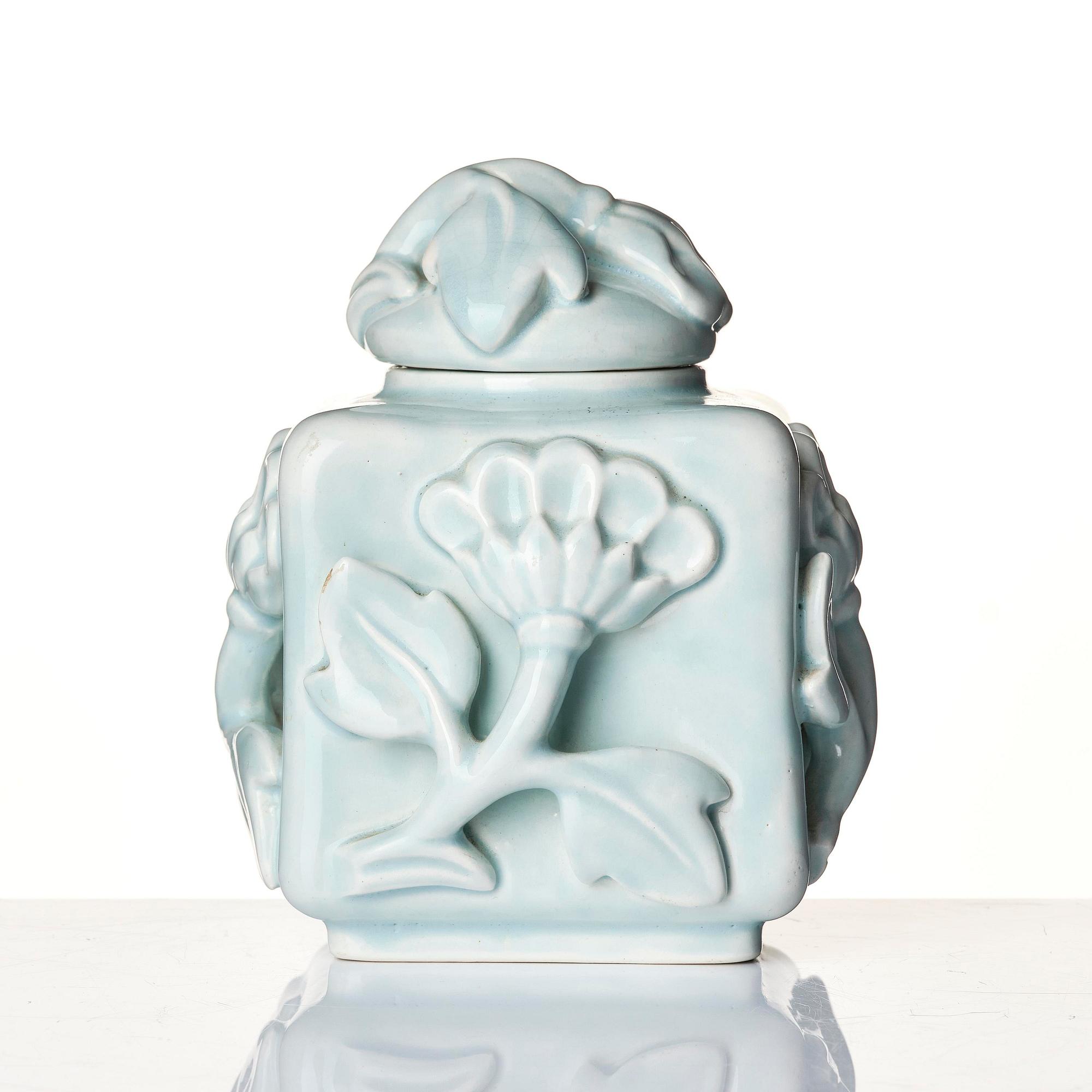
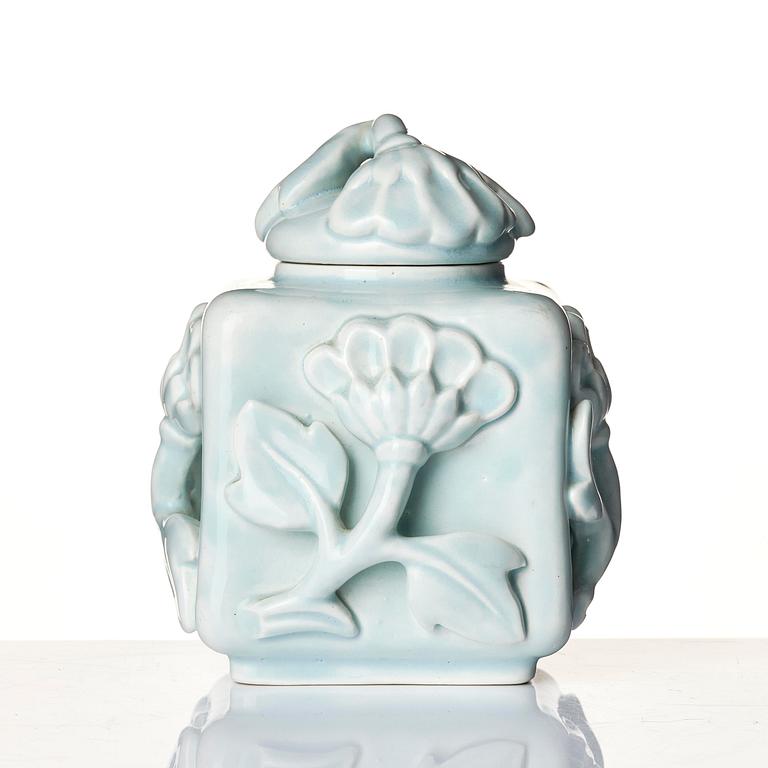
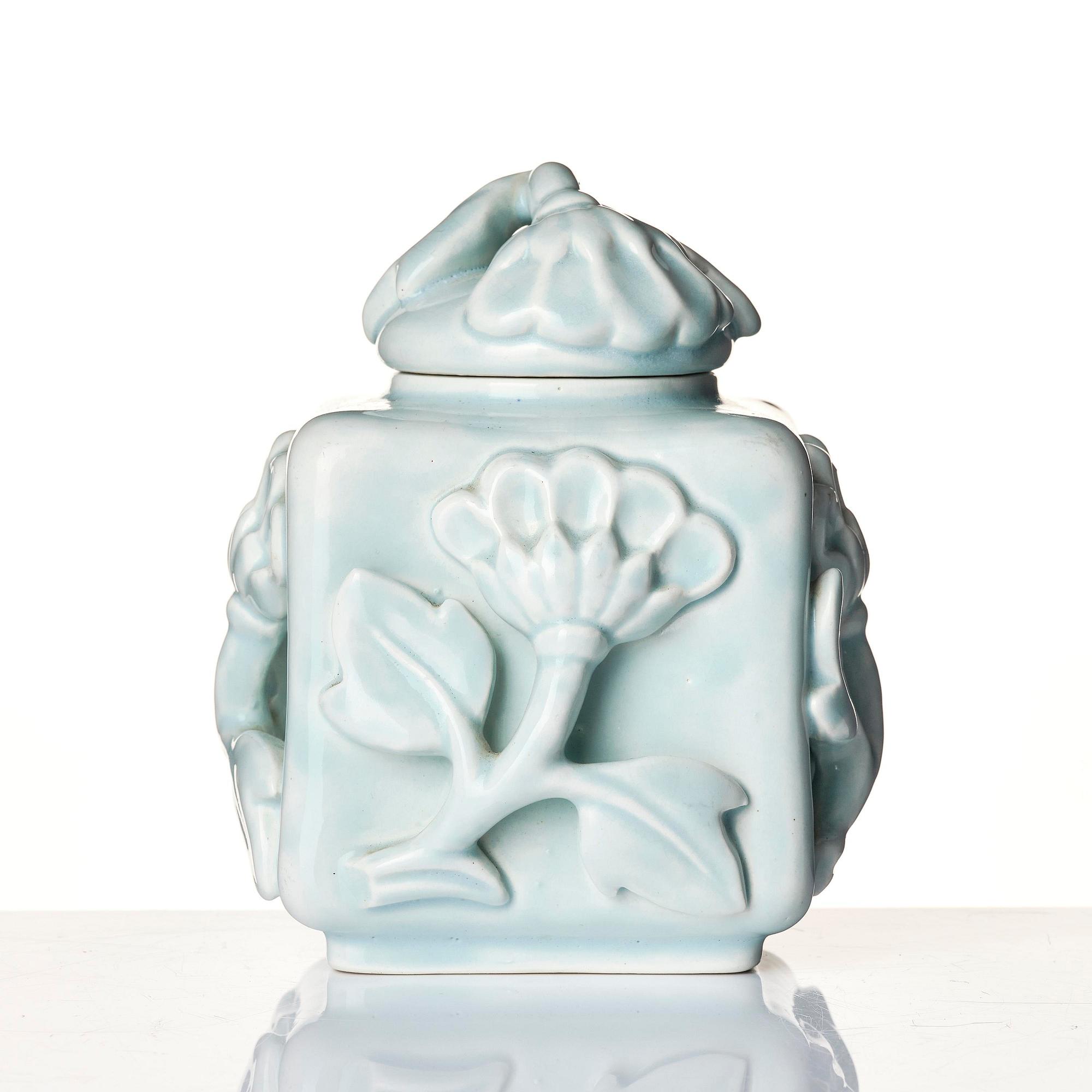
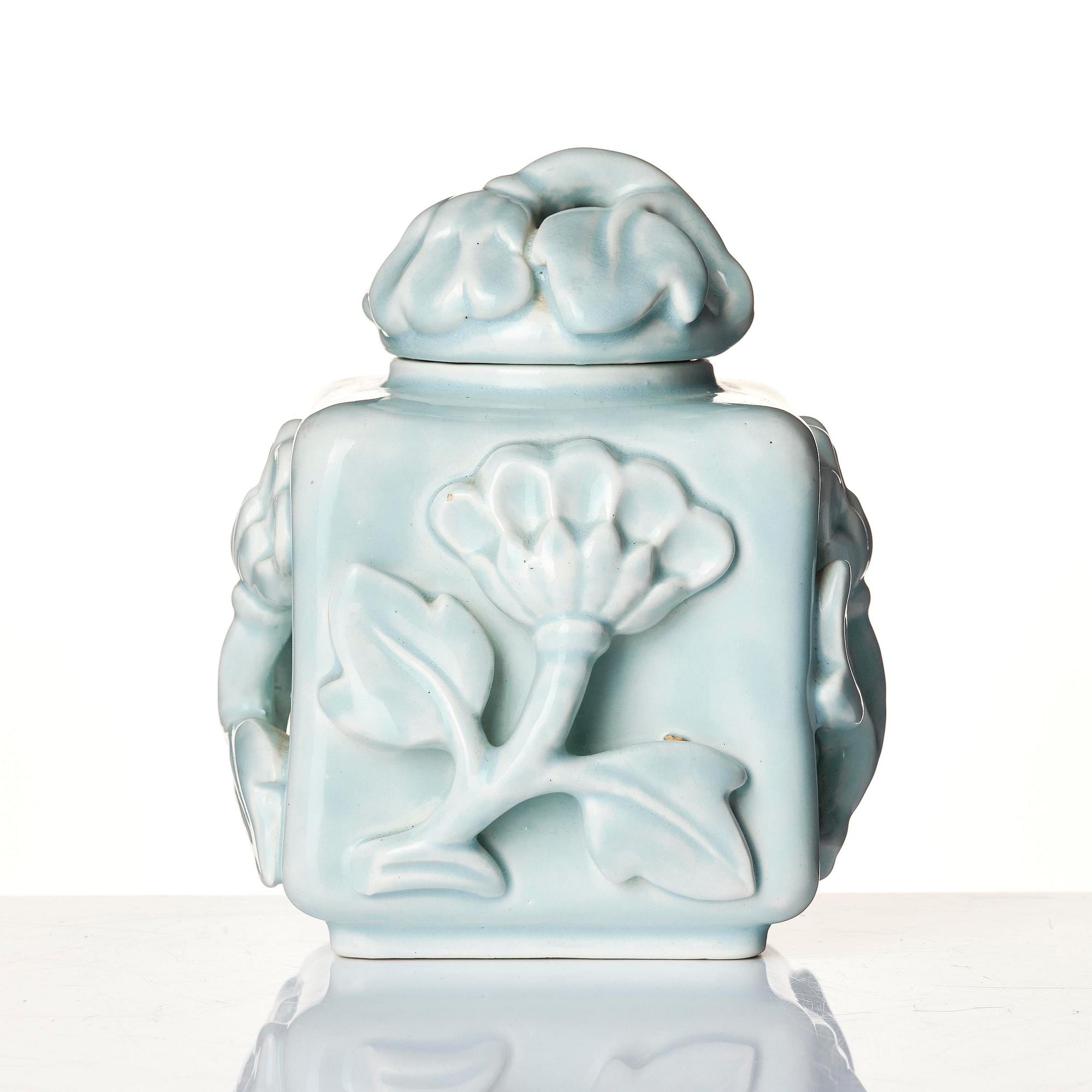
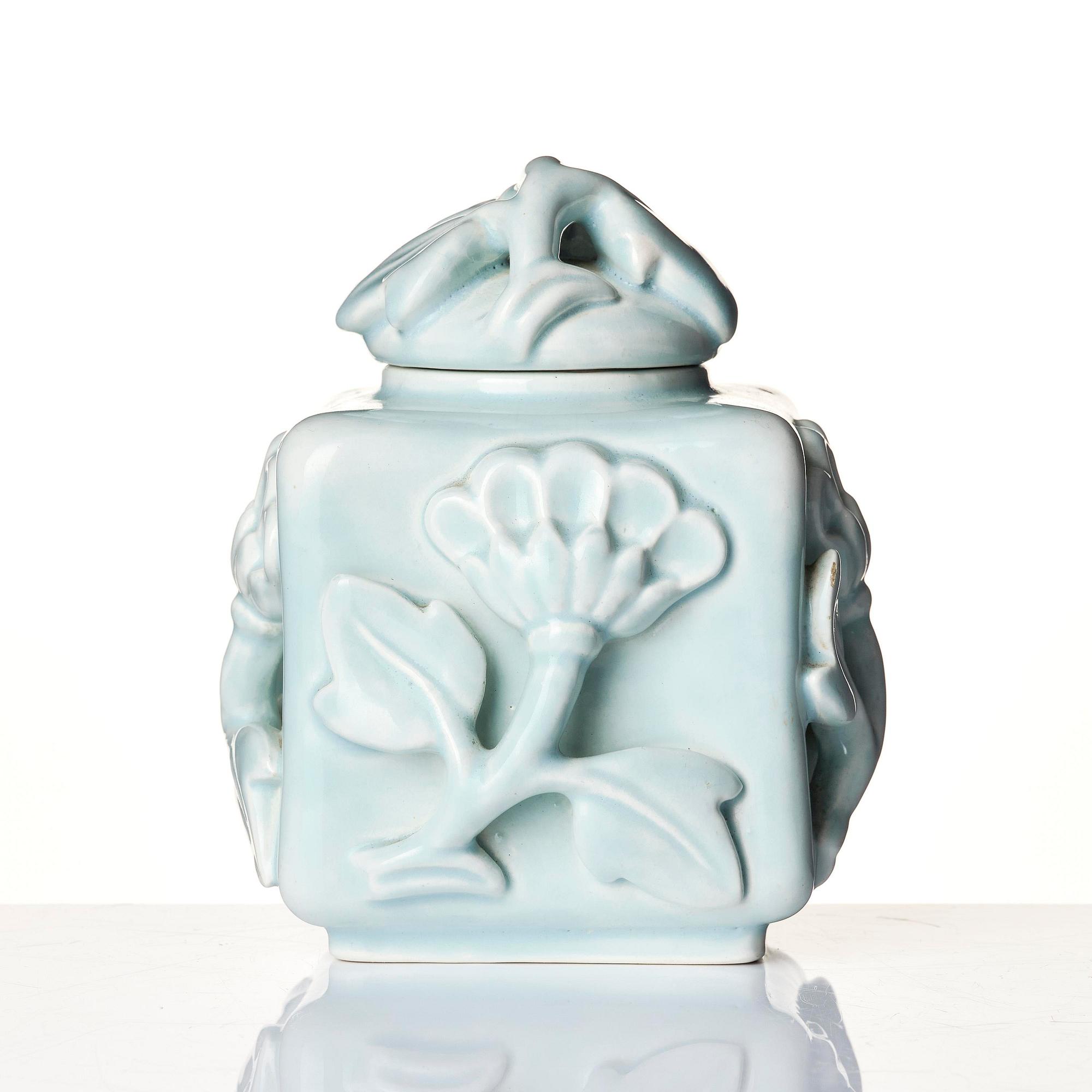
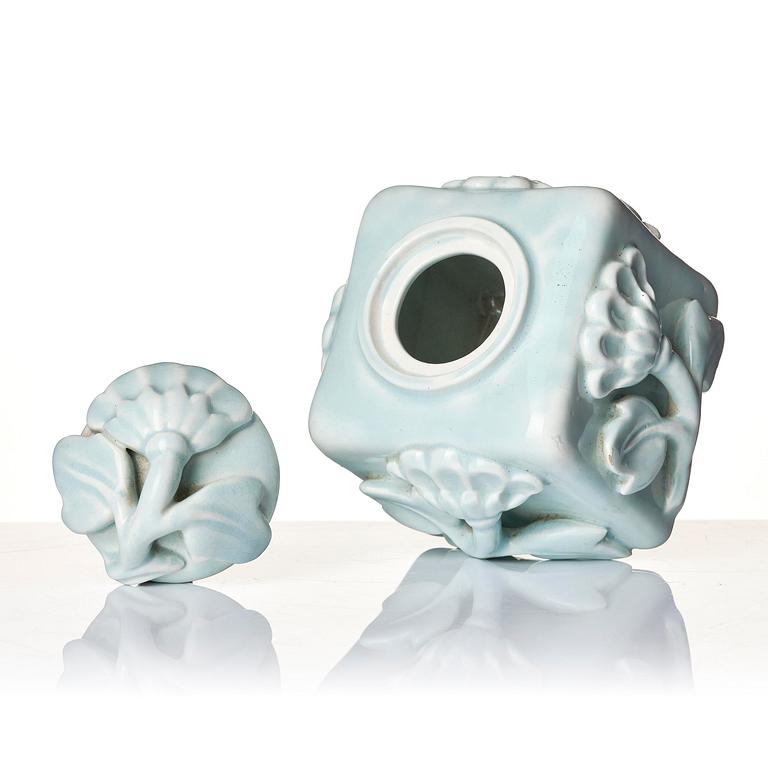
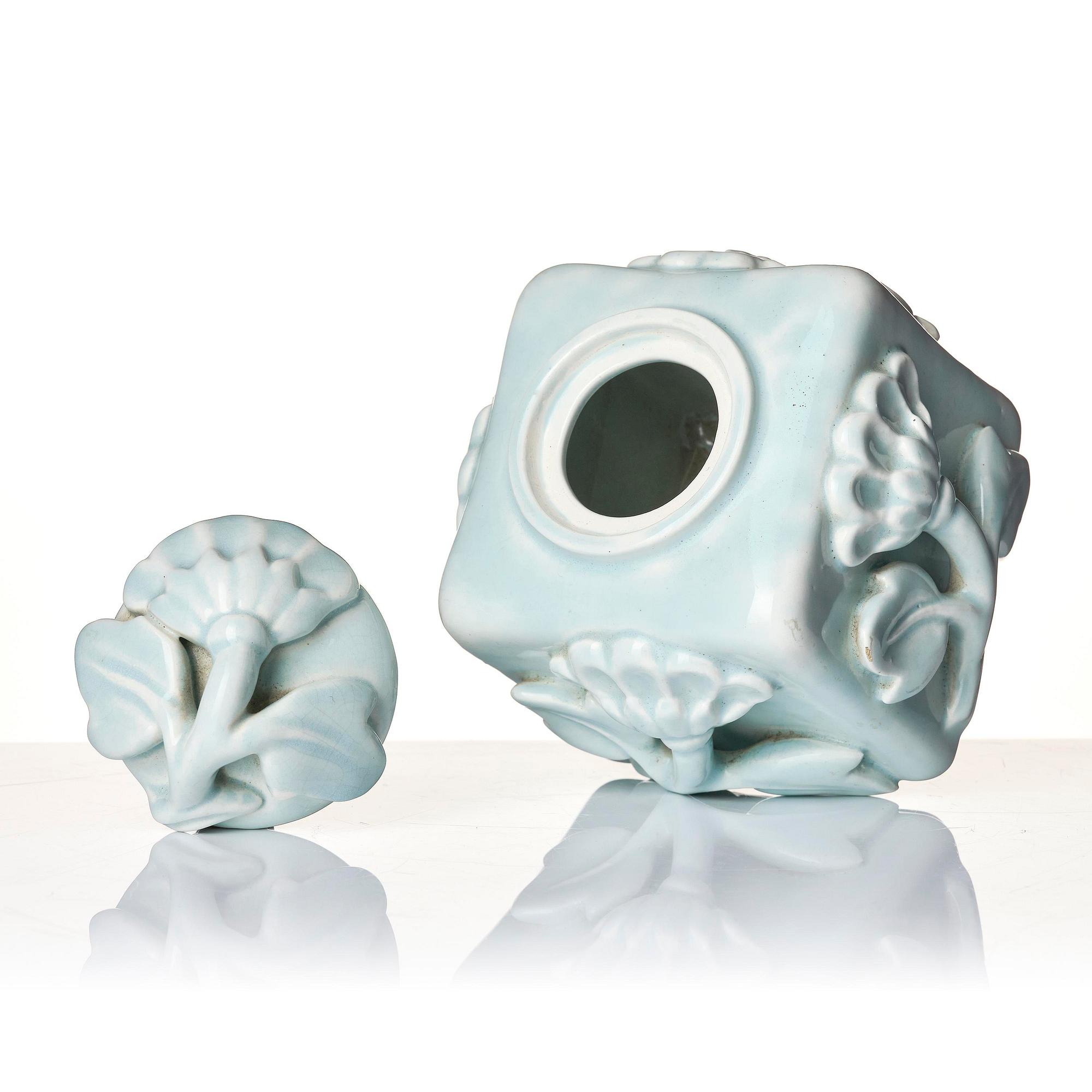
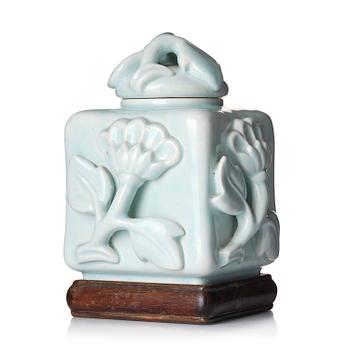
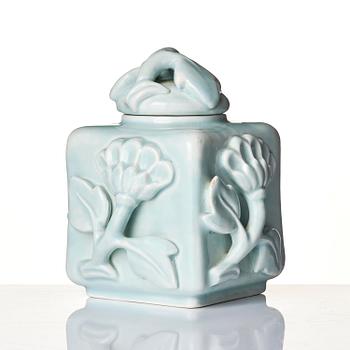
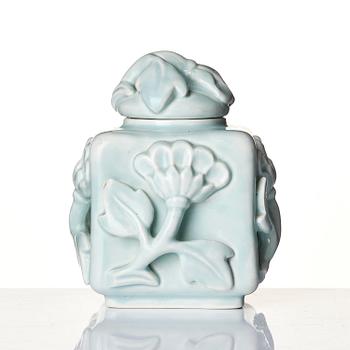
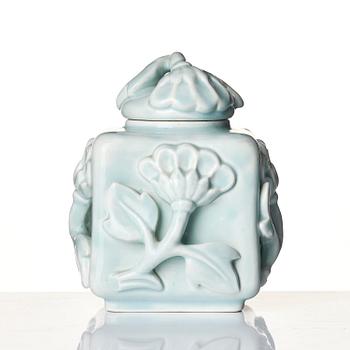
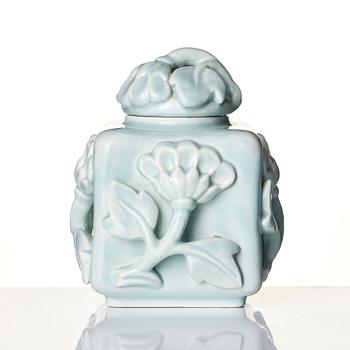
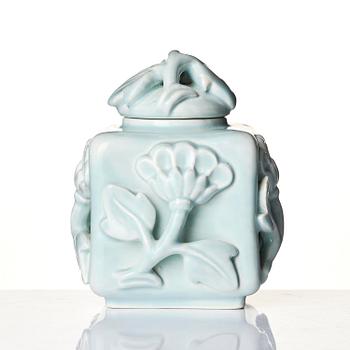
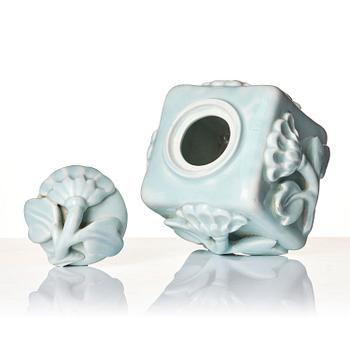
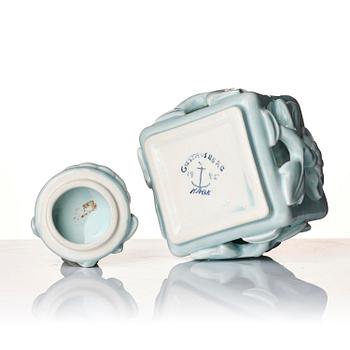
A glazed ceramic tea caddy with cover, Gustavsberg, 1925.
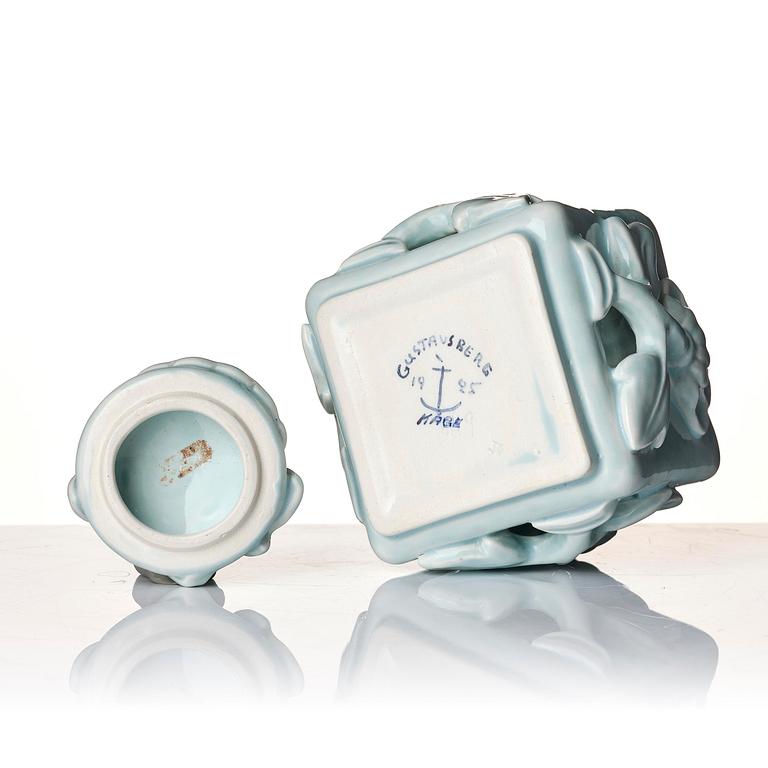
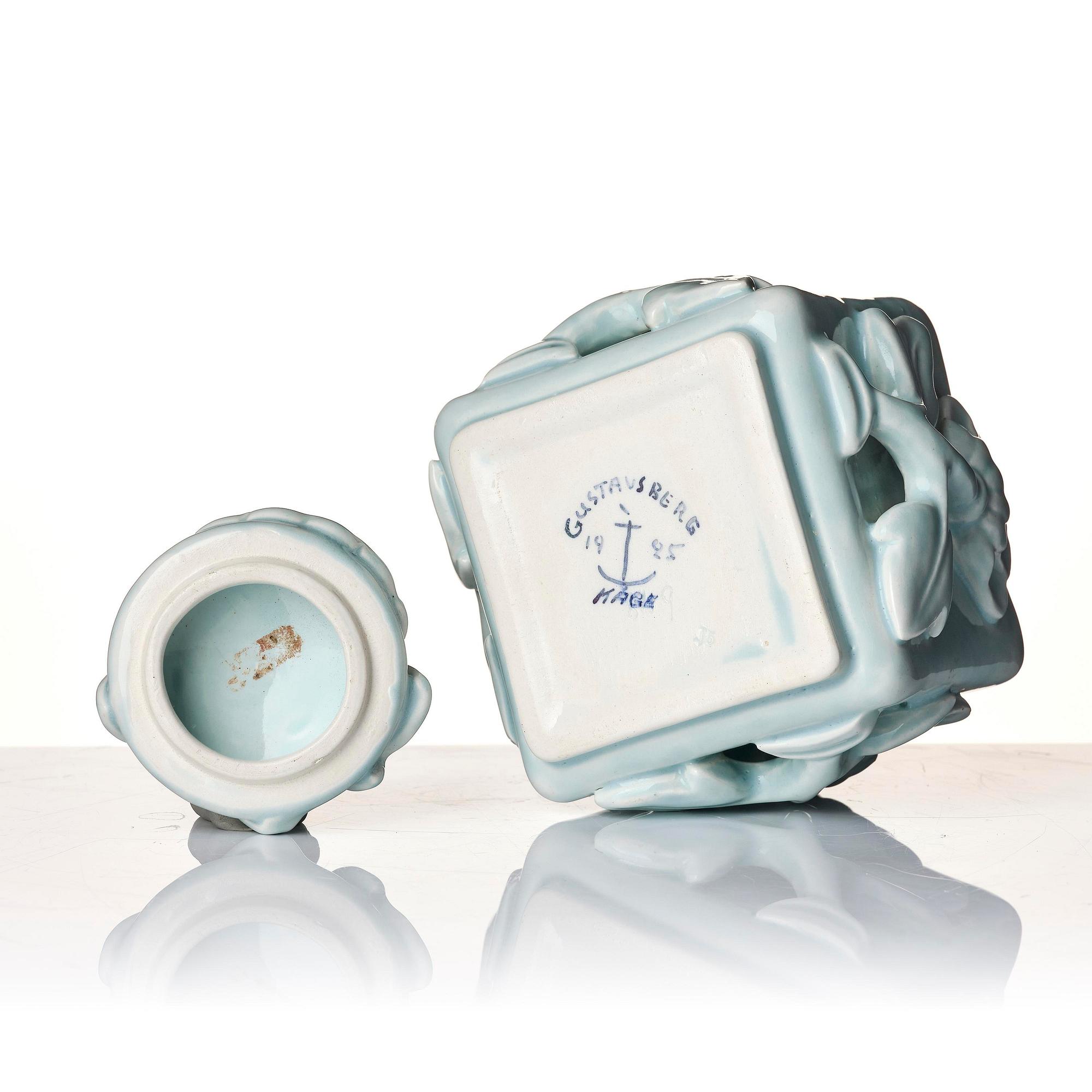
Cube-shaped with moulded flowers on the sides and lid, light blue tin glaze, signed GUSTAVSBERG 1925 KÅGE, incised 849 WK and impressed J5. Height 15 cm.
Some glaze wear, slight glaze crazing.
Exhibitions
The models with light tin glaze was produced by Gustavsberg around 1925 and was exhibited at the World’s Fair in Paris in 1925 and at "Swedish Contemporary Decorative Arts" at the Metropolitan Museum of Art, New York in 1927. A larger bowl was acquired for the collections of the Metropolitan Museum of Art, New York.
Literature
Nils Palmgren, "Wilhelm Kåge konstnär och hantverkare" Nordisk Rotogravyr, Stockholm 1953, see pp. 120-123.
Gunnela Ivanov, "Swedish Grace", Orosdi-Back 2017, see the model illustrated on page 518.
More about Wilhelm Kåge
Wilhelm Kåge was a Swedish artist and ceramicist. Kåge is known for his ceramics for the Gustavsberg porcelain factory, where he was the artistic director from 1917 to 1949. Kåge studied from 1910 under Carl Wilhelmson at the Valand Academy of Art in Gothenburg and later under Johan Rohde in Copenhagen, where he became acquainted with Gösta Adrian-Nilsson (GAN) and grew closer to modern art. He studied graphic art in Munich and began his artistic career by designing posters for theatres and exhibitions, among other things. His connection with Gustavsberg was facilitated through the Swedish Society of Crafts and Design, as Gustavsberg needed new products for the Home Exhibition at Liljevalchs in 1917. He went on to design around thirty different dinnerware sets, as well as art pottery, colourful faience, stoneware, and various series of art pottery such as Carrara, Surrea, and Våga. In 1942, Kåge, together with Stig Lindberg, established the Gustavsberg Studio, which became a kind of aesthetic laboratory for art pottery.
At the Stockholm Exhibition in 1930, Kåge presented Gustavsberg's future sales success "Argenta," a series of art pottery primarily glazed in green but also in red, blue, brown, and celadon green, and decorated with various silver designs based on Kåge's sketches. Argenta became very popular and was produced well into the 1970s. The powerful stonewares "Farsta" were also presented at the Stockholm Exhibition and they became the ones closest to Kåge's heart and with which he continued to experiment throughout his life. The pieces improved over the years, and the most impressive and many of the most sought-after items were created by Kåge during the 1950s.
For condition report contact specialist

Image rights
The artworks in this database are protected by copyright and may not be reproduced without the permission of the rights holders. The artworks are reproduced in this database with a license from Bildupphovsrätt.
Others have also viewed