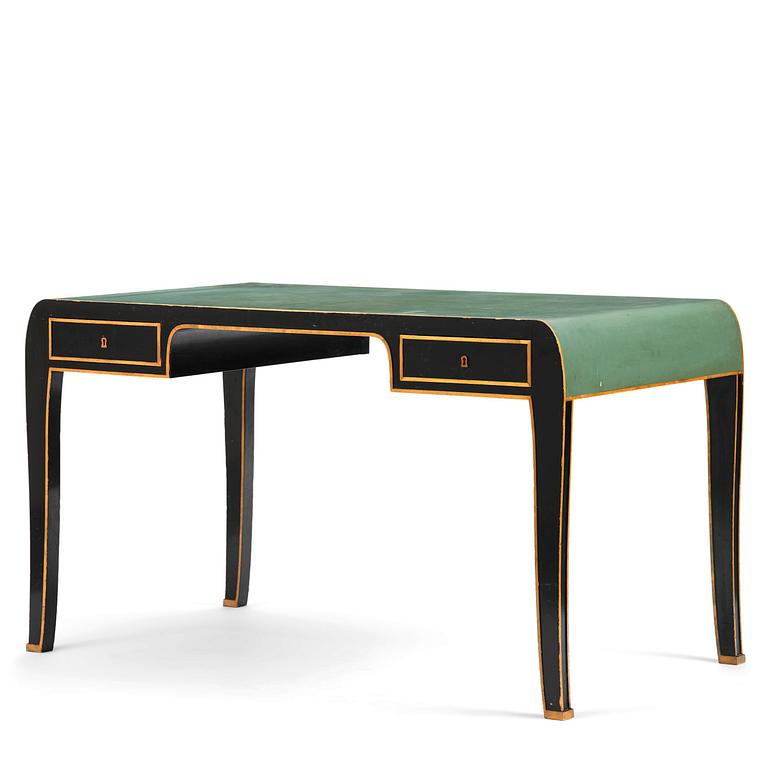
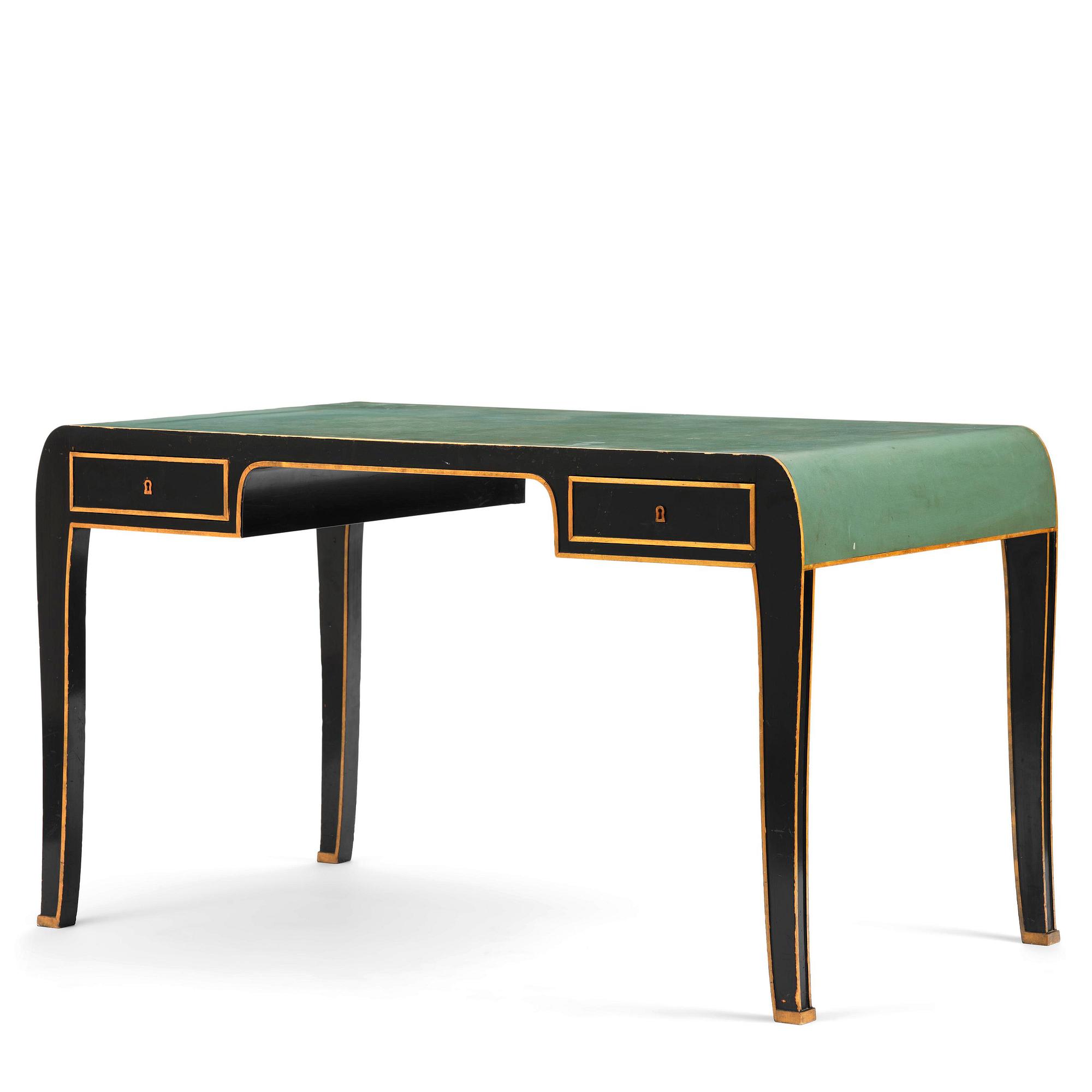
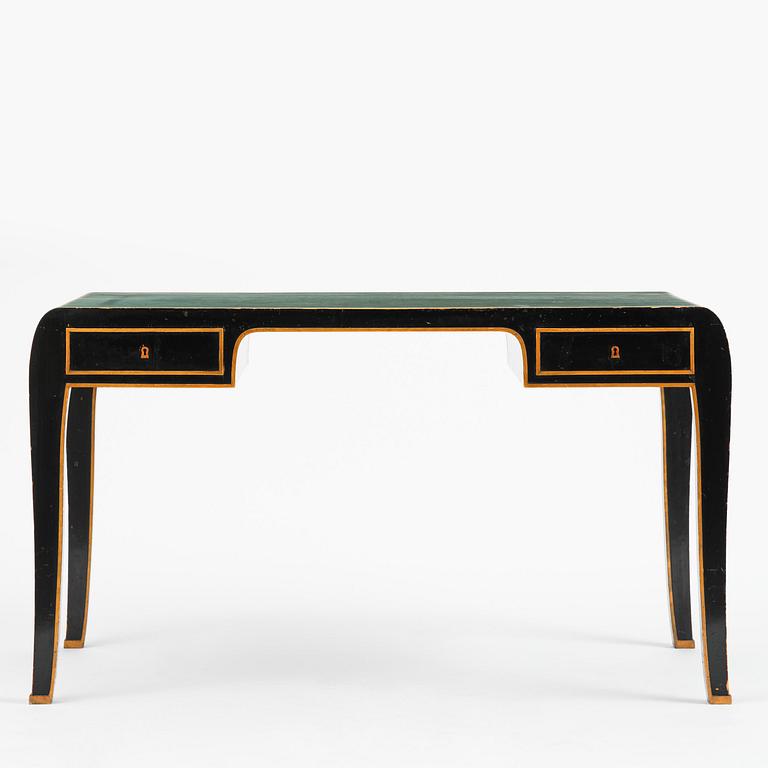
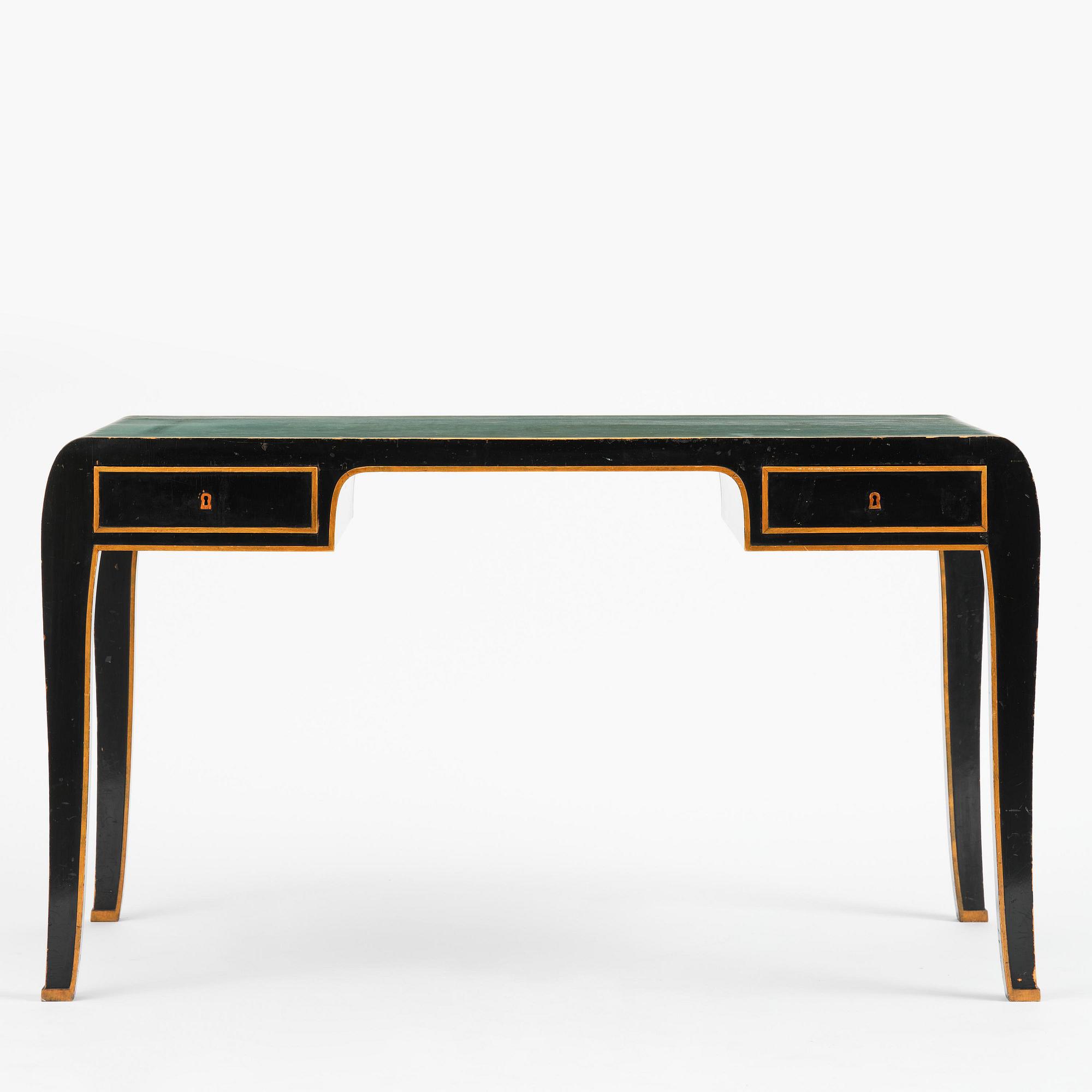
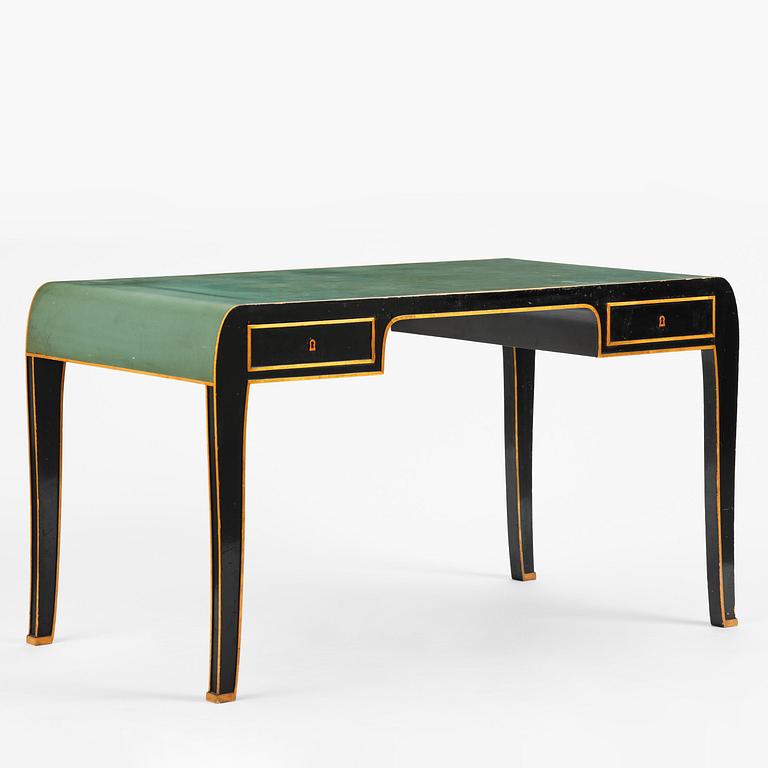
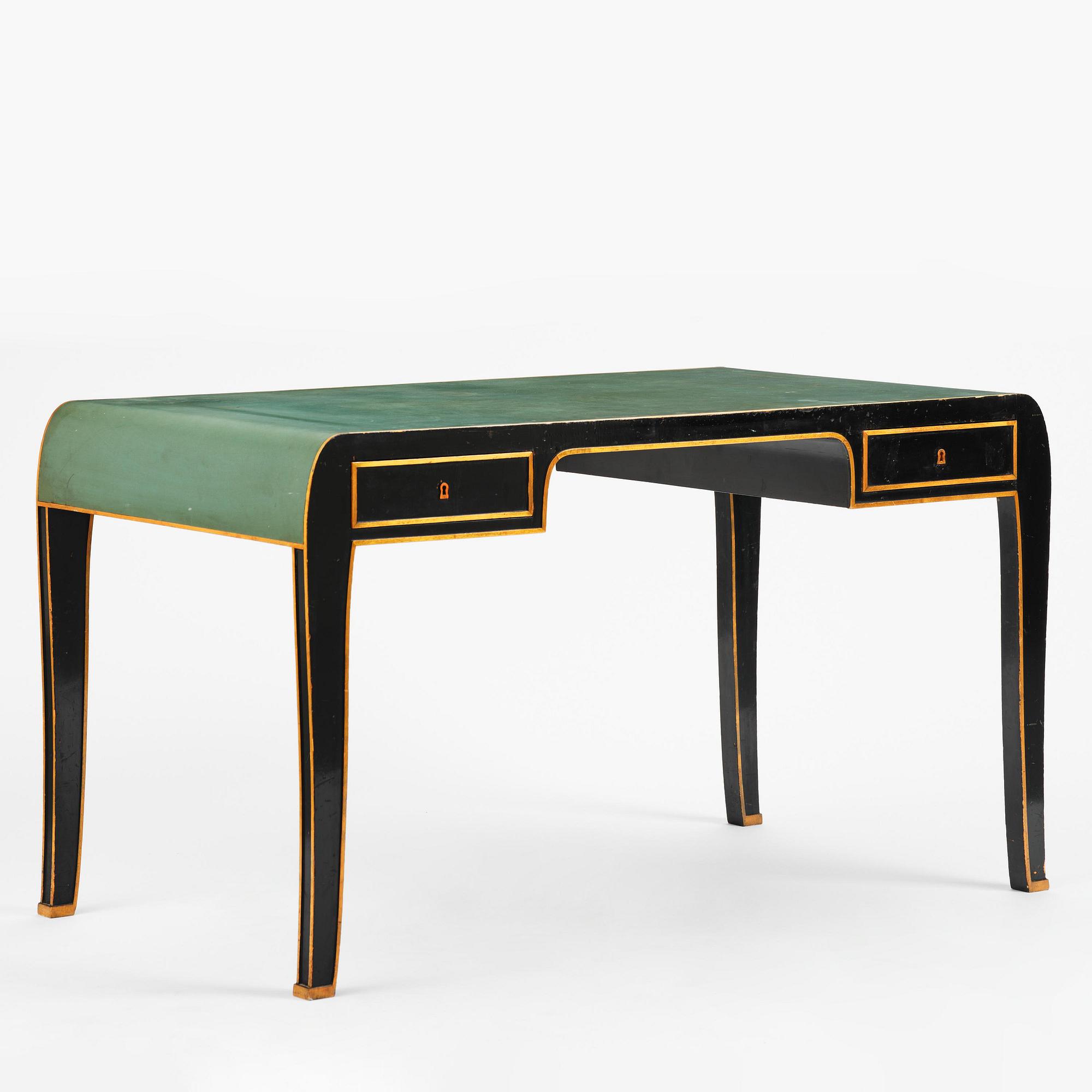
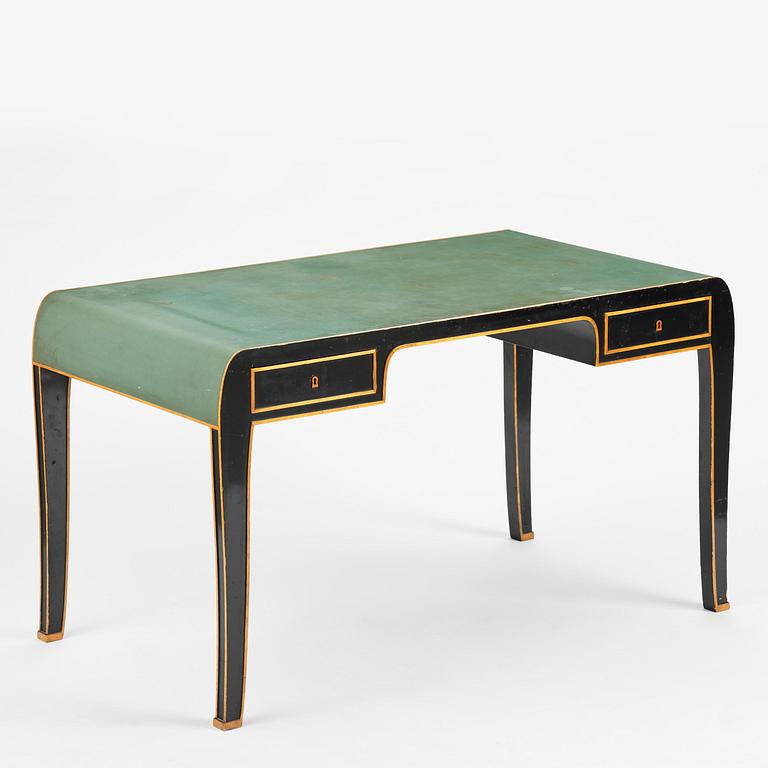
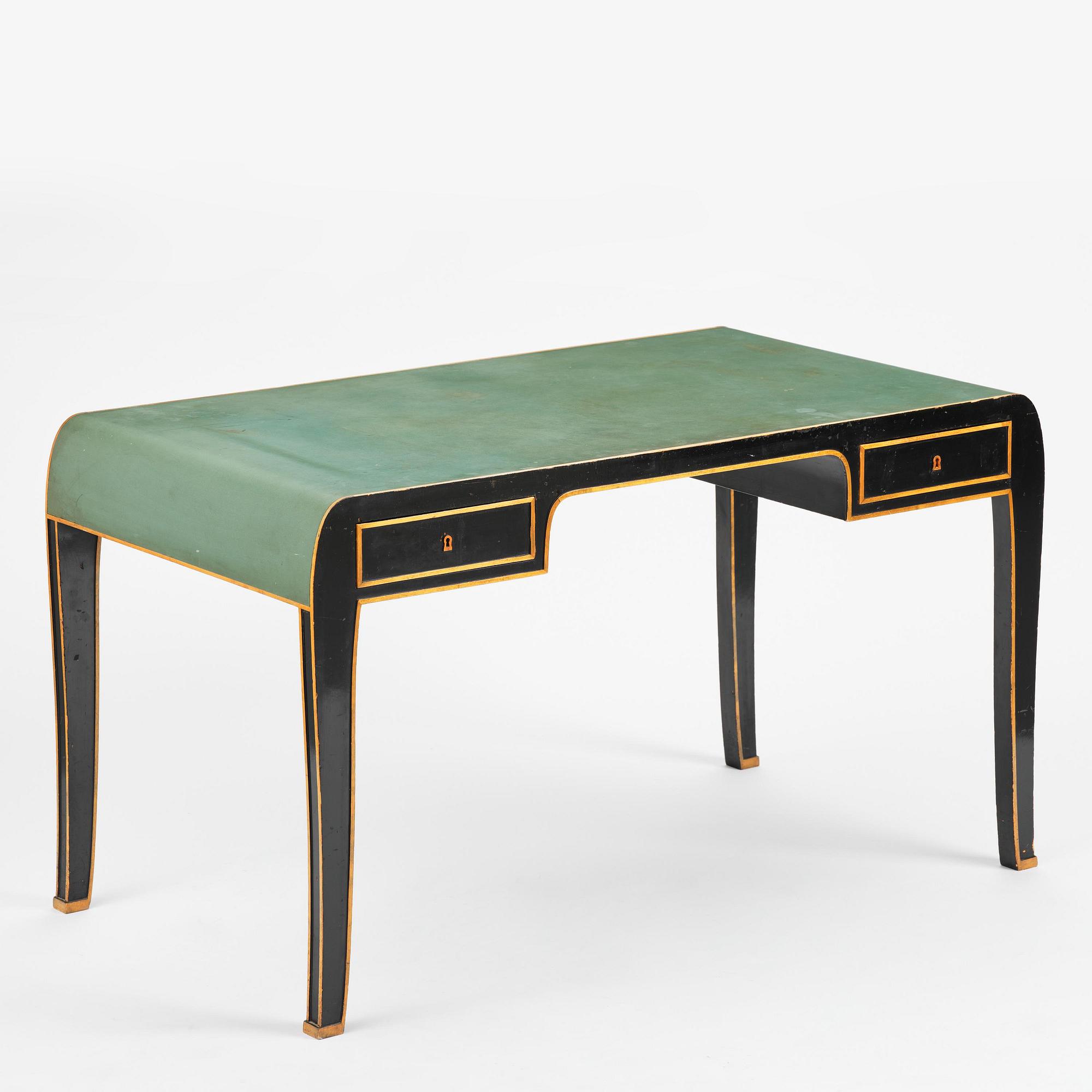
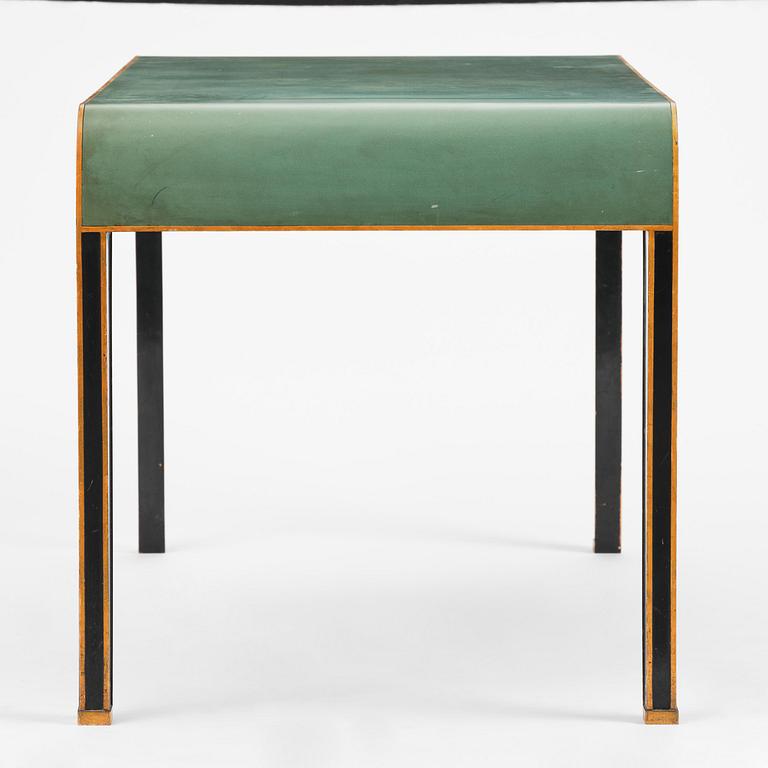
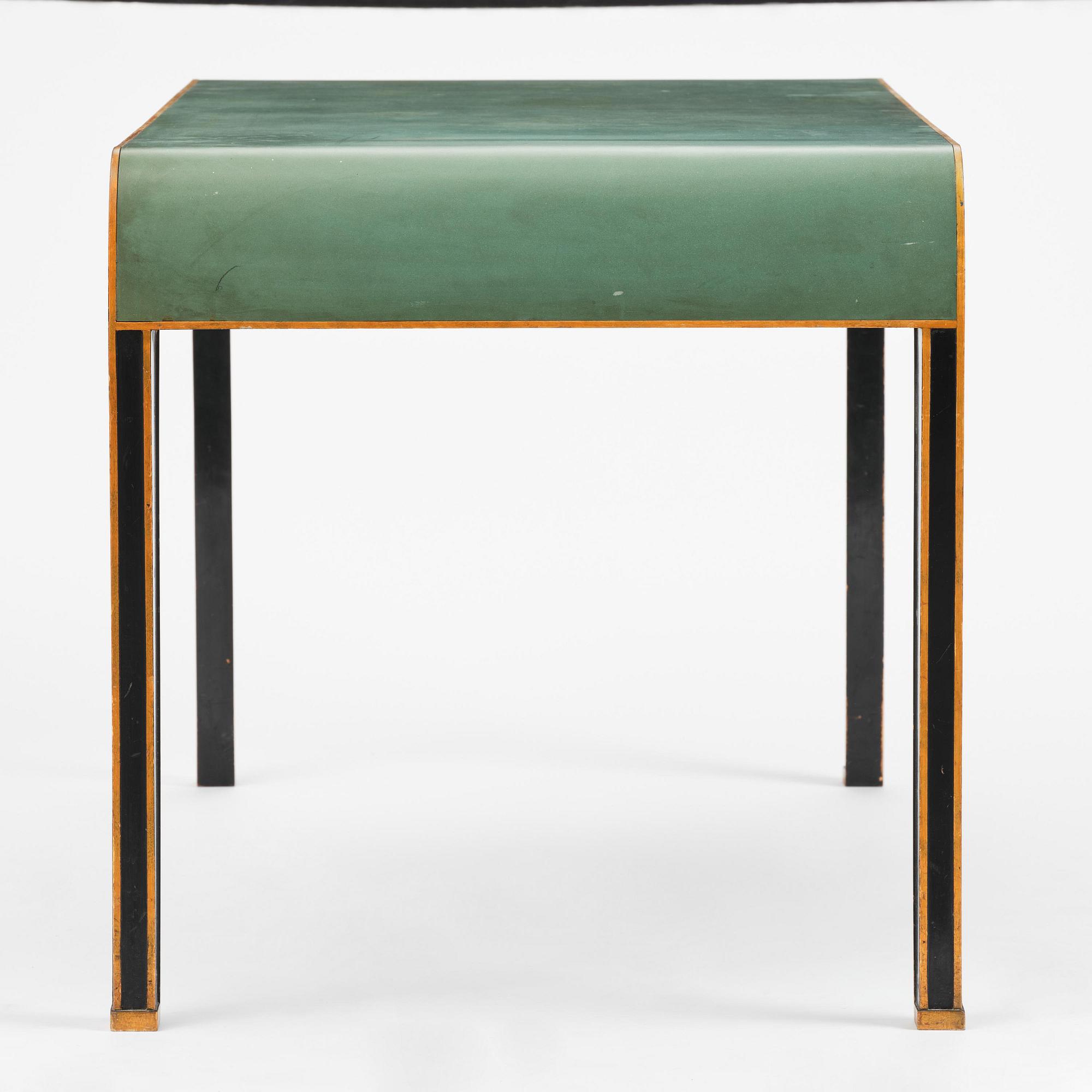
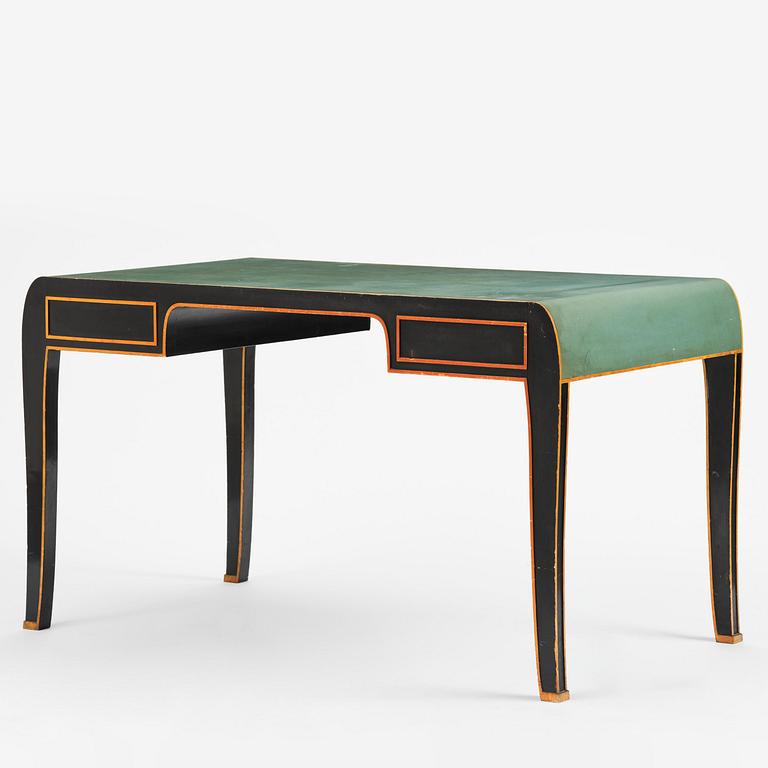
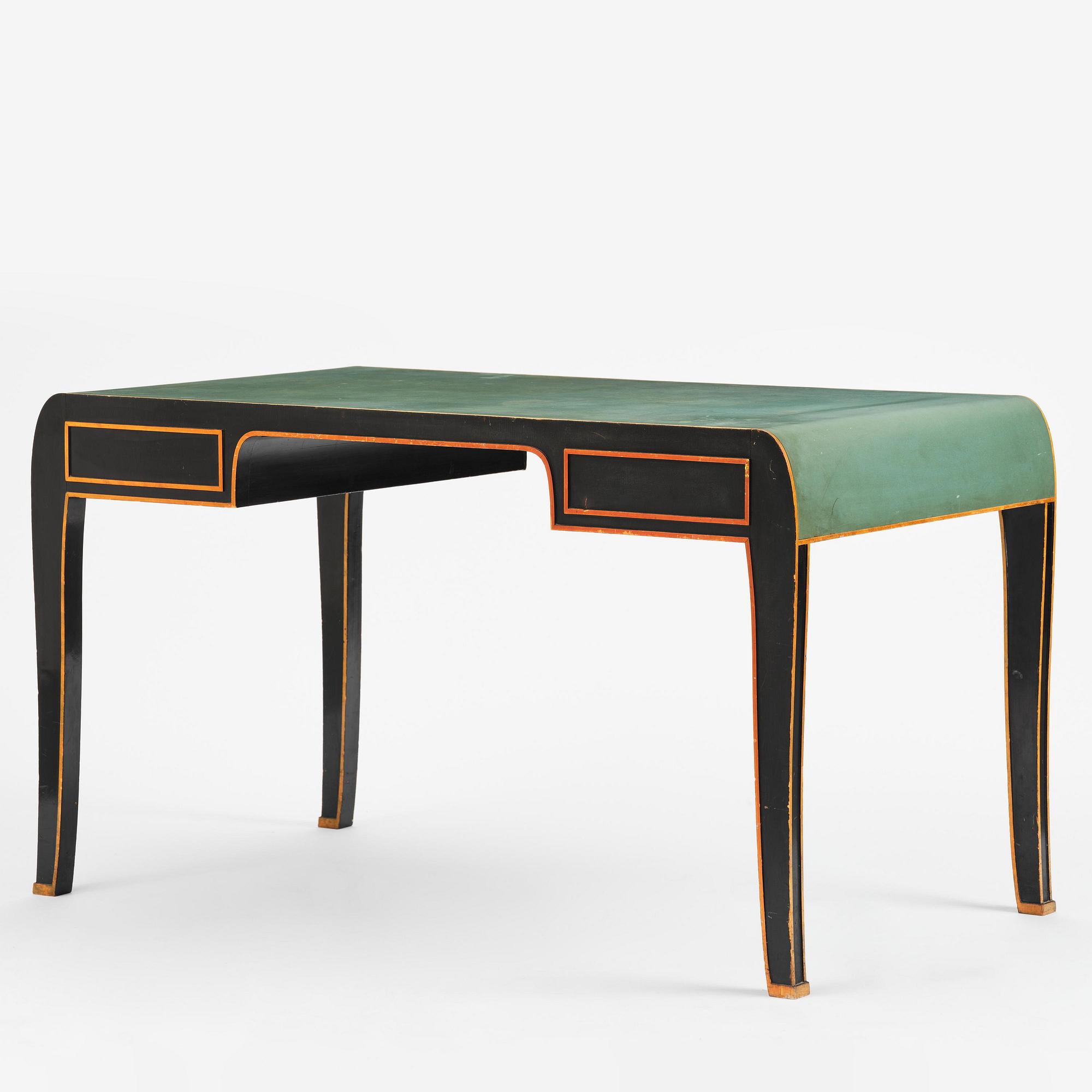
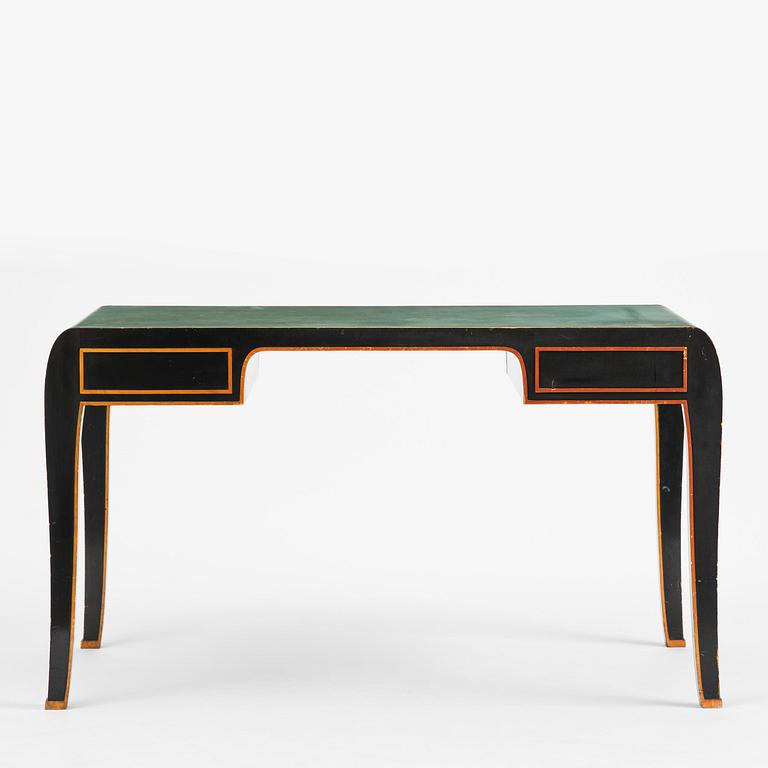
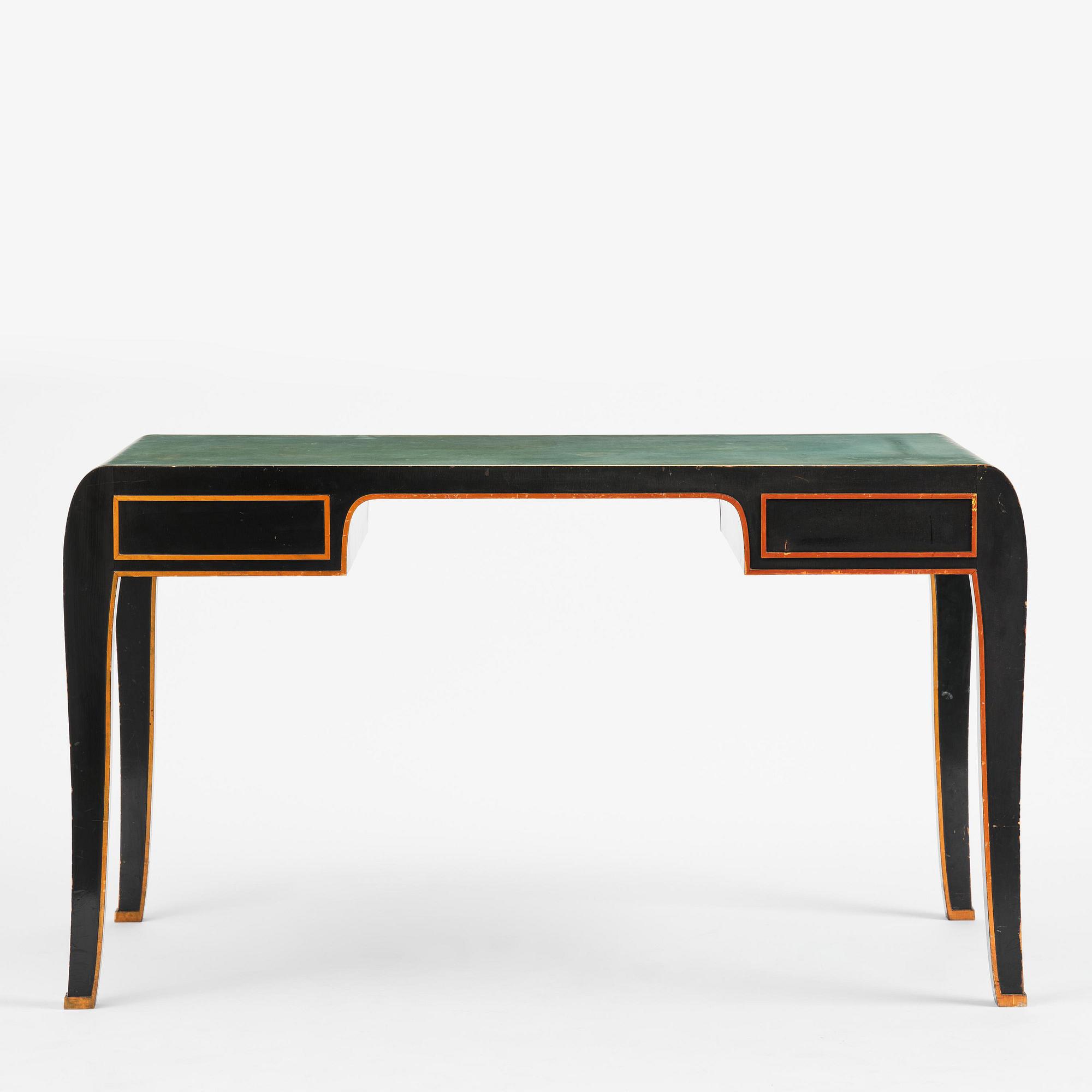
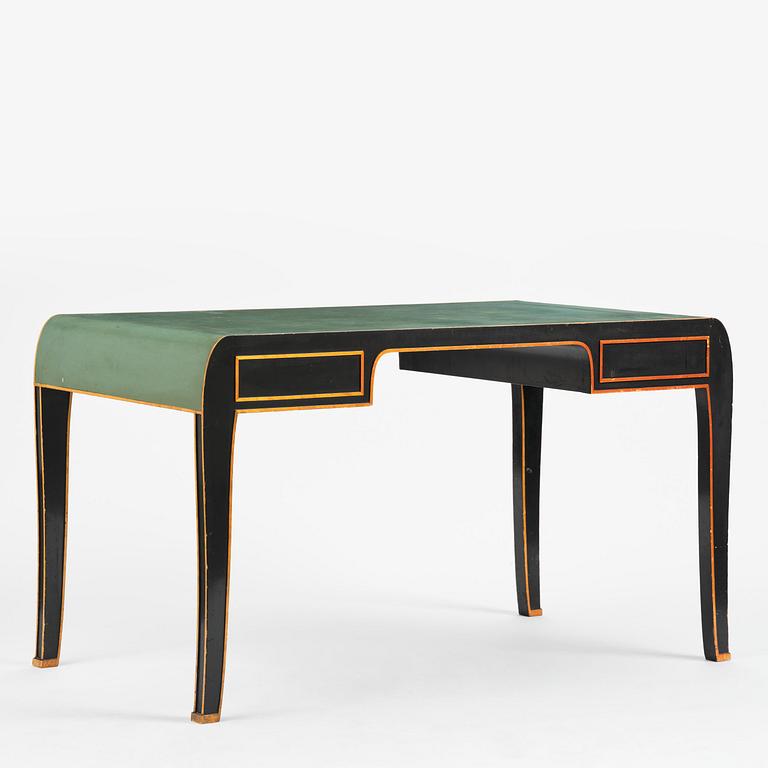
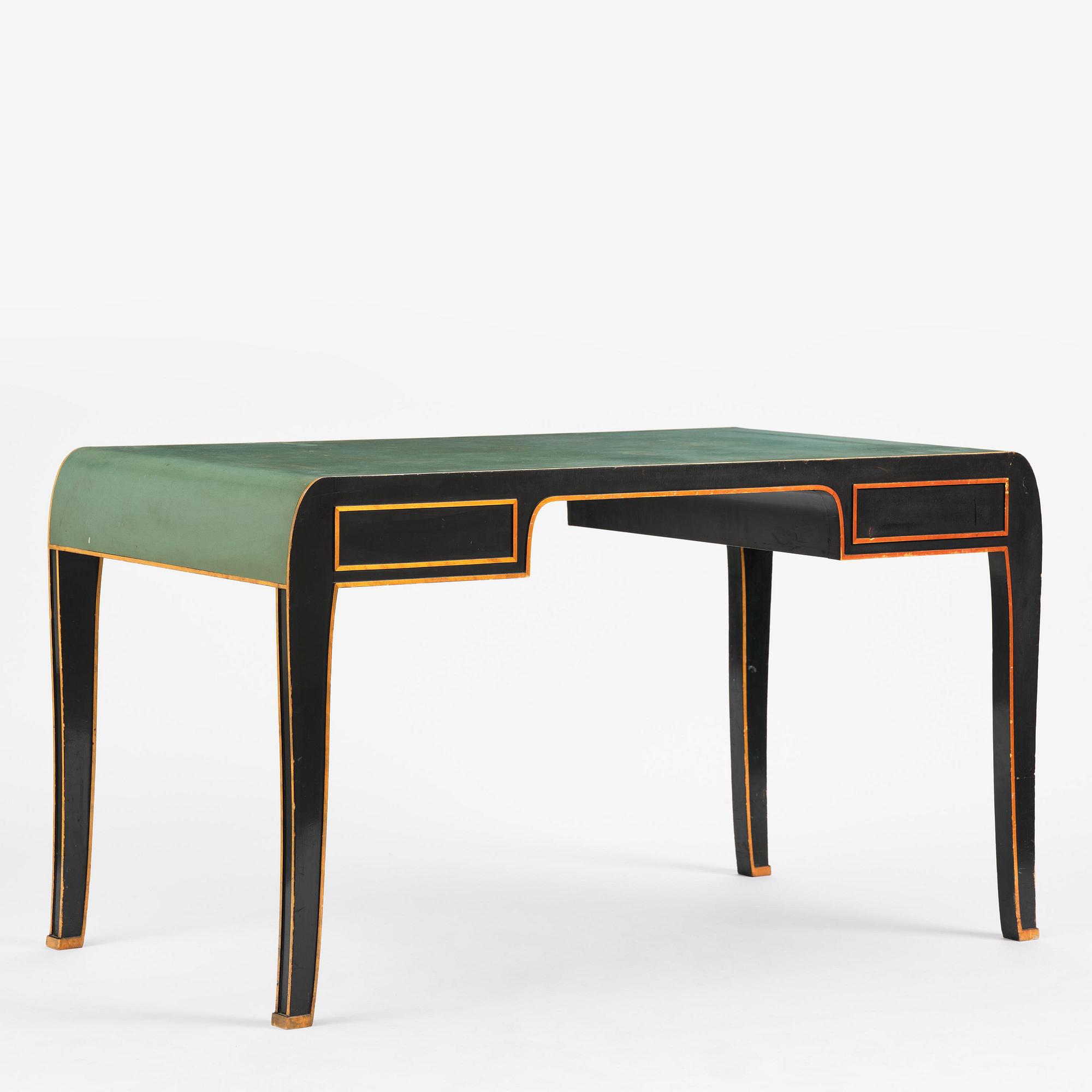
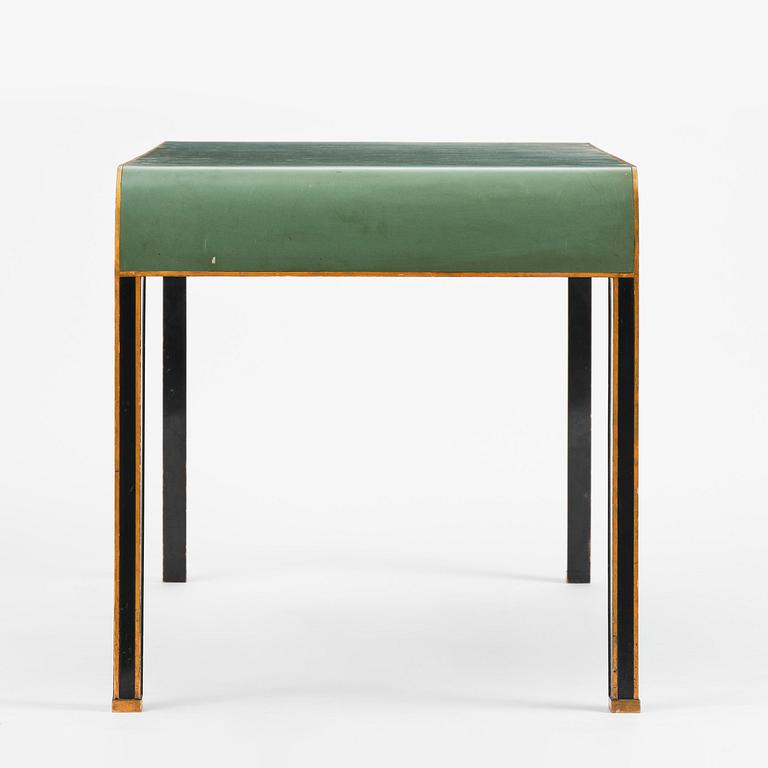
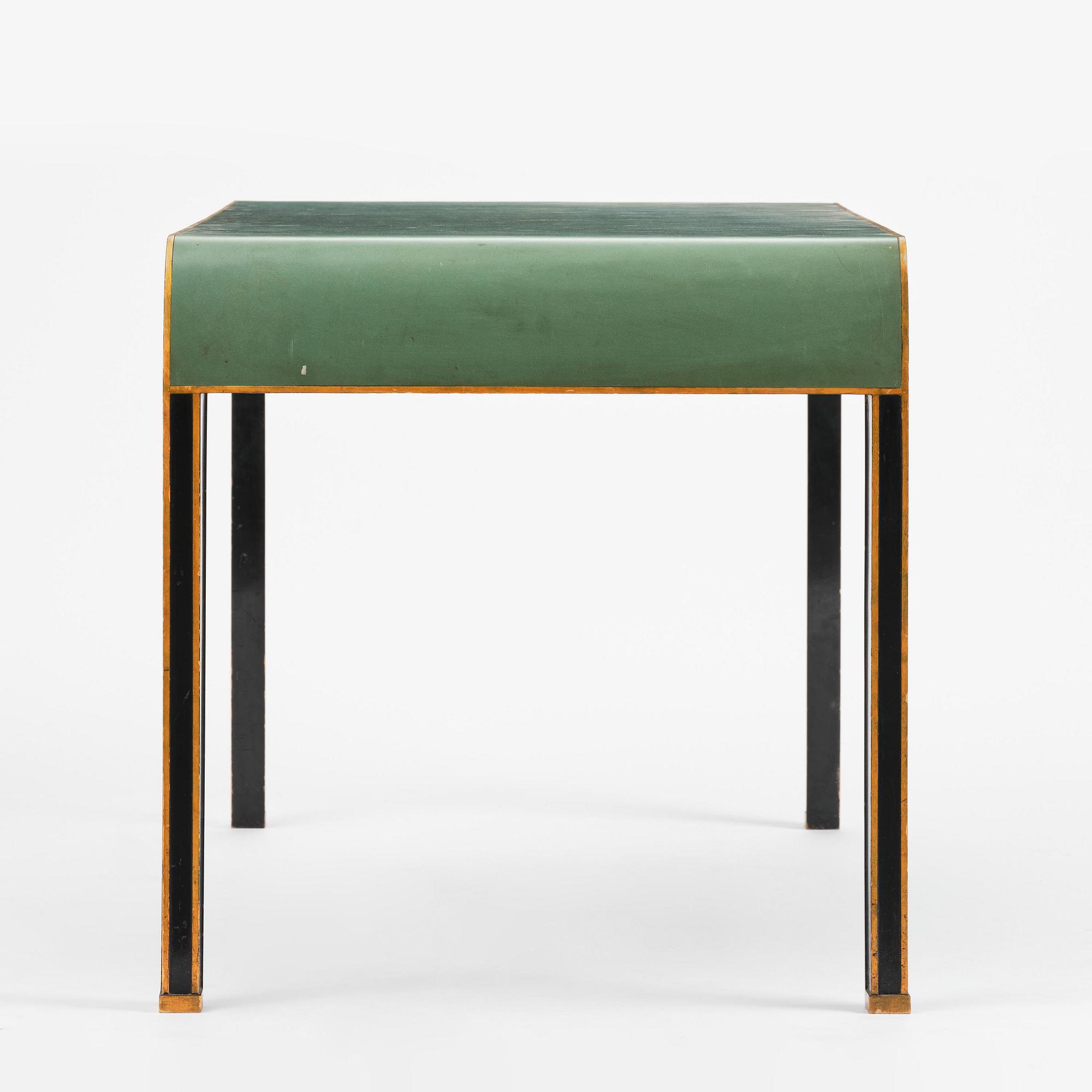
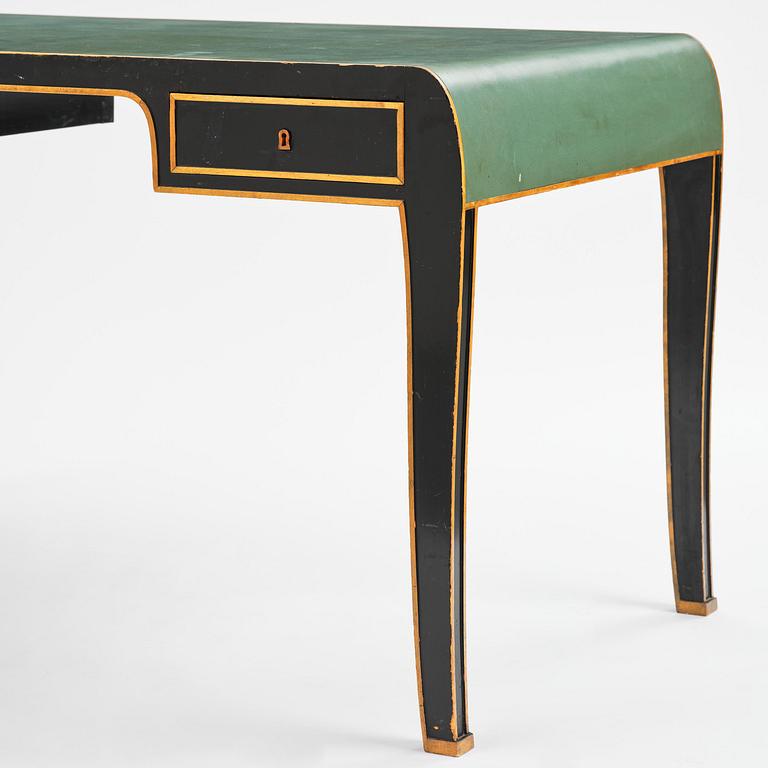
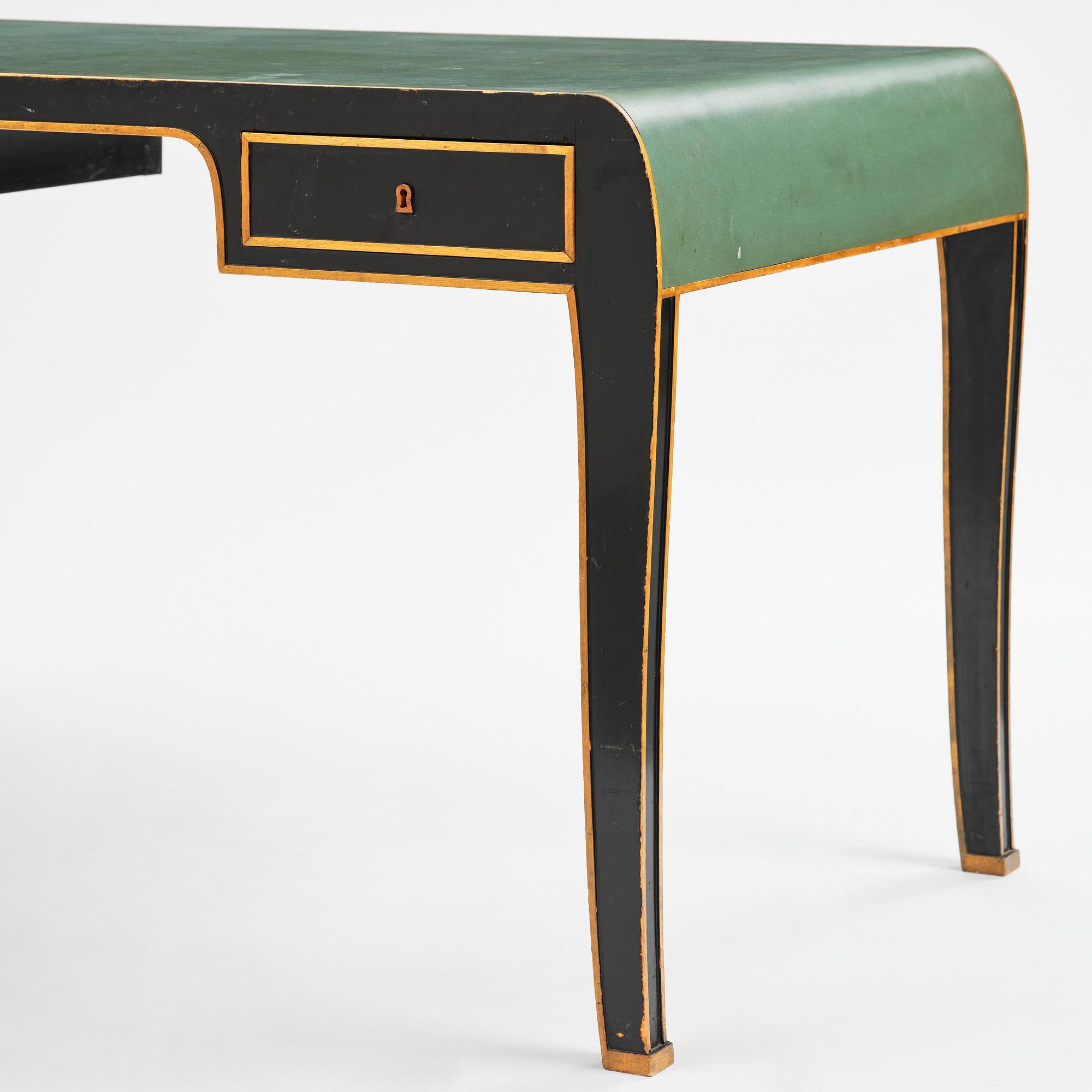
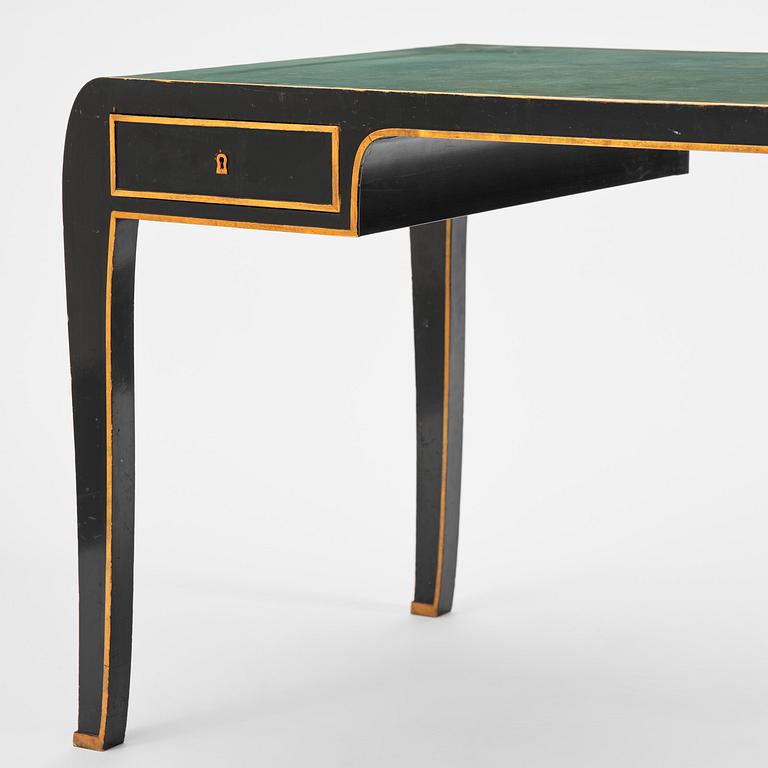
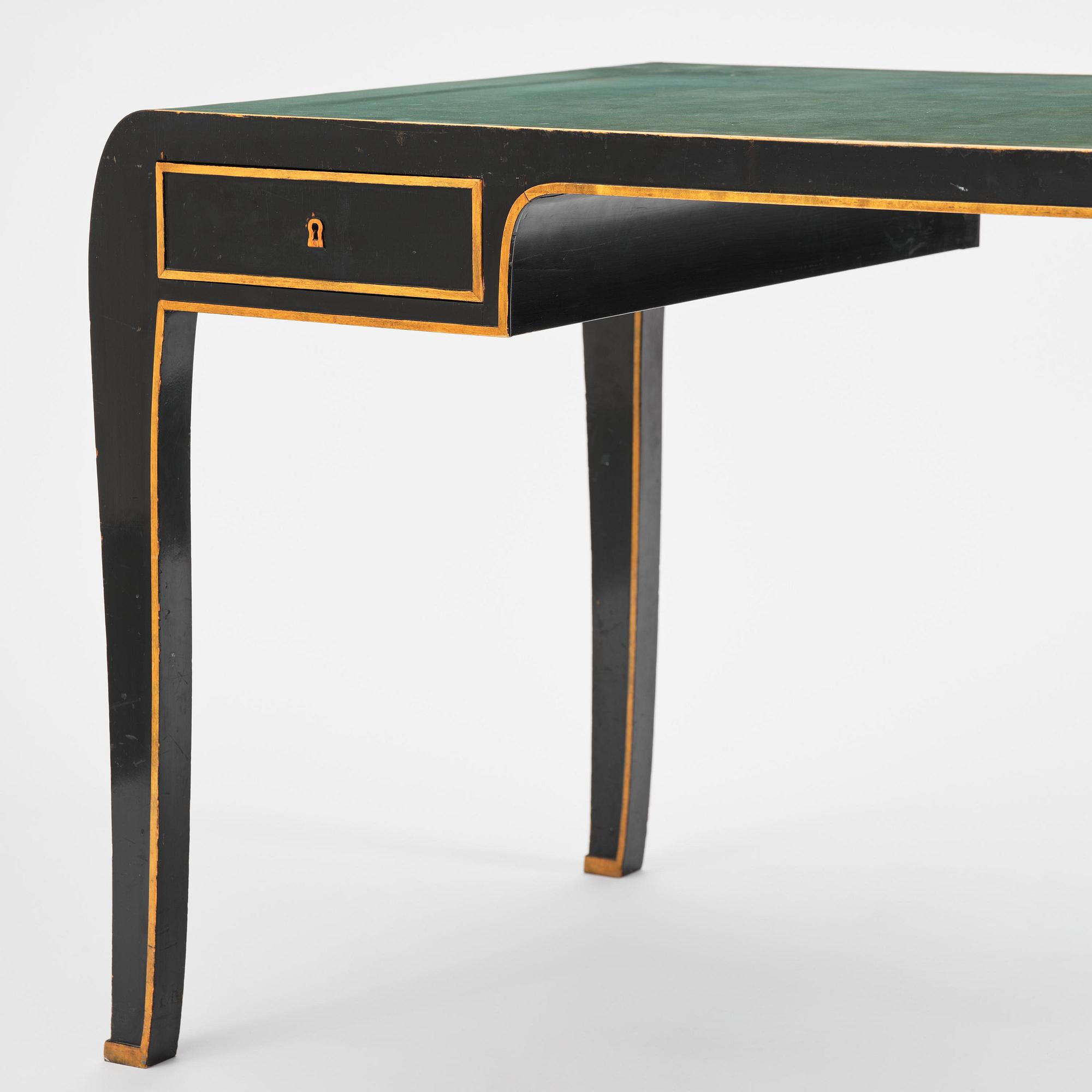
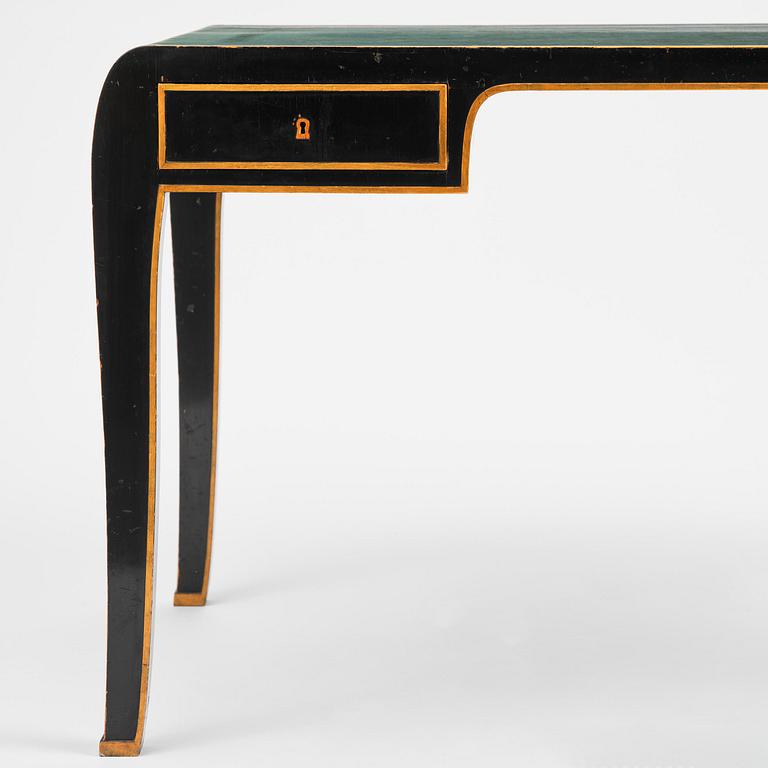
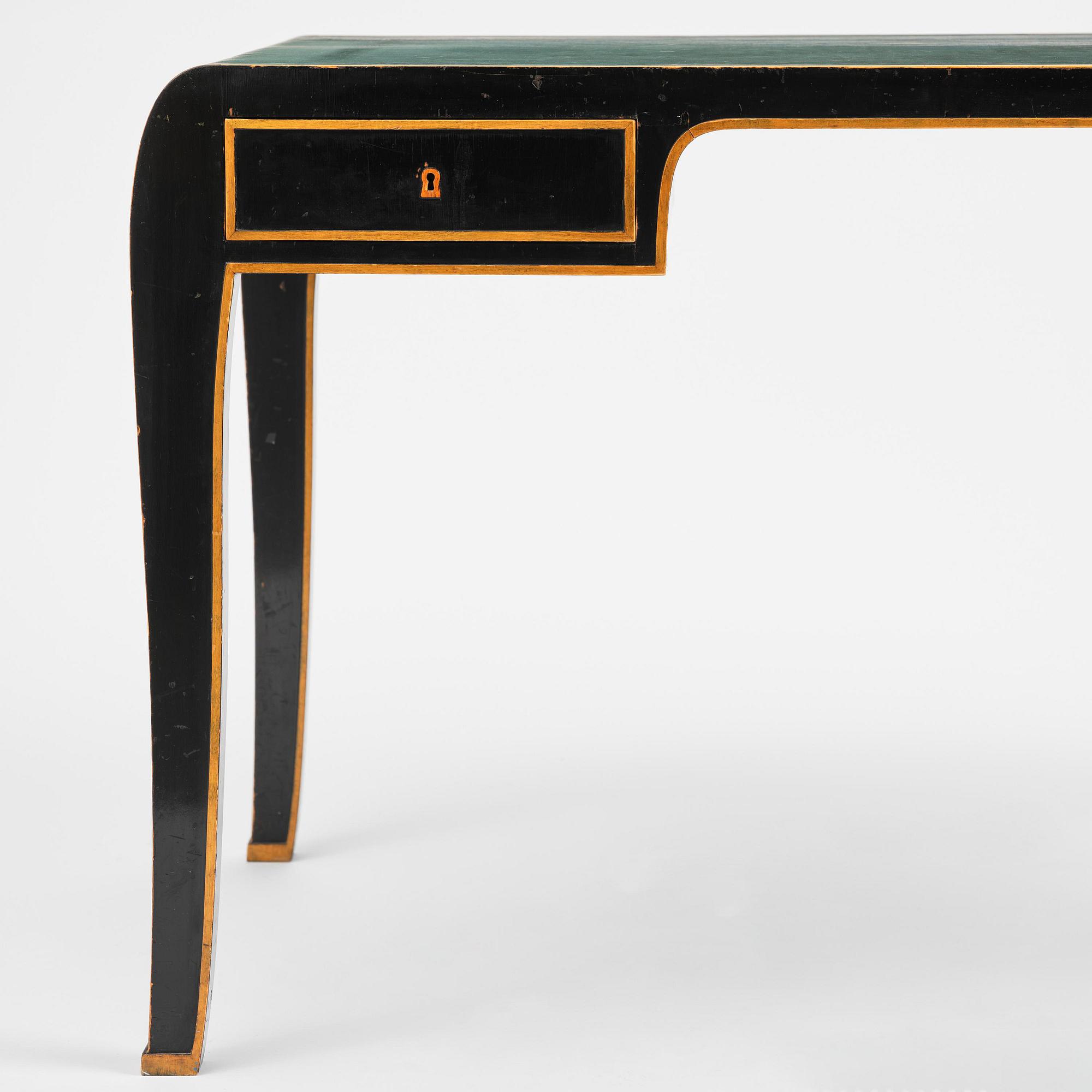
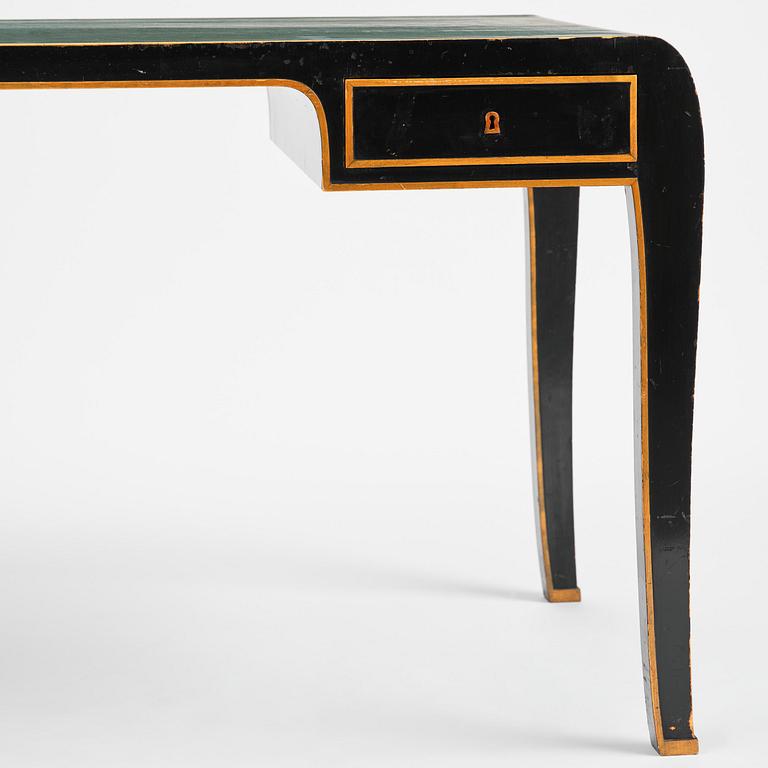
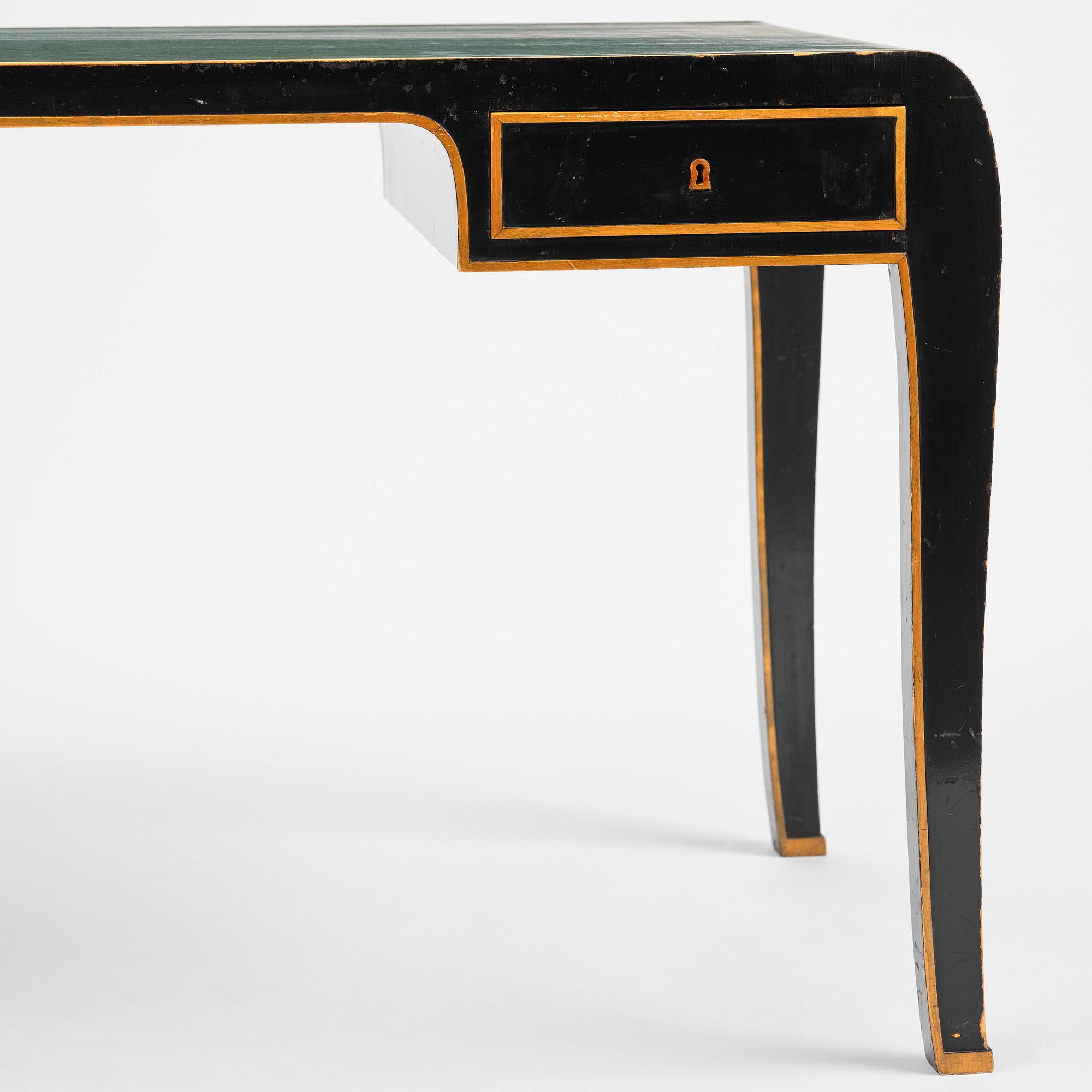
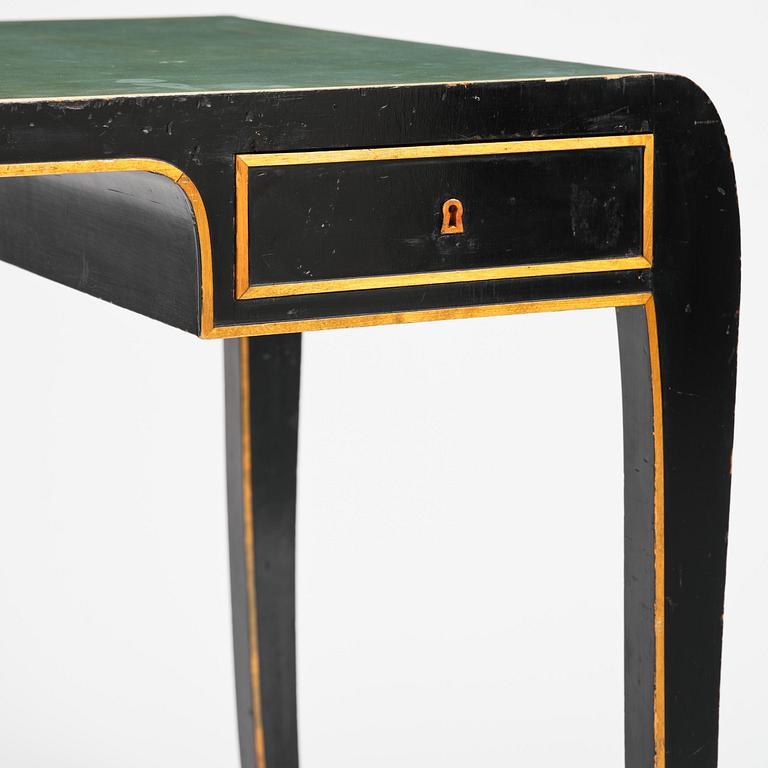
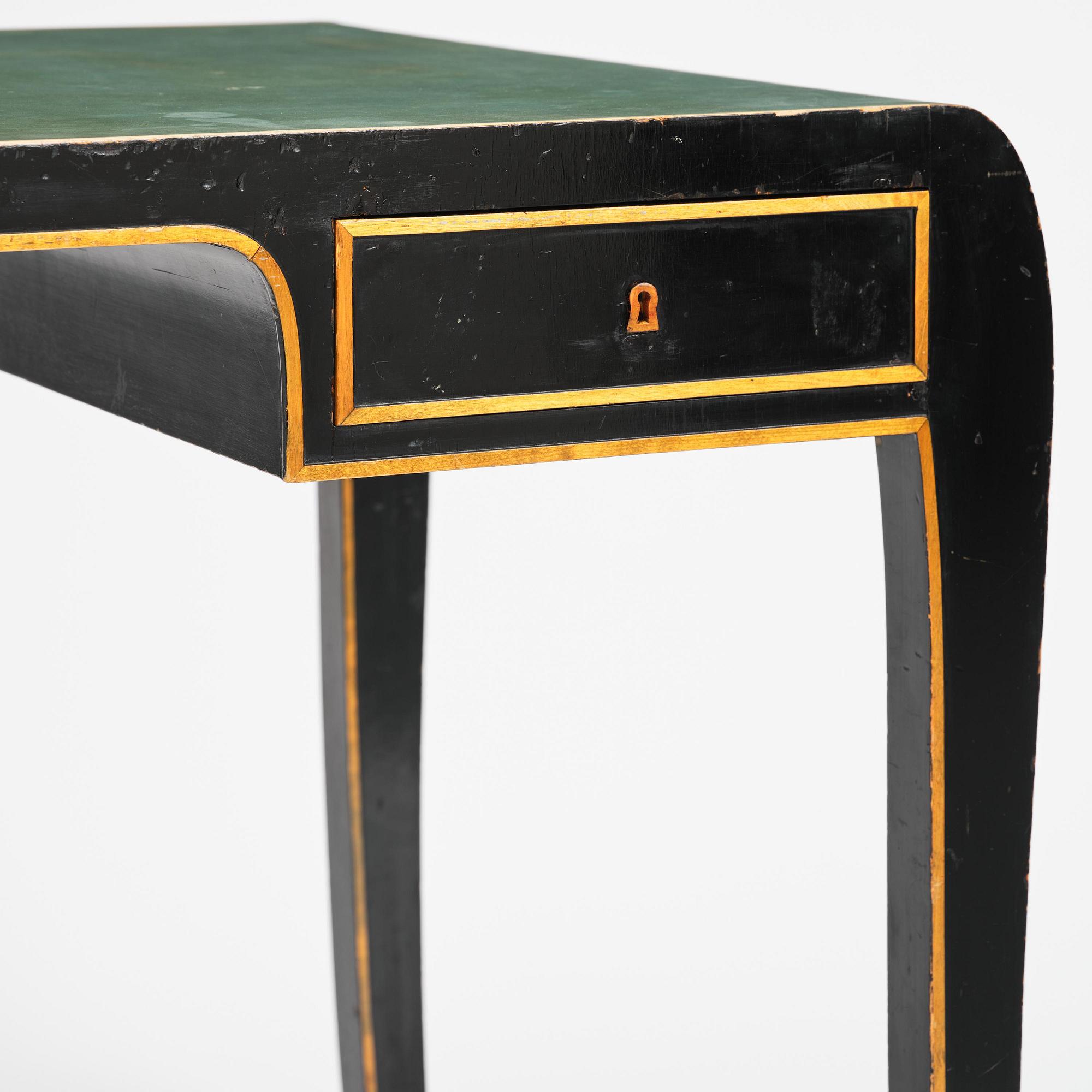
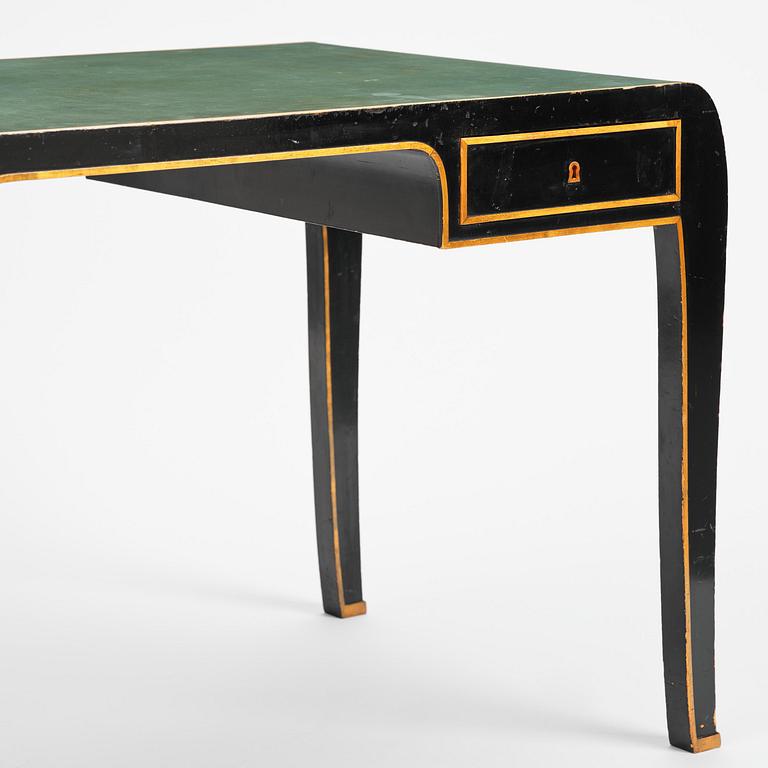
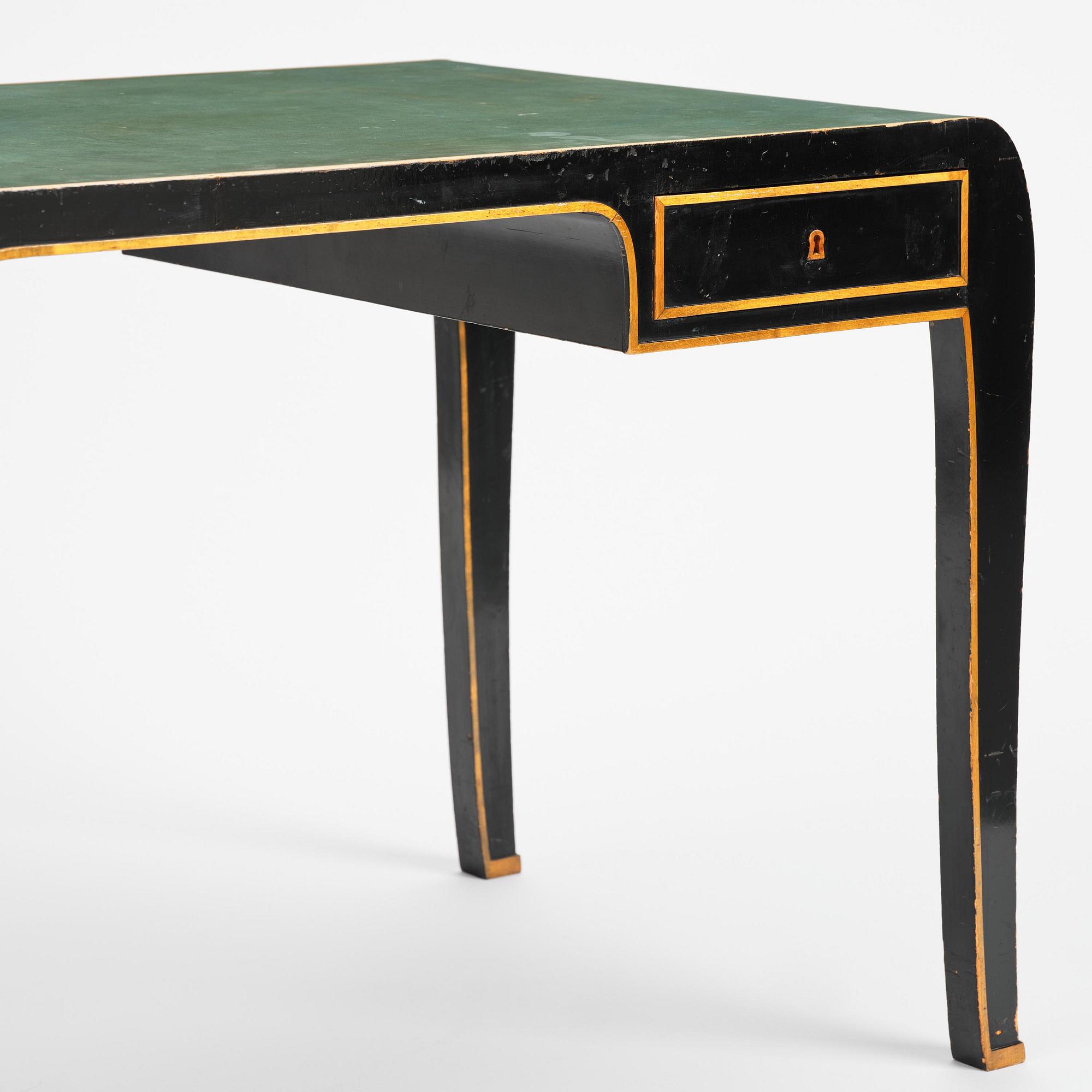
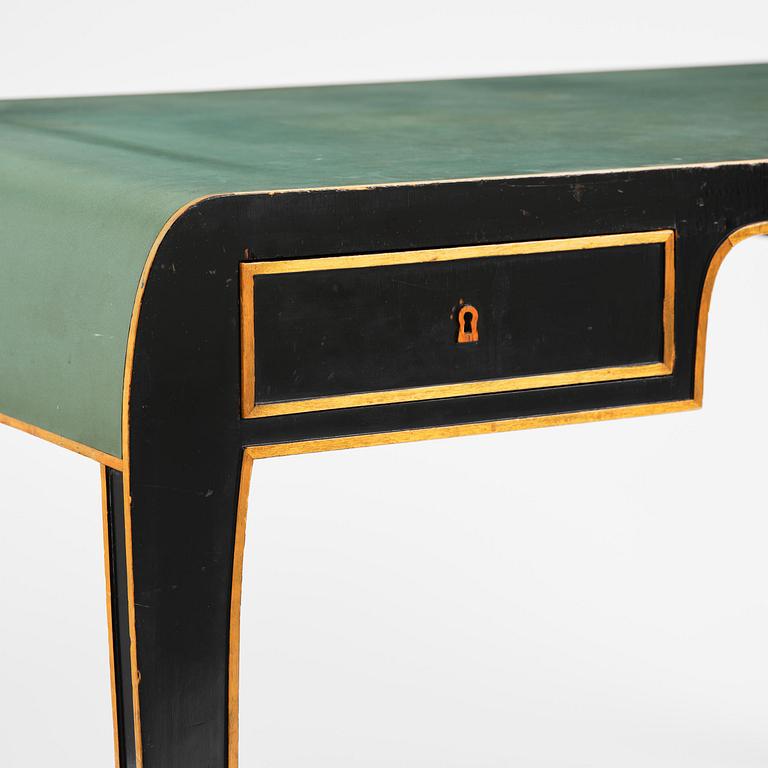
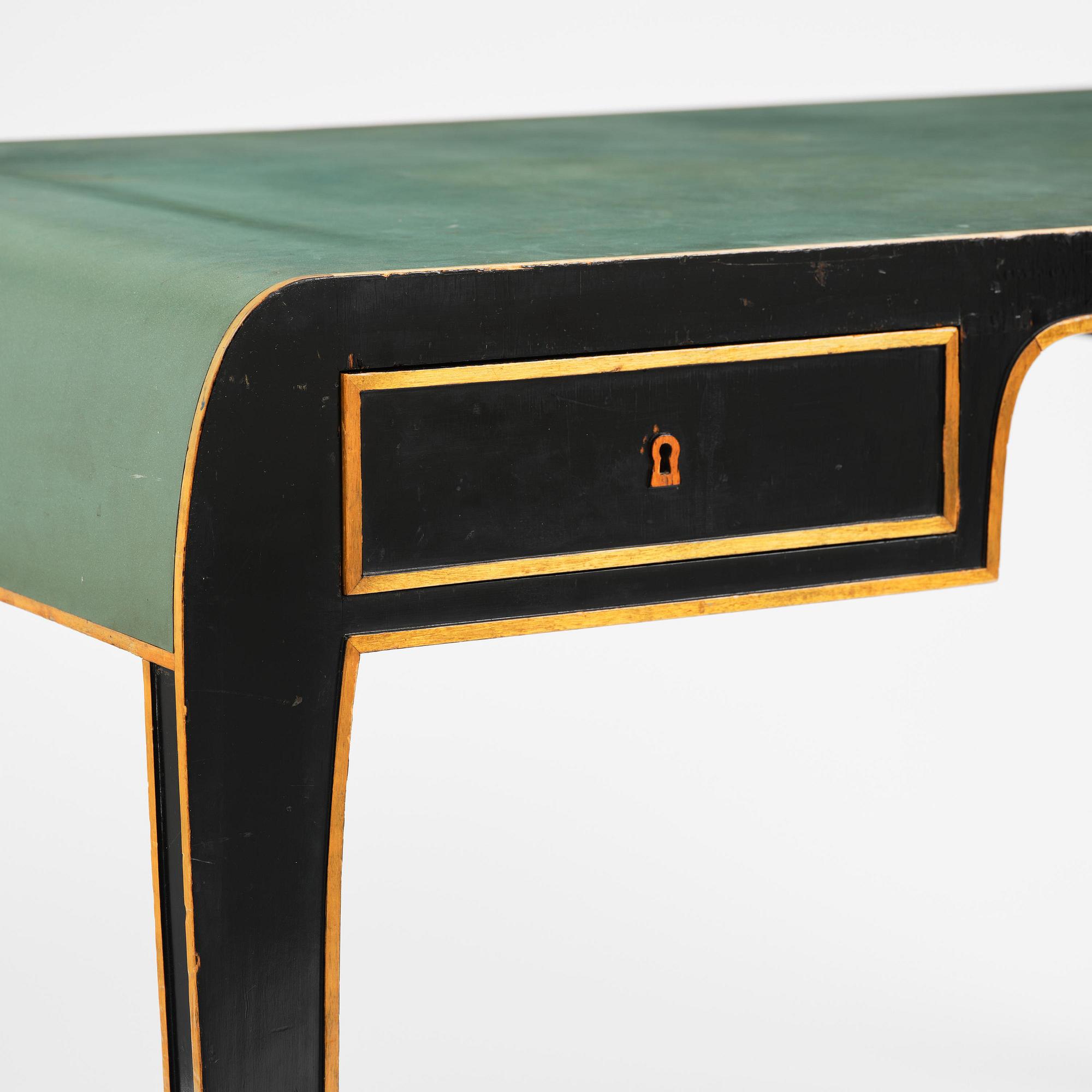
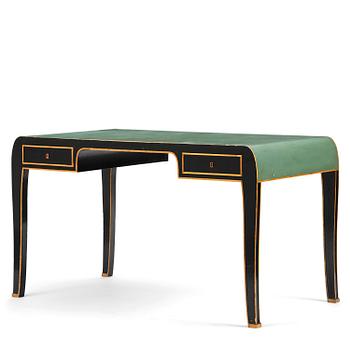
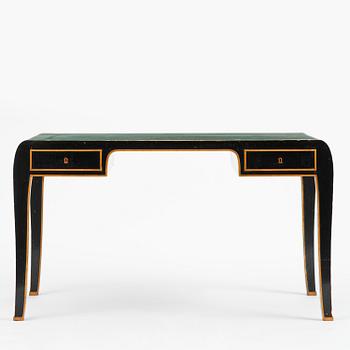
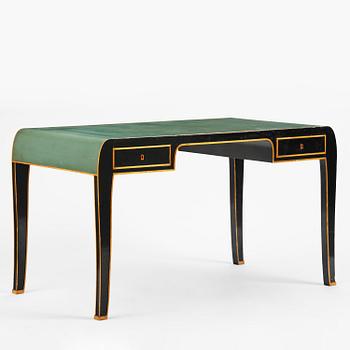
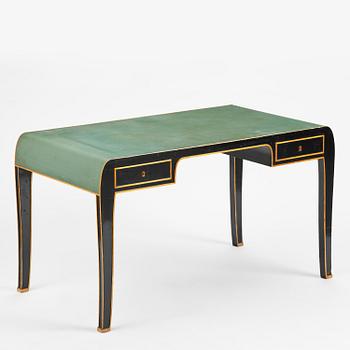
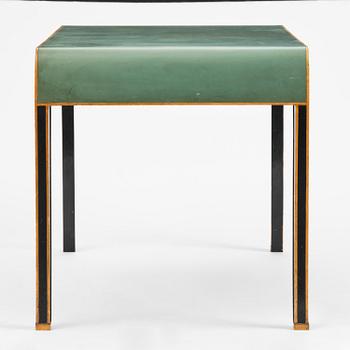
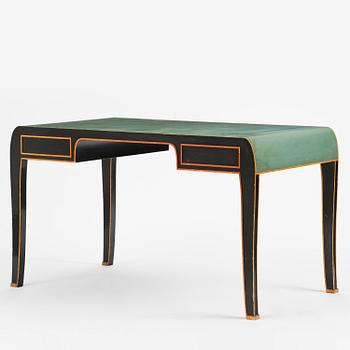
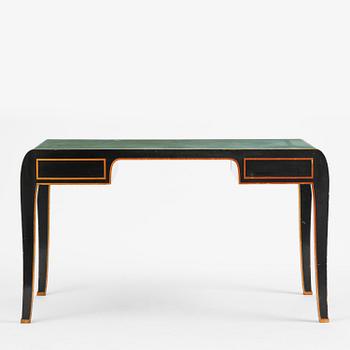
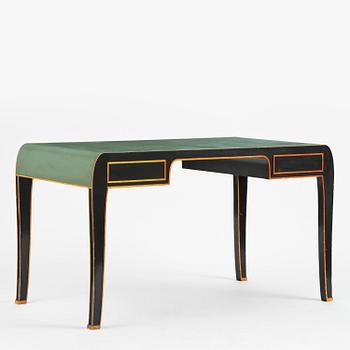
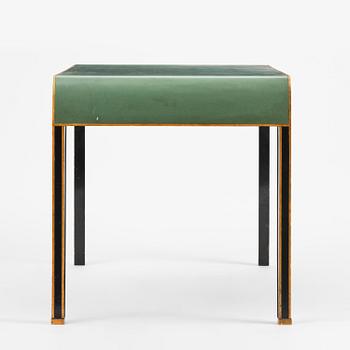
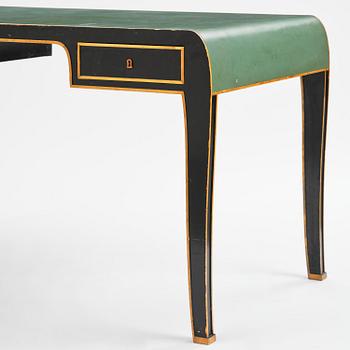
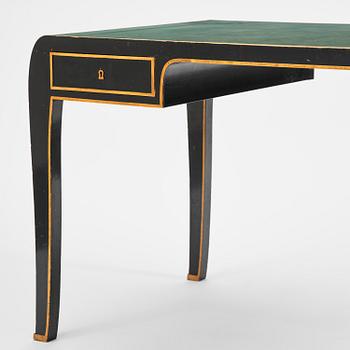
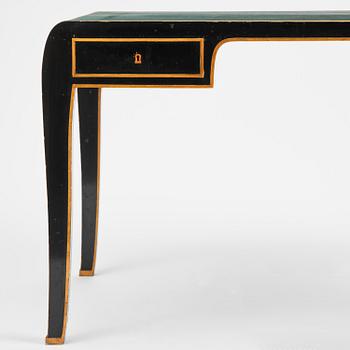
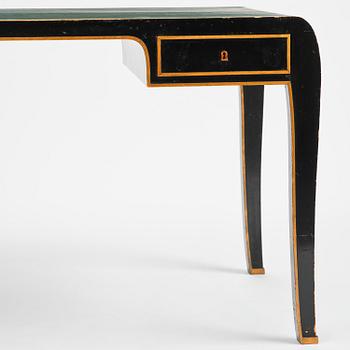
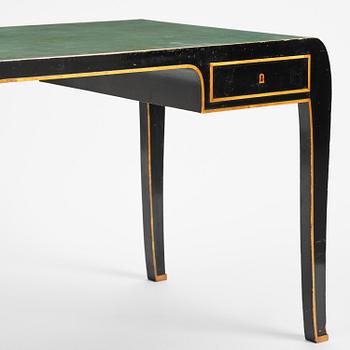
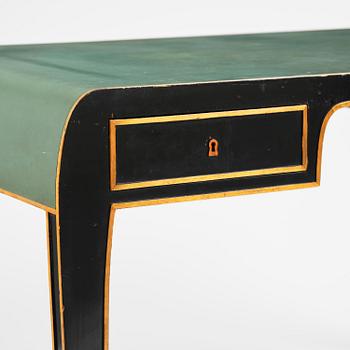
A Swedish Grace desk, Nordiska Kompaniet, for Les Arts Décoratifs Suédois, Paris, 1928.
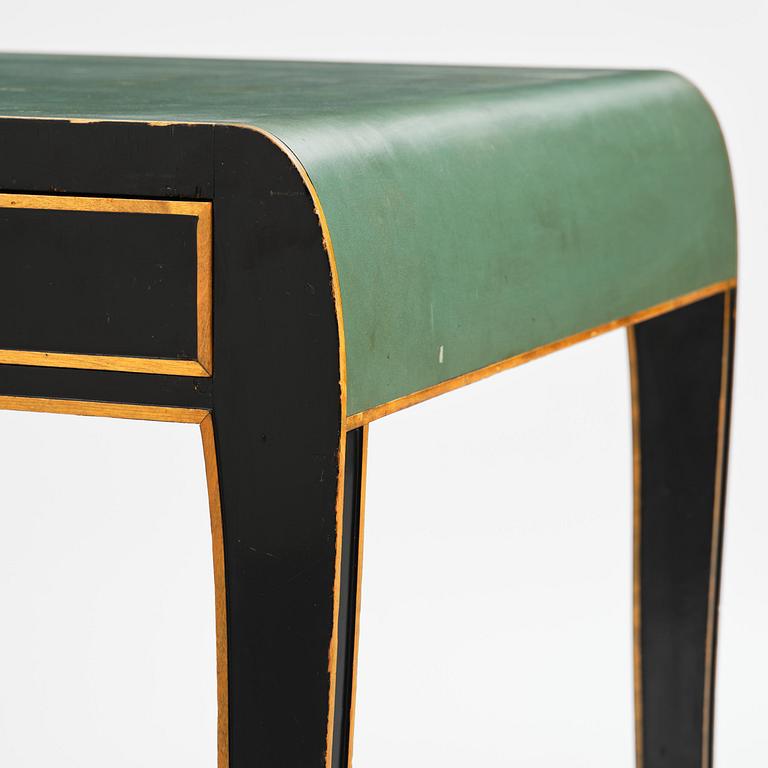
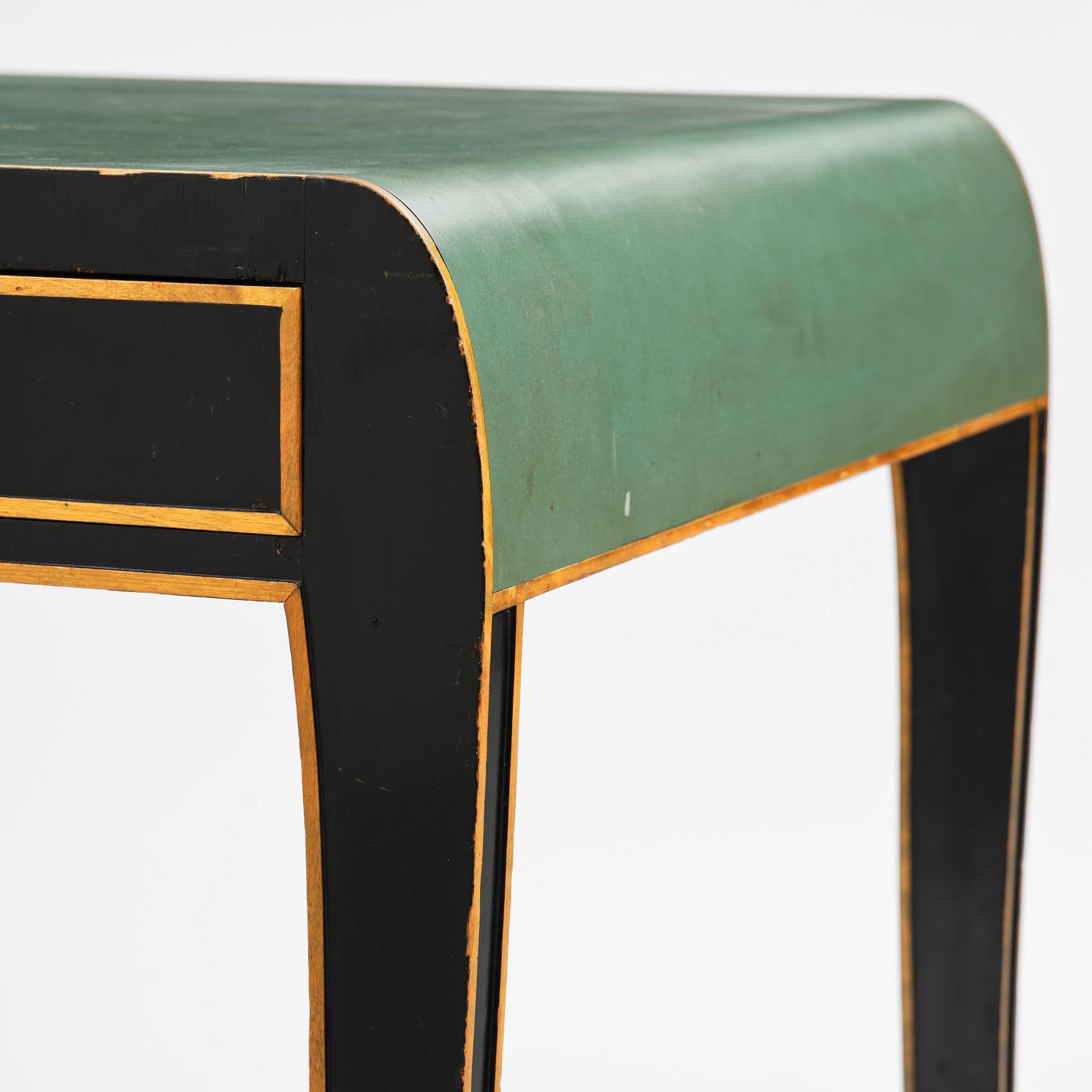
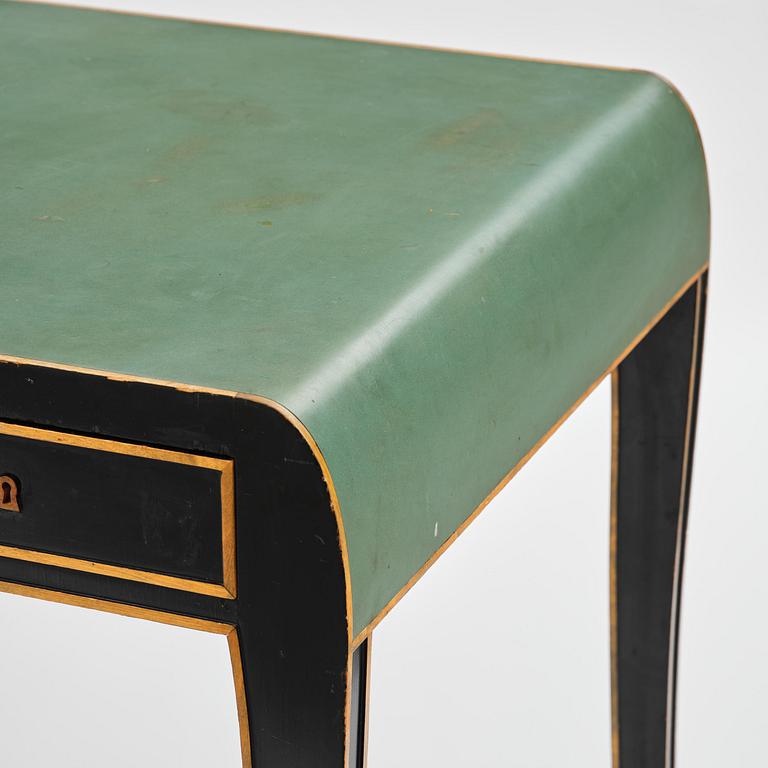
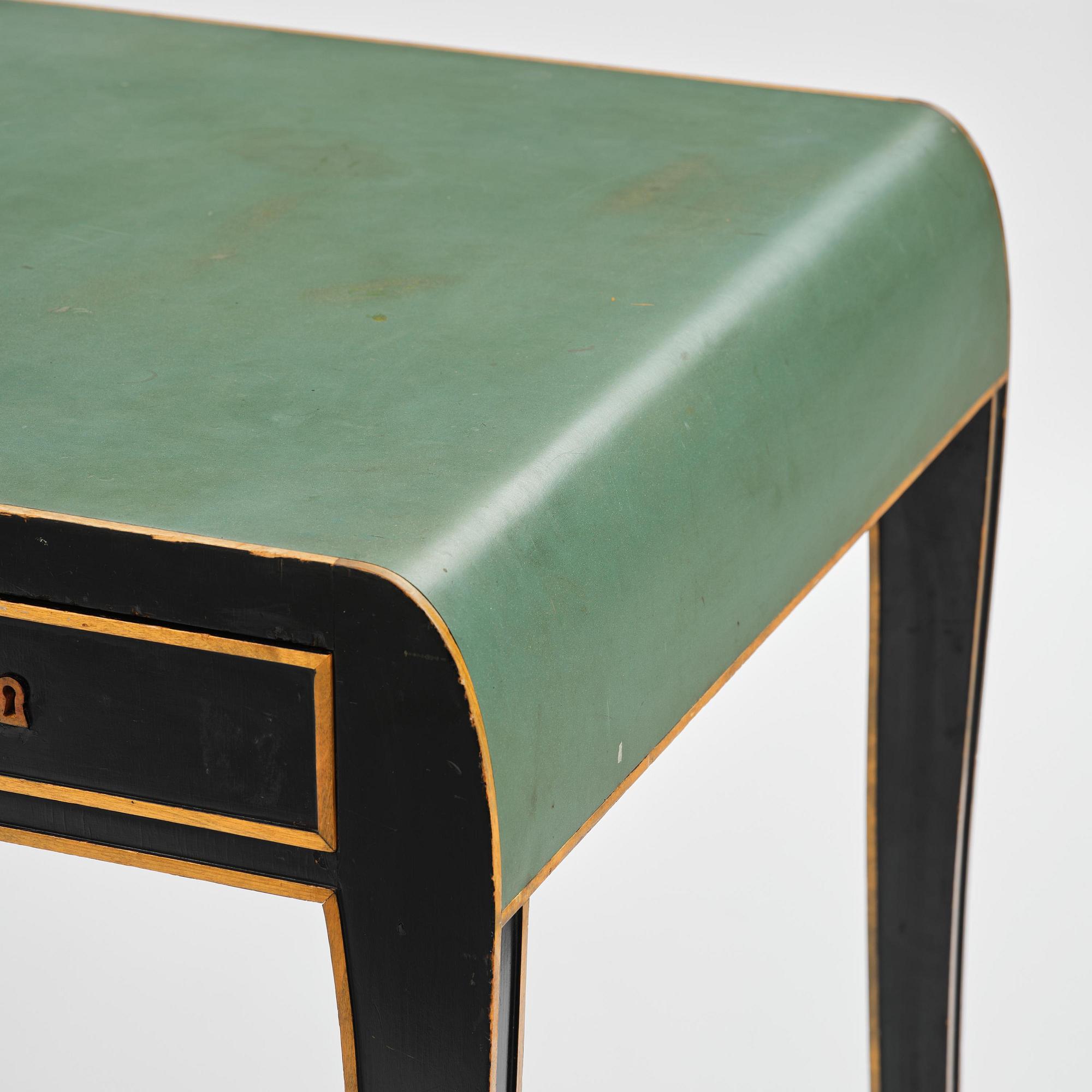
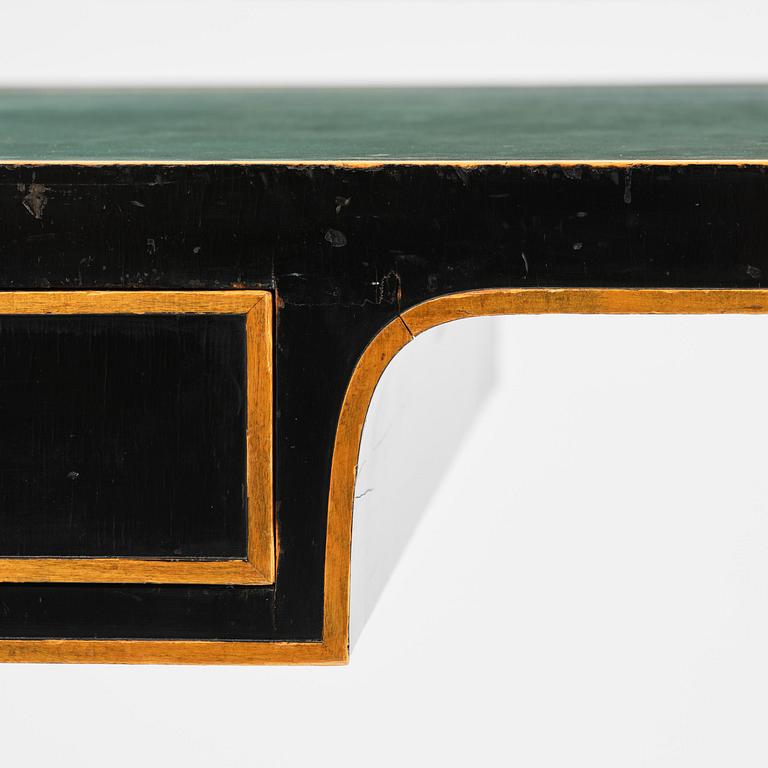
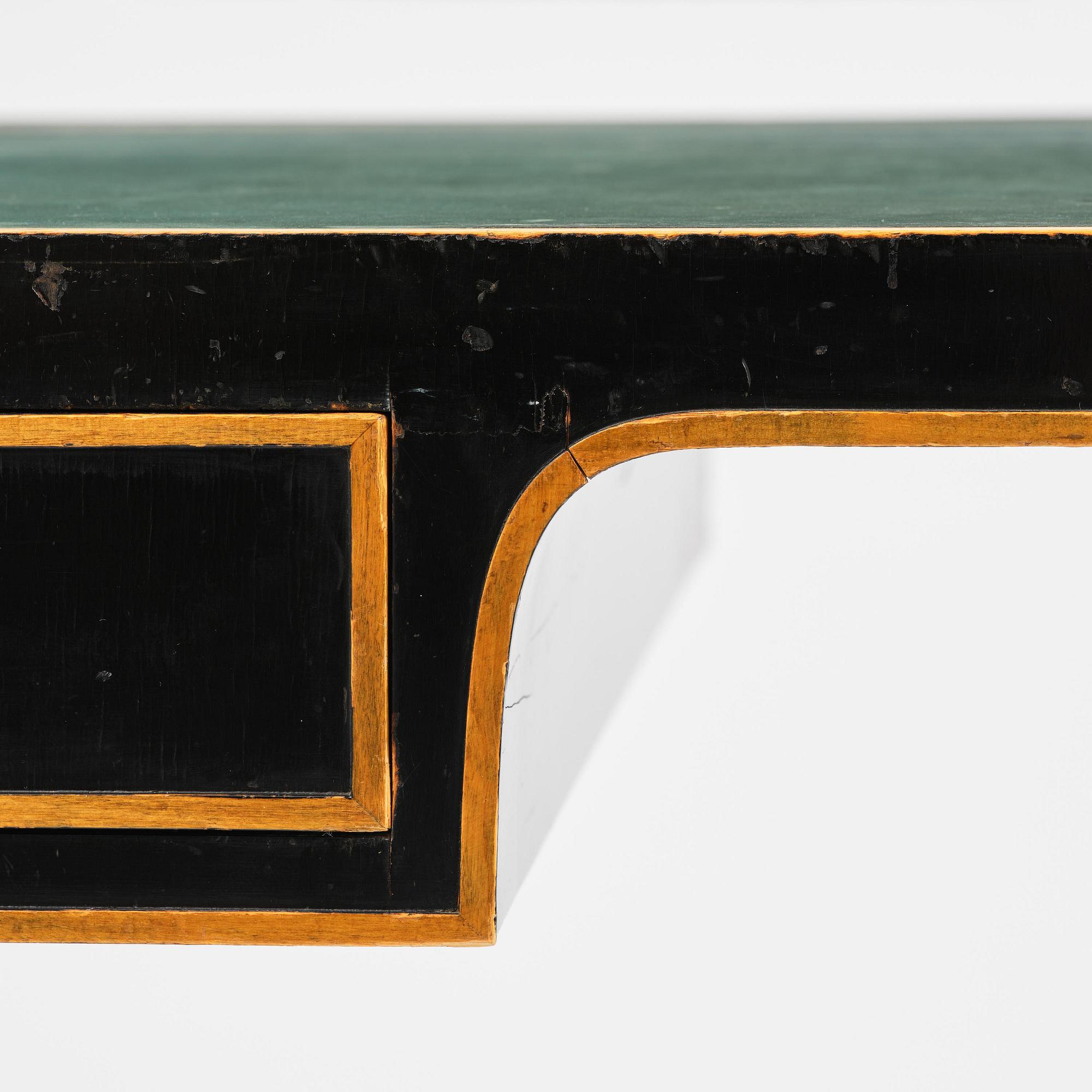
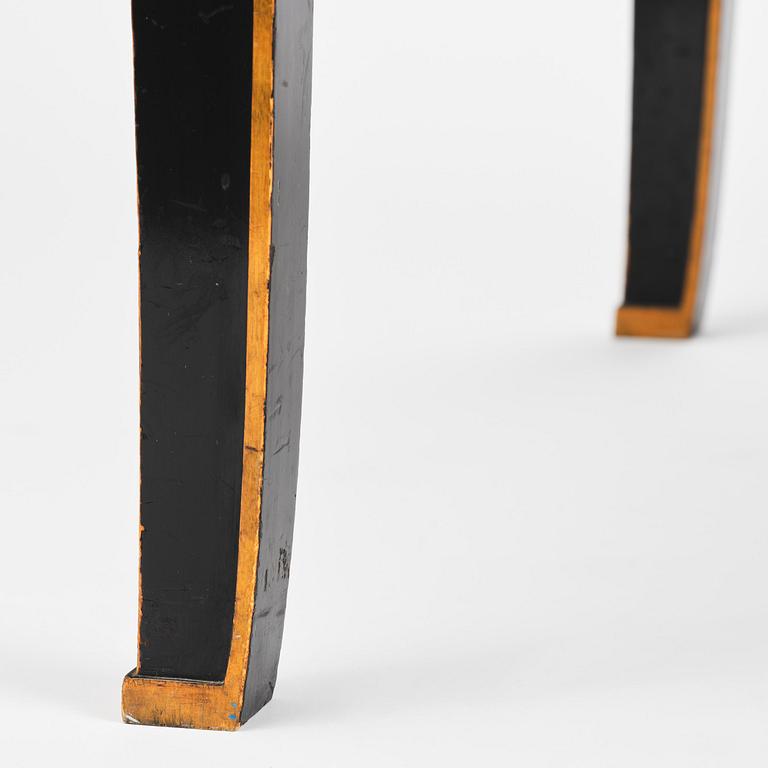
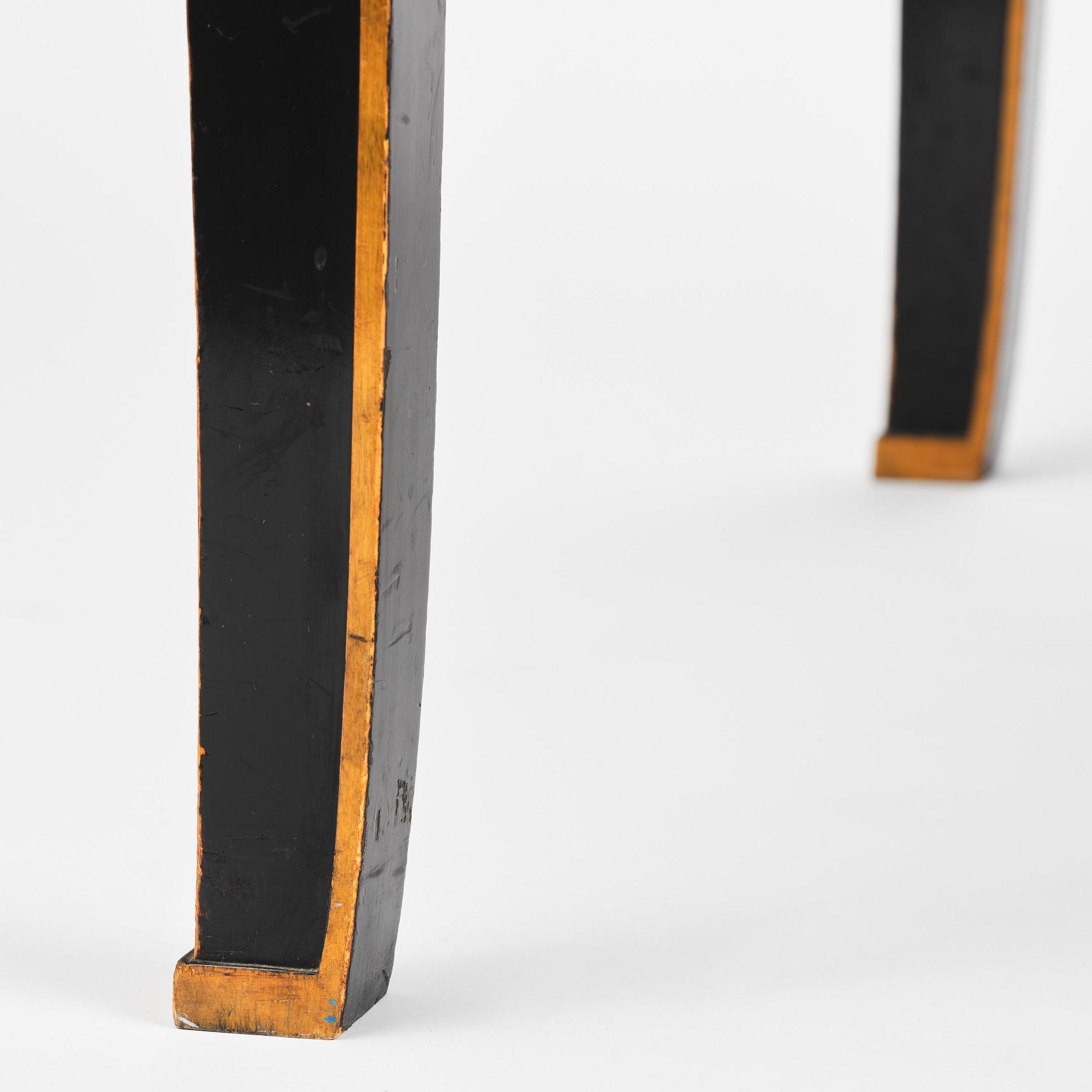
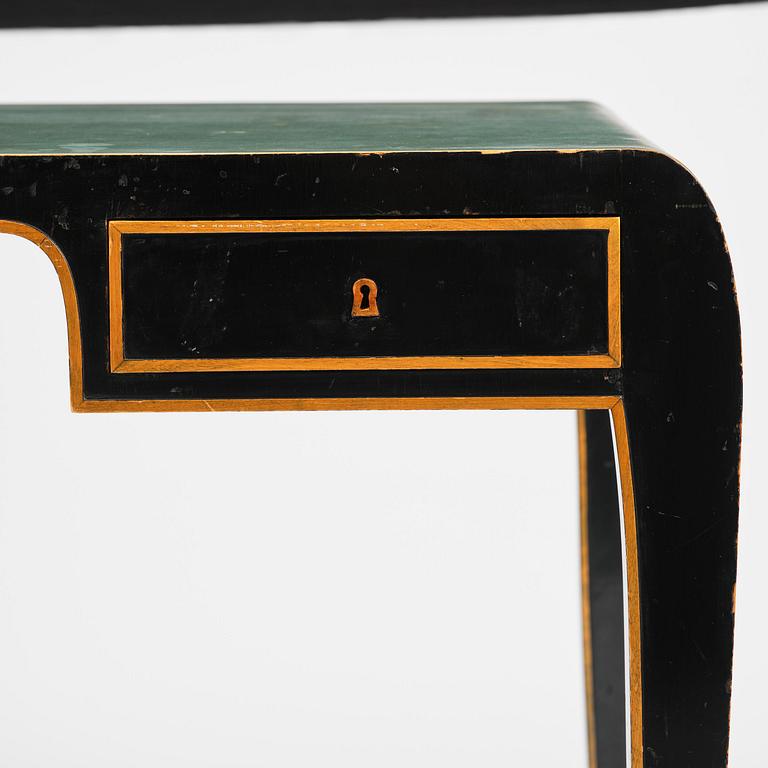
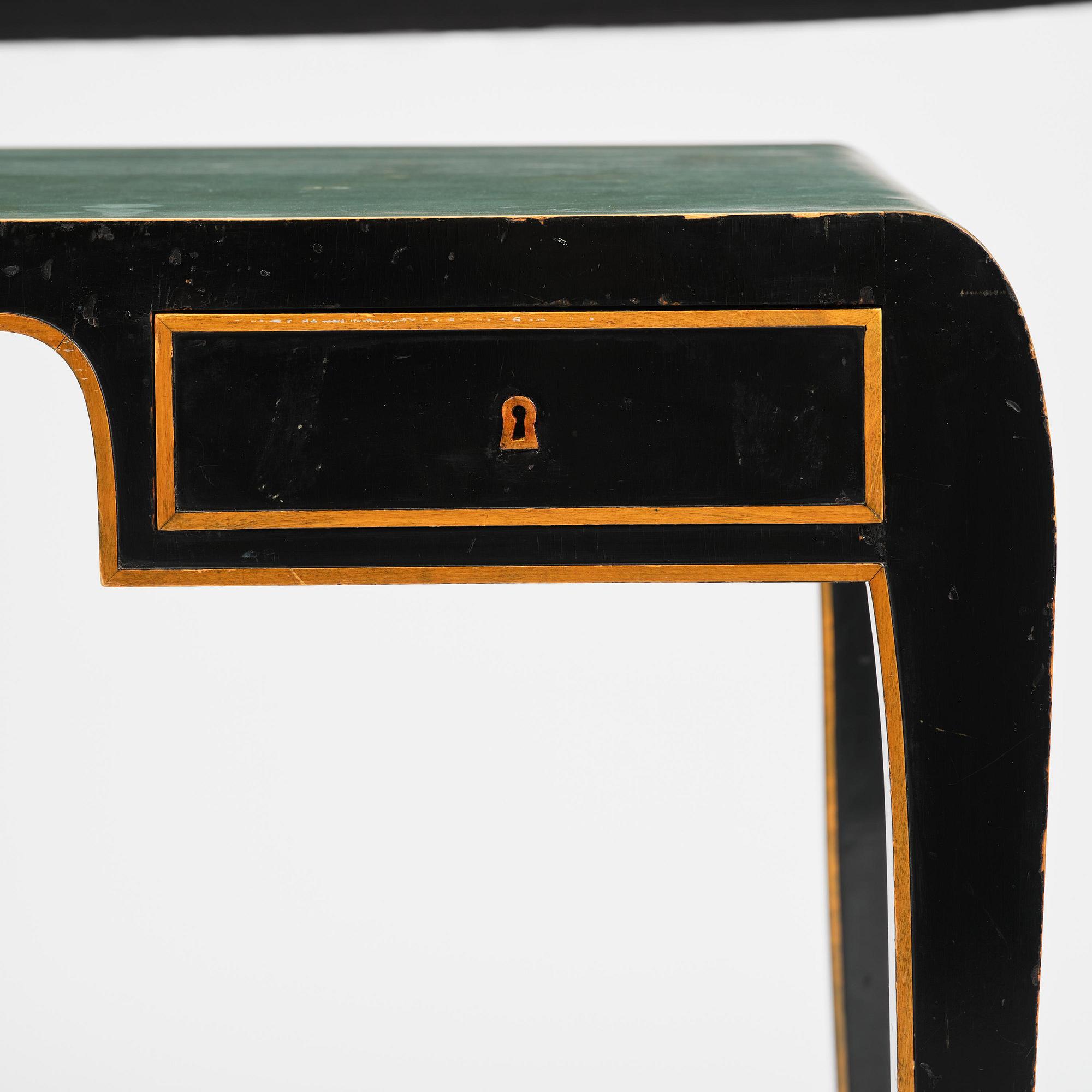
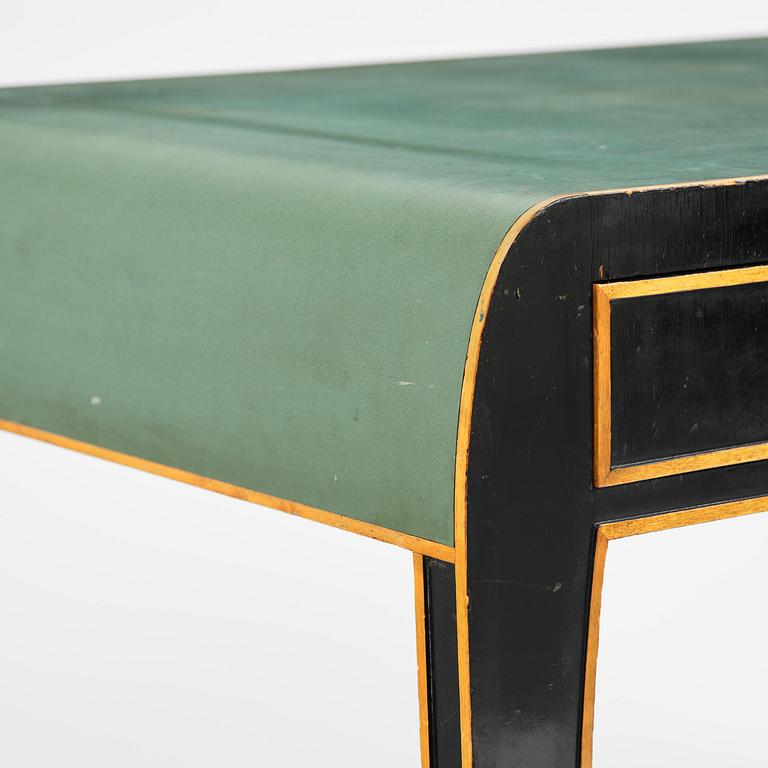
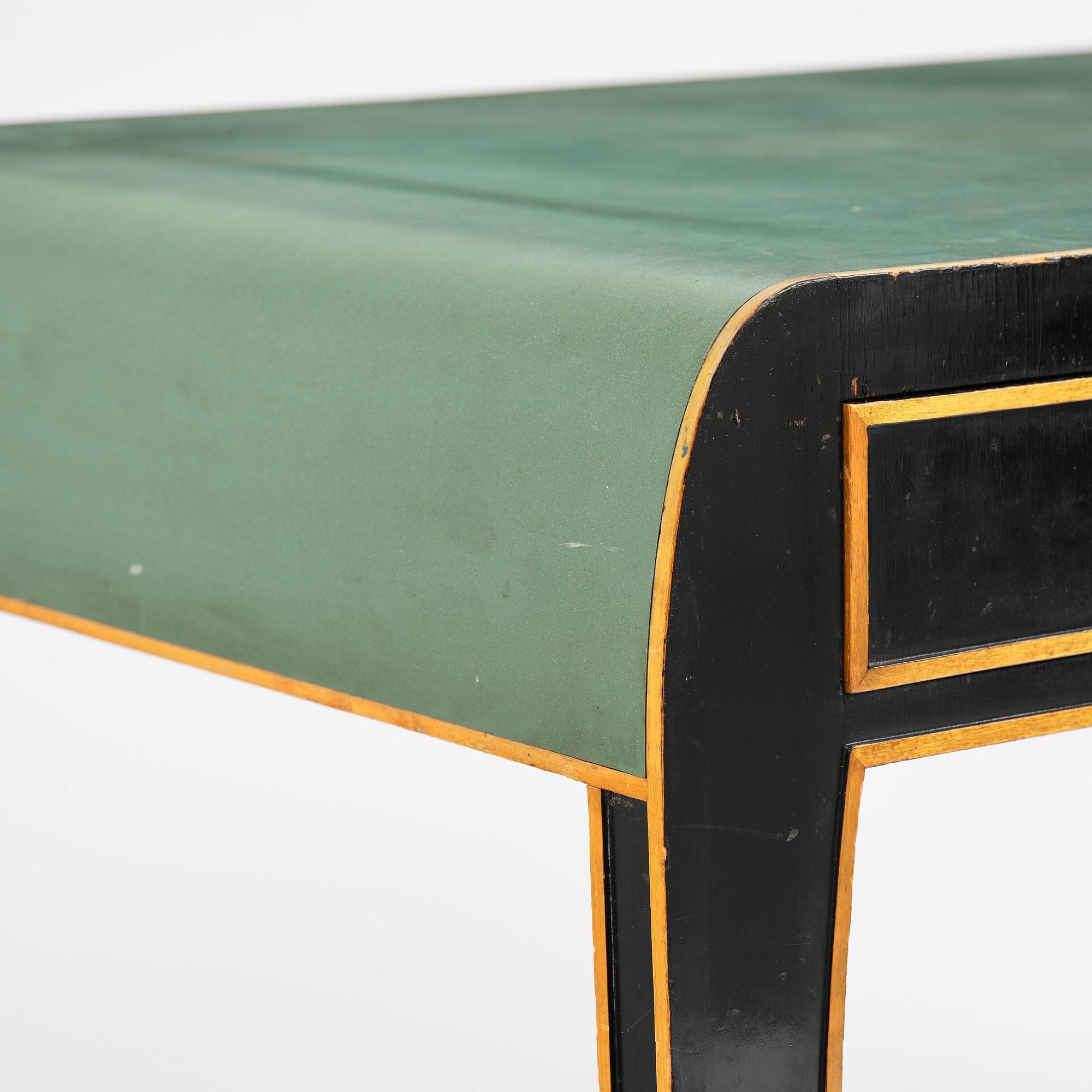
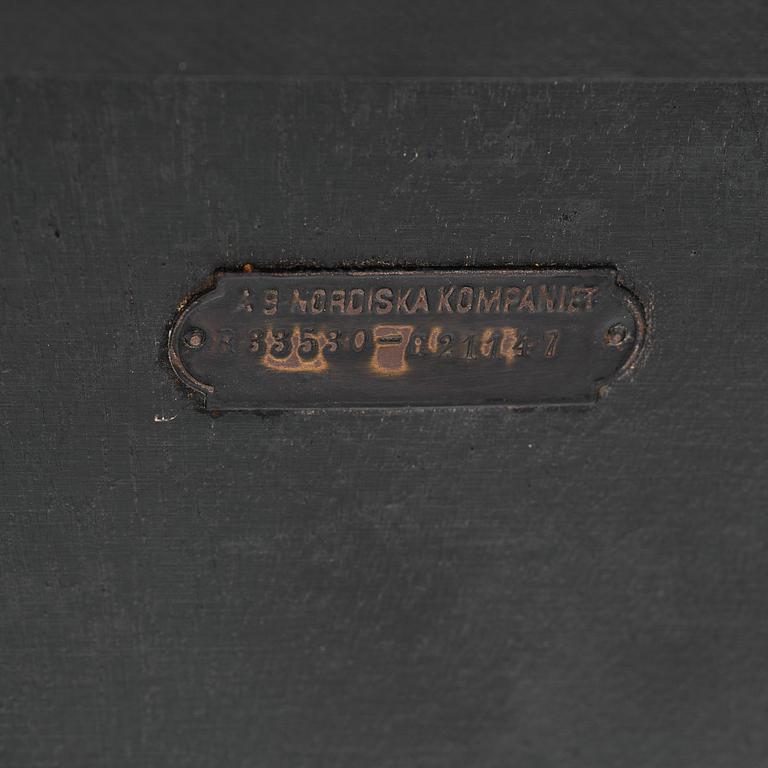
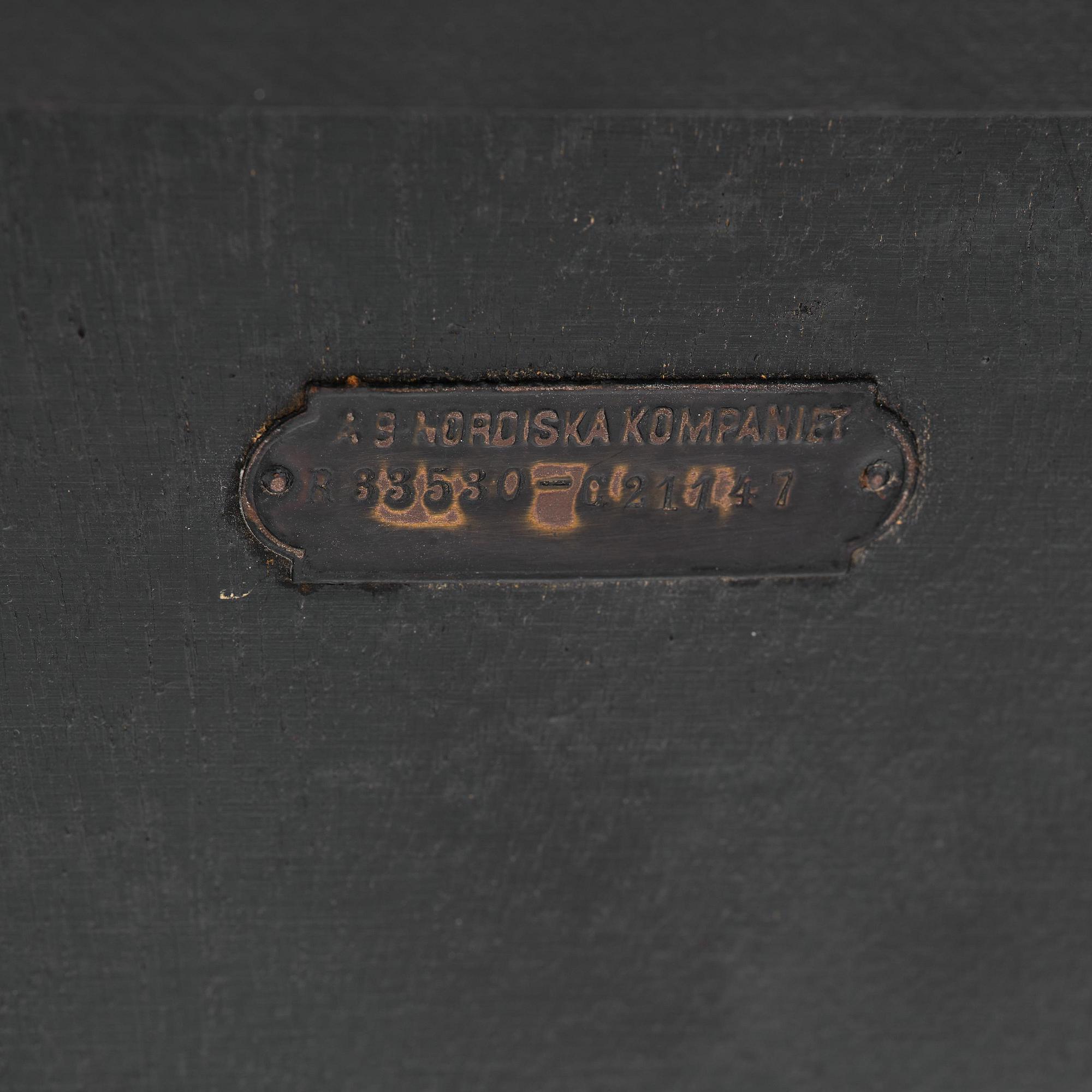
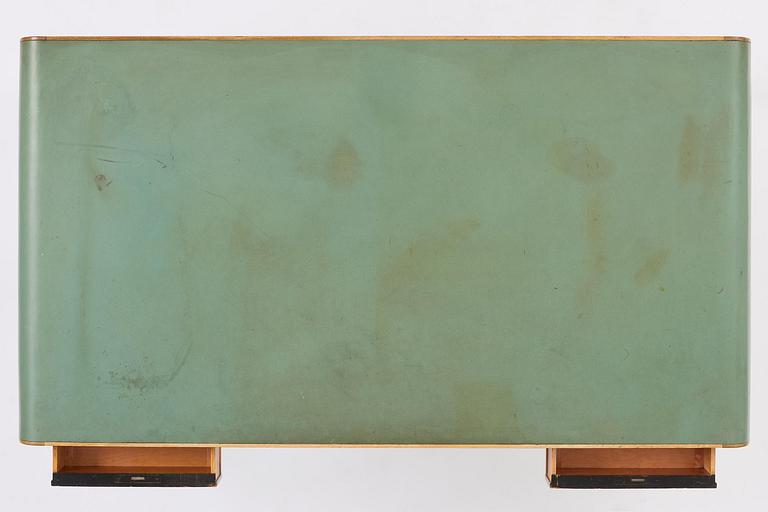
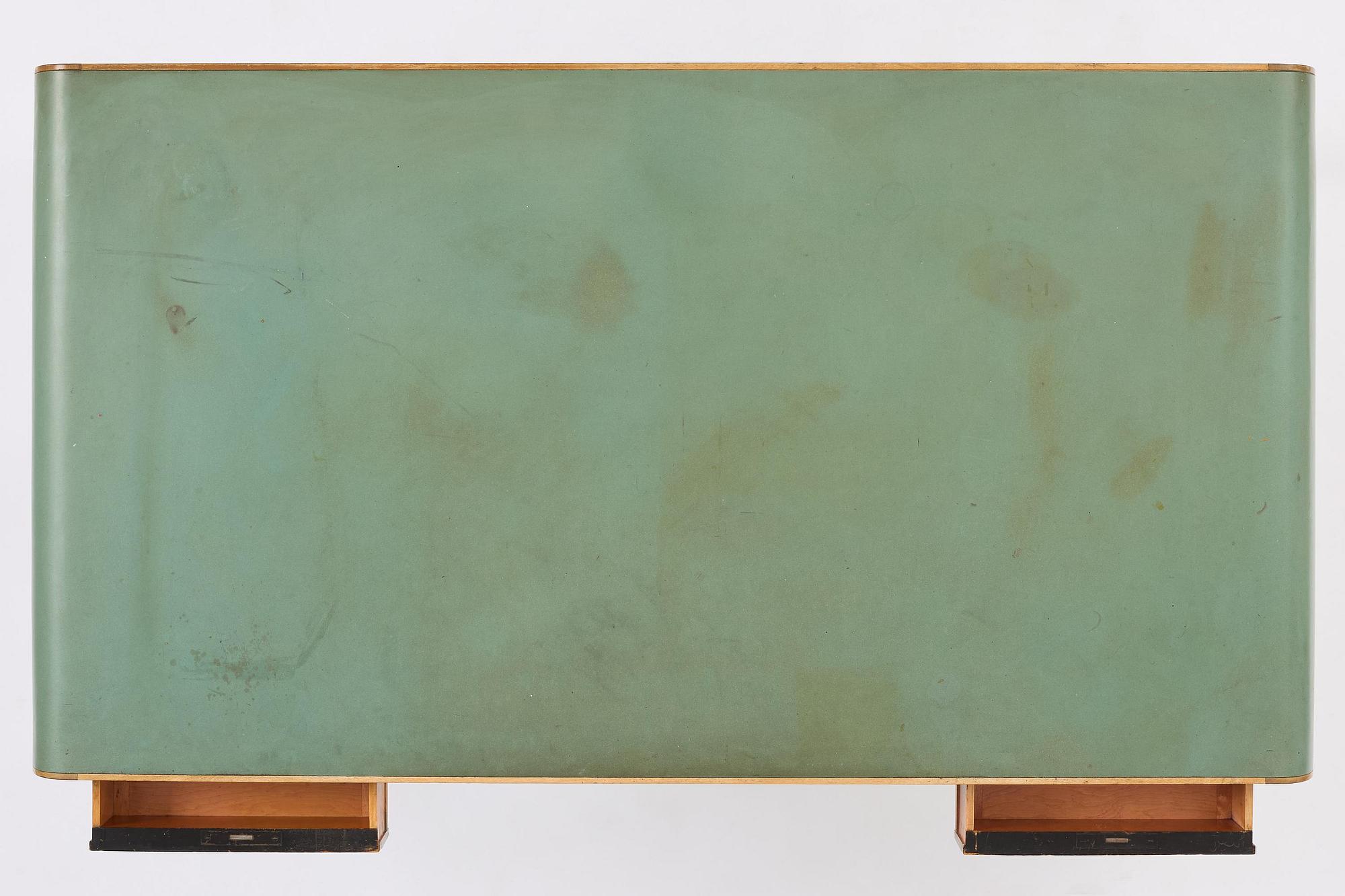
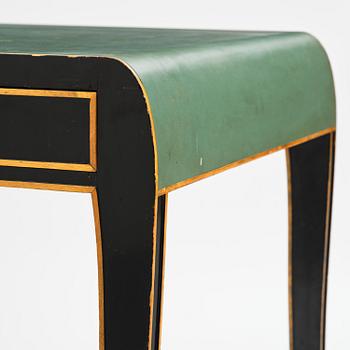
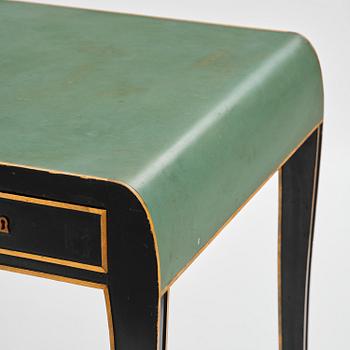
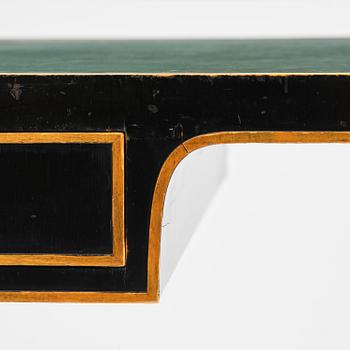
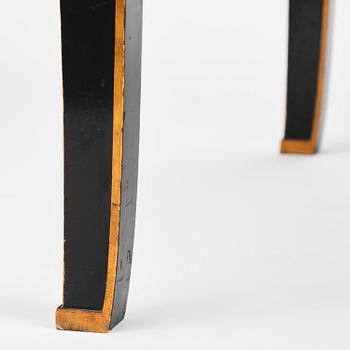
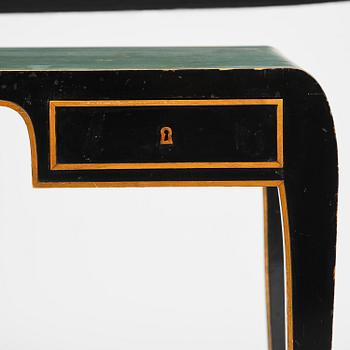
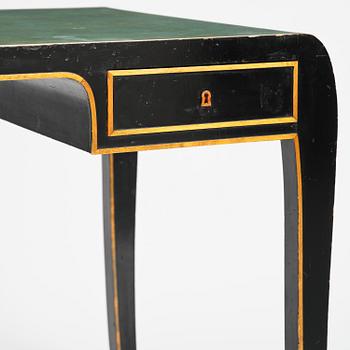
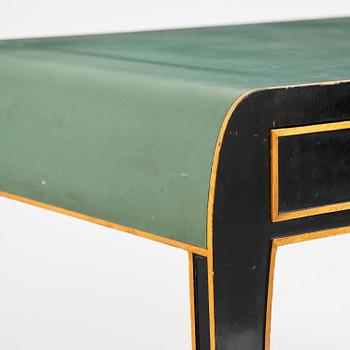
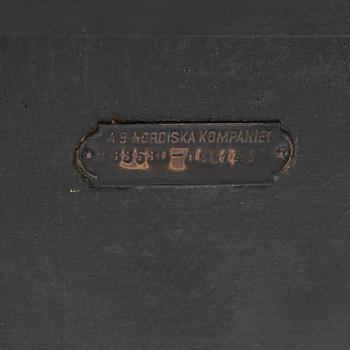
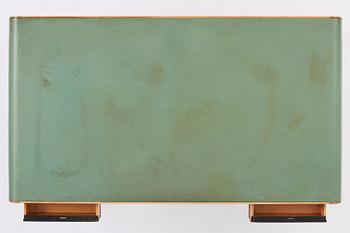
Birch, partially black-painted, profiled edges, top of linoleum, manufacturer's metal label AB NORDISKA KOMPANIET R 33530 - C 21147. Length 130 cm, depth 71 cm, height 73 cm.
Wear, scratches, stains and marks. Retouches. One escutcheon has been replaced and restored. Keys included.
Provenance
Bukowski Auktioner, Stockholm, Höstens Moderna Auktion, 23-24 October, 1996, lot 631.
Swedish Grace to Modernism: Property from a Swedish Private Collection
Literature
Drawing number 33530 in NK's customer ledger in the Nordic Museum's archive was registered on 17 September 1928 with Les Arts Décoratifs Suédois stated as the client and Hörvik as the designer.
More information
Les Arts Décoratifs Suédois
The 1925 Exposition Internationale des Arts Décoratifs et Industriels Modernes in Paris was a great success for Sweden, where the style that came to be known as Swedish Grace gained international recognition and established the country as a leading design nation at the time. The Swedish pavilion, designed by architect Carl Bergsten, showcased high-quality decorative arts and furniture.
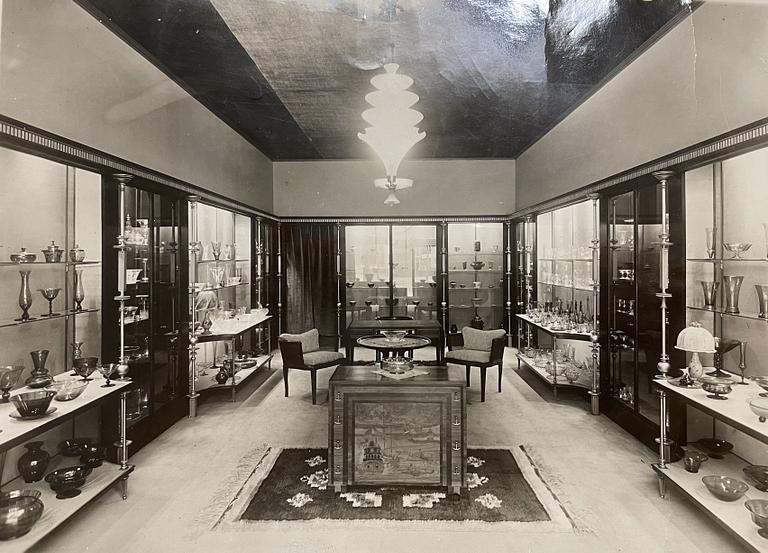
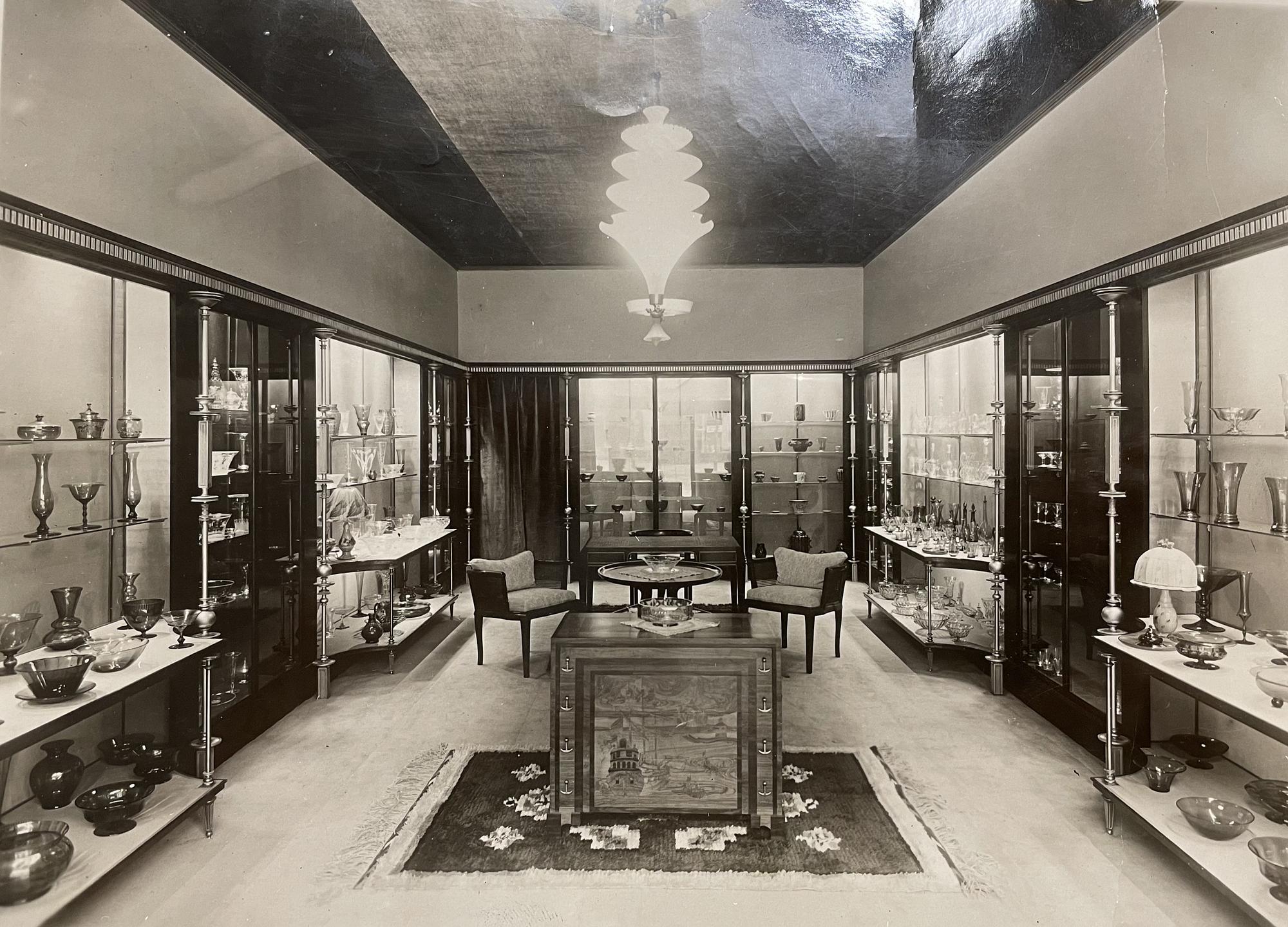
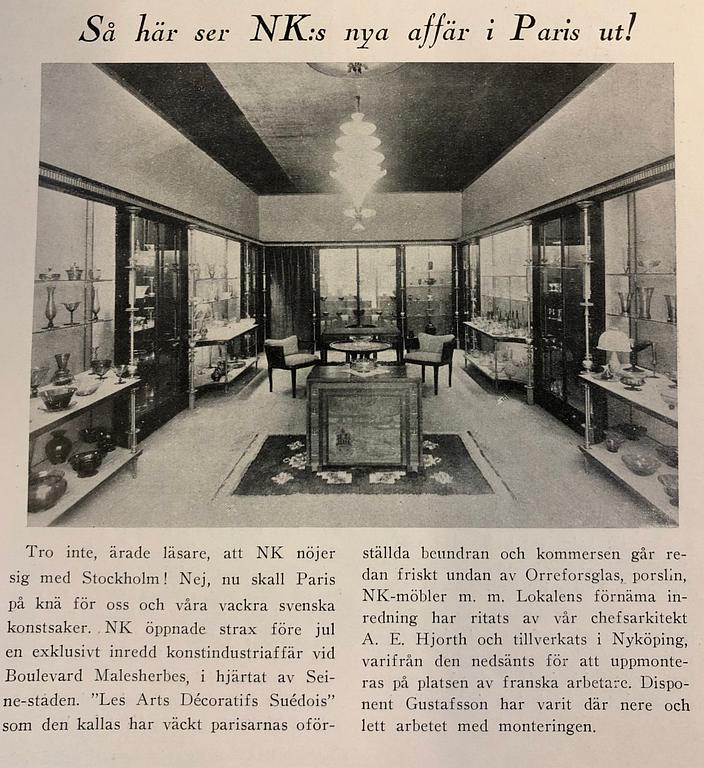
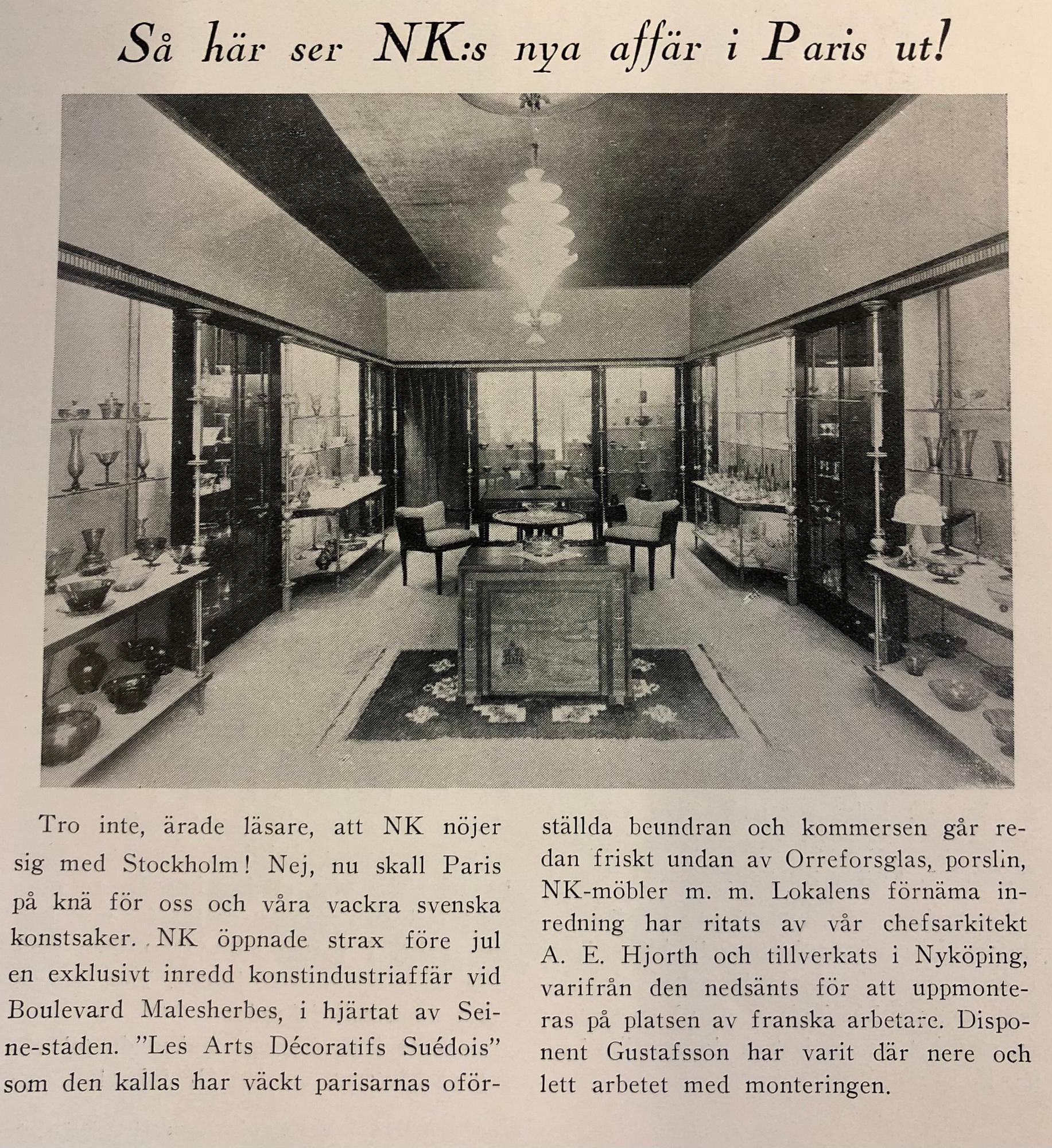
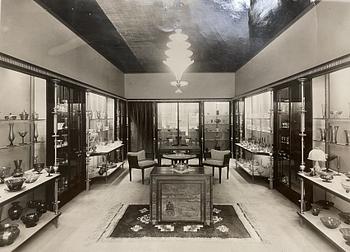
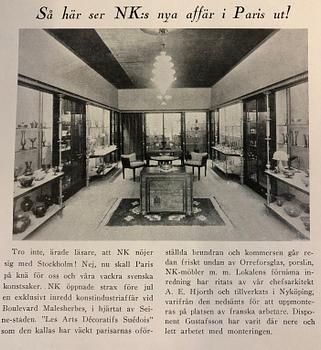
In the aftermath of the Paris exhibition, the demand for Swedish design remained high in the French capital. In December 1928, an exclusive store named Les Arts Décoratifs Suédois opened in Paris on Boulevard Malesherbes, under the management of Nordiska Kompaniet in Stockholm. Among the represented items were NK's furniture, Orrefors glass, Gustavsberg and Gefle porcelain factories, Firma Svenskt Tenn, silver from Atelier Borgila, and bronzes from Herman Bergman's foundry. The permanent interior was designed by NK's chief architect Axel Einar Hjorth and was manufactured in Nyköping, from where it was sent to be assembled on-site by French workers.
For the store in Paris, Nordiska Kompaniet once again engaged architect Carl Hörvik to design a series of furniture, seven in total, whose acclaimed works at the 1925 exhibition had garnered significant attention. The present desk should be seen as a particularly well-executed representative of the highly regarded Swedish design movement of the time, intended for the exclusive Parisian market.
The use of an inlaid linoleum top recurs in other pieces of furniture produced by Nordiska Kompaniet around the same time, notably in the reading tables designed by Gunnar Asplund for the Stockholm City Library, where inlaid linoleum, as in the case of the present table, continue around the rounded short ends of the frame. The Stockholm City Library was completed in 1928, the same year that NK's store in Paris opened its doors.
More about Carl Hörvik
Carl Hörvik was an architect and inventative furniture designer. Hörvik was a classmate of Gunnar Asplund at the Royal Institute of Technology. He was considered one of the greatest architectural talents of his generation and a person from whom Asplund is said to have been greatly influenced. Hörvik opened his own office in 1914. He worked on the interior of the Röhsska Museum in 1916, and participated in the Workshop's exhibition at Liljevalchs in 1920 with an unusually progressive furniture set in polished birch. At the Gothenburg Exhibition in 1923, he was exhibiting a spacious hall interior in grey with large armchairs and delicate stools. The furniture from Nordiska Kompaniet, with which he participated in the Paris World Fair in 1925, had a monumental character of luxury and earned him the Grand Prix. Hörvik designed furniture for Hantverkslotterierna (the Craft Lotteries) in Stockholm, Gothenburg, and Malmö for several years. He also designed the Swedish Student House in Paris in 1931 and the county residence in Umeå in 1932.
Read moreFor condition report contact specialist

Others have also viewed