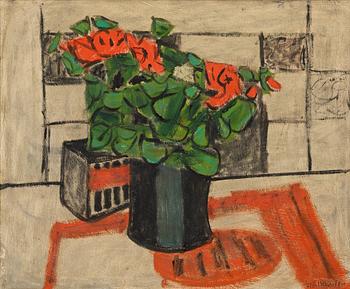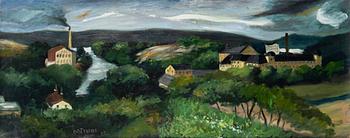
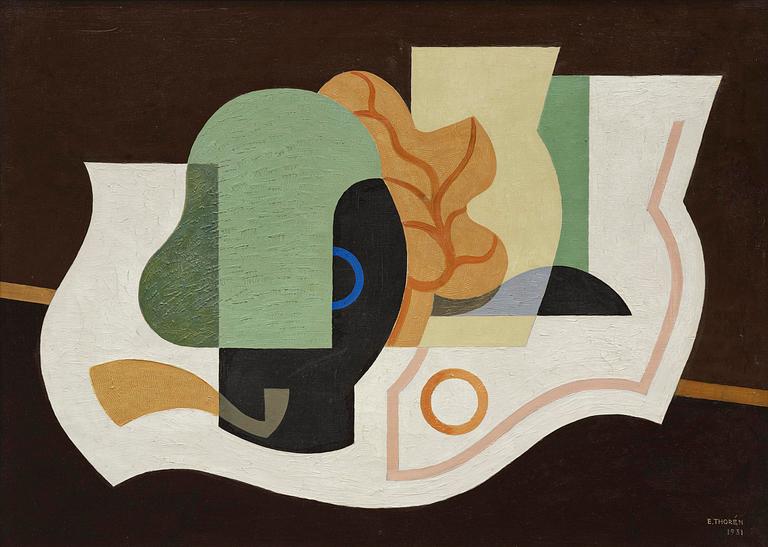
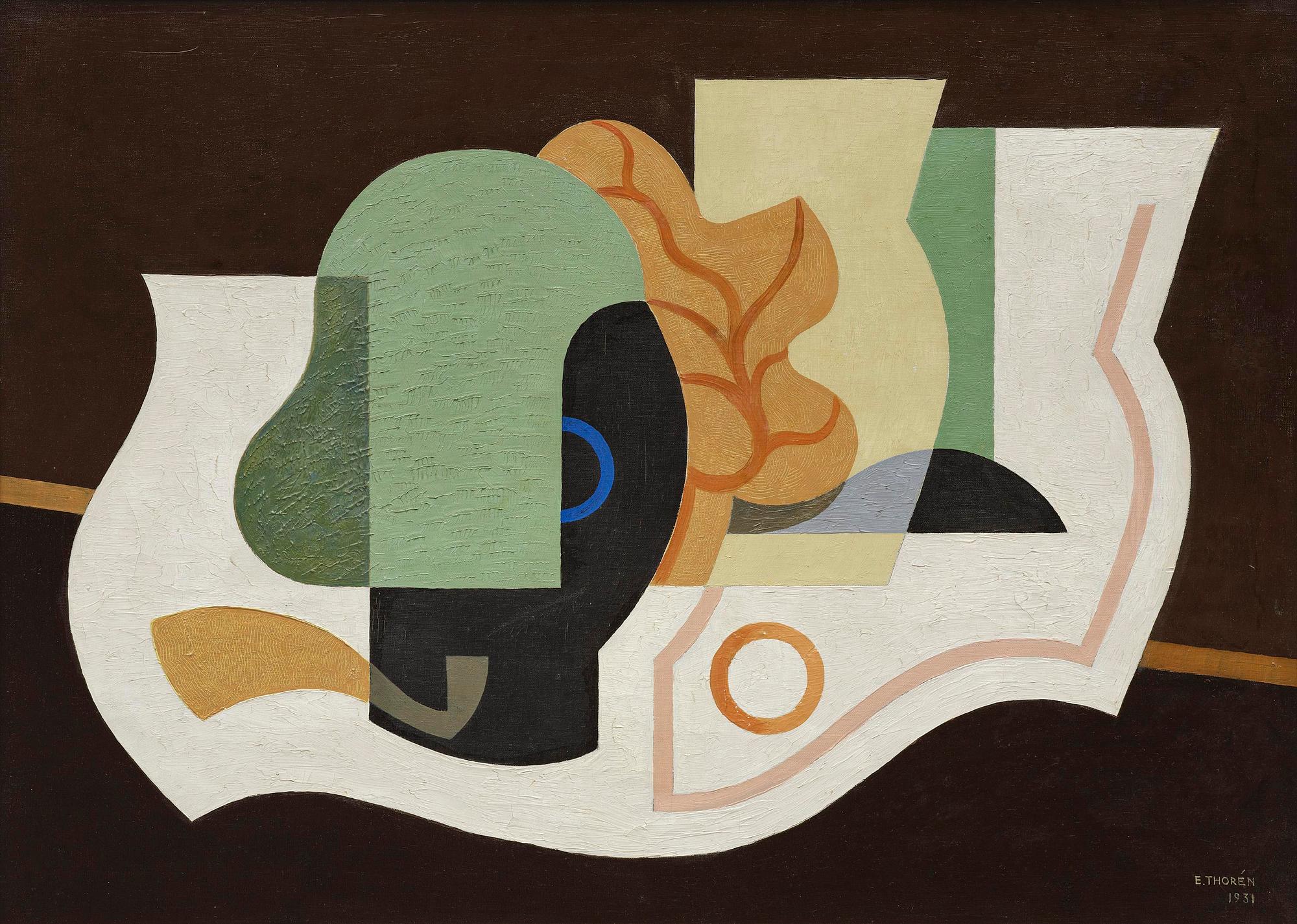
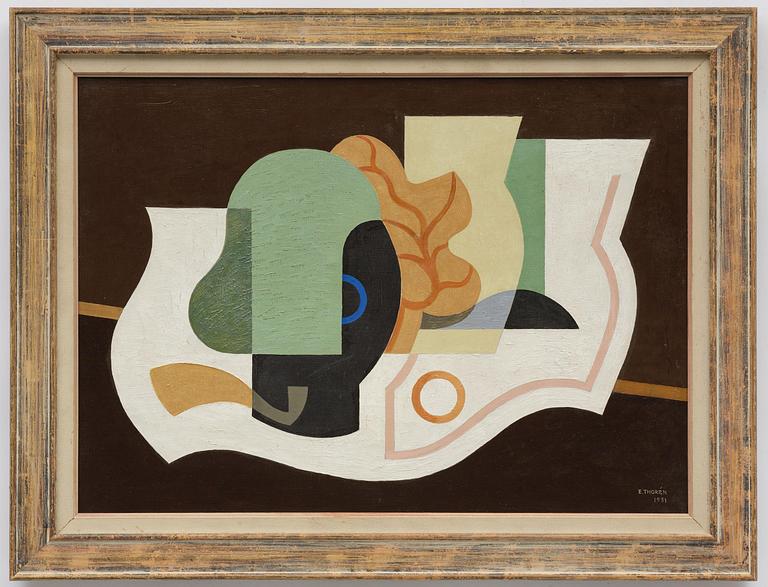
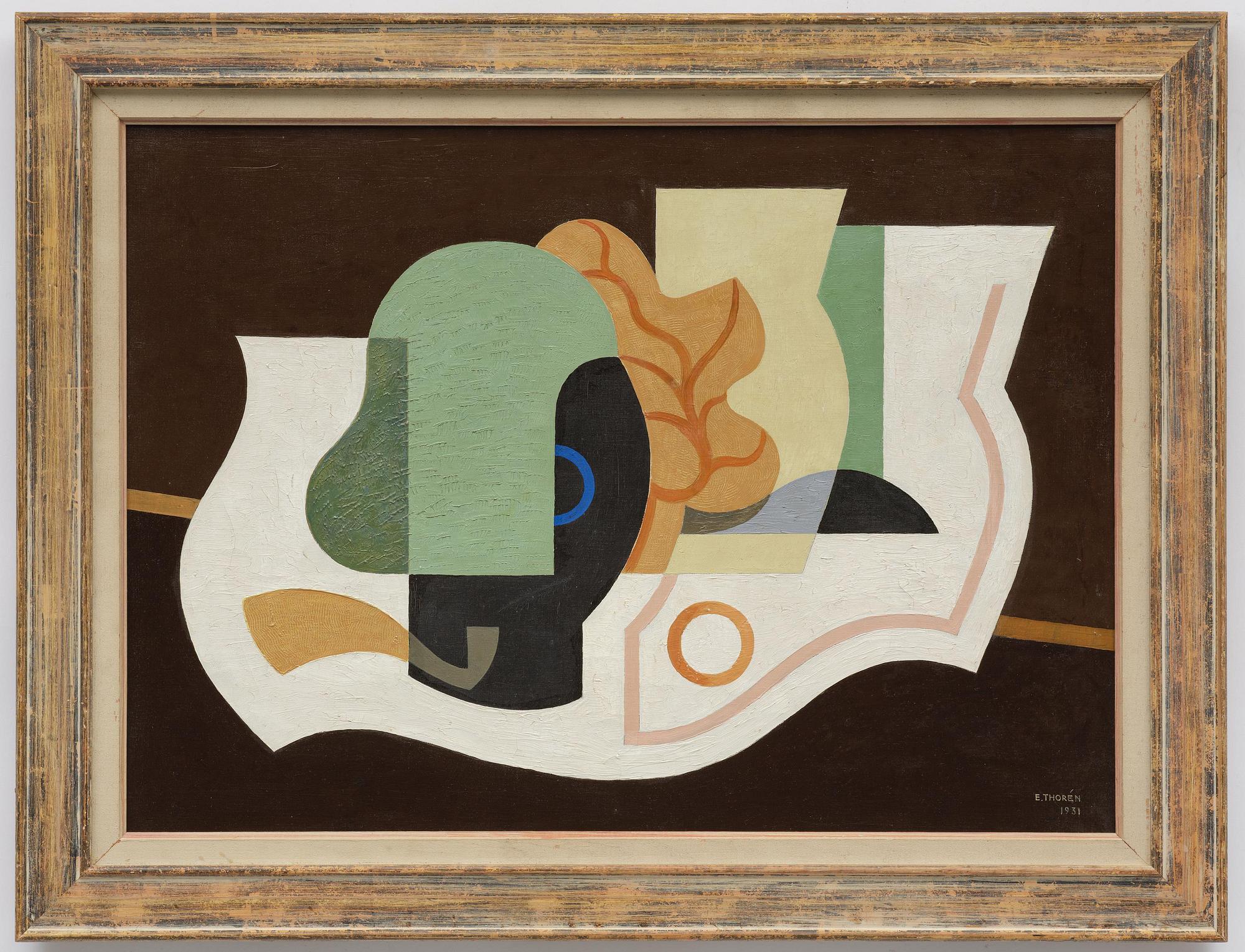
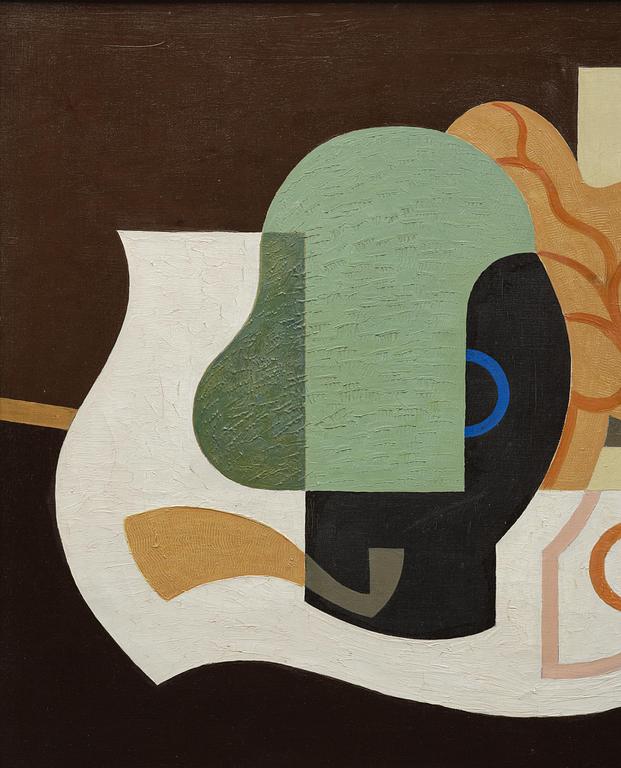
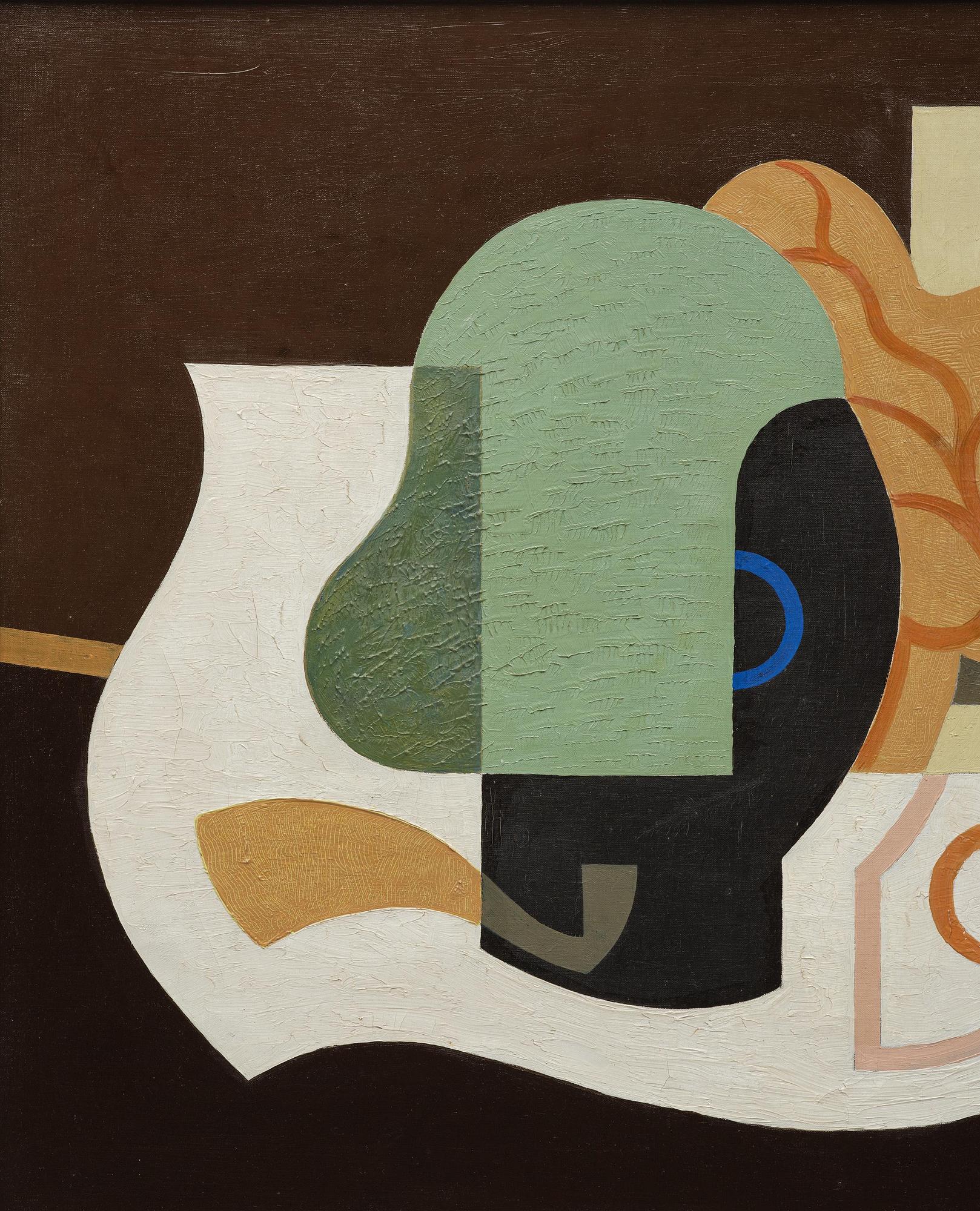
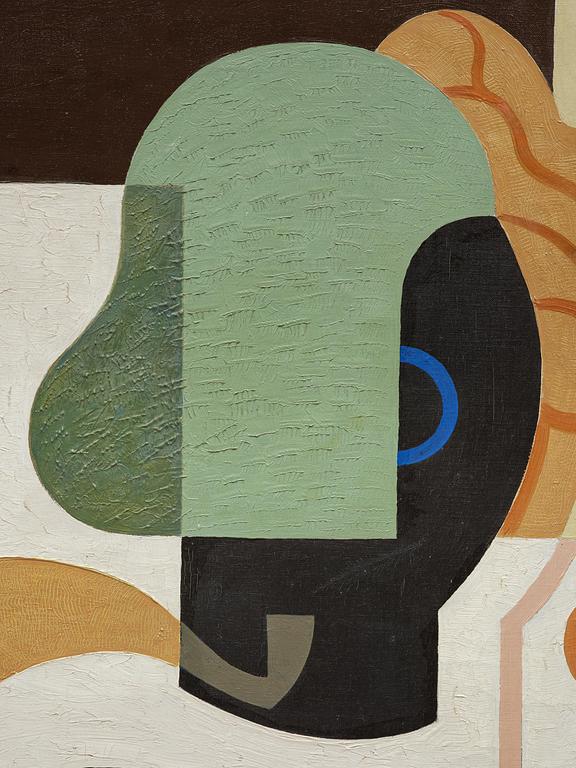
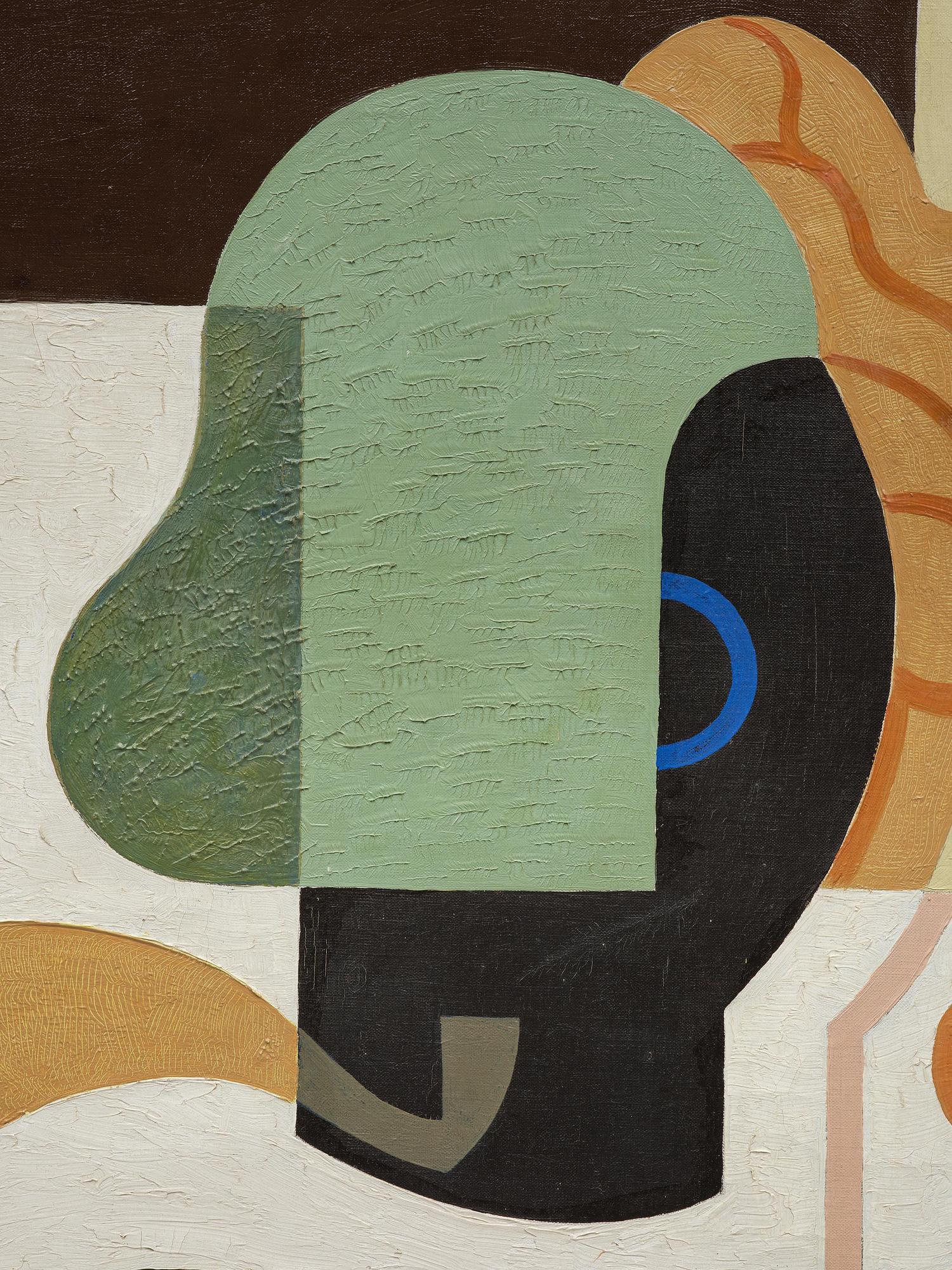
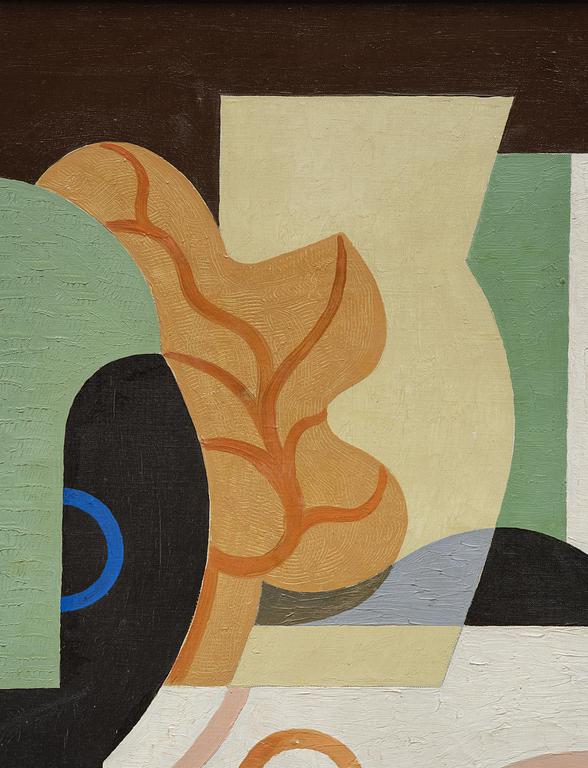
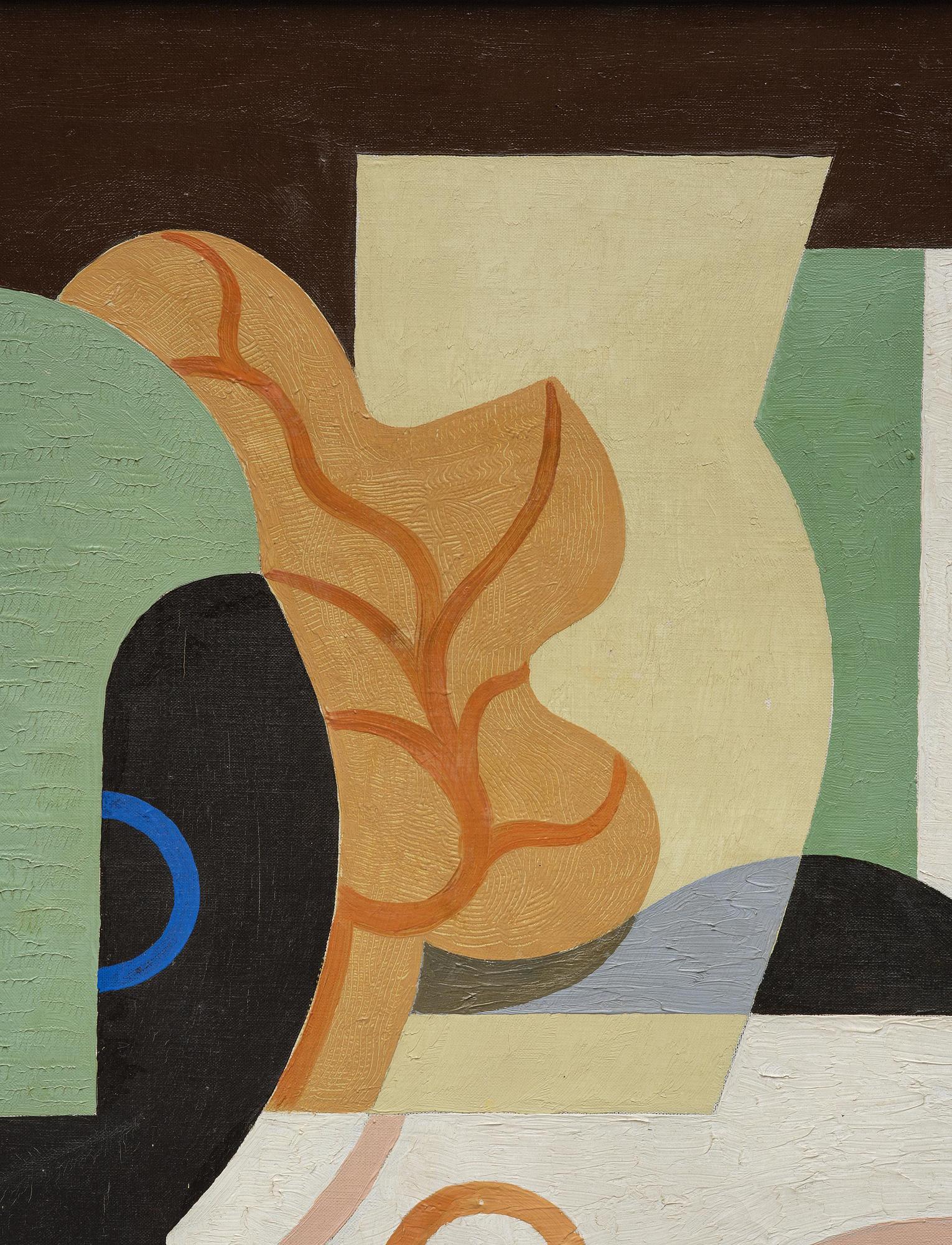
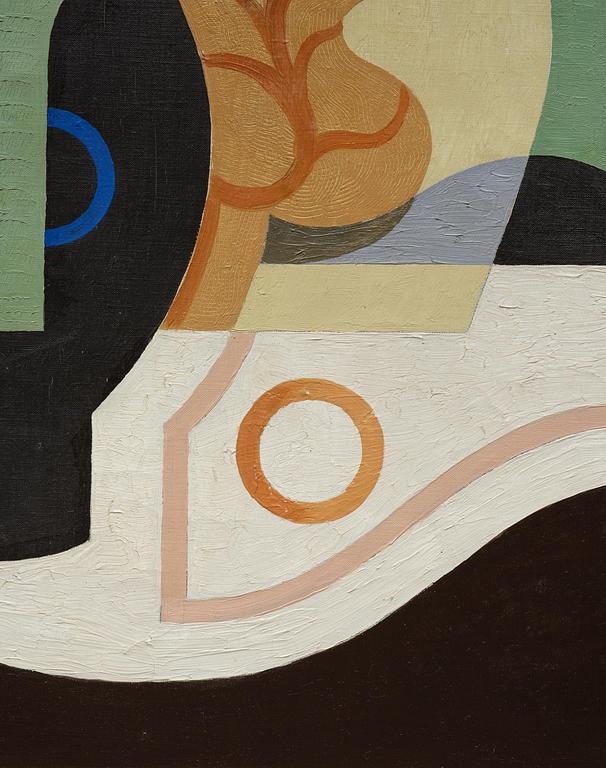
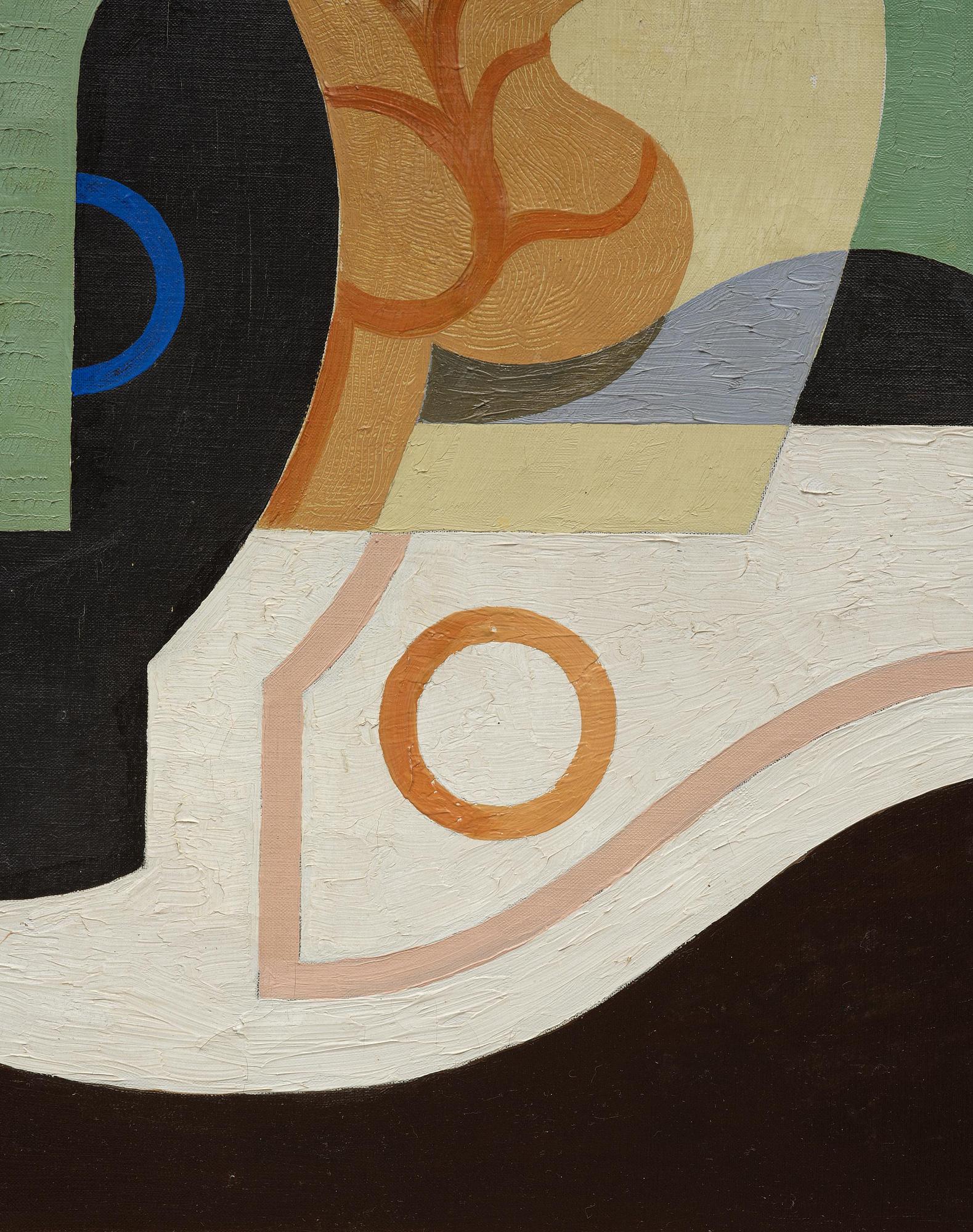
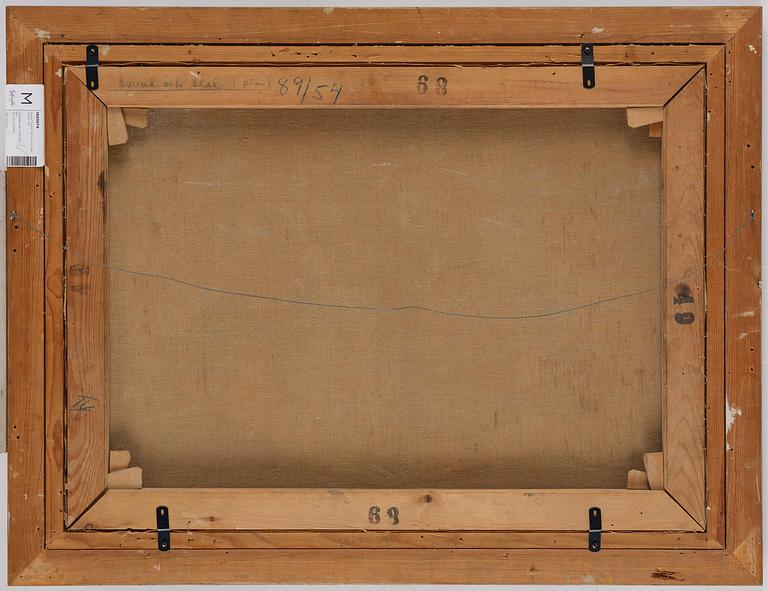
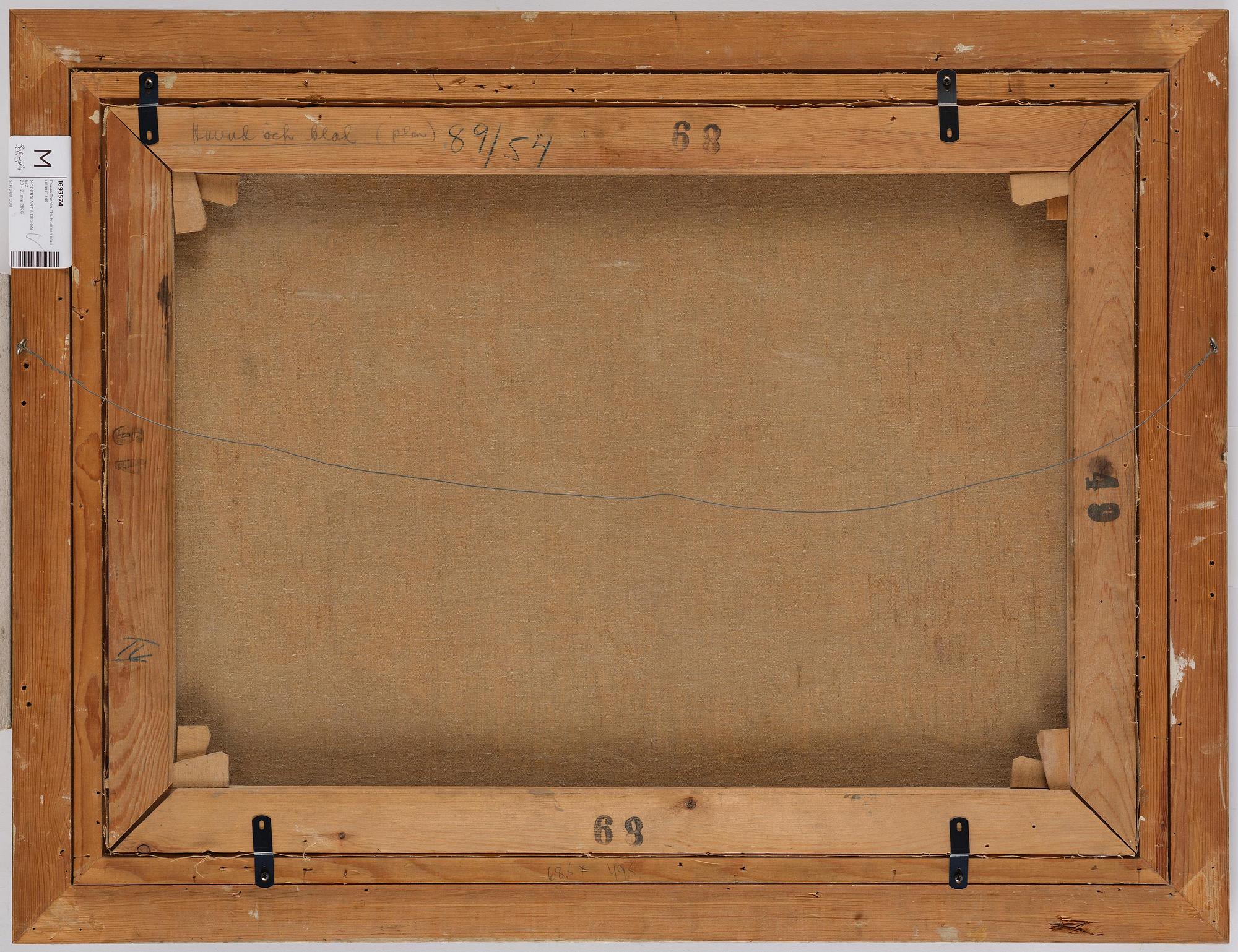
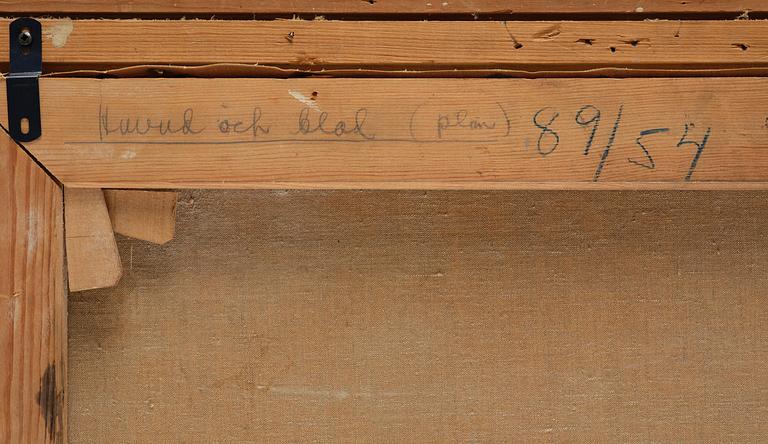
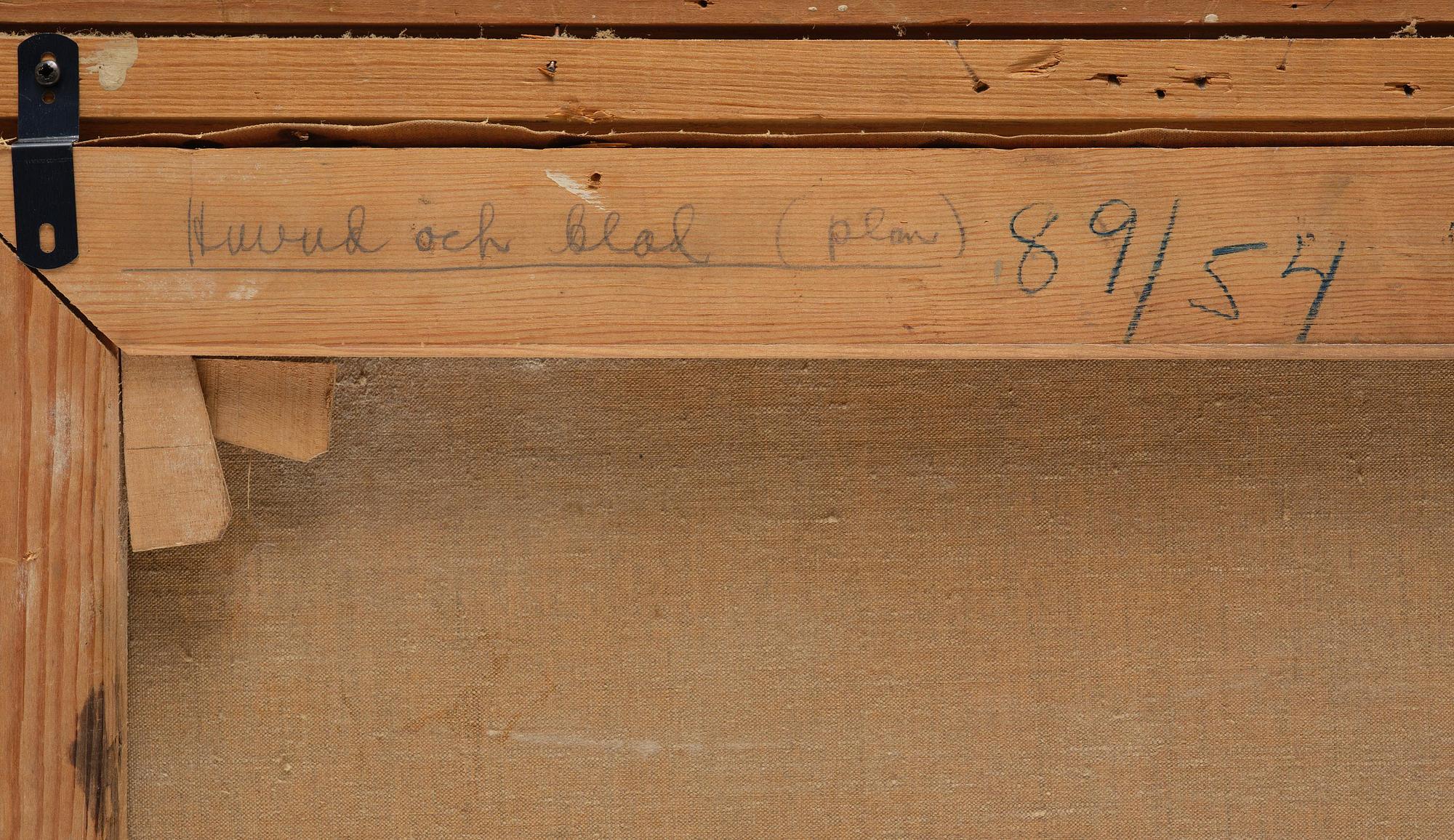
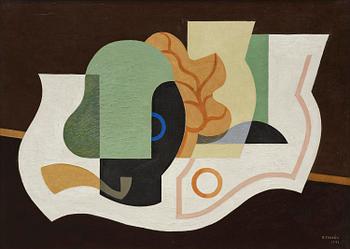
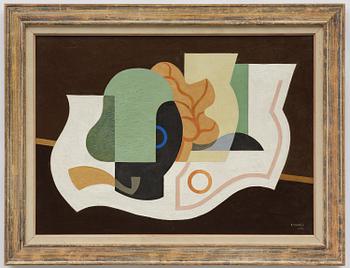
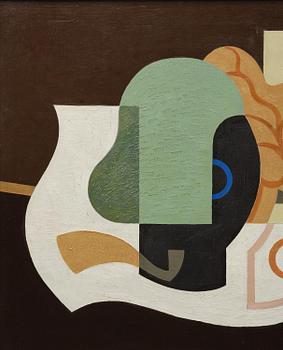
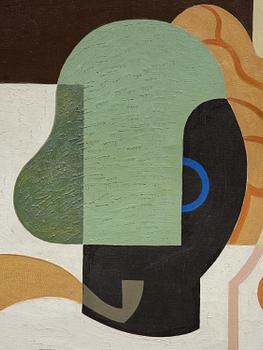
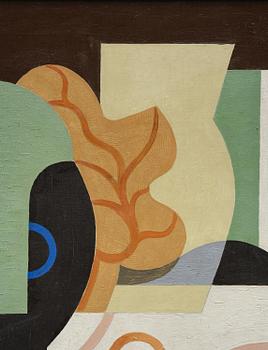
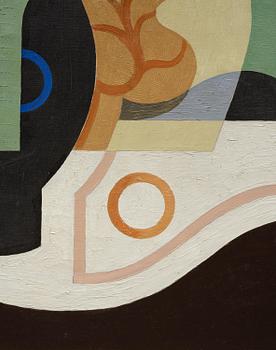
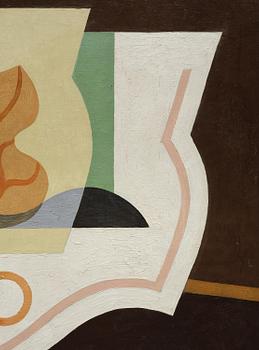
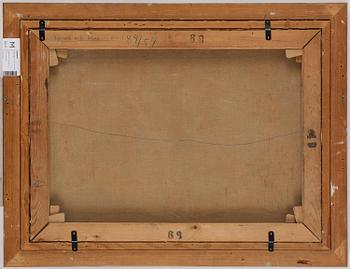
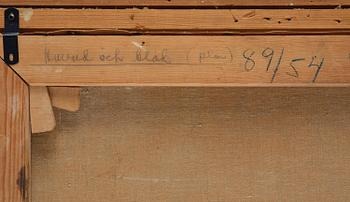
"Huvud och blad (plan)"
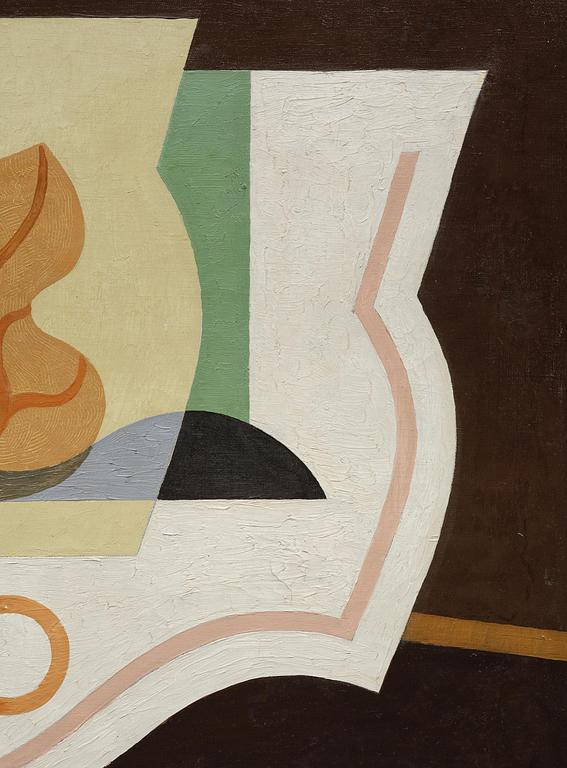
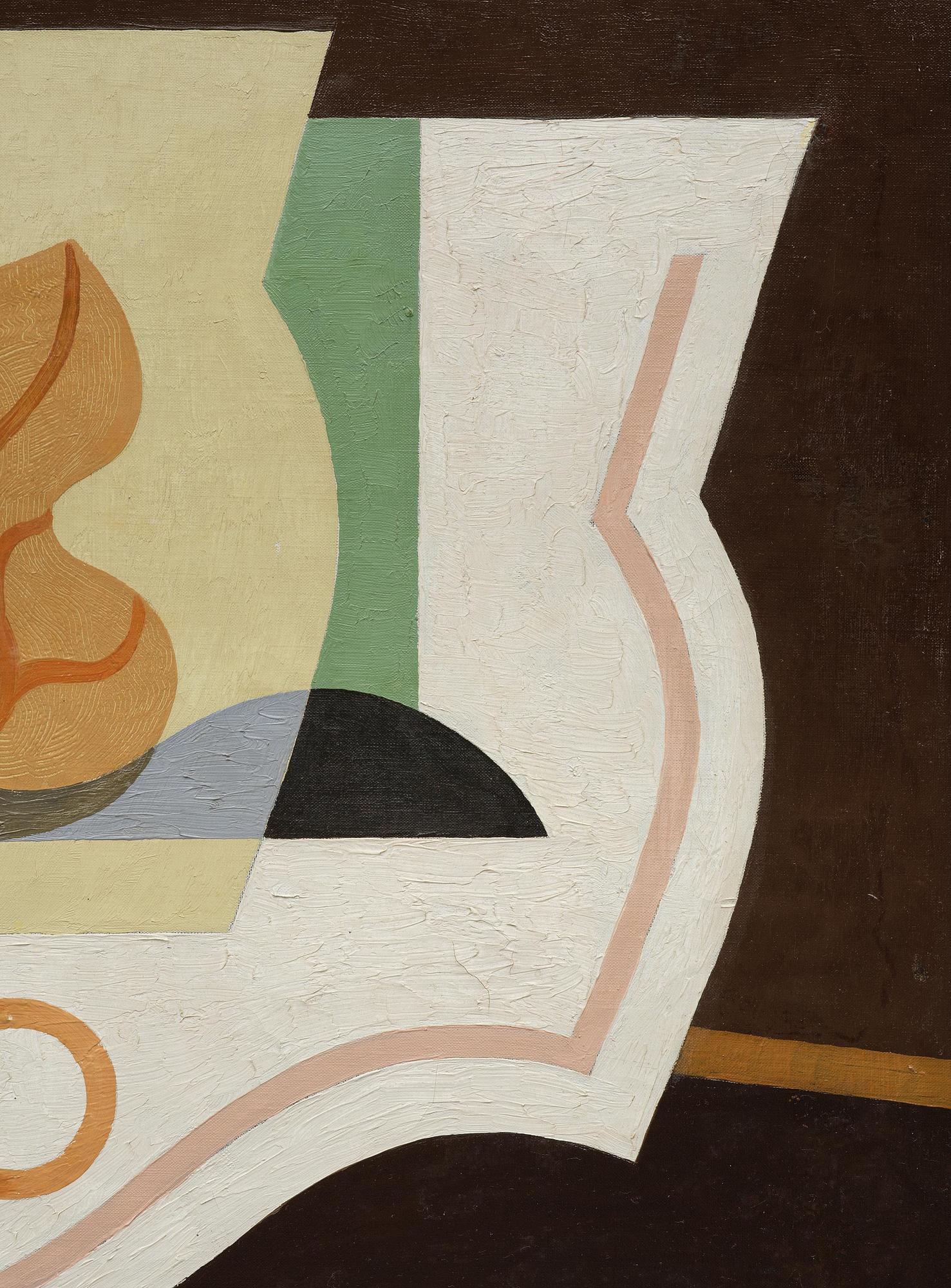
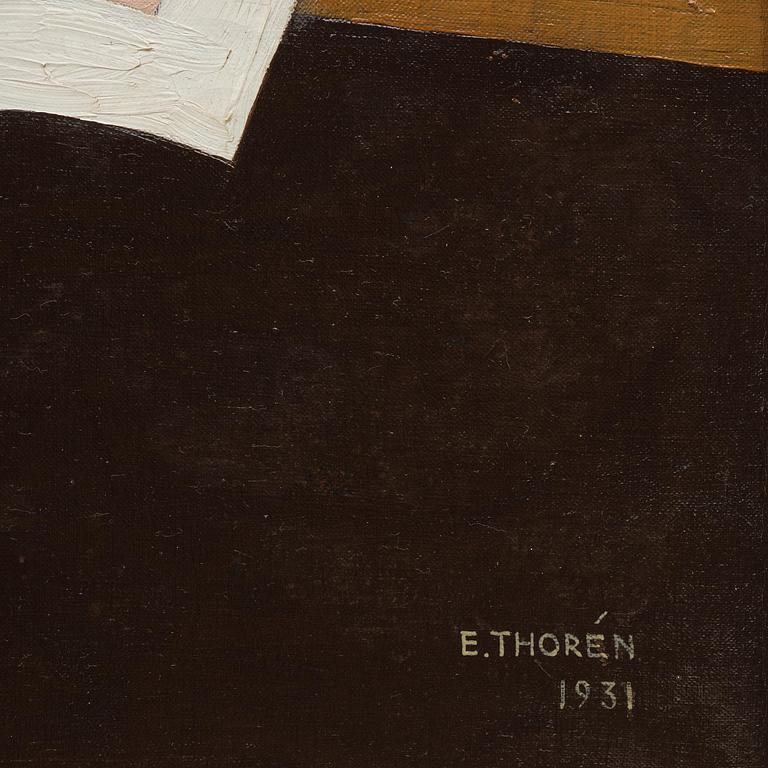
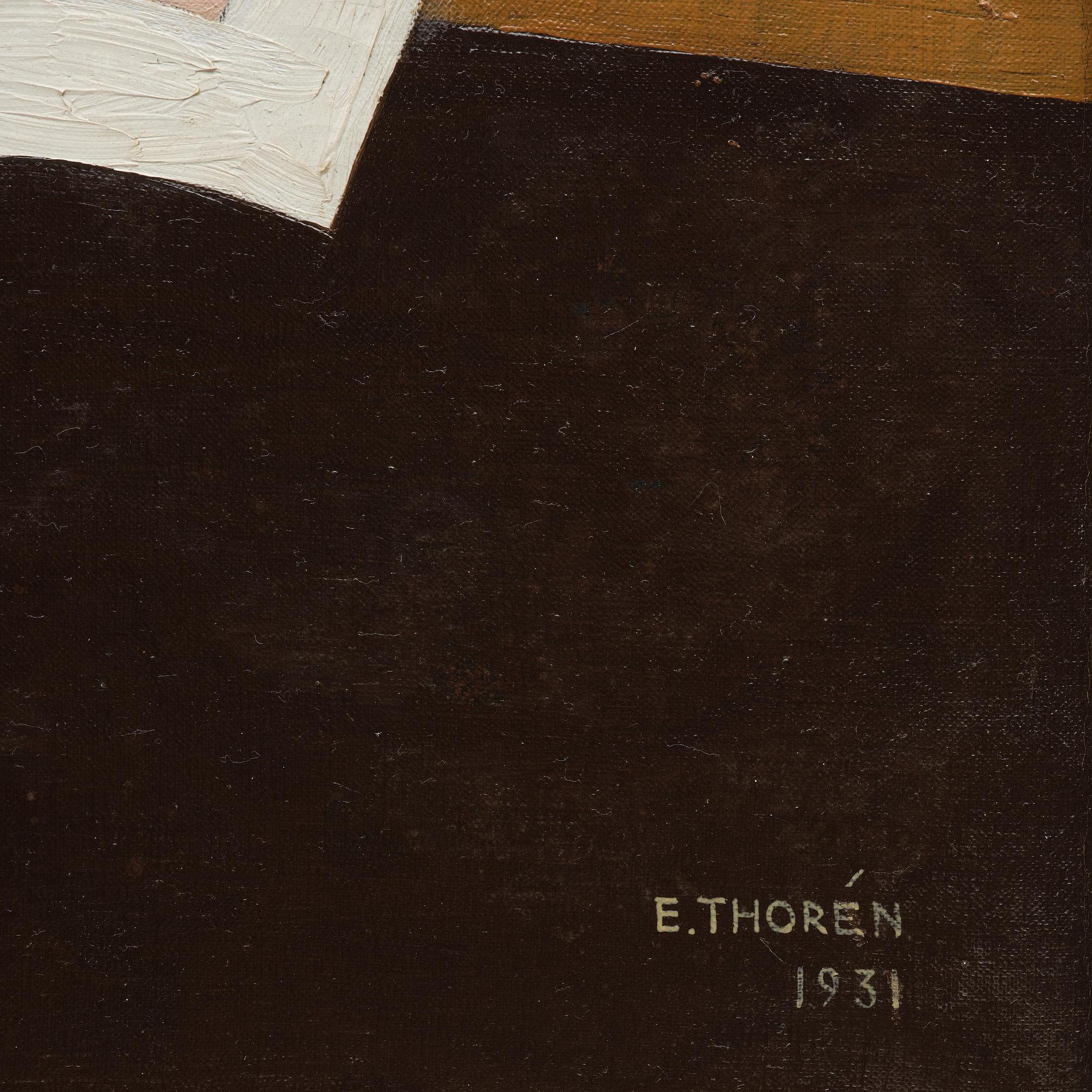
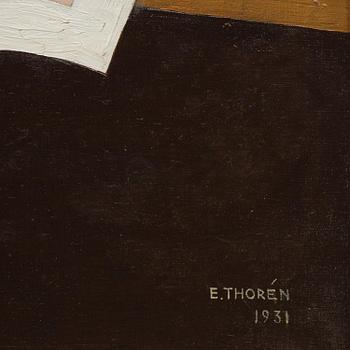
Signed E.Thorén and dated 1931. Oil on canvas 50 x 68.5 cm.
More information
After responding to an advertisement in Hallandsposten in the early 1920s, Esaias Thorén came into contact with Sven Jonson, resulting in the art association "De unga," (The young ones) where Axel Olson took on the role of teacher. Thorén and Jonson then saved enough money to attend Wilhelmson's painting school in Stockholm in 1925. However, Paris was the greatest lure, and in the autumn of 1926, Jonson and Thorén were able to make their journey there. The friends settled at the Primavera hotel in the artist quarters around Montparnasse and studied figure drawing at Maison Watteau, where Otte Sköld was the teacher. Despite their frugality, their travel funds lasted only four months before it was time to return to Sweden. However, before that, Jonson and Thorén managed to participate in an exhibition at "Maison Watteau" in January 1927. The positive reviews from the exhibition noted: "They do not lack temperament, and their technical skill is surprisingly advanced. I believe the star of promise shines over the two youths…".
Back in Halmstad without any savings, Esaias and Sven decided to start a combined advertising studio and painting school: "A room in the attic was rented, and in the spring of 1927, 'Modern reklam' was established, where Axel (Olson) also participated. […] They celebrated heartily, and the humour radiated from the hosts of the place. Lorentzon was now back in Halmstad and took part in the activities" (Viveka Bosson, "Halmstadgruppen. A Power Field in Swedish 20th Century Art," 2009).
Together with Sven Jonson, Waldemar Lorentzon, Stellan Mörner, and the brothers Axel and Erik Olson, the so-called Halmstad group was formed at their friend Egon Östlund's home in August 1929. Although the group has generally become synonymous with surrealism, the artists originally gathered around a planometric and cubist programme. The auction's "Yellow and Purple Leaf Form" by Esaias Thorén was created two years after the Halmstad group was formed, in the same year that Thorén, along with his friend Sven Jonson, moved up to Stockholm. There, they formed a cooking group with Gösta Adrian Nilsson and began to work intensively. In a letter dated 10 October 1931, Esaias Thorén writes from Stockholm: "Last Thursday we were at Stellan's (Mörner) for peas and pork and hot punch. He is very pleasant and is enormously happy being married, you can be assured of that. He has painted a lot. There is something new he has come to, some things seem unfinished, some good, we will see what time brings. I myself will start painting on Monday. I have committed to two things, which I hope will yield good results: drink very little and work enormously. Work! – that word I repeat countless times a day to myself."
Thorén's art, at the beginning of the 1930s, lies at the crossroads between his planometric expression influenced by purism and the aesthetics of surrealism. Thorén later described his creative process: "Creation is a result of various impressions. One minute you do not know what the next will give birth to in colour and form. I can start by making a red painting – suddenly it becomes green… One day I long for clear painting with pure surfaces – the next day for the fantastic worlds of surrealism; one day I do planometry – the next day I long for nature."
For condition report contact specialist

Covered by droit de suite
Image rights
The artworks in this database are protected by copyright and may not be reproduced without the permission of the rights holders. The artworks are reproduced in this database with a license from Bildupphovsrätt.
Others have also viewed