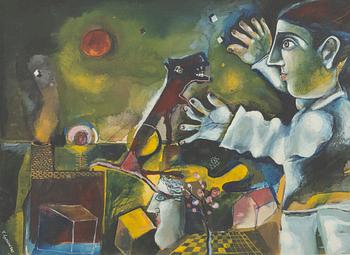
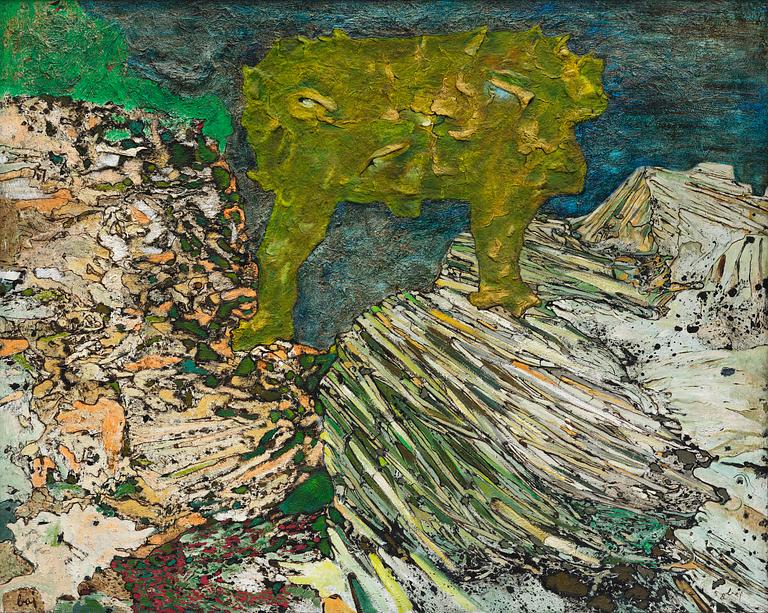
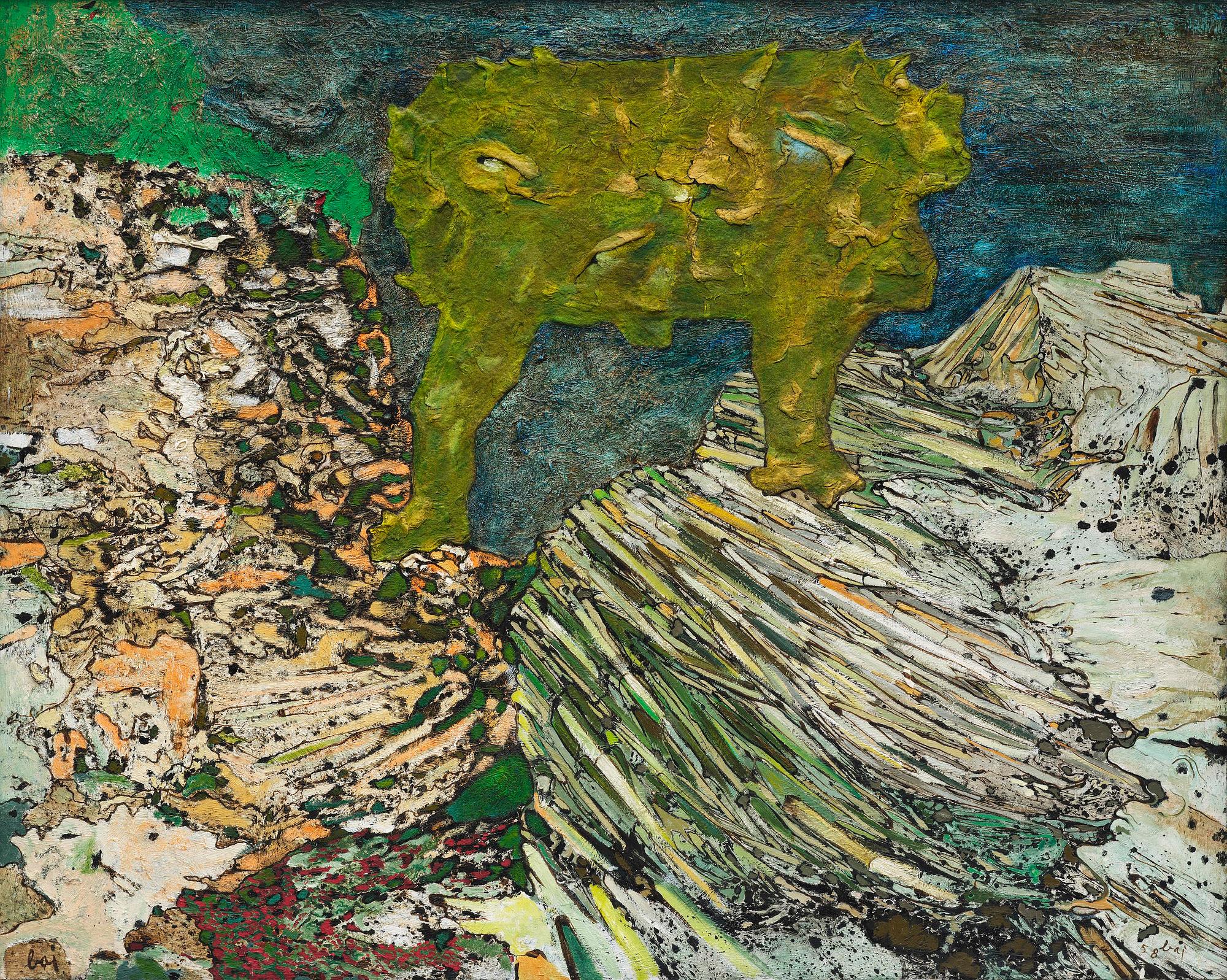
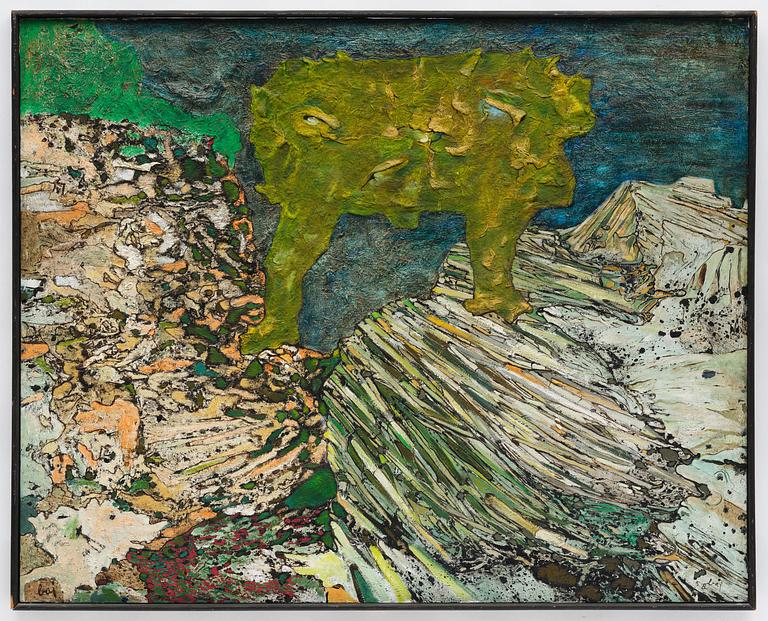
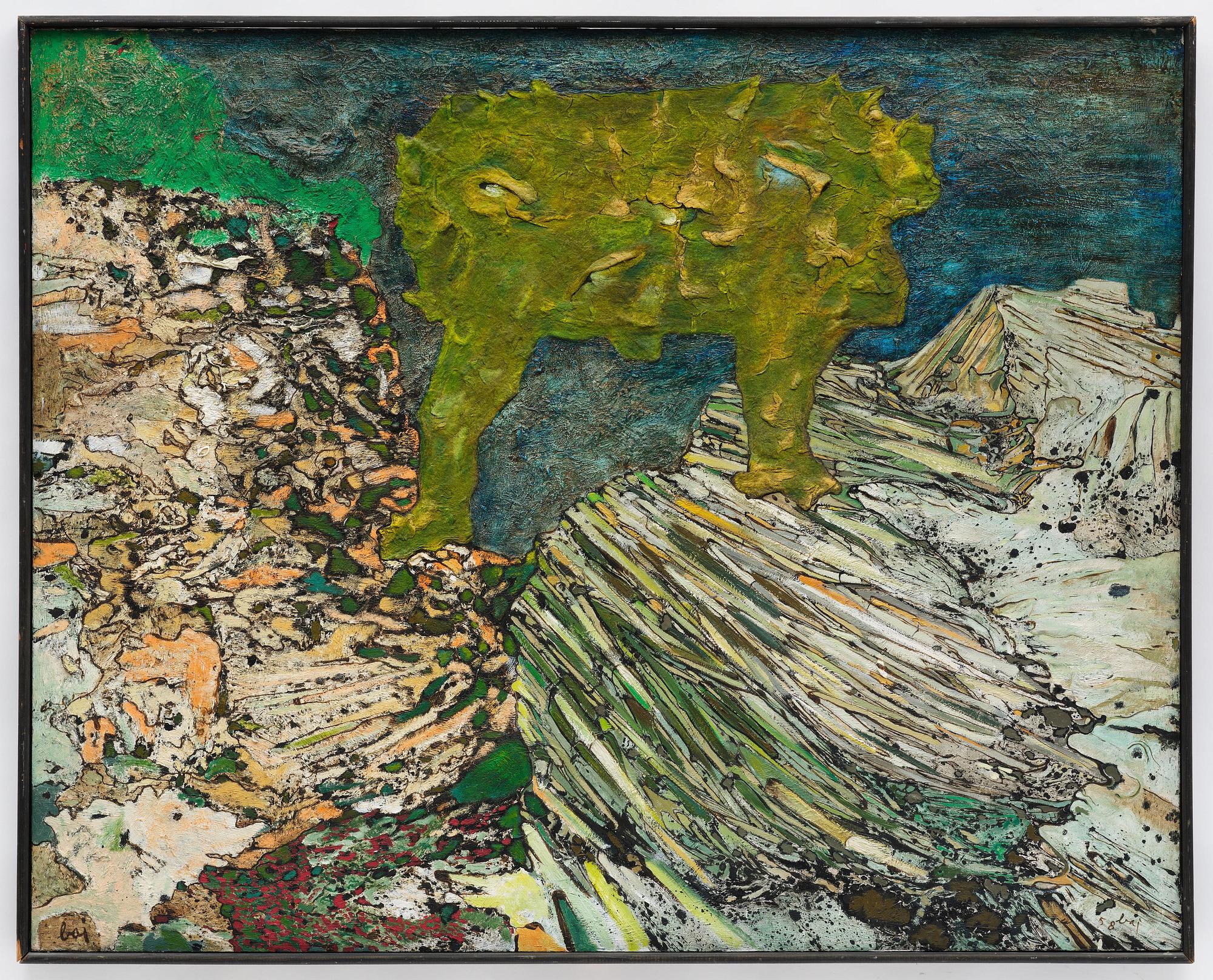
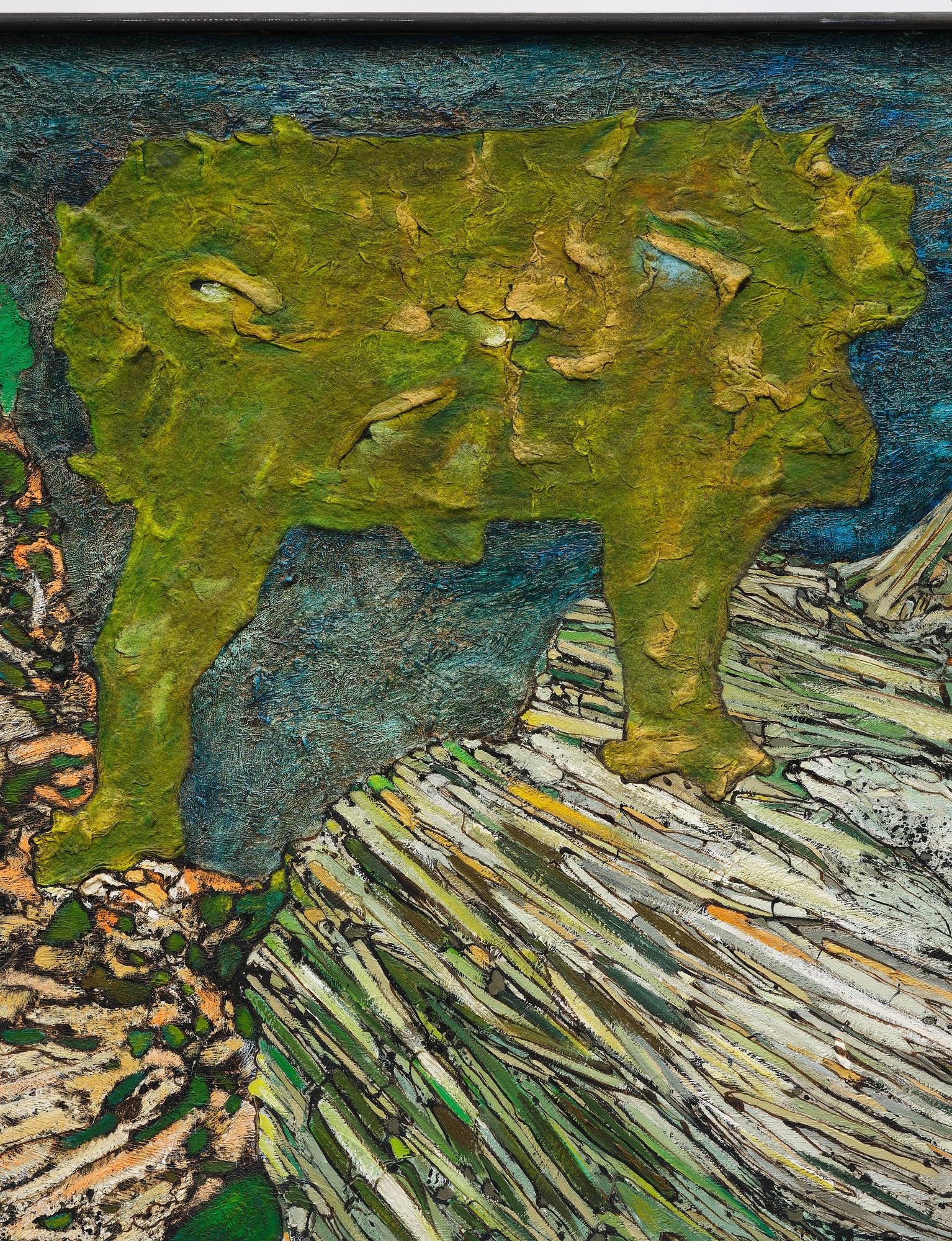
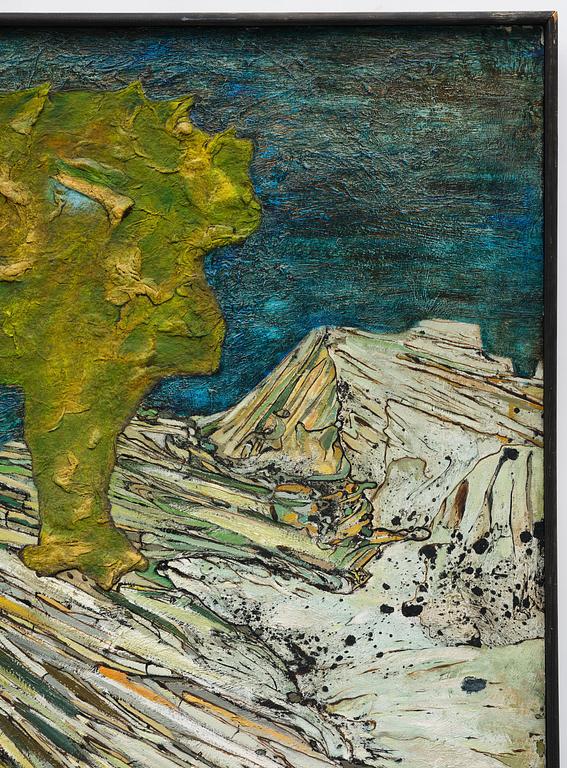
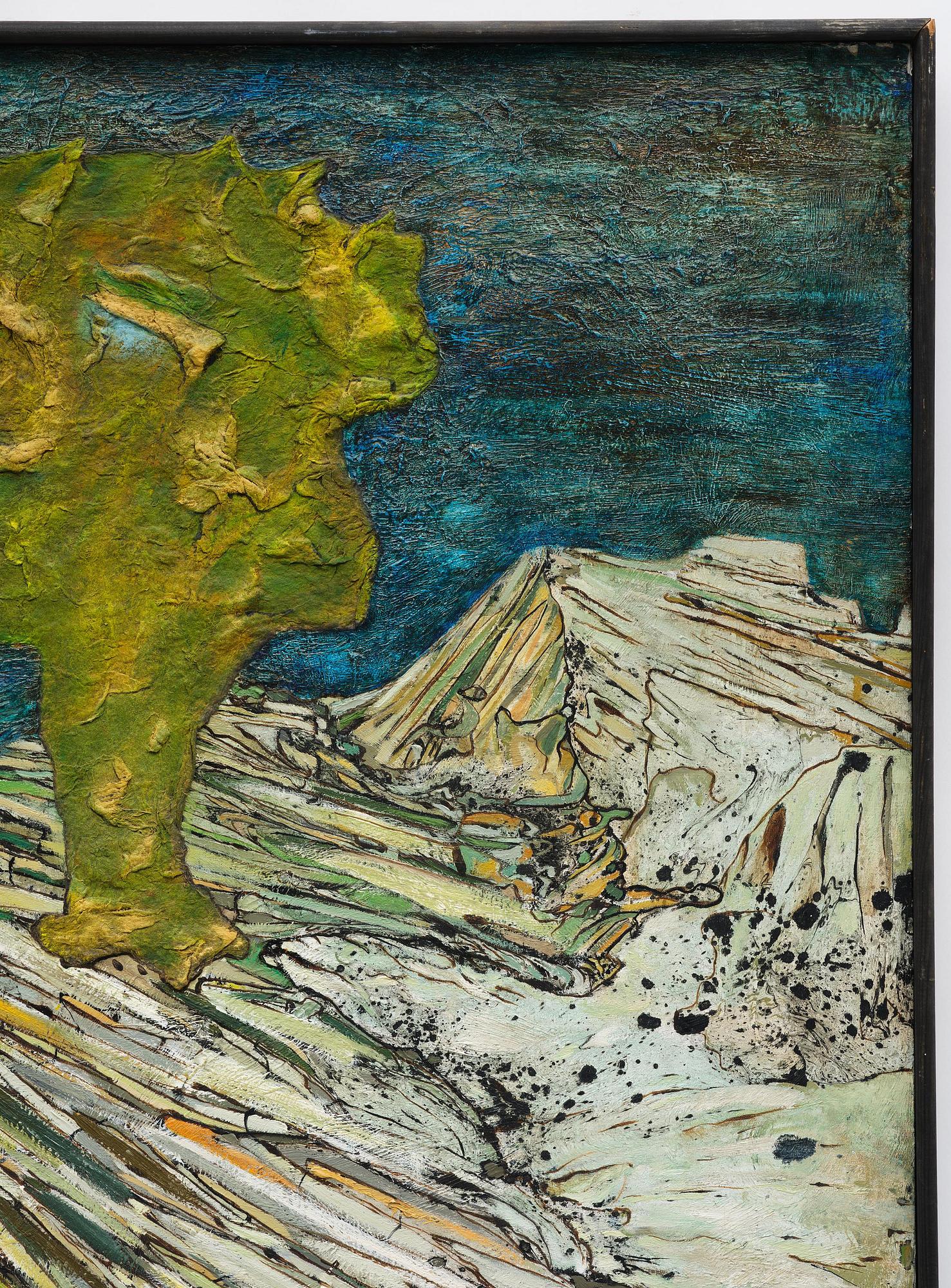
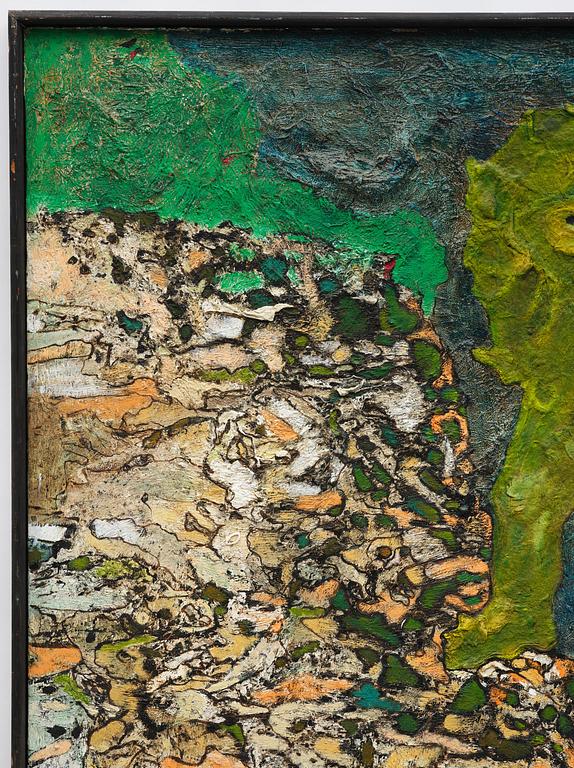
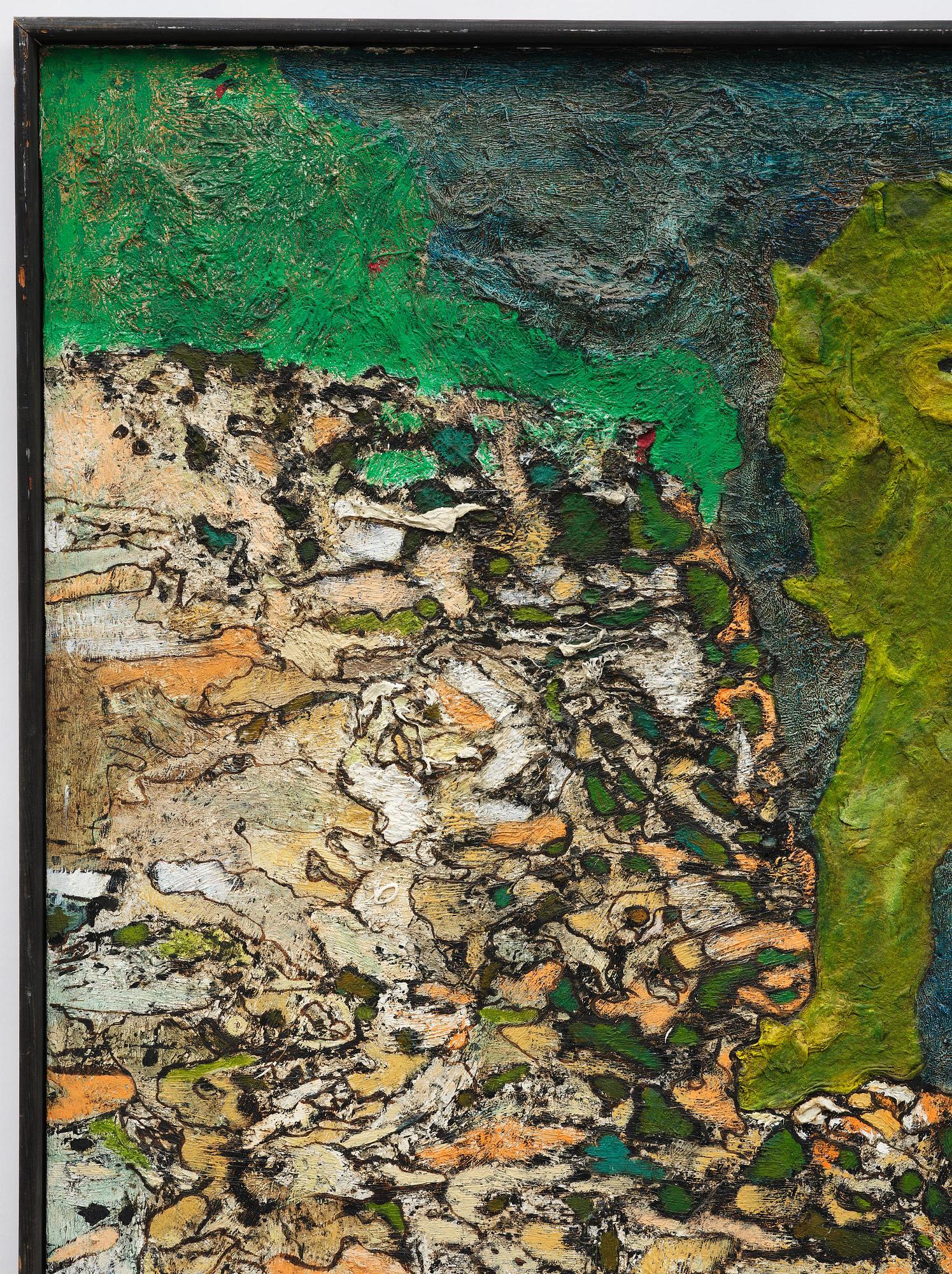
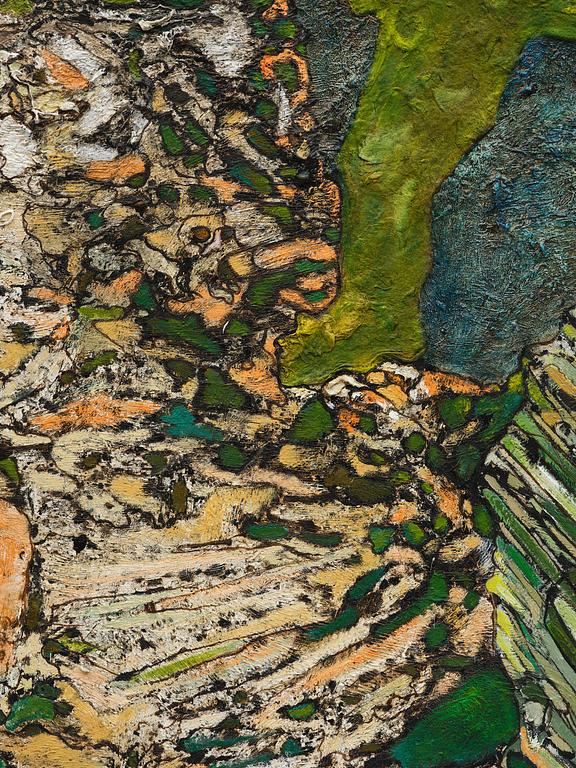
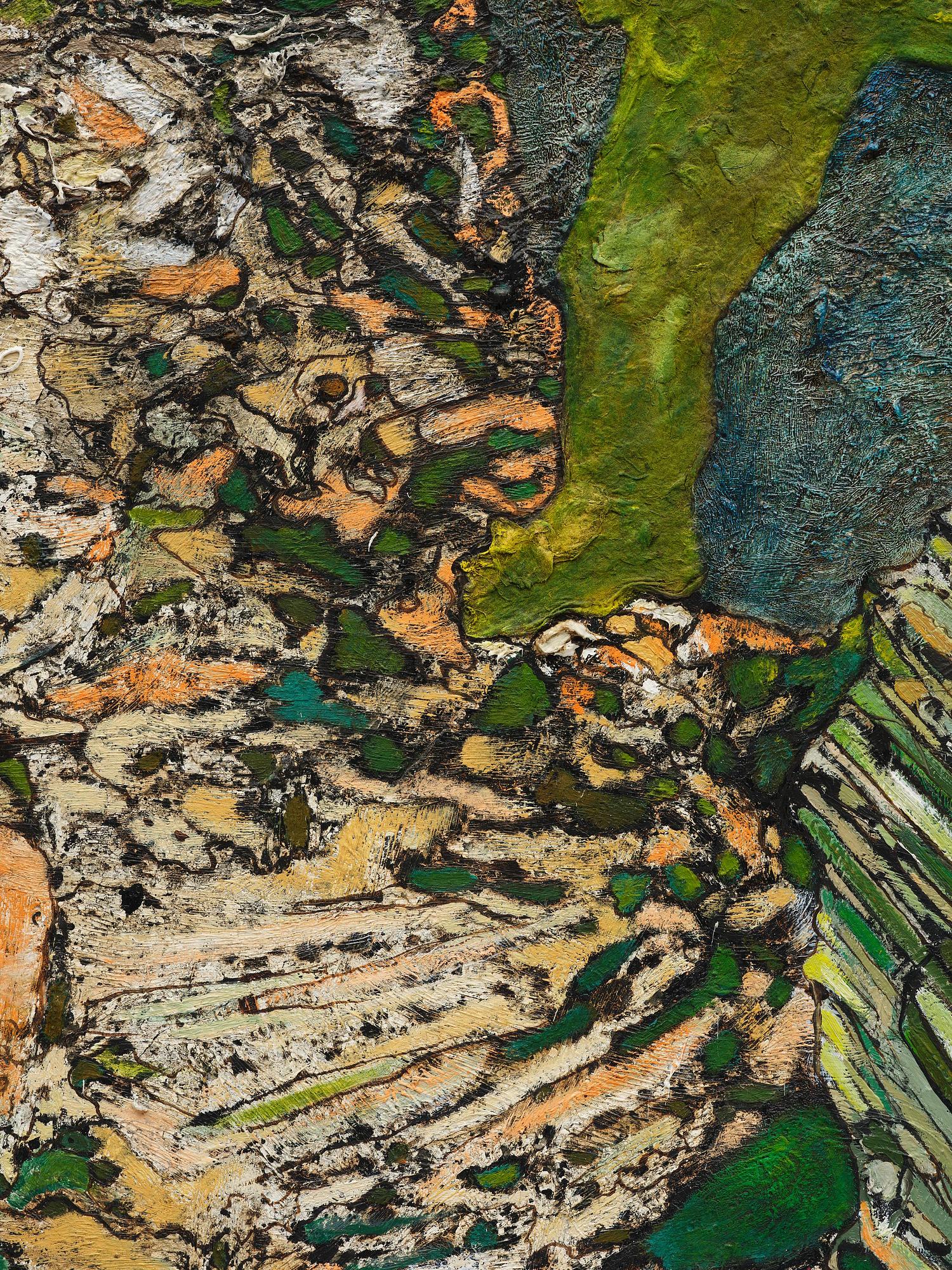
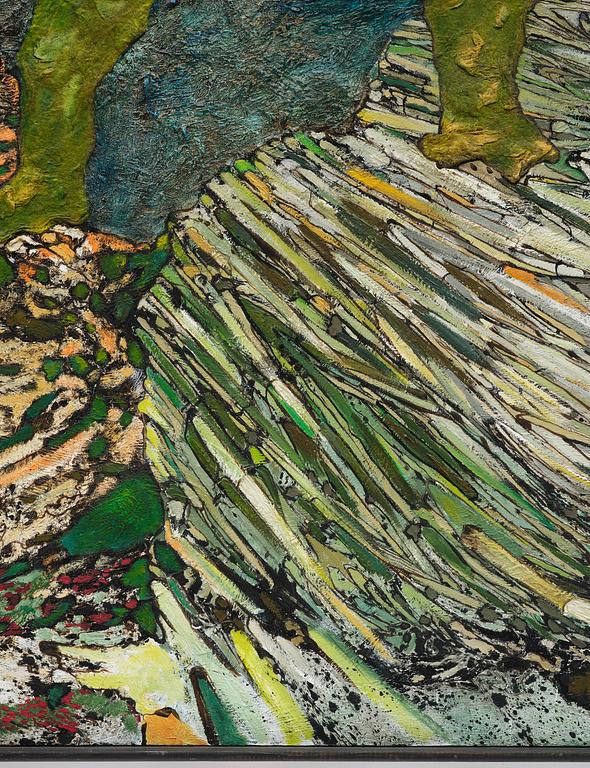
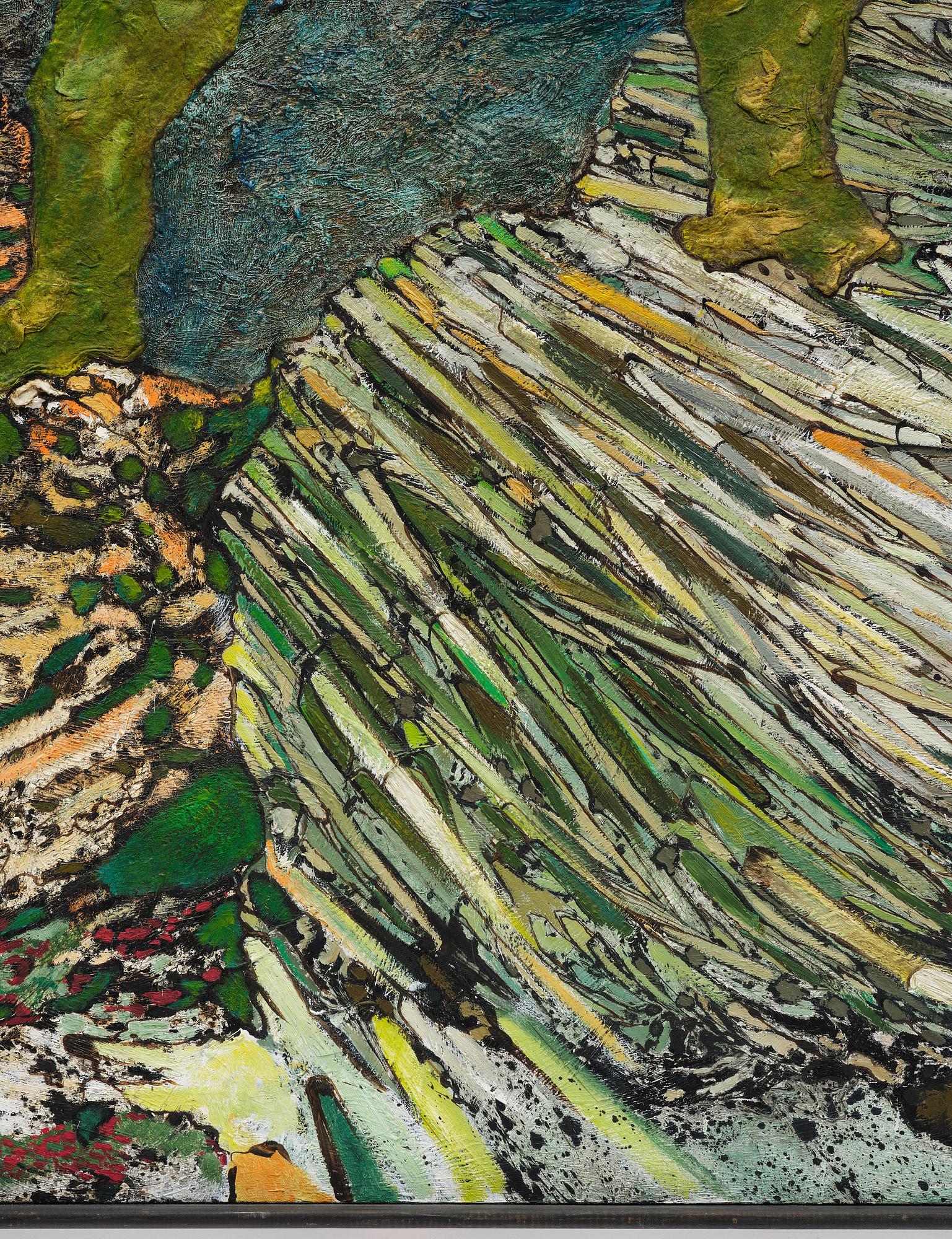
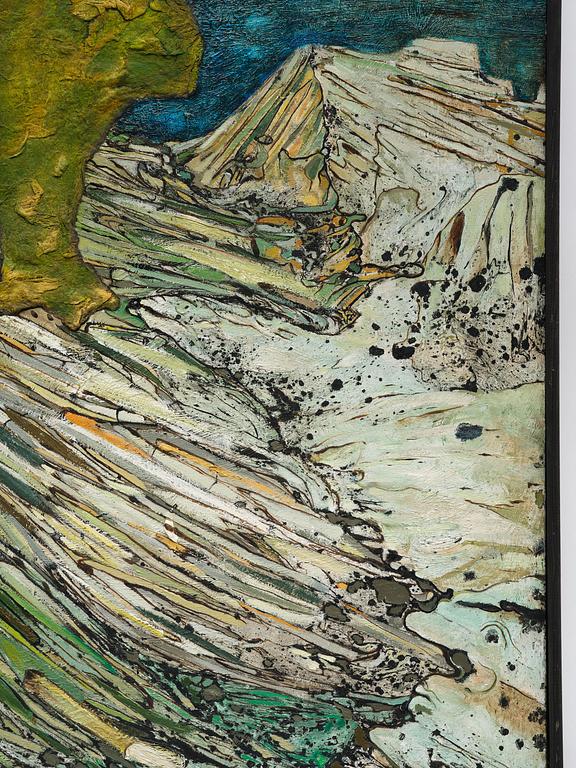
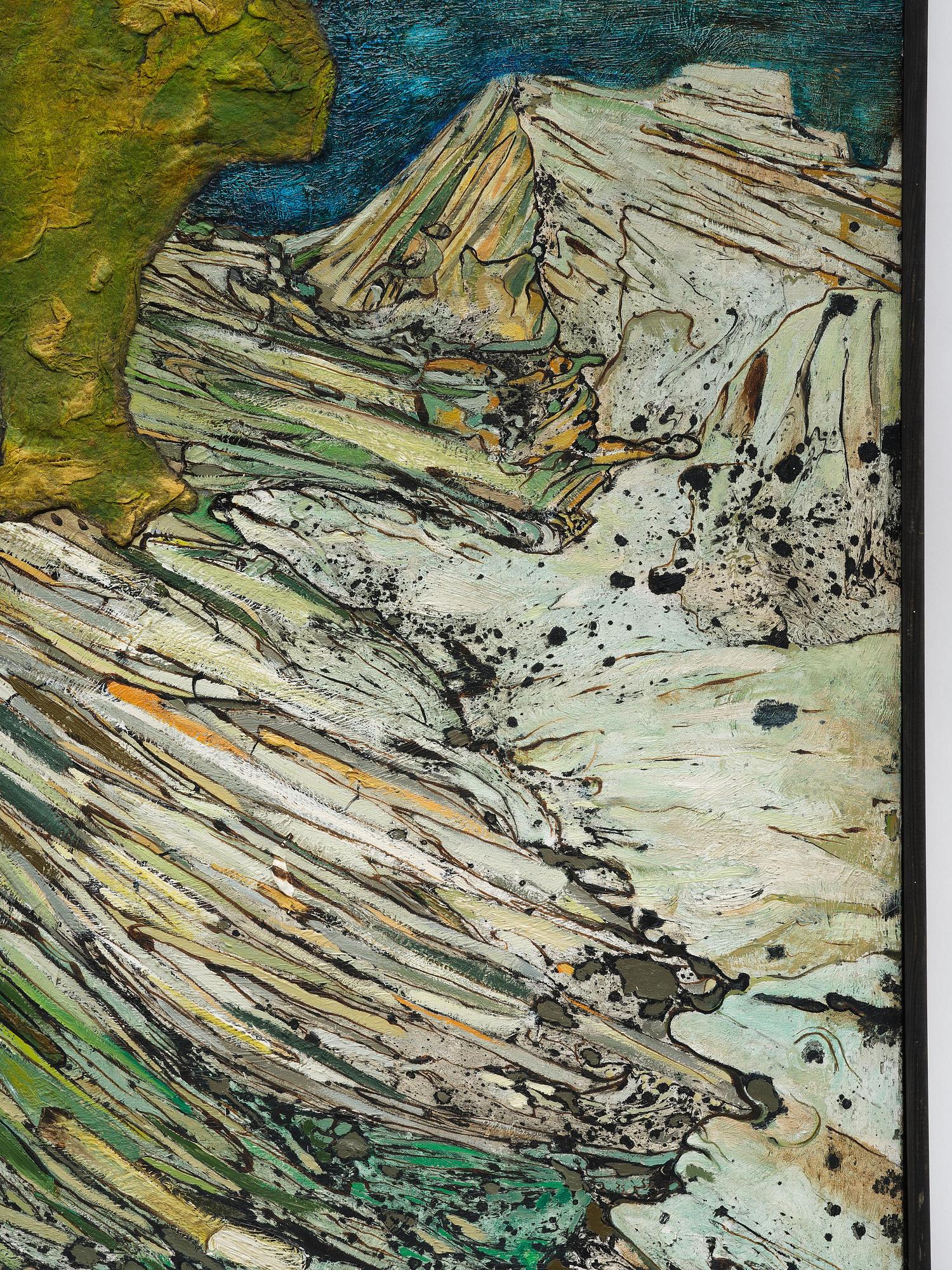
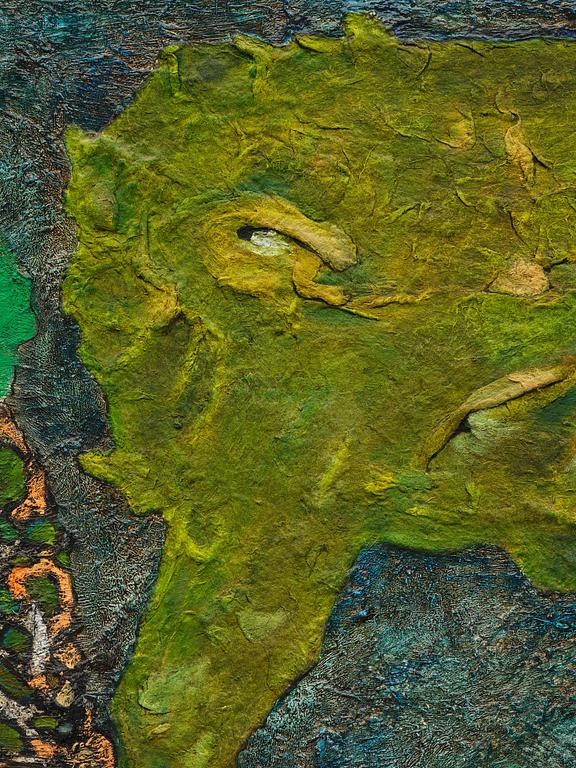
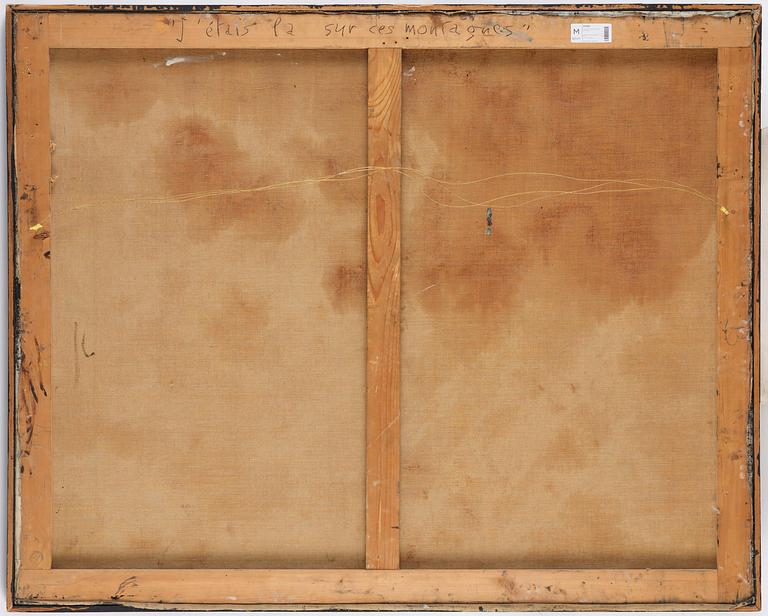
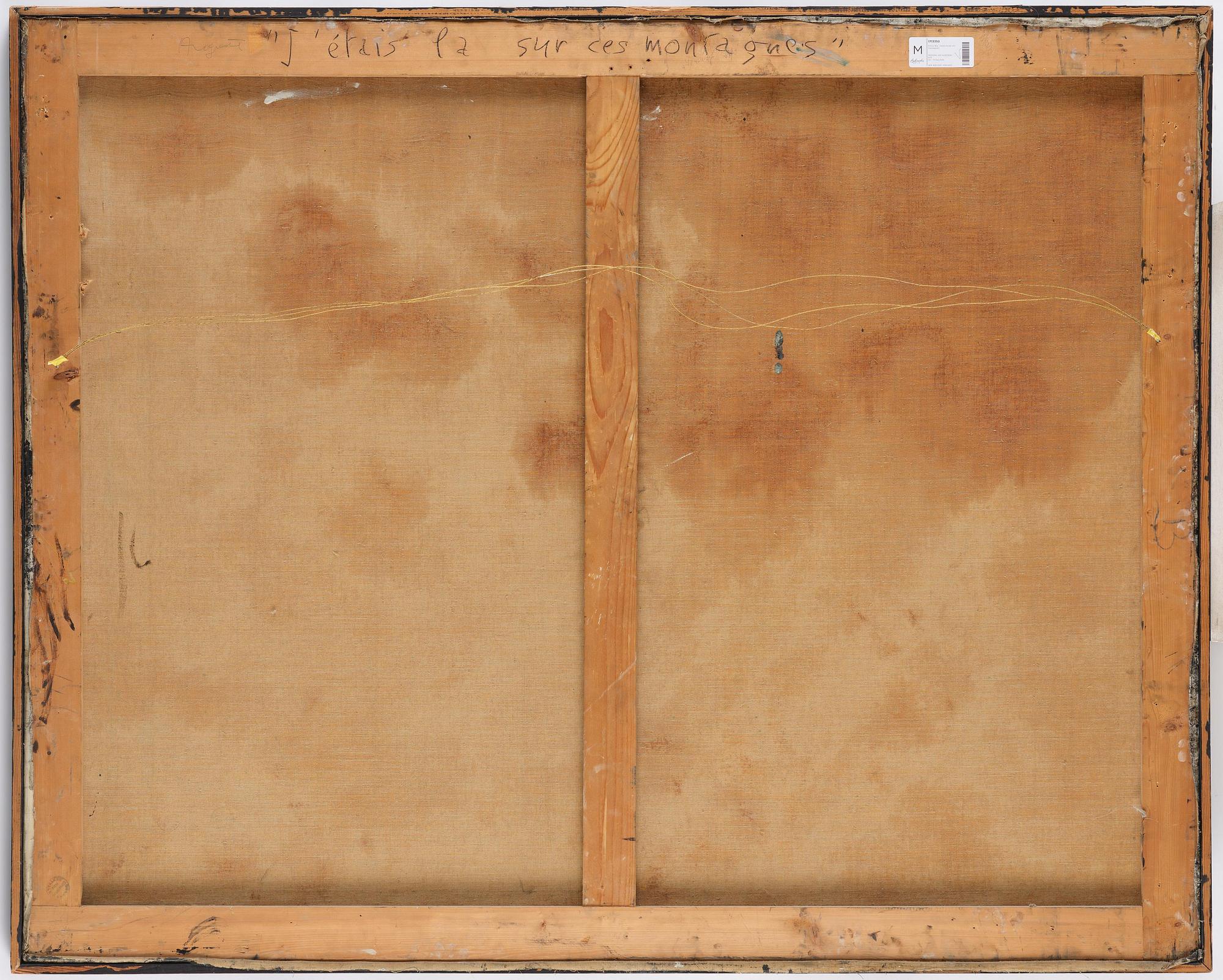
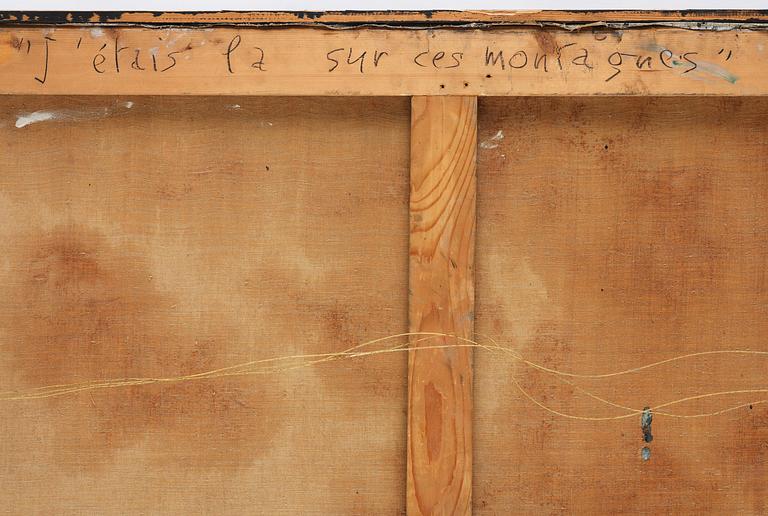
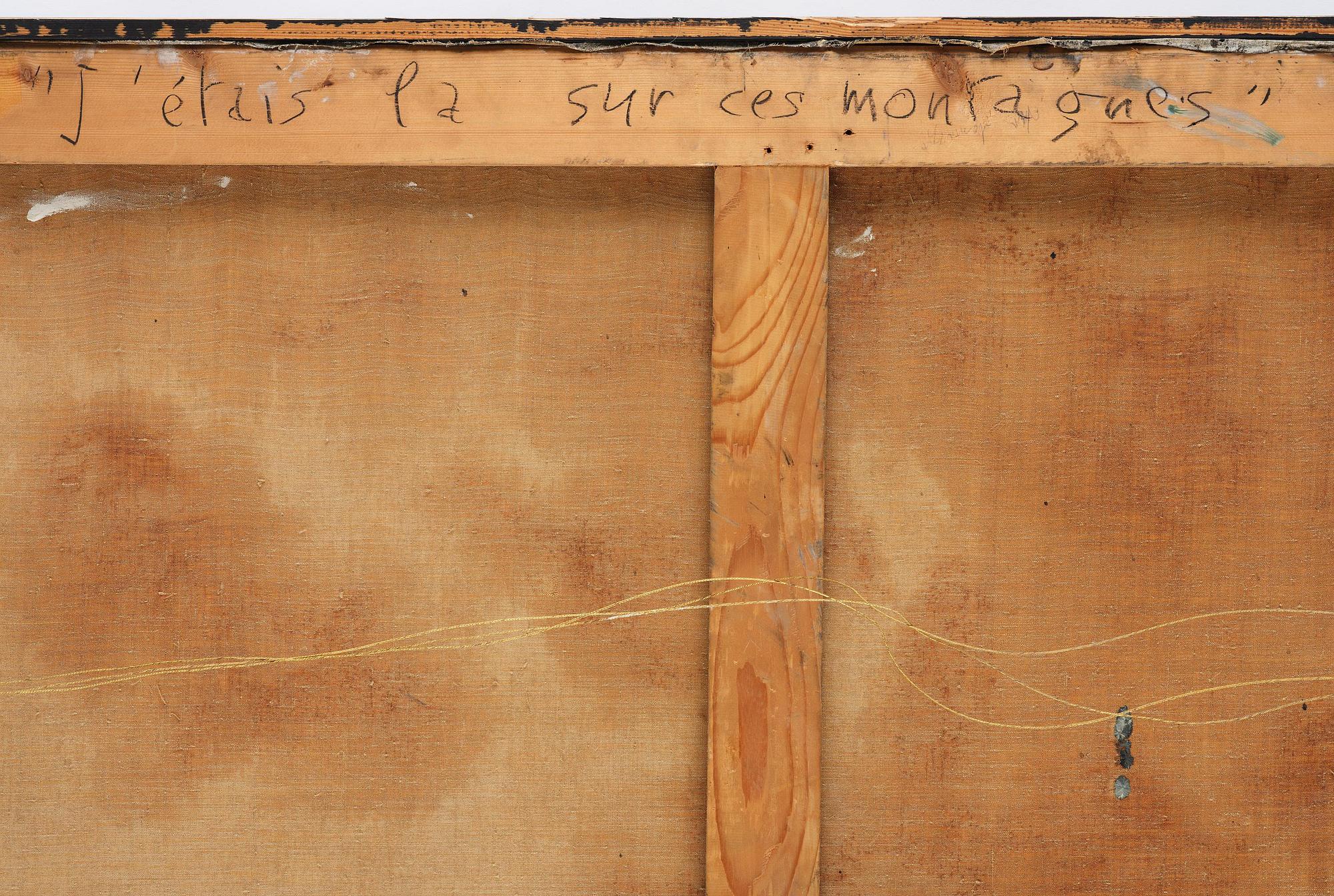
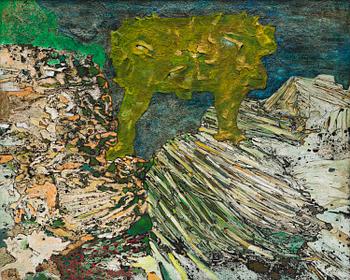
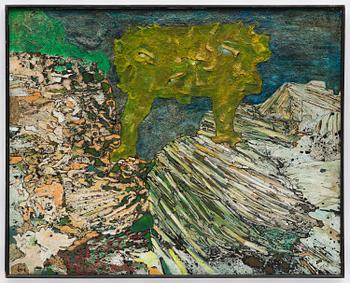
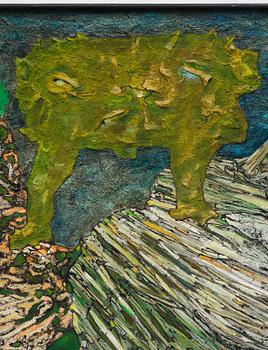
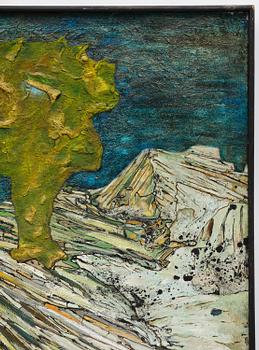
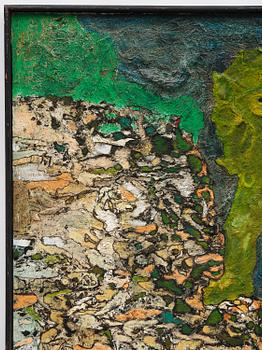
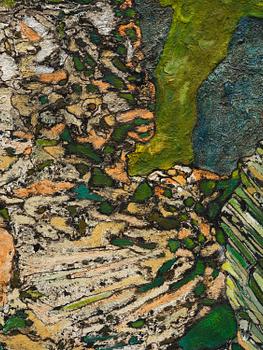
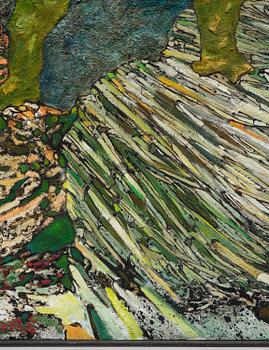
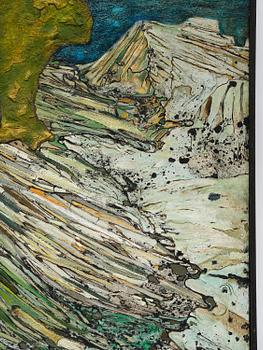
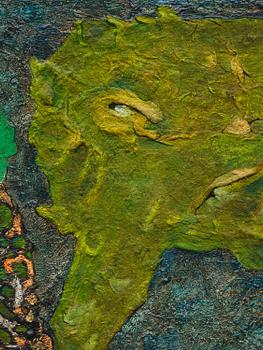
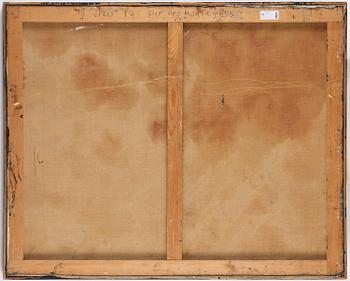
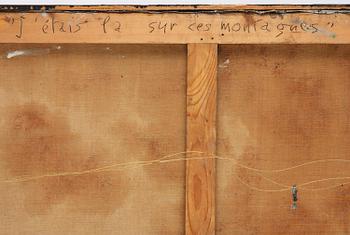
"J'etais la sur ces montagnes"
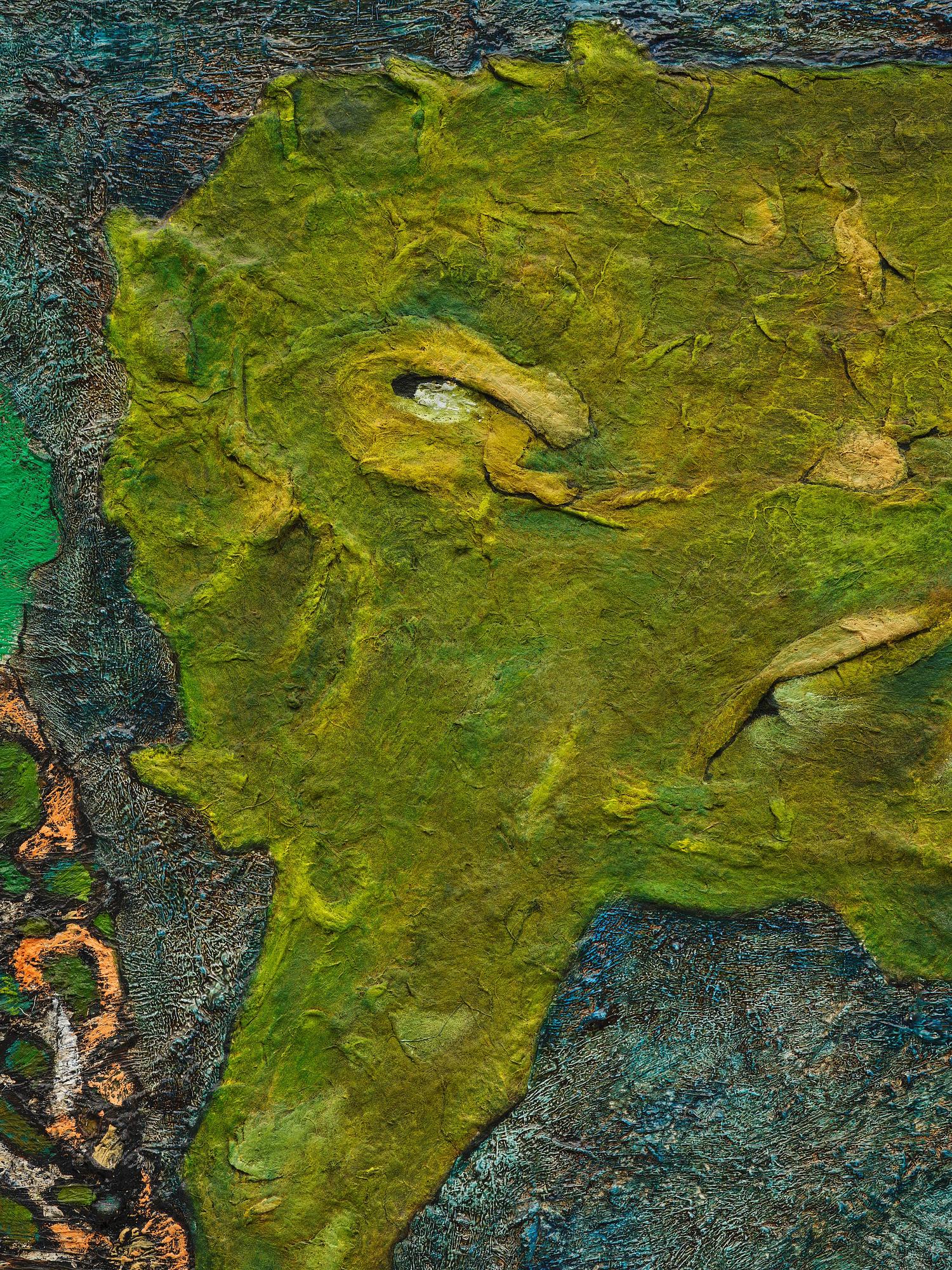
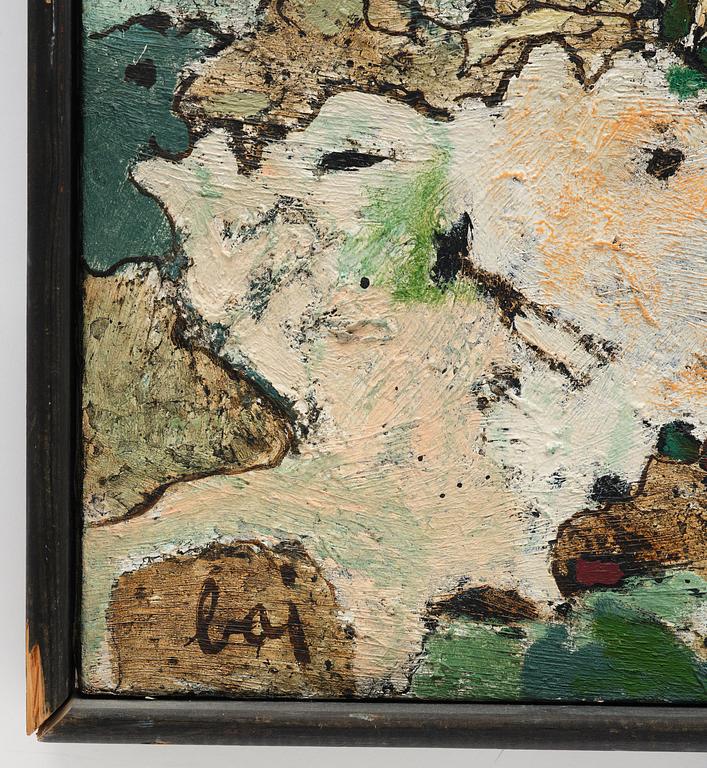
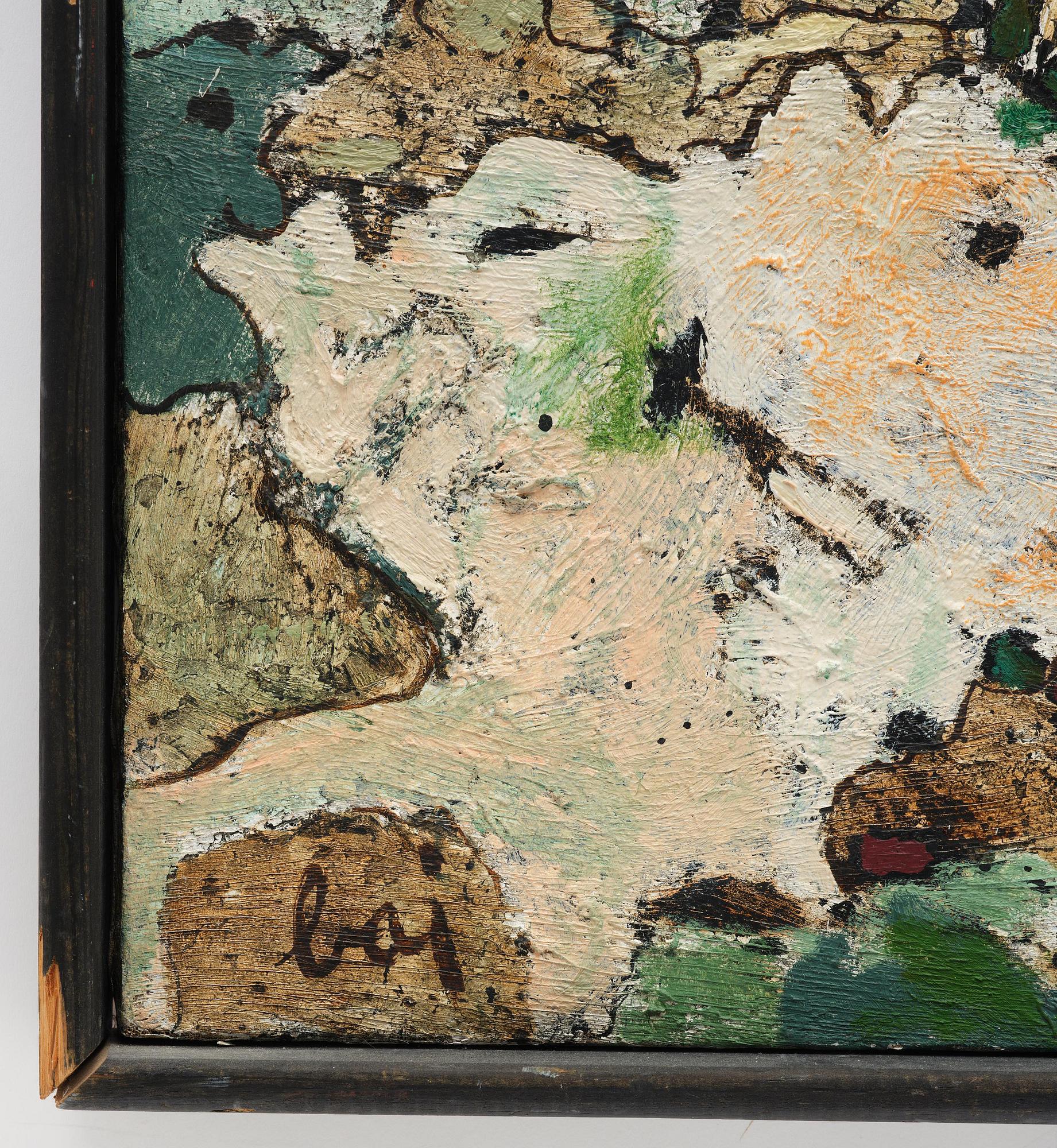
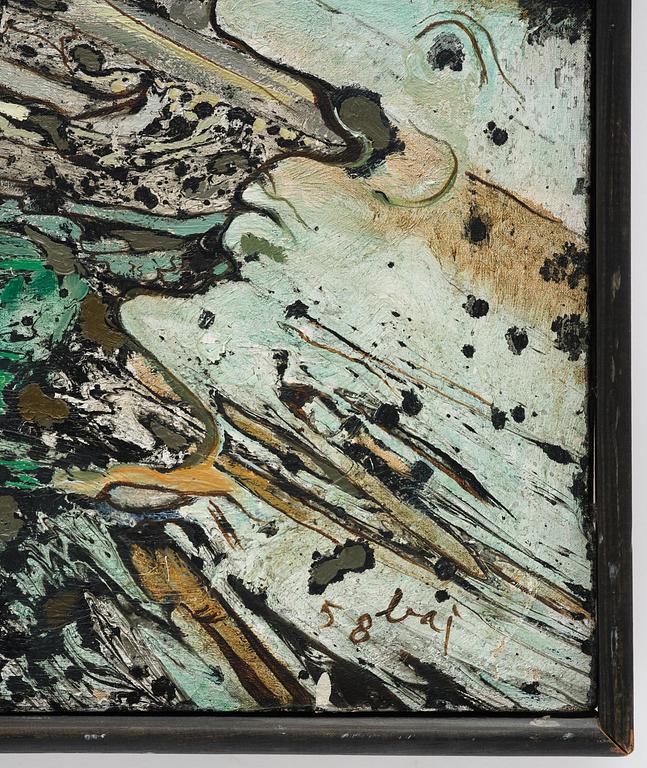
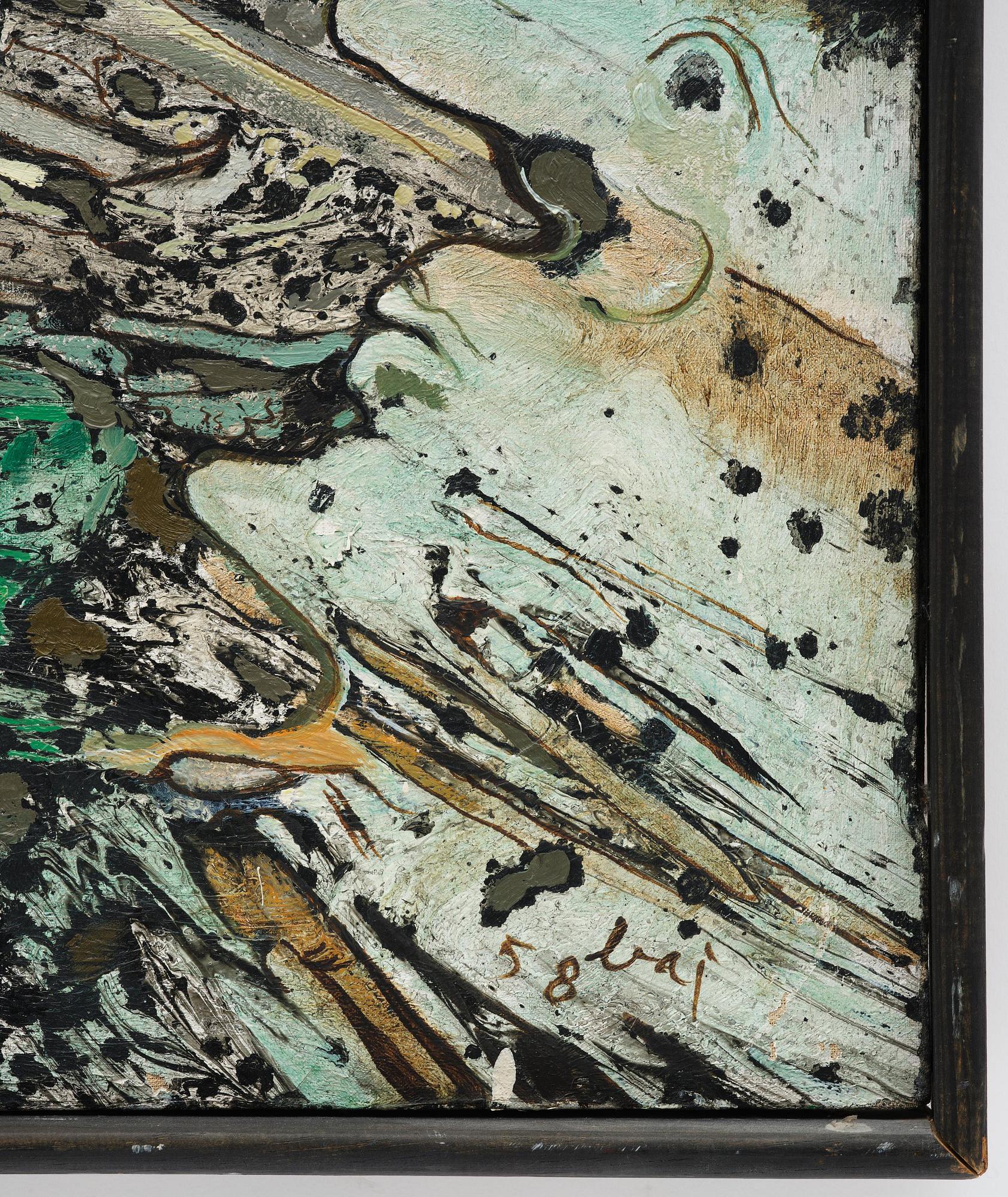
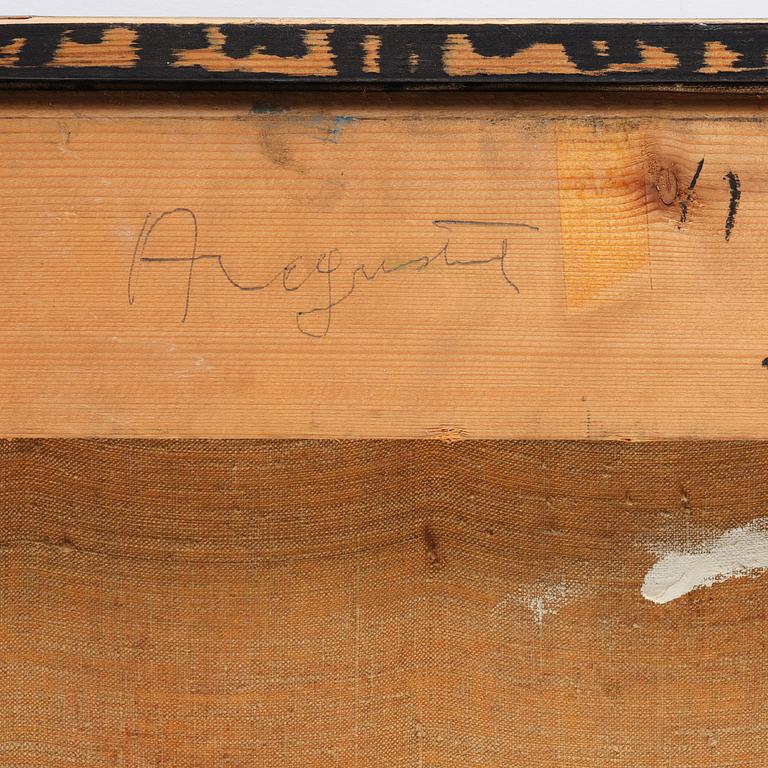
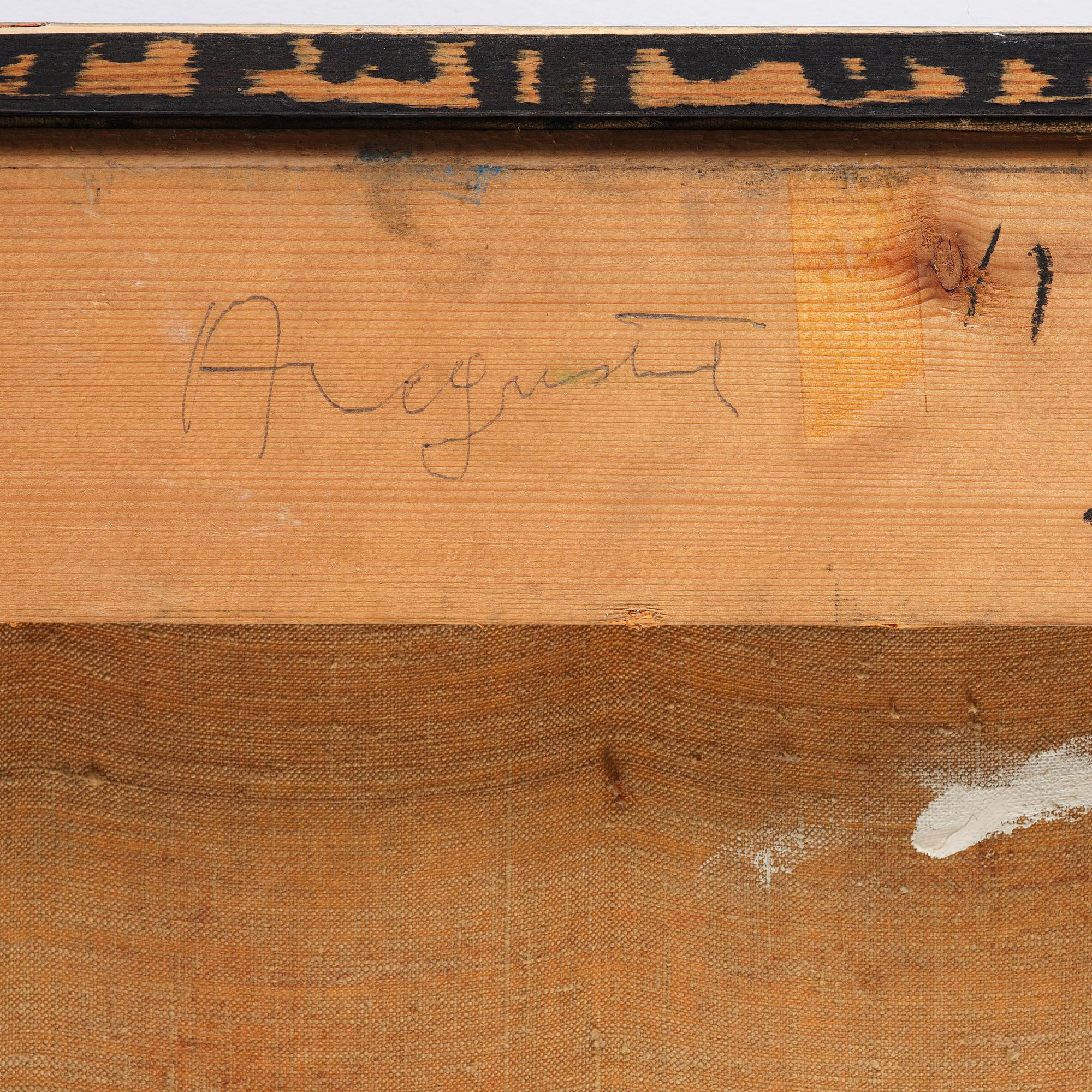
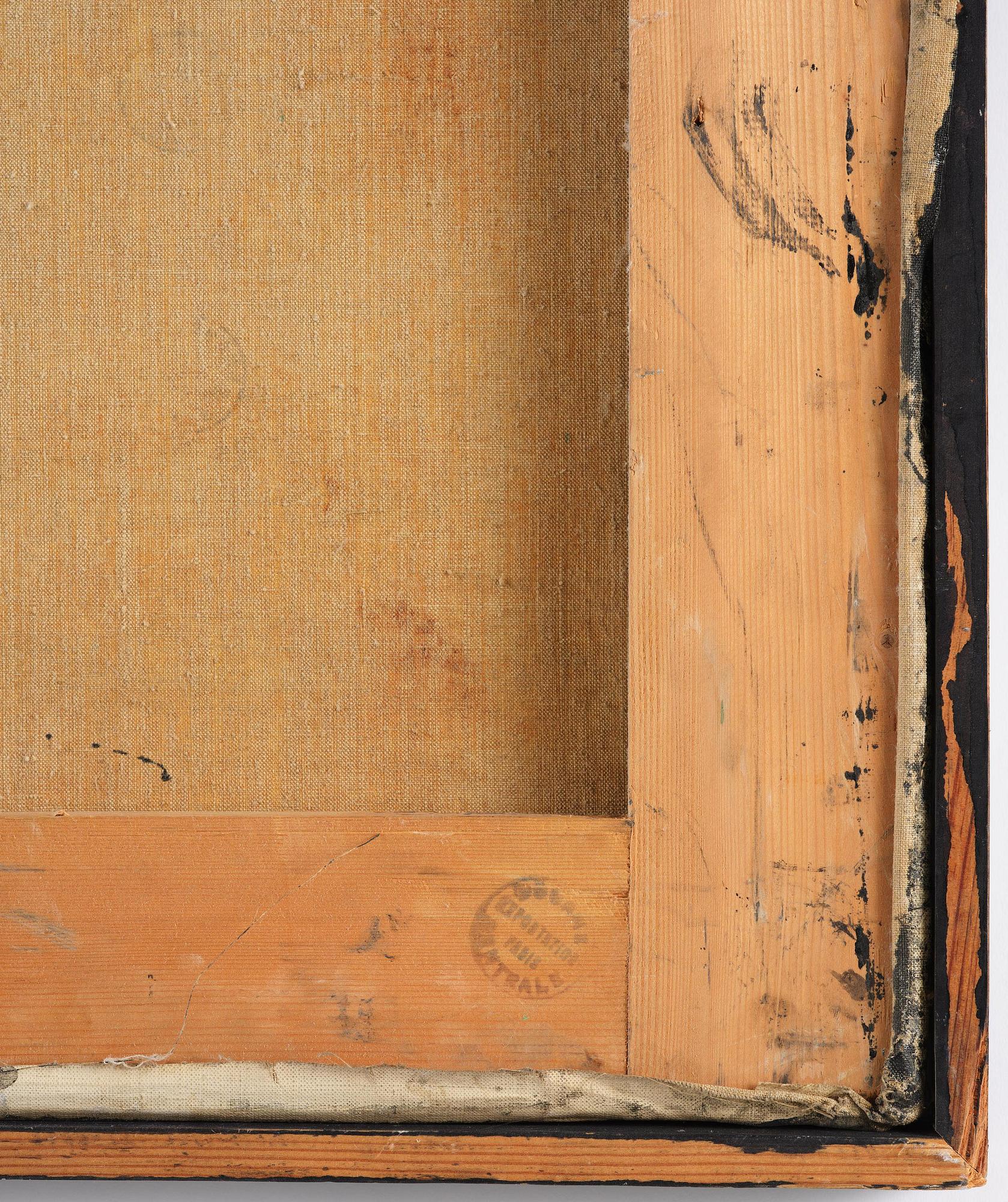
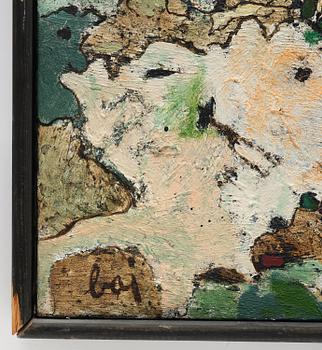
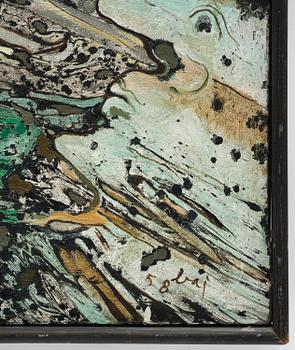
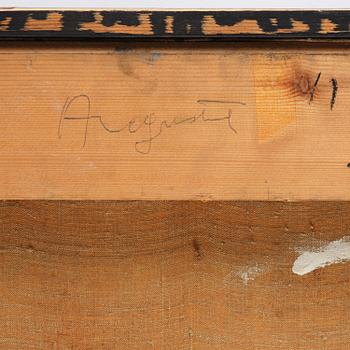
Signed Baj, dated -58. Mixed media on canvas 130 x 162 cm.
Provenance
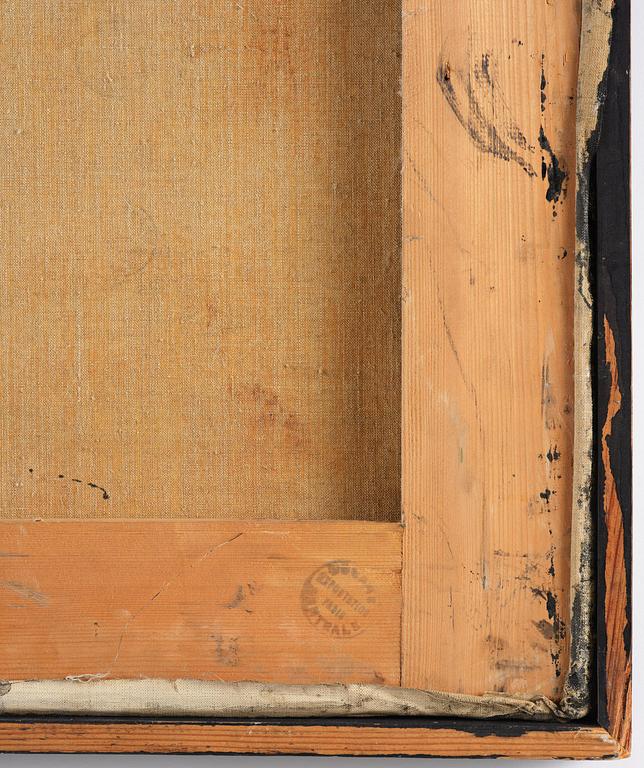
Galerie Rive Gauche, Paris.
Acquired from Björn Bengtsson, Varberg.
Private Collection, Stockholm.
Literature
Galeria Krzysztofory, Kraków, "Phases", July, 1959, illustrated.
Enrico Baj and Enrico Crispolti, "General Catalogue Bolaffi of the works of Enrico Baj," 1973, listed under number 392, p. 63, with title "Ultracorpo".
More information
Enrico Baj (born 1924 in Milan) occupies a central position within the post-war European avant-garde. As a painter, printmaker, sculptor, and writer, he developed an artistic practice characterised by a strong experimental drive and material diversity. After studying at the Brera Academy, he quickly established himself as a leading figure on the Italian art scene and in 1951 co-founded the movement Arte Nucleare together with Sergio Dangelo. Emerging in the shadow of the nuclear threat, this movement articulated an aesthetic that broke with traditional norms in favour of a more fragmented and critically engaged visual language.
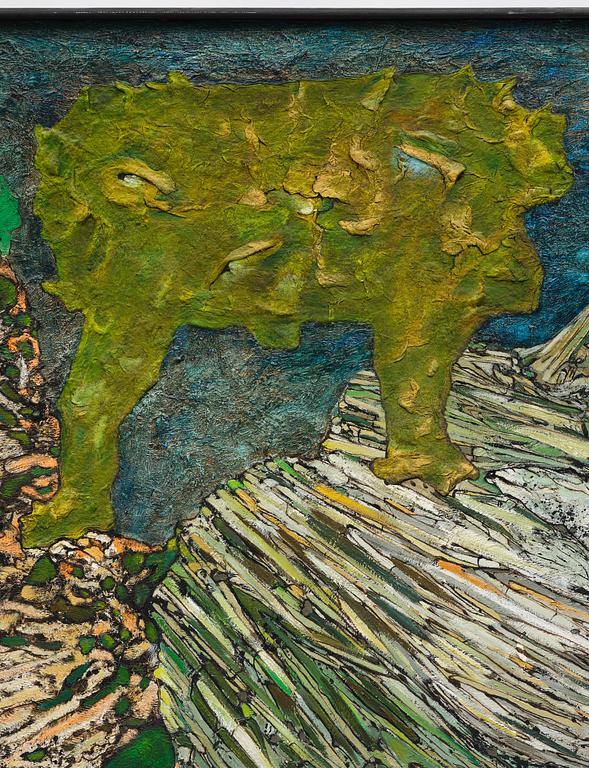
During the 1950s, Baj developed a working method in which painting was gradually expanded through the incorporation of unconventional materials. This development, clearly manifested in the painting J’étais là sur ces montagnes (1958), reflects a broader tendency within Art Informel, where artists sought to transcend the limitations of classical painting. Moving beyond an initially relatively traditional use of oil and ink, Baj began to integrate textiles, cords, metal fragments, and other found objects into his works. The result was a hybrid form in which the boundary between painting and object was dissolved.
Baj’s art from this period is further characterised by a distinctive iconography in which grotesque and absurd figures play a central role. These figures, often conceived as caricatures or fantastical beings with exaggerated attributes, carry a strong ironic charge. In this respect, his practice connects to the legacy of Dadaism, with its anti-authoritarian and playful stance, as well as to Surrealism in its exploration of the irrational and the unconscious.
From the mid-1950s onwards, collage and assemblage emerged as central forms of expression in Baj’s work. A virtuoso of collage—an approach he himself grounded in literary principles—he developed complex pictorial surfaces in which disparate materials such as haberdashery, upholstery elements, mattress covers, medals, mirrors, and coloured glass were assembled into visually and semantically charged wholes. Within these works, thematic constellations later became iconic, most notably the series Ladies and Generals, in which fictional characters function as vehicles for a frequently sharply articulated, albeit sometimes veiled, political critique. This theme is further developed in later compositions depicting military parades and ceremonies, in which representations of power are subjected to satirical deconstruction.
In parallel with this artistic development, Baj established himself on the international art scene. From the 1950s onwards, he exhibited regularly, particularly in Paris, and in 1953 he entered into a significant collaboration with Asger Jorn, resulting in the founding of the “International Movement for an Imaginist Bauhaus”—a movement opposed to the rationalist and geometric dogmas of the time. His international breakthrough was consolidated through participation in exhibitions such as Surrealist Intrusion in the Enchanters’ Domain (New York, 1960), organised by Marcel Duchamp and André Breton, as well as the influential Art of Assemblage (1961) at the Museum of Modern Art in New York.
Breton also devoted an essay to Baj in 1963, and the following year the artist was awarded a dedicated room at the Venice Biennale, further consolidating his position within the international avant-garde. In the subsequent decades, Baj continued to exhibit regularly, with major retrospectives held in Milan, Rotterdam, and Brussels, among other locations.
Overall, Enrico Baj emerges as an artist whose practice during the 1950s not only challenged the material and formal boundaries of painting, but also articulated a sharp and often ironically veiled critique of the political and cultural structures of his time. His works from this period thus constitute an important link between the experimental avant-gardes of the post-war era and a more explicitly socially engaged form of art.
For condition report contact specialist

Image rights
The artworks in this database are protected by copyright and may not be reproduced without the permission of the rights holders. The artworks are reproduced in this database with a license from Bildupphovsrätt.
Others have also viewed