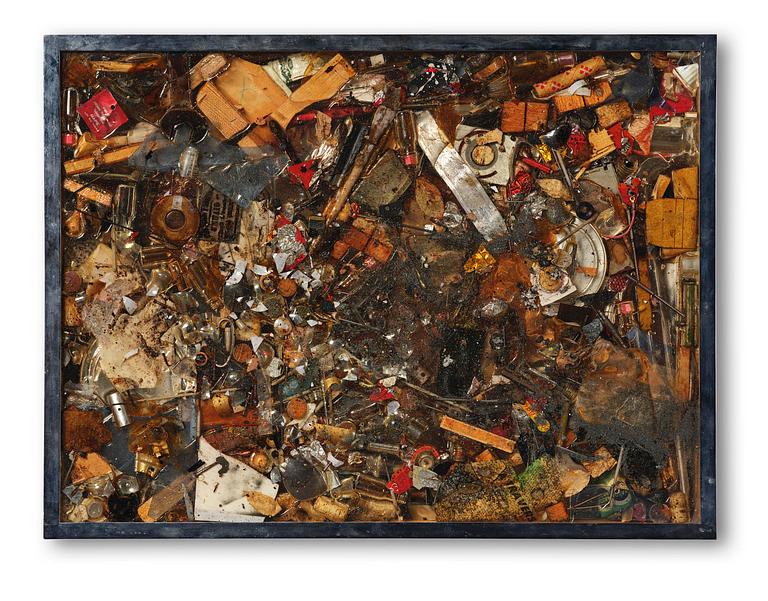
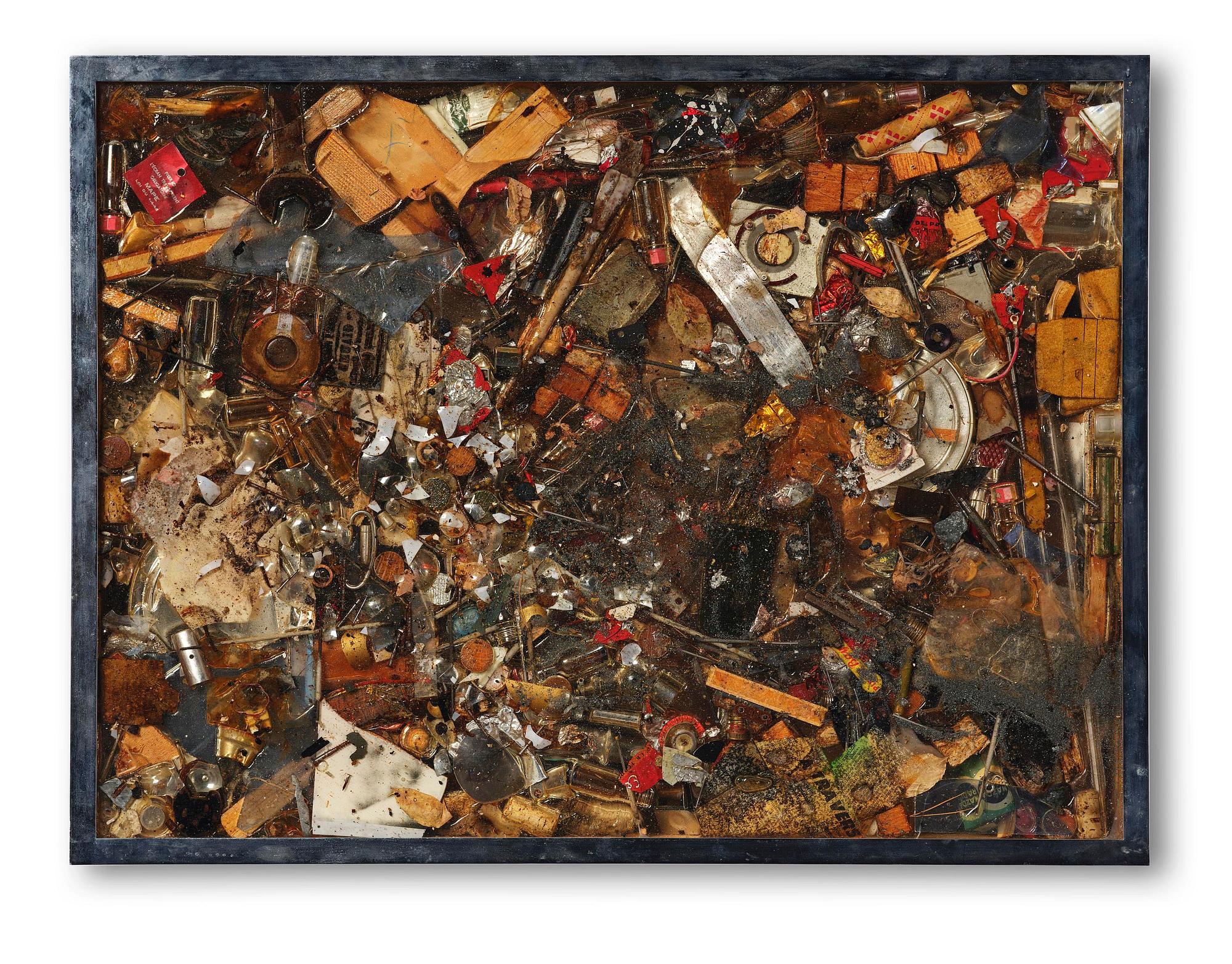
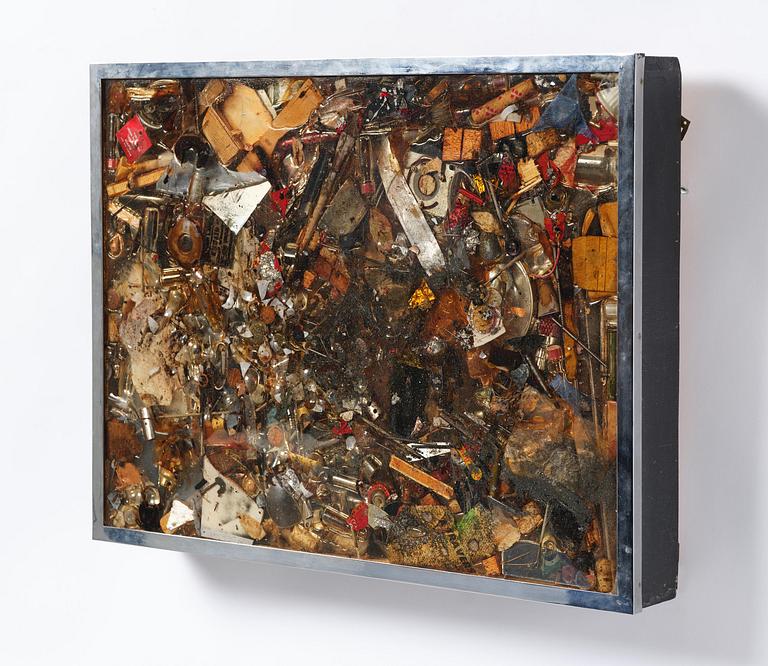
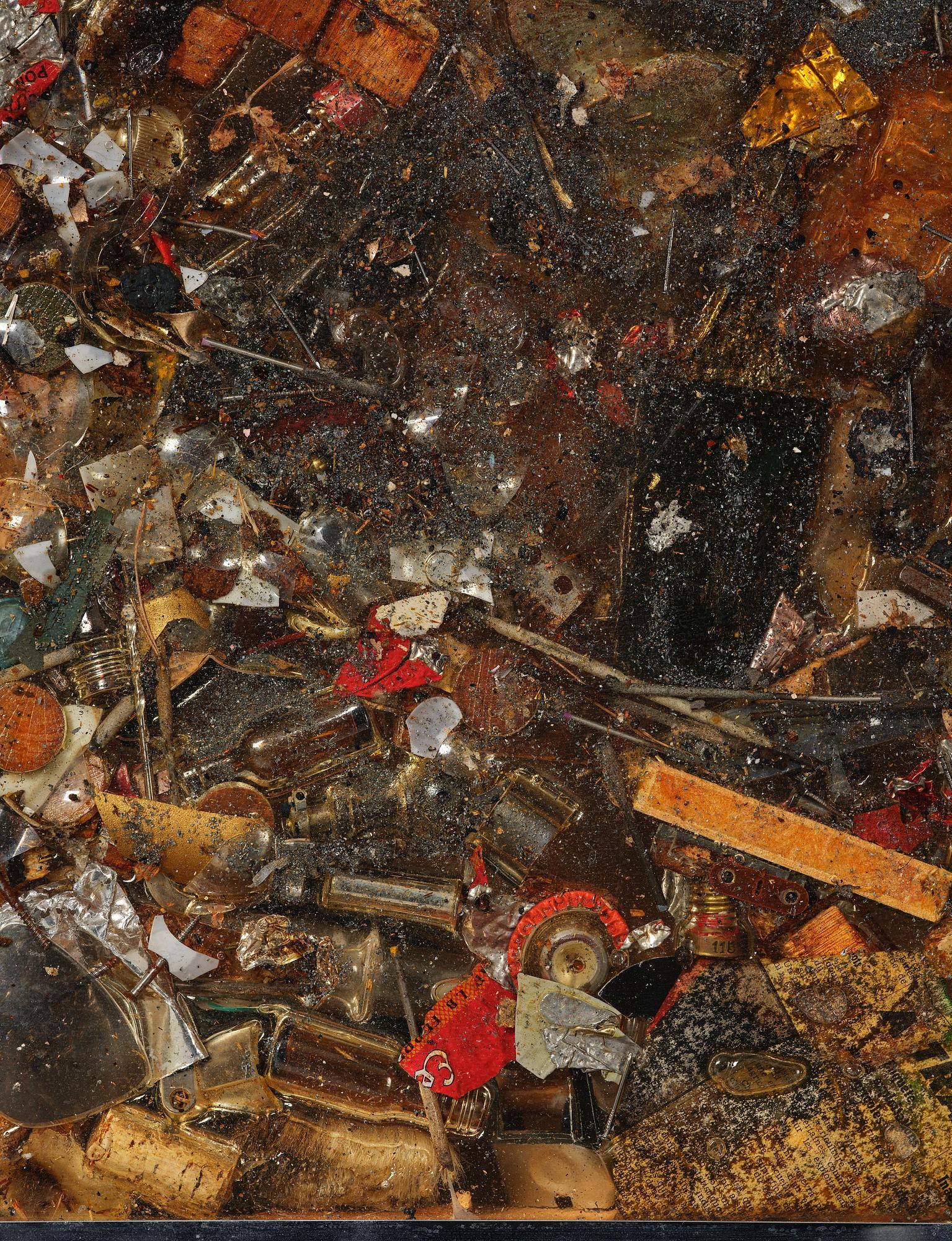
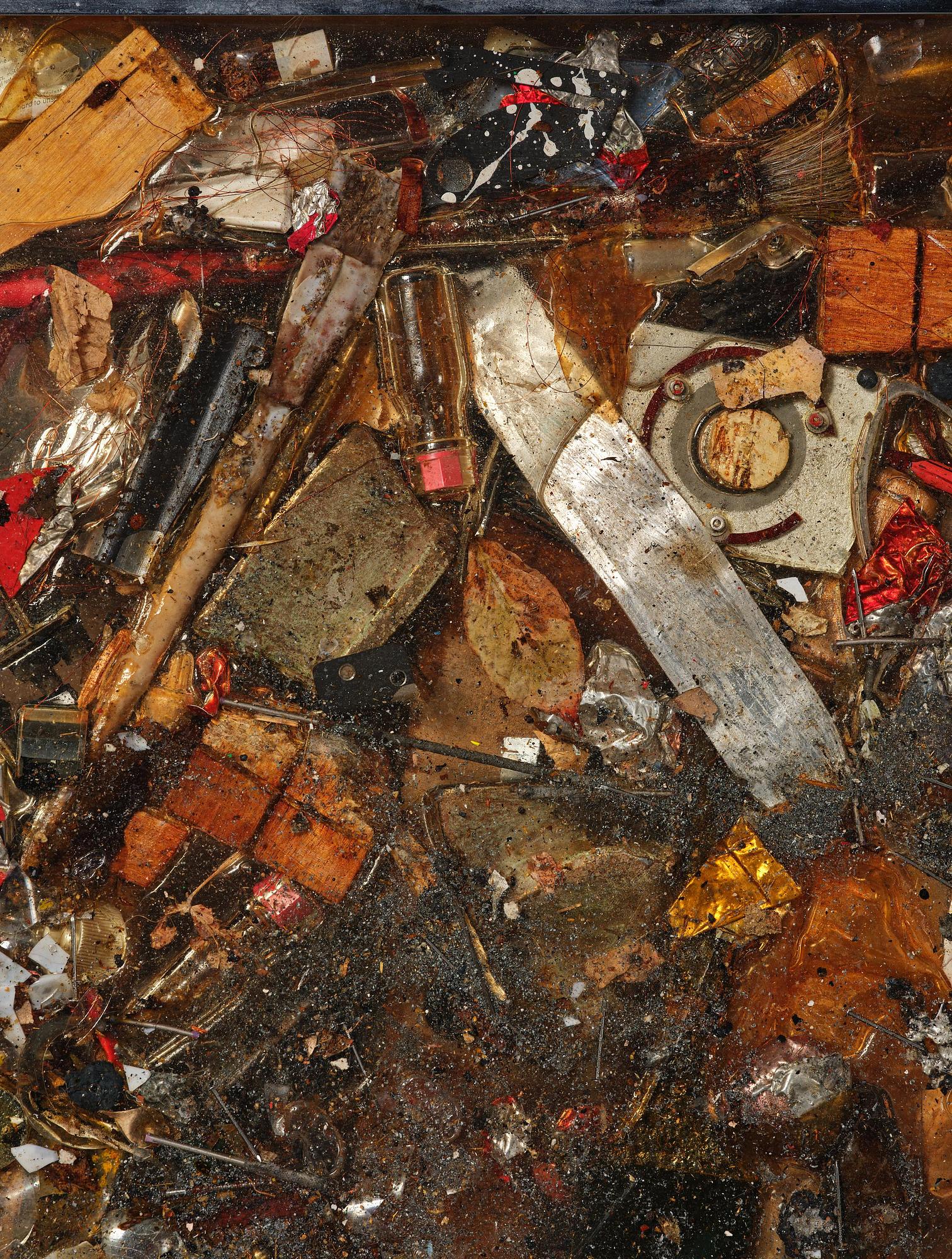
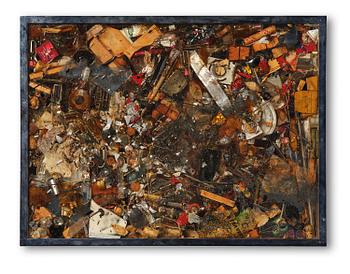
"Poubelle d'Atelier"
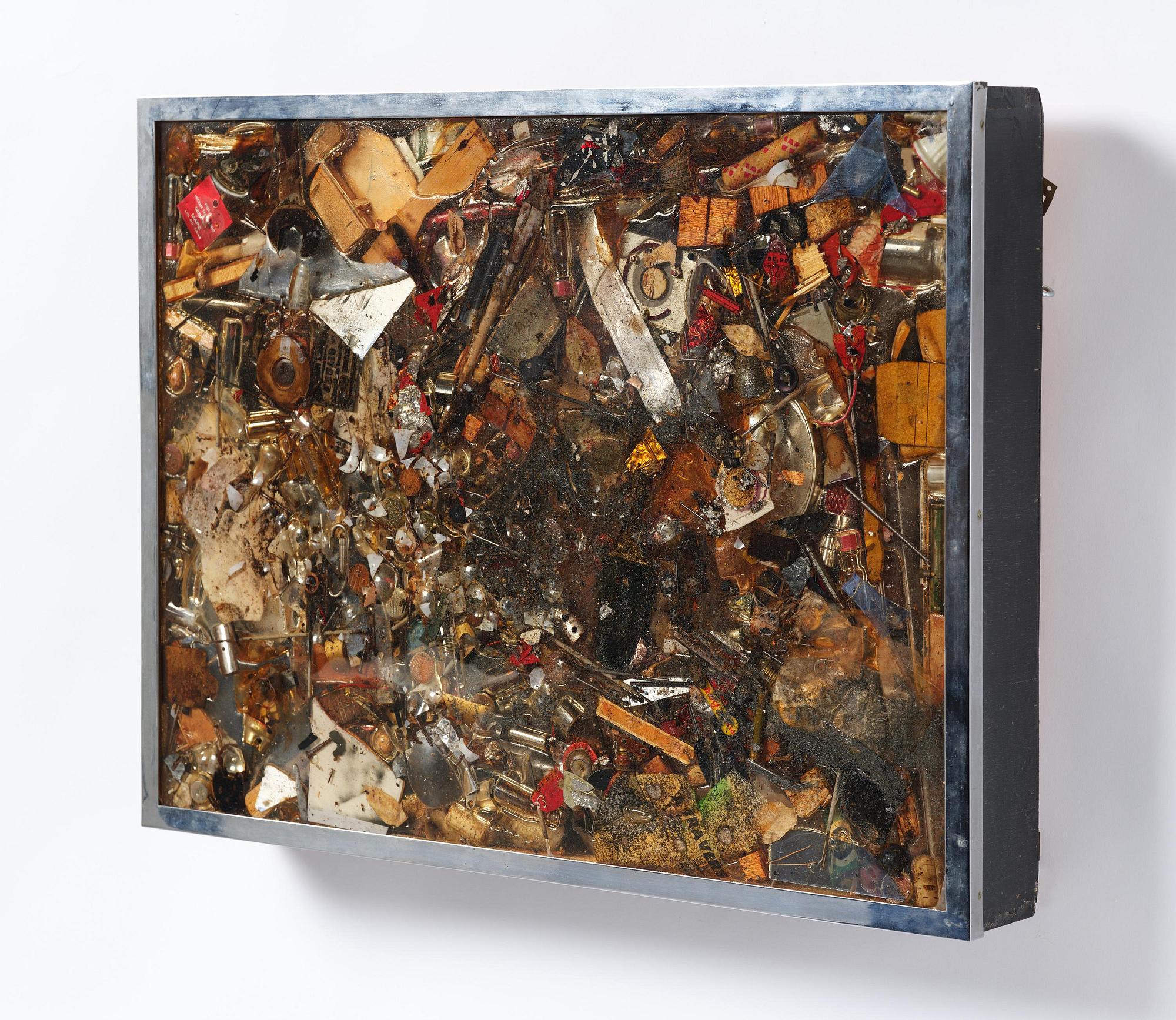
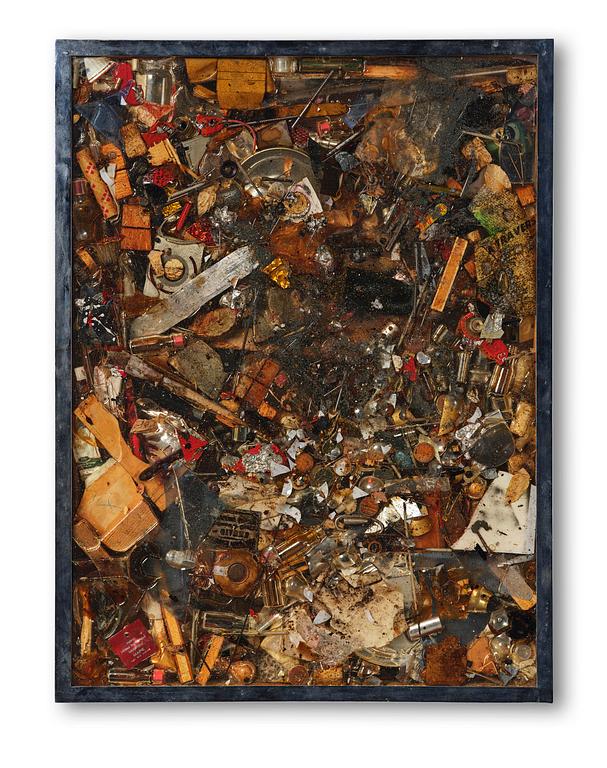
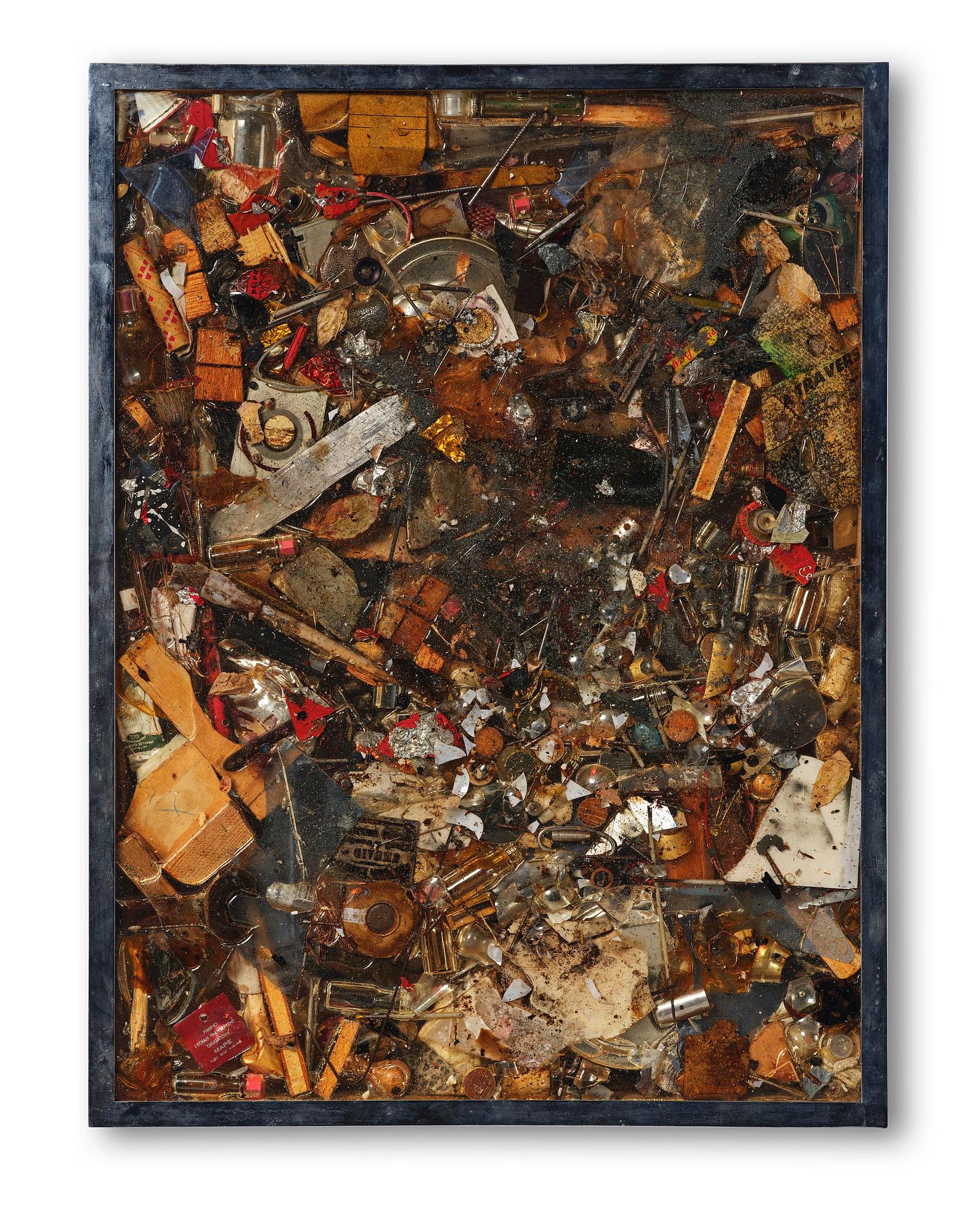
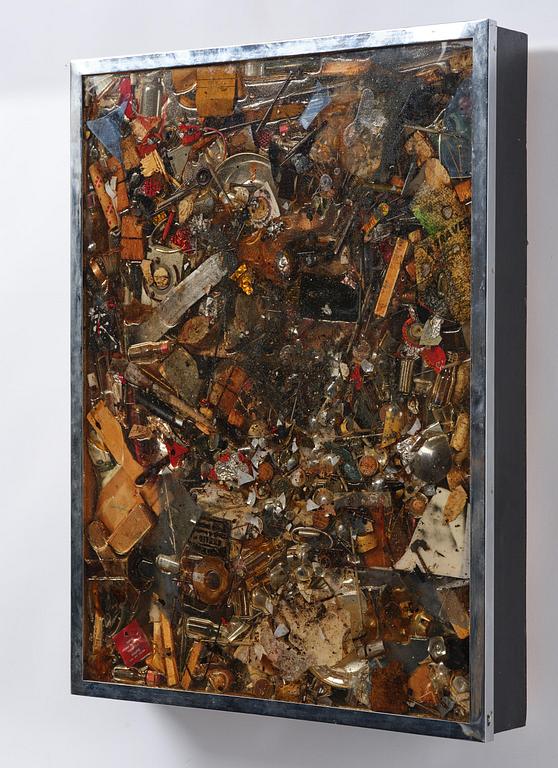
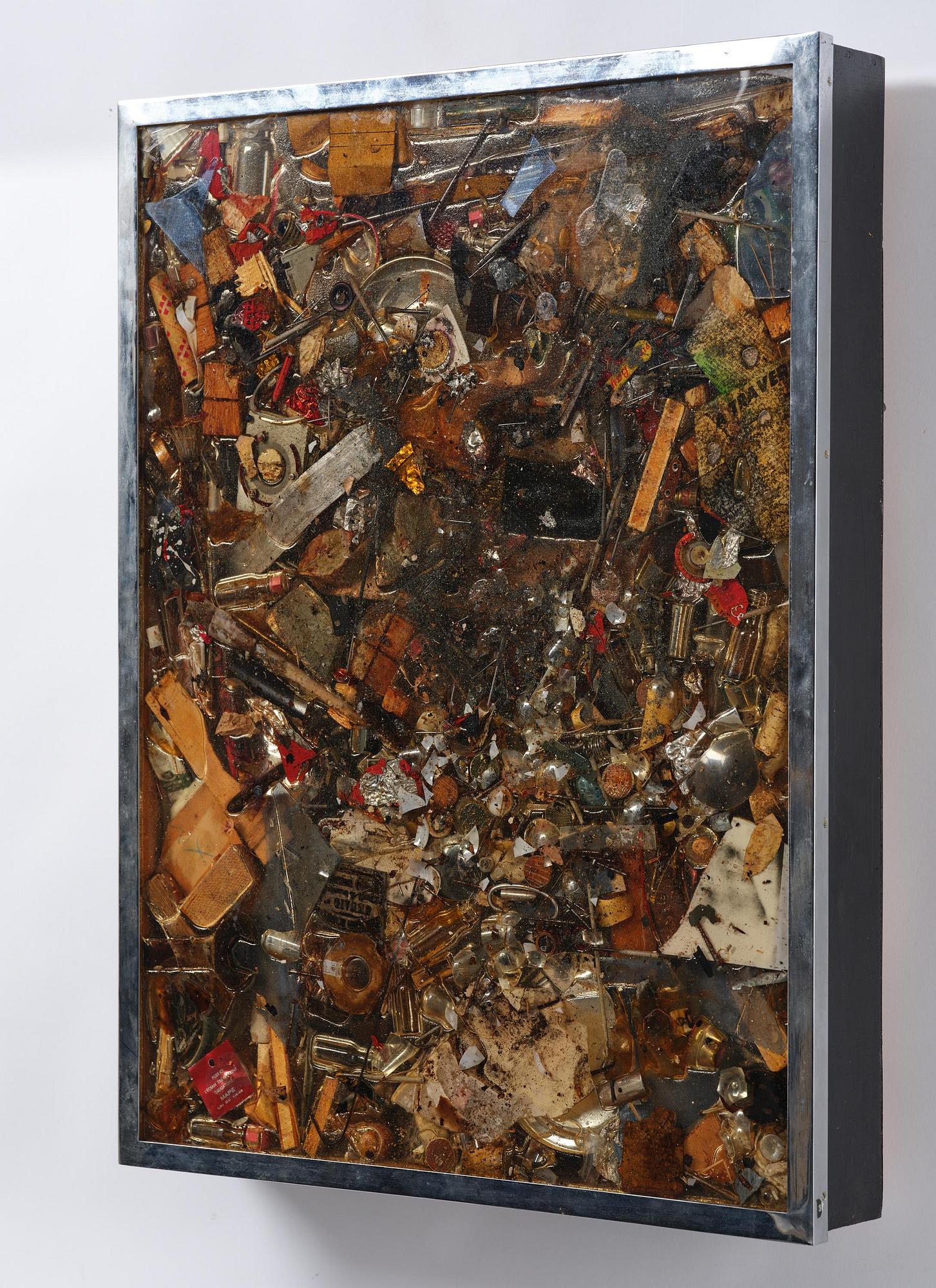
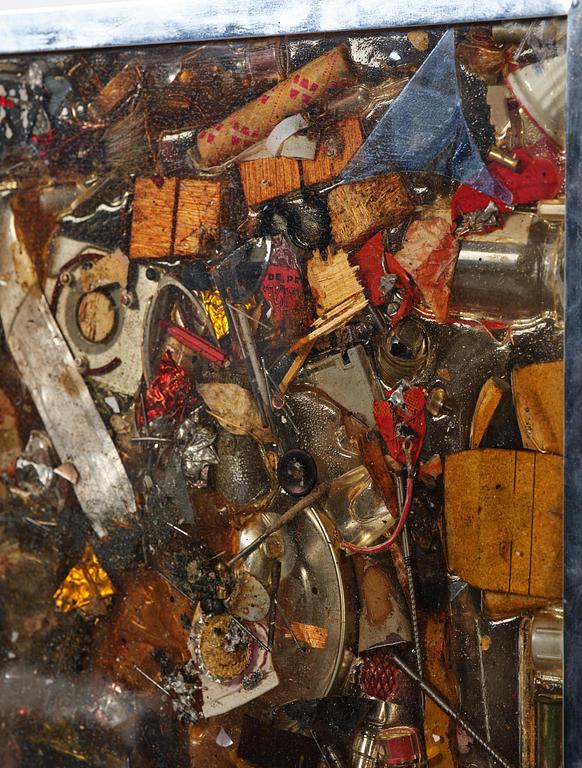
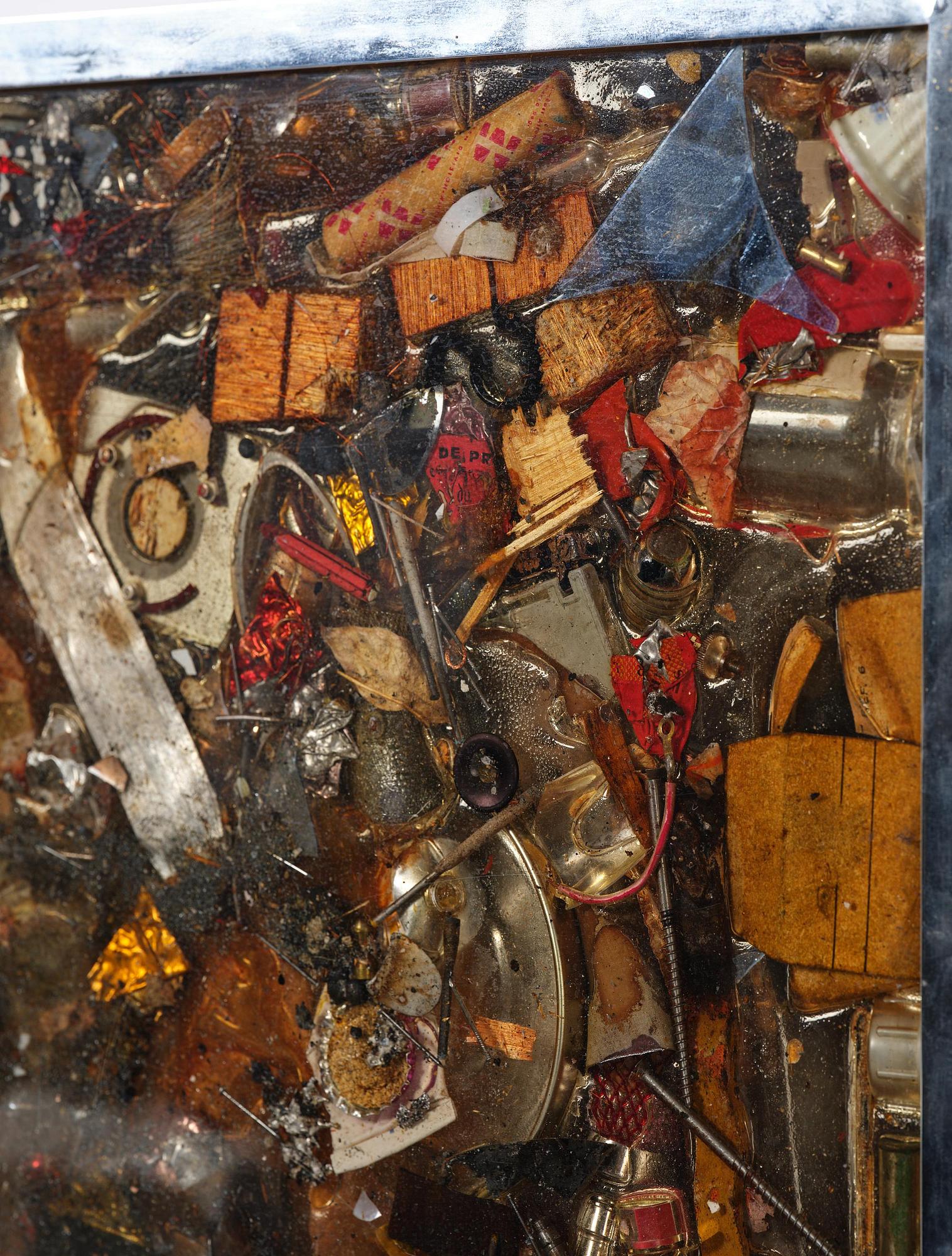
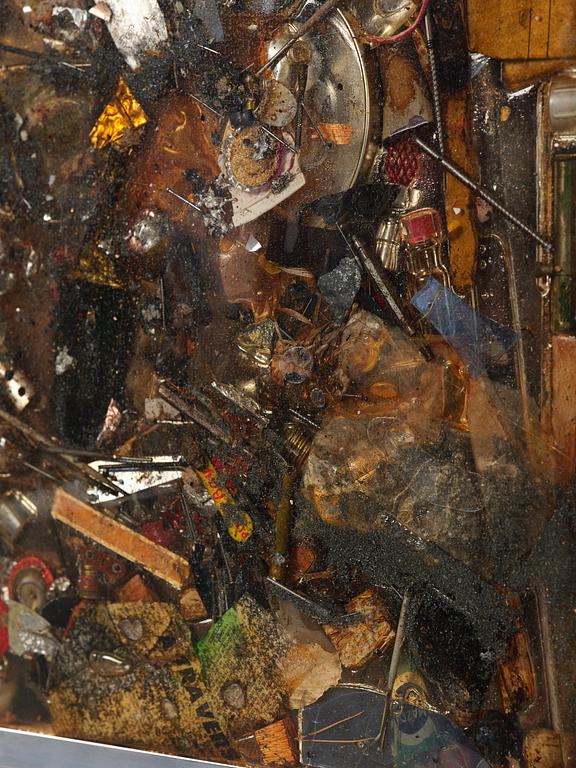
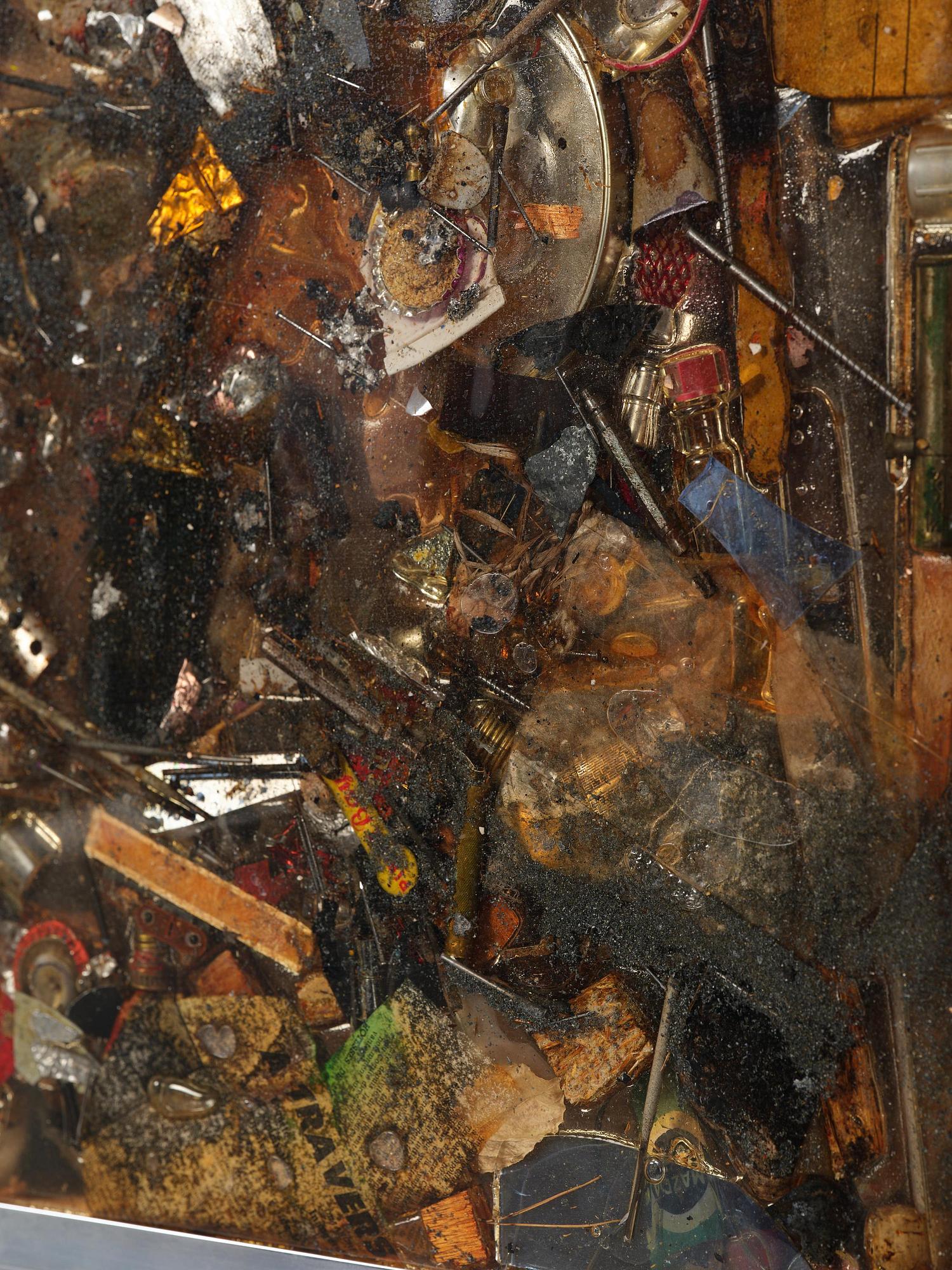
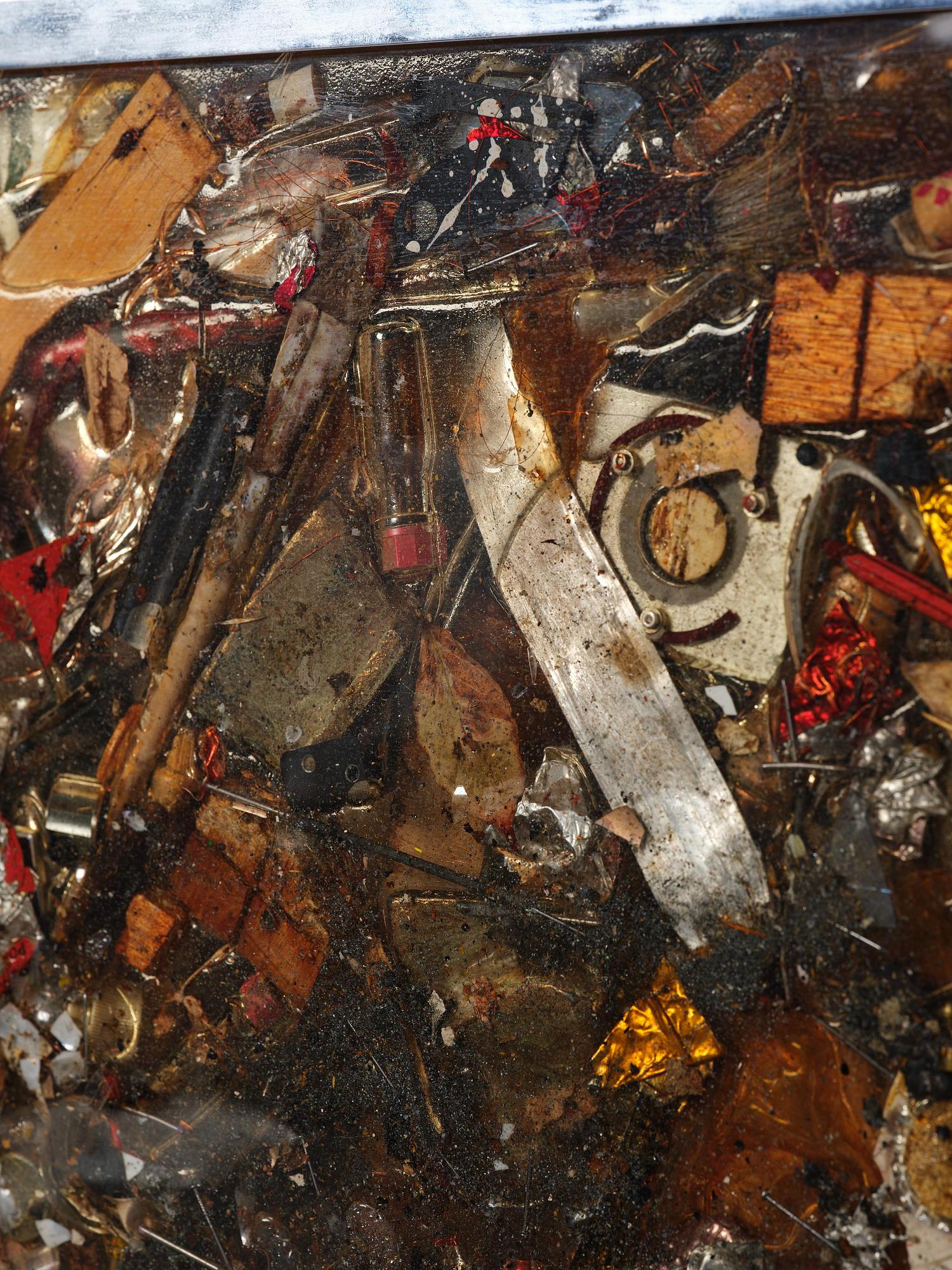
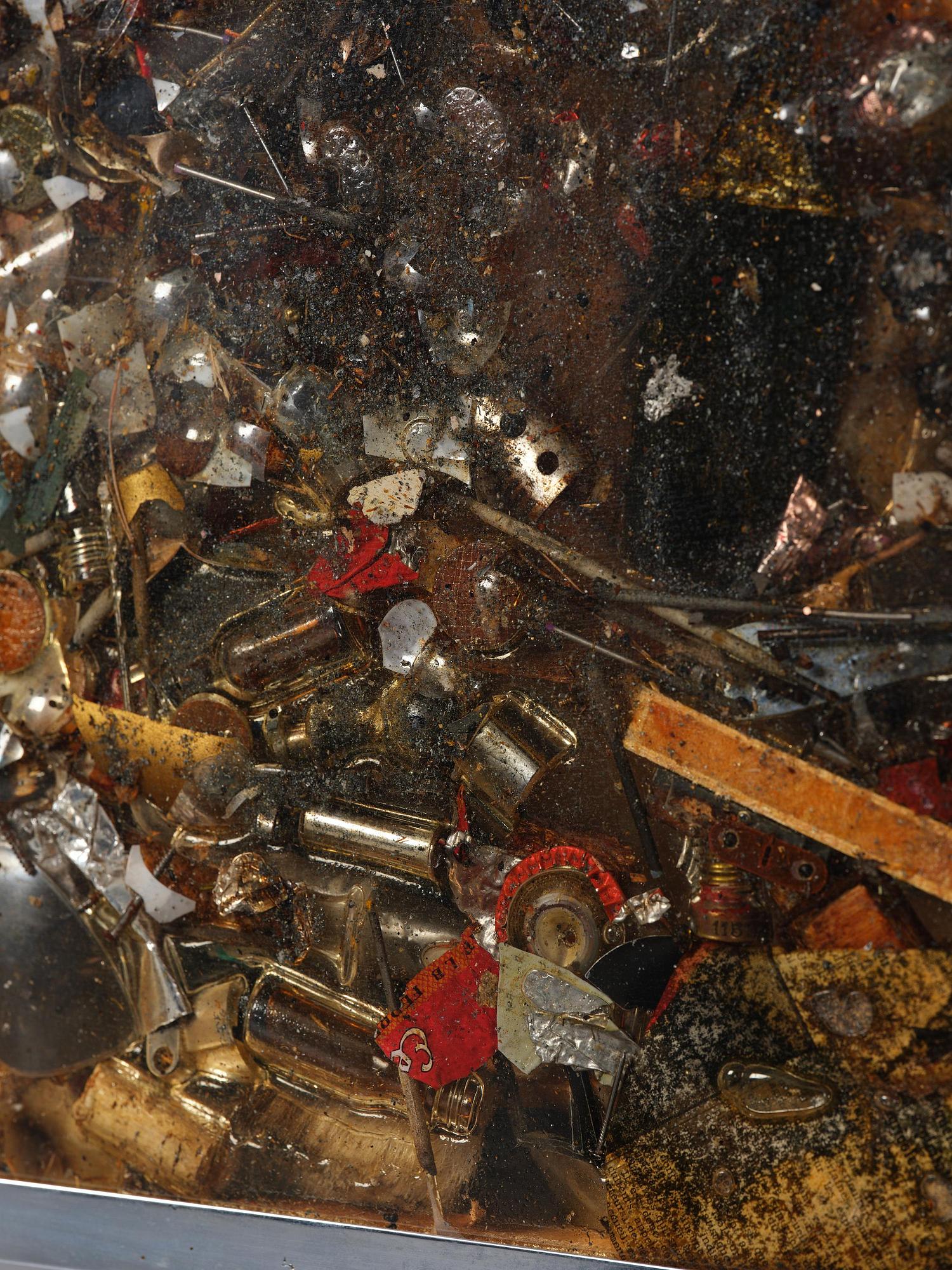
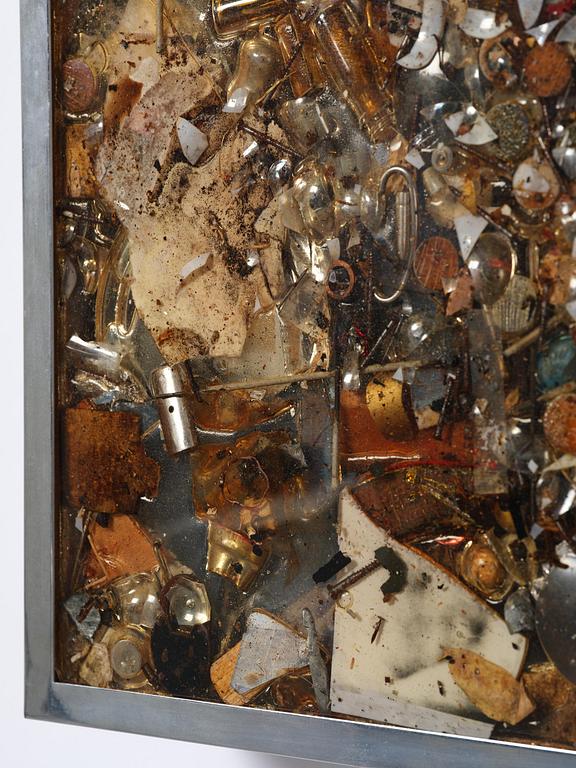
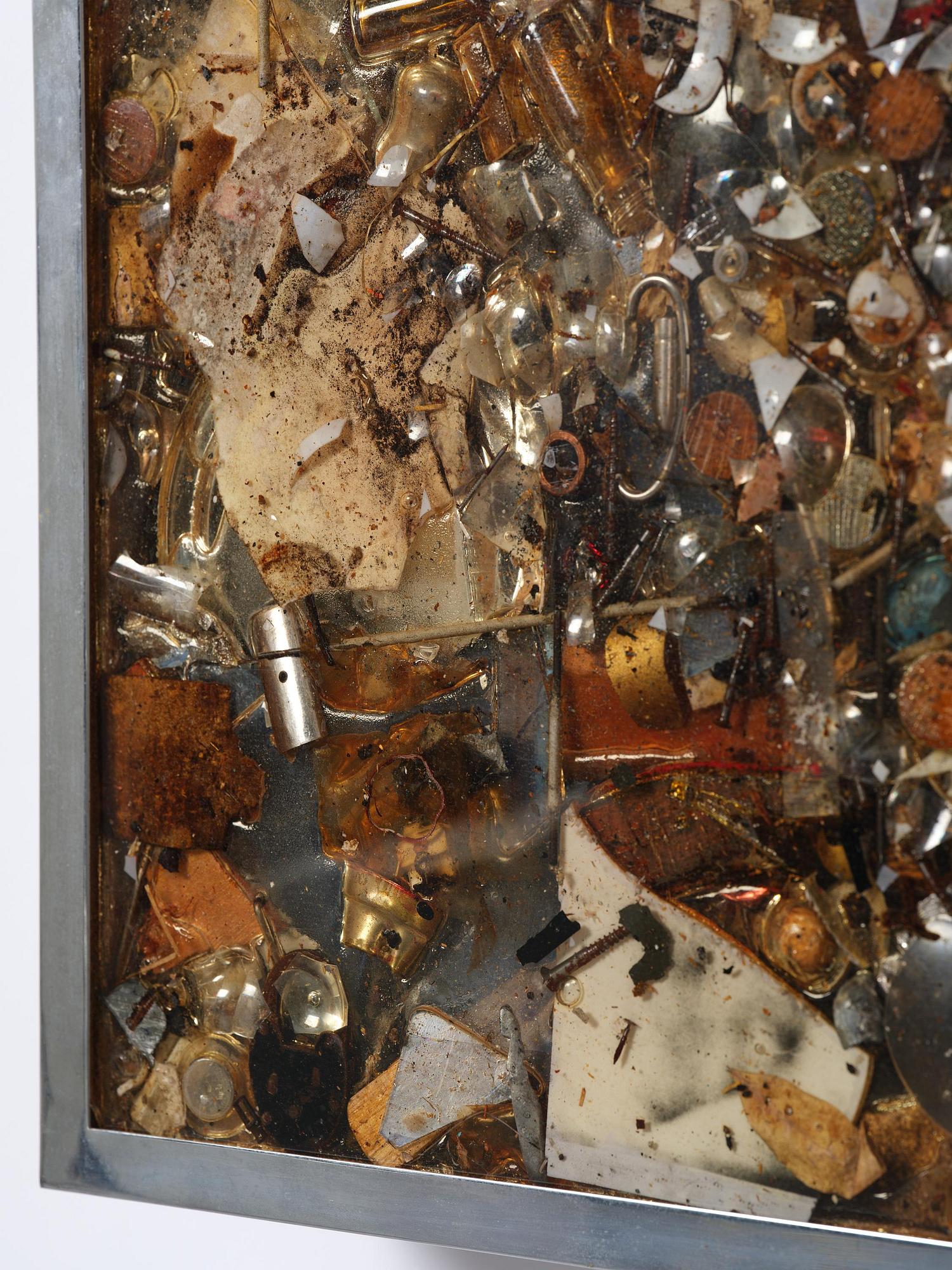
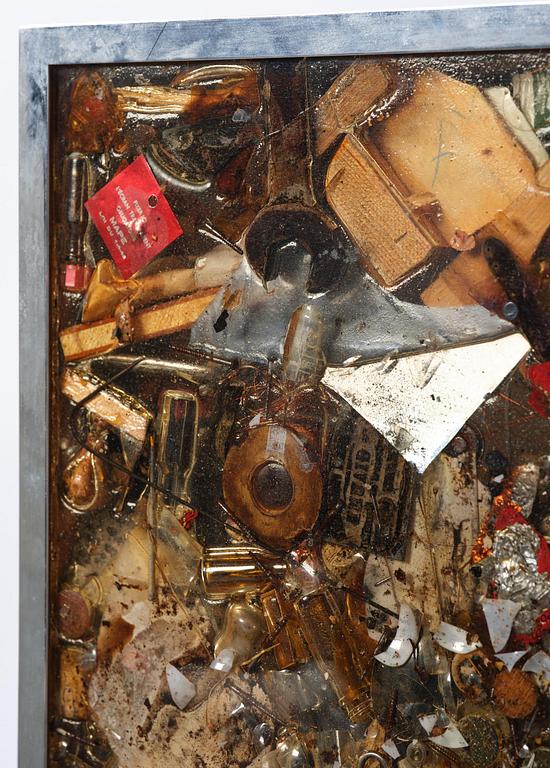
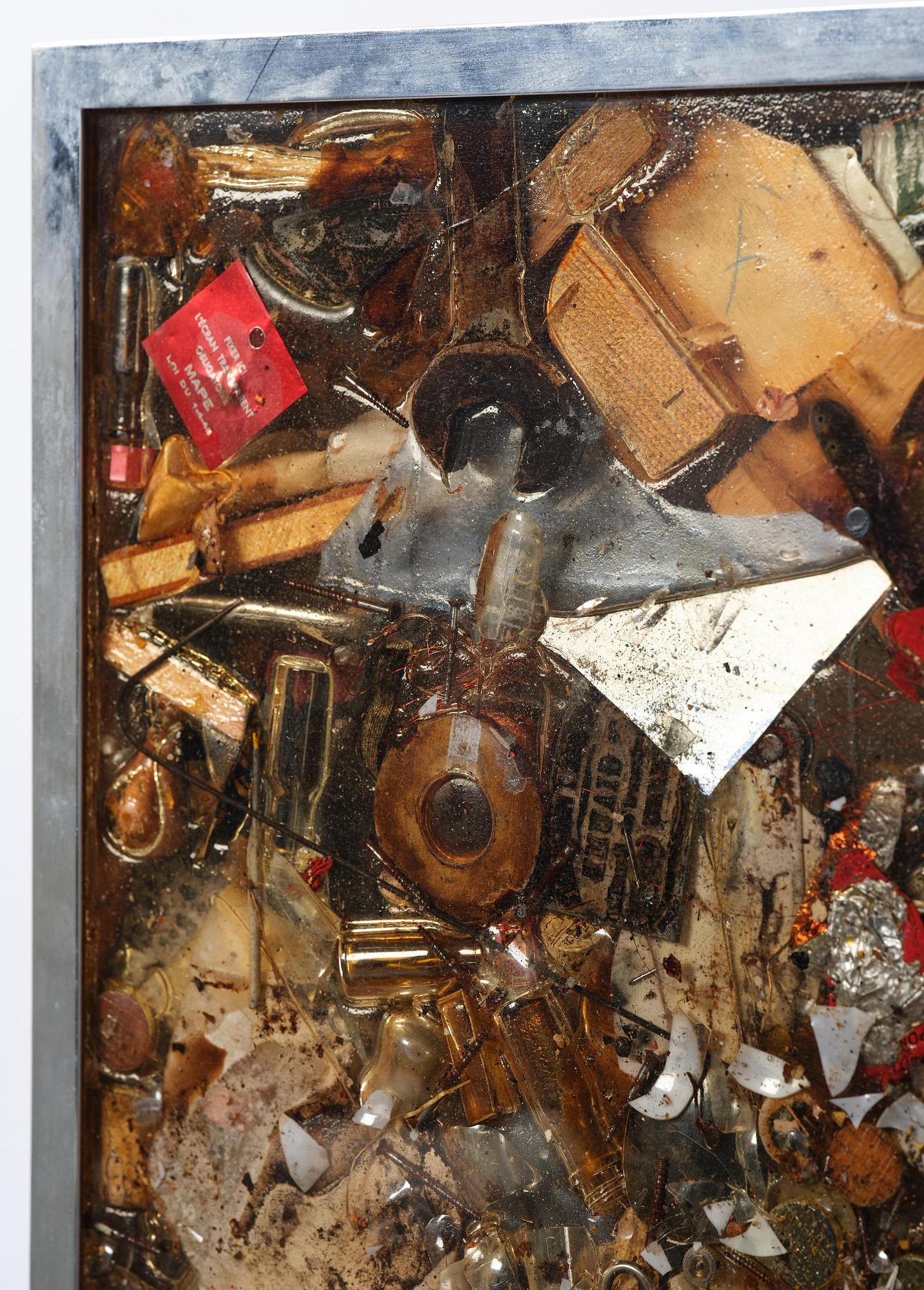
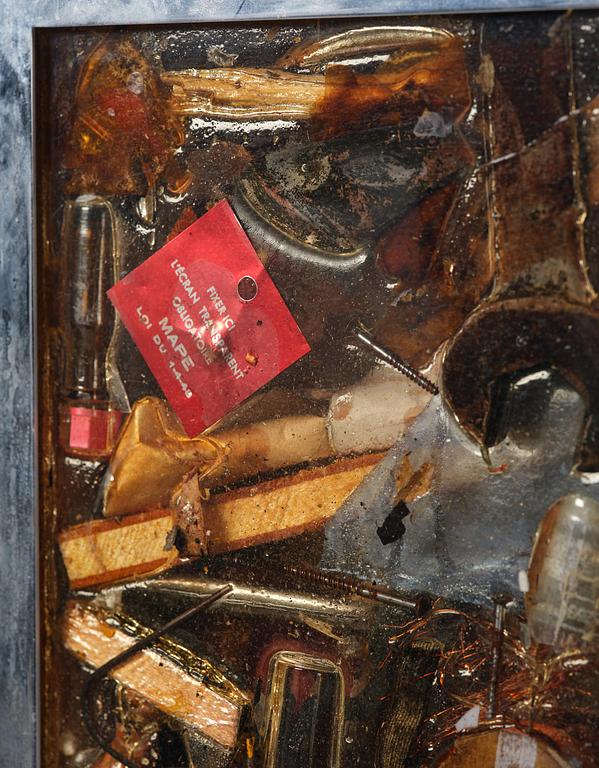
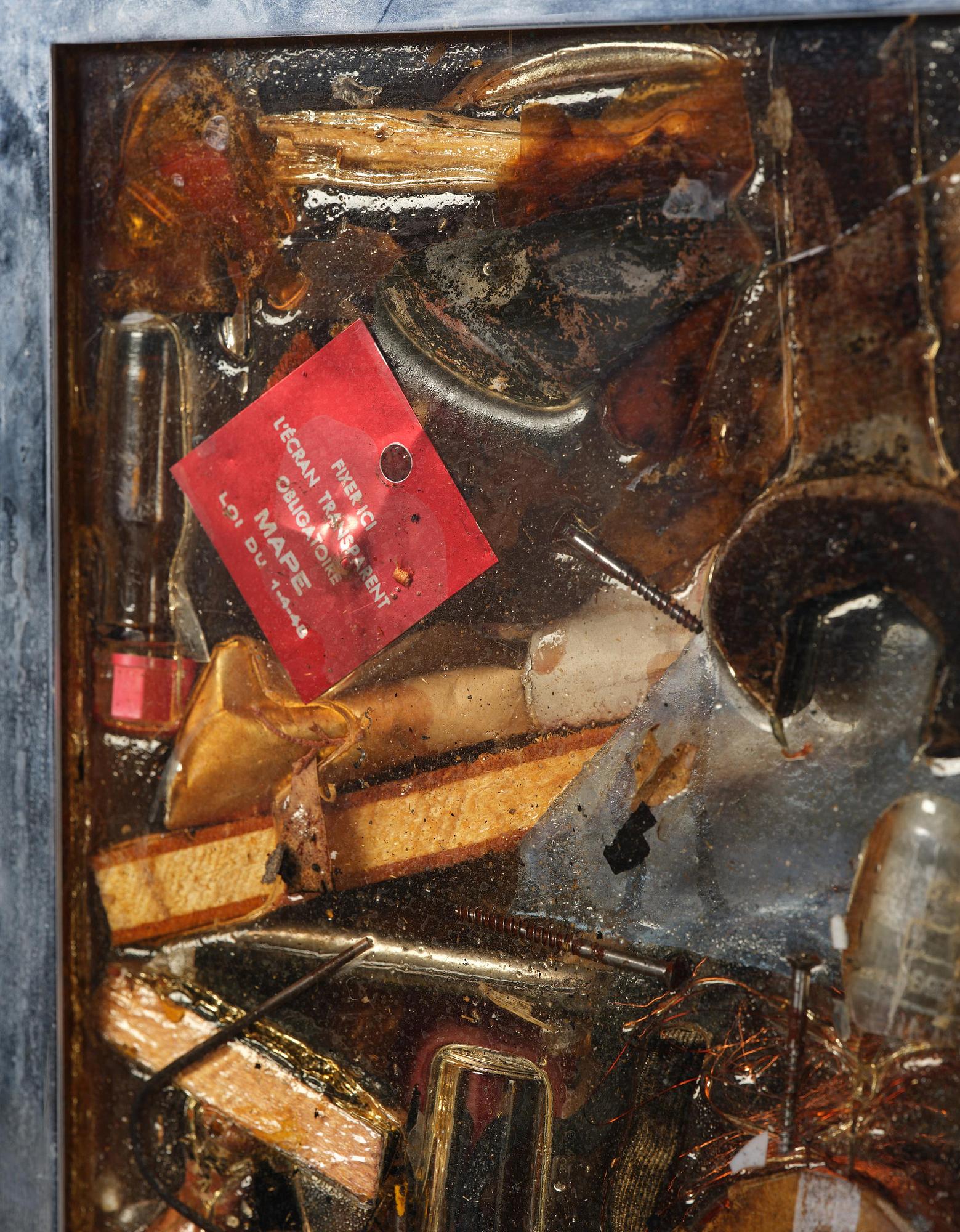
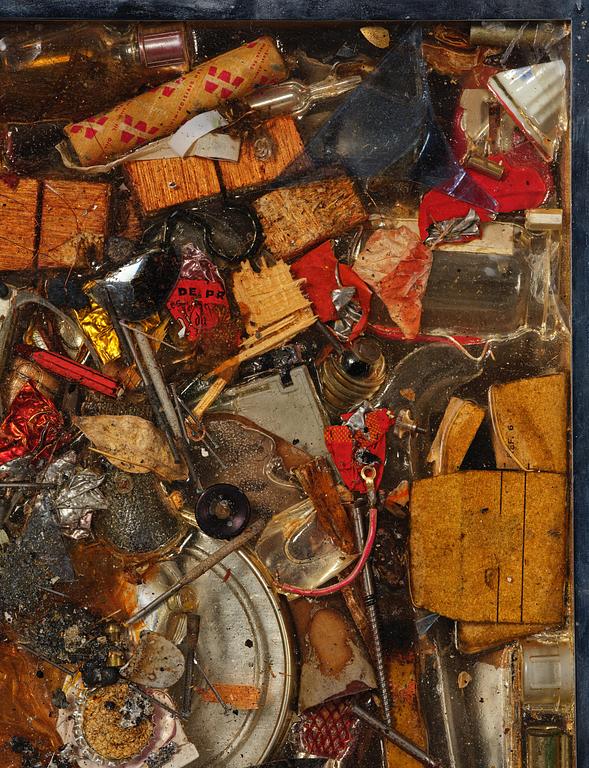
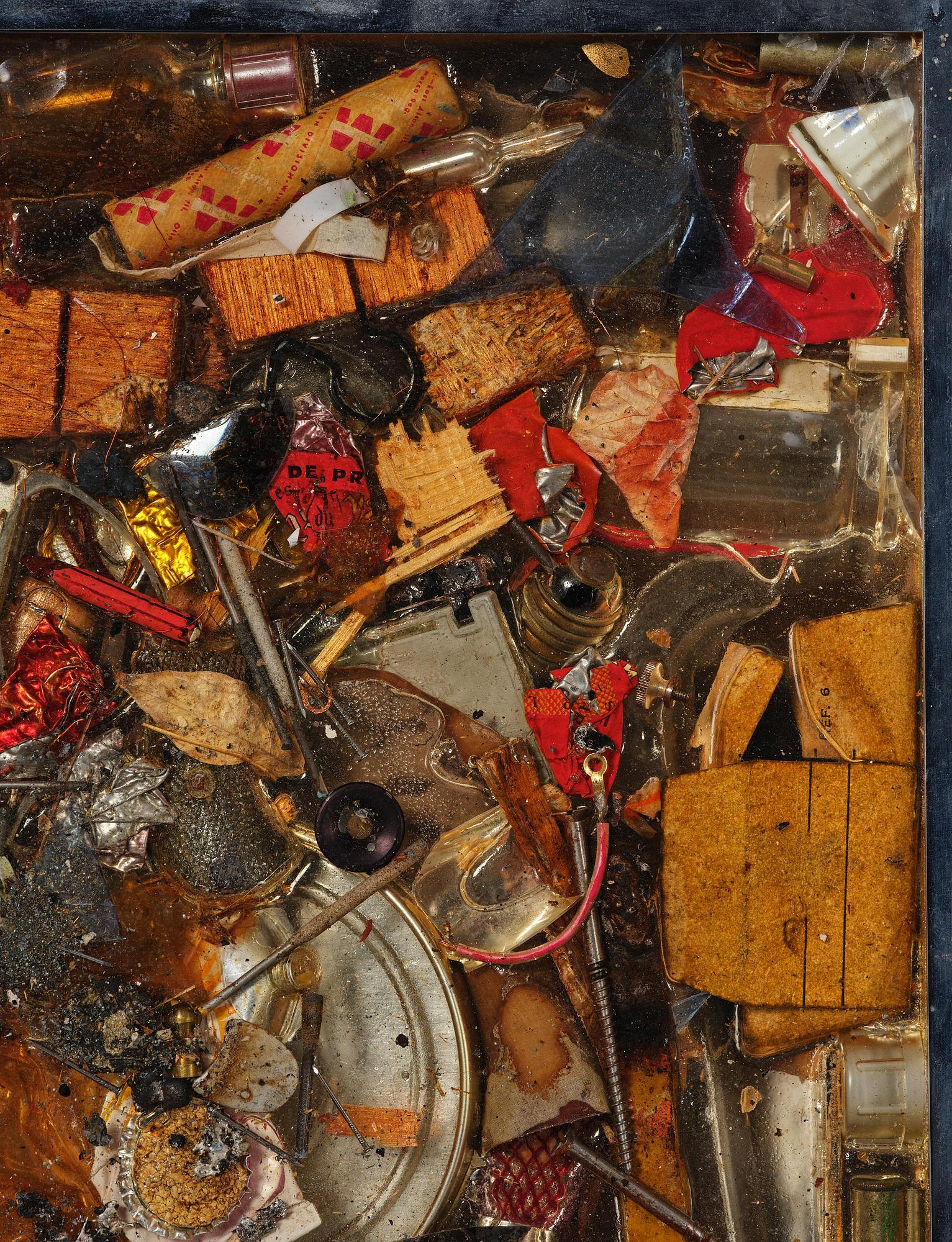
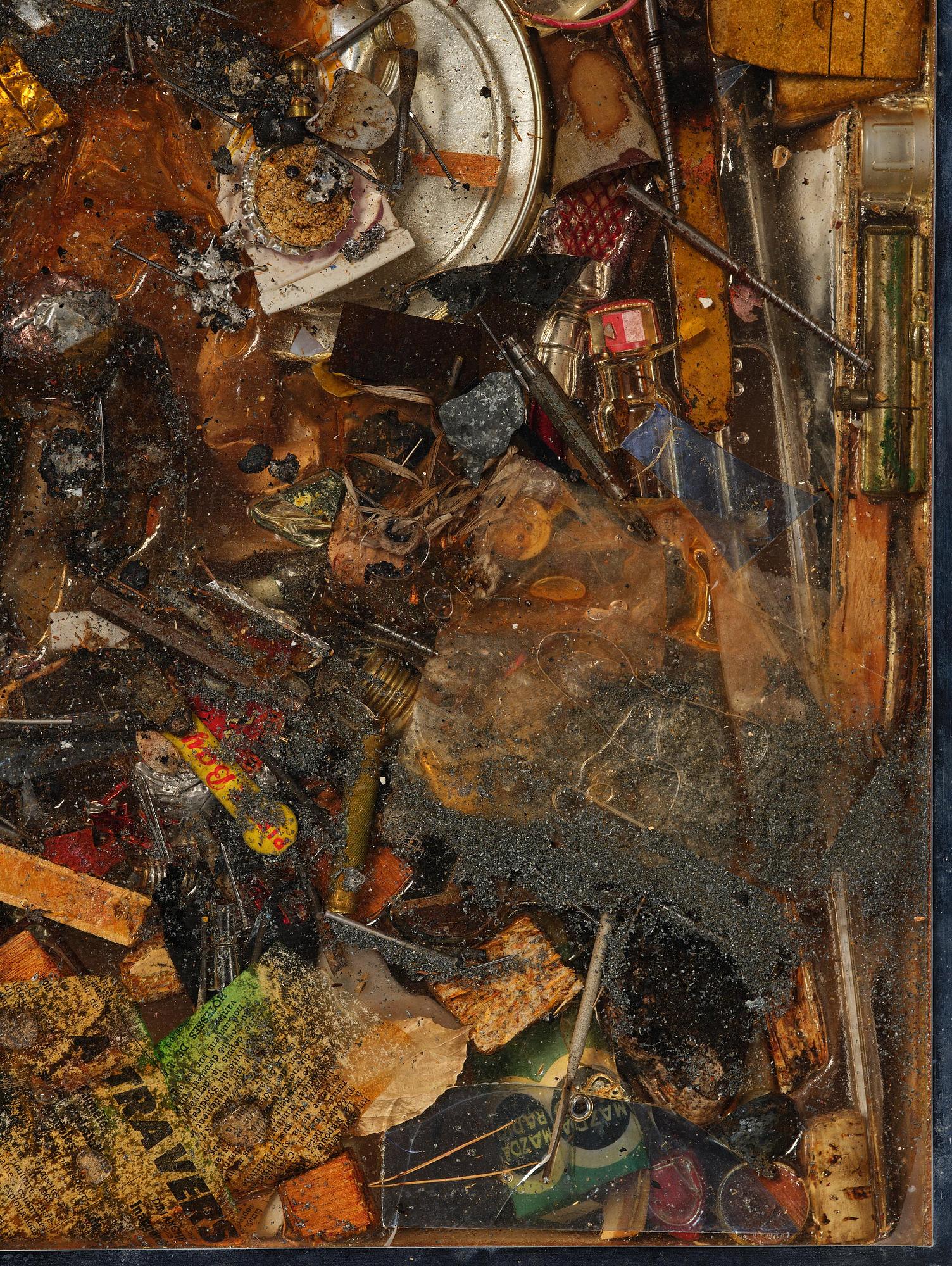
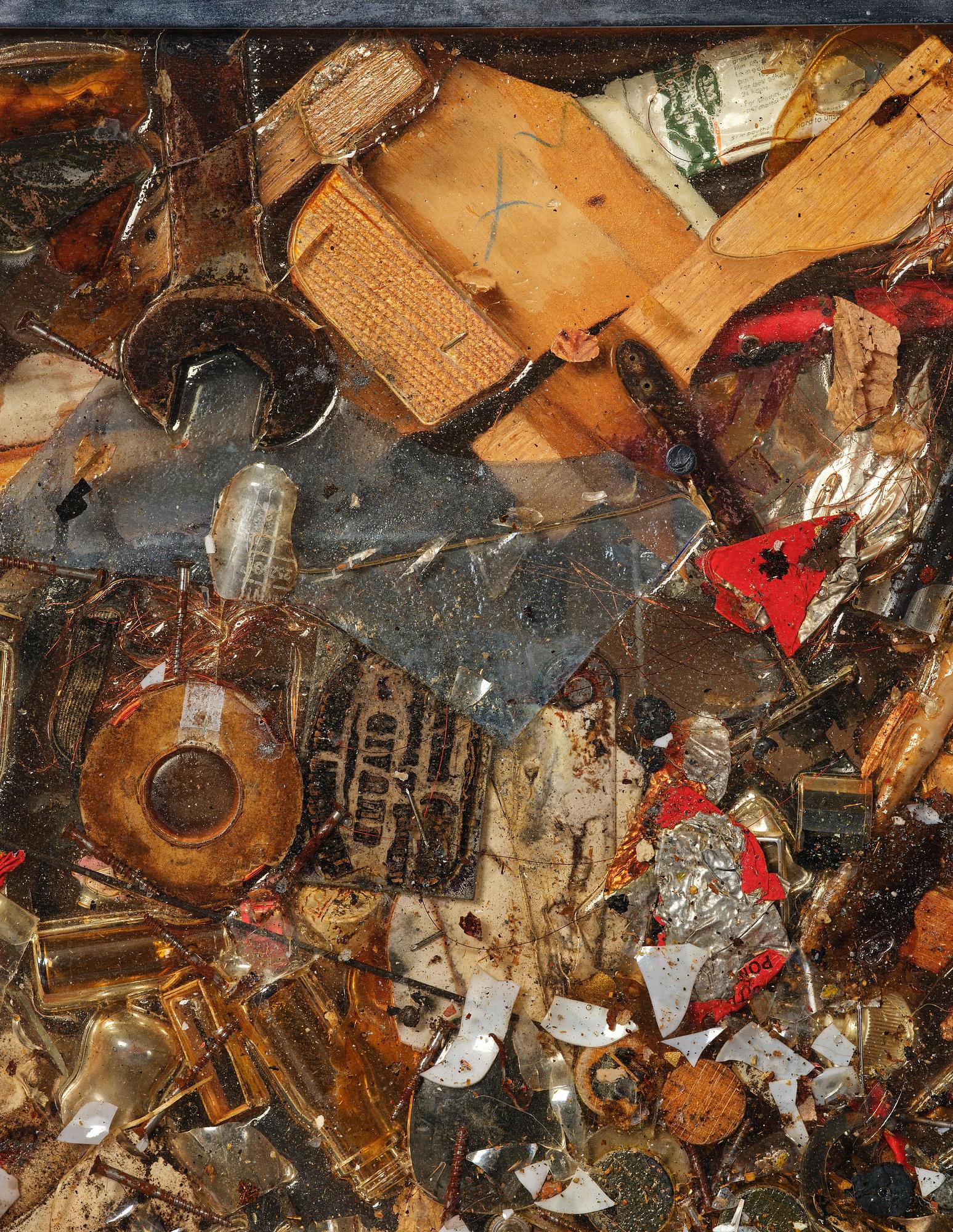
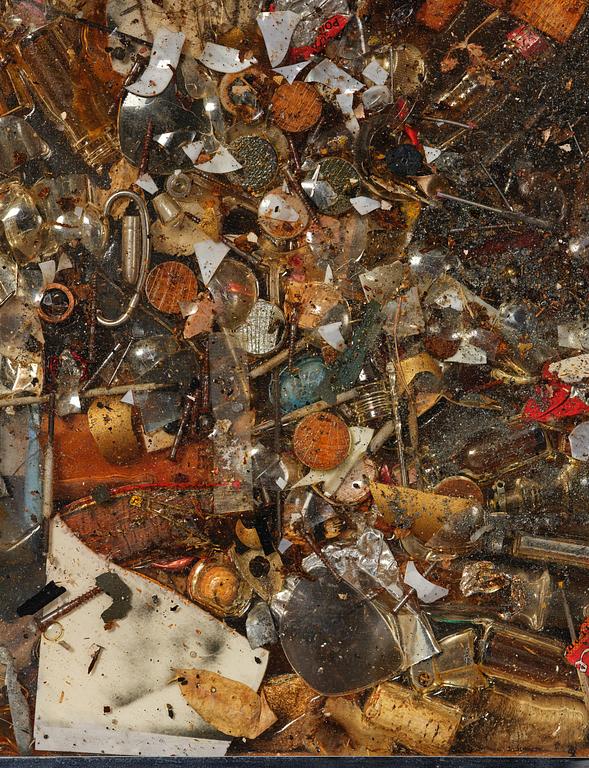
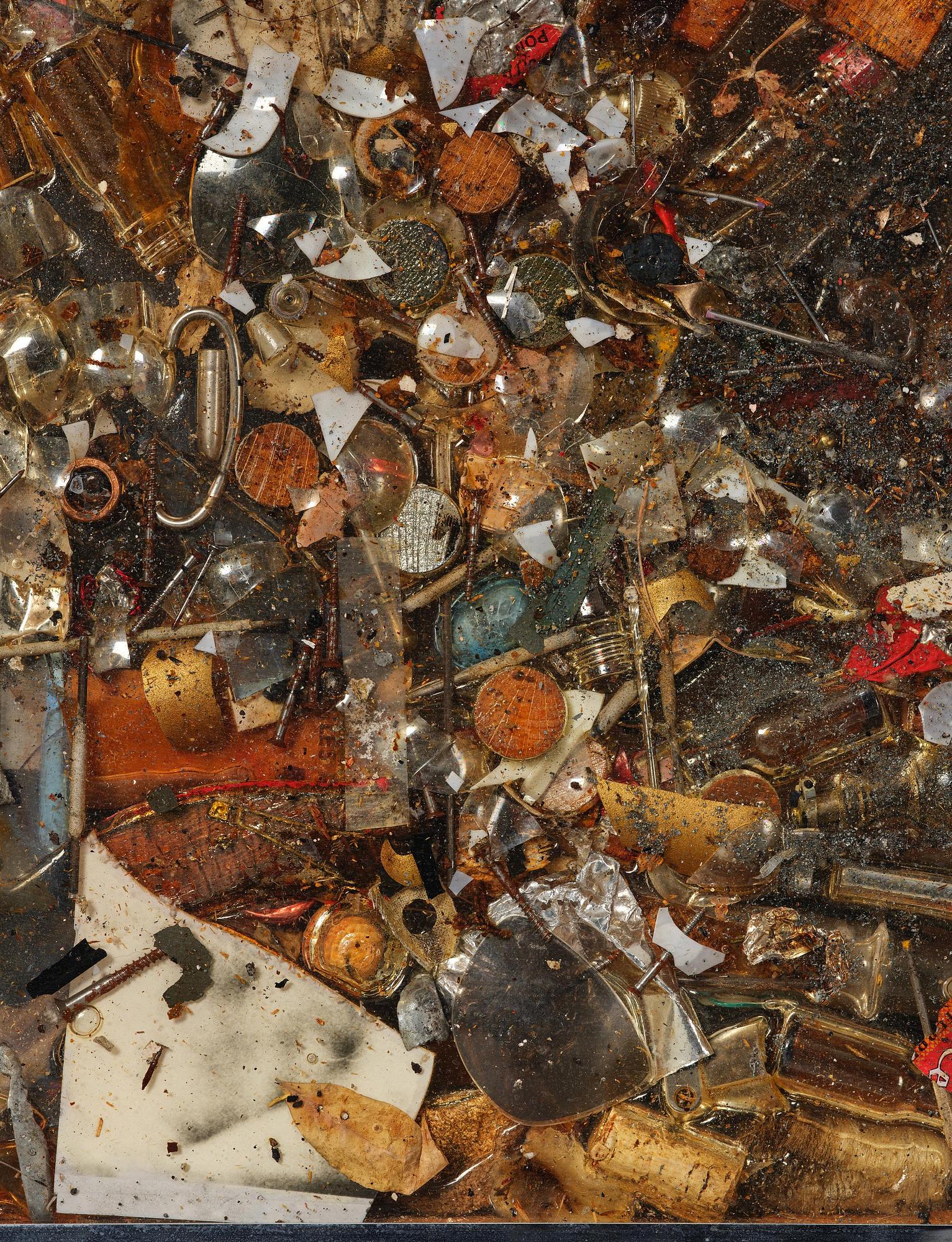
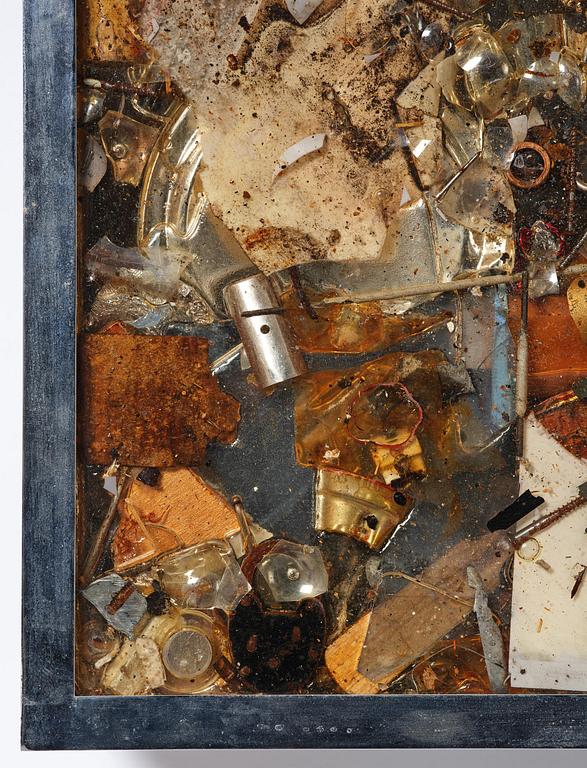
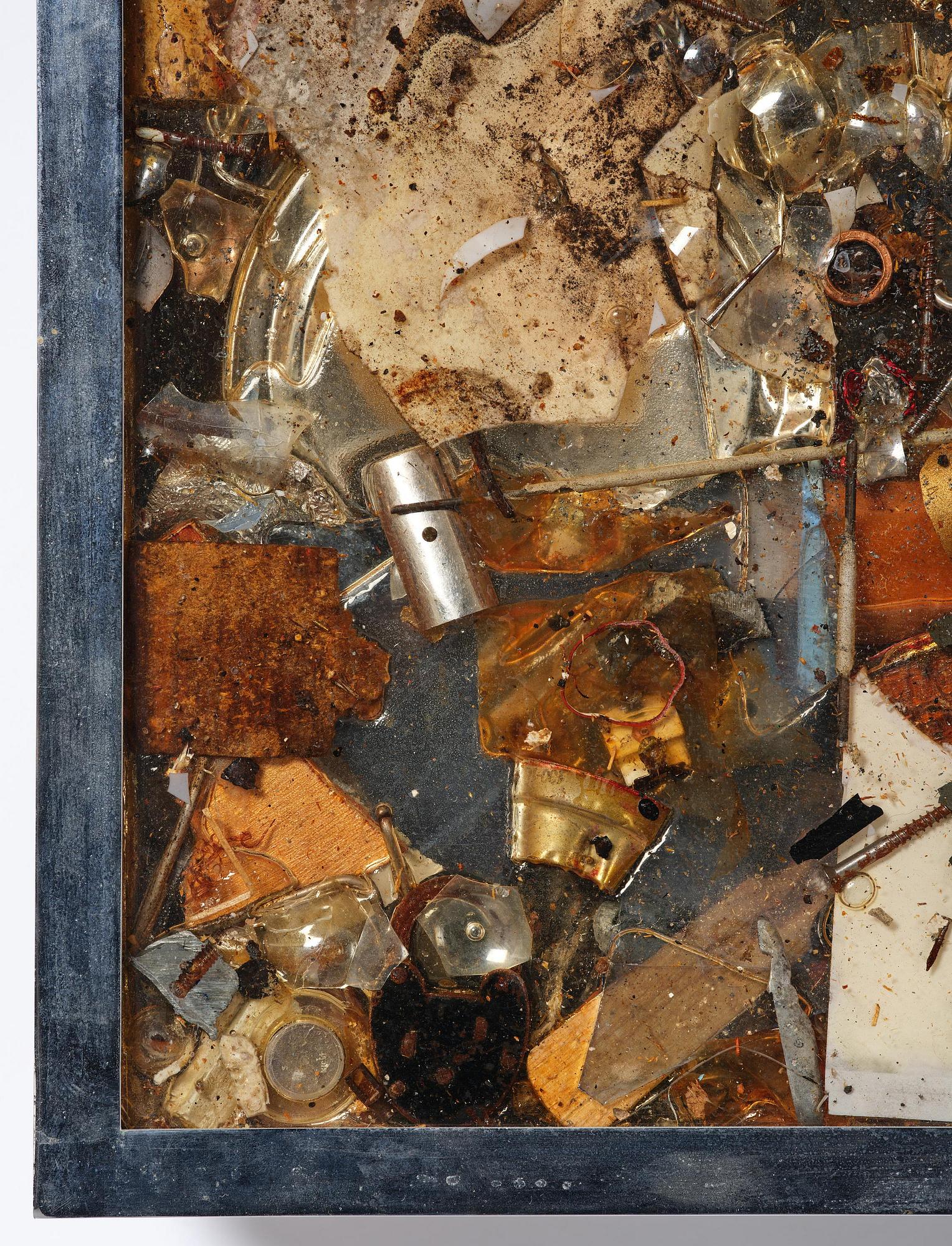
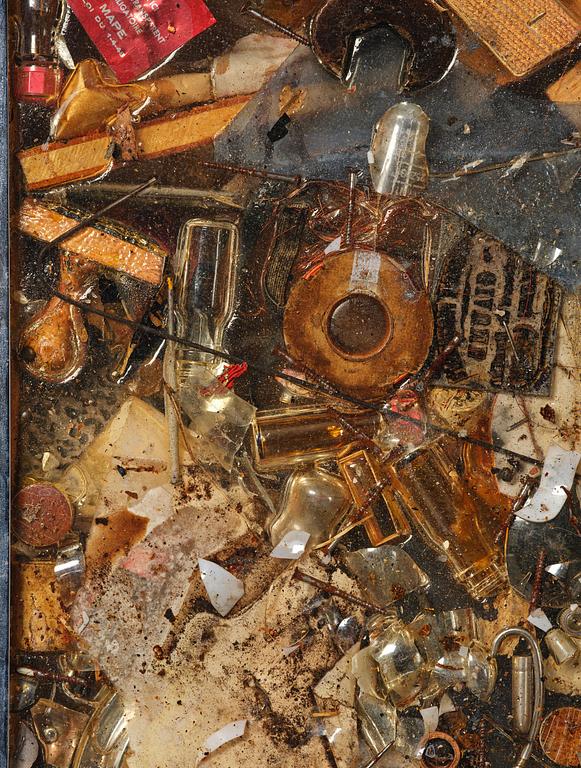
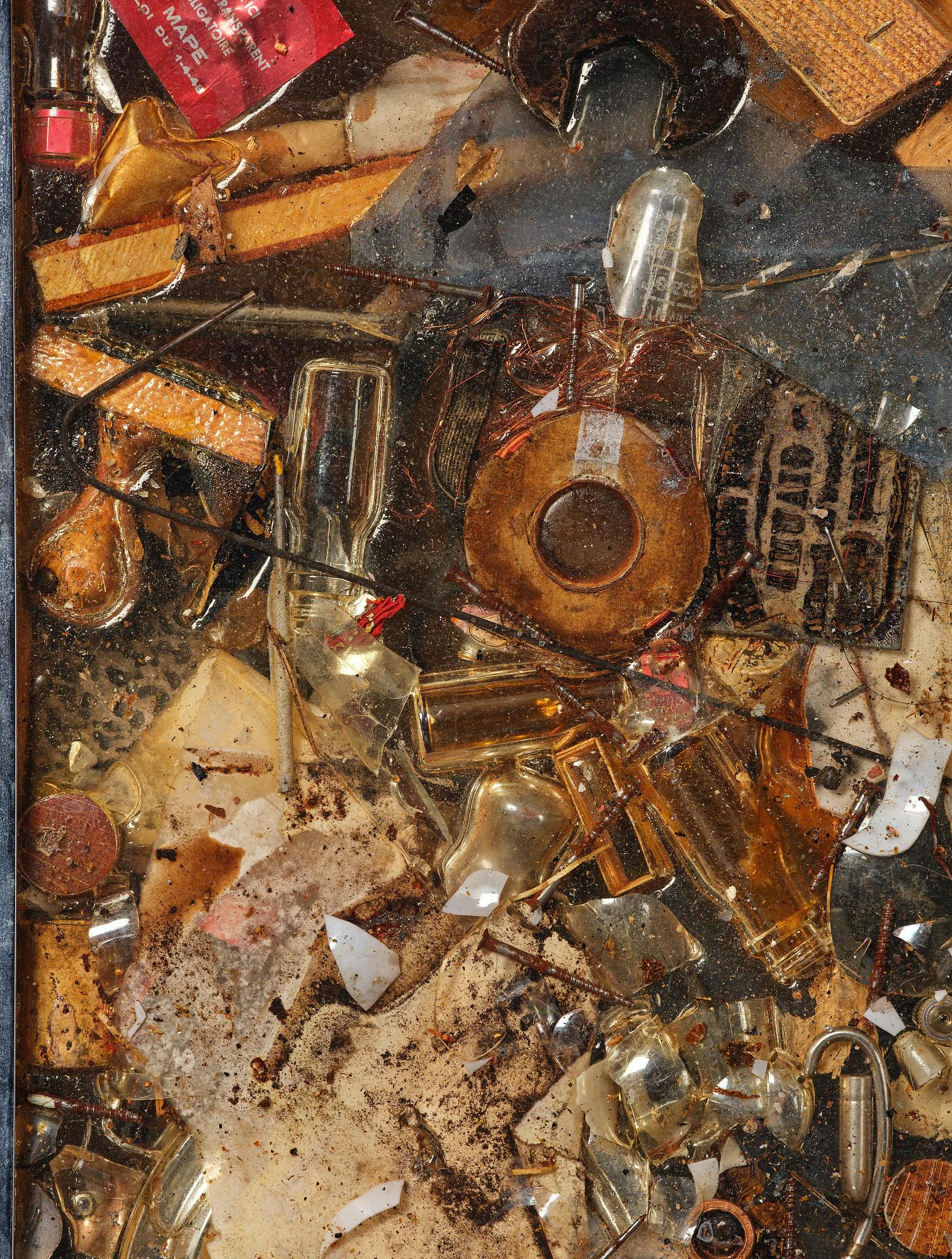
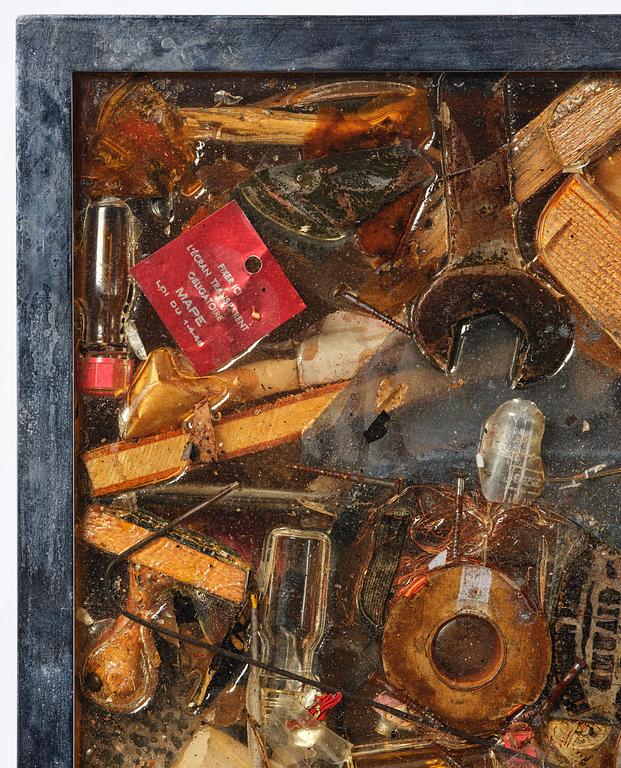
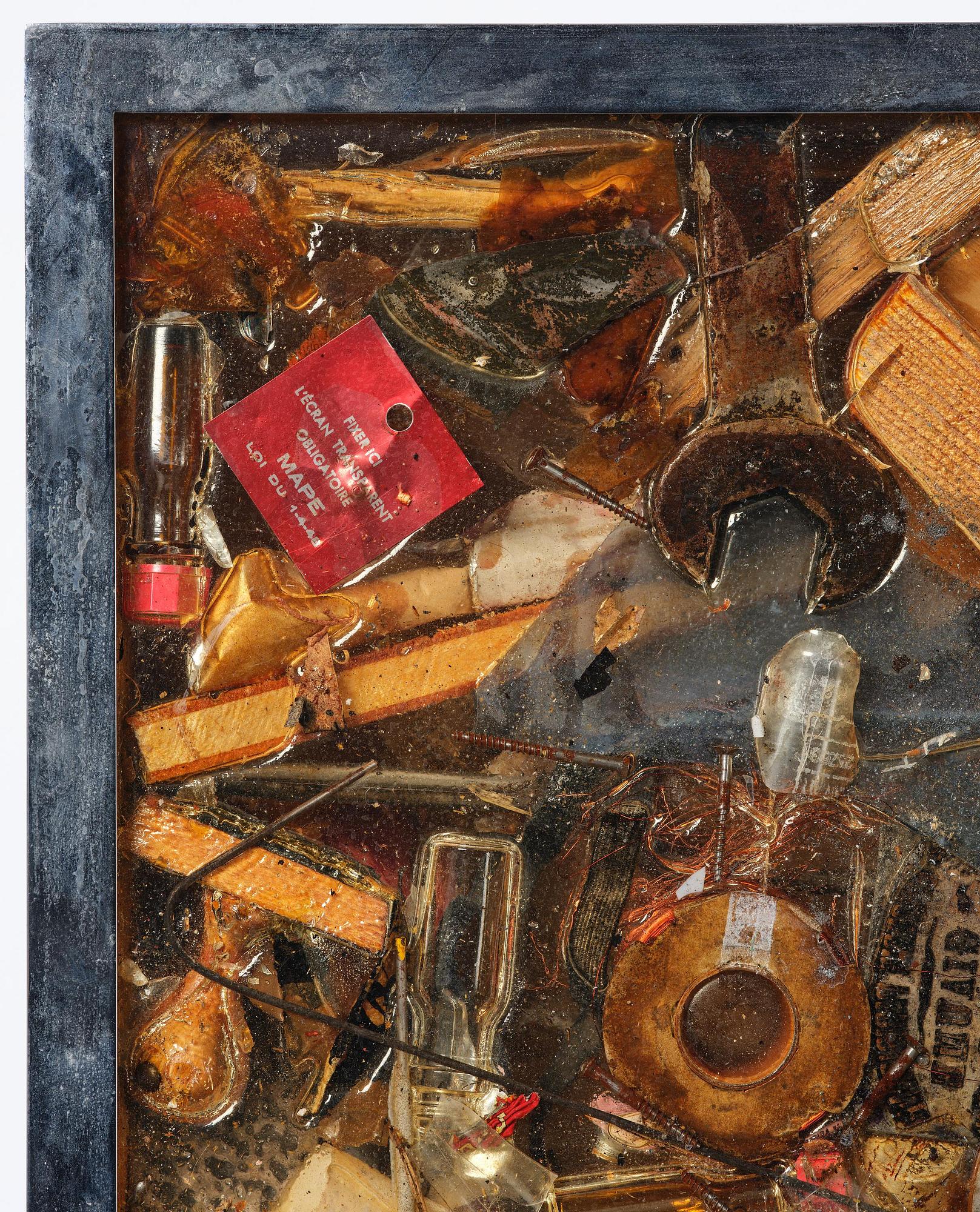
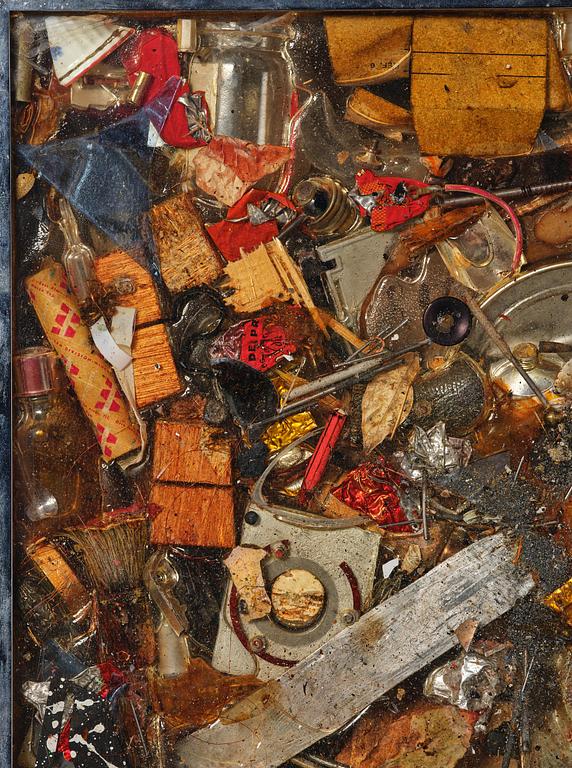
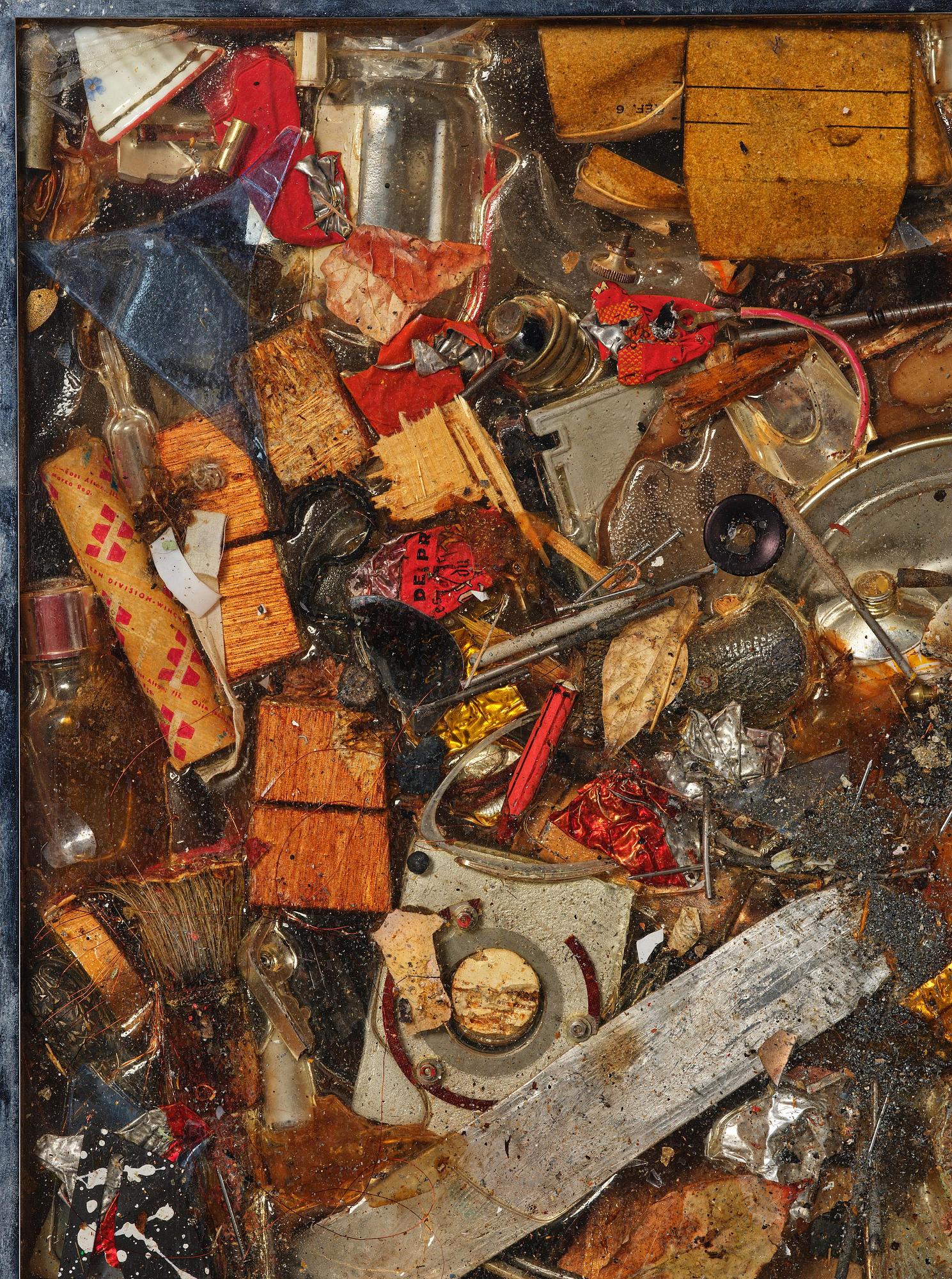
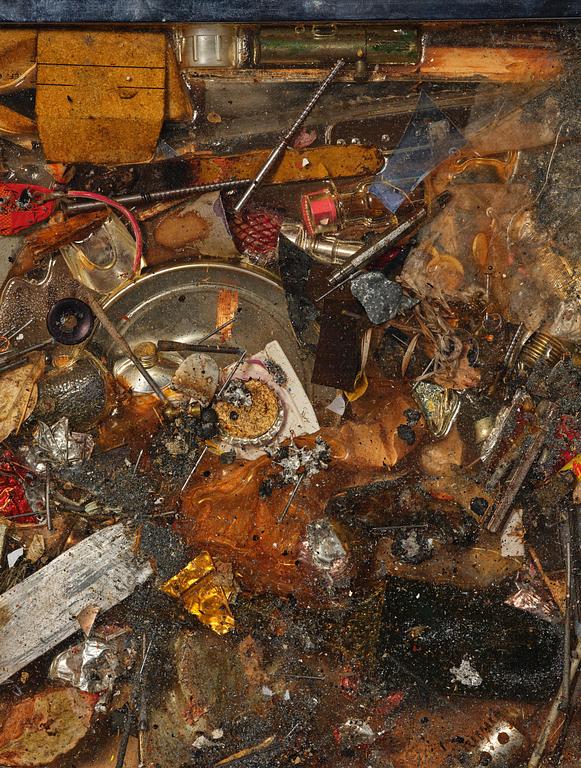
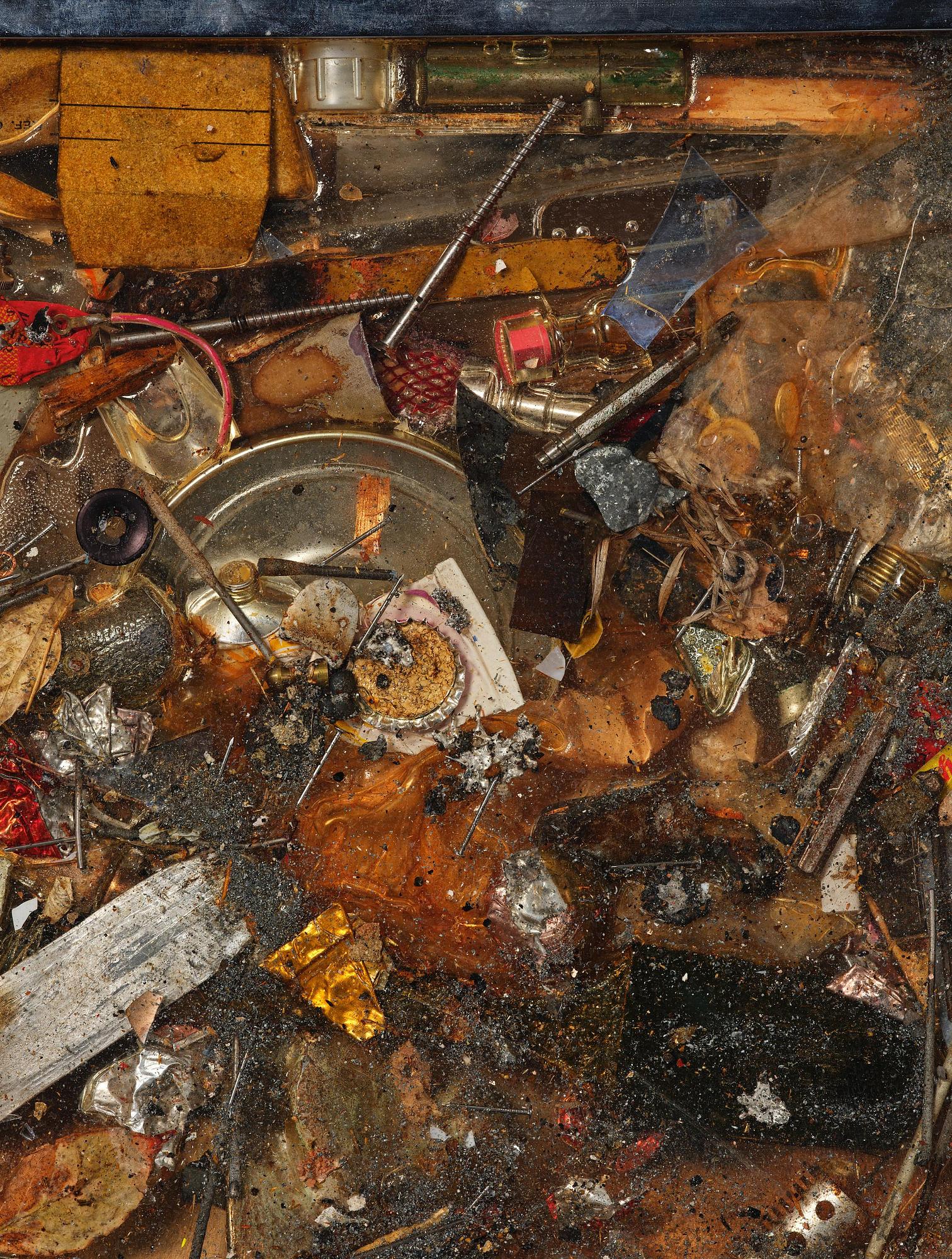
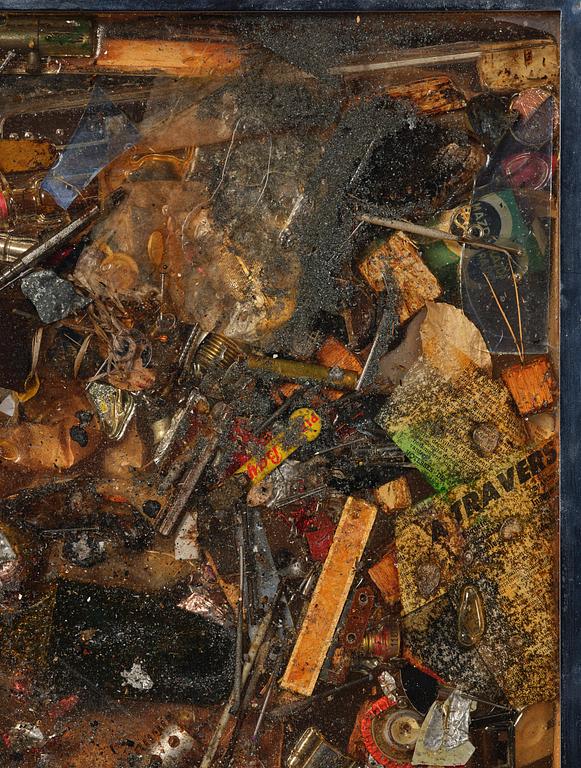
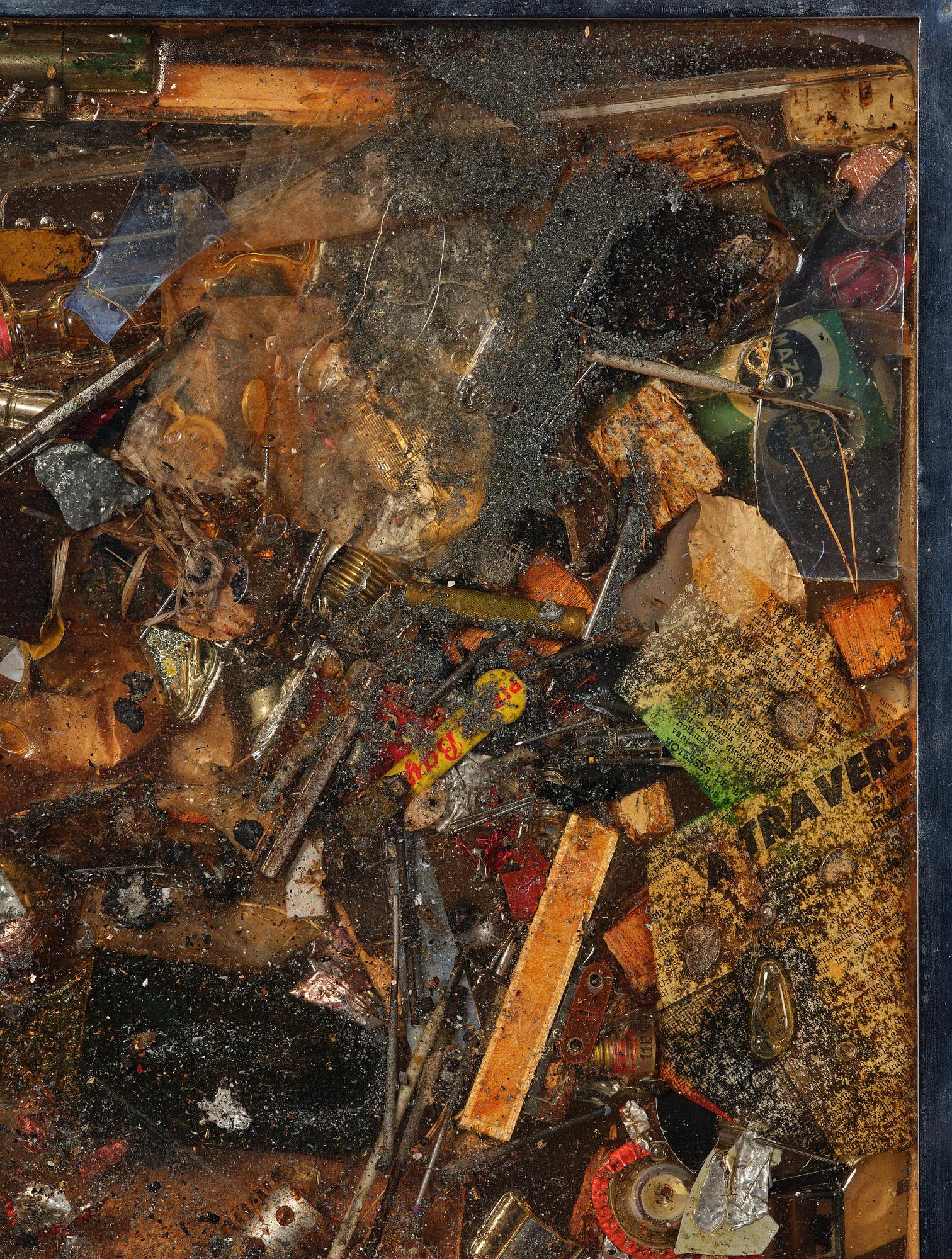
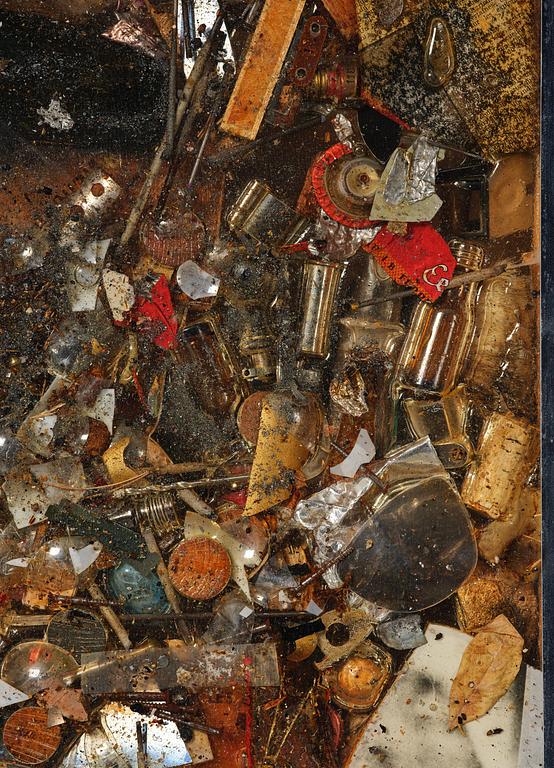
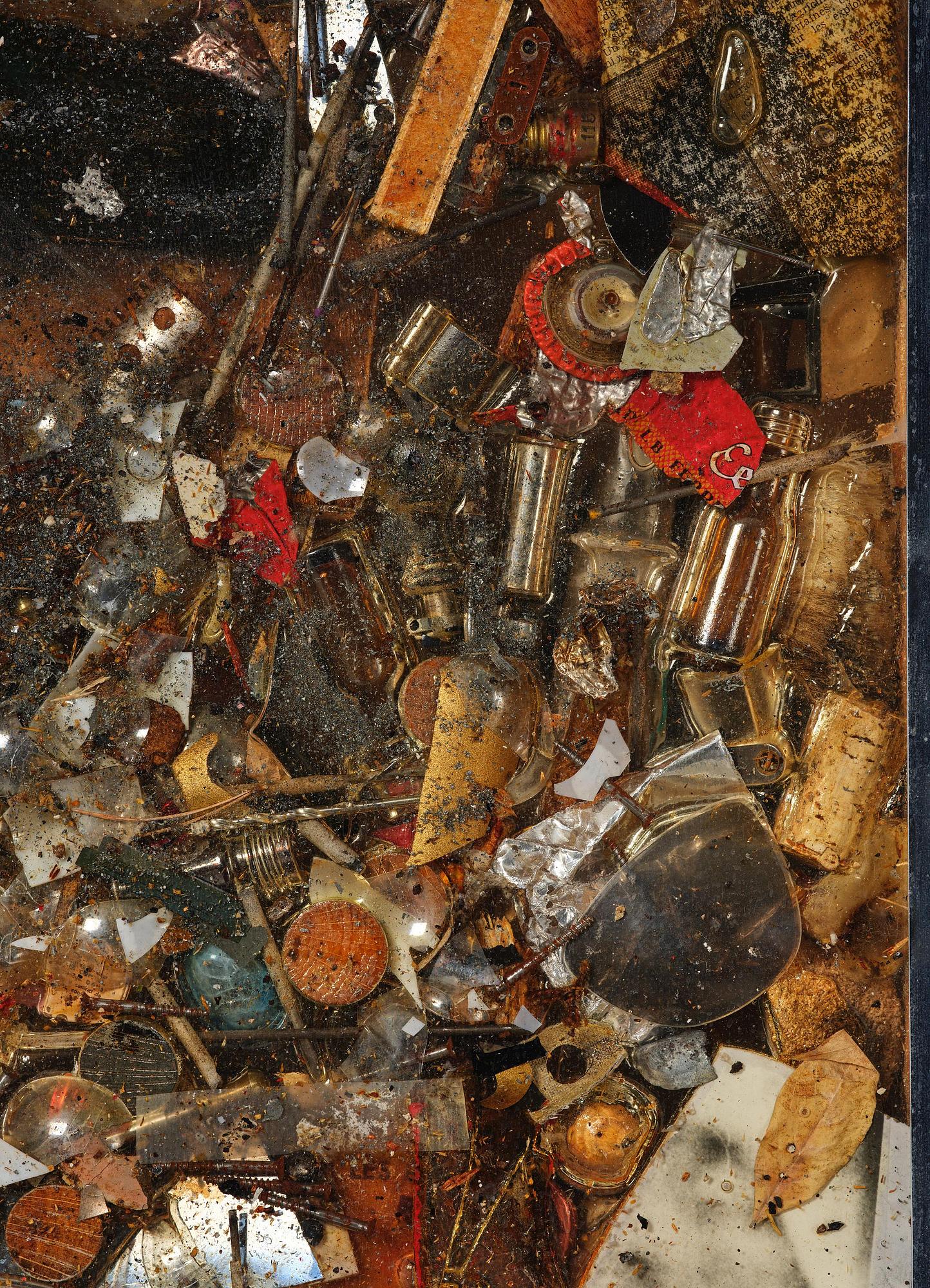
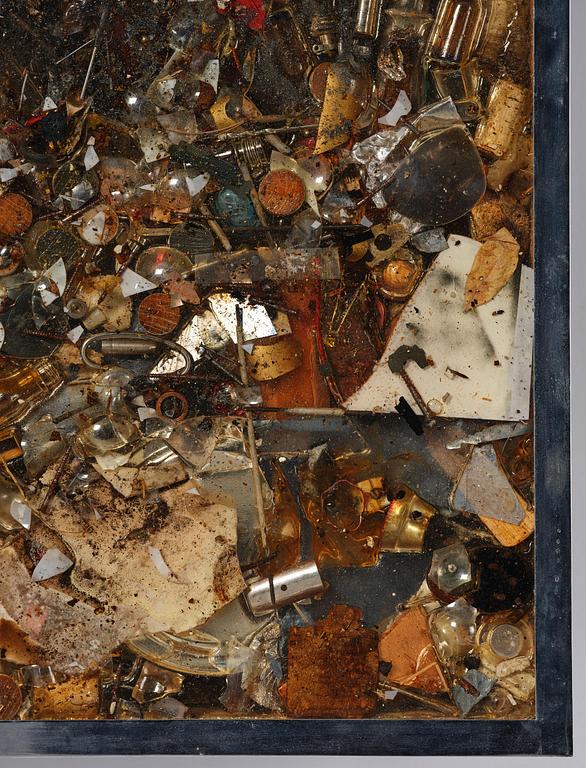
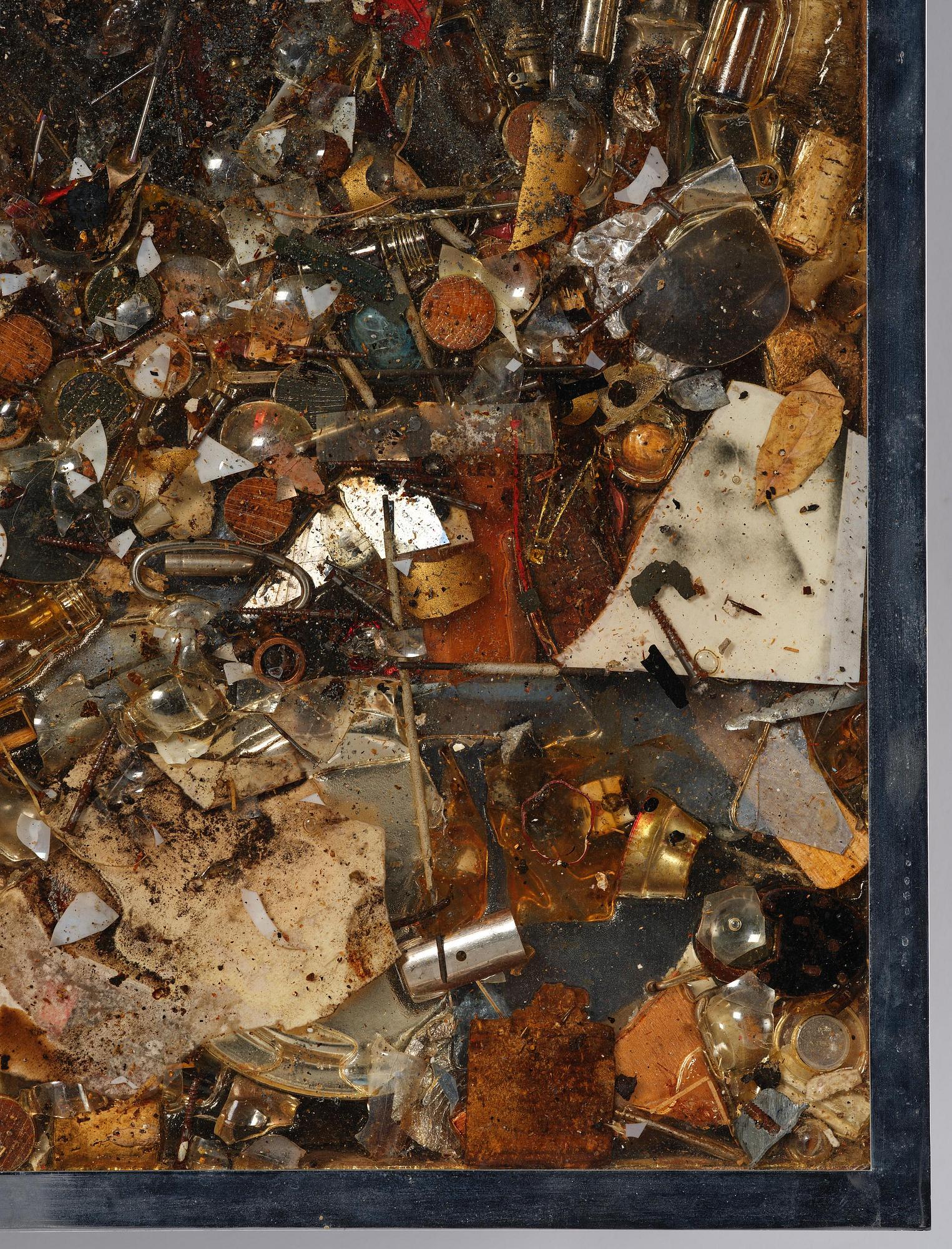
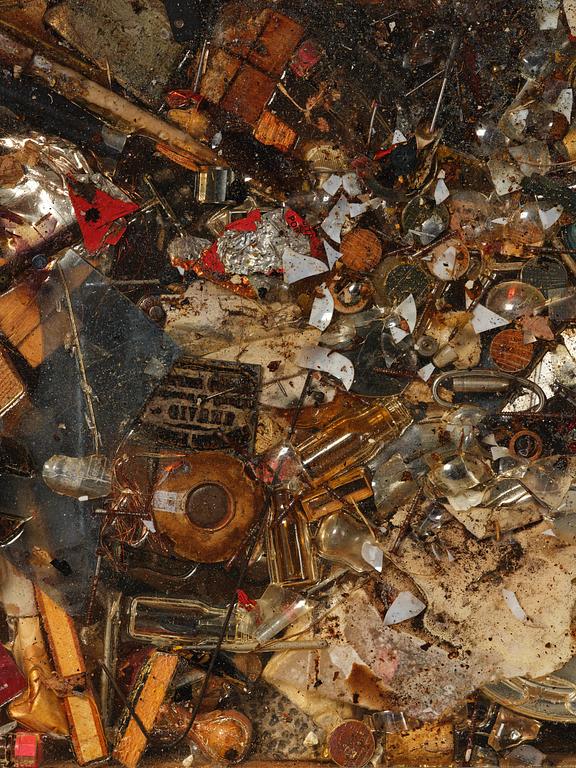
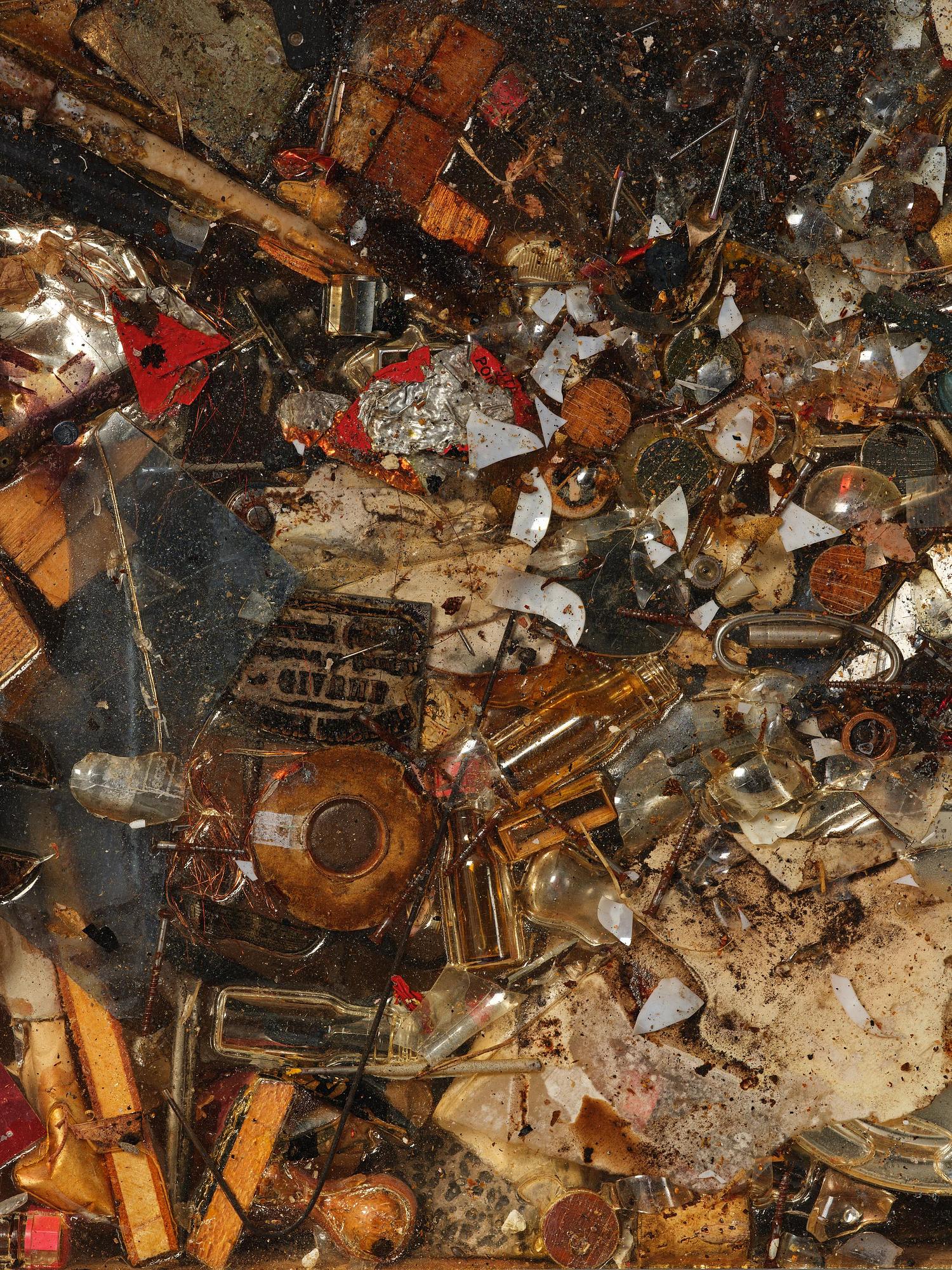
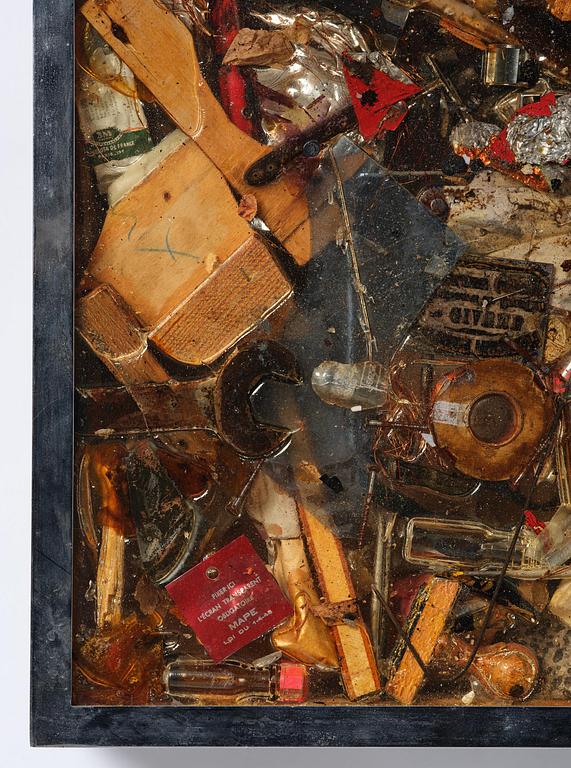
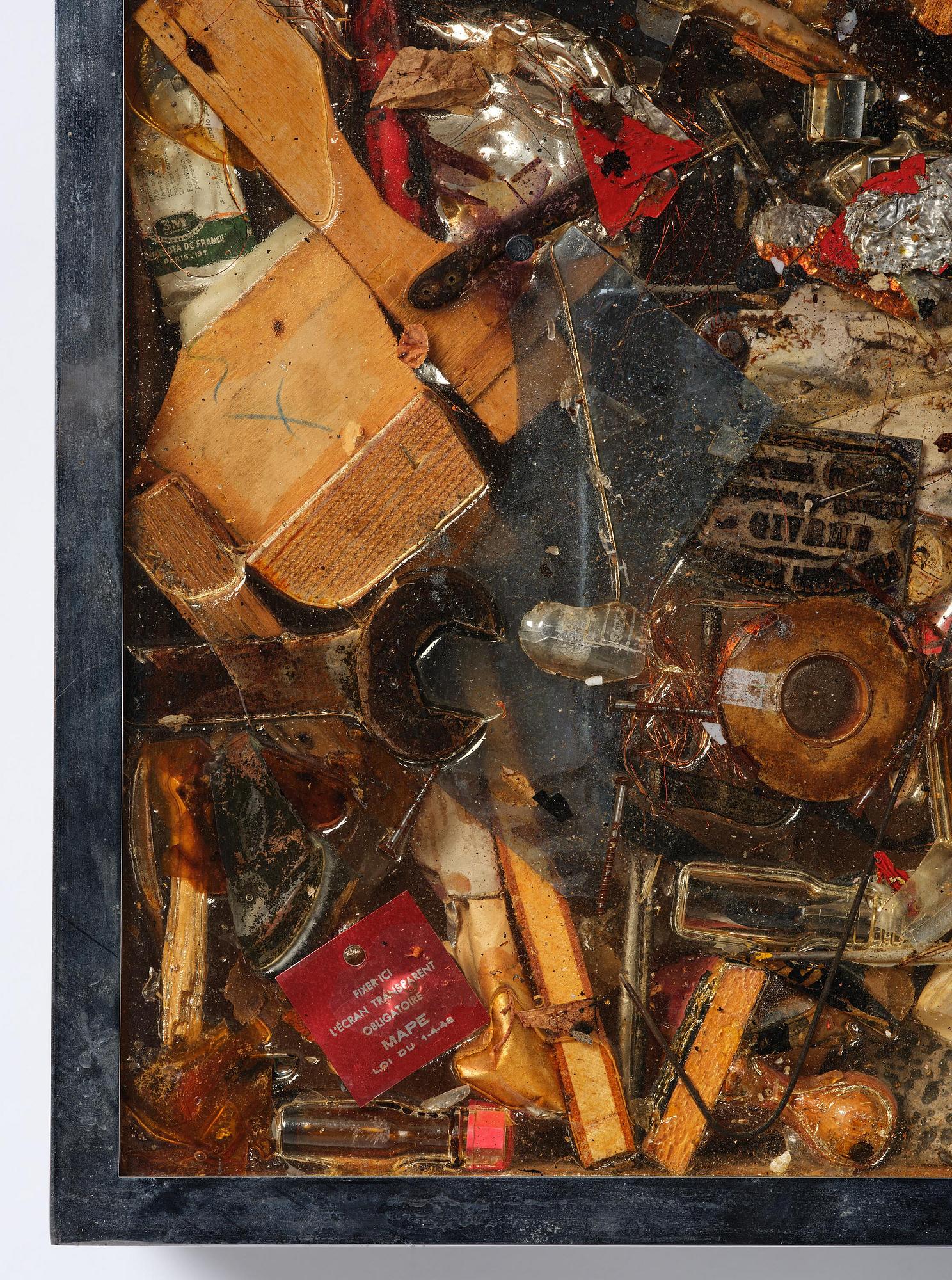
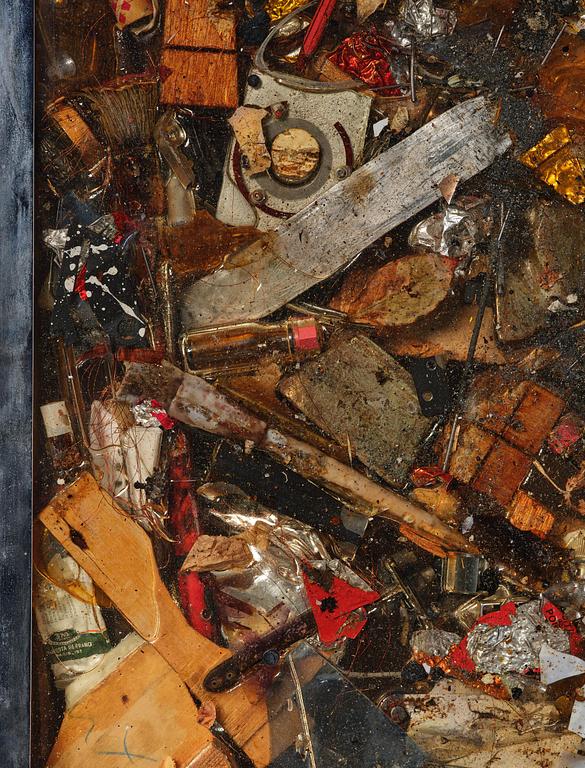
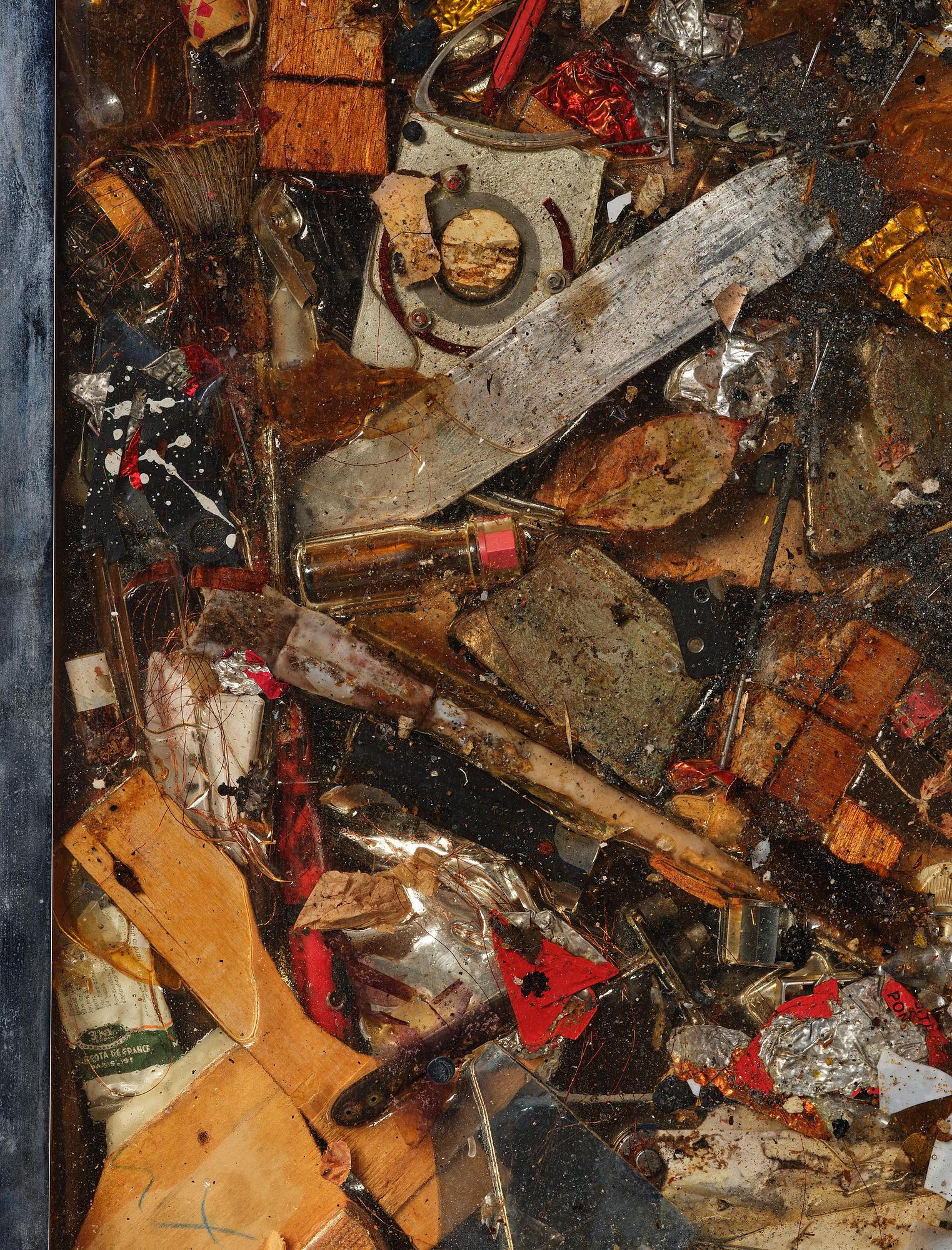
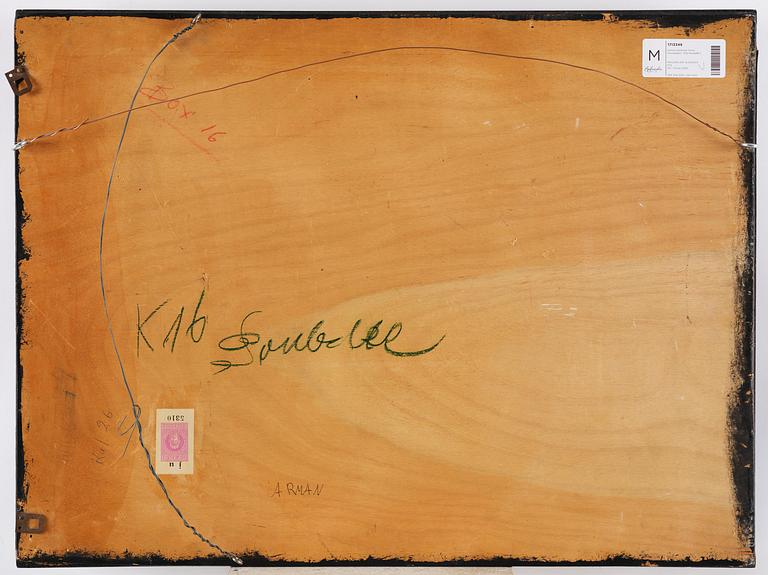
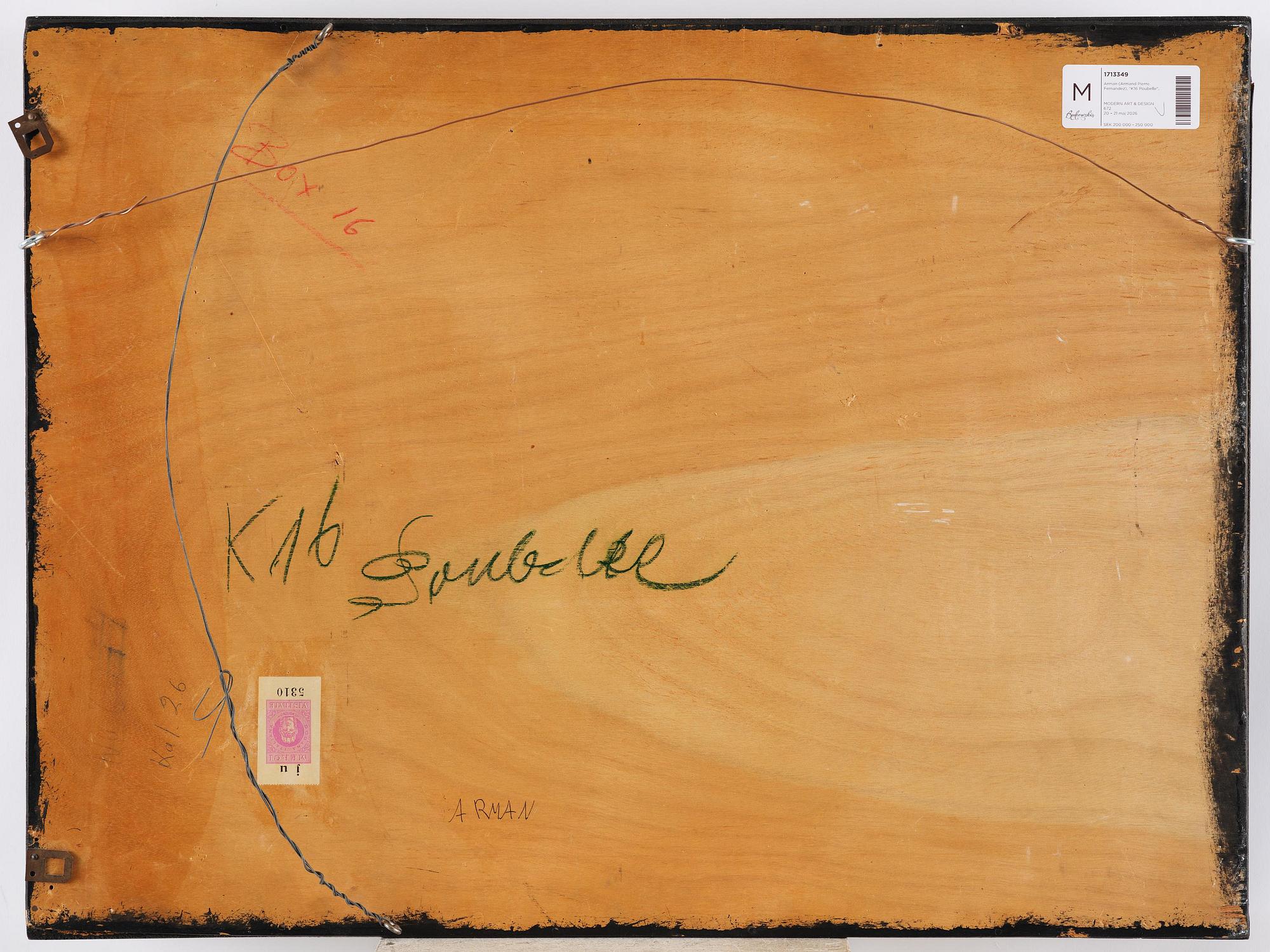
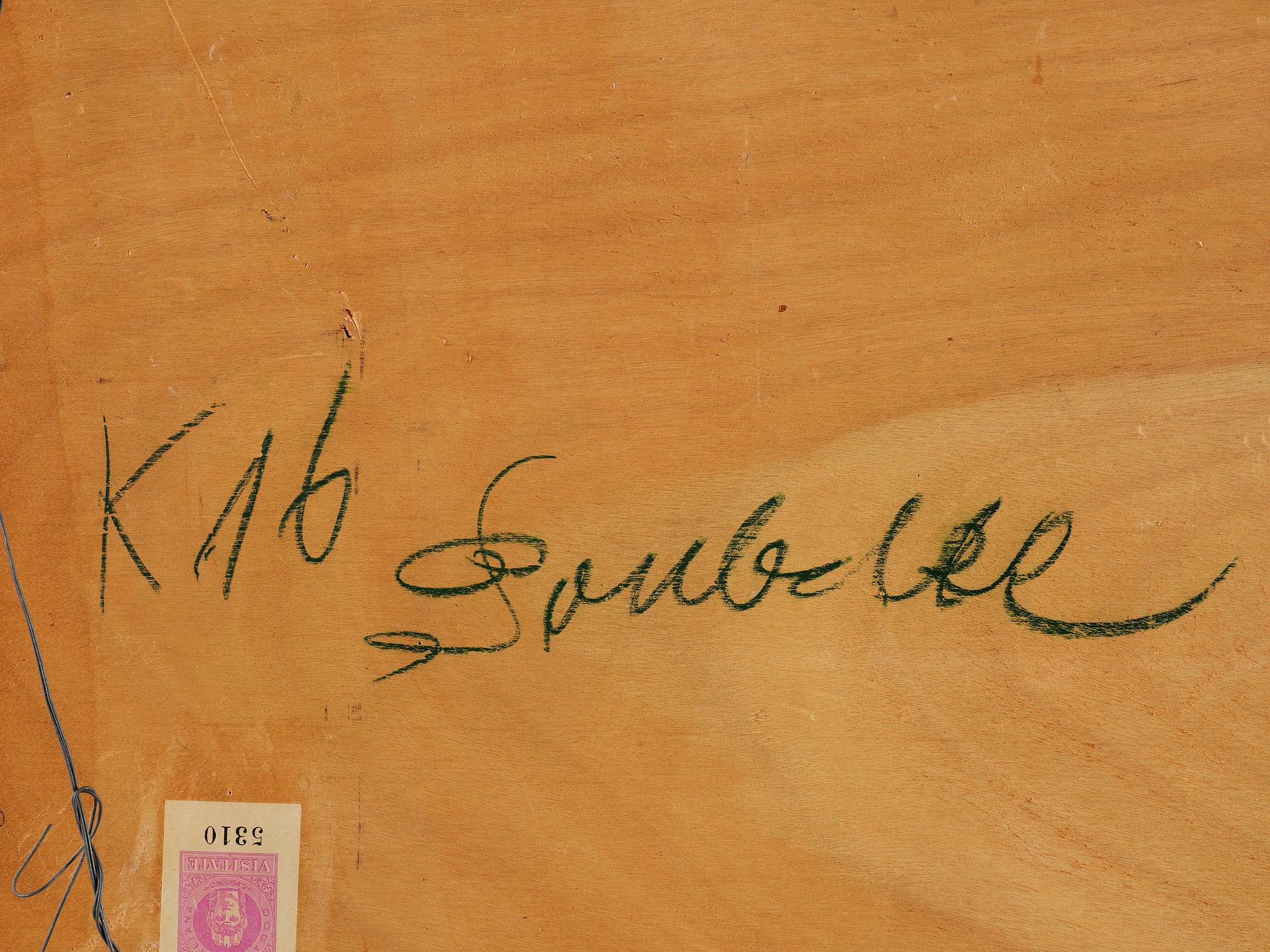
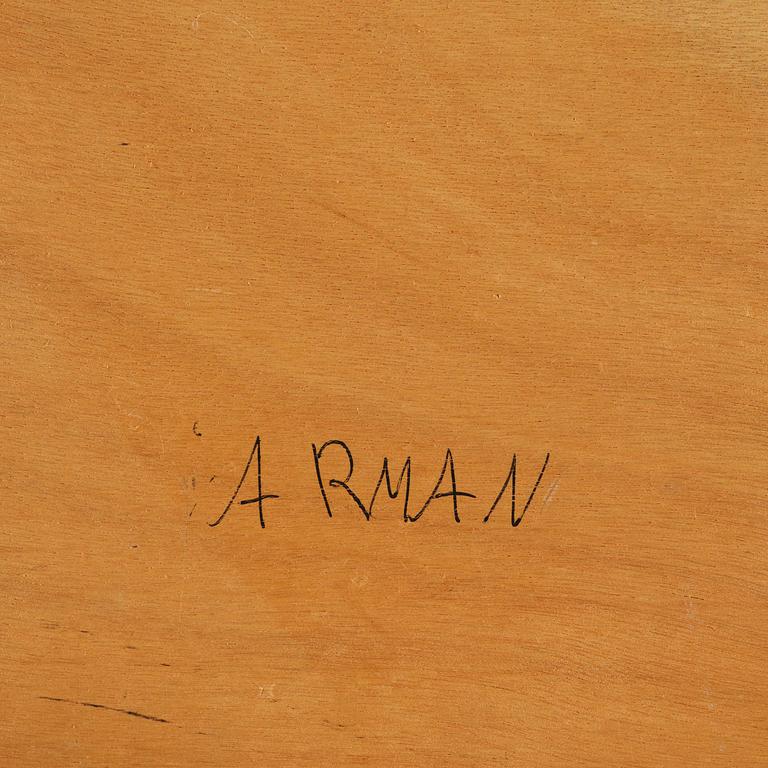
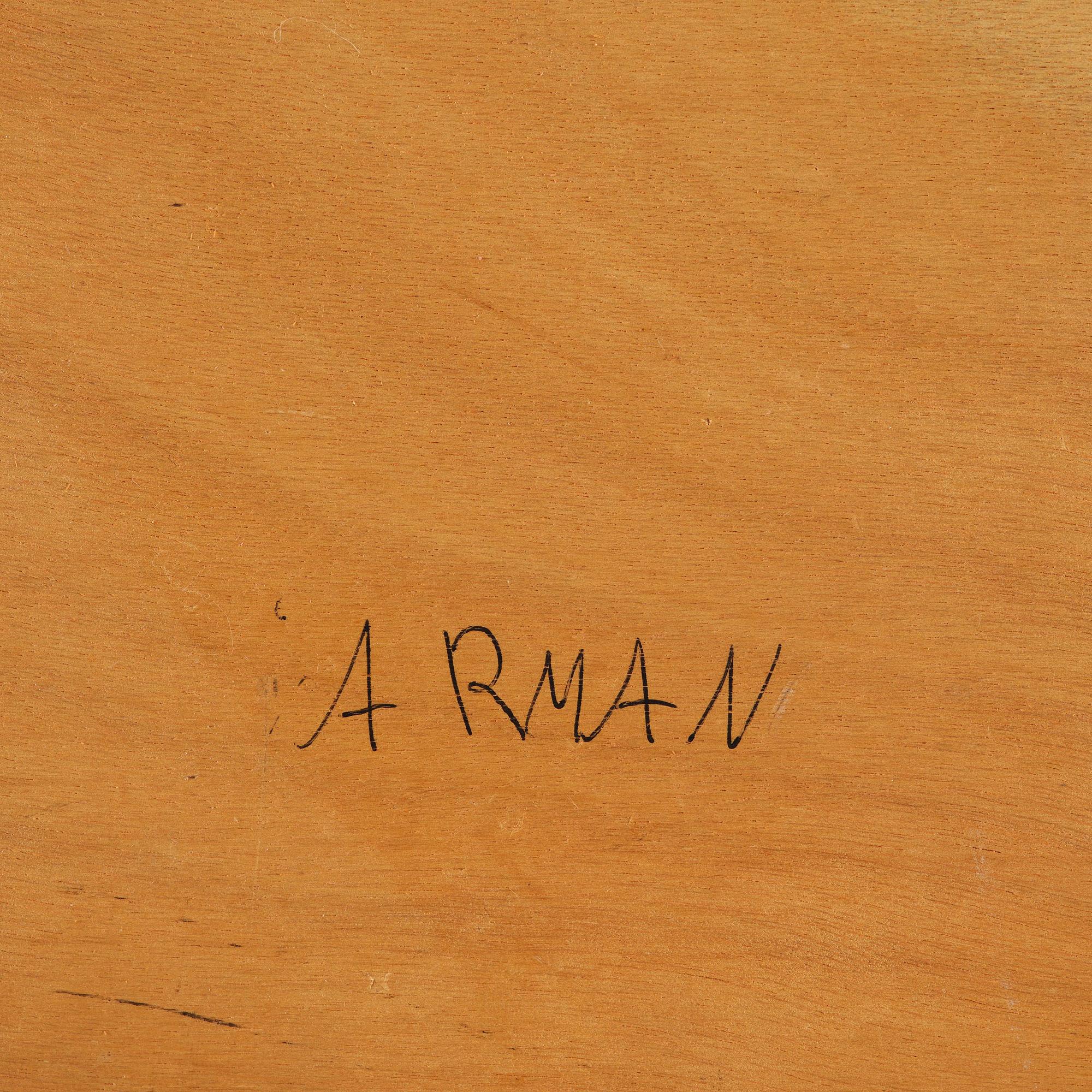
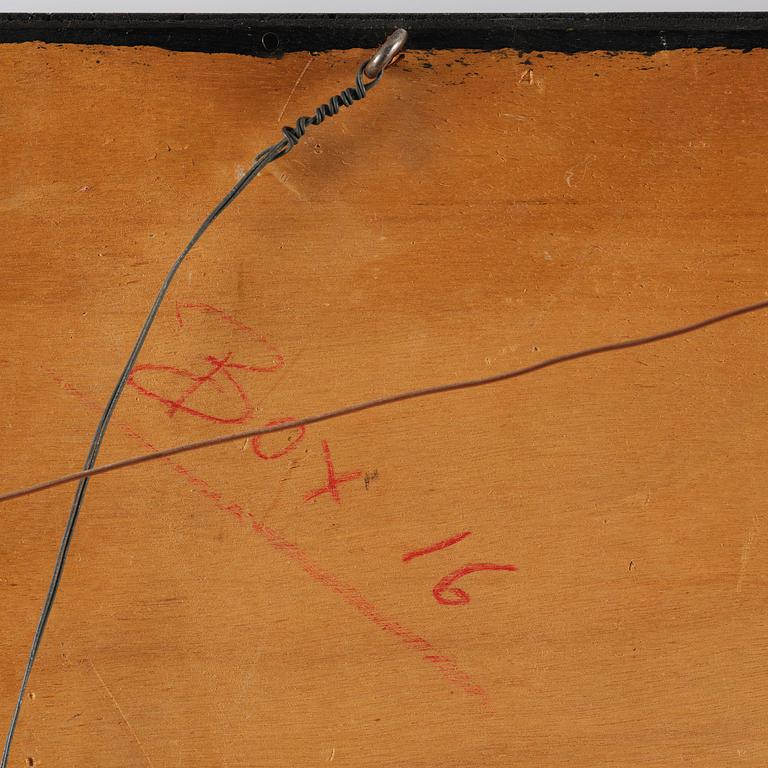
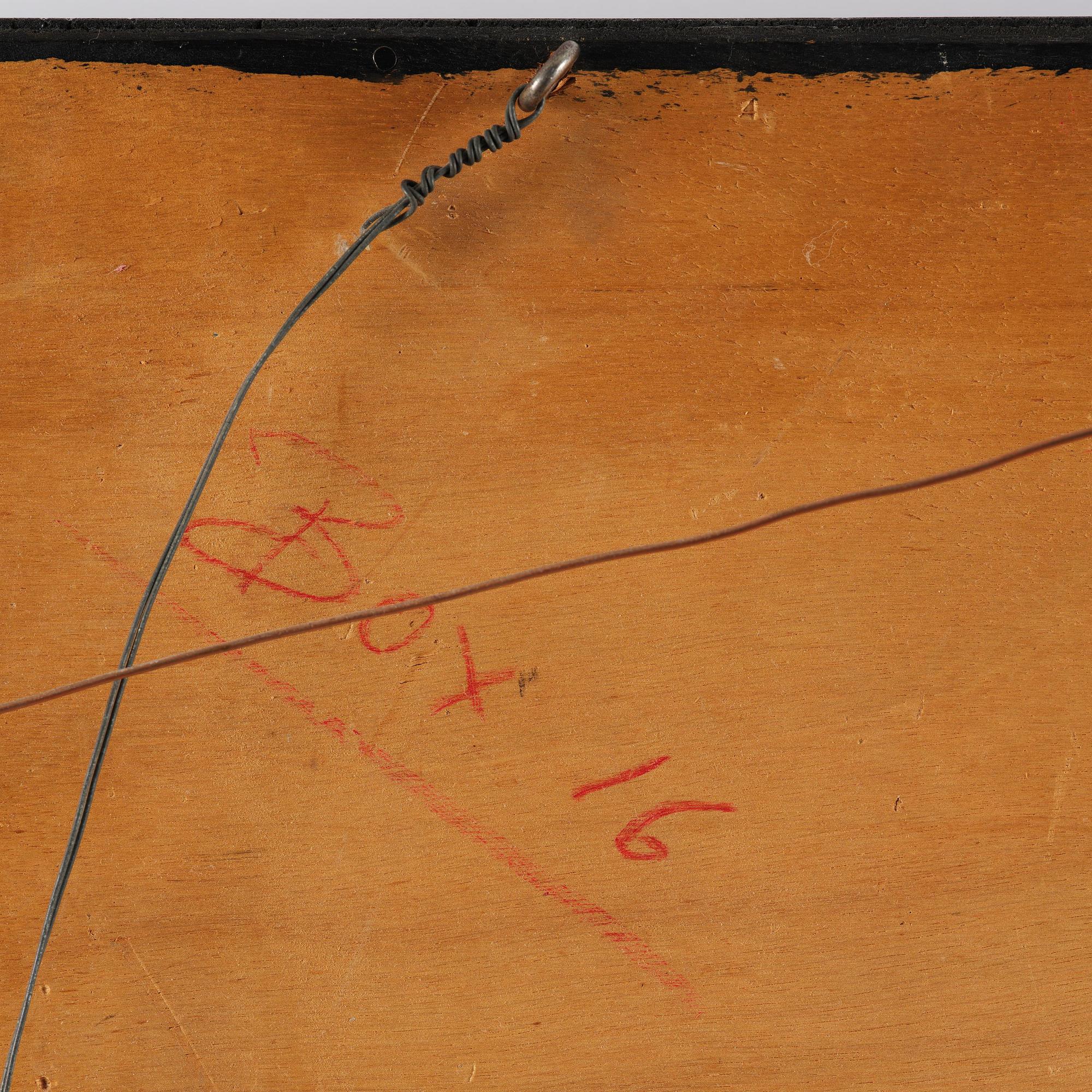
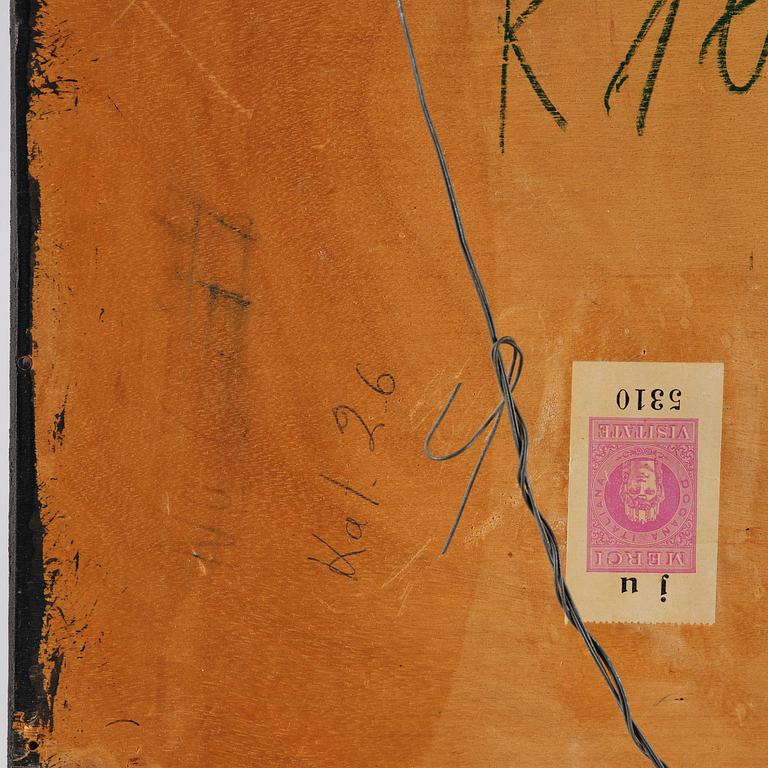
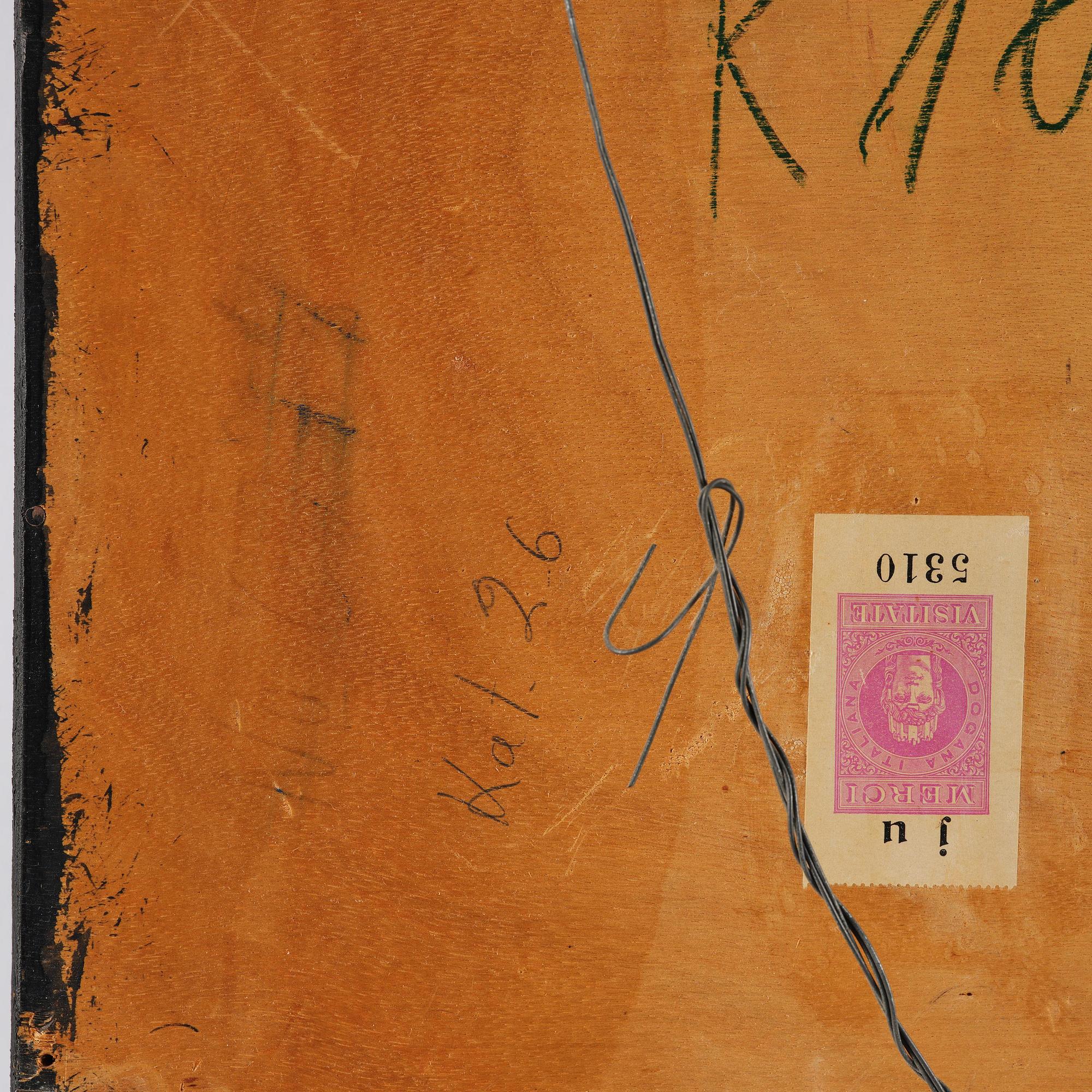
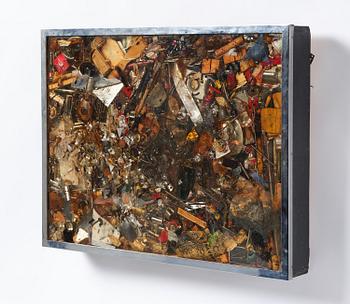
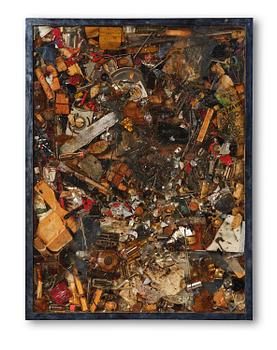
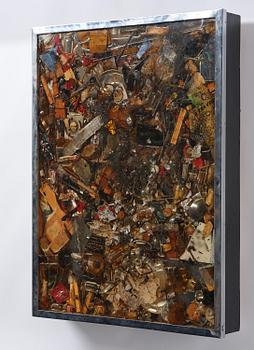
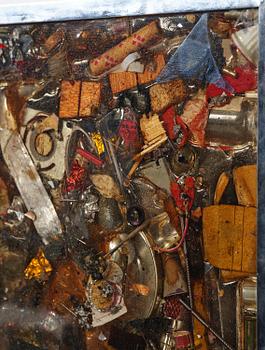
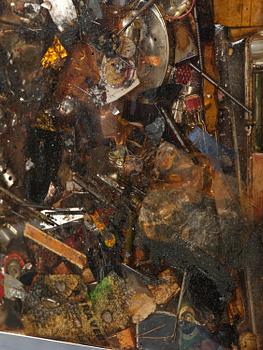
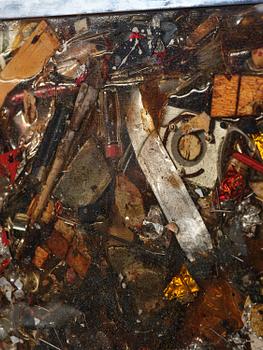
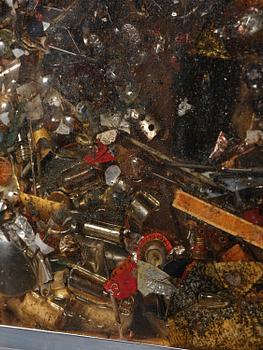
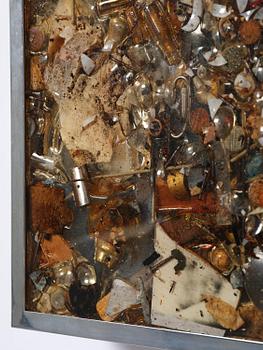
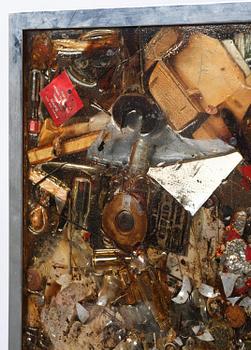
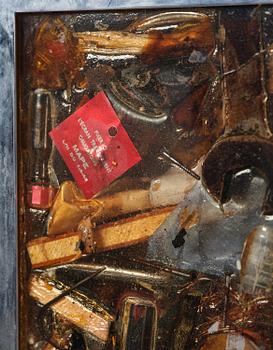
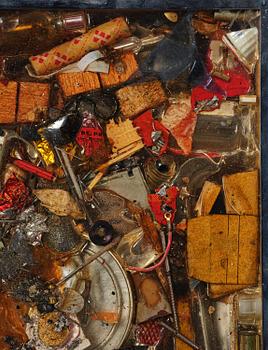
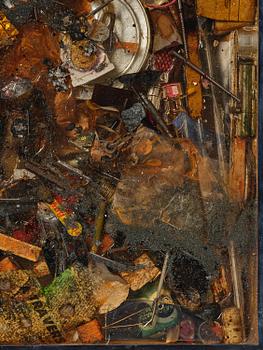
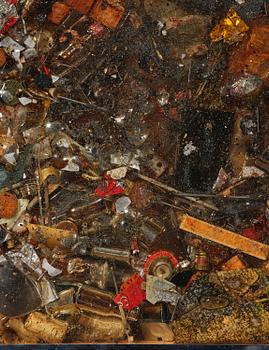
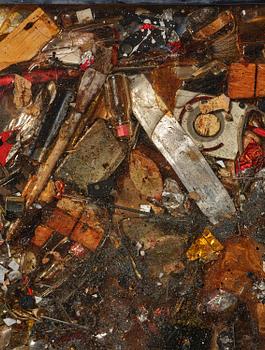
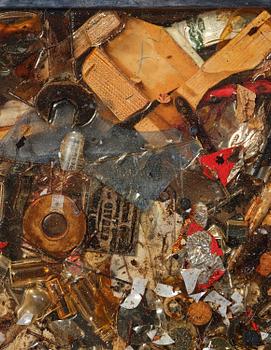
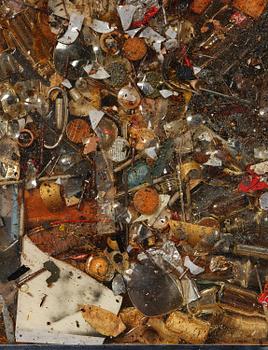
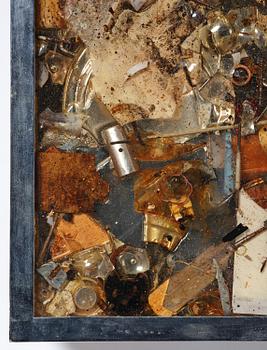
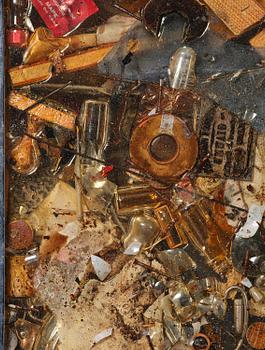
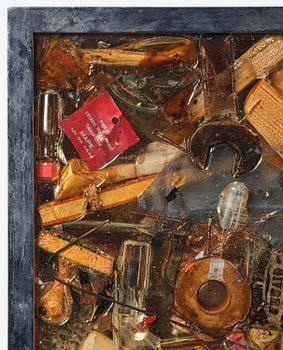
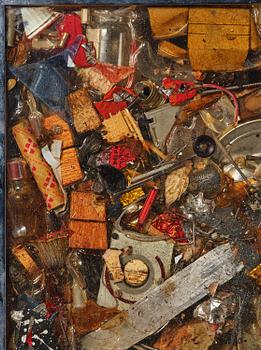
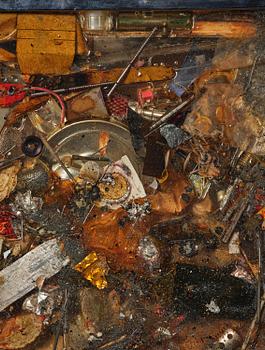
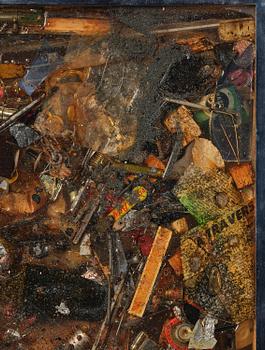
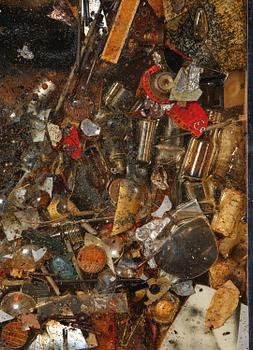
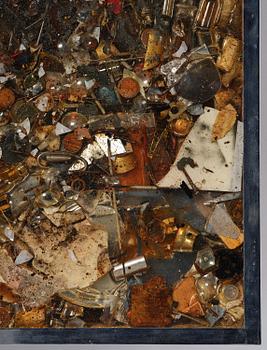
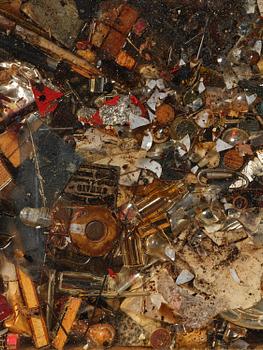
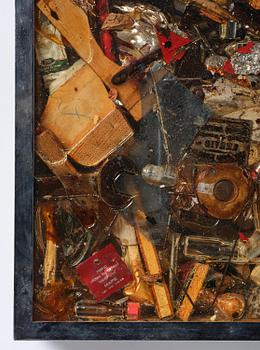
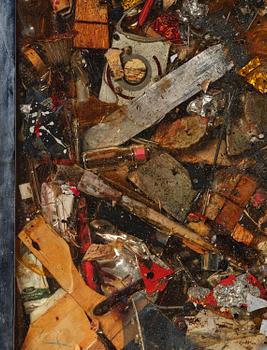
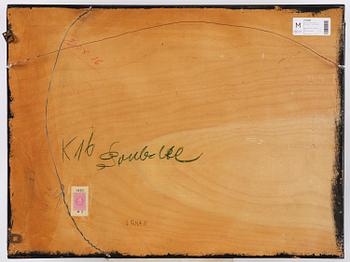
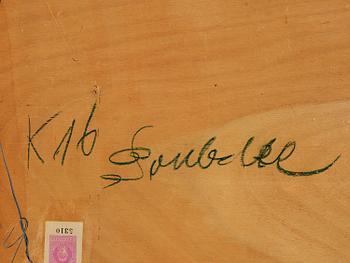
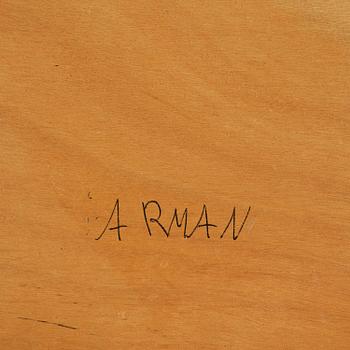
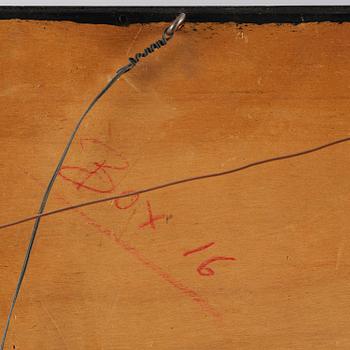
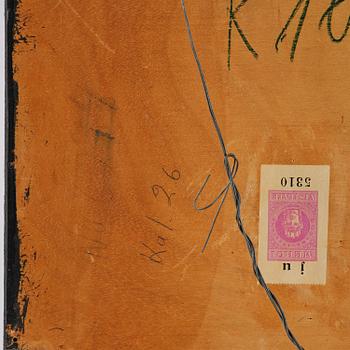
Accumulation of refuse in wooden box 81 x 61 cm. Unique and original. Executed in 1965. This work is recorded in the Arman Studio Archives under number: APA# 8017.65.001.
Provenance
Acquired from Galleri Björn Bengtsson, Varberg, Sweden, before 1966.
Private Collection, Stockholm.
More information
"As a witness of my society, I have always been very much involved in the cycle of production, consumption, and destruction."
- Arman
Arman är internationellt erkänd som en av de mest betydelsefulla konstnärerna under 1900-talets senare hälft och betraktas som en central gestalt inom den franska rörelsen Nouveau Réalisme, vilken utvecklades parallellt med popkonst i USA under 1960-talet. Hans verk återfinns idag i framstående museer samt i såväl offentliga som privata samlingar världen över.
Arman föddes 1928 i Nice, Frankrike. Hans far, som var antikhandlare och samlare, ägnade sig även åt måleri, fotografi och poesi samt spelade cello, vilket bidrog till att forma Armans tidiga konstnärliga miljö. År 1946 avlade Arman en kandidatexamen i filosofi och matematik, varefter han påbörjade konststudier.
Armans konstnärskap kan förstås som en brygga mellan europeisk och amerikansk efterkrigskonst. I reaktion mot samtidens massproduktionskultur började han integrera kasserade föremål och avfall i sina verk, vilket kom att bli ett signum för hans praktik. År 1960 realiserade han utställningen Le Plein (”Full”) vid Iris Clert Gallery i Paris. Utställningen baserades på en arkitektonisk och konceptuell princip som svar på Le Vide (”Tomrummet”), presenterad två år tidigare i samma galleri av Yves Klein.
Genom "Le Plein" eftersträvade Arman att omdefiniera betraktarens relation till det konstnärliga rummet. Hans metod kan beskrivas som konceptuell och supramateriell, då den syftade till att radikalt förändra den fenomenologiska och beteendemässiga upplevelsen av rummet genom en extrem materiell mättnad—i kontrast till Kleins undersökning av immaterialitet och tomhet. Galleriet fylldes till brädden med kasserade objekt, i sådan utsträckning att utställningen endast kunde betraktas utifrån.
Detta konstnärliga förhållningssätt utvecklades senare till serien "Poubelles" (”Skräp”), där Arman bland annat inkapslade kasserade föremål i resin. Genom denna process transformerades vardagliga och bortkastade objekt till permanenta konstverk likt auktionens spännande "Poubelle".
More about Arman (Armand Pierre Fernandez)
Arman (Pierre Fernandez, born in Nice in 1928) moved to Paris after graduation to study archaeology and oriental art. After returning to Nice in 1953, he devoted himself instead to abstract art and began collaborating with Yves Klein, which was to have a significant impact on his artistic development. After a typographical error in an exhibition catalogue at the legendary Galerie Iris Clert in Paris, in which the letter "d" had dropped from his name, Arman decided that henceforth he would sign his works only "Arman".
In the late 1950s, he began working with sculptures, first the series Accumulations with everyday objects and then Poubelles consisting of rubbish.
In 1960, Arman co-founded the Nouveau Réalisme group with Jean Tinguely and Daniel Spoerri, among others. Later César, Niki de Saint Phalle and Christo joined. The group opposed informal art and became the French equivalent of English and American pop art.
During the 1960s, Arman travelled to New York for the first time, where he exhibited at the Cordier-Warren Gallery and MoMA. He continued to work with sculptures through different series such as 'Coupes' (sawed and sliced objects), 'Colères' (disintegrated and broken objects), 'Combustions' (burnt objects) and 'Inclusioni' (assemblage of objects enclosed in polyester resin).
Arman's work was shown both at the Stedelijk Museum, Amsterdam (1964) and at the Venice Biennale (1968) in the following years. In the 1970s, he created assemblages with cement and car parts in collaboration with Renault. In 1973 he became an American citizen when he moved to New York.
During the last twenty years of his life, Arman continued to work with different materials and techniques. He has executed several monumental works such as the bronze work "A la République" (1984) in the Palais de l'Élysée, Paris and the work "Espoir de Paix" (1995) in Beirut, an assemblage of cement and tanks. It is still the world's largest sculpture.
Arman died in 2005 in New York. During his lifetime, he participated in almost 500 solo exhibitions. His works are today included in collections at MoMA, NY, The National Gallery of Art, Washington, Tate Modern, London and Musée d'Art Moderne et d'Art Contemporain, Nice.
Read moreFor condition report contact specialist
Image rights
The artworks in this database are protected by copyright and may not be reproduced without the permission of the rights holders. The artworks are reproduced in this database with a license from Bildupphovsrätt.
Others have also viewed