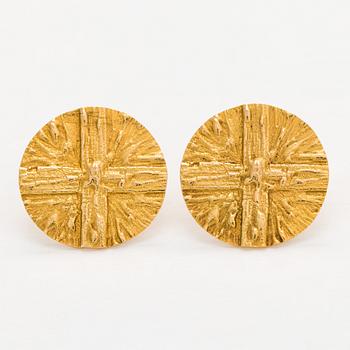
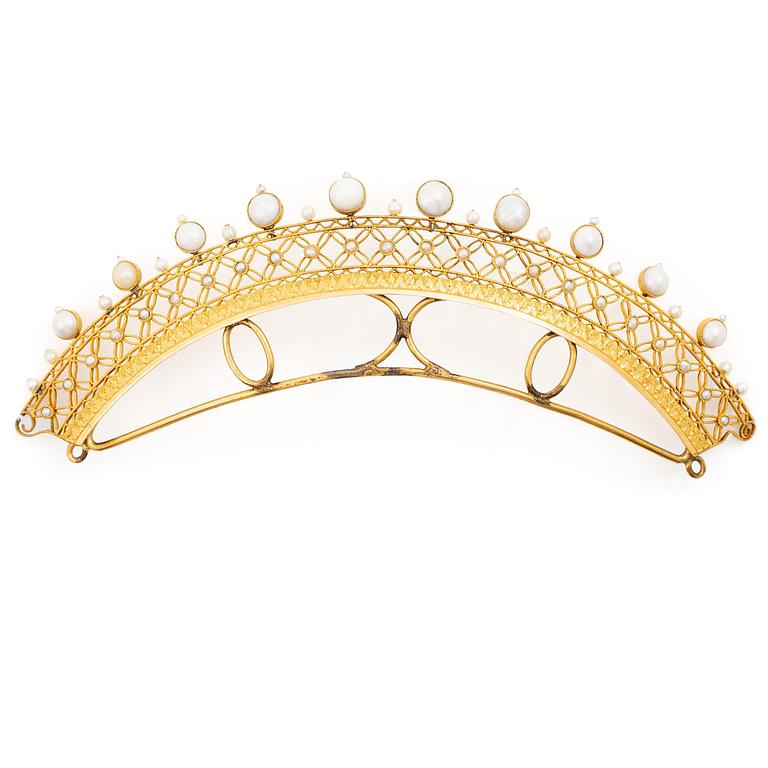
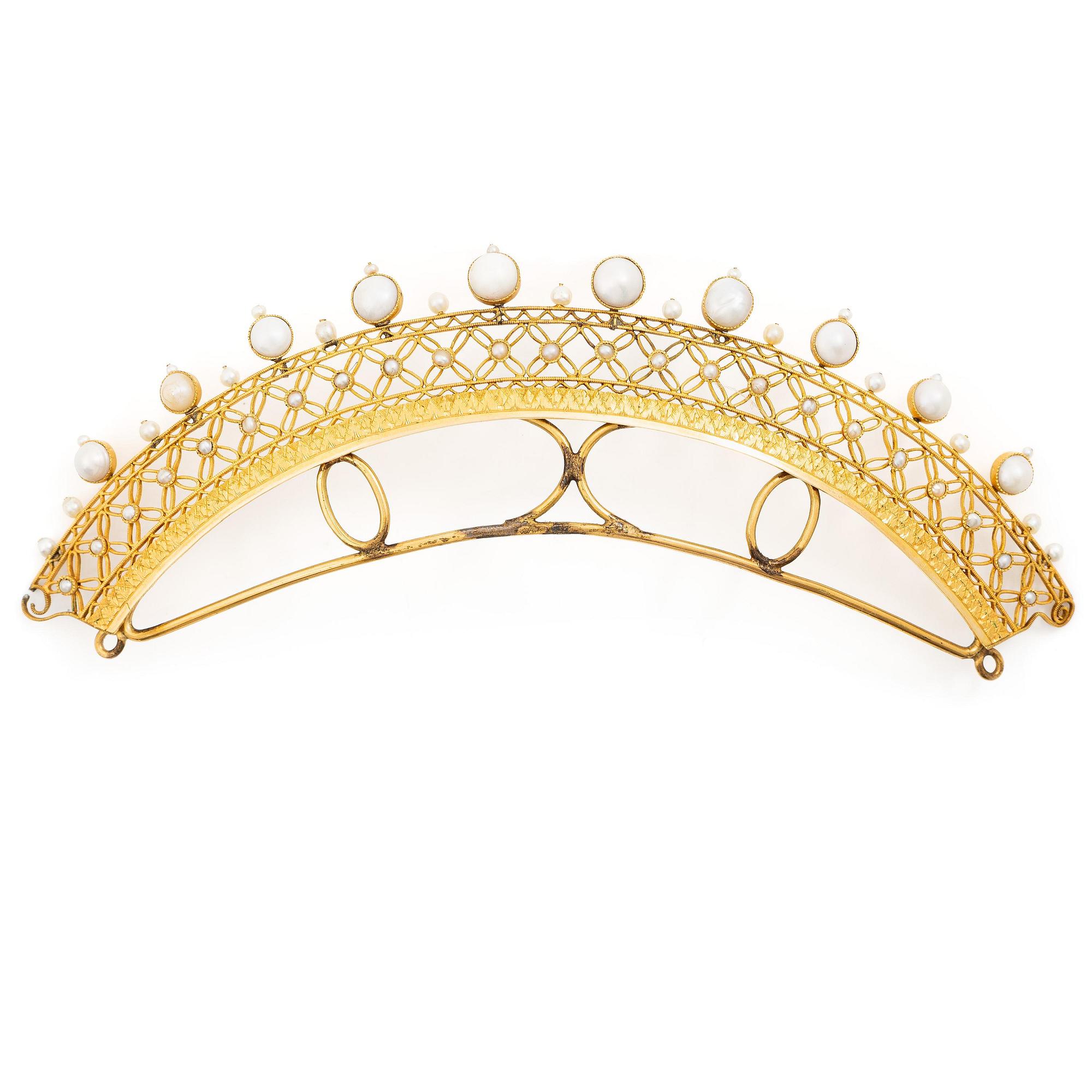
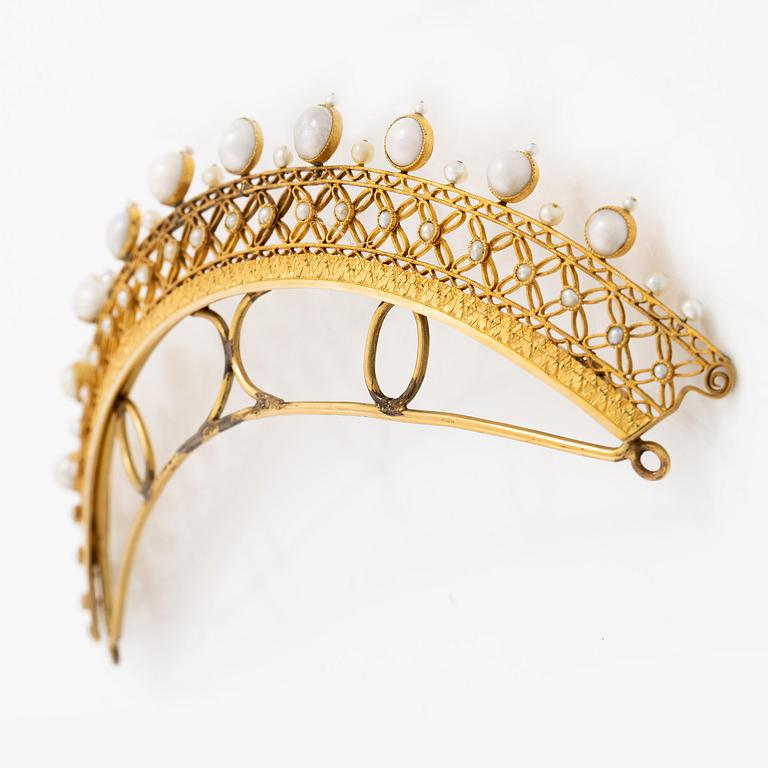
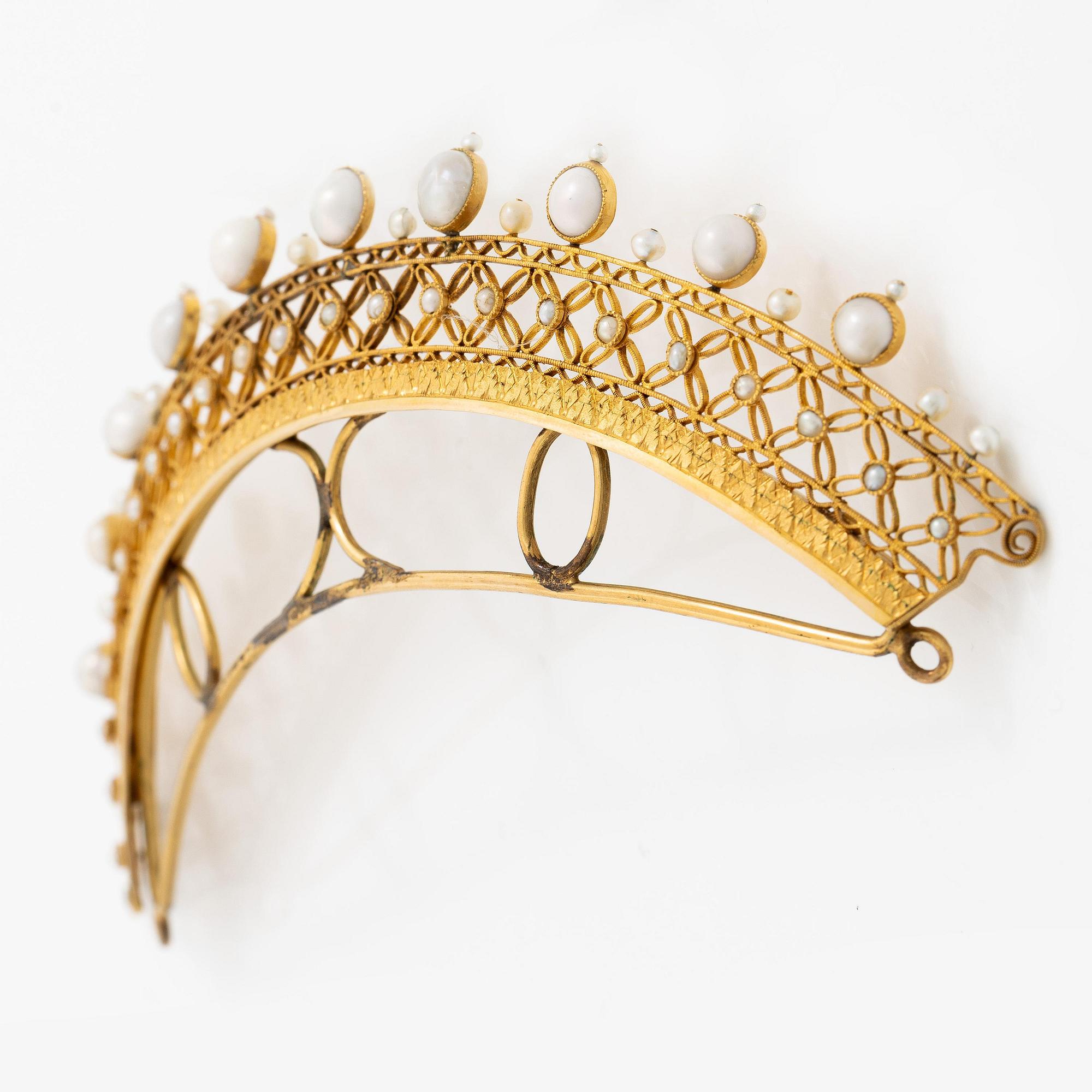
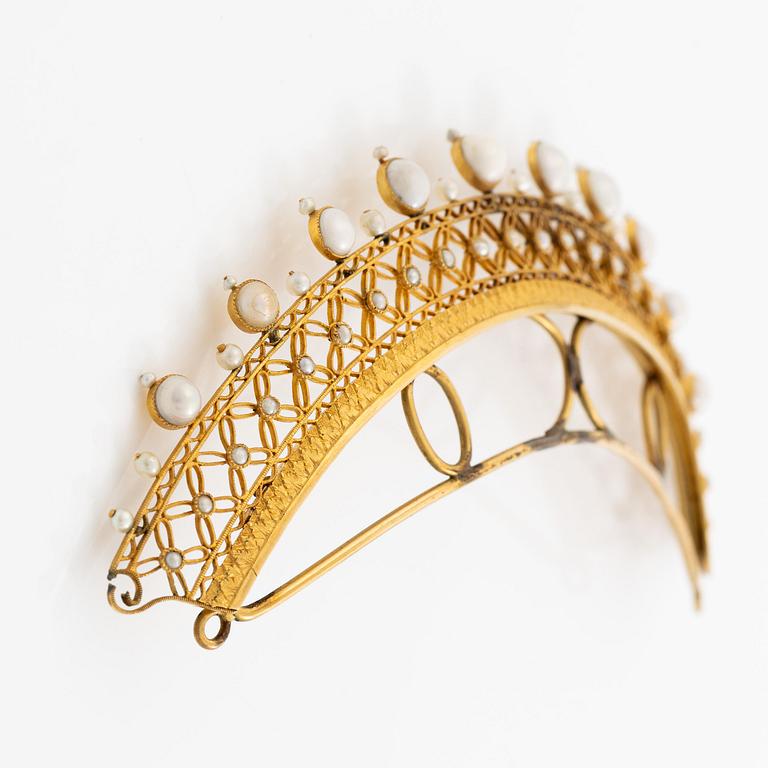
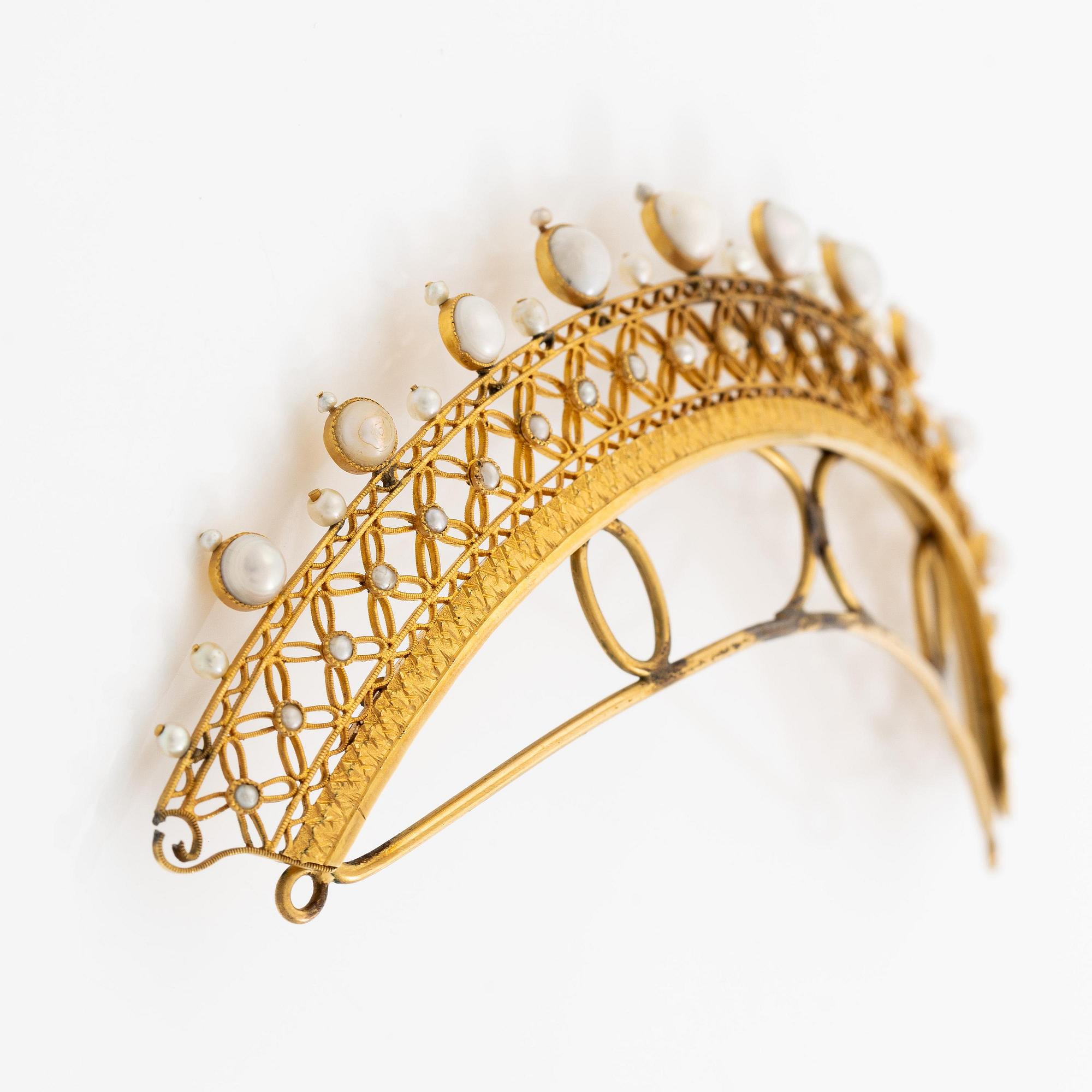
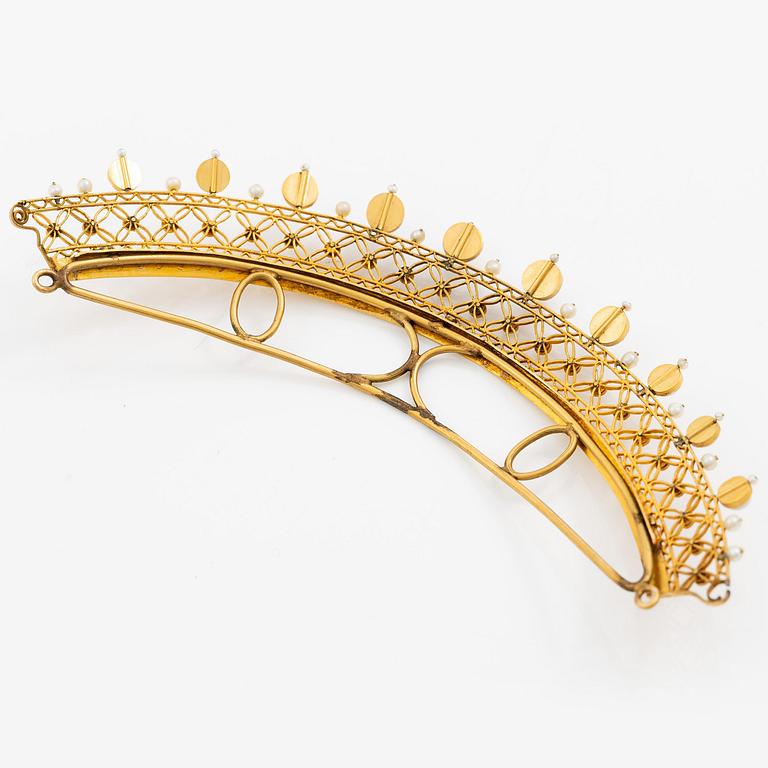
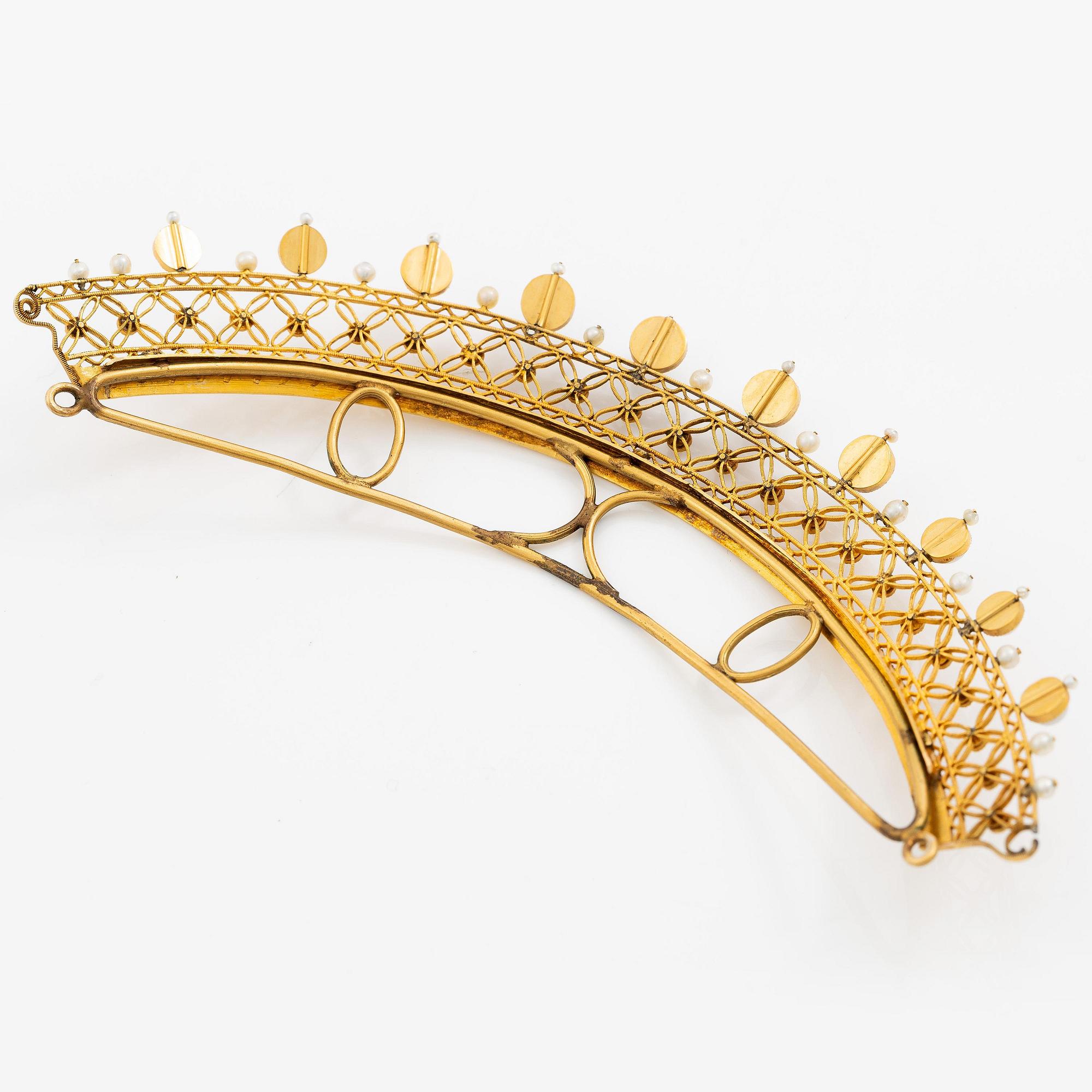
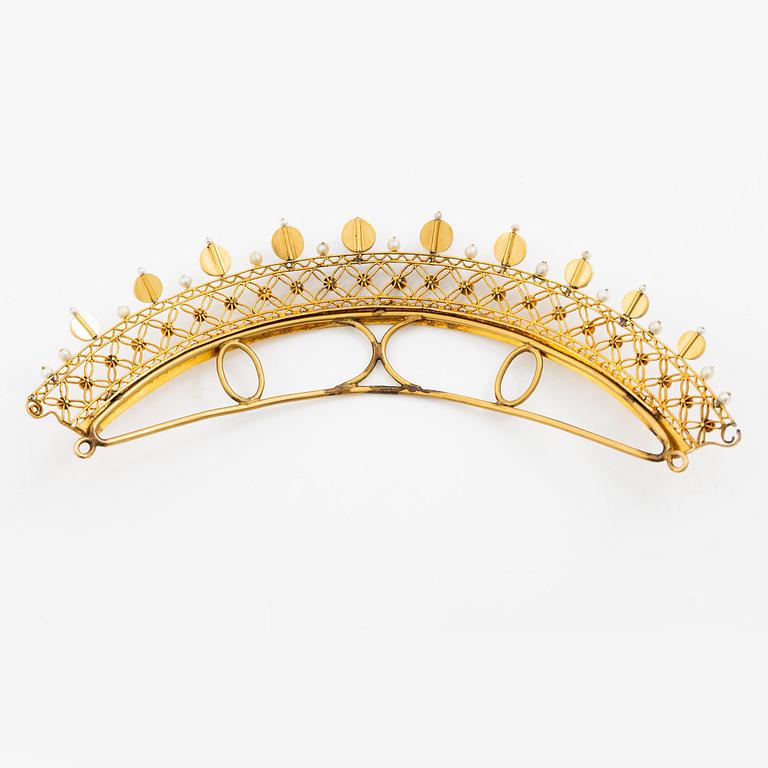
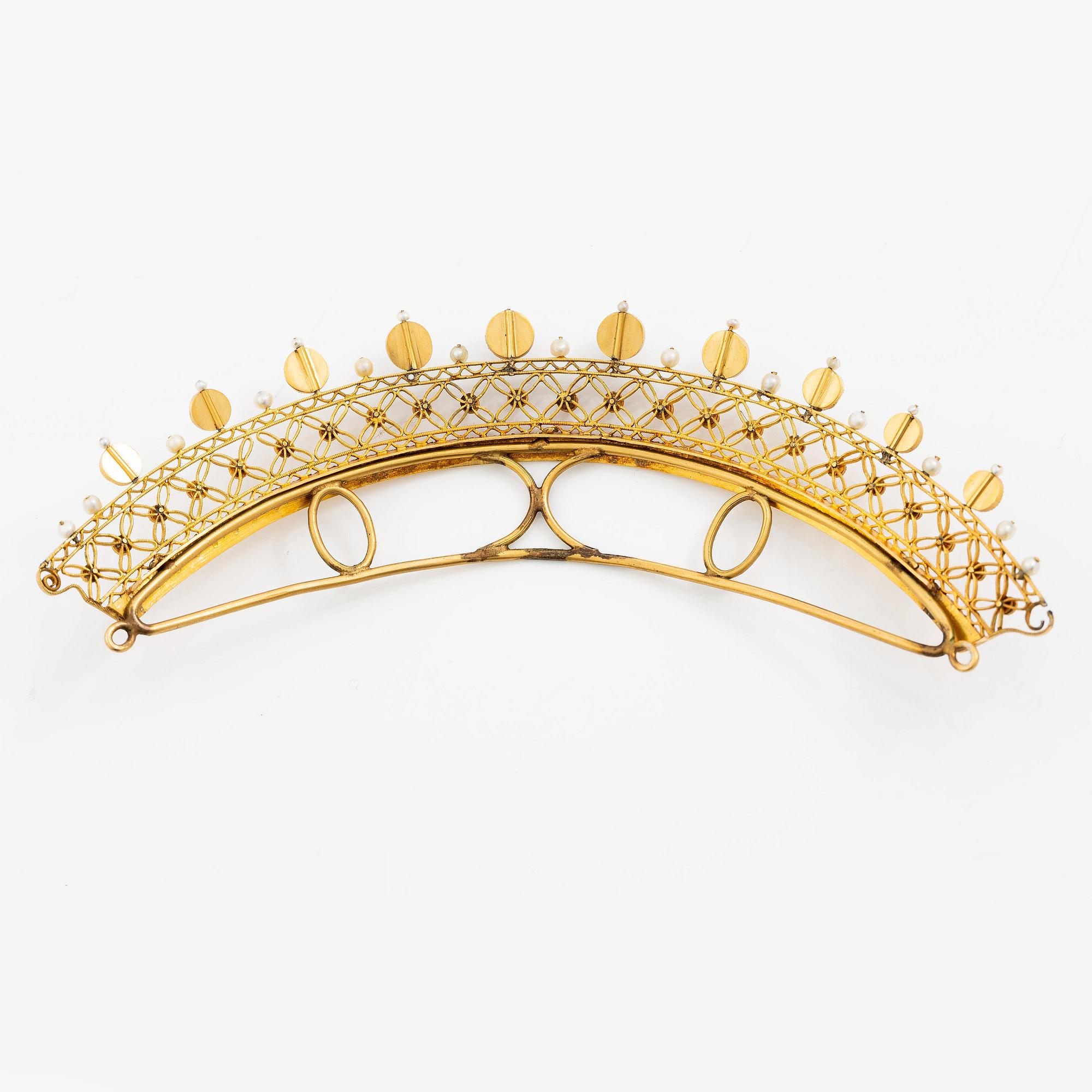
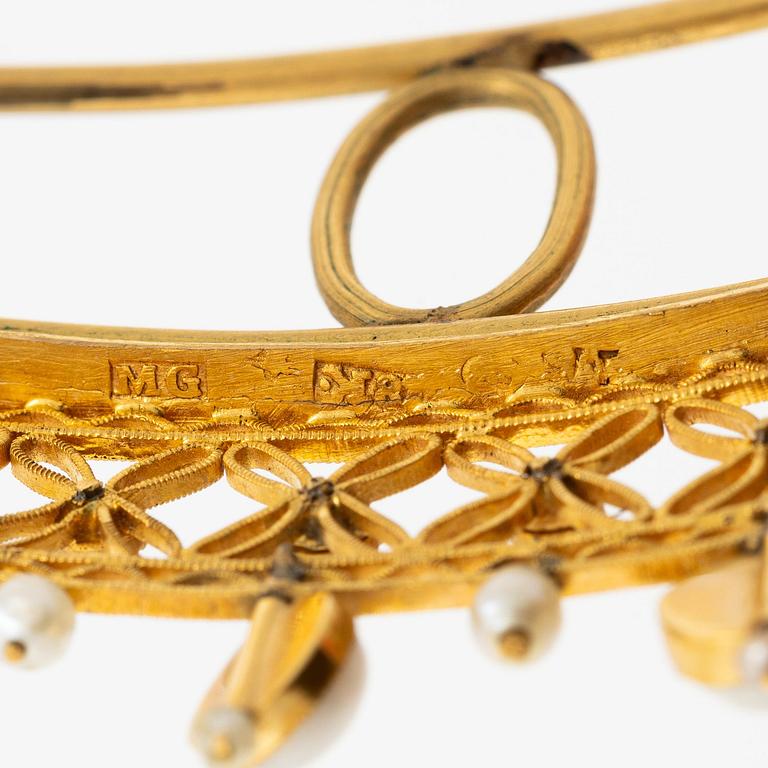
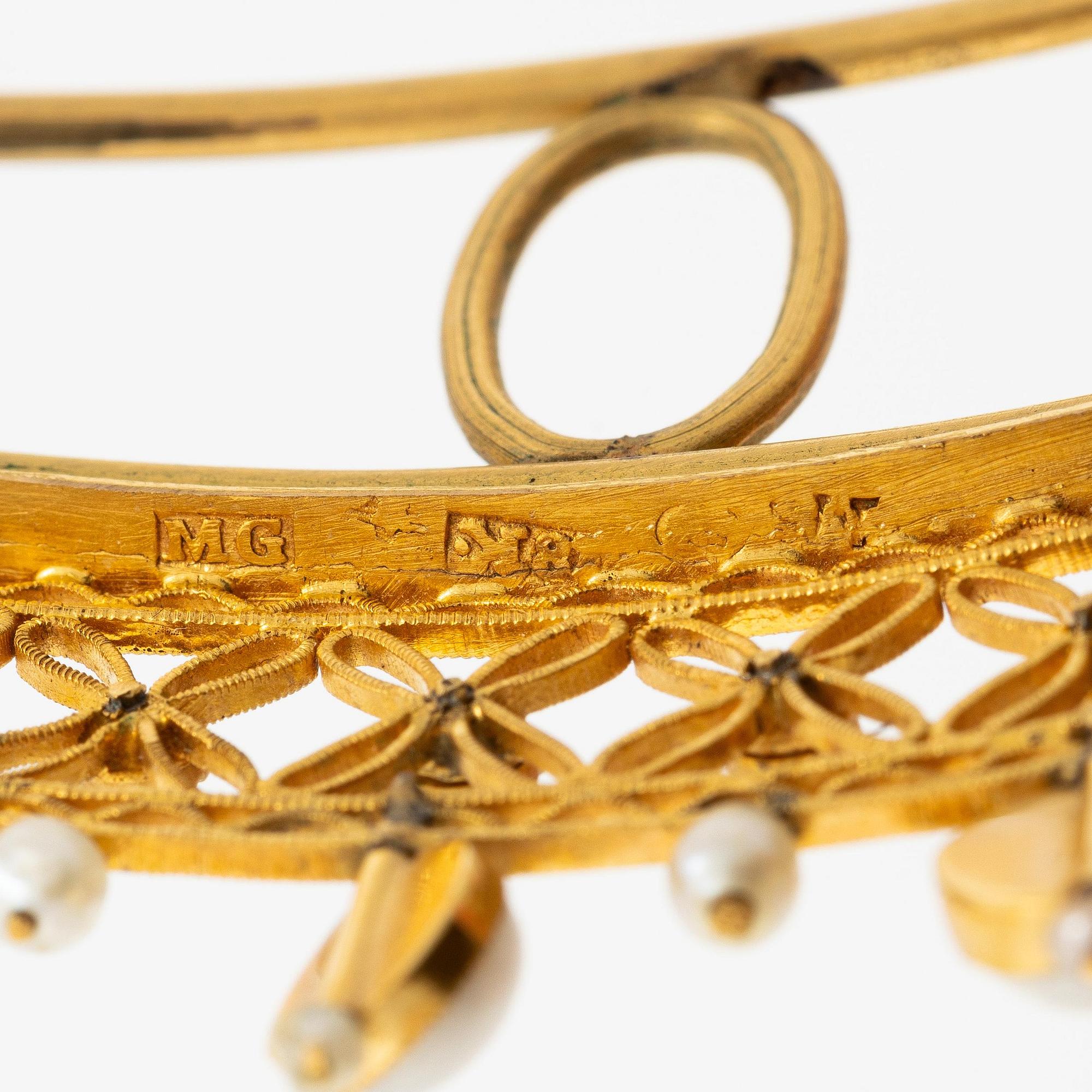
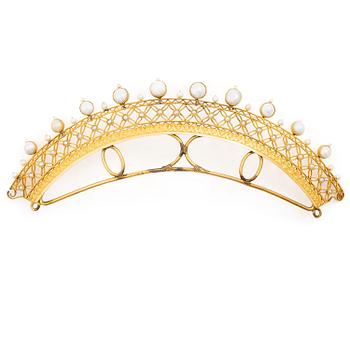
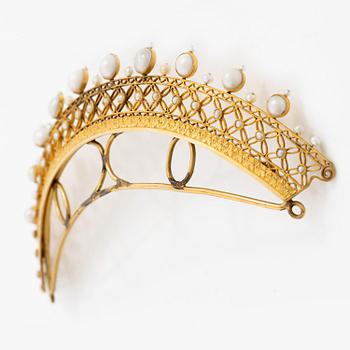
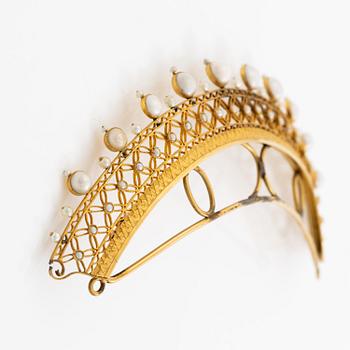
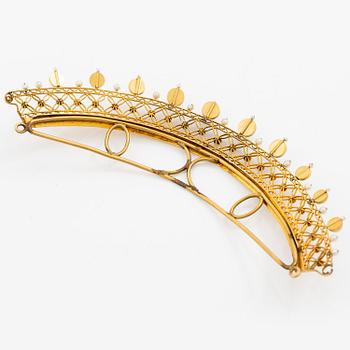
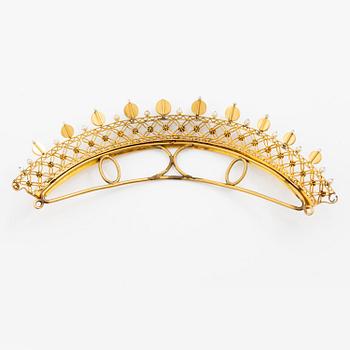
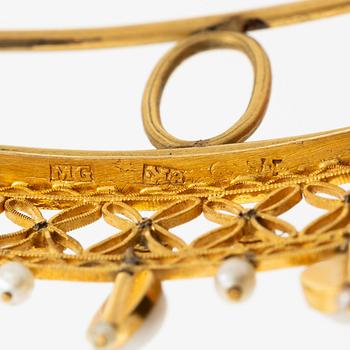
Ca 15 X 4 cm, total weight 34 g. Stamped MG, possibly Marc Giron (1813-1851).
Lower part of the mount in metal. Probably later.
Provenance
Likely inherited from Karin Falkman, née Wallenberg.
More information
Various forms of head ornaments have been used for centuries. During the neoclassicism of the 19th century, the art form of tiaras flourished and reached its peak during the First French Empire. Emperor Napoleon's wife, Empress Joséphine, wore striking tiaras that became an expression of this high culture within the art of tiaras. By drawing on antiquity as a model, they took on magnificent expressions and were often part of larger sets together with, for example, earrings, bracelets, and brooches in sets known as parure. The plant kingdom has been a source of inspiration for many tiaras, with precious metals shaped into myrtle, orange blossoms, laurel, murrine, and grapevines. These could be richly set with diamonds, emeralds, various cameos, and pearls
For condition report contact specialist

Others have also viewed