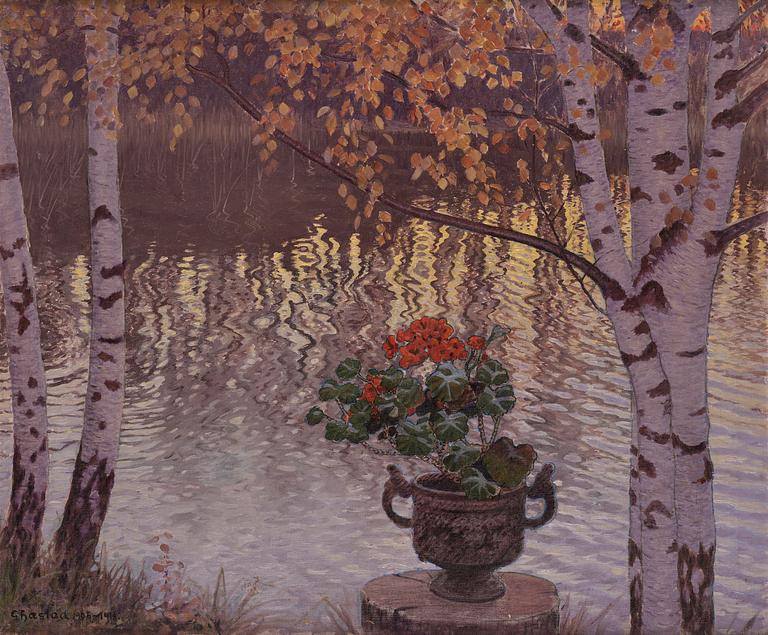
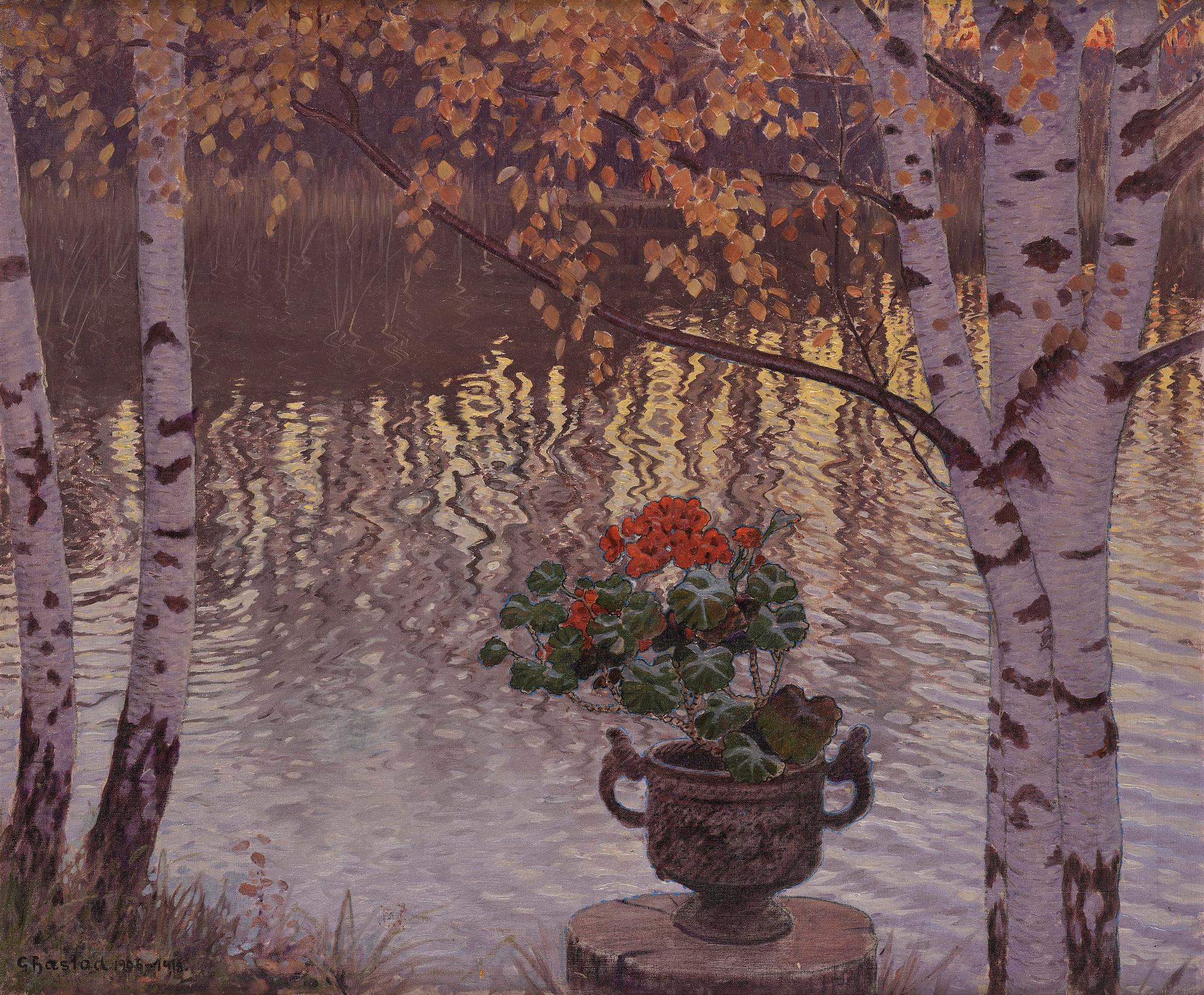
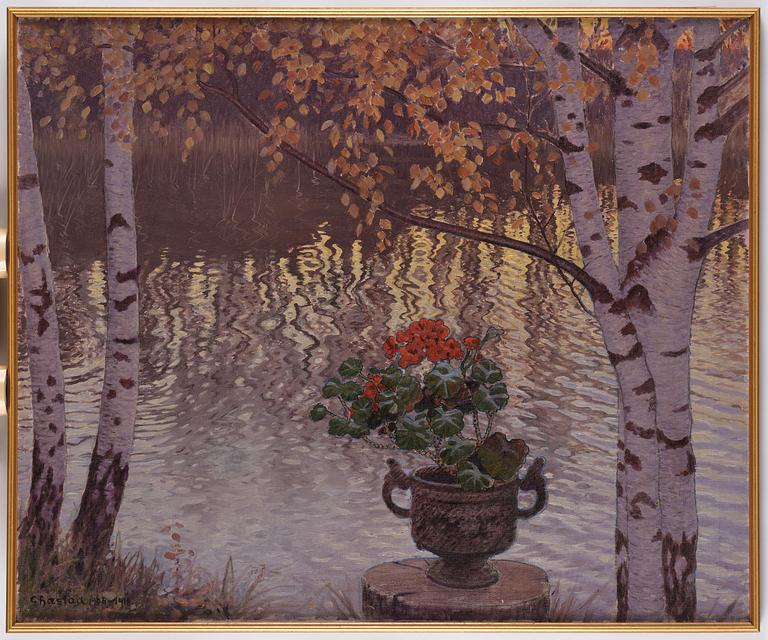
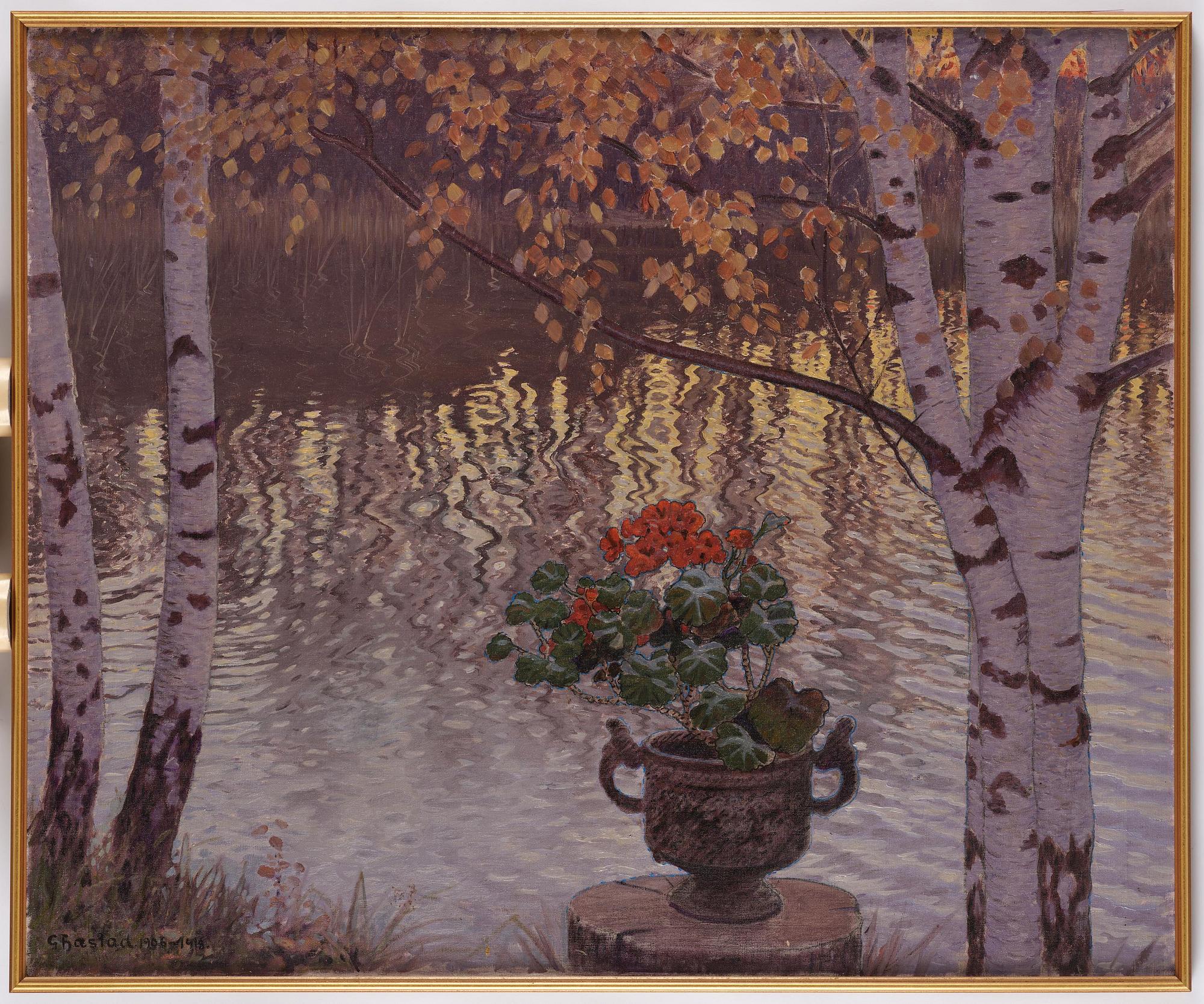
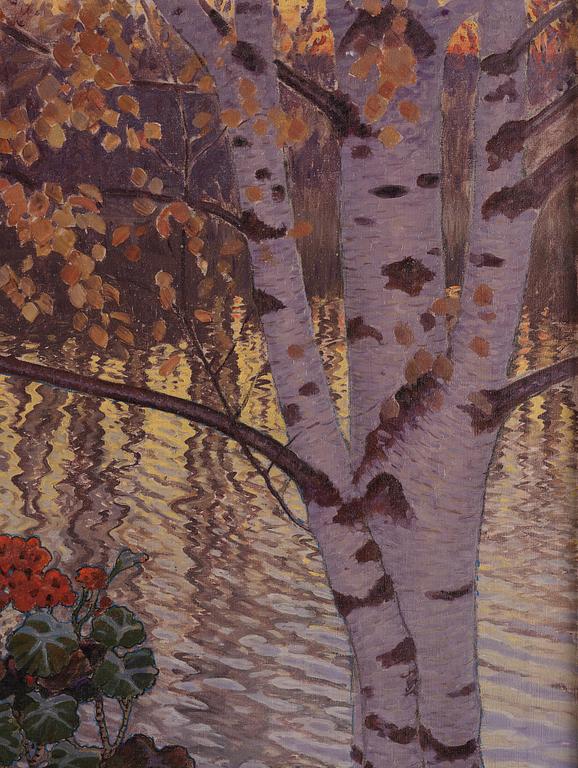
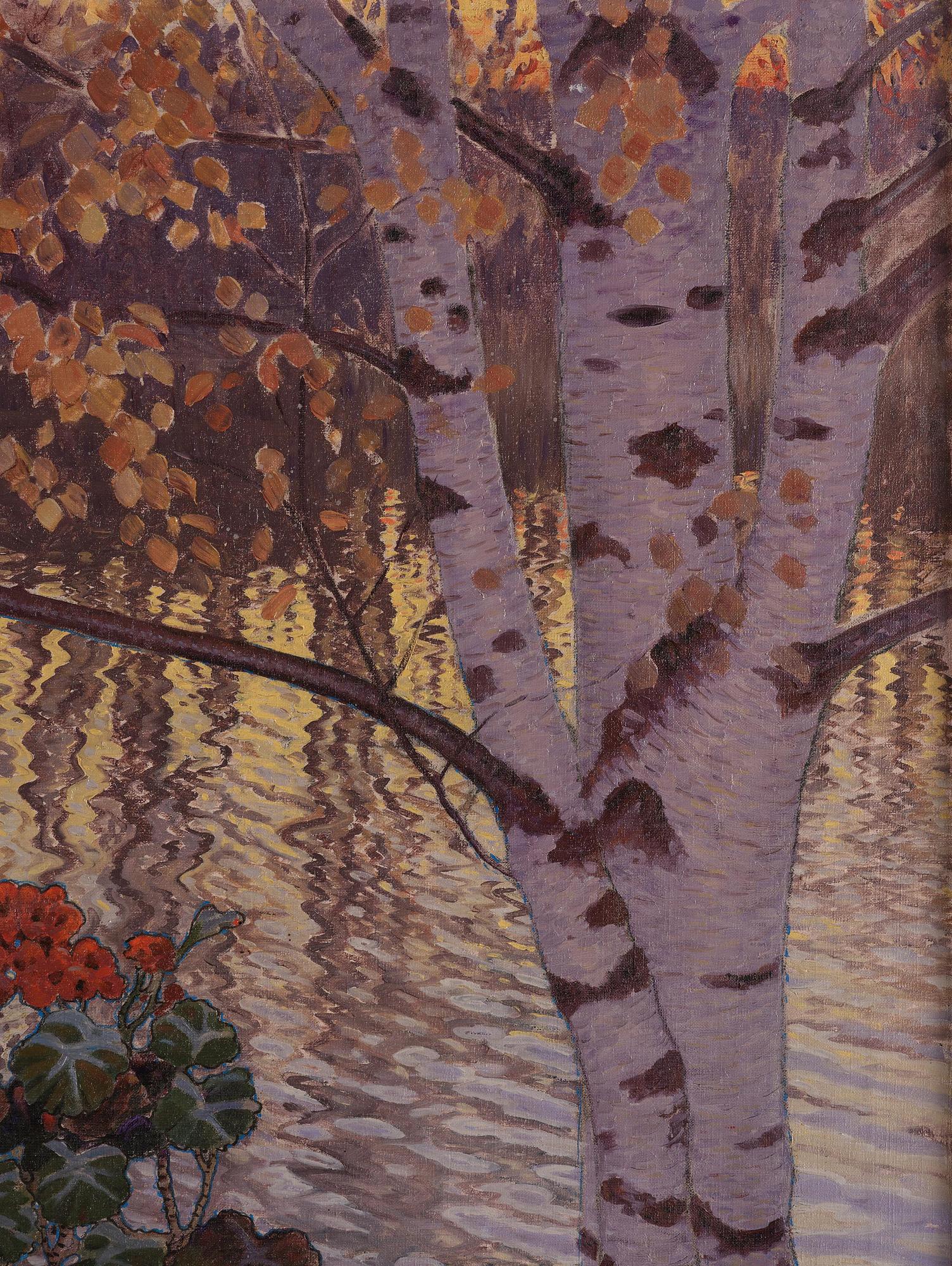
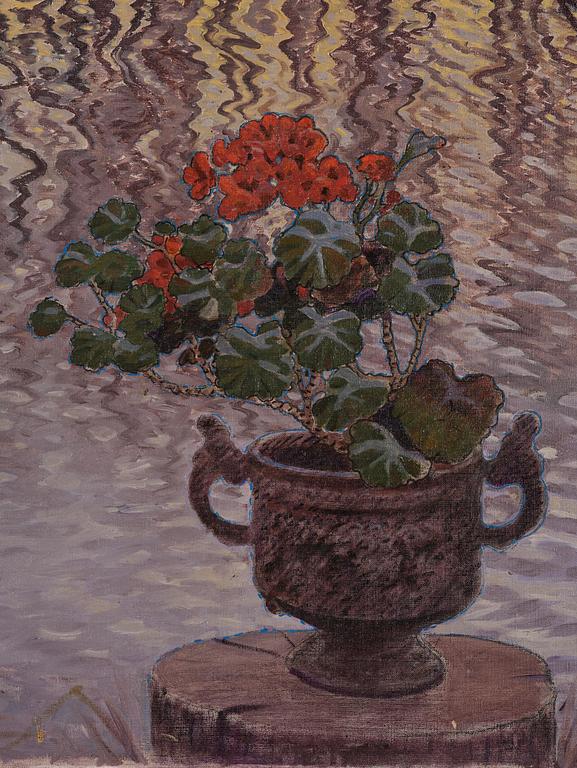
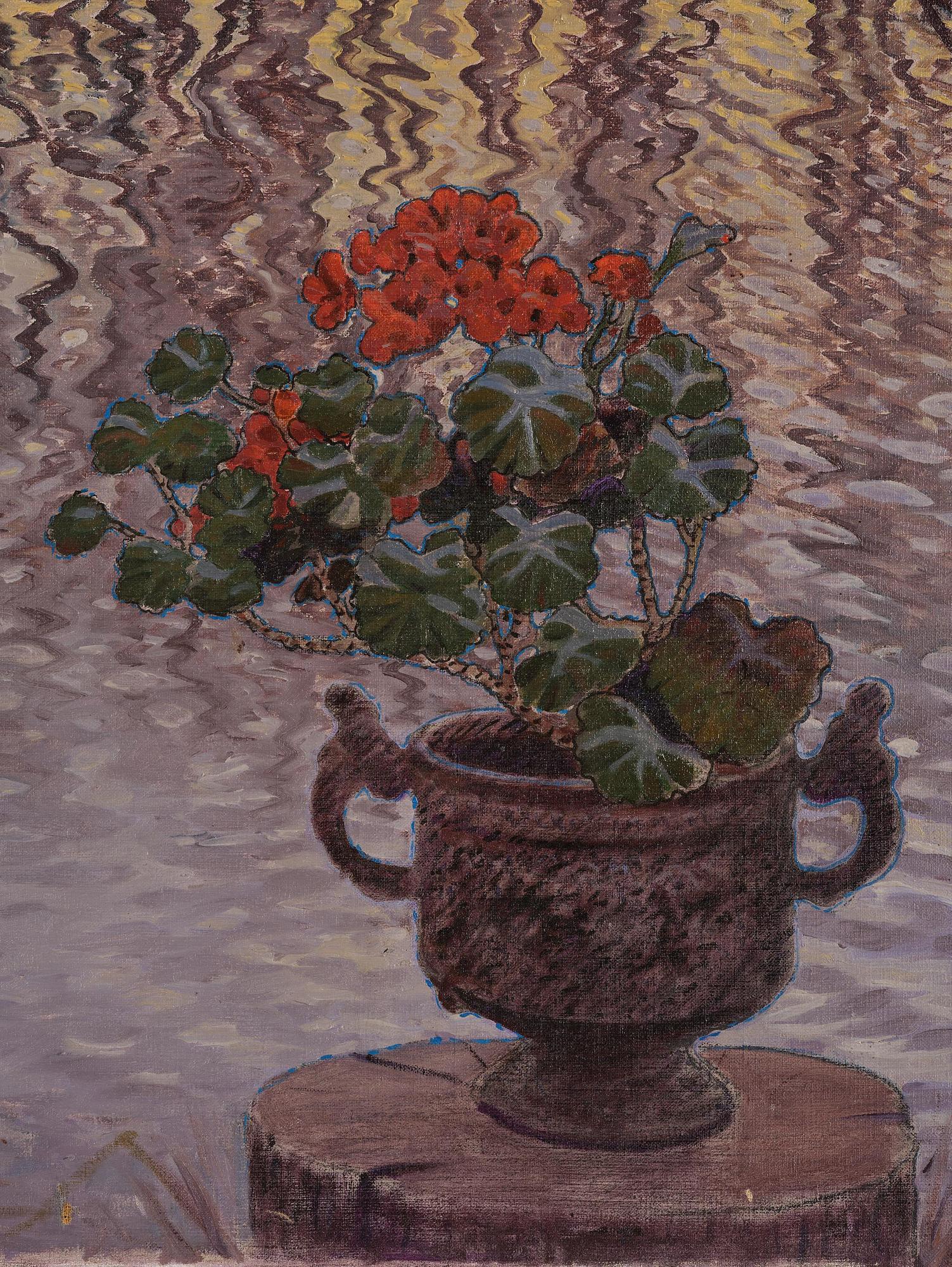
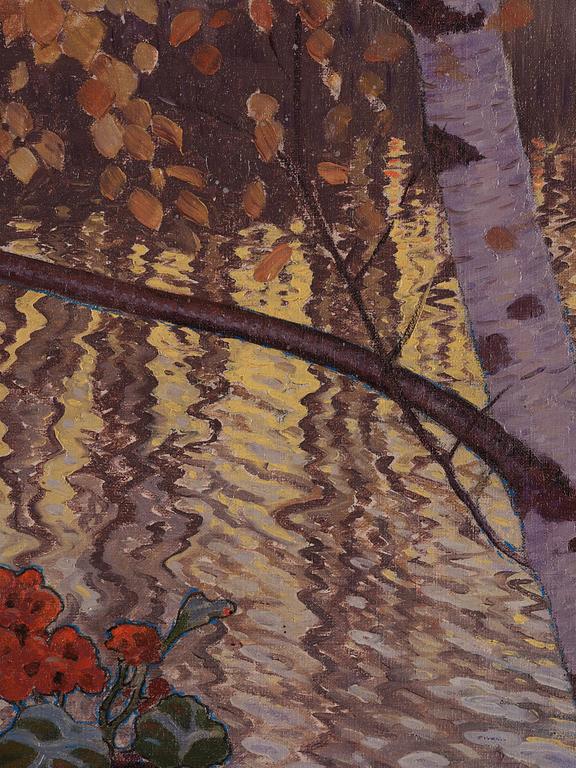
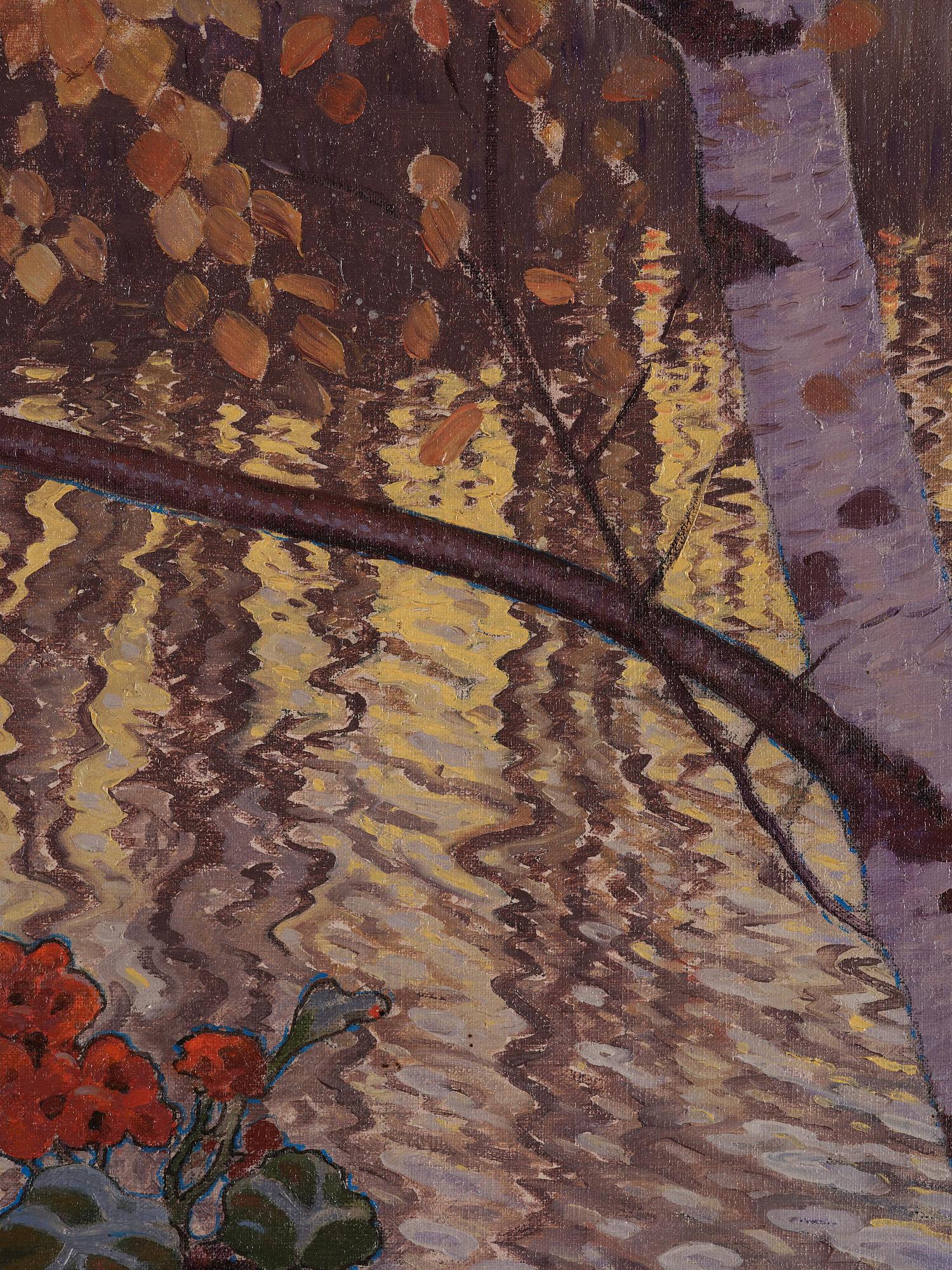
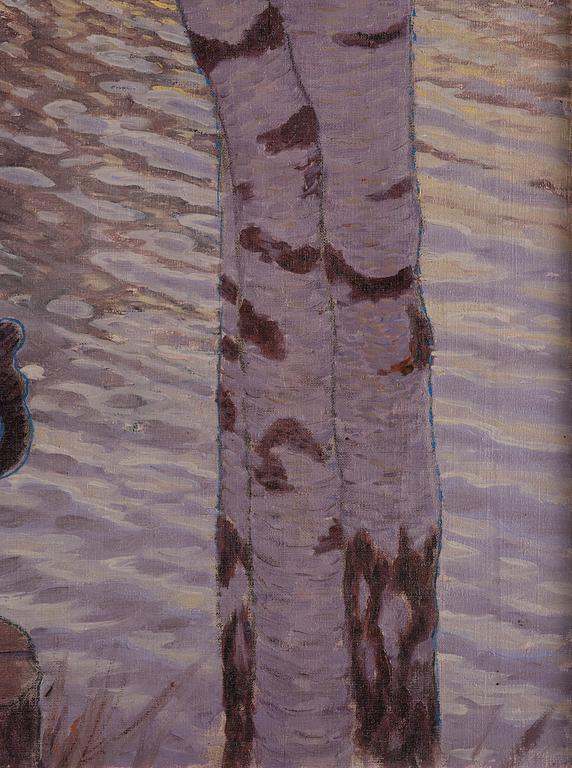
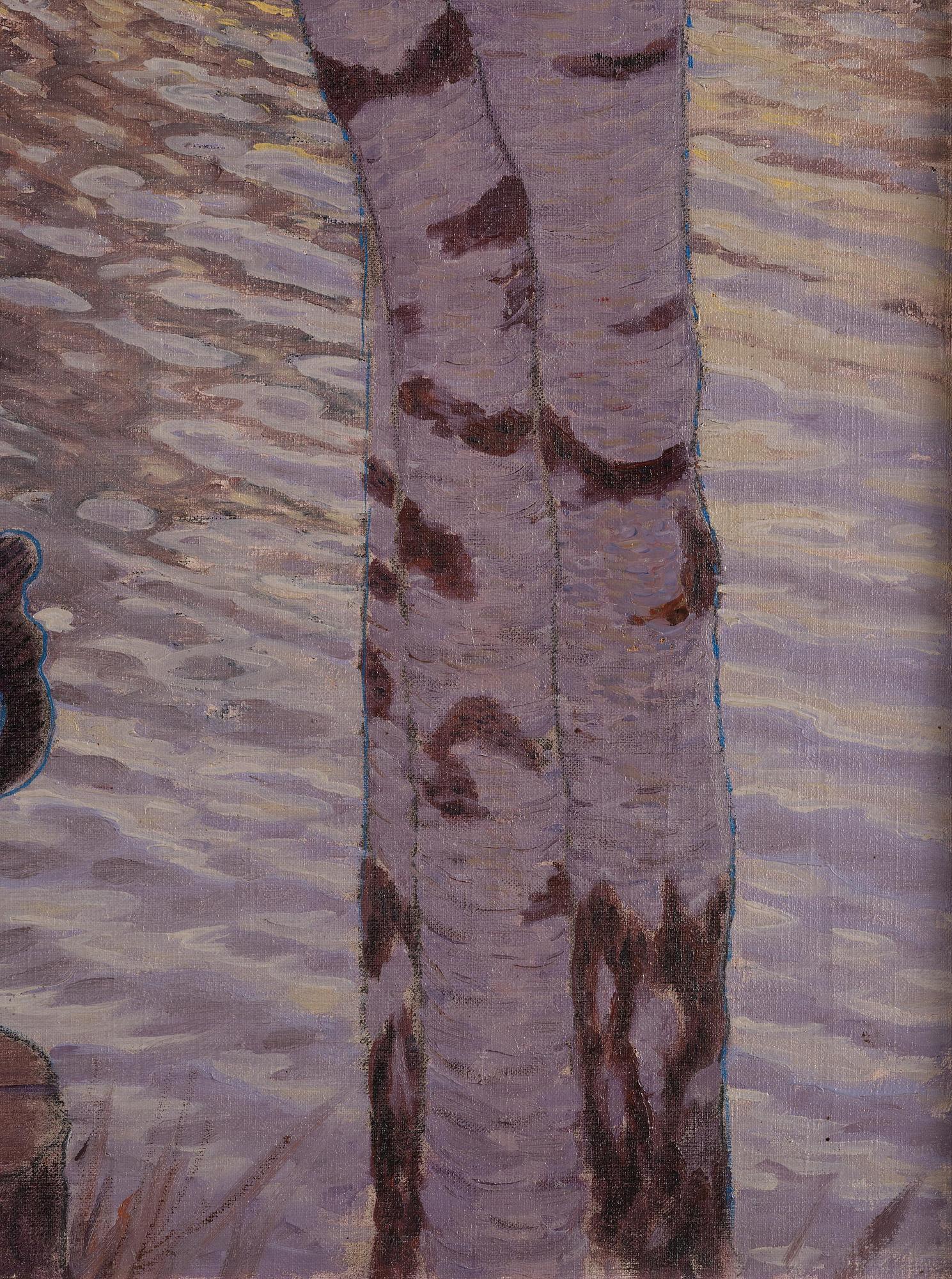
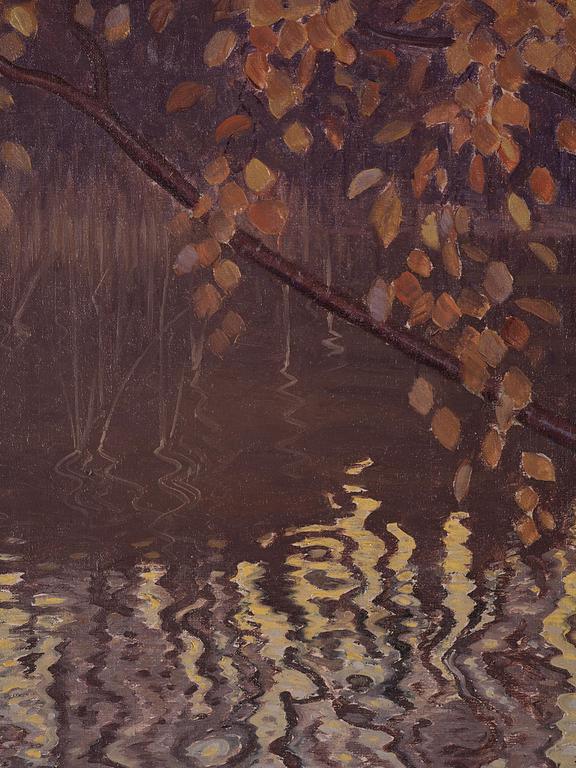
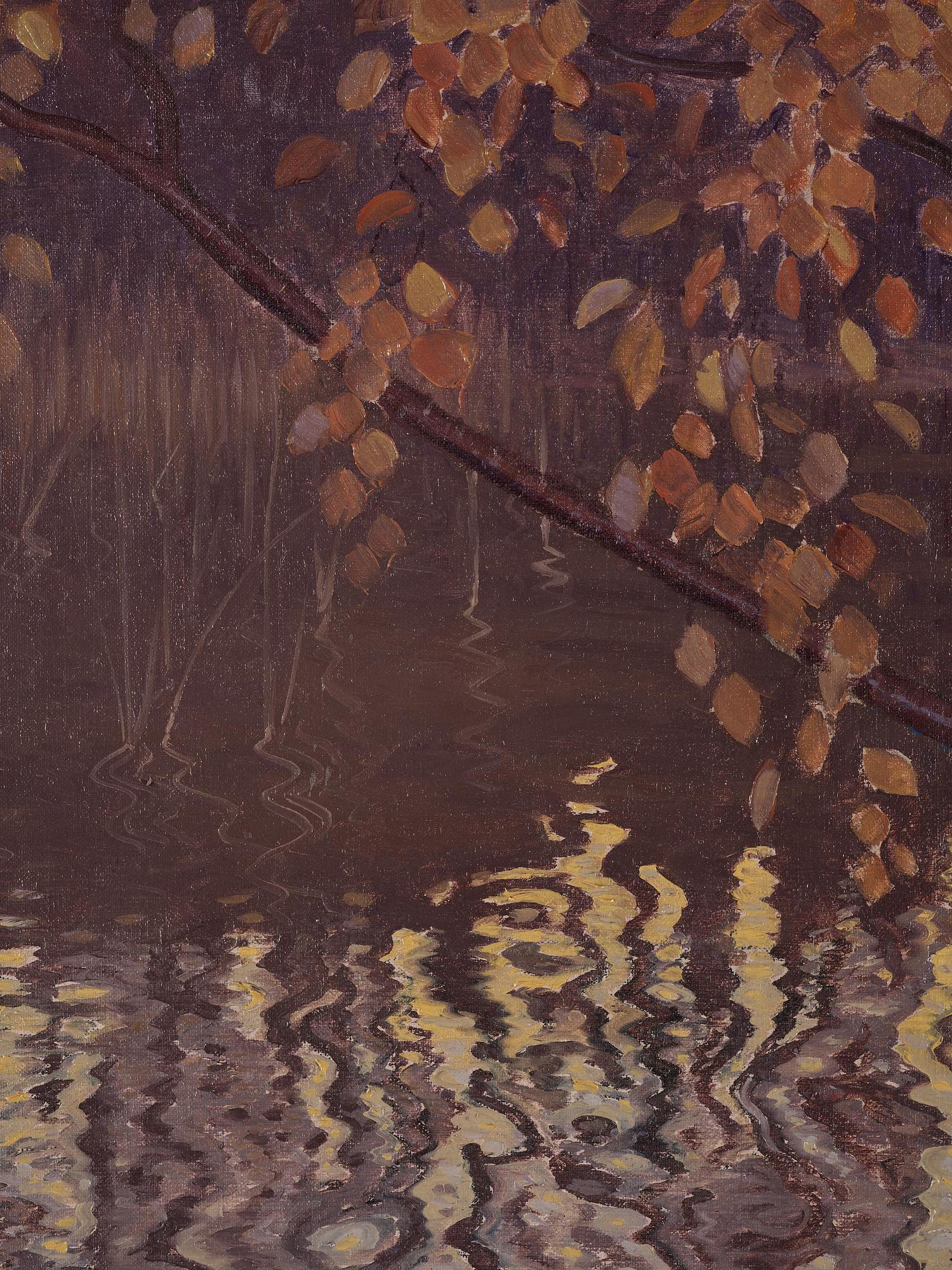
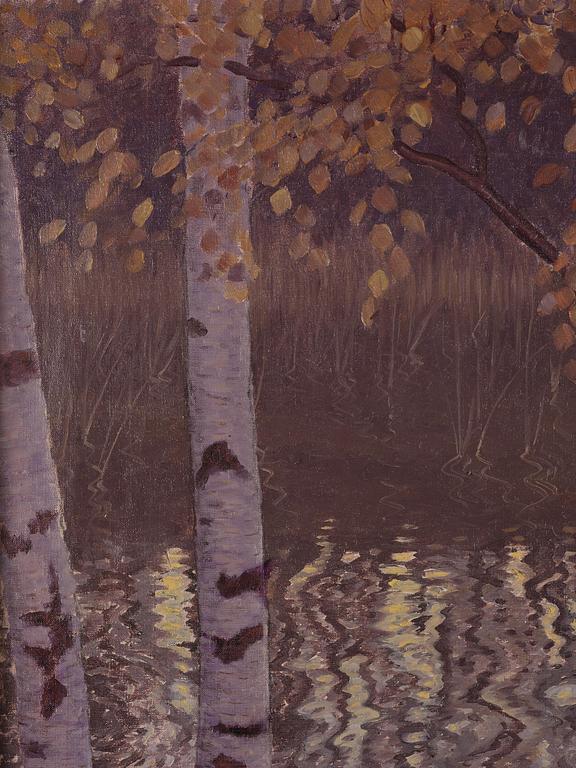
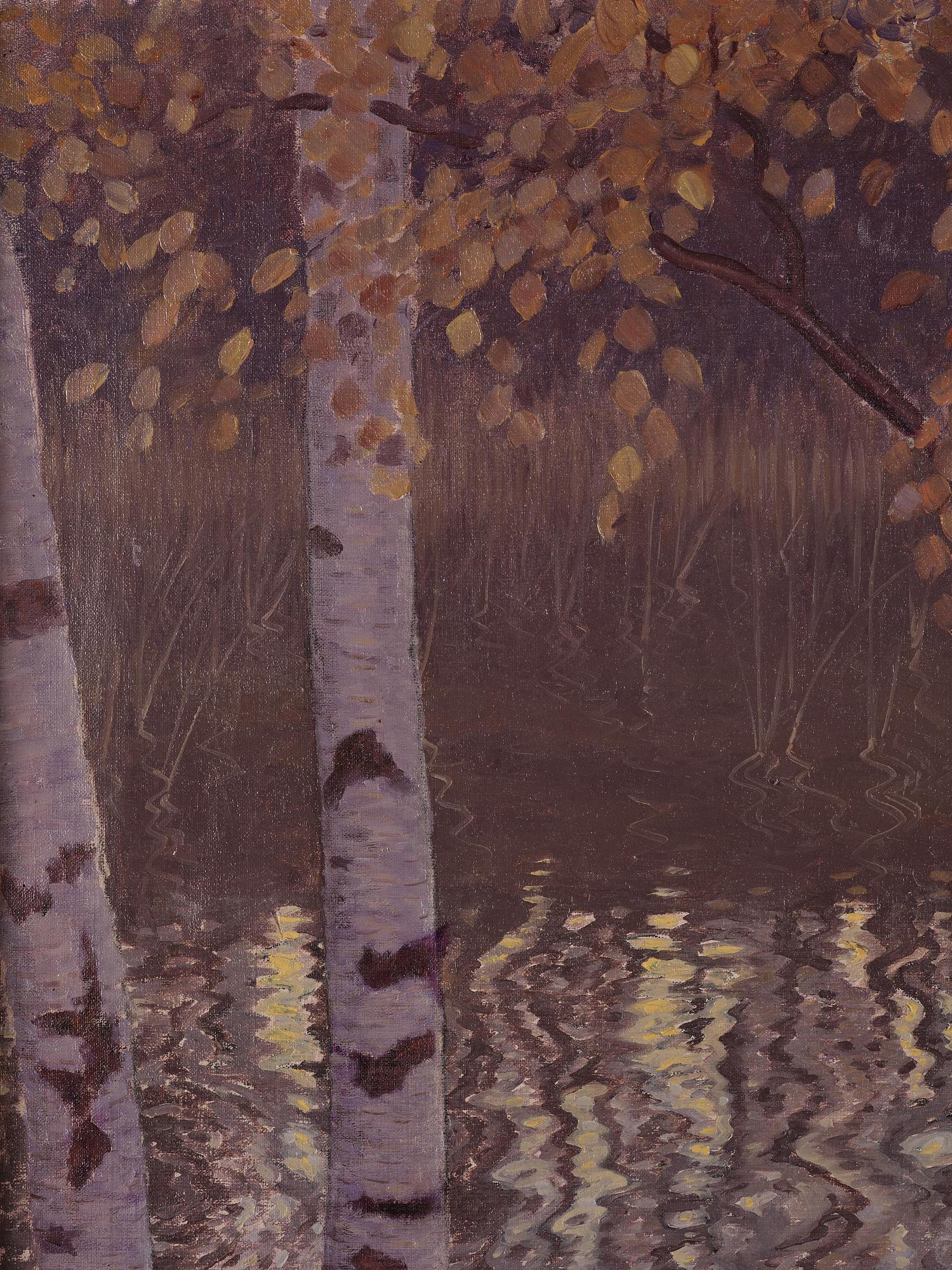
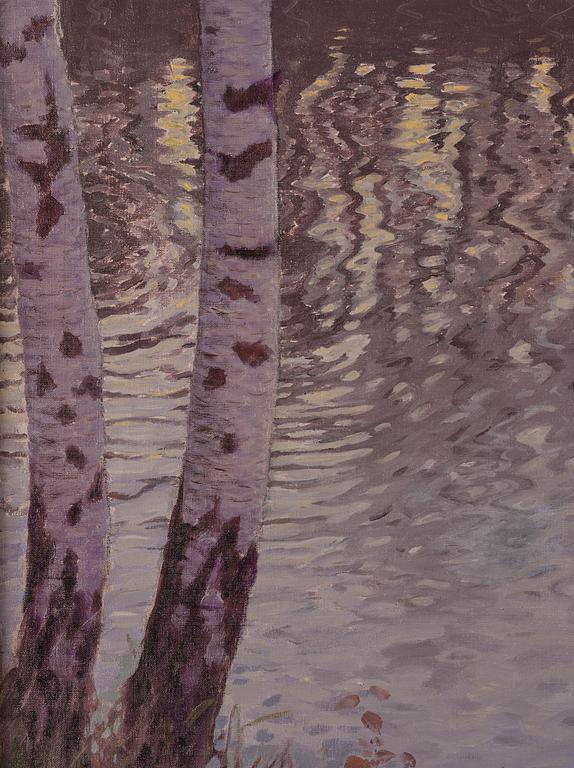
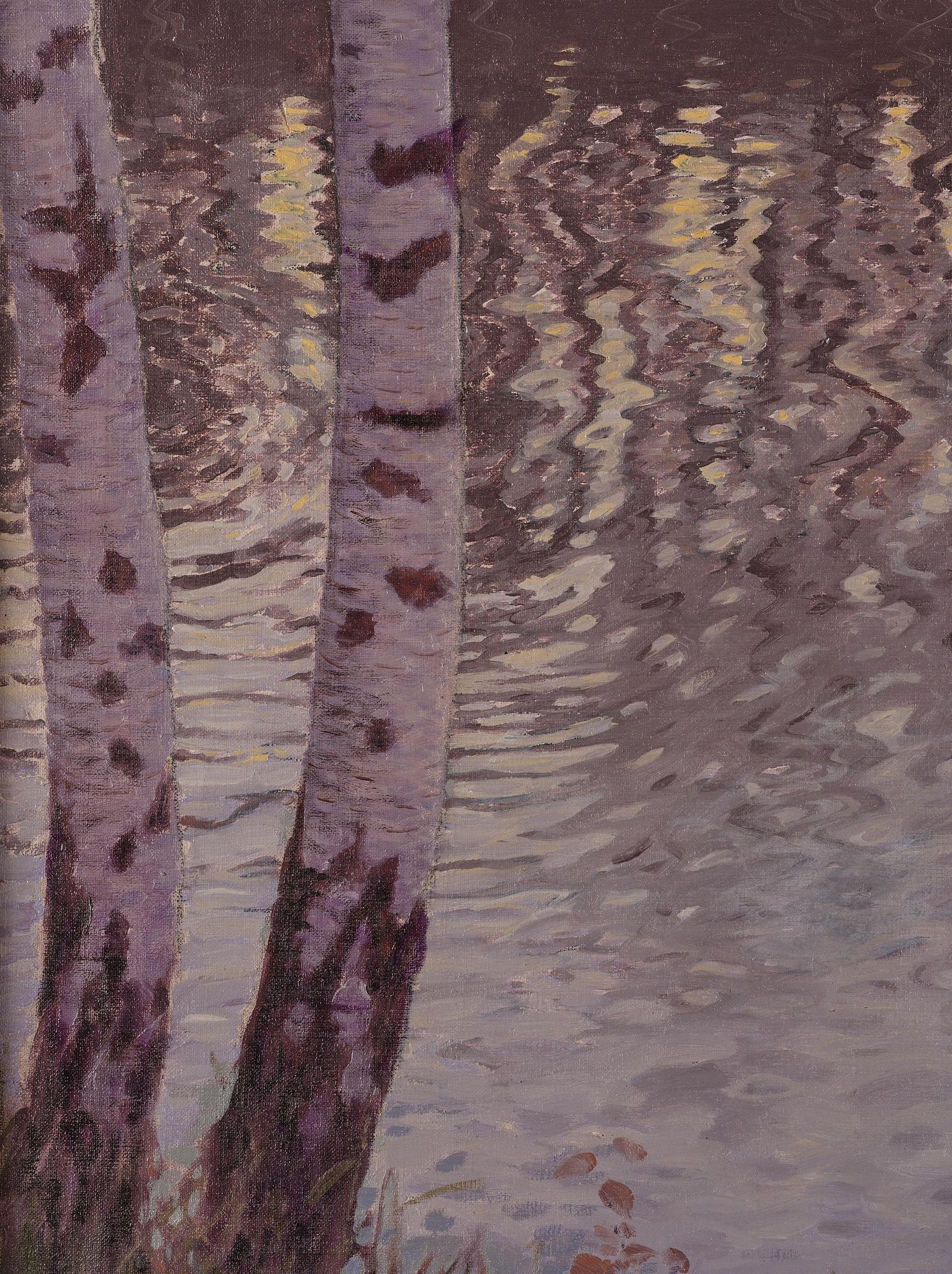
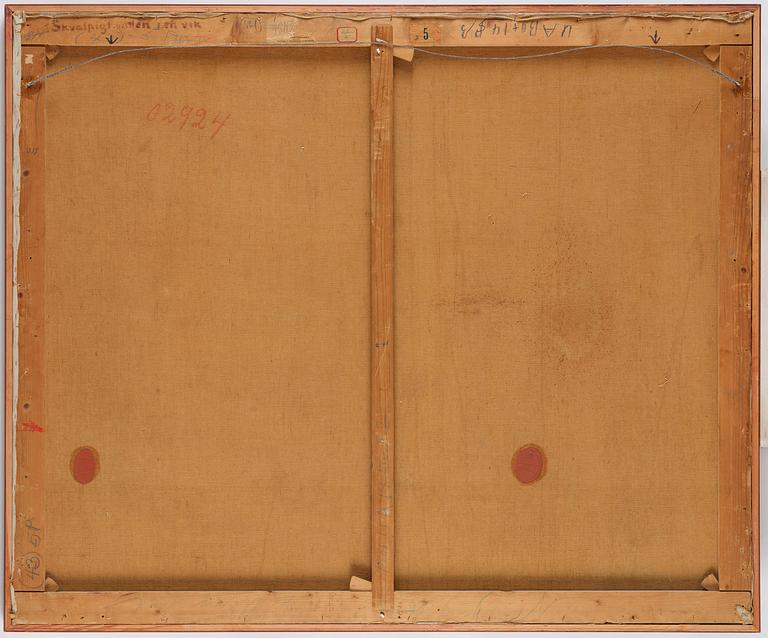
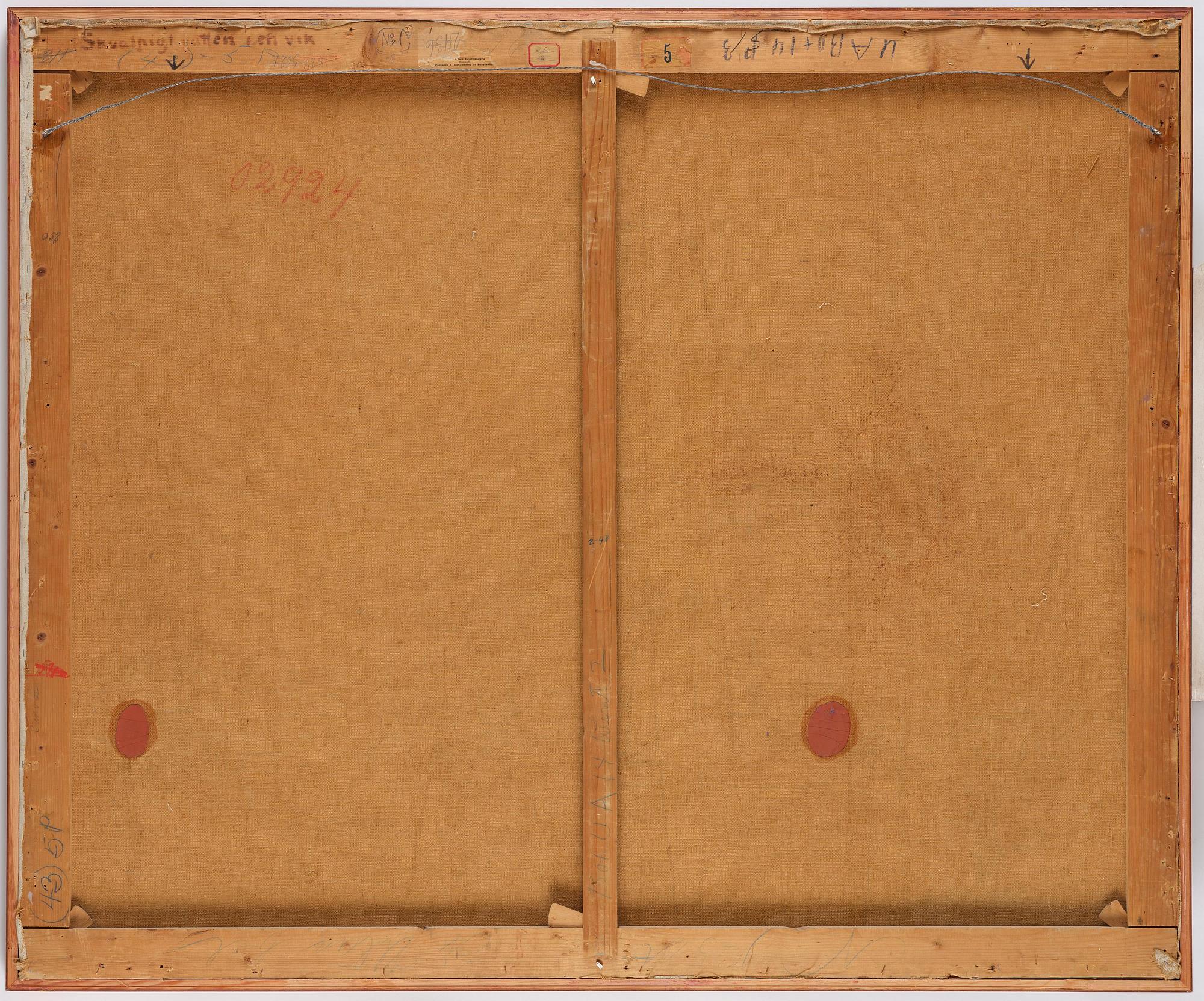
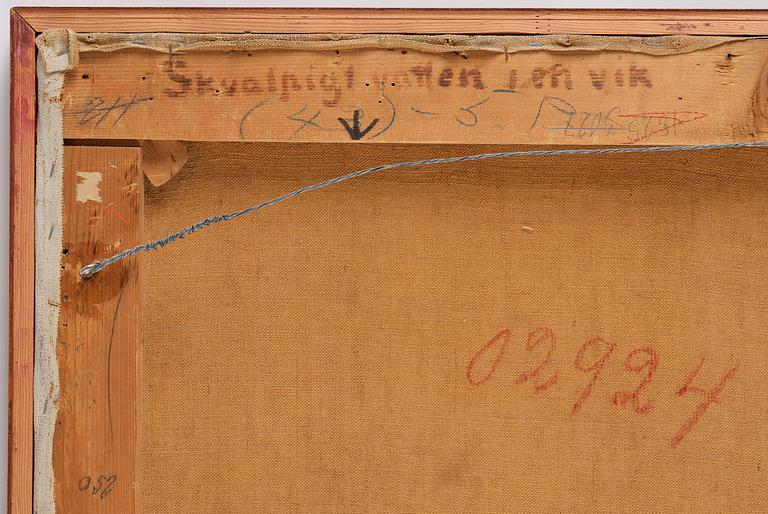
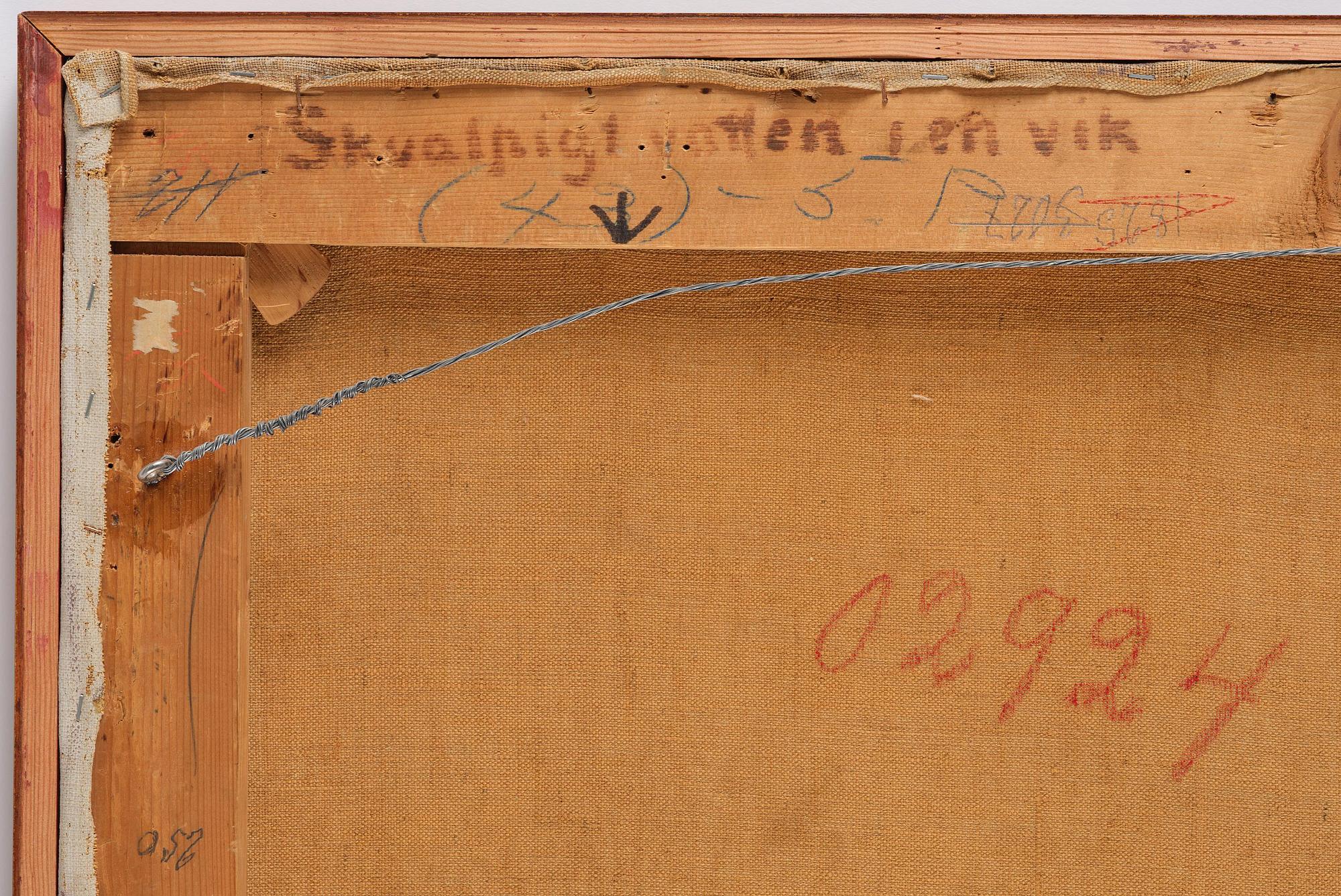
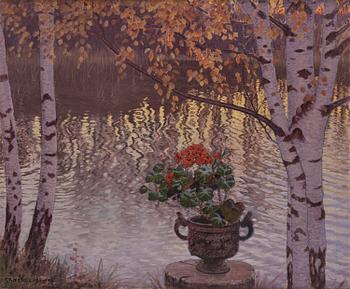
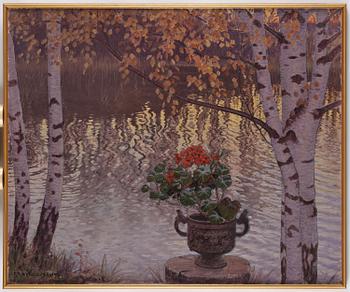
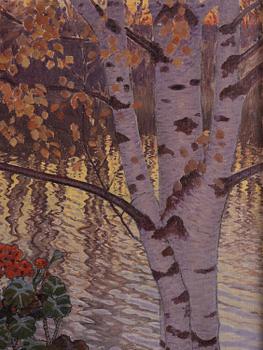
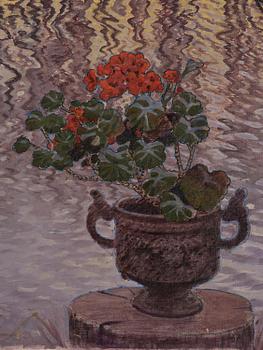
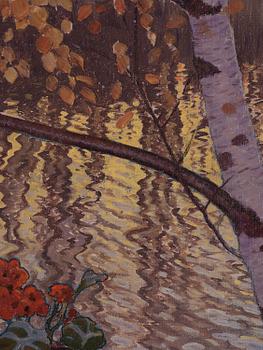
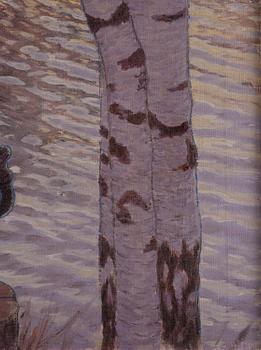
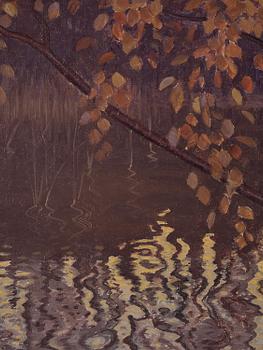
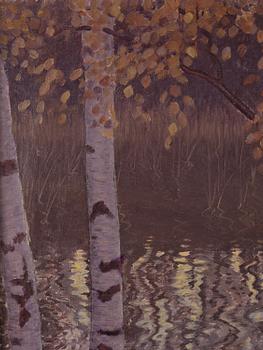
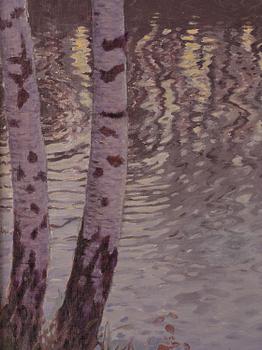
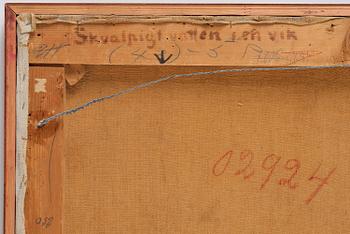
"Skvalpigt vatten i en vik" ("Moving water in a bay")
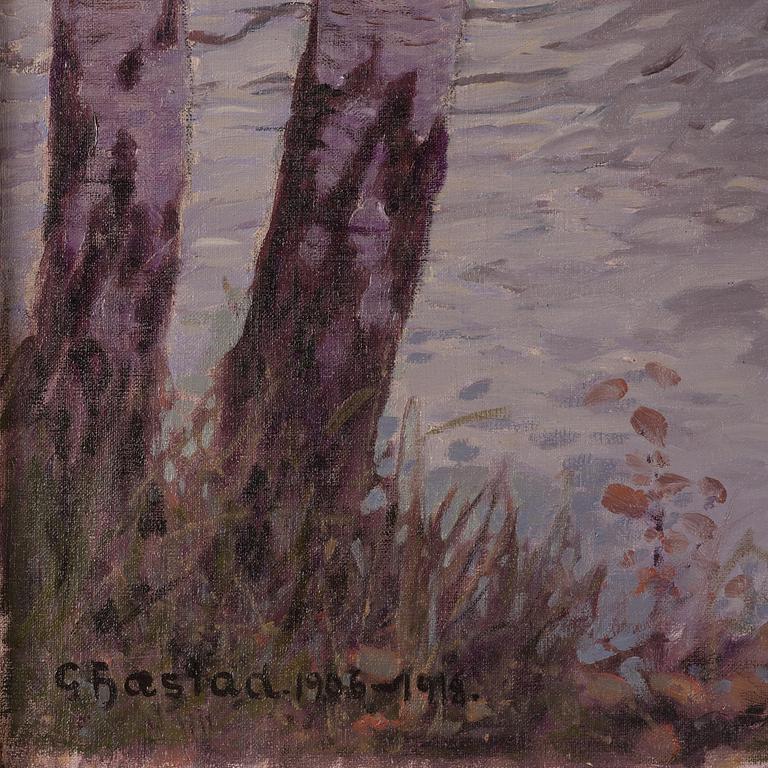
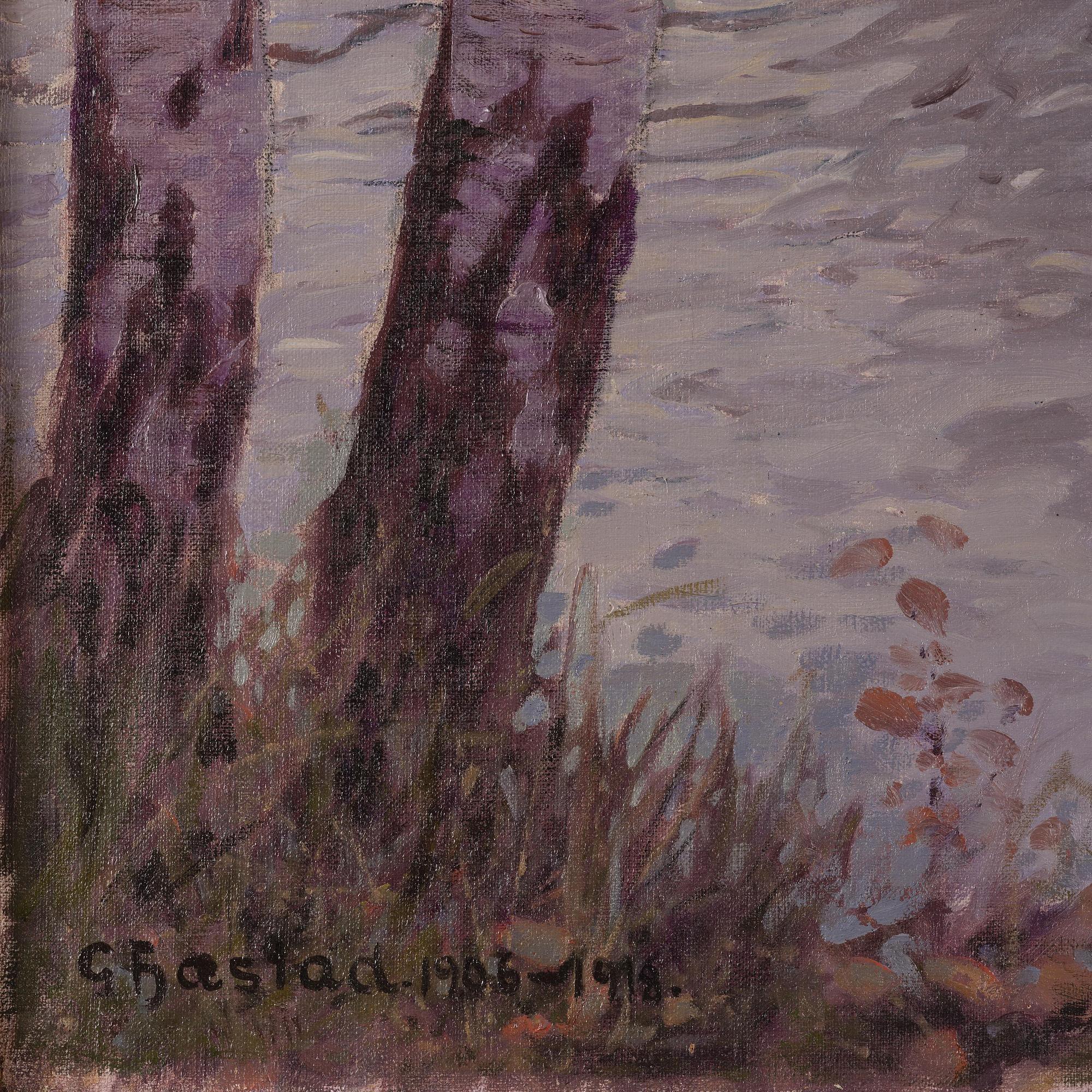
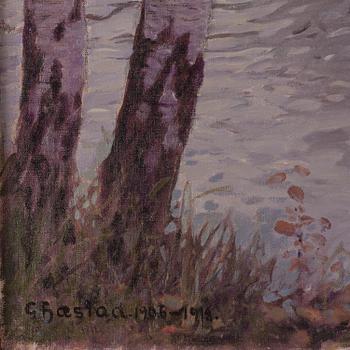
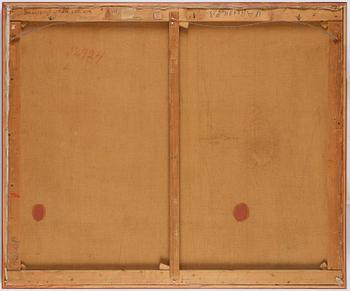
Signed G. Fjaestad and dated 1906-1918. Oil on canvas 130 x 160 cm.
Literature
Agneta Fjaestad Nordmark, "Fjaestads konst", 1999, p. 193 and 342, illustrated p. 202, called "Höst" (Autumn).
More information
Gustaf and Maja Fjaestad met for the first time at the Stockholm Exhibition in 1897, where Gustaf exhibited the painting "Herrgårdseken" and Maja showcased her textile works. The following year, they married in Väsby, Maja's home parish. The newlywed couple longed to live in the countryside, and they chose Värmland after Gustaf became enchanted by the beauty of the landscape during a previous trip. On the advice of Christian Eriksson, they moved to the area around Arvika, where they would remain for most of their lives.
After a period as tenants in the area, they purchased their first home in Rackstad. The house was beautifully situated on the peninsula Kampudden by the southern shore of Lake Racken, a few kilometres northeast of Arvika. There, they built both their family life and their artistic practice. Together, they had four children: Monica, Agneta, Bo, and Lars.
Life at Kampudden was characterised by community and creativity. They frequently socialised with other artists and craftsmen in the area, and the Rackstad colony became a gathering place for friends and colleagues. Their home was often open to guests, and Maja was largely responsible for the household work. During the summers, the children spent much time by the water, playing and swimming. Agneta Fjaestad Nordmark in "Fjaestads konst," 1999, writes that the artist studied "the movements of the water in the bays on both sides of his newly built home, Kampudden, by Lake Racken. The bubbling water seemed to tease the artist to capture its movements and reflections with his brush on canvas." She also notes that with the help of his camera, which he had purchased in Oslo in 1903, he could capture and study the formations of the moving water. In winter, the landscape was filled with snow, and the family engaged in skiing and skating in the tranquil nature.
Gustaf Fjaestad is today particularly known for his grand winter motifs. In the auction's ”Skvalpigt vatten i en vik”, we see a twilight scene in autumn. Agneta Fjaestad Nordmark refers to the painting simply as "Höst." The last rays of the sun are reflected on the rippled water surface, the birch's fiery yellow leaves flutter in the wind, and as a fiery red accent, the floral splendour in the cast-iron urn placed at the water's edge glows. Fjaestad succeeds in the artistic feat of depicting his beautiful surroundings, regardless of the season, with a sensitivity and reverence for the power and striking beauty of nature.
More about Gustaf Fjæstad
Gustav Fjaestad was a pupil of Bruno Liljefors and Carl Larsson. He became renound for his depictions of Swedish winter landscapes, often with glistening icecrystals and bubbling water by ice's edge, sometimes lit up by the setting sun, sometimes in scales of grey, white and purple. He also designed templates for woven wallpapers, furniture, and wrought iron. He is represented in major Swedish museums as well as in Vienna and Chicago.
Read moreFor condition report contact specialist

Others have also viewed