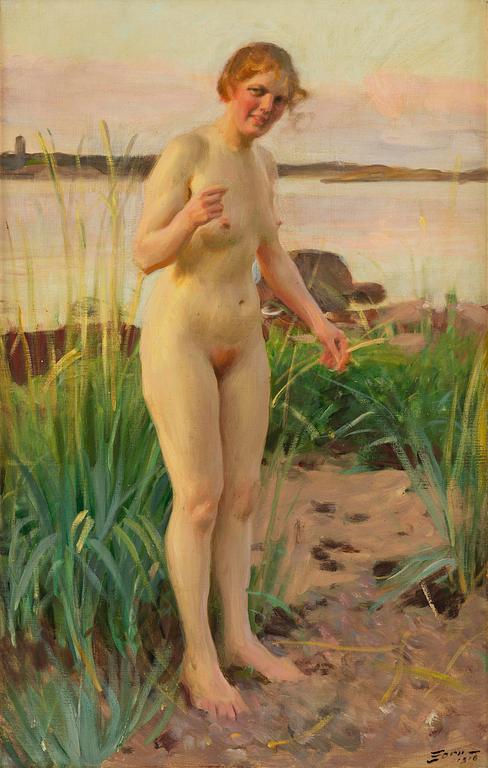
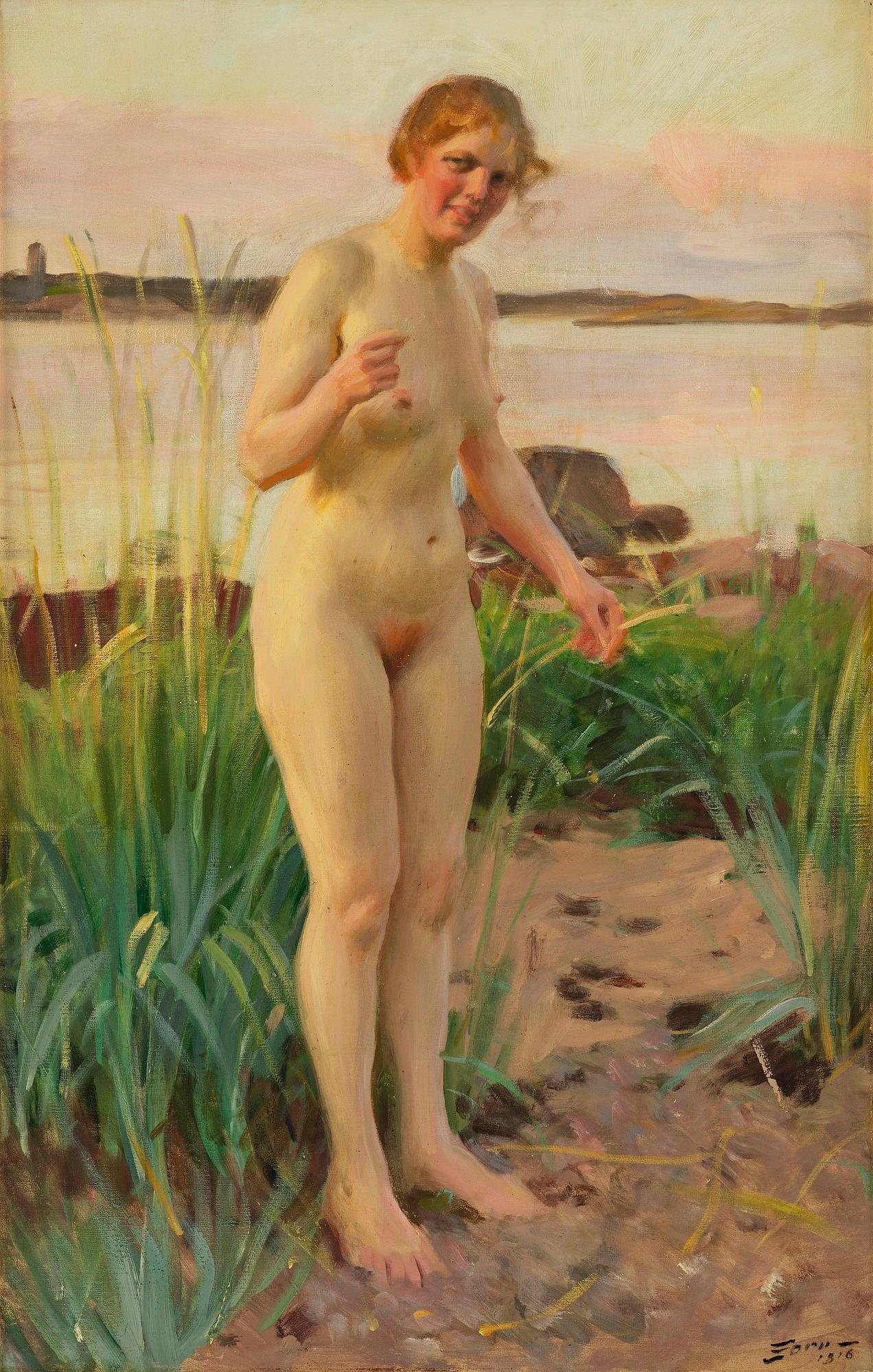
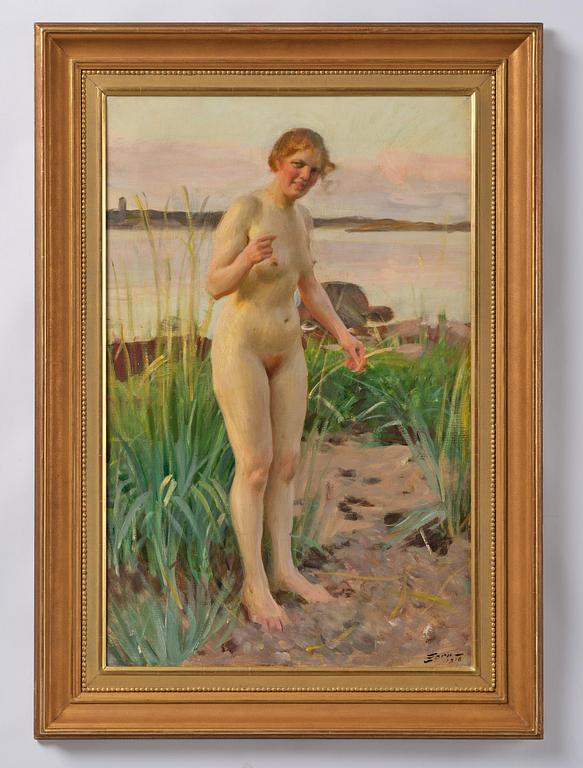
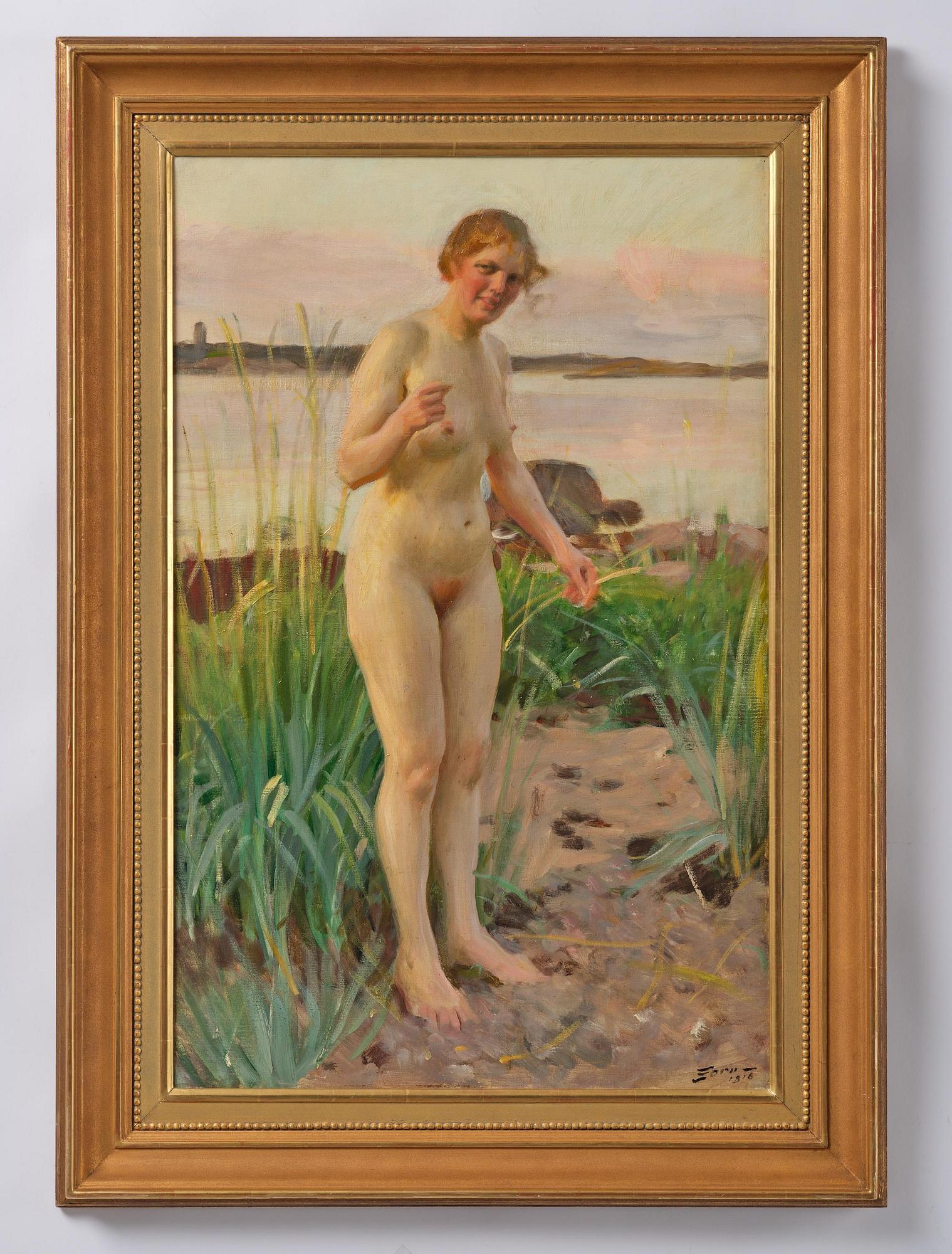
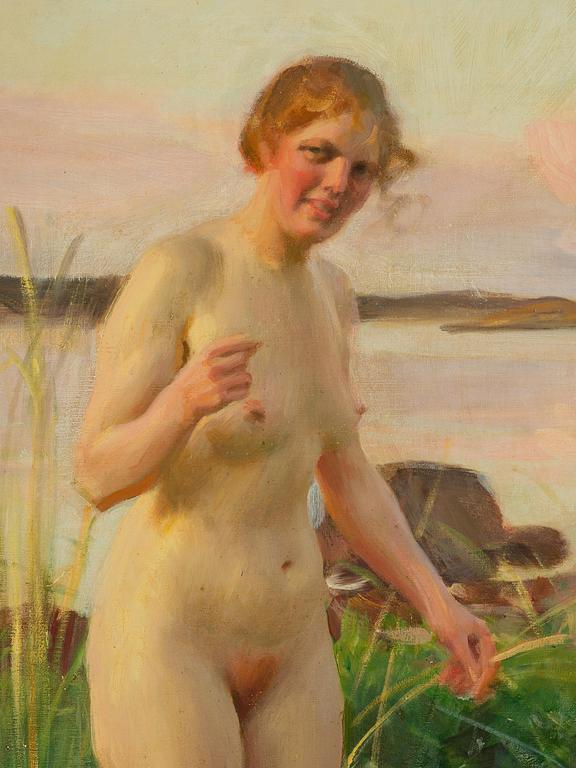
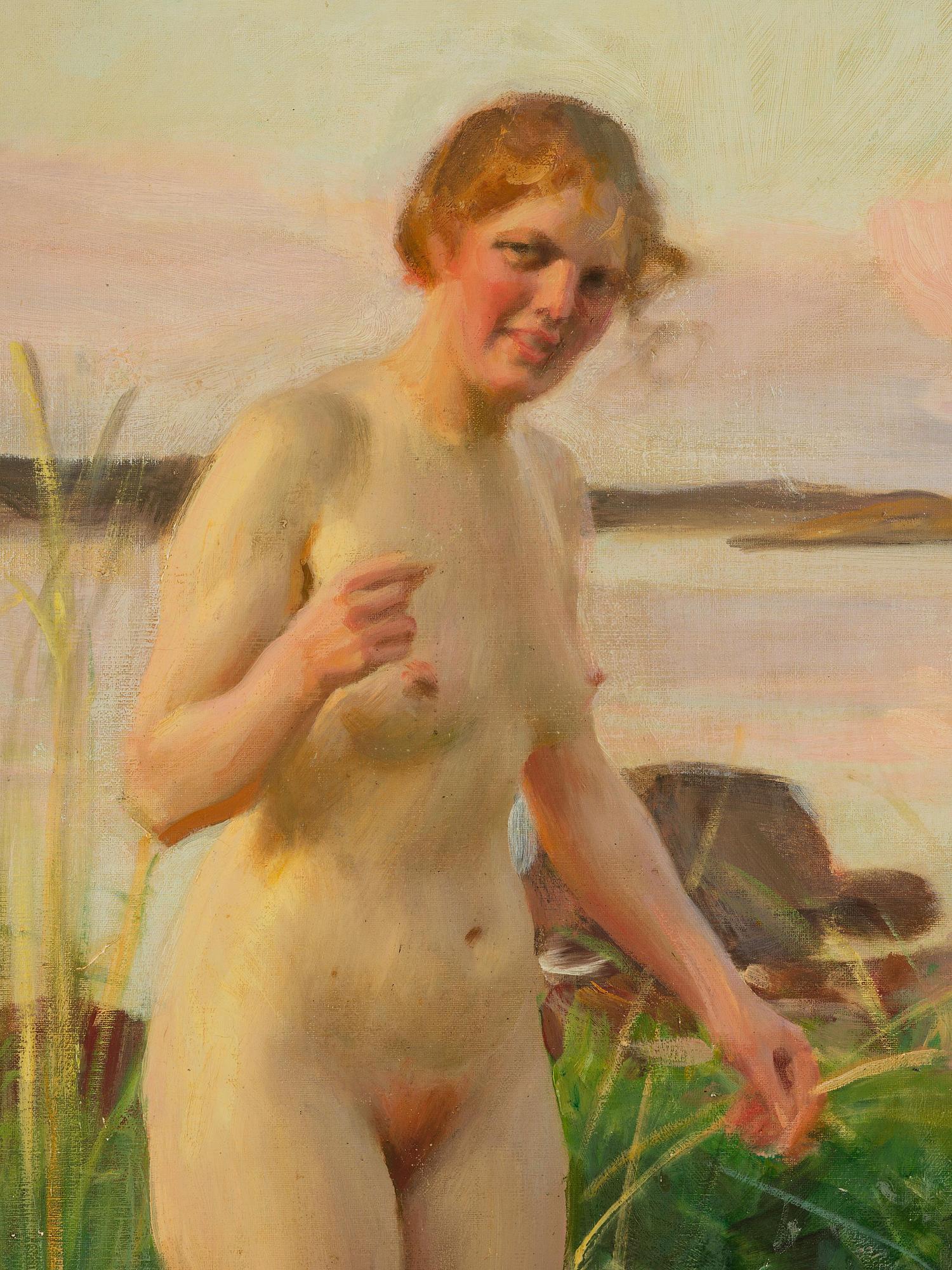
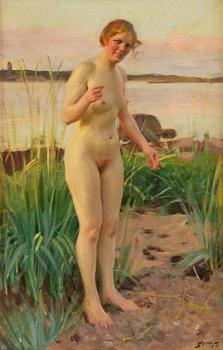
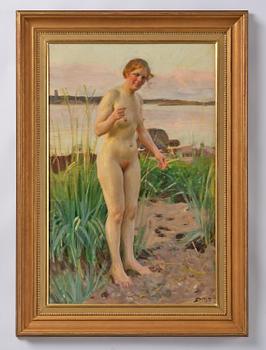
"Småländska" ("Woman from Småland")
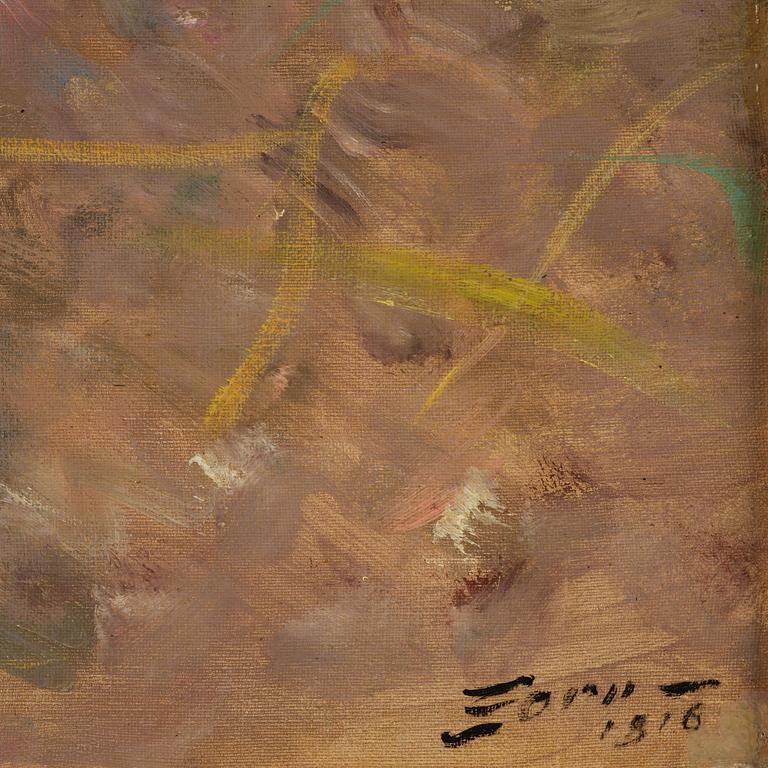
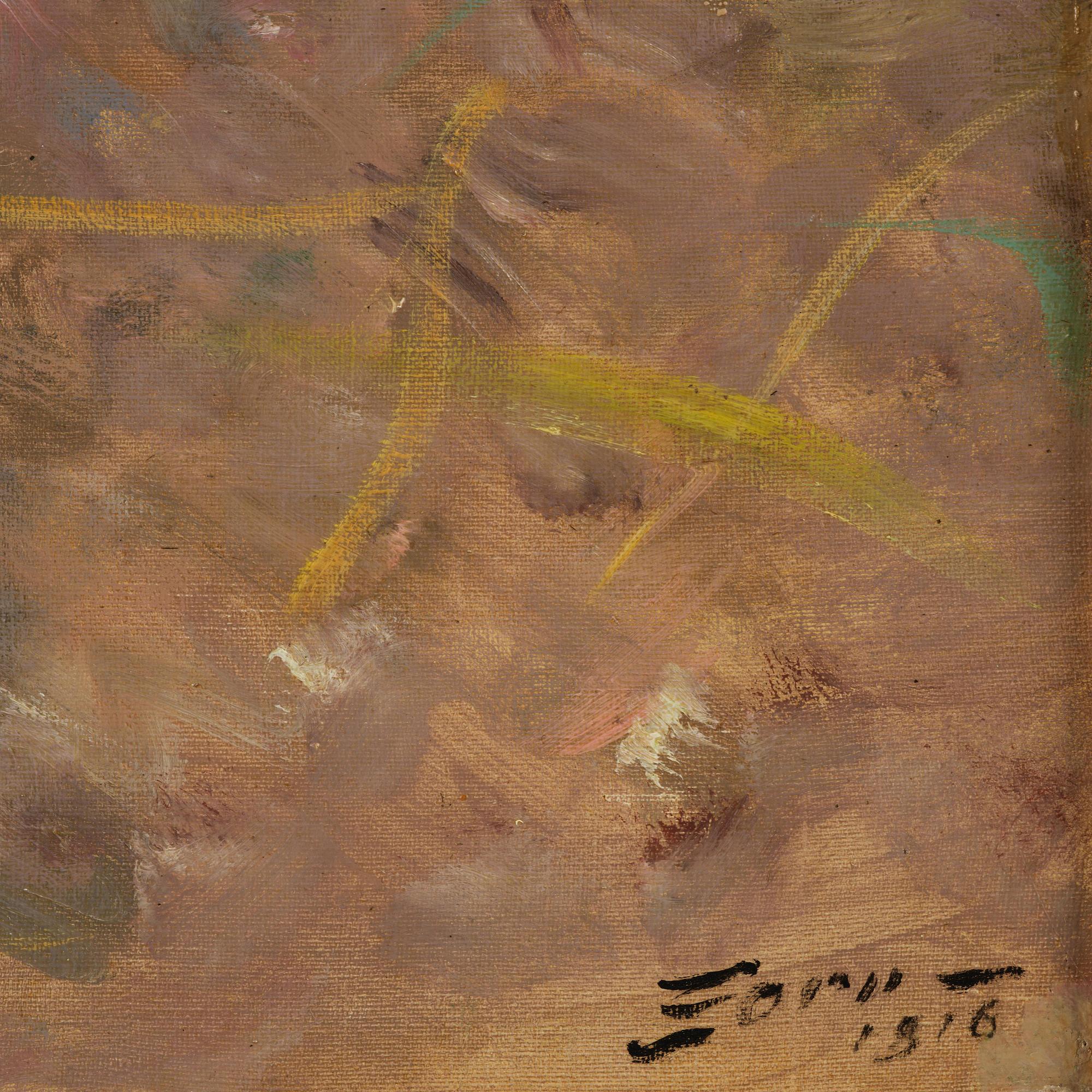
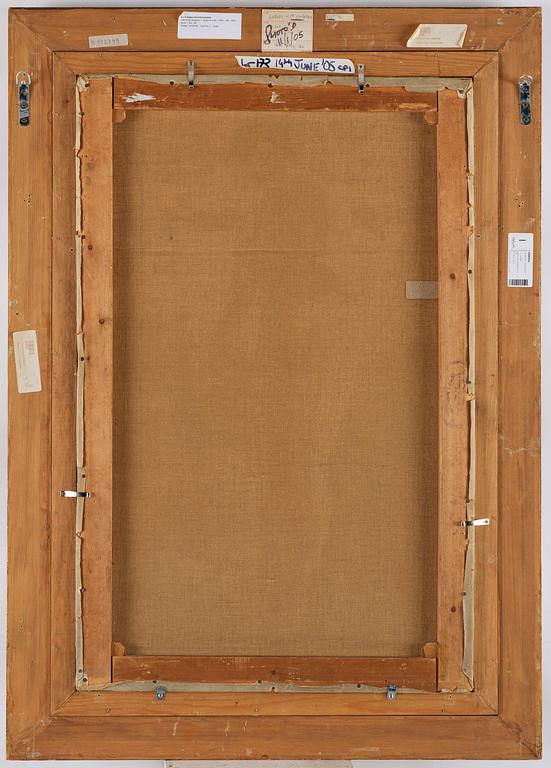
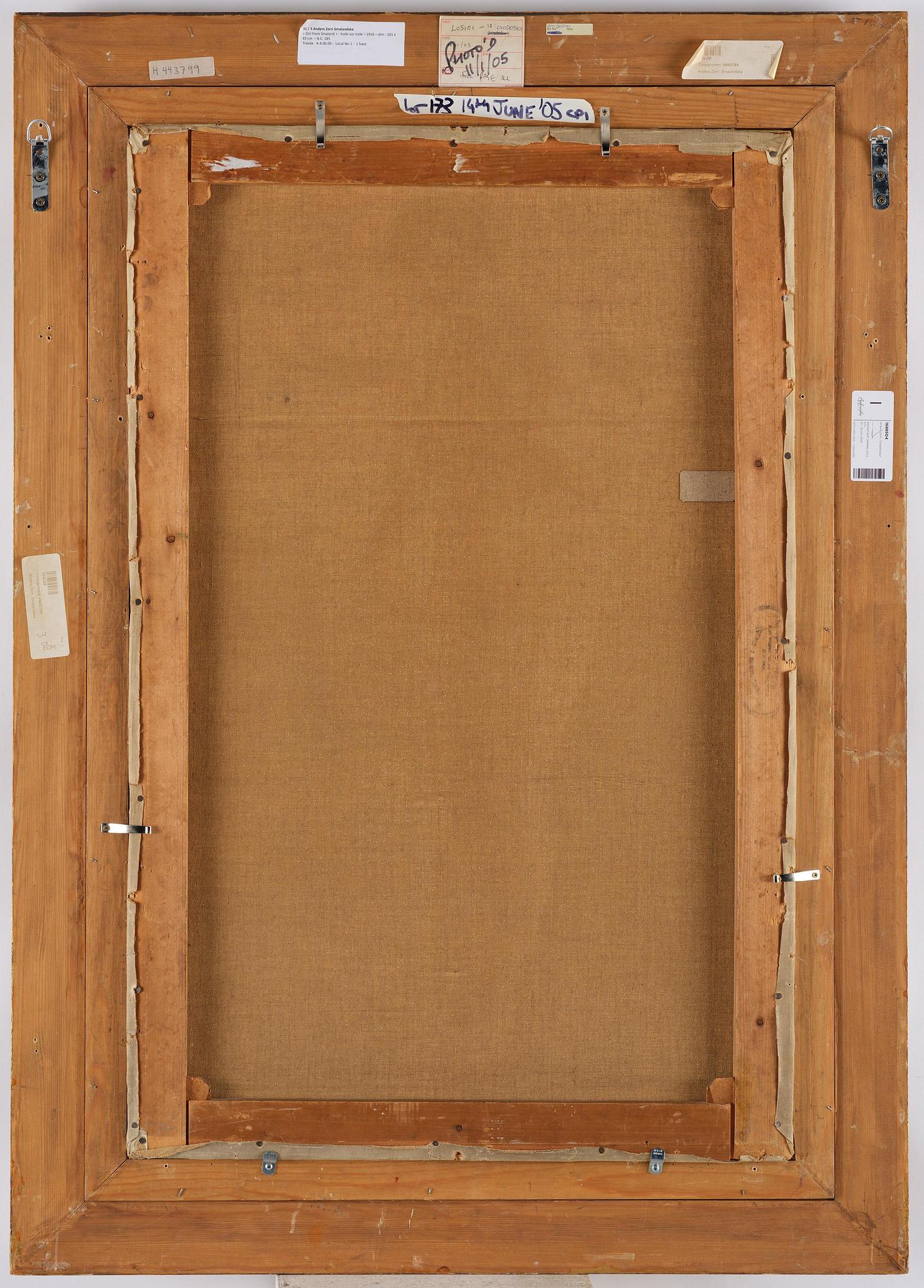
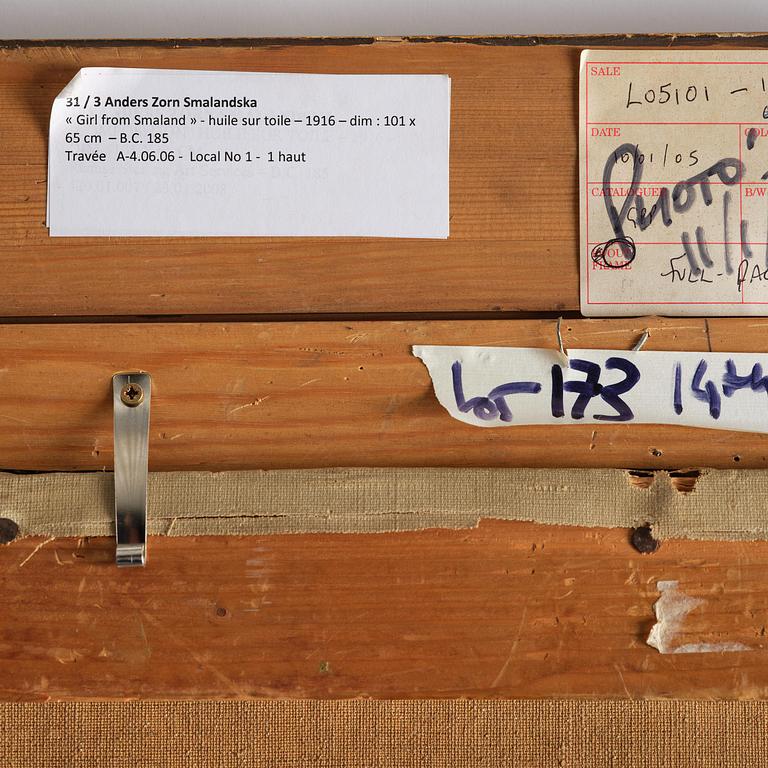
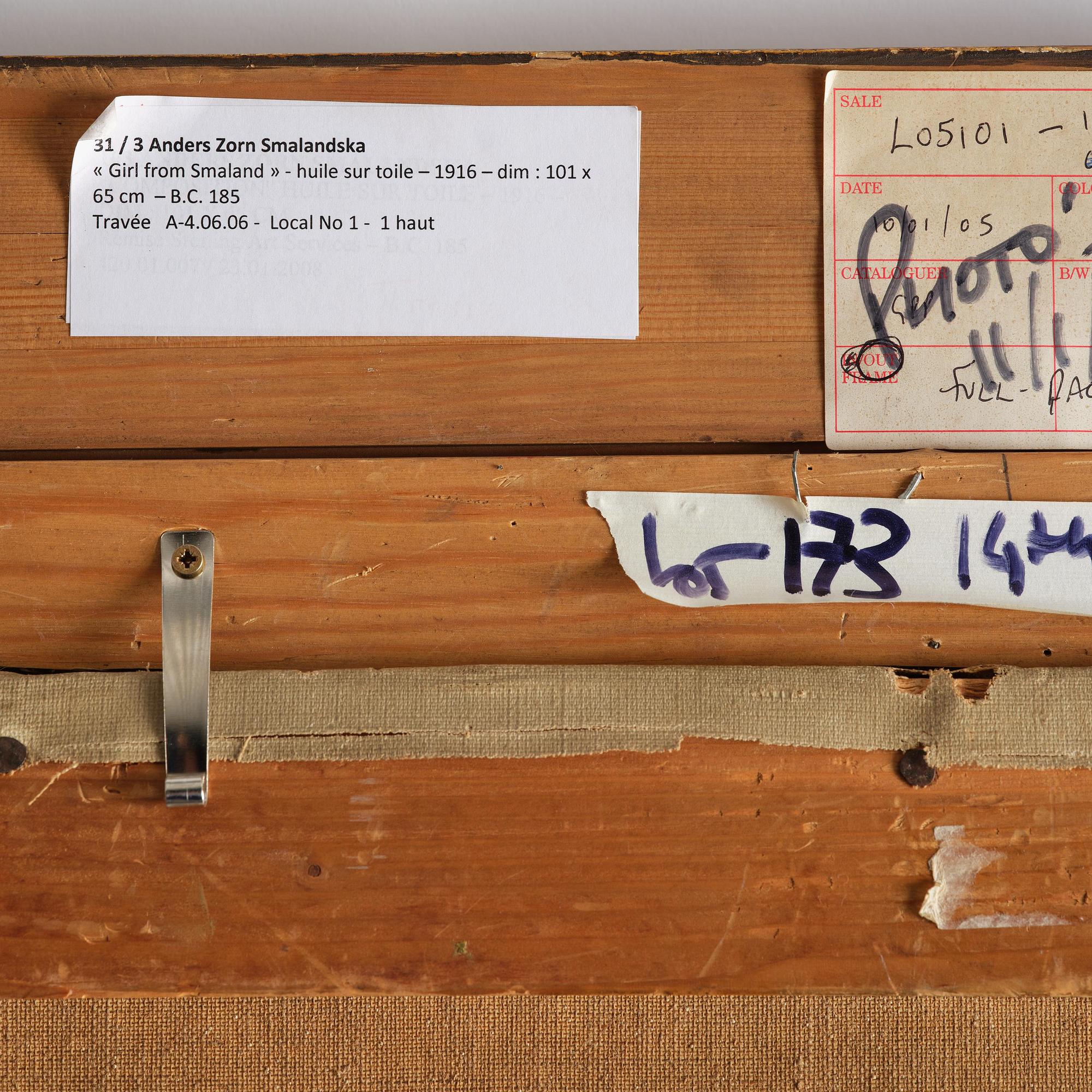
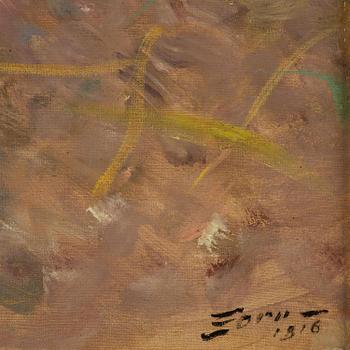
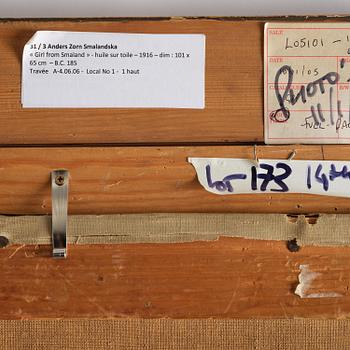
Signed Zorn and dated 1916. Oil on canvas 101 x 65 cm.
Provenance
Director C. Frunck.
Nordén Auktioner, Stockholm, auction 1, 11 May 1992, cat. no. 42.
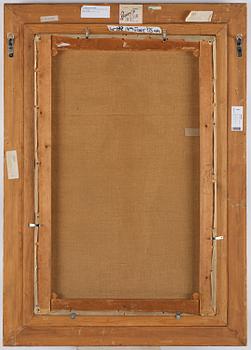
Sotheby's, London, 14 June 2005, cat. no. 173.
Exhibitions
Liljevalchs konsthall, Stockholm, "Invigningsutställning. Larsson-Liljefors-Zorn", March – April 1916, cat. no. 117.
Literature
Ernst Malmberg, "Larsson - Liljefors - Zorn: en återblick", 1919, p. 123, illustrated.
Gerda Boëthius, "ZORN. Tecknaren. Målaren. Etsaren. Skulptören", 1949, listed in the catalogue section under the year 1915.
More information
Anders Zorn occupies a singular position in Nordic art history—not only as an internationally celebrated portrait painter, but also as a pioneer of plein air painting. His studies of the nude, particularly those set in water and within the Swedish landscape, constitute some of the most distinctive and artistically sophisticated elements of his oeuvre. It was in the late 1880s, during his summer visits to Dalarö, that Zorn began depicting the nude female body in the sunlit archipelago environment. This theme would remain central to his work throughout his career and brought him considerable acclaim and renown.
As a world citizen, Zorn moved far beyond the borders of Sweden and was by no means confined to Mora or the archipelago. This situation changed, however, with the outbreak of World War I. The shifting global context disrupted the artist’s international connections and had a profound impact on his life, as he became increasingly settled in Mora. His year was now divided with greater regularity between Dalarna, Stockholm, and the archipelago. During this period, Zorn’s choice of subject matter was dominated by plein air painting and nature—the vast “open-air studio” offered boundless possibilities and became the environment in which his creative energy flourished.
According to Zorn’s biographer Gerda Boëthius, the 1910s mark a renewal in his painting. She identifies “a new phase, in which both subject and execution display novel qualities, and the palette acquires a distinctive tonality with a tendency toward pink hues. In his archipelago paintings, he returned with particular fondness to the motifs of his youth, where water and rocks form the setting. […] He filled the canvas with finely modulated tones, planes, values, and forms, so that one may ‘read his paintings’ as a musician reads a score. His palette is, if anything, more austere than in his youth. He often achieved light effects through scraping or the application of exceedingly thin layers of paint.”
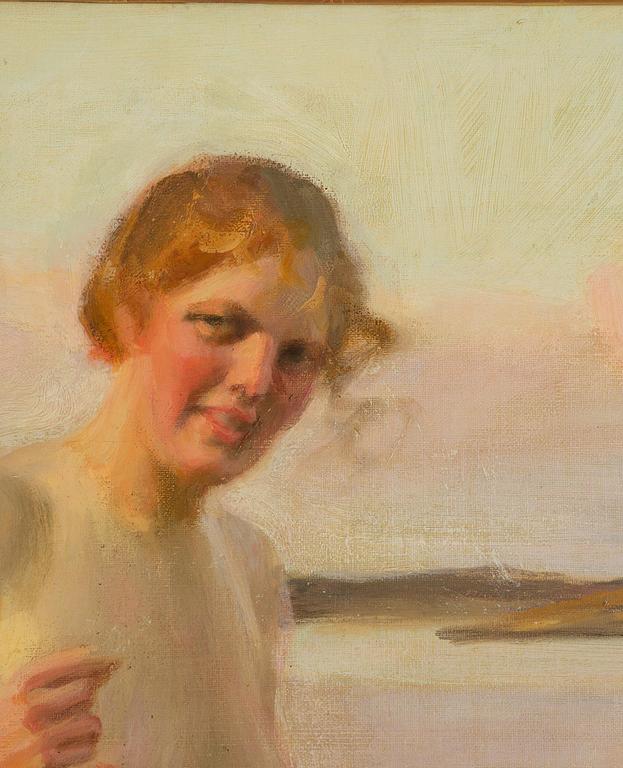
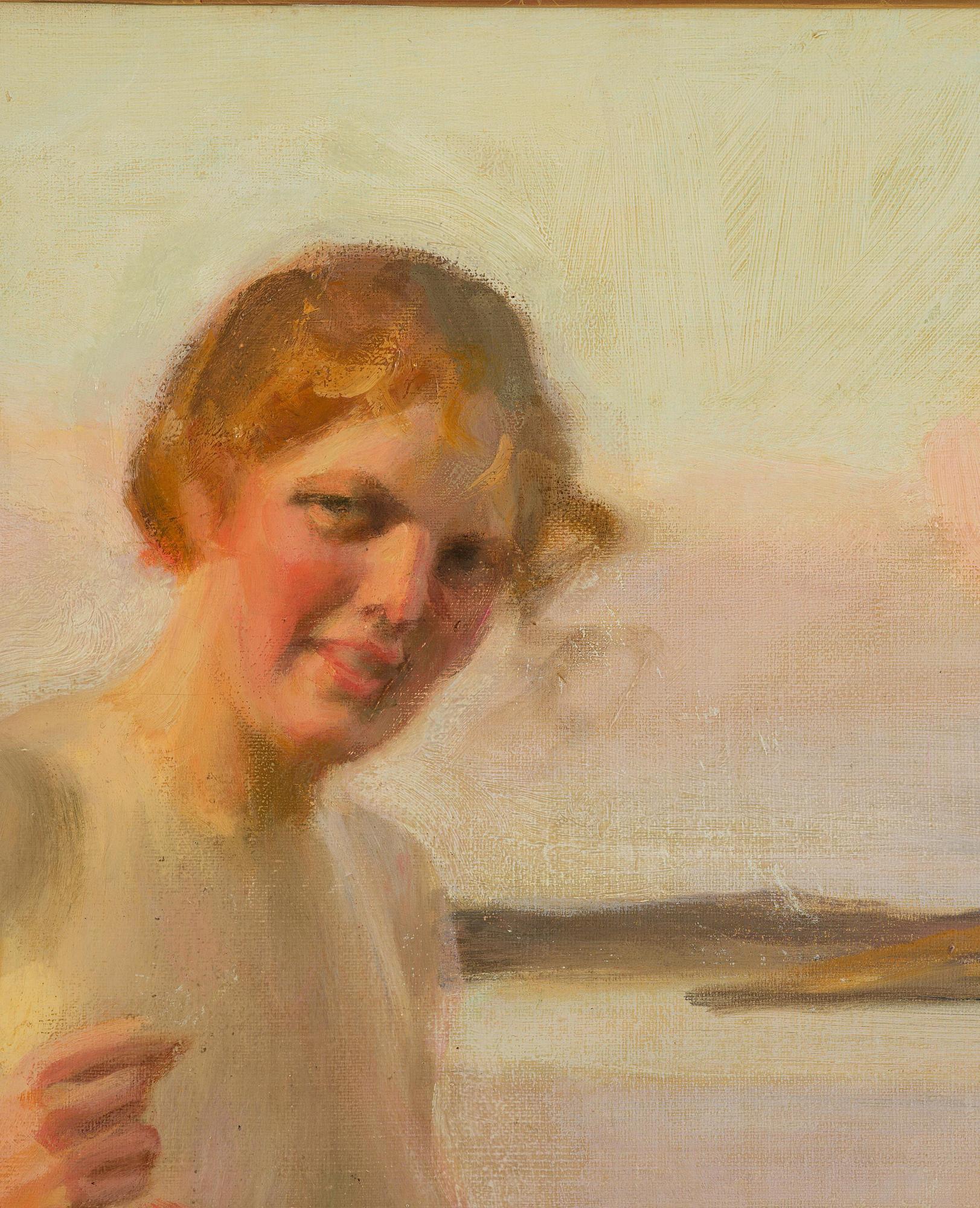
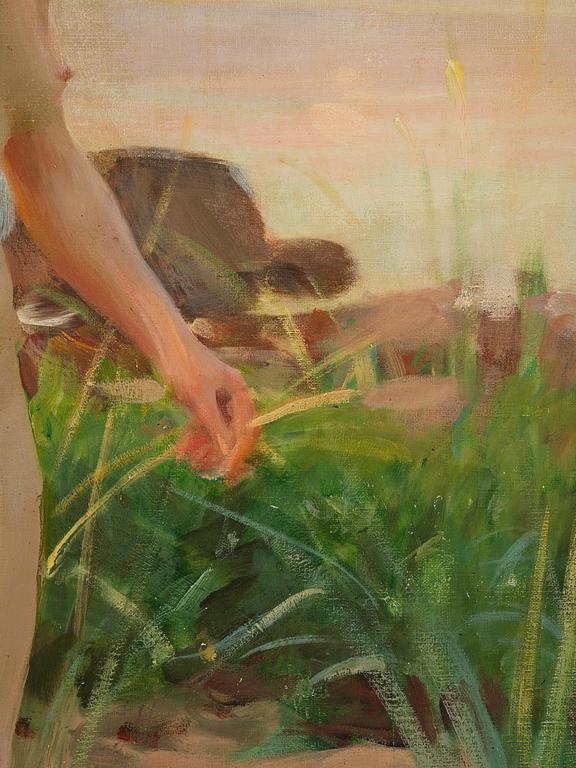
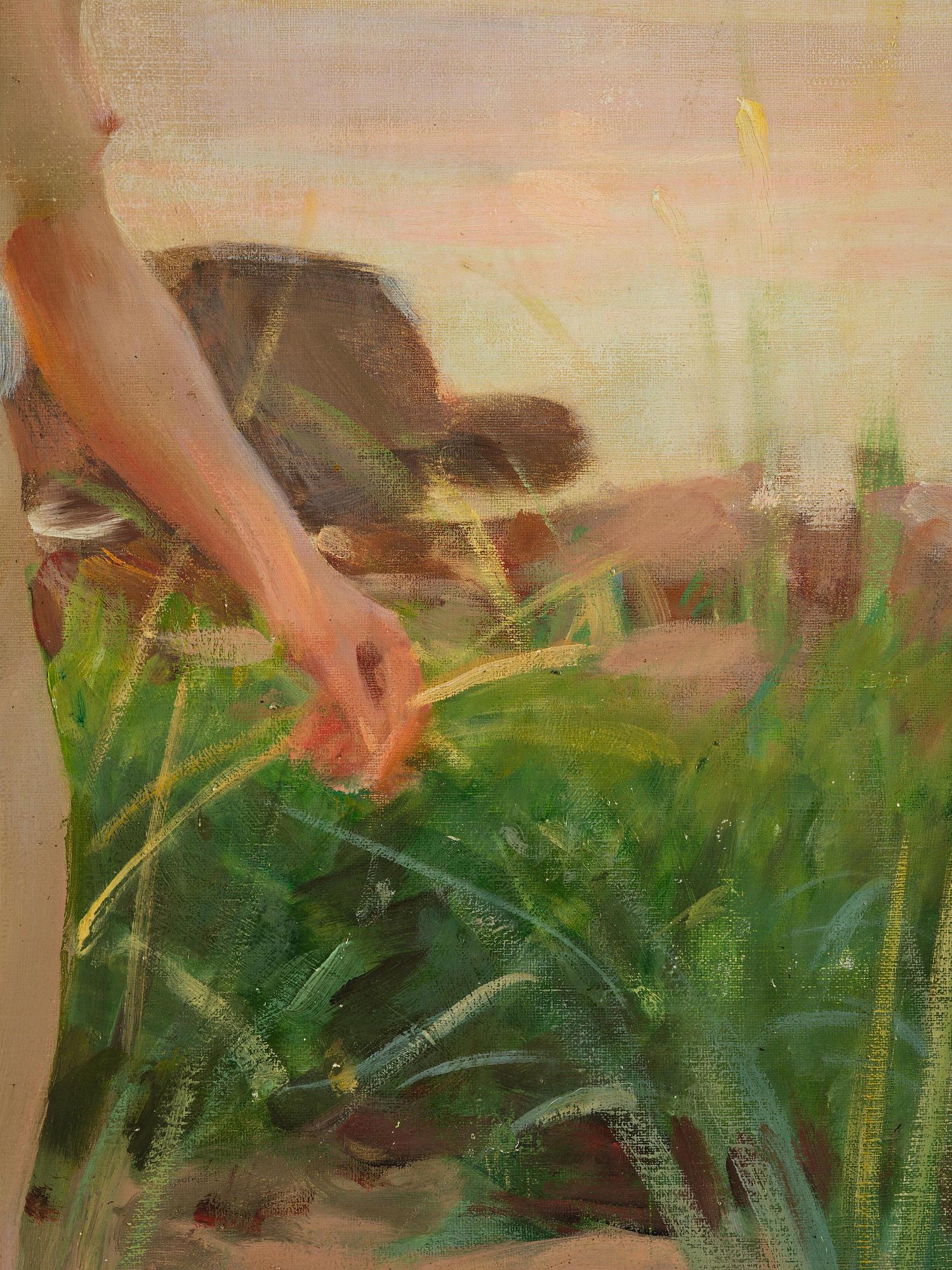
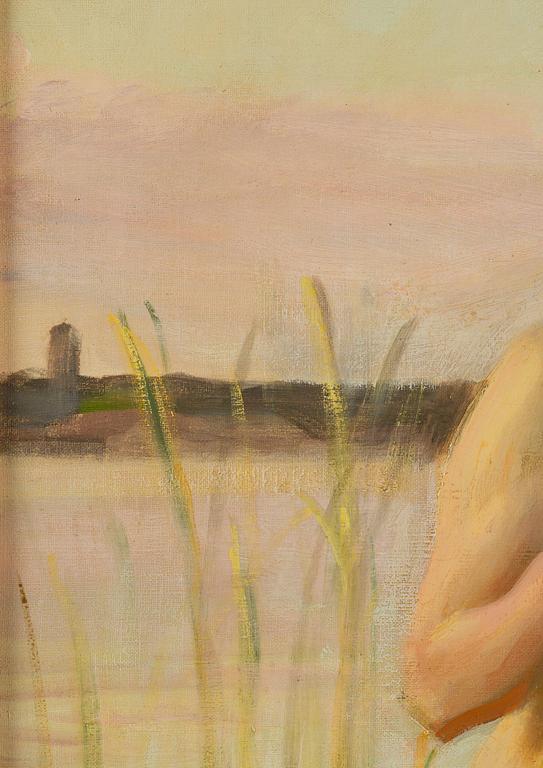
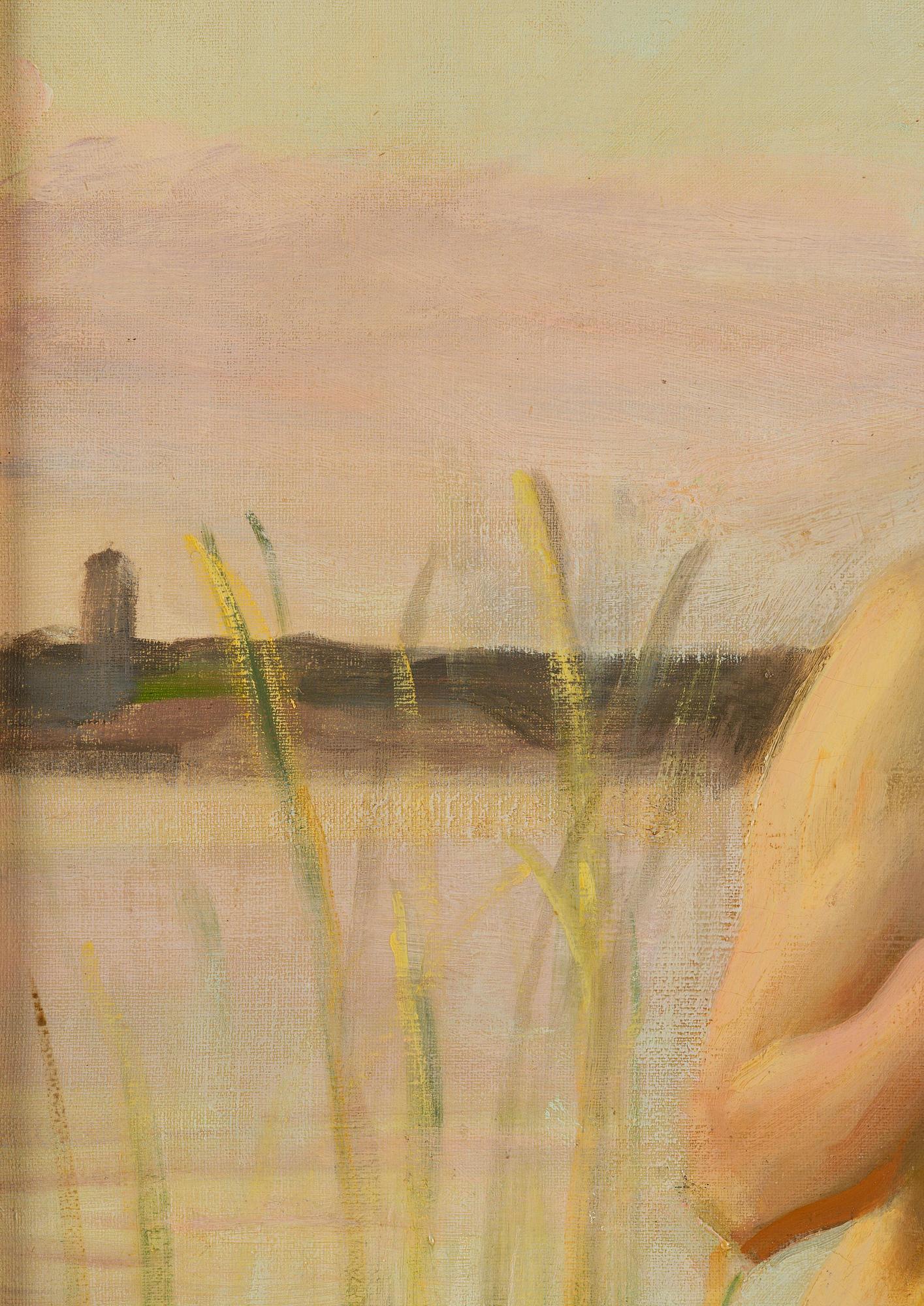
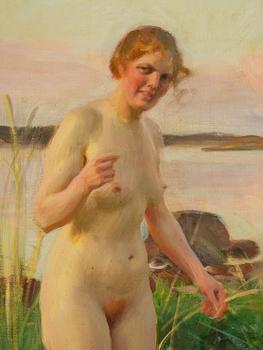
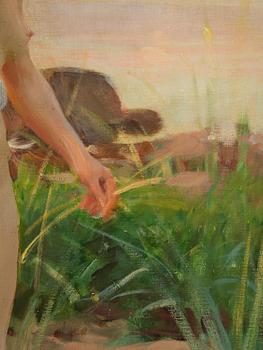
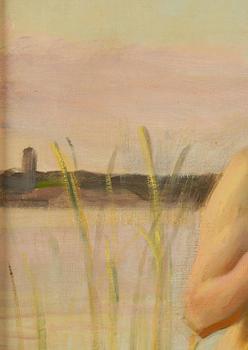
The vibrant nude study Småländska was likely executed during one of Zorn’s summer sailing excursions in the Stockholm archipelago. The woman is depicted on a beach at Sandhamn, with the stone beacon on Korsö visible in the background—the same setting seen in the widely circulated and much-admired etching The Swan from the same year. In the Swedish archipelago, Zorn found an environment that offered both seclusion and a distinctive Nordic light. Here, the viewer encounters the mature Zorn’s interpretation of the theme “the nude in the open air.” Hans Henrik Brummer, who describes the artist’s final painterly phase as ultima maniera, has emphasized how this period is characterized by simplification and a more restrained palette. The broad brushstrokes and softened contours suggest a shift in the artist’s own perception of his painting and subject matter. The focus lies on the essence of the motif, and, as in other works within this thematic sphere, Zorn achieves a synthesis between landscape and figure painting.
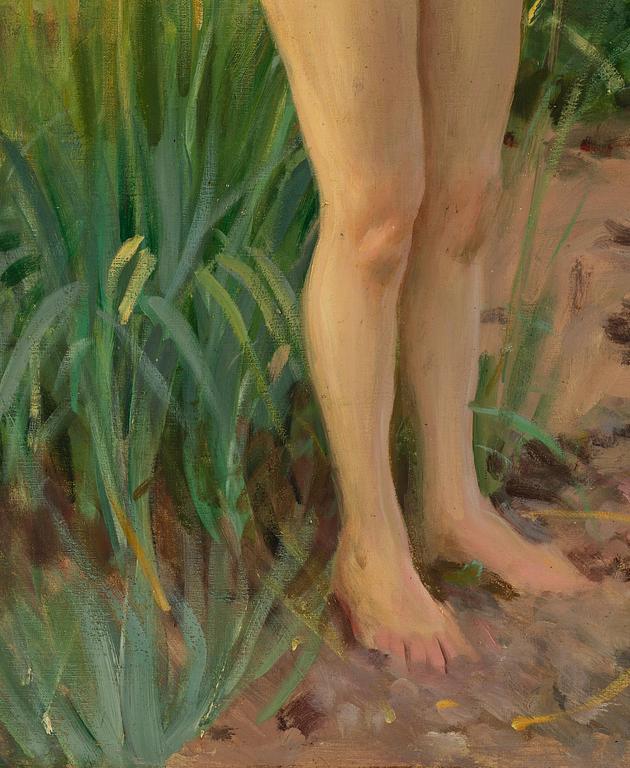
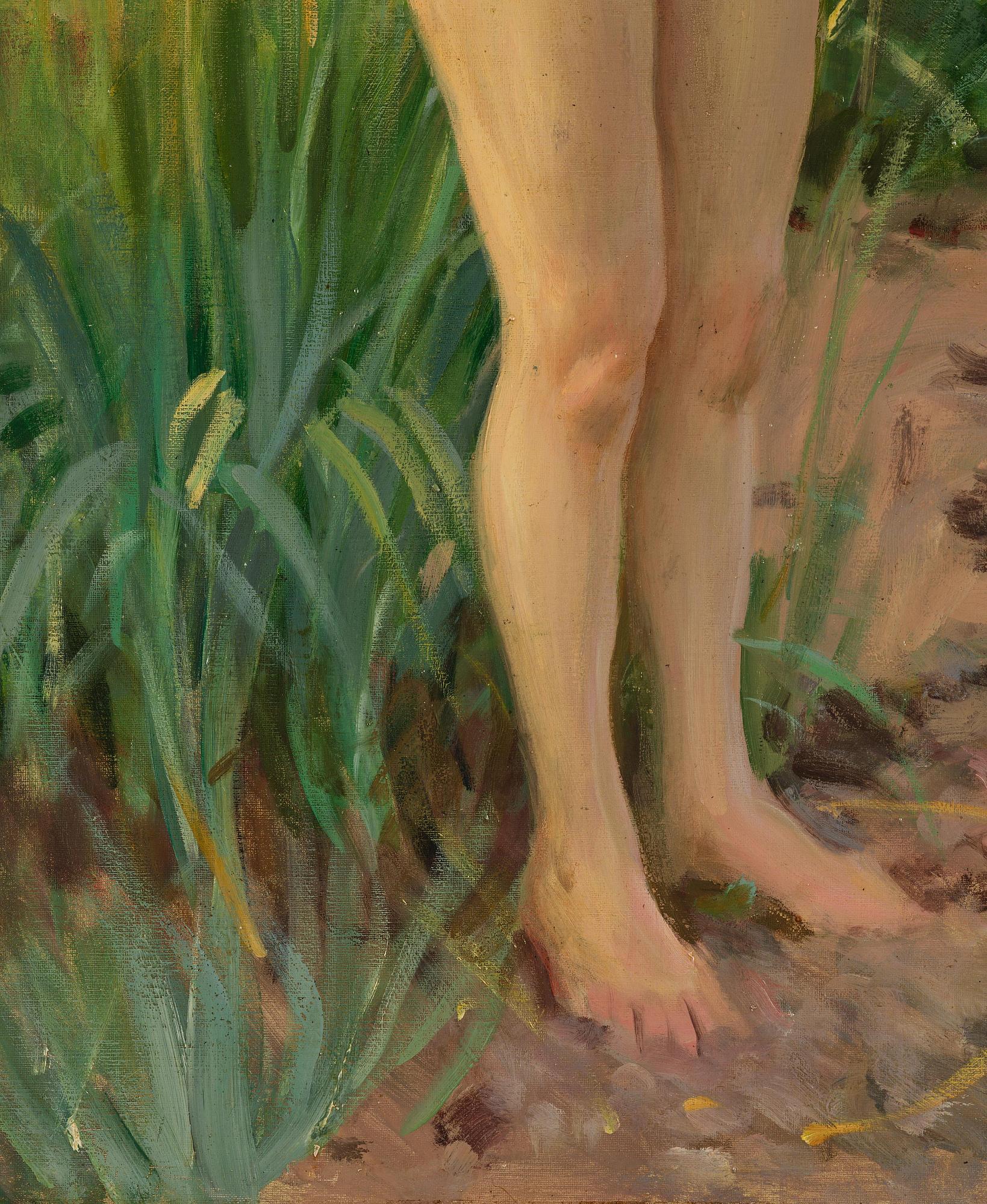
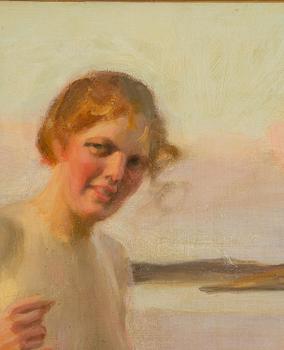
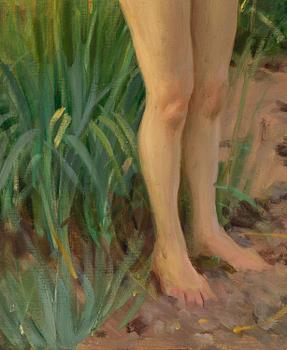
In the auction painting Småländska, the nude motif appears less as an academic study and more as a sensuous and existential image of the human being in nature. The figure is not idealized in a classical sense, but rather immediate, corporeal, and anchored in a specific moment. The warm light of dusk is reflected in the woman’s sun-kissed skin, while the sky is suffused with a spectrum of hues.
Despite the emergence of modernist tendencies at this time - and occasional critical hesitation - Zorn continued to be regarded by the broader public as a national painter. His works remained highly sought after, with collectors and buyers continuing to queue for them. When Liljevalchs Konsthall in Stockholm opened in the spring of 1916, the three leading figures of turn-of-the-century Swedish painting—Anders Zorn, Carl Larsson, and Bruno Liljefors—were given the honor of inaugurating the exhibition spaces. The painting Småländska held a natural place among Zorn’s selected works in this much-discussed exhibition.
More about Anders Zorn
Anders Zorn, born in Mora in 1860, showed artistic talent from a young age. In 1875, he traveled to Stockholm and became a student at the then Slöjdskolan (now Tekniska högskolan) in Stockholm, and shortly after, he joined the Royal Academy of Fine Arts. Initially, Zorn had aspirations of becoming a sculptor, but soon watercolor painting took over, becoming his primary medium until 1887. At the student exhibition in 1880, Zorn had his breakthrough with the watercolor painting "I sorg." The following year, he gained international acclaim as a portrait painter. His watercolor painting reached its pinnacle during this period, and his most famous work from this time is "Vårt dagliga bröd” from 1886. Shortly thereafter, Zorn transitioned to oil painting, which was met with immediate success. Zorn's reputation mainly rested on his portrait art, and he portrayed many notable figures, including presidents. For instance, he created an etching of Theodore Roosevelt. His etchings significantly contributed to his success. In the late 1880s, Zorn began working in the genre that would increasingly become his trademark: nude figures in outdoor settings. He had long been fascinated by the movement of water and the reflections of light on its surface. Now, he added the complexity of placing a model near or in the water, aiming to depict a synthesis between nature and humanity. In 1896, Zorn and his wife moved back to Sweden and settled in Zorngården in Mora. This move sparked a renewed interest in his homeland, which would be reflected in his future paintings. Among the artist's scenes from the Mora region, portraying its local customs and ancient traditions, "Midsommardansen" holds the highest value according to Zorn himself. Today, the painting can be found at the National Museum.
Read moreFor condition report contact specialist

Others have also viewed