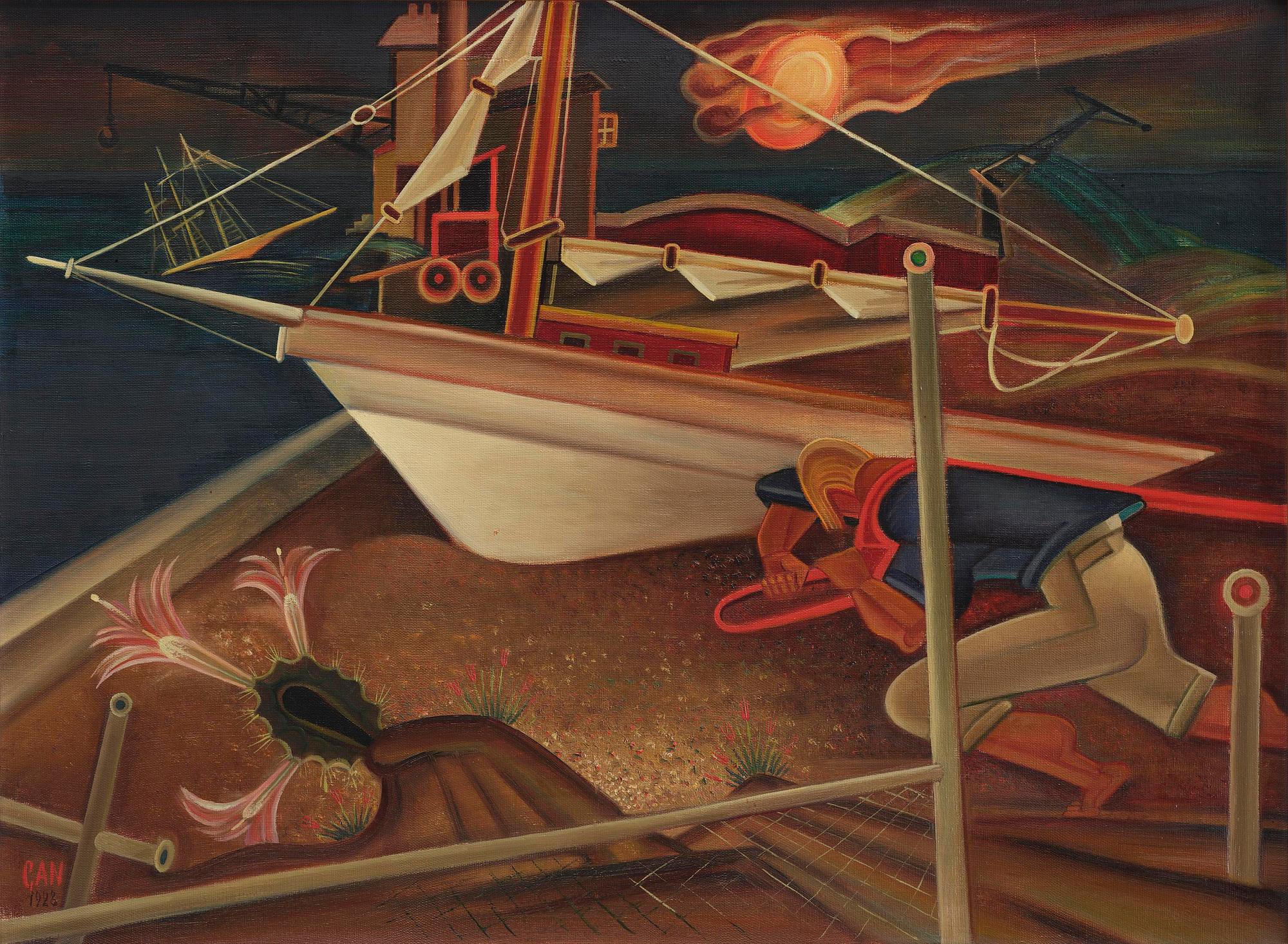
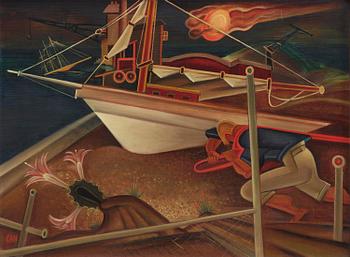
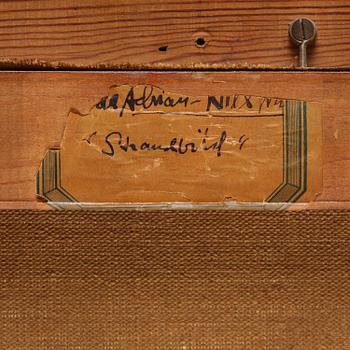
"Strandbild"
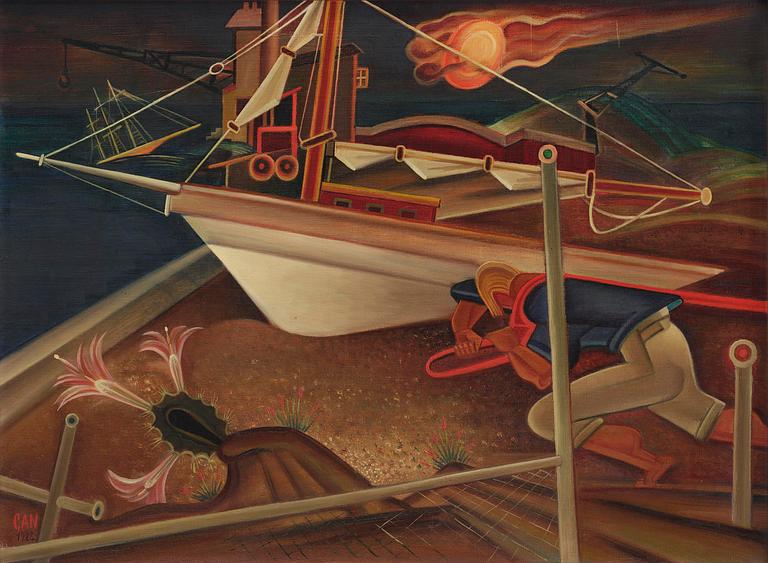
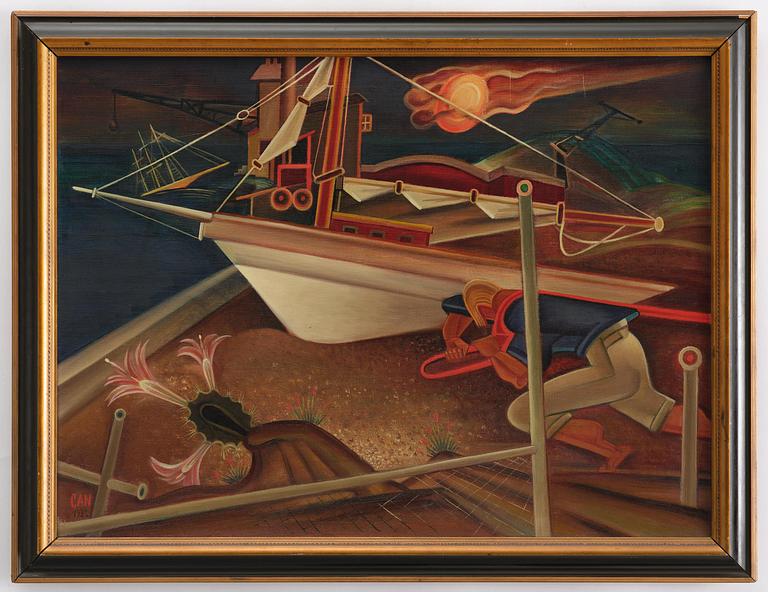
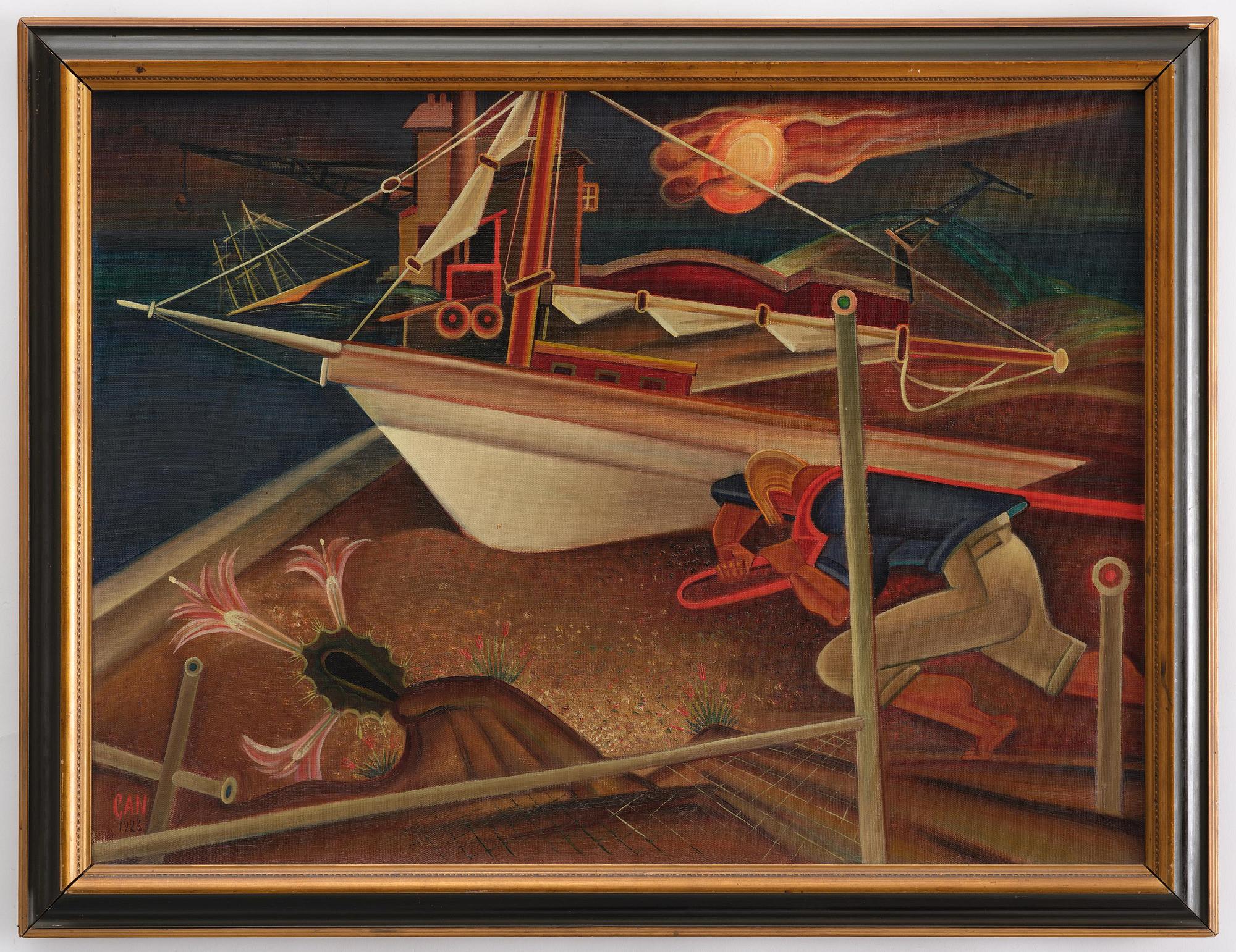
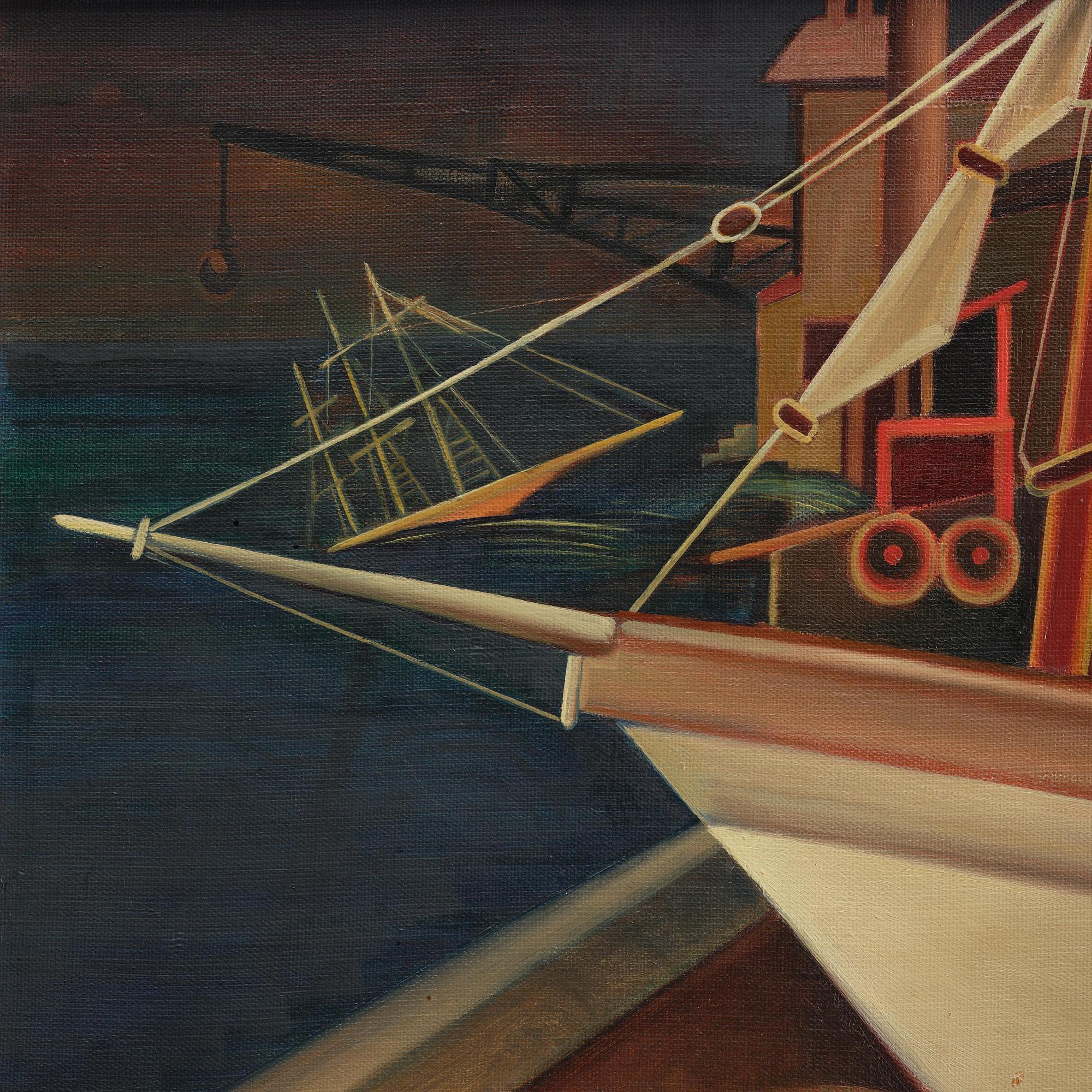
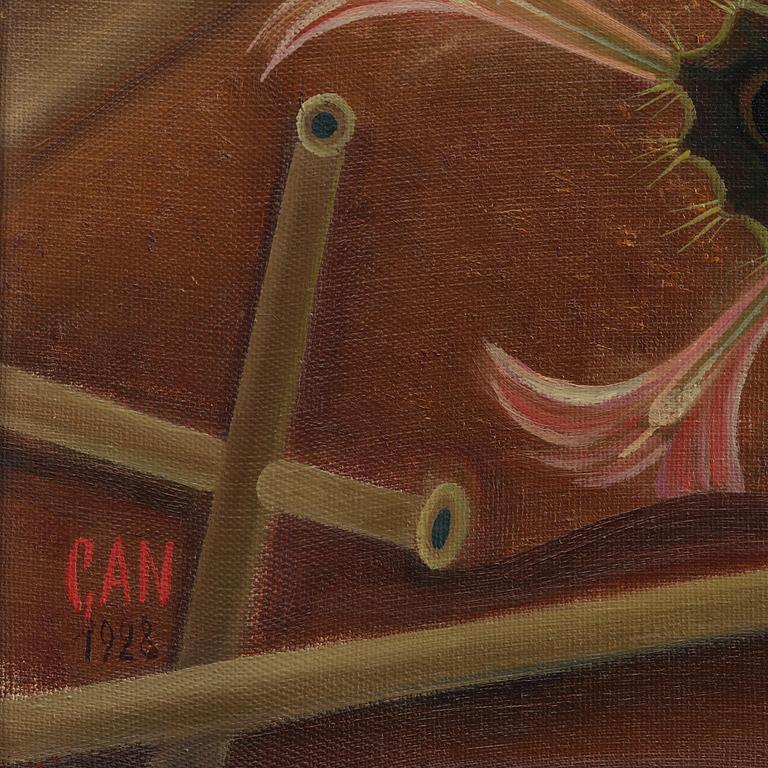
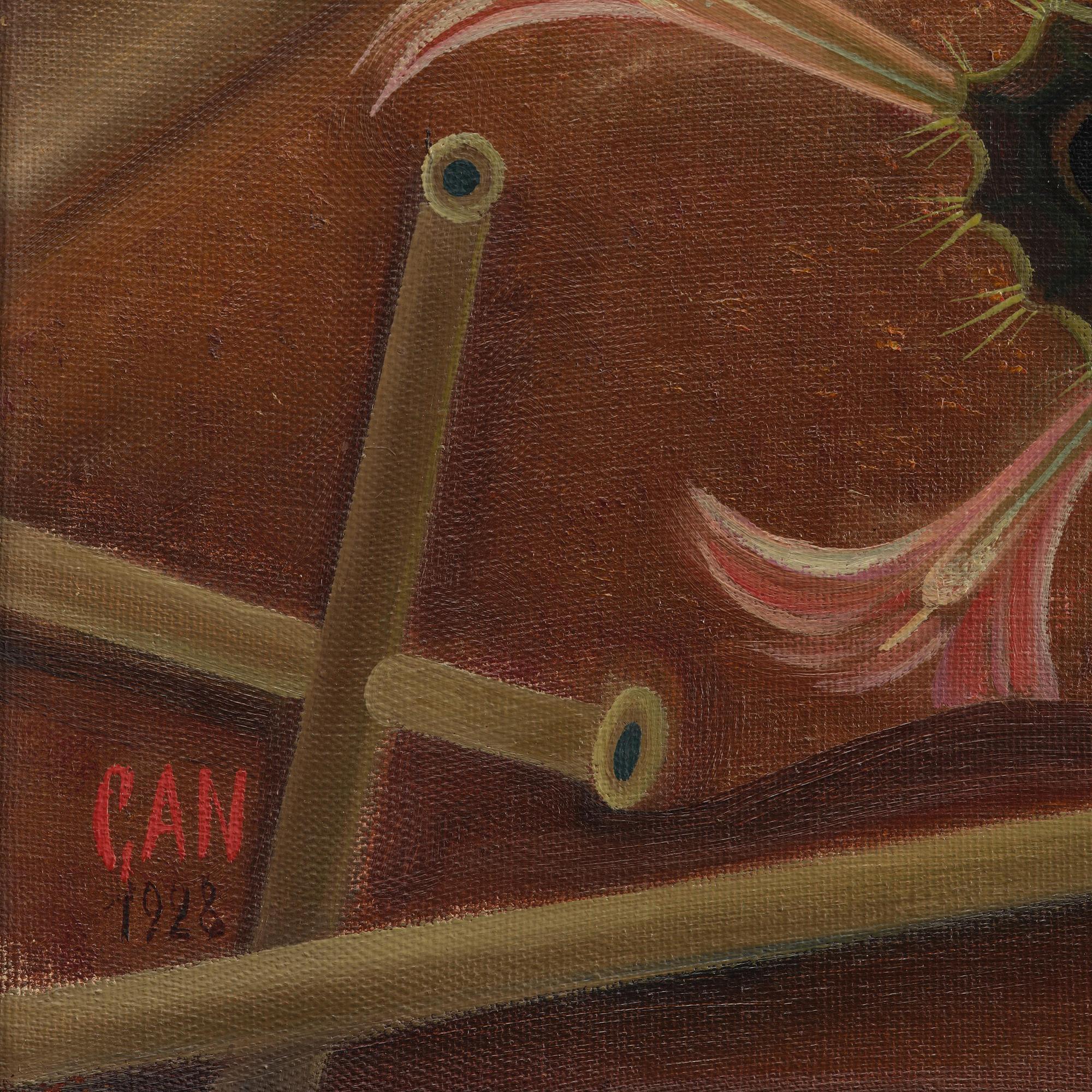
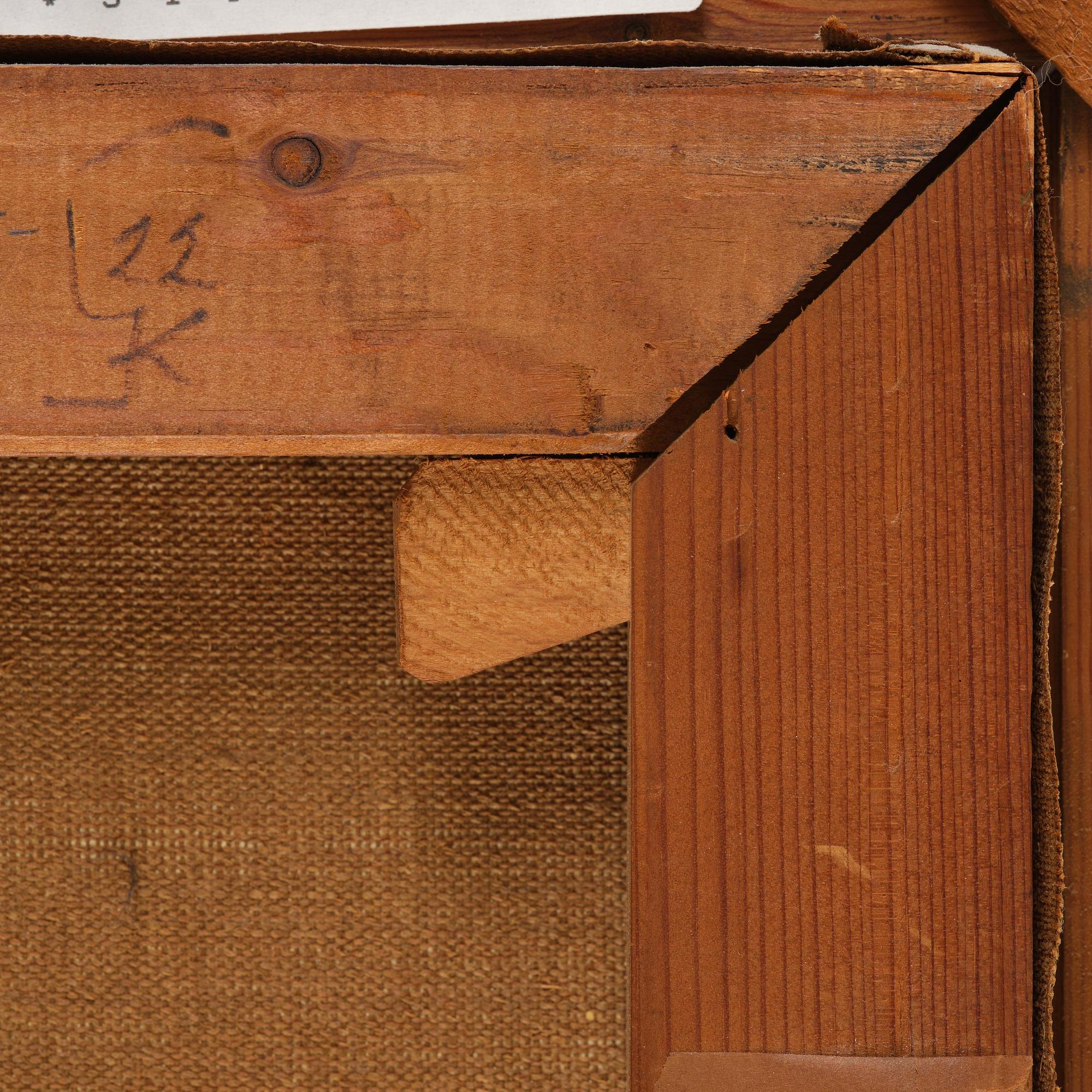
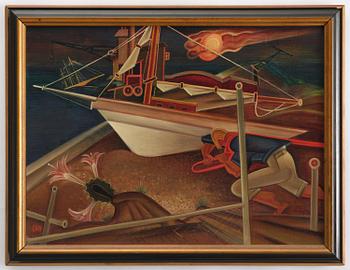
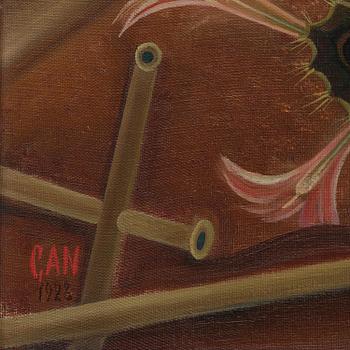
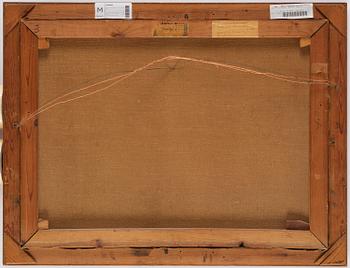
Monogram-signed GAN and dated 1928. Oil on canvas, 55 x 73 cm
Provenance
First Librarian Fredrik Liepe (1933 - 2009), Lund.
Auktionskompaniet, Stockholm, 25 November 2001, lot 129.
Exhibitions
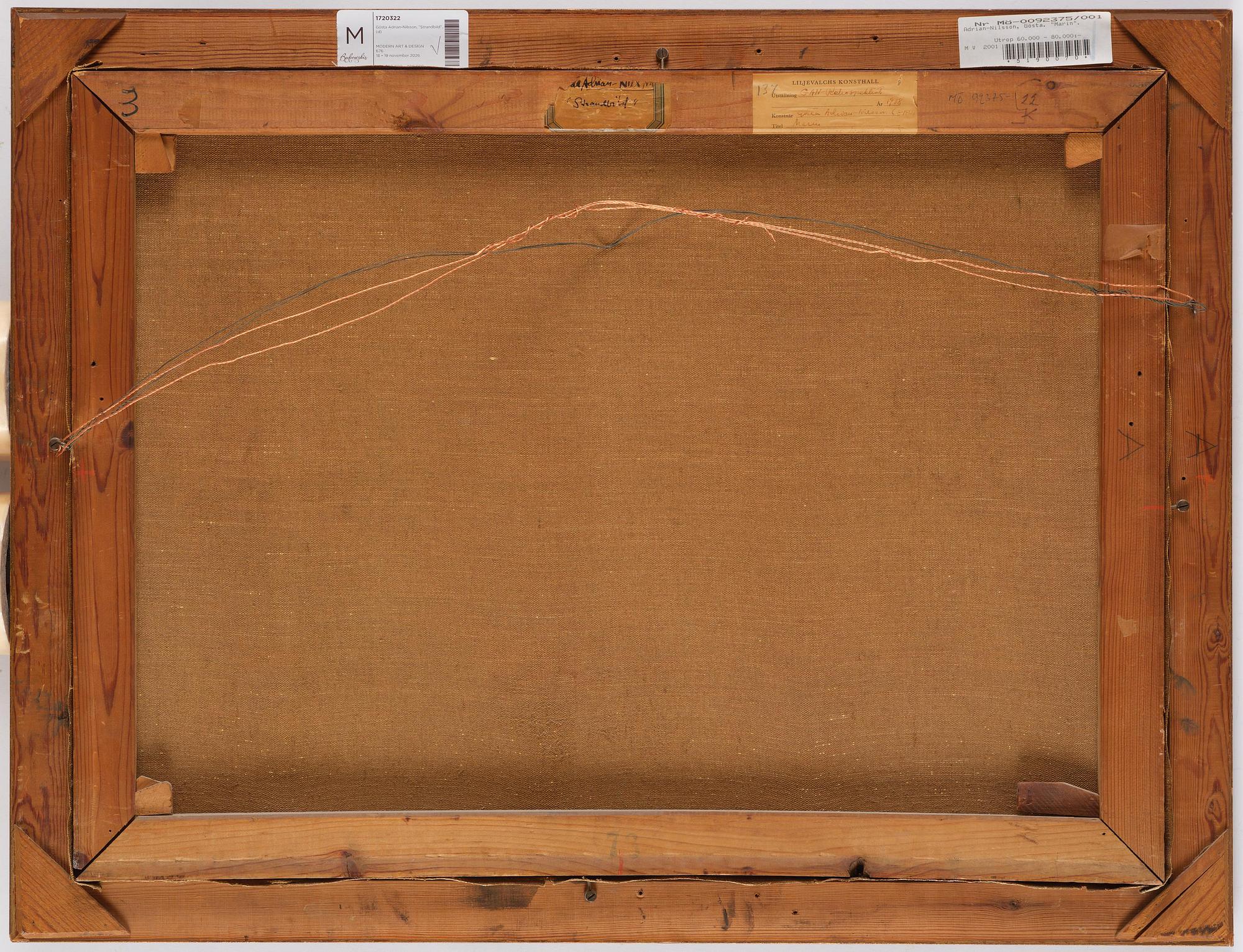
Malmö Museum in collaboration with Svensk-Franska konstgalleriet, “GAN”, 1 – 23 October 1955, cat. no. 48.
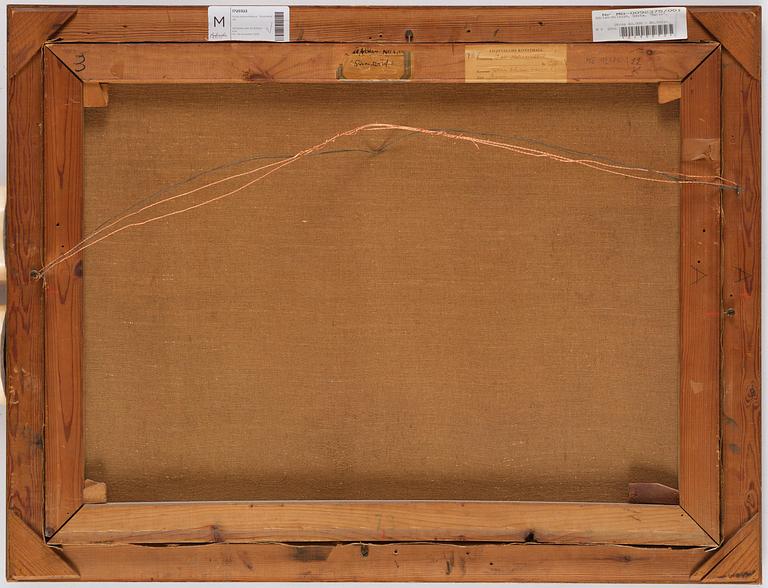
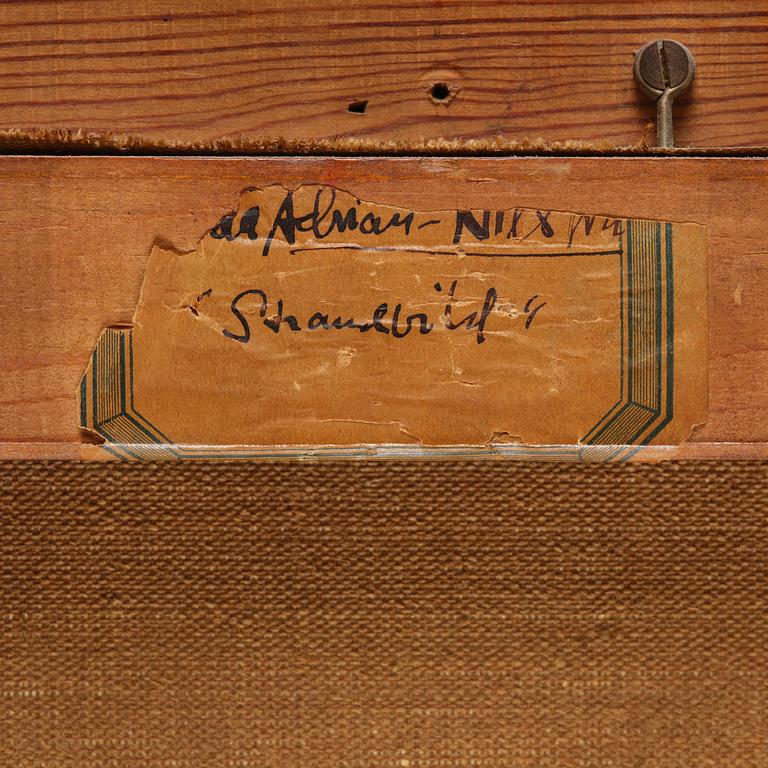
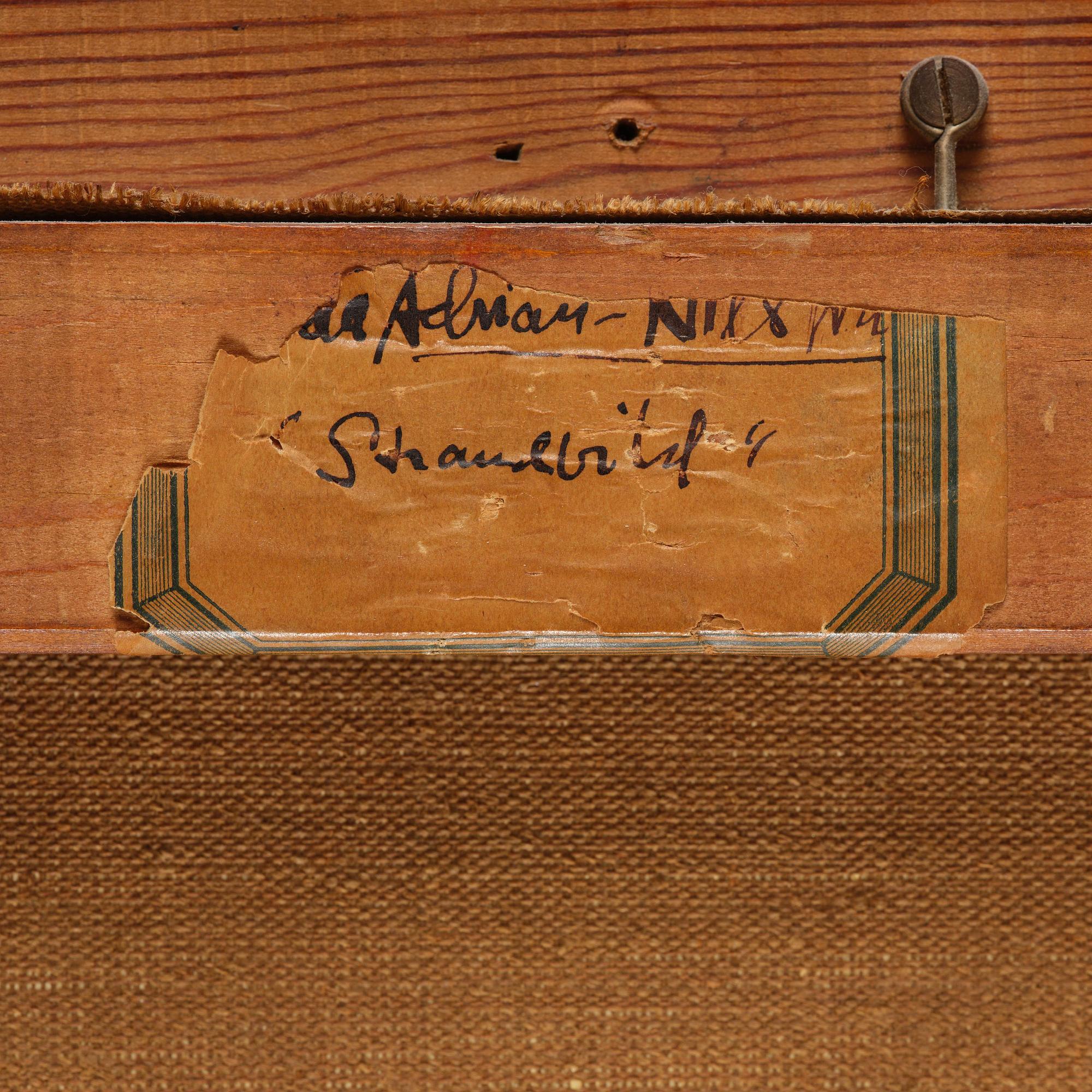
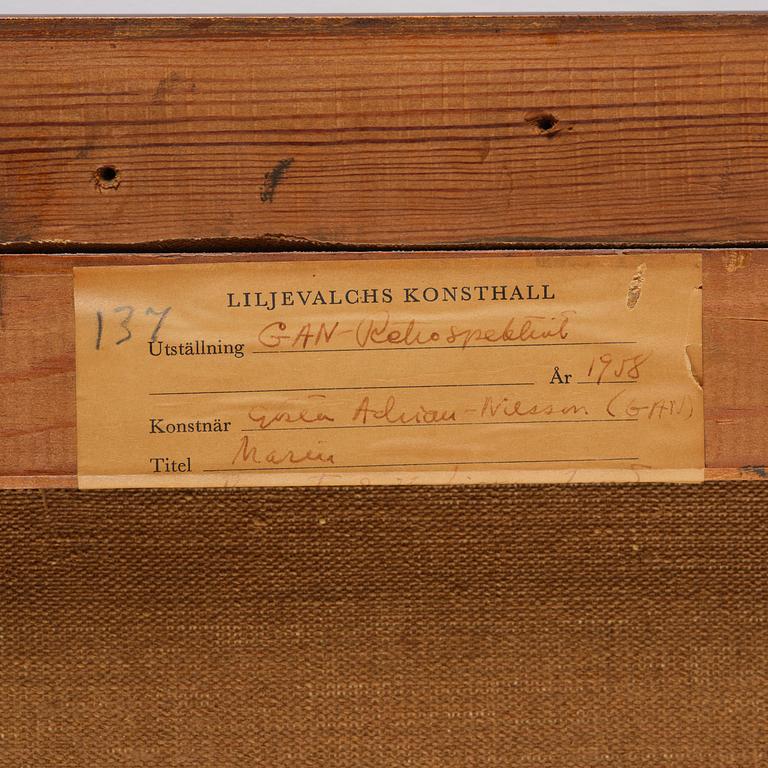
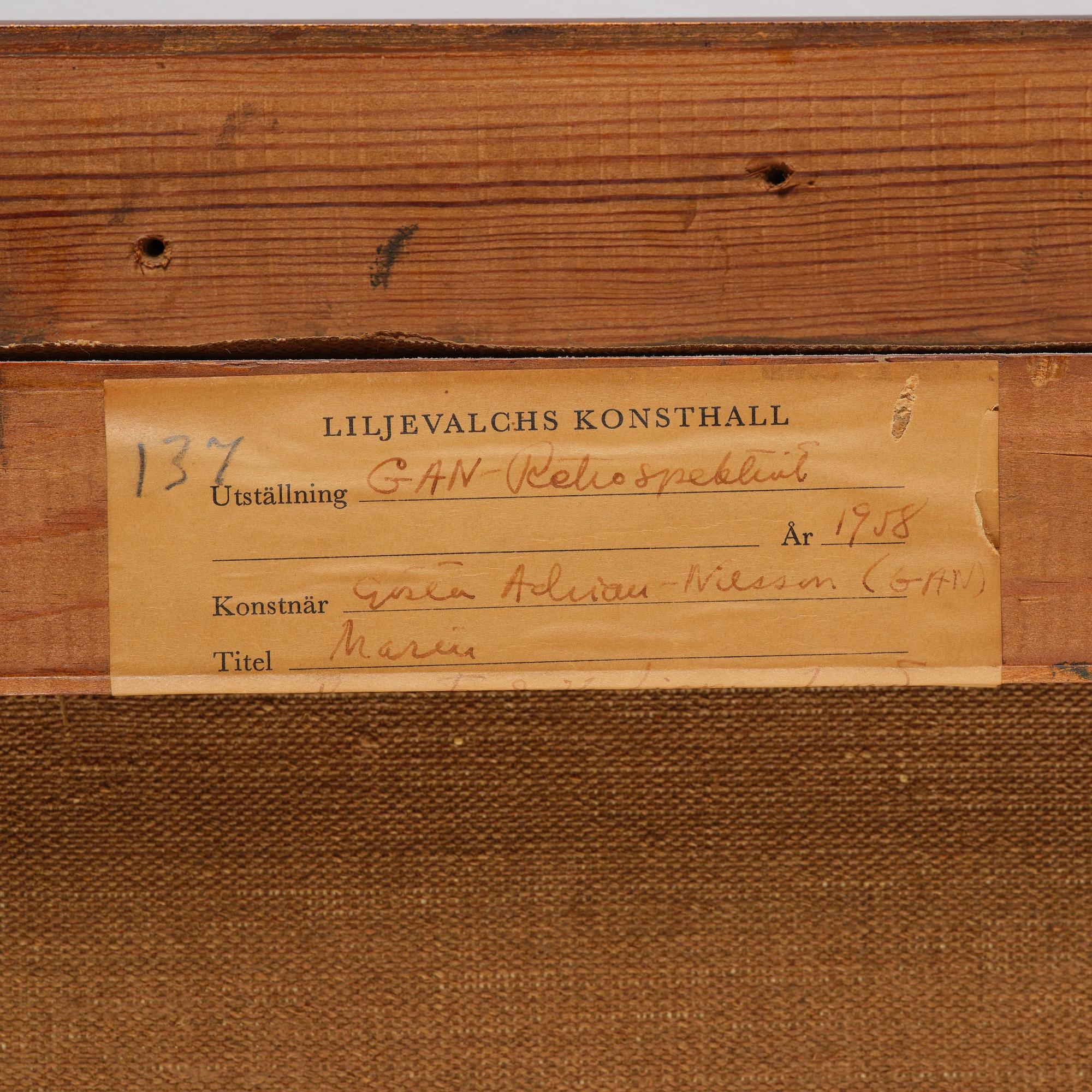
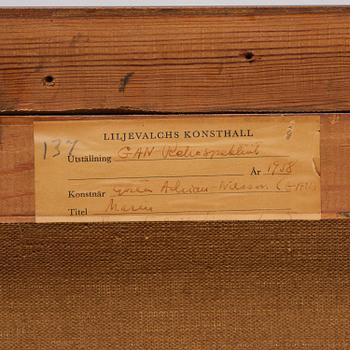
Liljevalchs konsthall, Stockholm, “GAN-retrospektivt”, 1958, cat. no. 137, titled “Marin” (then belonging to Mr Fredrik Liepe).
More information
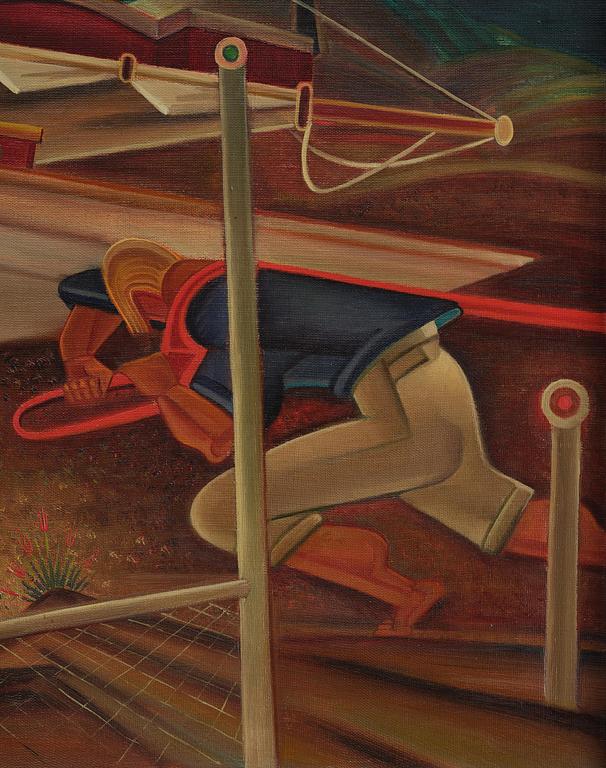
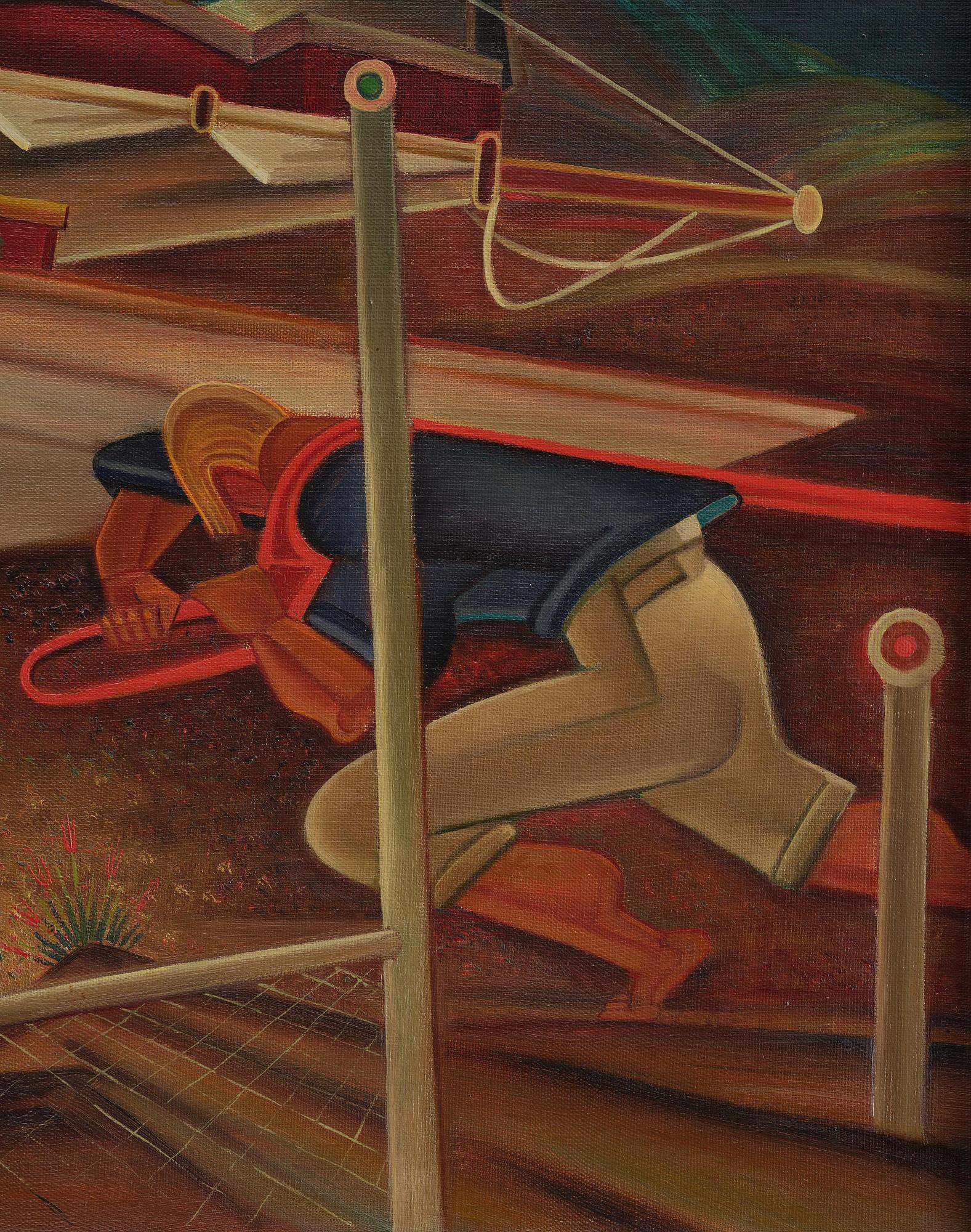
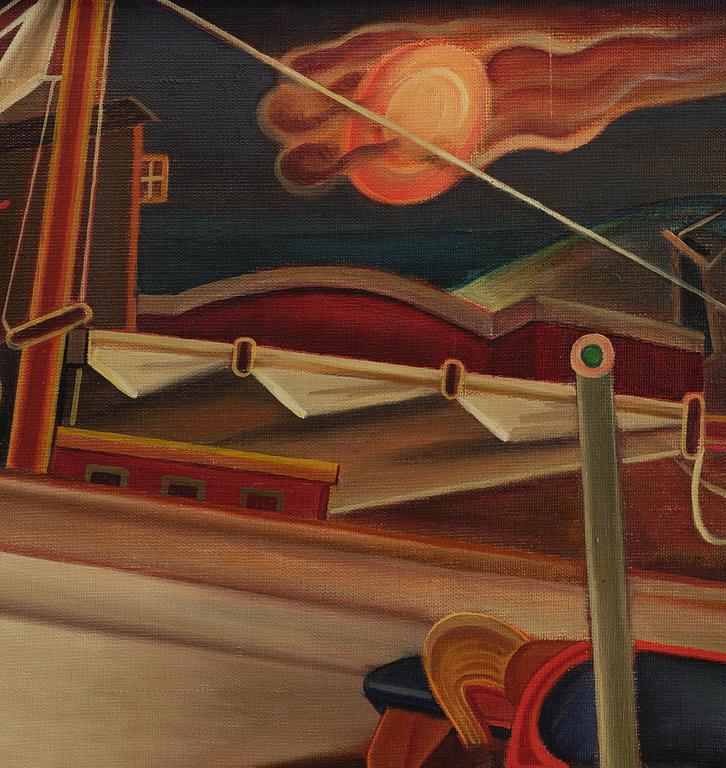
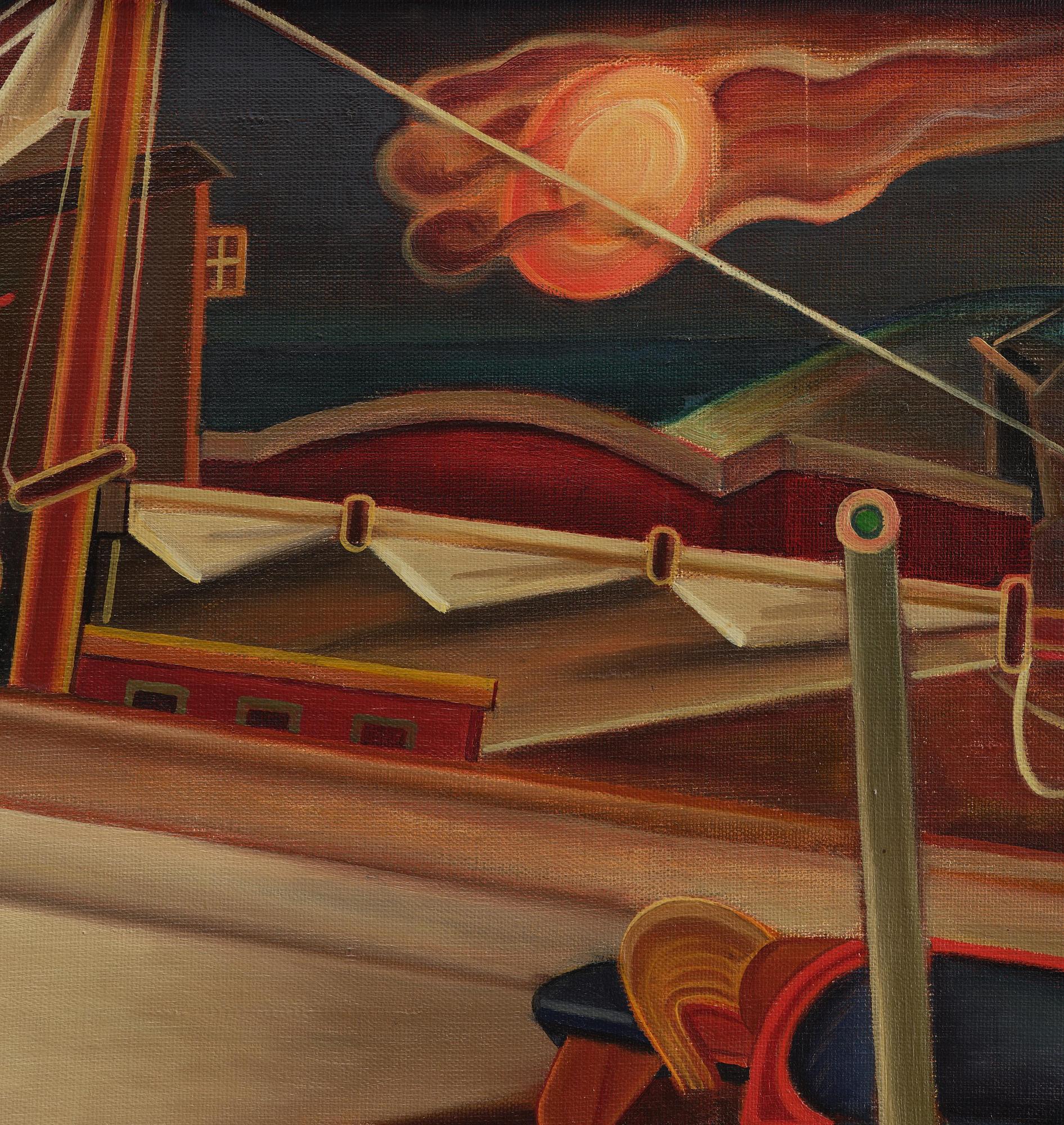
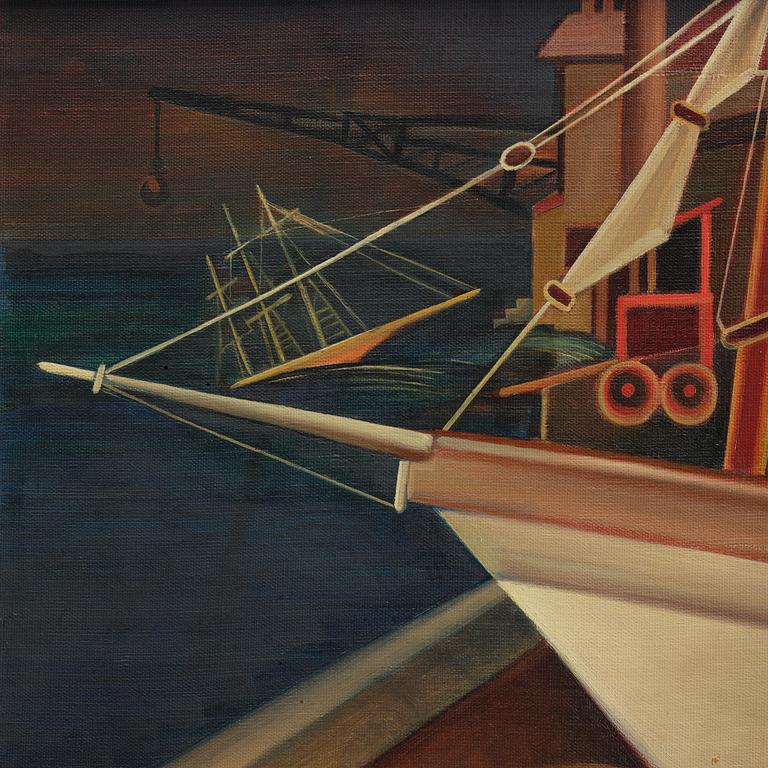
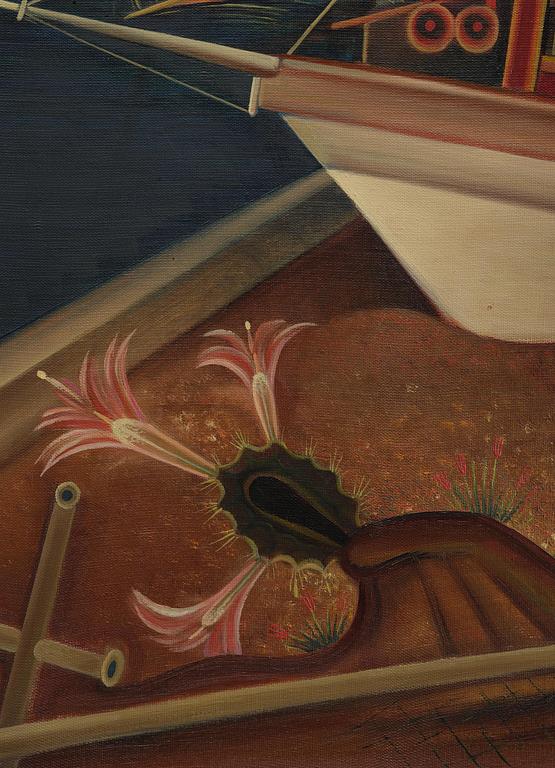
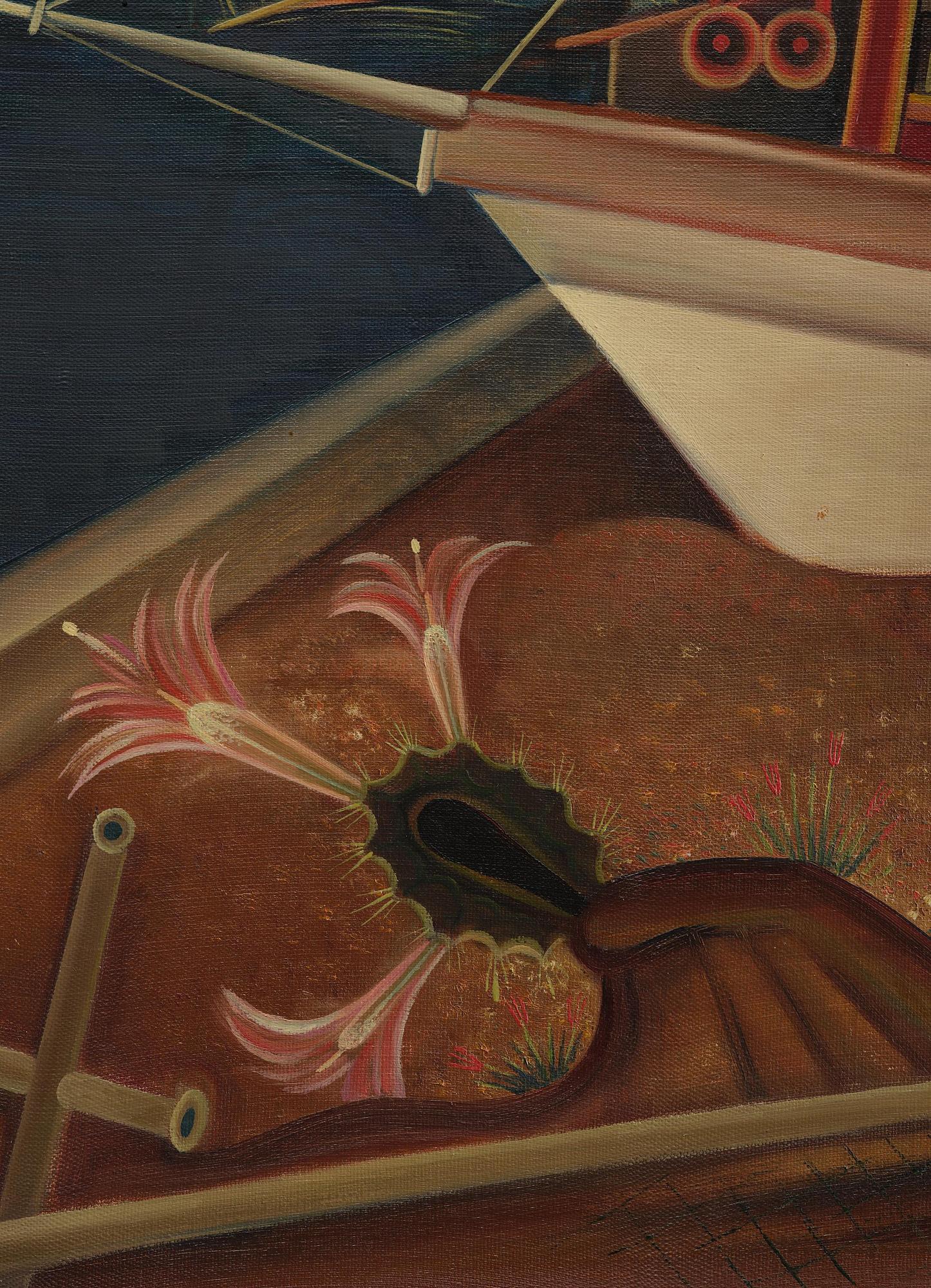
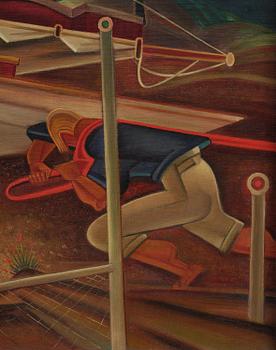
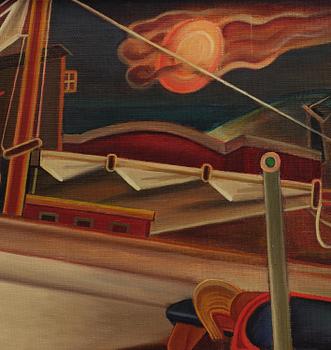
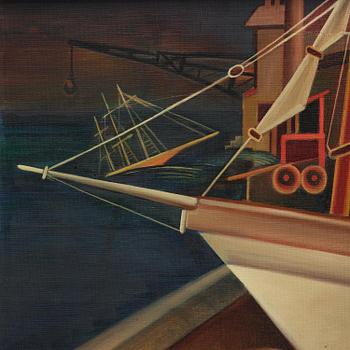
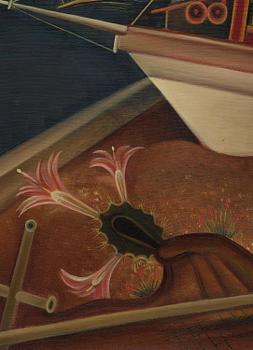
In this harbour composition from 1928, we encounter the visual world that GAN made his own during the 1920s: ships, rigging, cranes and working bodies brought together to form a dense, almost architectural pictorial space. In the foreground, a man in a blue shirt and light-coloured trousers kneels, absorbed in his work, a pose reminiscent of GAN’s recurring depictions of sailors and dockworkers—bodies engaged in concentrated movement rather than individuals rendered as recognisable portraits. To the left, an exotic flower blooms in the brown, sandy ground, an unexpected intrusion of untamed nature into the industrial harbour setting. Meanwhile, a ship with its sails lowered and a locomotive-like crane trolley stand out against a night sky, where a glowing, dimly veiled sun or moon casts the background in shades of red and orange.
For the artist, the sailor and the harbour environment were not merely external subjects but recurring vehicles through which he explored his own fascination with the masculine, working body, developing this visual language consistently throughout the 1920s. Several interrelated impulses lay behind this fascination. Most prominent was his homoerotic attraction to sailors—the “blues”—which GAN expressed both in his paintings and in his diaries. Alongside this was a more formalist interest: the strict geometry of uniforms spoke directly to the artist from Lund, whose visual language had been shaped by Futurism and Cubism. Finally, there was a romantic dimension: in the sailor, GAN saw adventure, the dream of distant and exotic lands, of leaving Europe behind and sailing out across the world’s oceans. During a stay in Gothenburg in the autumn of 1919, he even attempted to sign on to a ship bound for South America or the South Seas. His longing to escape what he perceived as a dying European civilisation would resurface in his artistic practice many years later.
Instead, GAN went to Paris, where he lived from 1920 to 1925, interrupted by two extended stays in his native Sweden, in 1922 and 1923. Early on, he sought out Fernand Léger, one of the leading figures of the post-Cubist avant-garde. Their encounter encouraged GAN in his move towards a more unified and balanced form of Cubist painting, a direction in which he was already heading. Yet GAN could never be reduced to a mere follower of his French role model. The Synthetic Cubism he developed in Paris was distinguished by a richer, more personal palette and a far greater level of detail. A storyteller at heart, he also incorporated a kind of coded visual language into his Cubist paintings, in which his homosexuality and attraction to sailors often emerge in veiled form.
GAN’s paintings from this period rank among the high points of Swedish Modernism—powerful and innovative.
More about Gösta Adrian-Nilsson
Gösta Adrian-Nilsson is most notable as a visual artist, and he is a pioneer of Swedish modernism. He studied at the Tekniske Selskabs Skole in Copenhagen and later for Johan Rohde at Zahrtmann’s school in Copenhagen. As an avant-gardist, Nilsson was constantly searching for new influences. In Berlin, he was influenced by the circle around the radical magazine Der Sturm, through Kandinsky and och Franz Marc. In Paris through Fernand Legér and the artists in his circle. GAN was an eclectic in the positive sense of the word. He took the the artist styles of the 1900s and created new impressions. Symbolism, cubism, futurism, expressionism, constructivim and Theosophy were the colours occupying his internal pallet. He had a sharp eye for the masculine and his painting was often energized by the vitality of modern technology, vibrant eroticism, and echoes of tyrants. No other Swedish modern artist exhibits such a unique style.
Read moreFor condition report contact specialist
What will the transport cost?
Shipping can only be arranged by contacting specialdelivery@bukowskis.com.
Covered by droit de suite
Image rights
The artworks in this database are protected by copyright and may not be reproduced without the permission of the rights holders. The artworks are reproduced in this database with a license from Bildupphovsrätt.
Others have also viewed