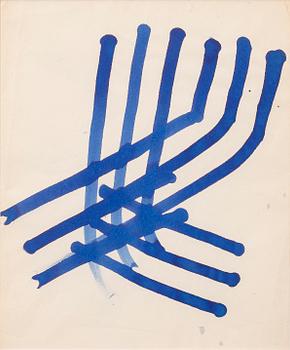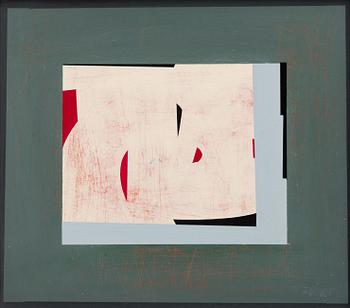
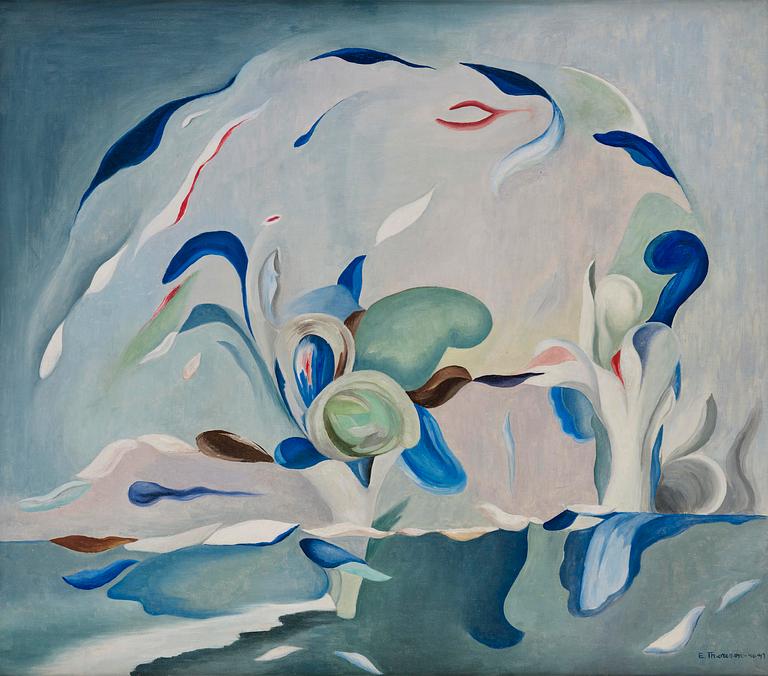
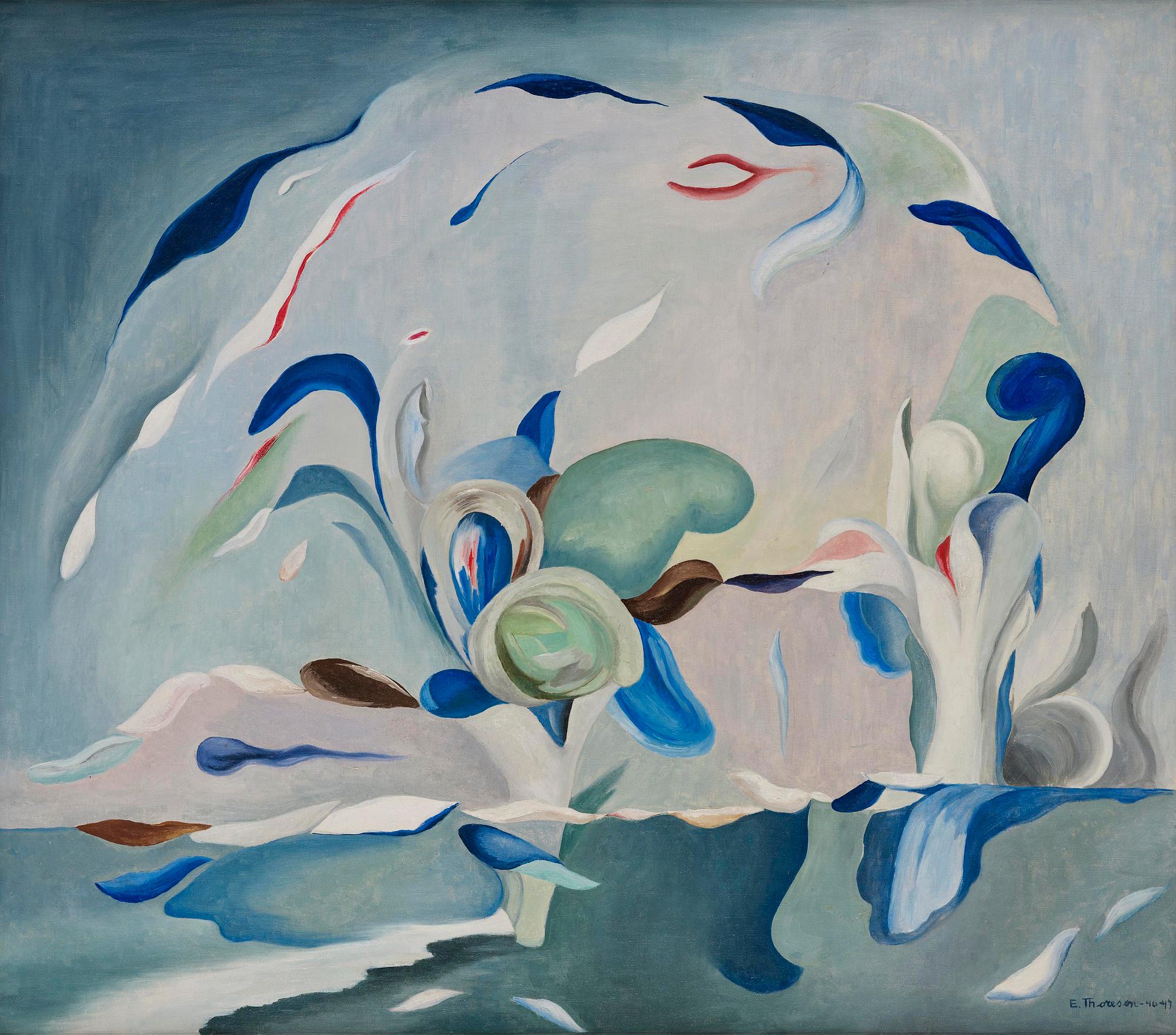
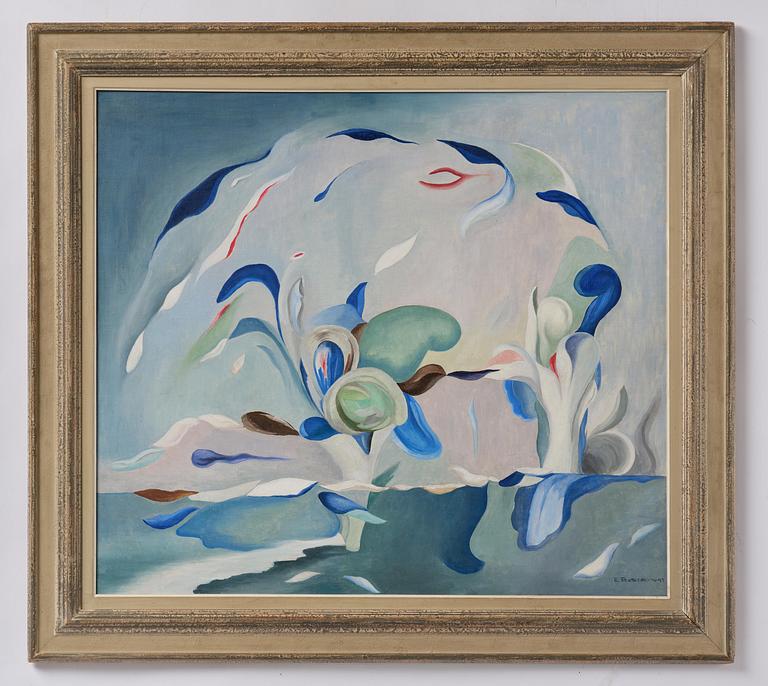
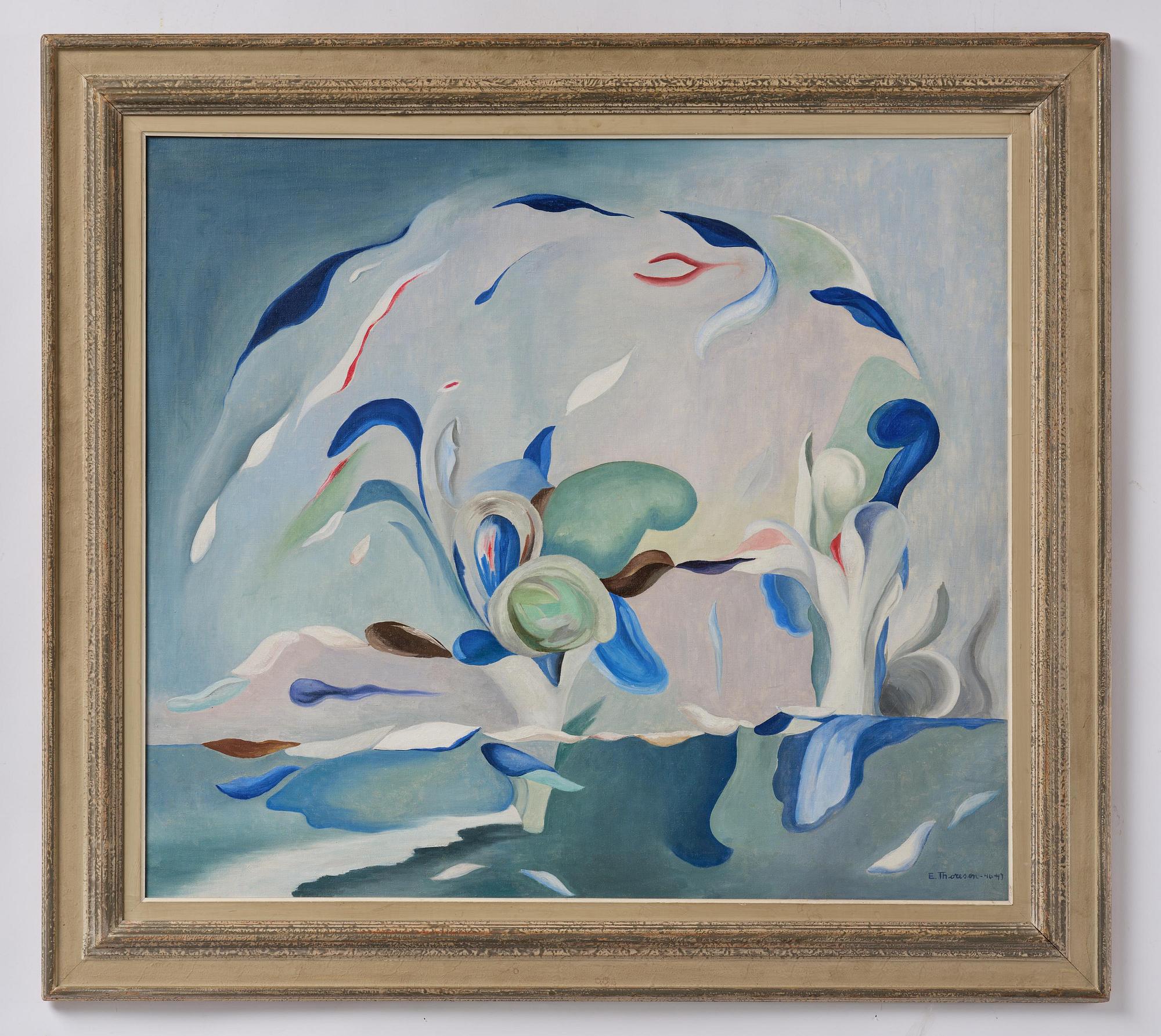
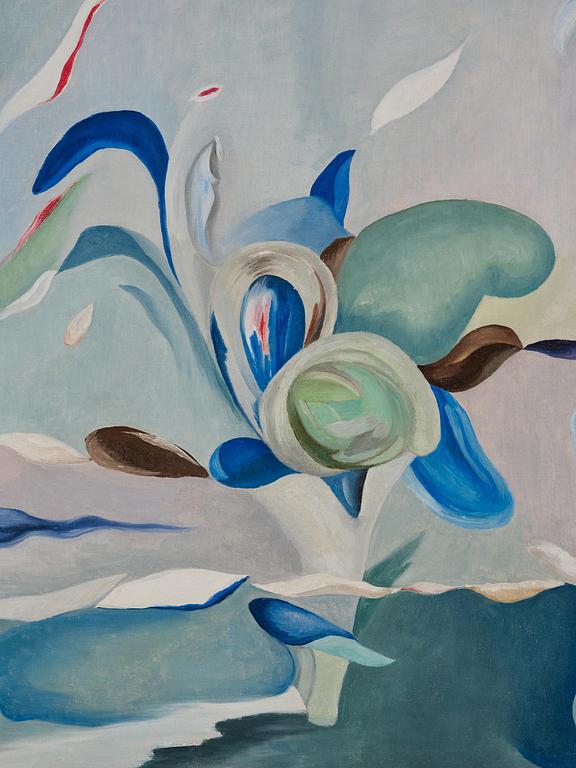
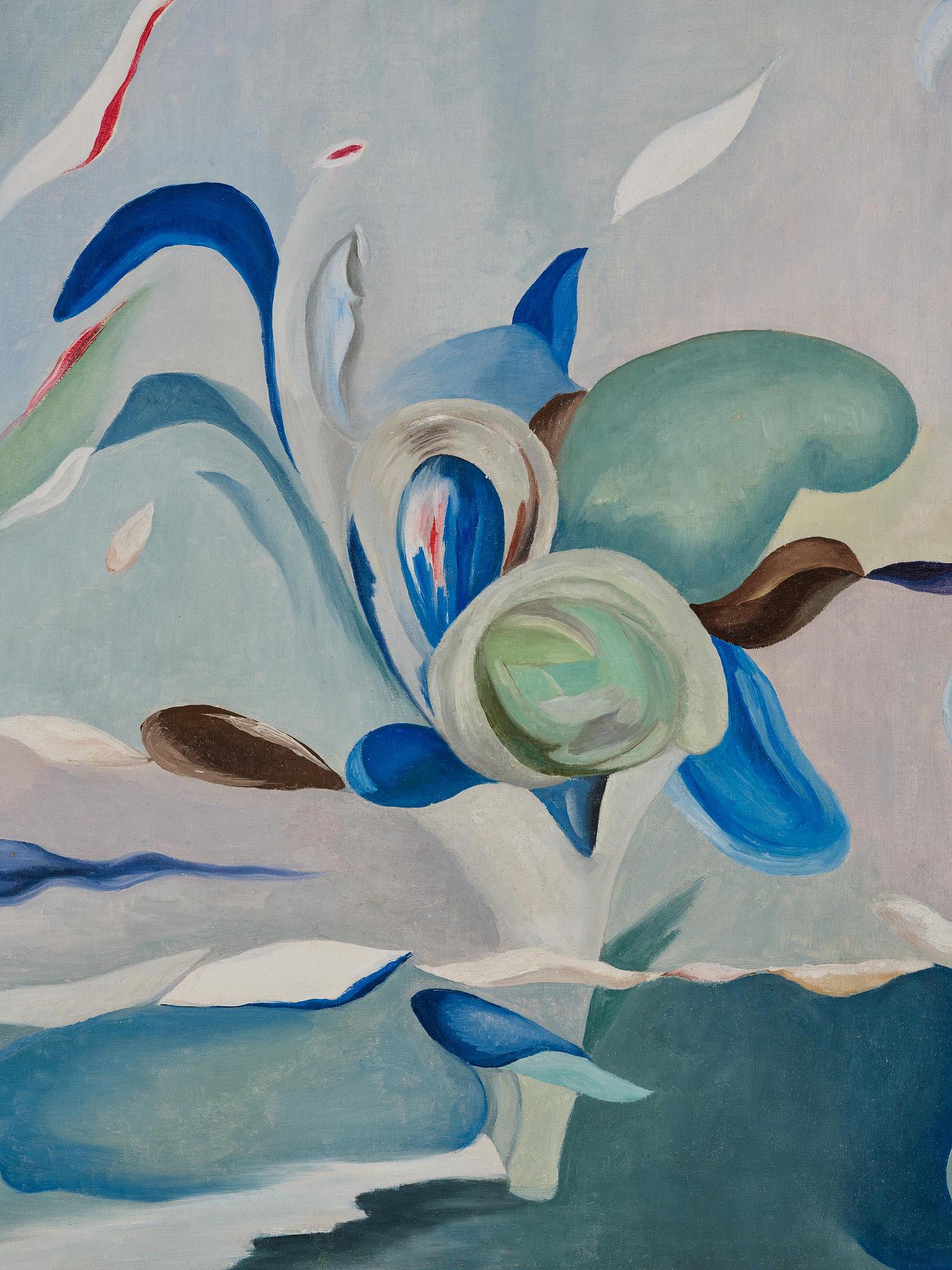
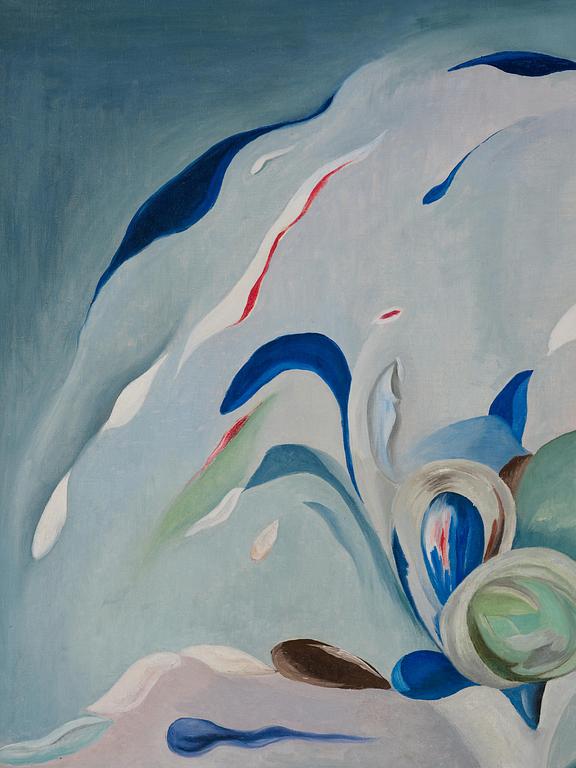
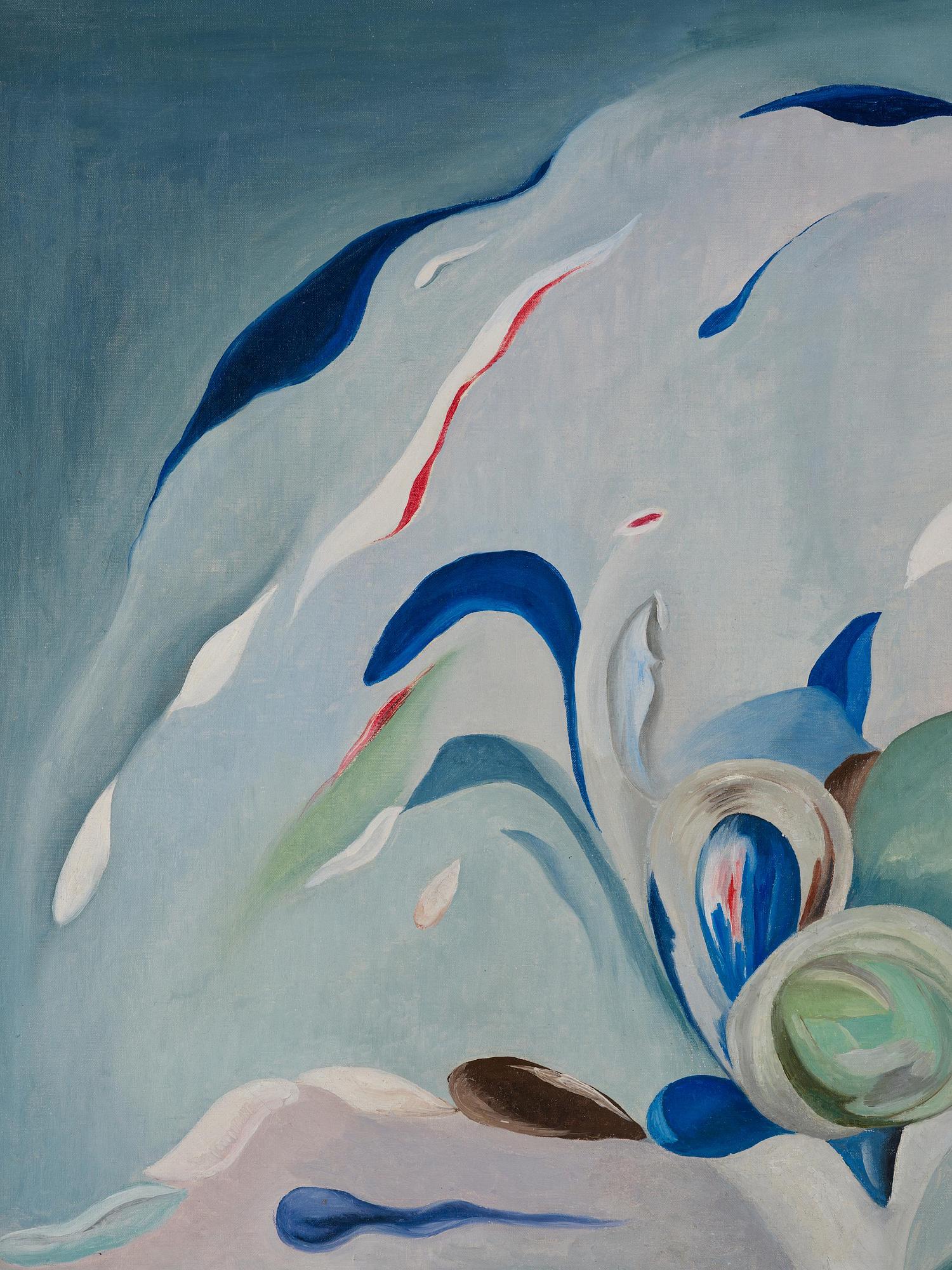
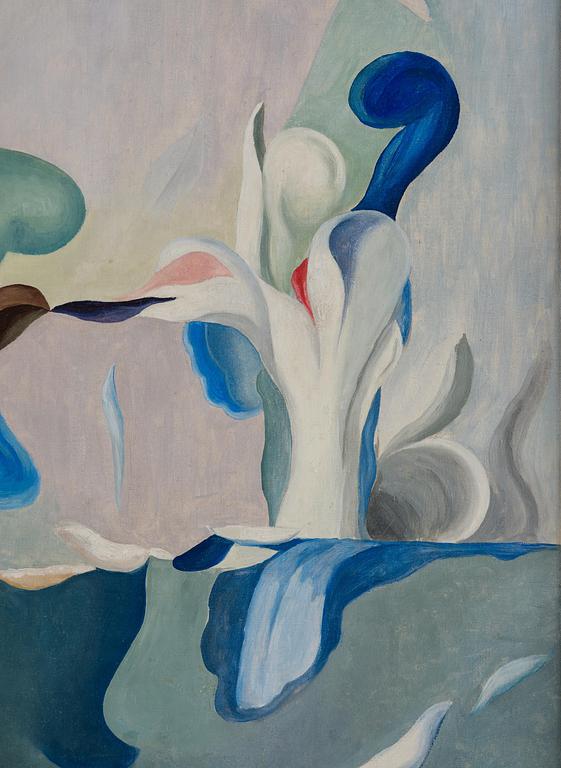
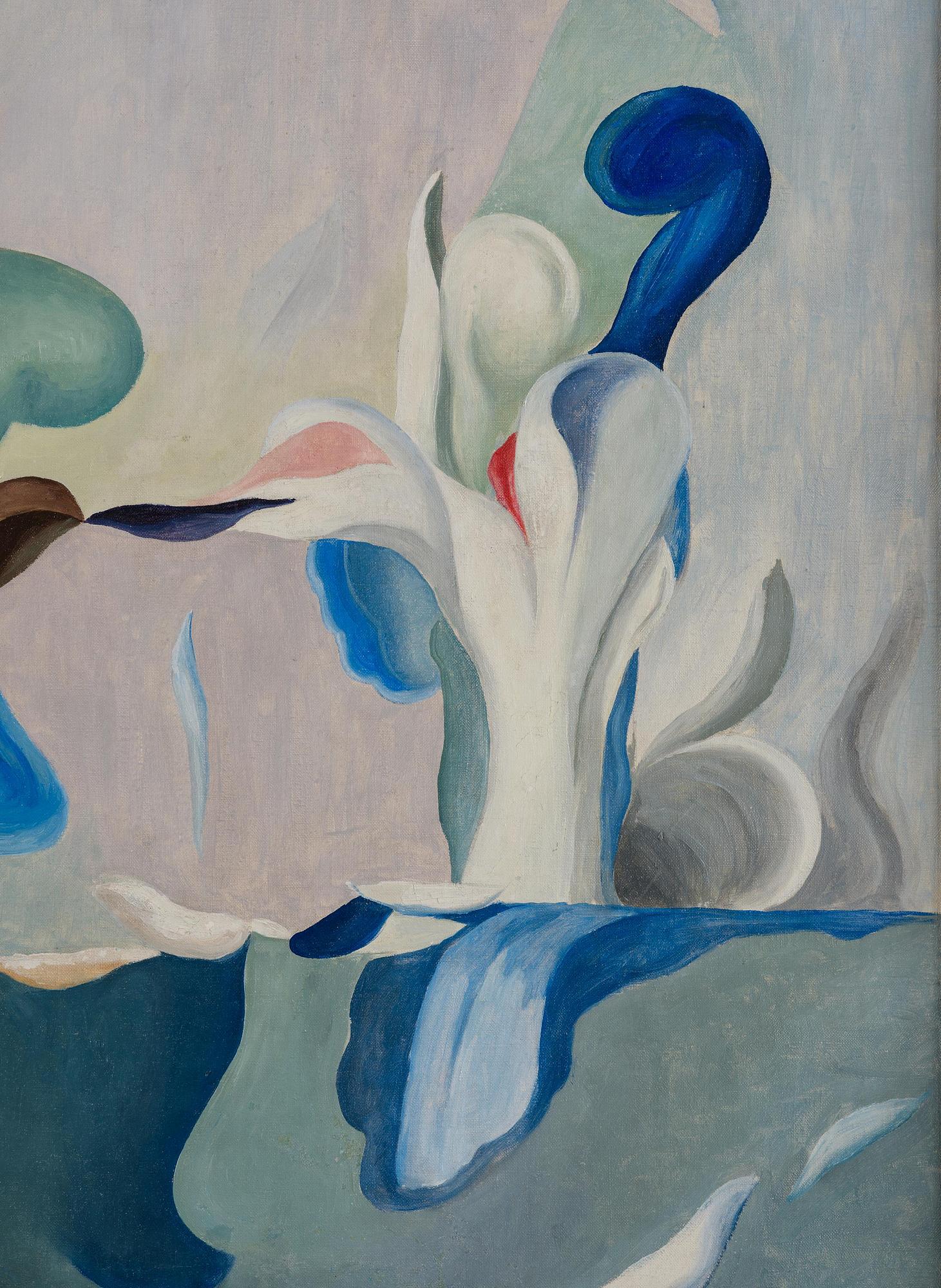
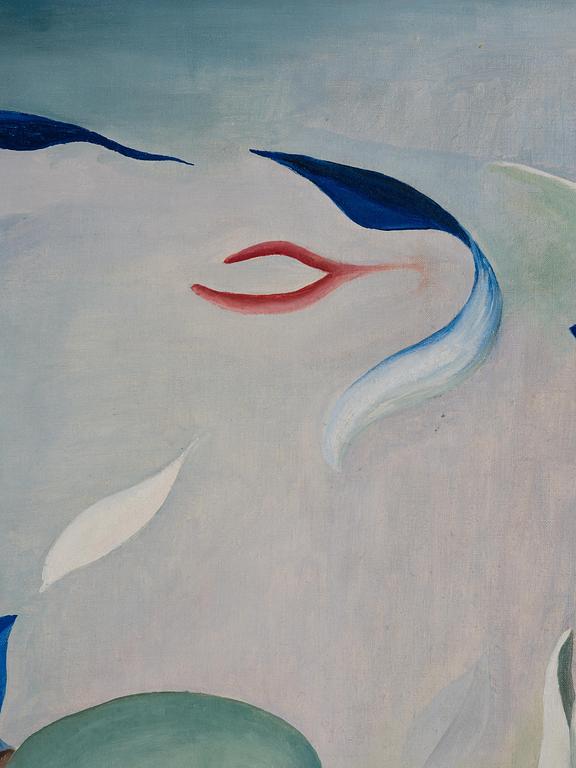
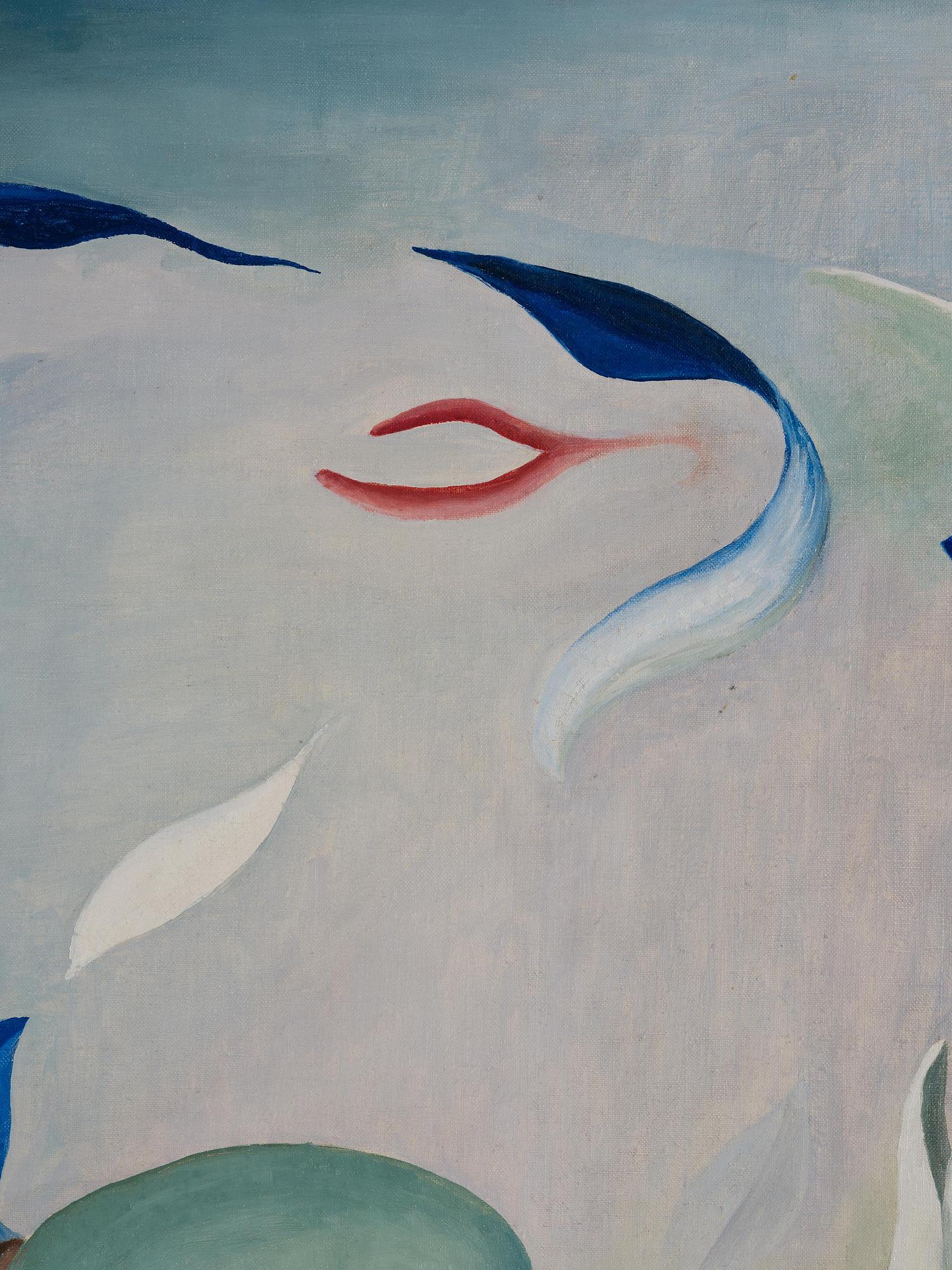
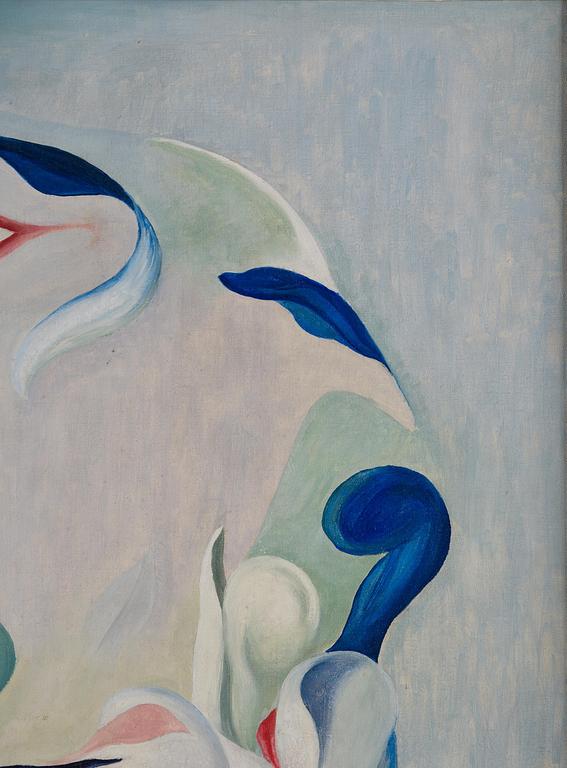
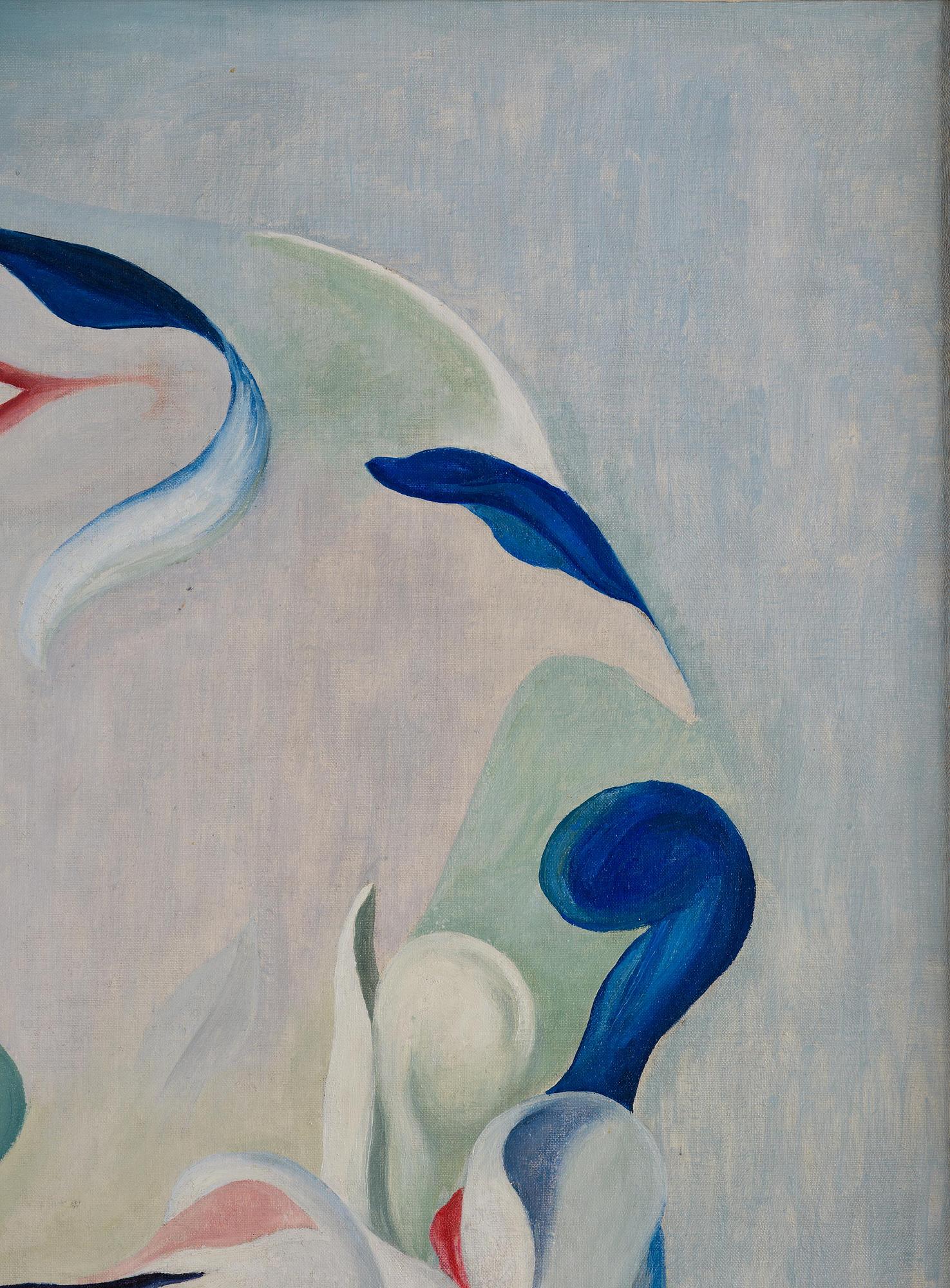
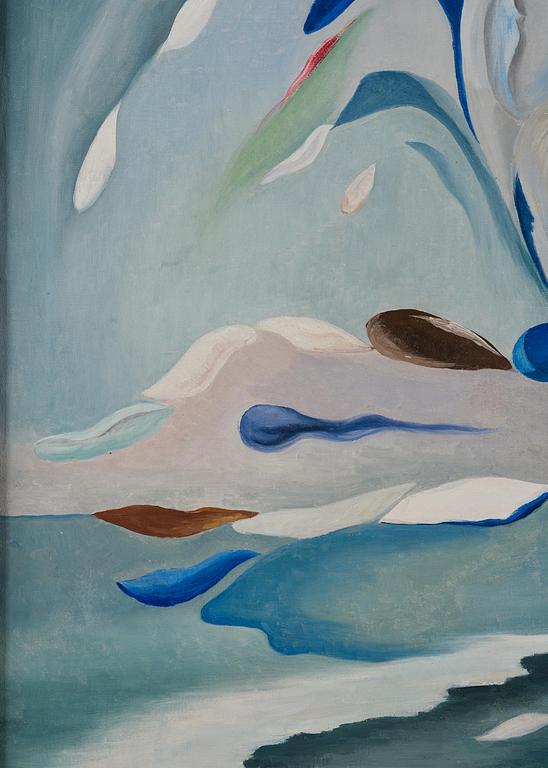
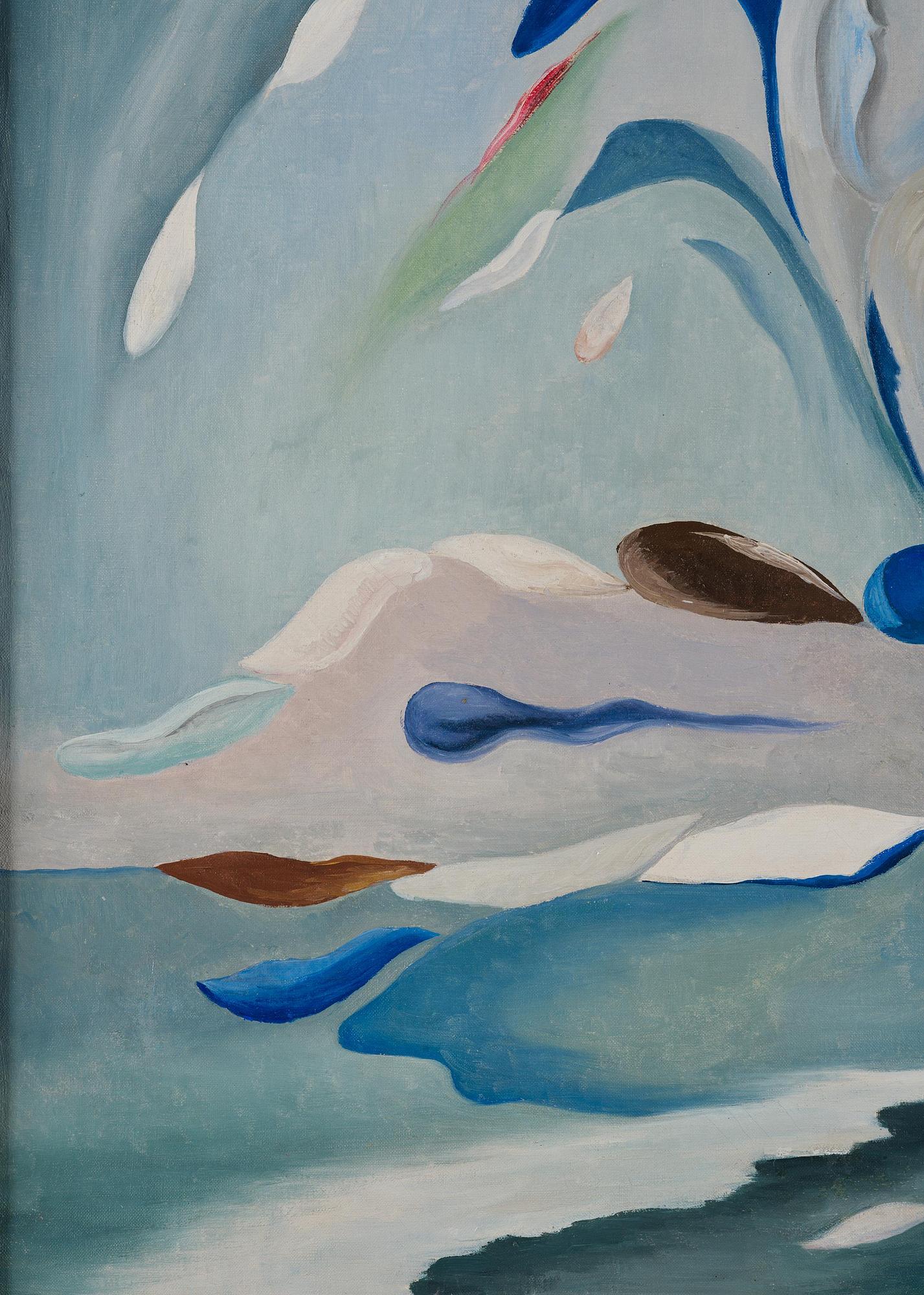
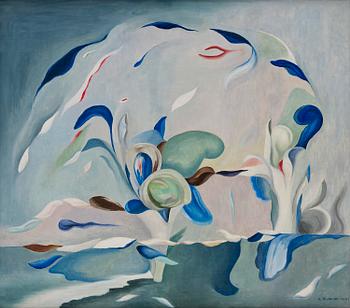
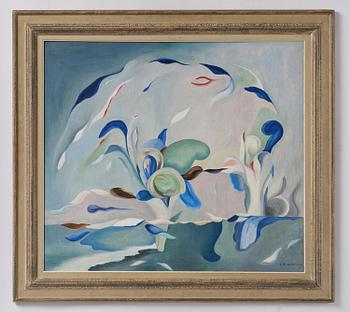
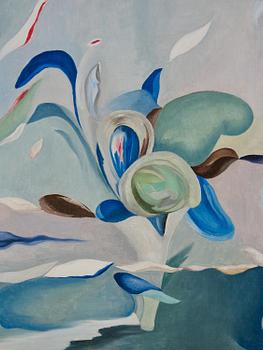
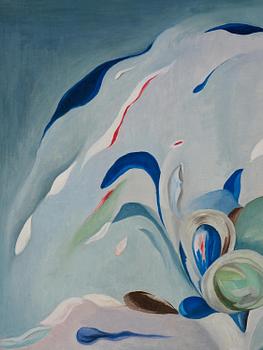
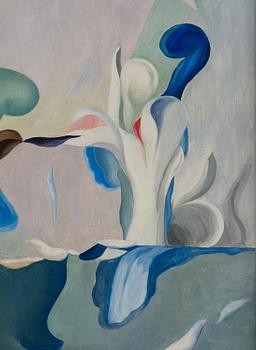
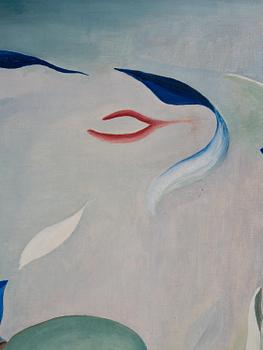
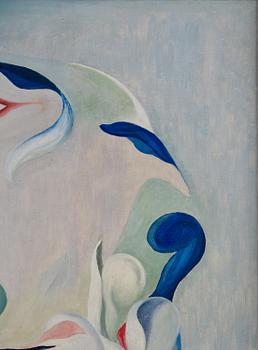
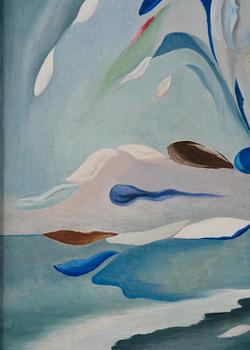
"Blå värld"
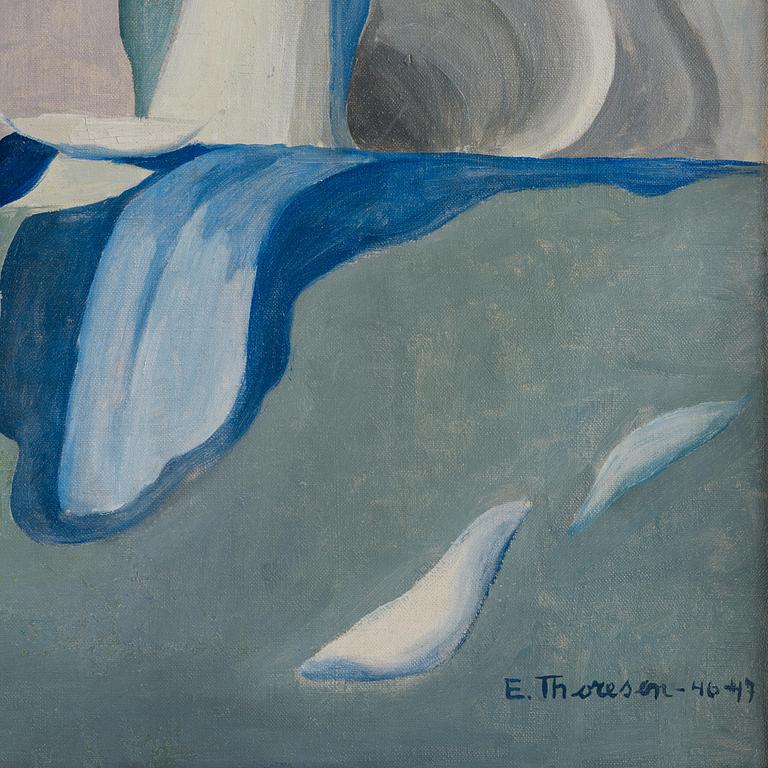
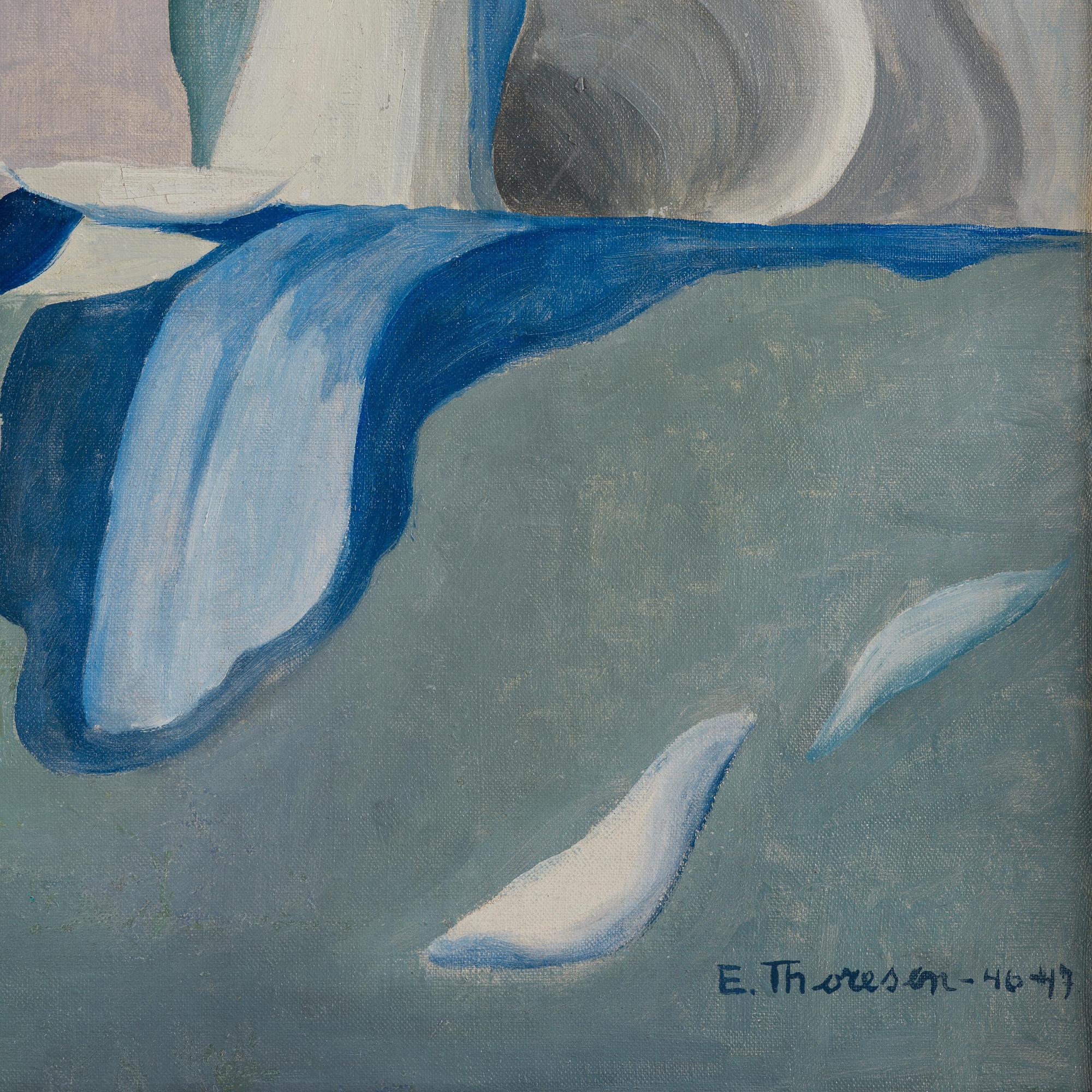
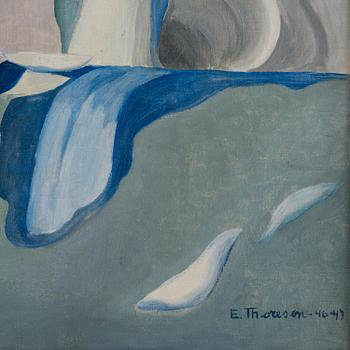
Signed E. Thoresen and dated -46-47. Oil on canvas, 93 x 105 cm.
Provenance
Acquired directly from the artist in Halmstad.
Thence by descent to the current owner.
Exhibitions
Halmstads Musikhandel, “Vilhelm Bjerke Petersen and Elsa Thoresen”, 24 April–15 May 1948, cat. no. 33.
Louis Hahnes Konsthandel, Stockholm, 1950, cat. no. 1.
Literature
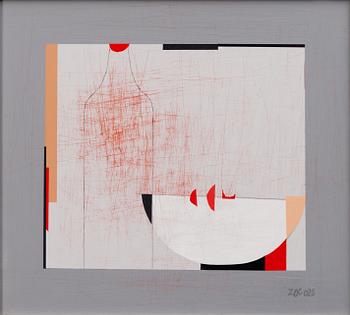
David F. Martin, “Objects of the Elements – The Art of Elsa Thoresen”, 2025. Compare with the illustrated smaller version from 1945, p. 6 and p. 73.
More information
Elsa Thoresen was born in the United States to Norwegian parents. She lived in Oslo for several years, where she also received her artistic training. For a period, she also studied at the Académie des Beaux-Arts in Brussels, Belgium. She later moved to Denmark, where she married the artist Vilhelm Bjerke Petersen. Both were central figures in radical Danish Surrealism, a movement that turned its opposition towards the Nazi German occupiers during the war. They managed to escape to Sweden, where they became closely associated with the artists of the Halmstad Group.
Thoresen was highly regarded by André Breton, the leading figure of the international Surrealist movement. He selected her works for the movement’s major exhibitions in 1938 and 1947. Following their escape to Sweden, she worked in both Sweden and Denmark for several years before returning to the United States in 1953. Over time, Elsa Thoresen faded into obscurity, but in recent years her artistic oeuvre has been rediscovered. In 2018, audiences were able to see a presentation of her work for the first time in many years, in the exhibition Kvindernes surrealisme at Kunstforeningen Gl. Strand and the art museum in Tønder, Denmark, as well as at Mjellby Art Museum in Sweden.
The present work, "Blå värld", is dated 1946–47. This dating suggests that Thoresen must have begun the painting before departing for New York and subsequently completed it after being exposed to the artistic life of this major American metropolis.
In his recently published biography of the artist, Thomas Millroth writes:
“The stay in Söndrum in 1946 was brief. Back home in Ängby, it was time to pack their suitcases for the United States, where they intended to live for a while. This was hardly surprising. Elsa was an American citizen, after all, and Bjerke-Petersen was interested in international art and had been in contact with Alfred H. Barr (1902–1981), the first director of the Museum of Modern Art in New York. This was in connection with the museum’s somewhat legendary exhibition Fantastic Art, Dada, Surrealism in 1936. As I understand it, they corresponded about the artists to be included, and Bjerke-Petersen had introduced Barr to Danish and Swedish Surrealists. When he replied with another letter, Bjerke-Petersen got straight to the point, asking for assistance and contacts ahead of his planned arrival in the United States.” (Millroth, p. 183)
Thoresen and Bjerke-Petersen stayed in New York from 31 May 1946 until their return the following year, on 30 June 1947. Letters preserved from Bjerke-Petersen’s time in New York reveal that the artistic couple came into contact with prominent Surrealists such as Max Ernst, Roberto Matta, Arshile Gorky and Yves Tanguy, the latter of whom held a major solo exhibition at the Pierre Matisse Gallery in New York from 5 to 30 November 1946. Perhaps these encounters and new impressions left their mark on the unusually large and captivating painting "Blå värld".
Bukowskis would like to thank Kent Belenius for providing information regarding exhibitions.
For condition report contact specialist
What will the transport cost?
Shipping can only be arranged by contacting specialdelivery@bukowskis.com.
Image rights
The artworks in this database are protected by copyright and may not be reproduced without the permission of the rights holders. The artworks are reproduced in this database with a license from Bildupphovsrätt.
Others have also viewed