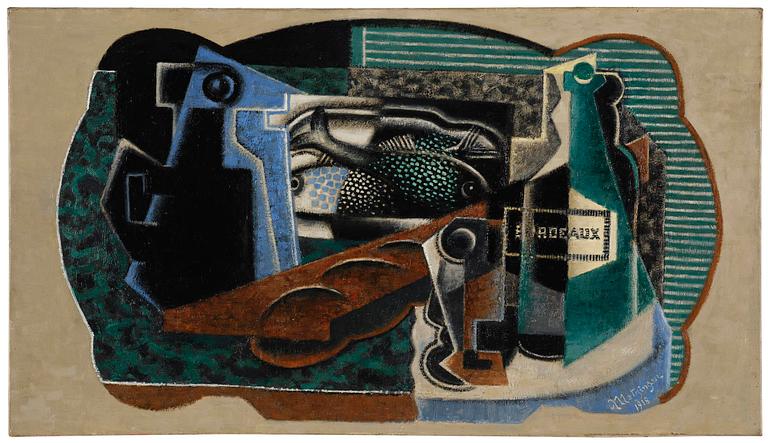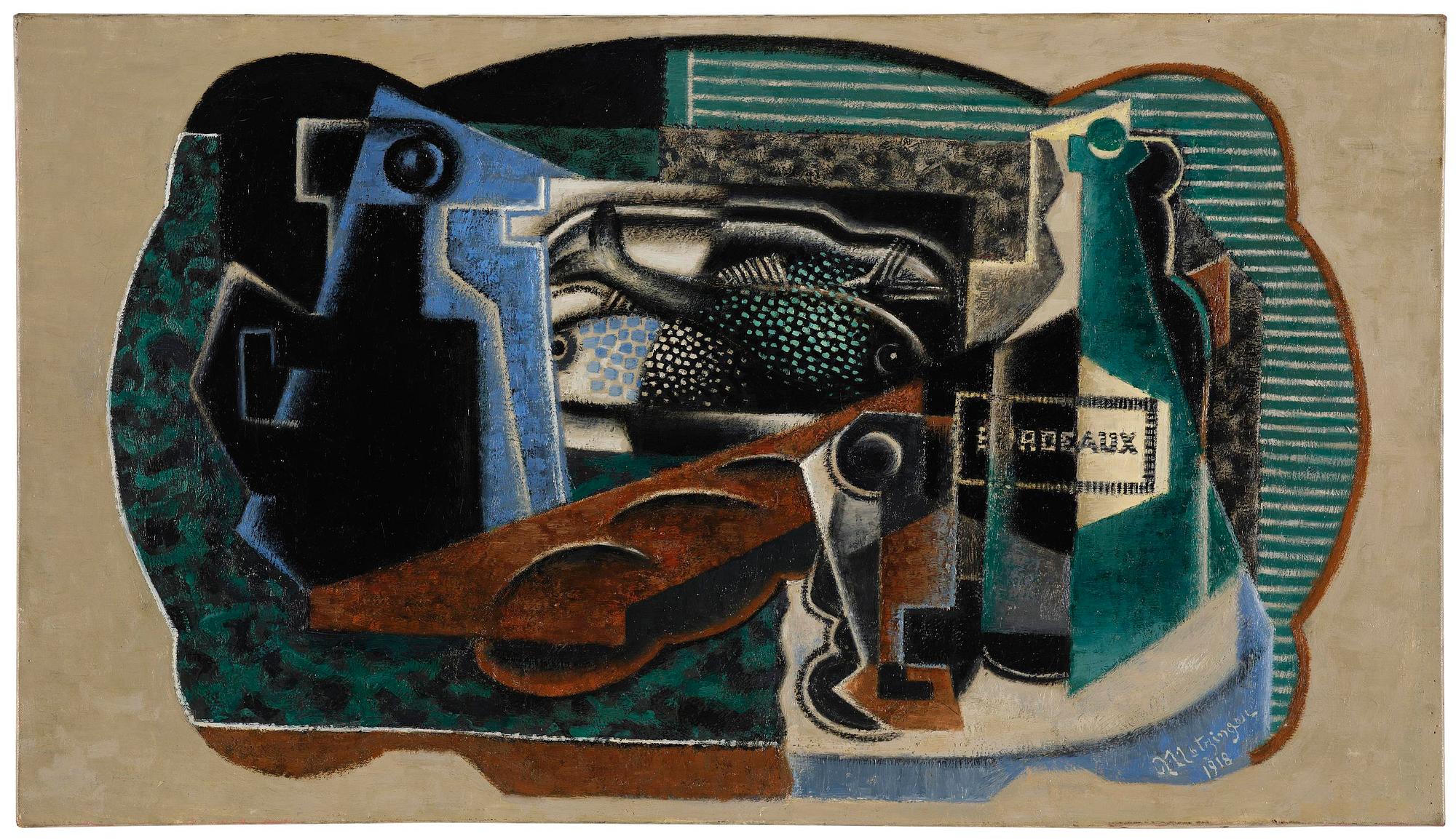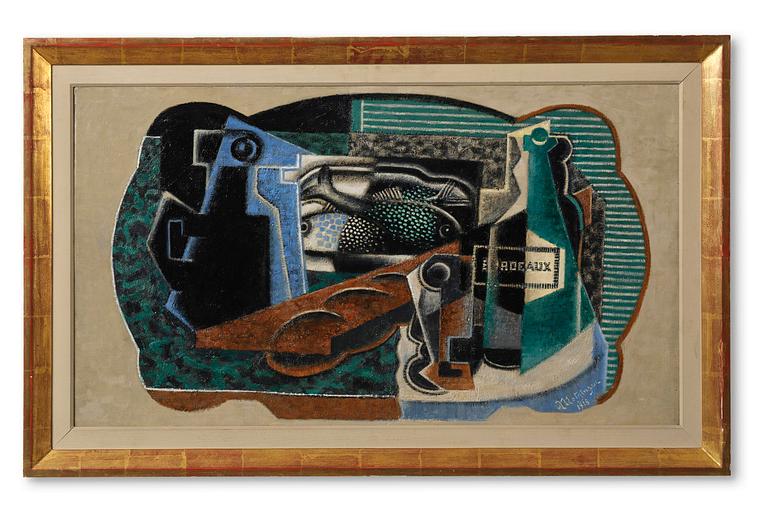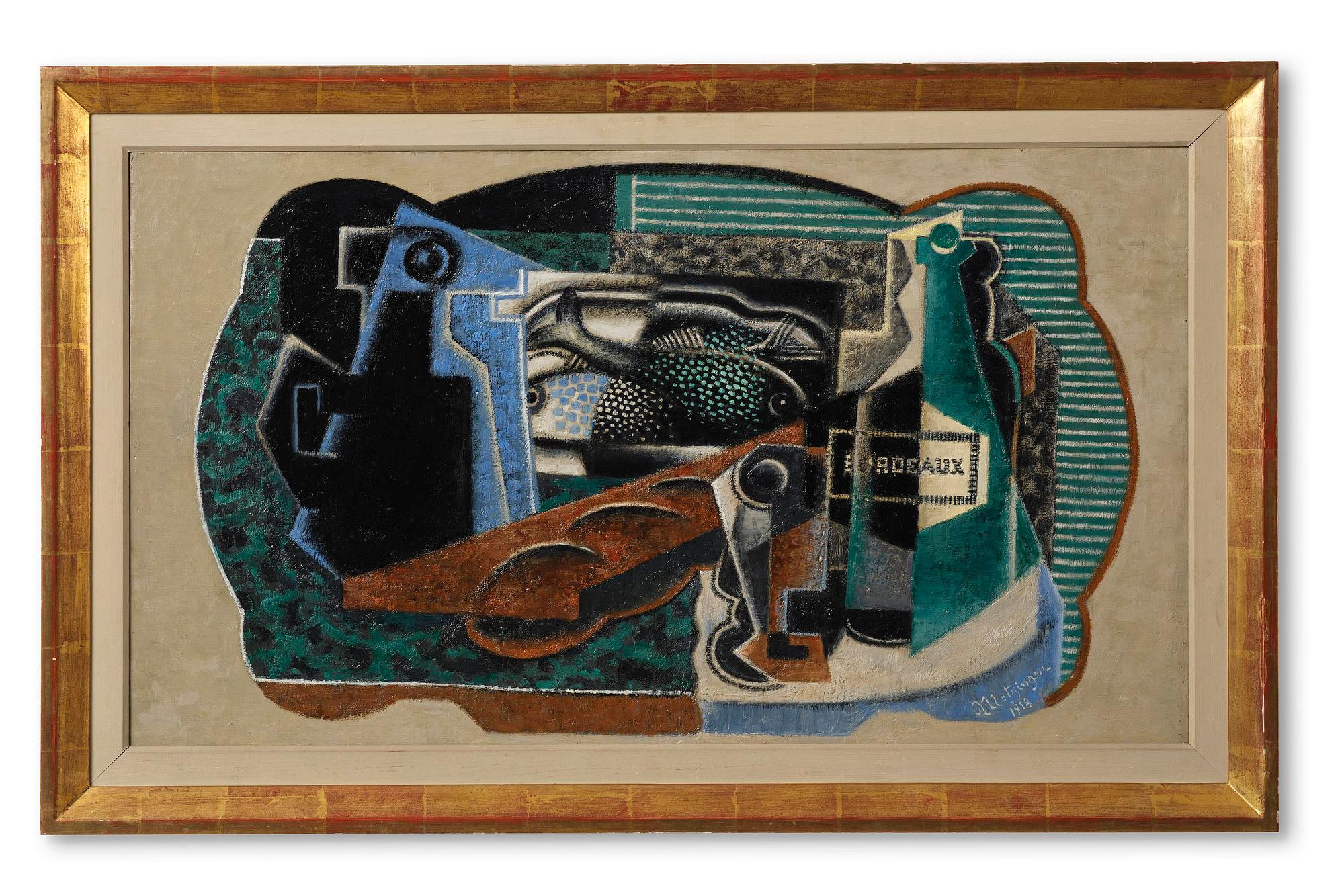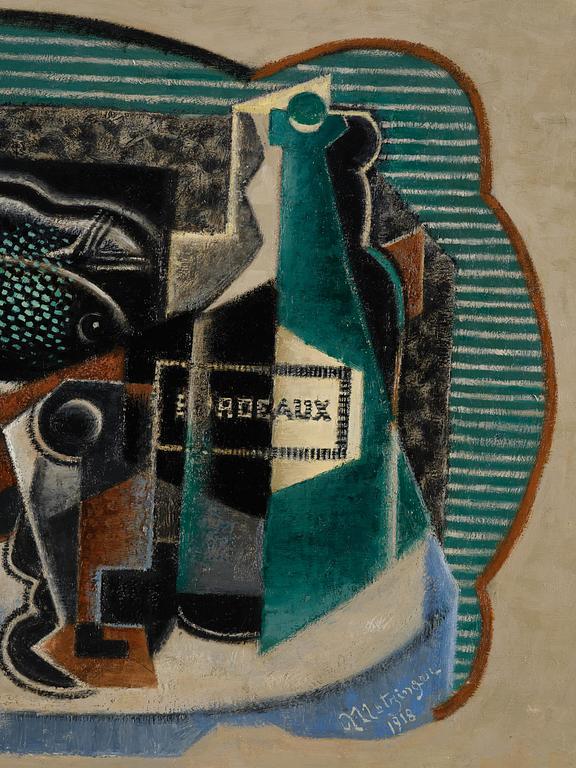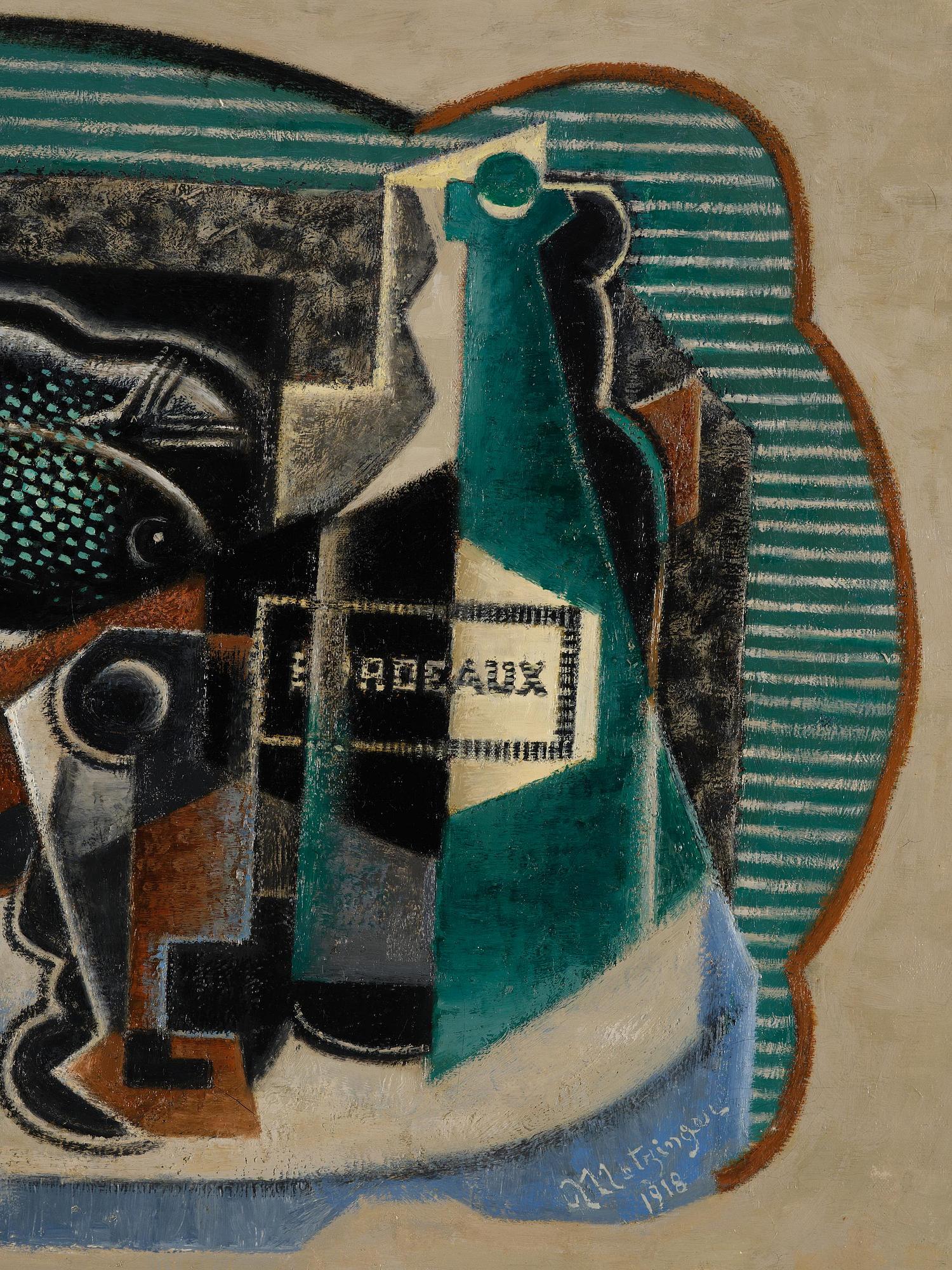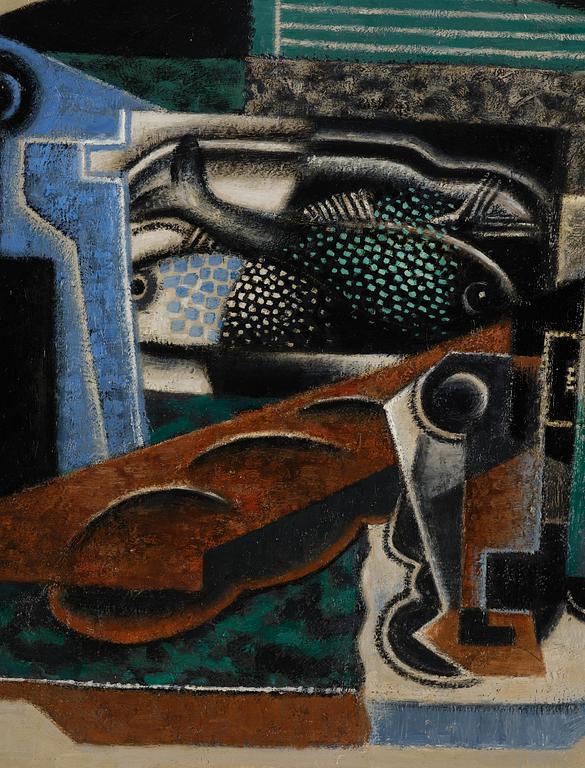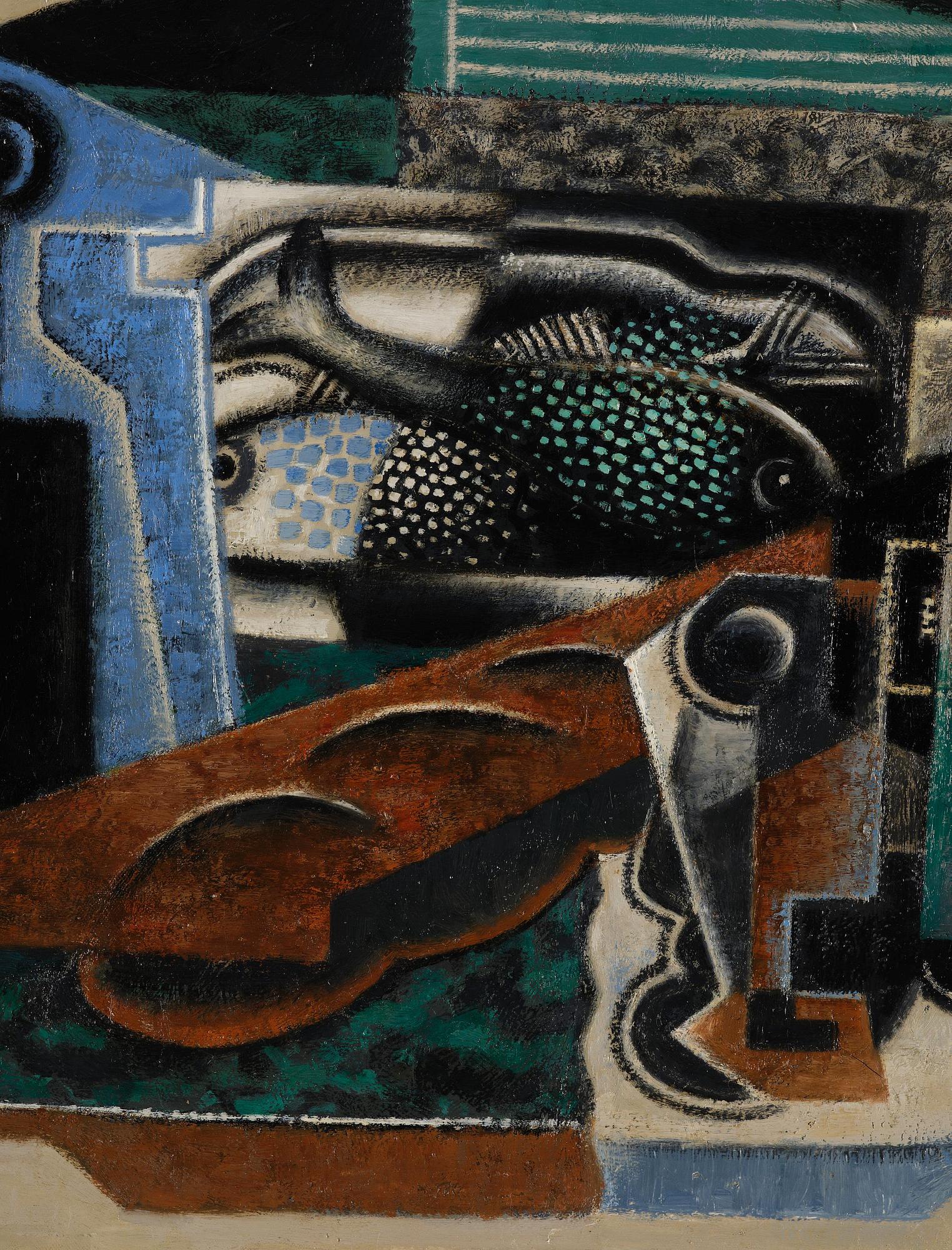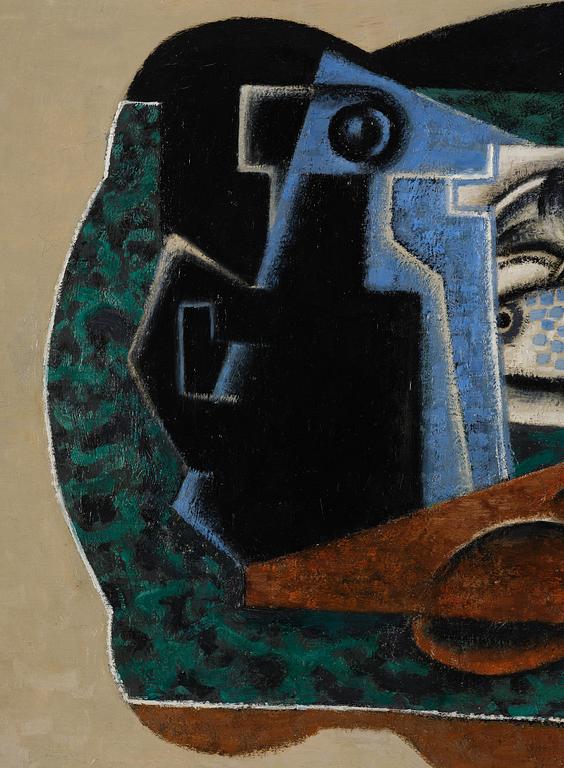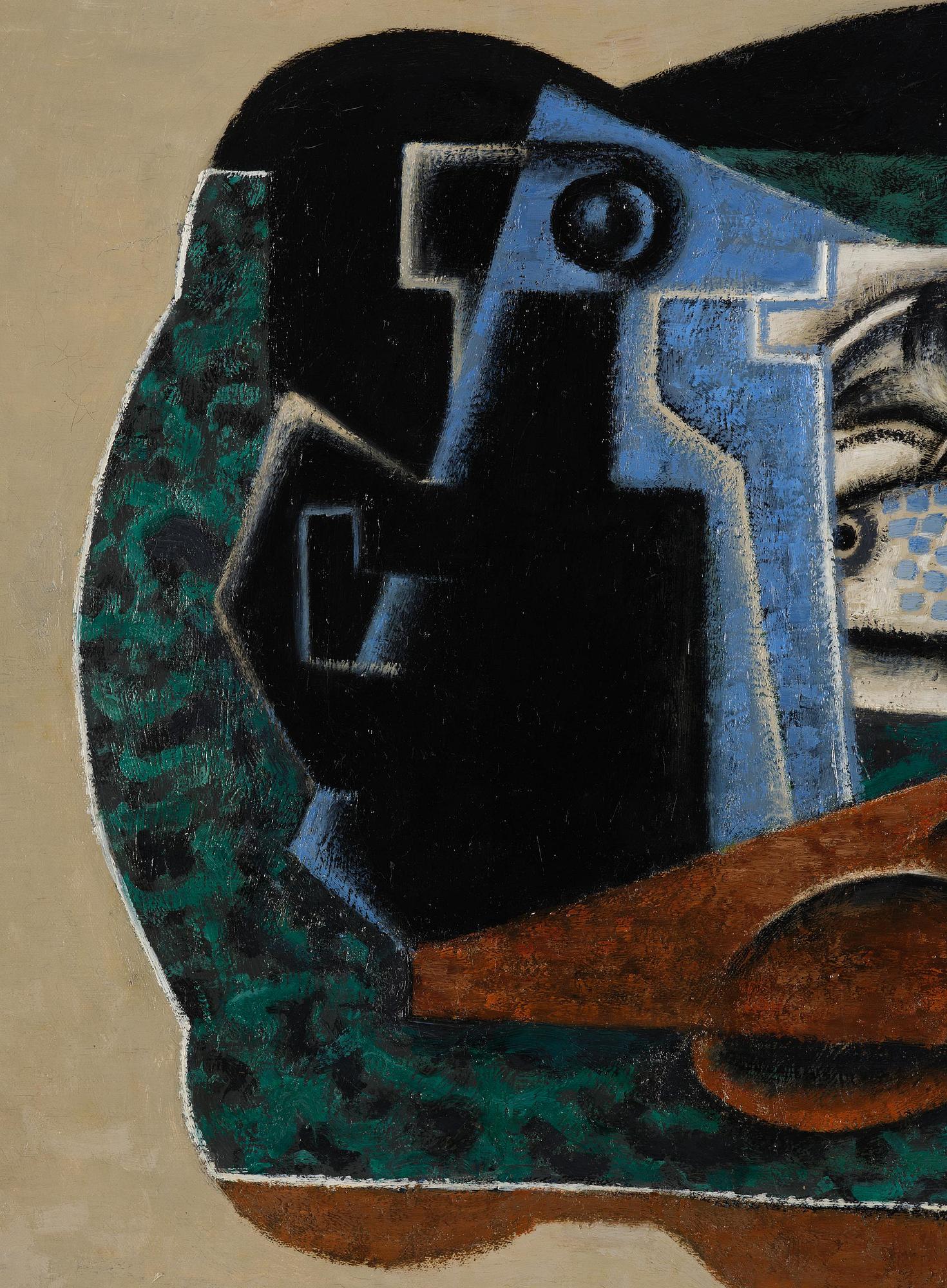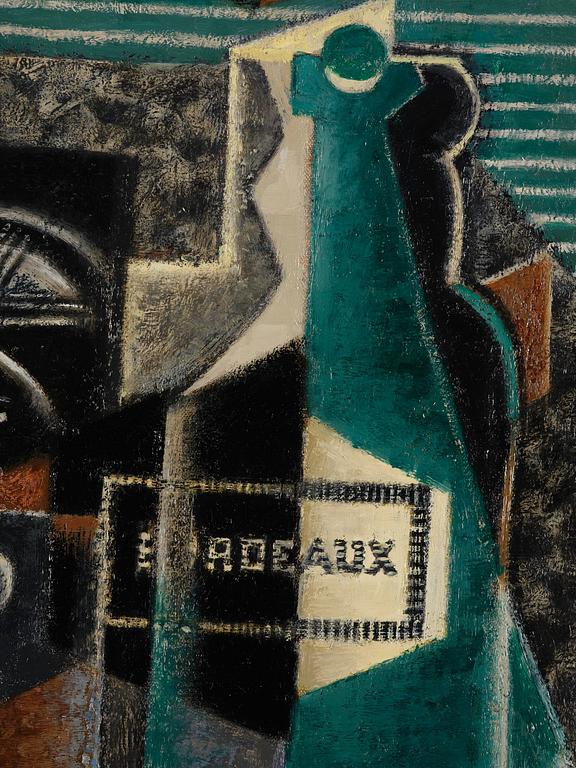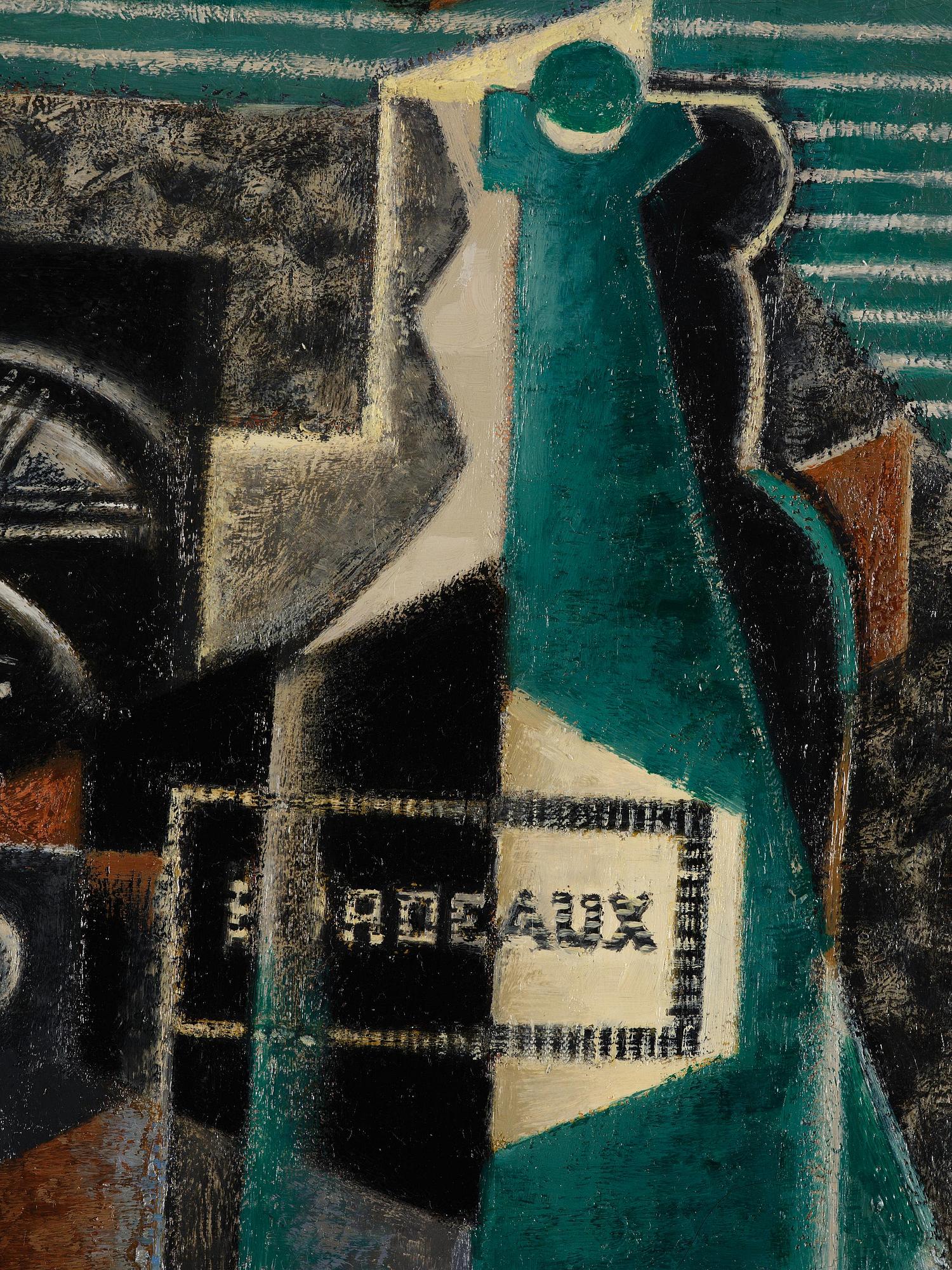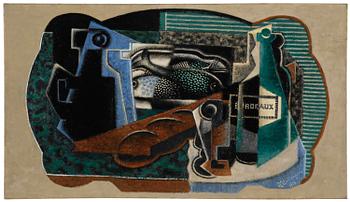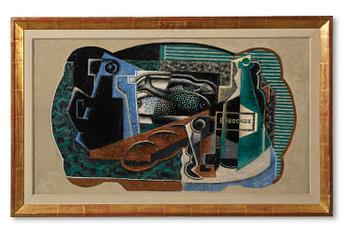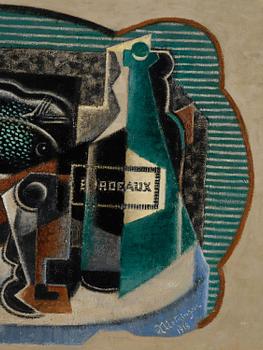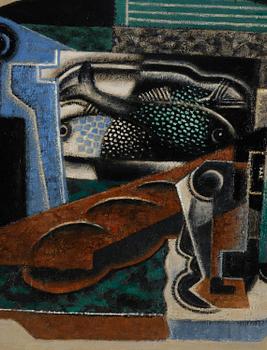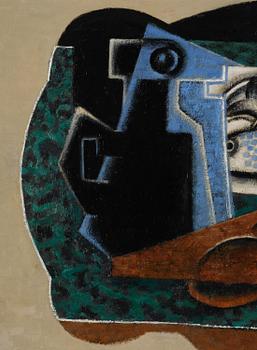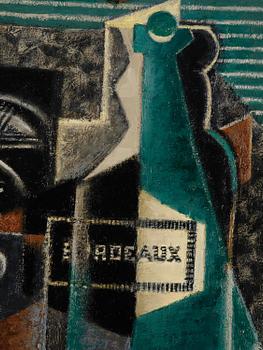
Nature morte (Poissons, bouteille de Bordeaux, la baguette)
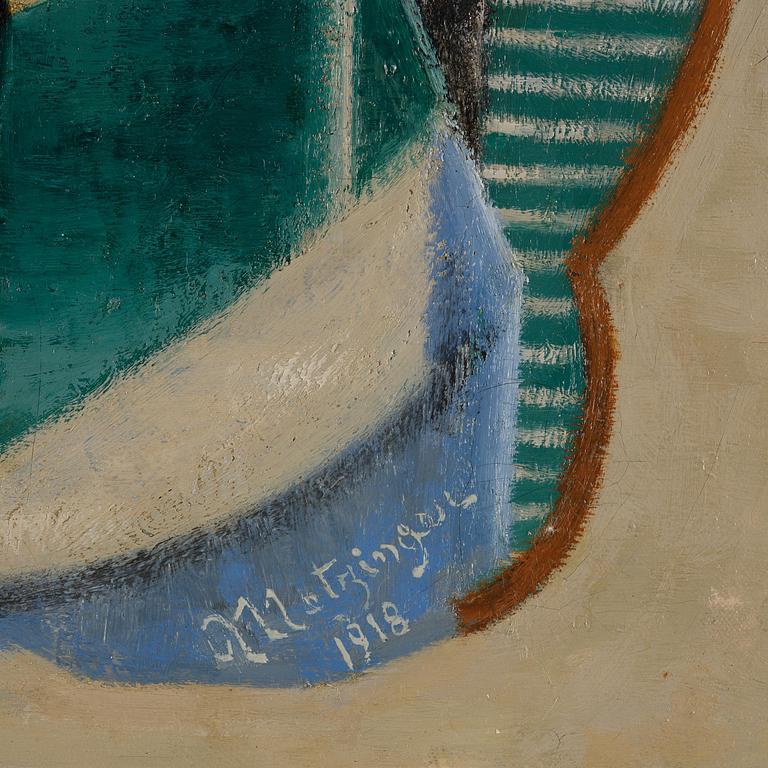
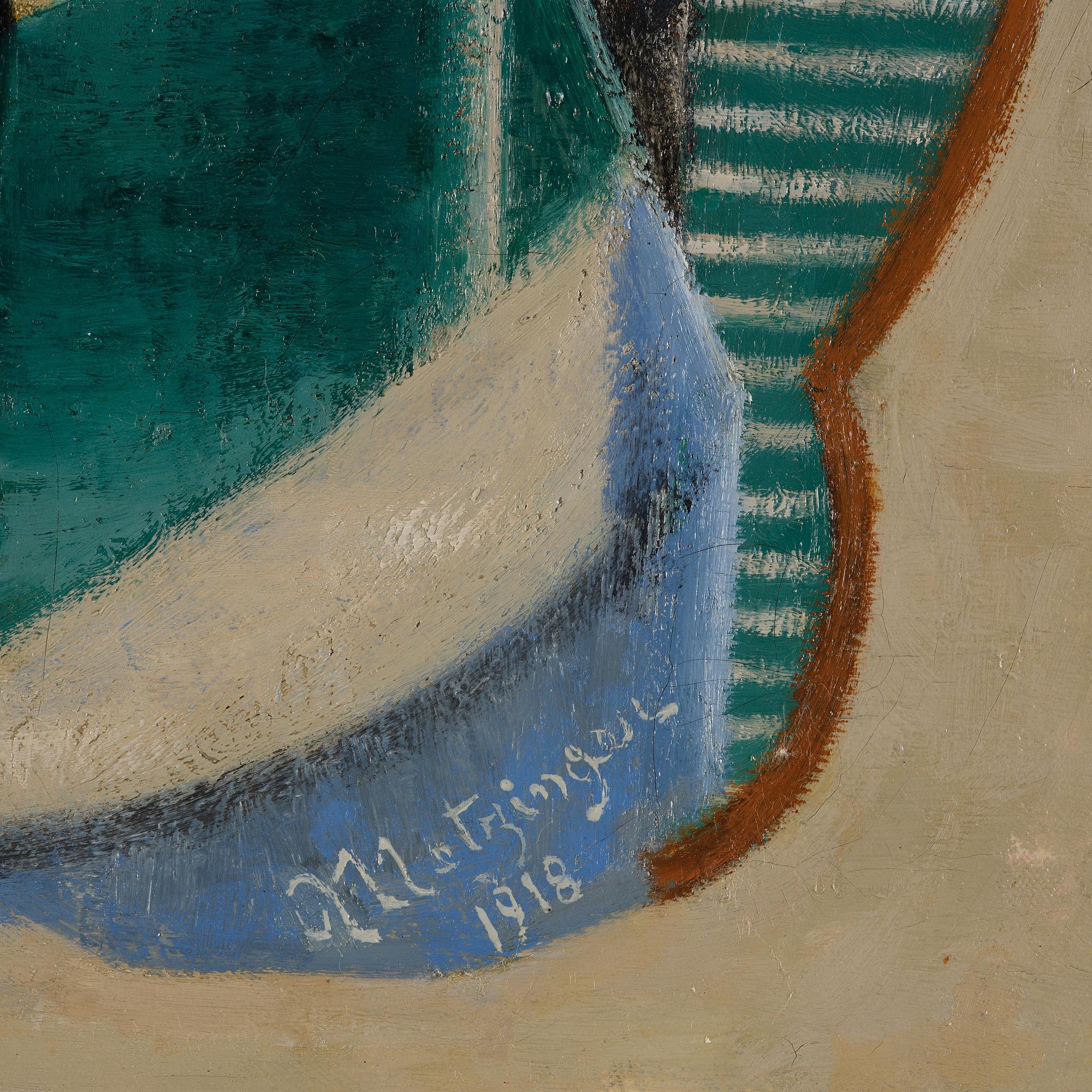
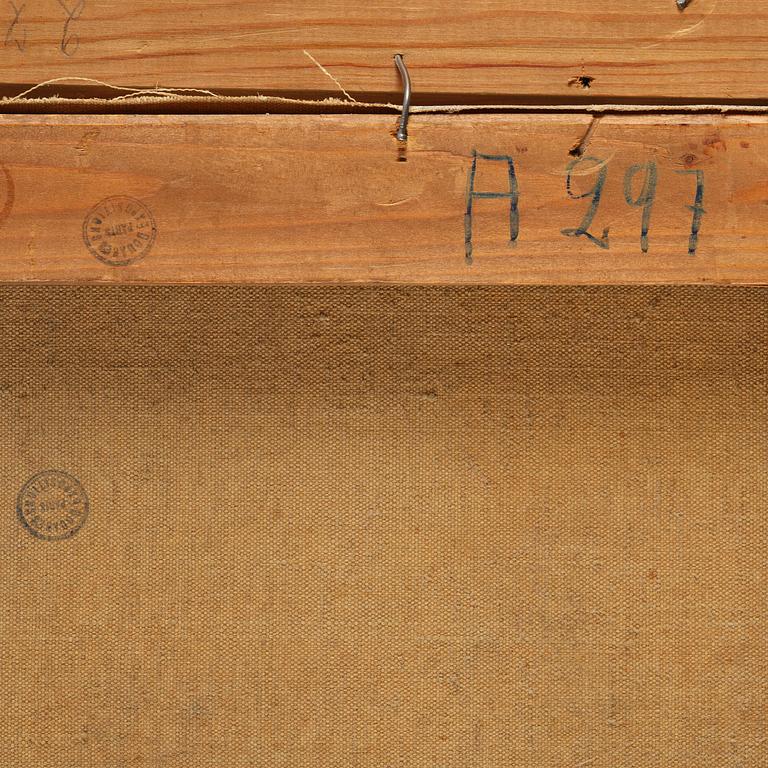
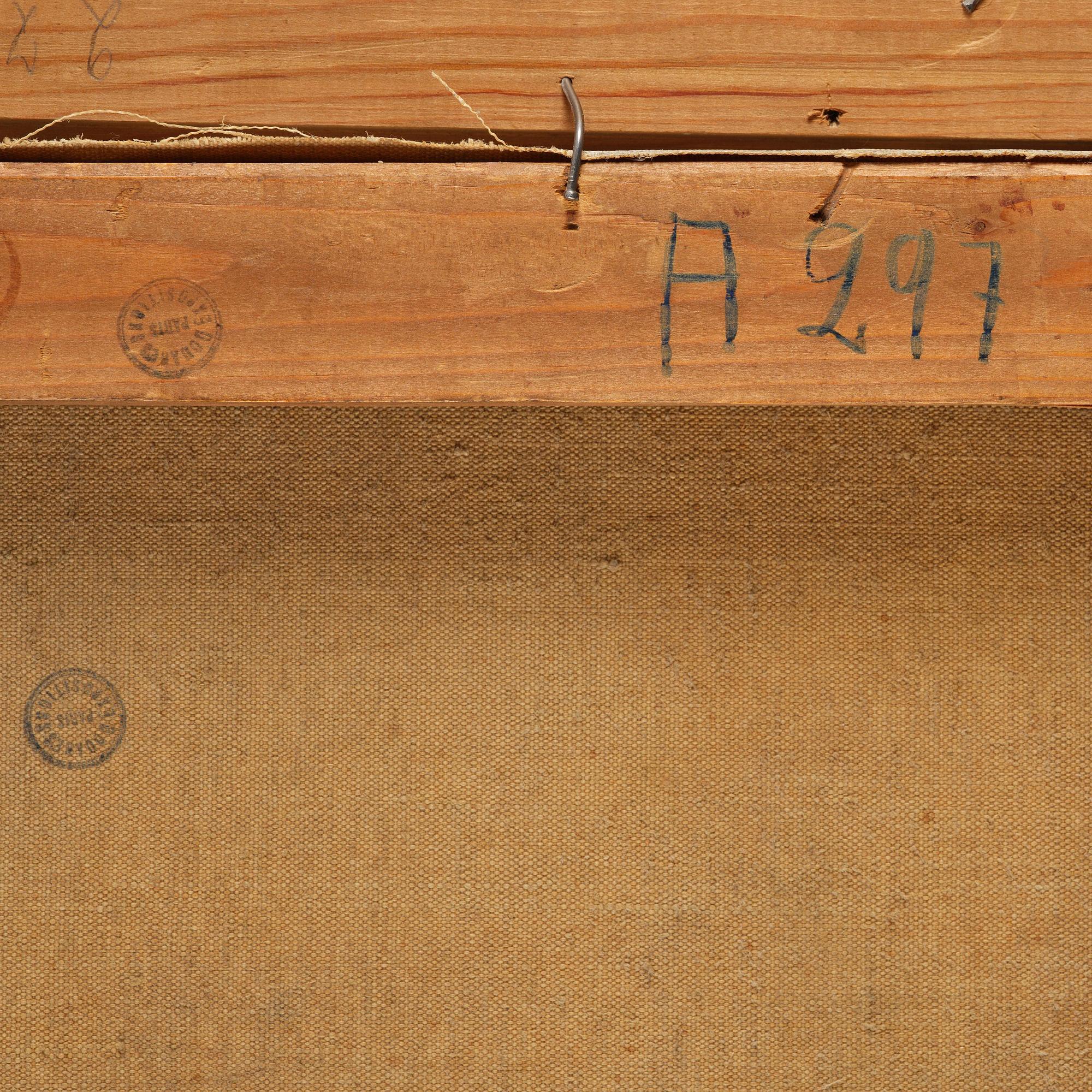
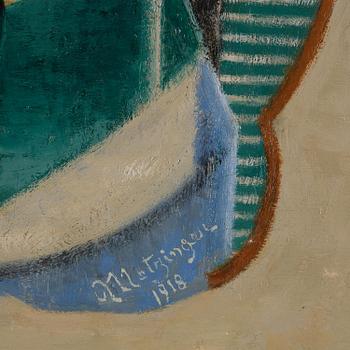
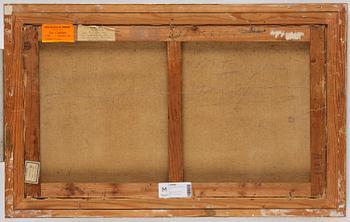
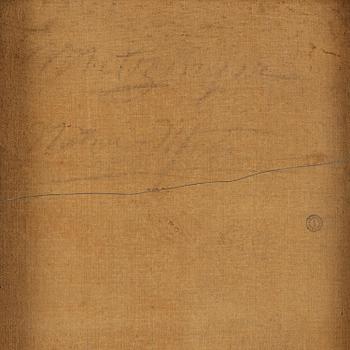
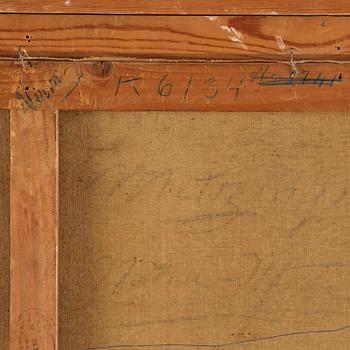
Signed Metzinger and dated 1918. Oil on canvas, 46 x 81 cm.
A digital certificate issued by Alexander Mittelmann, Co-author and Editor of the Jean Metzinger Catalogue Raisonné, President of Défense et promotion de l'œuvre de l'artiste Jean Metzinger, Association enregistrée, accompanies the work.
Provenance
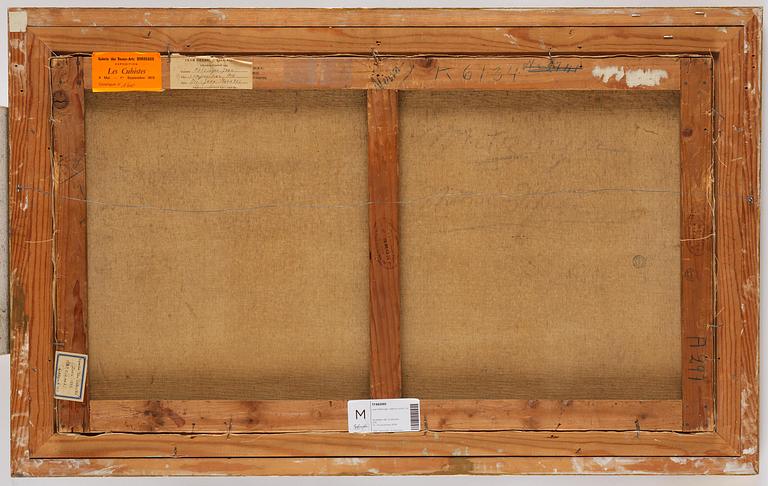
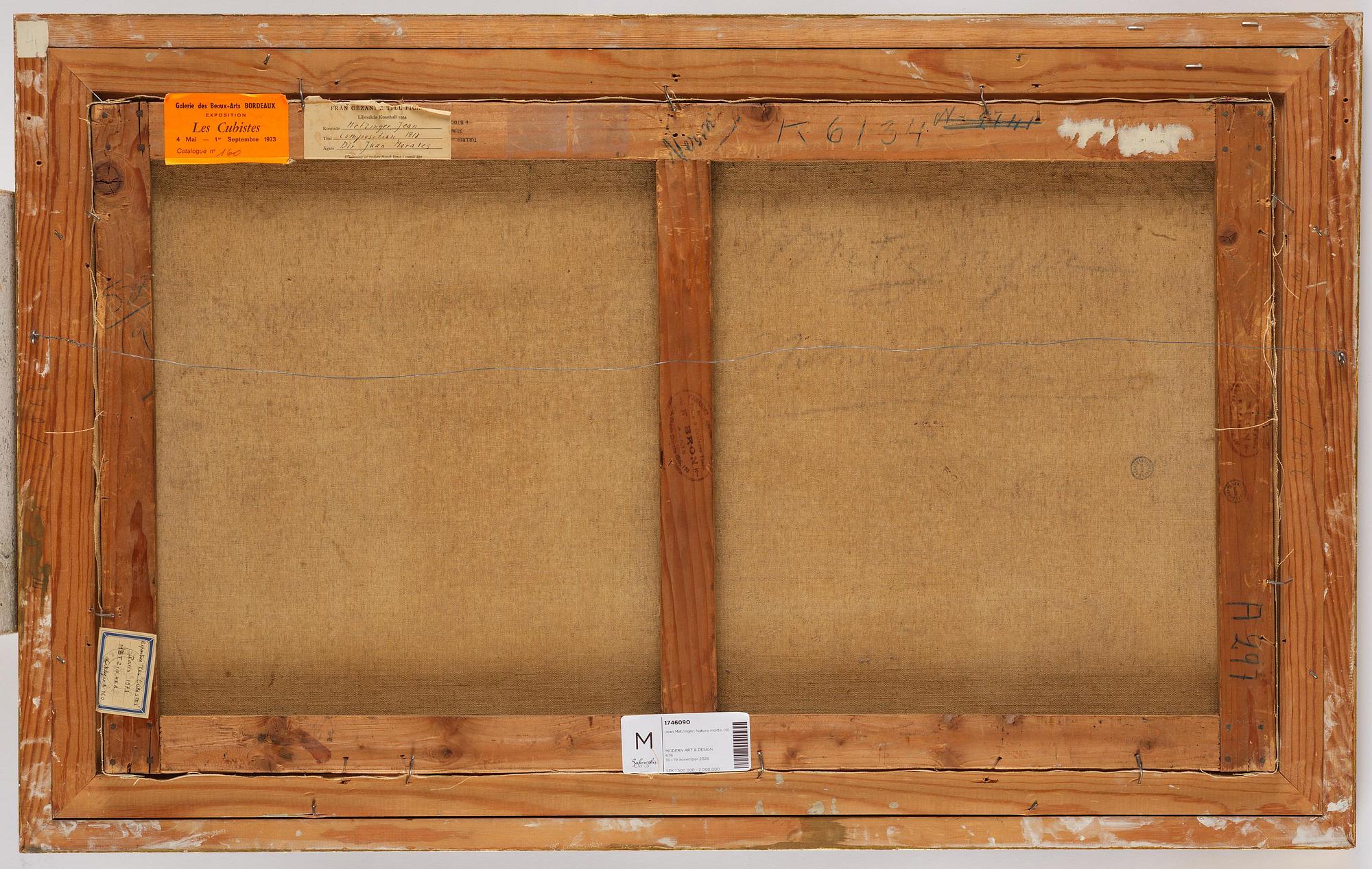
Svensk-Franska Konstgalleriet, Stockholm, "Konstauktion Auktionskatalog N 37: Hjalmar Gabrielsons, Hanna och Georg Paulis, och Andra Samlingar", 5–6 November 1942, lot 355.
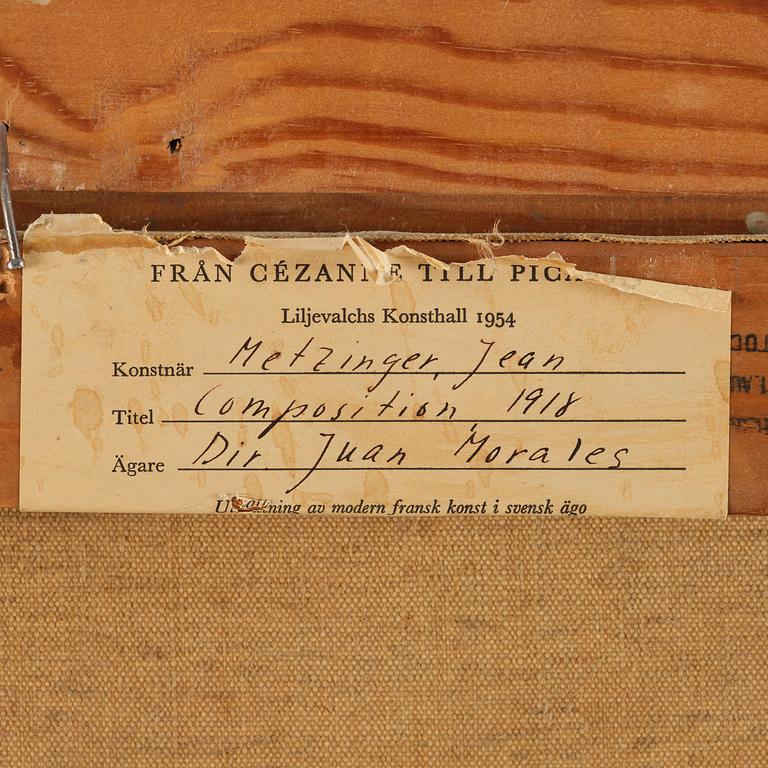
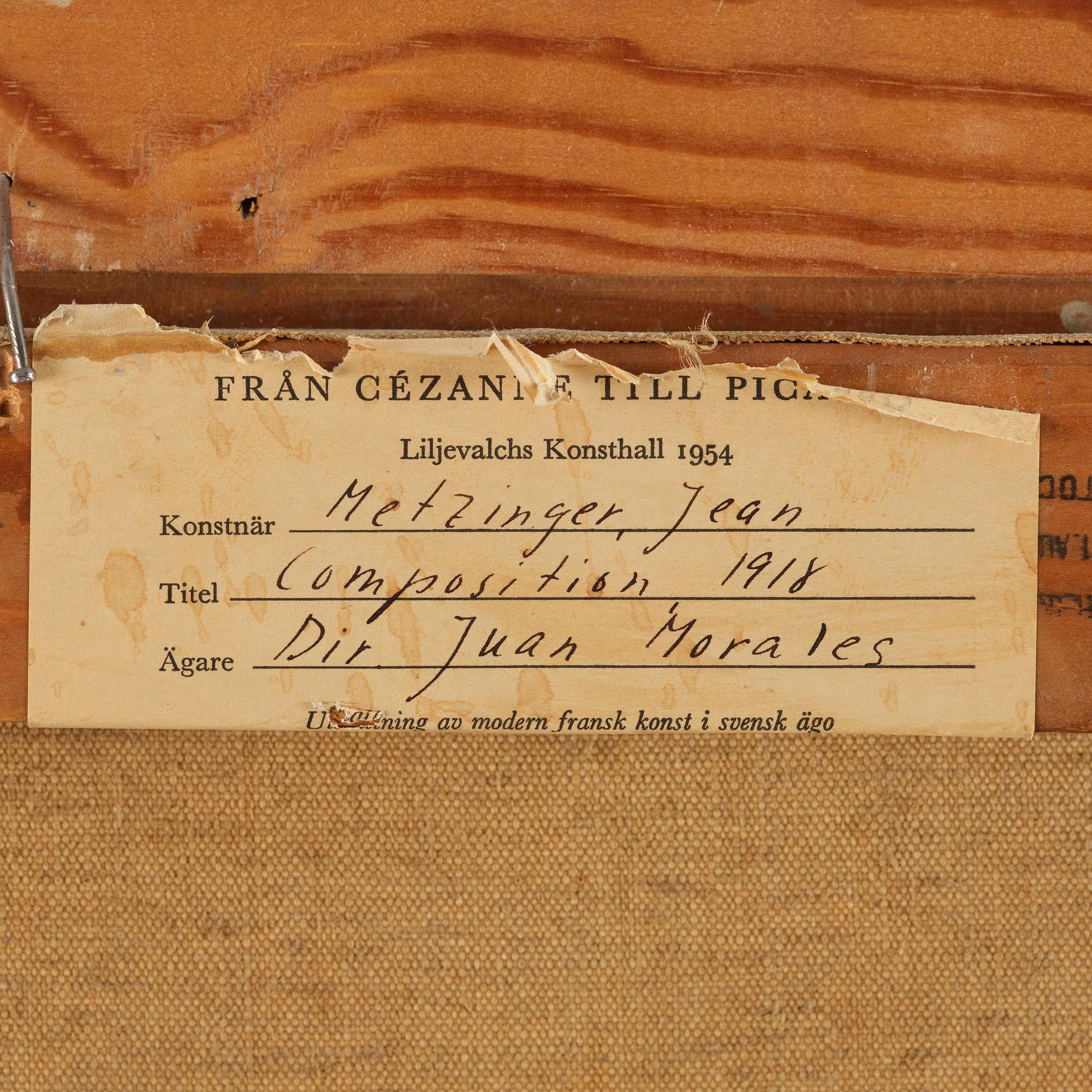
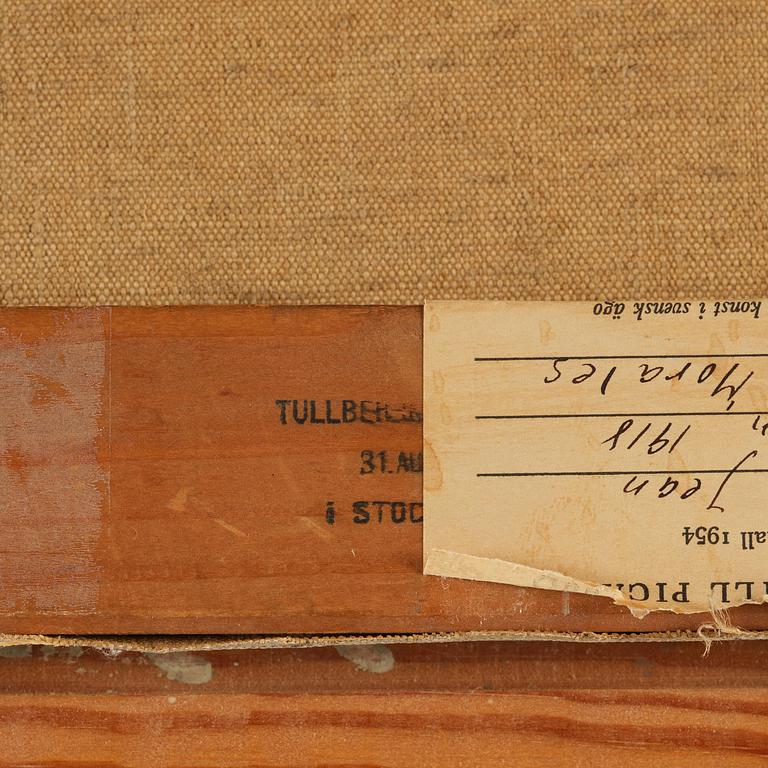
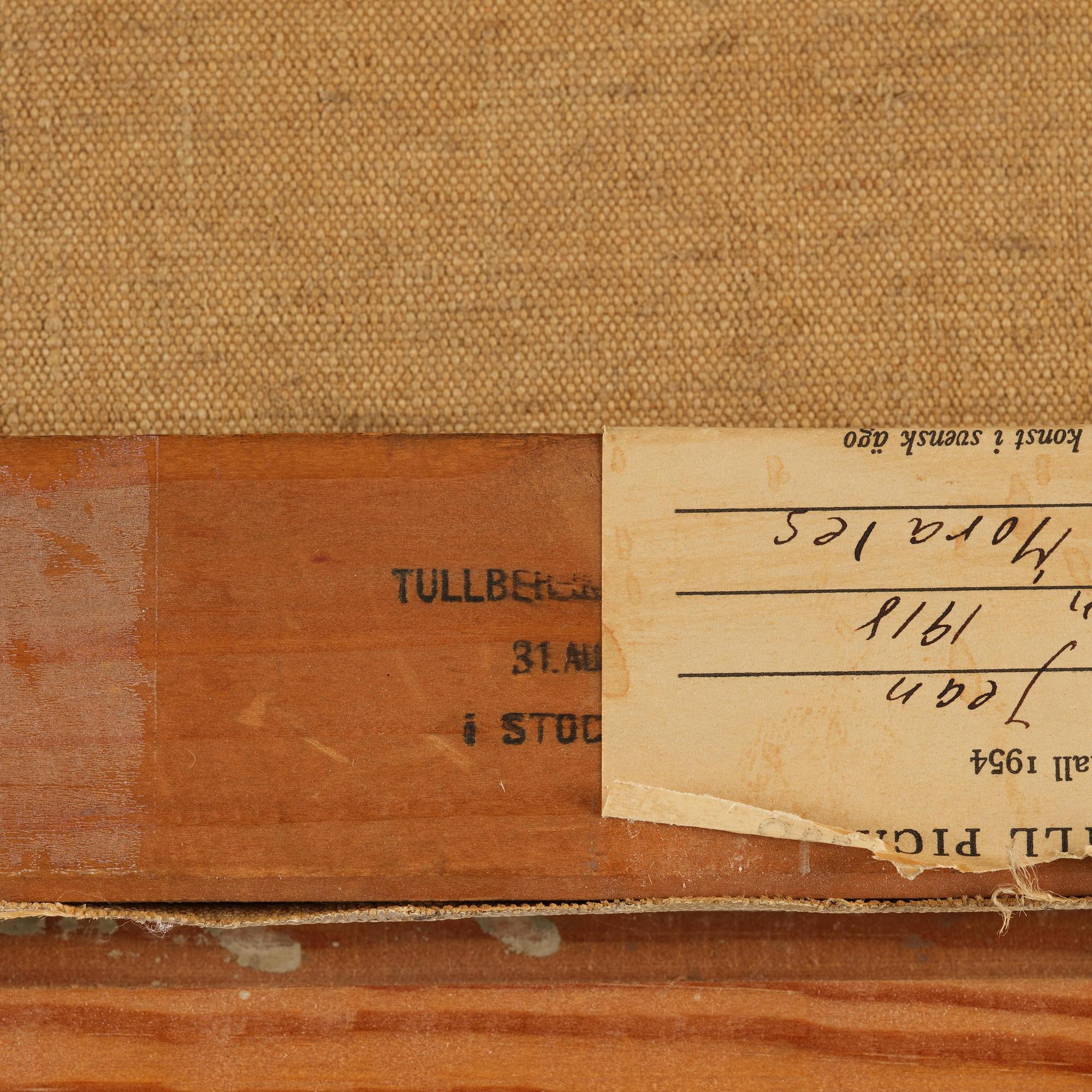
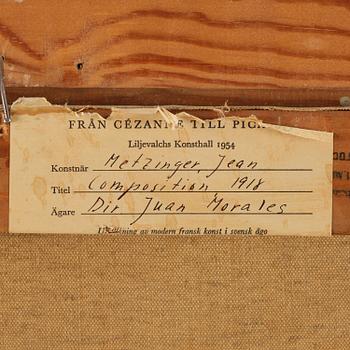
Director Juan Morales 1888–1971, Stockholm.
Private Collection, Sweden.
Exhibitions
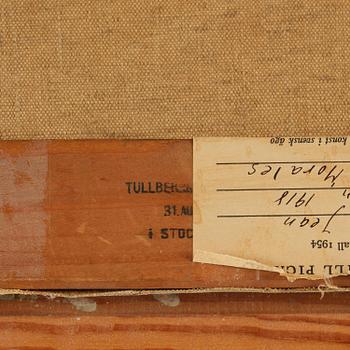
Liljevalchs konsthall, Stockholm, “Från Cézanne till Picasso”, September 1954, cat. no. 252.
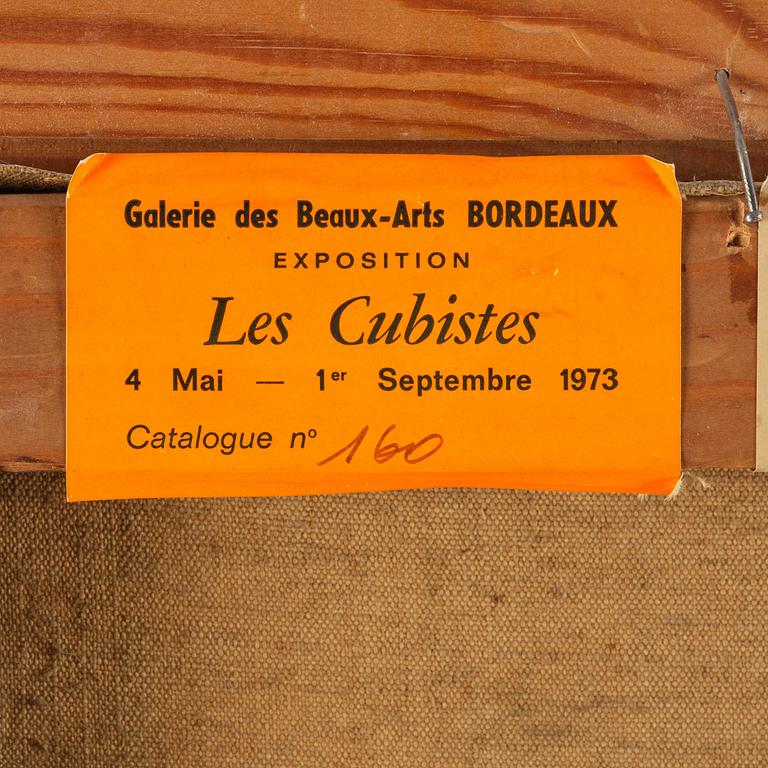
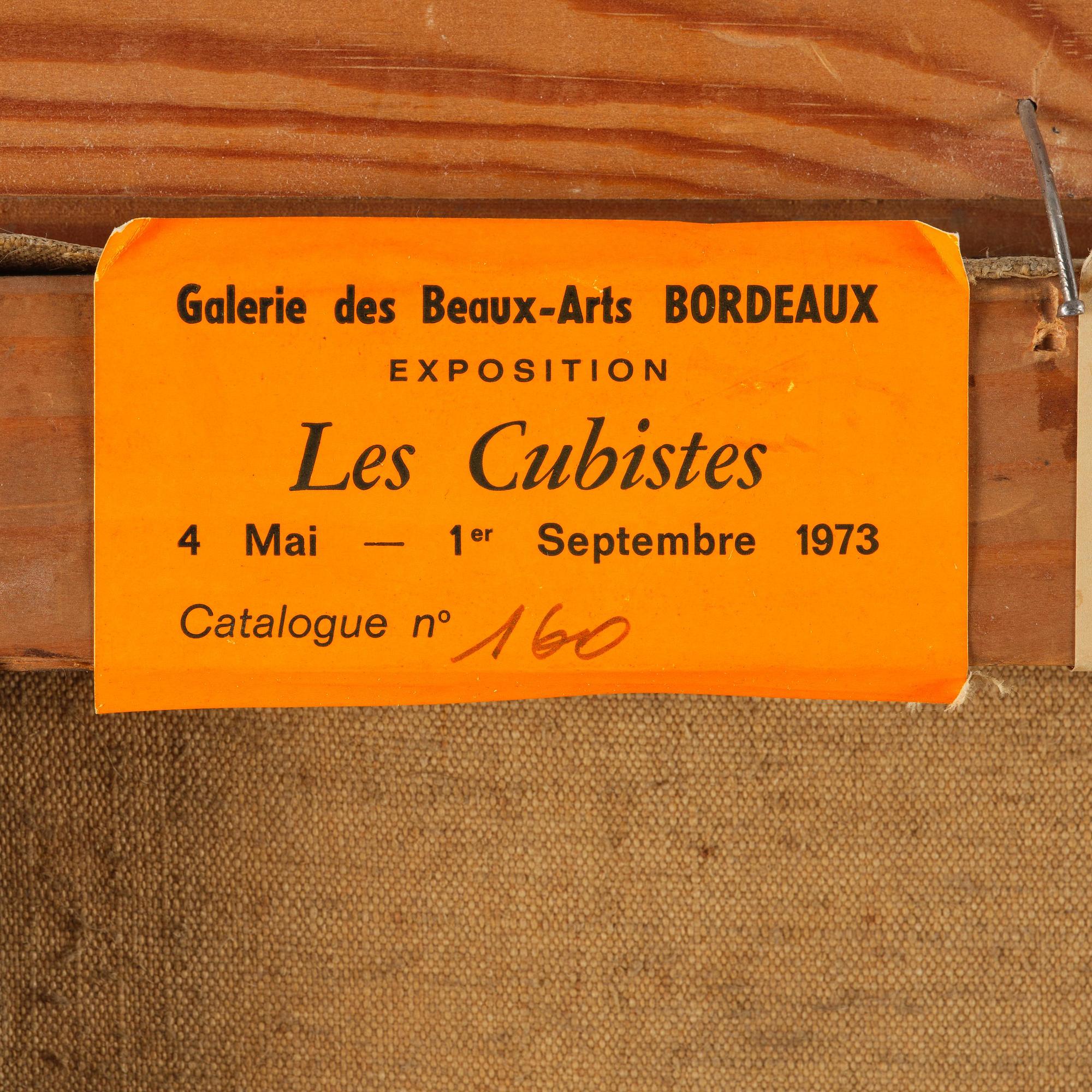
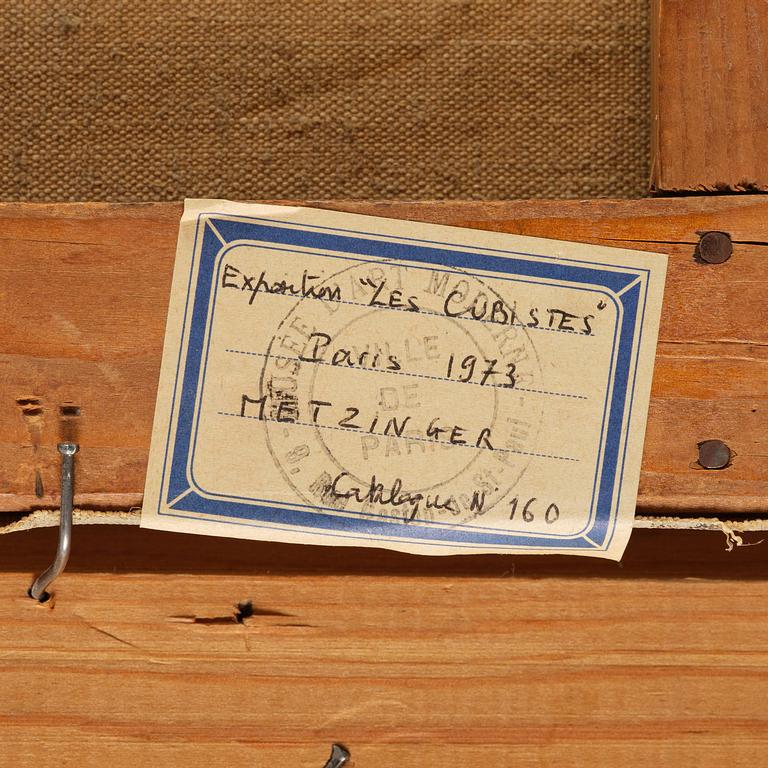
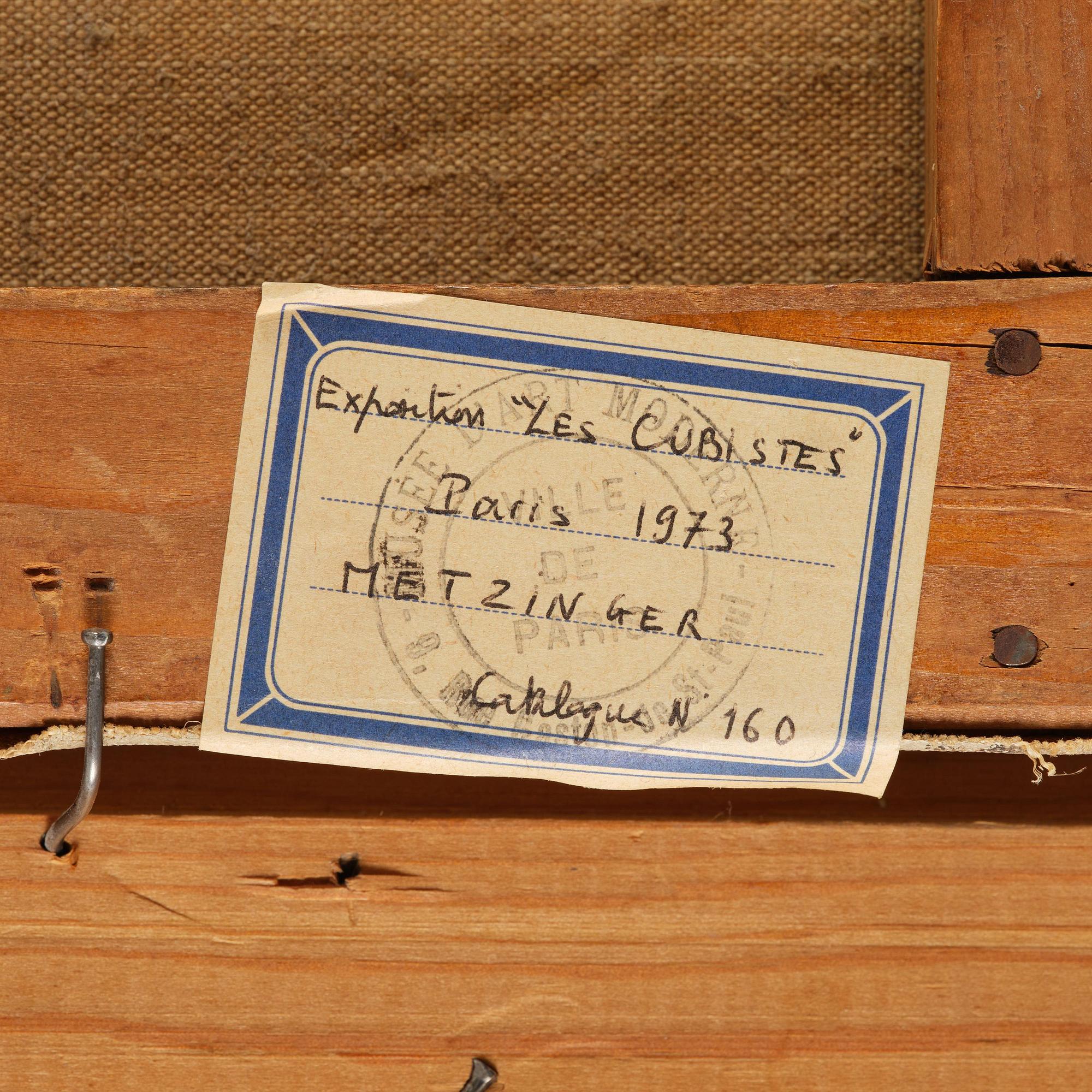
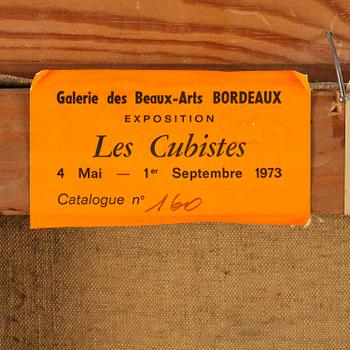
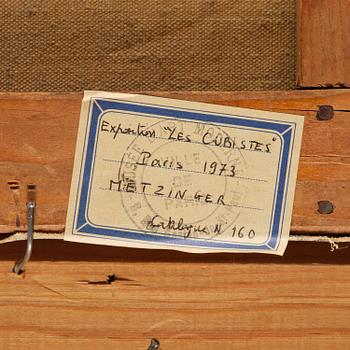
Galerie des Beaux-Arts, Bordeaux, France, “Les Cubistes”, 1 May – 1 September 1973, cat. no. 160.
Musée d'Art Moderne de la Ville de Paris, France, “Les Cubistes”, 26 September – 10 November 1973, cat. no. 160.
Literature
Svensk-Franska Konstgalleriet, "Förteckning över mycket värdefulla målningar m.m. ur Hjalmar Gabrielsons, Hanna och Georg Paulis, samt andra samlingar", Stockholm, 1942, p. 51, lot 355 (under “Diverse Samlingar,” titled Nature Morte).
More information
The year 1912 represents a milestone in the history of French Cubism. It was the year in which the first groundbreaking exhibition took place, bringing together Cubist artists whose work was presented to the public for the first time. It was also the year in which the French Cubist school decided to form the group La Section d’Or (The Golden Section) in order to exhibit their works together. In the same year, Jean Metzinger and Albert Gleizes published Du Cubisme, the first and most comprehensive account of this revolutionary new way of depicting the world.
Many of the new ideas emerged during the weekly discussions held at Jacques Villon’s home in a suburb of Paris. Metzinger and Gleizes were joined by the Duchamp brothers, Delaunay, Le Fauconnier, Gris, Léger, Picasso and Archipenko, among others. Mathematics and geometry played a central role in these discussions, and it was Metzinger who first drew attention to the stylistic similarities in the paintings of Picasso, Braque and Delaunay. The Cubist exhibition, comprising 180 works by 31 artists, took place at Galerie La Boétie in October 1912. It was a success, and Cubism was now recognised as a new avant-garde movement. Metzinger deserves considerable credit for this achievement, as he contributed not only as an artist and practising Cubist, but also as a writer who explained to an as yet uninitiated audience how these new ideas could be understood.
The following year, Apollinaire wrote that Metzinger’s “art, which is becoming increasingly abstract yet always remains delightful, brings to the fore and seeks to resolve the most difficult and unexpected problems of aesthetics.” (D. Robbins, Jean Metzinger: At the Center of Cubism, in Jean Metzinger in Retrospect, exhibition catalogue, Iowa City, 1985, p. 44.)
The German art dealer Daniel-Henry Kahnweiler, who played a highly significant role in the careers of many of these artists, initially supported the Cubist painters. The same was true of Léonce Rosenberg, who inherited a gallery and a modest fortune and decided in 1915 to open Galerie l’Effort Moderne on rue de la Baume in Paris. Shortly after its opening, he began collaborating with Metzinger, Gleizes, Hayden, Herbin and other avant-garde artists.
During the First World War, Metzinger resisted active military service, despite coming from a military family. Instead, he was sent to the front as a medical orderly, where he witnessed the horrors of war. These experiences deeply affected Metzinger, who was an outspoken pacifist. Once he had recovered from the trauma of his wartime experiences, he sought new directions in his artistic development, as did many of his fellow artists and friends.
In a letter to Gleizes dated 4 July 1916, he explained:
“After two years of study, I have succeeded in establishing the foundations of this new type of perspective about which I have spoken so much. It is neither Gris’s materialistic perspective nor Picasso’s romantic perspective. It is rather a metaphysical perspective – and I take full responsibility for the choice of words. You cannot even imagine what I have arrived at since the beginning of the war, by working outside painting but for the sake of painting. The geometry of the fourth dimension holds no more secrets for me.” (D. Robbins, p. 21.)
This newly discovered fourth dimension represented a significant shift in Metzinger’s approach to painting. In 1919, Rosenberg presented a solo exhibition of his work as part of a series of exhibitions intended to demonstrate that Cubism remained very much alive, despite four years of war.
Since the Renaissance, the Cubist movement had explored some of the most revolutionary conventions concerning space and perspective in Western art. Cubism is undoubtedly one of the most significant artistic movements of the twentieth century and has had a decisive influence on subsequent generations of artists.
Nature morte (Poissons, bouteille de Bordeaux, la baguette) is a masterfully executed still-life composition, balanced between areas of strong colour, clearly defined dark contours and shaded passages. The sharply delineated outlines and the volumetric shading of the rounded forms accentuate each individual object, whose dramatic silhouettes emerge through darker shading on the left and lighter tonalities on the right. These formal elements are characteristic of this period in Metzinger’s artistic career.
For condition report contact specialist

What will the transport cost?
Shipping can only be arranged by contacting specialdelivery@bukowskis.com.
Covered by droit de suite