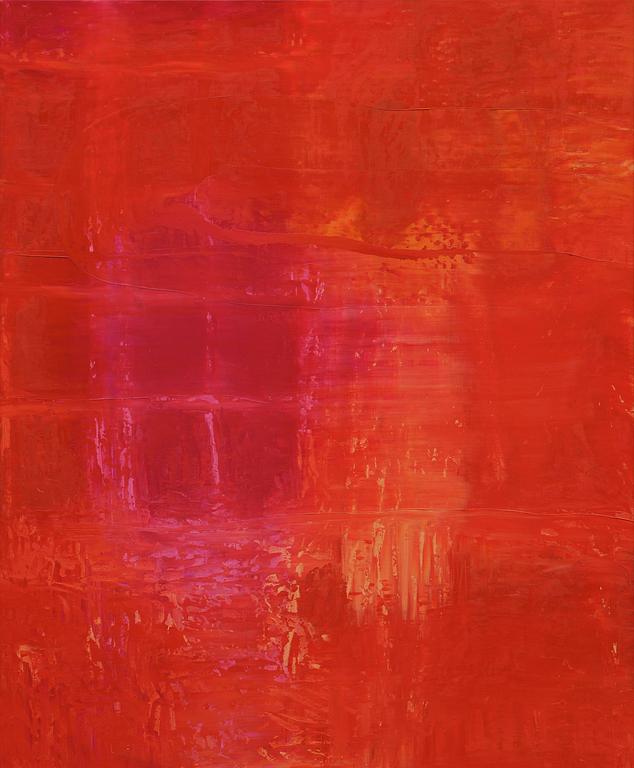
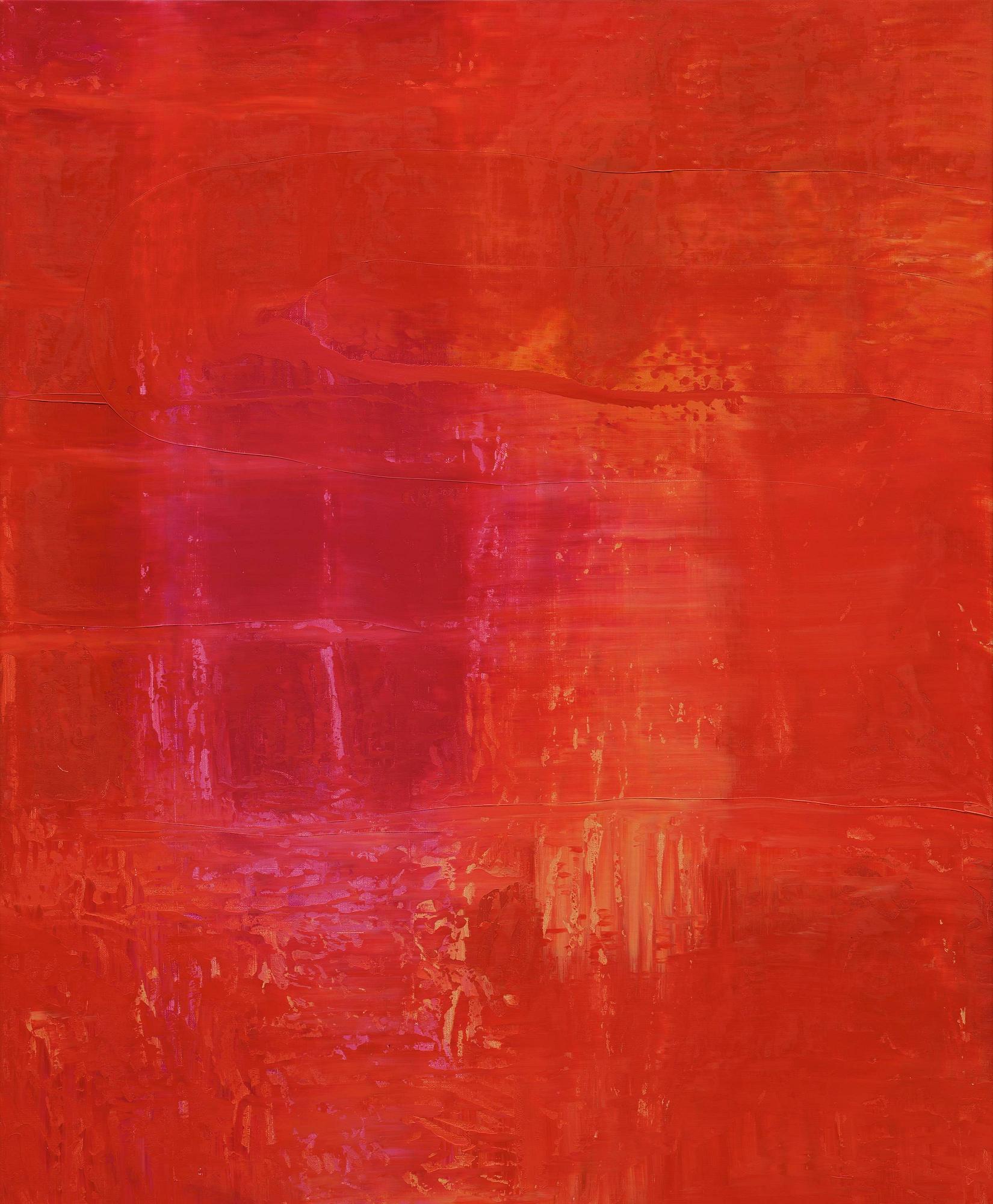
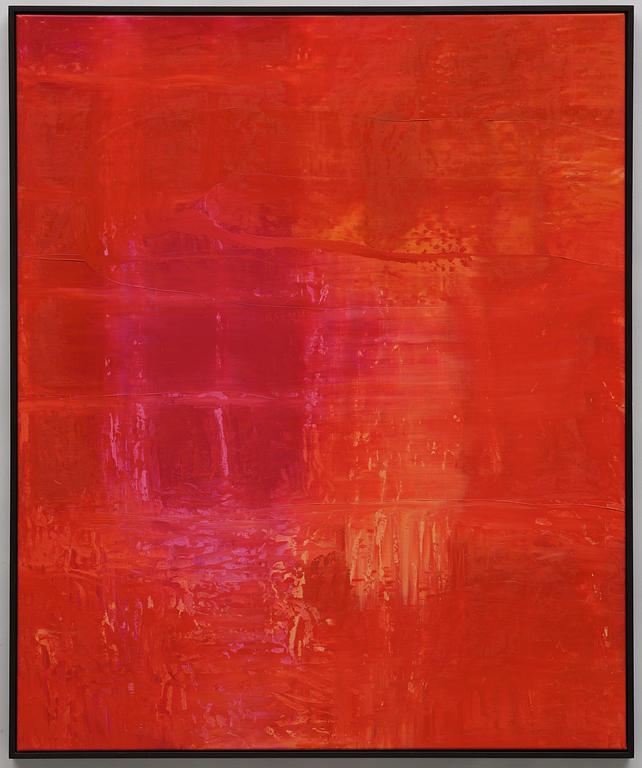
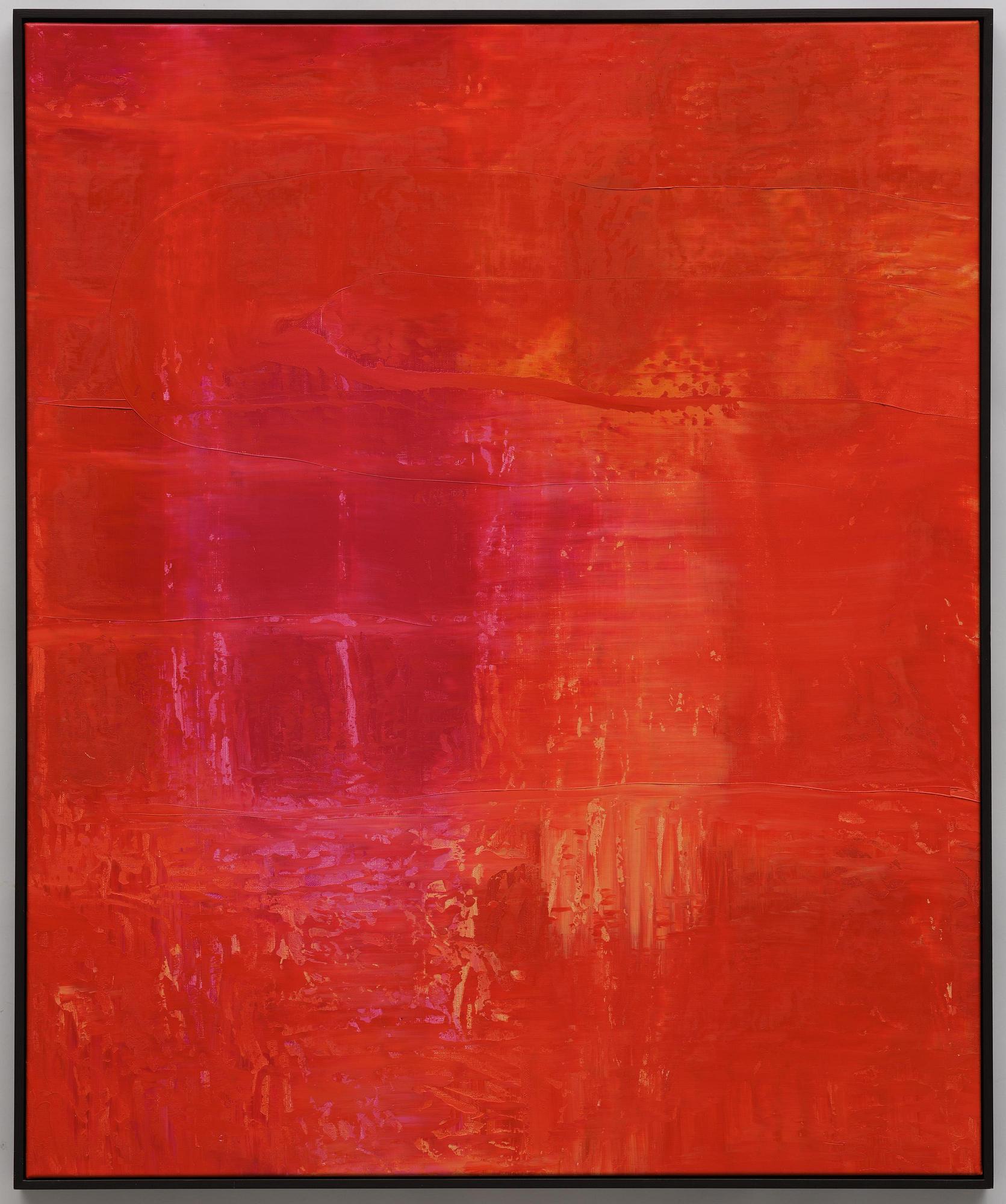
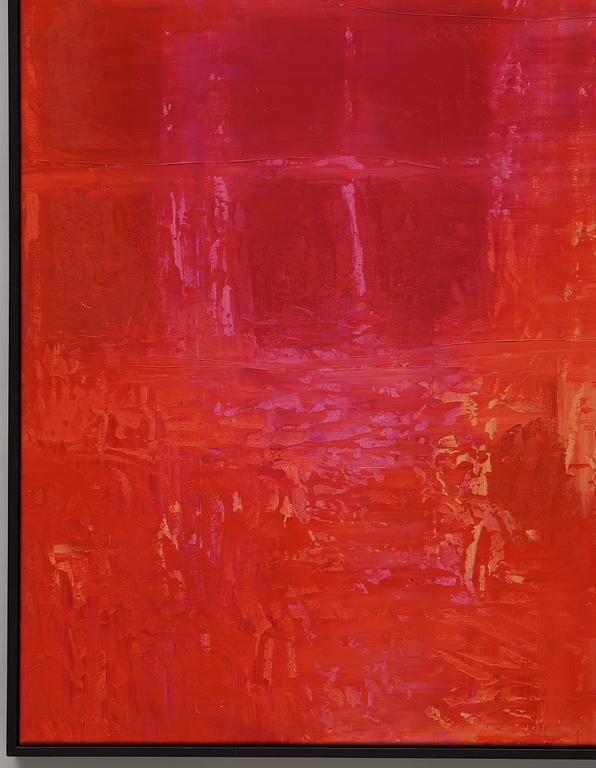
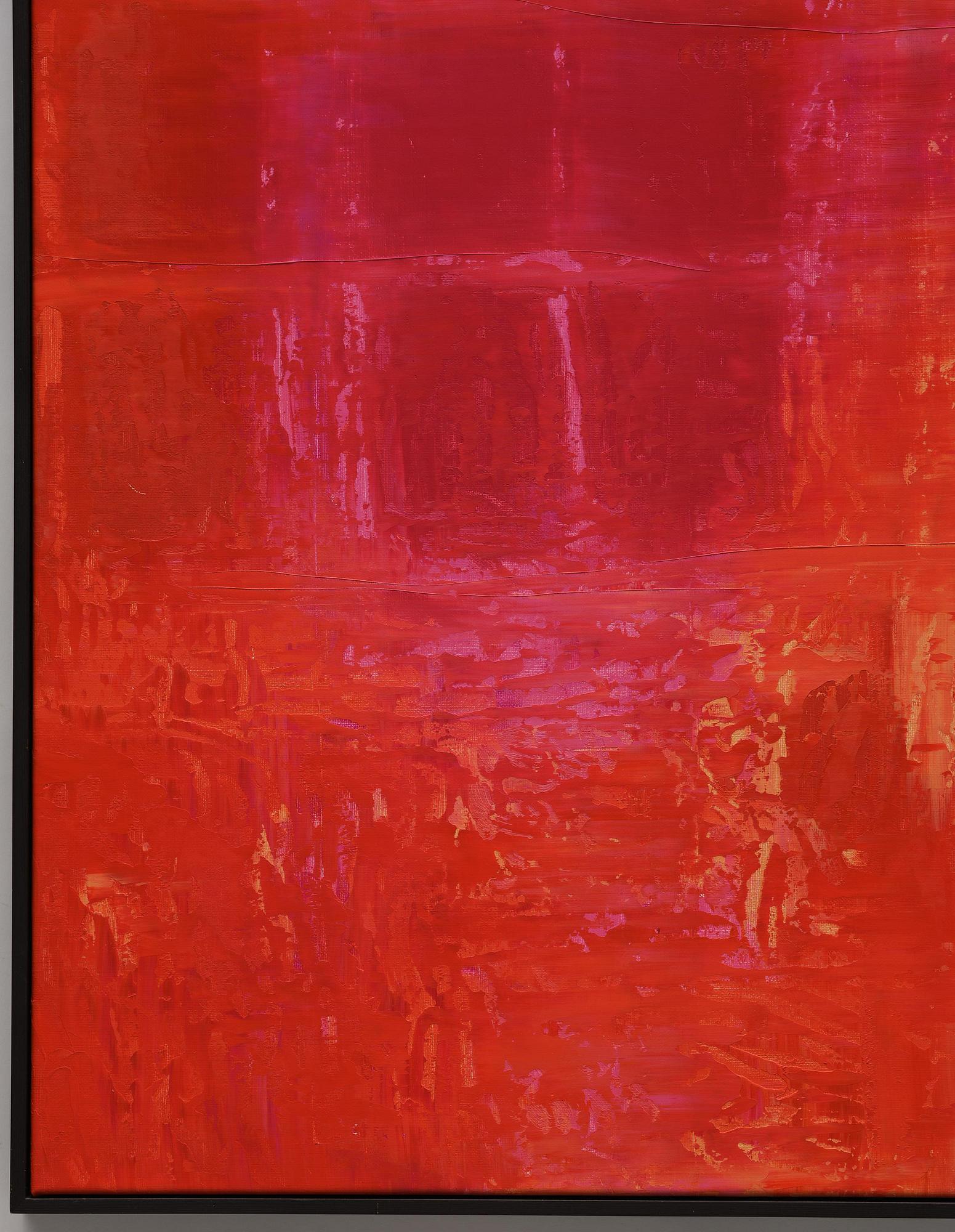
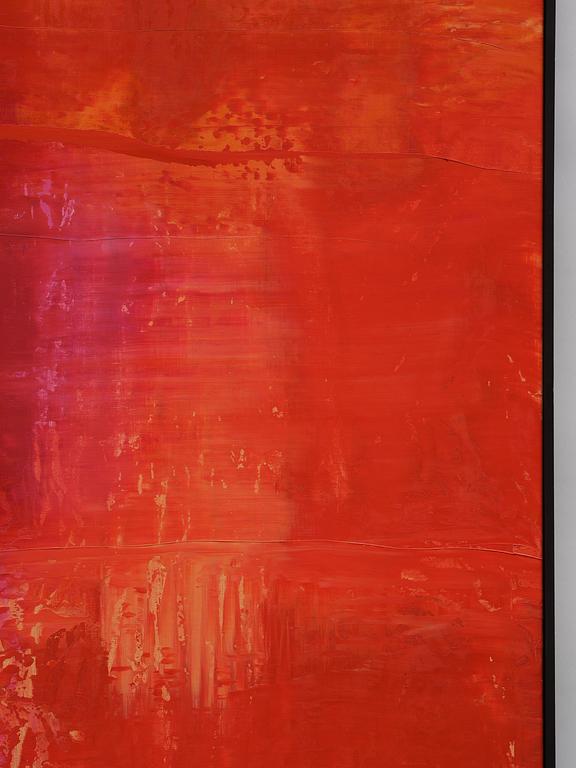
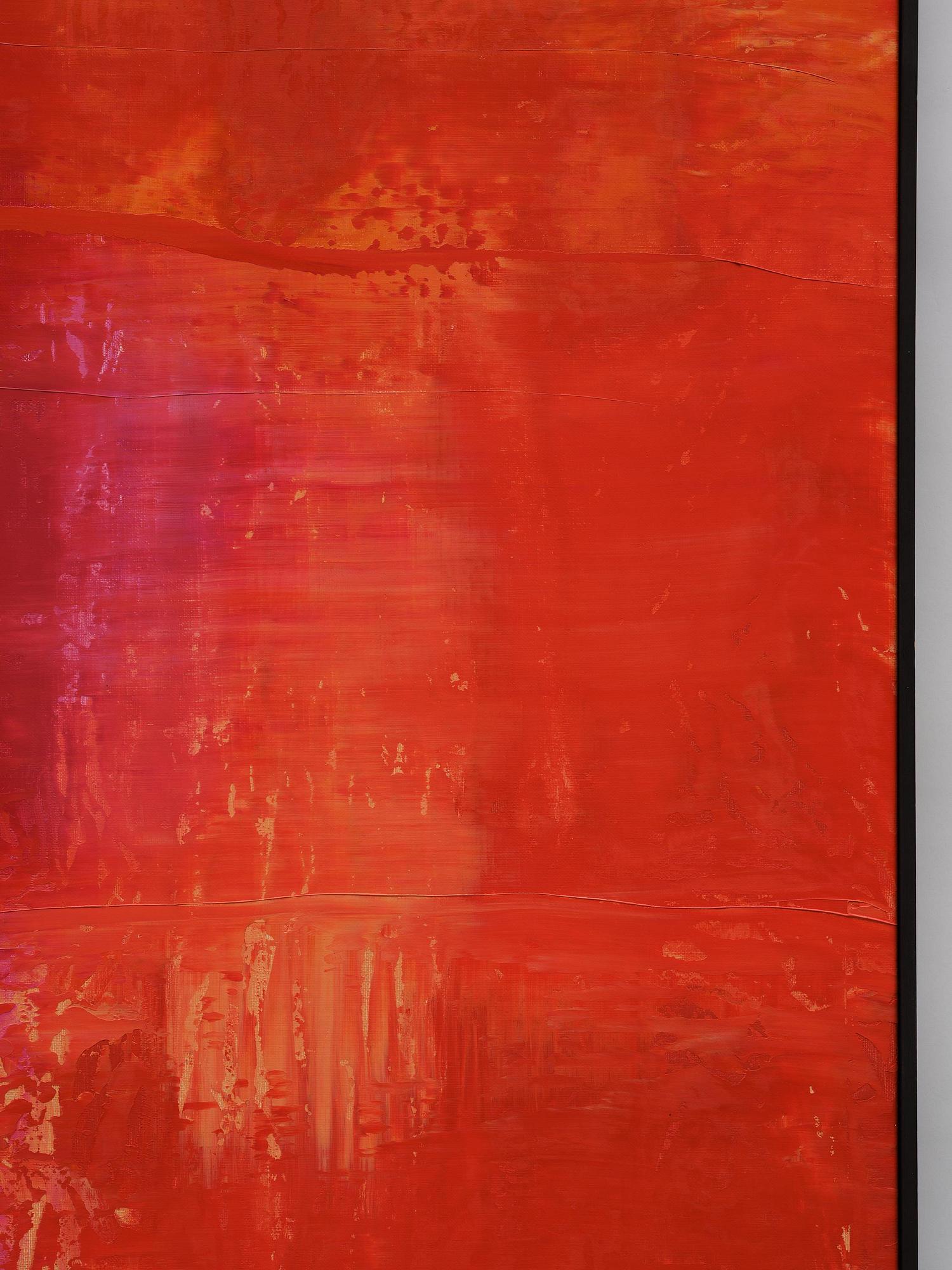
Ola Billgren (Sweden, 1940-2001) "Afton, interiör" (Evening, interior)
"Afton, interiör" (Evening, interior)
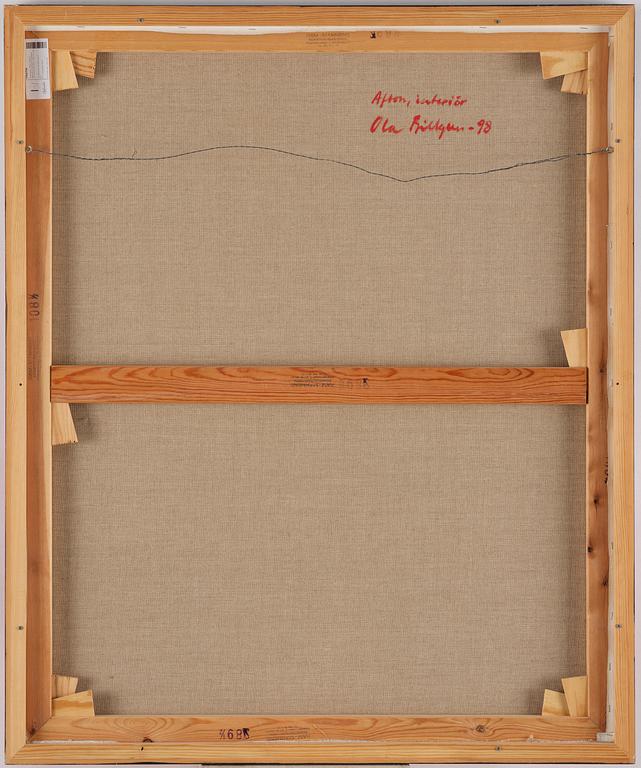
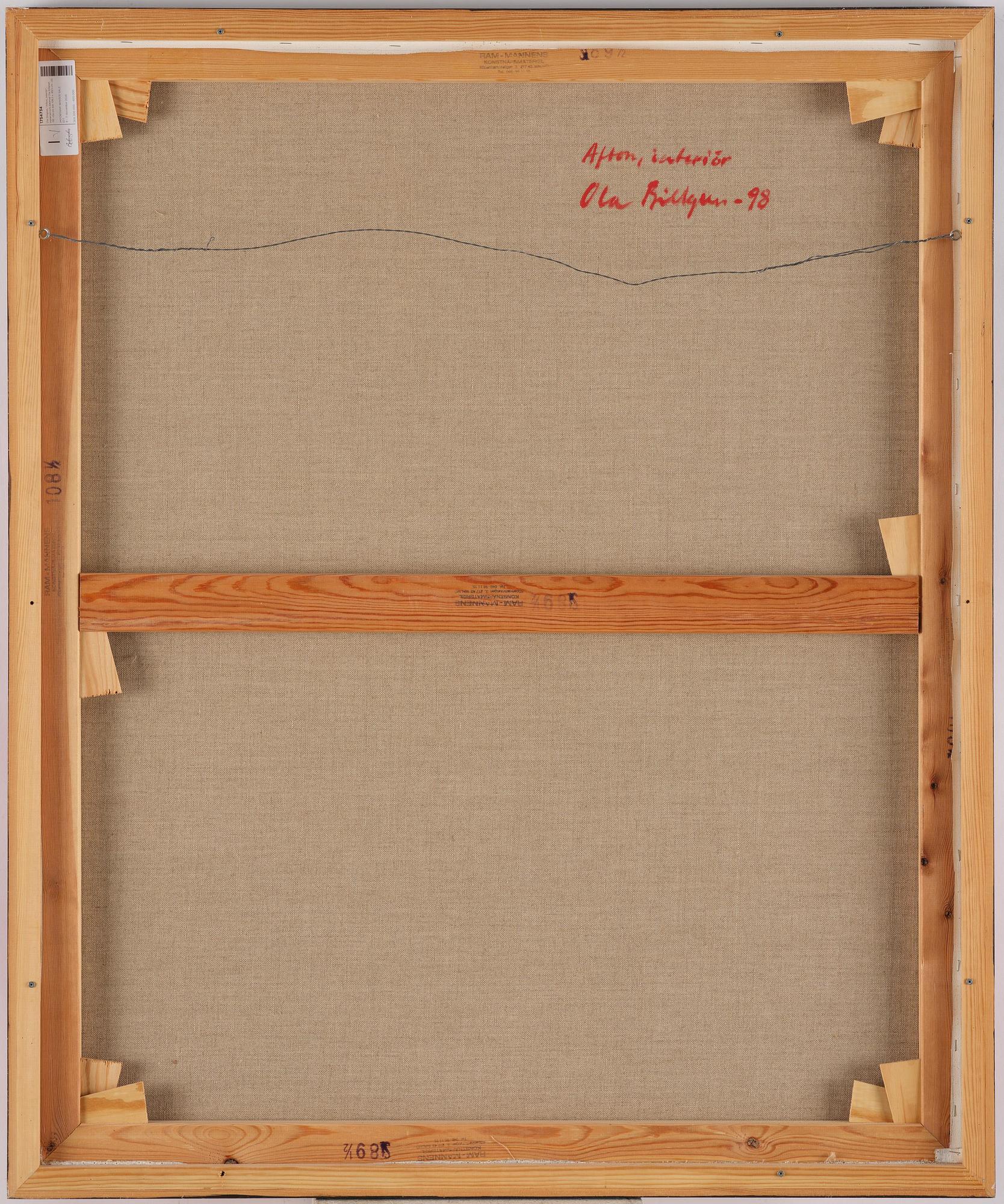
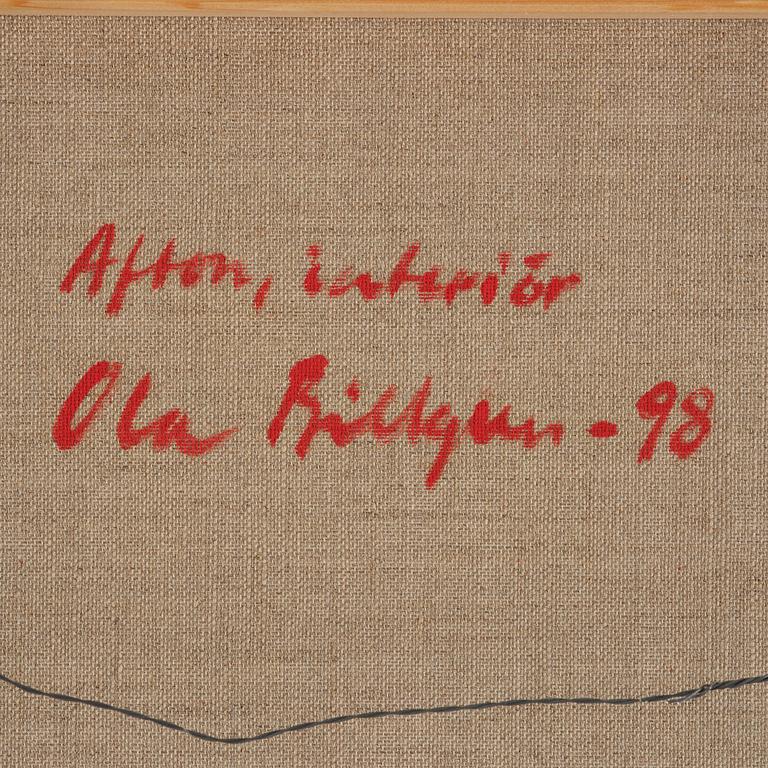
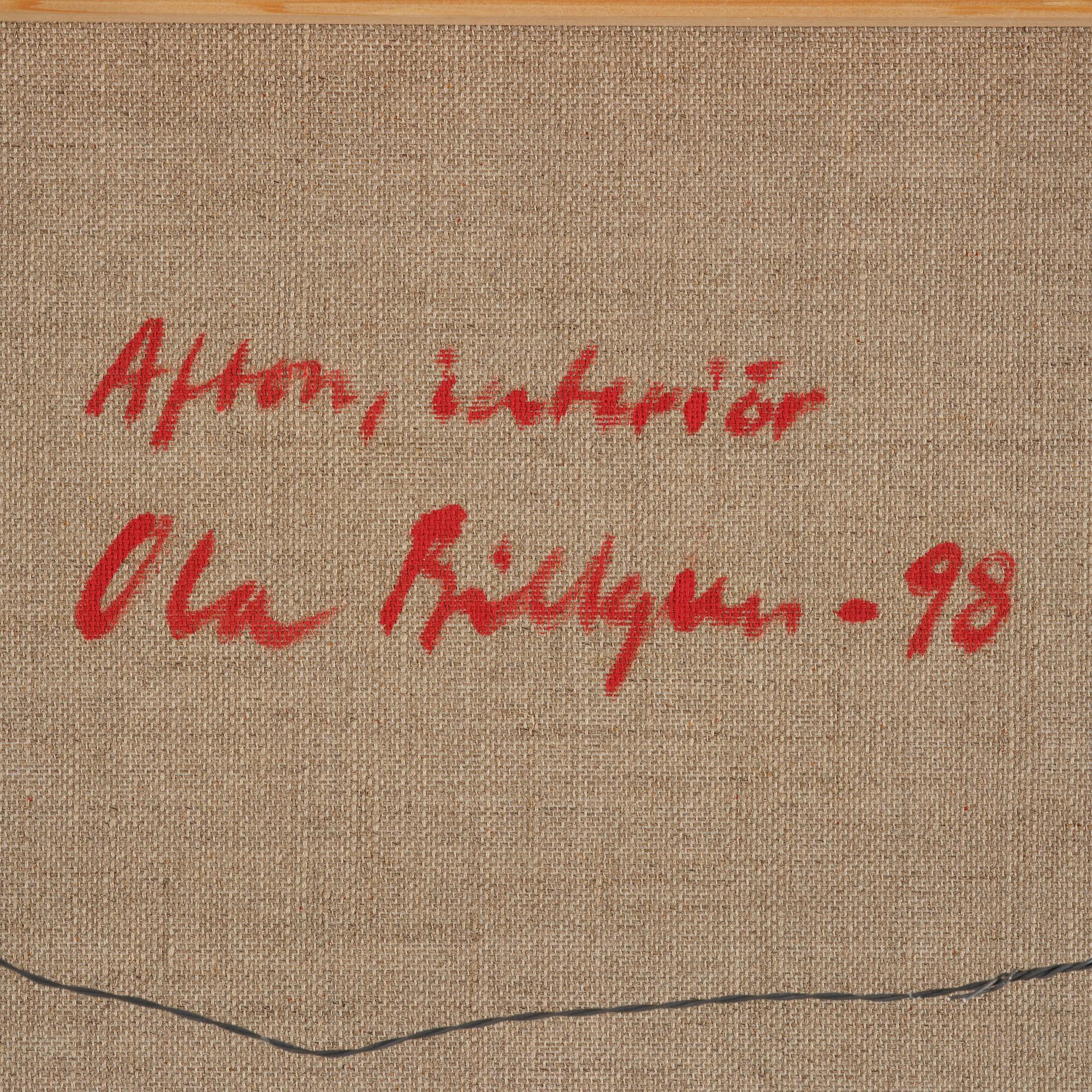
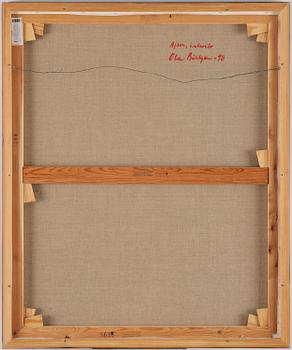
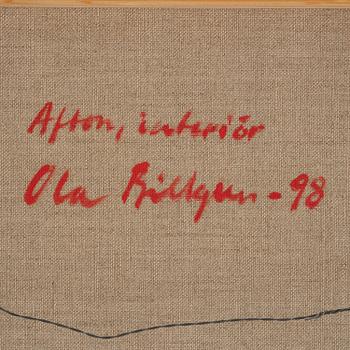
Signed Ola Billgren and dated -98 on the reverse. Oil on canvas, 108.5 x 89.5 cm.
Provenance
Galleri Glemminge, Glemmingebro.
Acquired from the above by the present owner in 1999.
More information
“Afton, interiör” was executed in 1998, during a period in which Ola Billgren was developing the style of painting that would become associated with his so-called red period. Since his breakthrough in the 1960s, when he established himself as one of the leading representatives of Swedish New Realism, his artistic practice had undergone a significant transformation. The photographic precision of his early paintings gradually gave way to a freer mode of expression, in which colour and the painterly process assumed an increasingly independent role. Nevertheless, the photographic way of seeing remained an important point of departure, even as the motifs began to dissolve and move towards abstraction.
During the 1990s, the colour red occupied a central position in Billgren’s painting. Its saturated intensity came to carry multiple layers of meaning, evoking sensuality, eroticism and corporeality, but also intensity and vitality. In "Ola Billgren – Måleri/Paintings " (2000), art historian Anne Ring Petersen discusses the significance of colour in Billgren’s artistic practice and its relationship to bodily experience, intimacy and a sense of togetherness.
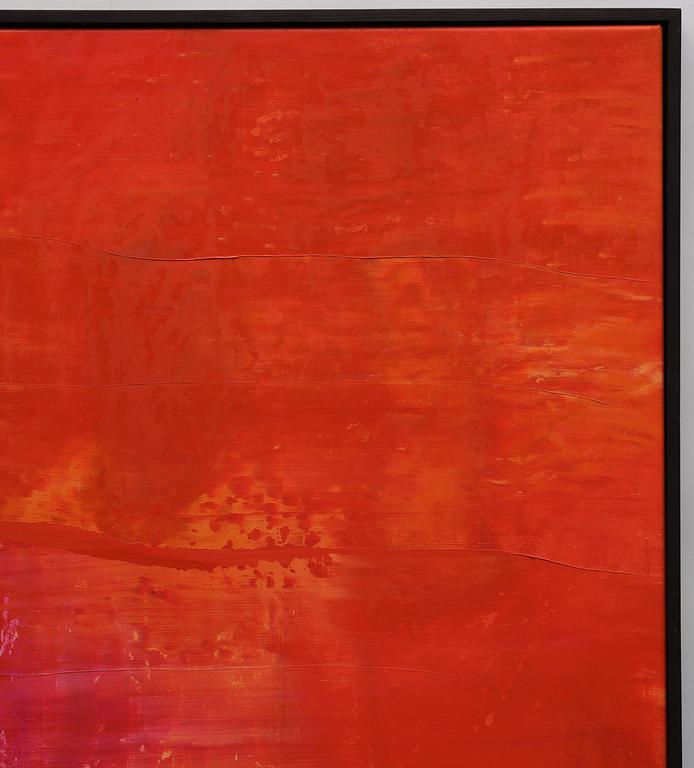
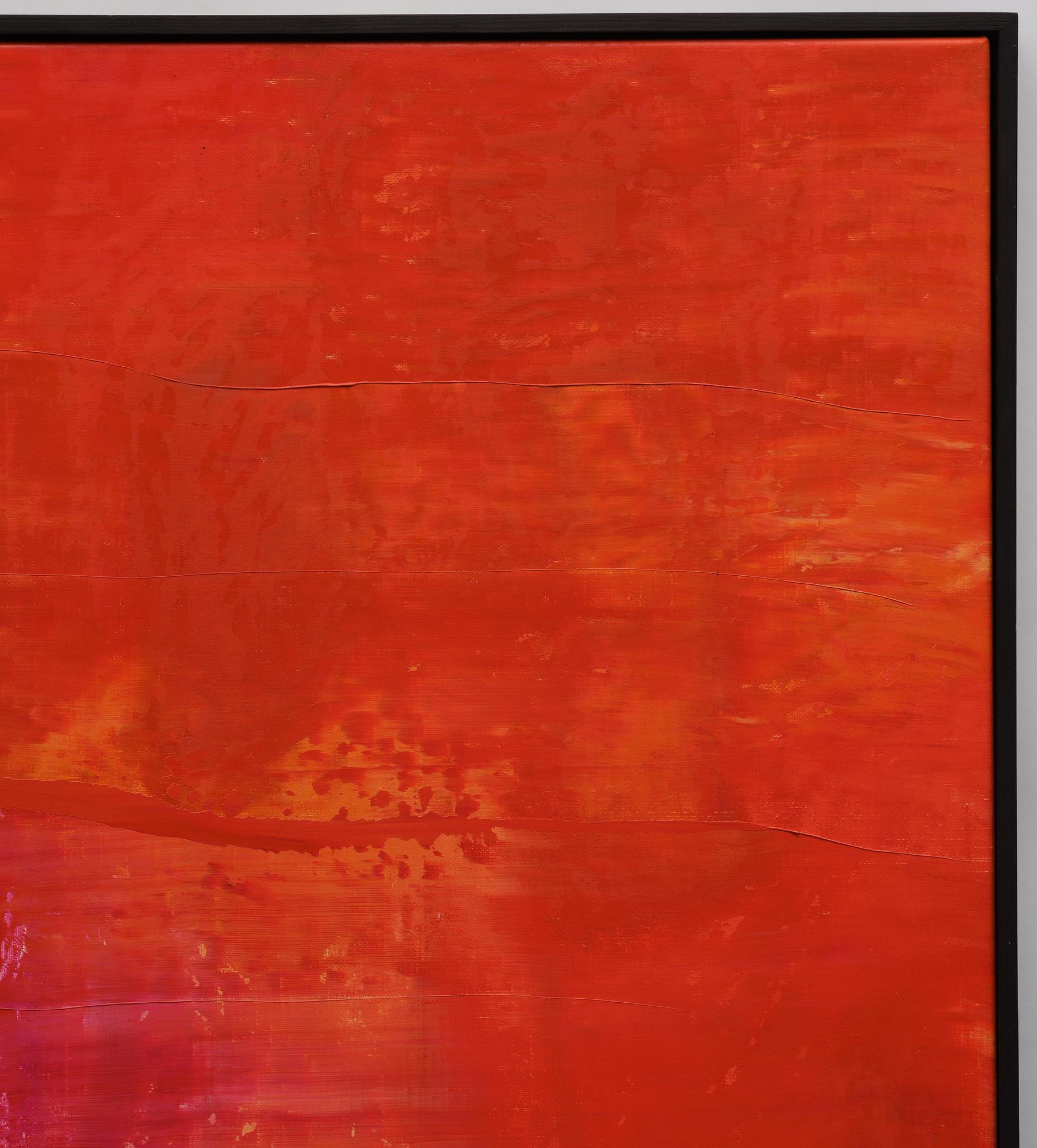
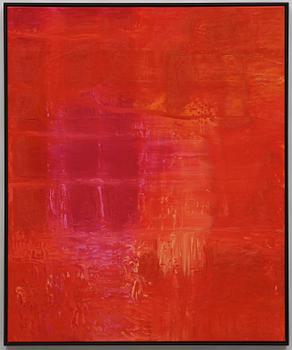
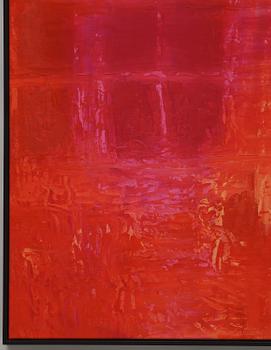
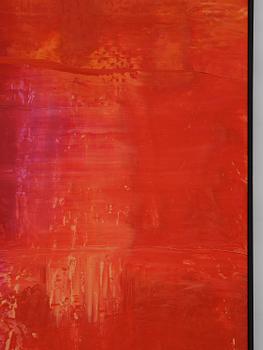
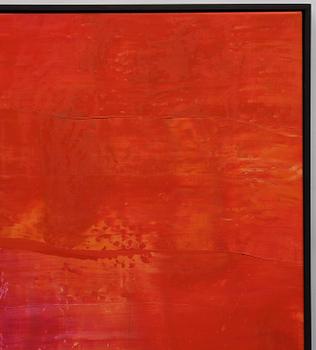
In “Afton, interiör”, the picture surface is dominated by an intense palette of reddish-orange hues, interspersed with accents of violet, pink and orange-yellow. The paint is built up in multiple layers, where denser passages meet thinner, more translucent ones. Horizontal lines create an underlying structure, while vertical traces of colour and painterly interventions lend the surface a palpable sense of movement. From the interplay of these elements, a suggestion of spatial depth begins to emerge. Yet no clearly defined interior can be discerned; rather, the space appears as a sensation, shaped by the shifting nuances of colour and the traces of forms that remain beneath the surface.
An important aspect of Billgren’s artistic method was his use of photographic source images, which he transformed through the painting process, partly with the aid of a metal scraper. By drawing the tool across the wet paint, he could displace the original sharpness of the motif and dissolve its details into the movements of the painted layers. Photography thus became more than a reference for representation; it also served as the starting point for a process through which the image was transformed and acquired an independent painterly character.
In “Afton, interiör”, the representational motif persists as a kind of visual memory, in which the depicted image gradually dissolves and gives way to the autonomous reality of painting itself. The horizontal structures and vertical traces of colour still suggest a space, but its contours and contents remain indeterminate. The painting’s expressive force emerges from the tension between the recognisable and the dissolved, between the presence of the motif and the autonomy of colour. The work demonstrates how Billgren continued to develop his photographically informed visual language, creating a form of painting in which colour no longer merely describes reality, but also becomes a vehicle for its moods, memories and sensations
More about Ola Billgren
Ola Billgren was born in 1940 in Copenhagen but based his career in Sweden. Billgren was self-taught, having only been trained by his parents Hans and Grete Billgren. Ola worked within the mediums of graphic art, watercolour, collage, photography, film, and scenography. He was also an author and culture critic. Known for his versatility, Billgren cultivated a relationship between art and reality in his work.
During the 1960s, he transitioned from abstract expressionism to photographic realism. Over time, his paintings evolved into a fusion of abstract and photorealistic styles, resulting in romantic landscapes where he examined the interplay of light and color. Forms dissolved, and colors were reduced to monochrome, single-colored surfaces that were richly worked and varied.
In the late 1980s, he returned to urban environments in large cityscapes, often painted from a high perspective but maintaining the impressionistic approach seen in his landscapes. Ola Billgren's influence on recent decades of art has been significant. His work is represented in institutions such as Musée National d'art Moderne Centre George Pompidou in Paris and Moderna Museet in Stockholm.
For condition report contact specialist

What will the transport cost?
Shipping can only be arranged by contacting specialdelivery@bukowskis.com.
Covered by droit de suite
Image rights
The artworks in this database are protected by copyright and may not be reproduced without the permission of the rights holders. The artworks are reproduced in this database with a license from Bildupphovsrätt.