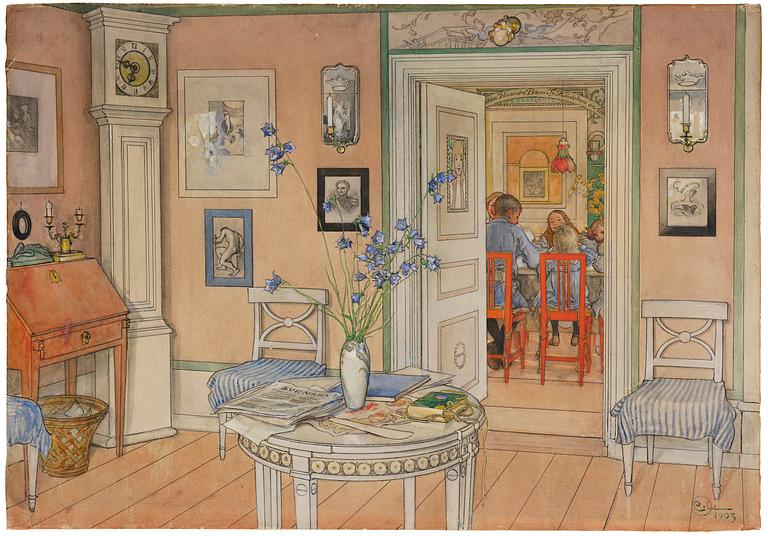
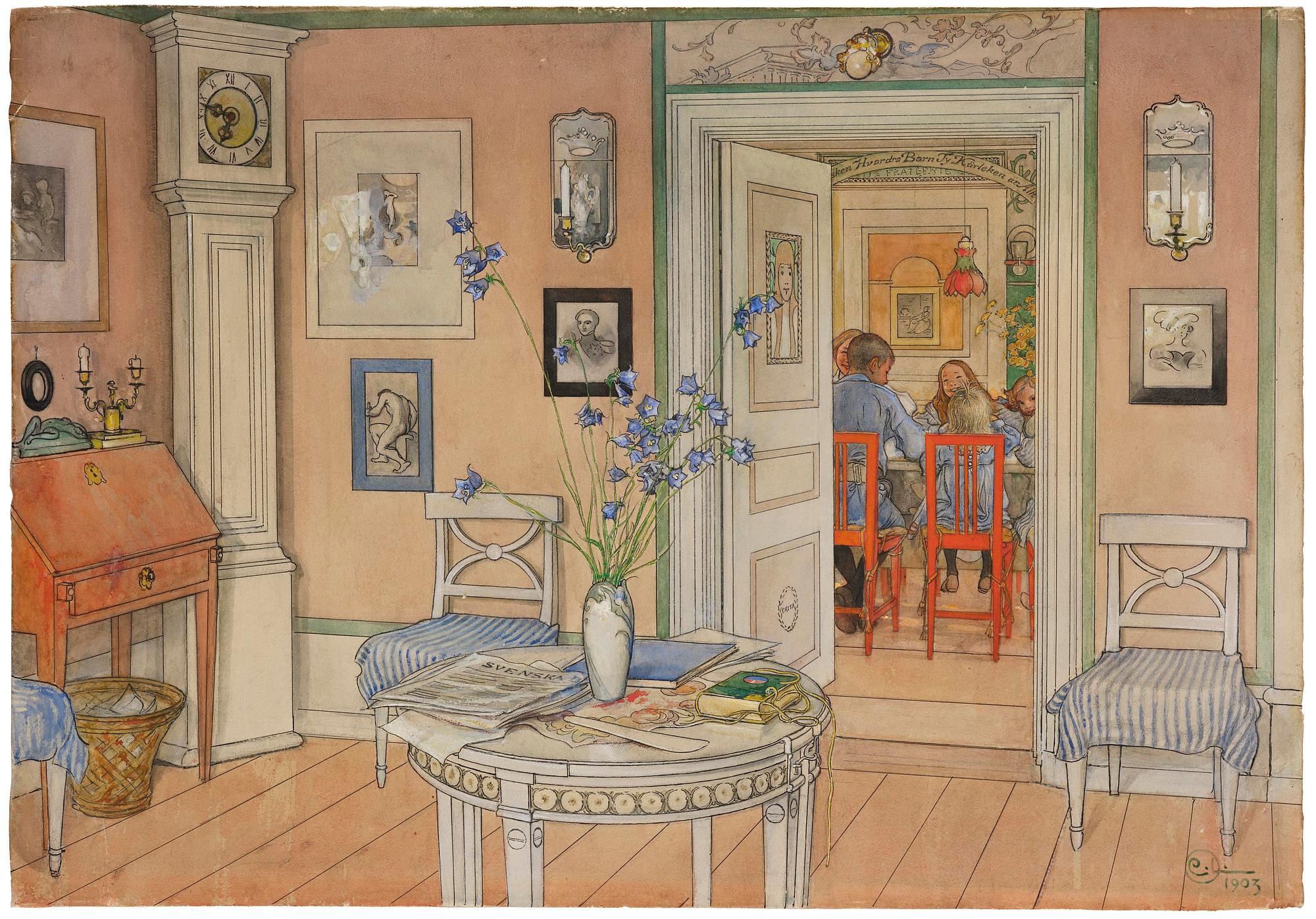
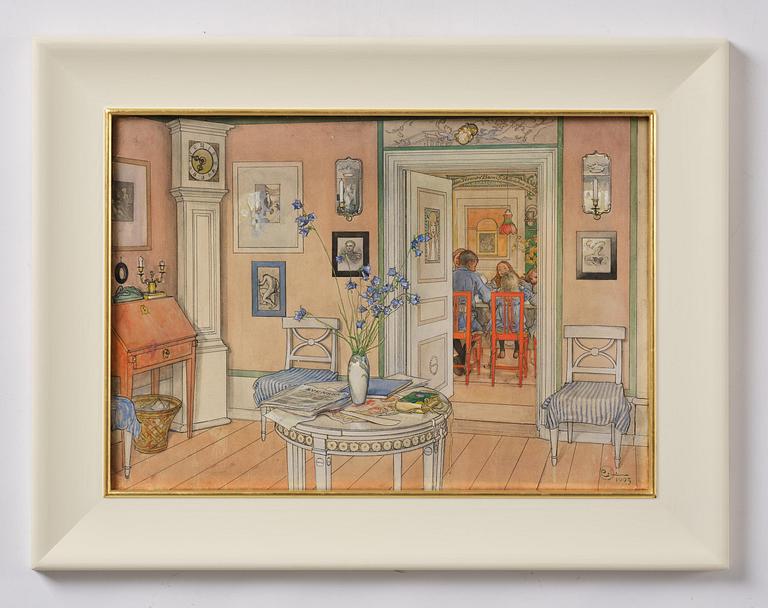
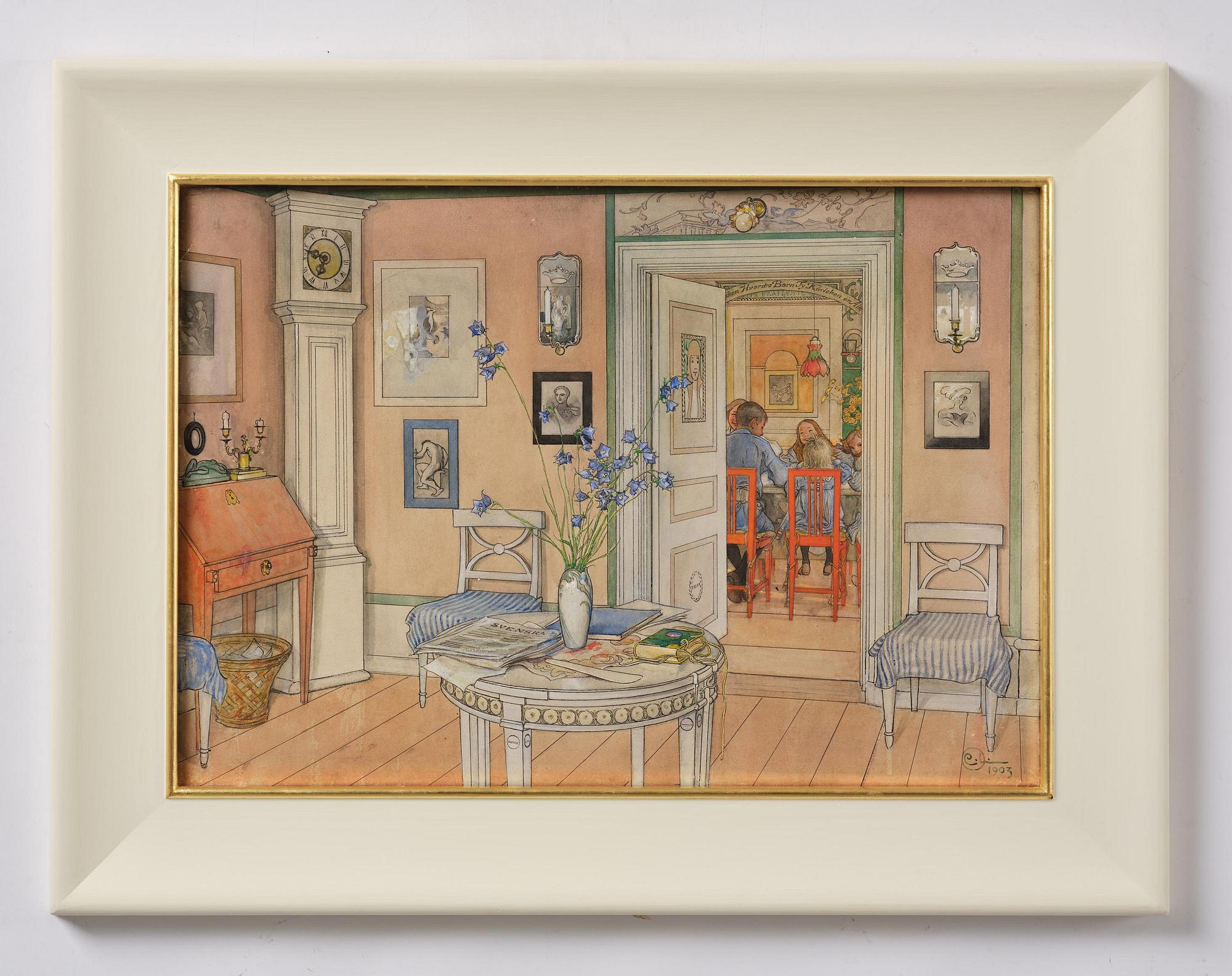
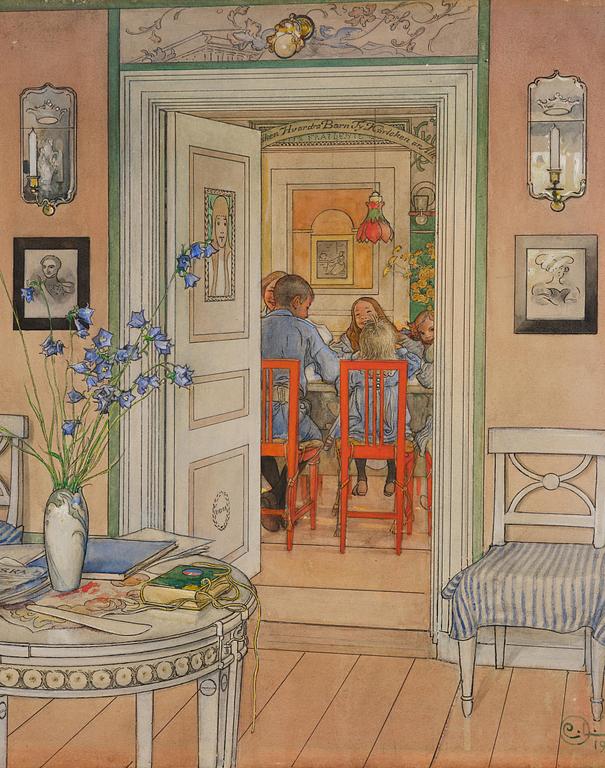
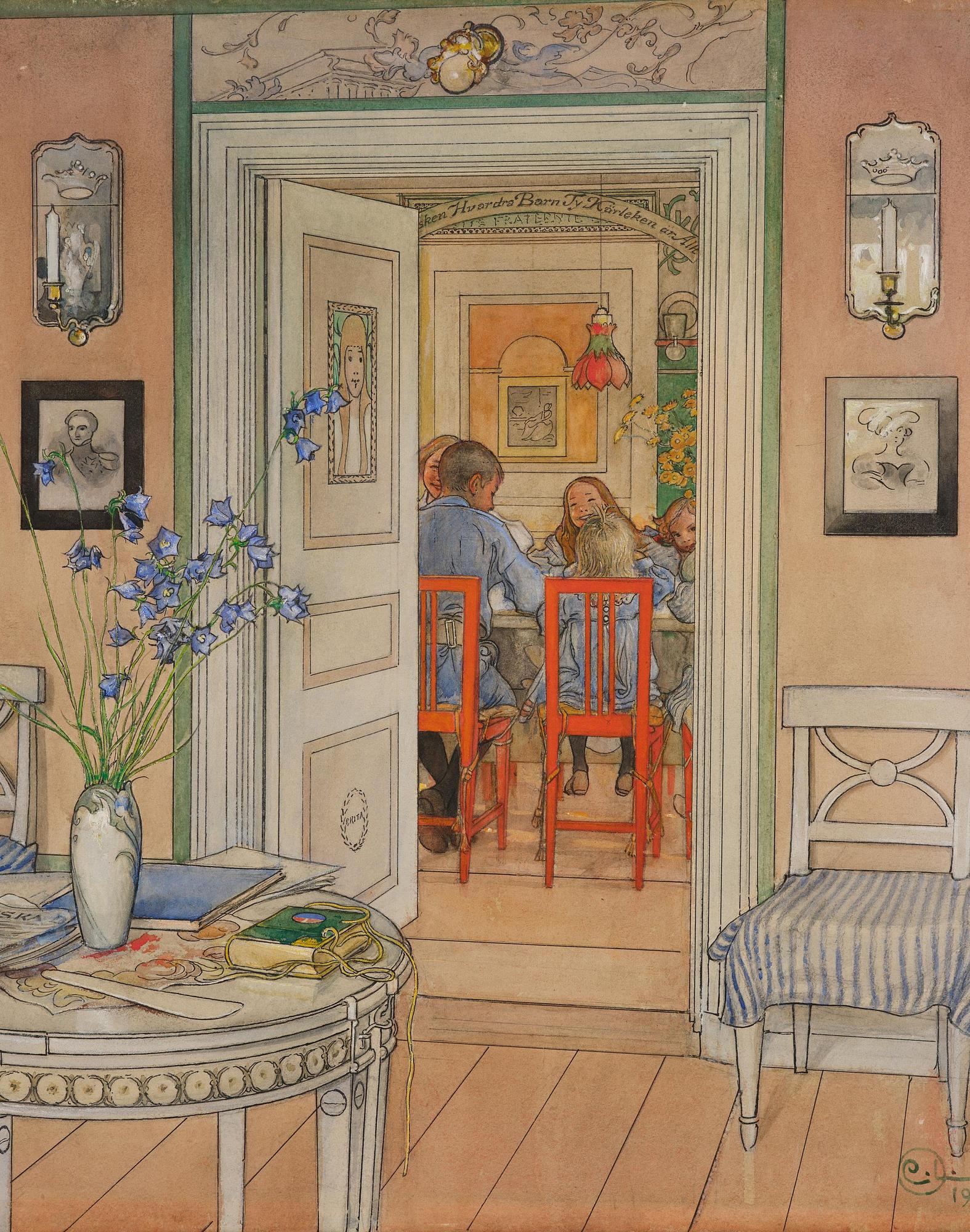
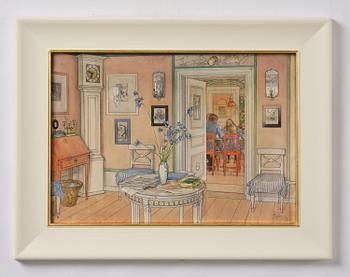
Carl Larsson (Sweden, 1853-1919) "Interiör från Sundborn" (Interior from Sundborn)
"Interiör från Sundborn" (Interior from Sundborn)
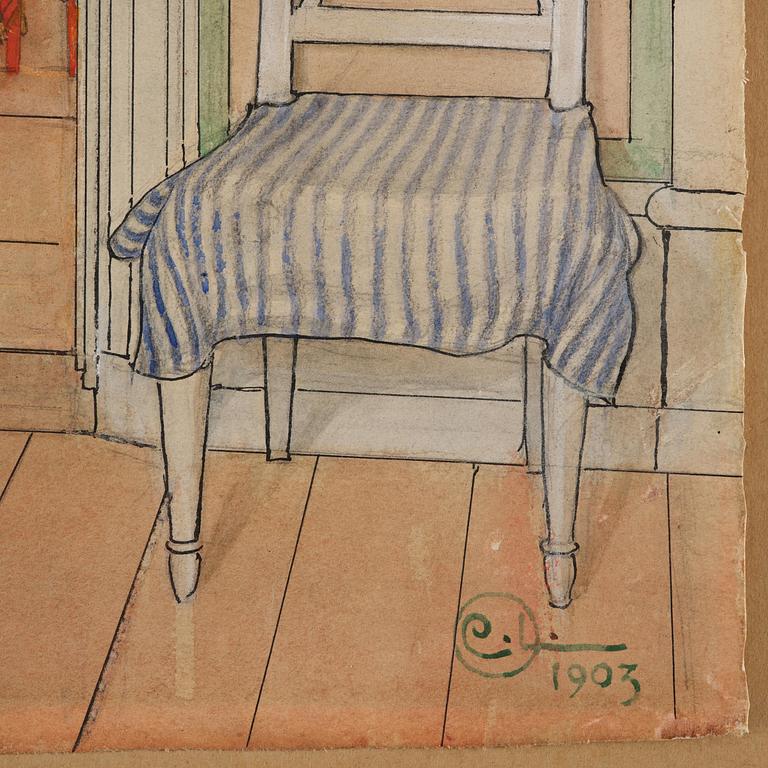
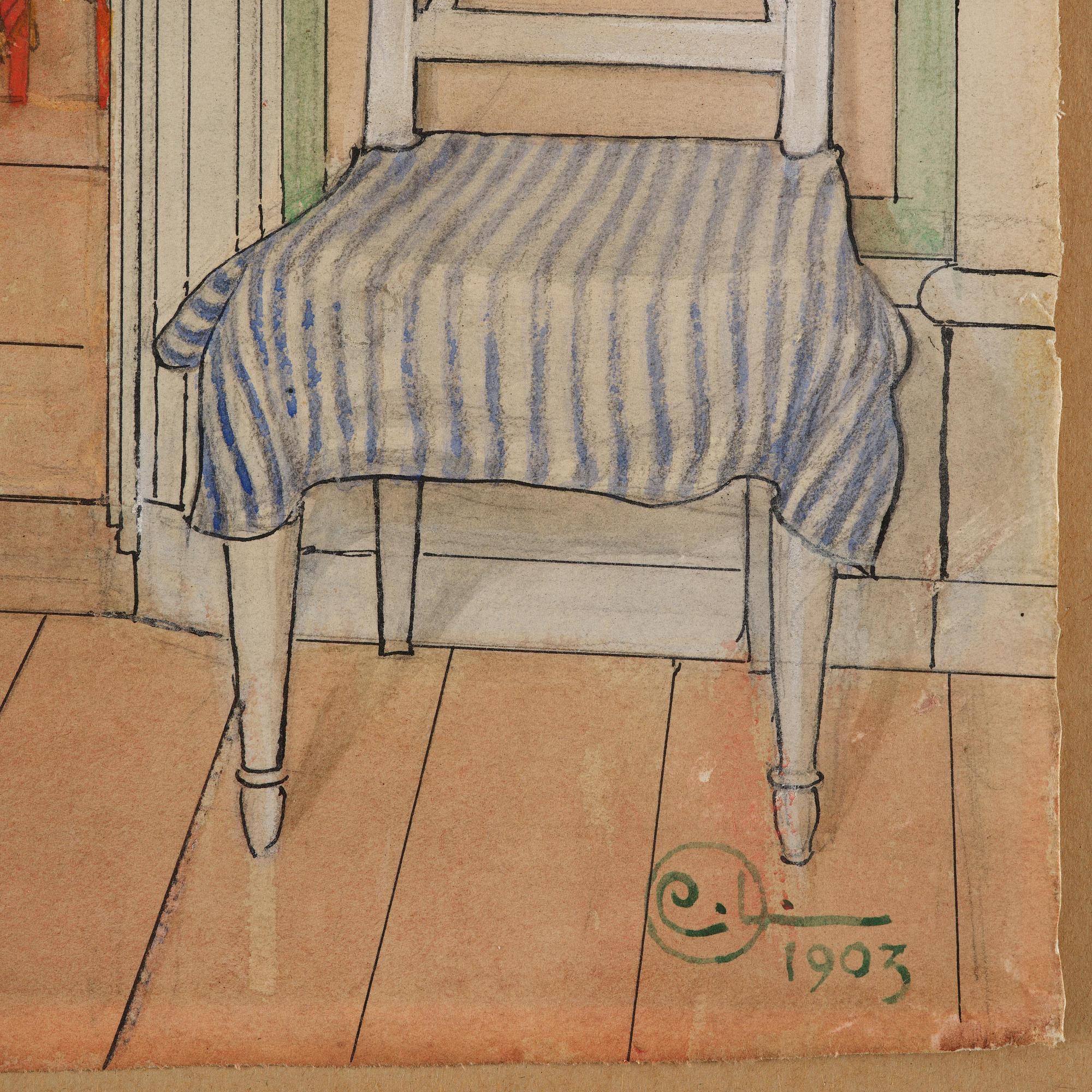
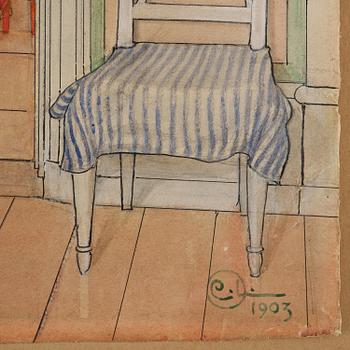
Signed C.L within a circle and dated 1903. Watercolour on paper, 42.5 x 61 cm.
Provenance
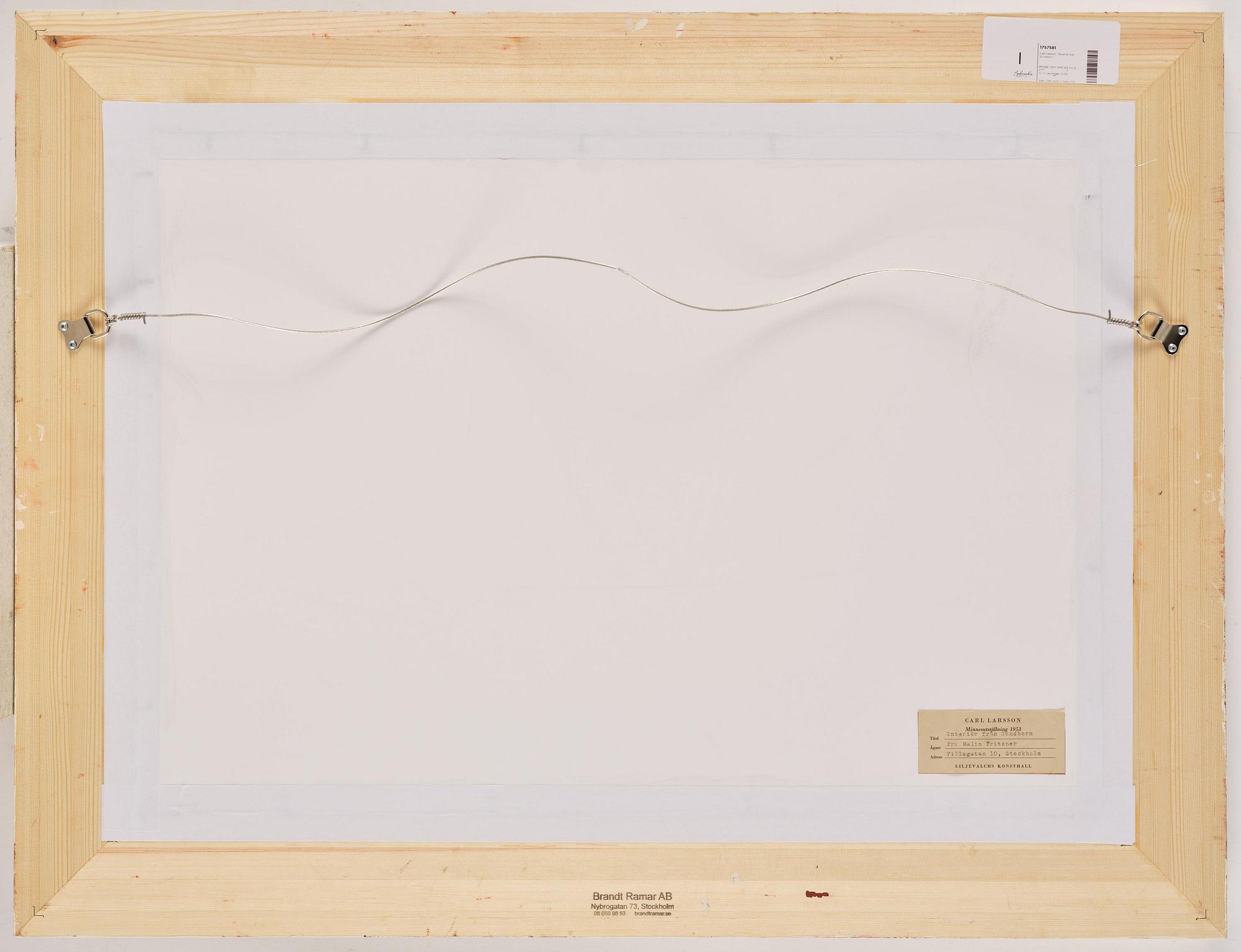
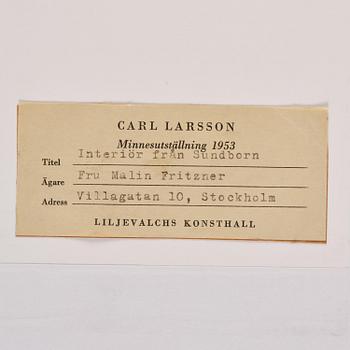
Mrs Malin Fritzner (1905-1993), née Sievert, Stockholm.
Exhibitions
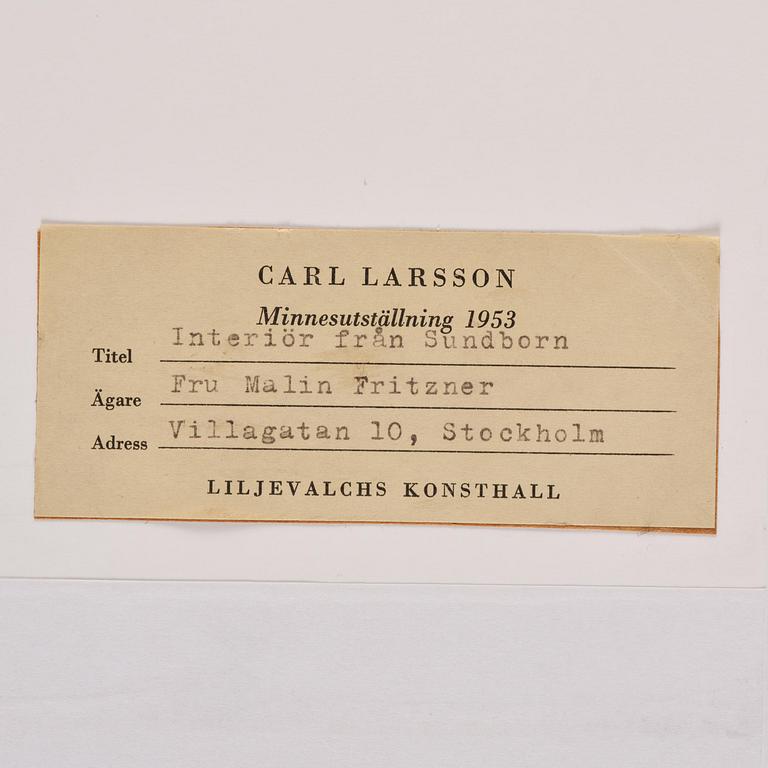
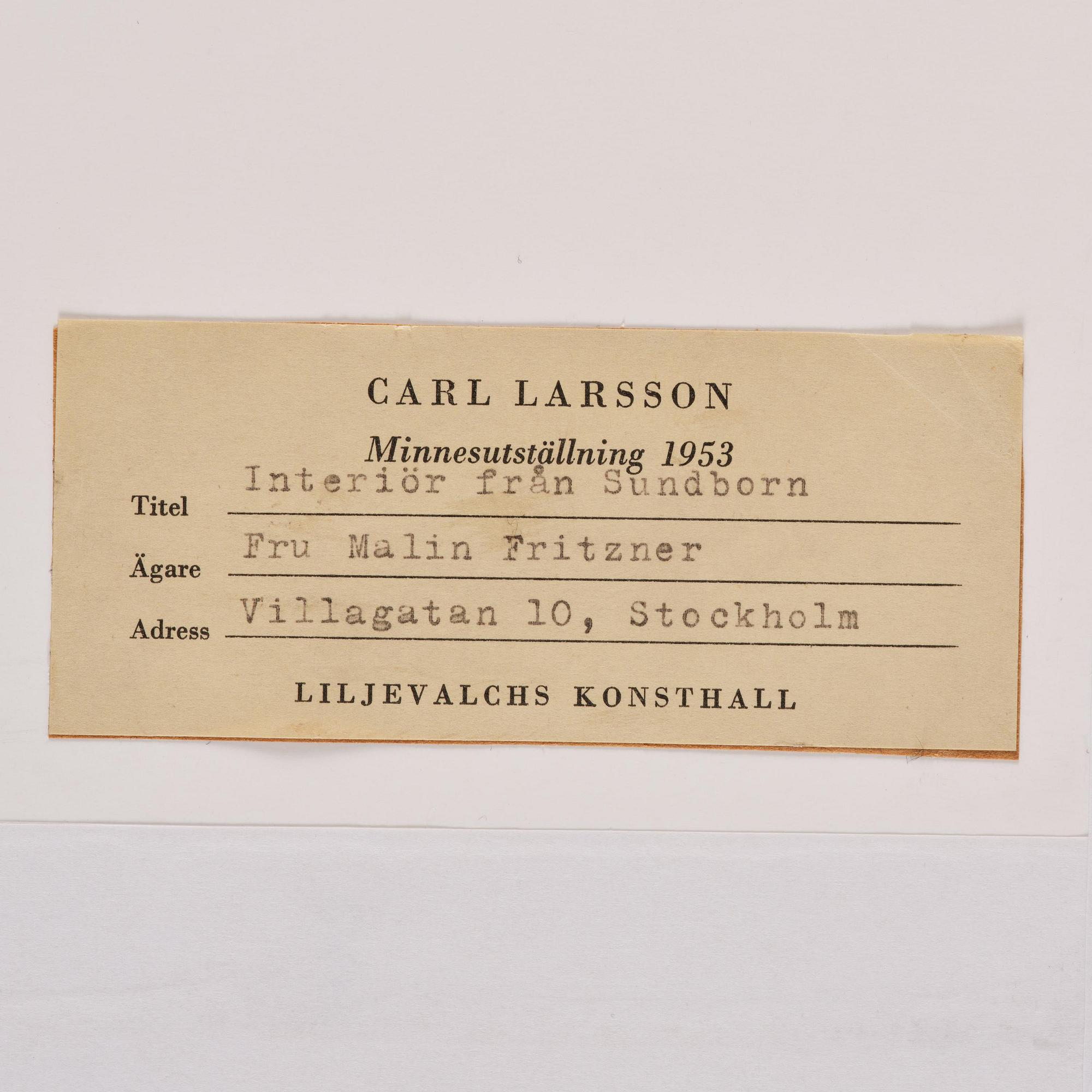
Liljevalchs konsthall, Stockholm, "Carl Larsson - minnesutställning", 16 May - 28 June 1953, cat. no. 761.
Literature
Ulwa Neergaard, "Carl Larsson. Signerat med pensel och penna", 1999, registered under the year 1903 as no. 1052.
More information
Carl Larsson’s depictions of his home in Sundborn rank among the most celebrated and influential images in Swedish art. Through the watercolours created at Lilla Hyttnäs, Larsson produced not only intimate portraits of family life but also a vision of the modern Swedish home, where art, craftsmanship, domesticity, and everyday life exist in harmonious balance. Together with his wife Karin Larsson, he developed an aesthetic that would profoundly shape perceptions of Scandinavian interior design and living for generations to come.
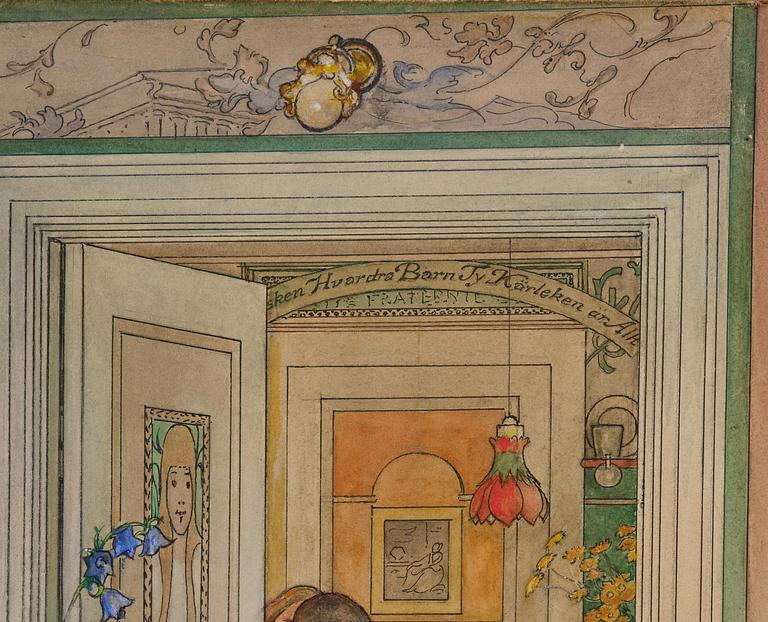
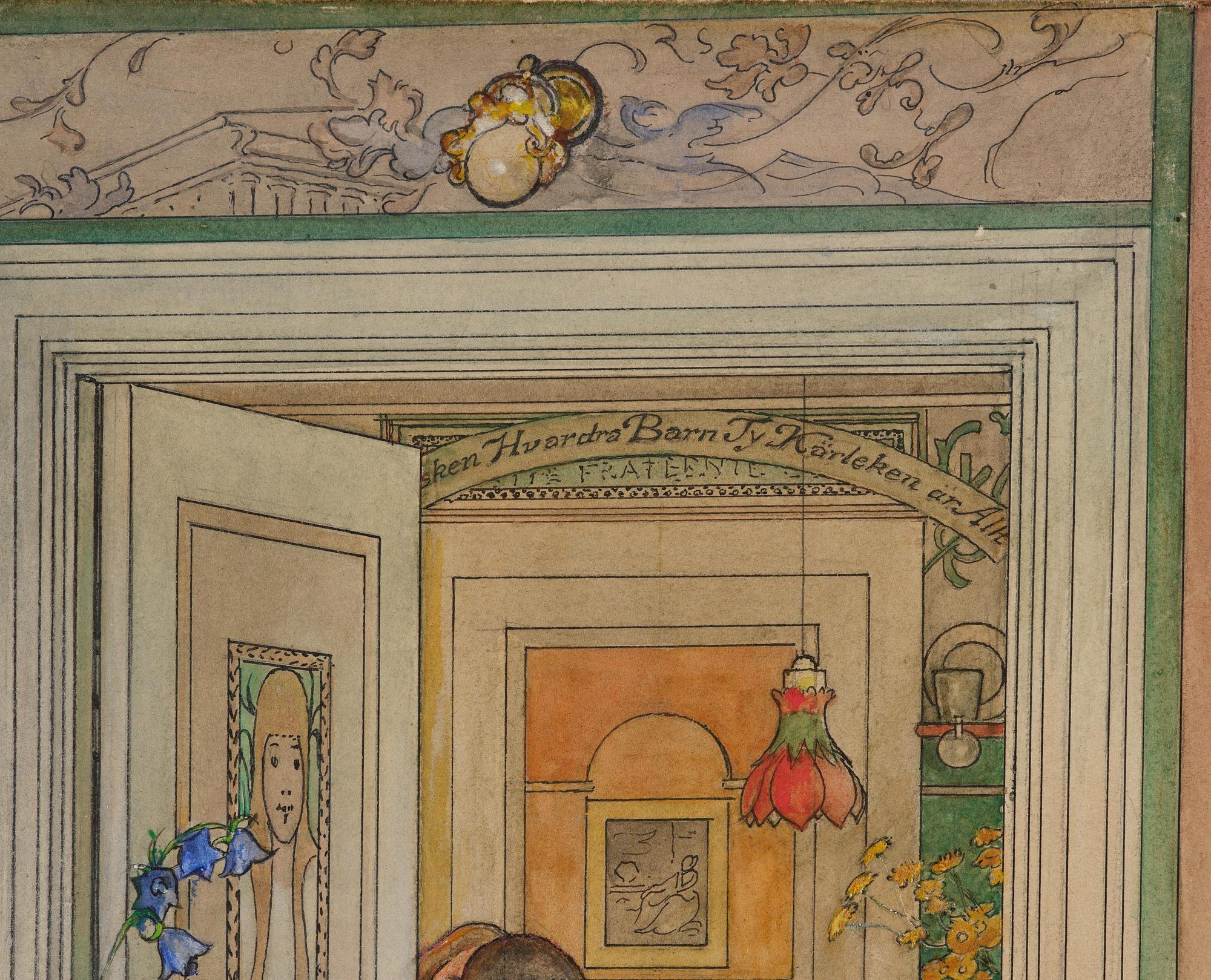
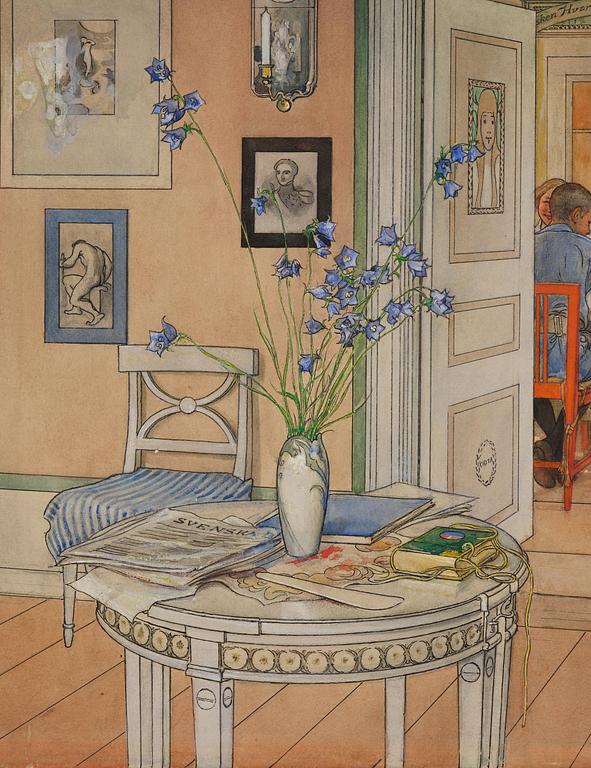
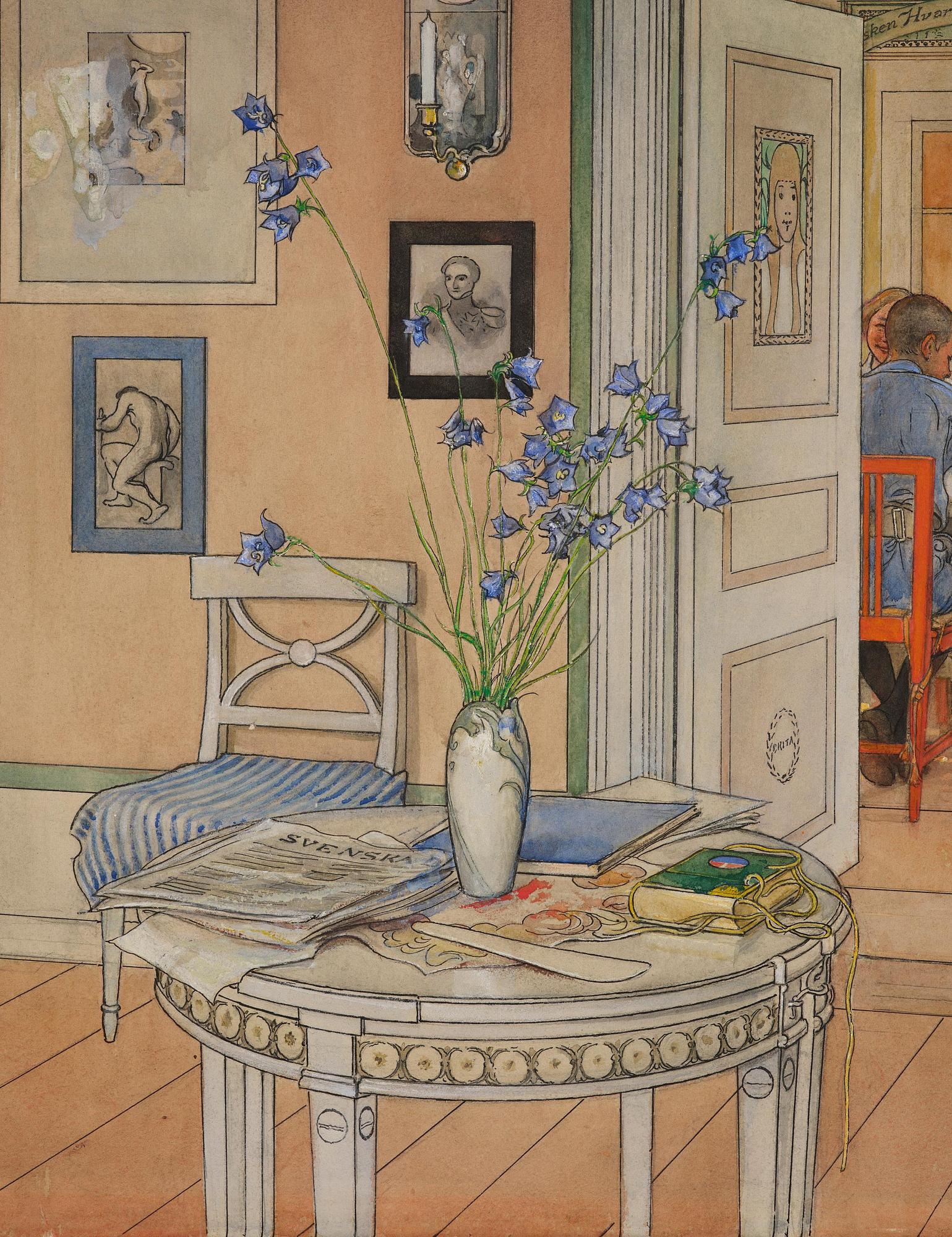
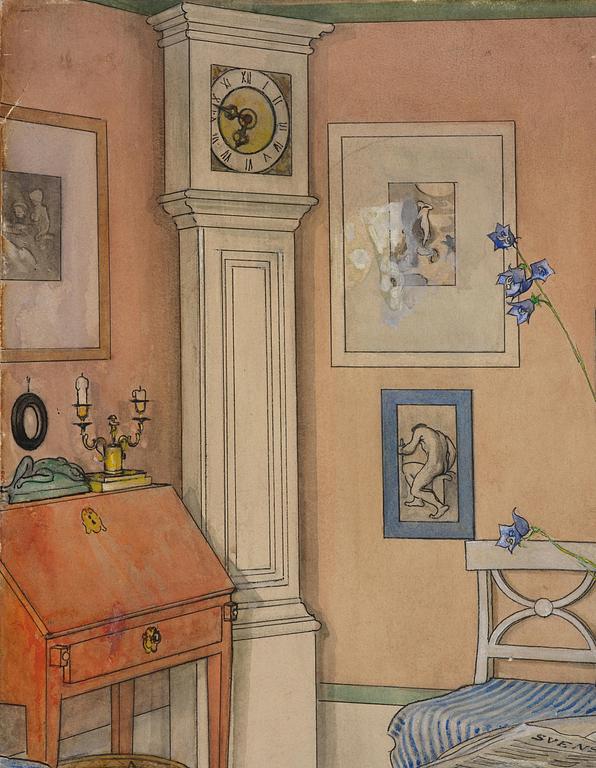
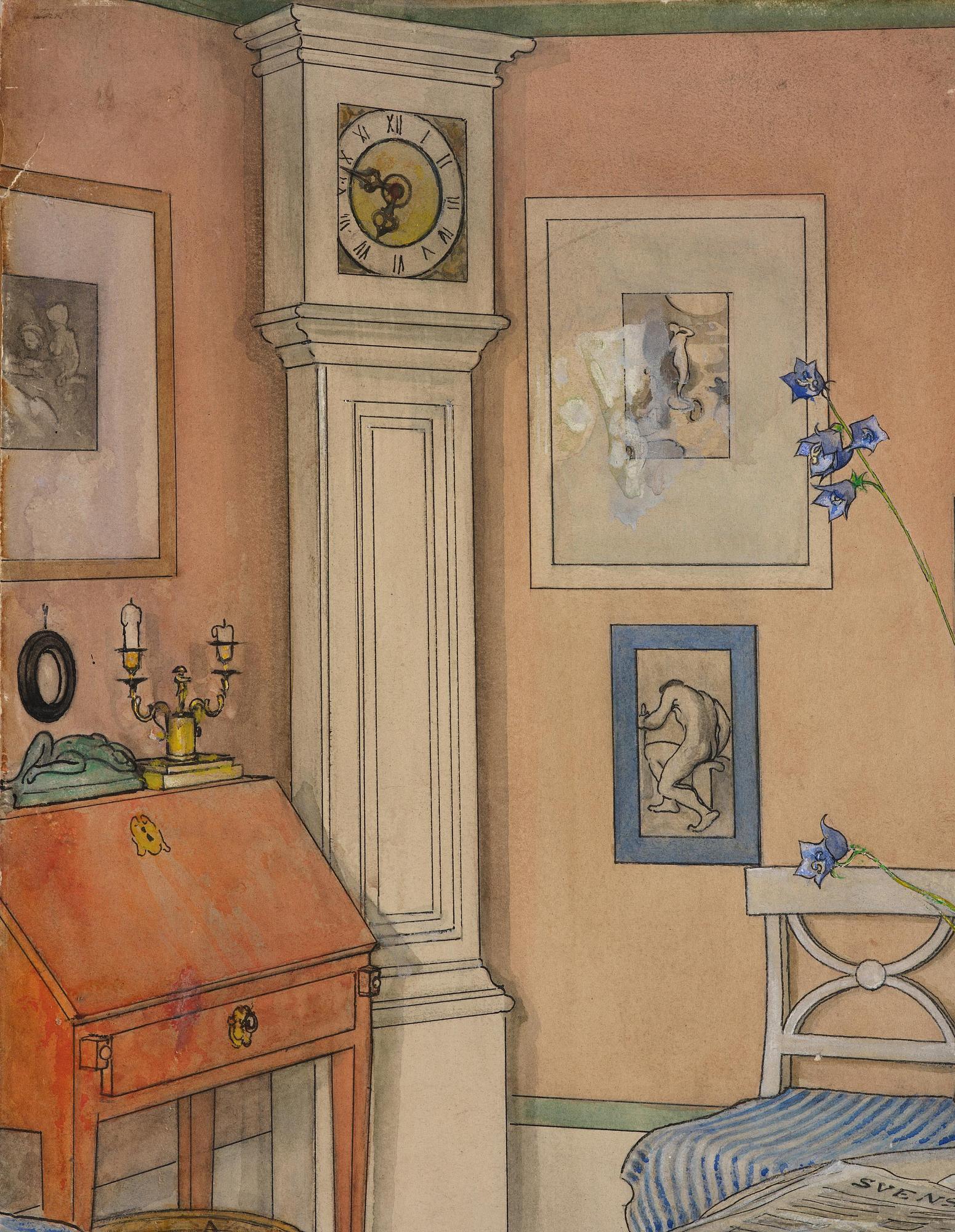
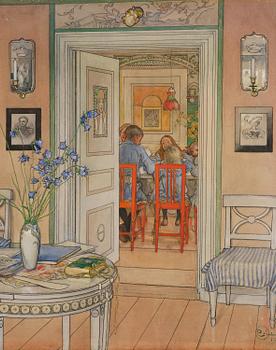
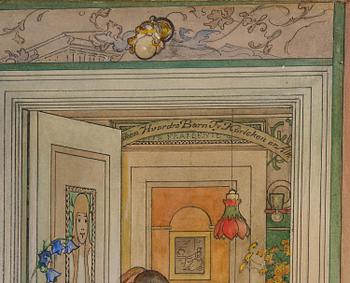
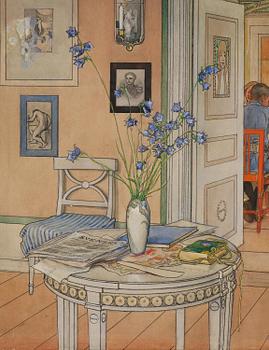
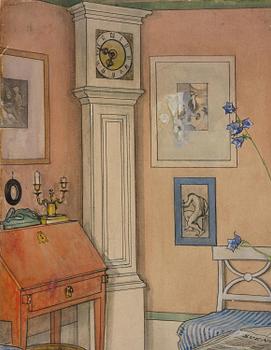
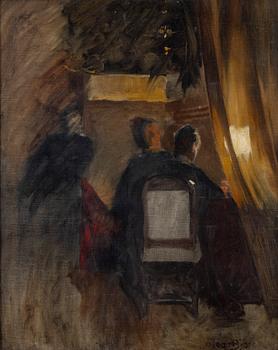
In this watercolour from 1903, Larsson portrays a view through two of the home’s principal rooms. In the foreground lies the Drawing Room, known for its celebrated “flower window,” with its light-coloured walls, Gustavian furnishings, and carefully arranged decorative details. A tall vase filled with harebells stands on the round table at the centre of the composition, the graceful stems guiding the viewer’s gaze deeper into the interior. The delicate furniture, painted writing desk, and numerous artworks adorning the walls all testify to the creative environment that permeated the family’s daily life.
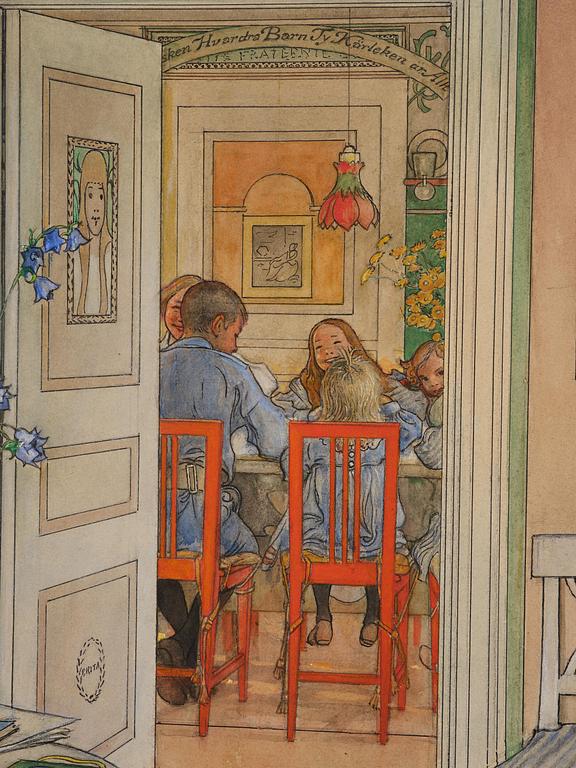
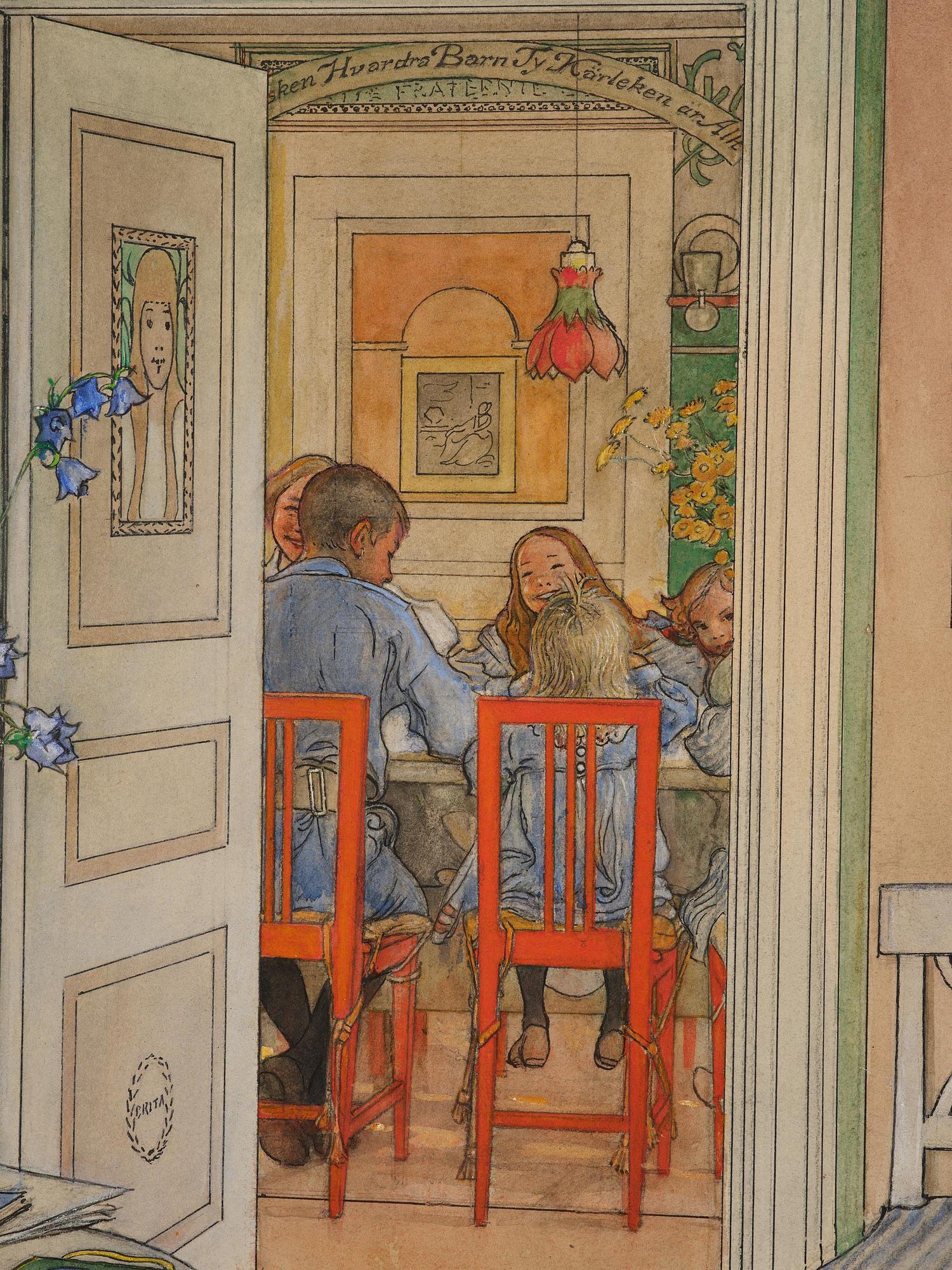
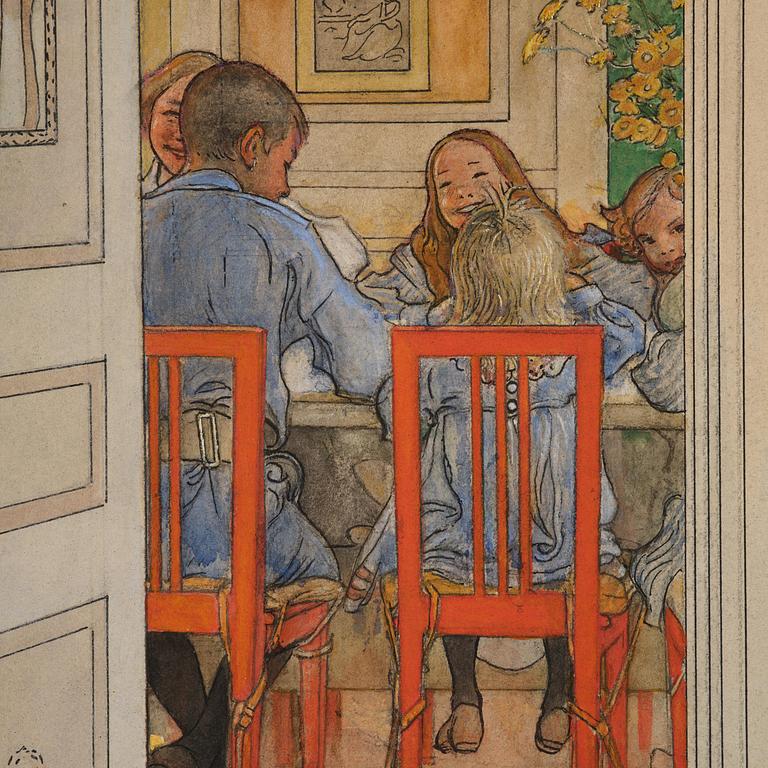
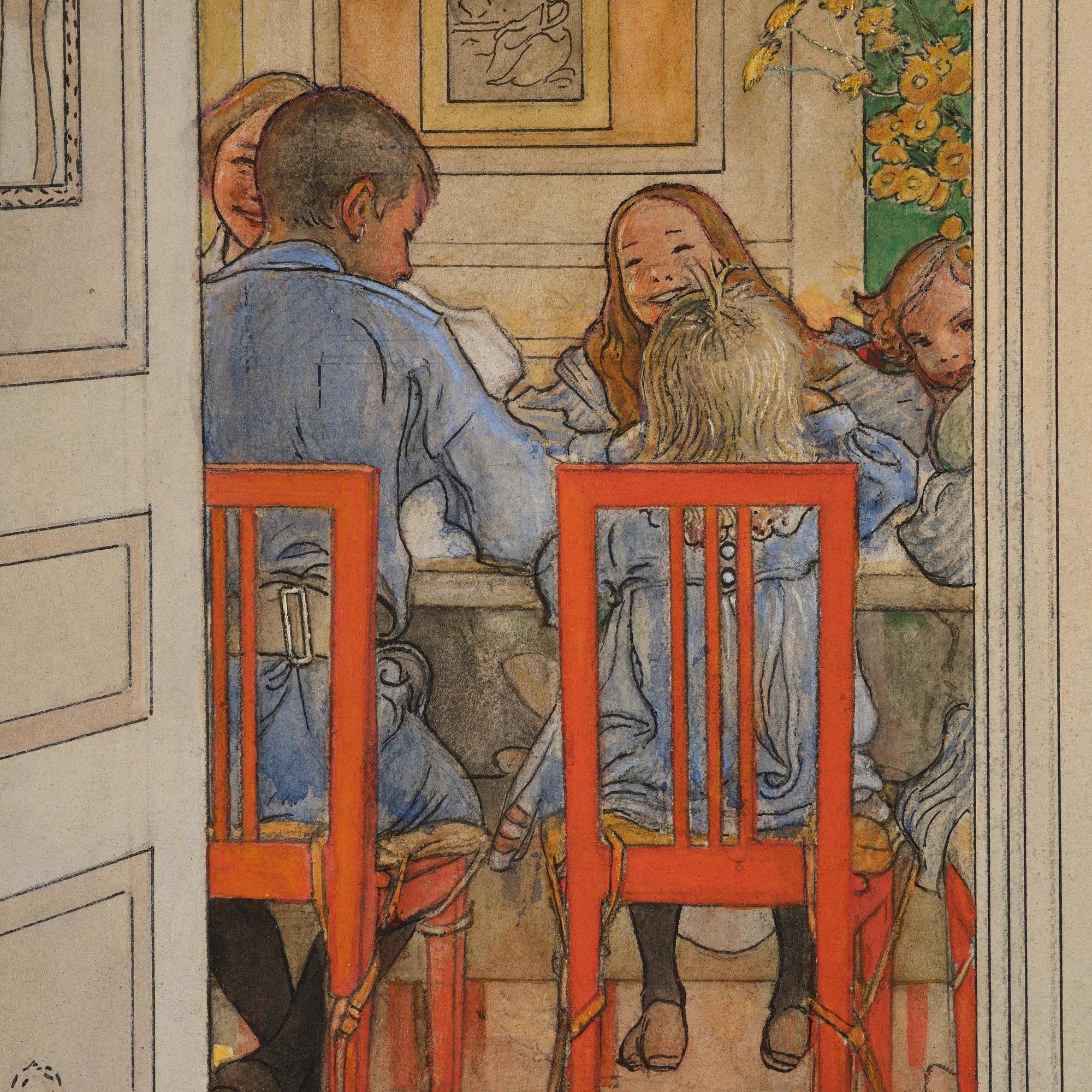
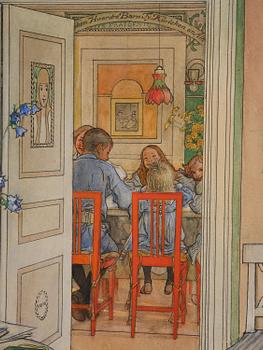
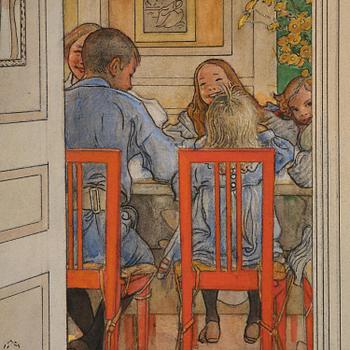
Through the open doorway, the Dining Room comes into view, where several of the Larsson children are gathered around the table. The boys Ulf and Esbjörn are seen from behind, while Suzanne, Brita, and Kersti sit opposite, their faces turned toward their father. Although the artist himself remains outside the pictorial space, his presence is clearly felt through one of the daughters attentive gaze straight at the viewer. In this way, Larsson assumes the dual role of observer and participant, documenting a fleeting domestic moment while simultaneously being part of it.
The watercolour is a fine example of Larsson’s ability to unite architectural precision with a vivid portrayal of family life. Every element is rendered with remarkable sensitivity to colour, light, and proportion, yet it is the human presence that gives the scene its enduring warmth. By linking one room to another through the open doorway, Larsson transforms the home into a living narrative of togetherness, intimacy, and everyday beauty. The work encapsulates the essence of his artistic achievement: the elevation of domestic life into an enduring artistic ideal.
More about Carl Larsson
Carl Larsson is considered one of the greatest Swedish artists of all time. He was born in Gamla Stan in Stockholm and studied at the Royal Academy of Arts in the years 1866-76. After his studies in Stockholm, he traveled to France and settled in Grèz-sur-Loing. There he mainly painted garden motifs. In France, he met his future wife Karin Bergöö, who was also an artist and came to mean a lot for his artistry. Already during his student years, he made a living as a photo retoucher and cartoonist in the press. It was also during his studies that Larsson got to know Anders Zorn and Bruno Liljefors, together the three are usually called the ABC artists. At the end of the 1880s, Carl and Karin were given "Lilla Hyttnäs" in Sundborn outside Falun by Karin's father, and this is where Larsson's most famous watercolors depicting his family were created. The motifs often depict sunny landscapes with children, crayfish fishing, meals in the green and interior scenes. Larsson is represented, among other, in the National Museum, where "Gustav Vasas intåg i Stockholm" and "Midvinterblot" fills the stairwell. Represented mainly at the National Museum in Stockholm and at the Gothenburg Art Museum.
Read moreFor condition report contact specialist

What will the transport cost?
Shipping can only be arranged by contacting specialdelivery@bukowskis.com.