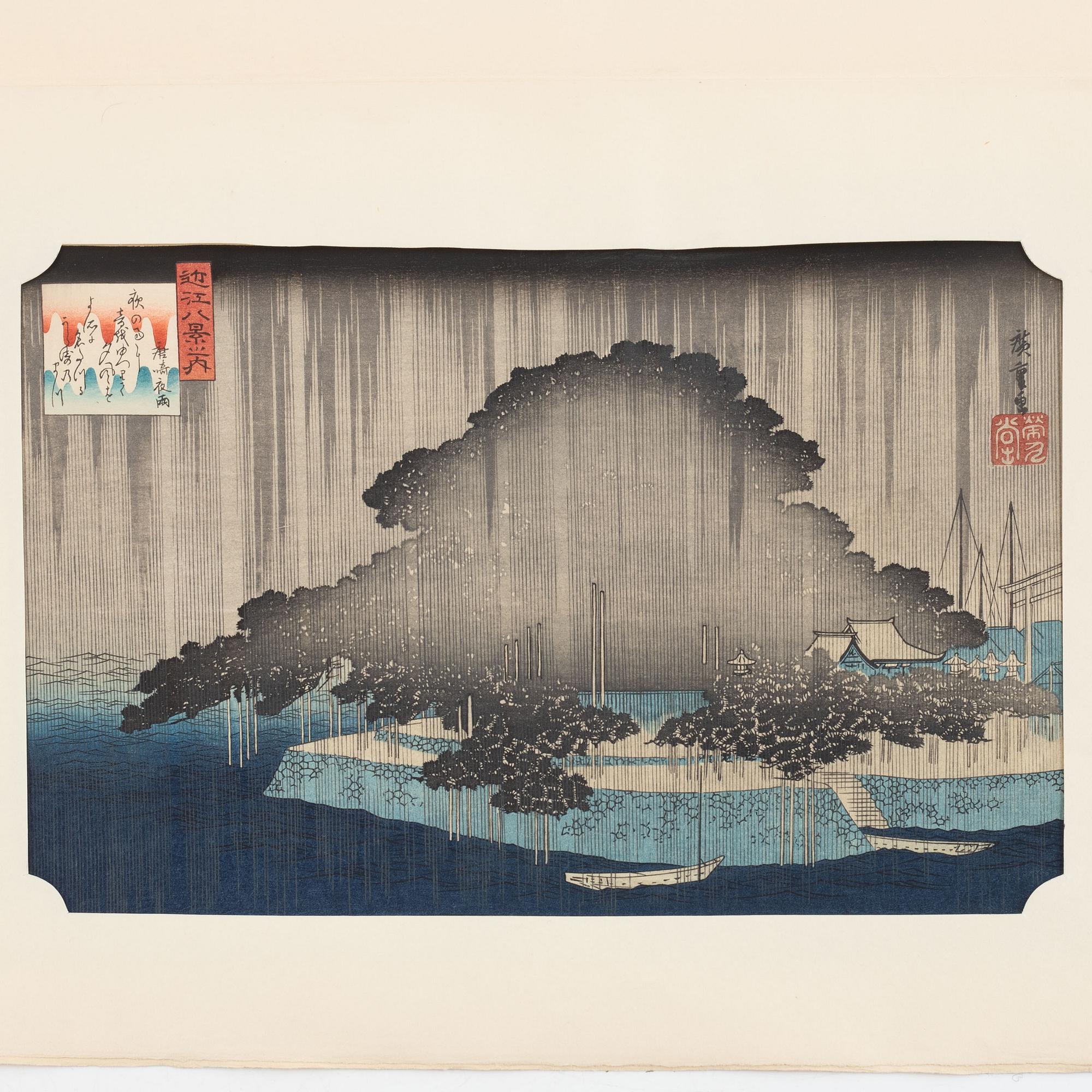
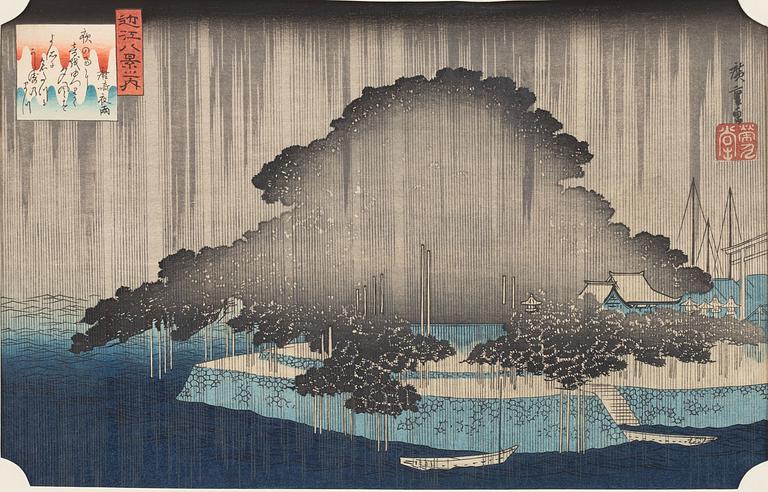
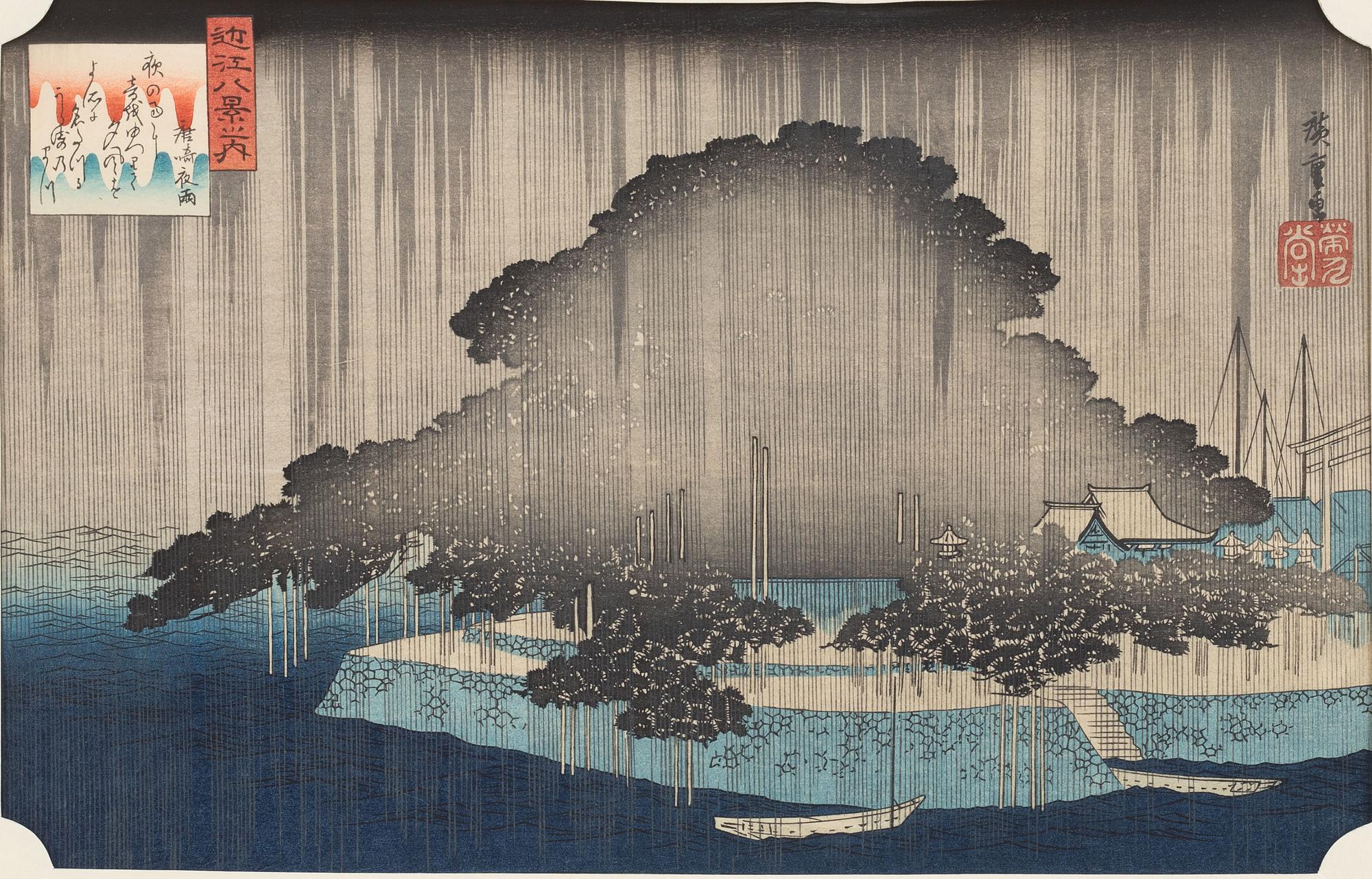
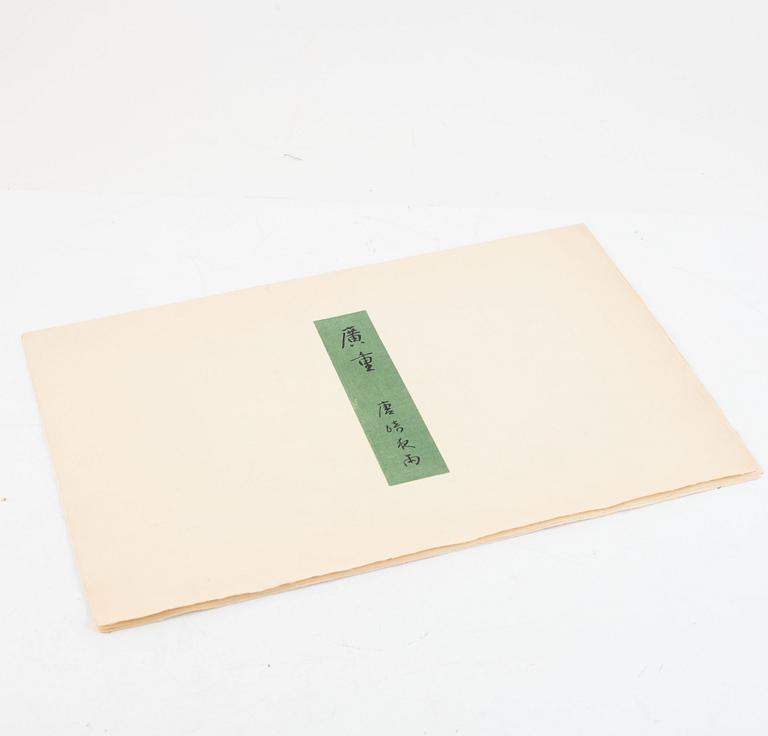
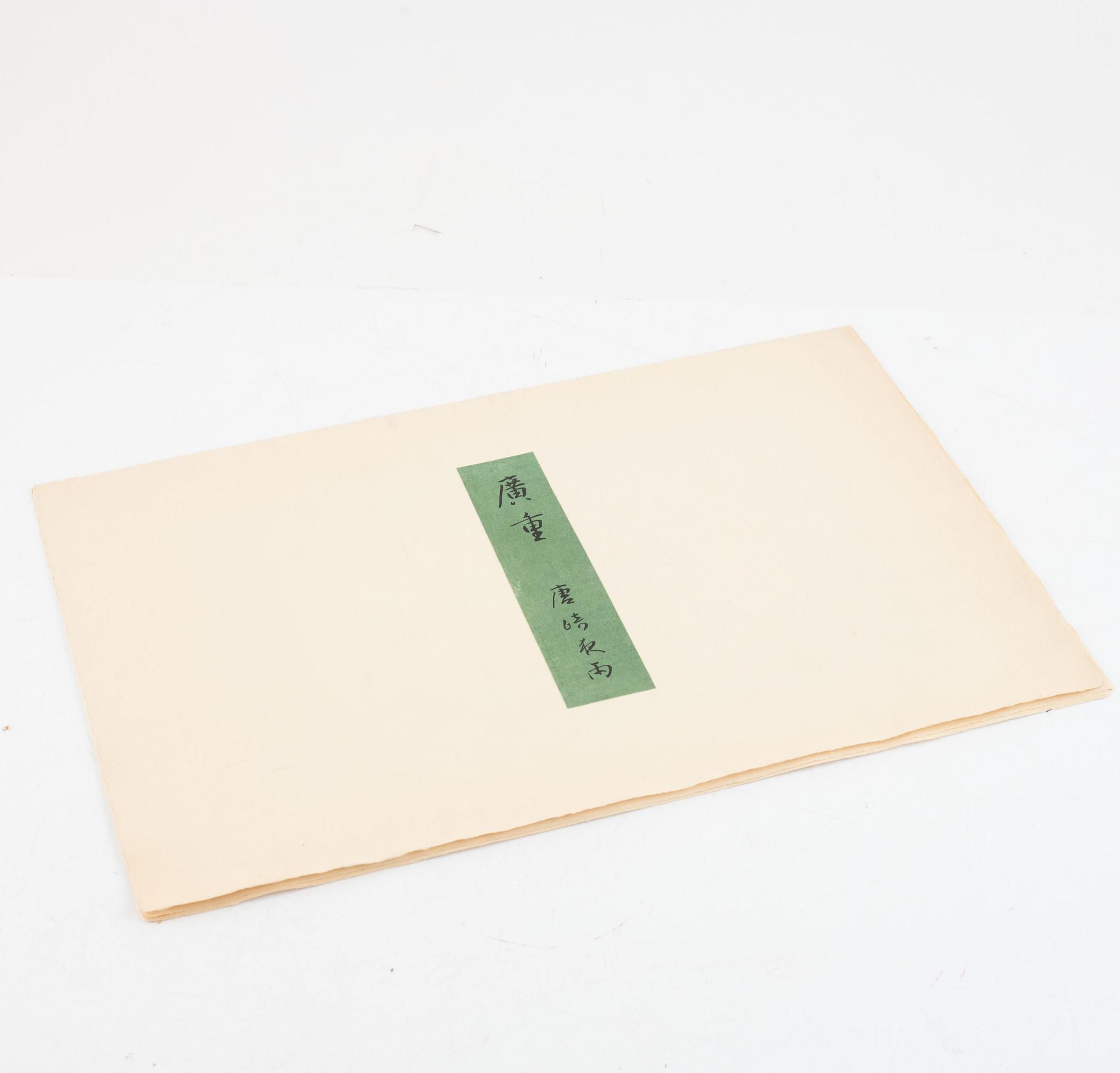
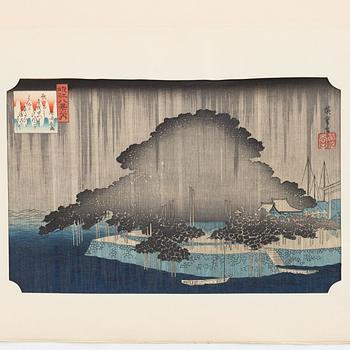
Ando Utagawa Hiroshige, after, woodblock print, 20th century.
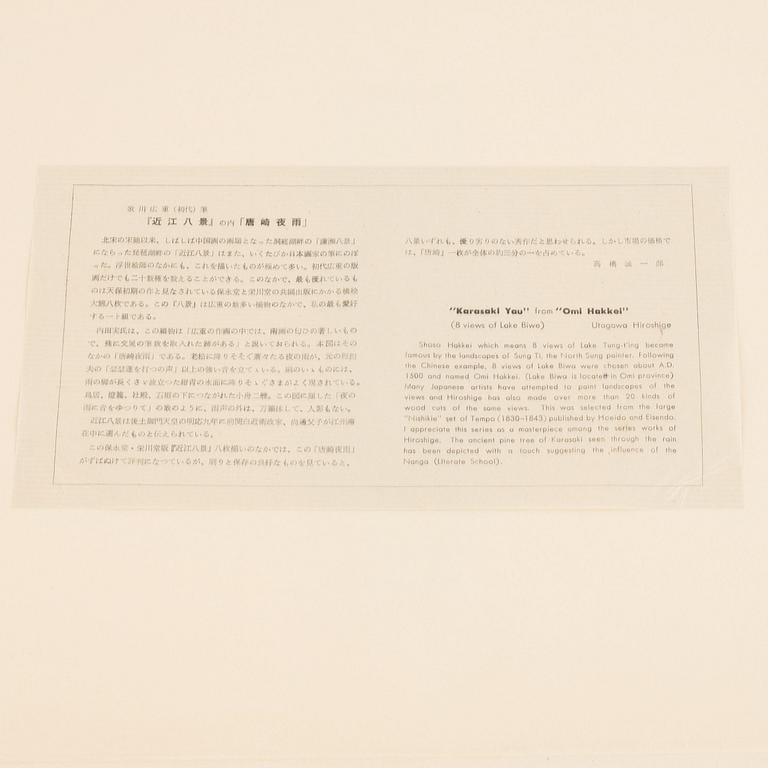
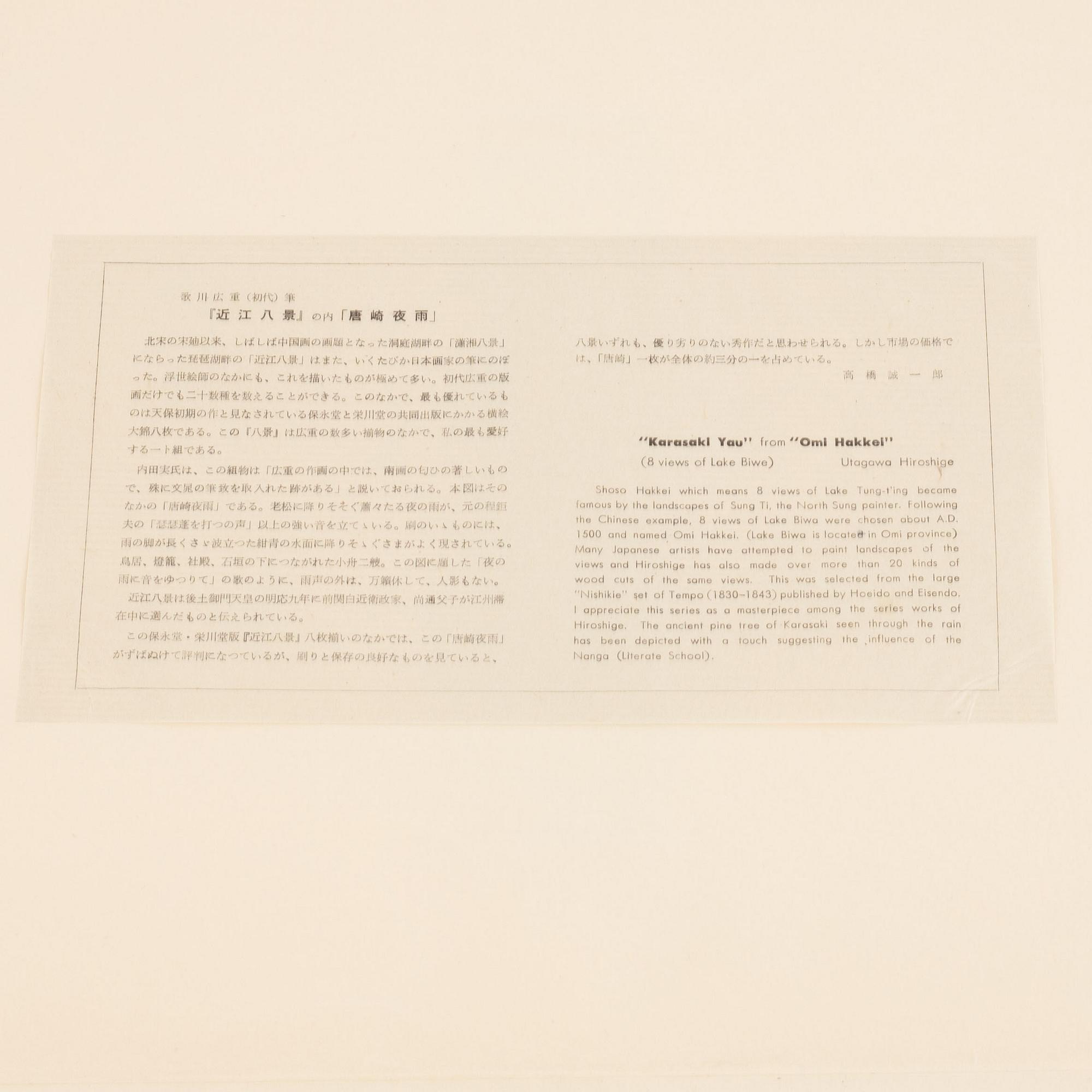
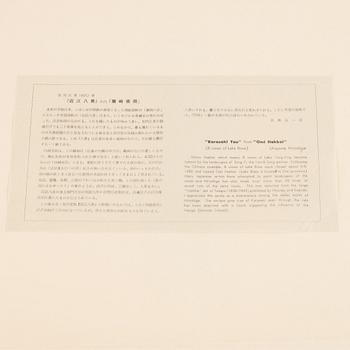
'Night Rain at Karasaki' (Karasaki yau), from the series 'Eight Views of Omi' (Omi hakkei no uchi). Oban 26 x 38 cm.
Not framed.
Provenance
From the The Bengt and Lilavati Häger Collection.
Lilavati and Professor Bengt Häger’s art collection was culturally significant and vast. It is clear that it was founded on the couples cross cultural experiences. Lilavati was a leading exponent of Indian dance and Bengt one of the most important European Impresarios of his day.
Multitalented and highly regarded Bengt Häger (1916-2011) worked inexhaustibly throughout his life to promote dance as an independent art form and field of research. He founded and managed the Swedish Dance Museum, the University Collage of Dance and Circus in Stockholm. He worked actively to bring international guest performances from world leading dance companies. Organized international tours for Swedish dance companies such as the Cullberg Ballet, which he managed 1967-1987. He was the first to bring Peking Opera out of China after the revolution and was a great friend of the renowned Peking Opera singer Mai Lanfang.
For many years Mr Häger was the closest friend and collaborator of the famous Art Collector Rolf the Maré (1888-1964), founder of Ballet Suedois in Paris. Bengt was also involved with UNESCO and founded the Centre International de Dance.
Lilavati Devi (1925-2002). First came to Sweden as a principal performer of the dance company set up by Ram Gopal (1912-2003), the Nijinsky of India. Bengt and Lilavati married in 1954. She became an important ambassador of Indian Dance in Scandinavia. They couple came to inhabit a circle that included some of the major international dancers, performers and choreographers of the last Century.
More about Ando Utagawa Hiroshige
Ando Hiroshige is one of the most renowned a Japanese painters born in Edo. He began his artistic career as an apprentice to Utagawa Toyohiro. After completing his training, Hiroshige took his teacher's name and started signing his works Utagawa Hiroshige. Hiroshige painted motifs from everyday life, and it is said that he decided to become an artist after seeing the works of the contemporary artist Hokusai. Hiroshige transformed ordinary landscapes into intimate, lyrical scenes. He is particularly known for his beautiful landscape images in the woodblock printing technique and has painted portraits of young women and actors. His masterpiece is considered to be the work “Fifty-three Stations of the Tokaido.”
Read more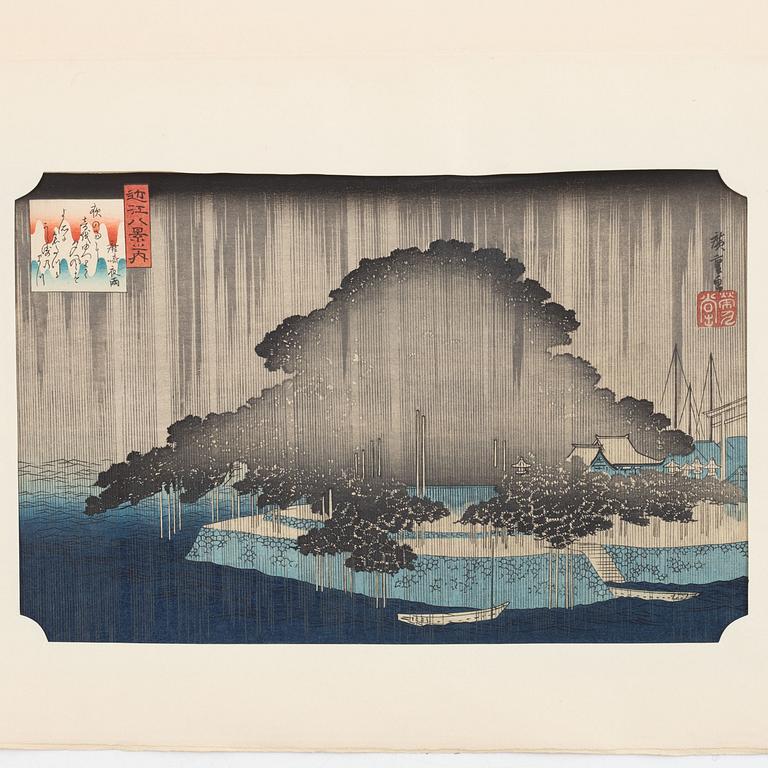
Others have also viewed