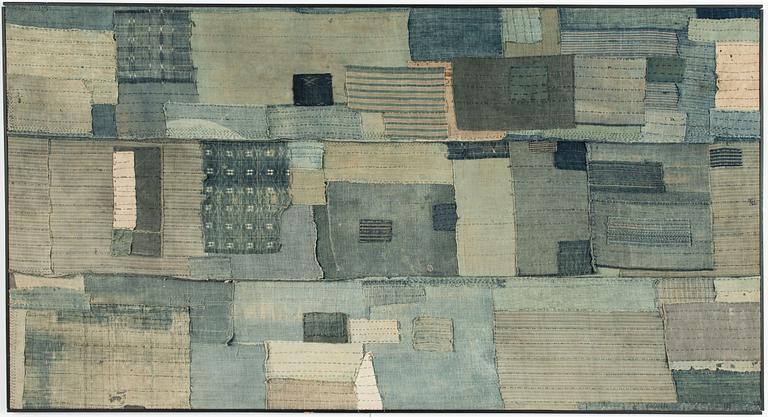
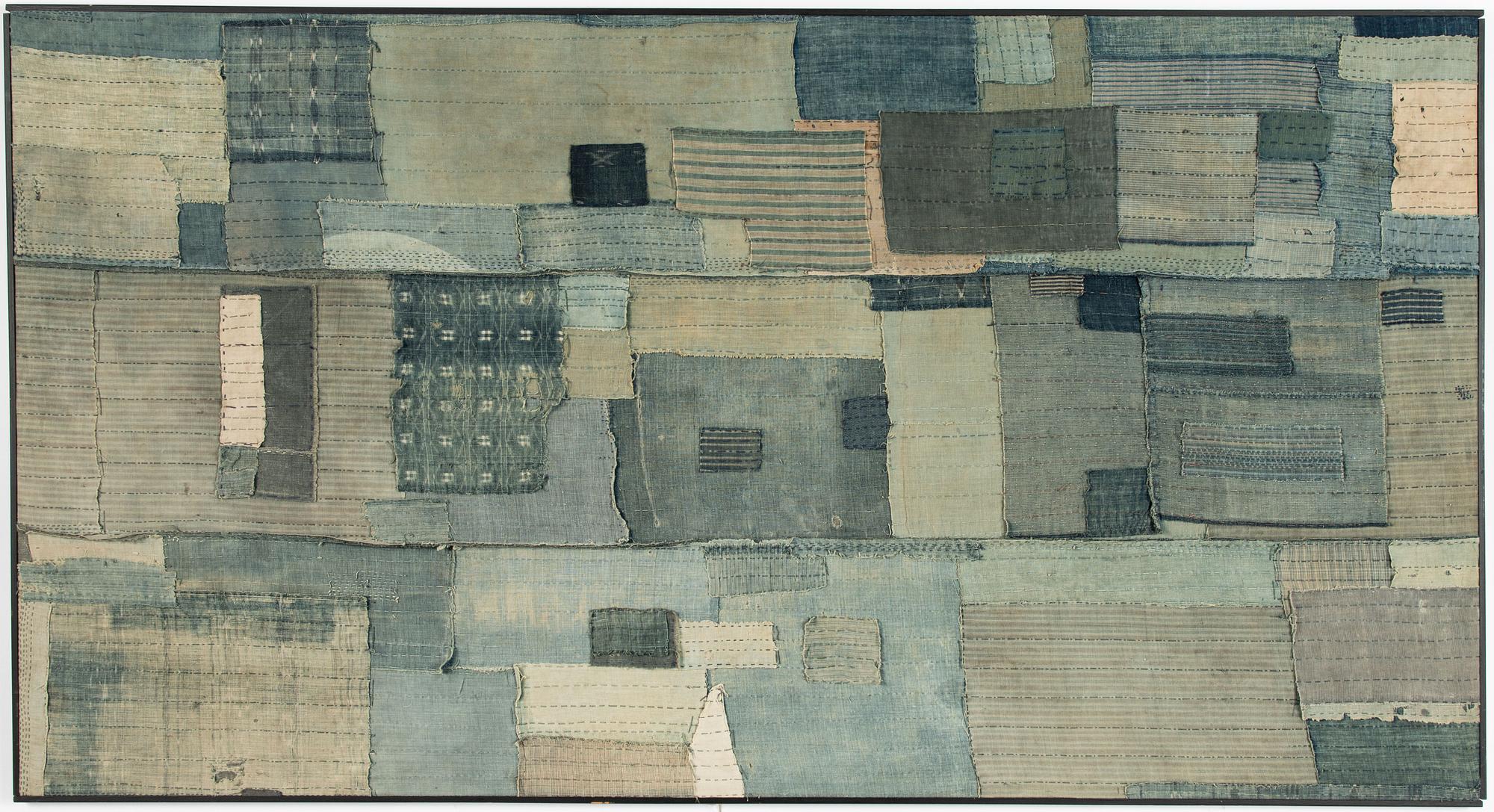
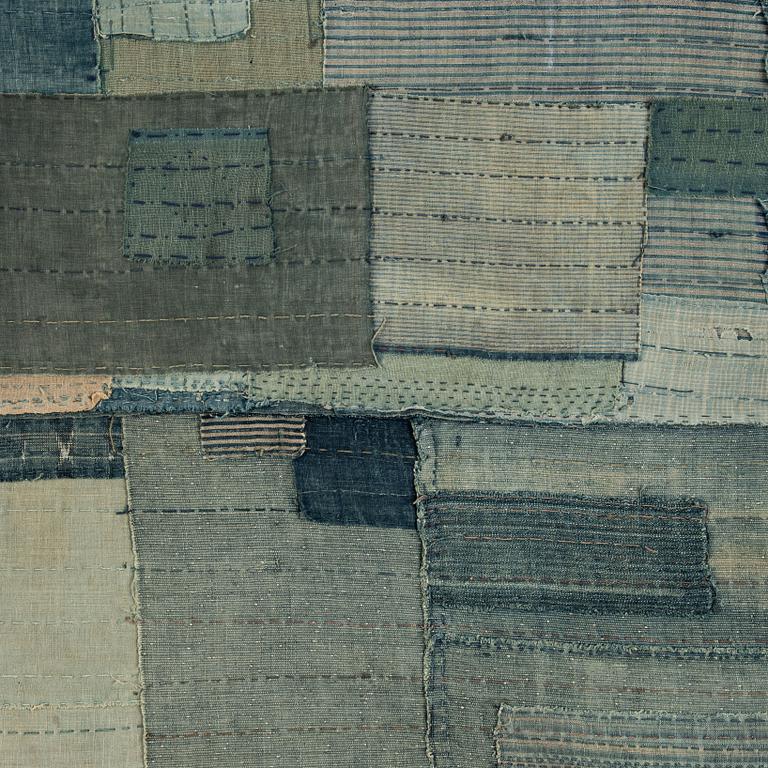
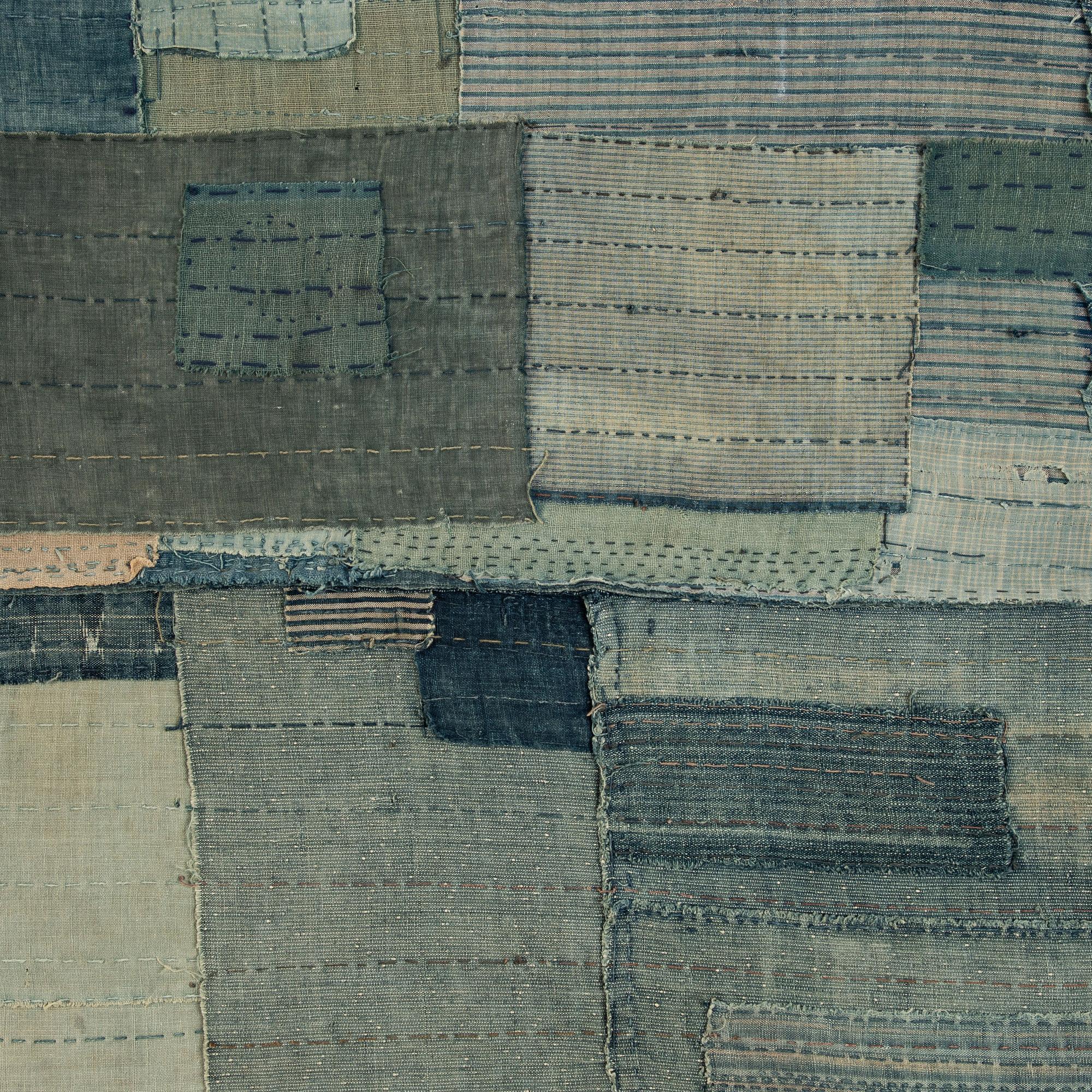
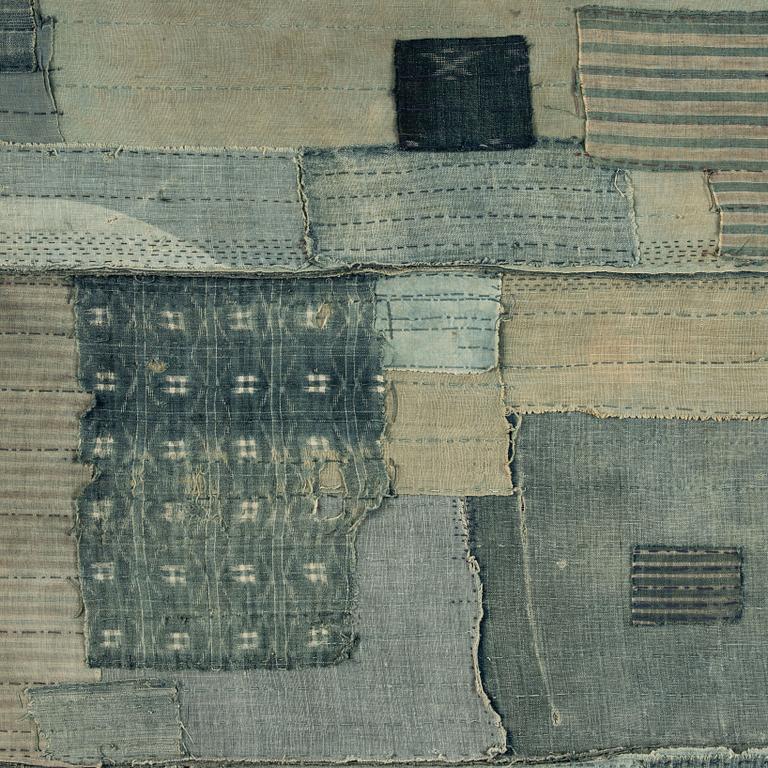
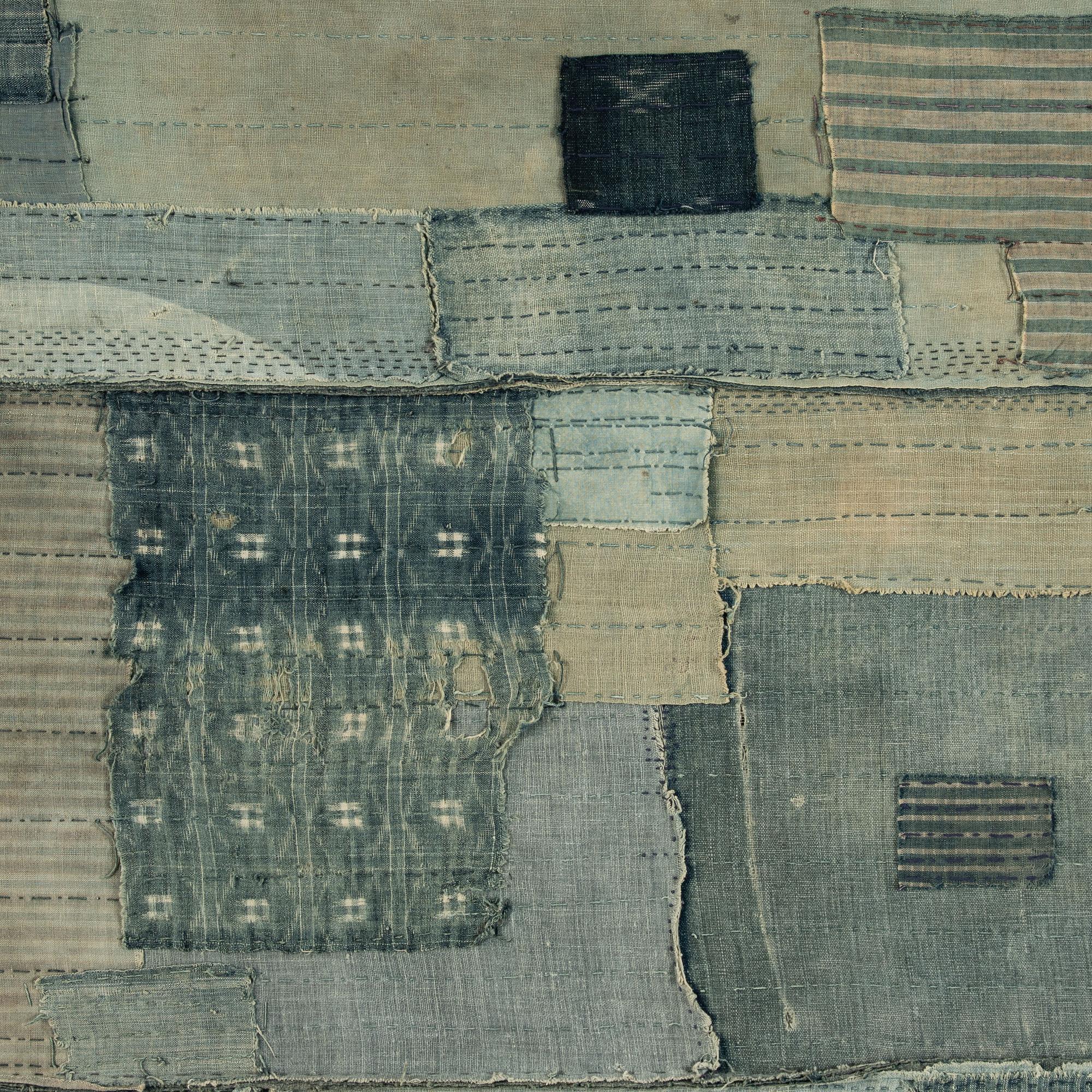
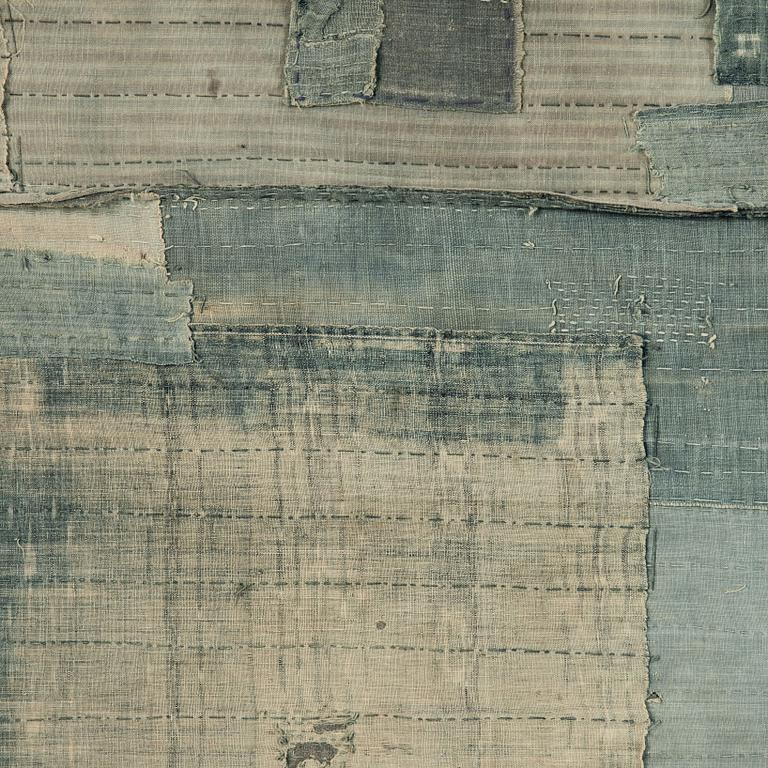
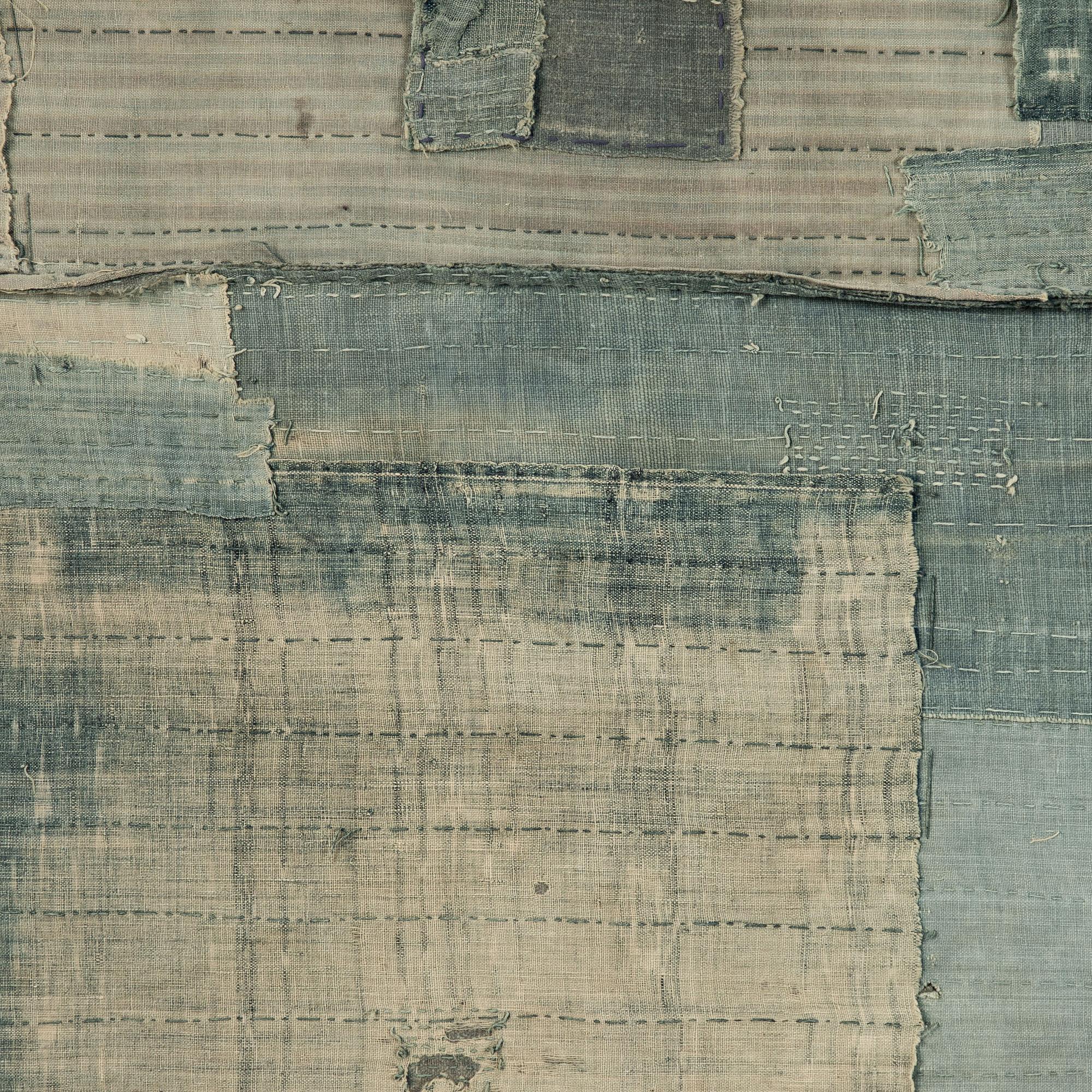
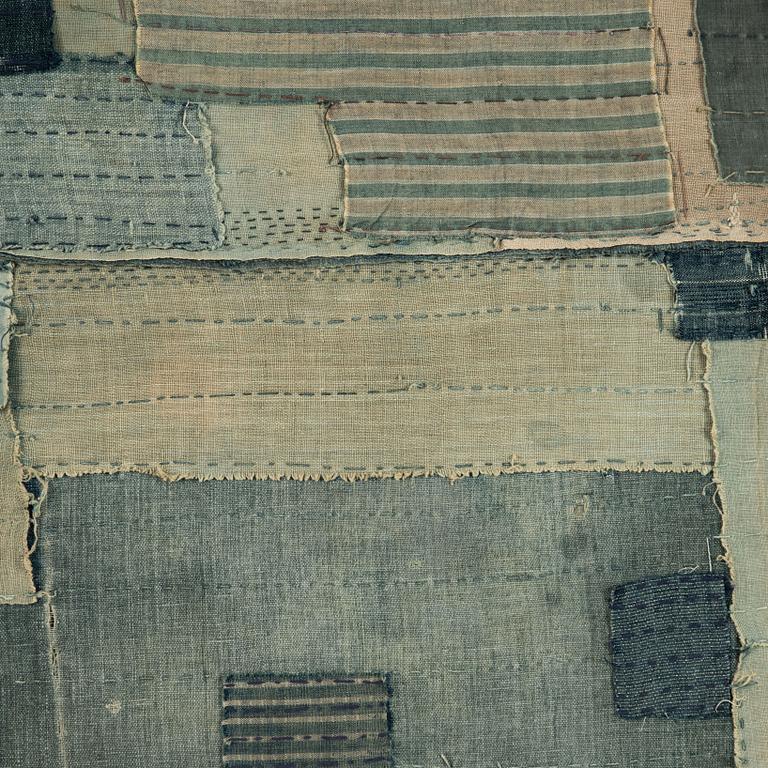
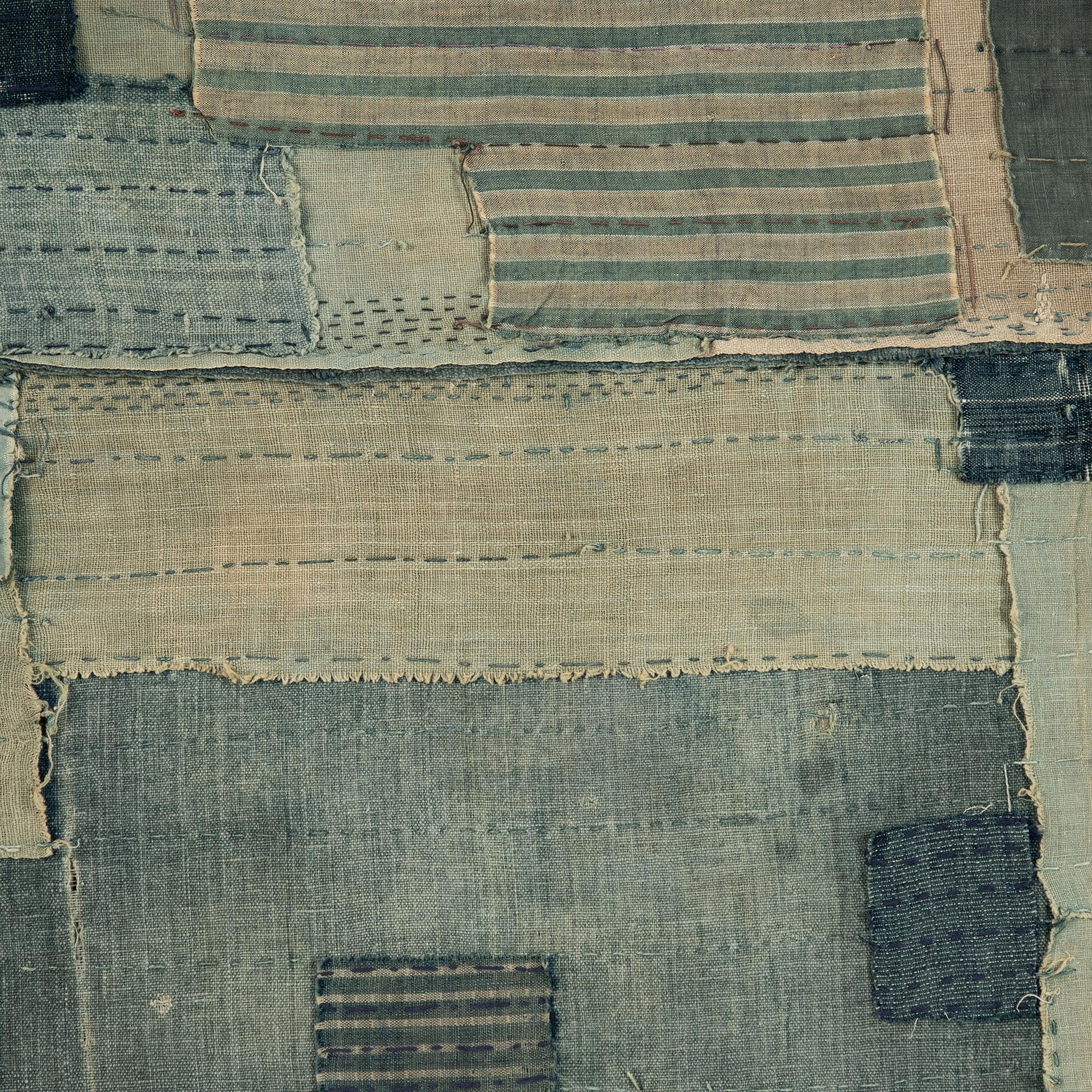
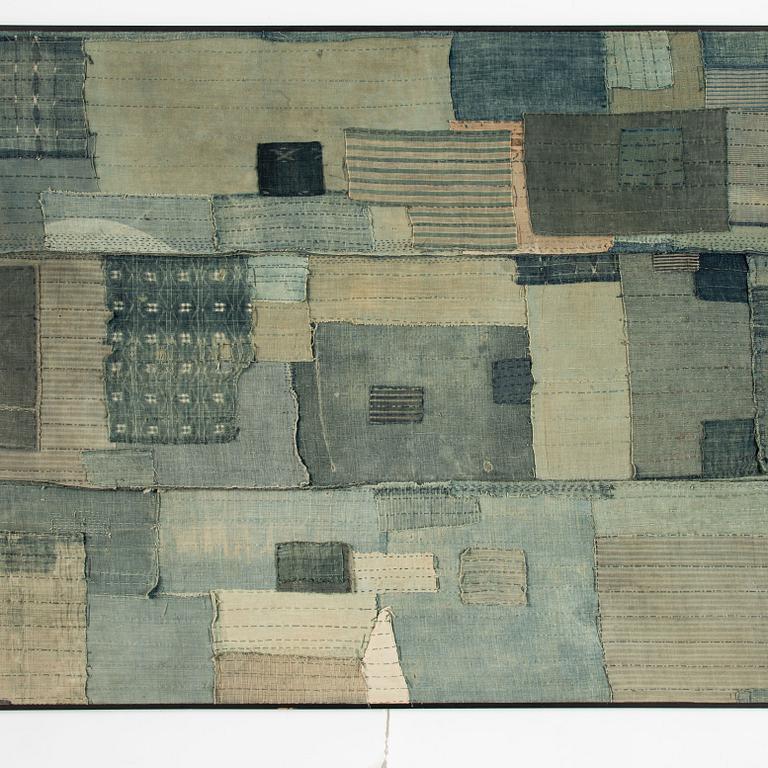
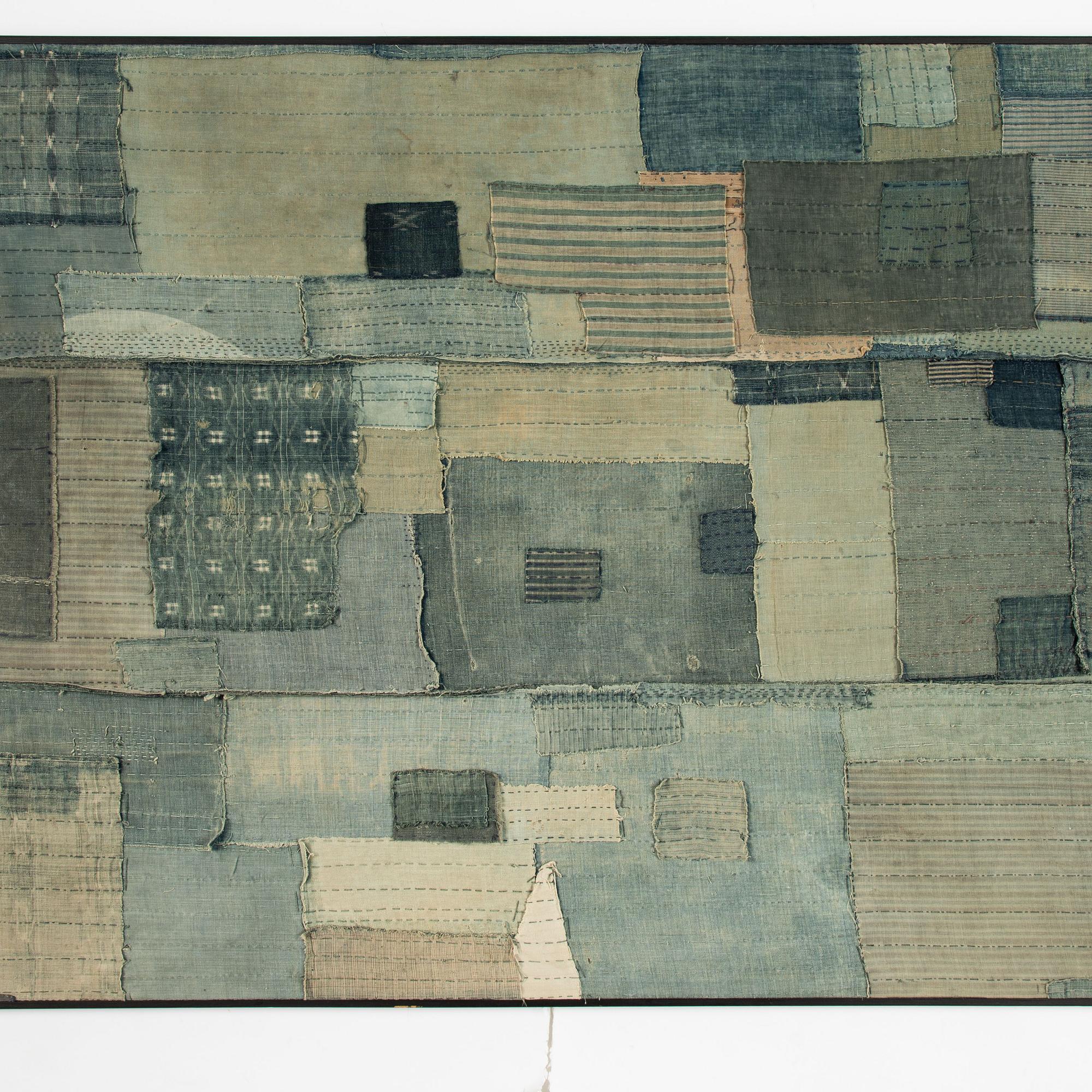
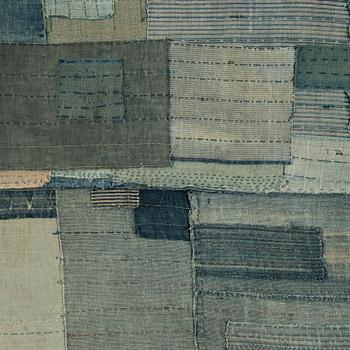
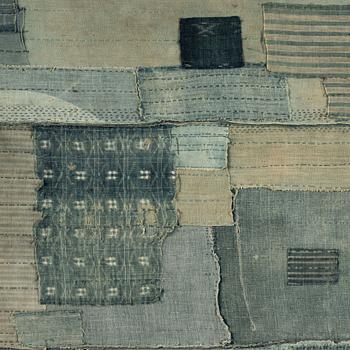
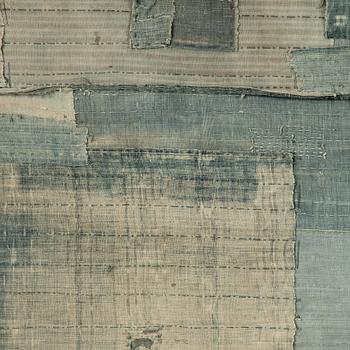
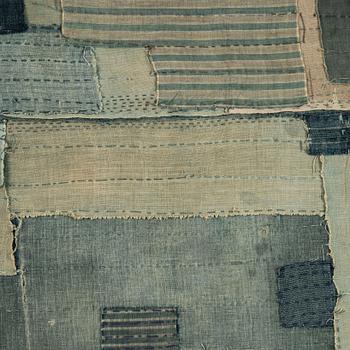
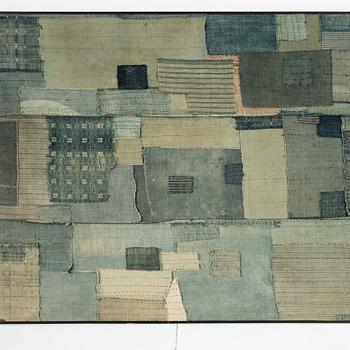
Indigo-dyed fabric with varying patterns sewn in sashiko stitches with boro technique, dimensions 92 x 172 cm. Measurement including frame 94 x 174 cm.
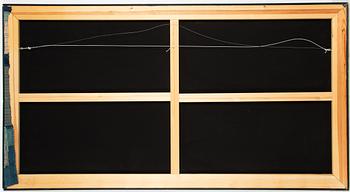
Mounted in frame.
Provenance
Purchased by a private collector around 2010.
Literature
Östasiatiska Museet 'Boro - The Art of Necessity
30 March 2021 - 9 January 2022.
More information
Boro ぼ ろ is a category of patchwork textiles that originated in Japan, made with a technique aiming to preserve as much material as possible. Boro was used both to repair textiles in clothing and blankets, and also to create thicker, warmer fabric from small pieces of expensive cotton fabric. This arose from strict regulations on the use of different materials by various social classes during Edo (1603-1868). Silk could only be used by samurais and aristocrats, and even cotton was at times forbidden for the general public, who had to use coarser materials like hemp and other plant fibres. When cotton became available in the 19th century, it was still very expensive and sought after, and the smallest piece was saved and joined with other small pieces to create larger sections. In this way, the same textiles could be inherited and used by many generations as they were reinforced and patched with saved scraps of fabric and old thread. Boro typically consists of various indigo blue patches joined together with so-called sashiko stitches, although there are examples with other colours. Indigo was the colour most common amongst the lower social classes in Japan. Boro had low status for a long time as it was considered a reminder of a poor past. Nowadays, there is great interest for boro both in the fashion industry and amongst collectors. In a time of abundance, boro is a reminder to value and care for what already exists. The Japanese concept 'Mottainai' もったいない or 勿体無い (roughly translated as an exhortation to save and not waste) is once again relevant.
Others have also viewed