







Empire
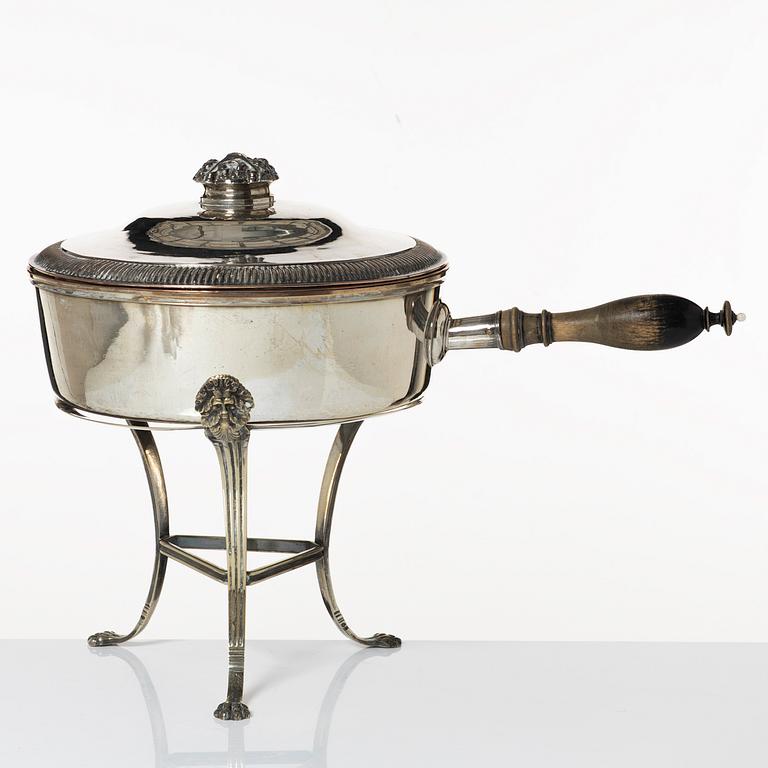
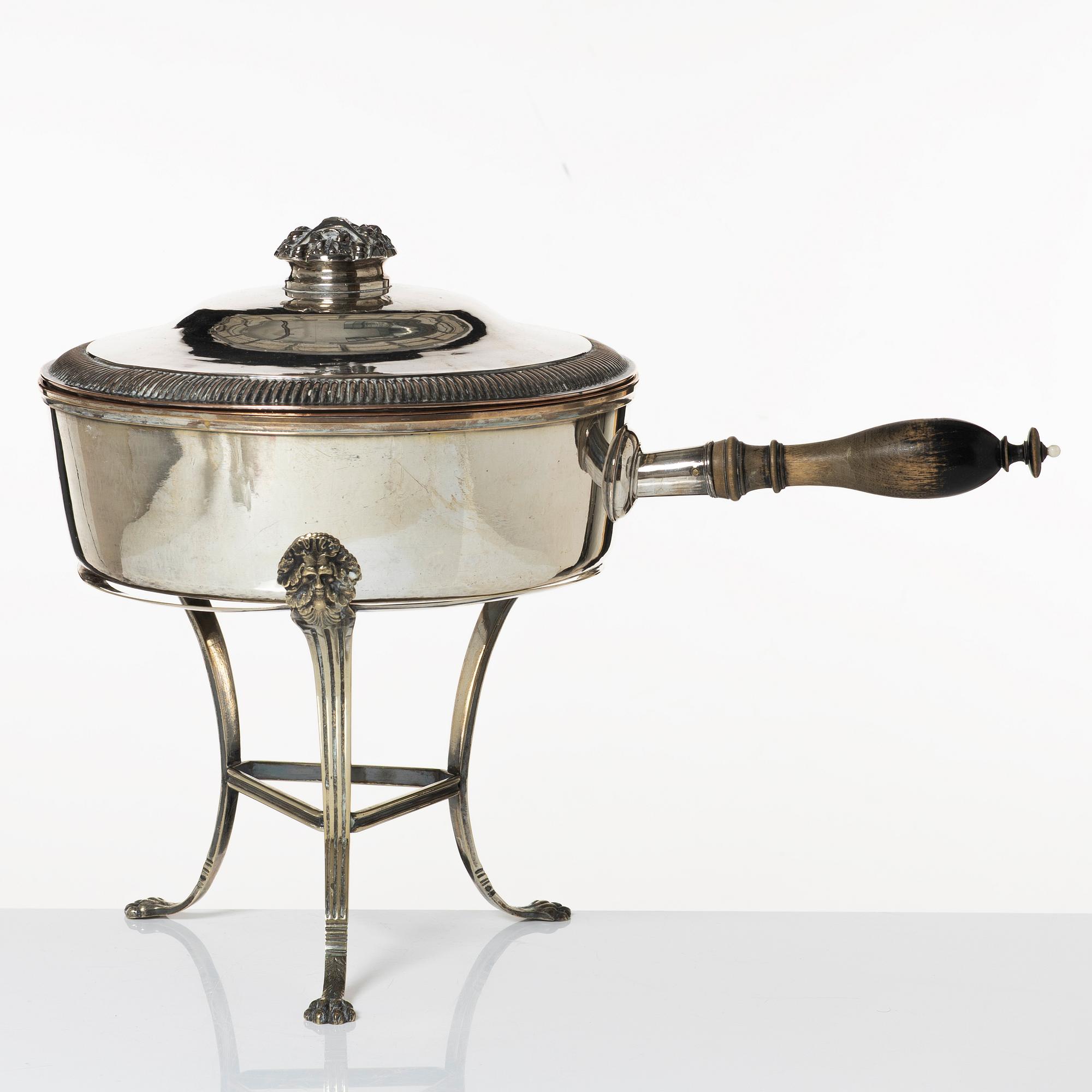
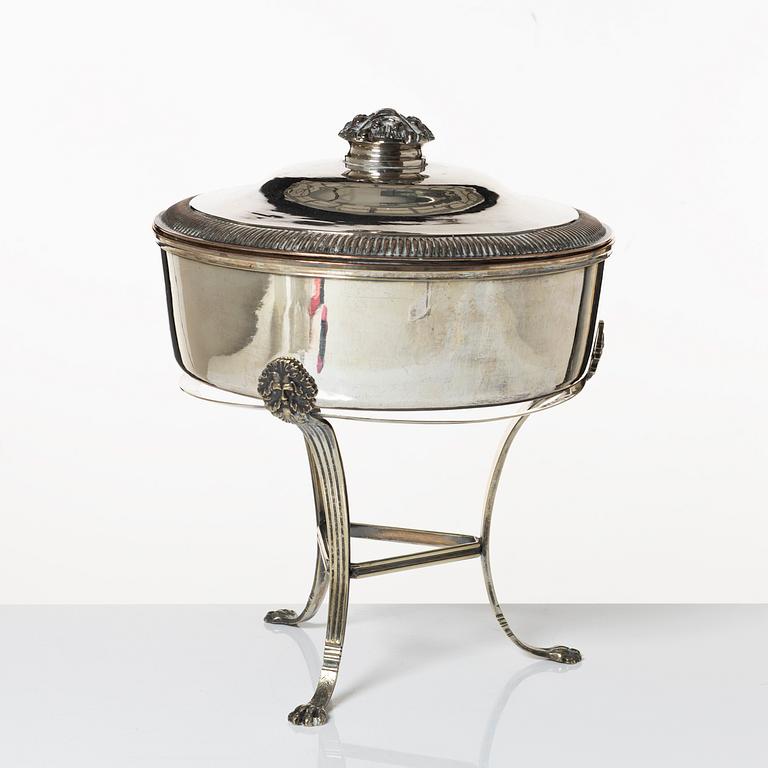
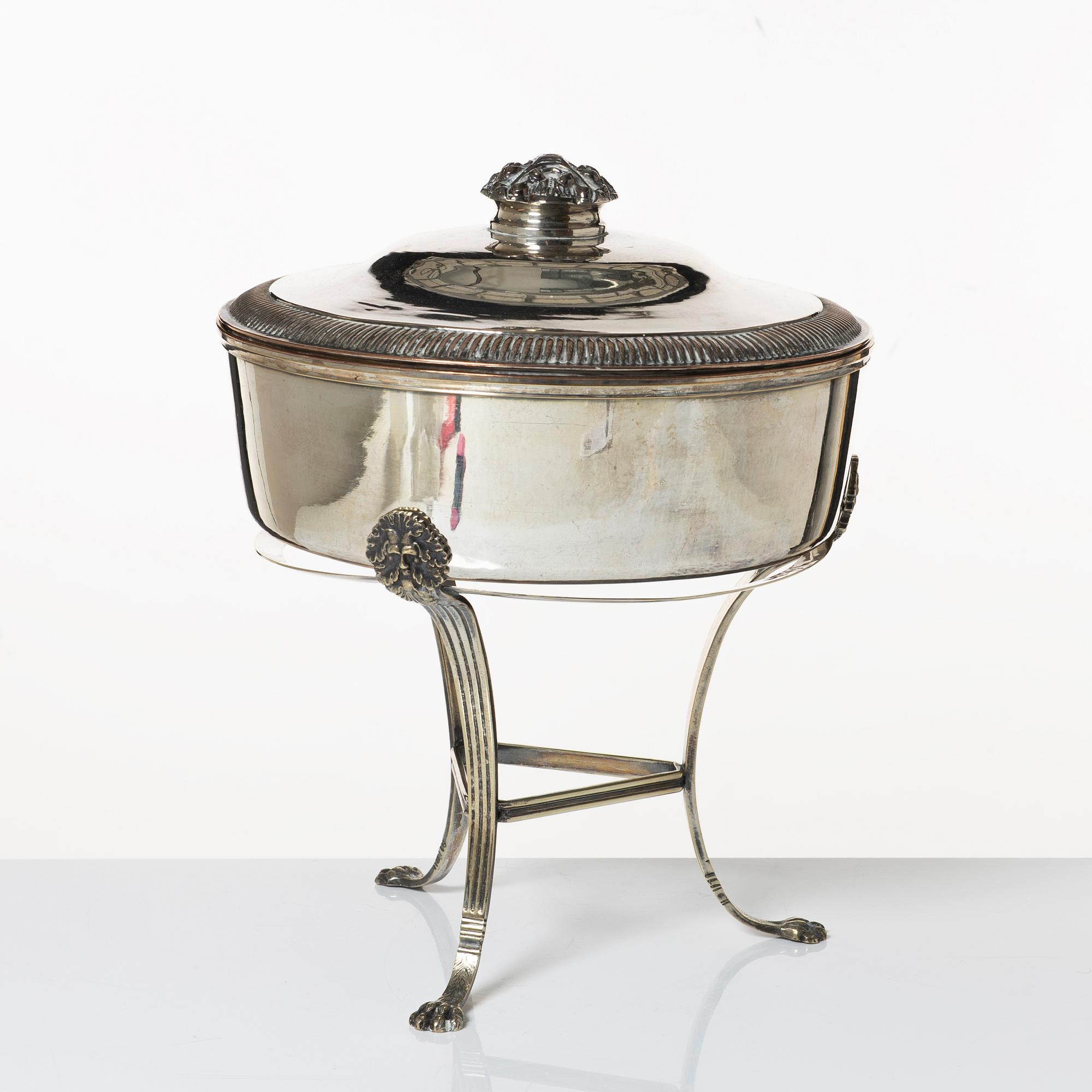
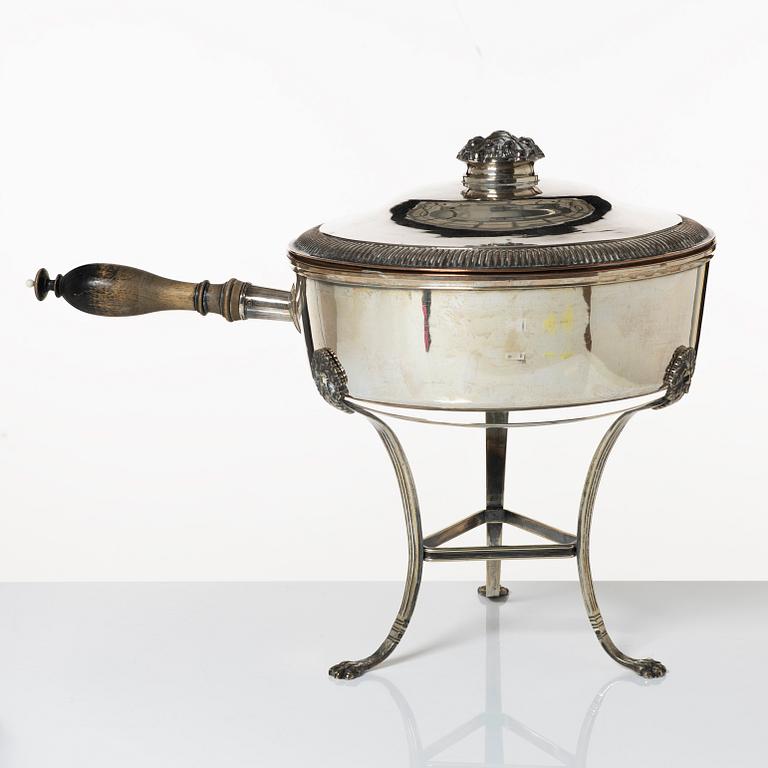
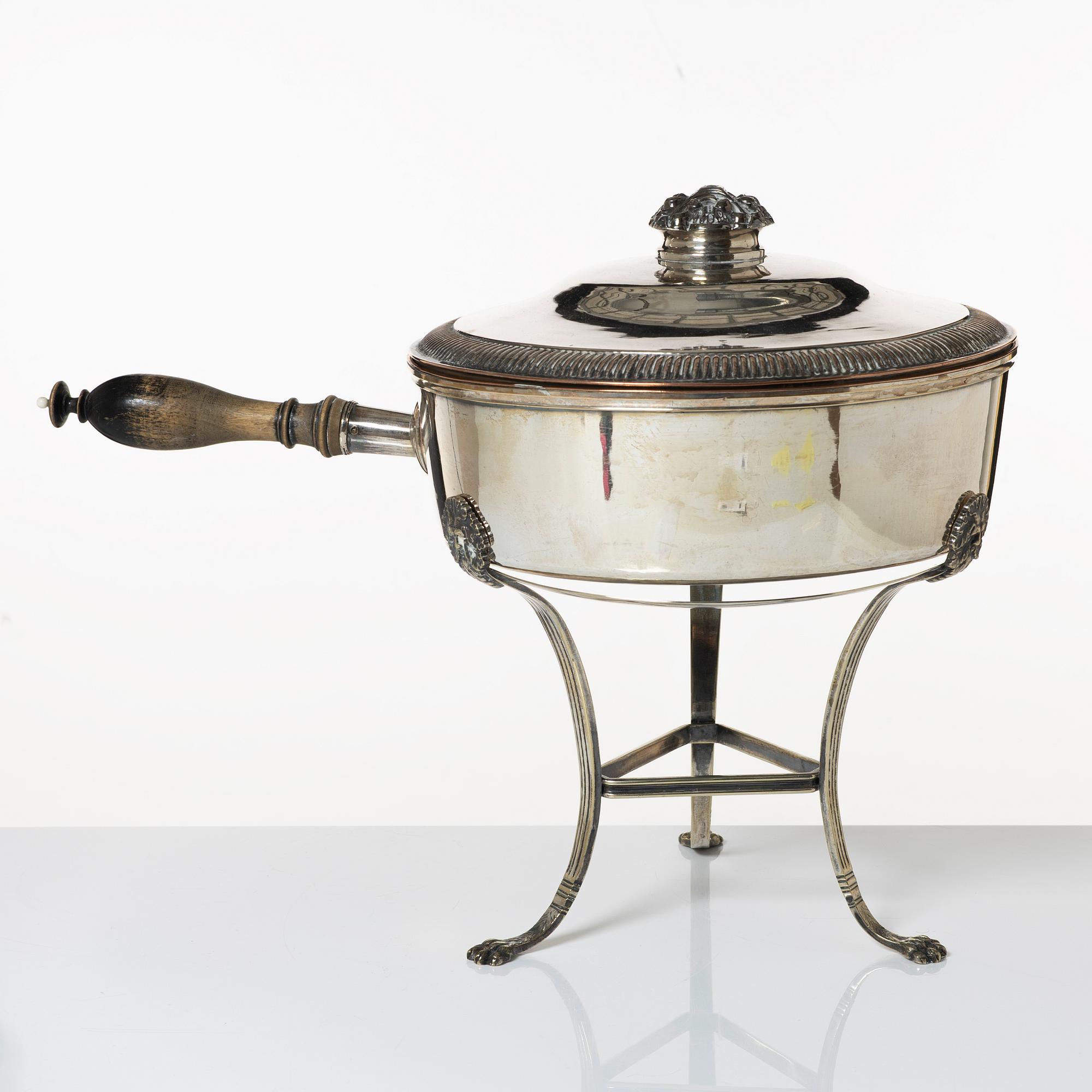
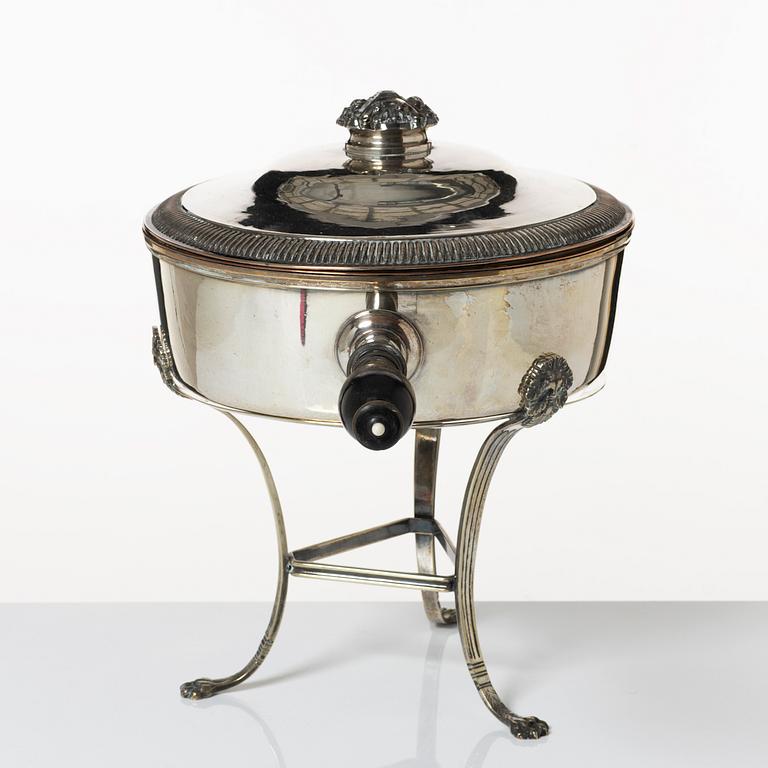
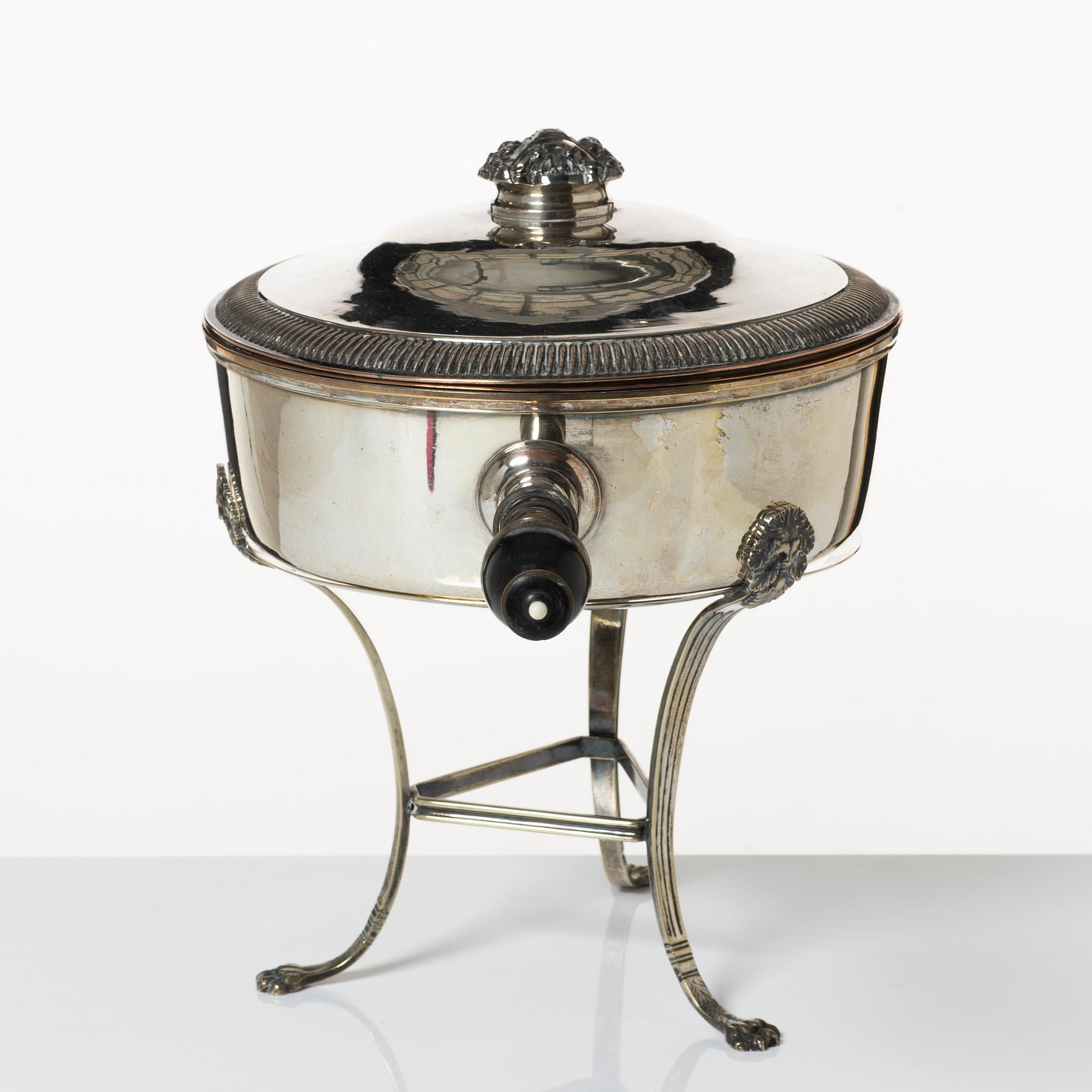
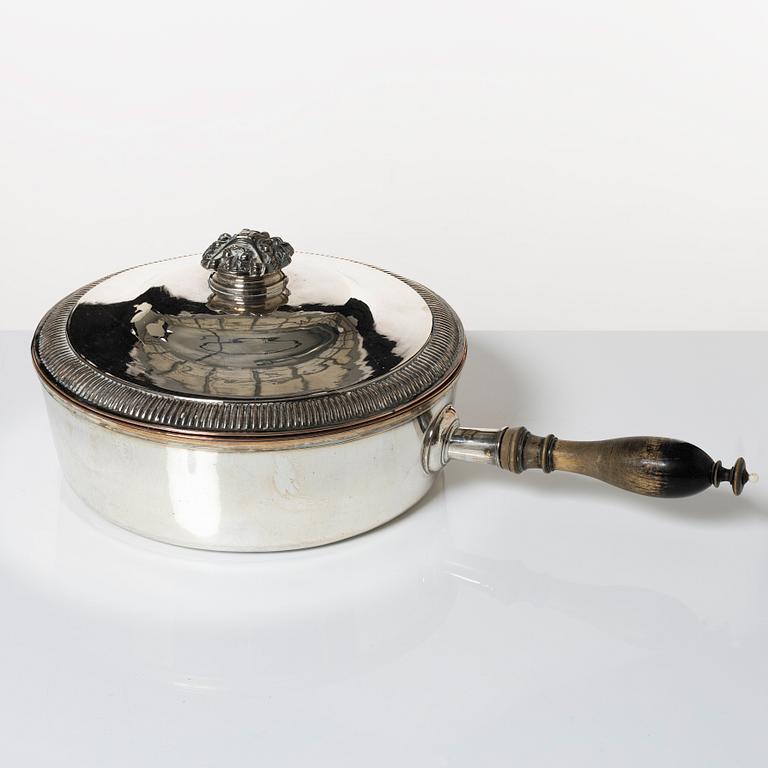
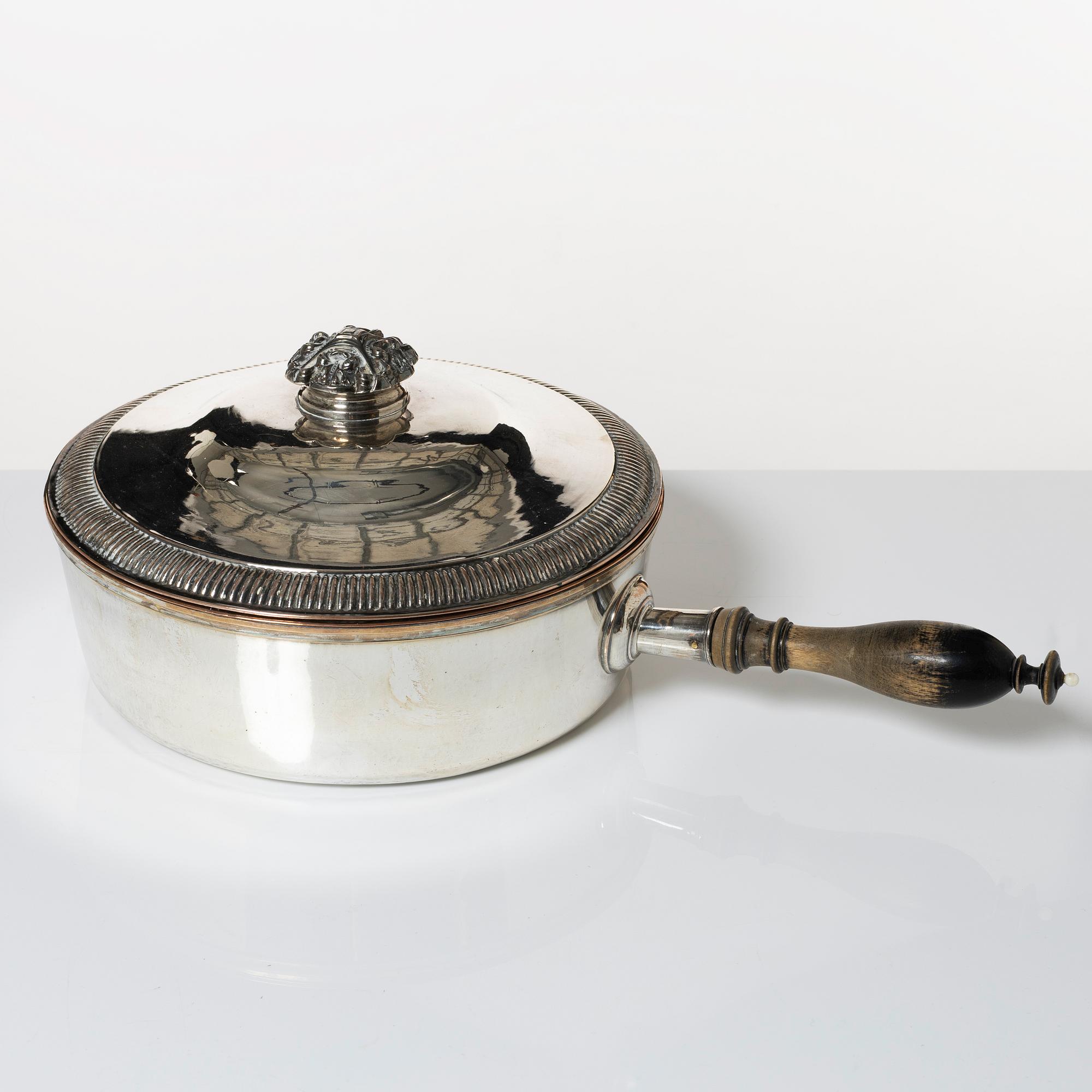
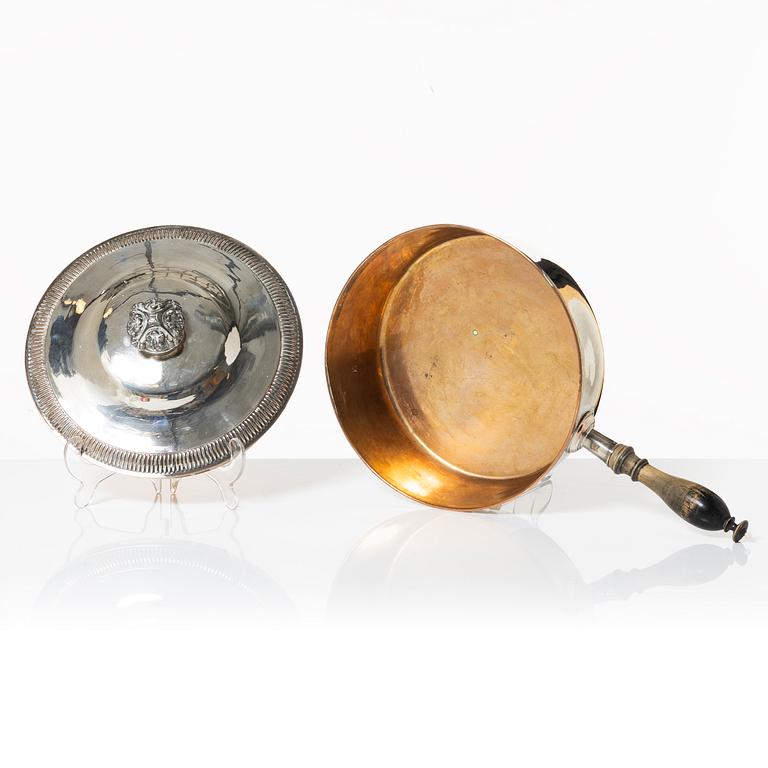
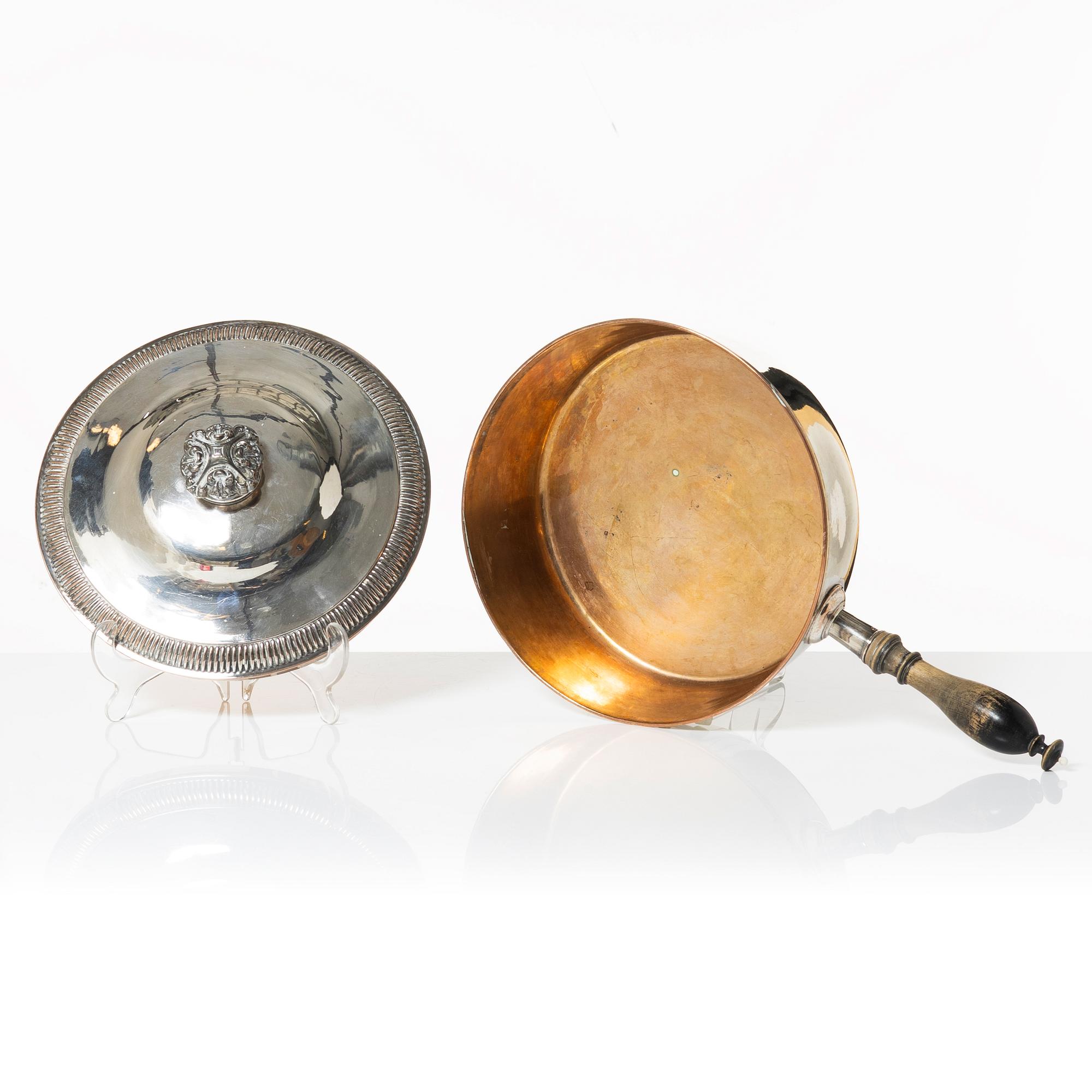
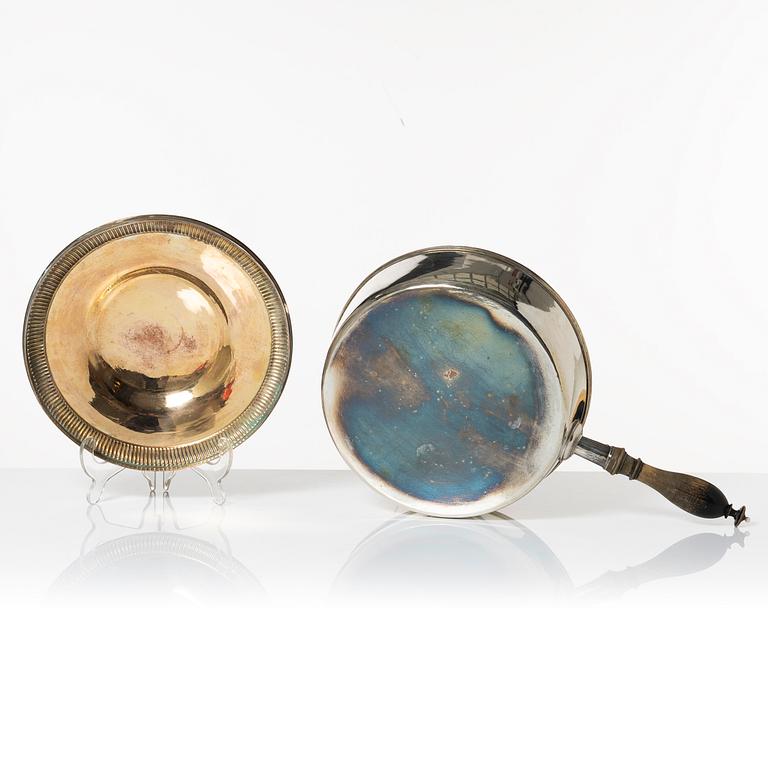
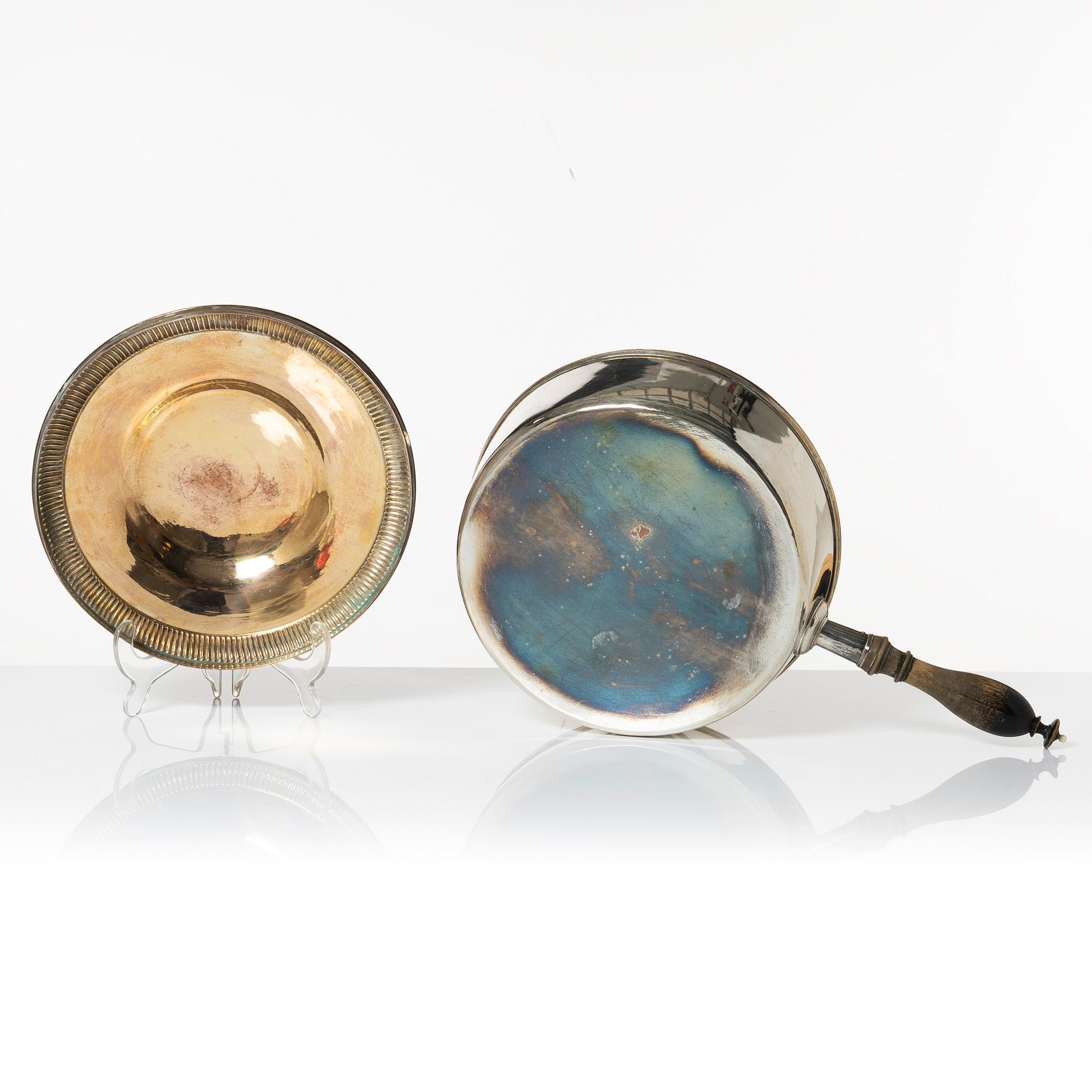
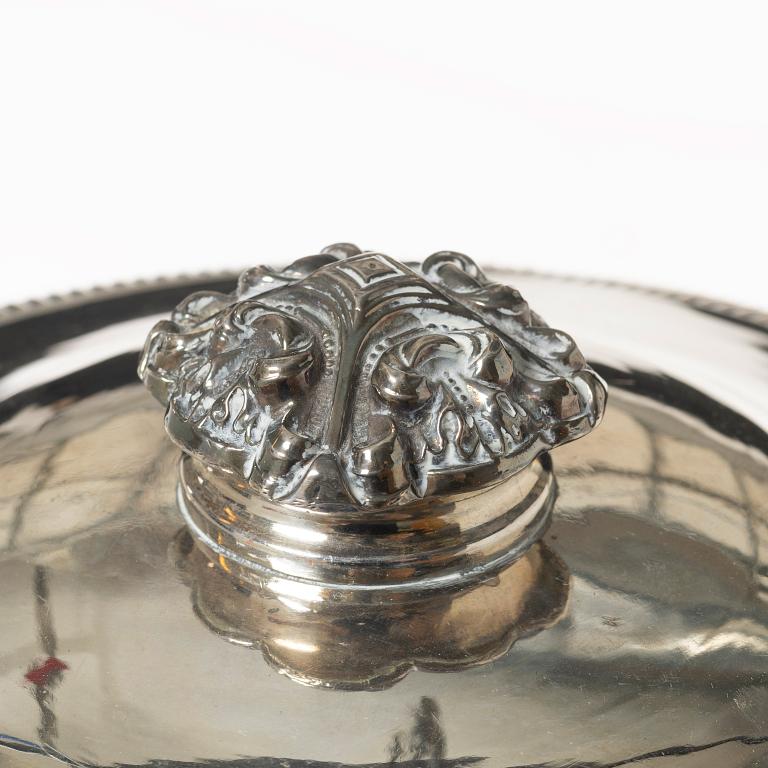
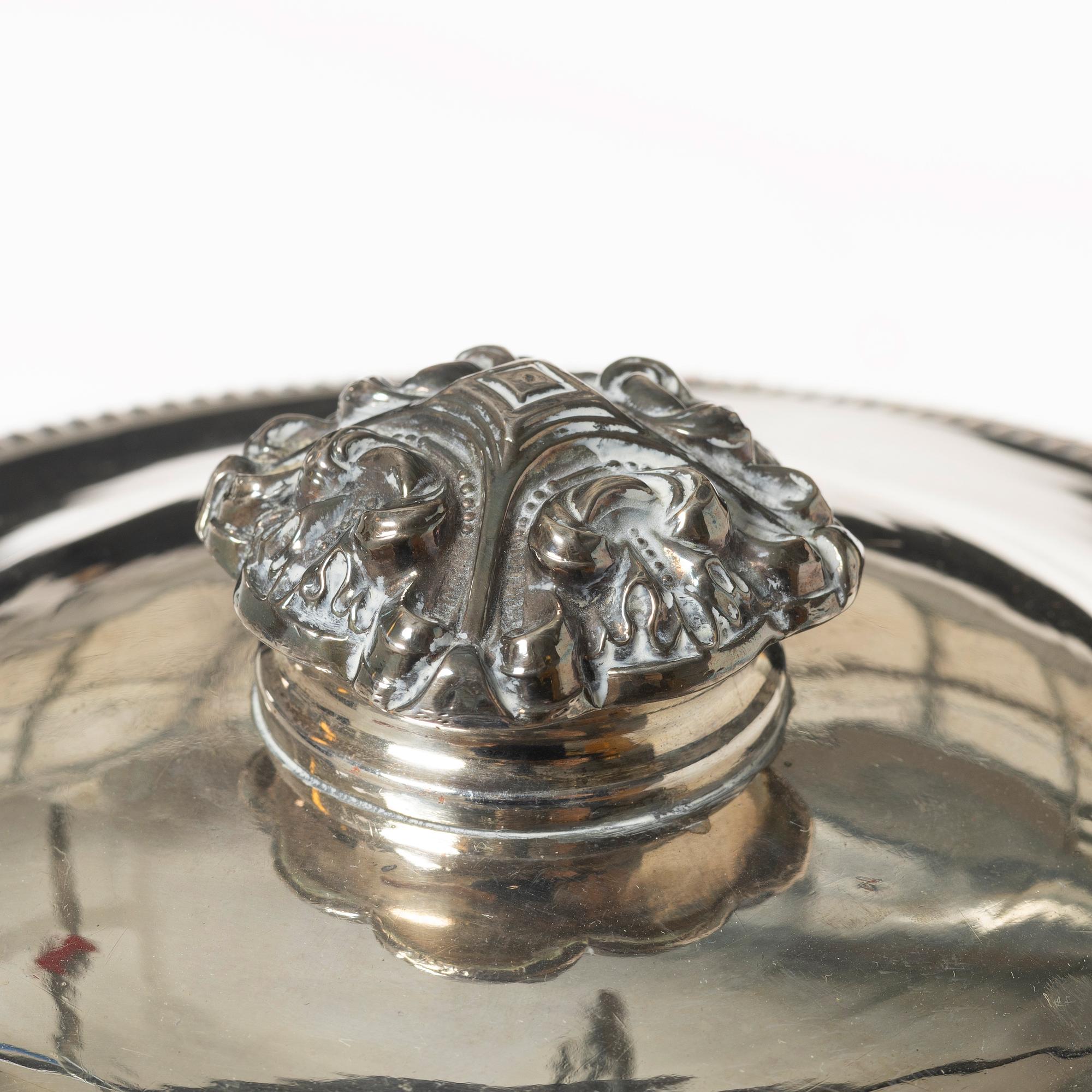
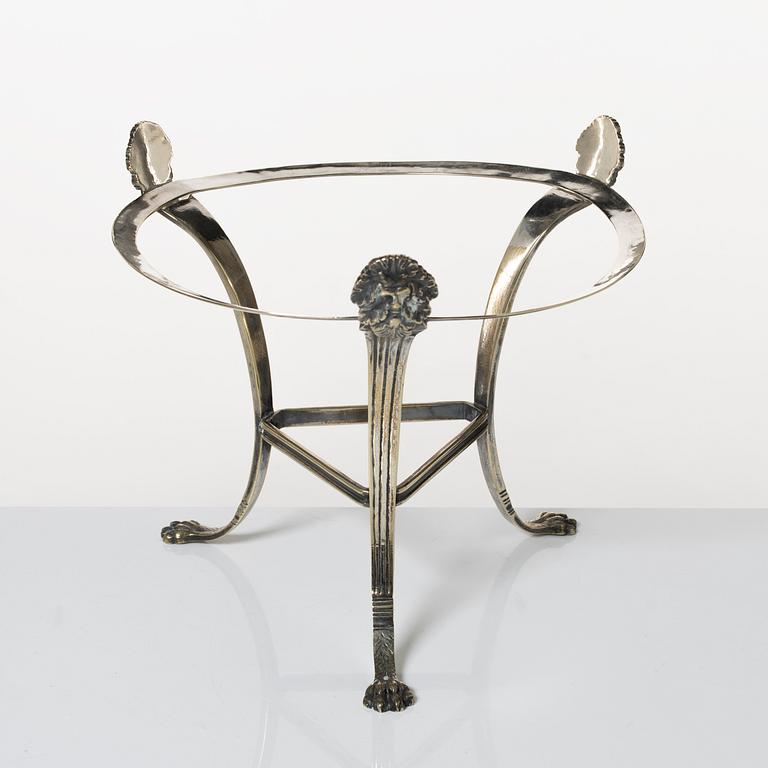
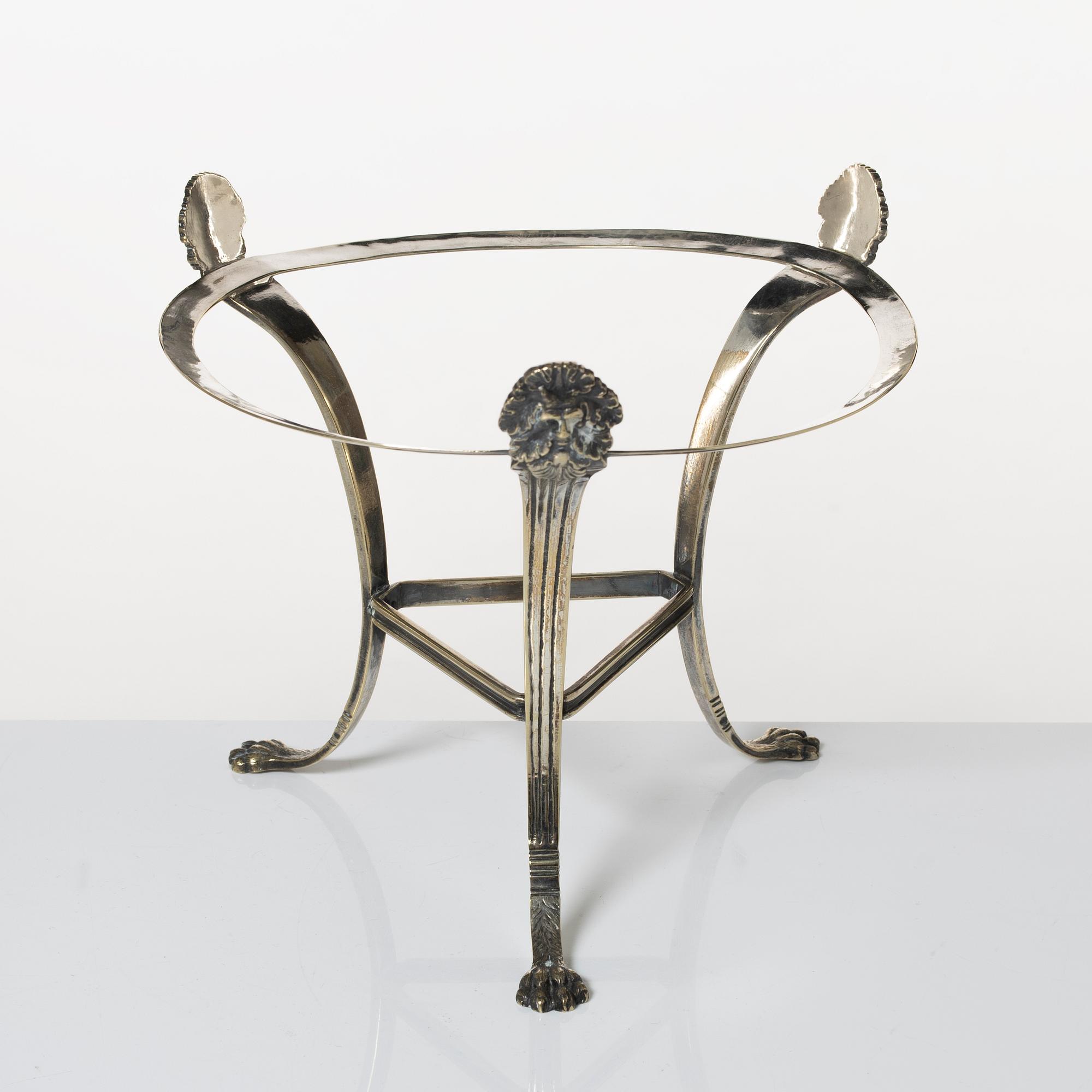
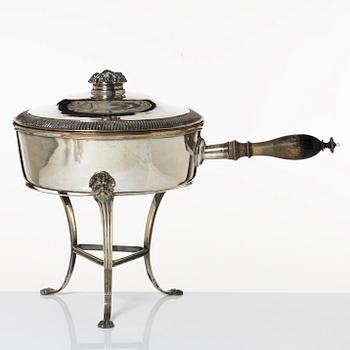
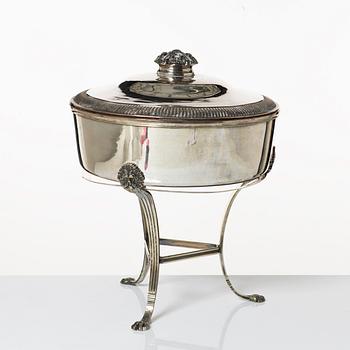
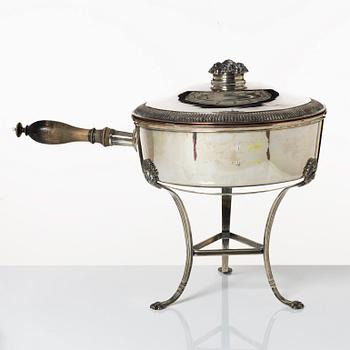
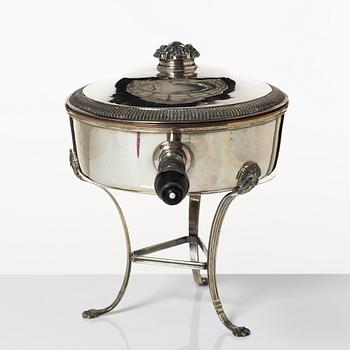
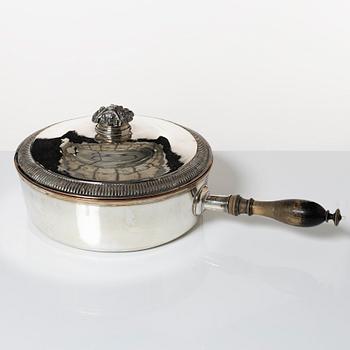
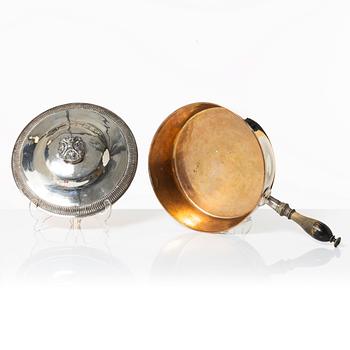
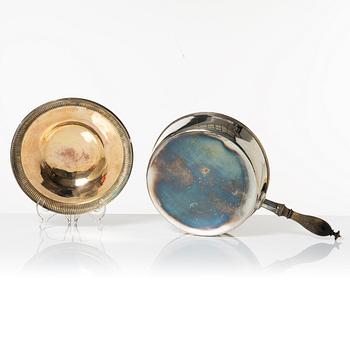
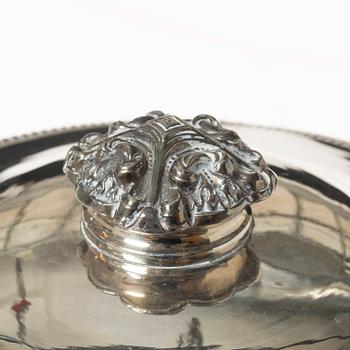
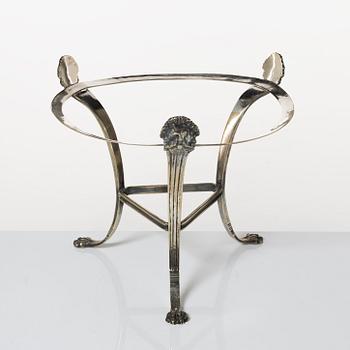
A Swedish Empire covered bowl with a stand, silver plate, mark of Jacob Lenholm (master in Stockholm 1827-40)
Round with a turned wooden handle, the lid with a gadrooned edge and a finial. On a loose leg frame with three curved cabriole legs, with face masks at the top and with banded decoration and terminating in claw feet. Height 34 cm, width with handle 44 cm. The base of the tureen marked "I LENHOLM", the lid and leg frame without marks.
Some signs of use. The stand possibly not originally belonging. Repaired knob on the handle, likely later.
More information
Jacob Lenholm was granted permission to manufacture silver plate in 1831.
Designer
The Empire style lasted roughly between 1810 and 1840 and is primarily considered an interior design style. The style is characterised splendor and pomp and is sometime known as imperial. The French empire is often associated with Napoleon Bonaparte of France who was highly interested in ancient Rome and its attributes. Egyptian elements with sphinxes, palmettes, eagles, griffins, and masks were common as decorative elements. The most common wood was mahogny and burnished gilding was popular. Chiffonier were popular furniture items during the empire and seated durnitres were dressed in light, bright colours. The 1830-40s is known as the Late Empire and was more bourgeois. In Germany and Austria, the style was known as biedermeier and was identified by furniture with softer lined made out of birch. The Empire style came to Sweden with Jean Baptiste Bernadotte (King Karl XIV Johan) afterwhich was known as "Karl Johan". The Swedish style was lighter and less majestic.
Read morePurchasing info
What will the transport cost?
Packaging and insurance
All items sent from Bukowskis are fully insured and carefully inserted in discreet packaging to protect your unique item.
How do I book a transport?
When the payment is settled, you're welcome to book transport on My Pages
When will my item be delivered?
Your order will be prepared within 2-5 days after the transport is booked. You will receive a message by mail, text or phone when your item is on its way. Please note, when making payment via Klarna, that the address for home delivery must be the same as your invoicing address.
Contact

Customer service
Please contact Customer Support for inquiries regarding transport, payment and other questions.
Sweden
Telephone hours: Monday – Friday 9 am – 1 pm
+46 8-614 08 00
Finland
Telephone hours: Monday – Friday 9 am – 1 pm
+358-9-668 91 10