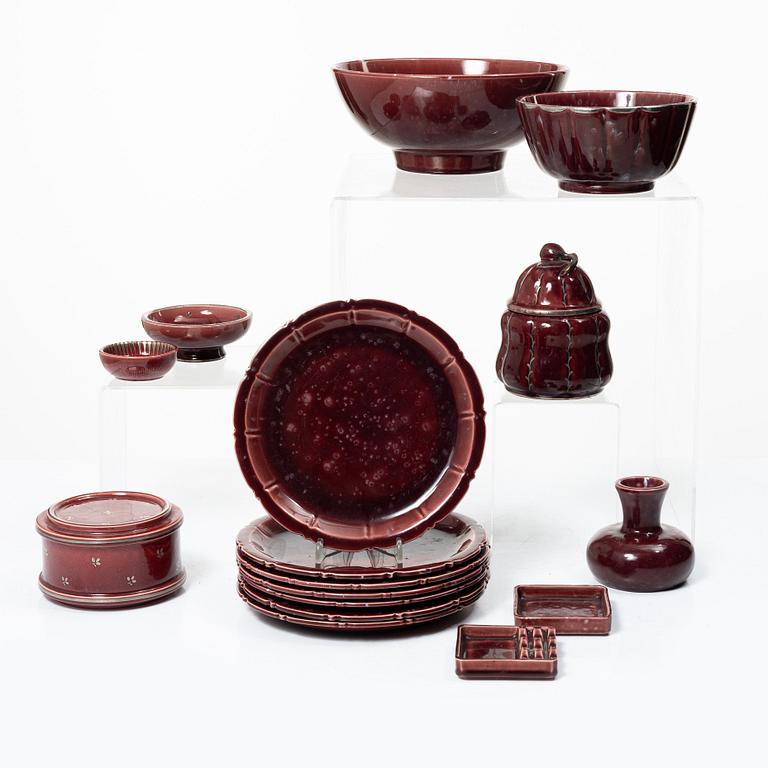
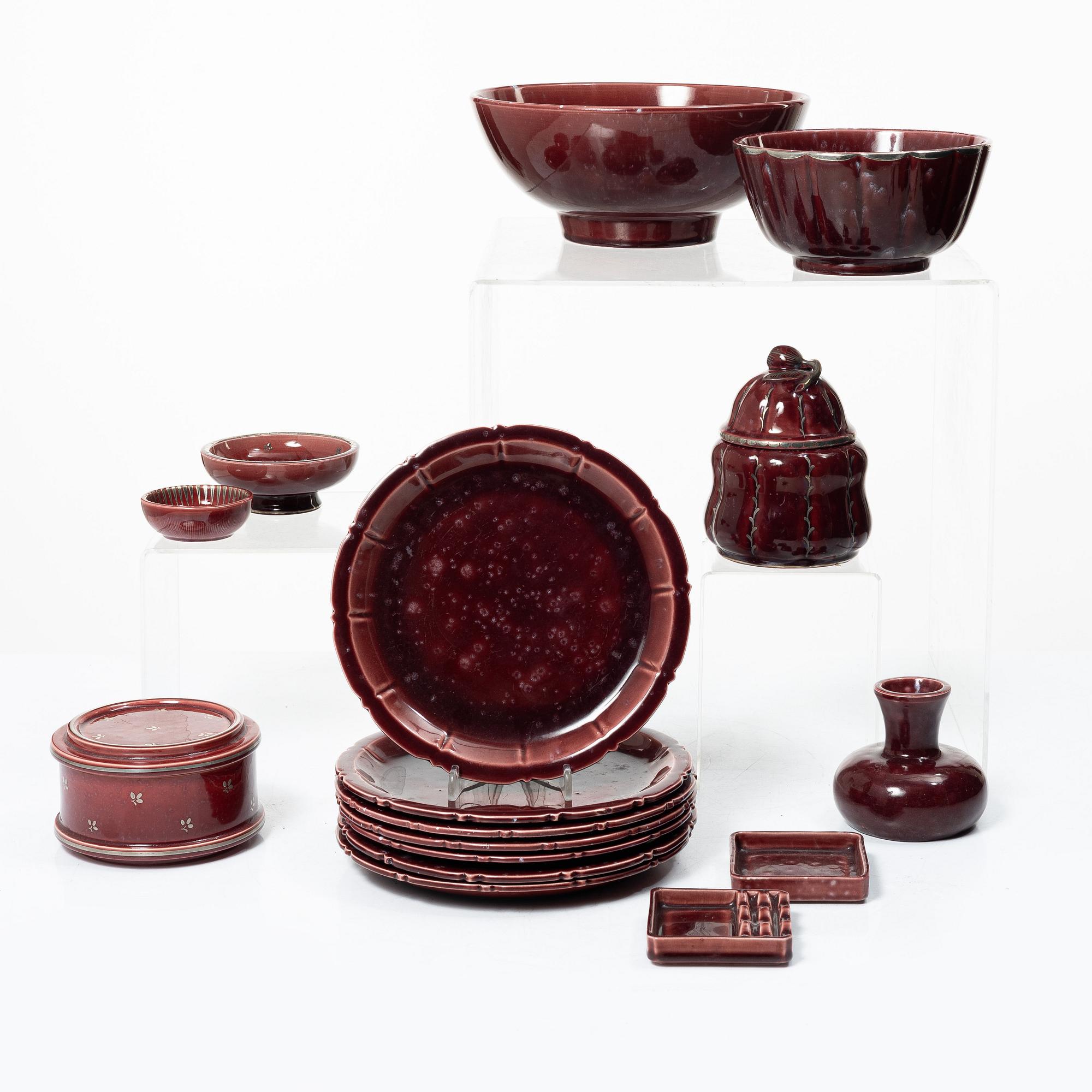
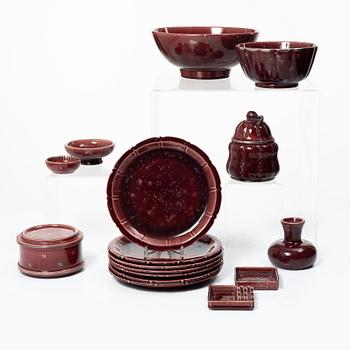
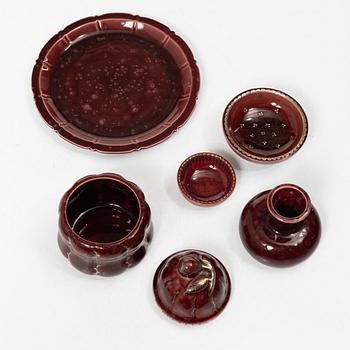
A 16 piece set of 'Argenta' and 'Vineta' stoneware goods, Gustavsberg
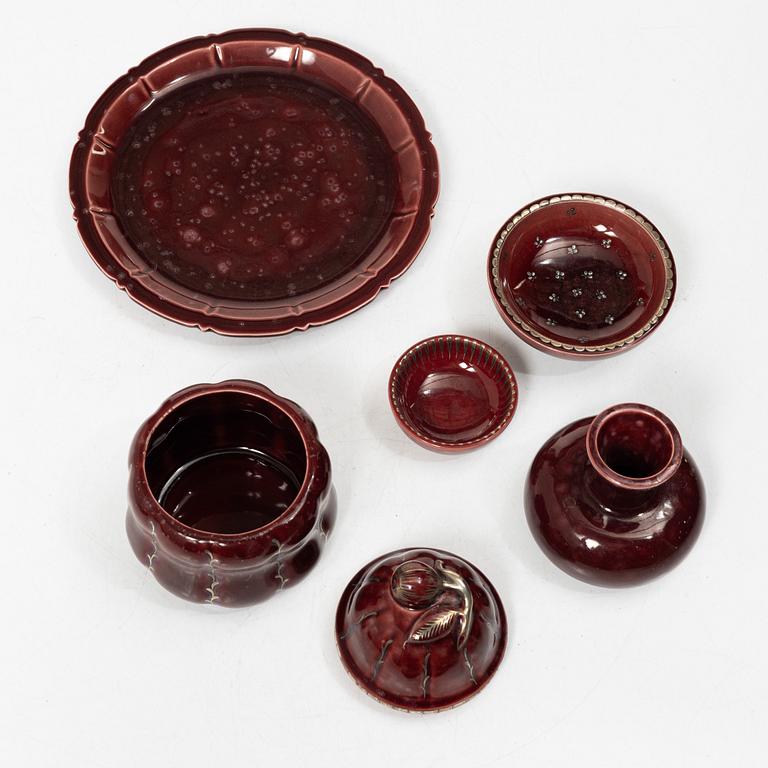
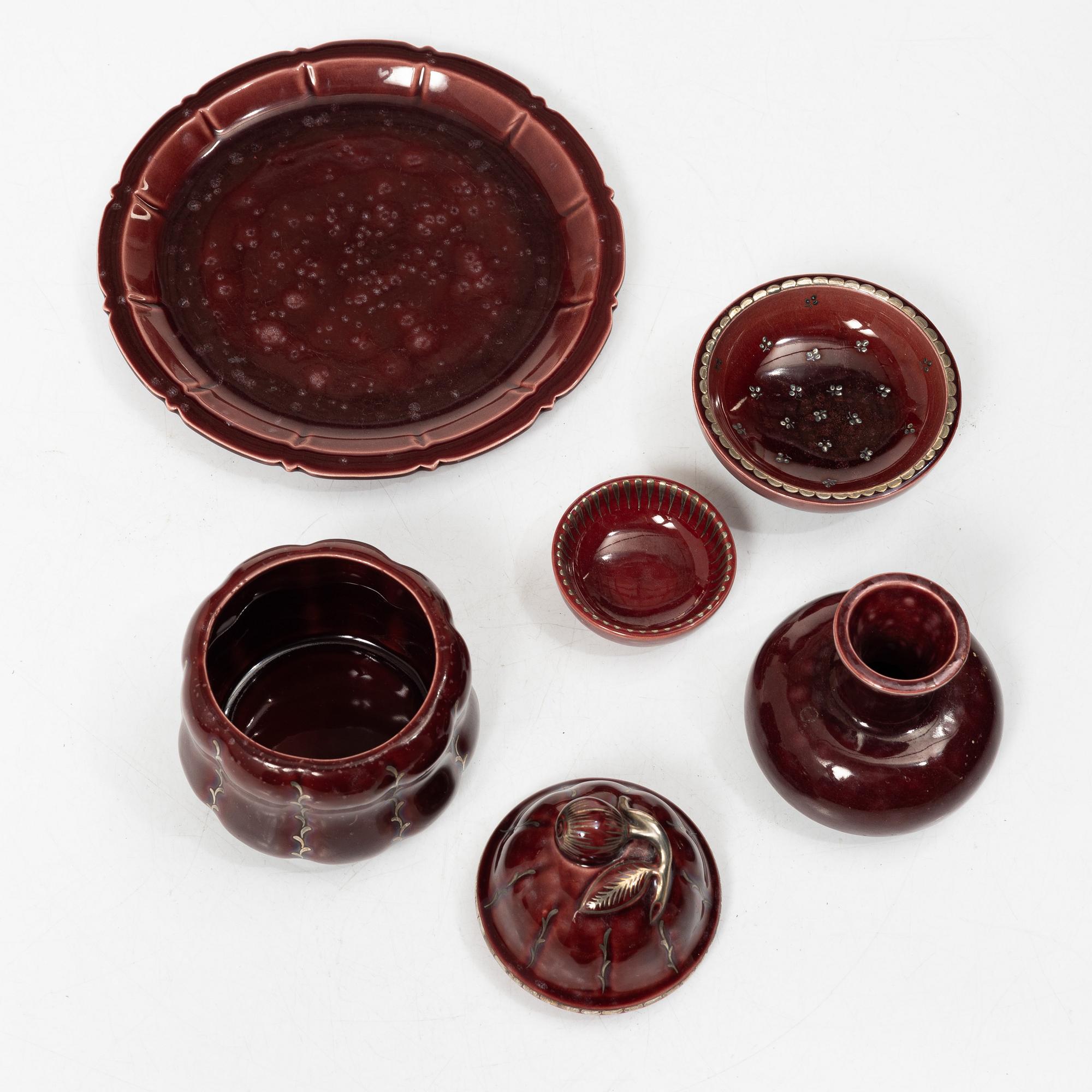
Burgundy glazed, partially painted with silver decor. Comprising:
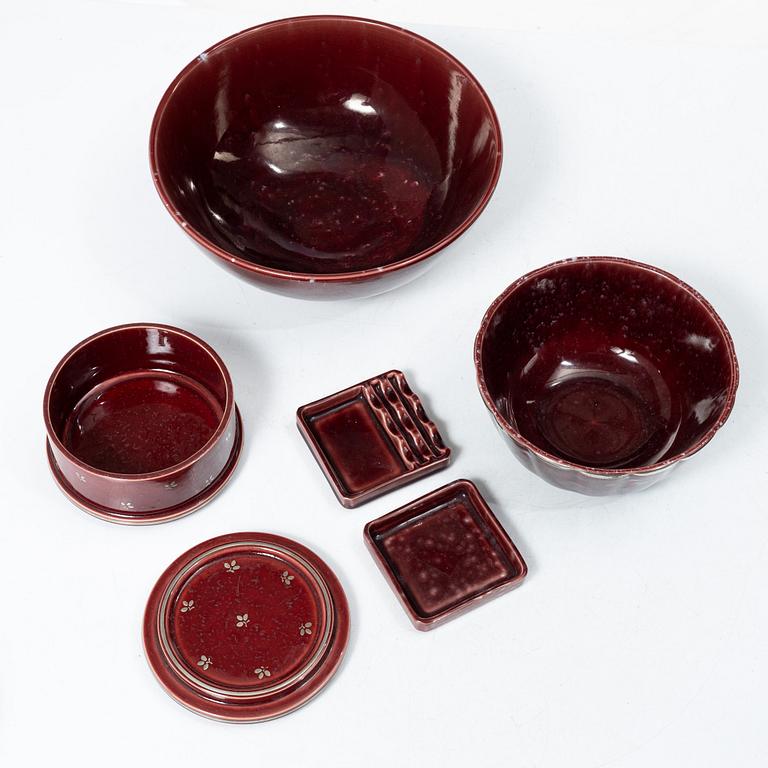
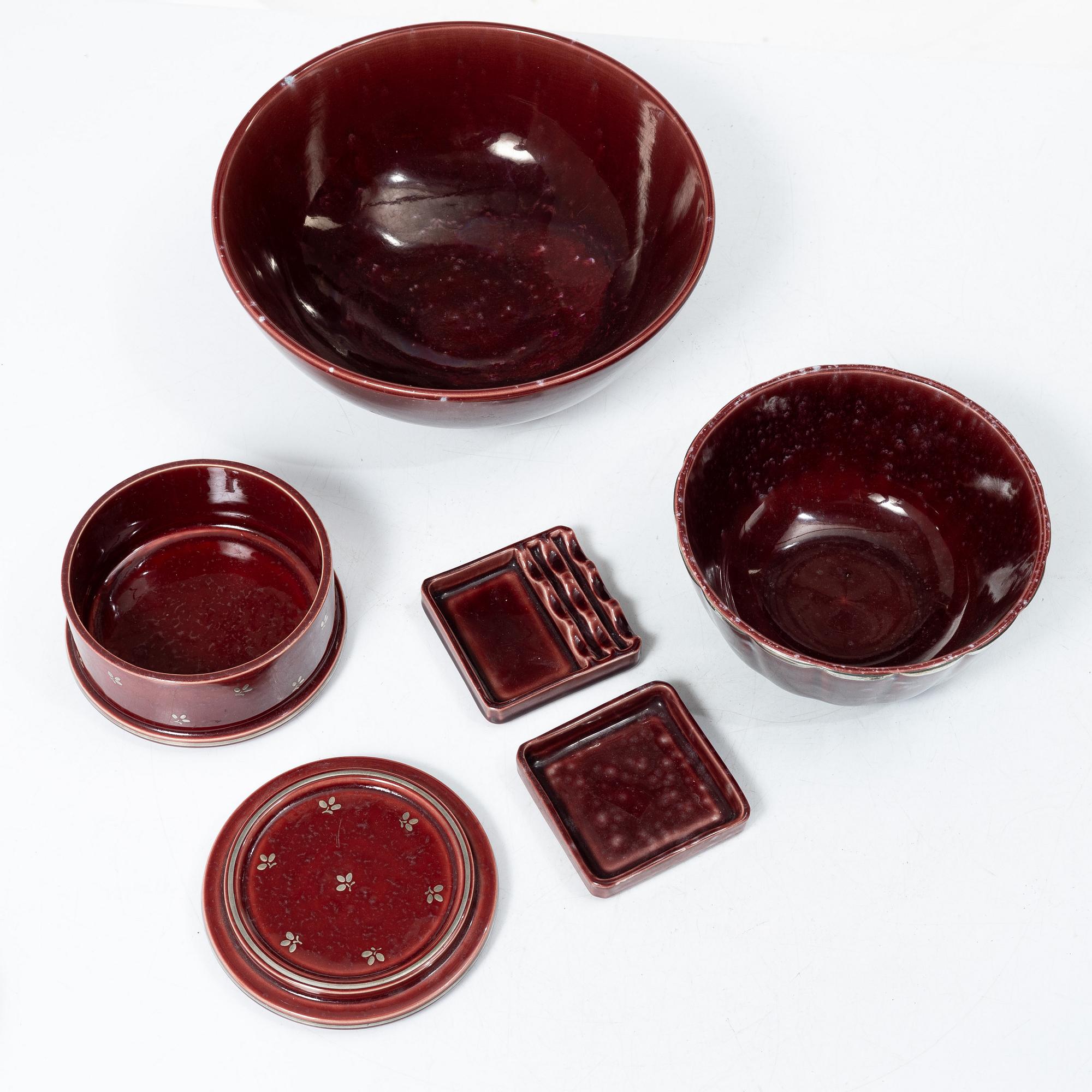
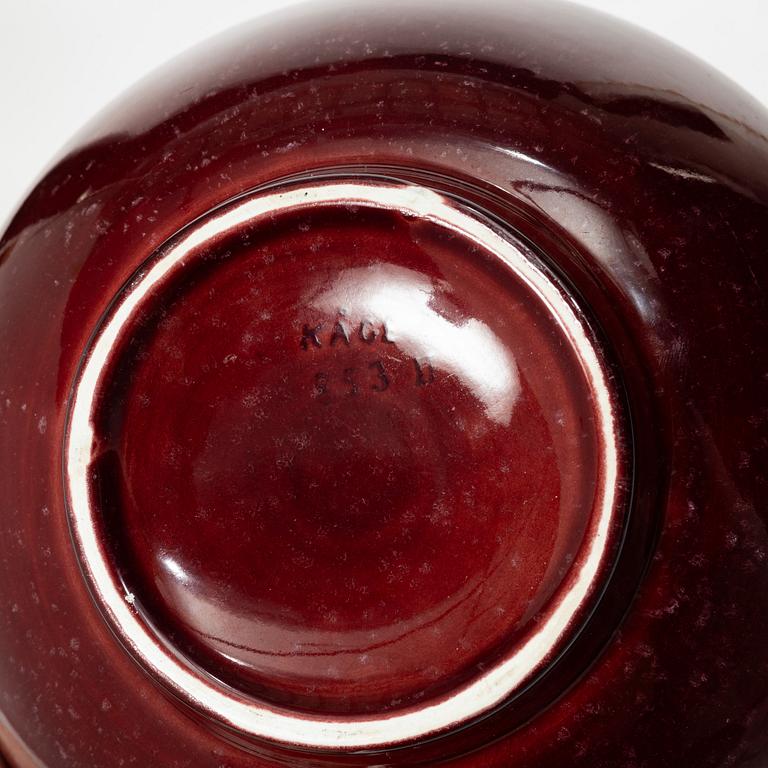
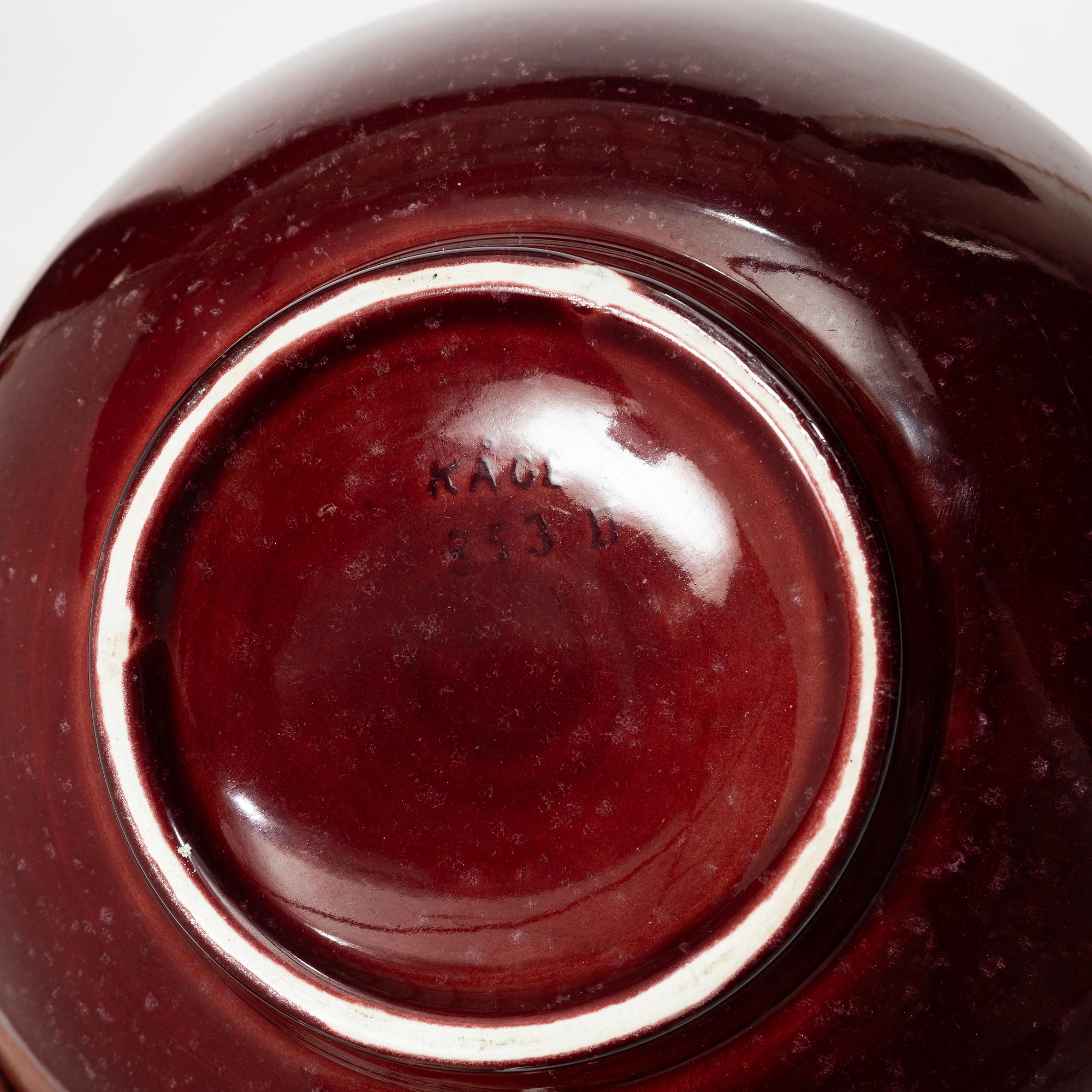
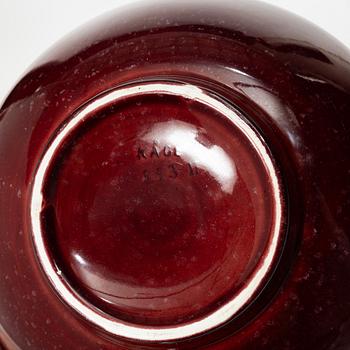
Bowl, diameter 21 cm, signed KÅGE 853 II
Bowl, diameter 15 cm, signed Gustavsberg with the anchor mark, Argenta 996 IV with year letter y
Shallow bowl, diameter 9.5 cm, signed Gustavsberg with the anchor mark, HAND-DREJAD Argenta 1094 KÅGE with year letter P and A.
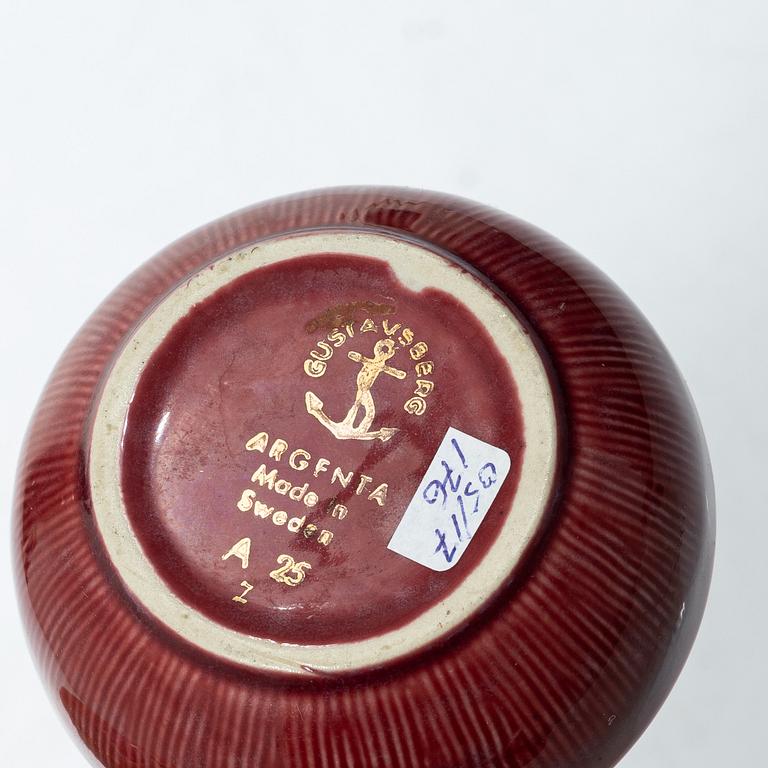
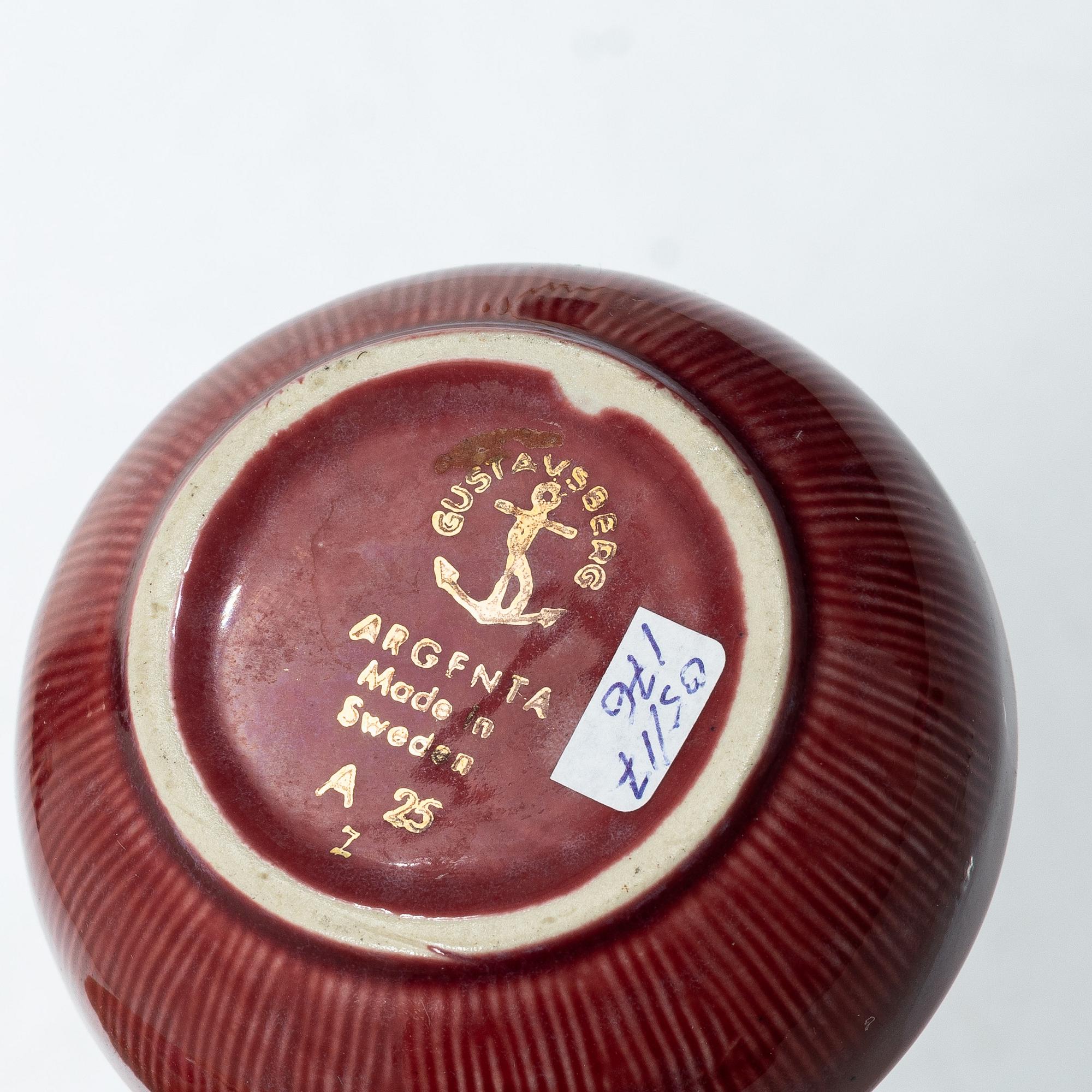
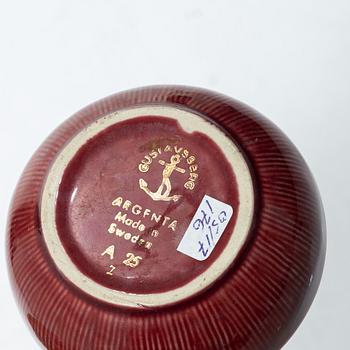
Shallow bowl, diameter 6.5 cm, signed Gustavsberg with the anchor mark, Argenta Made in Sweden 1A 25 with year letter I.
Covered box, diameter 11 cm, signed GUSTAVSBERG Ä ARGENTA 1231 MADE IN SWEDEN with year letter T.
Covered box, diameter 10.5 cm, signed Gustavsberg with the anchor mark, Argenta 851 S.
Vase, height 8.5 cm, stamped HAND-DREJAD Gustavsberg with the anchor mark KÅGE.
2 square plates, 7 x 7 cm, signed Gustavsberg with the anchor mark Vineta 1425 S and 1106
7 fruit plates, diameter 20 cm, stamped 38 1718 A6 and partially Gustavsberg Vineta.
Wear. Some parts with scratches.
Provenance
A Swedish private collection.
More about Wilhelm Kåge
Wilhelm Kåge was a Swedish artist and ceramicist. Kåge is known for his ceramics for the Gustavsberg porcelain factory, where he was the artistic director from 1917 to 1949. Kåge studied from 1910 under Carl Wilhelmson at the Valand Academy of Art in Gothenburg and later under Johan Rohde in Copenhagen, where he became acquainted with Gösta Adrian-Nilsson (GAN) and grew closer to modern art. He studied graphic art in Munich and began his artistic career by designing posters for theatres and exhibitions, among other things. His connection with Gustavsberg was facilitated through the Swedish Society of Crafts and Design, as Gustavsberg needed new products for the Home Exhibition at Liljevalchs in 1917. He went on to design around thirty different dinnerware sets, as well as art pottery, colourful faience, stoneware, and various series of art pottery such as Carrara, Surrea, and Våga. In 1942, Kåge, together with Stig Lindberg, established the Gustavsberg Studio, which became a kind of aesthetic laboratory for art pottery.
At the Stockholm Exhibition in 1930, Kåge presented Gustavsberg's future sales success "Argenta," a series of art pottery primarily glazed in green but also in red, blue, brown, and celadon green, and decorated with various silver designs based on Kåge's sketches. Argenta became very popular and was produced well into the 1970s. The powerful stonewares "Farsta" were also presented at the Stockholm Exhibition and they became the ones closest to Kåge's heart and with which he continued to experiment throughout his life. The pieces improved over the years, and the most impressive and many of the most sought-after items were created by Kåge during the 1950s.
Image rights
The artworks in this database are protected by copyright and may not be reproduced without the permission of the rights holders. The artworks are reproduced in this database with a license from Bildupphovsrätt.
Others have also viewed