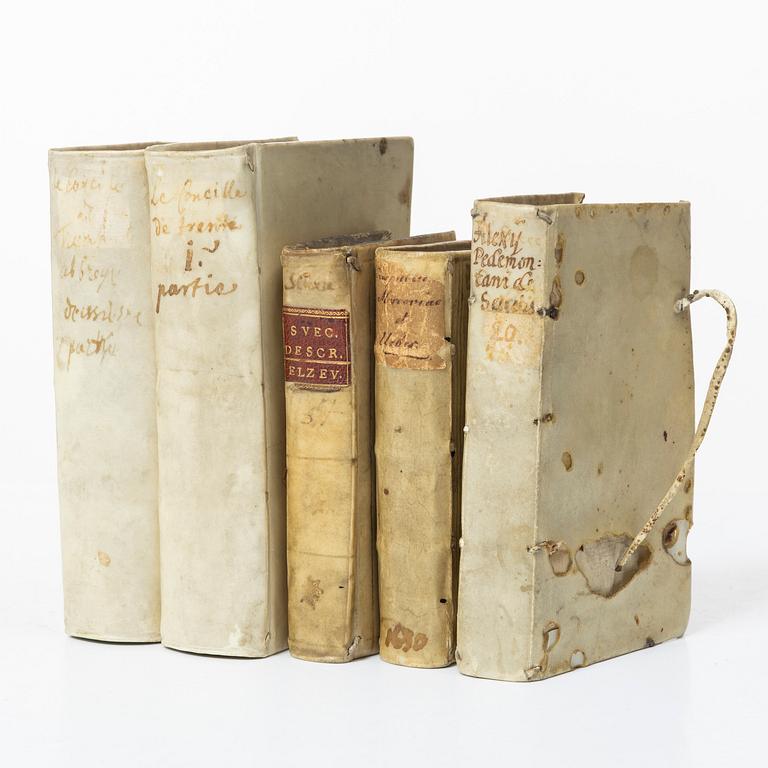
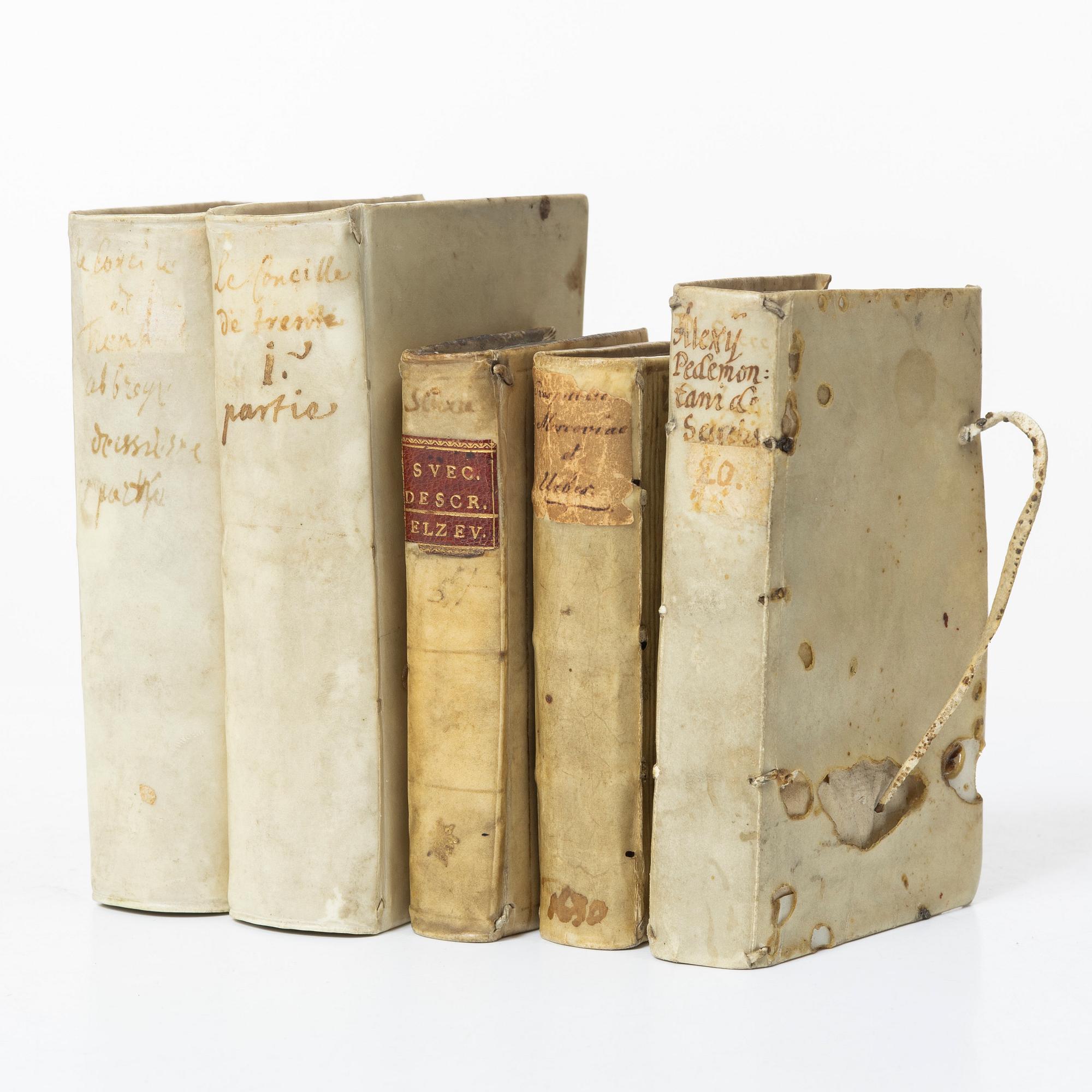
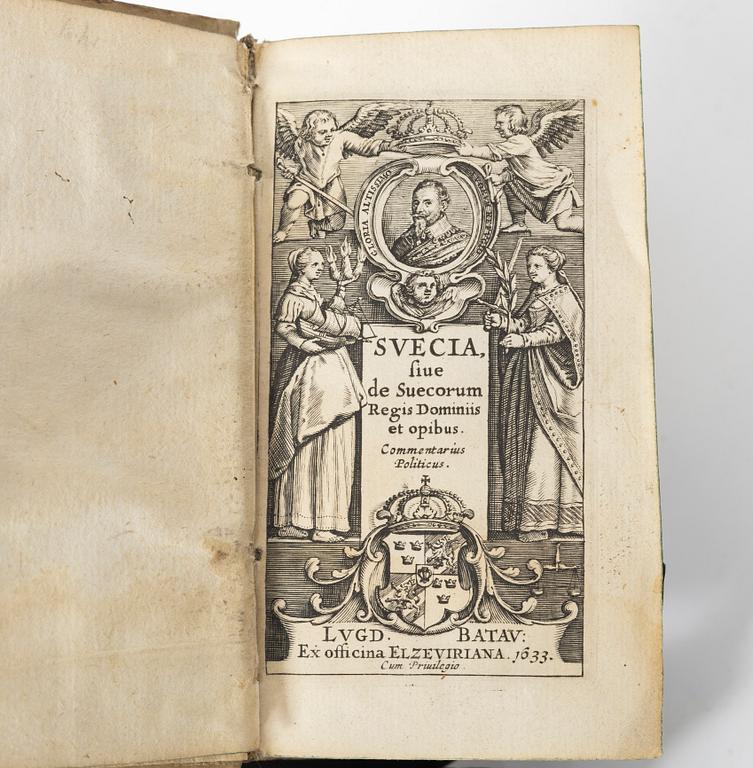
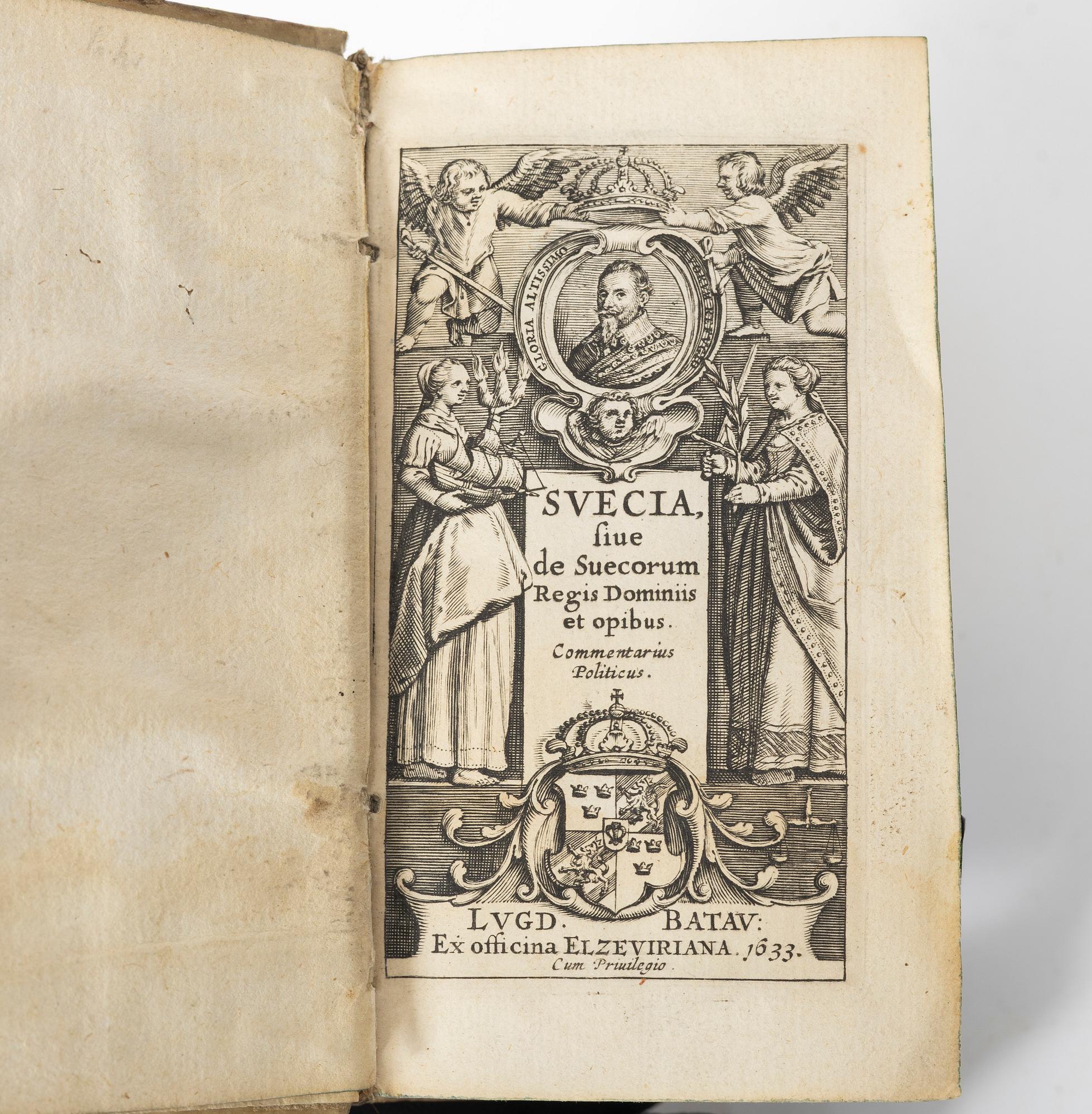
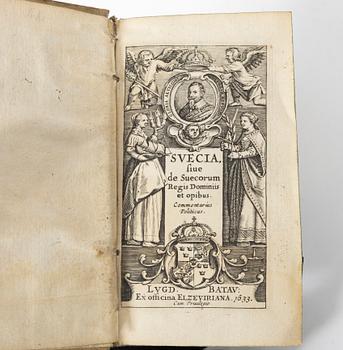
Svecia, sive de svecorum regis dominiis et opibus. Commentarius politicus.
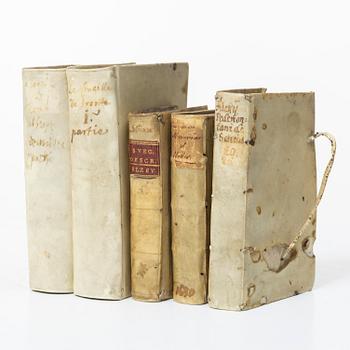
Leiden, Elzevir, 1633. 12mo. 11 x 6 cms. [4] + 306 sid. + engraved title.
Contemporary vellum gilt, spine a little darkened, faint waterstain throughout. Second Elzevier edition.
(Together with:)
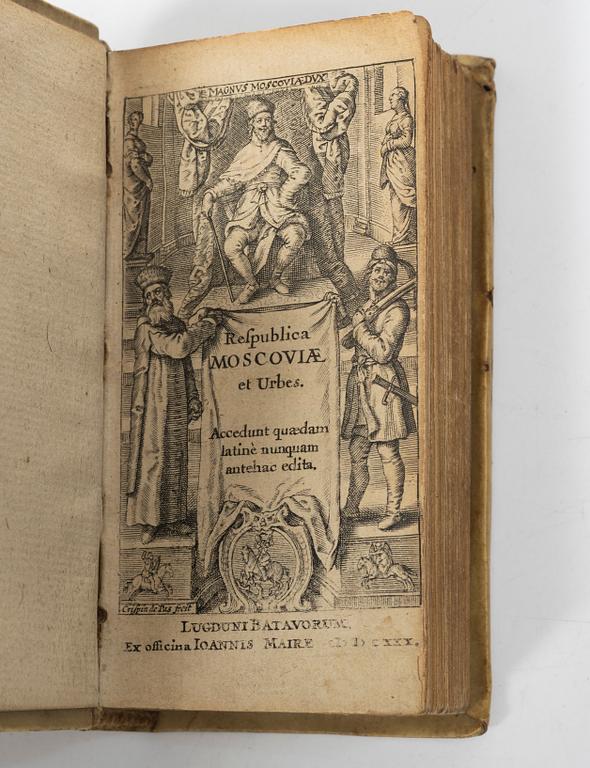
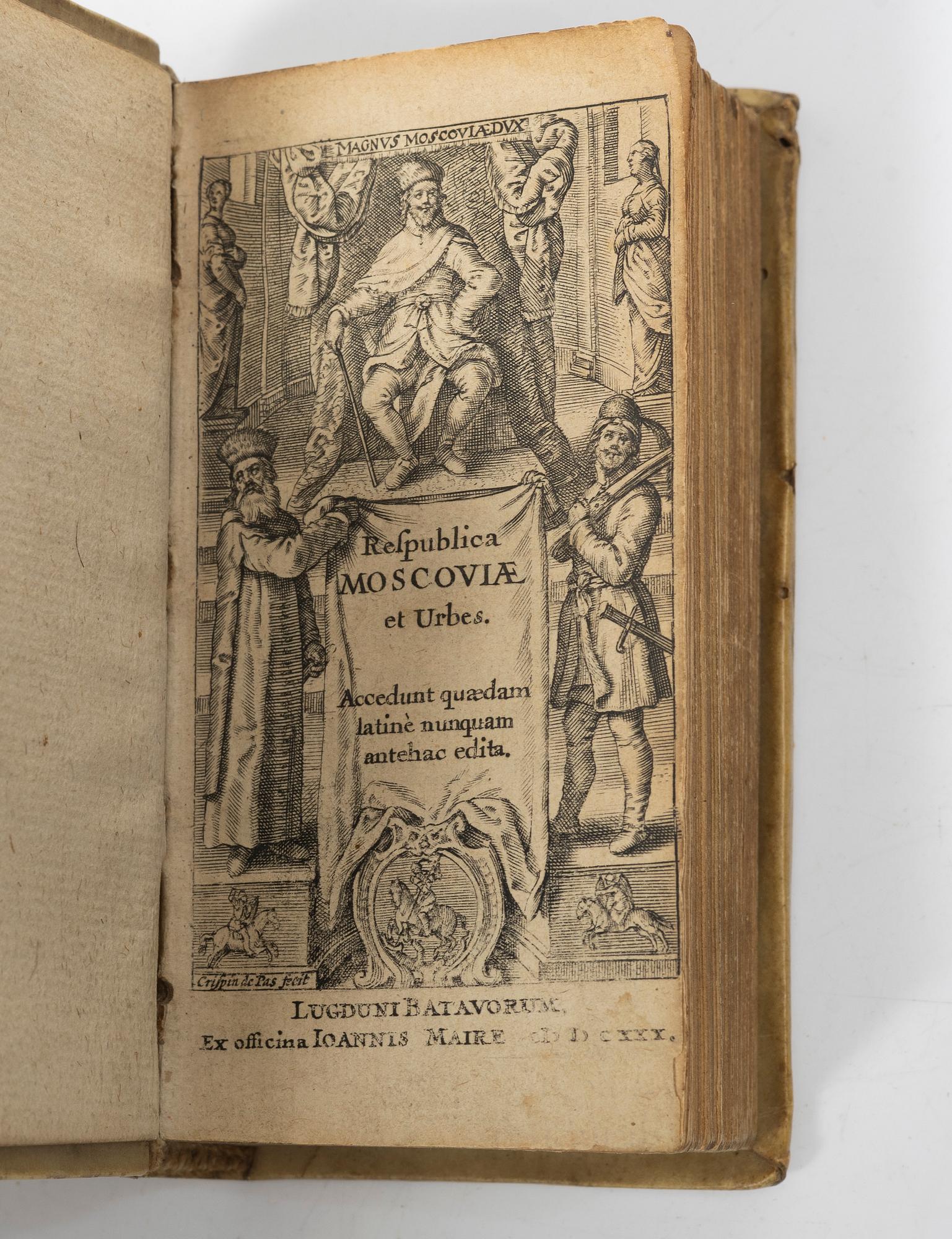
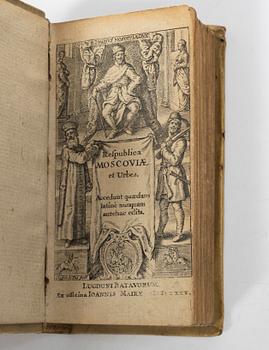
Respublica Moscoviae et Urbes.
Leiden, Johannes Maire, 1630. 12mo. 10,4 x 5,4 cm. [16] pp. incl. engraved title + 288 pp.
Contemporary blindstamped vellum.
(And:)
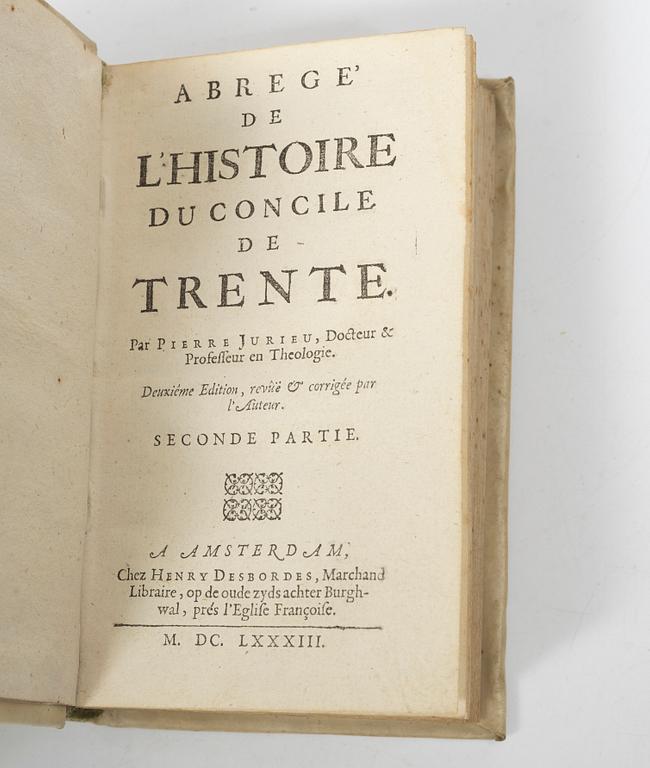
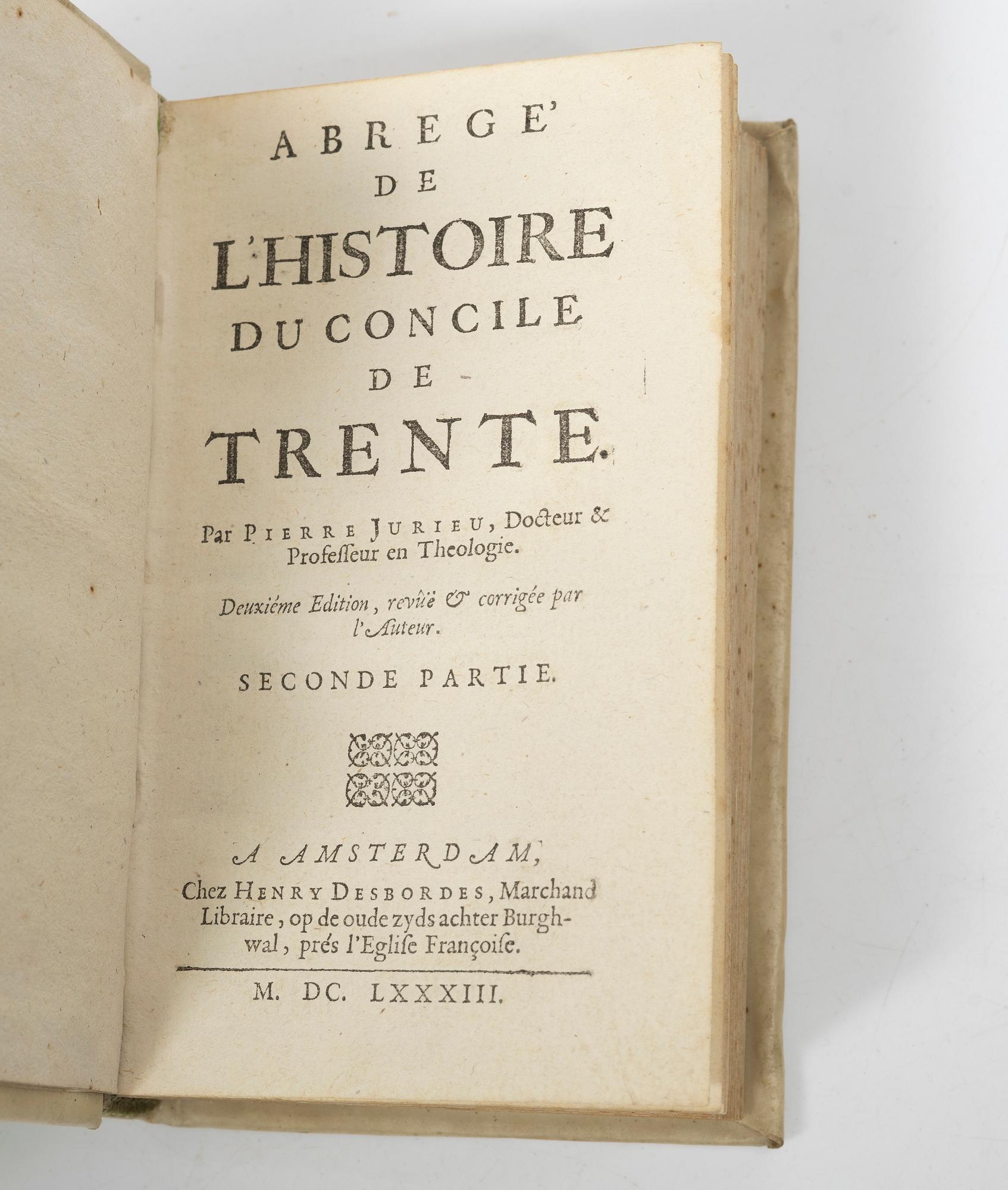
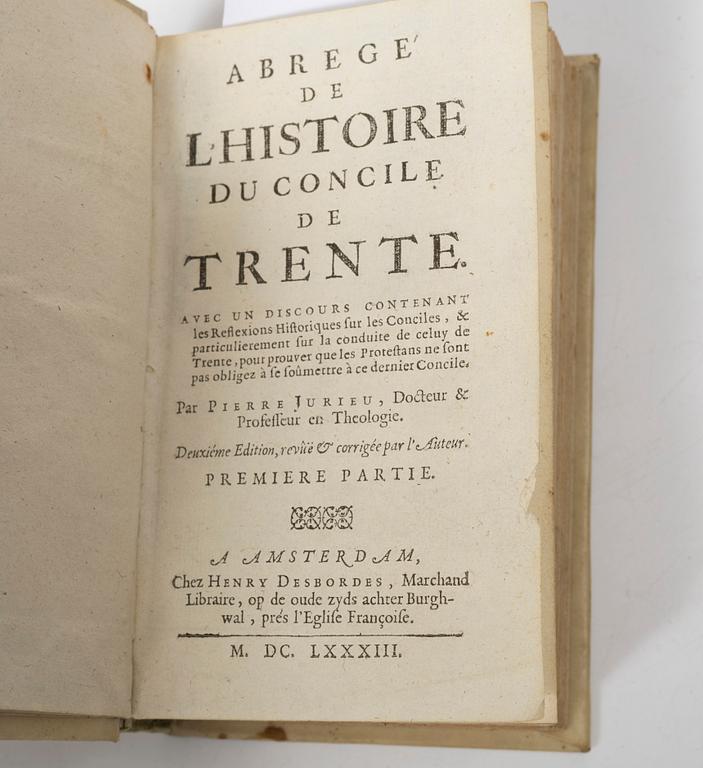
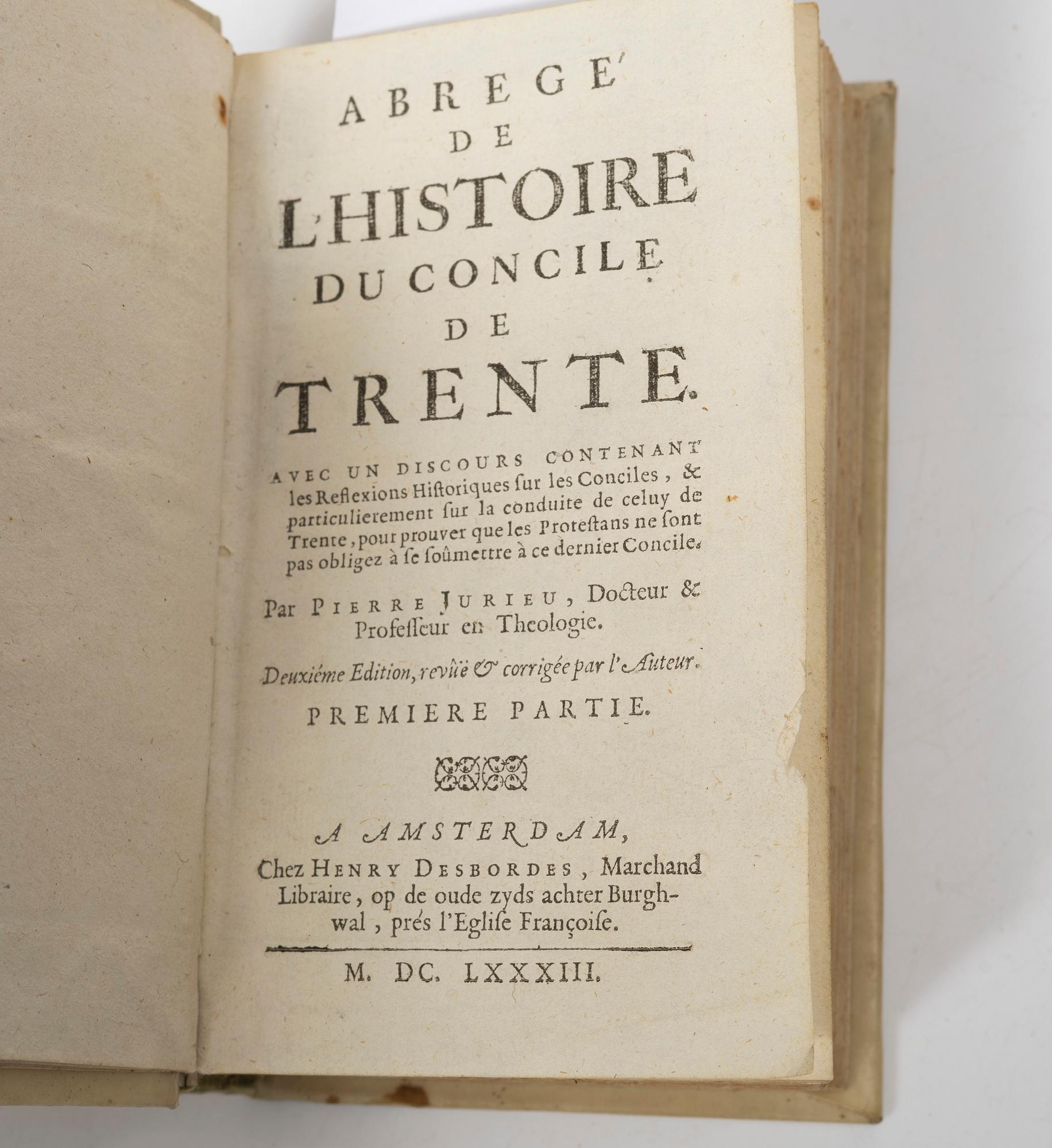
Pierre Jurieu:
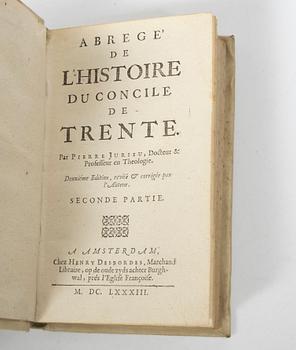
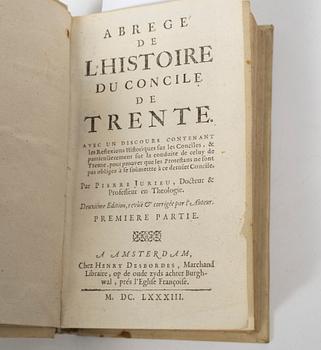
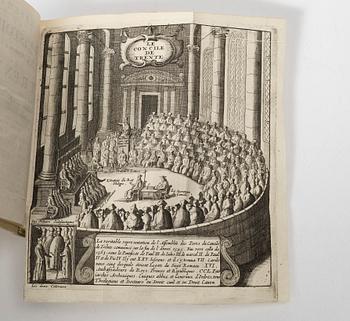
Abrégé de l'Histoire du Concile de Trente. 1-2.
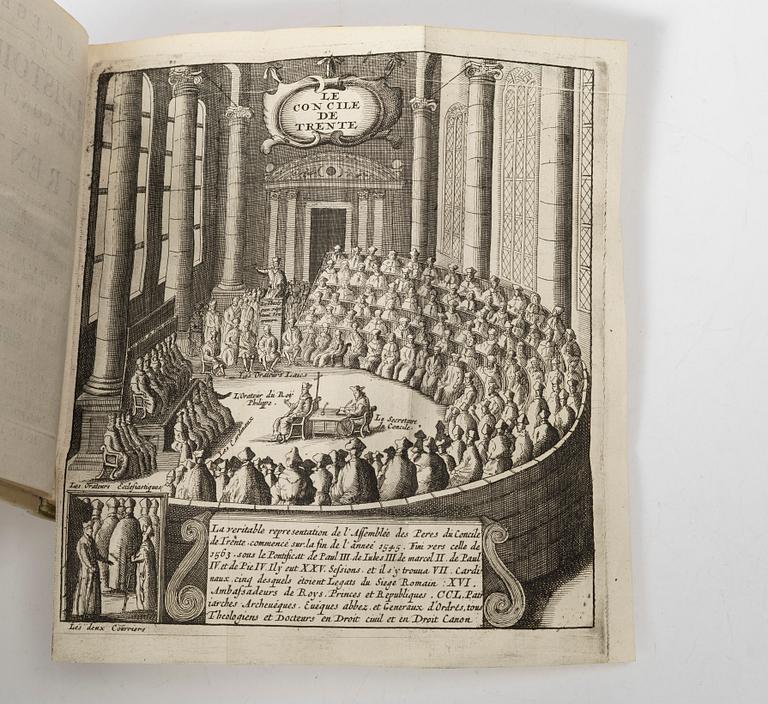
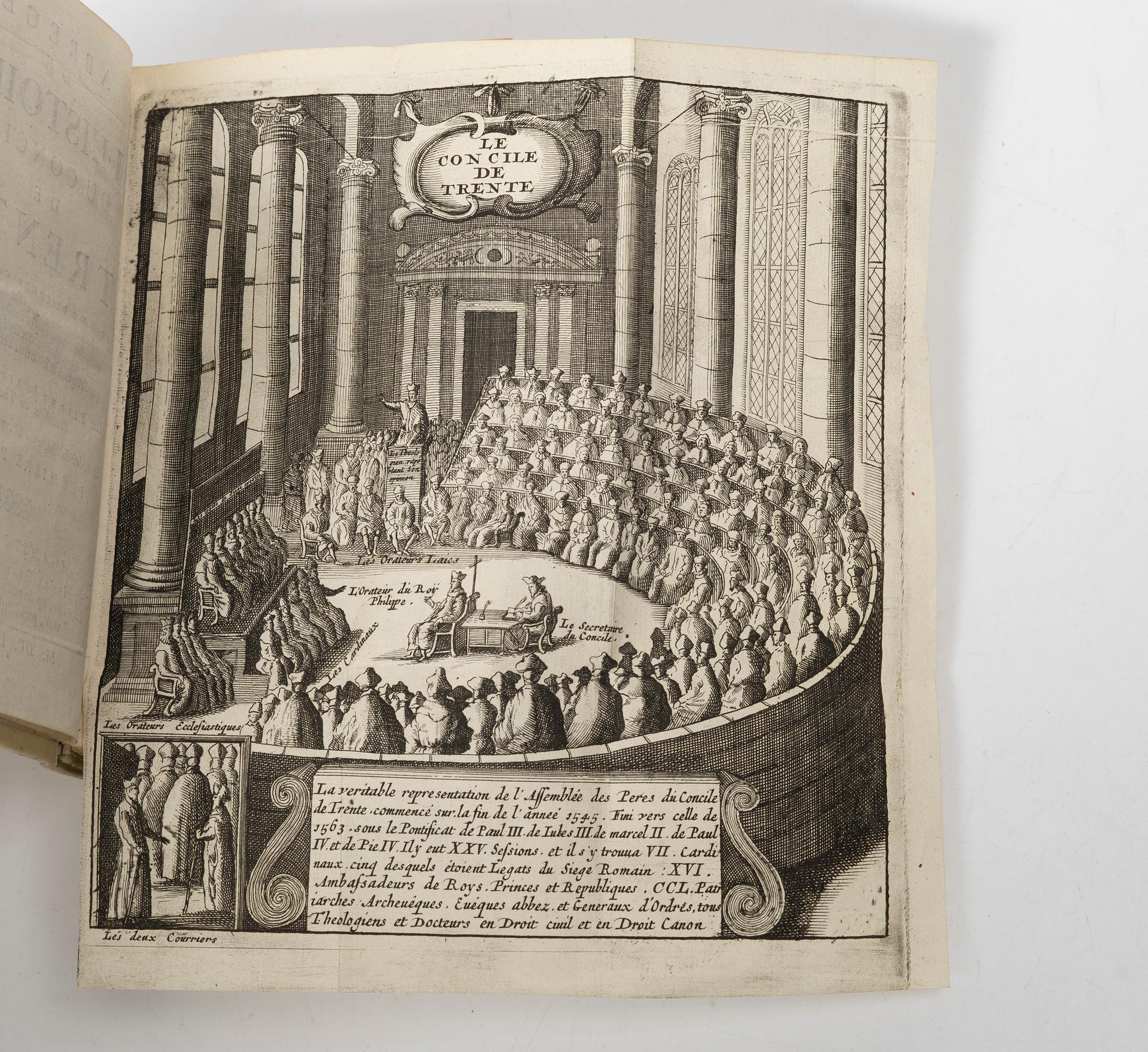
Amsterdam, Henry Desbordes, 1683. 12mo. [32] + 430; + 422 pp. folding engraved plate depicting the assemby at Trent.
Two volumes, contemporary vellum. One leaf in first volume with very slight marginal loss. Provenance: Stafsund.
Second edition.
(And:)
Girolamo Ruscelli:
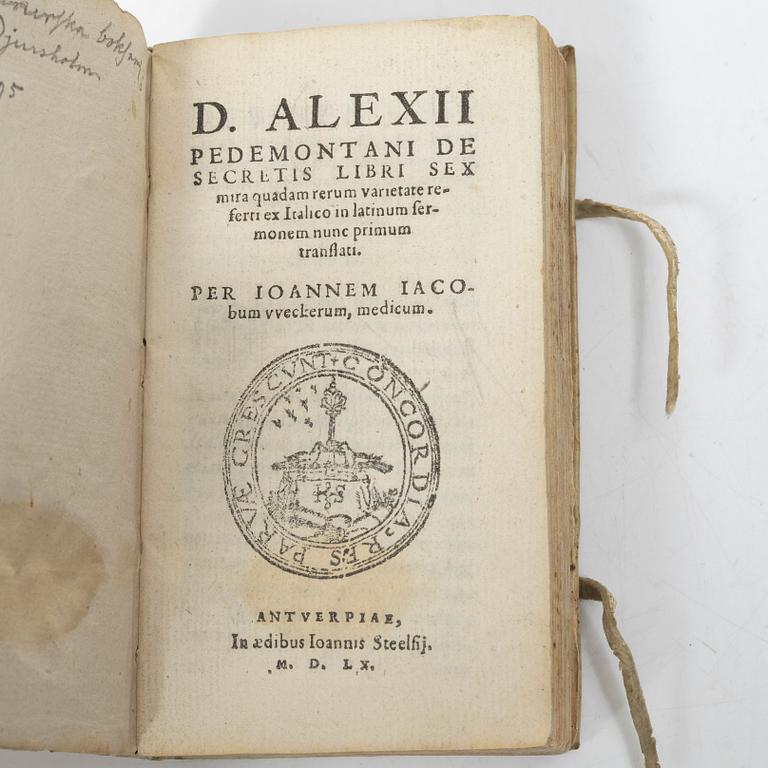
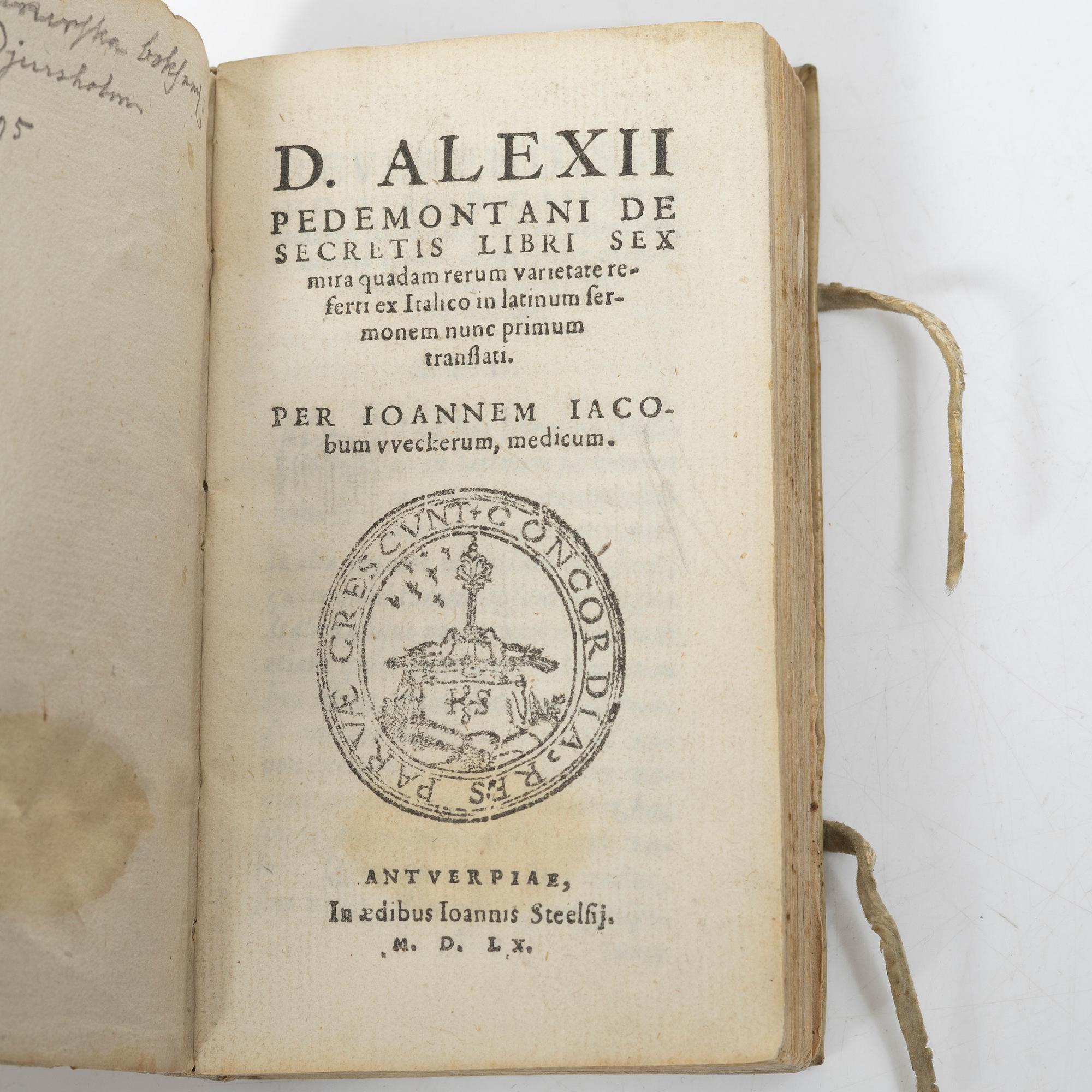
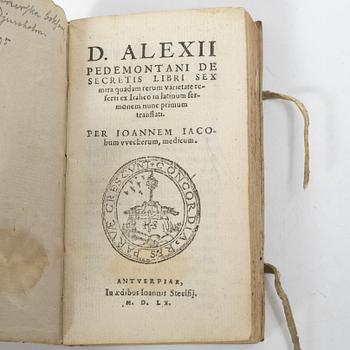
D. Alexii Pedemontani De secretis libri sex.
Antwerpen, Steelsij, 1560. 12mo. [13] + 316 pp. + [31] pp.
Somewhat damaged contemporary vellum with ties partly preserved. Faint small oval stain to first few leaves. Provenance according to pencilled note: ”Fr Banérska boksaml. på Djursholm”.
Early edition of the translation into Latin of the famous ”Secreti” of Alexius Pedemontanus (pseudonym of Girolamo Ruscelli, 1500-1565), by Johann Jakob Wecker. The first edition of this translation had appeared in Basel in 1559, followed by two editions in 1560 (Basel and Antwerp).
Pedemontanus’ ”Secreti”, first published in 1555, is one of the most famous and influential "books of secrets" of the Renaissance and was immensely popular, printed in more than a hundred editions until the end of the 18th century. It functioned as an early modern compilation of practical recipes, home remedies, and empirical experiments, and unleashed a torrent of Books of Secrets that continued to be published down through the 18th century.
.
Others have also viewed