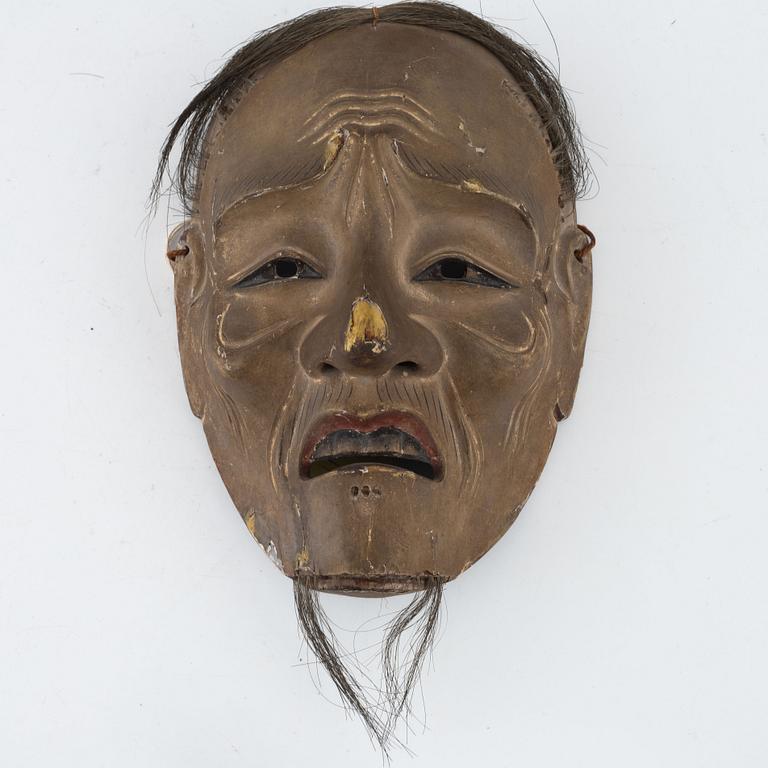
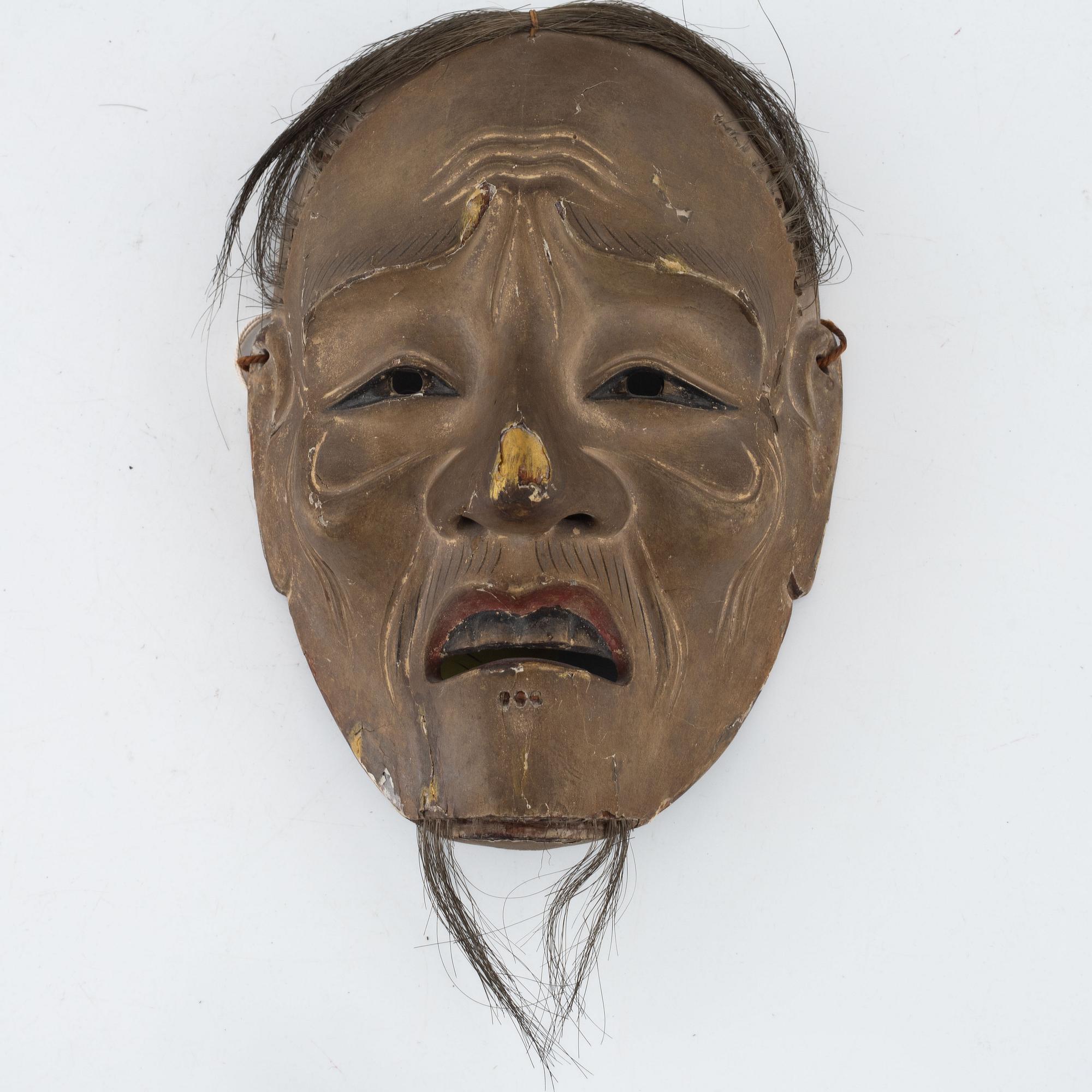
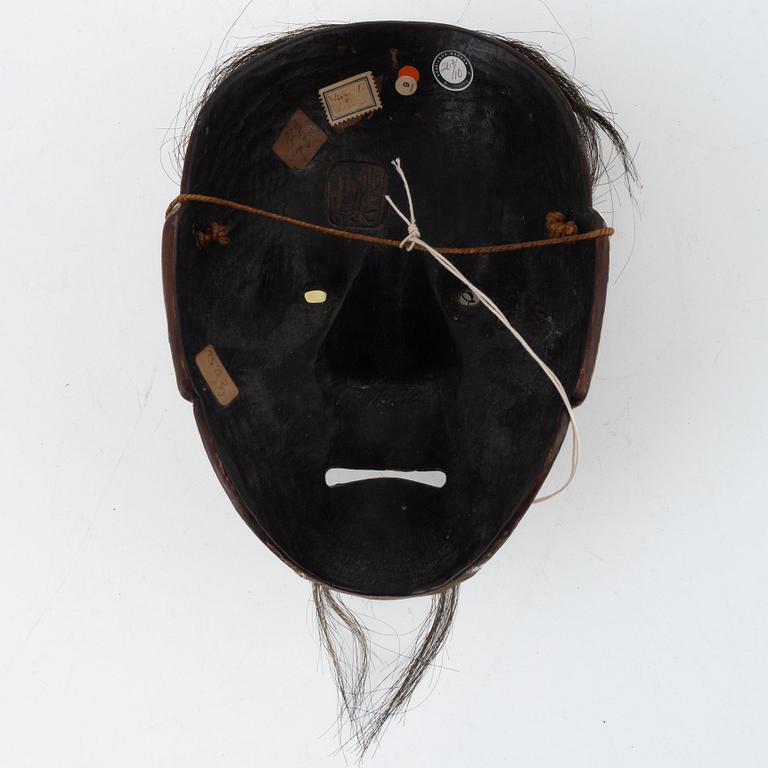
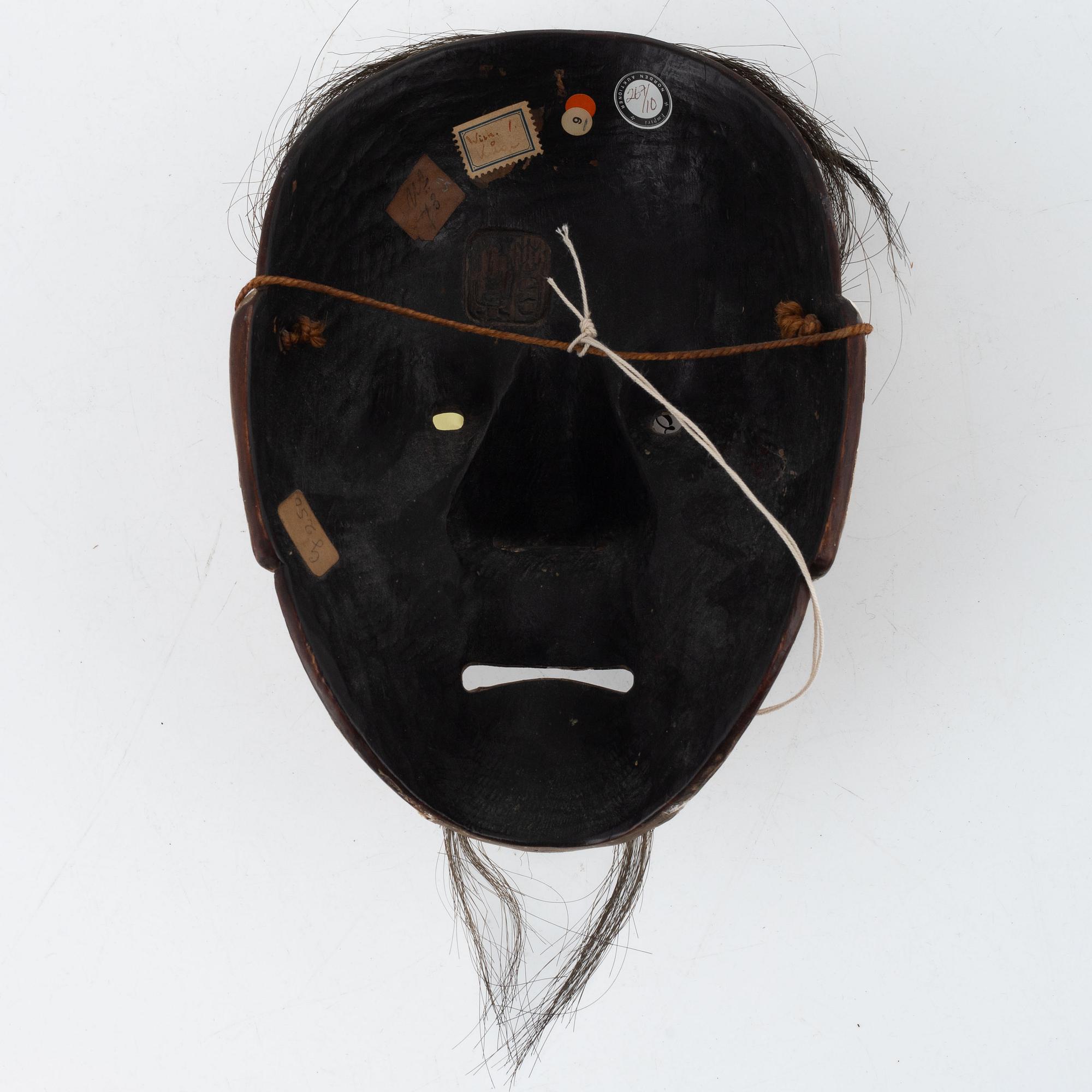
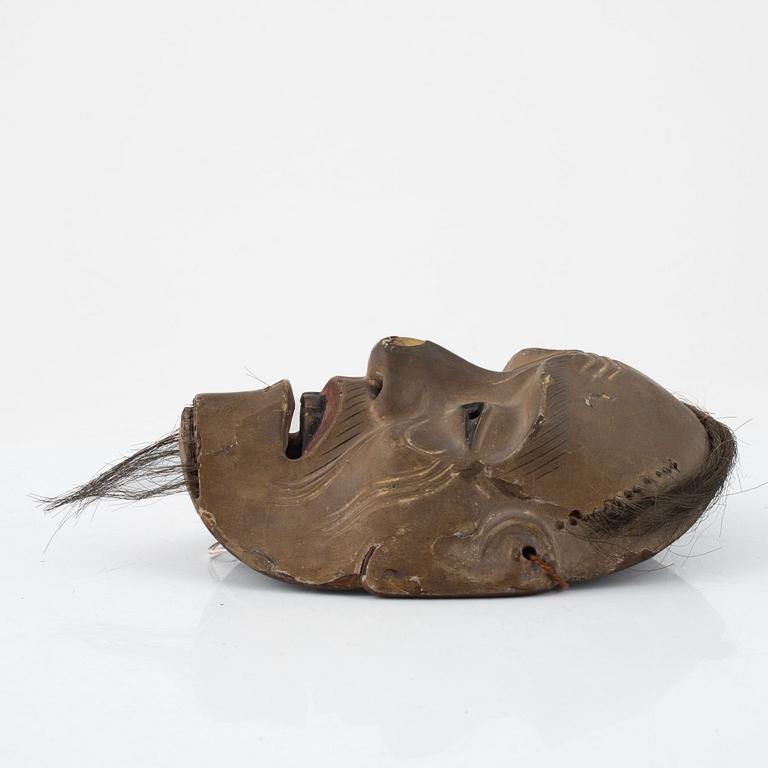
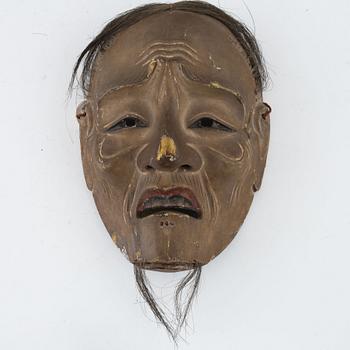
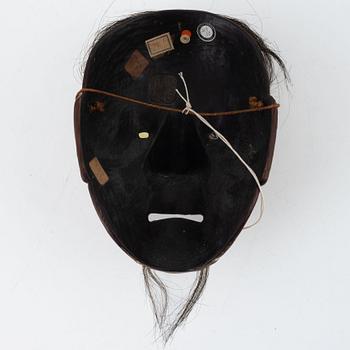
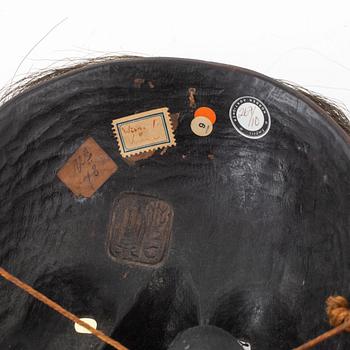
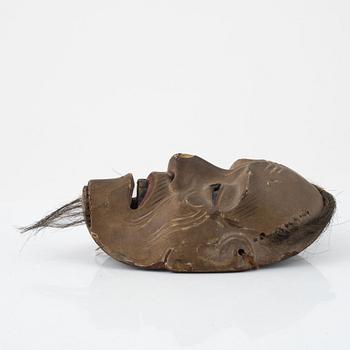
Mai-ko-jō 舞小尉, the mask with a concerned expression, sculpted wrinkles and open mouth with dark teeth. Hair attached to the top of the mask and also to the chin as a beard. 21x15 cm. Signerad.
Wear. Loss of colour. Chips.
Provenance
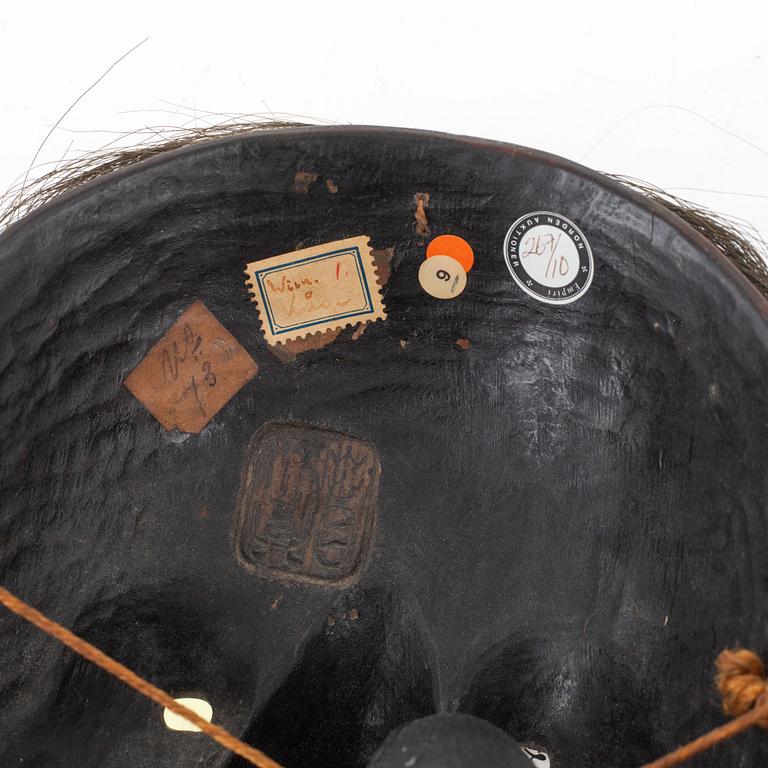
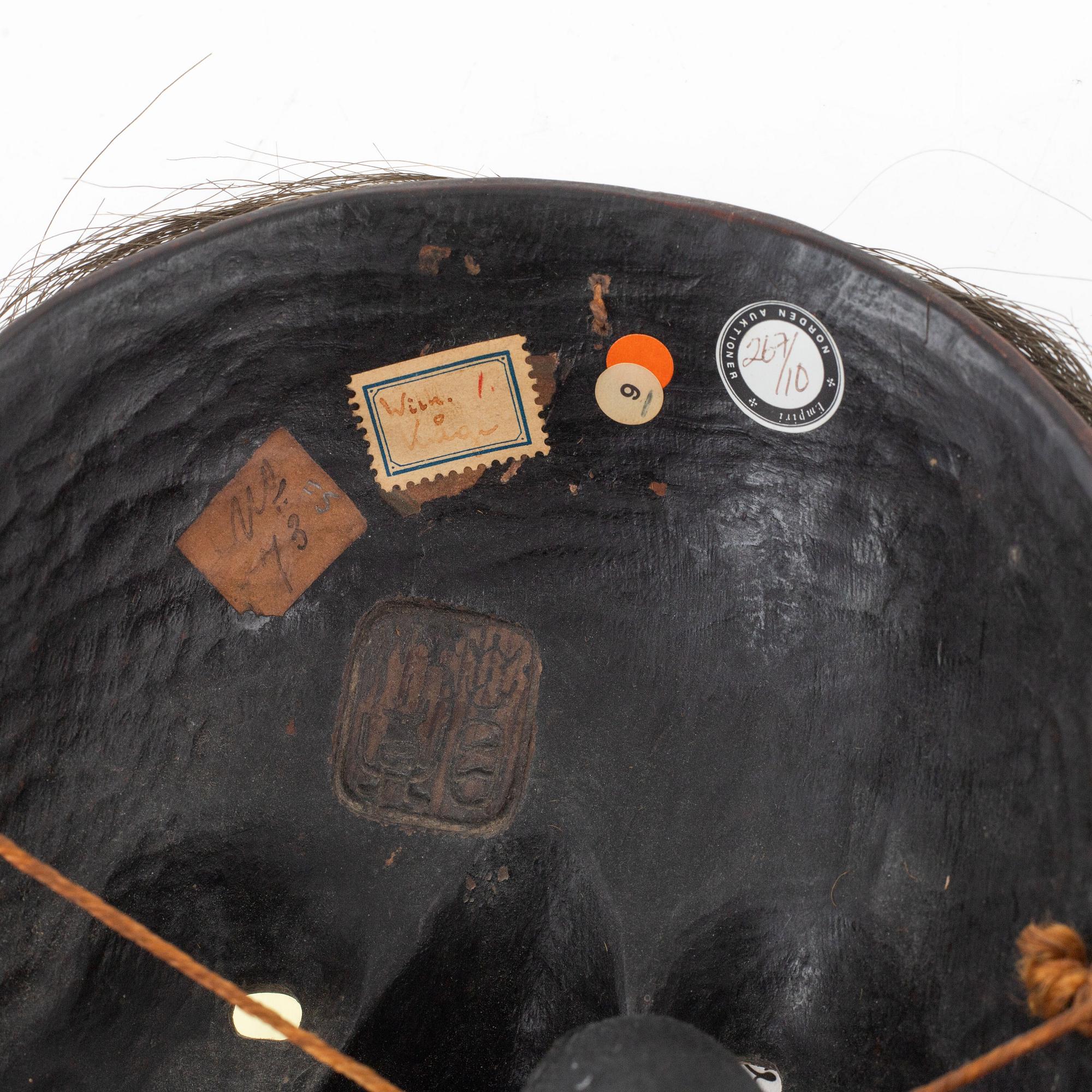
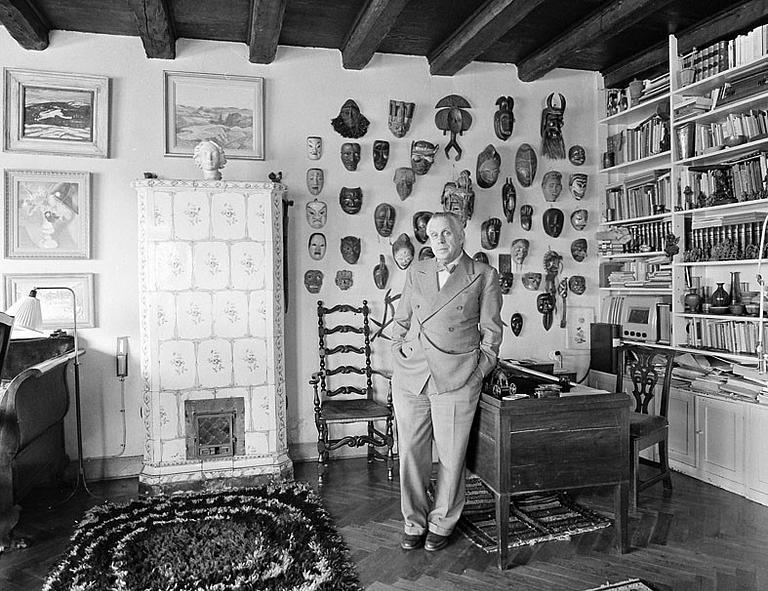
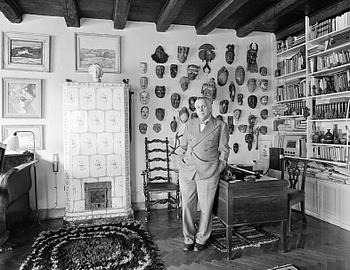
Purchased at Nordén auktioner nr 10 6th October 1993 lot no 267, provenance Wilhelm Kåge's (1889-1960) private collection.
Literature
Noh 能 (Nō) has a long history, beginning in the 14th century as a combination of ceremonial ritual and theater. Originally it was performed in Shinto shrines for the Japanese aristocracy and had elements of religion, rituals and marcial arts as the audience partly consisted of samurais.
The noh masks are central to the art form and is much more than requisites as it has symbolic and magical meaning. They represent historical figures and spirits referred to as kami, which have their origins in Japan's indigenous beliefs. Traditionally, the mask symbolised 'possession', transforming the wearer into the kami or its human incarnation.


Others have also viewed