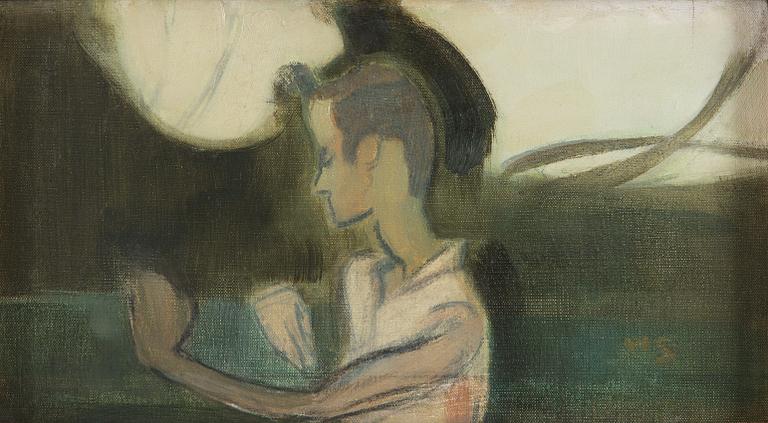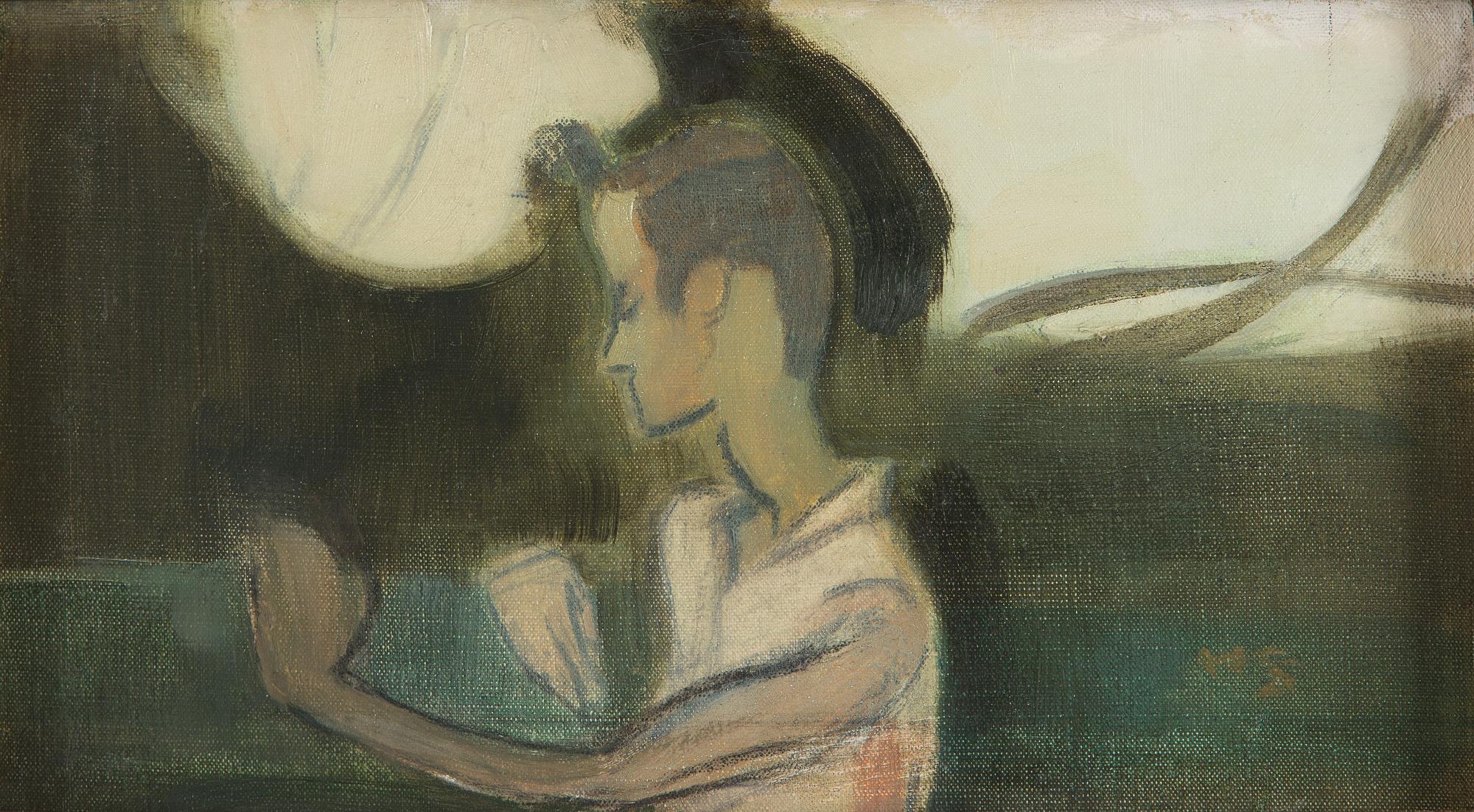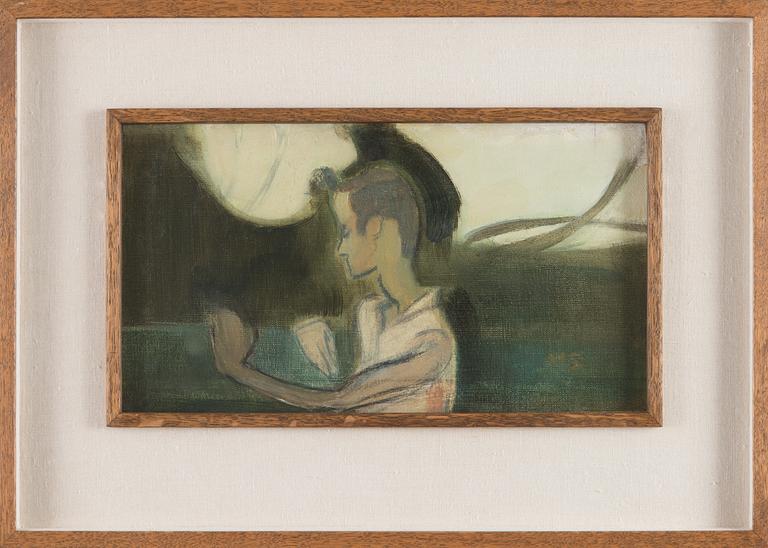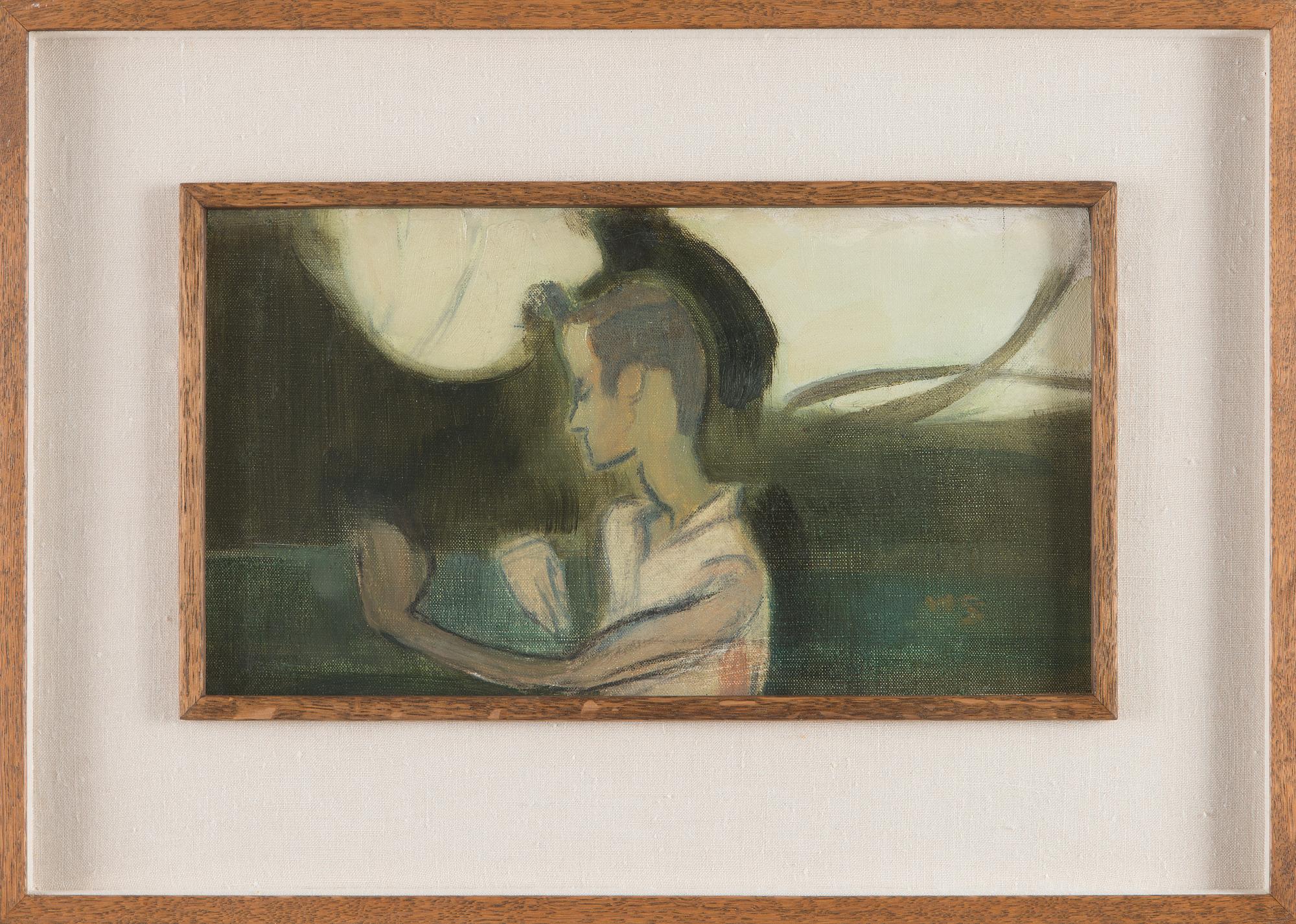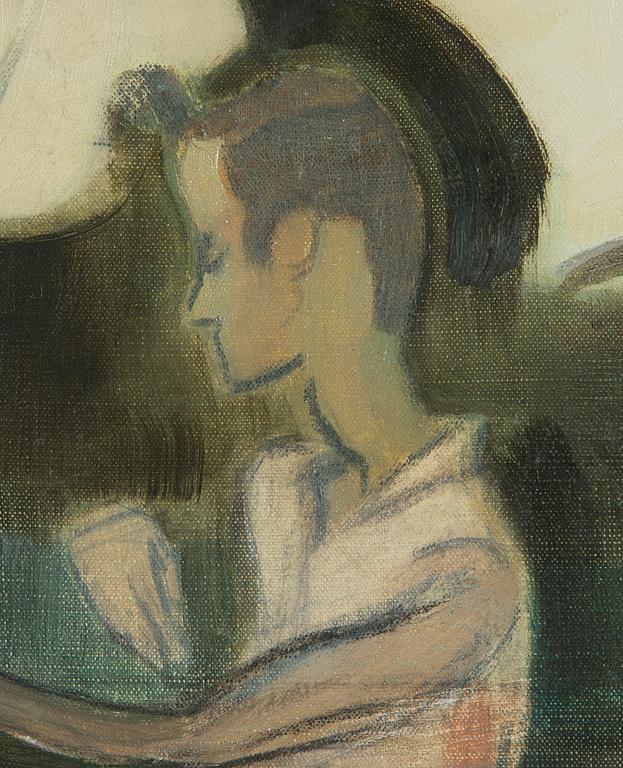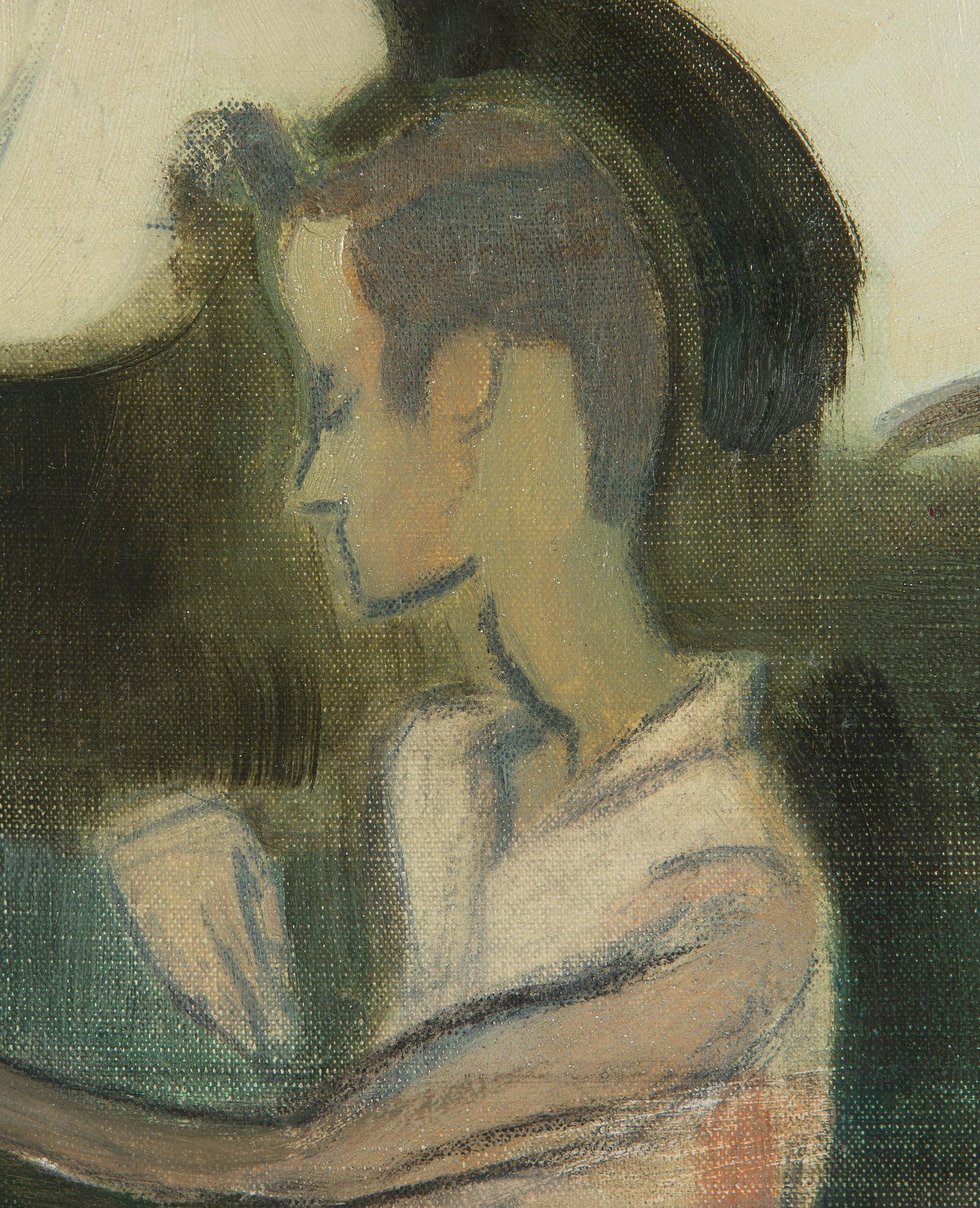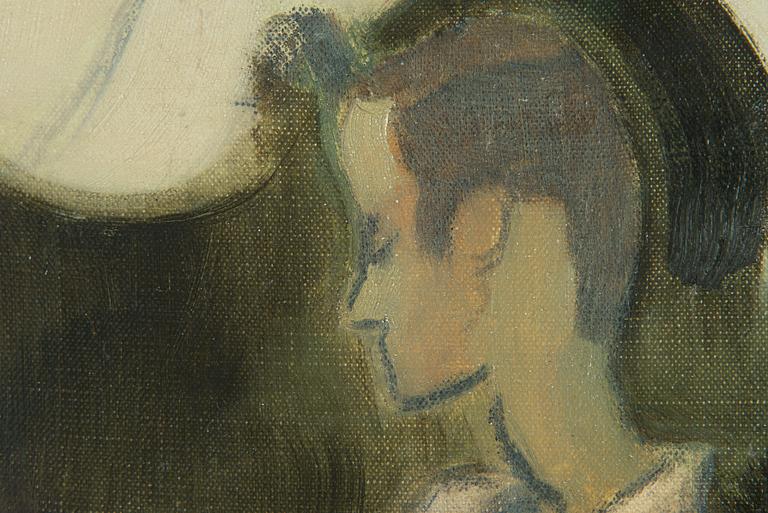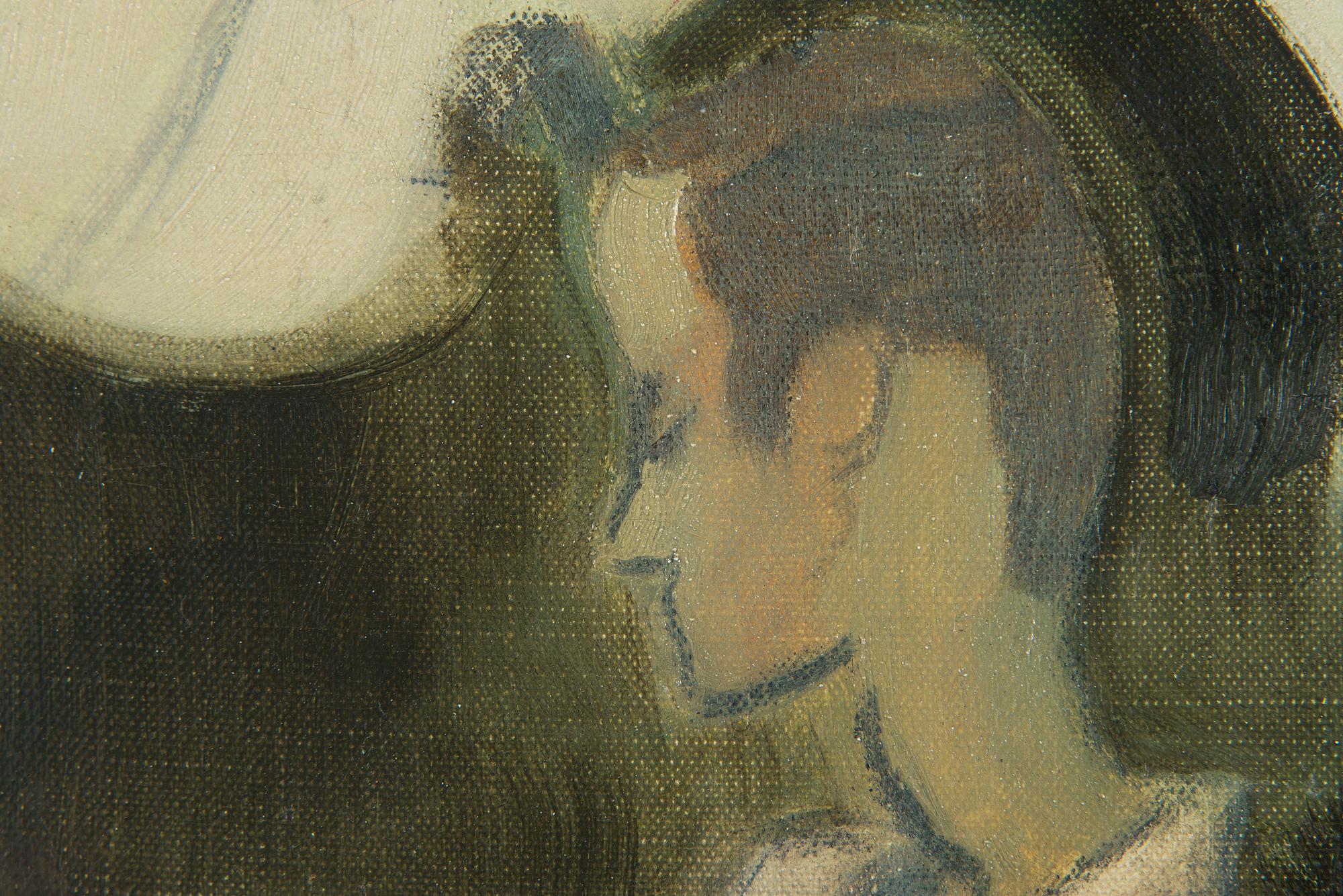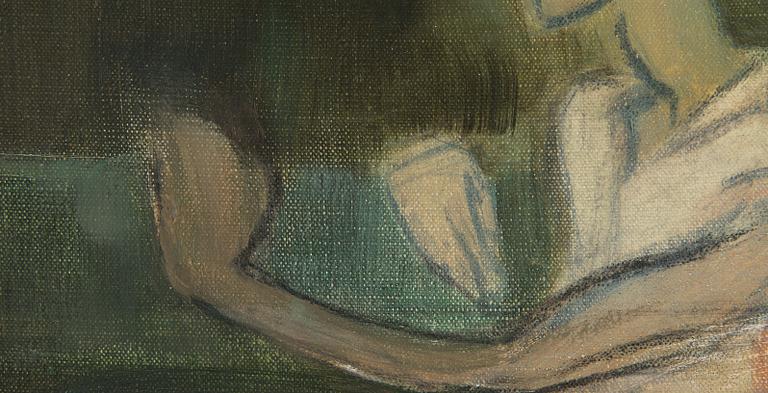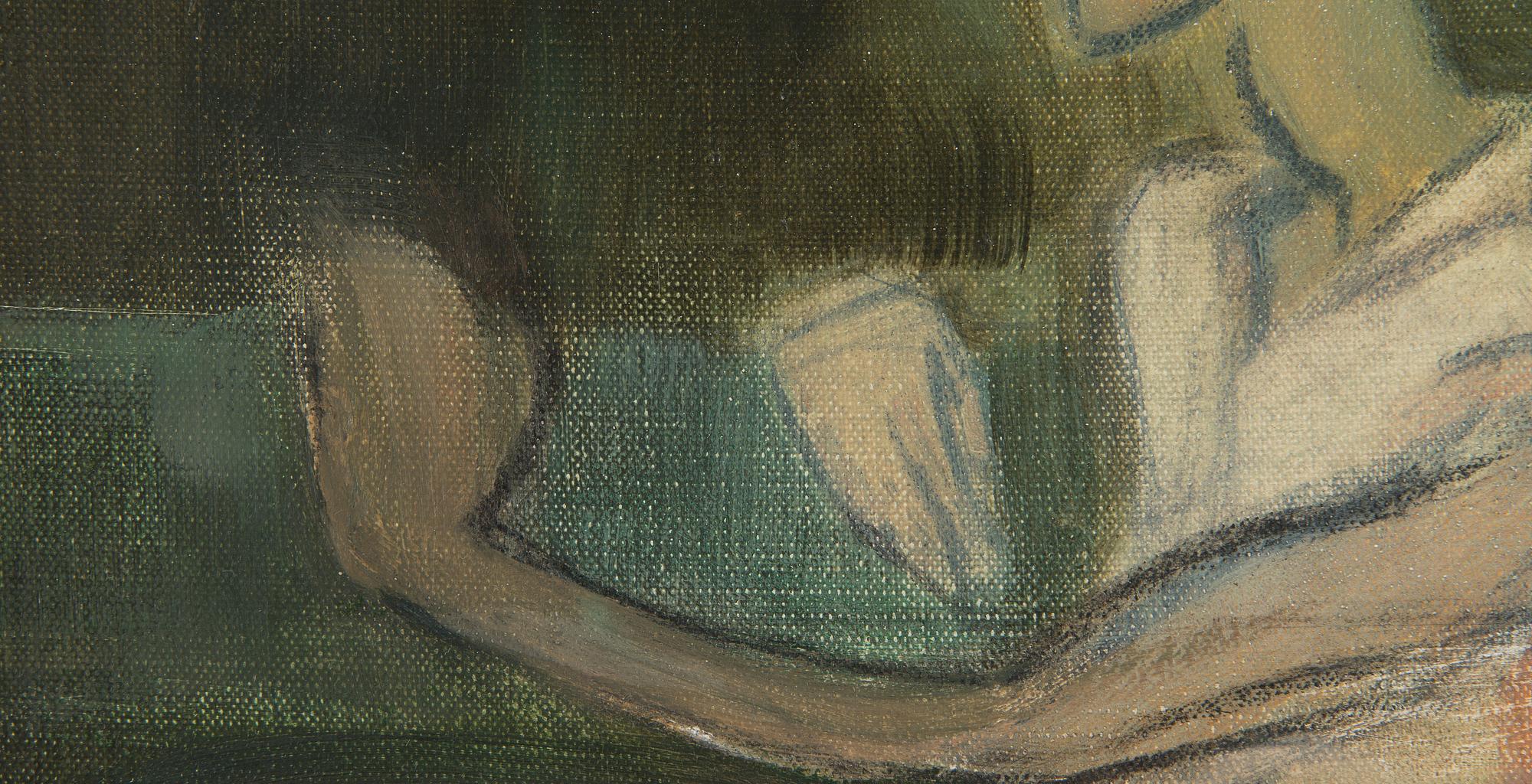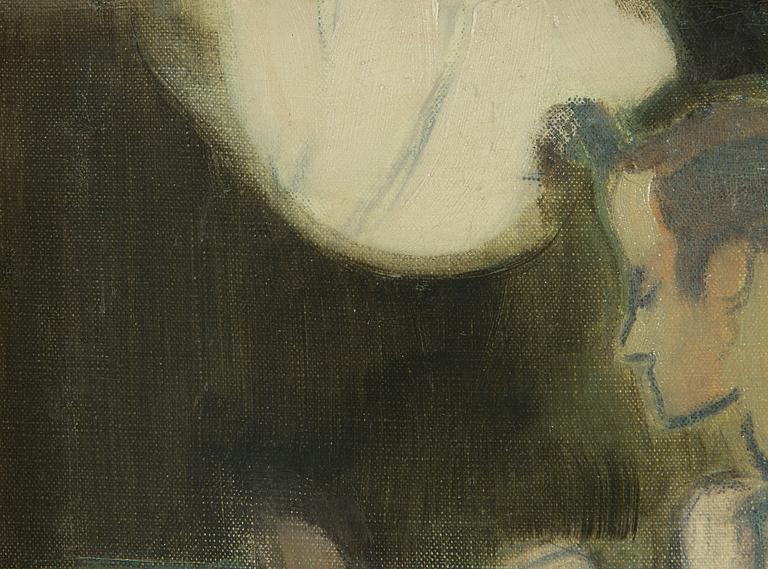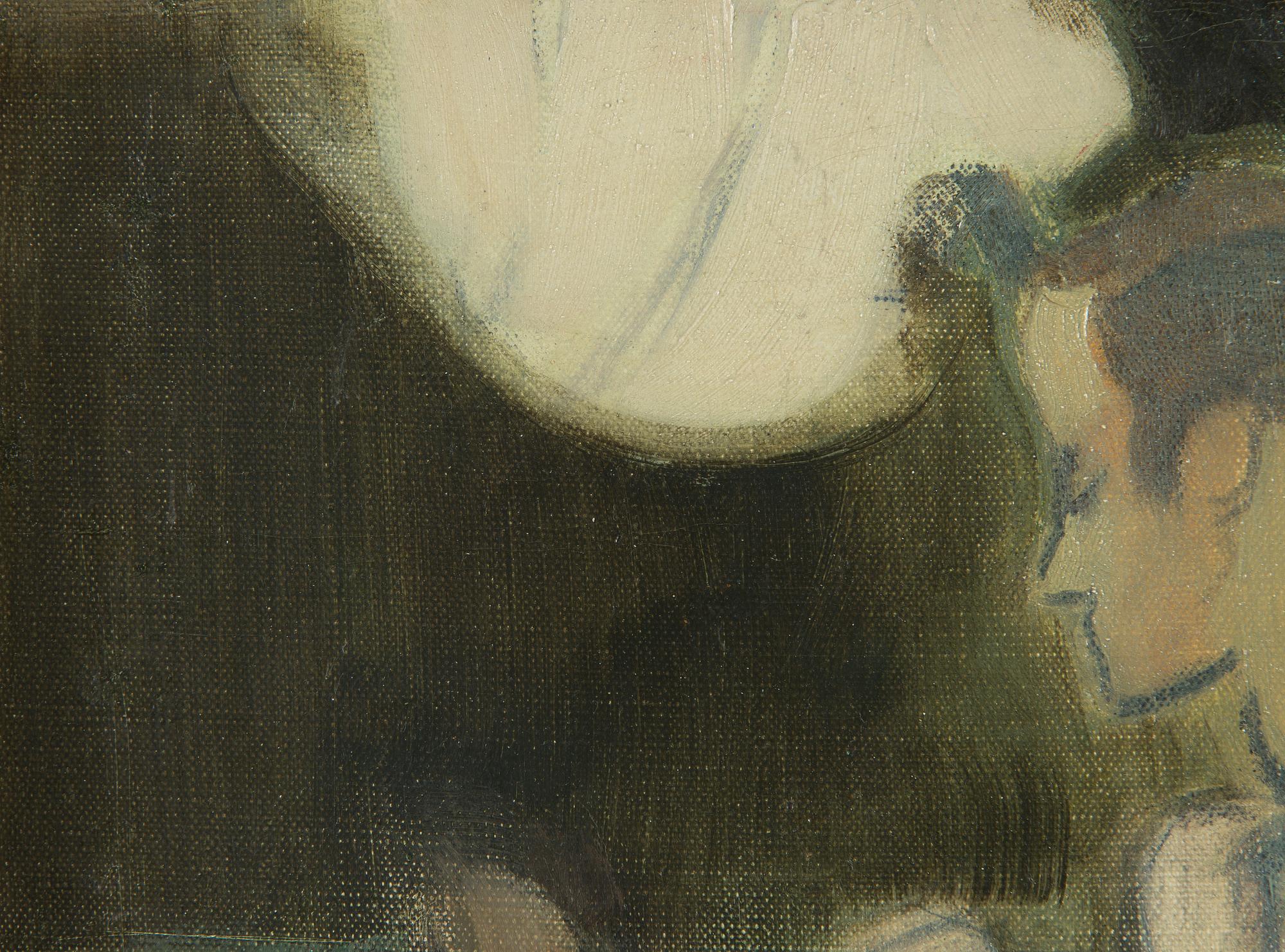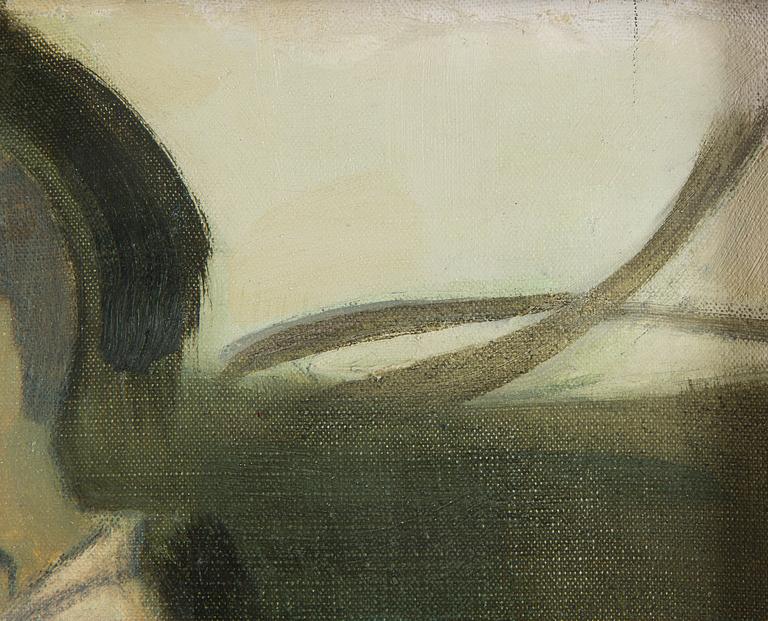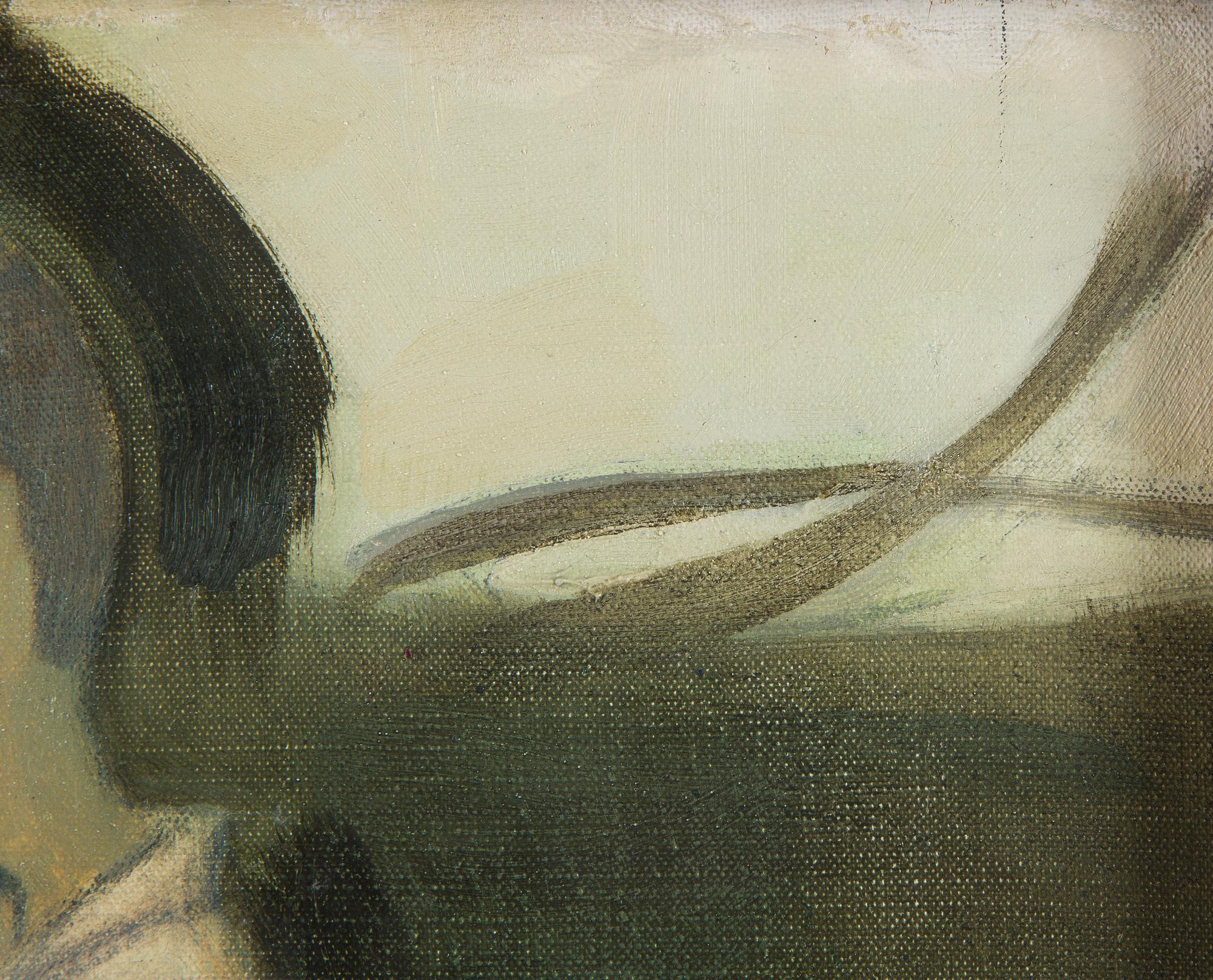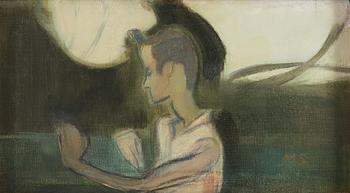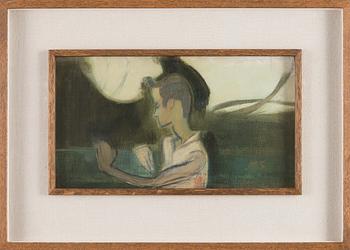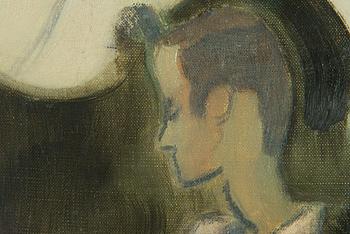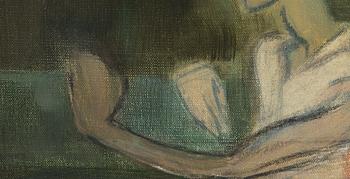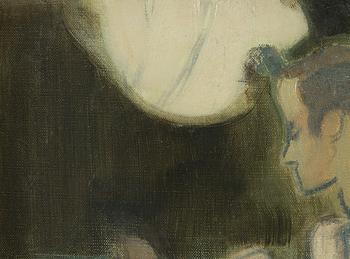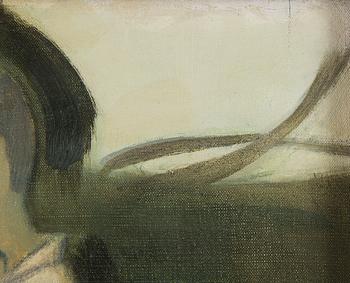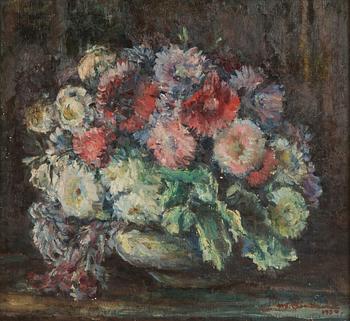
Music (Ingeborg on the Balcony).
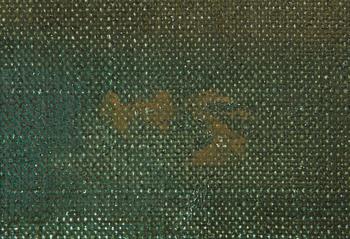
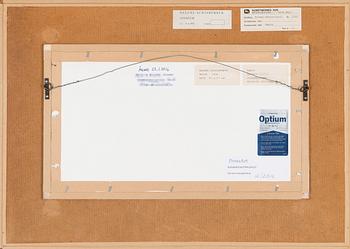
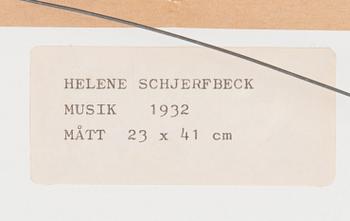
Signed HS. Painted in 1932. Oil on canvas laid on panel, 23 x 41 cm.
Wear due to age and use.
Provenance
Collection of Thorvald Lillja; through inheritance within the same family.
Exhibitions
"Helene Schjerfbeck", Lapinlahti Art Centre, 1983, no. 6.
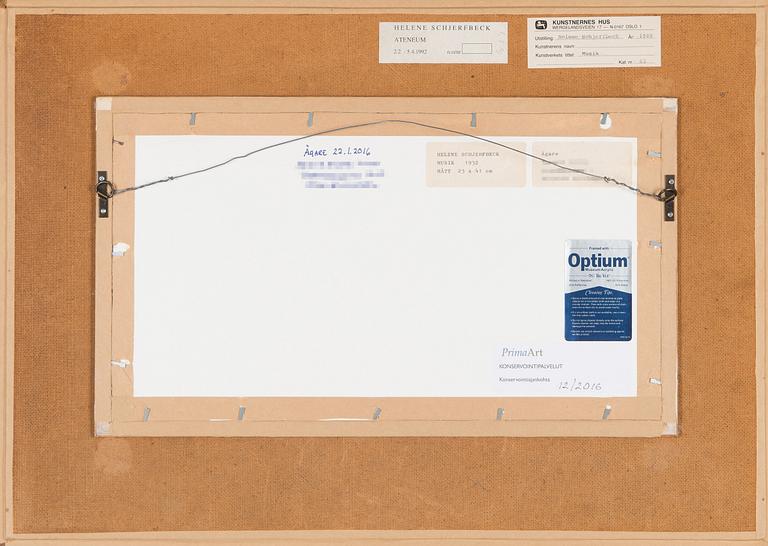
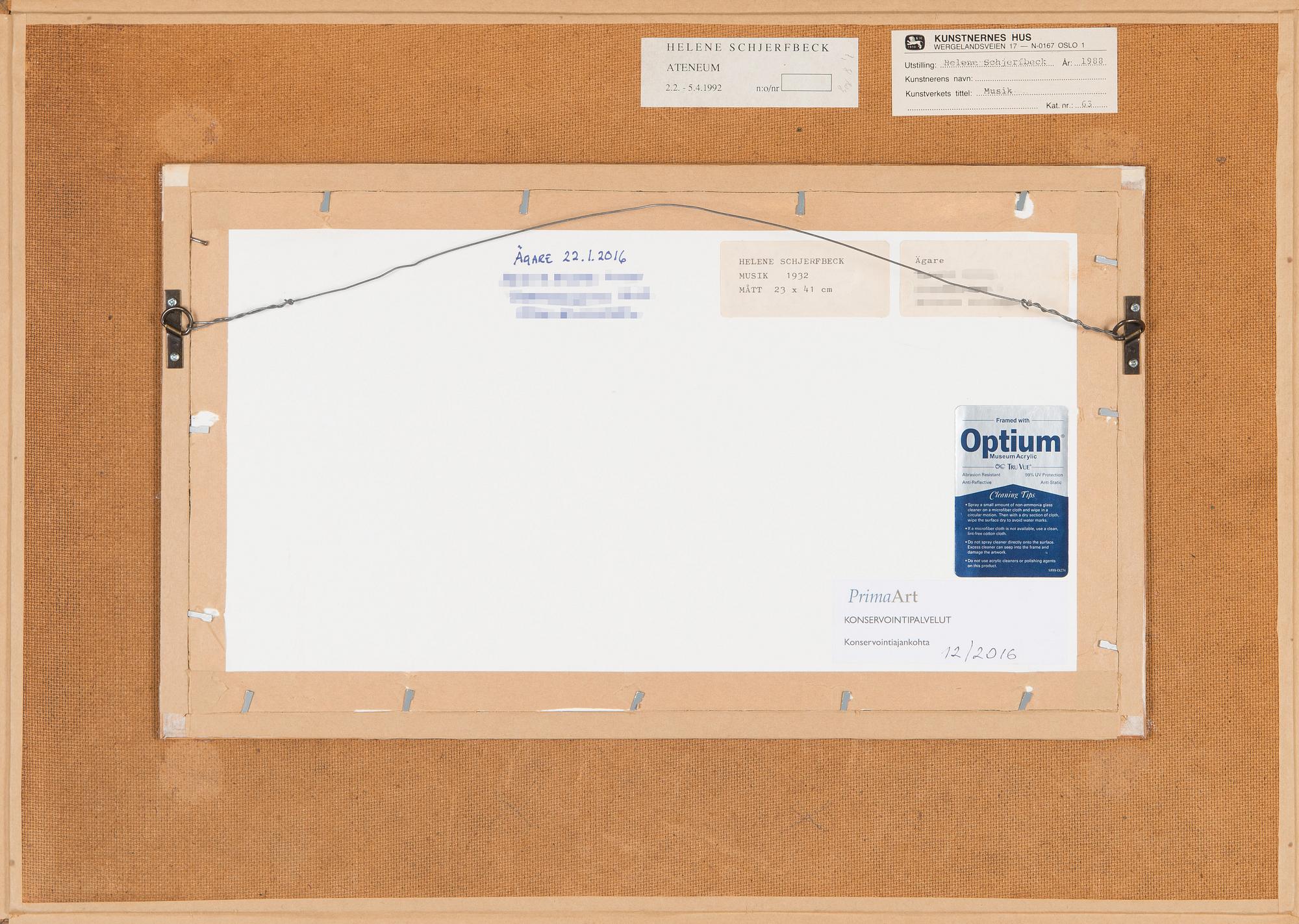
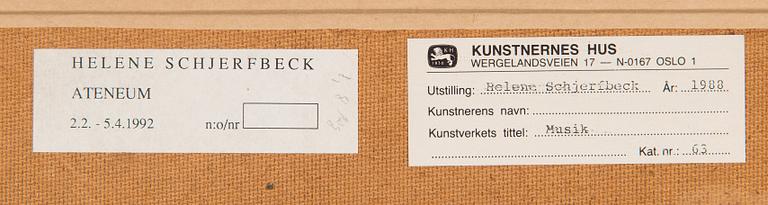
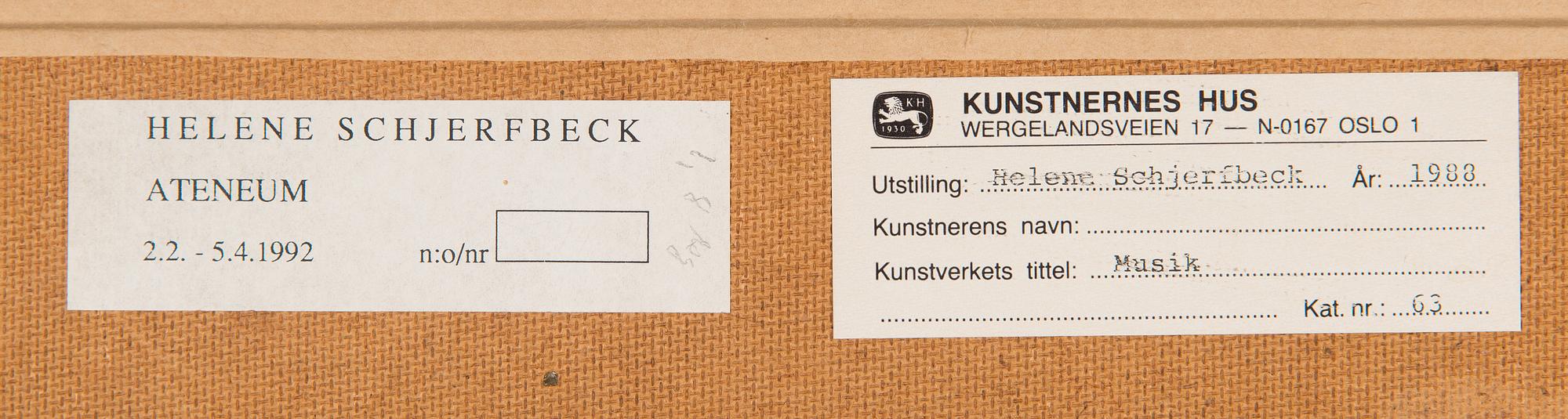
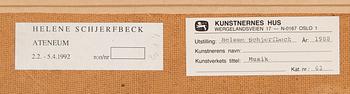
"Helene Schjerfbeck", Prins Eugens Waldemarsudde, Stockholm, 1987, Gothenburg Museum of Art 1987-88, Kunstnernes Hus, Oslo, 1988, no. 63.
"Helene Schjerfbeck", Ateneum Art Museum, 2.2.-5.4. 1992, no. 394.
Literature
H.Ahtela, "Helena Schjerfbeck", Helsinki, 1953, no.747.
Lena Holger, "Helene Schjerfbeck-Liv och Konstnärskap", Söderström 1987, depicted in the book as nr.63.
"Helene Schjerfbeck", ed. Leena Ahtola-Moorhouse, Ateneum, 1992, no 394, illustrated on p.244.
"Helene Schjerfbeck-150 years", ed. Leena Ahtola-Moorhouse, Ateneum art museum, 2012, no 566, illustrated on p.282.
More information
Helene Schjerfbeck loved silence and, as a teacher, also required her pupils to concentrate in silence. She owned neither a radio nor a telephone. Yet this demand for silence did not exclude the musicality of her paintings, the rhythm of light and shadow, or the harmony of colours.
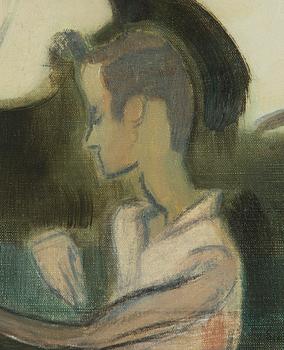
Music (Ingeborg on the Balcony) is also an image of silence: the androgynous Ingeborg, with her eyes closed, listens above all to her resonant inner self, reflected by the abstract landscape. The colours of dusk are rich and deep. Evening softens the outlines and creates a sense of security, completed by a large, pale, spherical form set against the darkness and playful arcs against the light. The mood is gentle, despite the strong contrasts: an enveloping dark green and a pale, round chord, as though released from Ingeborg’s forehead, followed by the aftersound of intersecting arcs.
Ingeborg’s figure is painted with great nuance, in Schjerfbeck’s characteristically translucent and layered manner. Nothing clamours for attention, yet everything draws the viewer into its magical sphere. The asymmetrical colouring of the hands creates rhythm, as does the red accent at the side of the blouse. The face, too, is faintly flushed and conveys receptiveness and concentration.
In the autumn of 1932, Schjerfbeck received an unexpected visit from the opera conductor Simon Pergament (later Parmet). The brief visit made a deep impression on Helene; she felt she had encountered a kindred spirit, and wrote about it both to Einar Reuter and to Helena Westermarck. In a thank-you card, Pergament had written Leonardo da Vinci’s words: “Cosa bella mortale, e non d’Arti” (“Mortal beauty fades; art endures.”)
I believe that this visit to her home in Ekenäs inspired this distinctive Symbolist painting, Music (Ingeborg on the Balcony).
Leena Ahtola-Moorhouse