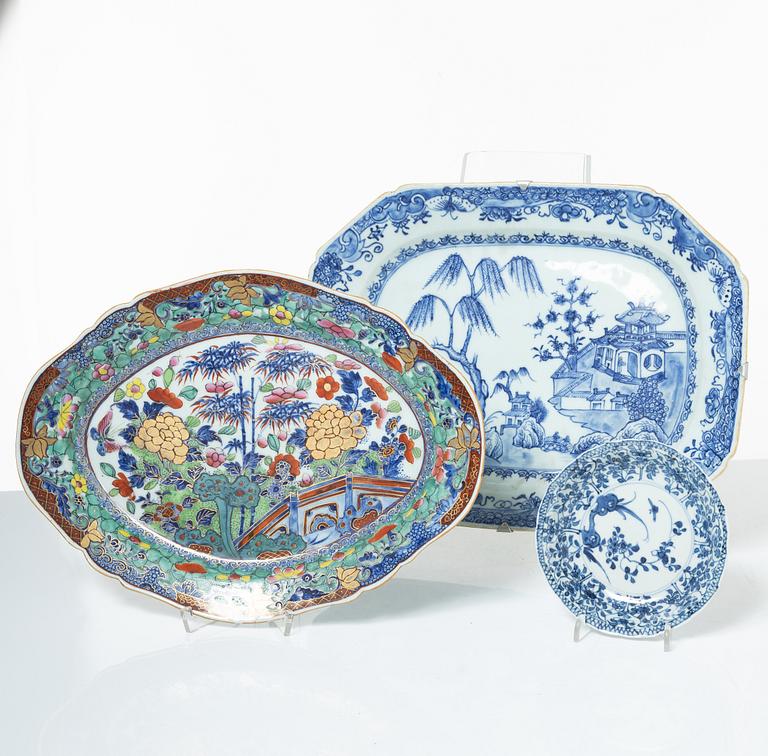
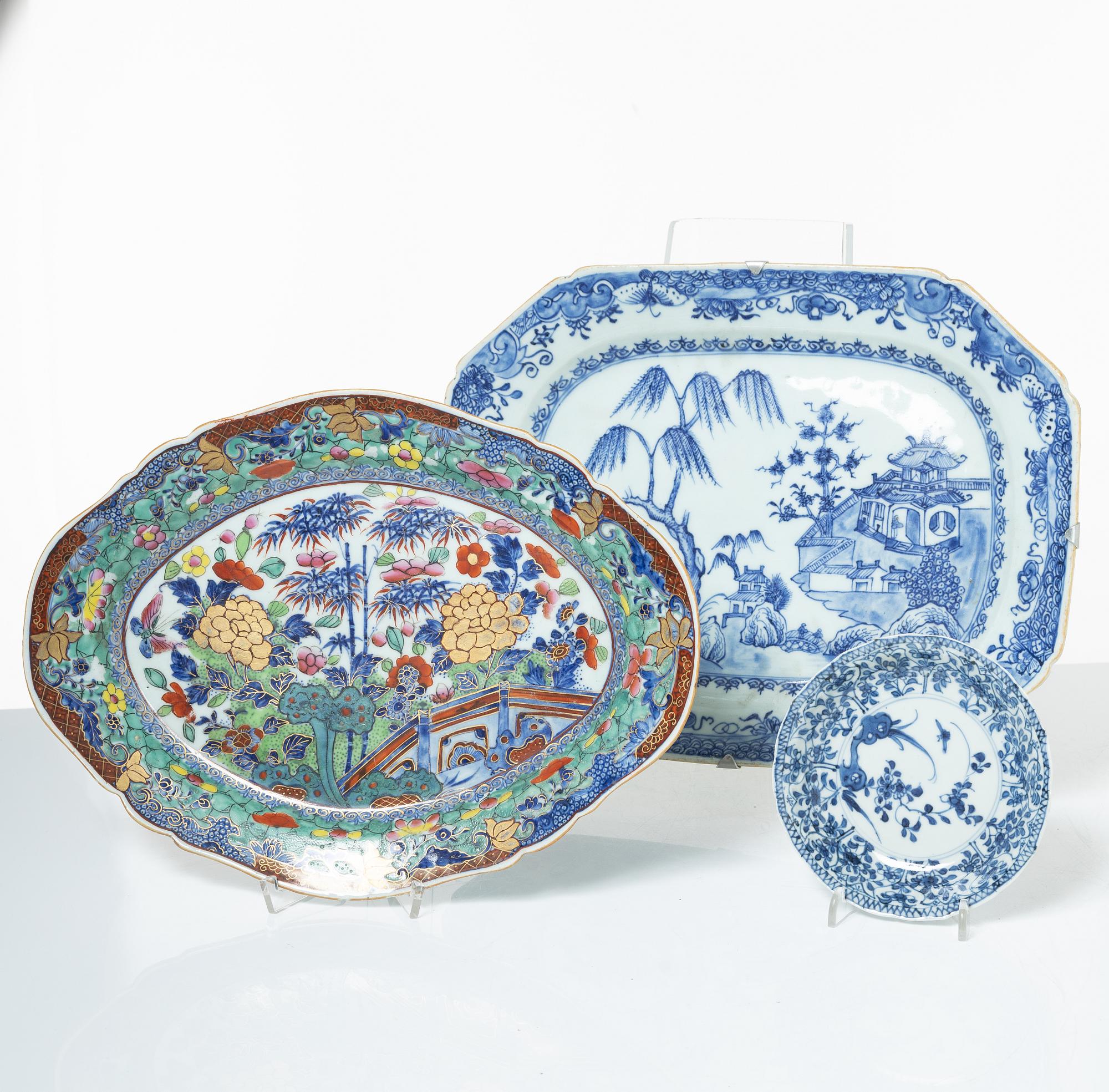
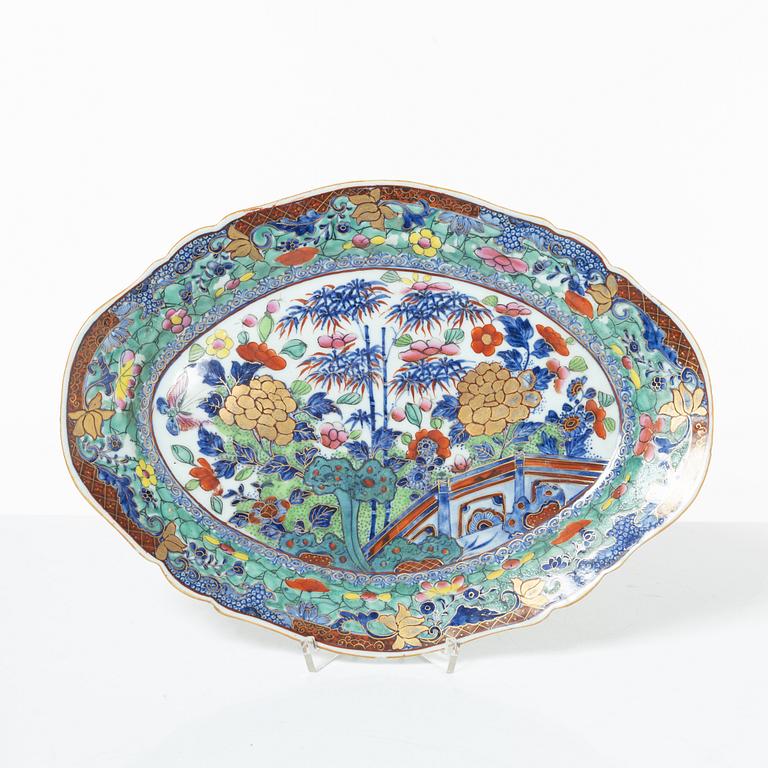
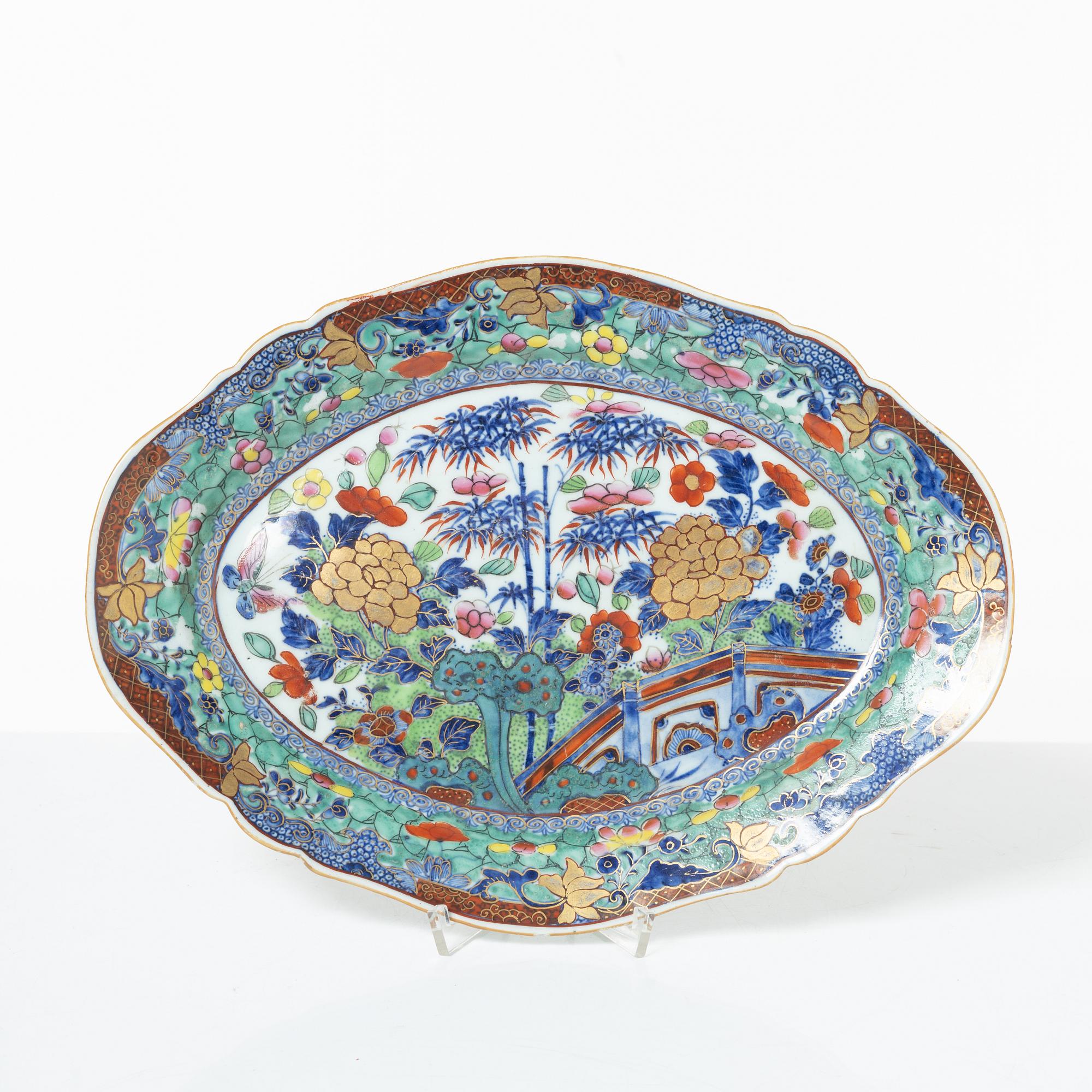
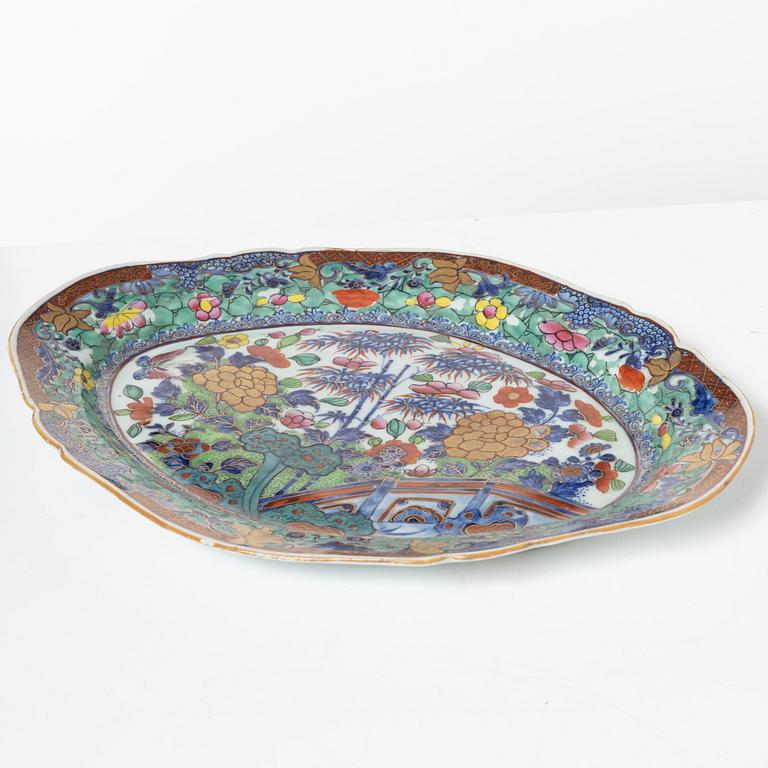
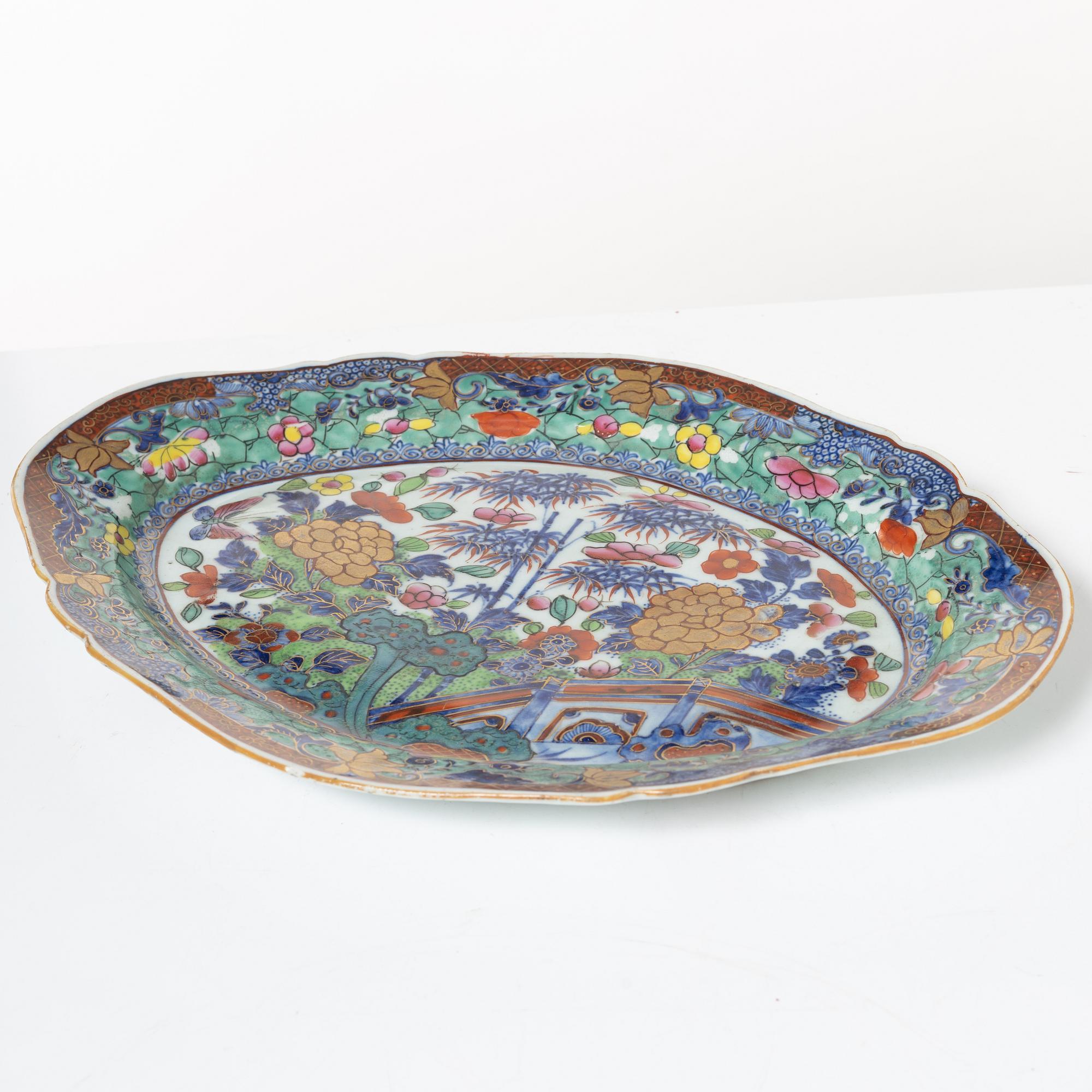
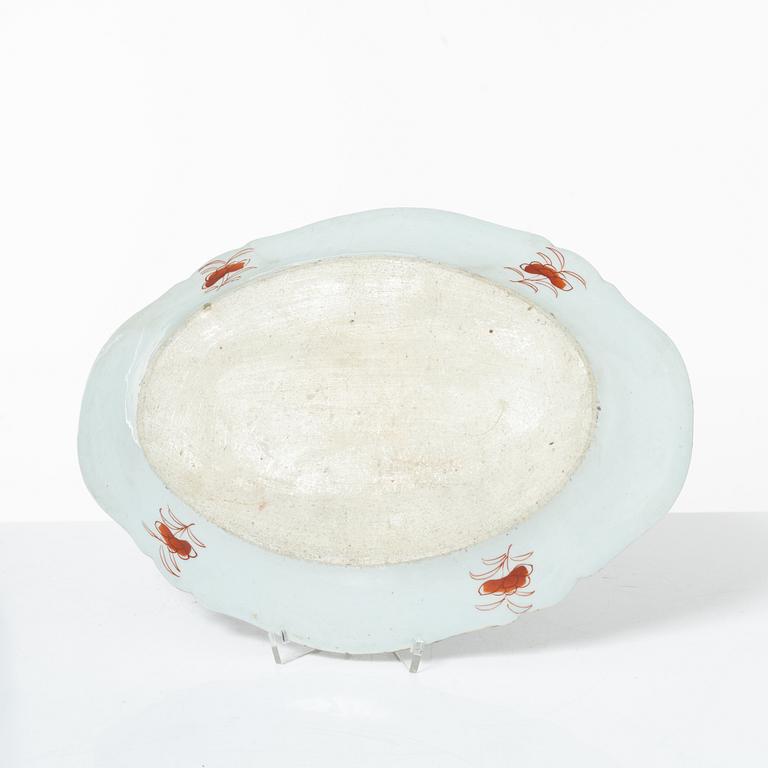
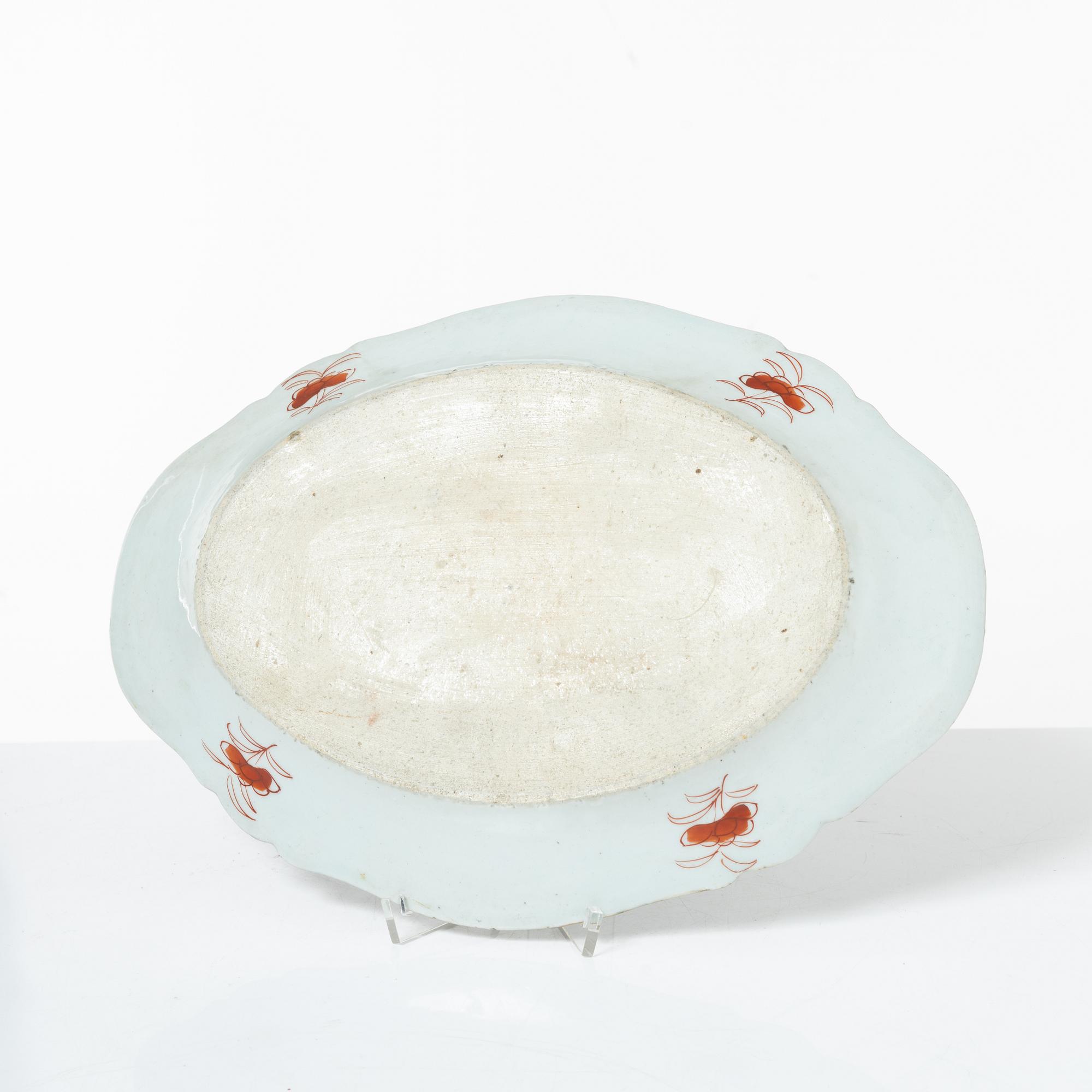
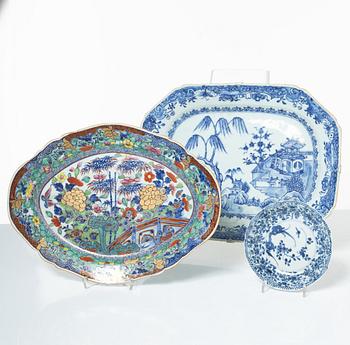
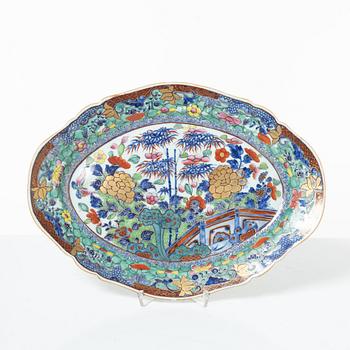
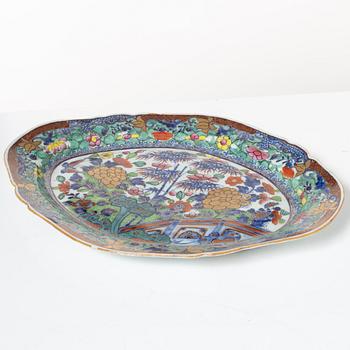
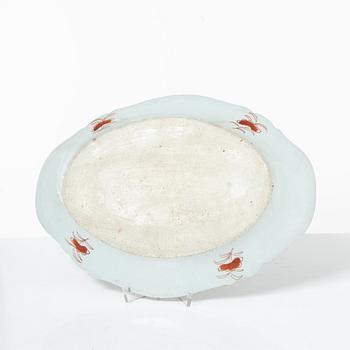
Oval serving dish with lobed rim, decorated with underglaze blue and 'clobbered' enamels added in Europe during the 19th century, motif of a flowering garden. Qianlong (1736-95). Length 33 cm.
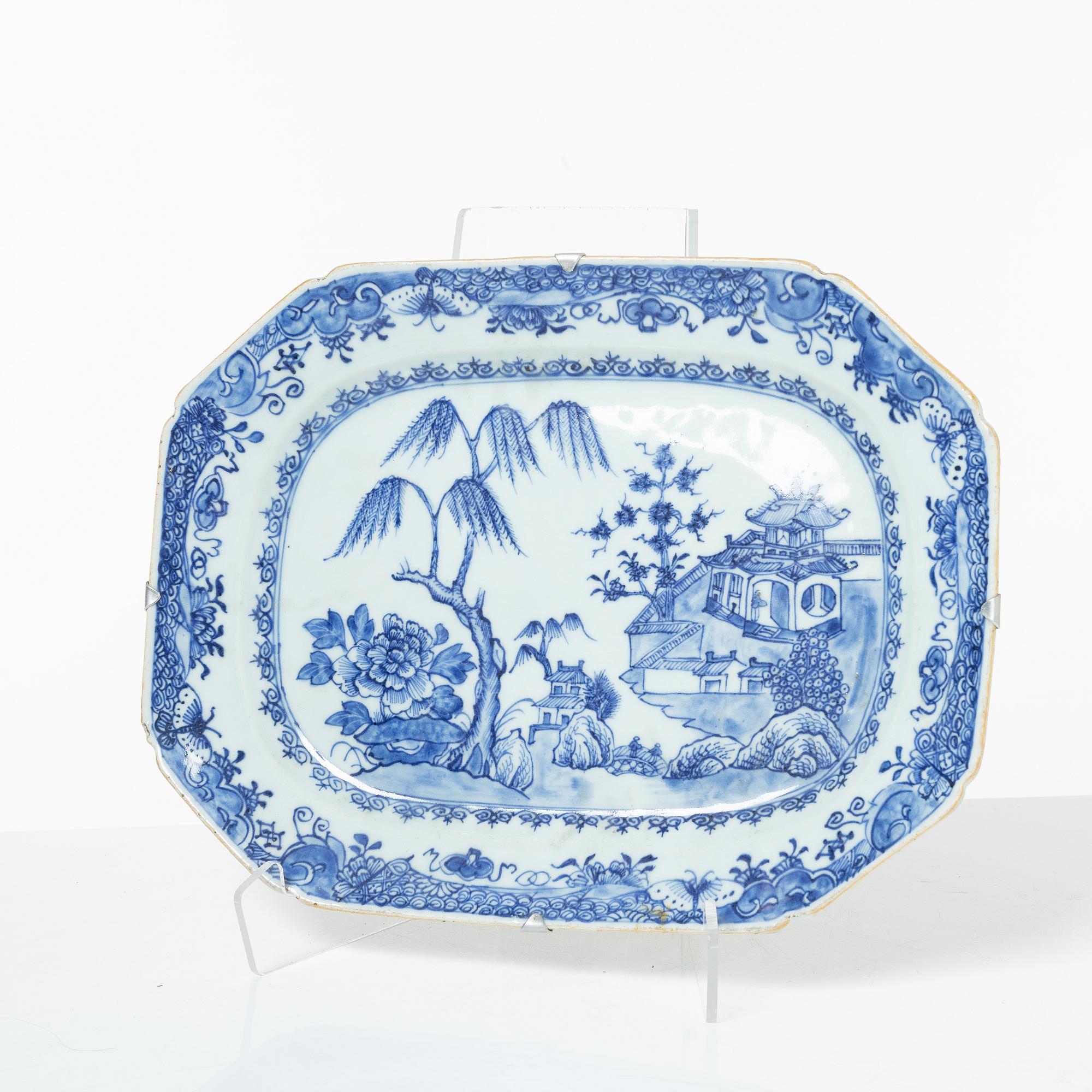
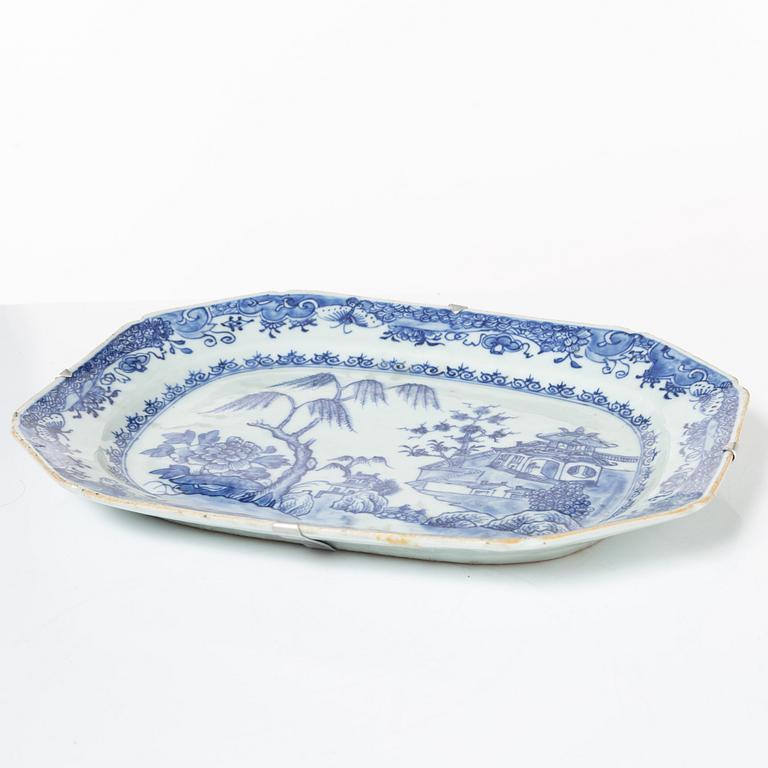
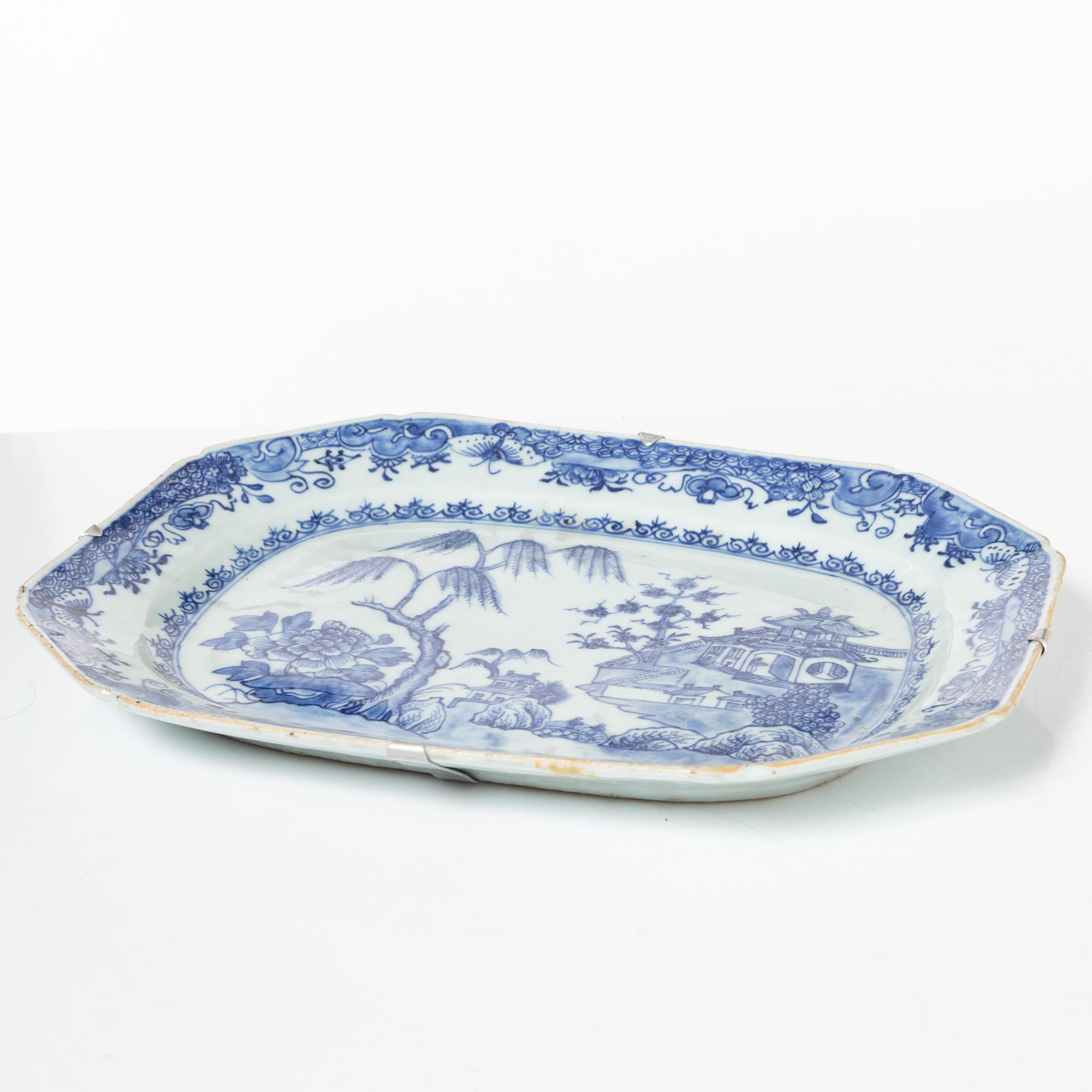
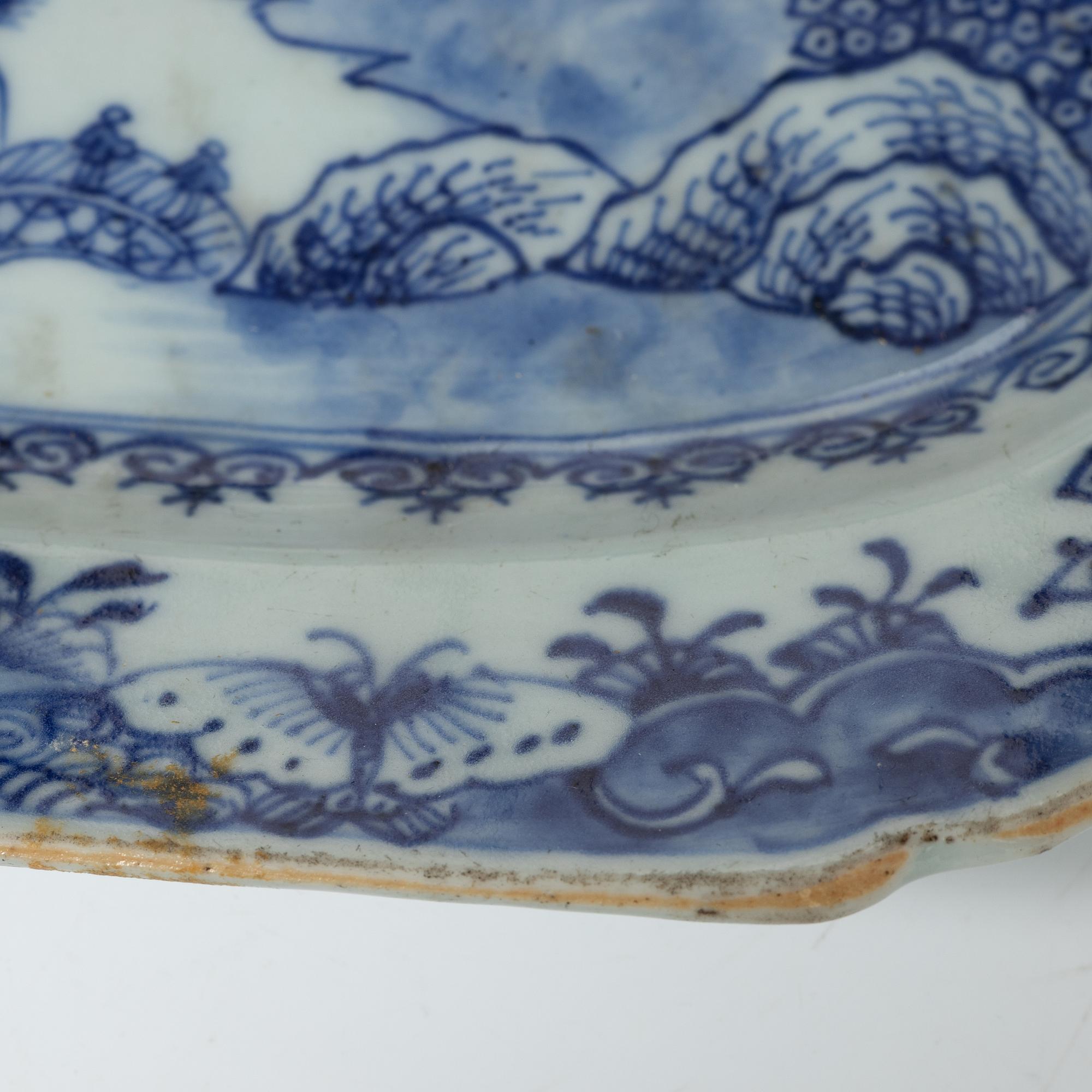
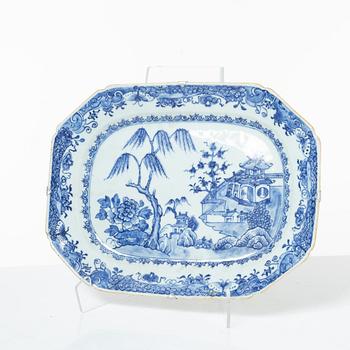
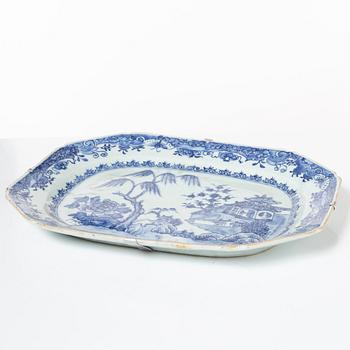
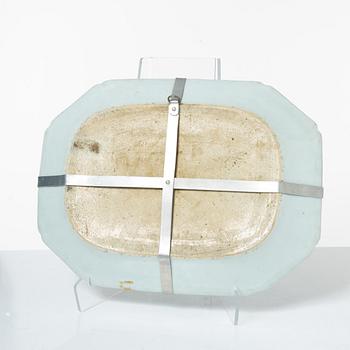
Octagonal serving dish decorated with underglaze blue featuring pagodas in a landscape. Qianlong (1736-95). Length 35 cm.
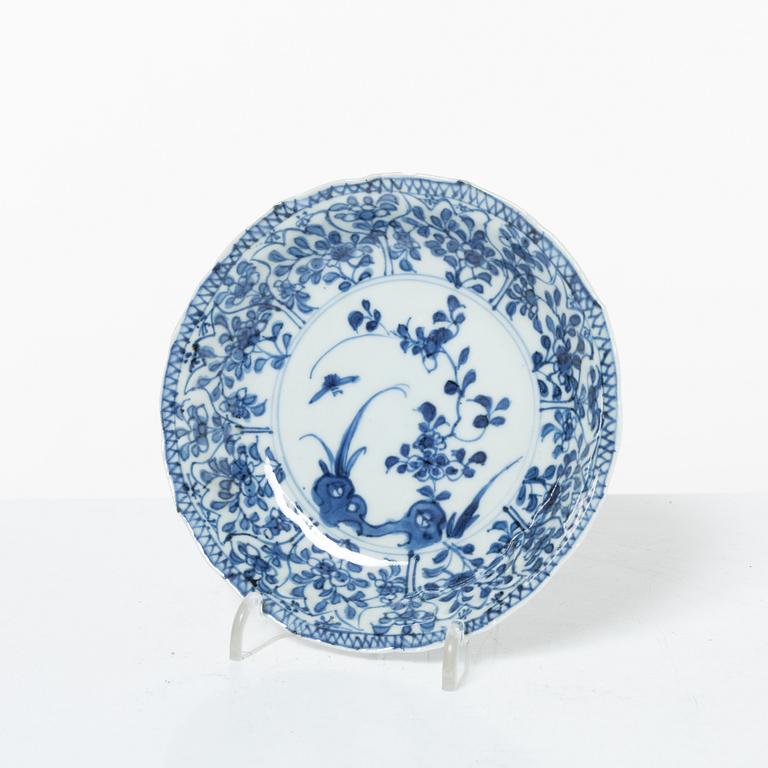
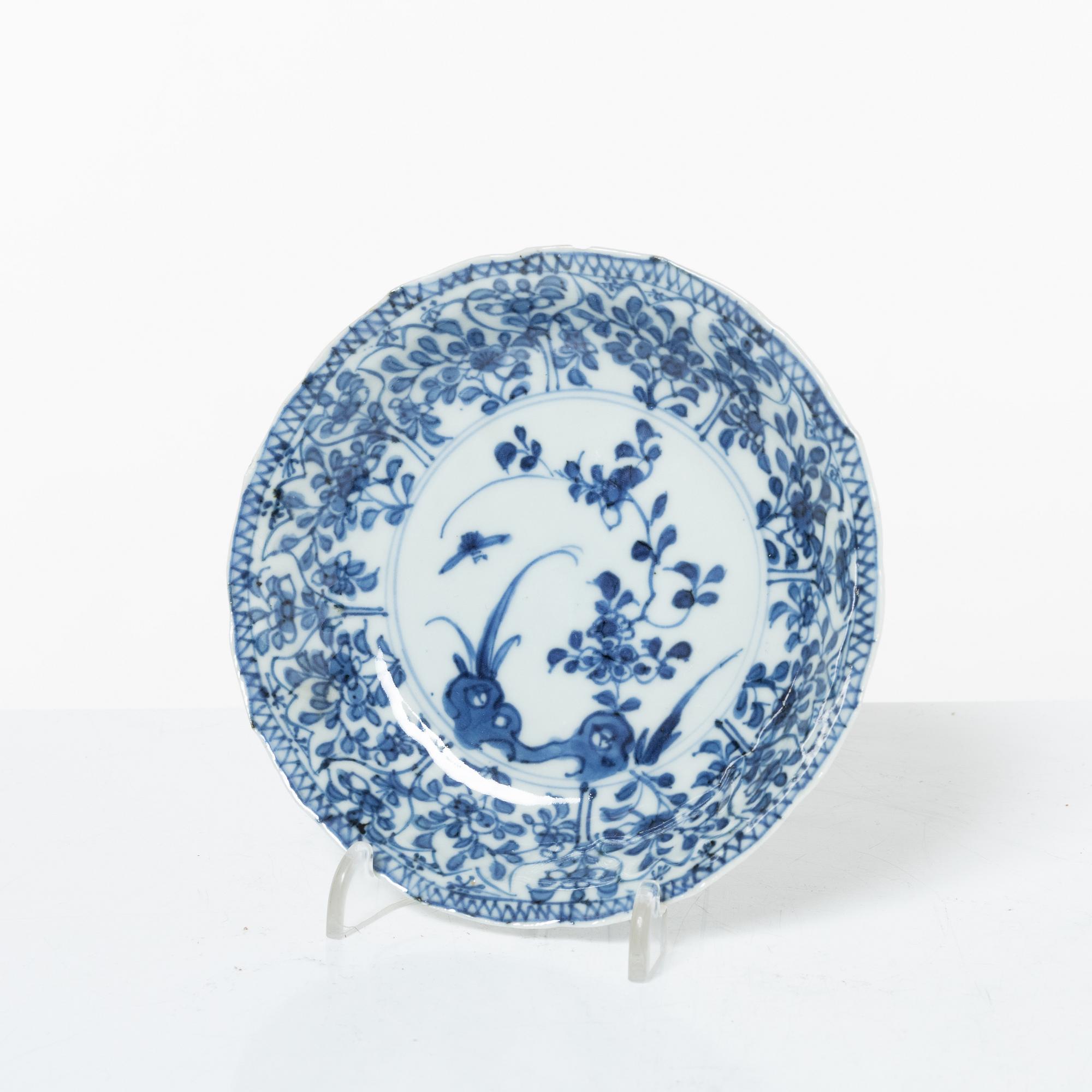
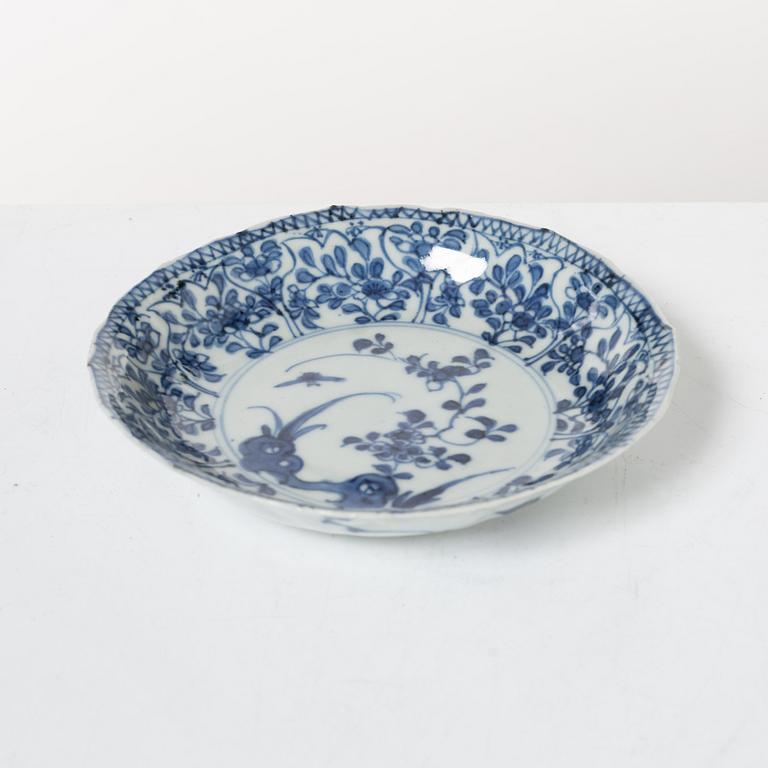
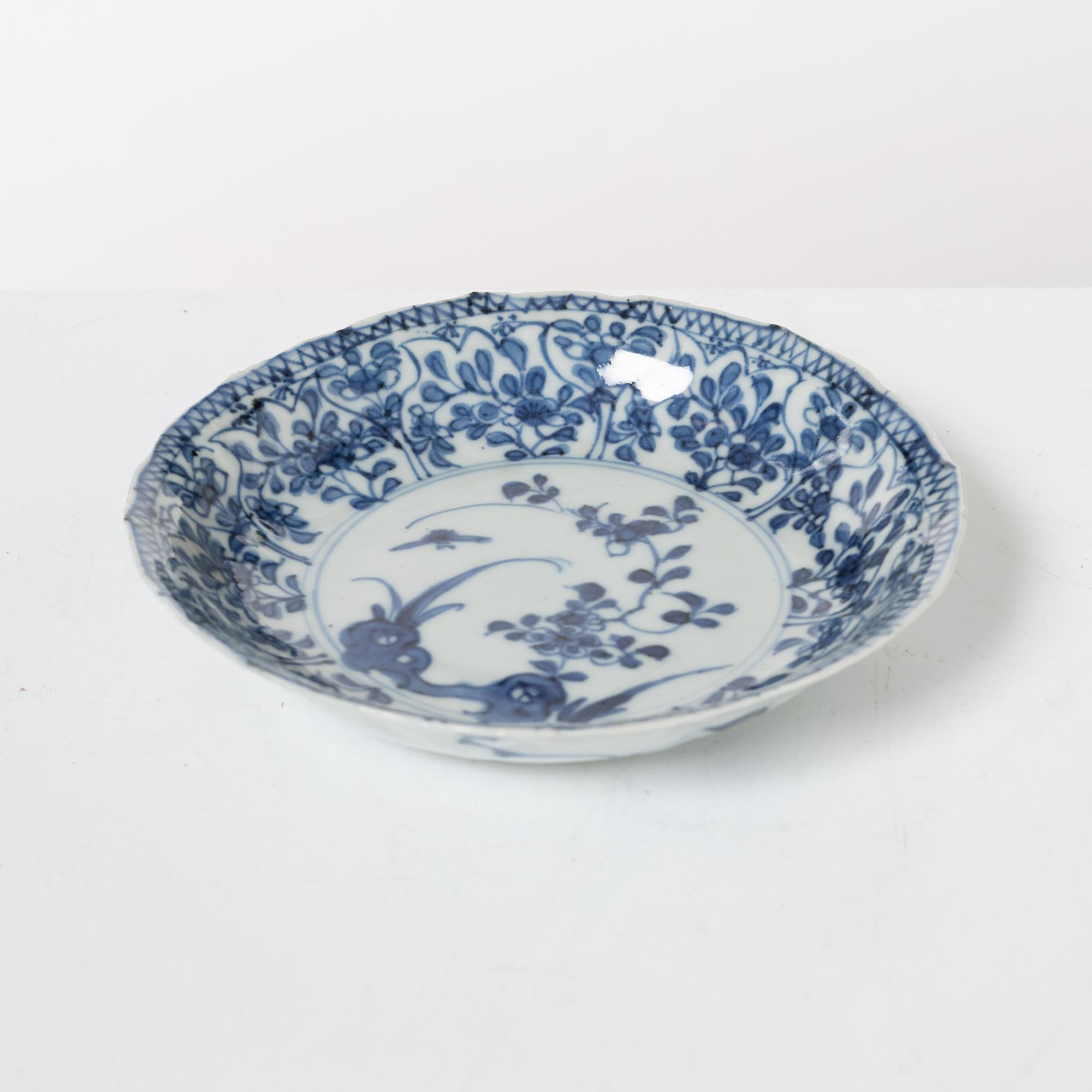
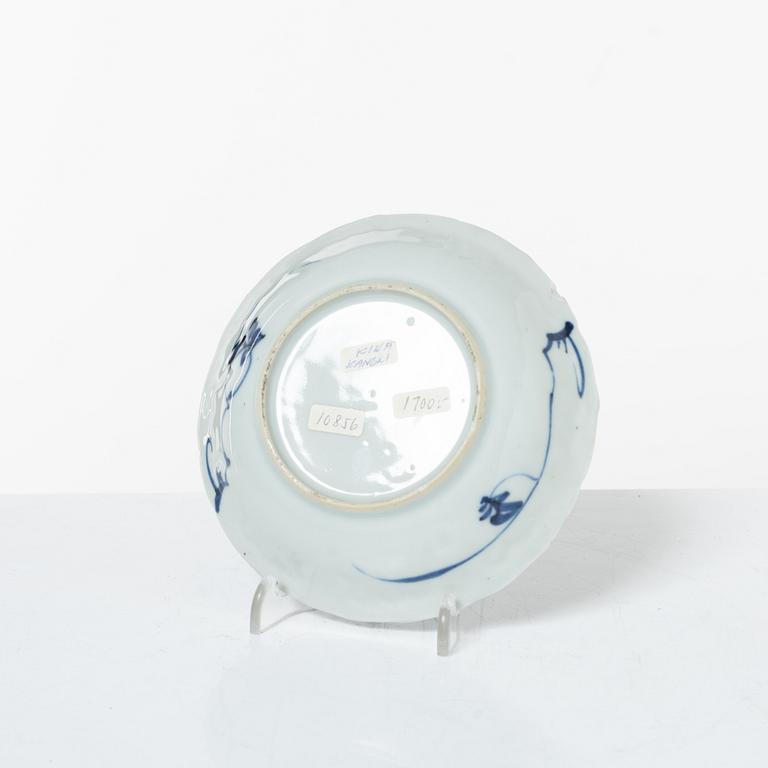
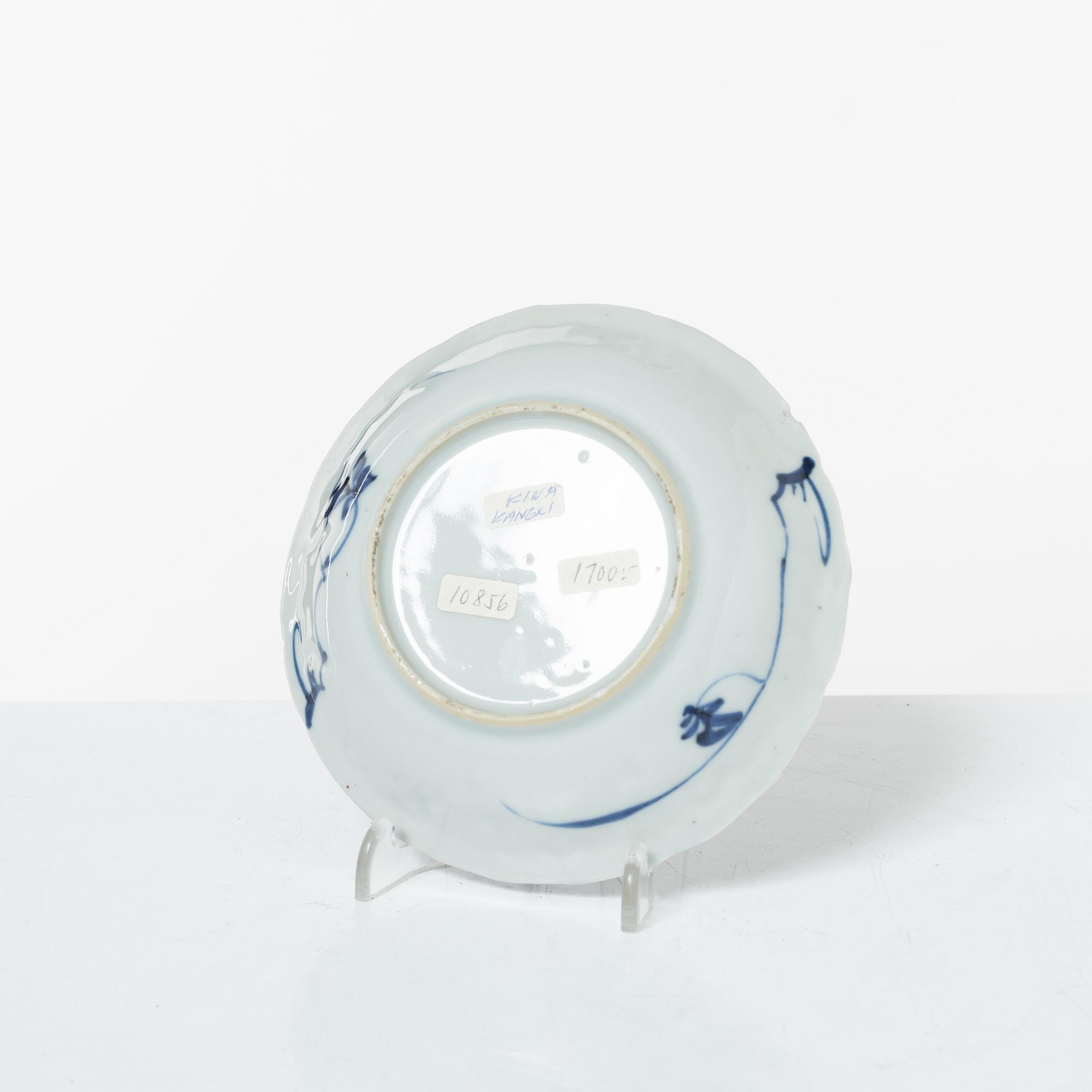
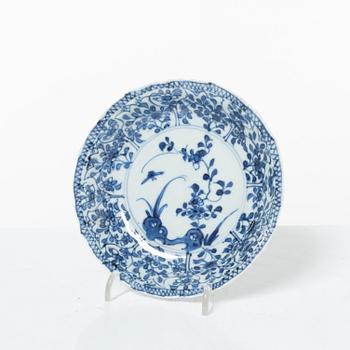
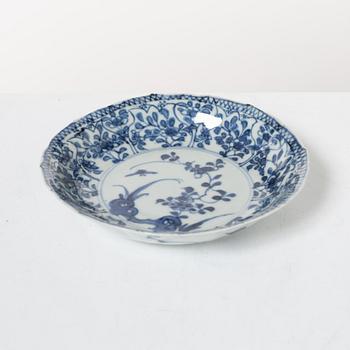
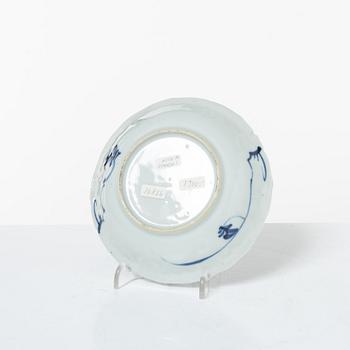
Small round dish, decorated with underglaze blue featuring an insect and flowers. Kangxi (1662-1722). Diameter 13 cm.
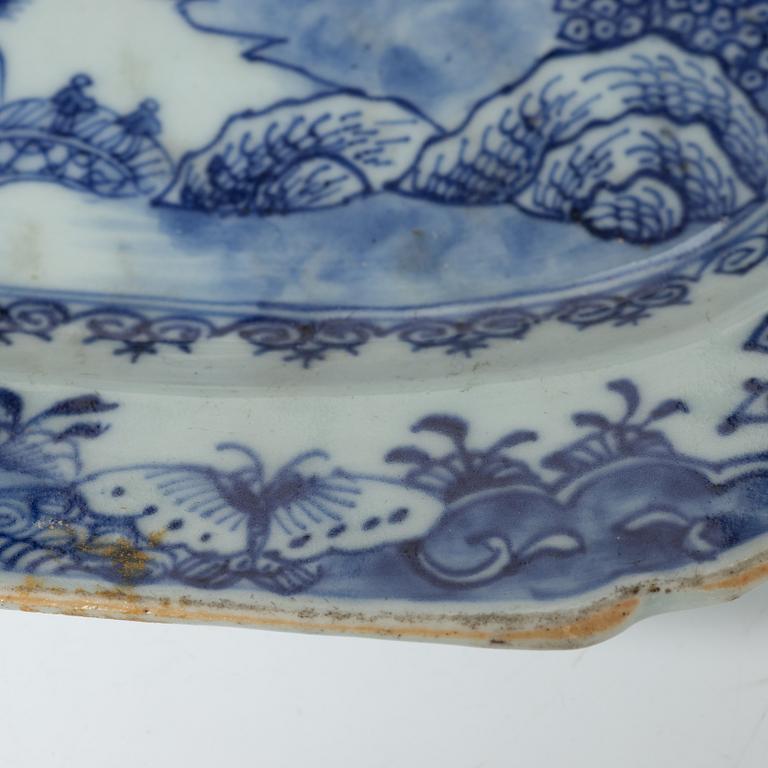
Wear. Scratches, minor chips to rimss. The small dish with rim crack.
More information
Clobbered porcelain, or Chinese export porcelain later decorated with European polychrome overglaze enamels, forms a distinctive and intriguing sub-category of antique ceramics. Initially, European artisans added simple elements such as gilt borders, spouts, or handles. Over time, this practice developed into more elaborate decorative schemes, including Dutch Amsterdam bont wares inspired by the Imari palette, as well as vividly coloured English examples featuring green, yellow, and purple enamels in the early 19th century.
These additions were intended to enhance the appeal of plain blue-and-white porcelain and, in some cases, to disguise minor flaws or damage. Today, clobbered porcelain divides opinion among collectors, as the European decoration is sometimes considered heavier in style and less refined than the original Chinese designs. But the category is also an interesting example of how antiques have been kept and adjusted to fit contemporary interior trends.



Others have also viewed