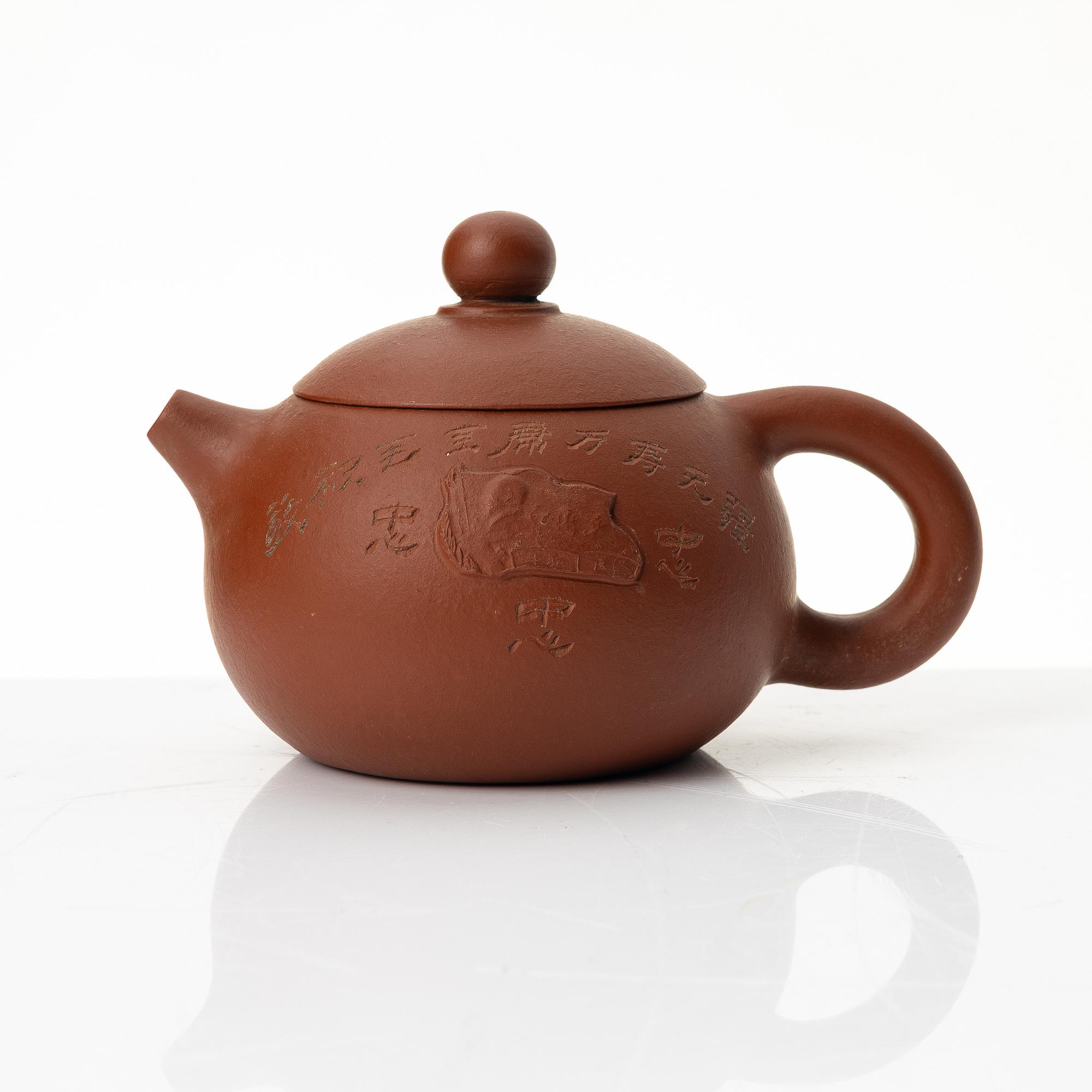
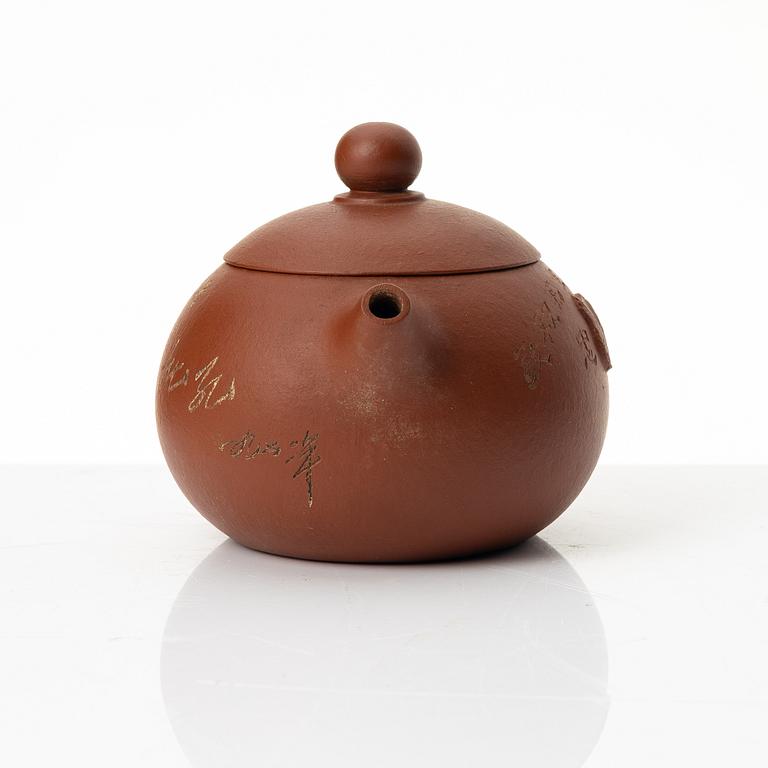
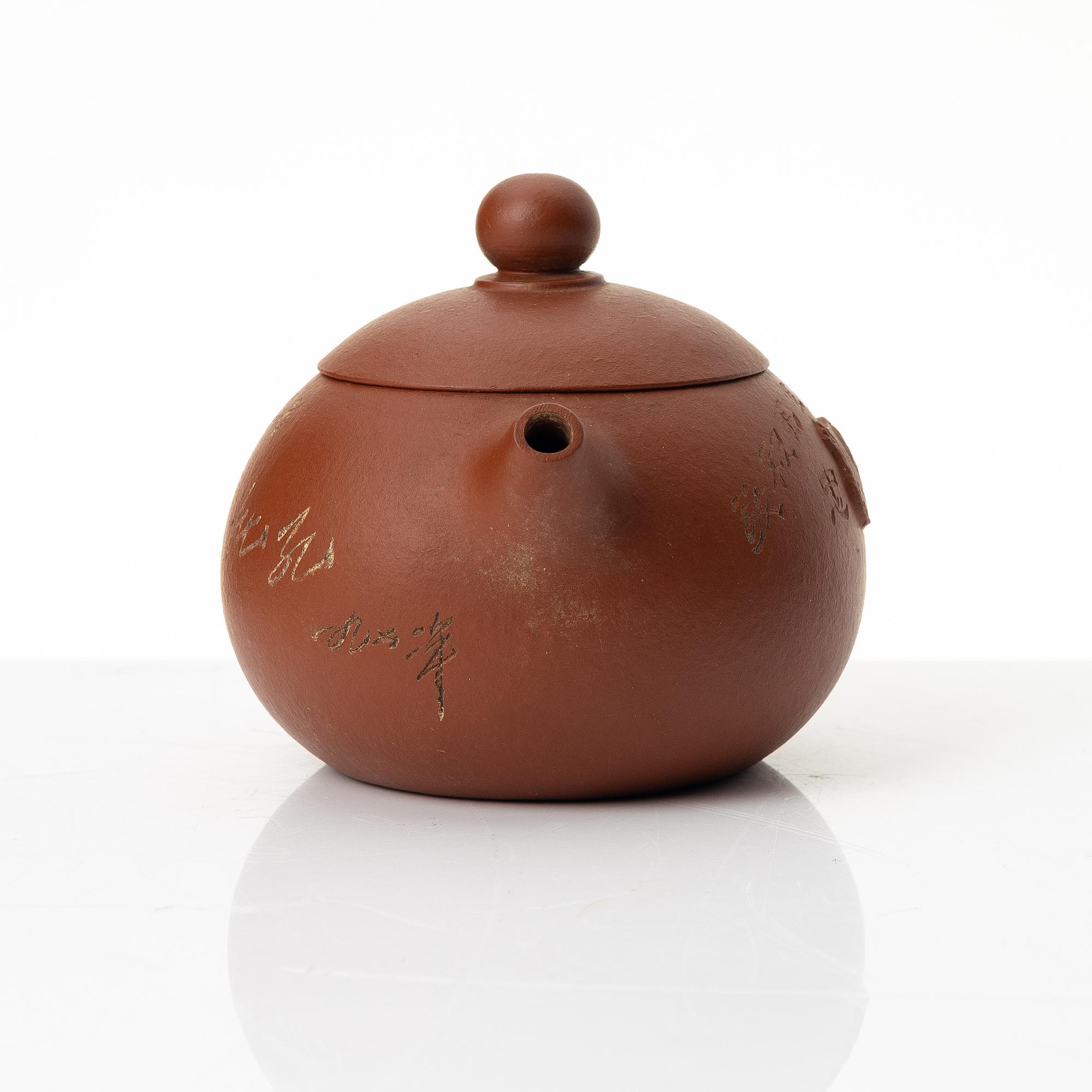
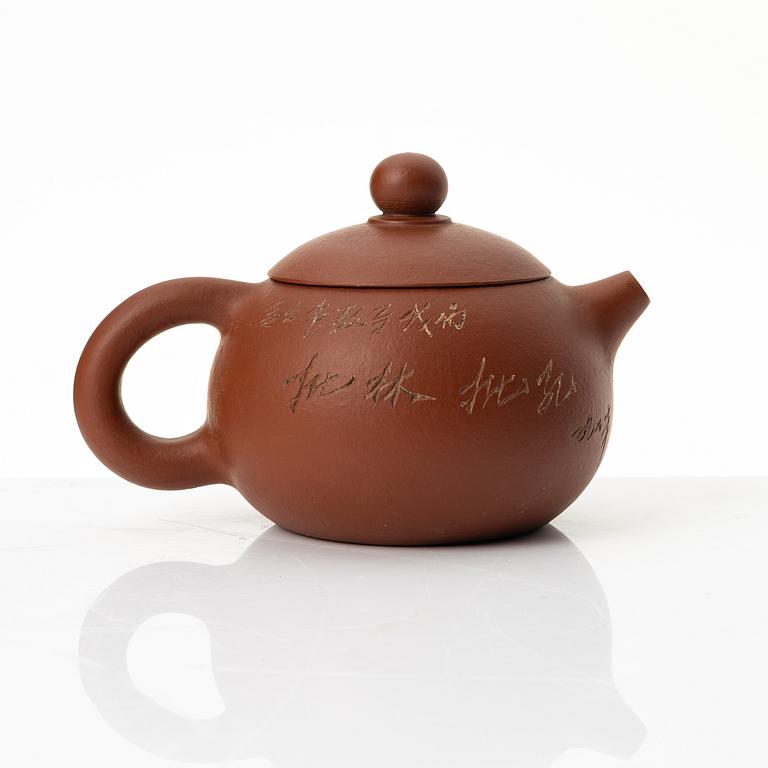
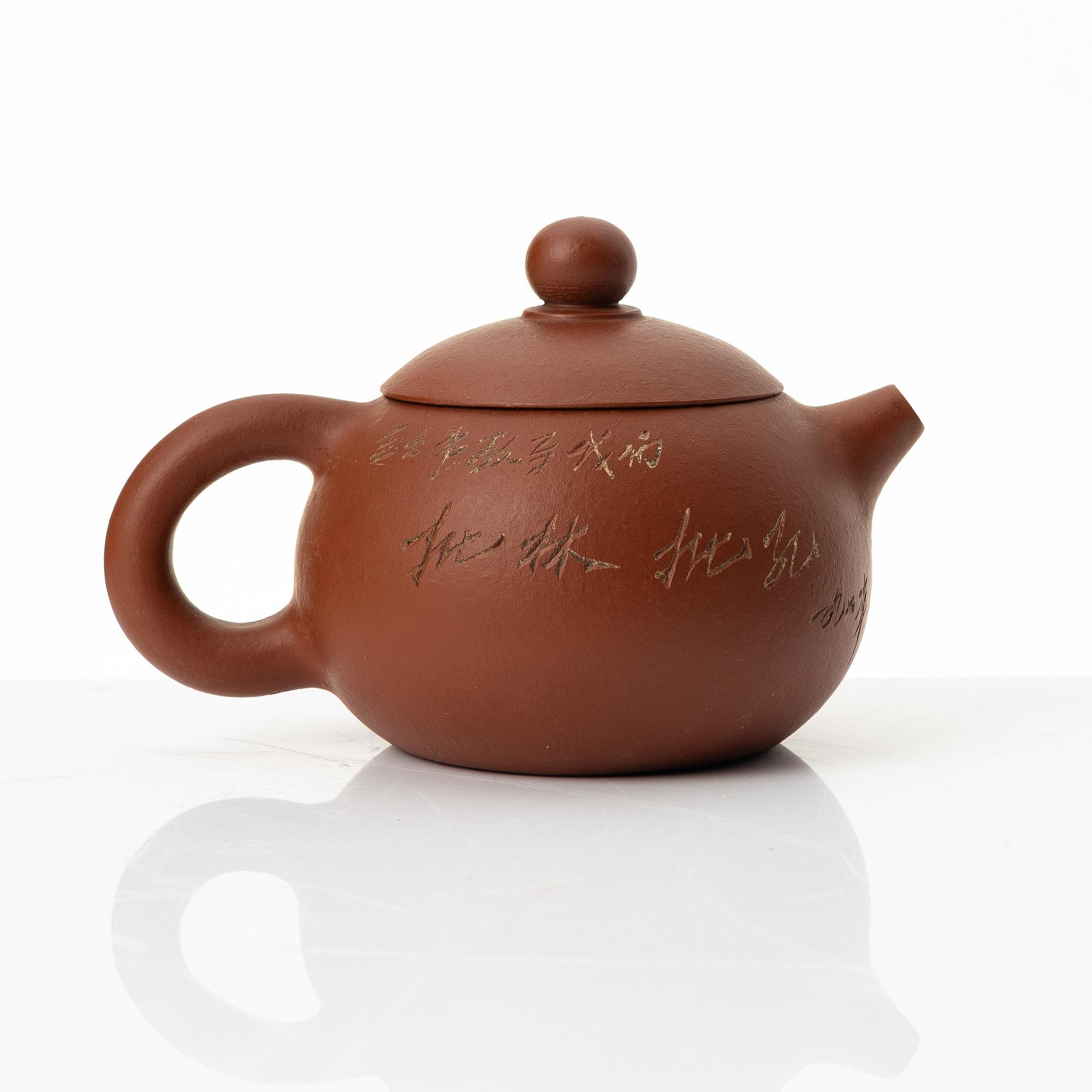
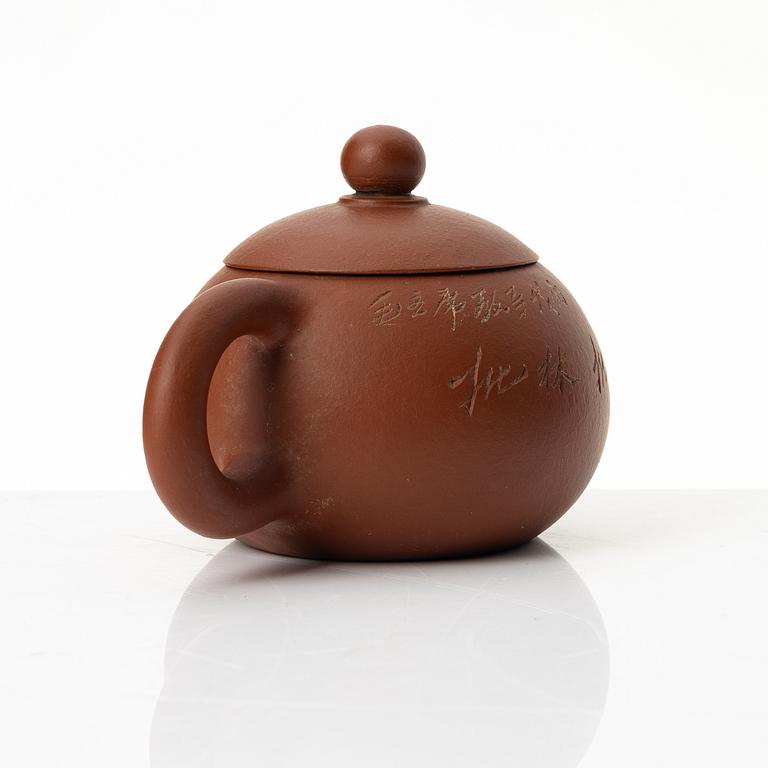
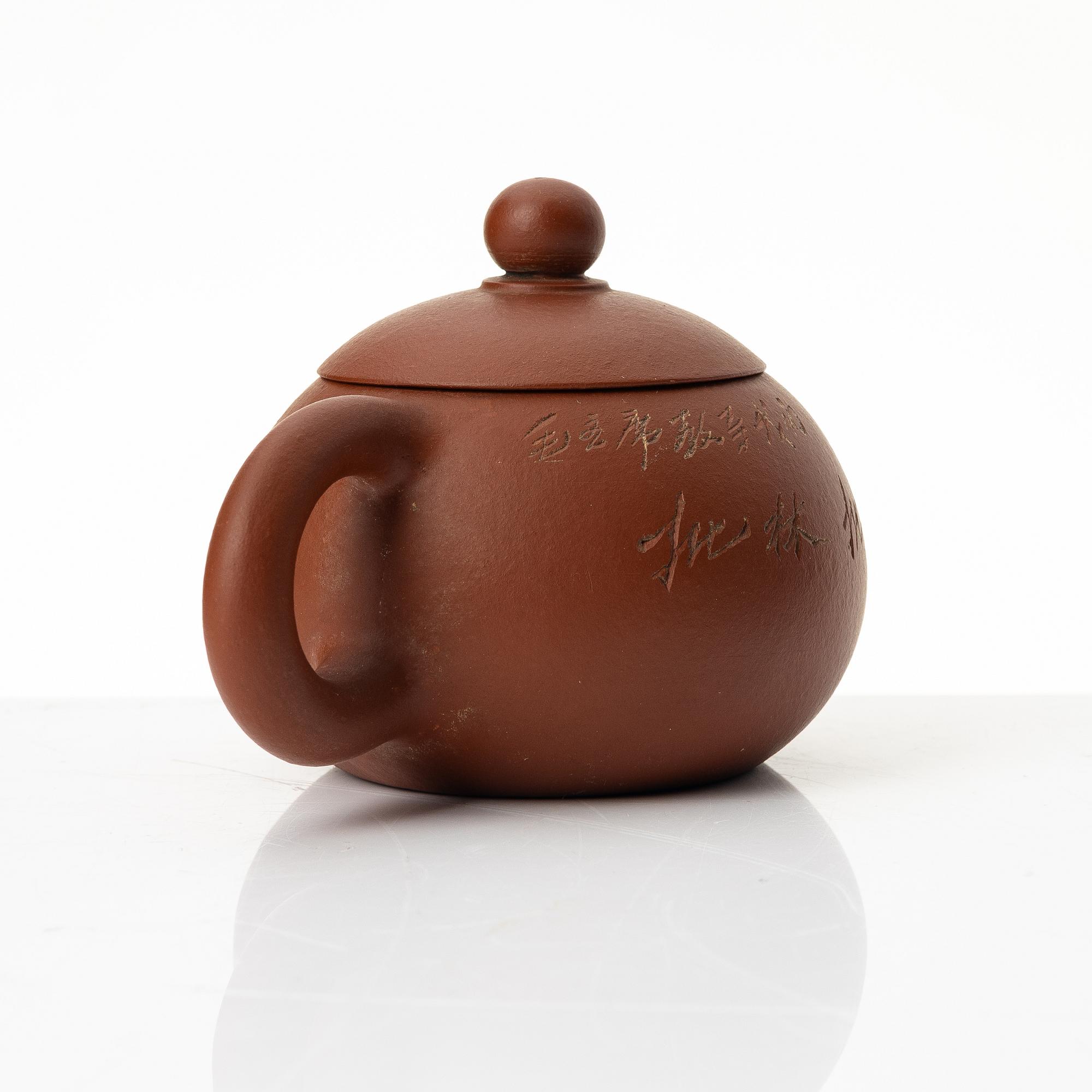
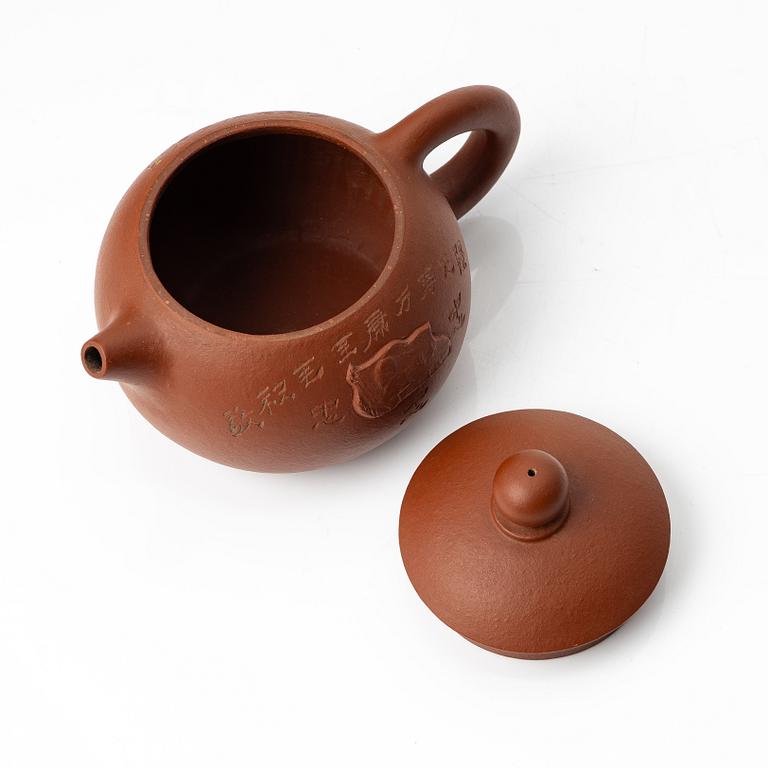
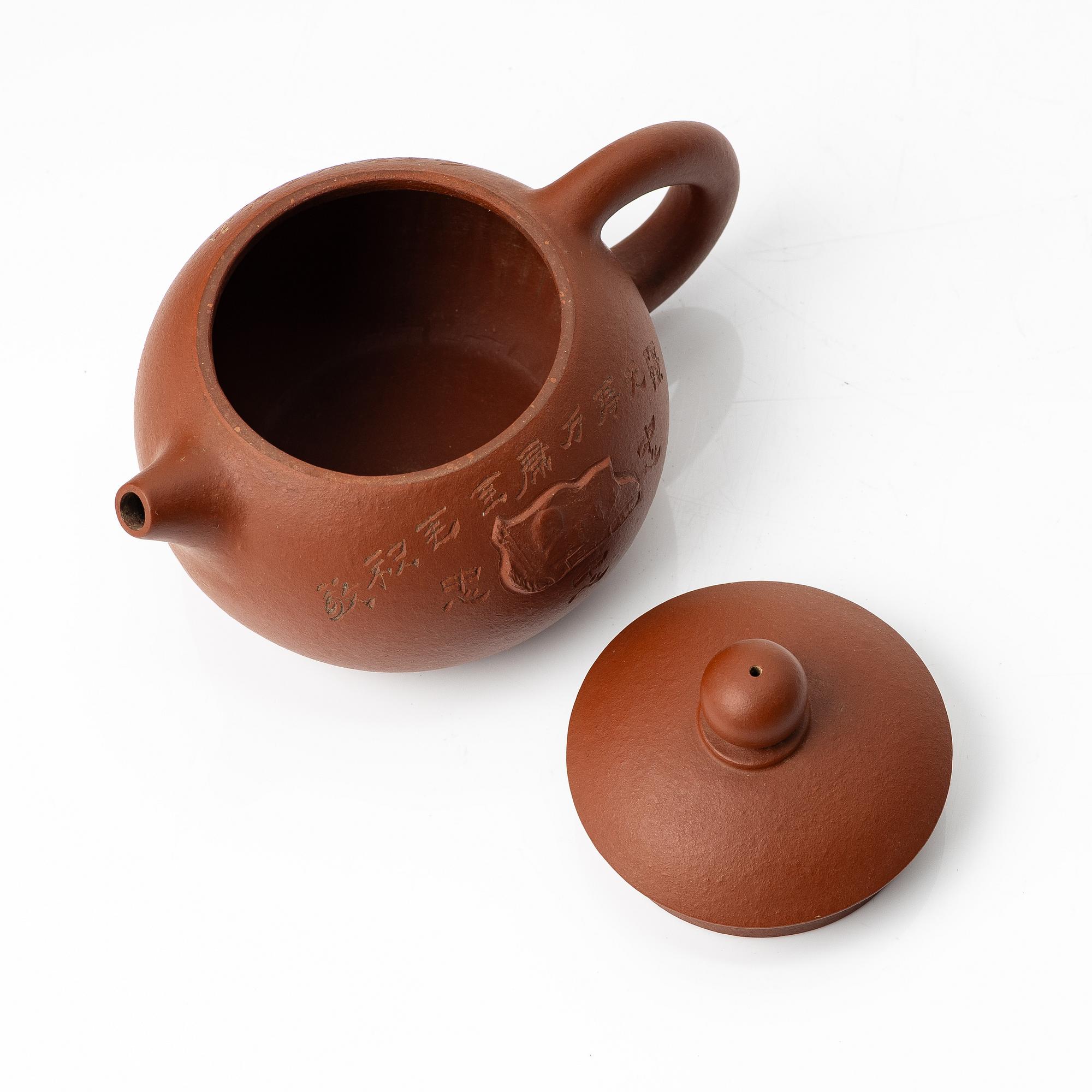
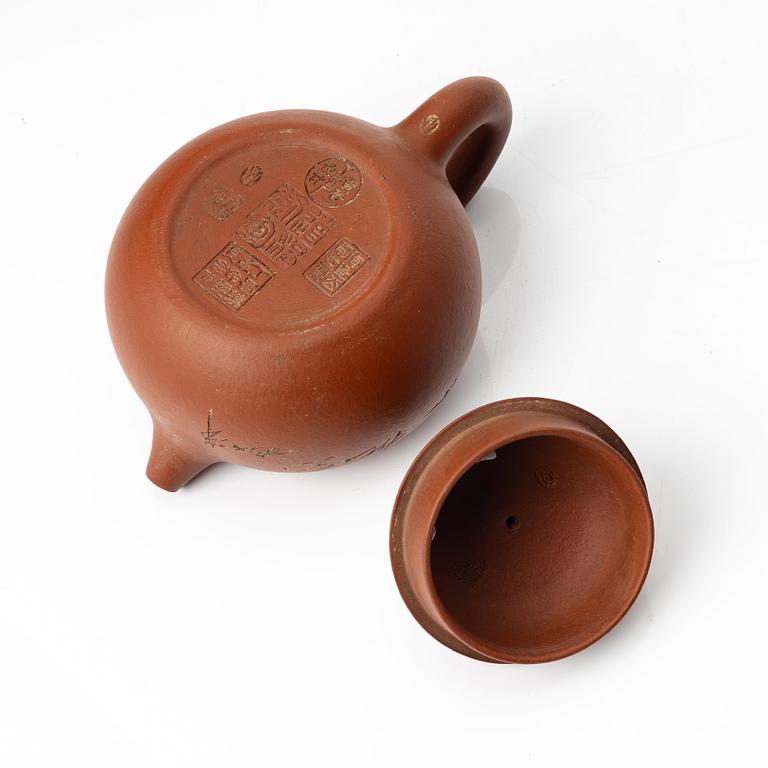
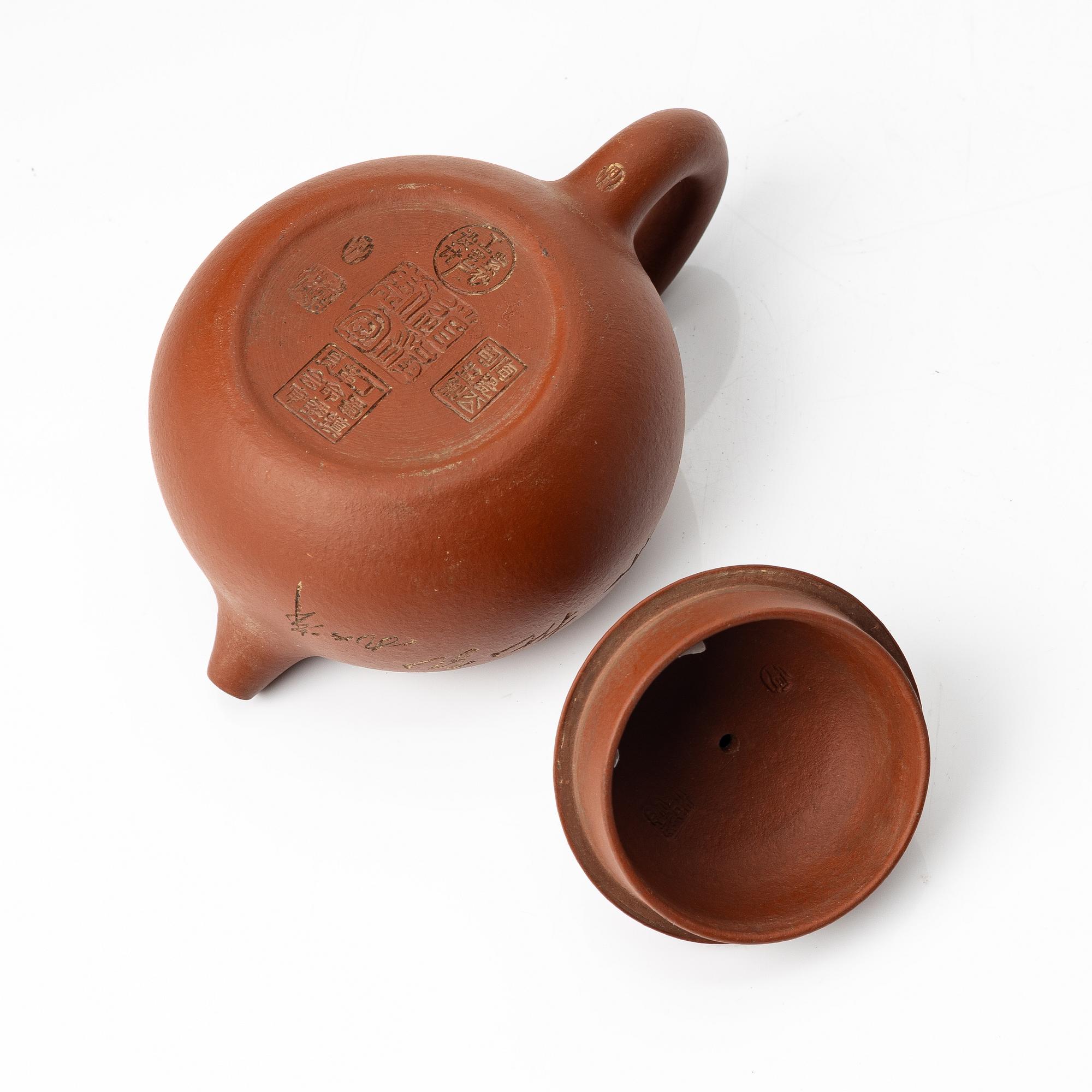
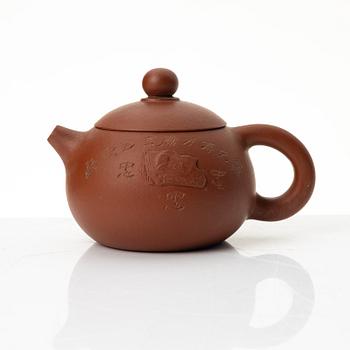
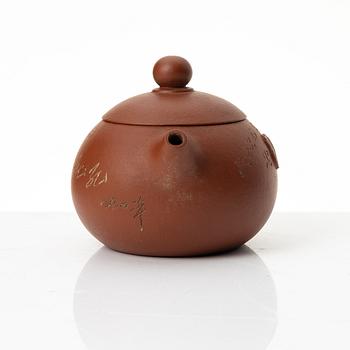
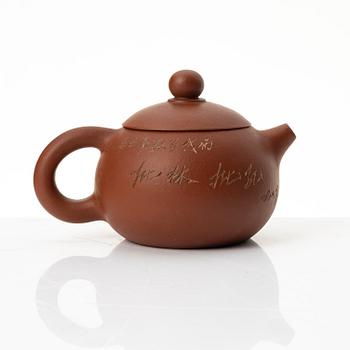
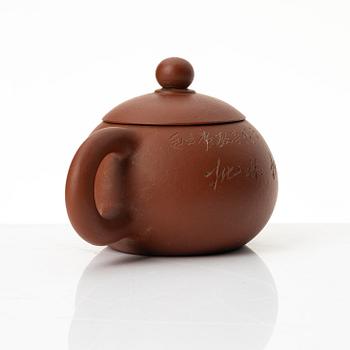
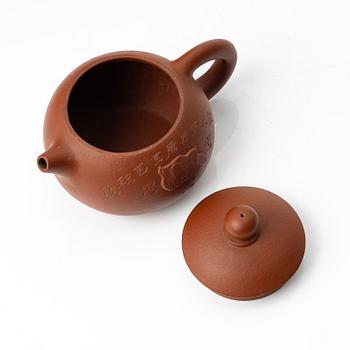
A red yixing teapot, 1960/70s.
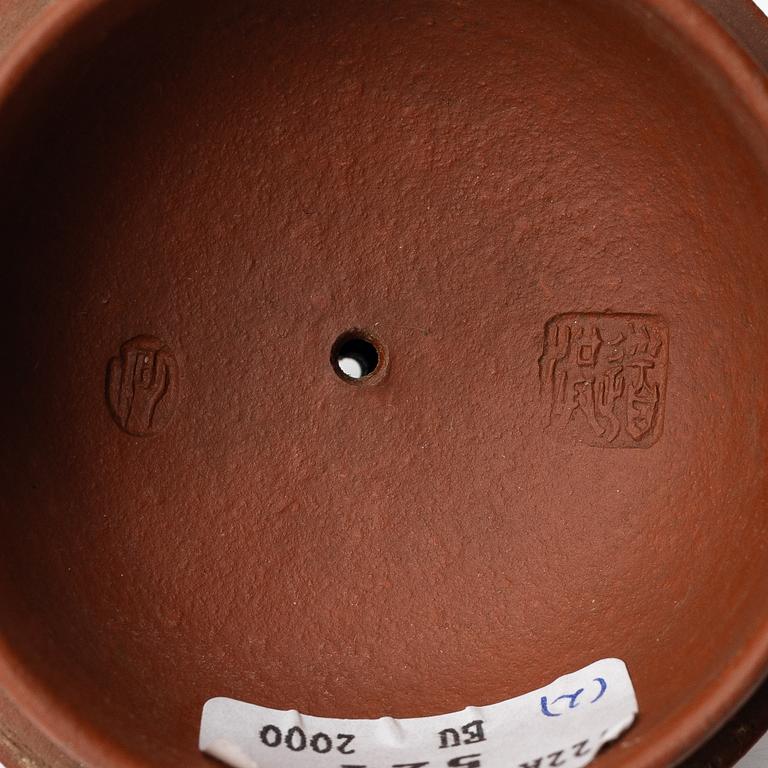
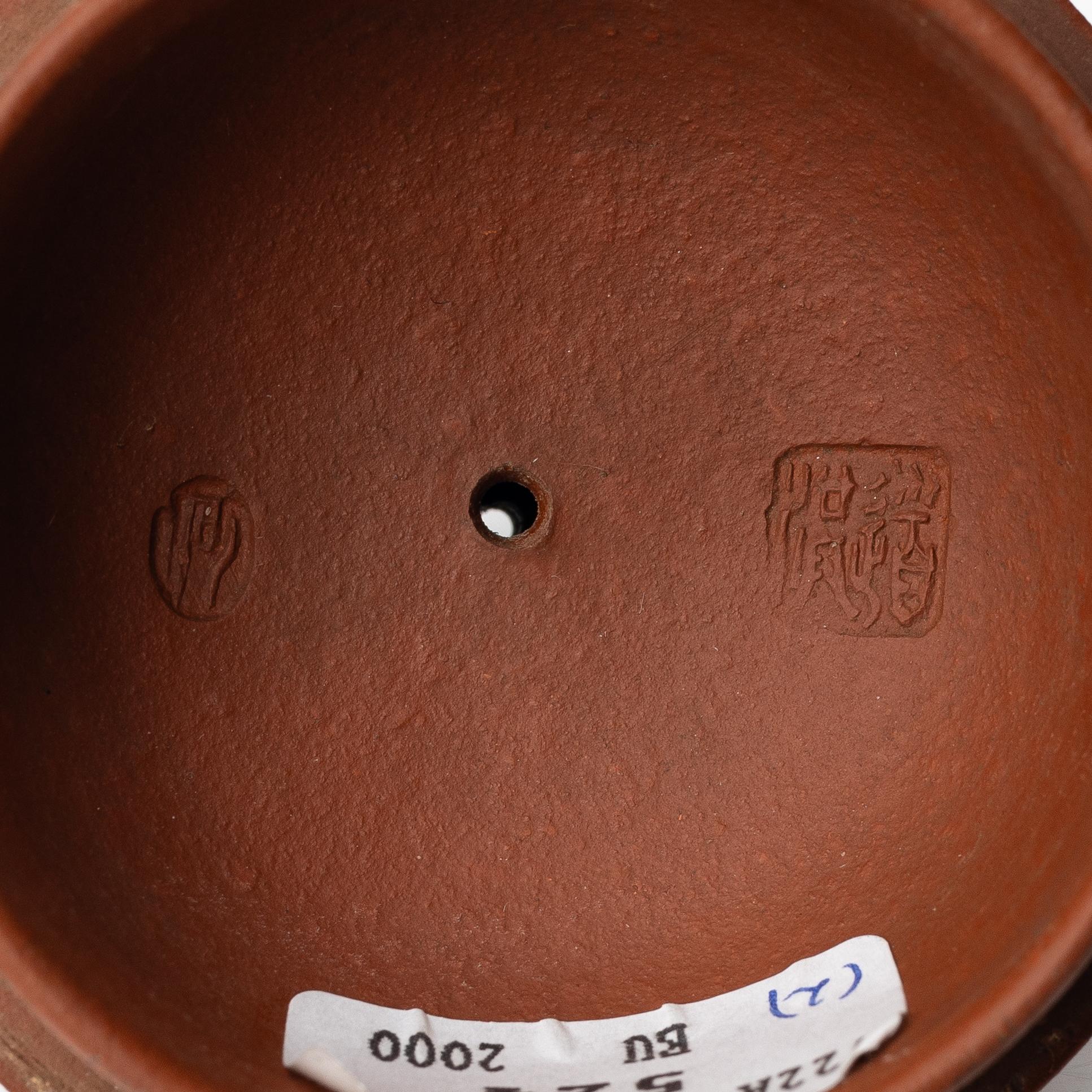
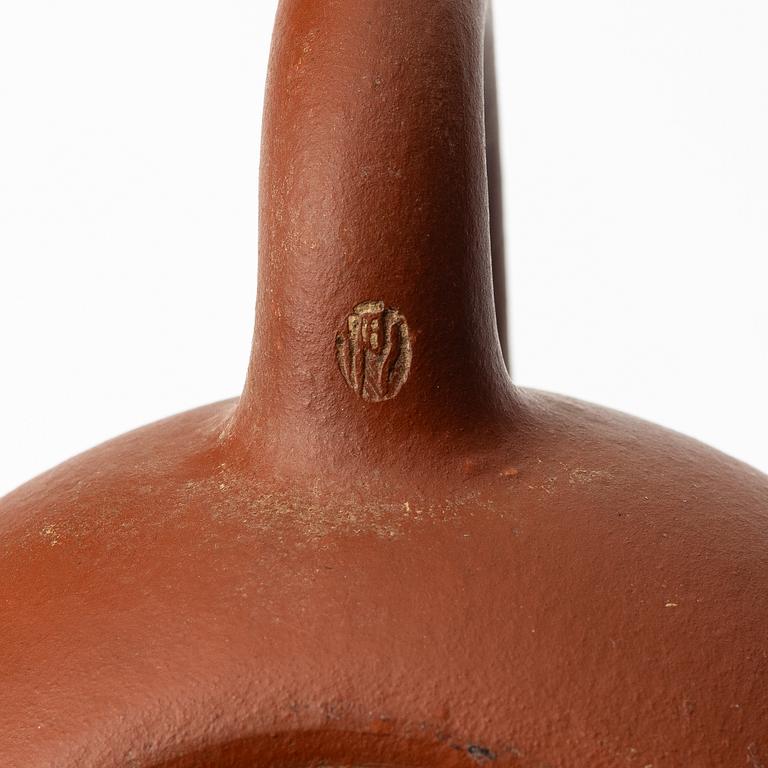
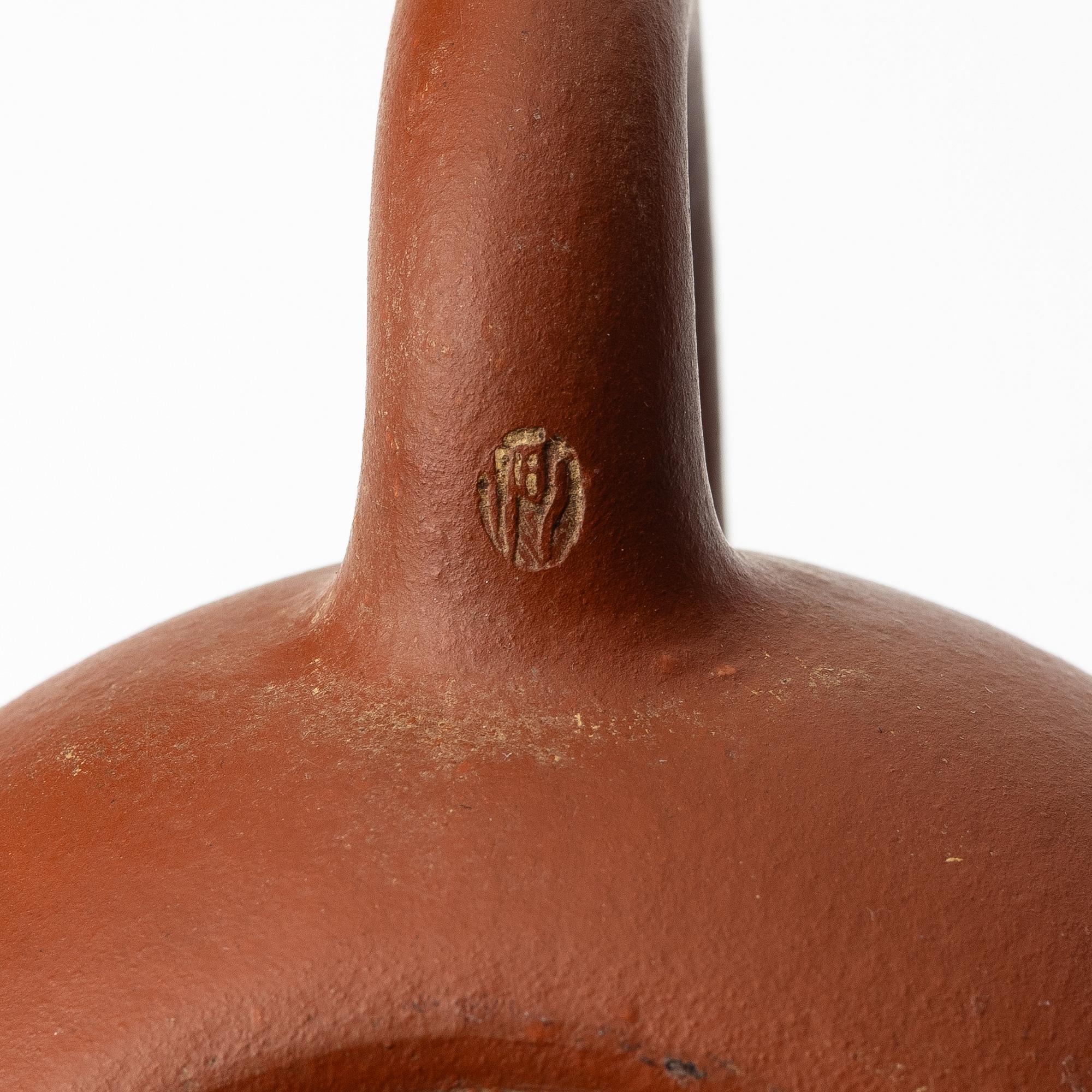
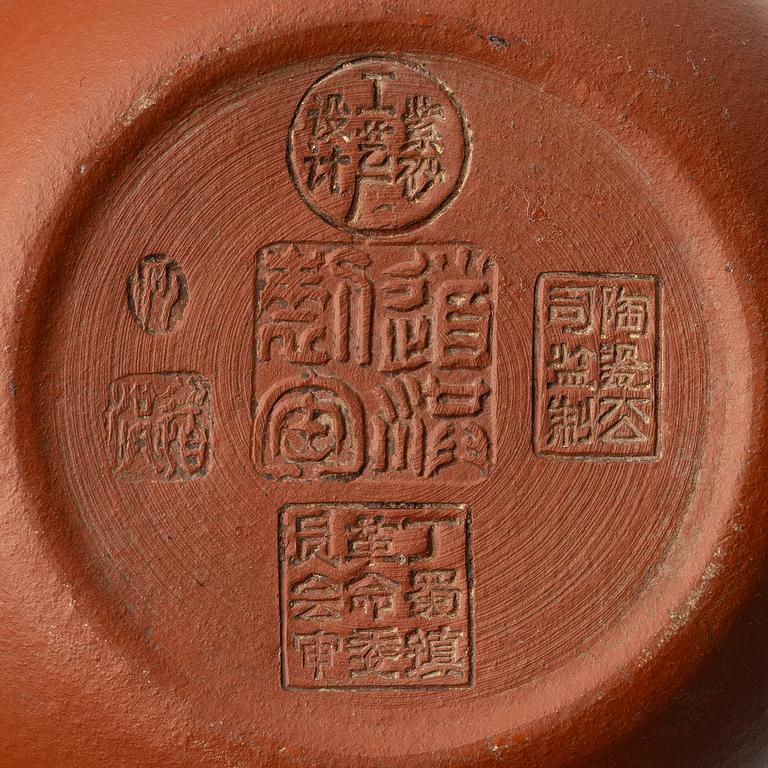
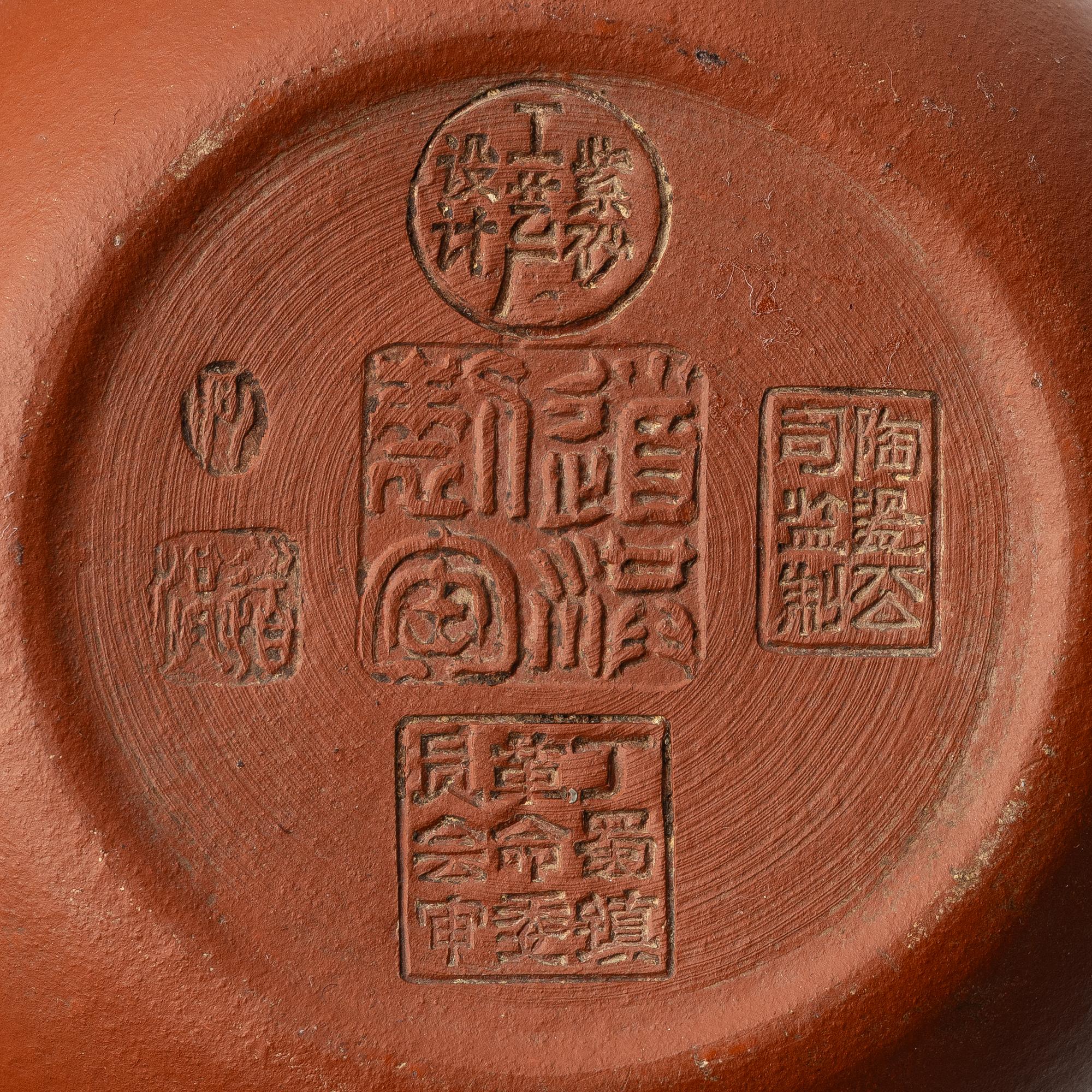
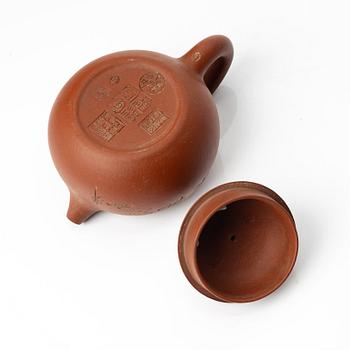
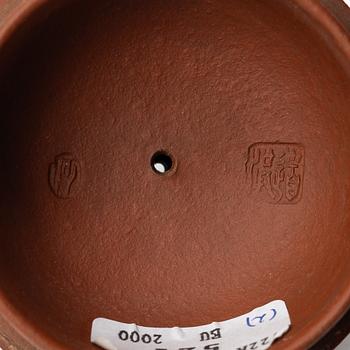
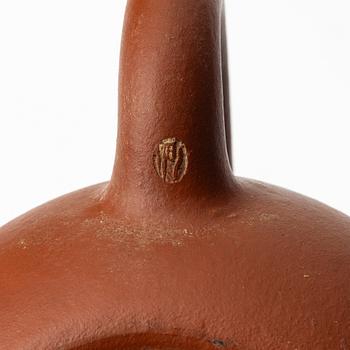
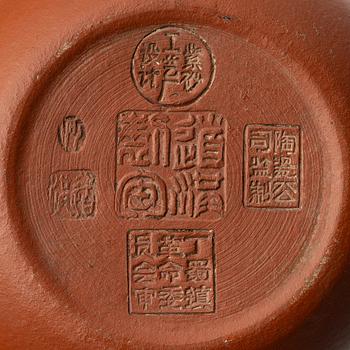
Globular shape with a short straight spout, rounded handle. The domed cover with round finial. Engraved and embossed teapot from the Cultural Revolution period with a poem. Mark to the itnerior of the cover, at the handle and the base. Height 8, length 12 cm.
Minor wear.
Provenance
The Carina and Lennart Bogg Collection. Carina and Lennart Bogg moved to China in 1983, where Lennart worked for UNICEF and Carina at the Norwegian Embassy’s preschool. Their time there coincided with China’s reopening after the Cultural Revolution – a period marked by strong artistic development and increased international exchange. Through close contact with artists and visits to exhibitions and galleries, the Swedish couple’s art collection gradually took shape. It was presented in Sweden at Liljevalchs konsthall in the exhibition “Masters from China” in the summer of 1989. Since then, the collection has continued to grow, reflecting the couple’s interest in China’s rich cultural life and diverse artistic expressions.
Purchased at Nagel China "Teapots" 5 June 2015 . Provenance: From the collection of Lam Chiwang.
More about He Daohong
He Daohong 何道洪 was born in 1943 in Shushan, Yixing. He began his career as a Yixing artist in 1958 when he joined the Yixing Zisha Craft Factory in Jiangsu Province (江苏宜兴紫砂工具厂) where he studied under two masters, Wang Yinchun 王寅春 (1897-1977), from whom he learned to make square vessels (fangqi 方器), round vessels (yuanqi 圆器) and fluted/lobed vessels (jinwenqi 筋纹器), and Pei Shimin 裴石民 (2892-1976). Later, in 1976, he studied ceramics at the College of Art and Design, Tsinghua University.
He is one of the foremost potters skilled in multiple genres of Yixing and well versed in the material and theoretical aspects, but has also gradually developed his own distinctive 'He style', which is described as 'taking the shape while grasping the spirit, possessing a richness and austerity' (取形摄神,浑厚古朴). During his career spanning over thirty years, he has created over 100 works, ranging from highly practical vessels for daily use to those intended solely for display as fine arts. This diversity is also reflected in his use of decorative techniques, including relief carving, inlaid silver wire, etc. Although he is skilled in a variety of vessel types, the most famous are his plain vessels (guangsuqi 光素器) and fluted/lobed vessels (jinwenqi 筋纹器).
Read moreImage rights
The artworks in this database are protected by copyright and may not be reproduced without the permission of the rights holders. The artworks are reproduced in this database with a license from Bildupphovsrätt.
Others have also viewed