Salokivi worked as a drawing teacher at the Turku Drawing School and the Finnish Classical Lyceum from 1914 to 1917. He also had his own art school in Helsinki from 1930 to 1932.
Salokivi was one of the first residents of the Lallukka artists' residence, where he lived from 1933 to 1940. He often spent his summers in the archipelago, which was close to his heart. The landscapes of Pellinge, the Turku archipelago and Åland are immortalised in many of his paintings. Santeri Salokivi died on 26 March 1940, shortly after the declaration of peace in the Winter War. In the spring of 1942, a memorial exhibition was held in both Helsinki and Turku, which received rave reviews and lifted people's spirits during the grim years of war.
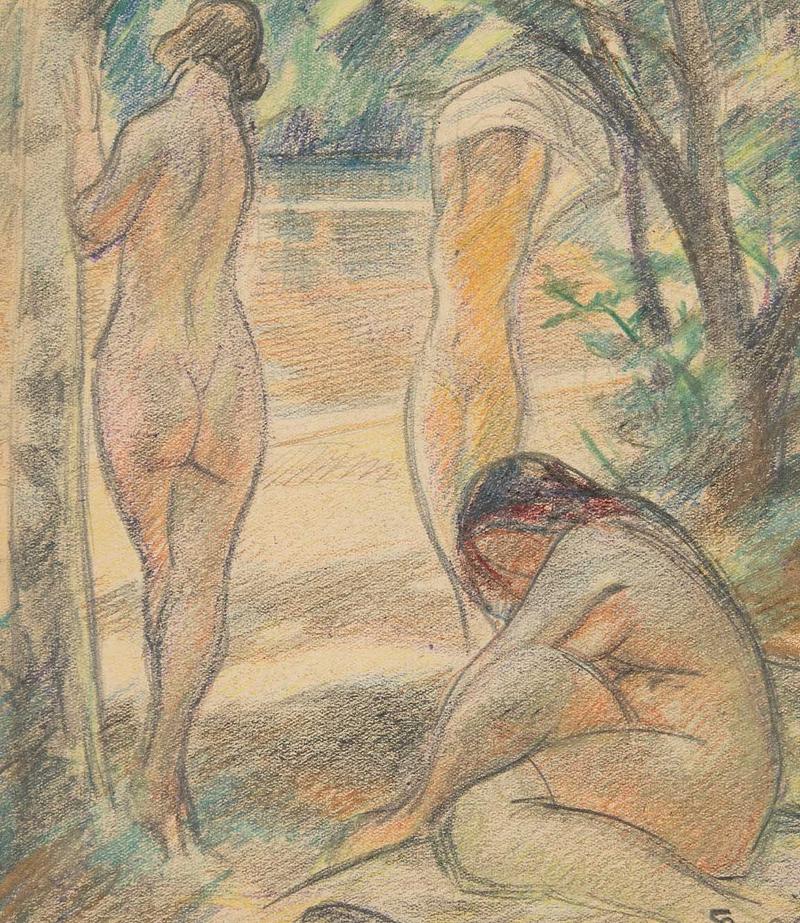
The works in the themed auction, which originally came from the artist's estate, are examples of Salokivi's talent and serious approach to art and his own creative process. The auction also shows that it was natural for Salokivi to experiment with colours.
His wife, Majsi Salokivi, described the artist's creative work in three words: life, light and joy. It is undoubtedly these factors that continue to delight and fascinate the ever-growing number of admirers of Salokivi's art.