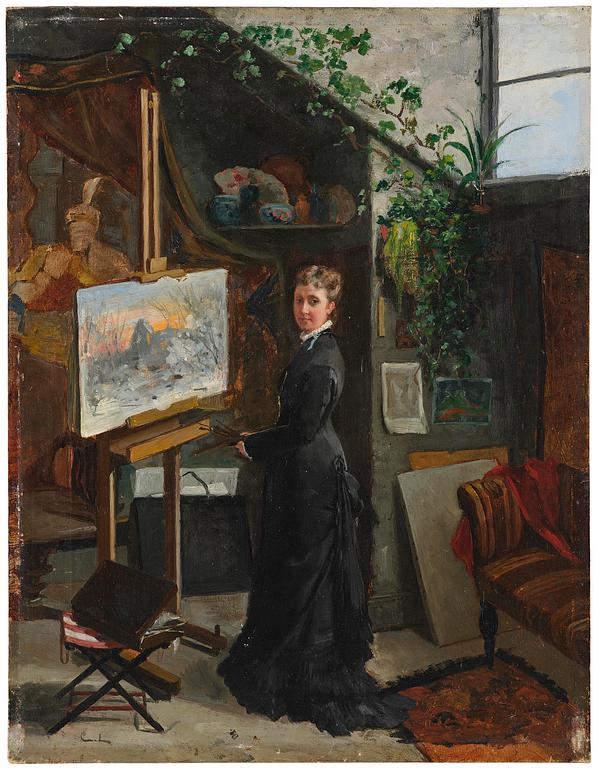
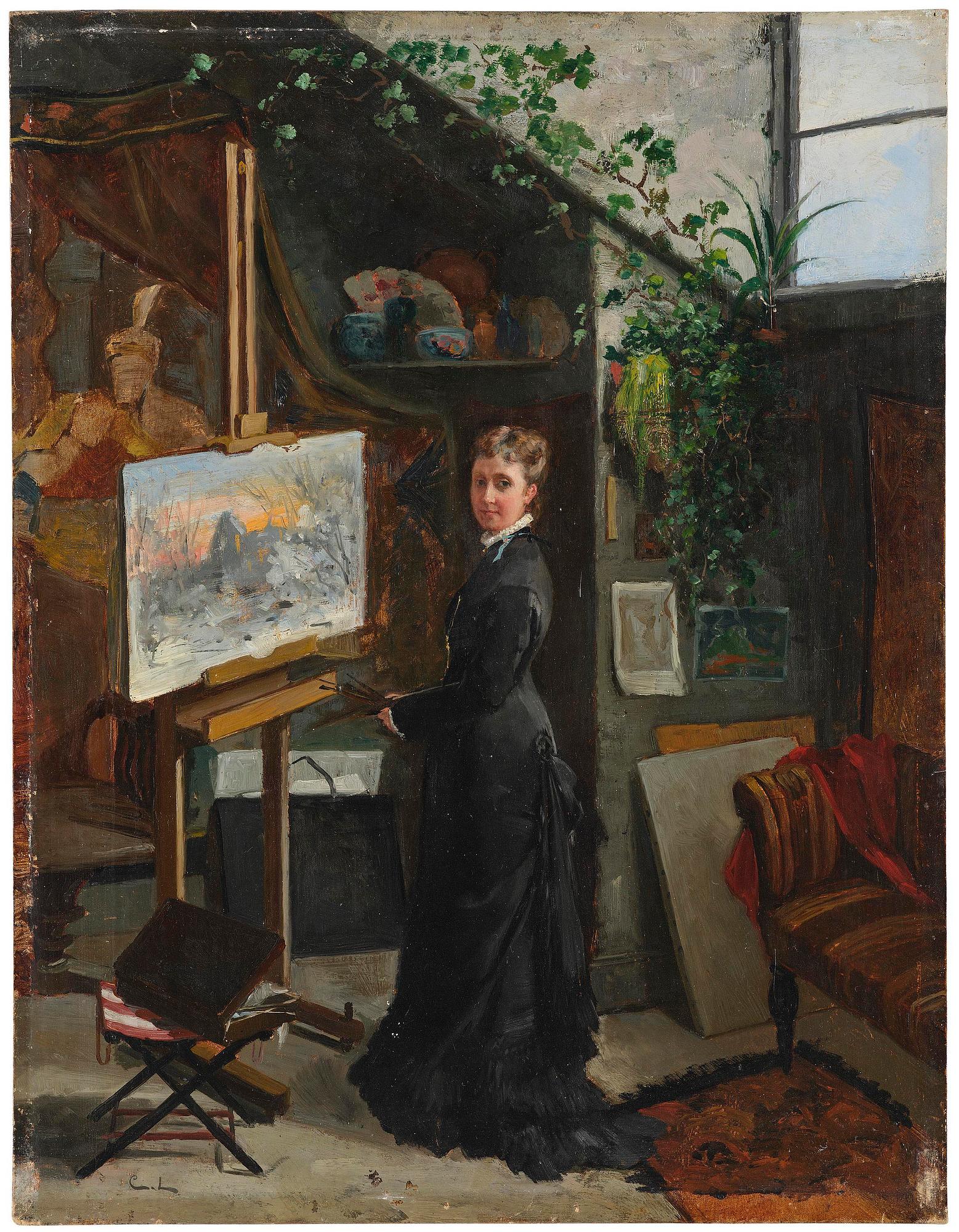
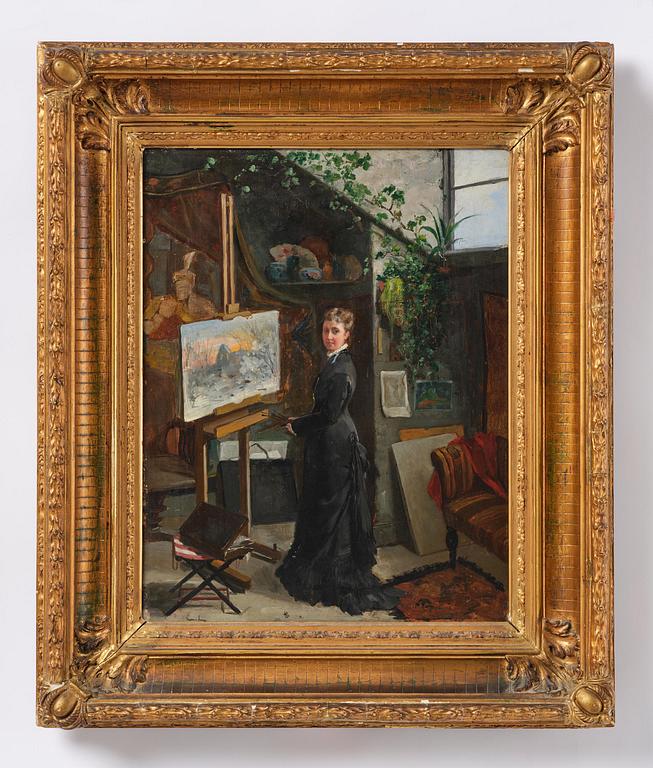
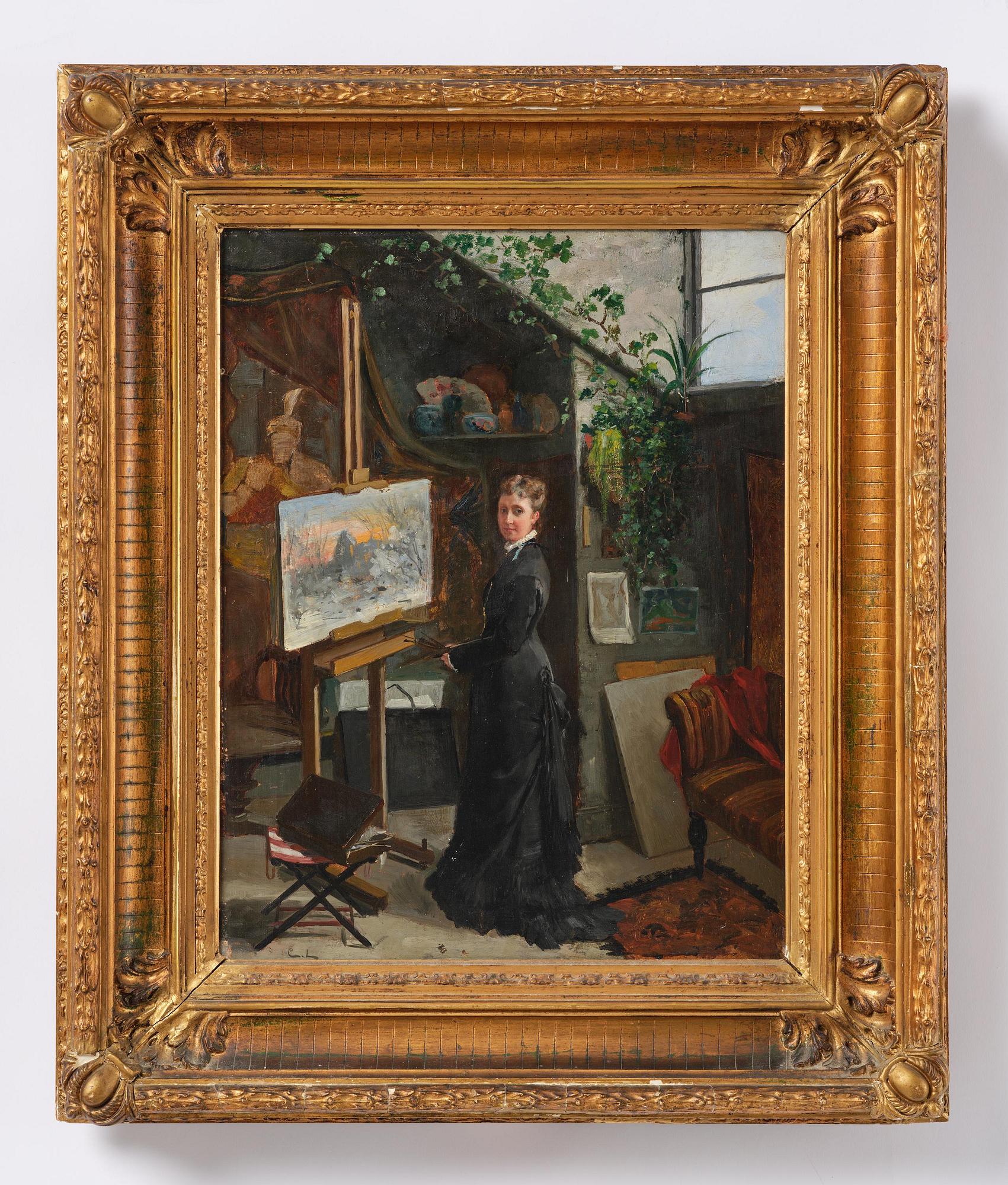
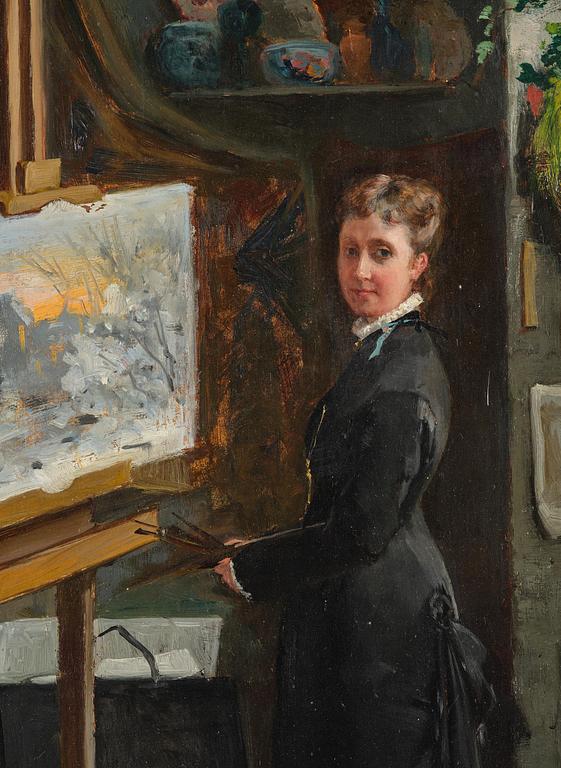
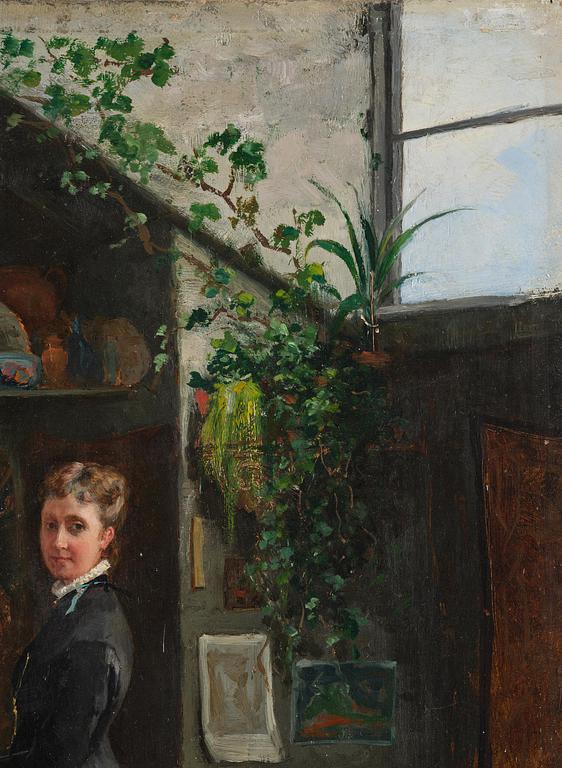
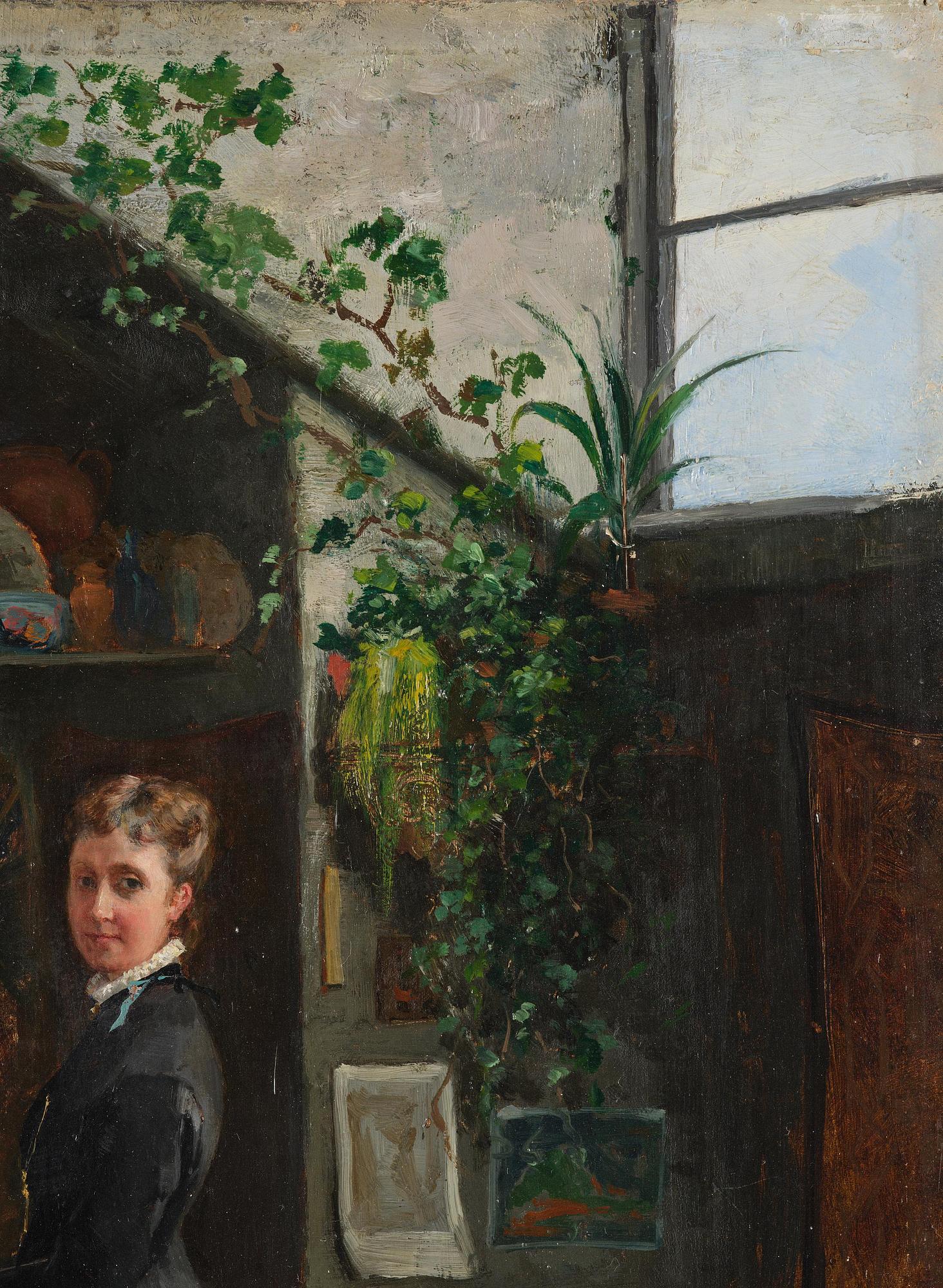
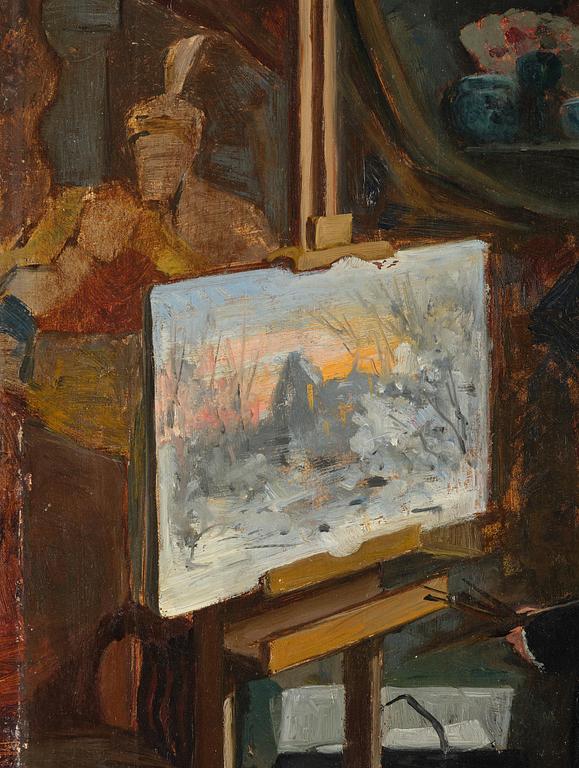
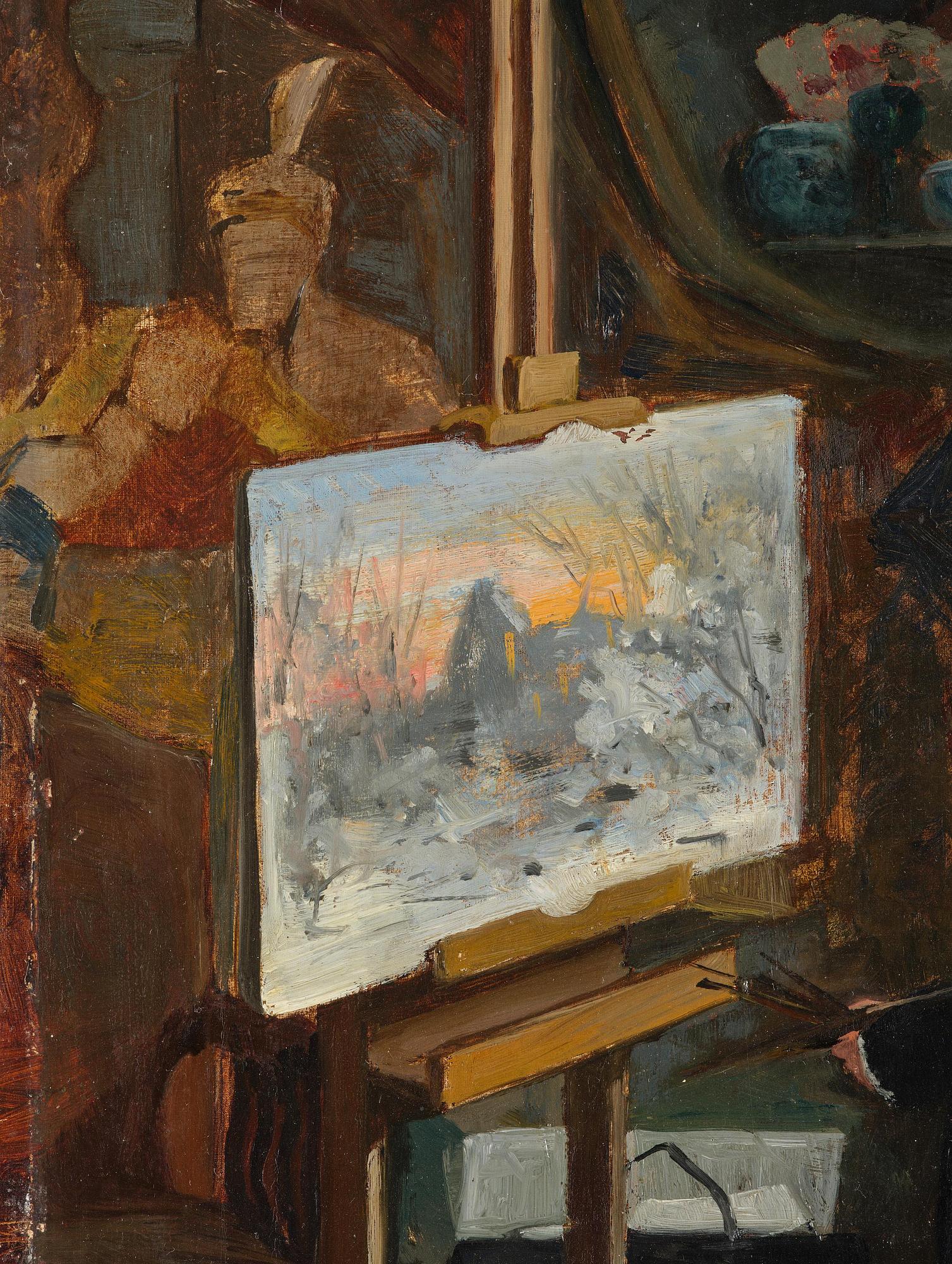
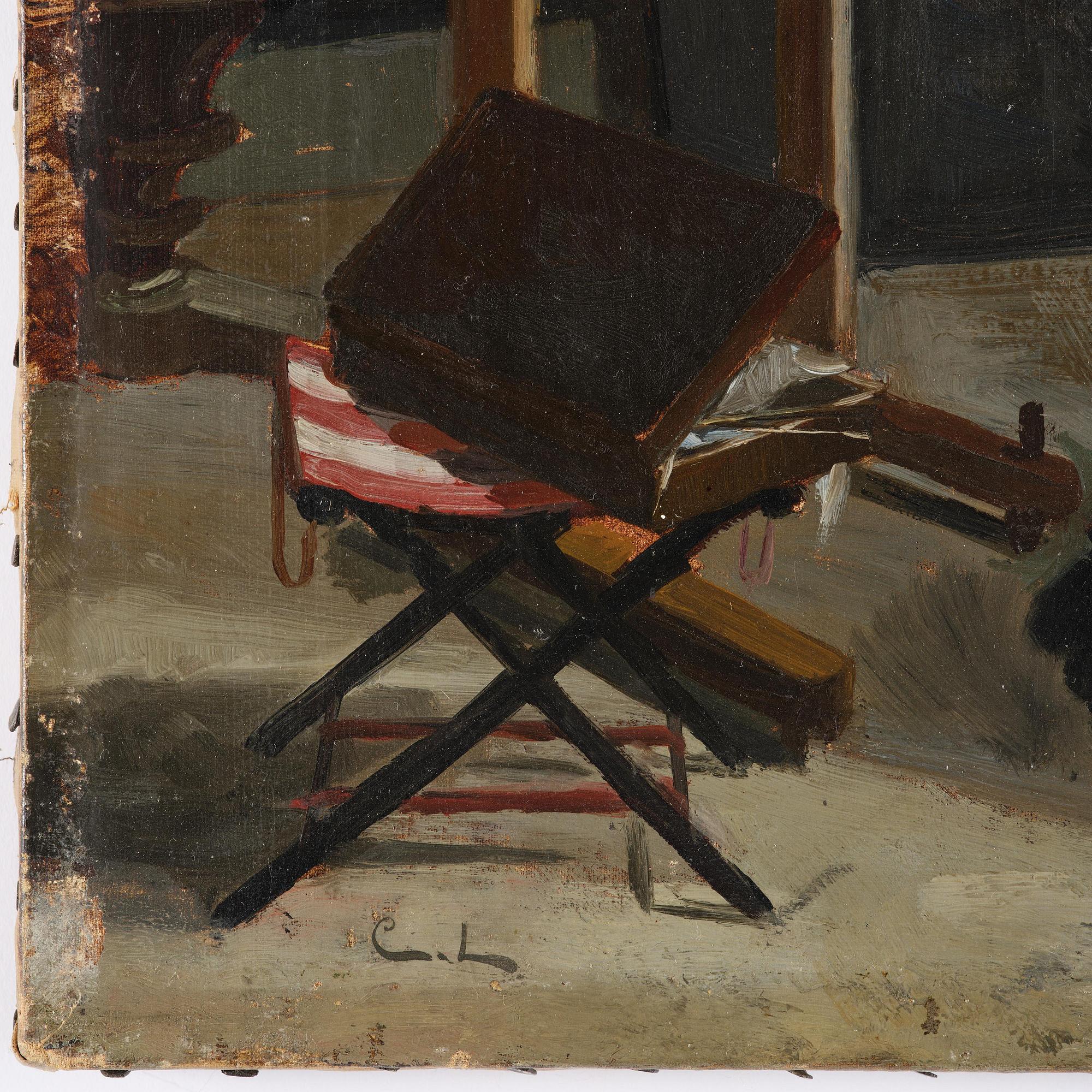
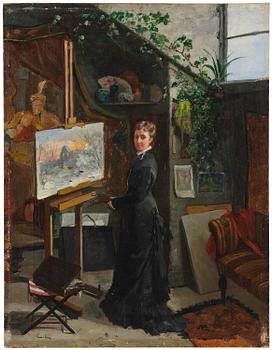
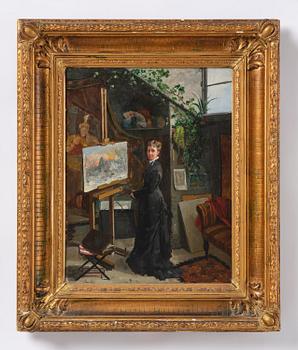
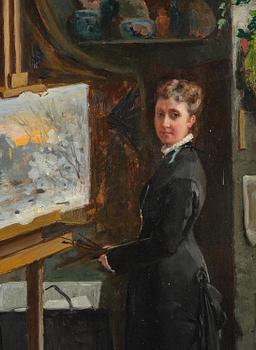
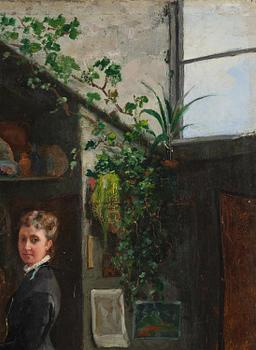
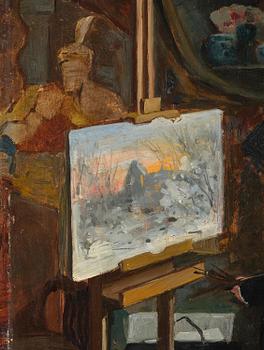
Unknown artist, 19th century. Female artist in her studio
Signed C.L. Oil on canvas 51 x 40 cm.
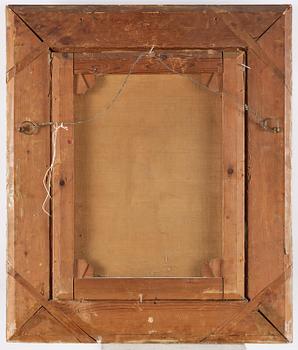
Minor loss of paint.
More information
The realistic plein air painting that developed in Sweden in the late 19th century is one of the most significant artistic turning points in Swedish art history. It was seen as a liberation from the increasingly stagnant views of the Royal Academy and paved the way for modern art. The major breakthrough for Swedish plein air painting occurred in the 1880s. More and more young artists chose to settle in France instead of Germany as before. Not least, female artists encountered far better conditions in Paris than at home. During the 1840s, realistic plein air painting had its breakthrough in France with artists such as Camille Corot and Théodore Rousseau. Thanks to the English firm Winsor & Newton's introduction of ready-mixed paint in tubes in the 1840s, artists could increasingly direct their gaze outward to the world around them and depict it with their brushes. The artists took their easels and colours and set up on roadsides, squares, and beaches with the ambition of portraying the reality around them.
For condition report contact specialist

What will the transport cost?