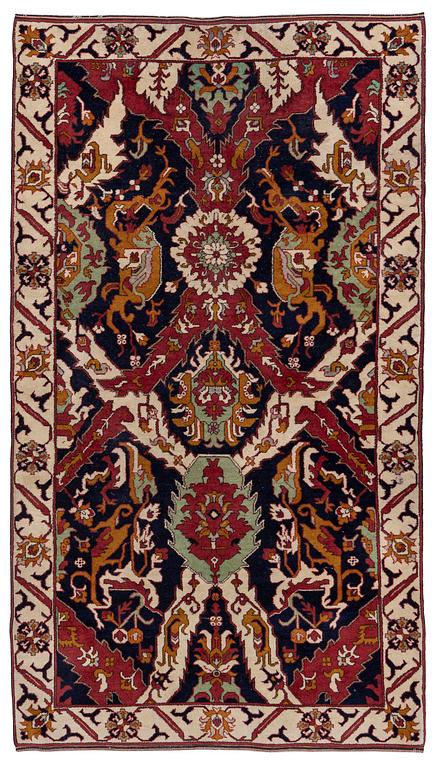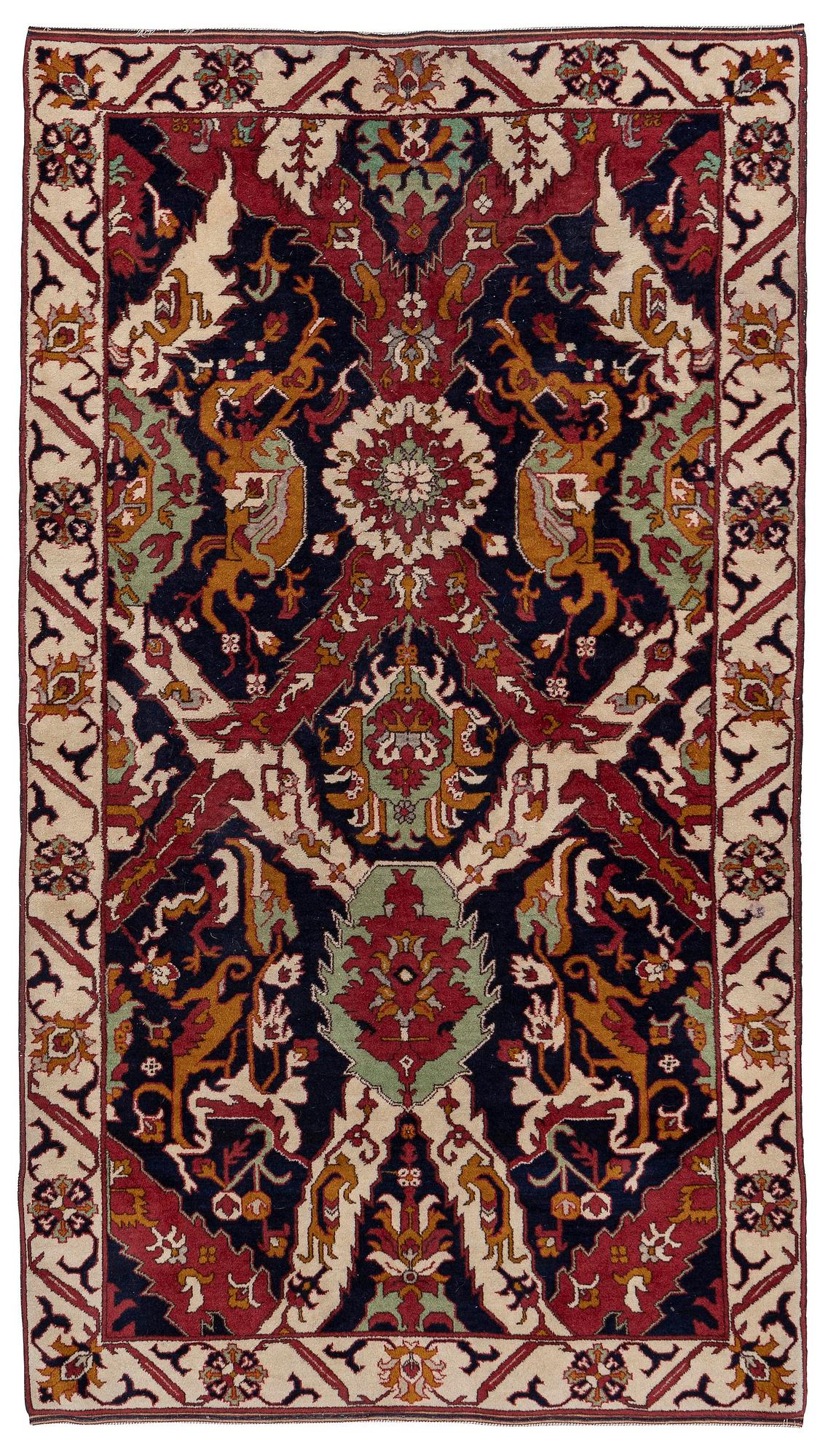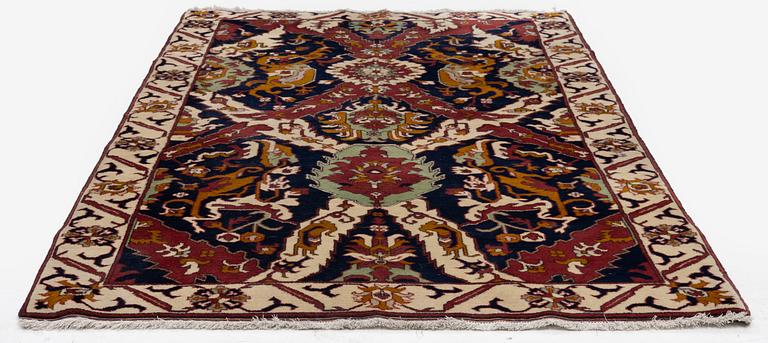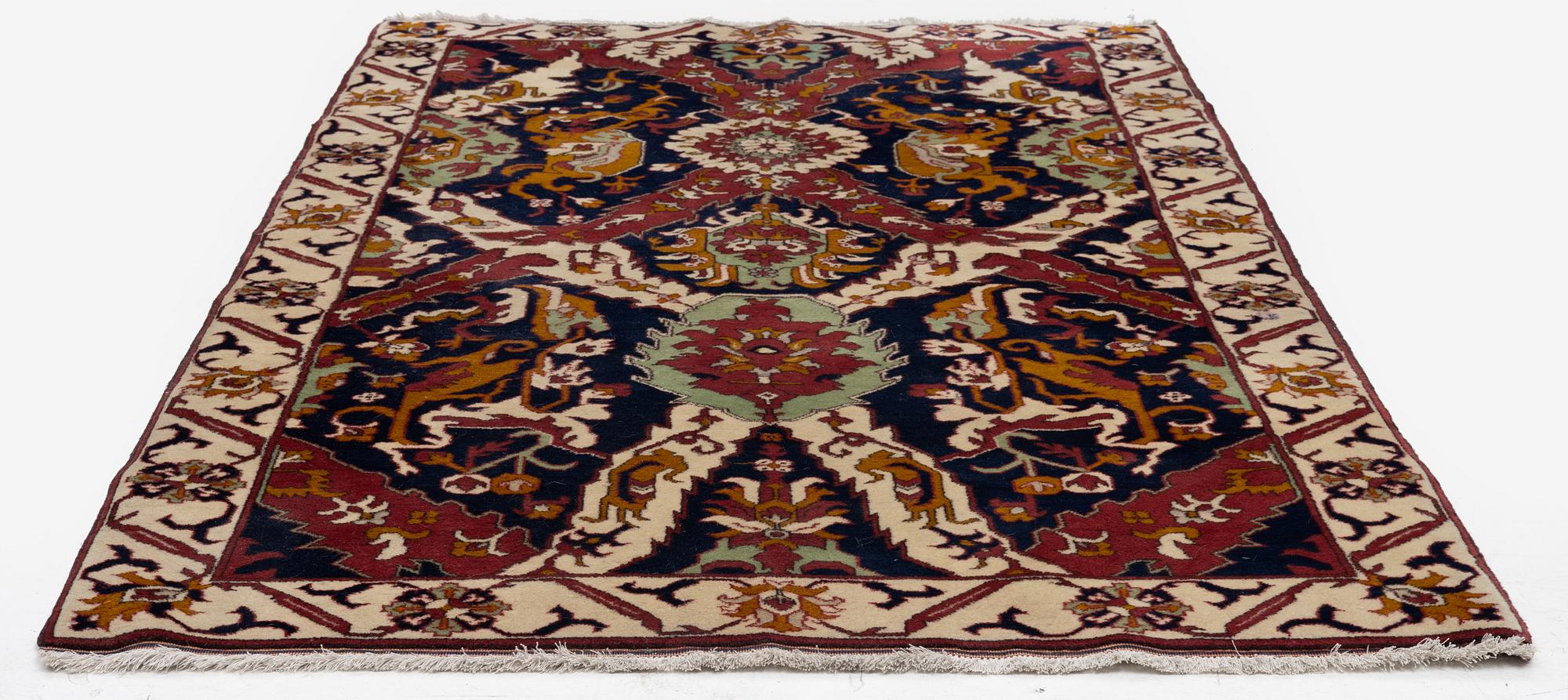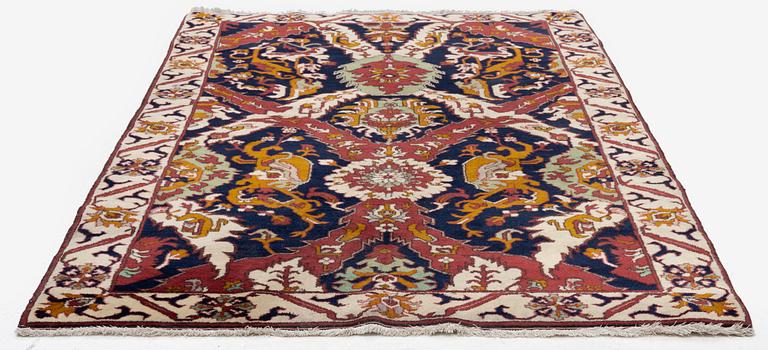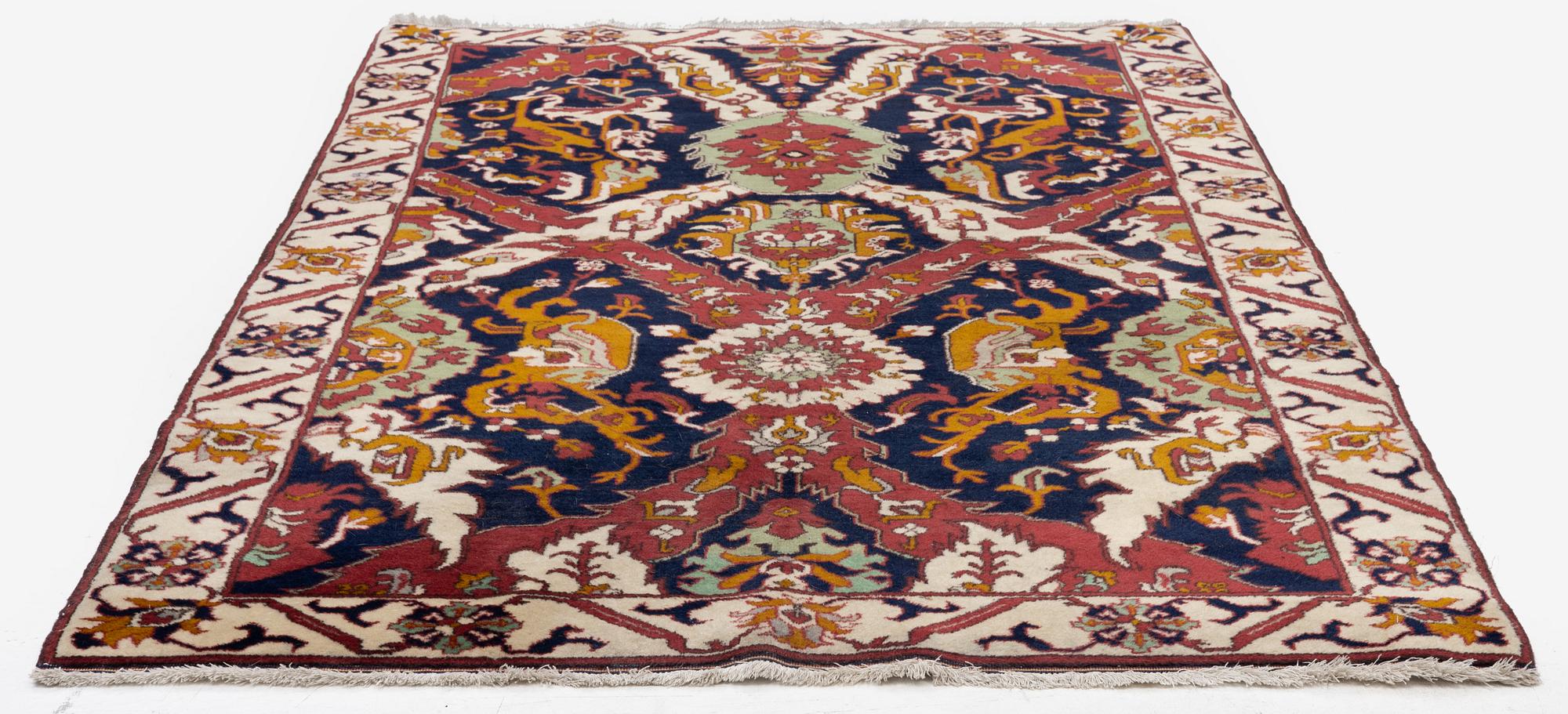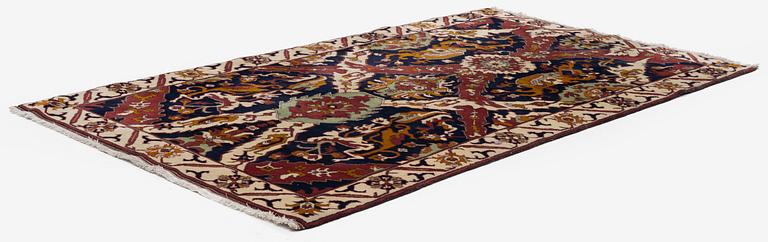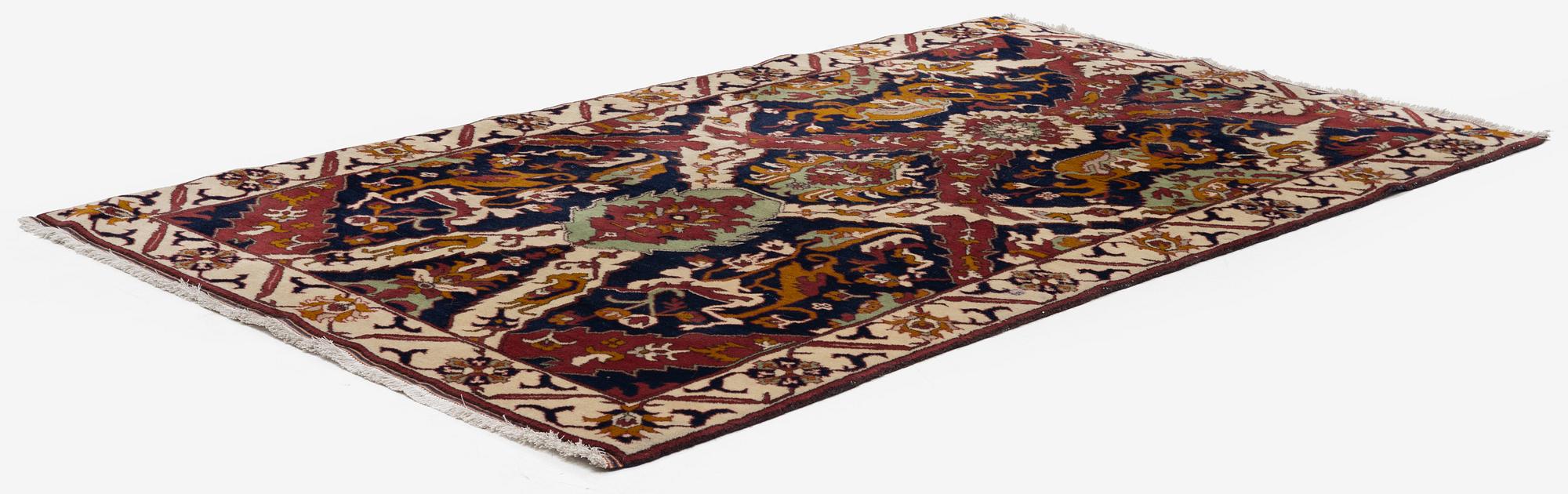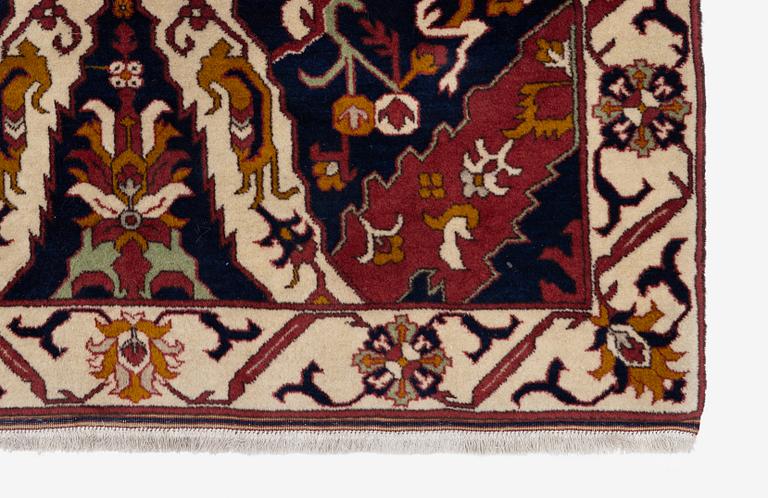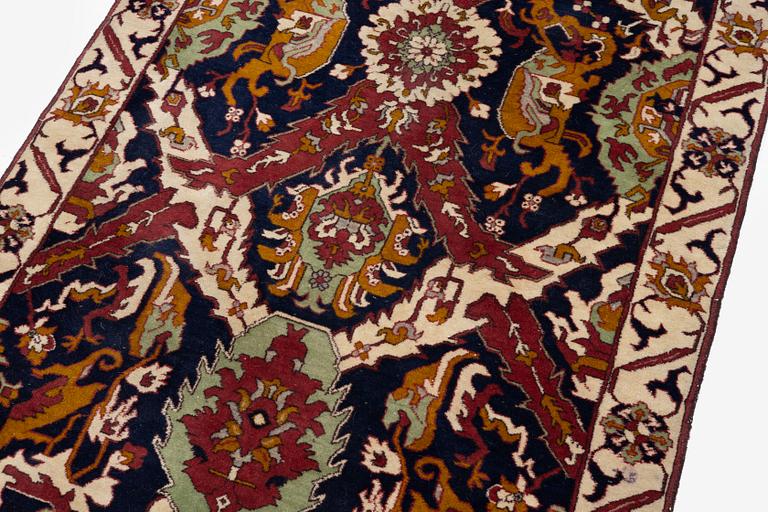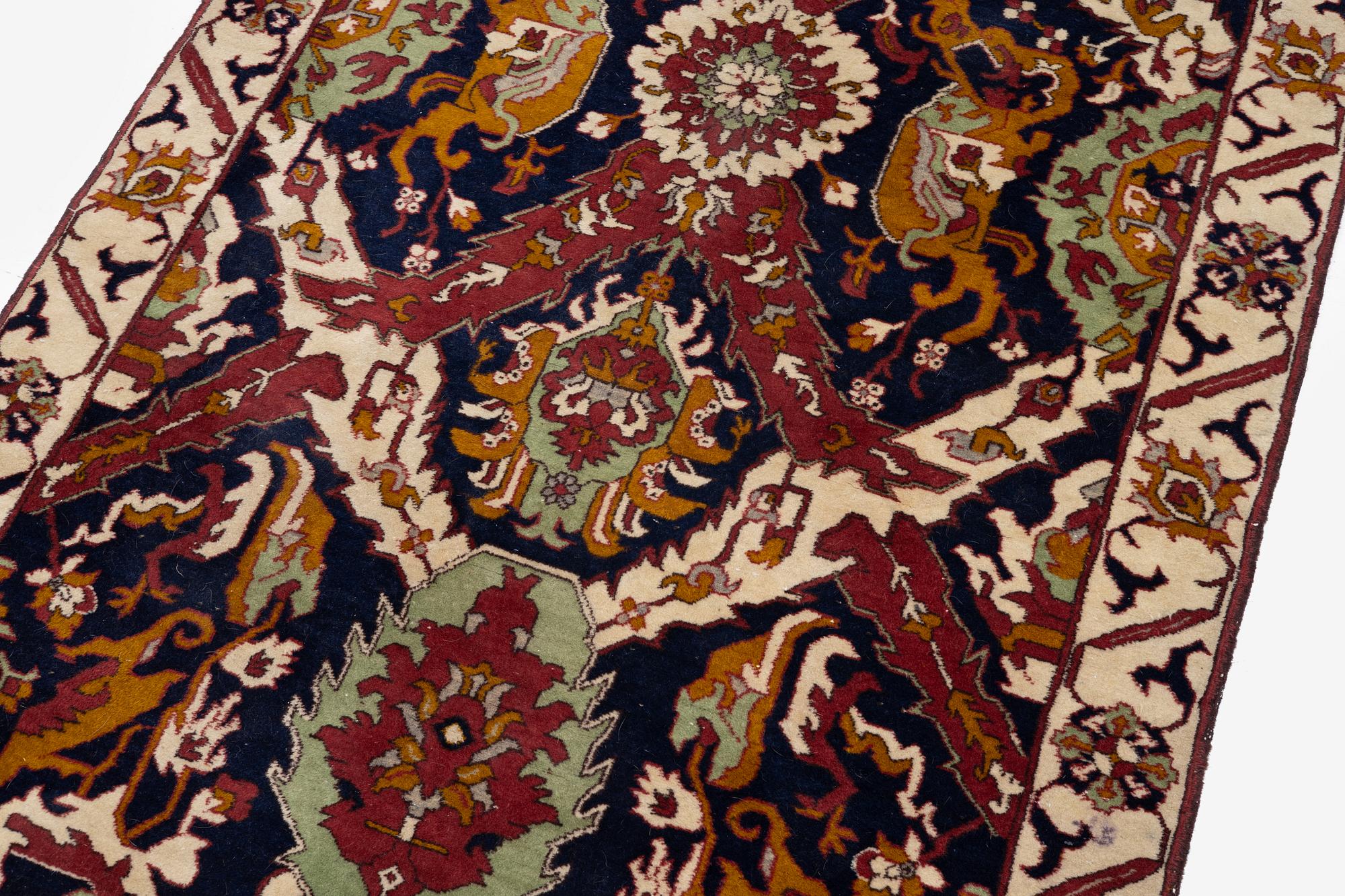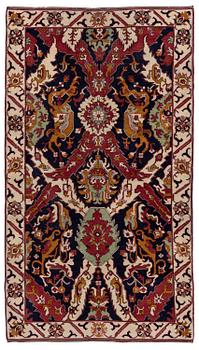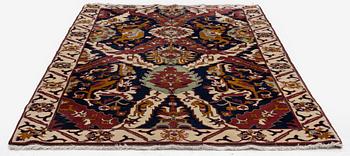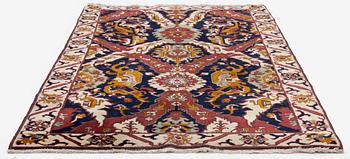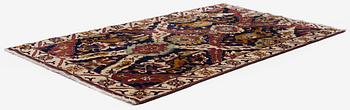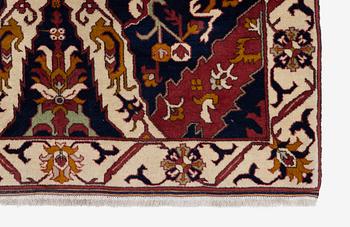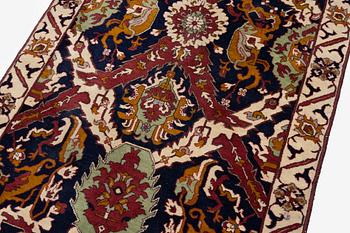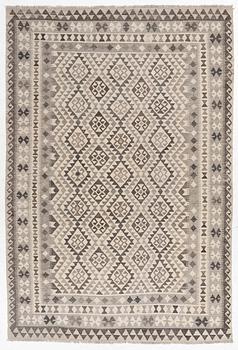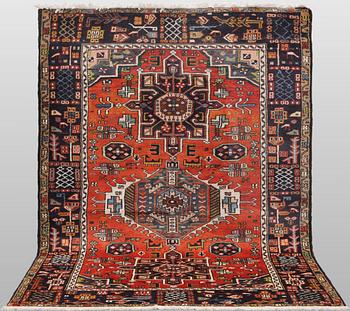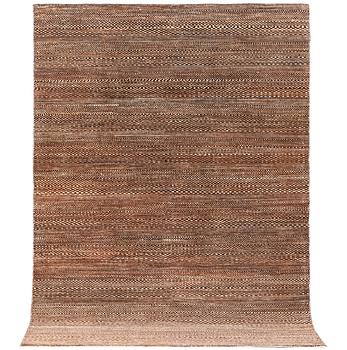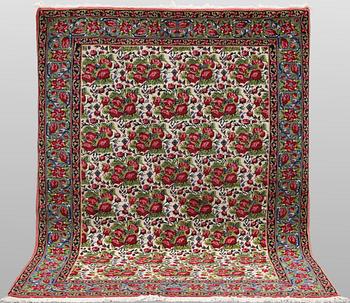
A dark blue ground with ivory and red serrated leaves creating diamond formations, alternately containing palmette motifs and flanked by stylised dragons, Ivory main border with a stylised vine.
Literature
Compare Yetkin, Serare, Early Caucasian carpets in Turkey. 2, The development of the Caucasian carpet, 1978 fig.135, p.19-20.
More information
This carpet displays a refined and deliberately archaic design, composed of elongated, serrated leaves arranged in a diamond lattice, with palmettes articulated at the points of intersection. Incorporated within this ornamental framework are highly stylised representations of three of the principal creatures of Chinese mythology: the dragon (ti’en lung), the phoenix (feng huang), and the unicorn (ch’ilin). These motifs are generally understood to have entered the Iranian decorative repertoire through cultural transmission from China, mediated by Central Asian and Iranian artistic exchanges.
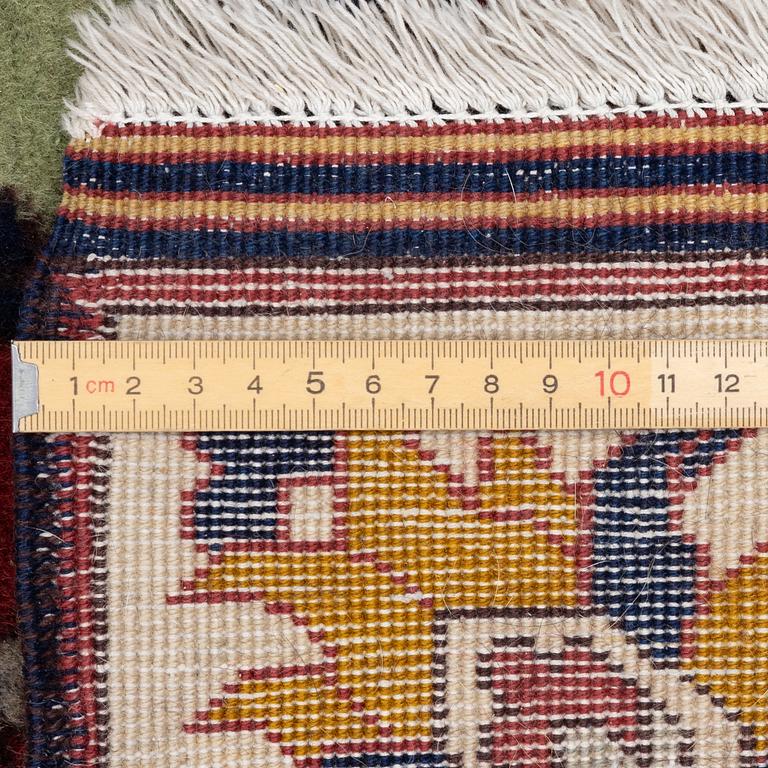
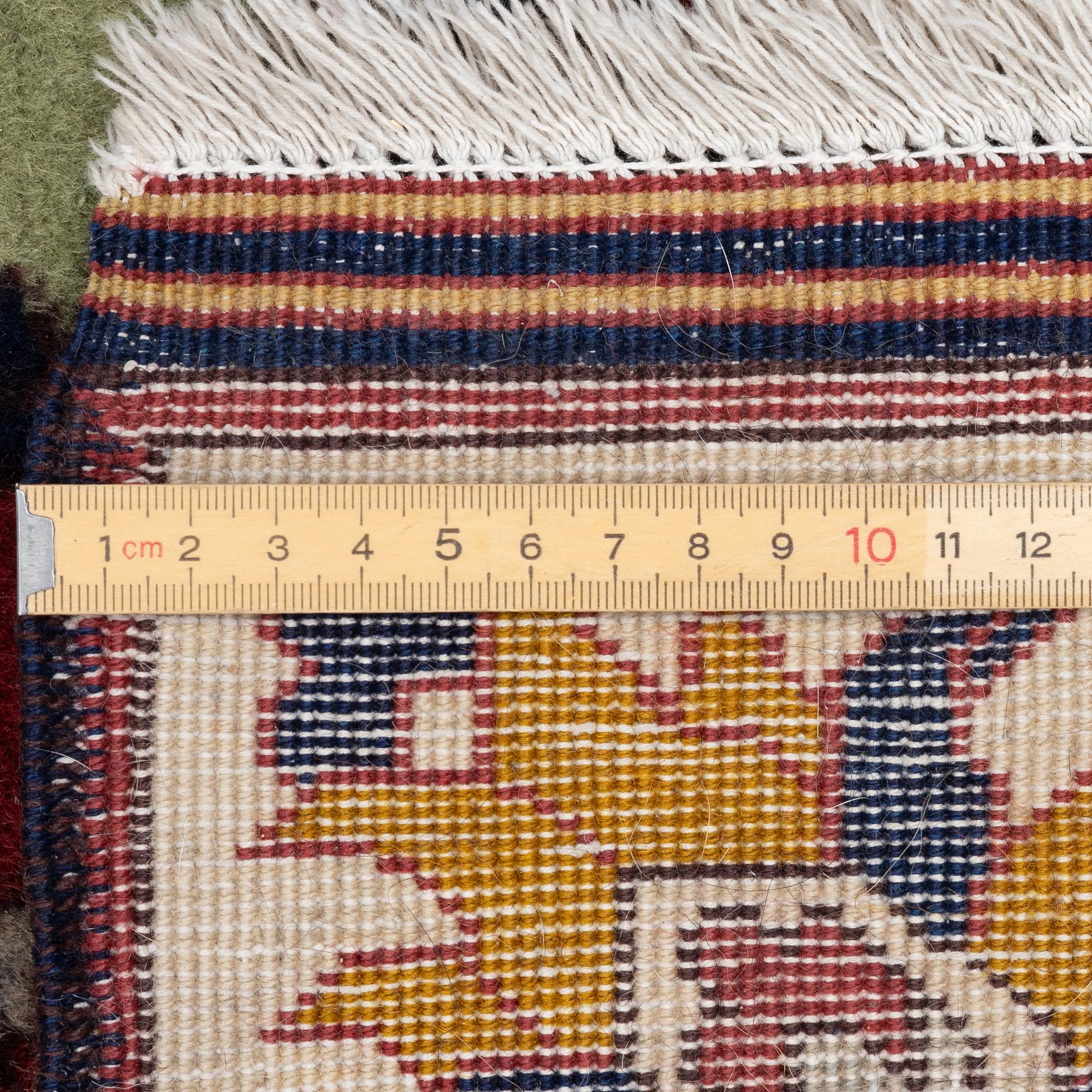
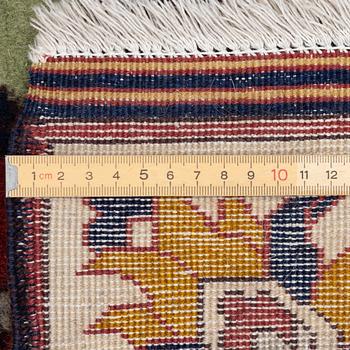
The pronounced archaic character of the design has previously led to suggestions of a very early date, possibly as early as the 13th century. Closer examination of the materials, colour palette, and state of preservation, however, when compared with carpets of securely later date, renders such an attribution unlikely. While the design itself clearly derives from much earlier sources, the technical and material evidence indicates that the carpet was produced no earlier than the 17th century.
For condition report contact specialist