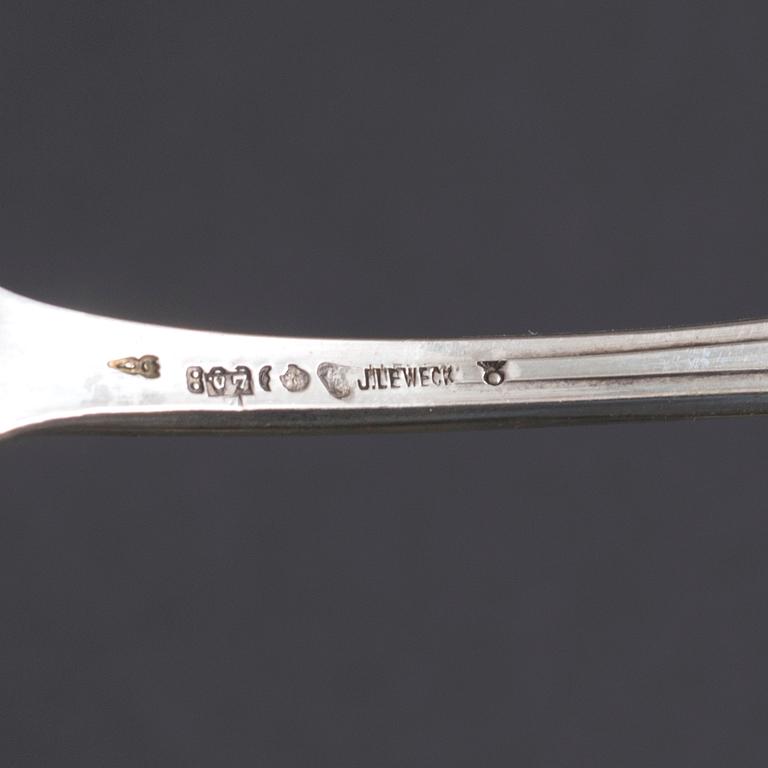
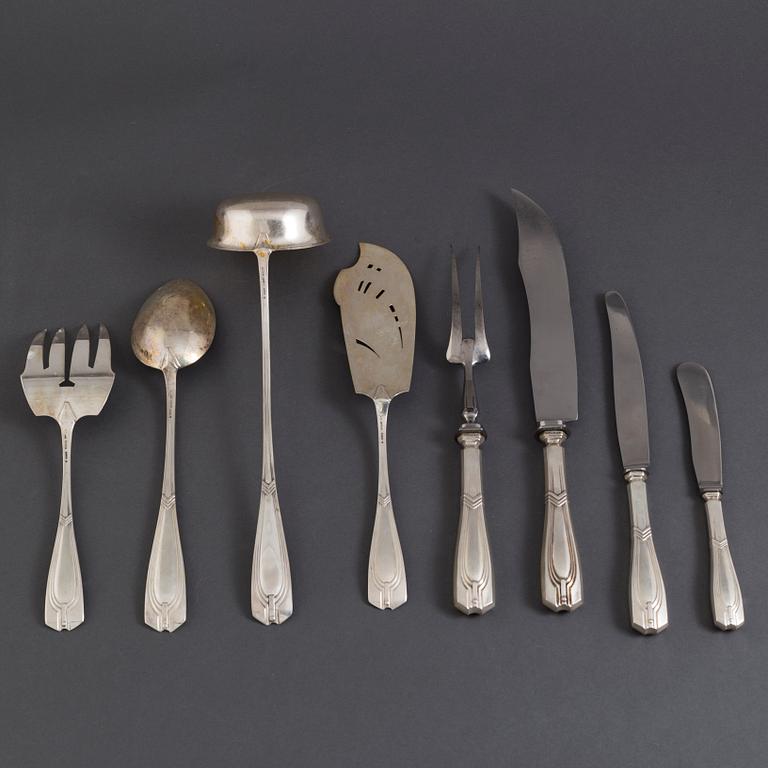
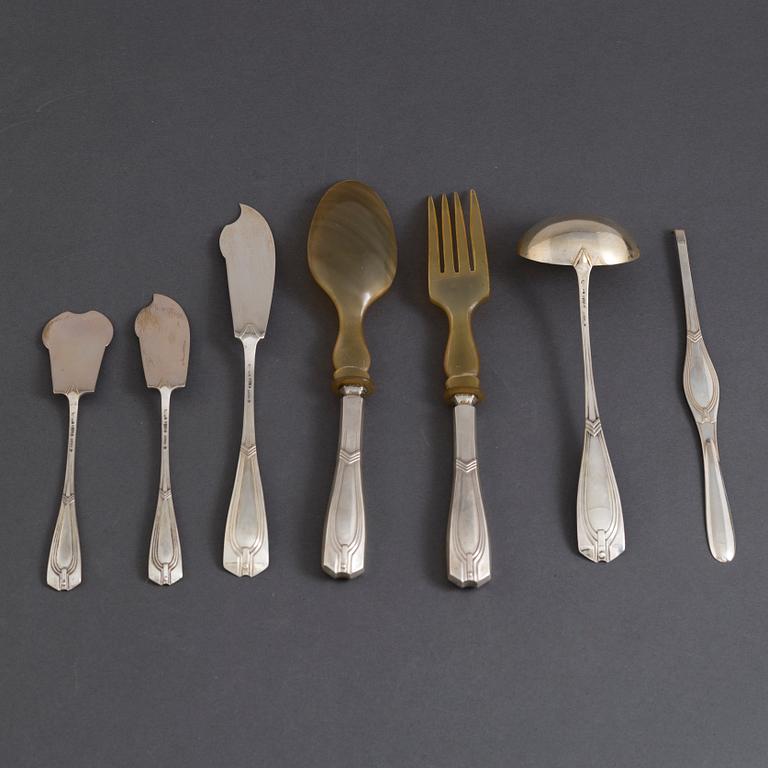
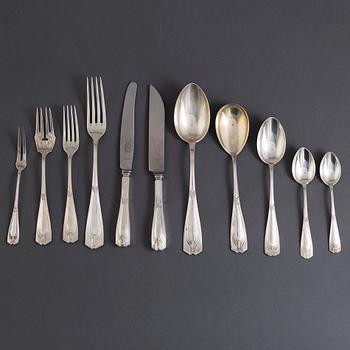
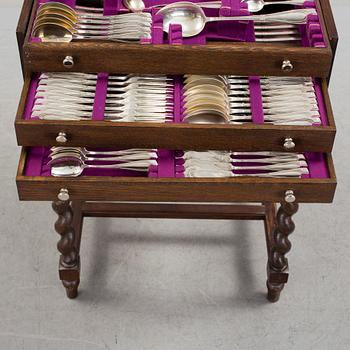
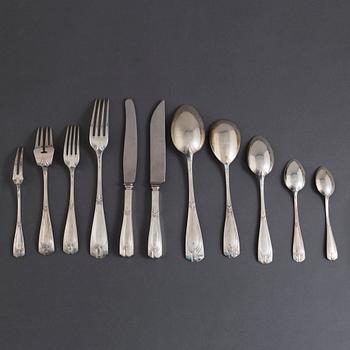
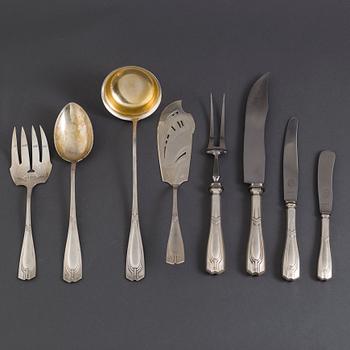
A 156 piece silver cutlery set from J. Leweck, Leipzig, Germany, early 20th Century.
12 matgafflar 22 cm
12 matknivar med blad av rostfritt stål 26 cm
12 matskedar 21,5 cm
12 fiskgafflar 17,5 cm
12 fiskknivar 20,5 cm
12 hummergafflar 18,5 cm
12 bordsgafflar 17,5 cm
12 bordsknivar med blad av rostfritt stål 21,5 cm
11 bordsskedar 17,5 cm
12 assiettgafflar 15 cm
6 teskedar 14 cm
6 kaffeskedar 12,5 cm
5 smörknivar med blad av rostfritt stål 19,5 cm
Ostkniv med blad av rostfritt stål 21,5 cm
Uppläggninssked med del av plast 22 cm
Uppläggningsgaffel med del av plast 21,5 cm
2 raguskedar 27 cm
2 såsslevar 18 cm
Soppslev 32 cm
Uppläggningsgaffel för fisk 23 cm
Uppläggningskniv för fisk 28,5 cm
Tranchergaffel med del av rostfritt stål 28 cm
Trancherkniv med del av rostfritt stål 32,5 cm
Påpetare 14,5 cm
Pastejkniv 15,5 cm
6 kompottskedar 18,5 cm
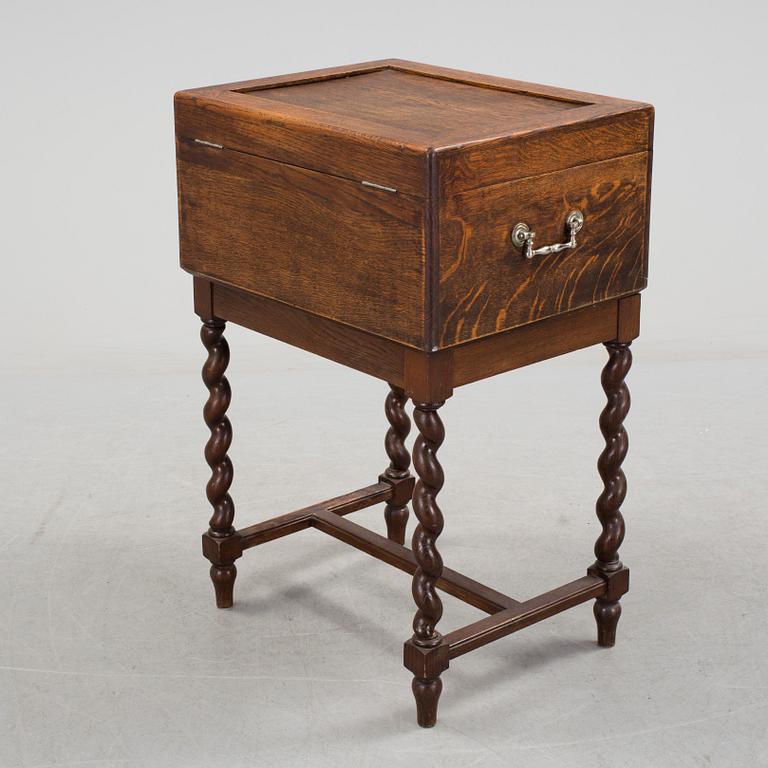
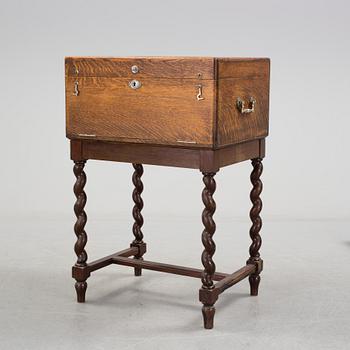
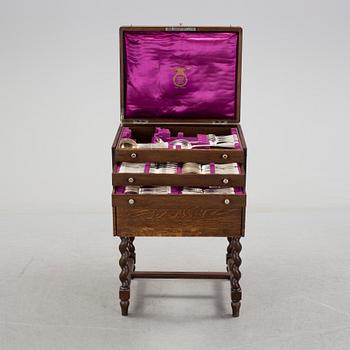
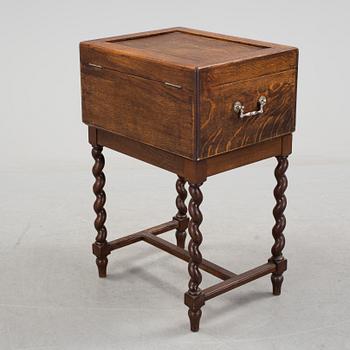
I tillhörande ek schatull. Längd 51, djup 41, höjd 78 cm.
Minor wear.
More about Jugend/Art Nouveau
Jugend/Art Nouveau is a style dating from around the turn of the 20th century, approximately between 1890 and 1920. The movement emerged as a reaction against the prevailing imitations of historical styles, with the ambition of creating a style for a new era. Its starting point was the Arts and Crafts movement’s ideas about an artistically conceived Gesamtkunstwerk. In Austria, the style corresponded to the Sezession, a group of radical artists. There, it was more geometric in expression. In France and England, the style was known as Art Nouveau, meaning “new art”. Jugend is characterised by flowing lines and vegetatively inspired decoration. Organic, winding plant forms and depictions of nature, fruit, slender female figures and asymmetry were common.
Read more














Others have also viewed