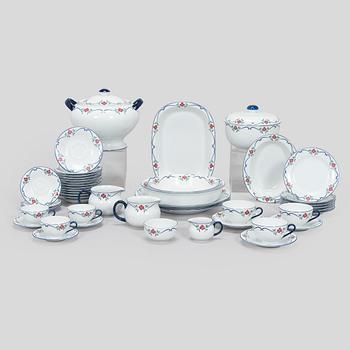
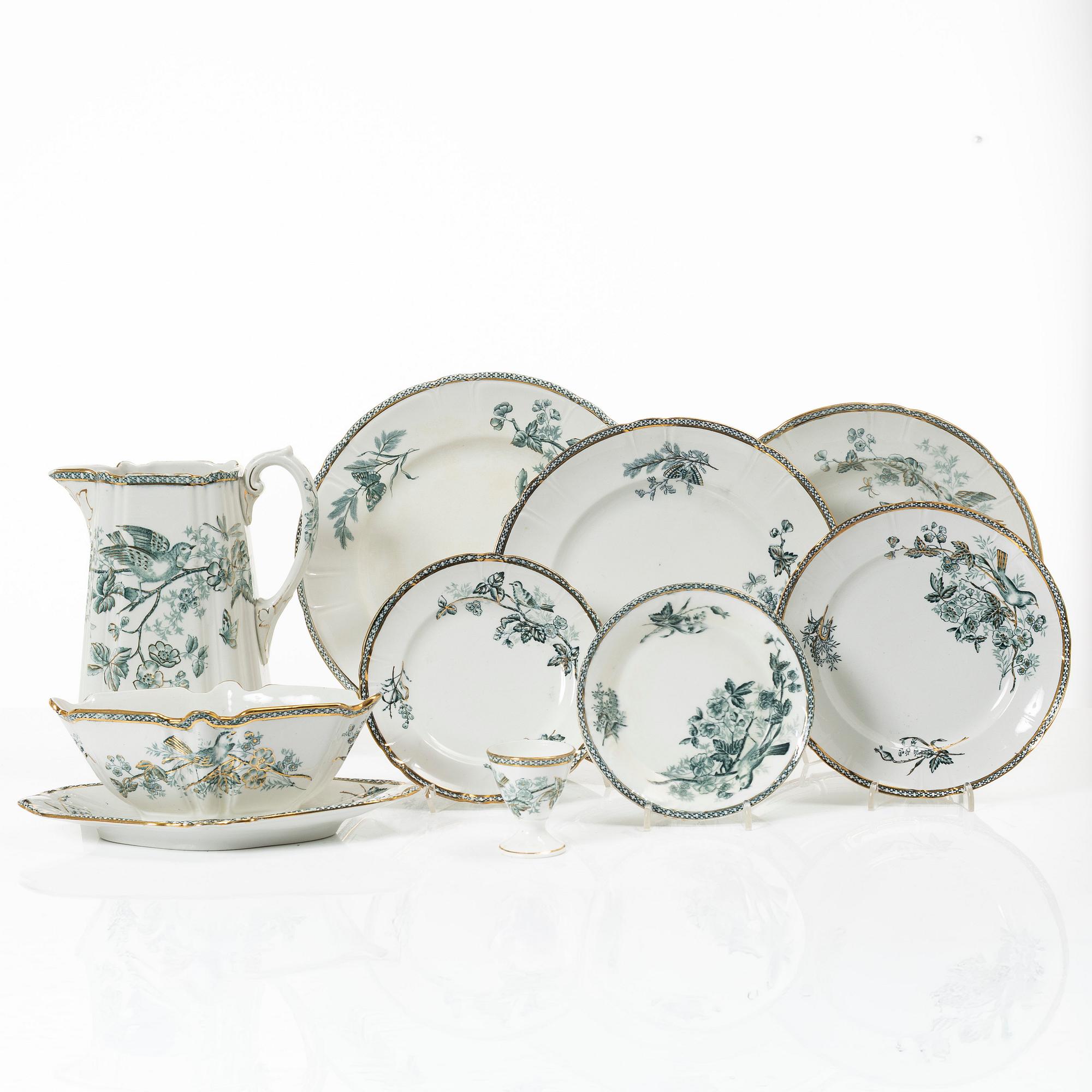
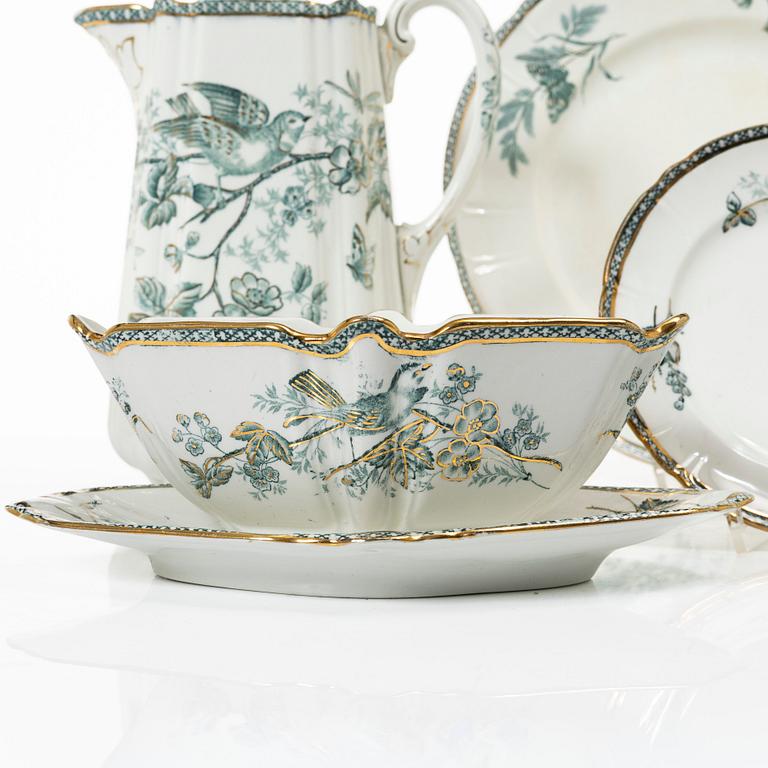
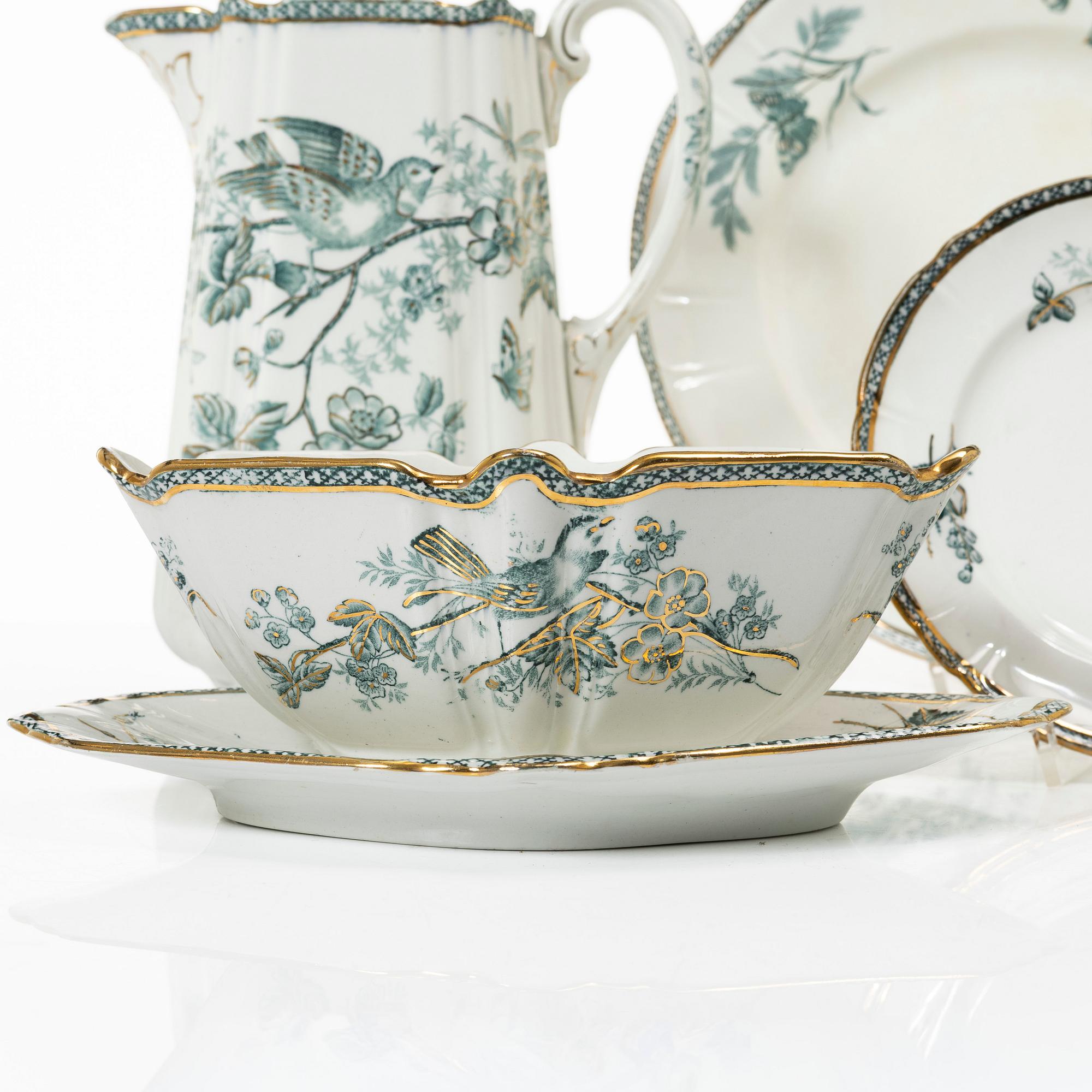
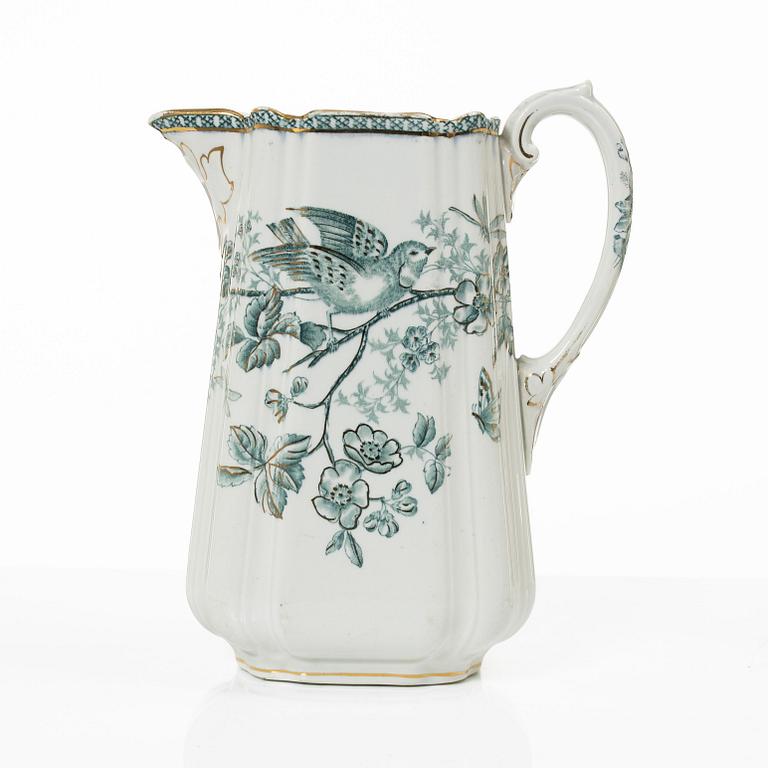
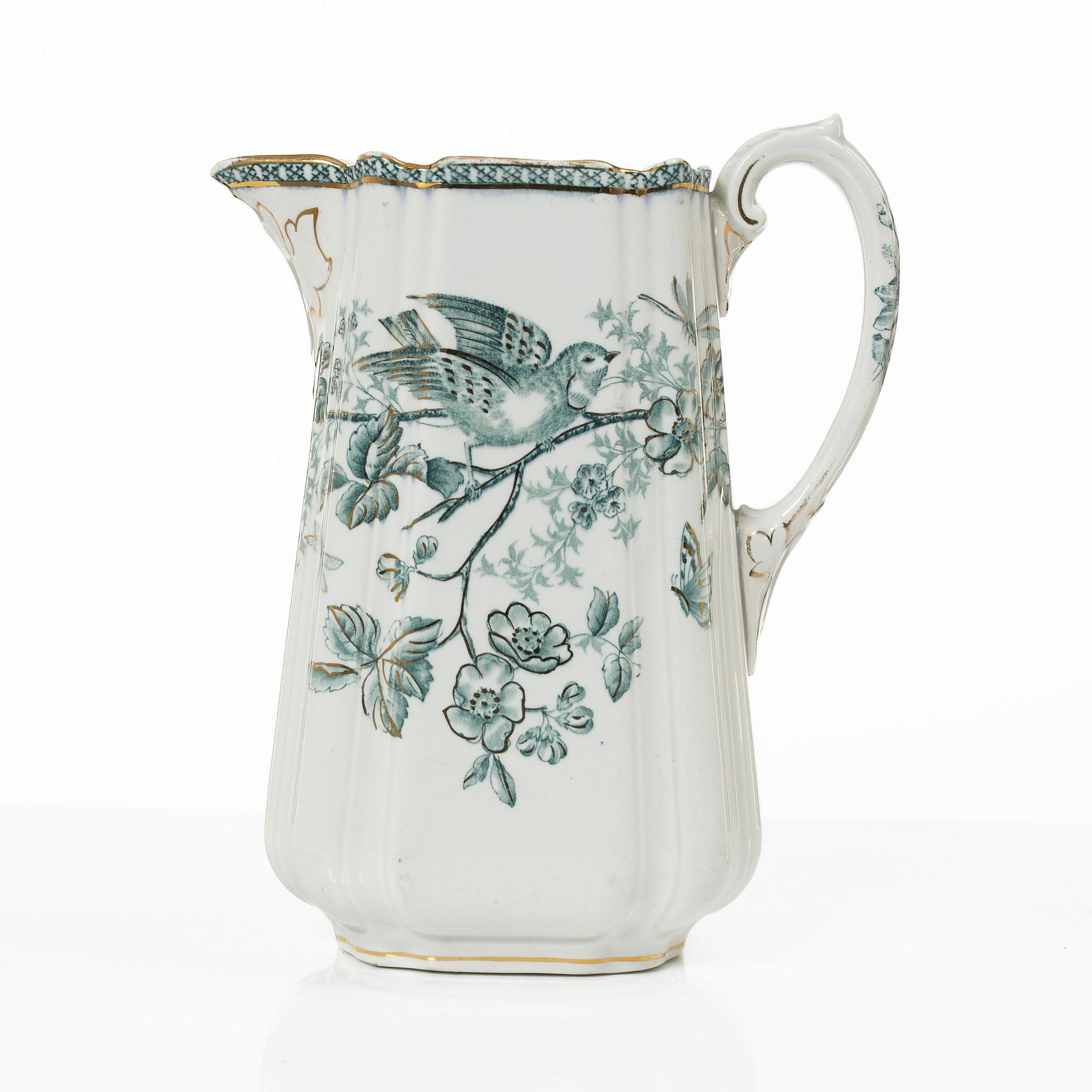
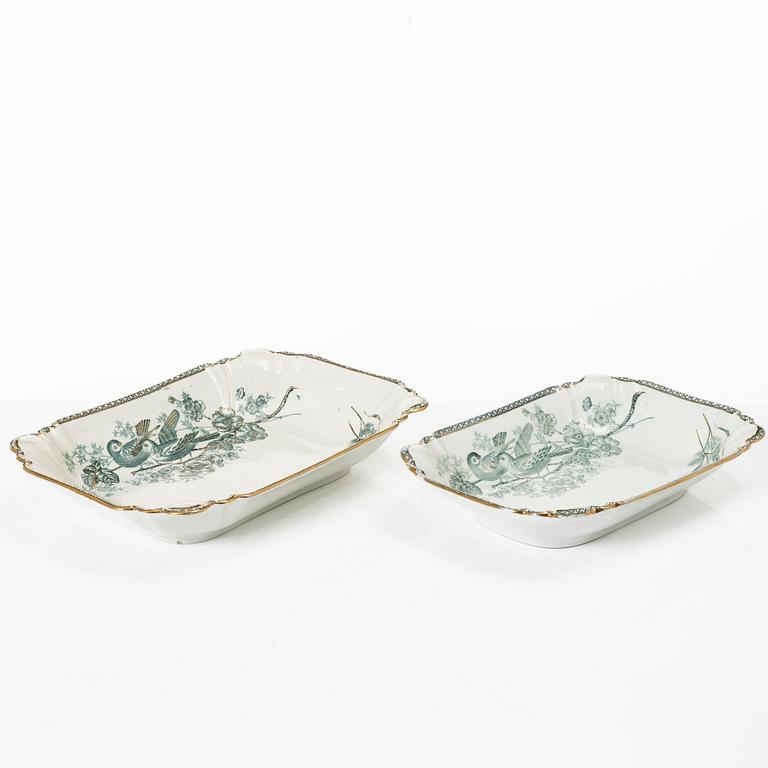
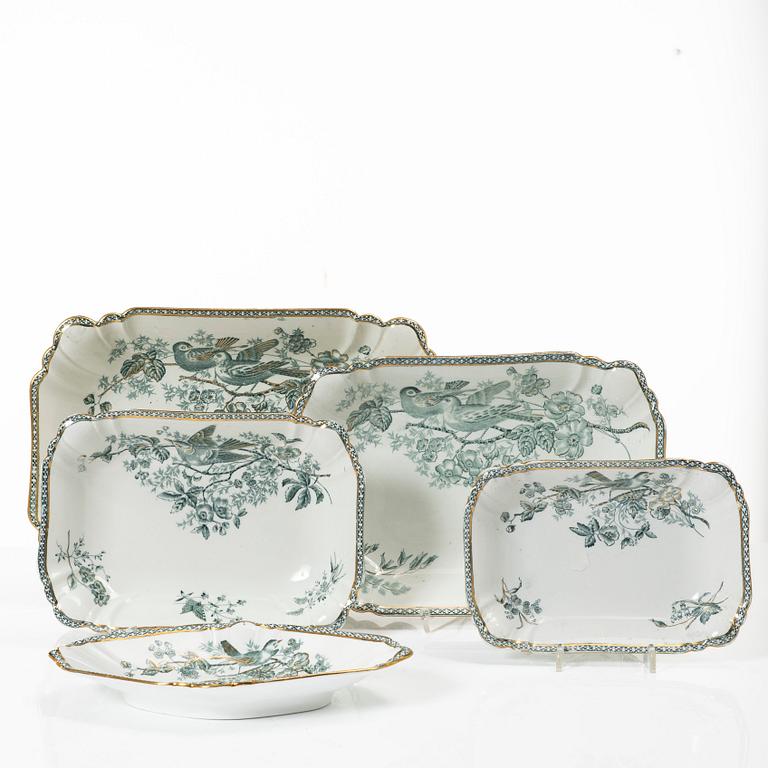
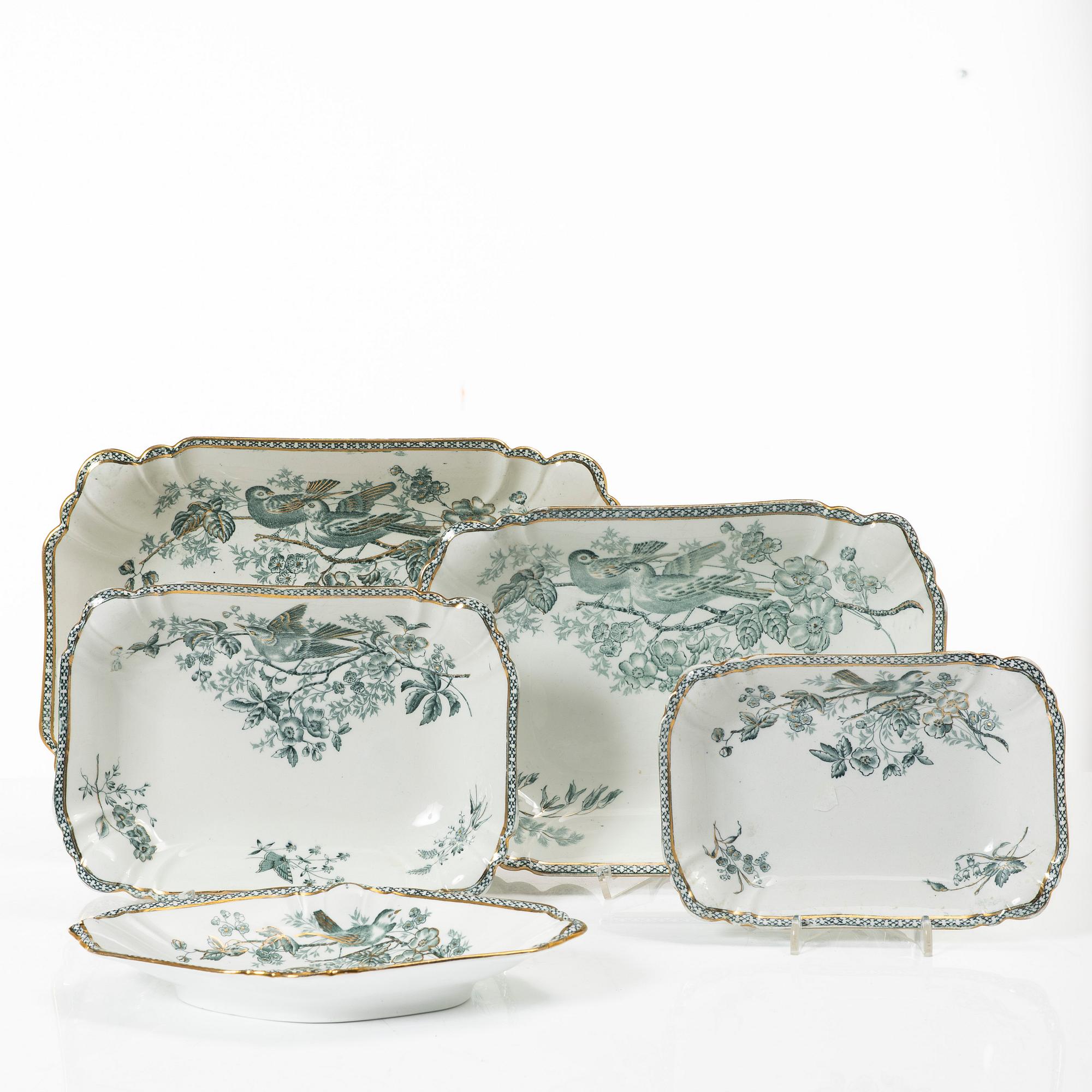
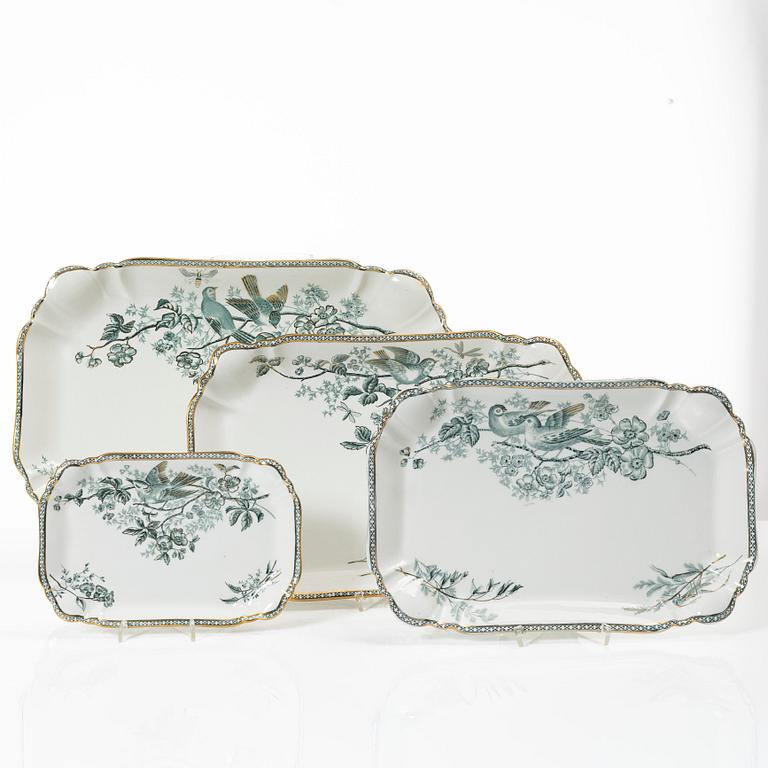
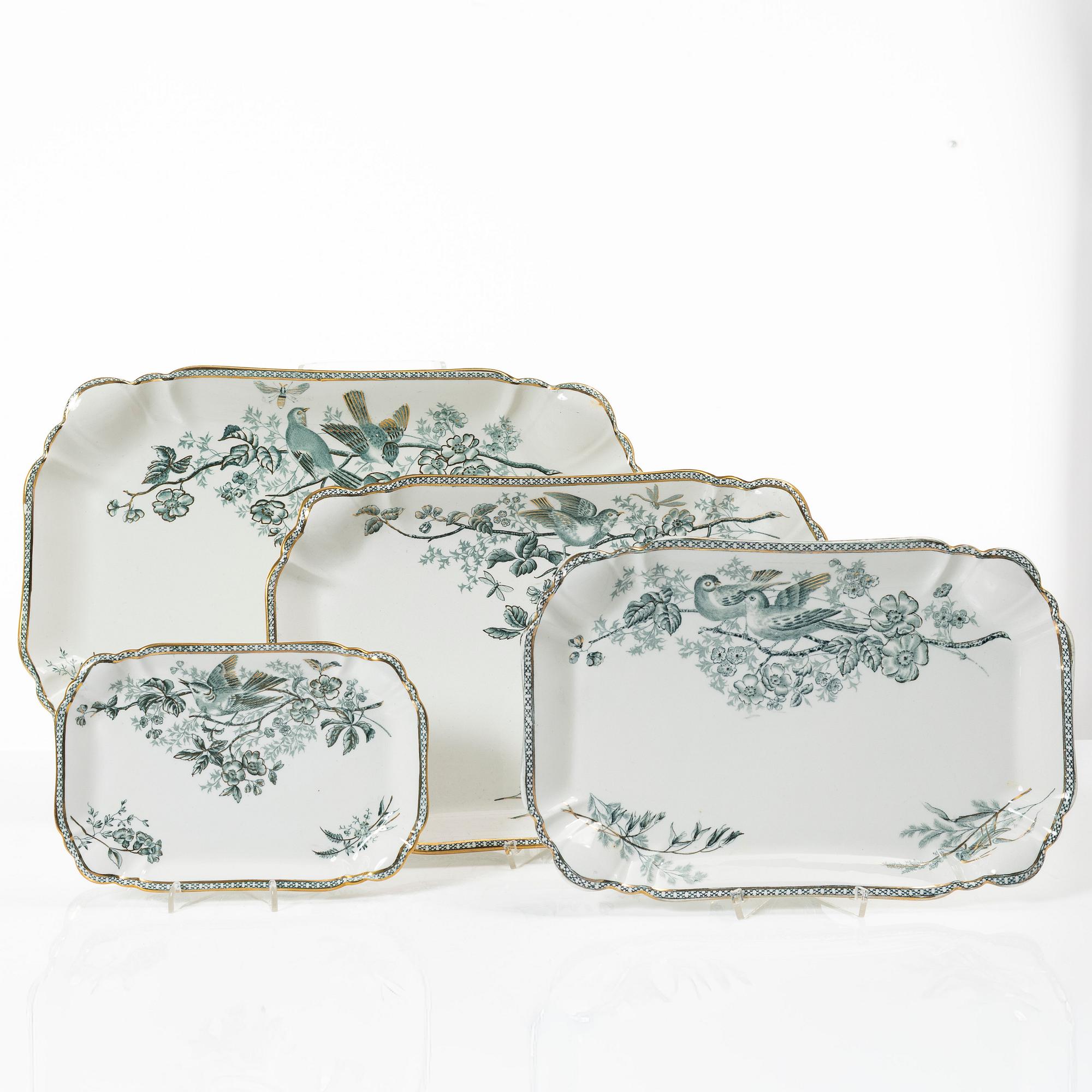
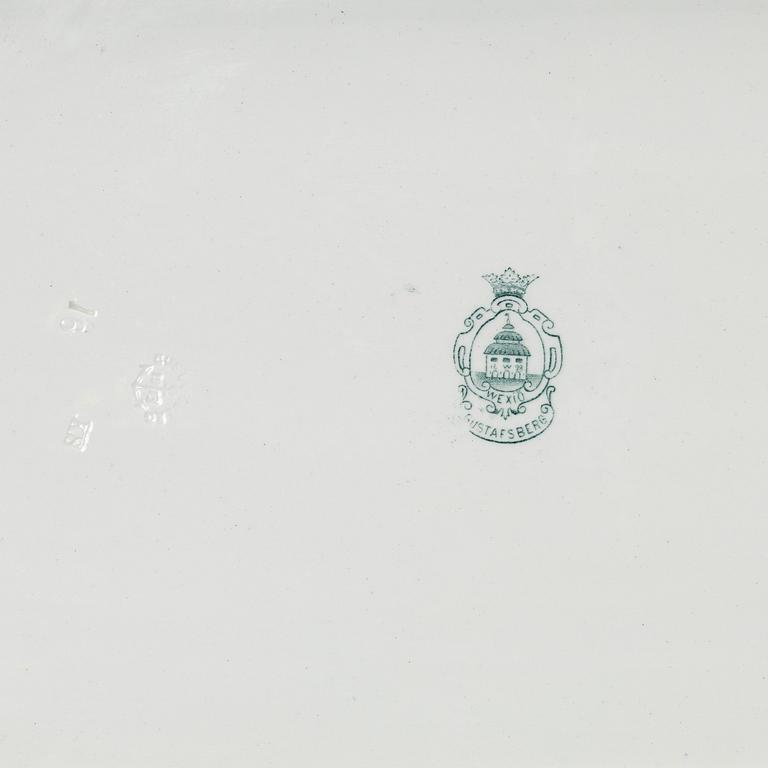
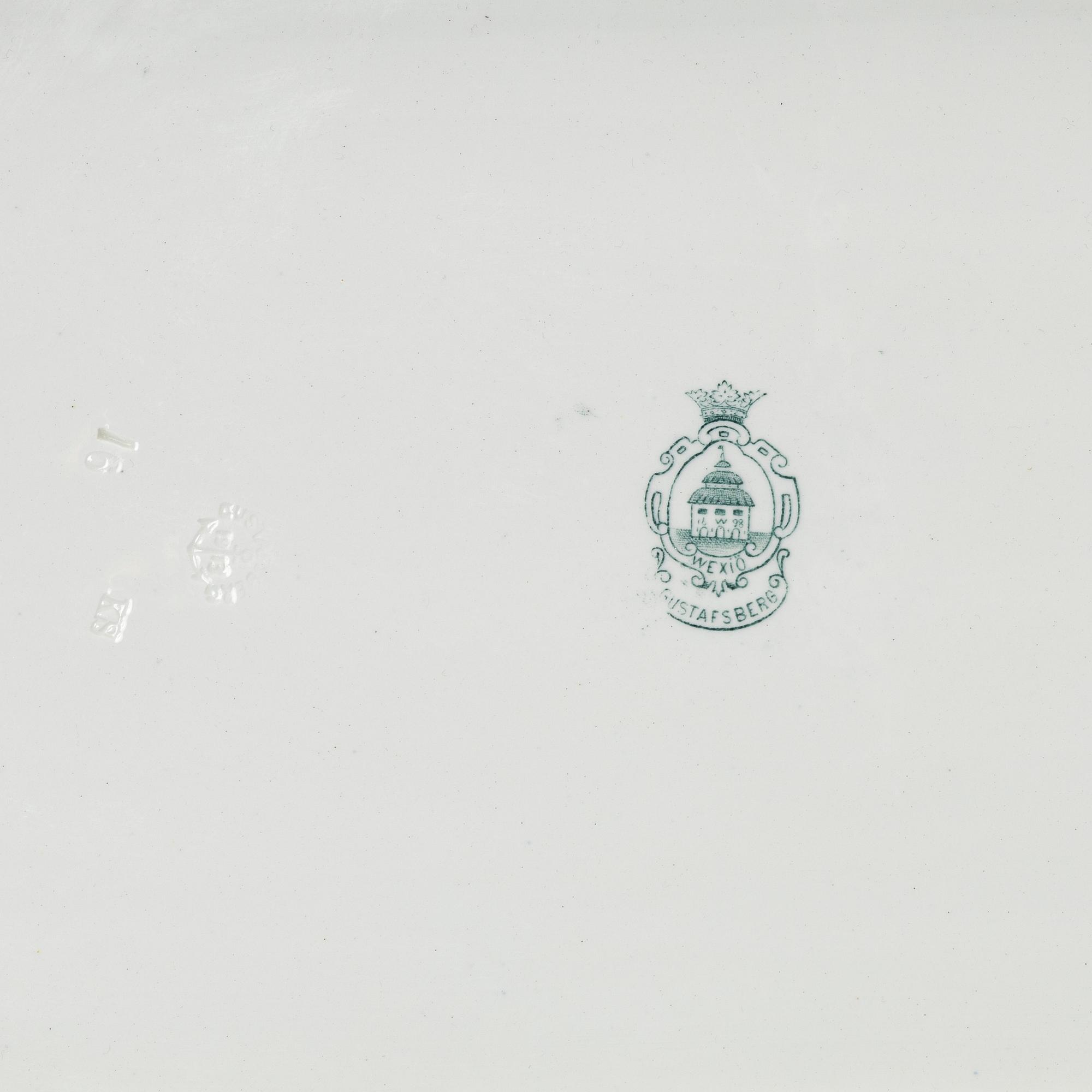
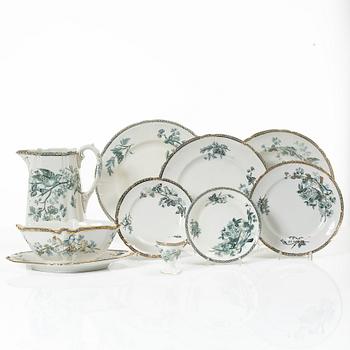
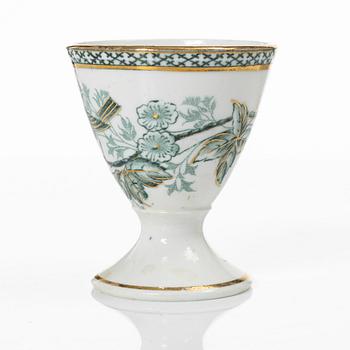
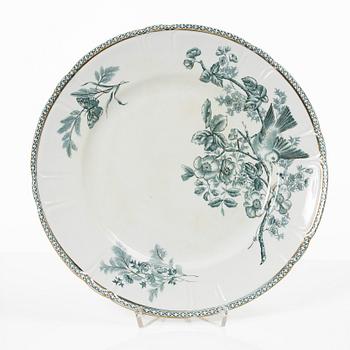
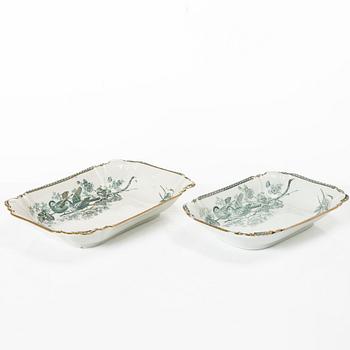
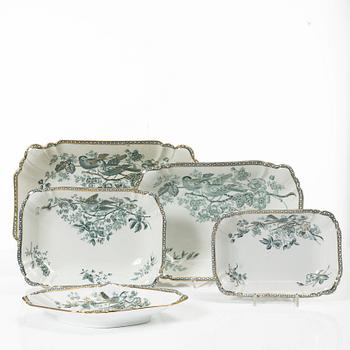
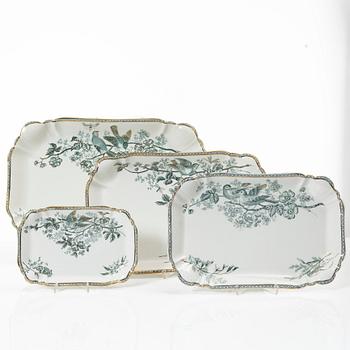
A 64-piece dinner service, 'Wexiö Guld', early 20th century.
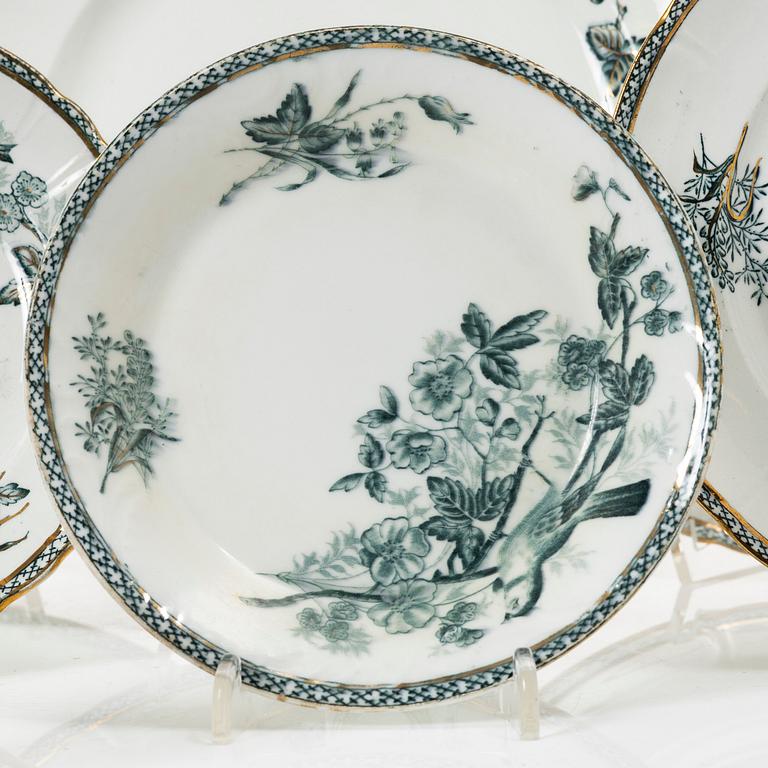
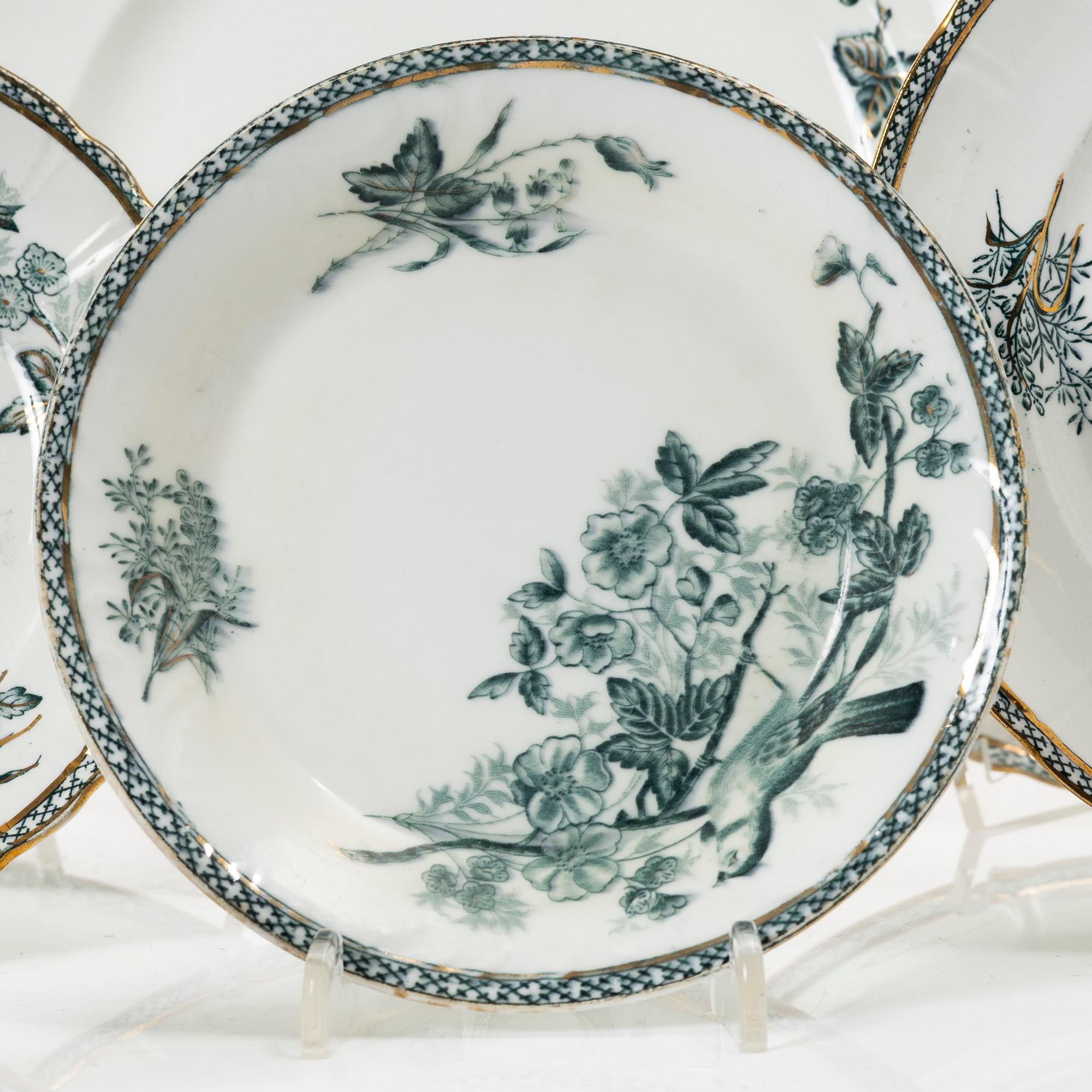
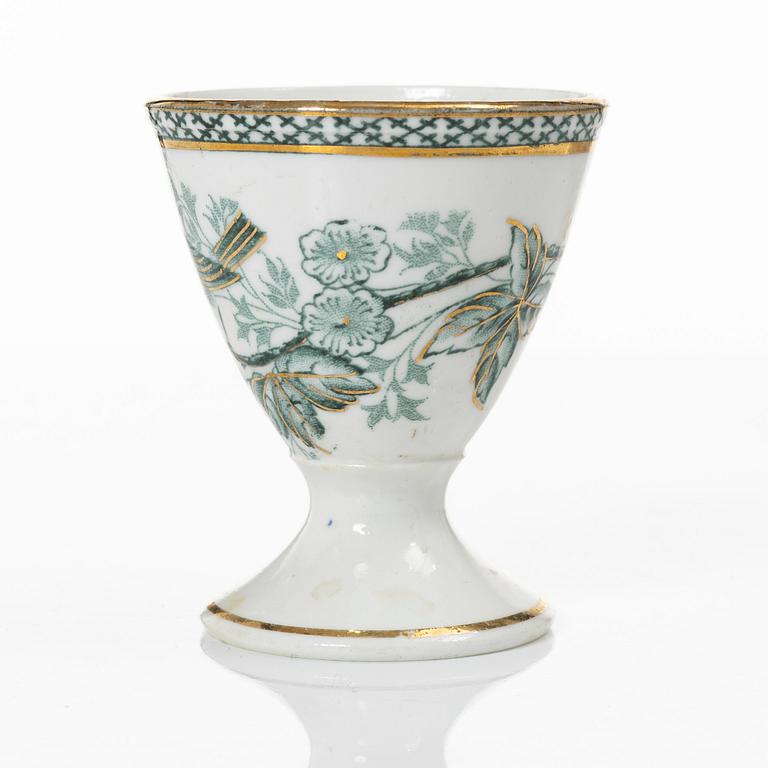
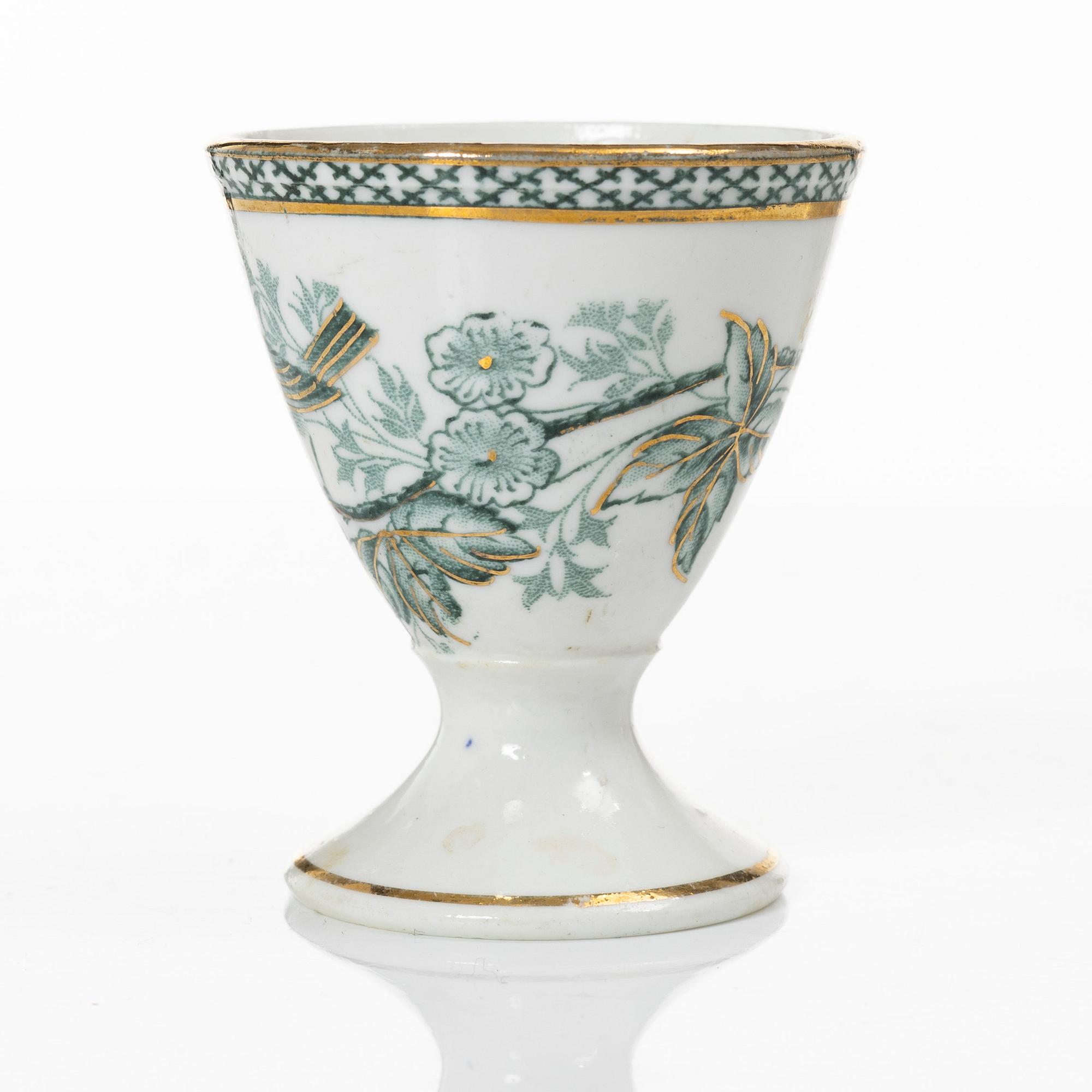
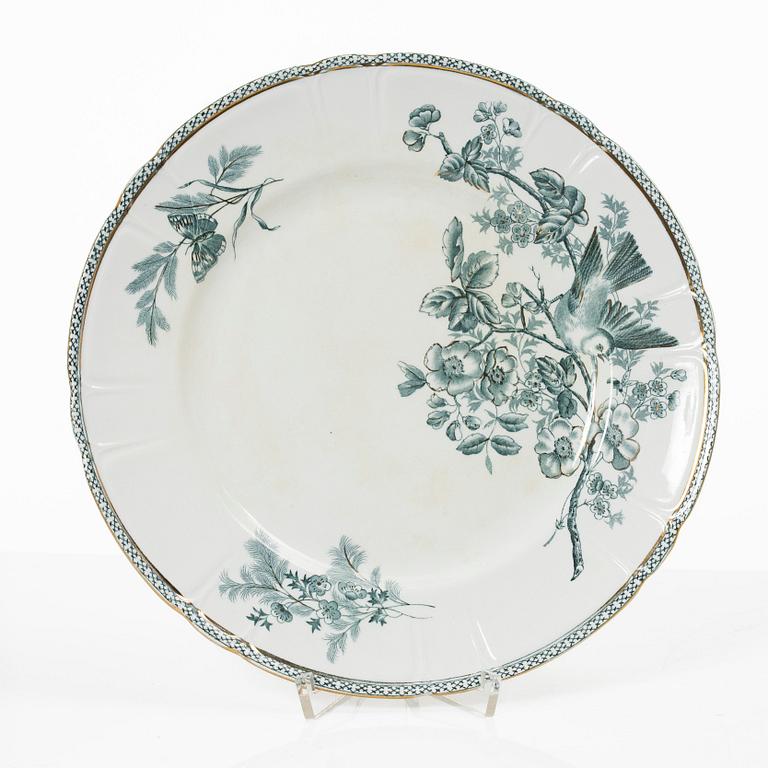
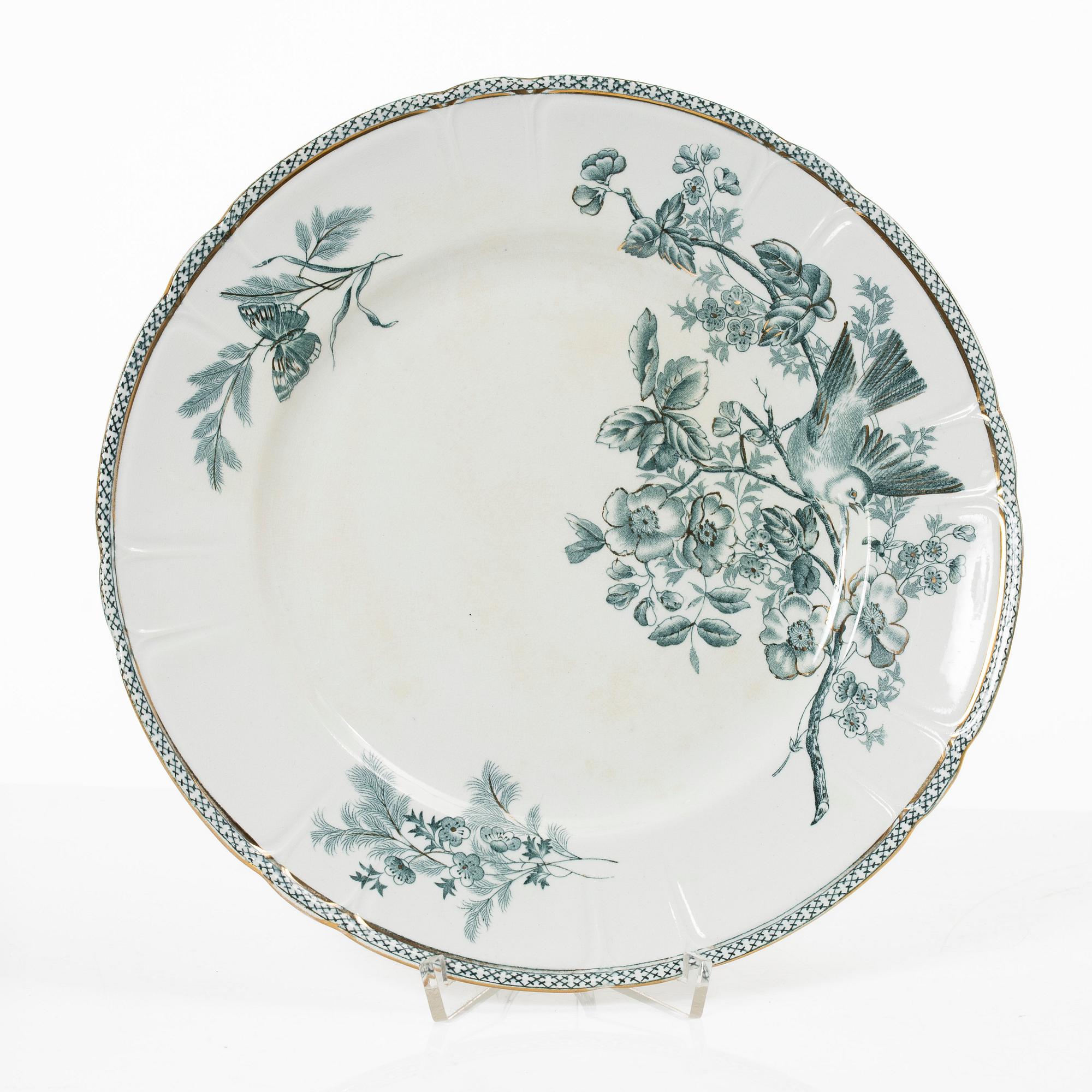
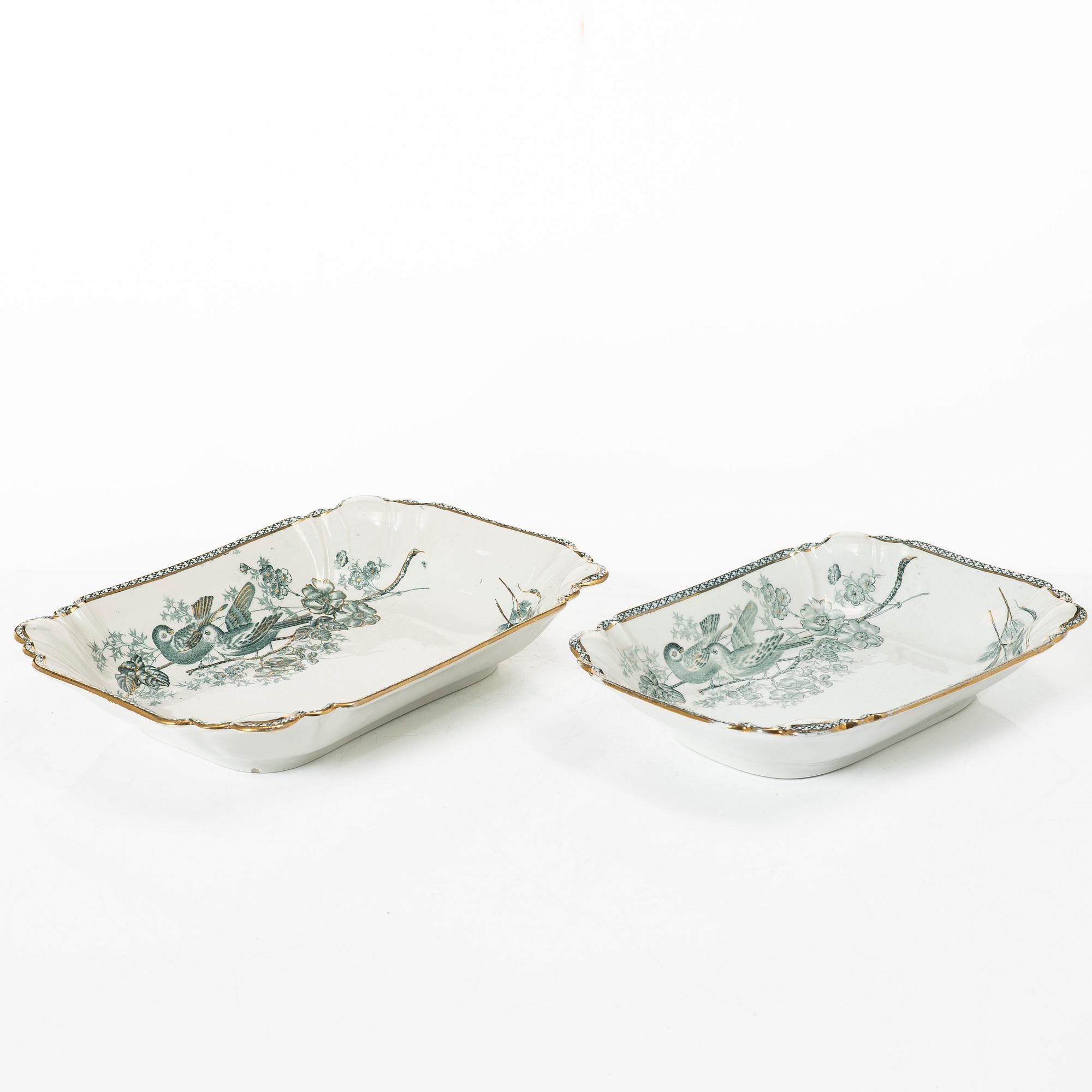
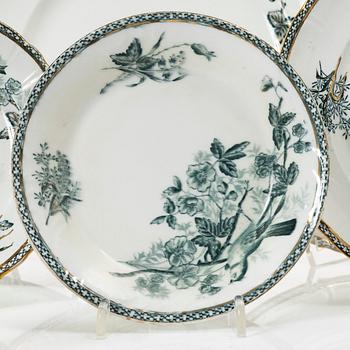
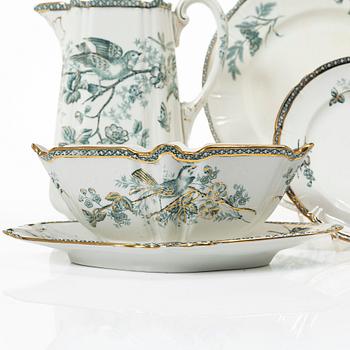
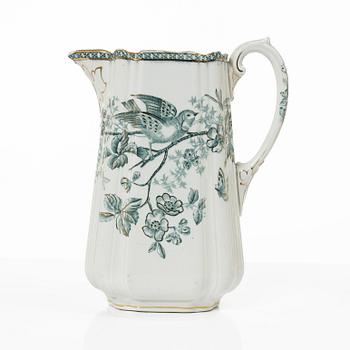
Flintware with printed decoration of birds and roses in green and gold.
Three plates 26.5 cm
16 plates 24 cm
Ten soup plates 24 cm
Four side plates 18.5 cm
Nine plates 16 cm
Dish 14.5 cm
Six egg cups 6-6.5 cm
Jug 22 cm
Sauce boat 25 cm
Oval bowl 23 cm
Bowl 19 cm
Bowl 23 cm
Two bowls 27 cm
Two bowls 30.5 cm
Bowl 31.5 cm
Serving platter 22.5 cm
Two serving platters 32.5 cm
Serving platter 37 cm
Serving platter 42.5 cm
Crazing. Minor wear. Minor discolourations. Manufacturing defects. One egg cup with a crack, one with a chip. A bowl 31.5 cm with a foot rim chip. A serving platter 32.5 cm with a chip.
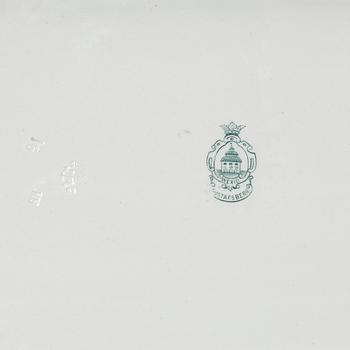
More about Gustavsberg
Gustavsberg's ceramic factory was founded in 1825 at Värmdö. In the beginning the factory mainly created earthenware services with copper-printed decoration of English type. landscapes and castle motifs were common. By the mid 19th century the factory expanded and it began creating bone china and ironstone china. In addition to tableware, Gustavsberg manufactures decorative ceramics such as parian, majolica imitations, jasperware, and stoneware. From the 1800s Gustavsberg applies studio work with artistic collaborators such as Rörstrand. Wilhelm Kåge, Stig Lindberg, Lisa Larson, all of which have been tied to the factory. The designs which we most strongly associate with the factory is "Blå blom", "Pyro", "Argenta", "Berså", to name a few.
Read more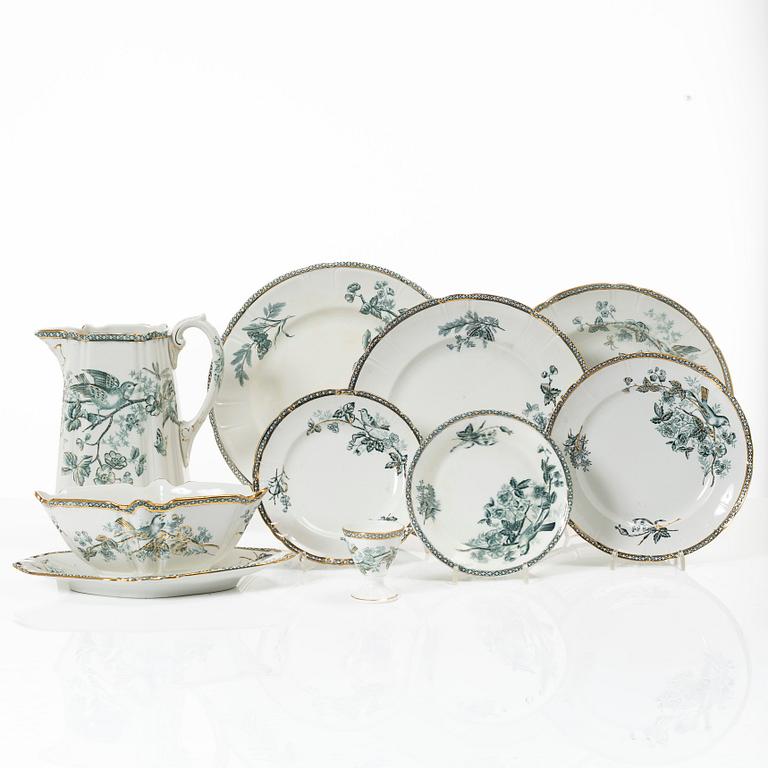
Others have also viewed