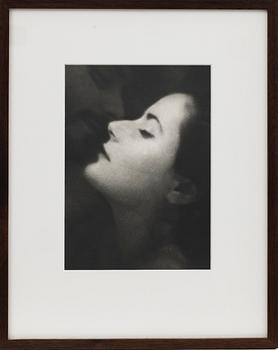
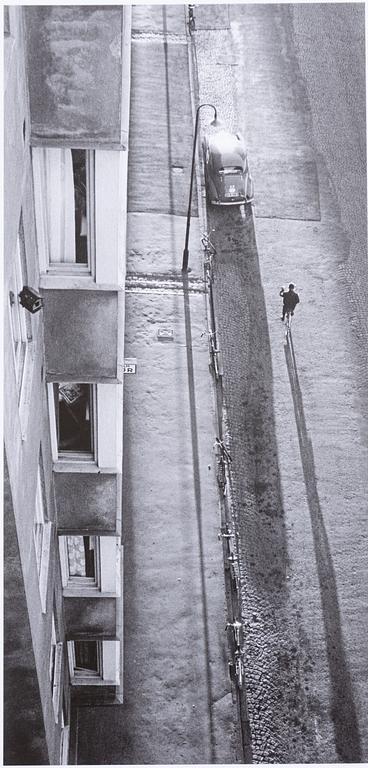
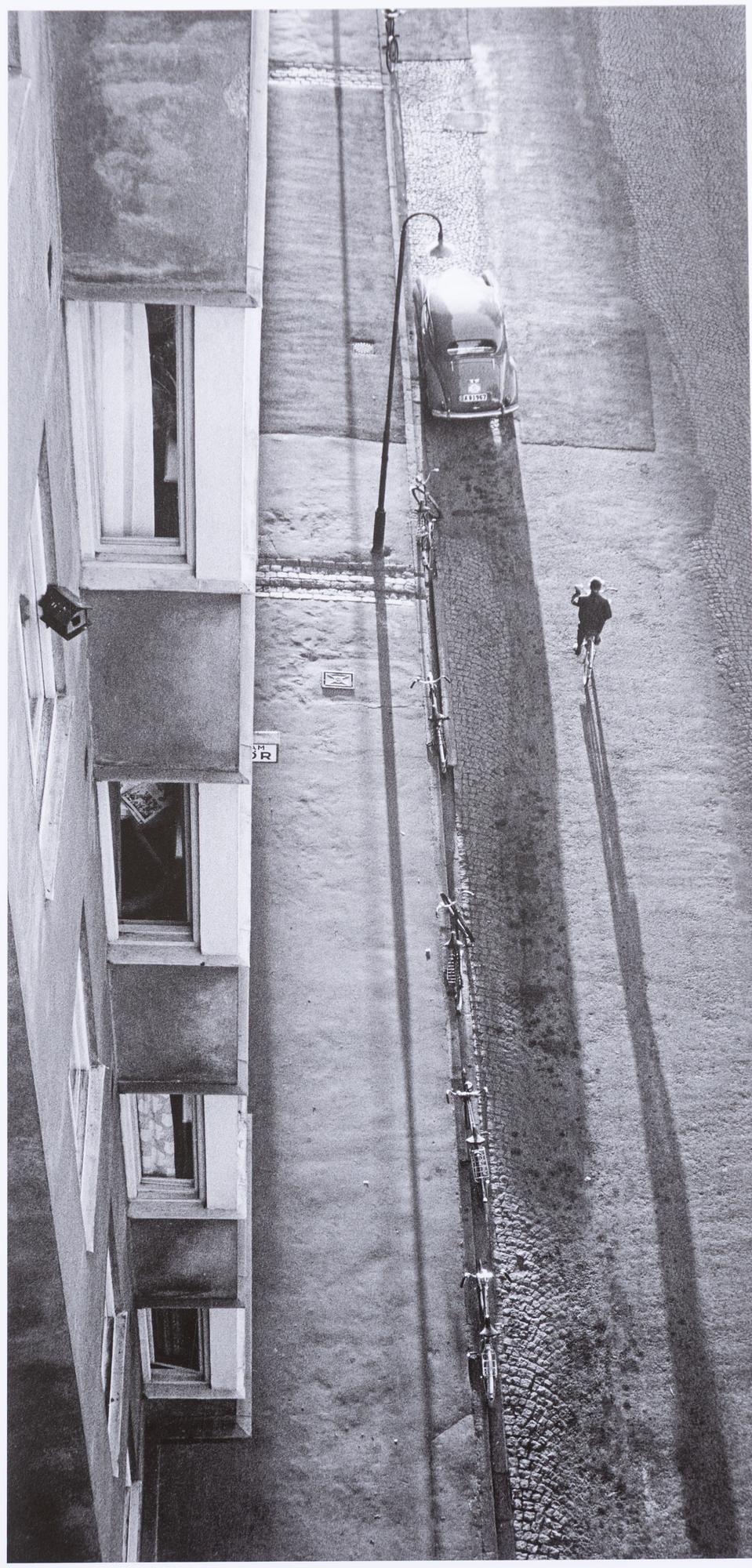
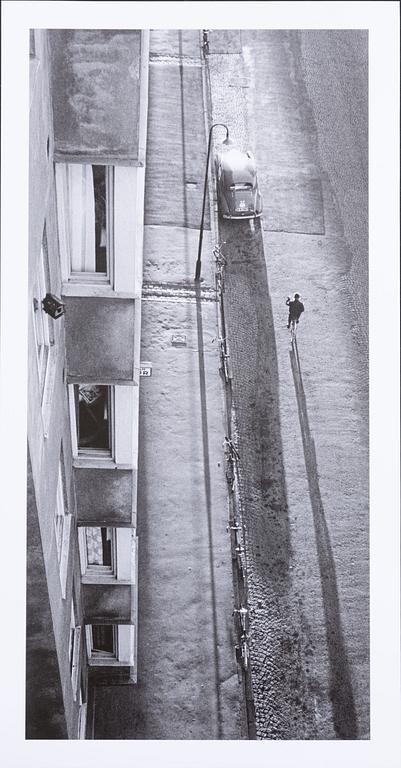
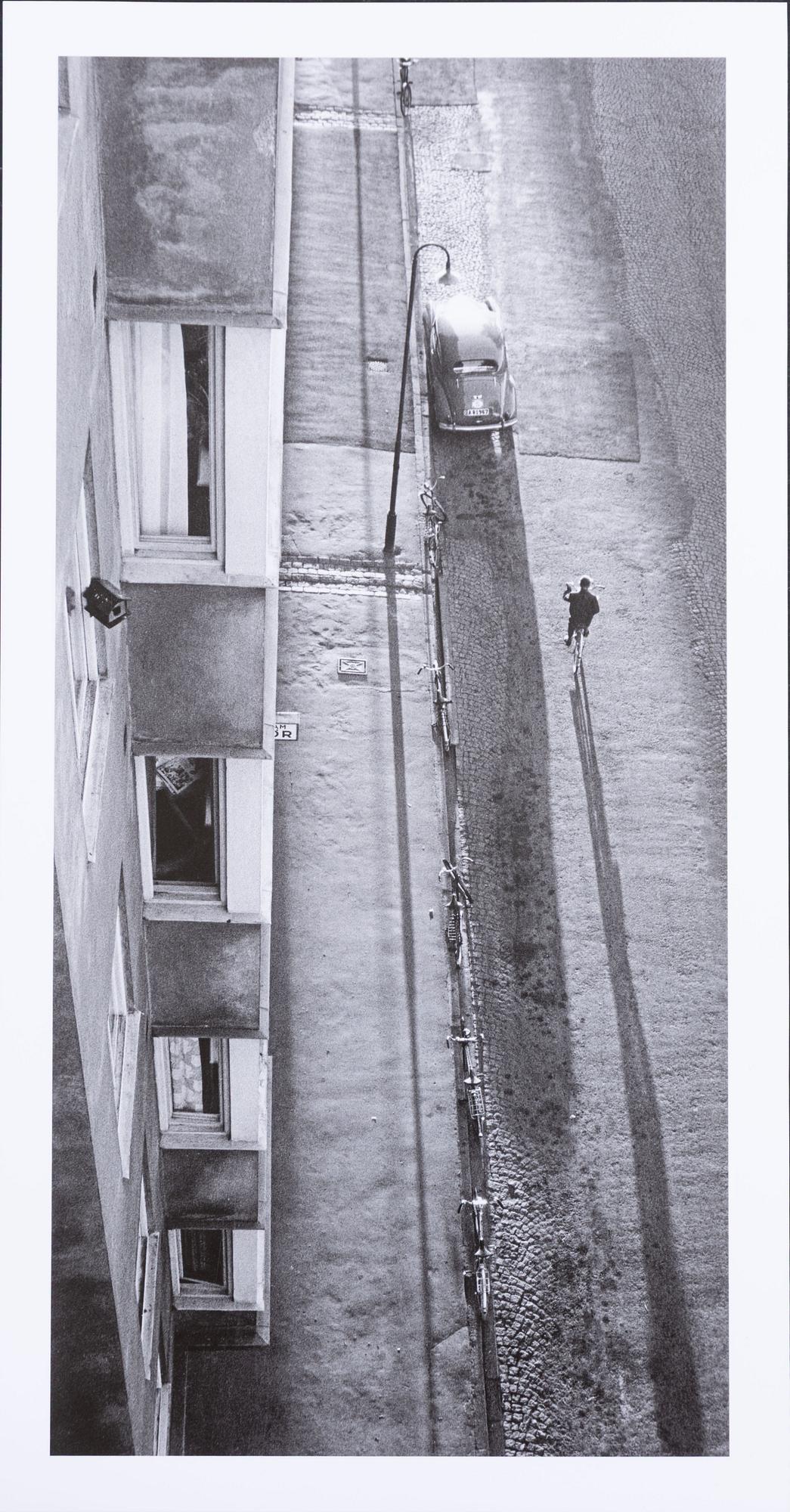
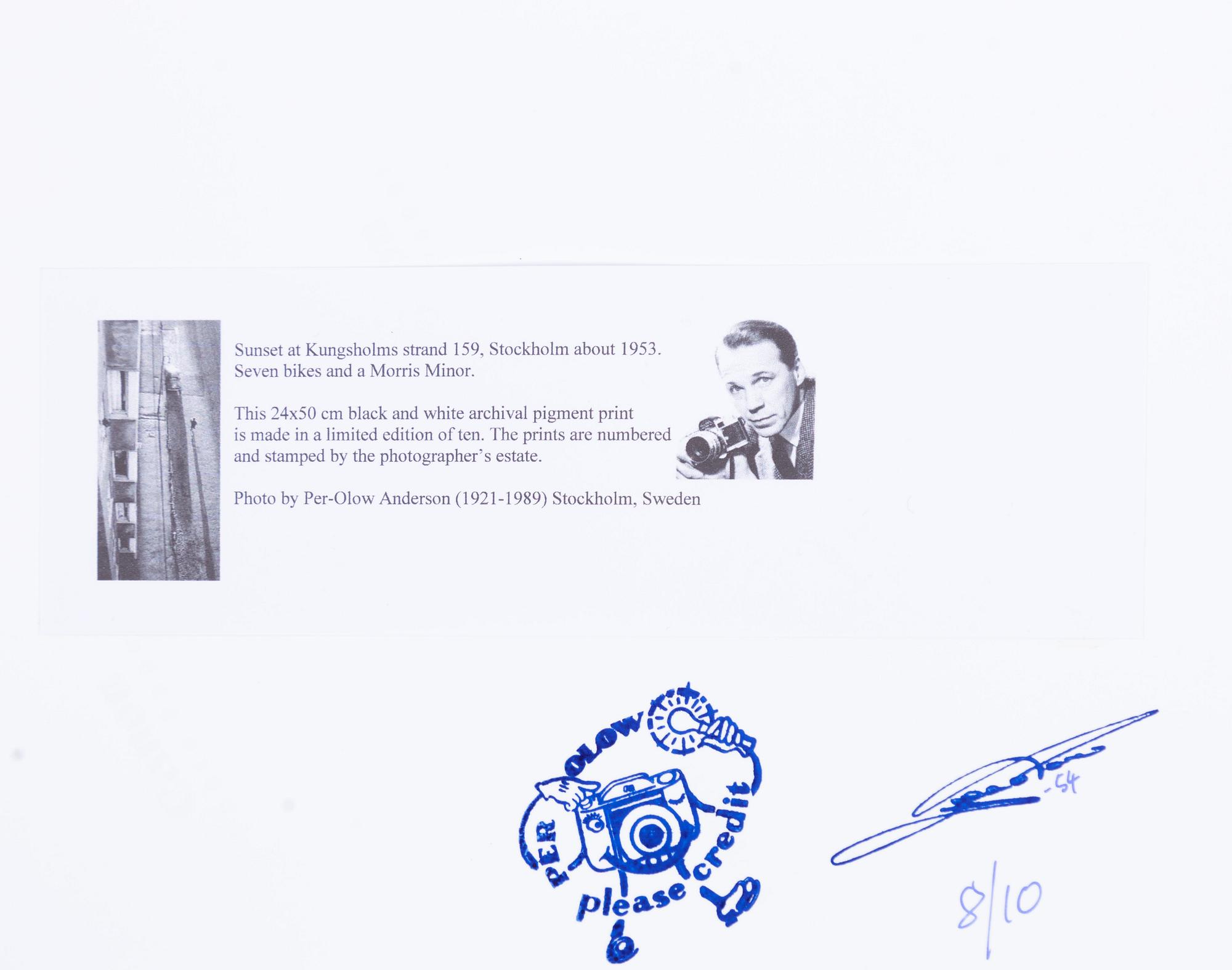
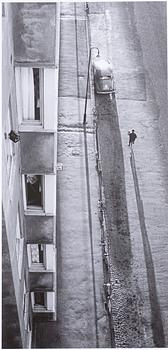
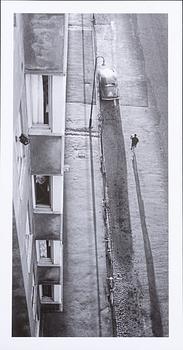
'Sunset at Kungsholms strand'.
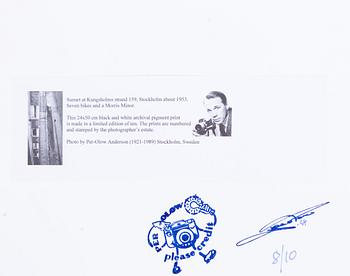
Archival pigment print, stamp-signed by the photographers estate and numbered 8/10 verso. Sheet size 54 x 28 cm. Unframed.
More information
Per-Olow Anderson was a Swedish photographer who is now almost entirely forgotten. During his lifetime, he was known across large parts of the world, but less so in his native country. Perhaps because the world was his workplace, while Sweden primarily served as a place for brief visits between photographic assignments.
P-O, as he was known to those closest to him, was born in Stockholm in 1921. The story of his life is so eventful that it is almost impossible to comprehend. At the age of sixteen, he travelled to Spain to document the Civil War. A few years later, he went to Norway with a group of Swedish volunteers who had fought in Spain, to join the Norwegian resistance movement. He was captured by the Germans and imprisoned at Grini before being transferred to the Dachau concentration camp. He spent six months there before being released in a prisoner exchange.
During his time in Norway, he had made contact with the British Royal Air Force, which employed him as a photographer and trained him as a pilot. During a flight mission, his aircraft was hit, and Anderson was admitted to hospital in England with severe injuries. This brought his flying career to an end.
But Per-Olow Anderson continued travelling to the world’s various theatres of war. He witnessed the attack on Pearl Harbor in 1941, and three years later took part in the Normandy landings in 1944. There, he once again met Robert Capa, whom he had got to know during the Spanish Civil War. When Capa was killed by a mine in Indochina in 1954, Anderson was by his side.
During the 1950s, Anderson began working in the Middle East, particularly in Egypt. He became a close friend of Nasser and also came into contact with the Palestinian liberation struggle following the establishment of the State of Israel in 1948. In 1956, he was in Gaza, documenting the refugees’ wretched living conditions there. This resulted in the photobook They are human too…, published in the United States in 1957. In Egypt, he also documented the construction of the gigantic Aswan Dam and the relocation of the Abu Simbel temples during the mid-1960s.
But Per-Olow Anderson had other strings to his bow. During the 1950s and 1960s, he worked as a photographer for film companies such as United Artists, Paramount Pictures and Sandrews. He documented the production of a long series of major films, including Krig och fred, Alexander den store and Sommarens dårskap. His surviving photographic archive contains unique images of actors such as Katherine Hepburn, Audrey Hepburn, Henry Fonda, Richard Burton, Sophia Loren and Humphrey Bogart, among many others.
Among the Swedish films whose productions he documented were Käre John, Svarta palmkronor, Bokhandlaren som slutade bada and Ministern.
Anderson died in 1989, but his extensive photographic archive has been preserved.
Contact
Customer service
Please contact Customer Support for inquiries regarding transport, payment and other questions.
Sweden
Telephone hours: Monday – Friday 9 am – 12 pm
+46 8-614 08 00
Finland
Telephone hours: Monday – Friday 10 am – 1 pm
+358-9-668 91 10
What will the transport cost?
Covered by droit de suite
Image rights
The artworks in this database are protected by copyright and may not be reproduced without the permission of the rights holders. The artworks are reproduced in this database with a license from Bildupphovsrätt.
Others have also viewed