Important Spring Sale presents: A Gustavian table by G Haupt
Georg Haupt
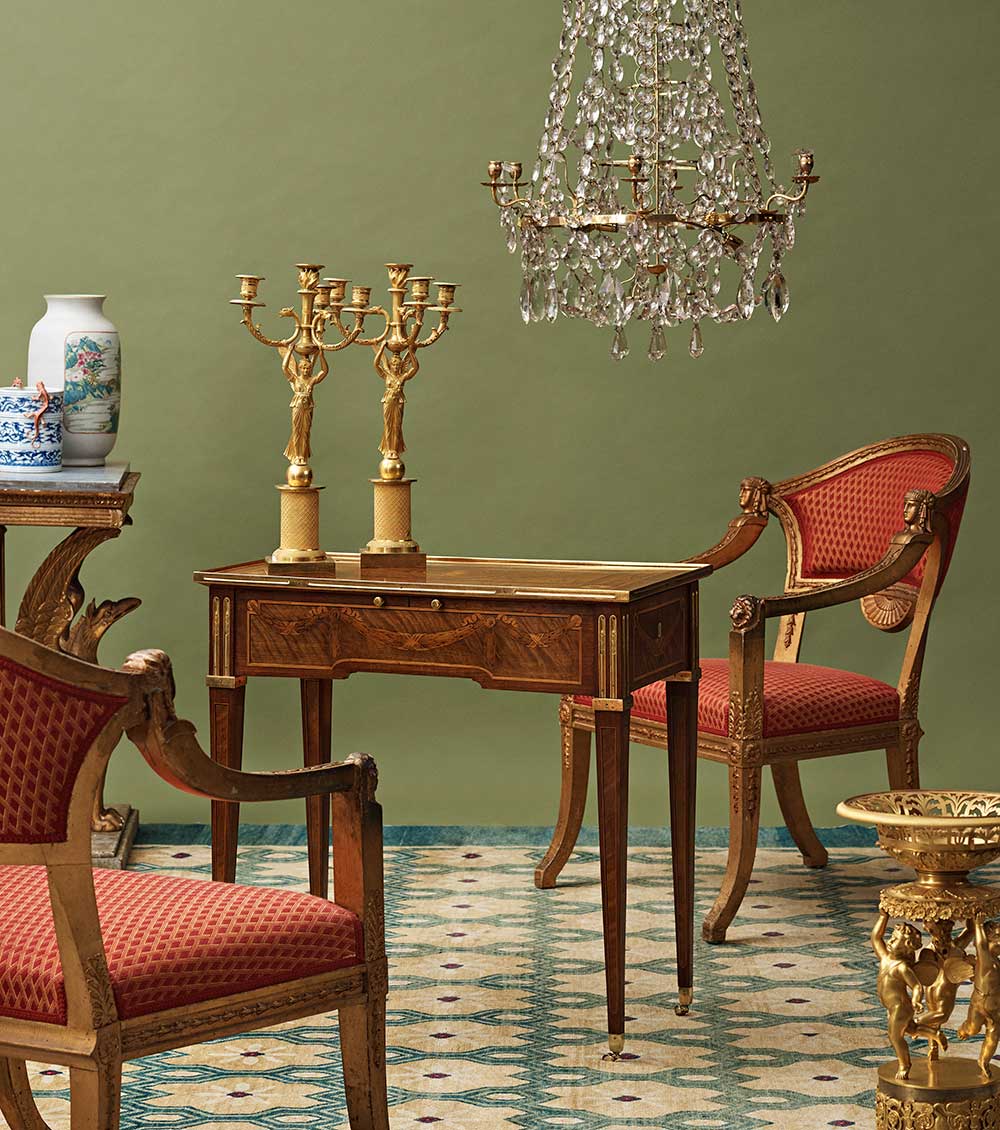
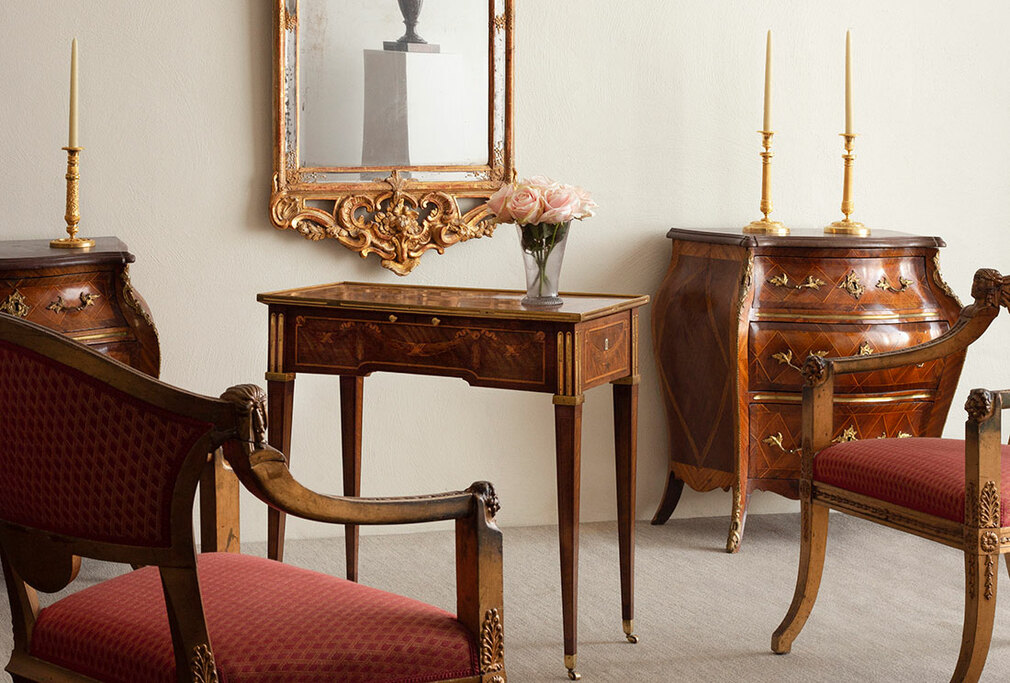
Gustavian sewing table
Bukowskis presents Georg Haupt at the Important Spring Sale. Viewing June 2-7, auction June 8-10.
Read more
The auction's magnificent table is unique in its design in Georg Haupt's famous production. This indicates that the table was a special commission. Despite the fact that the table has been mentioned in literature and that its later owners are known, its early history has been shrouded in secrecy. This is a question that now seems to have been answered.
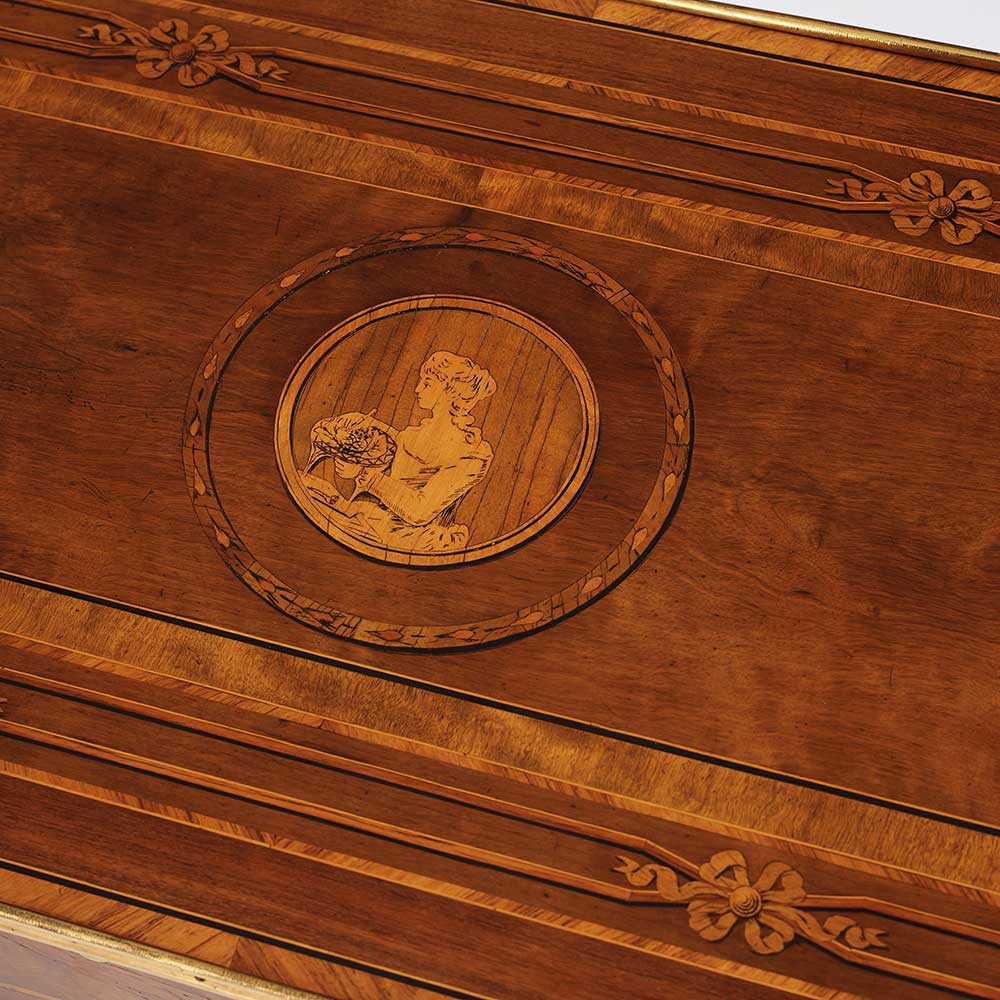
The dimensions of the table are larger than those Haupt normally uses on his sewing and work tables. But what especially differs is the design of the frieze. It is much wider than usual. The table is one of the rare tables with various sewing utensils preserved. However, the table is the only one with a sewing bow for embroidery and to make room for this, which requires a drawer that runs the entire length of the table. Haupt then lets the drawers turn over so that other parts would fit, which creates a higher edge. Another special solution is that the perforated studs, to which the various aids are attached, are fixed and pivotable under the disc. Normally these studs were loose. With this solution, the decor of the board on the auction table is left whole and free from the holes that normally existed to attach the loose studs.
To lighten the appearance, he makes an elegant curvature and the decor in general shows Georg Haupt's superior handling of shadows and engraved marquetry. The motif of more miniature stock garlands with short pendants appears in Haupt's production around the first years of the 1780s. The decor can be found on the pair of commodes made for King Gustav III probably in 1782 and the same year on the secretaire in the collections at Övedskloster in Skåne and on the secretaire from 1781, the same year as the auction table, today at the National Museum (NMK 1/1911). This secretaire helps us find the answer for the auction table's client.
In the collections of Sturefors, Östergötland, there is since the days of Count Nils Adam Bielke (1724–1792), there is an almost identical, undated secretary of Georg Haupt. The difference is the medallion motif, where the National Museum has a woman reading, the medallion on the Sturefors secretaire shows a woman sitting embroidering, identical to the medallion on the auction table. The Bielke family was very close to the court and the Royal family. Nils Adam had, among other things, been governor of King Gustav III, and in 1781 (the same year as the table), the countess was appointed as dowager Lovisa Ulrika's mistress of the robes. Countess Bielke, Fredrika Eleonora von Düben (1738–1808), was held by her contemporaries in the greatest esteem, also as an artist, especially for her embroideries. She participated with an embroidered landscape on silk in "Konstakademiens" (the Academy of Fine Arts) exhibition in 1783 and, the same year elected as its first female honorary member.
The motif with the woman embroidering queen Lovisa Ulrika's cipher has given rise to speculation, which here gets its answer. A more suitable motif for her newly appointed mistress of the robes, also a recognized embroidery artist, cannot be found. True to his habit of not completely repeating the decor of his furniture, Haupt does not allow the woman at the secretaire of Sturefors to embroider the queen's monogram, but instead a cipher-B for Bielke.
In Nils Adam Bielke's estate inventory 1792, both the secretaire and the sewing table can be found in "Sallongen": "1 sewing table with inlaid work and lacquered top". In his widow Fredrika Eleonora's estate inventory from 1808, the auction table has been paired and moved to her cabinet: "1 Larger and a smaller sewing table with lacquered and inlaid work, with gilt mounts". Both tables were inherited by the unmarried daughter Sigrid Bielke. She had acquired the estate Catharineberg not far from Sturefors, and the tables are found in her estate inventory, 1818: "1 inlaid mahogany sewing table" (and "1 smaller ditto ditto"). Siblings and nieces and nephews inherited her rich estate. The then outdated table came to be sold and bought at some point by the pharmacy owner and creator of Tanto sugar mill. Wilhelm Arnold Freundt (1803–1863) who gives the table to his daughter in 1858.
After being sold at Bukowskis in 1937, the table became part of two of the 20th century's foremost collections of Swedish works of art, known for their furniture by Georg Haupt. First Sten Westerberg at Beatelund and then in the collections of Falk Simon in Gothenburg.
The table is a part of Bukowskis' upcoming auction Important Spring Sale to be sold on the 8th of June.
Viewing June 2th – 7th June. The Auction takes place between June 8th – June 10th.
Read more about the auction
For requests & condition reports Contact our category specialists