Important Spring Sale presents Axel Törneman
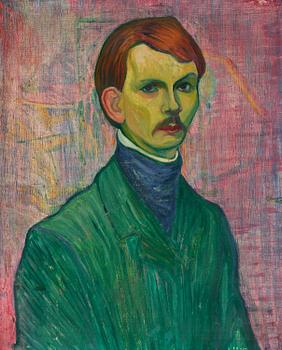
Bukowskis presents a self portrait by Axel Törneman at the seasons largest live auction – Important Spring Sale.
Axel Törneman began his artistic education as a student of Carl Wilhelmson, under whom Törneman studied at Valand in Gothenburg in 1899. The apprenticeship with Wilhelmson was brief but significant, and Törneman took lasting impressions from his teacher's technique of working with pure colour applied in patches. The following year, Törneman travelled to Munich, where he attended the art academy and was influenced by the "Jugend" line style and Symbolist themes. From Munich, Törneman travelled via Dachau to Paris, where he stayed from 1902 to 1905 and undertook studies at, among others, the Académie Julian. Alongside these important studies, his encounter with the painting of the Impressionists left a deep mark on Törneman's artistic career. He also expressed admiration for Post-Impressionists such as van Gogh and Gauguin.
Around 1905, when he painted the self-portrait currently at auction, Törneman began to find the foundational forms for his remarkable painting. In the catalogue for the Nationalmuseum's exhibition "Impressionism and the North. The late 19th-century French avant-garde and the art of the North 1870-1920," Per Hedström writes:
"Only a few years after the turn of the century do we encounter in Swedish art clear traces of the influence of van Gogh's painting. [...] Judging by Törneman's works from the summer of 1905, he had studied van Gogh's technique in depth. During the summer, Törneman stayed in the village of St Jean de Doight in Brittany. There, he executed the painting 'The Peasant from Brittany,' a work that evokes thoughts of both Gauguin and van Gogh. In van Gogh's manner, Törneman applied the colour in marked rhythmic parallel swirls. Like van Gogh, he also used strong local colours." Axel Törneman himself noted in a letter from 1905: "A whole world opens up for one when one begins to understand colour."

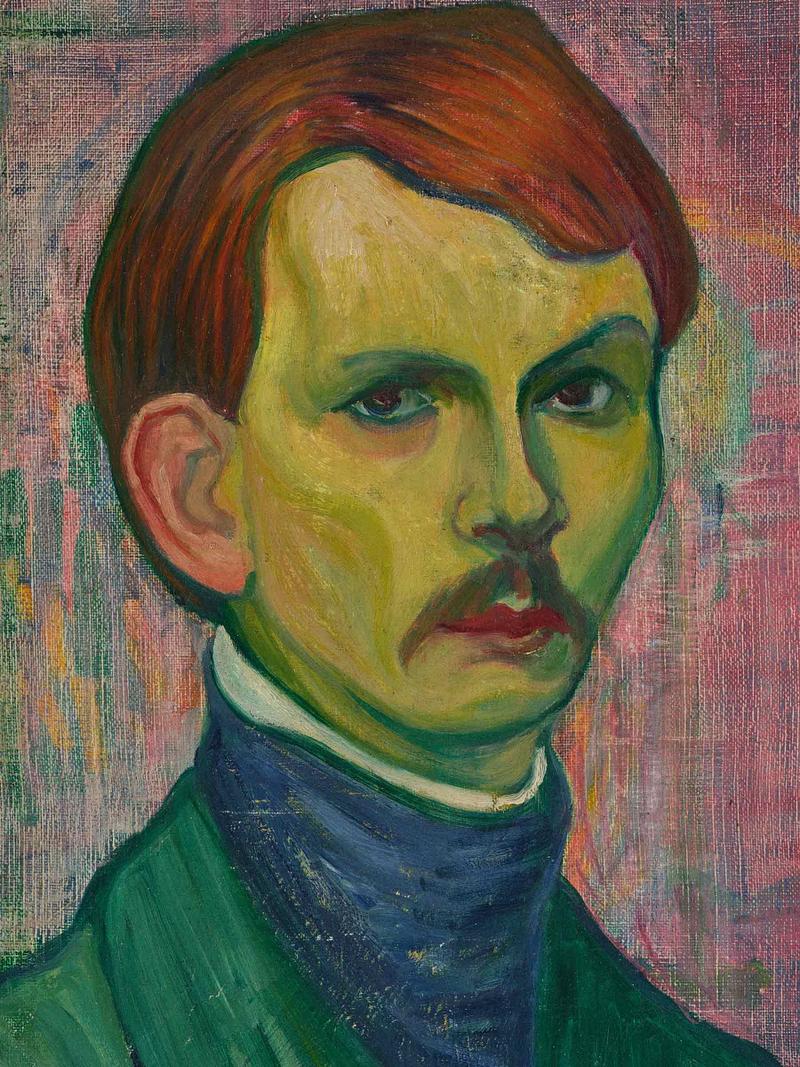
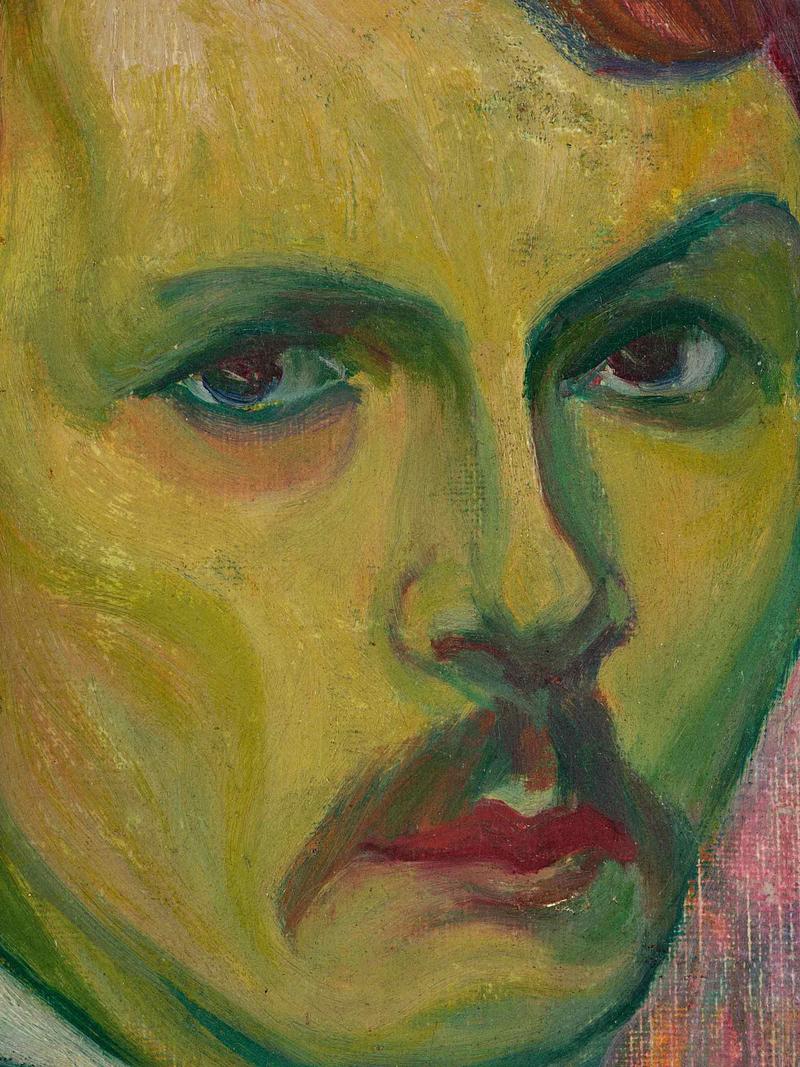
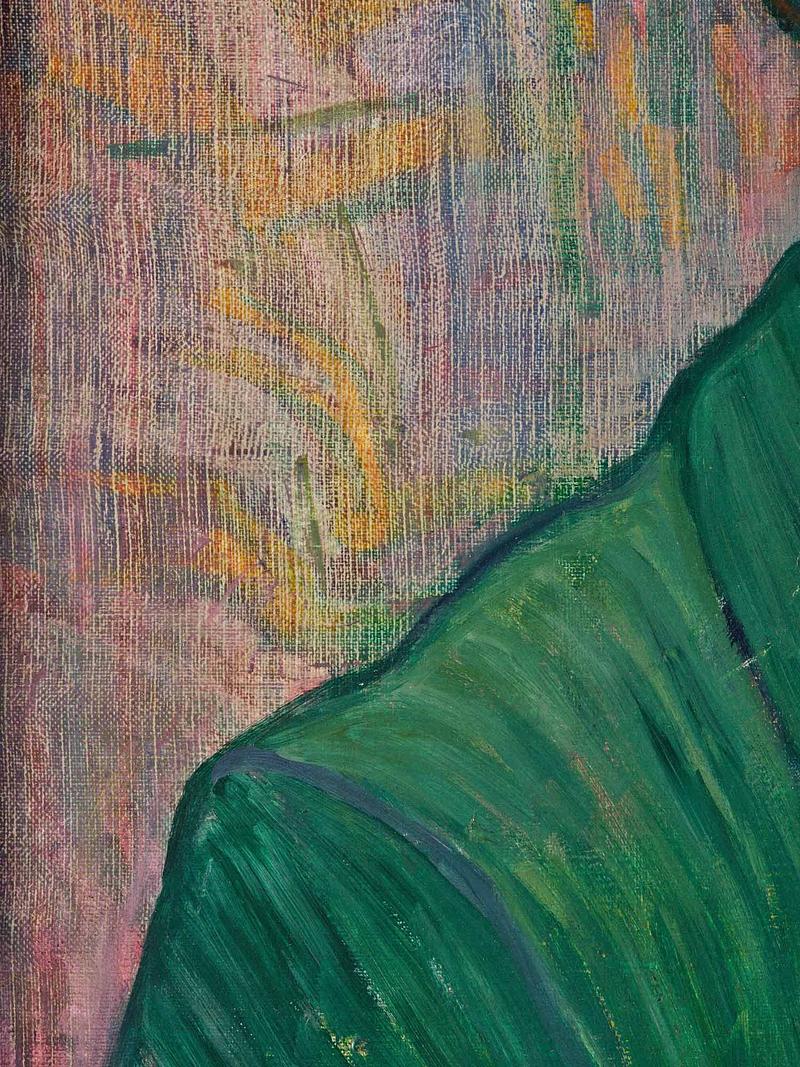
Törneman's definitive breakthrough came with his next major work, "Night Café," which was begun in Paris and took its final form after his return to Sweden and Värmland in 1906. Like "The Breton," "Night Café" was painted in two versions (version I in private ownership and version II in the Thiel Gallery, Stockholm). As soon as version I was completed in January 1906, version II was started. It was submitted to the Salon in the spring of 1906 but was rejected. During the summer, he made minor revisions to both versions. "Night Café II" was exhibited at the Salon d'Automne in Paris in 1906 under the name "Lumière Artificielle" and attracted considerable attention. In 1907, the painting was purchased by Ernest Thiel (now in the Thiel Gallery, Stockholm). "Night Café" can undoubtedly be regarded as one of the most important breakthrough works of Swedish modernism. In the catalogue for Axel Törneman's memorial exhibition at the Royal Academy of Fine Arts in Stockholm in 1927, Sixten Rönnow wrote: "Törneman became for us a mediator between the old direction and the new; he became a forerunner and pathfinder of modern artistic ideas."
Törneman also belonged to a significant transitional generation and came to occupy a somewhat isolated position between the old and the young, between the artists' union members and the true Expressionists, the Matisse students of the 1909 class. There were points of contact with both of these groups, but Törneman was his own man. Additionally, Törneman had strong connections with the international avant-garde, as evidenced by an invitation from Emil Nolde to exhibit as the only Swedish artist with the Neue Künstlervereinigung, the predecessor to Der Blaue Reiter.
View the catalogue
The work will be sold at Important Spring Sale
Estimate 800 000 - 1 000 000 SEK
Viewing June 5–10, Berzelii Park 1, Stockholm
Open weekdays 11–18, weekends 11–16 CET
Live auction June 1–13, Arsenalsgatan 2, Stockholm
Read more about Important Spring Sale
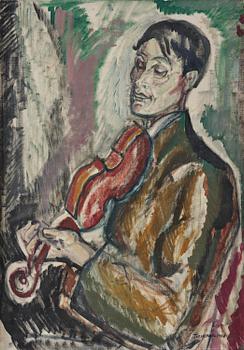
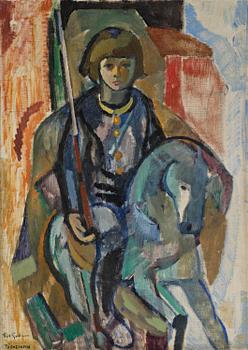
All works by Axel Törneman at Important Spring Sale
Requests & condition reports