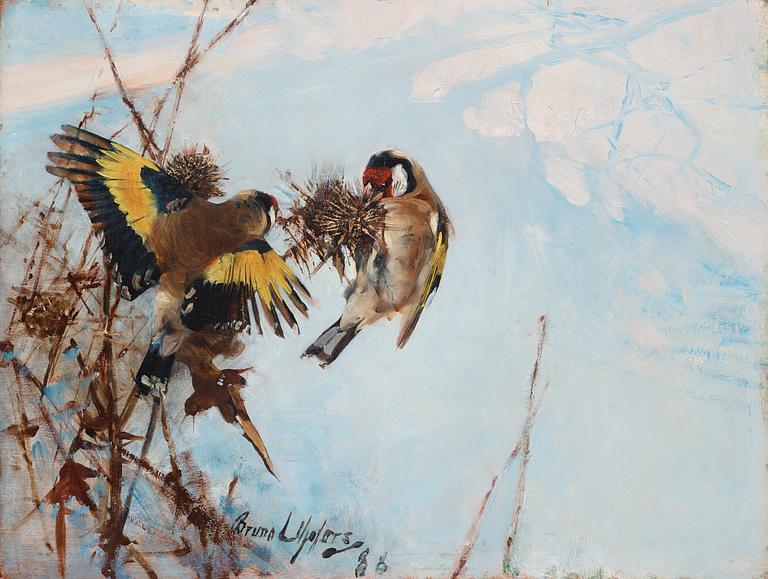
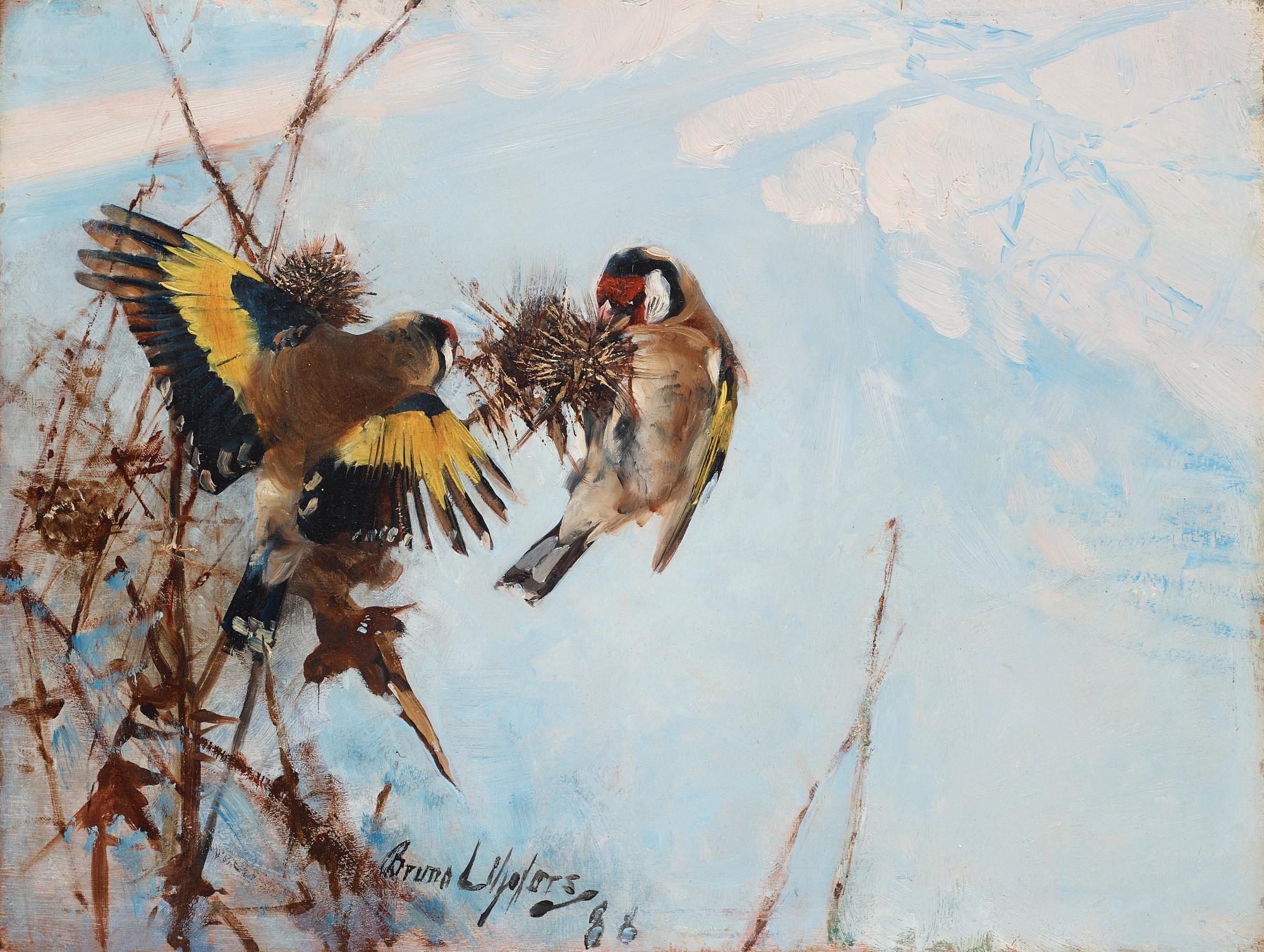
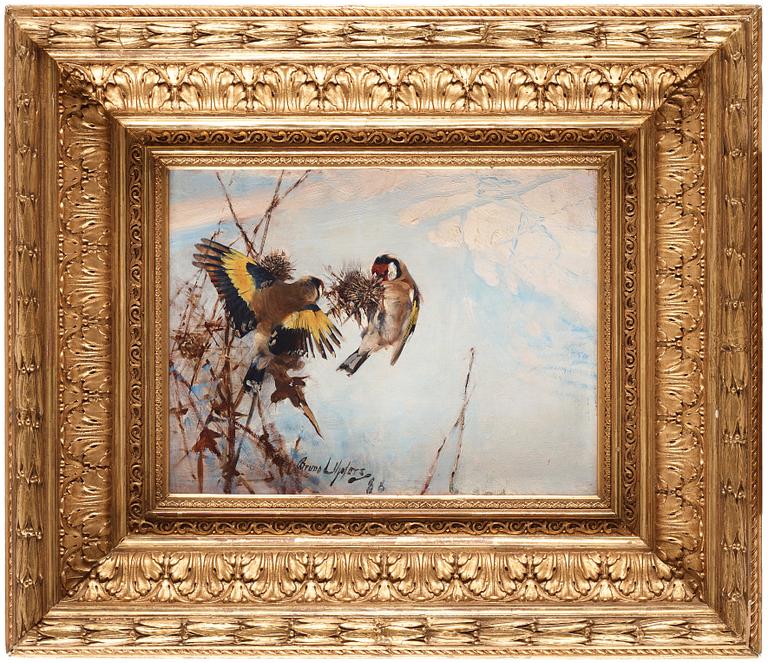
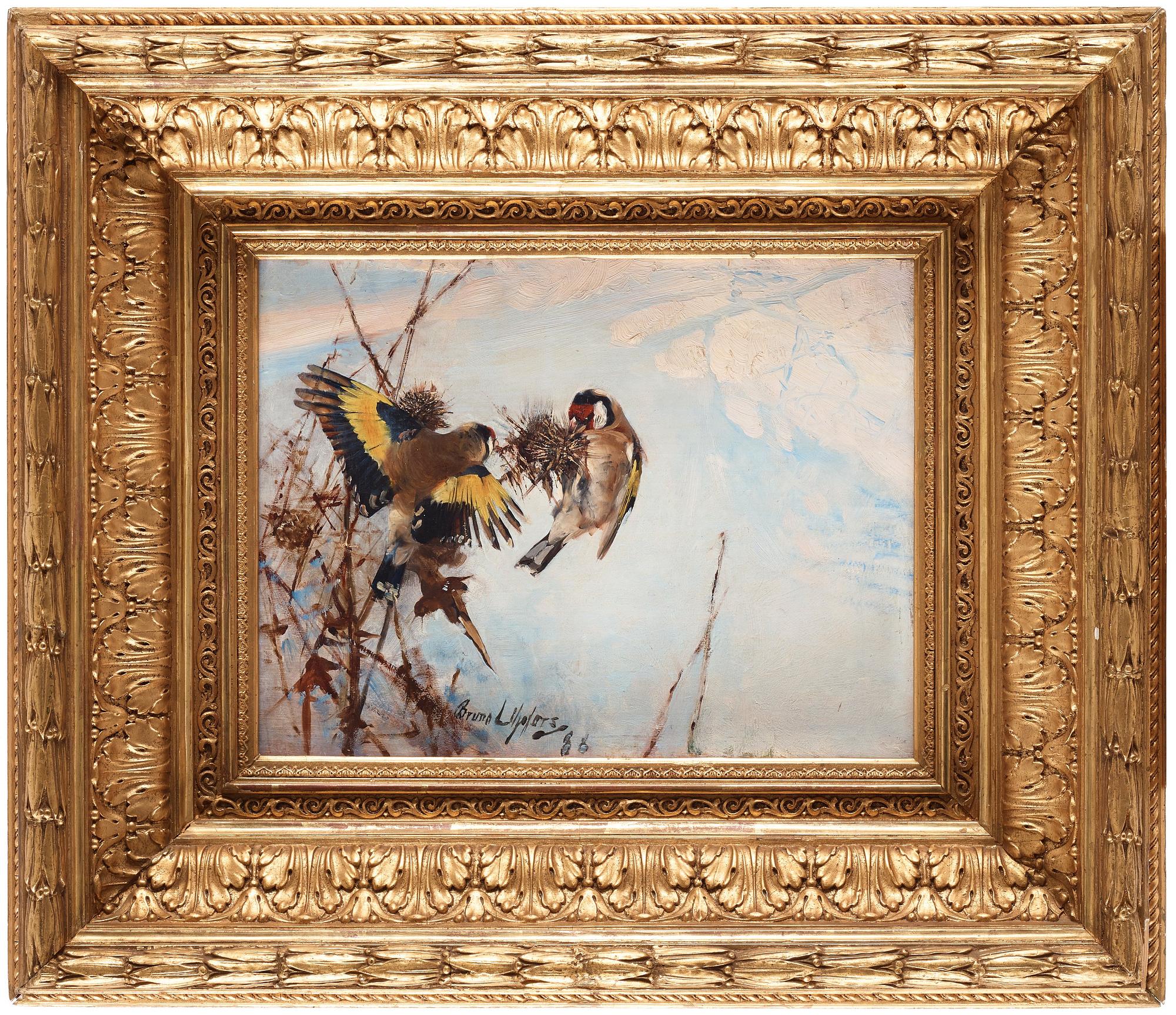
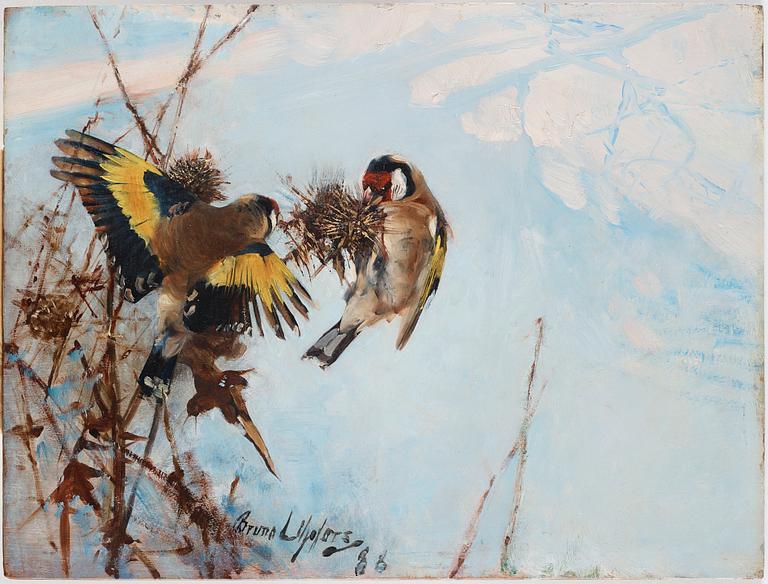
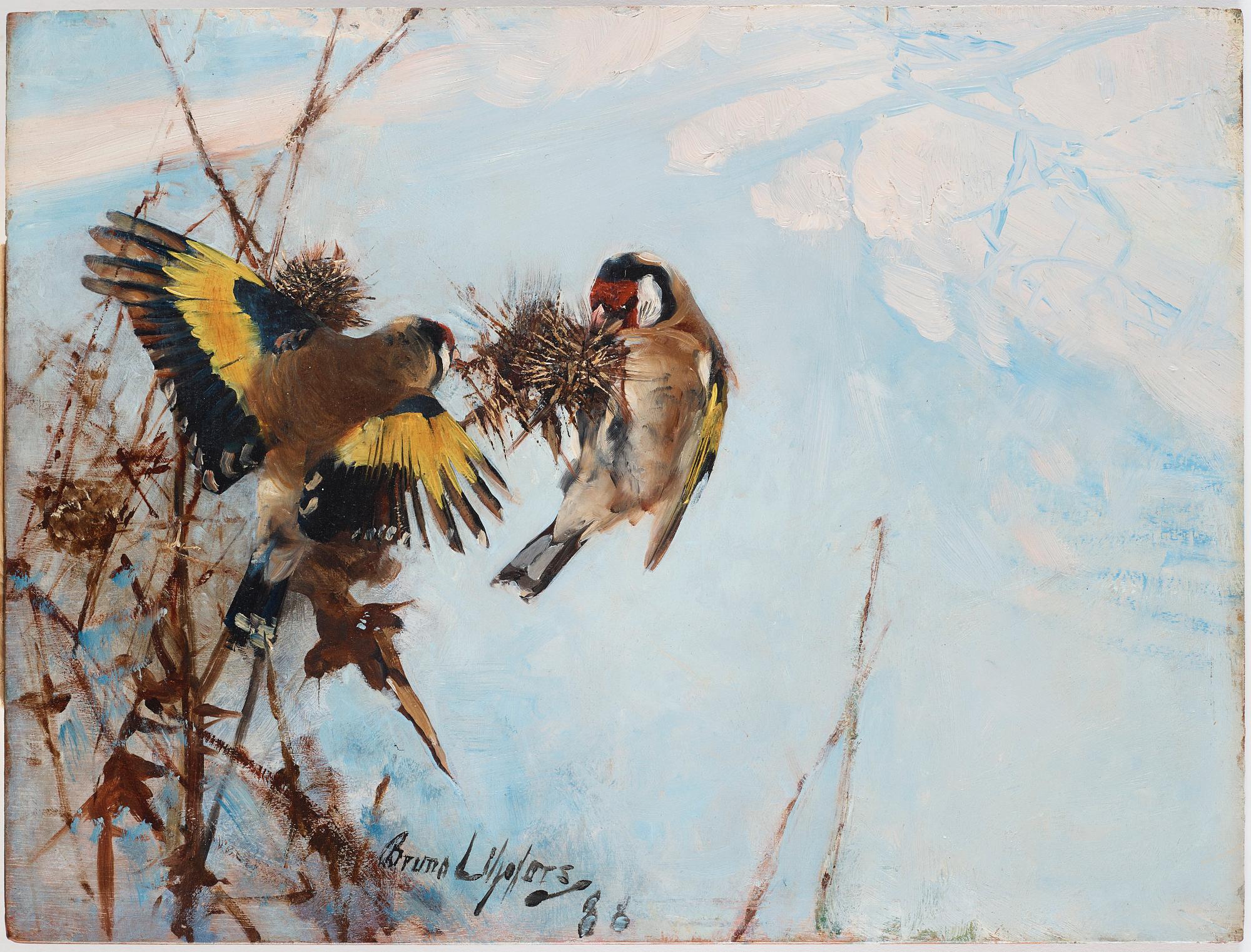
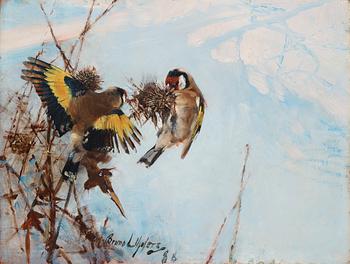
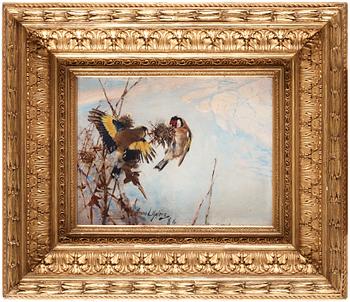
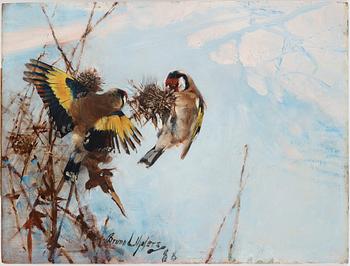
"Steglitsor" (Goldfinches)
Signed Bruno Liljefors and dated -88. Oil on board 27 x 36 cm.
Täydennyslista
Förtydligande/tillägg till den kortfattade informationen i den tryckta katalogen: Införselmoms tillkommer på klubbat pris. För ytterligare information vänligen kontakta kundservice, alternativt +46 8-614 08 00.
Tuontiarvonlisävero
Tuontiarvonlisävero (12%) tullaan veloittamaan tämän esineen vasarahinnasta. Lisätietoja saat soittamalla Ruotsin asiakaspalvelumme numeroon +46 8-614 08 00.
Alkuperä - Provenienssi
Bukowski Auktioner, Stockholm, Sale 475, "Internationella höstauktionen", 30 Oct 1990, lot 74; J.E. Safra Collection (acquired at the above Sale).
Kirjallisuus
Allan Ellenius, "Bruno Liljefors. Naturen som livsrum", 1996, illustrated full page in colour p. 40.
Muut tiedot
“Goldfinches" is a prime example of Bruno Liljefors’ painting at its best. The small, refined and intimate cut-outs from nature dating from the 1880s are also some of the artist’s best-loved and most sought-after works. In these daringly cropped compositions the artist gets incredibly close to his subject, depicting the varied fauna of the Uppland countryside. The composition model bears clear traces of influences from contemporary French painting, and, not least, the Japanese woodcuts which were ‘à la mode’ in the 1880s, although Liljefors himself denied ever having studied Japanese art. When he replicates these forested slopes, fields and open meadows of his home turf, teeming with wildlife, he sometimes, however, chooses “steep" angles and surprising asymetrical slants, with flowers, blades of grass or, as in the present work, thistles (whose calligraphic representation is reminiscent of Oriental art...) with a pair of goldfinches right in the foreground.
Tietoa ostamisesta

Muiden katsomia kohteita